Japanese Decor: A Calm, Natural Guide to Japanese Interiors
A room can be full of beautiful things and still feel restless. Japanese decor takes the opposite path: it removes what is not needed, keeps what is honest and useful, and lets light, wood, and empty space do the work.
This style grew from centuries-old ideas about simplicity, nature, and mindful living. It is not about copying a traditional house piece by piece, but about using a few clear principles to make any home feel more peaceful. This guide explains those principles, the materials and colors that carry them, and how to apply them room by room. If you are still exploring styles, our roundup of ideas for interior decorating shows how this calm look can sit beside other approaches.
What Is Japanese Decor?
Japanese decor is a way of furnishing a home that puts simplicity, natural materials, and quiet function first. Every object has a purpose, and every room has breathing room. Traditional homes used natural wood, paper screens, and tatami mats instead of heavy furniture, and modern versions keep the same values.
Three old ideas sit at the heart of the style: wabi-sabi, the appreciation of imperfect and aged beauty — a cracked ceramic bowl or a weathered wood table fits right in, because perfection was never the goal; ma, the intentional use of empty space, so a bare wall or an uncluttered floor gives the eye somewhere to rest; and shizen, a deep connection to nature, brought inside through wood, stone, plants, and large windows that frame the garden.
Japanese interior design is often called Japanese minimalism, but it is warmer than the stark version many people picture: soft fabrics, warm wood, and gentle light keep it from feeling cold. That warmth is also why it pairs so well with Scandinavian design, a blend known as Japandi, covered later in this guide.
The Core Principles of Japanese Decor
Five principles shape nearly every decision in a Japanese-style room, from furniture choice to color. Learn them, and the rest of the style follows naturally.
Minimalism with purpose. Japanese minimalism is not about having an empty house. It is about keeping only what earns its place: a room with three well-chosen pieces feels more finished than one with ten random ones.
Wabi-sabi: beauty in imperfection. Wabi-sabi celebrates natural wear, uneven textures, and aged materials instead of hiding them: handmade pottery with a slightly uneven rim, a wood table darkened with age, a stone with a rough edge.
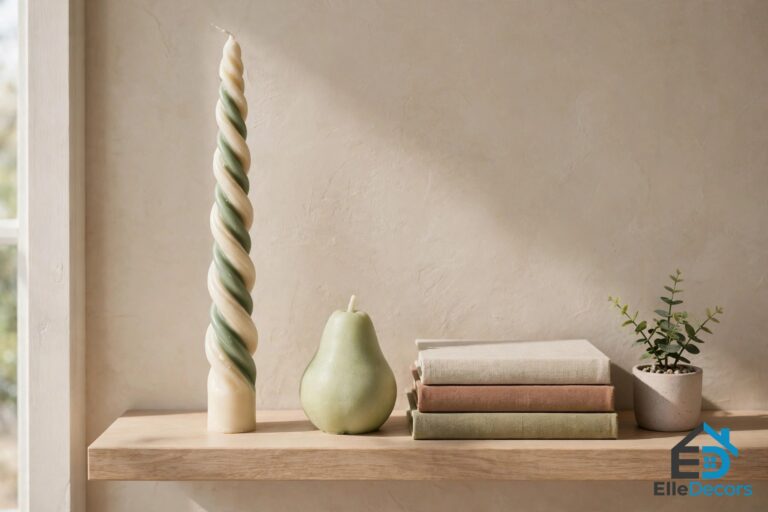
Ma: the beauty of empty space. Ma is the deliberate use of empty space between and around objects, so a room can breathe and the eye can rest. Leave a stretch of bare wall and keep a shelf half empty, and the pieces you do keep will stand out more.
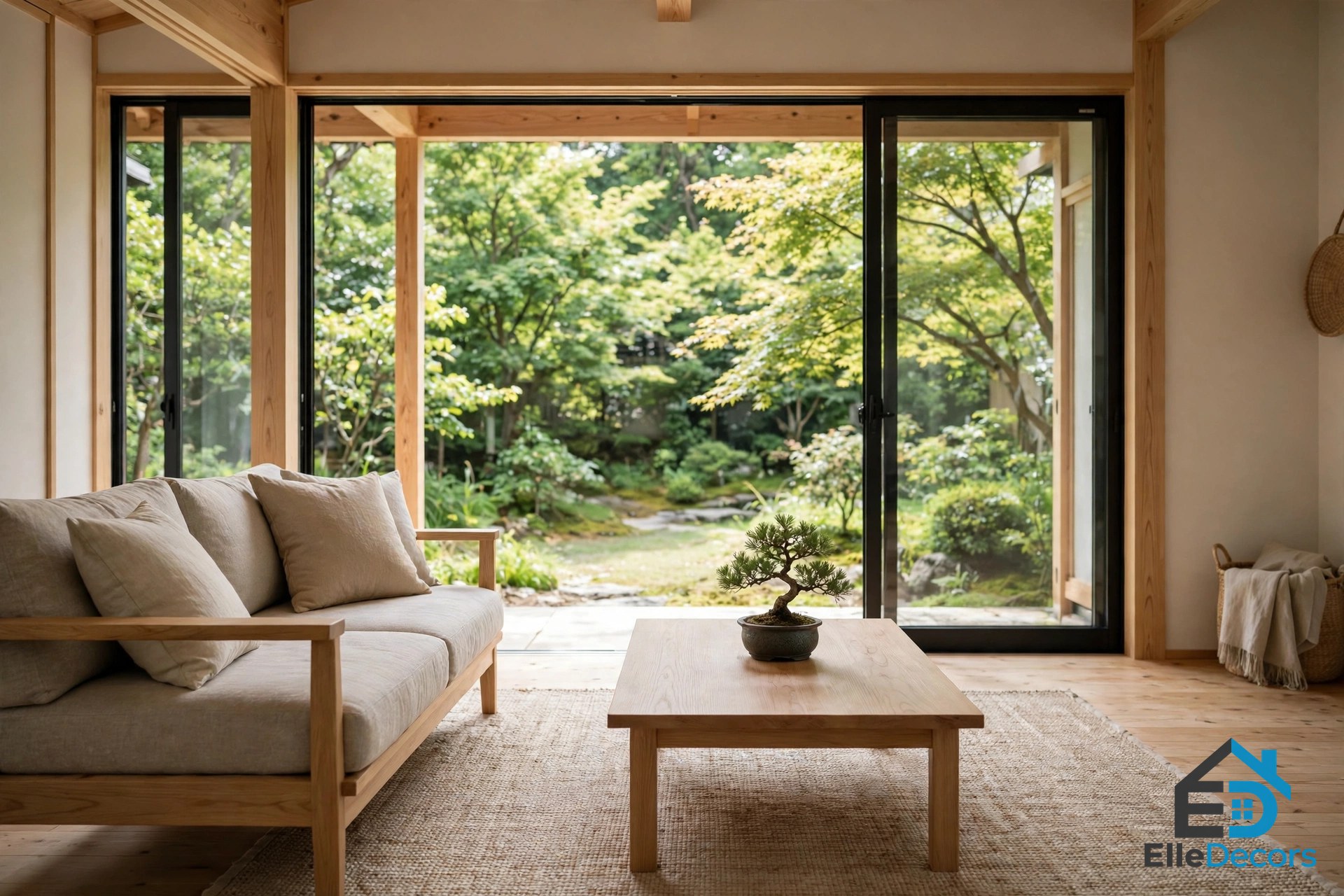
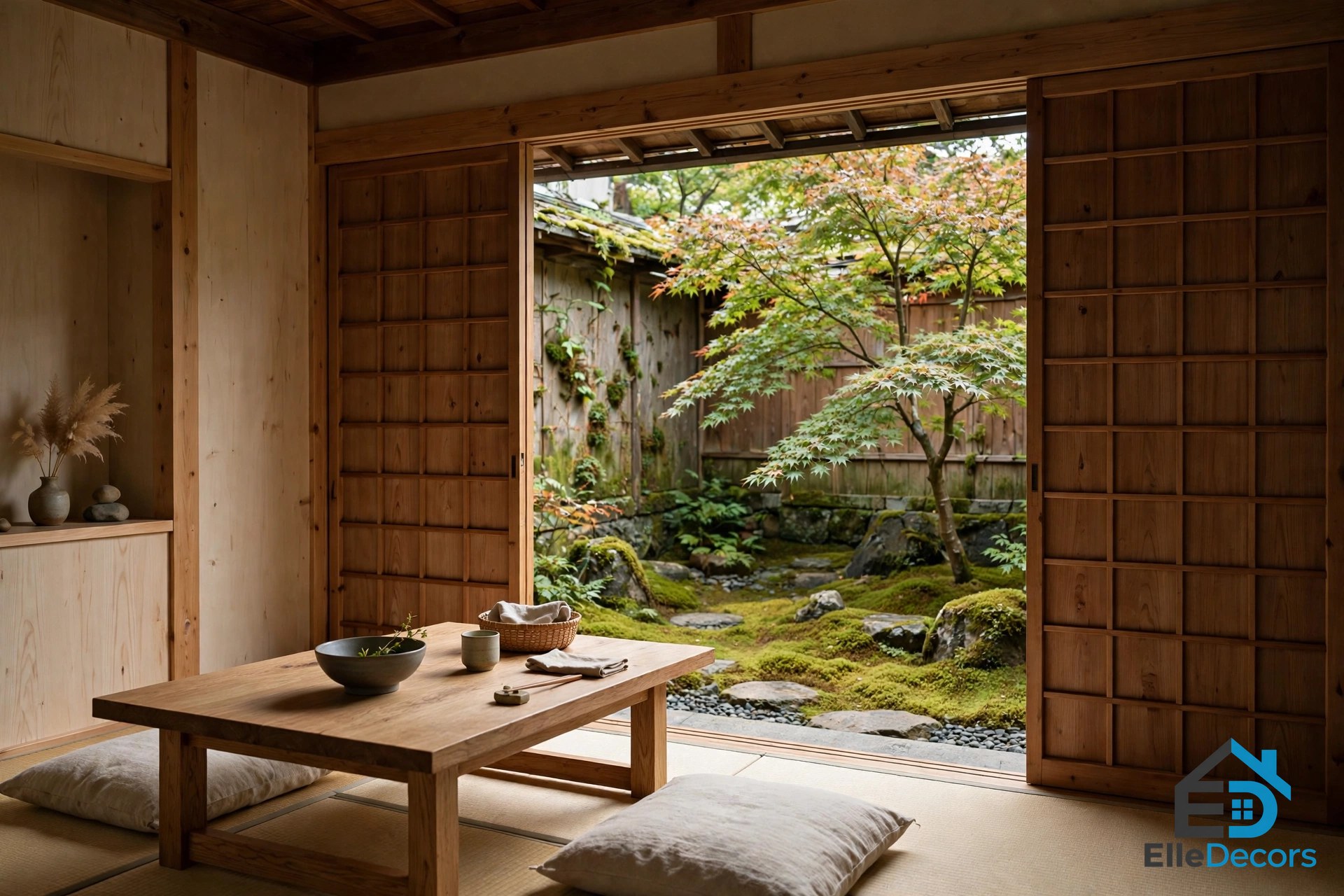
Connection with nature. Japanese interiors bring the outdoors in through natural materials, indoor plants, and large windows. Where possible, frame a garden view from a window or sliding door, a technique known as shakkei, or borrowed scenery, which turns the outdoors into part of the room.
Functional living over decoration. Every item, from a storage chest to a floor cushion, is chosen first for how it is used. Decoration comes second, and only if it does not get in the way of daily life.
Materials That Define the Style
Natural, honest materials are the backbone of japanese decor. Wood shows up in flooring, furniture, and ceiling beams, usually left in its natural tone rather than painted or heavily stained, and it darkens into a patina over time. Our guide to the best use of wood in modern designs looks at how wood works across a whole home.
| Material | Best used for | What it brings |
|---|---|---|
| Cedar | Flooring and ceiling beams | Ages well, naturally calming |
| Oak | Furniture and cabinetry | Durable, suits any neutral palette |
| Bamboo | Blinds, screens, and small furniture | Lightweight, renewable, and visually soft |
| Stone | Bathroom, entryway, and garden features | Texture and a grounded, natural feel |
| Linen | Curtains and bedding | Breathable, ages with a soft look |
| Cotton | Bedding and cushions | Simple, natural, easy to maintain |
| Rice paper | Screens and lighting | Diffuses light for a soft, warm glow |
| Clay and ceramic | Bowls, vessels, and tiles | Small variations add character |
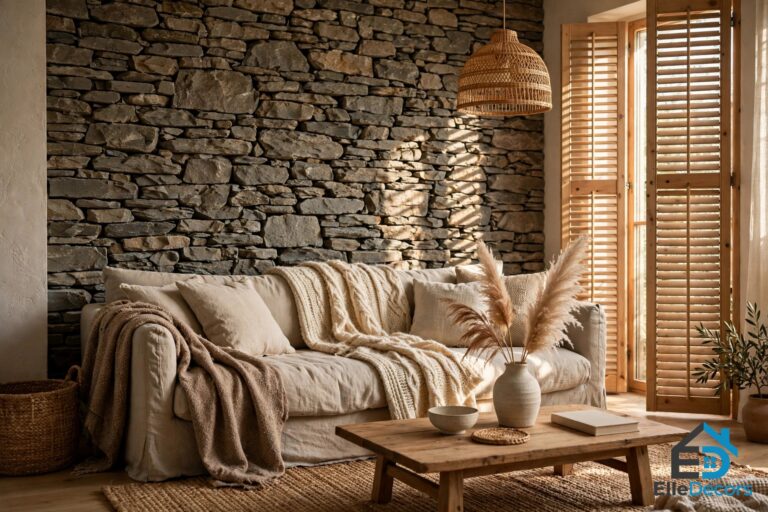
Bamboo deserves a special mention: light, fast-growing, and soft to the eye, it turns up everywhere — blinds, screens, small furniture, baskets. Stone plays the opposite role, adding weight and stillness. Texture matters more than pattern here: depth comes from woven textiles, rough plaster, untreated wood, and handmade pottery, mixed gently.
Colors: A Quiet, Earthy Palette
Japanese interiors are predominantly black, white, and earth-toned, and that restraint is deliberate. Beige, taupe, warm white, and soft brown dominate, creating a calm backdrop for natural materials, while small areas of black or charcoal add contrast. Bright colors are rare.
Stick to two or three tones per room: going beyond that tends to break the calm. Neutral does not mean flat — charcoal against warm white creates contrast without needing color. Matte finishes beat glossy ones every time.
The Elements That Make a Room Feel Japanese
A handful of classic elements carry the style. You do not need all of them — two or three, used well, are enough to set the tone.
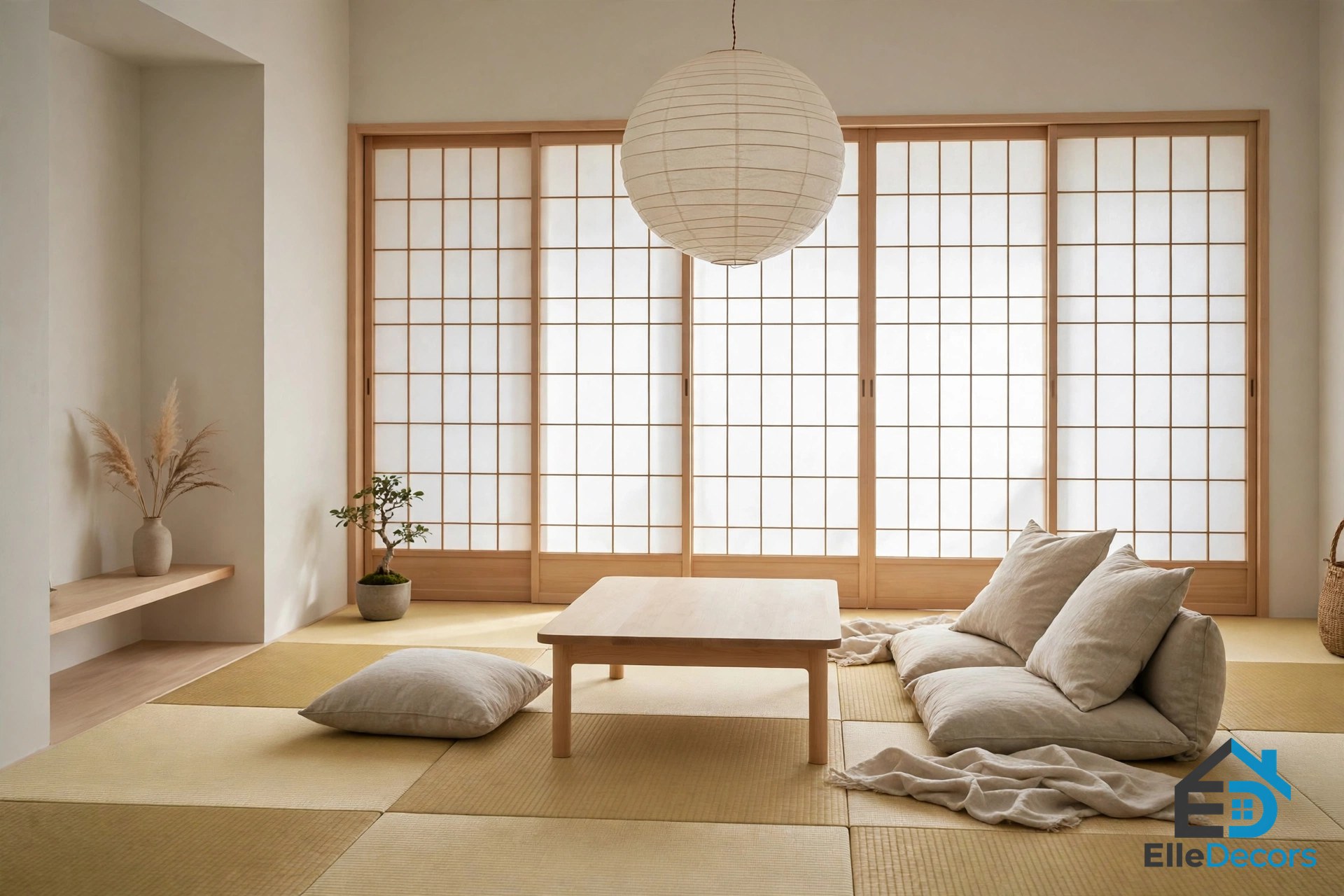
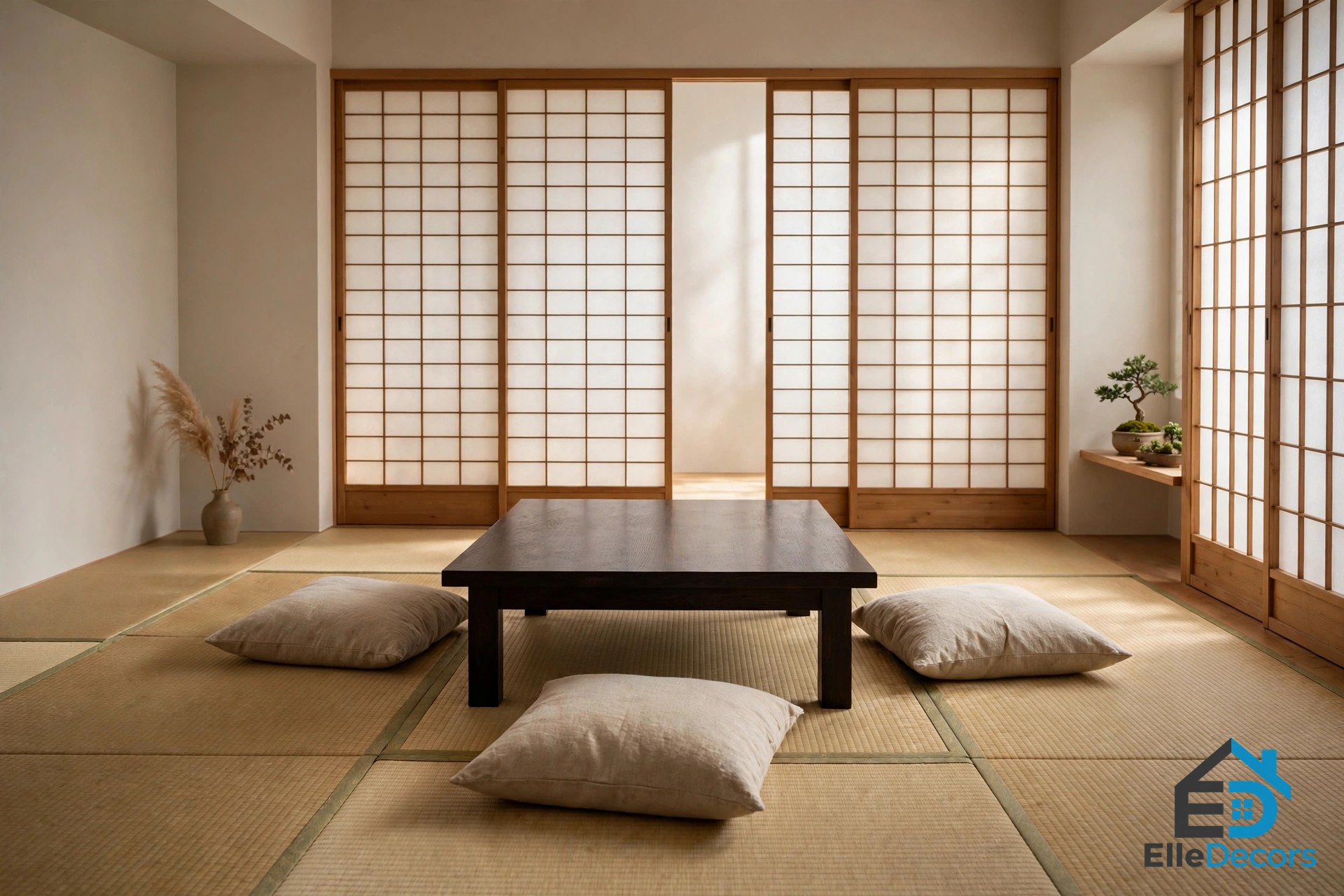
Tatami mats. Tatami mats are woven straw mats that define traditional floor space and set a soft, grounded feel underfoot, with a faint, grassy scent. In a modern Japanese home, tatami often appears as an accent — a raised platform or a reading corner — rather than covering every room.
Shoji screens and sliding doors. Shoji screens are wood frames with translucent rice paper that divide rooms while still letting light pass through. They slide open fully to combine two rooms or close for privacy, which makes them especially useful in smaller homes. A noren, a fabric panel hung in a doorway, is a lighter, low-cost version of the same idea.
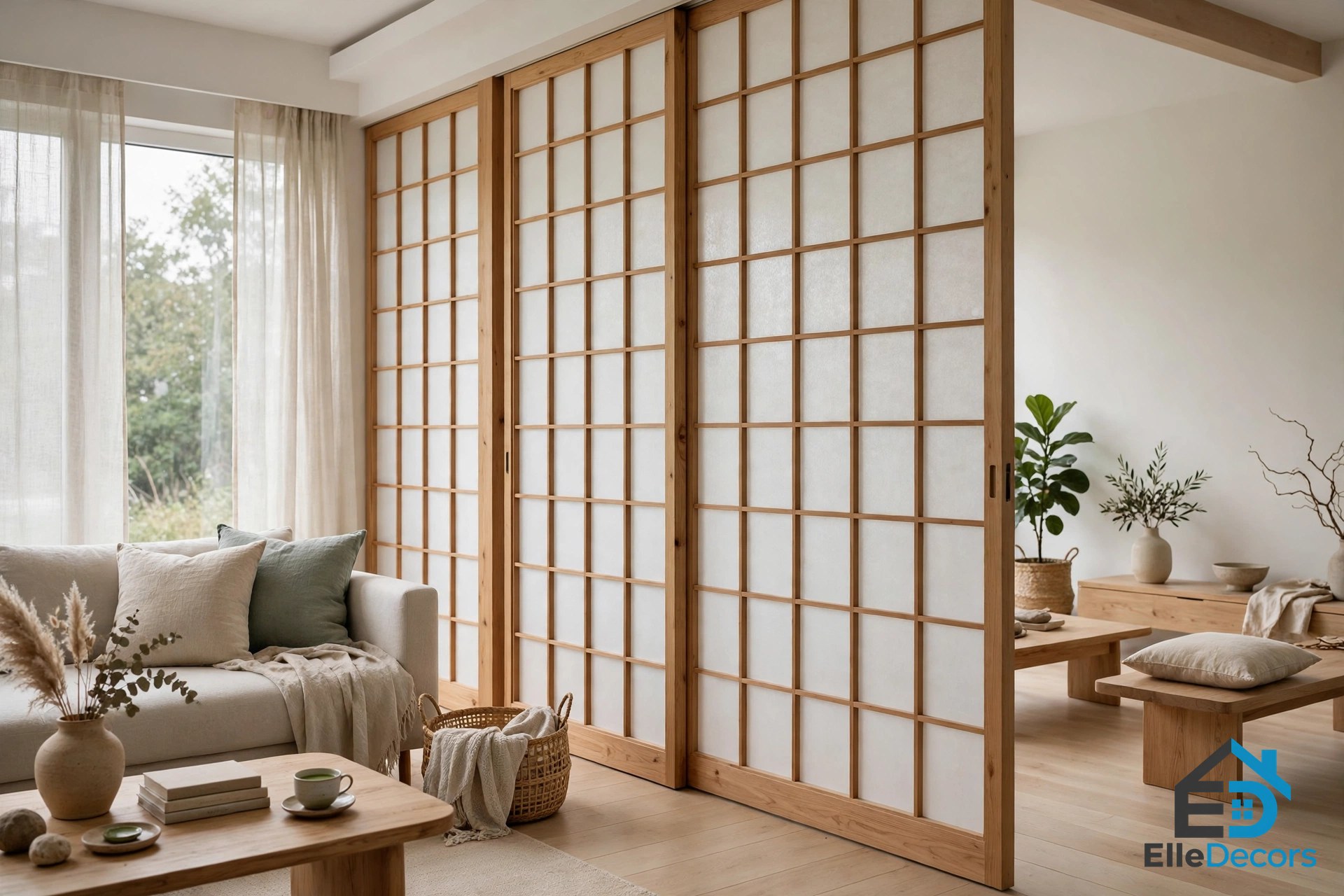
Low furniture. Furniture sits close to the floor, from platform beds to low tables, which keeps rooms feeling open and grounded and makes ceilings feel higher. Look for simple shapes in natural wood finishes or light, neutral upholstery.
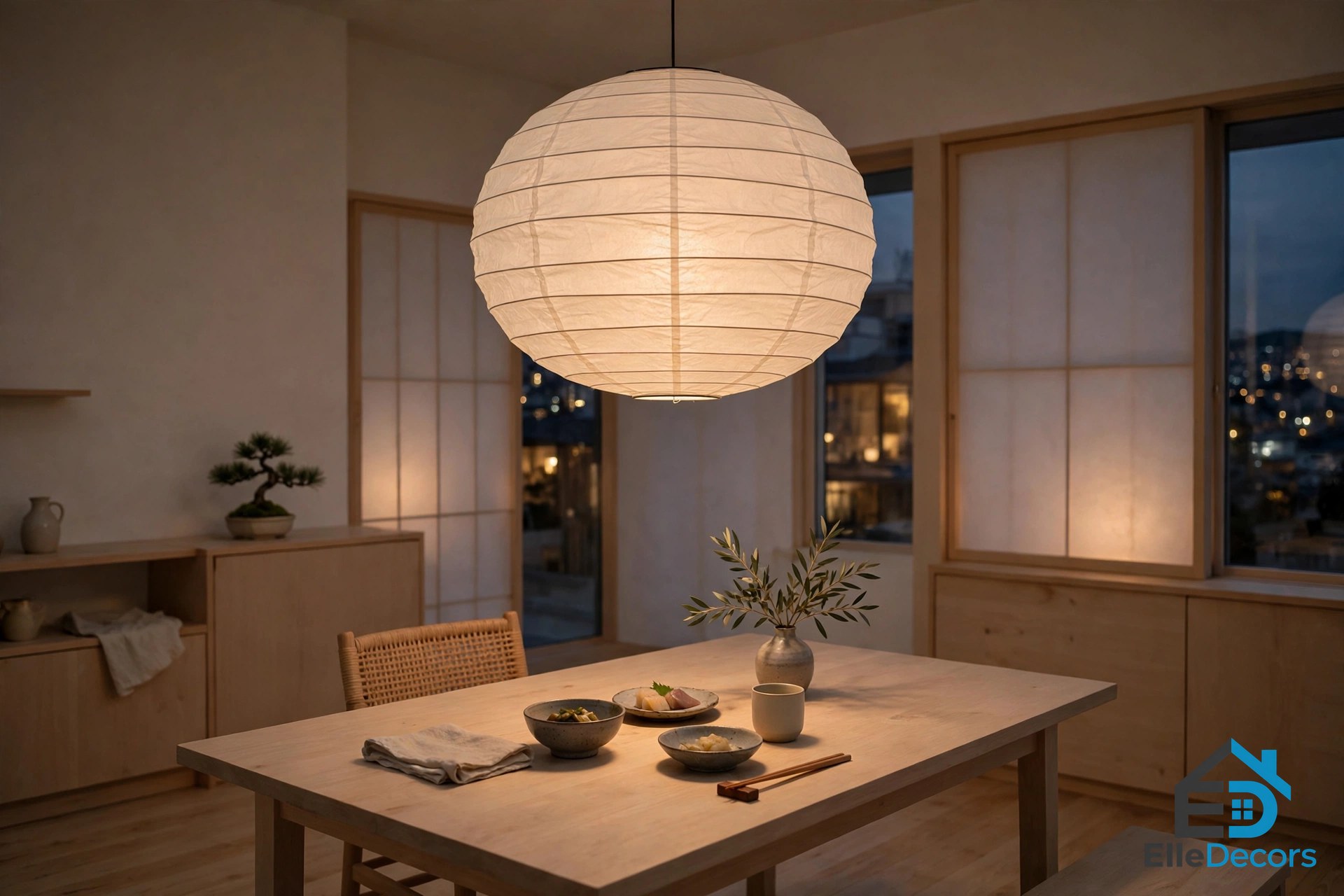
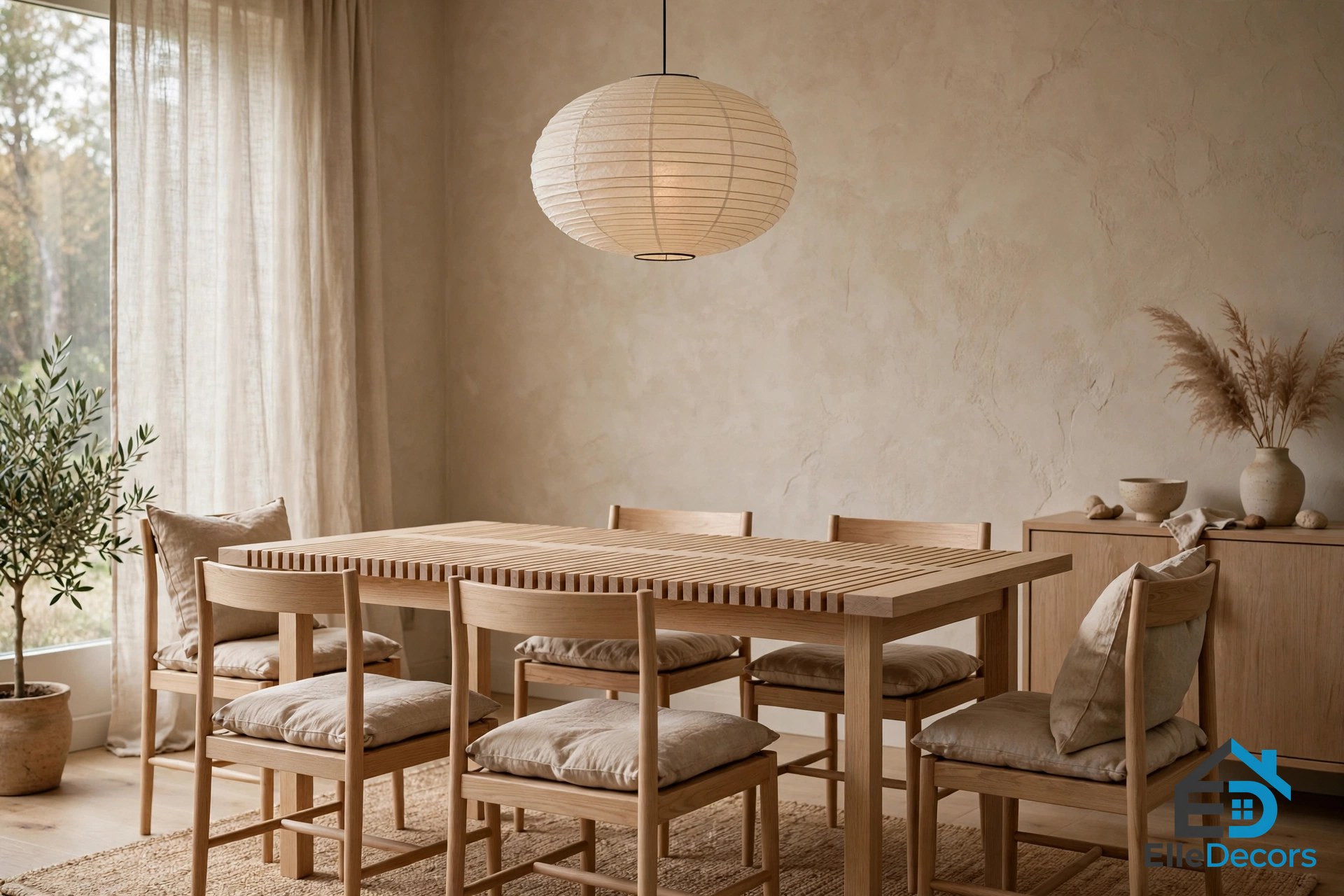
Soft, layered lighting. The goal is soft, ambient light that promotes relaxation. Instead of harsh overhead lights, use paper lanterns, floor lamps with linen shades, and wall sconces that diffuse warm light, and maximize daylight with sheer curtains or bamboo blinds. A large paper lantern pendant over a dining table earns its place by the quality of light it gives.
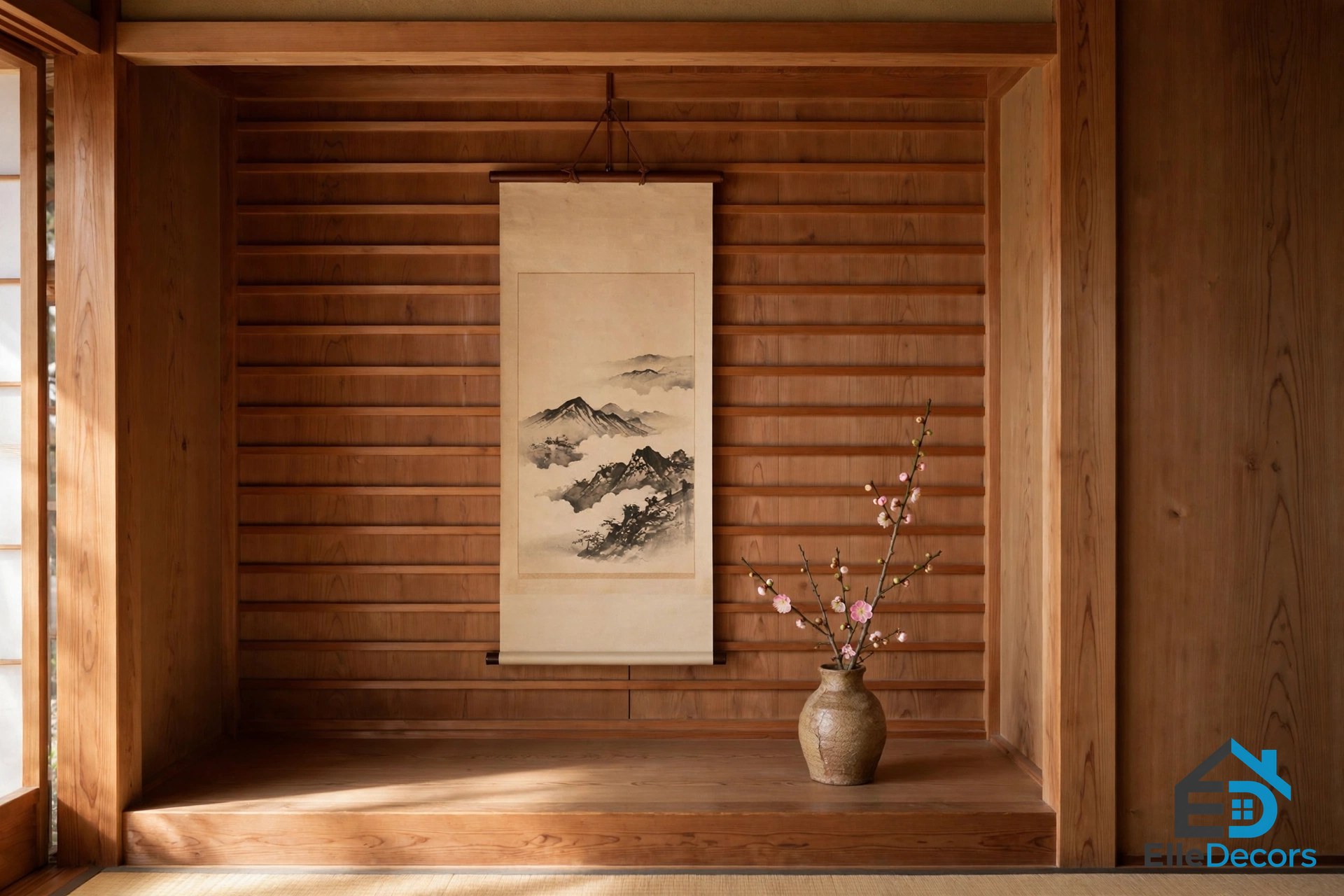
Japanese art and the tokonoma. Art in this style is minimal and meaningful: Japanese calligraphy, known as shodo, or sumi-e ink paintings. Choose one or two pieces that resonate with a personal value, and display them in an entryway or above low furniture like a bench. A tokonoma, a recessed alcove for a single artistic object, is the traditional home for such a piece — one object, given space and attention, says more than a full gallery wall.
Hidden, purposeful storage. Storage in a Japanese-style home is subtle and purposeful: clutter disrupts the flow and calm of a room, so belongings stay hidden but accessible. Choose furniture with built-in storage like benches, low cabinets, or under-bed drawers, and use wood or rattan baskets.
Japanese Decor Room by Room
The principles stay the same, but each room uses them differently. Here is how the style translates across a home.
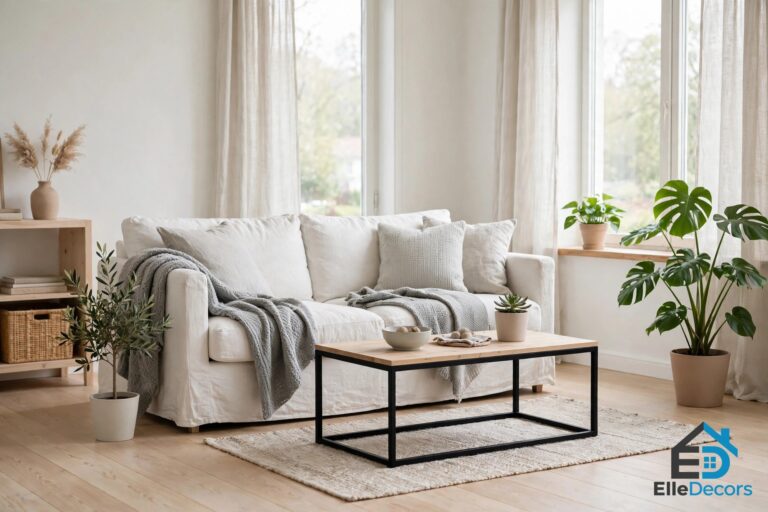
Living room. Use a low sofa or floor seating, a natural wood coffee table, and one statement plant. Keep wall decor to a single piece, and let a woven rug in a neutral tone anchor the seating area. Wide sliding doors onto a garden, or an engawa veranda blurring inside and out, are the classic move. Japanese decor works best in a living room when the floor stays clear and walkways stay open.
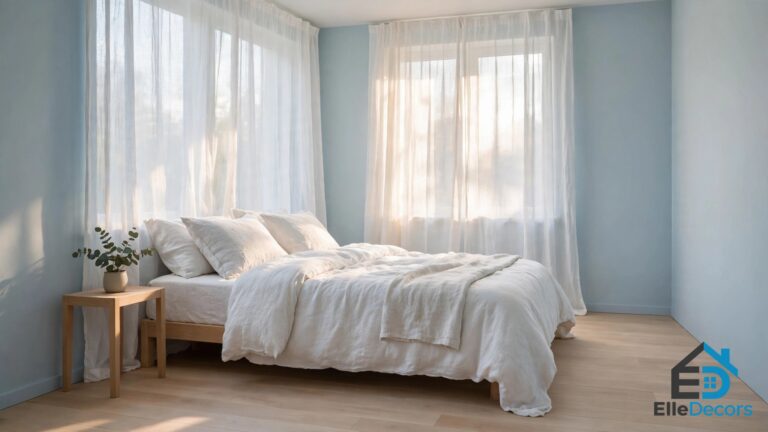
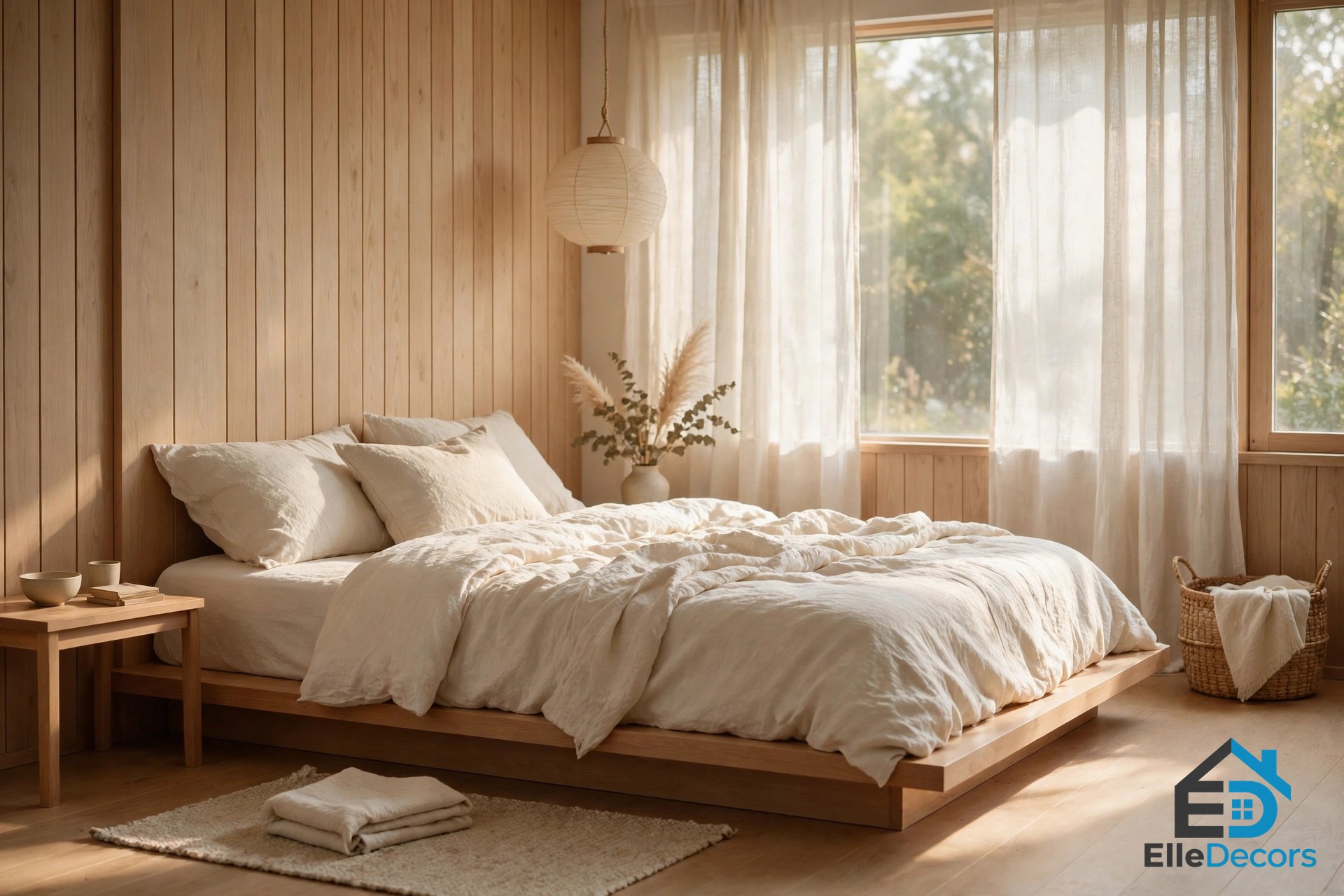
Bedroom. A platform bed with linen or cotton bedding creates the calm, grounded look this style is known for. Skip a tall headboard in favor of a low wood frame, keep nightstands to one or two small pieces, and store extra linens out of sight.
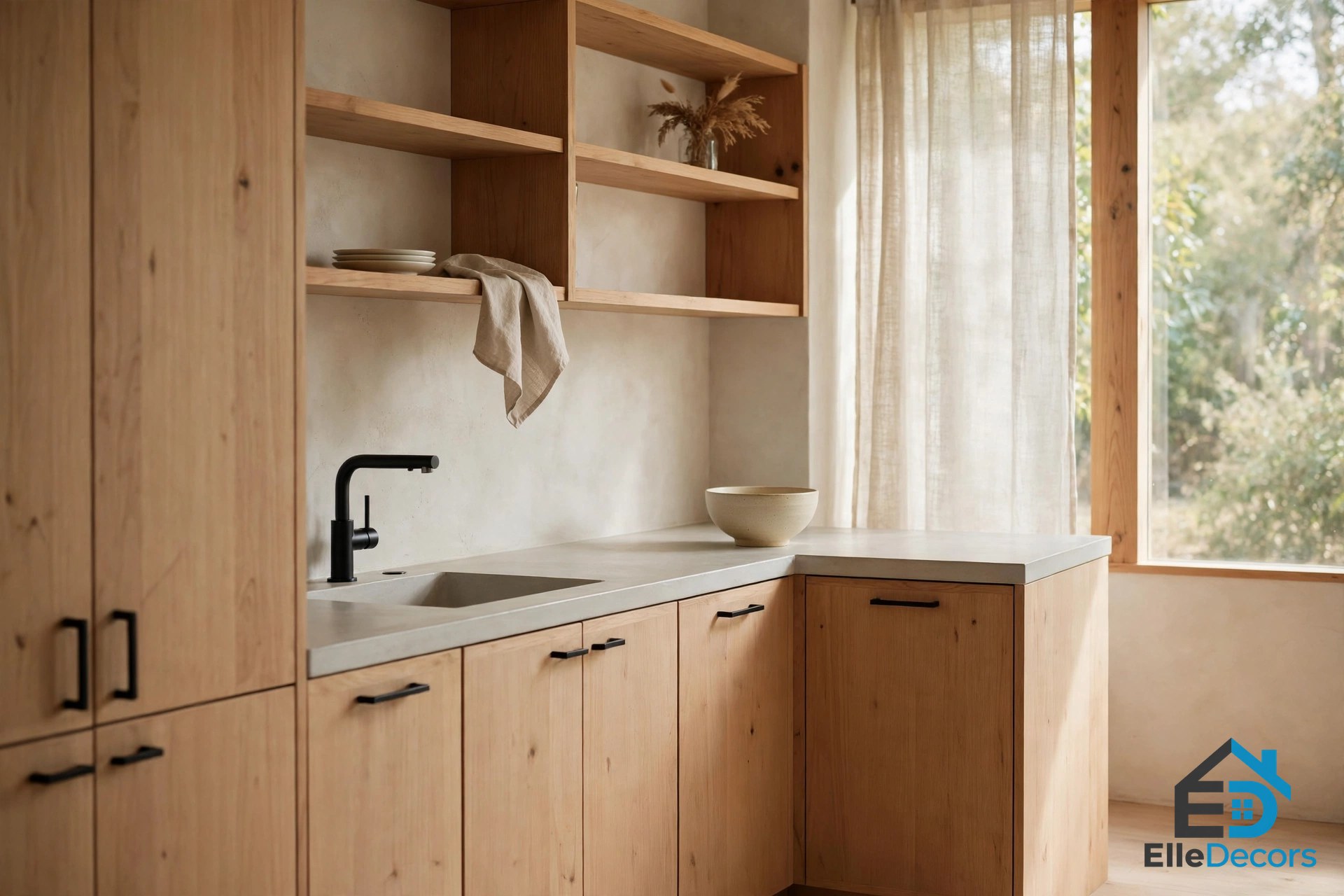
Kitchen. Open wood shelving and matte hardware keep the kitchen functional without feeling cluttered. Store small appliances out of sight, and add a single ceramic bowl or a small potted herb for warmth.
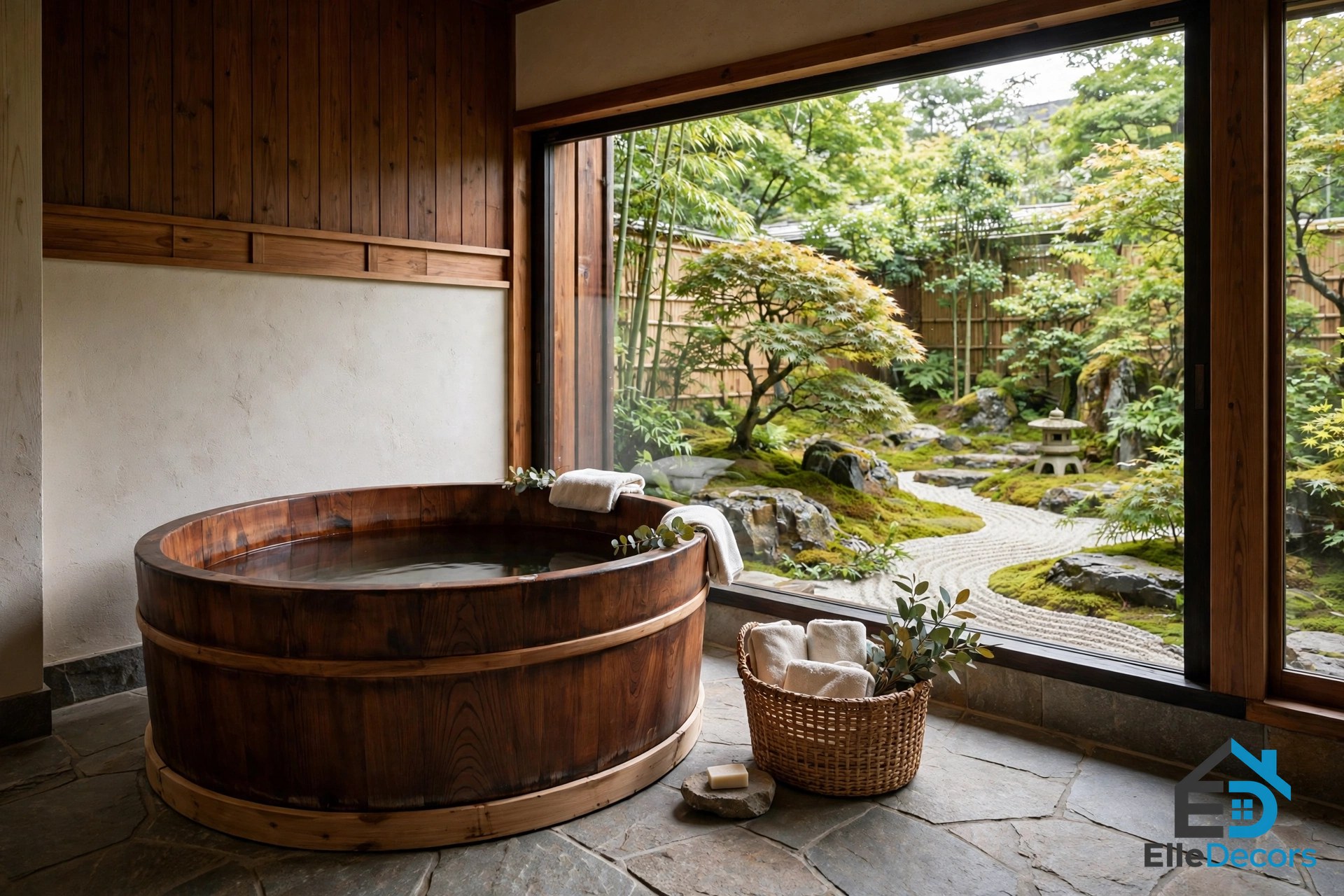
Bathroom. Stone tile, a wood vanity, and woven baskets bring a spa-like calm. Keep bottles tucked into closed storage, and add a bamboo mat by the tub. The classic feature is the ofuro, a deep wooden soaking tub beside a large window.
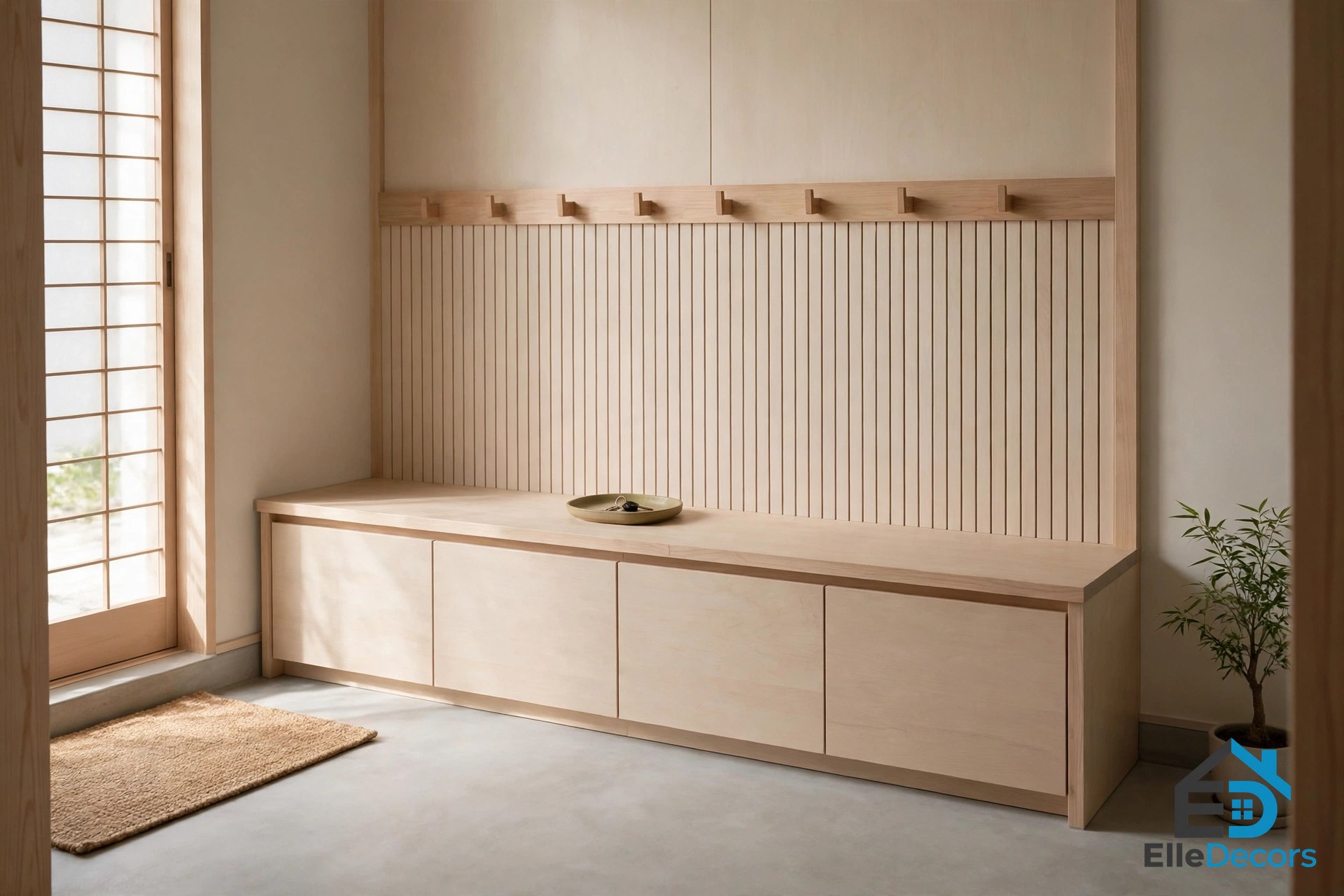
Entryway. The Japanese entry, or genkan, is a transitional space between indoors and outdoors that sets the tone for the whole home. A low wood bench and hidden shoe storage keep it functional; a single hook rail or tray for keys is all the decoration it needs.
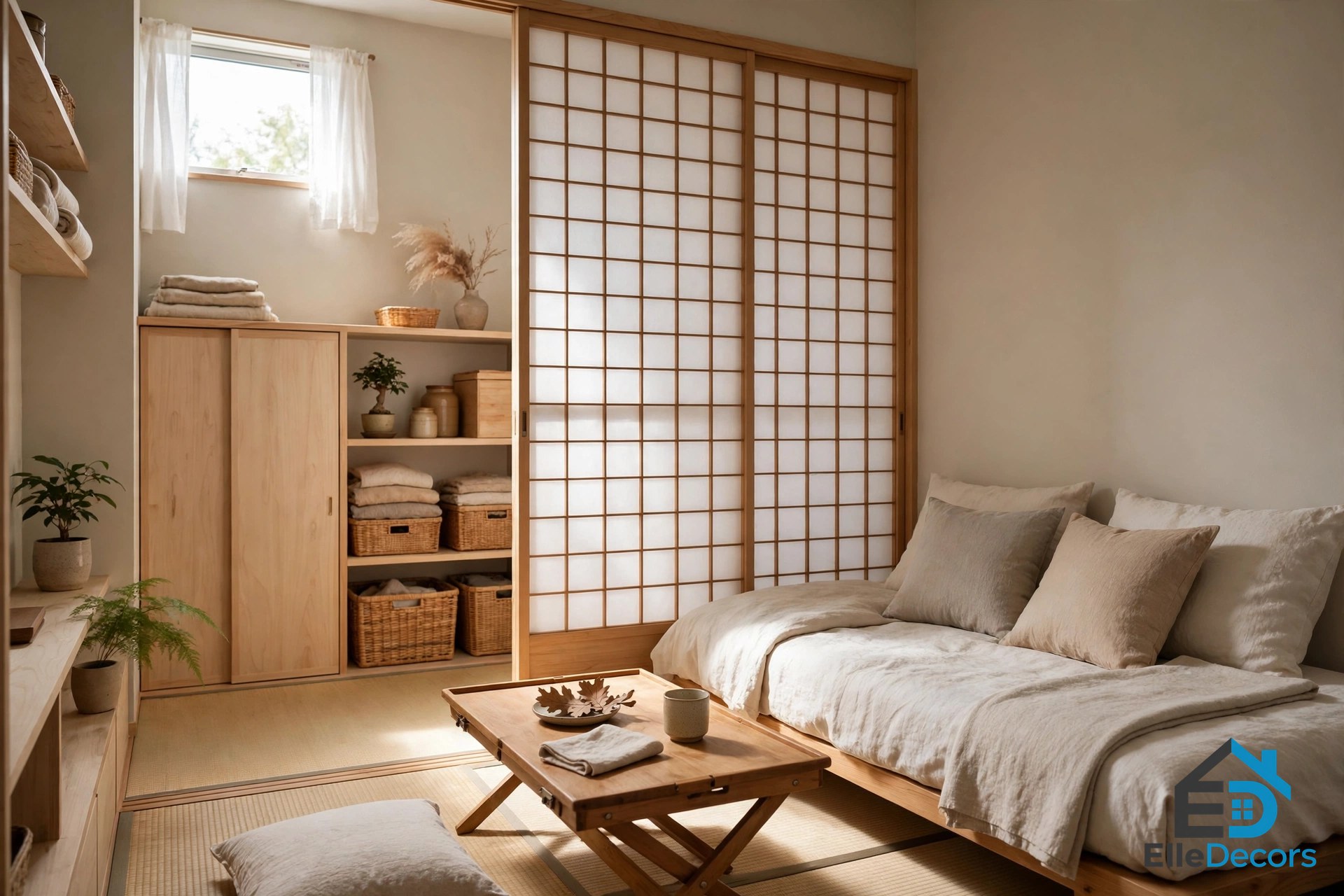
Small apartment. Low furniture, sliding screens, and multi-purpose pieces make this style especially useful in small spaces. A daybed that doubles as seating, or a table that folds flat, can save significant floor space.
Traditional Style and the Modern Japanese Home
The core philosophy has not changed, but the materials and finishes have shifted. A modern japanese home retains the values of simplicity and natural materials while replacing tatami mats with polished concrete floors or engineered wood. Furniture moves from very low and floor-based to low-to-mid height, and colors stay earthy with charcoal or black accents.
The Japandi blend. Japandi combines Japanese minimalism with Scandinavian warmth, and the pairing works because both styles avoid clutter, favor natural materials, and treat furniture as functional first. Scandinavian design brings softer textiles and coziness, while the Japanese side contributes the discipline — the empty space, the low lines, the natural materials.
Watching a real Japandi home brings the blend to life far better than a description can. This tour walks through a renovated home built around light wood tones, soft textures, and lighting layered into the architecture itself:
Bringing Nature Inside
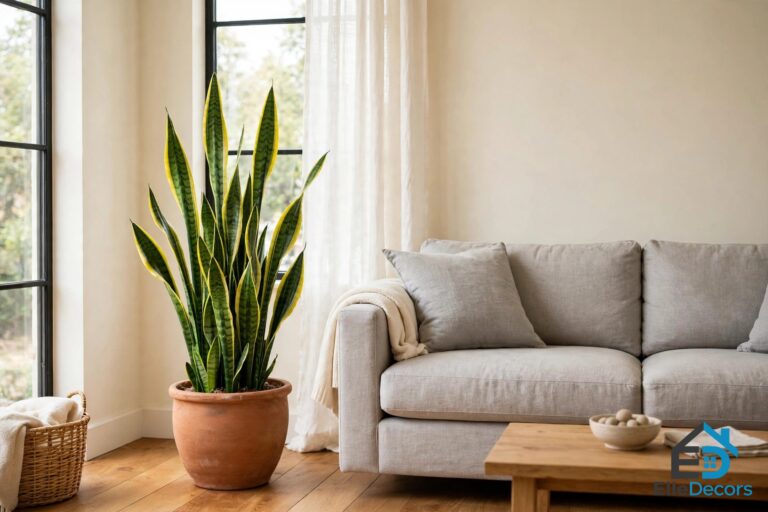
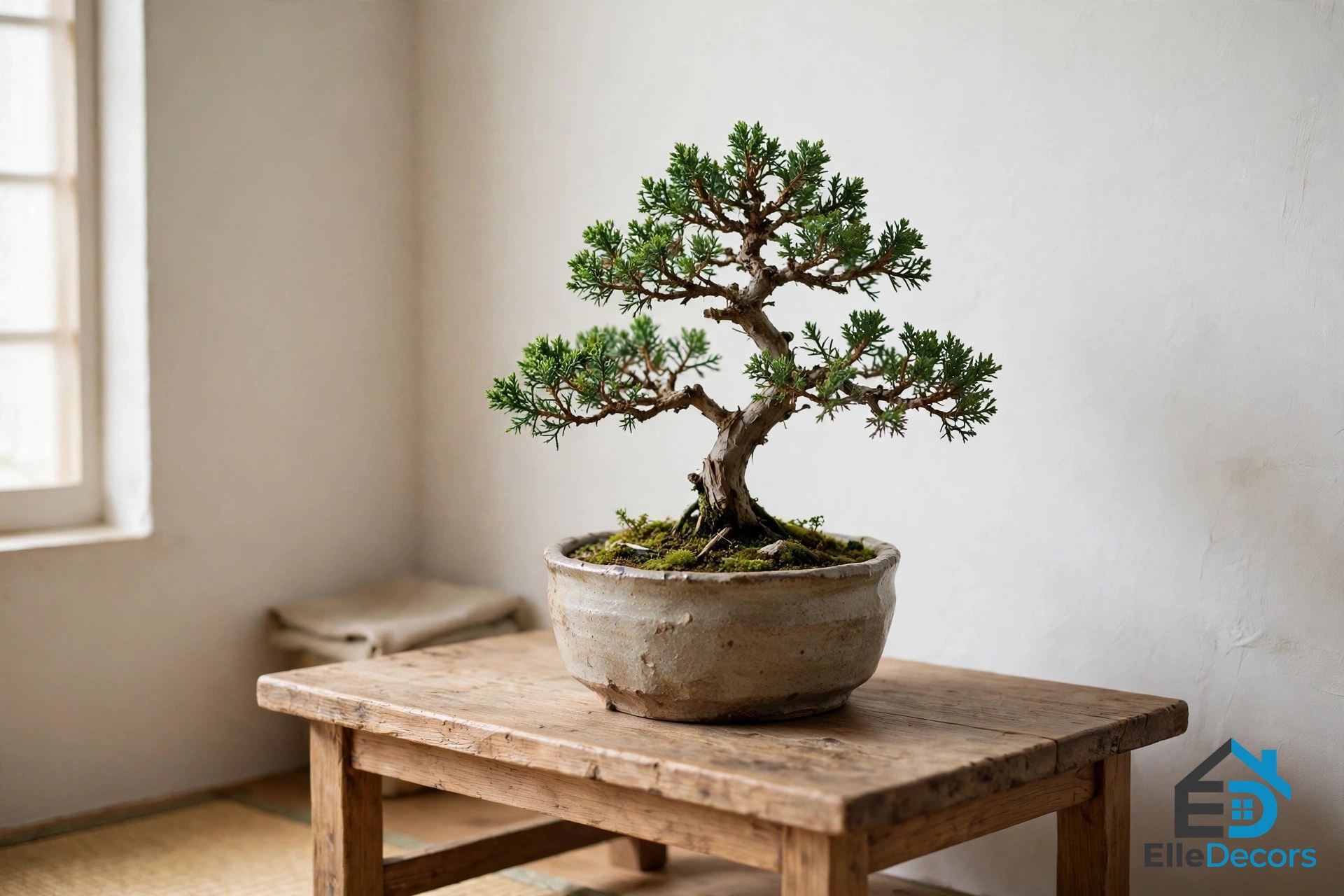
A Japanese interior is never fully cut off from the outdoors. Large windows, sliding doors, and garden views are part of the design, not an afterthought. If you have no garden, a single well-placed plant does much of the work: a bonsai on a low table, a fern by the window, or a snake plant in a ceramic pot. Keep windows uncovered or lightly draped, and consider a small indoor water feature — a tabletop fountain or a stone basin — for the sound of moving water.
A central garden courtyard, or tsuboniwa, is the classic Japanese house interior design idea for homes that have the space: a small private garden viewed from the dining area, bringing light and green deep into the floor plan. In a flat, the same idea shrinks to a windowsill garden or a single framed view of a tree. A quiet corner for stillness fits the same pattern: a tatami mat or meditation cushion, a low wooden table, and soft lighting, kept free of clutter.
Mistakes That Undo the Calm
- Overdecorating the room. Adding too many objects, even small ones, breaks the calm japanese decor depends on.
- Using glossy finishes everywhere. High-gloss surfaces clash with the natural, matte materials central to the style. Stick to raw or lightly finished wood and stone.
- Ignoring natural light. Heavy curtains and blocked windows work against a style built around daylight.
- Mixing too many colors. Sticking to a tight neutral palette matters more in this style than in most others. Two or three tones per room is usually the limit.
- Buying decor instead of functional pieces. Purely decorative objects with no daily use run counter to the function-first philosophy.
- Forgetting asymmetry. An uneven group of vases, mismatched ceramic cups, or art hung slightly off-center brings a natural, relaxed feel that perfect symmetry cannot.
Starting on a Small Budget
Small changes go a long way:
- DIY shoji divider: A simple wood frame with rice paper panels can section off a space cheaply.
- Floor cushions instead of sofas: Floor seating costs less than a sofa and shifts a room toward this style at once.
- Bamboo blinds: An affordable swap for heavy curtains that still filters light softly.
- Neutral bedding: Beige, taupe, or white bedding changes a room’s whole mood for very little money.
- One indoor plant: A single plant adds life to a room at a lower cost than most decor.
- Wooden storage: A simple wood crate or chest hides clutter and adds to the natural palette.
- Noren panel: A fabric noren hung in a doorway costs very little and brings an authentic detail into any home.
A traditional kotatsu, a heated table with a blanket, is another low-cost way to create a cozy hub in a tatami room.
Frequently Asked Questions
What is the difference between this style and Japandi?
This style is the original: minimal, natural, and rooted in ideas like wabi-sabi and ma. Japandi blends Japanese and Scandinavian design, keeping the Japanese discipline — low furniture, natural materials, empty space — and adding Scandinavian warmth through softer textiles.
Is this style only for large homes?
No. The style works especially well in small spaces, because low furniture, sliding screens, and multi-purpose pieces save floor space.
Can I mix this style with my existing furniture?
Yes, and that is the best way to start. Keep the pieces you already own that have clean lines and natural finishes, remove the ones that add visual noise, and add one or two Japanese elements — a paper lantern or a noren panel.
The Bottom Line
Japanese decor is less a shopping list than a way of deciding what stays in your home. Keep what is useful and honest, give it space to breathe, and let natural materials, soft light, and a view of something green do the rest. Start with one room, or even one shelf.
For a different take on calm, pared-back rooms, see how western home decor uses natural materials in a warmer, more rustic way. Of all the rooms you could redesign, the one that follows these principles will be the one you actually relax in, and that is the whole point of japanese decor.