Scandi Style: How to Build a Pale, Calm, and Liveable Scandinavian Home
Scandi style is the look people reach for when they want a home that feels calm, bright, and easy to live in. White walls, pale wood floors, a little grey, a little black, and nothing you do not need. It comes from Denmark, Sweden, and Norway, where long, dark winters taught people to chase light and comfort, and it has survived every trend cycle since because it is built on function first. This guide builds the style room by room, using three real pale interiors as the reference, so you can copy the look without copying a showroom.
AUDIO SUMMARY: Scandi style is the pale, calm Scandinavian look built on white walls, light wood, and a little black for balance, and this guide shows how to build it room by room. It covers where the style comes from, the palette, the light, the furniture, the kitchen, the bedroom, and the mistakes that make a pale room feel cold instead of calm.
What Is Scandi Style, Exactly?
Scandi style is short for Scandinavian design, and it began in the early 20th century, becoming a defining feature of the mid-century modern movement. Its rules are simple: simplicity, functionality, and cosiness, in that order. A Scandi room is not empty for the sake of it; it is edited so everything left works hard and looks good doing it. The Danish idea of hygge — cosiness and contentment — is the feeling the style is chasing, and it is why a Scandi room always has soft layers: plush rugs, knitted throws, and cushions, even when the palette is almost entirely white.
The style is also practical: furniture has clean lines and practical features, and storage is built in wherever possible. Materials are natural — light woods like oak or birch, wool, linen, leather — because they age well and feel warm. And the whole look is designed to make the most of limited daylight, which is why white dominates and why every window is treated as an asset, not a problem to cover.
The Palette: White, Grey, and a Little Black
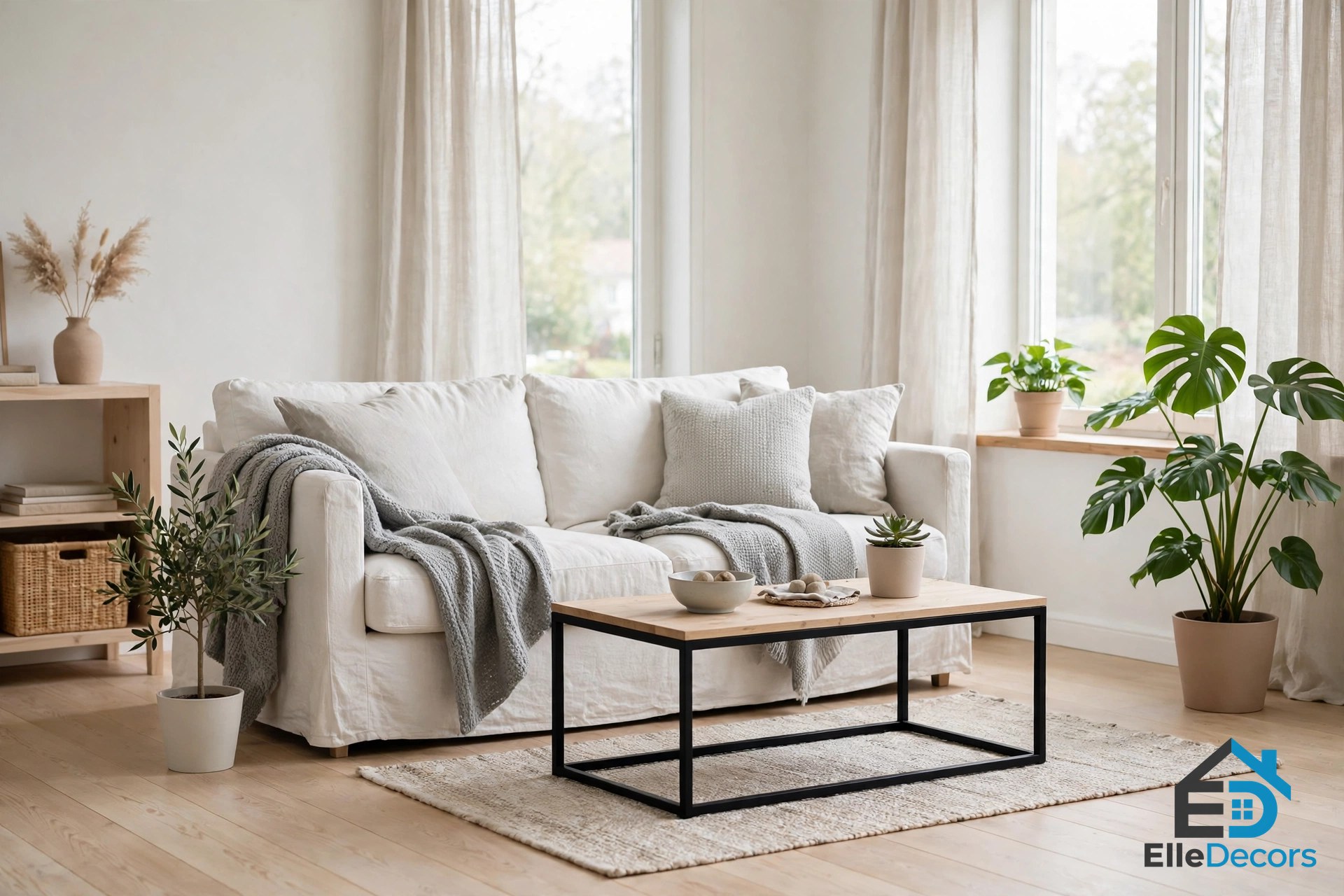
The classic Scandinavian colour palette is gallery white walls and white furniture, mixed with cool grey accents and a scattering of black base notes for balance. That is the whole recipe, and it works because each part has a job. White bounces the light around. Grey softens the white so the room does not glare. Black — a frame, a chair leg, a lamp — stops the paleness from going flat and gives the eye somewhere to land.
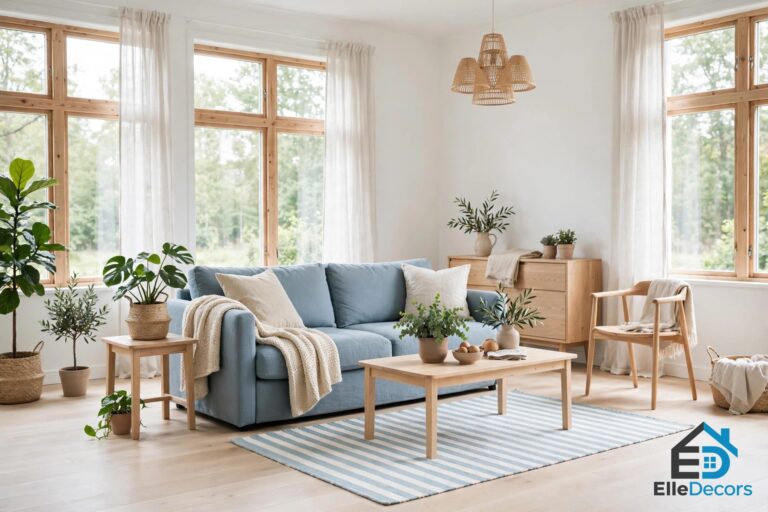
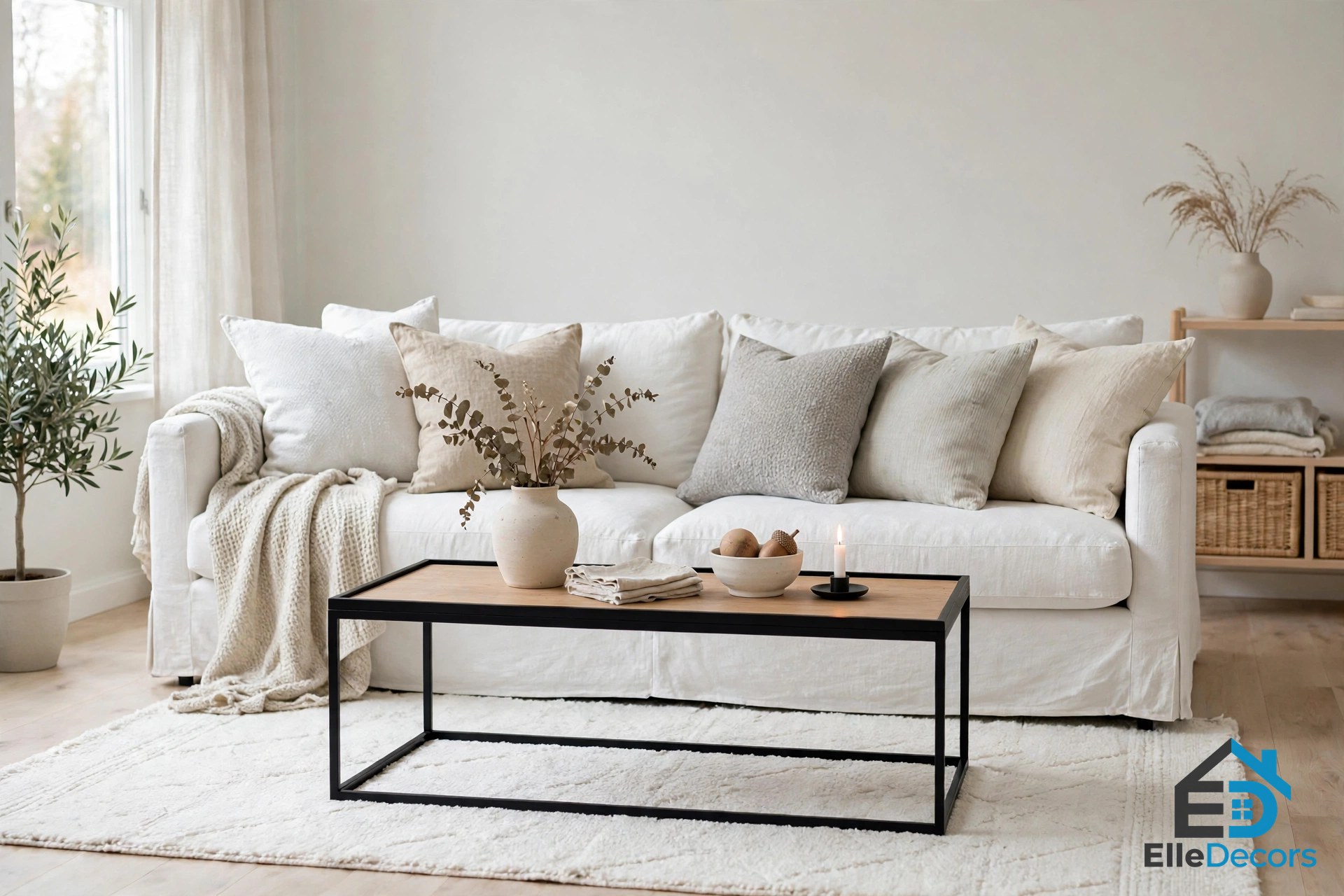
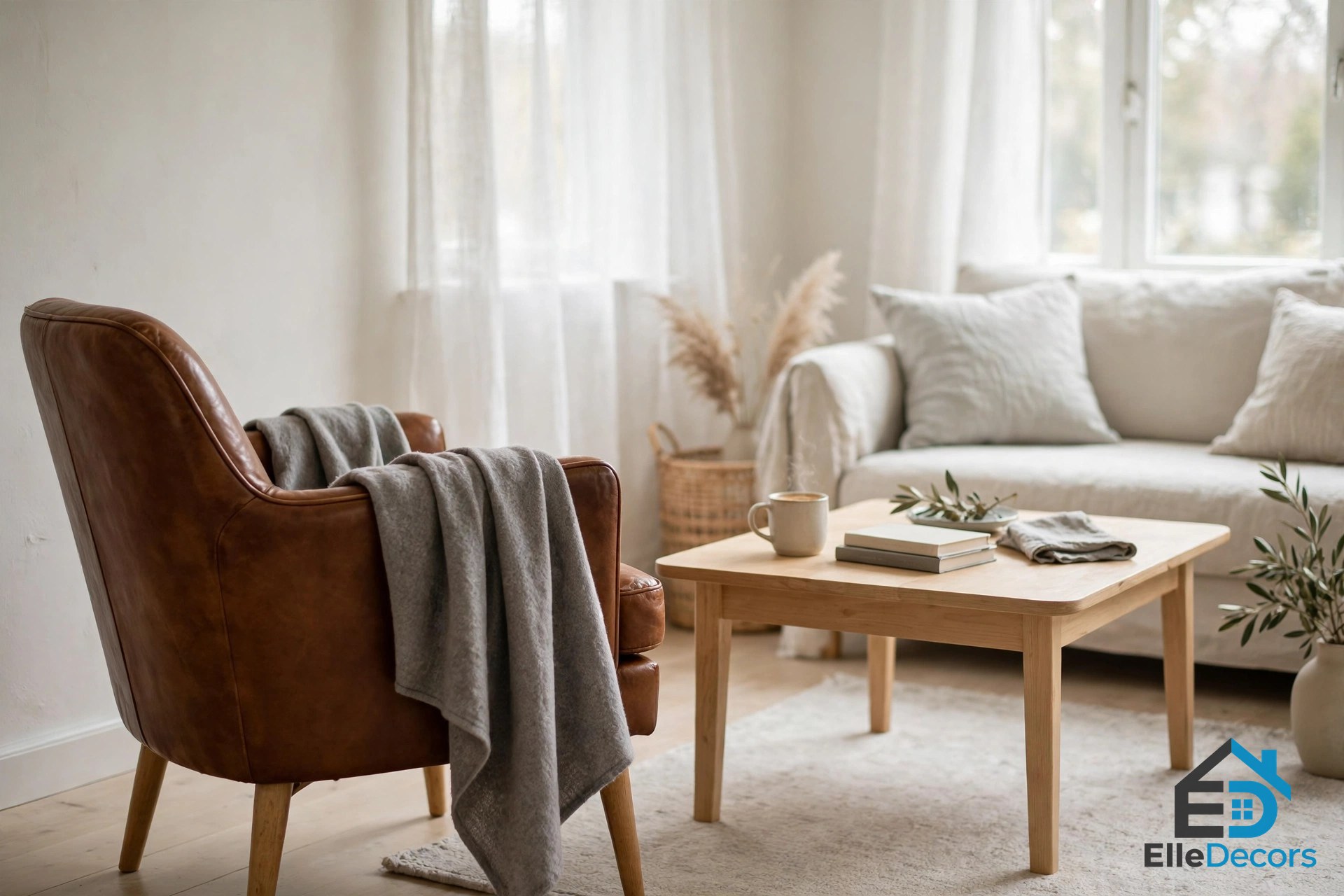
The style lives or dies on that black. Without it, a white room looks unfinished; with too much of it, the room stops feeling pale. Aim for roughly one black object per view: the black frame and legs of an ice-white coffee table standing out against a white area rug, a black-framed picture, a black dining chair. Our black and white interior guide goes deeper into how much black a pale room can take before it tips over. Grey does the quiet work in between: a charcoal grey bed ensemble against a paler grey backdrop, grey throws uniting a brown chair with a white sofa, a pale grey kitchen. And when the palette needs a lift, it comes from nature, not paint — green plants, a wooden table, a silver fruit bowl catching the light.
Light and Windows
Light is the reason the style exists, so treat it as a material, not as an afterthought. In the Stockholm apartment in our reference interiors, light from a large window reflects over the glass globe shades of a modern chandelier, and that single move — a big window plus a light-catching fixture — does more than any lamp could. Keep windows as bare as you can: no heavy curtains, no dark blinds. If you need privacy, use a sheer linen or a roller blind that disappears when it is up.
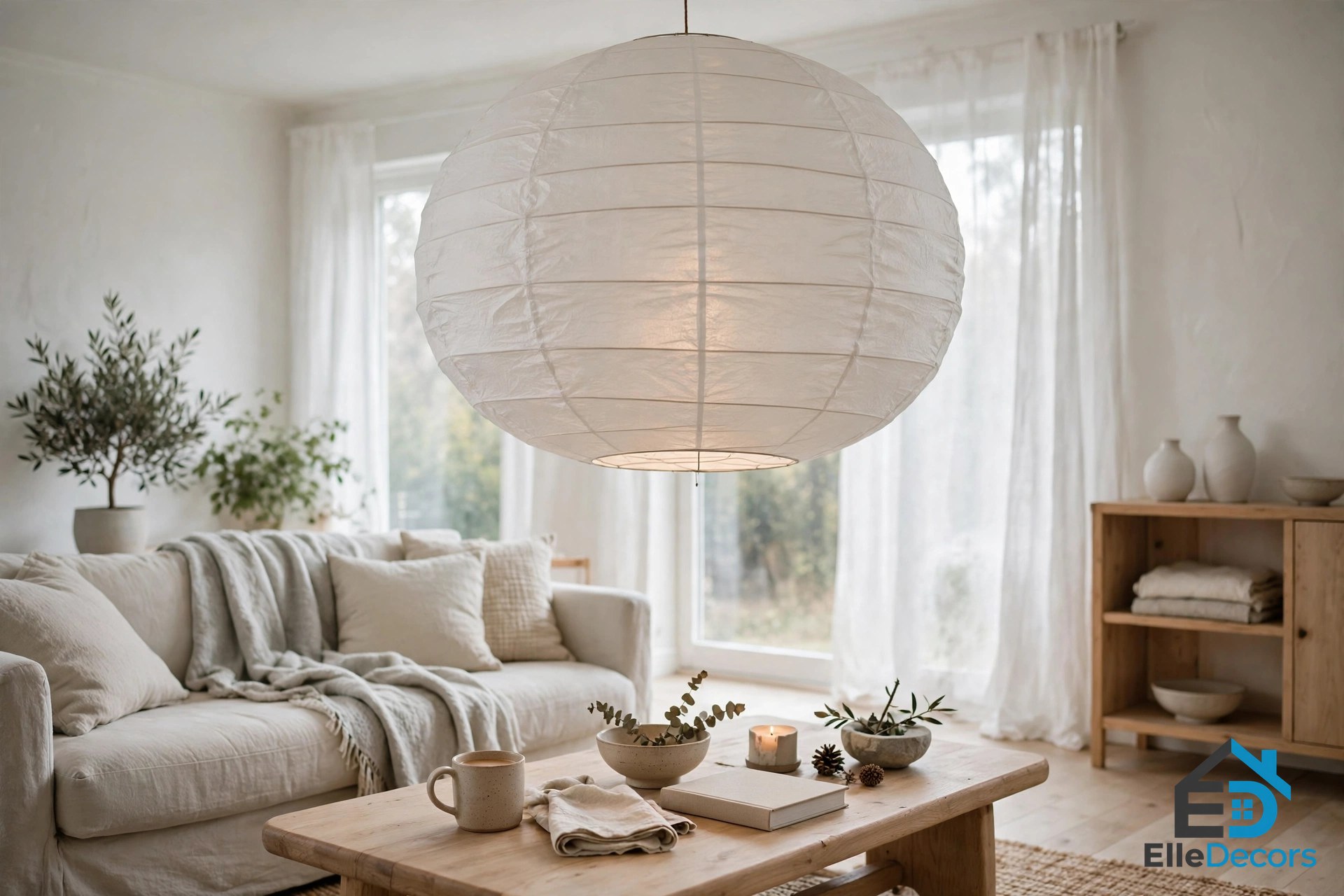
Mesh balustrades let natural light flow through to a mezzanine level, and the same idea works at a smaller scale: open shelving instead of wall cabinets, glass instead of solid doors, mirrors placed to catch a window. At night, the light should come from many small, warm sources rather than one bright ceiling light — an anglepoise floor lamp by a shelving stack, a white lantern shade swinging above the coffee table, tiny candles in geometric frames on the window sills. The goal is a room that glows in the evening the way it shines in the morning.
Furniture: Clean Lines, Light Wood, Room to Breathe
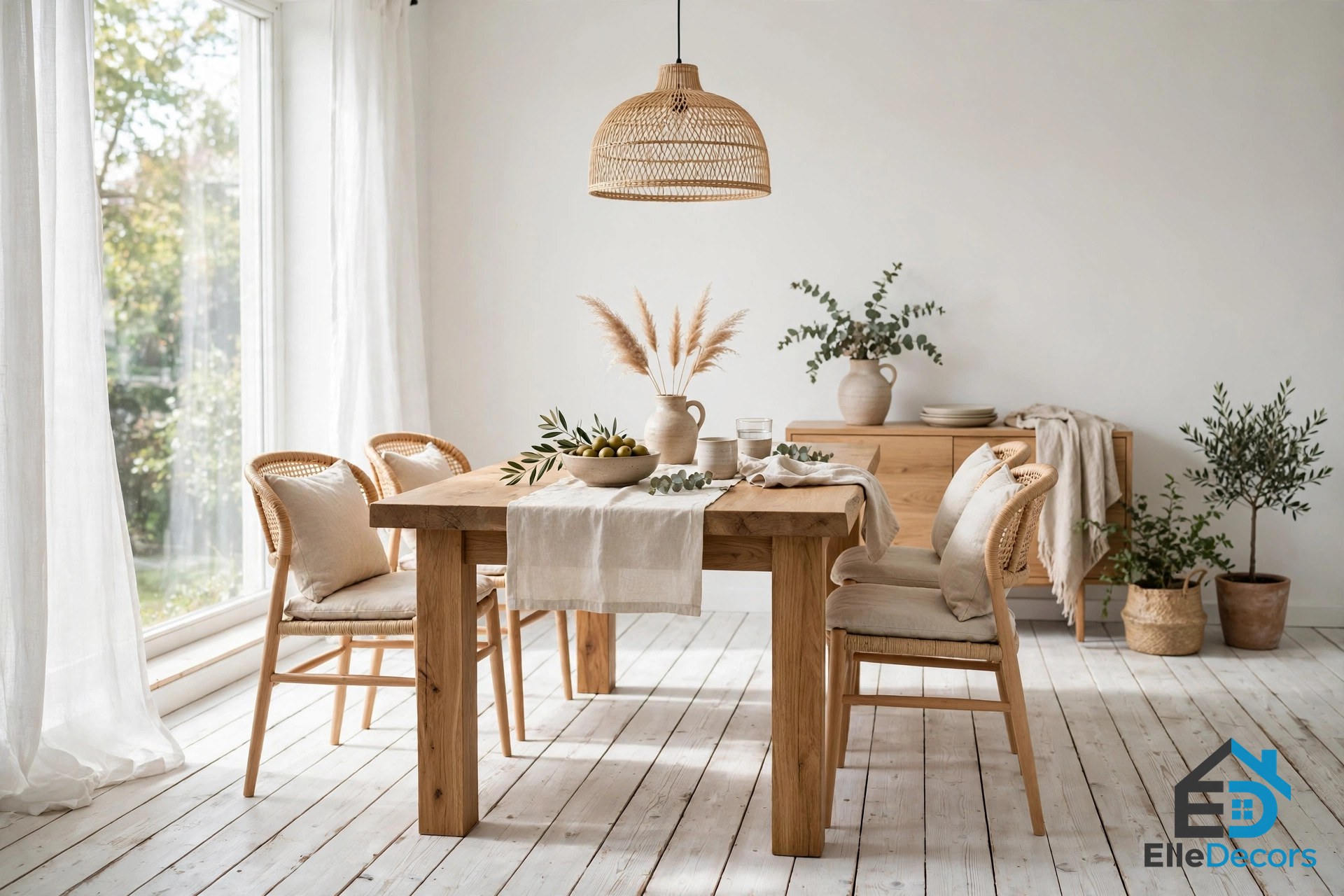
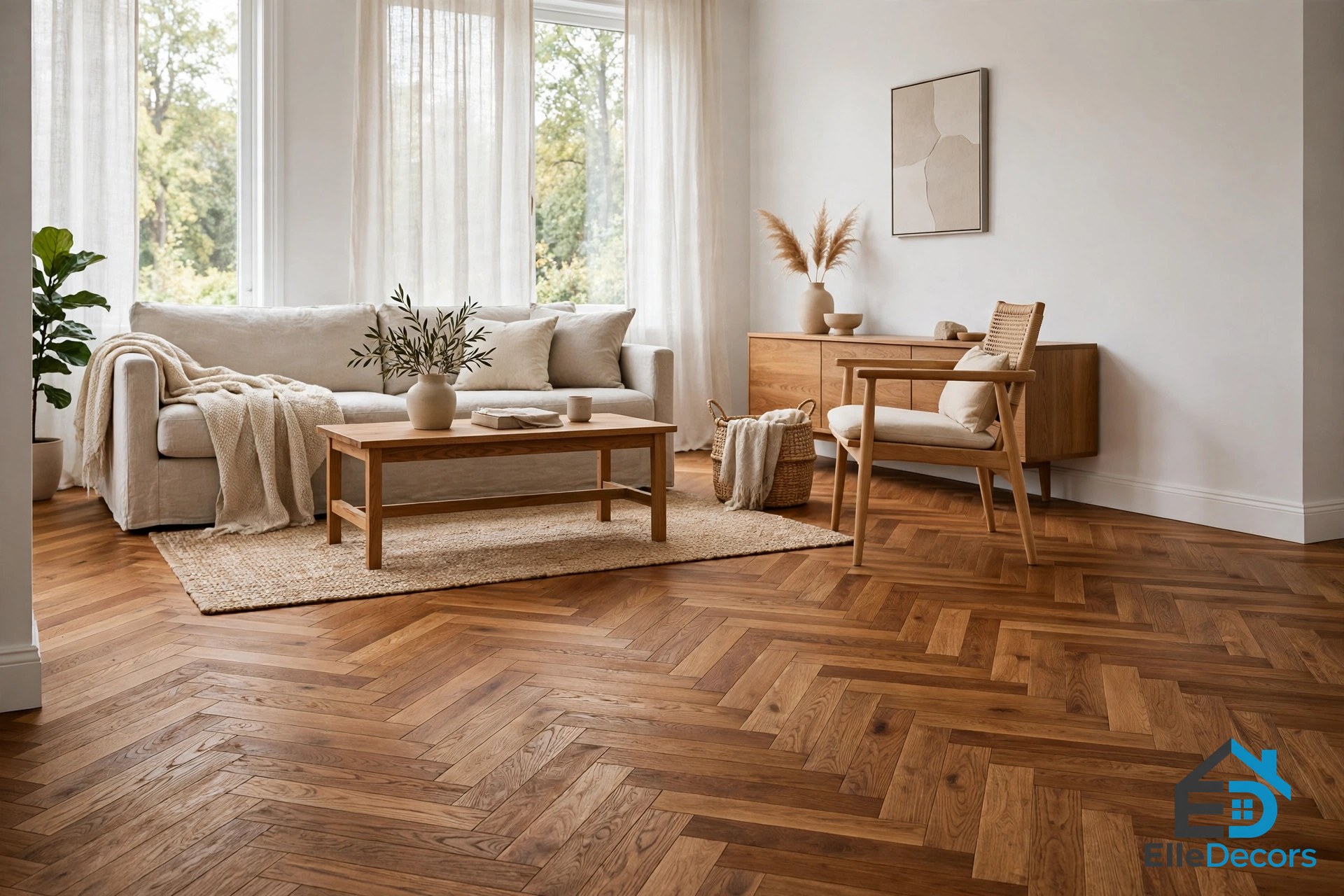
Scandi furniture is where the style is easiest to get wrong, because the temptation is to buy everything white. Do not. The trick is contrast within a narrow range: a snow-white sofa covered with an avalanche of cushions, a black-framed coffee table against a white rug, a brown accent chair complementing a wooden coffee table, grey throws tying them together. Light woods are the staples — oak or birch in furniture, shelving, and decor — and they are what stop a white room from feeling like a clinic. Our guide to the best use of wood in modern designs shows how pale timber warms a modern room without darkening it. A solid wood dining table against a whitewashed floor is the anchor of the whole look.
Choose furniture with clean lines and practical features, and leave space around it. Stacks of books on the floor and coffee table add personality without clutter, and nesting coffee tables give flexibility without a second piece of furniture. A lift-top coffee table brings a lighter tone to the living room and earns its keep in a small flat. Our guide to scandinavian chairs covers the classic chair shapes — the ones with wooden frames, tan seats, and soft curves that sit so well against all those architectural lines. One good chair, well placed, does more than a room full of matching sets.
The Kitchen in Scandi Style
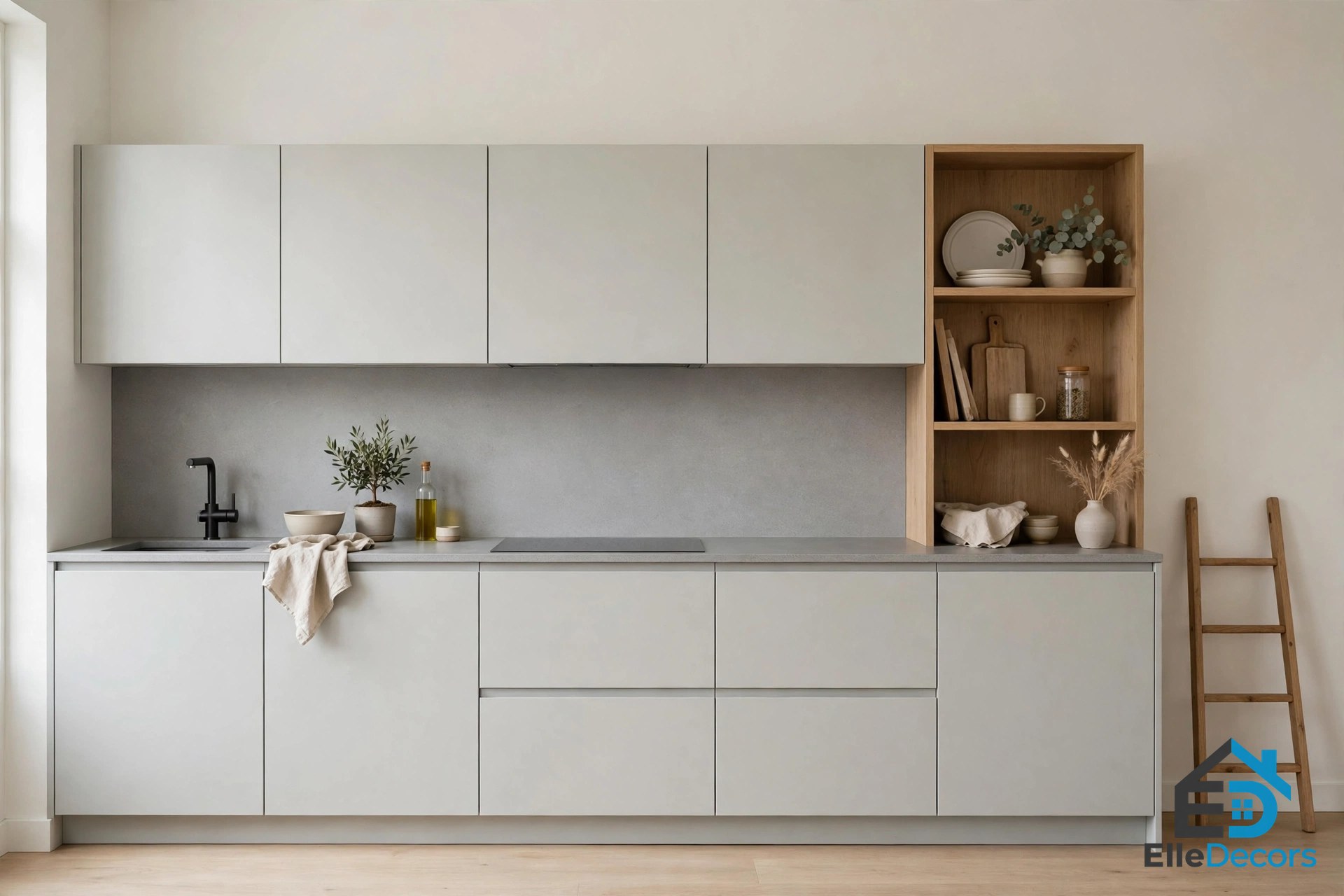
The Scandi kitchen is the most copied room in the style, and the easiest to plan. In the first of our reference homes, the one-wall kitchen is an installation of pale grey cabinets with a grey worktop and backsplash, and the minimalist design gets its visual interest from open shelving at one end, with a ladder kept nearby for the highest shelves. A hanging rail holds more cooking kit out on display. That is the formula: pale cabinets, one open element, and everything else hidden.
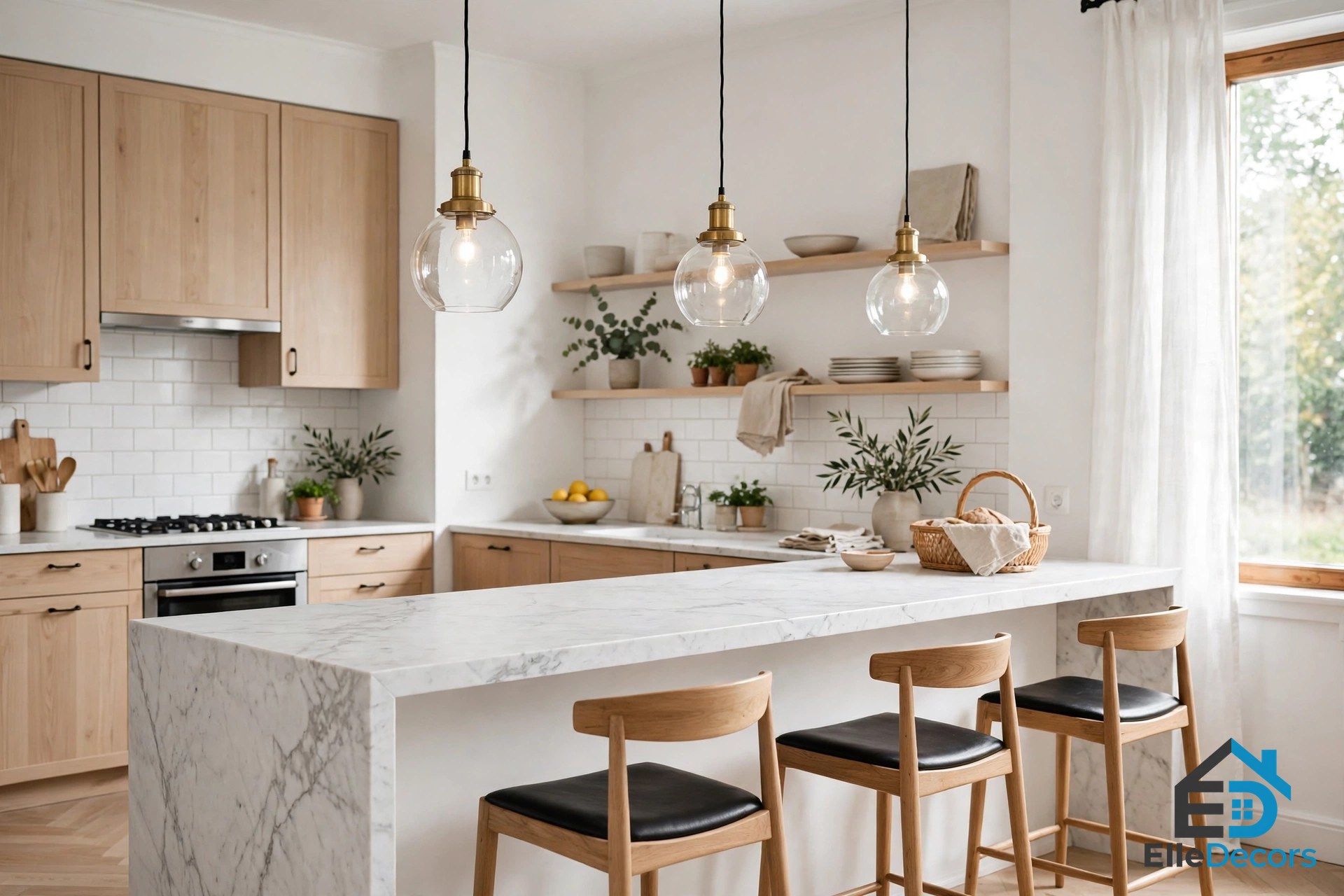
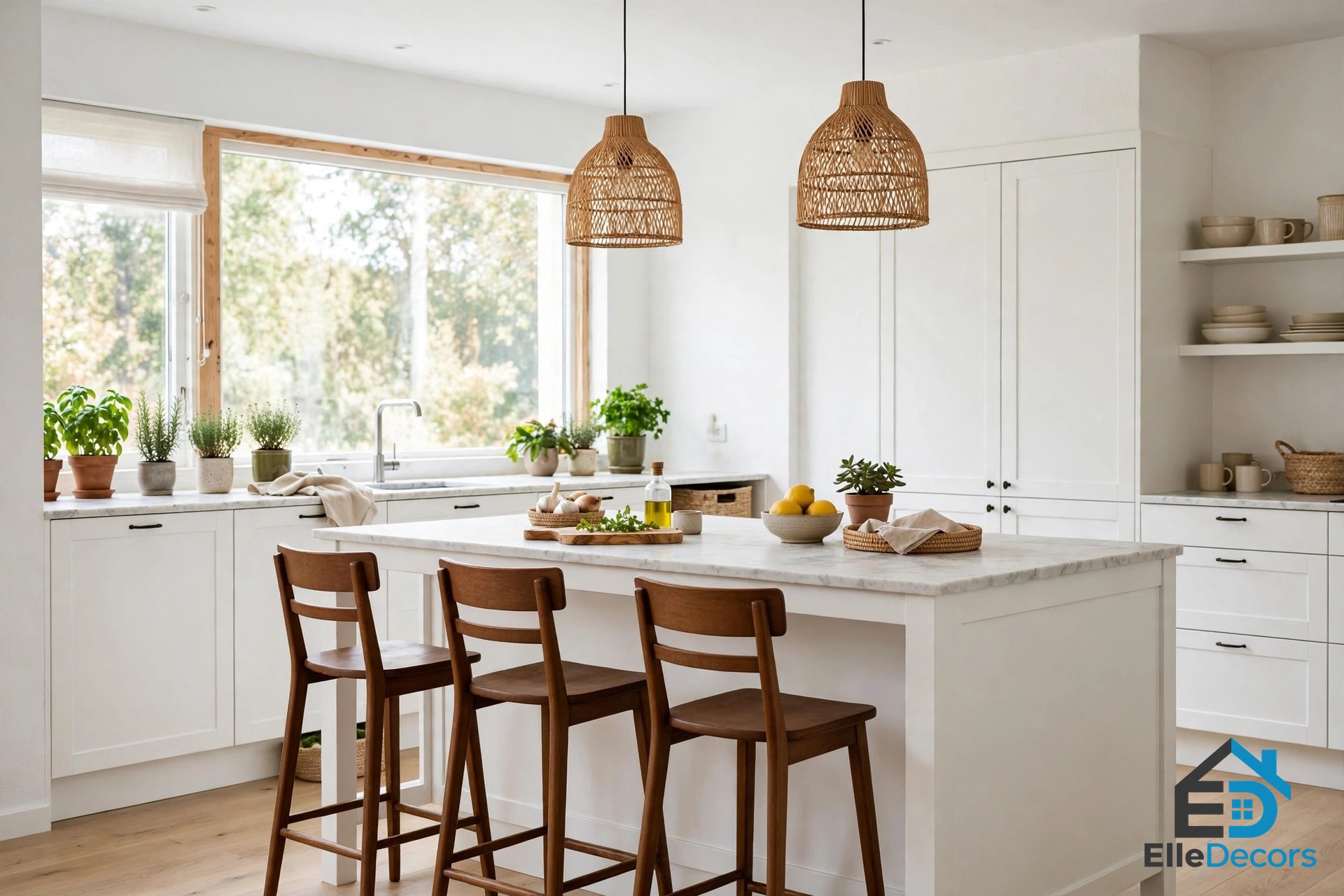
In the Stockholm apartment, the kitchen is white with an island and brown bar stools, and a trio of pendant lights hangs along a white marble breakfast bar, with a formal dining area nearby. The white kitchen is completed with a colour-coordinated integrated cooker, and indoor herb planters grow a little colour in the stark design. In the third home, the one-wall kitchen uses open shelving and a stainless steel sink integrated with the metal worktop, with indoor plants bringing life to the minimalist design. Whichever version you copy, keep the same discipline: one worktop material, one cabinet colour, open shelving in one place only, and plants as the only decoration on the counter.
The Bedroom: Soft Grey, High Shelves, Real Light
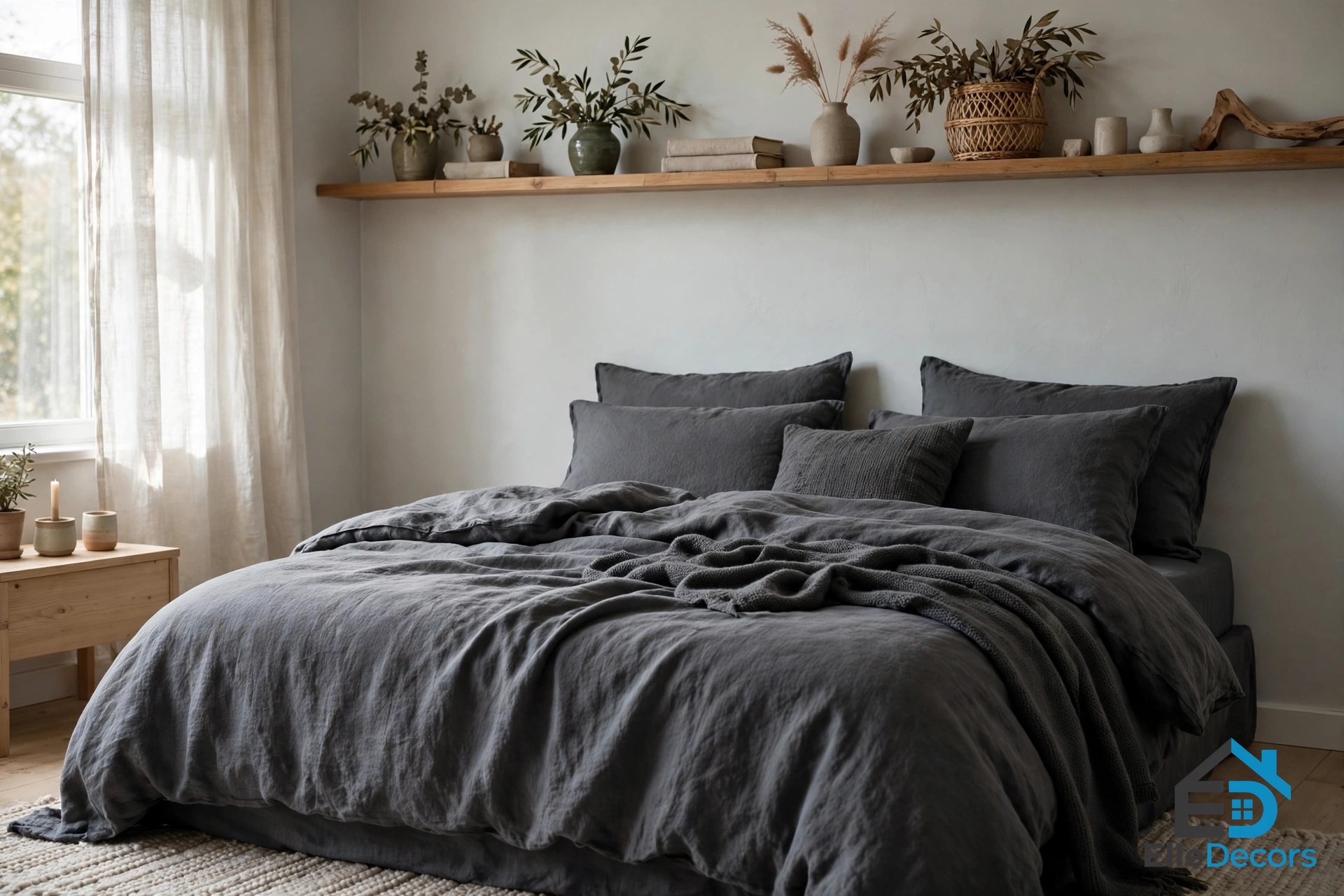
Scandi style works beautifully in a bedroom, because the palette is already restful. In the first reference home, the bedroom is a cosy charcoal grey bed ensemble against a paler grey backdrop, with a high shelf storing a menagerie of belongings up out of the way and out of direct eyeline. That high shelf is a good trick to steal: it keeps the room calm at eye level while giving you storage that does not need a wardrobe.
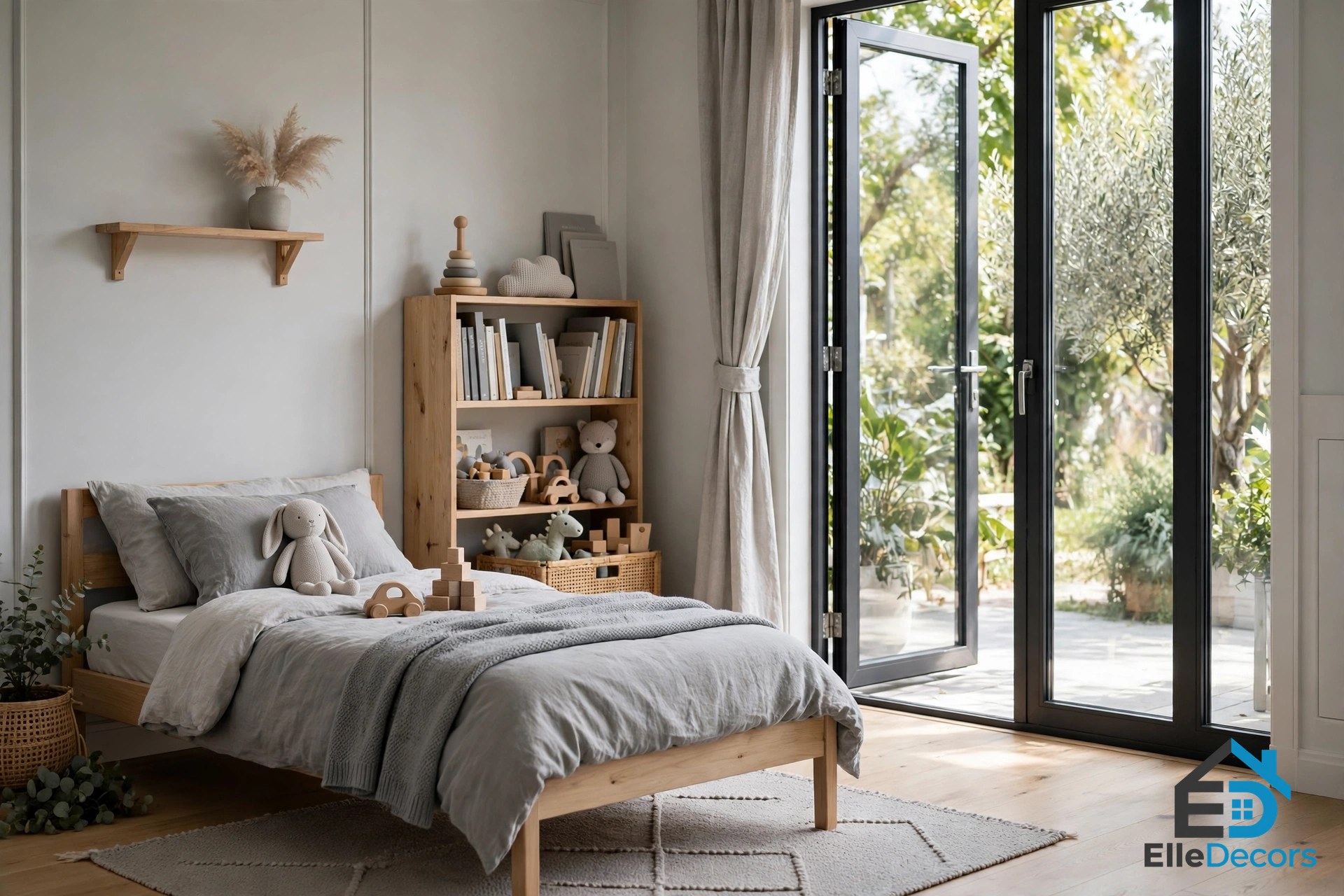
The child’s bedroom in the same home is awash with natural light through patio doors, and on the wall hangs a concept worth knowing about: “birth posters”, simple line illustrations of a baby at its real birth size, a neat way to remember how small they were the first time you met. An anglepoise grey floor lamp stands by an adjustable shelving stack for books and toys. In the Stockholm apartment, a white minimalist bathroom sits off the master bedroom, which keeps the same discipline as the rest of the home: pale walls, one dark accent, soft textiles, and a clear floor. Make the bed with linen in white or soft grey, add one knitted throw, and let the light do the rest.
The Bathroom: White Tile, Warm Wood
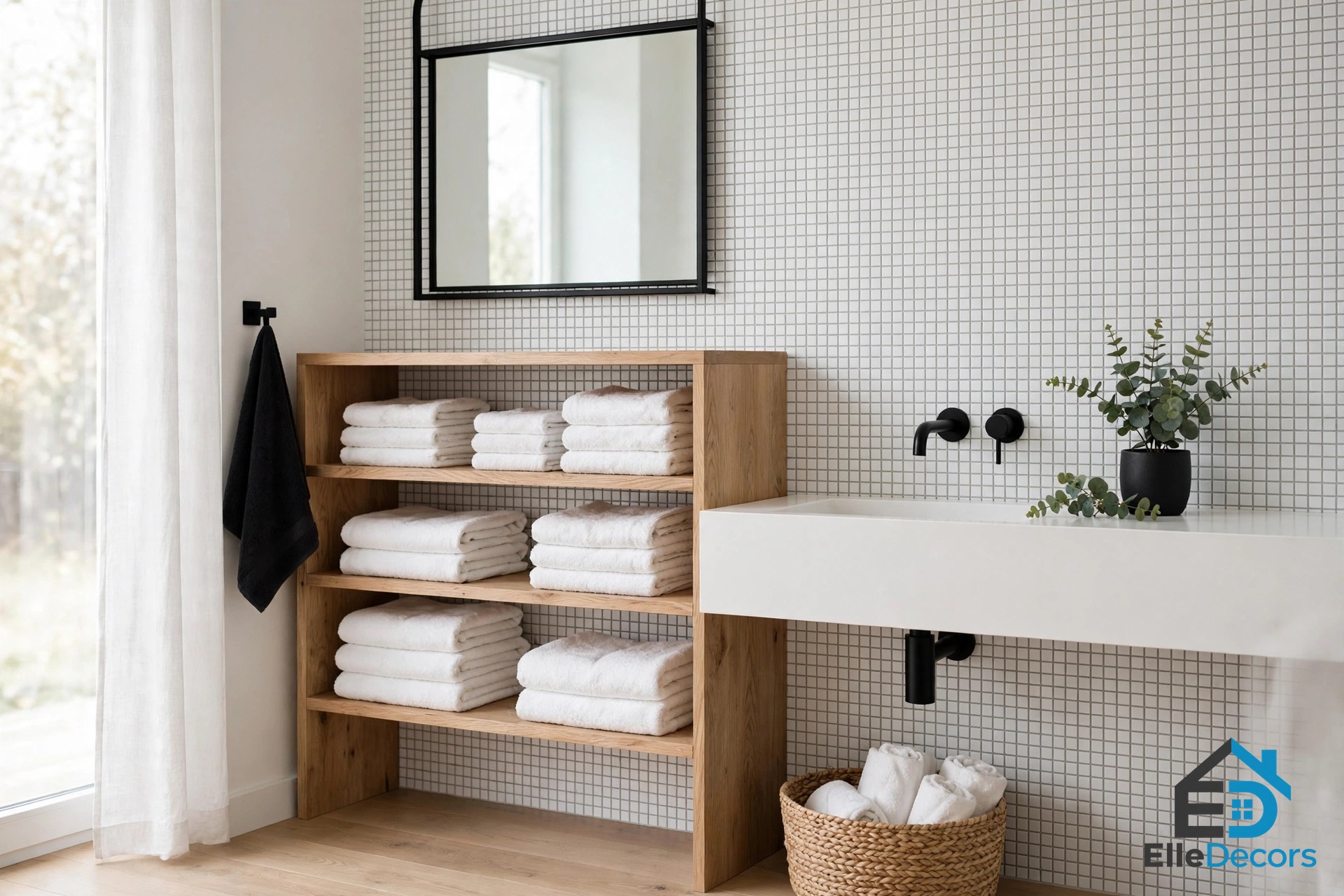
The Scandi bathroom is the smallest test of the style, and the clearest. In the first reference home, white mosaic tiles cover a black-and-white bathroom, and the monochrome scheme is lifted by the warmth of natural wood-grain shelving and storage trays. That is the whole move: white tile, black accents, and wood to warm it. No coloured towels, no patterned shower curtain, no clutter on the basin.
In the Stockholm apartment, colour-contrast basins and unique faucets add interest to a plain white bathroom, which is the other way to do it: keep the room white, and let one fixture — the basin, the tap — carry the personality. Either way, storage should be wood, open, and minimal: a wooden shelf, a wooden tray, and nothing else on show. A plant that likes humidity, kept in a plain pot, is the only decoration the room needs.
The Living Room: Plants First, Then Restraint
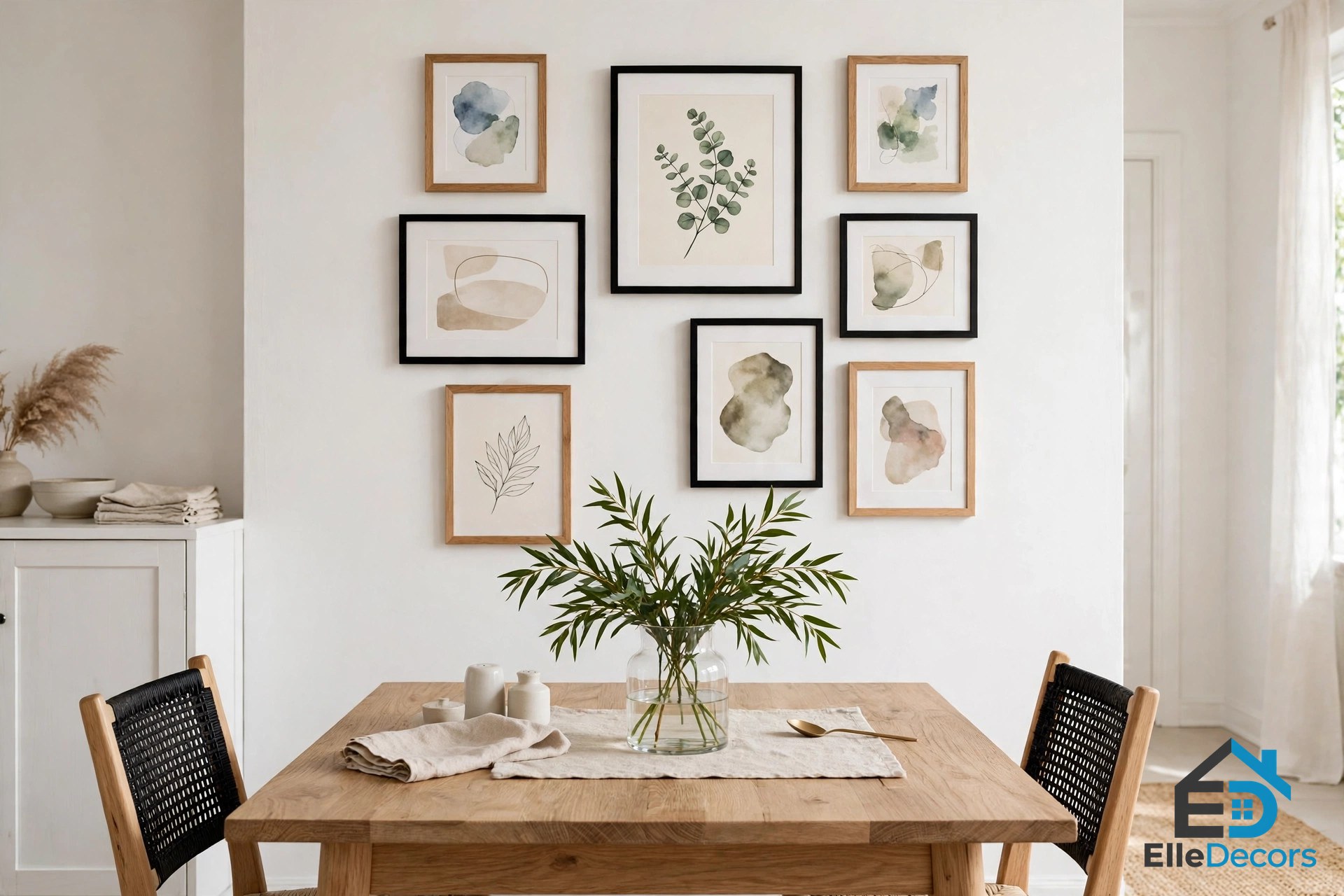
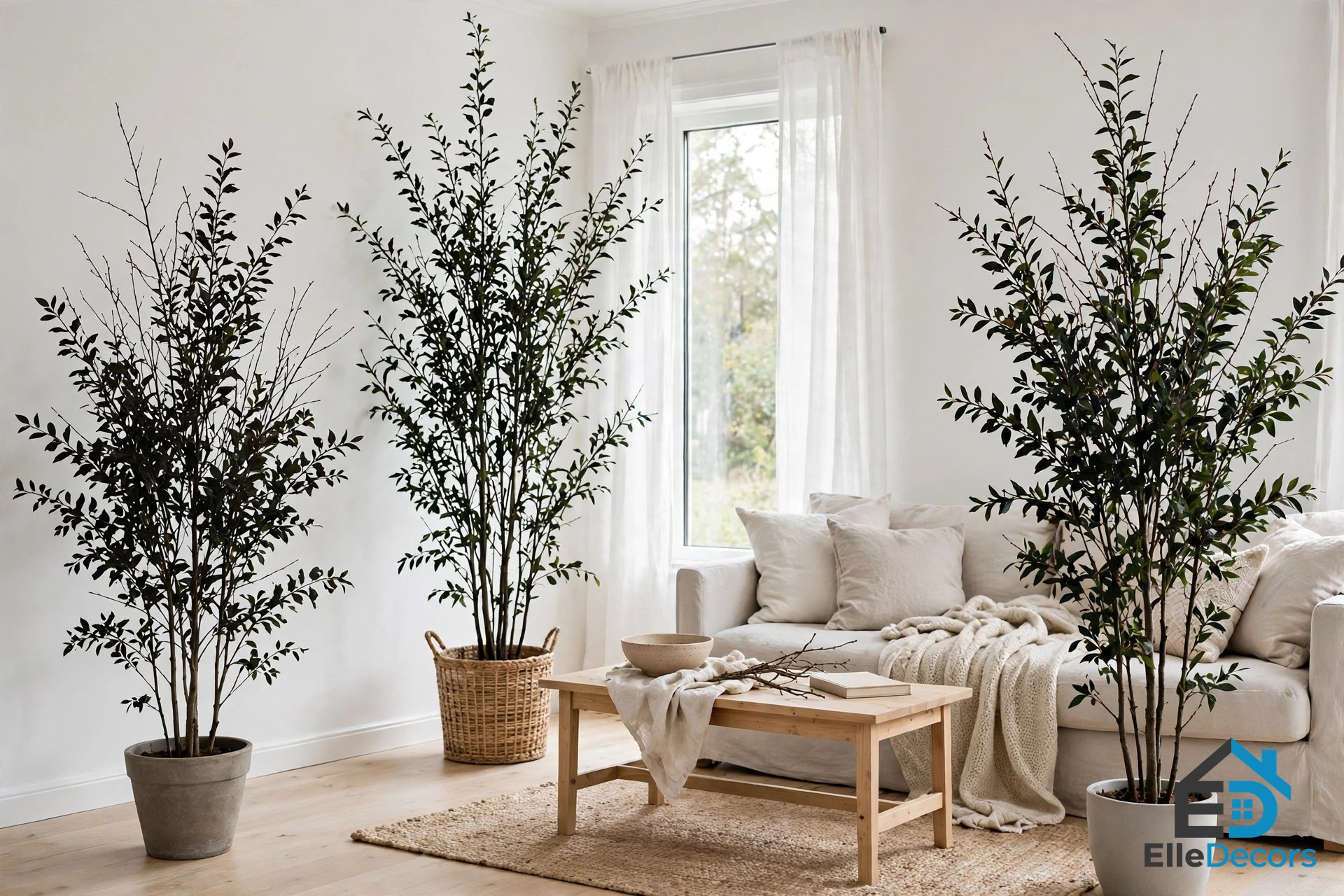
In the third reference home, it is the plants that make the first impression. Twigs and dark foliage look architectural against a pure background, and that is the best single rule for a Scandi living room: let the plants be the decoration, and keep everything else quiet. A delicate geometric pattern dances over the living-room rug, an enormous white lantern shade swings above the coffee table, and a silver fruit bowl brings a glint of light onto the dark wood stain of the dining table. Black cushioned dining chairs complete the dark dining set, and colourful wall art makes an unexpected statement in the white room — the art visually anchors the dining area in its place.
The lesson is restraint with one exception. A Scandi living room can take exactly one bold move: one colourful artwork, one dark dining set, one enormous lantern. Two bold moves and the calm breaks. Keep the rest pale, keep the wood light, and let the plants do the talking. Two sets of drawers pushed together make a dining-room sideboard, displaying books and finds beneath another gallery wall — storage that looks like styling.
Mistakes That Make a Pale Room Feel Cold
The most common mistake is removing the warmth with the clutter. A white room with no wood, no plants, and no textiles is not Scandi; it is a waiting room. If the room feels cold, the answer is almost always one of three things: add light wood, add a plant, or add a soft layer. A wooden coffee table, a woollen throw, or a green plant in a plain pot will fix most cold rooms in an afternoon.
The second mistake is too much white furniture: white walls, a white sofa, white tables, and white shelves leave the eye nothing to hold onto, and the room feels unfinished rather than calm. The black base notes exist for this reason: one black frame, one dark chair, one dark table. The third mistake is matching sets. Scandi rooms look collected — a brown chair that does not match the sofa, a silver bowl that does not match anything — so a matching furniture set will fight the style. Finally, do not fill the open shelves. Open shelving works when it holds a few chosen things with space around them; packed shelves are just clutter with better lighting.
Three Pale Homes, Three Lessons
The three interiors described in the reference tour are all pale, but each one teaches a different lesson, and comparing them is the fastest way to find the version that fits your home. This table sums up how scandi style changes from home to home, so you can borrow the lesson that matches your rooms.
| Home | Defining feature | Palette | Lesson to steal |
|---|---|---|---|
| First home | One-wall grey kitchen, charcoal bedroom | White, pale grey, charcoal | One open element per room is enough |
| Stockholm apartment | Glass globe chandelier, marble breakfast bar | White, marble, brown stools | Let the window and one fixture do the lighting |
| Third home (plant-led) | Twigs and foliage, white lantern shade | White, dark wood, green | Plants first, then restraint |
Watch: A Warm Scandinavian Apartment Tour
Watch a real tour of a Scandinavian family home in Copenhagen, Denmark — a historic townhouse shared by a couple, their five children, and a dog — filmed room by room by interior designer Jane of Interior Insights. The chapters walk through the living room, dining room, kitchen, bedroom, and bathroom, and the colour analysis in the middle of the video is the most useful part: it shows how a pale home stays warm. Use it as a tour to study, not a how-to, and note how little is in each room.
Video: A warm Scandinavian apartment tour in Copenhagen, Denmark, with interior designer Jane of Interior Insights.
Frequently Asked Questions
What is scandi style in interior design?
Scandi style is the Scandinavian approach to interiors: pale, calm, functional rooms built on white walls, light wood floors and furniture, cool grey accents, and a scattering of black for balance. It comes from Denmark, Sweden, and Norway, where long, dark winters inspired a focus on light, comfort, and practicality. The style emerged in the early 20th century and became a defining feature of mid-century modern design. The feeling it chases is hygge, the Danish idea of cosiness and contentment, delivered through soft rugs, knitted throws, and natural materials.
Is it the same as minimalism?
No, though they overlap. Minimalism is about owning as little as possible; the Scandi approach is about owning useful, beautiful things and giving them room to breathe. A Scandi home has books, plants, throws, and collections on display — it is just edited so that everything visible earns its place. If a minimalist room feels empty, a Scandi room feels calm. The difference is the warmth: wood, wool, linen, and greenery, where minimalism would leave the surfaces bare.
Can scandi style work in a small flat?
Yes — it may work best there, because the pale palette and the light make small rooms feel bigger. The rules still apply: one black anchor per view, light wood instead of dark, open shelving in one place only, and plants as the decoration. A white sofa, a lift-top coffee table, and a single gallery wall can carry a whole small living room. The style’s small-space roots are the reason so many of the most-saved Scandi rooms online are flats, not houses.
How do I keep a white Scandi room from feeling cold?
Add warmth in this order: light wood, plants, then textiles. A wooden coffee table or herringbone floor warms the room structurally; a few green plants add life and colour; a woollen throw and a linen cushion add the softness. Keep the black base notes — a frame, a chair leg — so the eye has somewhere to land, and use warm light in the evening rather than cool white bulbs. If the room still feels cold, the answer is usually more wood, not more colour.
The Bottom Line
Scandi style is not about buying white furniture; it is about building a home that chases light and rewards calm. Start with the palette — white, grey, and a little black — add light wood and plants, keep one dark anchor per view, and edit until everything earns its place. Do that room by room, and the home will feel the way the style promises: pale, warm, and easy to live in, in every season.