Neoclassical Interior Design: A Calm, Balanced Guide to the Classic Look
Audio Summary
Neoclassical interior design is the art of making a room feel grand without making it feel stiff. It borrows the order of ancient Greek and Roman architecture — columns, symmetry, clean lines — and softens it with comfortable furniture, muted colours, and modern living. The result is a home that feels timeless rather than trendy, formal rather than fussy, and calm rather than empty.
This guide explains what the style is, where it came from, its five principles, and how to apply it room by room.
What Is Neoclassical Interior Design?
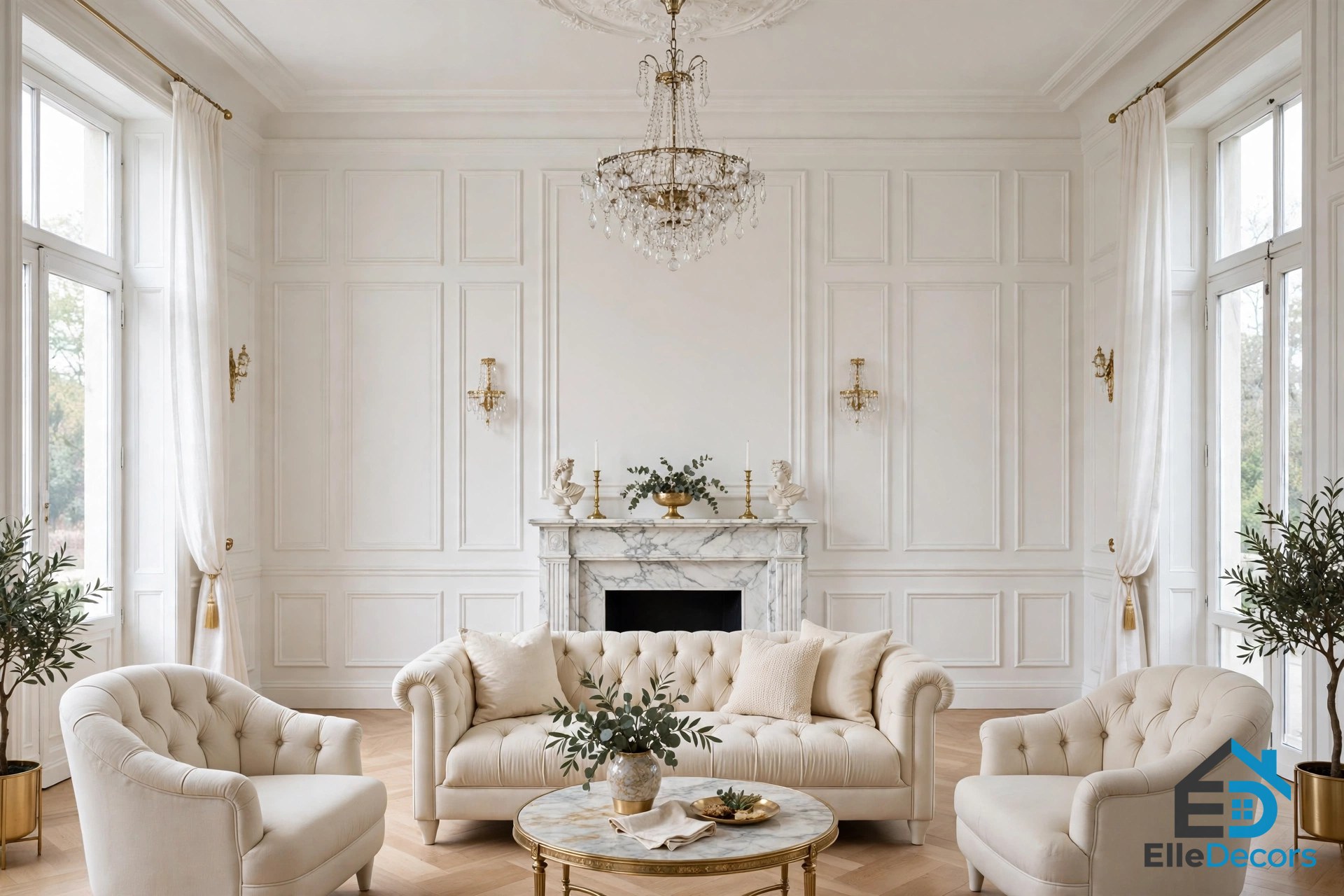
At its simplest, the style is a revival. It looks back to the art and architecture of ancient Greece and Rome and rebuilds their harmony, balance, and order for a later home. Symmetry comes first, then clean lines, then ornament used with restraint. Nothing in the room is random, but nothing shouts either.
The style is often confused with plain classicism, but the two are not the same. Classical design draws directly on the traditions of ancient Greece and Rome. Neoclassical design is a later reinterpretation of those traditions, associated with the movement that began in the mid-18th century. In practice, a neoclassical room can sit in a new apartment as happily as in a period townhouse.
Modern neoclassical is the version most people actually live with. It combines classical architectural details with contemporary furnishings: panelled walls and a pedimented doorway with a simple upholstered sofa, restrained lighting, and fewer decorative objects than a historical interior.
Where the Style Comes From
The story of neoclassical interior design begins in the middle of the 18th century. Neoclassicism emerged in Europe in the mid-18th century and became a major influence on interiors in the late 18th and early 19th centuries. Archaeological excavations at Herculaneum from 1738 and Pompeii from 1748 helped renew interest in antiquity.
The movement shaped interiors across Europe and America: Louis XVI interiors in France, Robert Adam’s work in Britain, and Federal-period design in the United States. Robert Adam’s library at Kenwood House in London shows the lighter approach well, with pastel colours and intricate plasterwork organised into a coordinated composition.
It also helps to know what the style was reacting against. The neoclassical era was marked by pulling back the excess of Rococo, which originated in France in the early 18th century and was asymmetrical, bright, and elaborately decorative, with S- and C-shaped curves, detailed scrollwork, and gilding. Neoclassical design offered a more refined and intentional minimalism by comparison: straight lines, balanced compositions, and motifs drawn from antiquity.
The Five Principles That Hold It Together
1. Symmetry and Proportion
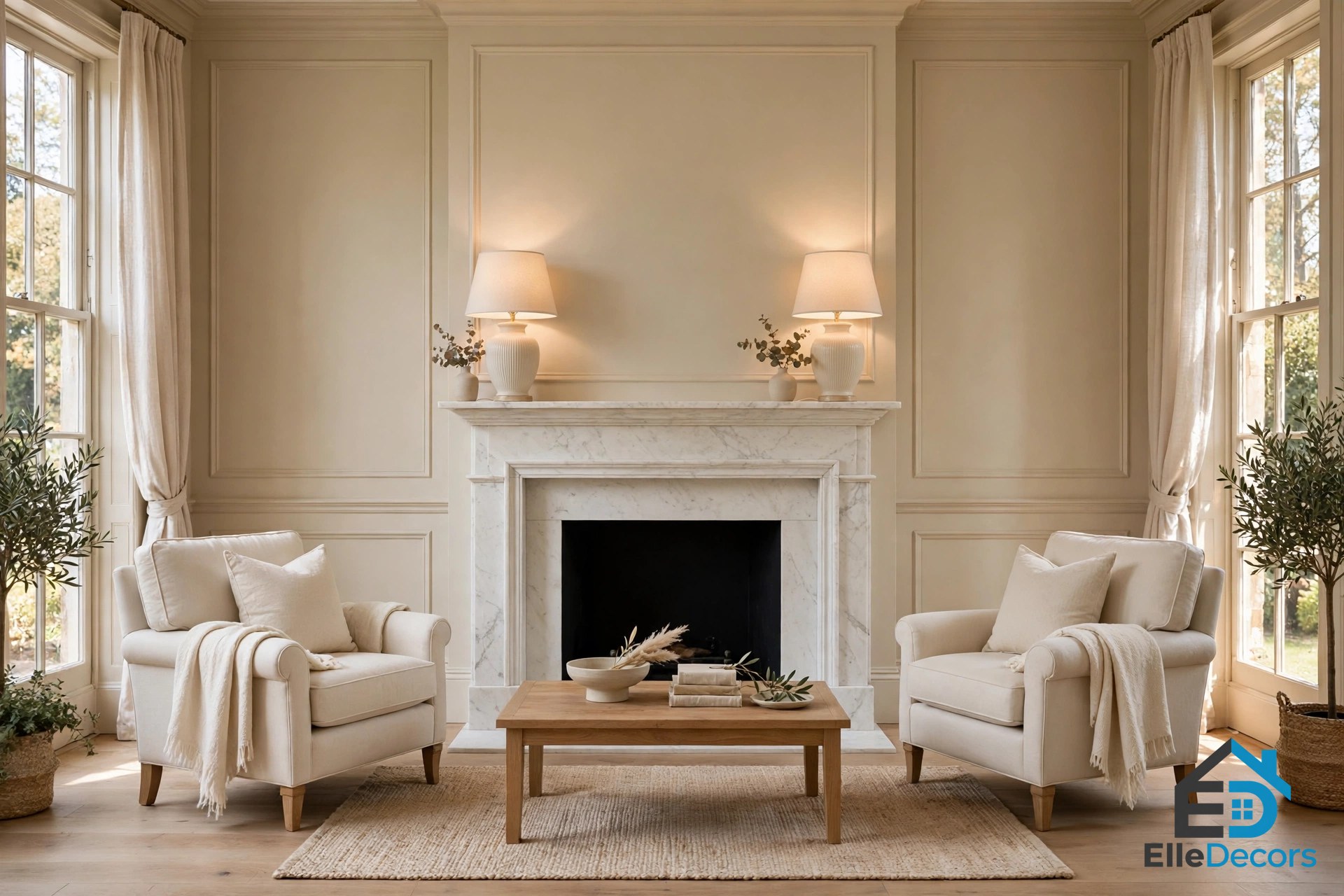
Balance is the cornerstone of neoclassical interior design. A sofa faces a fireplace with matching chairs on either side, and a pair of lamps flanks a console.
Start with the room’s main focal point, such as a fireplace or a central window, and arrange the furniture around that axis. Use matching lamps or chairs where they strengthen the composition, but do not force symmetry across doors or essential circulation routes. Allow roughly 900 mm of clear space along a main walking route as a planning starting point.
2. Classical Architecture
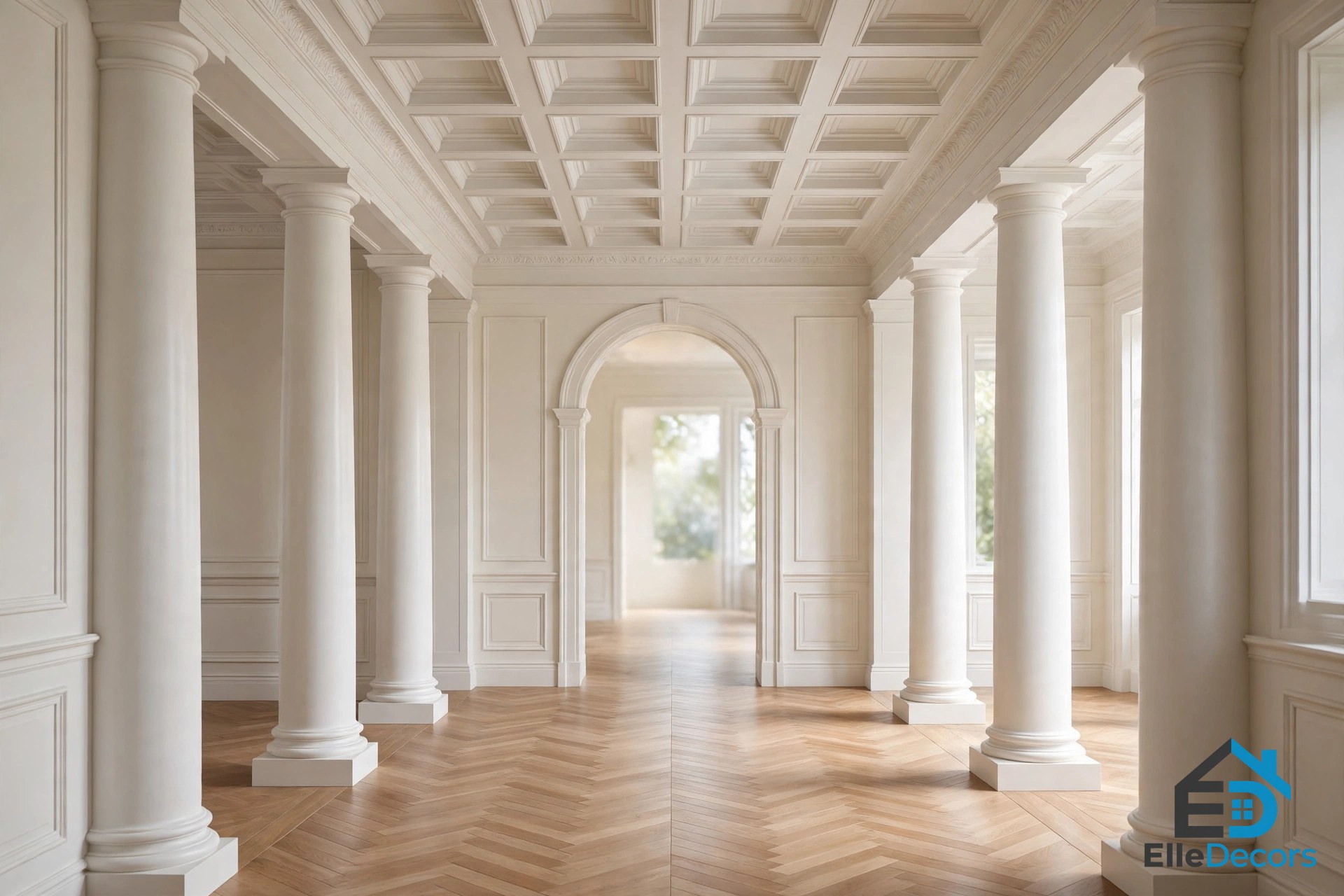
The architecture of the room establishes the effect. Typical features include cornices, panelled walls, pilasters, ceiling medallions, and door surrounds with pediments. Pilasters are shallow, column-like projections attached to a wall, and they give a flat wall the rhythm of a colonnade without taking up floor space. Arches can appear in doorways, windows, or fireplace mantels, and columns can provide structural support or serve as decorative dividers.
3. A Soft, Muted Palette
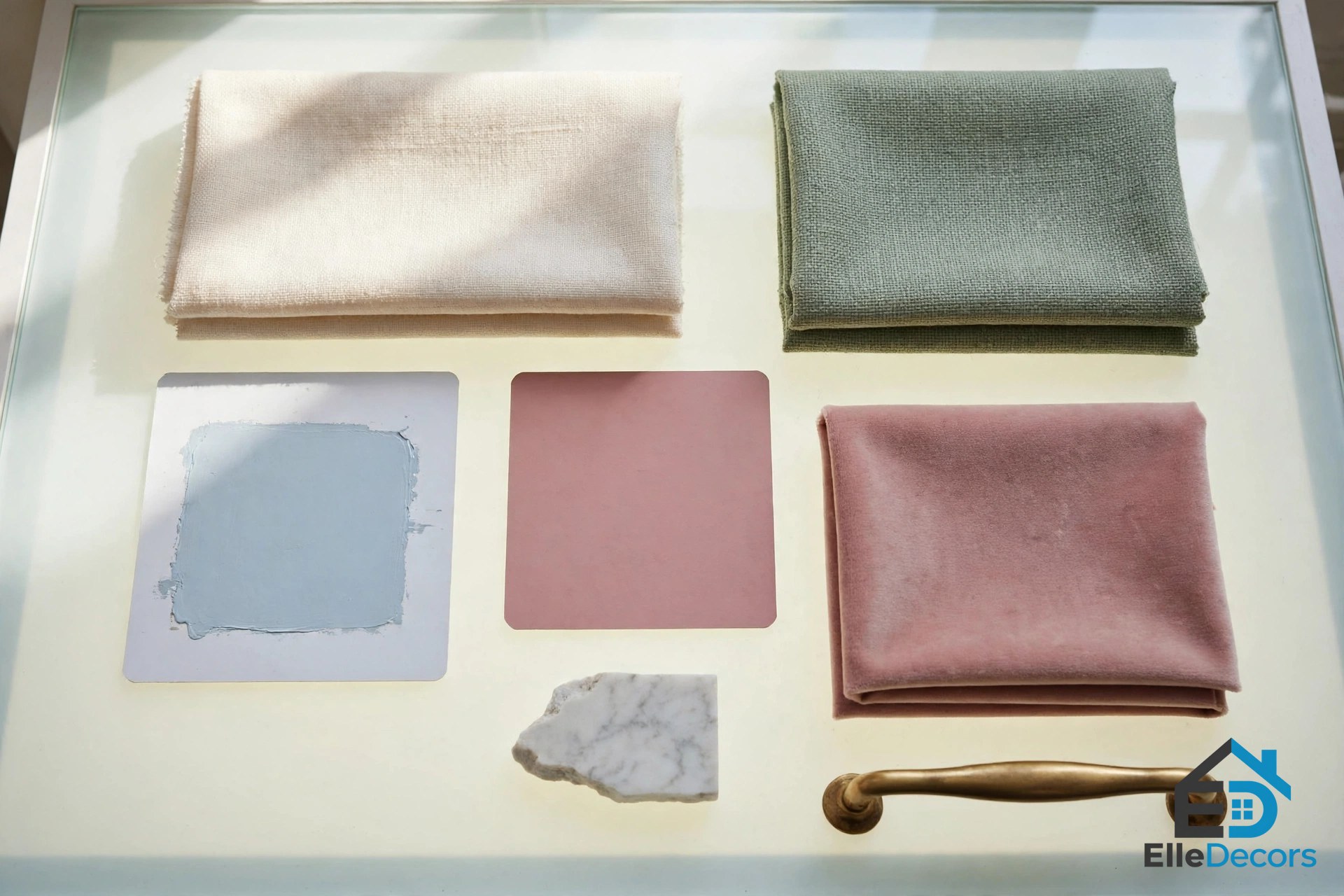
The palette of neoclassical interior design is light and natural, with an emphasis on neutrals. Think cream, taupe, moss green, and stone blue. The typical range also includes creams, ivory, soft greys, pale blues, sage, and dusty rose, and those hues serve as a refined backdrop that lets architectural details and art shine.
But the style is not restricted to neutrals or pastels, and it is a mistake to think a neoclassical room must be all white. Pale blues, greens, and stone tones appear alongside richer colours, gilding, and decorative painting. Gold, gray, green, red, or black can accent the soft neutrals, along with natural stone. Pick two or three main shades and repeat them through the space.
4. Luxurious Materials
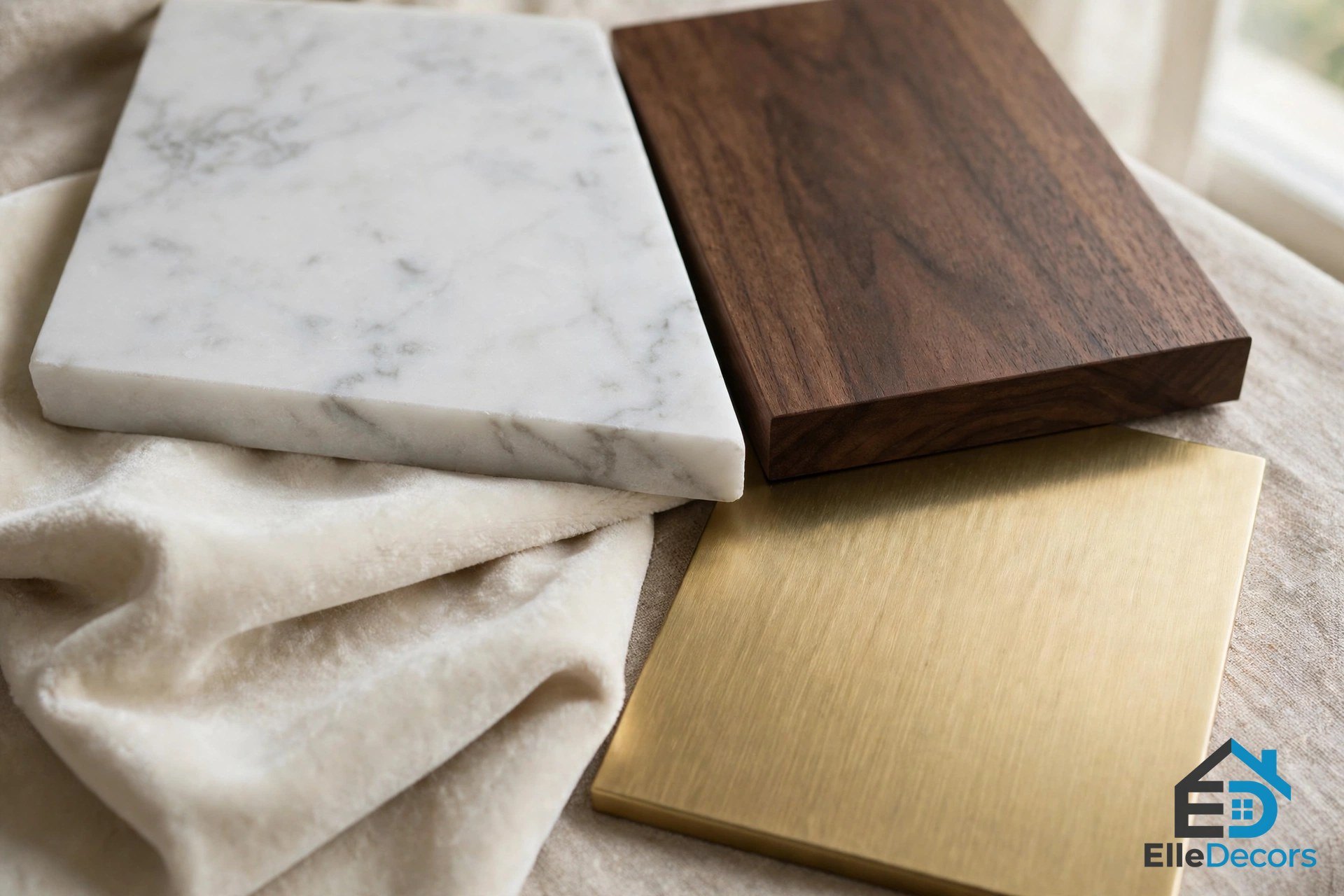
Marble, wood, velvet, silk, plaster, and gilded finishes are essential to the style. Surfaces are tactile and refined, never overly rustic or glossy. Characteristic materials include mahogany, painted or gilded wood, marble, and gilt-bronze mounts, while silk upholstery and patterned carpets provide softness.
Wood deserves a closer look, because it sets the tone of the furniture. Walnut frames with dark, rich grain suit the style’s formal side, and a low velvet sofa on caster legs or a high-back upholstered chair with a subtle pattern and wood accents are classic pieces. For more on choosing and placing wood so it reads modern rather than heavy, see our guide to the best use of wood in modern designs.
5. Ornament With Restraint
Unlike Baroque or Rococo, neoclassical design avoids excessive embellishment. Decorative motifs such as Greek key borders, laurel wreaths, and medallions are used sparingly and with purpose.
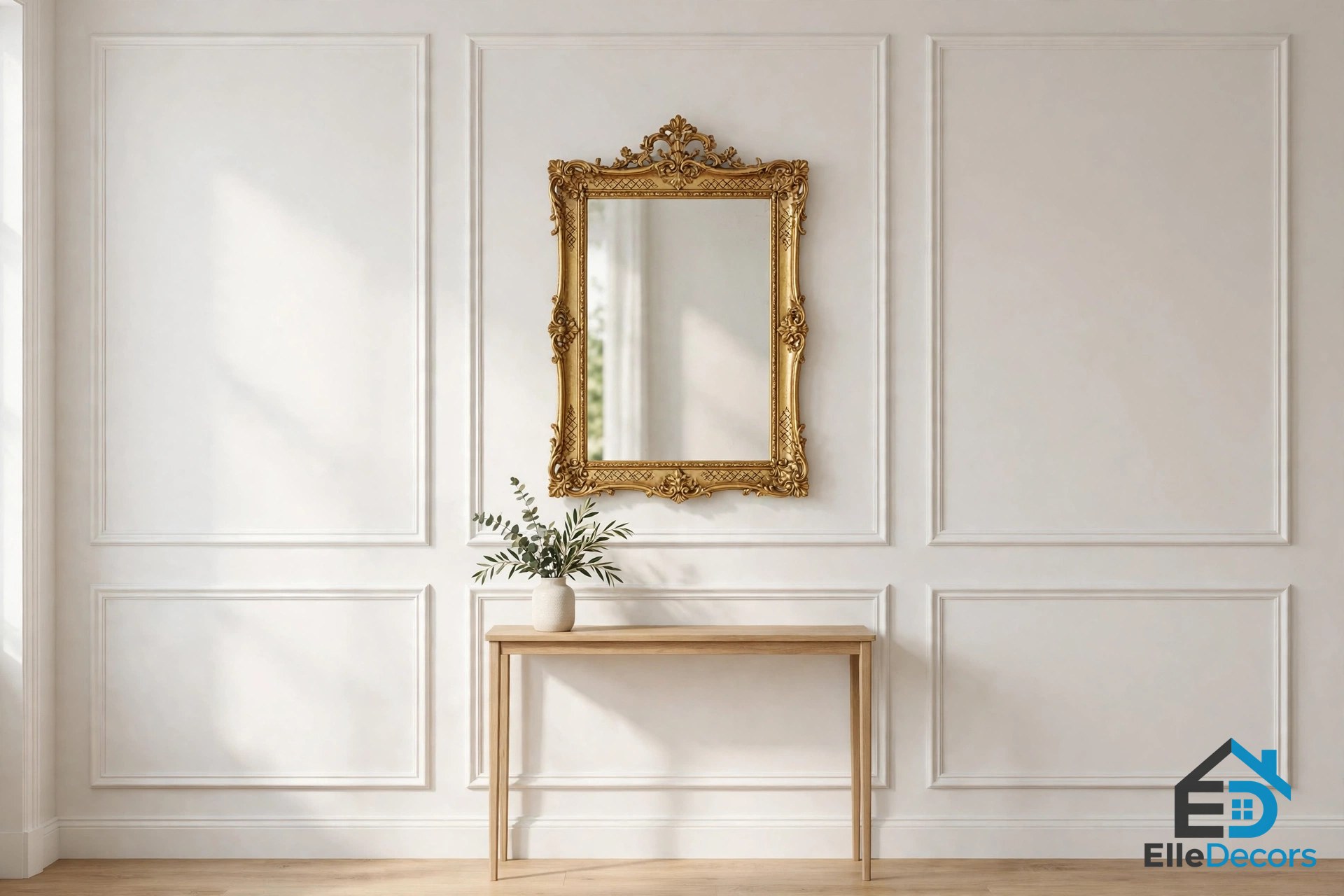
Millwork is where this principle shows most clearly. In addition to baseboards and crown moulding, the style features raised or recessed wall panels and moulding around doorways. Picture frame moulding, also called box trim, is especially popular in simple grids or more elaborate arrangements. Choose moulding profiles in proportion to the ceiling height, and leave some walls otherwise unadorned: one panelled wall is a feature, while every wall panelled to the ceiling is a stage set.
Furniture and Lighting
Furniture follows the same ordered geometry as the architecture: chairs with oval or rectangular backs and straight, tapered, or fluted legs, and curved silhouettes — tufted sofas, wingback chairs, curved settees in velvet, linen, or leather — to soften the straight lines. Look for accent chairs with a sleek silhouette, luxe upholstery, and a walnut or similar dark wood frame.
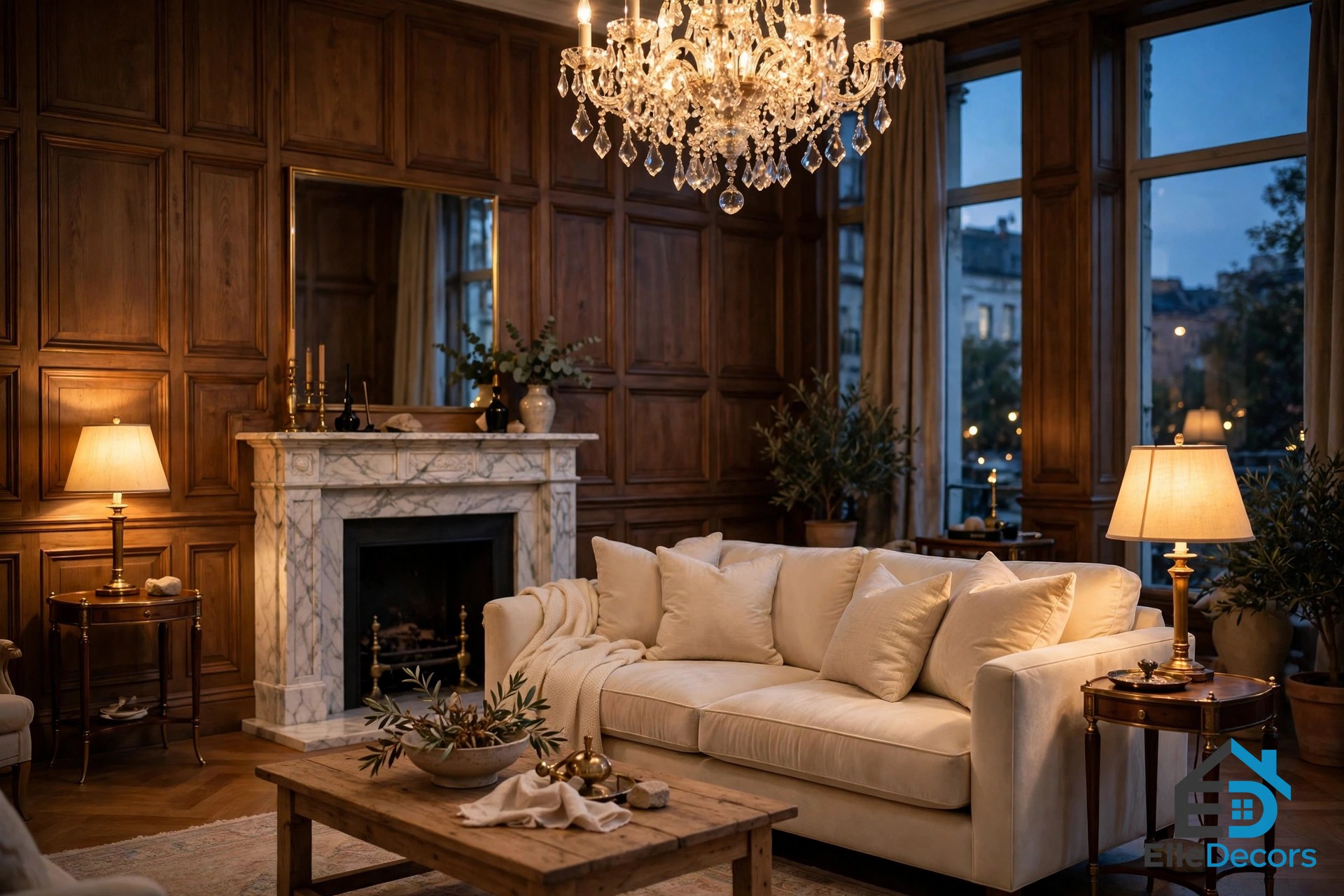
Lighting is the other half of the furniture decision. Chandeliers in crystal, bronze, or ornate plaster make ideal centrepieces. Pendant lights in classic globe, lantern, or bowl shapes with gilded or antique finishes suit dining areas and entries. Wall sconces in a candle style flank mirrors and buffets, and table lamps with ceramic, brass, or glass bases finish the scheme. Keep the light warm and diffused: harsh overhead light flattens the moulding and kills the calm the style depends on.
Neoclassical Interior Design Room by Room
The principles above are the same in every room, but the way they land changes with what each room has to do.
Living Room
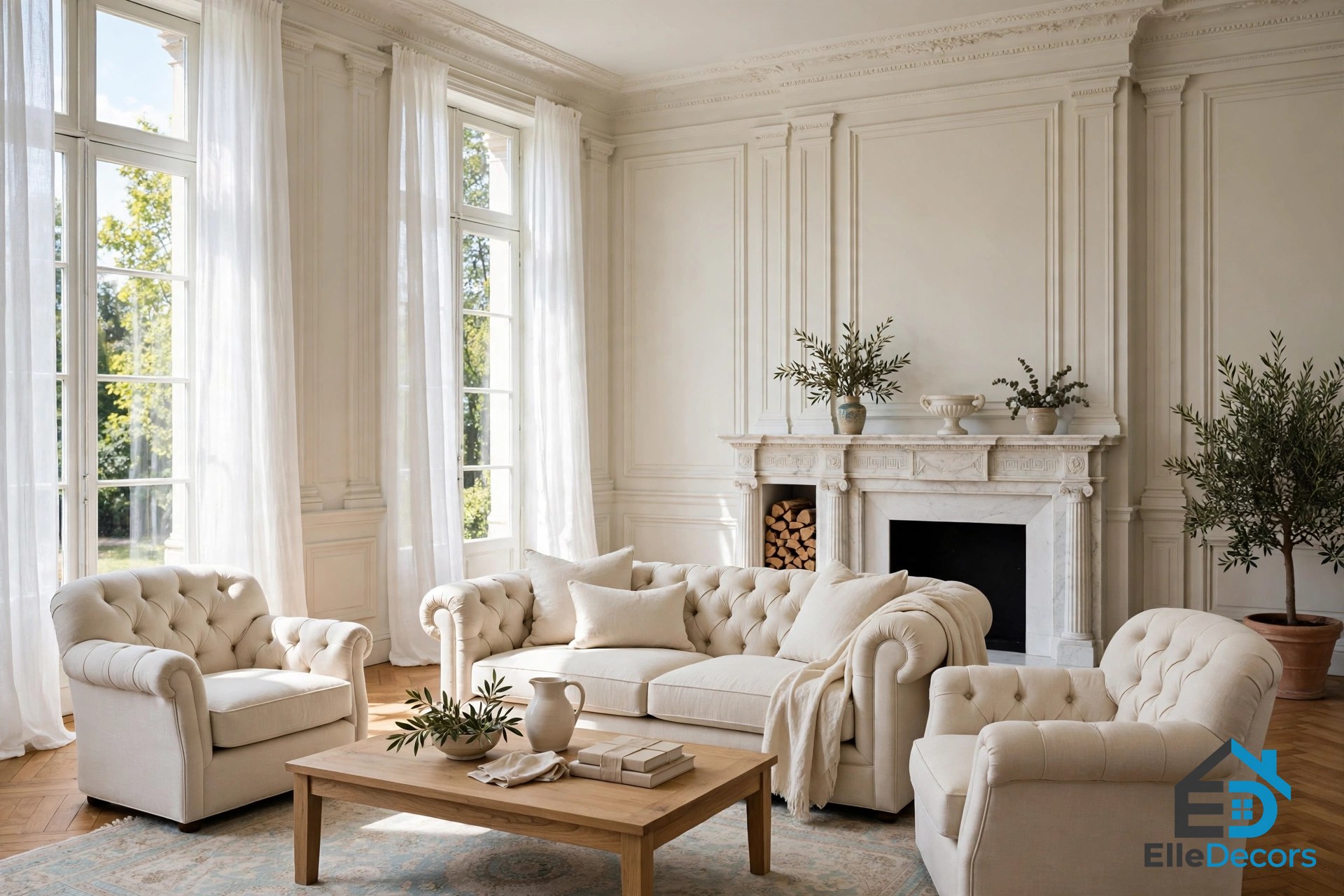
The living room is where the style shows itself most fully. Choose tufted sofas, wingback chairs, or curved settees in velvet, linen, or leather, and stick to symmetrical arrangements around a central fireplace or coffee table. Add cornicing or panel moulding to elevate the walls, and bring in classical busts, antique-style mirrors, and framed oil paintings. For broader decorating ideas, our guide to ideas for interior decorating covers colour, layout, and styling room by room.
Dining Room
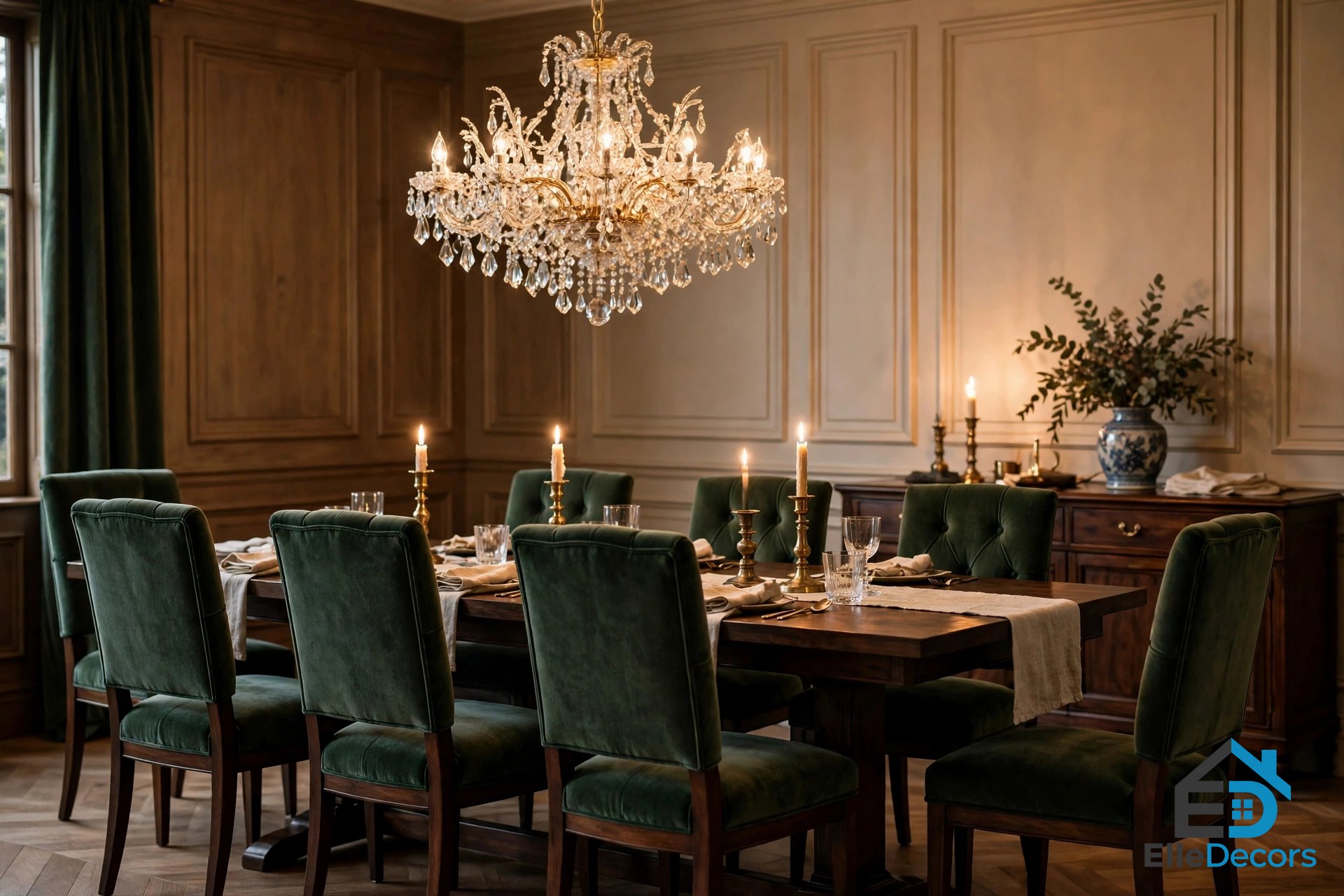
The dining room is the most formal room in a neoclassical home. Opt for a large oval or rectangular wooden table surrounded by high-back or upholstered chairs with classical silhouettes. Feature a crystal chandelier or a neoclassical brass fixture above the table, and keep the centrepiece restrained: candles in brass holders, fresh flowers, or a bust sculpture.
Bedroom
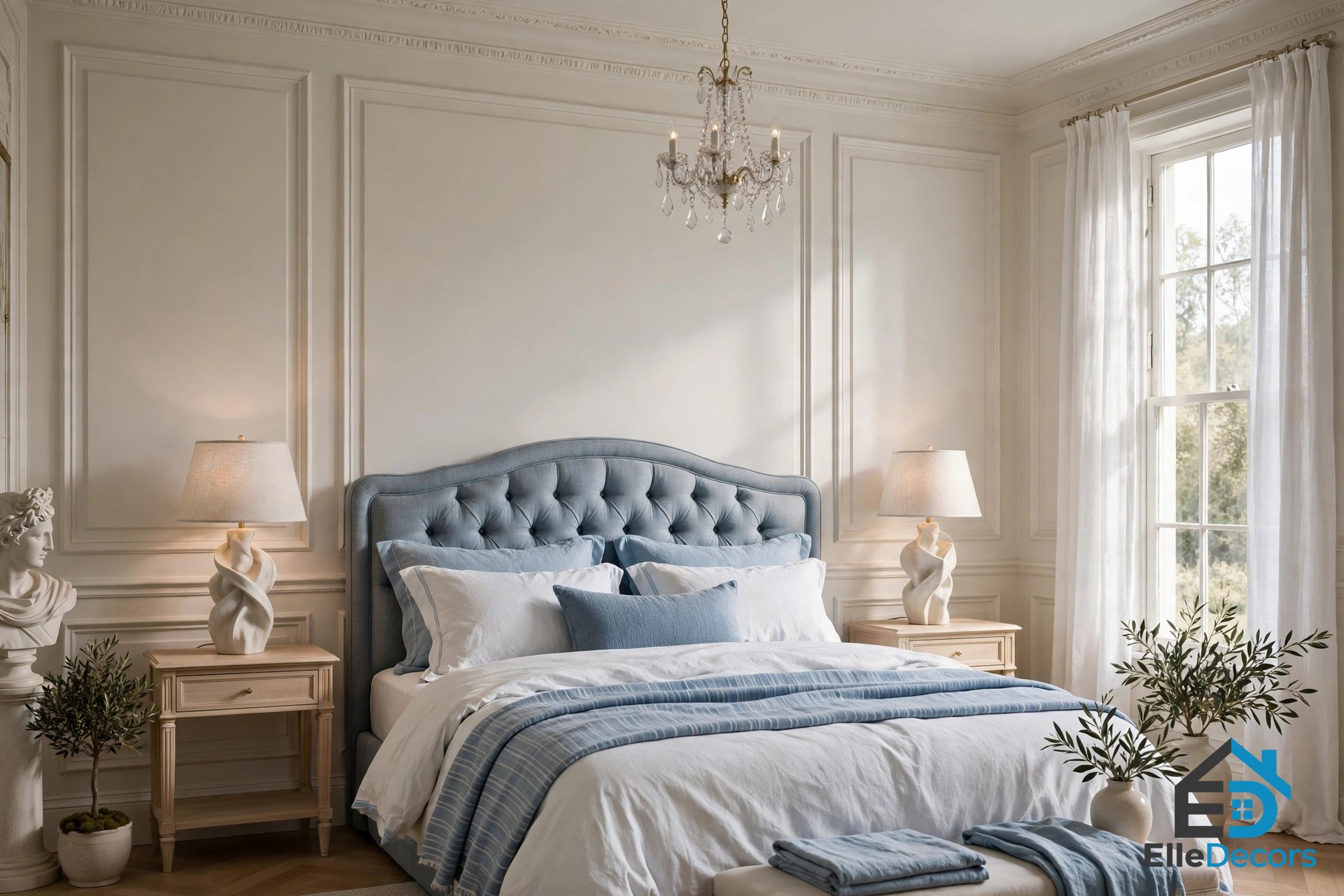
The bedroom trades formality for softness. Choose a grand headboard — tufted, carved wood, or upholstered in a luxe textile — and let it set the tone. Use high-quality linens in whites, soft blues, or greys, layered with a damask or jacquard throw. Add symmetry with matching nightstands and classical accents on both sides of the bed.
Kitchen and Bathroom
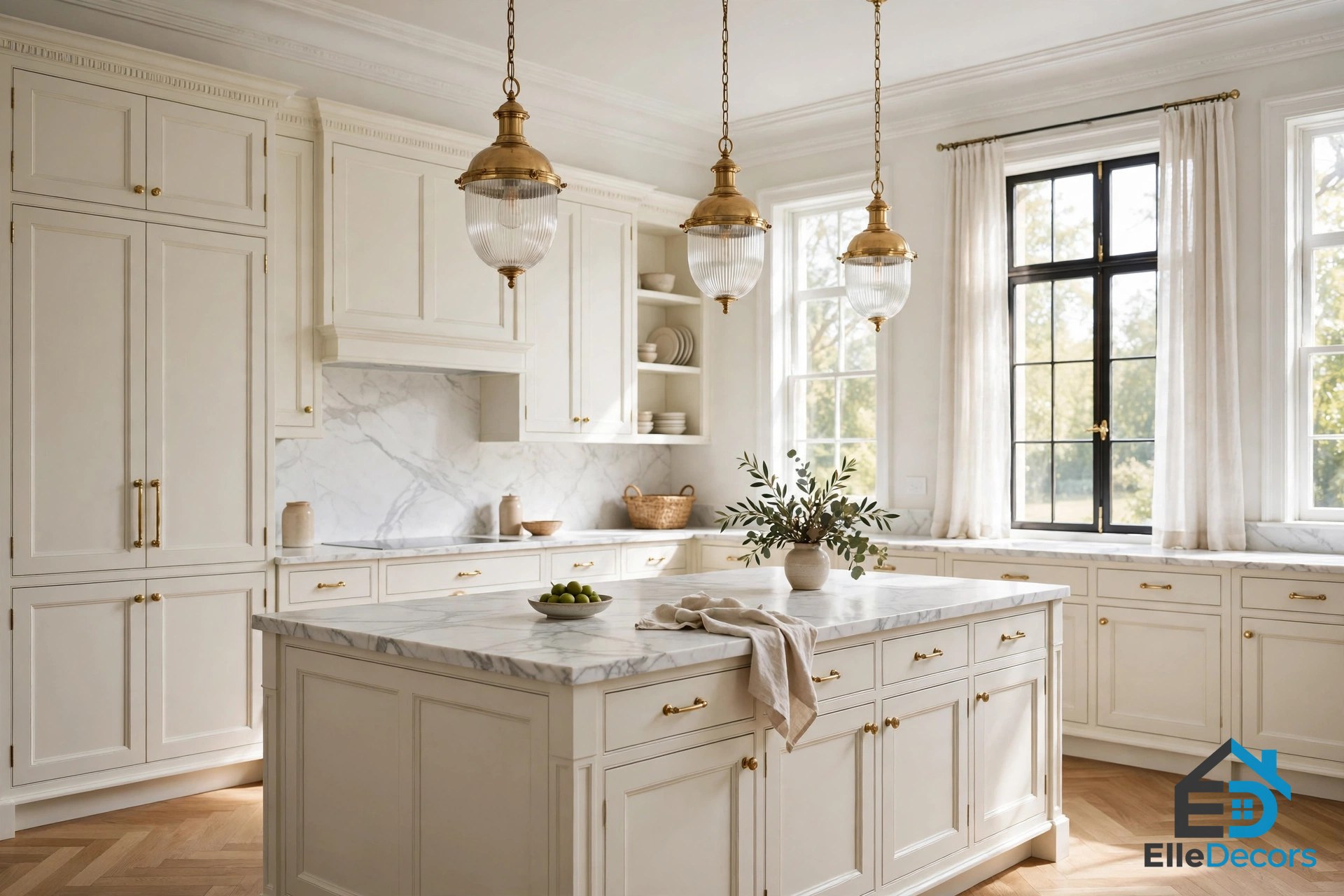
The kitchen works best when the classical details are quiet. Use flat or shaker-style cabinet fronts in muted tones like ivory, dove grey, or navy, with classic brass or antique bronze hardware. Marble or quartz countertops with veining enhance the refined look, and pendant lights with neoclassical detailing or a chandelier above the island tie the room to the rest of the house.
The bathroom follows the same logic at a smaller scale. Use furniture-style vanities with marble tops and elegant fixtures, with fluted legs or panelling that echo classical lines. Choose Carrara marble or ceramic tiles inlaid with borders, keeping patterns subtle and geometric.
Entryway and Small Spaces
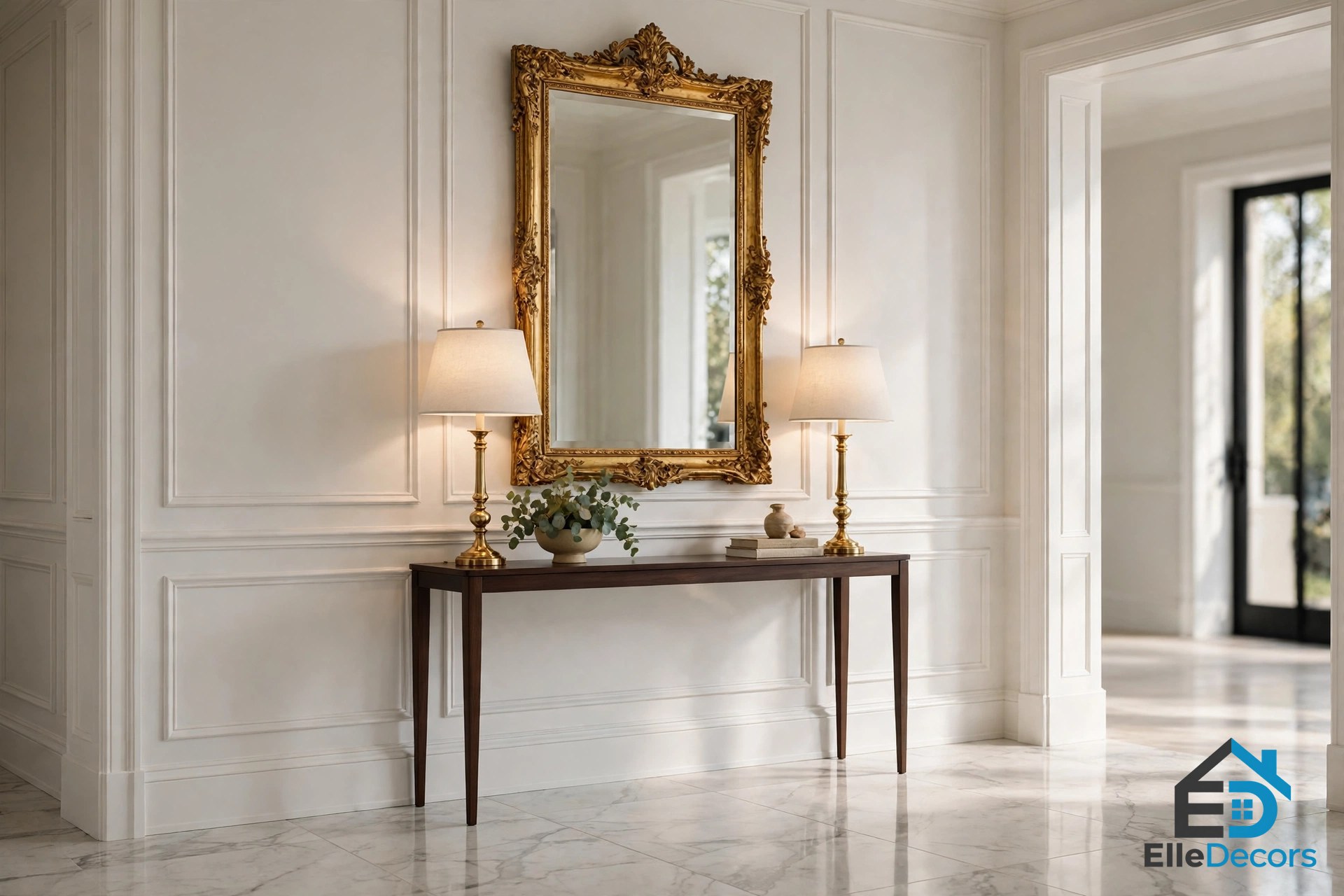
The entry sets the tone before anyone sees the rest of the house. Even a small entry can feel grand: add a console table, a mirror, and a pair of lamps, and keep the symmetry. Small rooms need the same discipline, applied more lightly: use mirrors with classical frames, keep a refined palette, and add one or two neoclassical elements, such as crown moulding or a decorative console, rather than crowding the room.
Four Variations of the Style
Not every neoclassical home looks the same. The four variations below cover most of what you will see.
Classic neoclassical is rich in architectural detail, with grand furniture, tall ceilings, and opulent materials. Think historic estates, European salons, and palace-inspired elegance.
Contemporary neoclassical merges classical lines with modern simplicity: cleaner silhouettes, subtler colour palettes, and minimalist styling. It suits urban apartments and modern homes, and it is the version in the video walkthrough below.
French Empire neoclassical infuses the style with Napoleonic drama: deep colours, bronze and gold accents, and elaborate drapery. It is rich, moody, and formal.
Scandinavian neoclassical is a lighter interpretation that emphasises airy spaces, natural light, and restrained use of classical motifs. It pairs well with pale woods and soft linen.
If even the lightest of these feels too formal, try a different style instead: a warmer, rustic direction is a legitimate alternative, and our guide to western home decor shows how that look comes together.
Neoclassical vs Other Classic Styles
Use this neoclassical interior design comparison to tell the styles apart before you start buying or building anything.
| Style | Symmetry | Palette | Ornament | Furniture |
|---|---|---|---|---|
| Neoclassical | Central, balanced, formal | Cream, taupe, moss green, stone blue | Restrained: Greek key, laurel, medallions | Oval or rectangular backs, tapered or fluted legs |
| Rococo | Asymmetrical, flowing | Bright, light, gilded | Elaborate: S- and C-curves, scrollwork | Curved, ornate, gilded frames |
| Baroque | Grand, dramatic, heavy | Rich, deep, high contrast | Excessive embellishment | Large-scale, heavily carved |
| Modern minimalist | Open, uncluttered | White, grey, black neutrals | Almost none | Clean lines, low profiles |
Watch: A Real Modern Neo-Classical Apartment
To see the contemporary variation in a real home, watch this room tour of a 37 sq m modern neo-classical apartment designed by Alexandra Gaevskaya. The small apartment uses soft pastel tones and classical details, with careful zoning that fits a kitchen-dining area, a living room, a bedroom, and a bathroom into one calm plan. The furniture stays simple while the walls, ceiling, and lighting carry the classical line.
Video: A room tour of a 37 sq m neo-classical apartment in pastel tones.
Mistakes That Make It Look Cheap
The style fails in predictable ways, and most of them come from doing too much rather than too little. “Neoclassic is a simple version of grandiose,” as designer Jake T. Galang puts it. “Don’t overdo it.”
Too much ornament. Every wall panelled, every surface gilded, every motif used at once. Pick a limited set of motifs and repeat them; leave some walls bare.
Bright or jarring colours. The palette is muted for a reason. One strong accent is fine; a room full of competing brights breaks the calm.
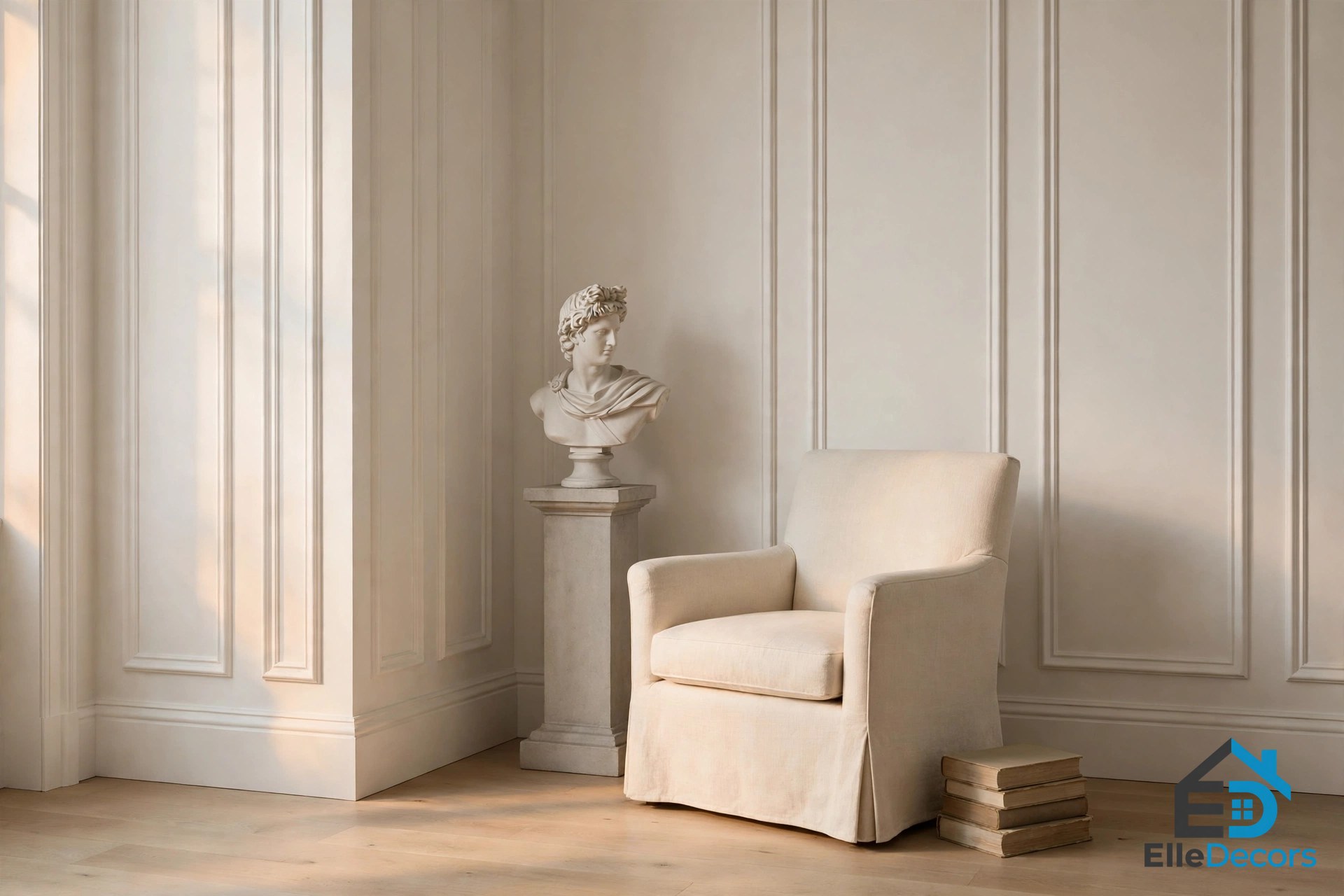
Skipping the architecture. The style is defined by its architectural elements: moulding, columns, medallions, panelled walls. Furniture alone cannot carry it. If you cannot change the architecture, add one strong element, such as picture frame moulding on a single wall.
Frequently Asked Questions
What is neoclassical interior design?
Neoclassical interior design is a style inspired by ancient Greek and Roman art and architecture, defined by symmetry, balanced proportions, classical ornament, and furniture with clear, orderly lines. It emerged in Europe in the mid-18th century and remains popular today in its modern form.
Is neoclassical design the same as classical design?
No. Classical design draws directly on the traditions of ancient Greece and Rome. Neoclassical design is a later reinterpretation of those traditions, from the movement that began in the mid-18th century. A classical room recreates the ancient world; a neoclassical room adapts it to a later home.
How is neoclassical different from Rococo?
Rococo favours flowing curves, shell motifs, and asymmetrical ornament, and it is bright, light, and elaborately decorative. Neoclassical design emphasises balanced compositions, clearer geometry, and motifs drawn from antiquity. The distinction is asymmetry versus order.
What colours work in a neoclassical interior?
Cream, stone, pale blue, and muted green work well, along with taupe, sage, and dusty rose. Rich reds, dark wood tones, and gilded accents also belong to the style. Proportion, symmetry, and classical detailing matter more than any single palette.
Can I use neoclassical style in a small apartment?
Yes, with restraint. Use mirrors with classical frames, keep a refined palette, and add one or two neoclassical elements, such as crown moulding or a decorative console, rather than crowding the room. The contemporary variation suits apartments best.
The Bottom Line
Neoclassical interior design works because it is disciplined. Symmetry gives a room calm, muted colours give it light, and a few well-chosen classical details give it character. Start with the architecture — one panelled wall, a pair of matching lamps, a mirror over the fireplace — and add furniture that respects the same order. Keep the ornament restrained and the room uncluttered, and the style will do the rest.