Ideas for Interior Decorating: Simple Principles and Room-by-Room Tips That Always Work
Audio Summary
Saving home inspo photos is the easy part. Making your own rooms look like them is where most people get stuck, because a photo never shows the thinking behind it. The good news is that the thinking is simple. The best ideas for interior decorating do not start with a shopping list. They start with how a room is used, a small color palette, and a few choices repeated room to room.
This guide walks through the core principles first, then applies them room by room, so the house interior design ideas you see online turn into steps you can follow at home. You need a plan, a tape measure, and the patience to add things one layer at a time.
Start With How the Room Is Used
Most ideas for interior decorating go wrong before a single thing is bought. The room gets decorated for how it looks in a photo, not for how it is lived in. So start with use. Write down what the room must do: hold movie nights, seat six for dinner, store toys, double as a guest bed. Every later choice gets tested against that list.
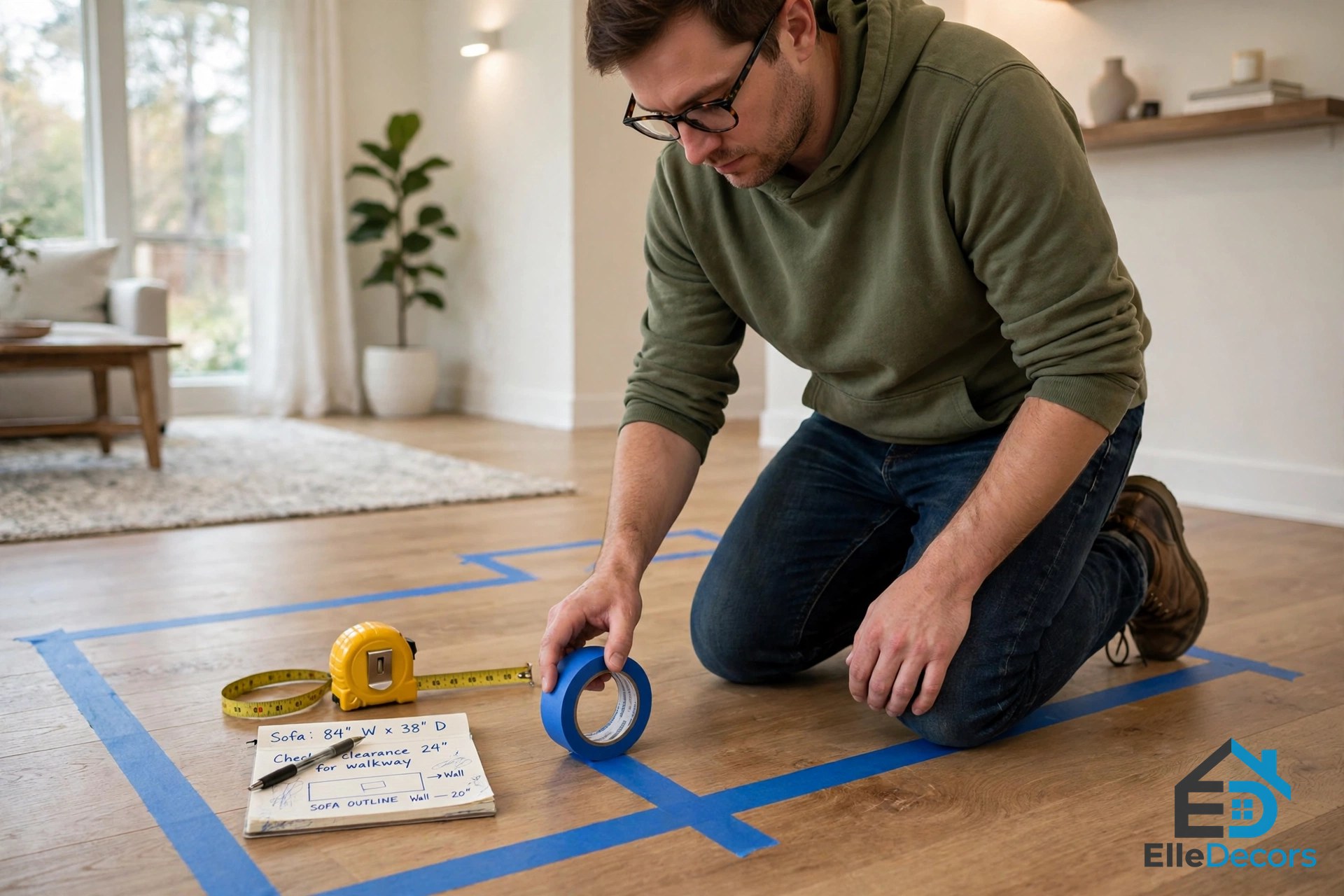
Then measure the room, the doorways, and the pieces you plan to keep. A trick designers use is to mark the outline of a new sofa or table on the floor with painter’s tape before ordering it. The tape shows in one minute whether the piece fits the room or just fits the doorway.
Finally, pick the anchor: the biggest piece you are keeping or buying first, usually the sofa, the bed, or the dining table. Build the room around it instead of fighting it. A bold sofa is not a problem to hide. It is a starting point the rest of the room can support.
Build a Palette With the 60-30-10 Rule
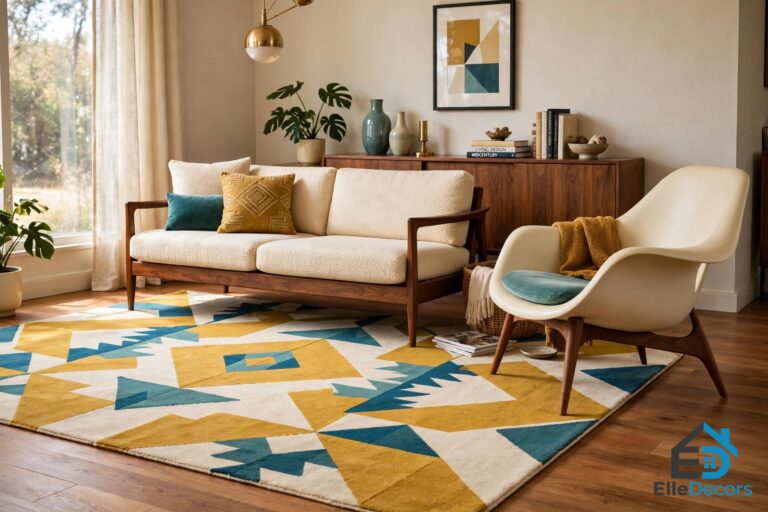
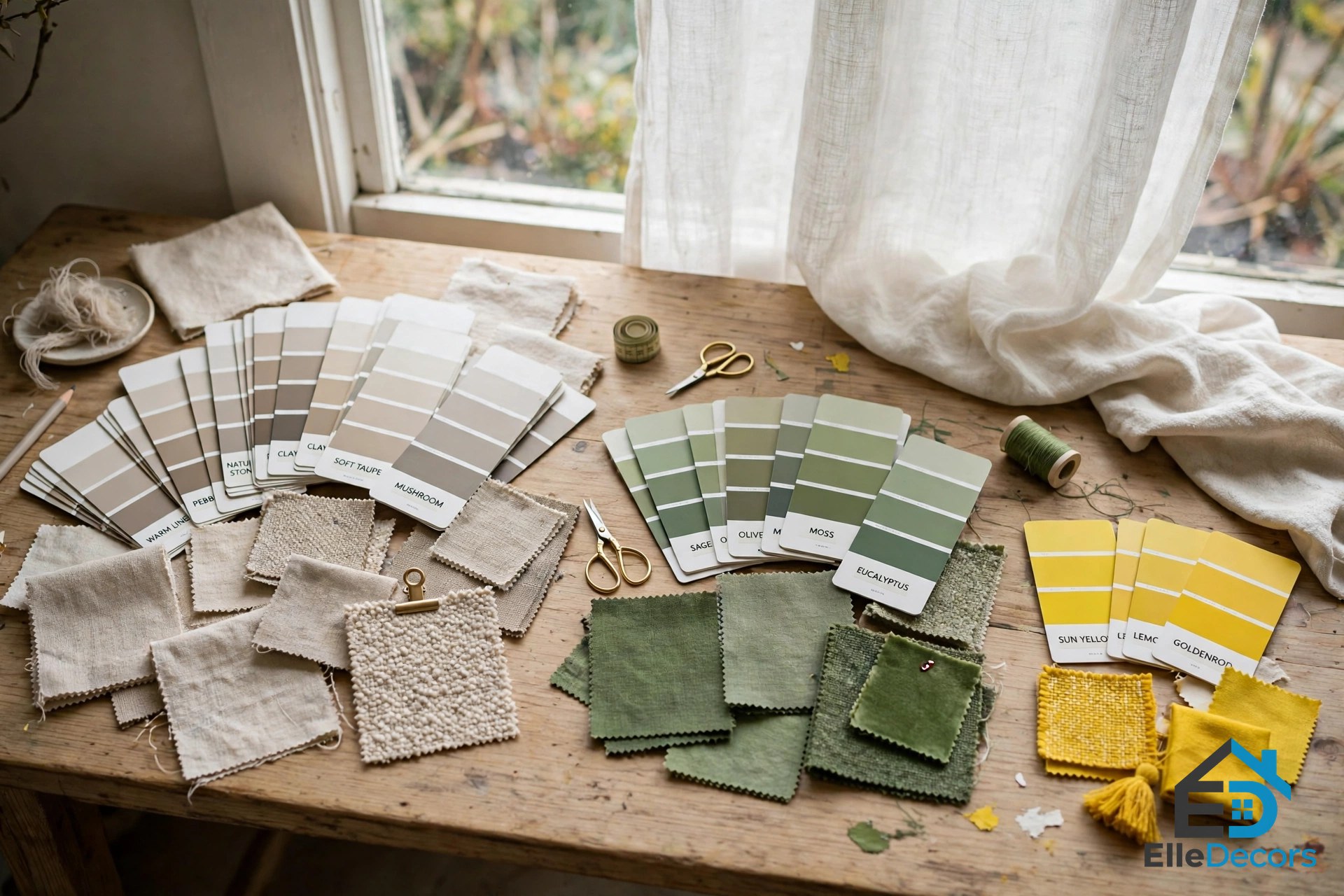
Color is where rooms either come together or fall apart, and a simple ratio keeps it under control. If you keep only one of the ideas for interior decorating in this guide, make it this one. The 60-30-10 rule splits a room’s colors into three shares: about 60 percent a dominant color, 30 percent a secondary color, and 10 percent an accent. The dominant color goes on the walls, the floor, and the largest furniture. The secondary color carries curtains, upholstery, and bedding. The accent is the small, bright layer: cushions, artwork, and decor.
Homebuilding & Renovating explains the same split in its guide to the 60-30-10 rule, and calls it a framework, not a strict formula. Shades of one color can count as separate shares, so a pale blue wall with navy cushions still follows the rule.
Test color in the room, not in the store. Light changes everything: a north-facing room gets cool light that makes pure white look gray, while a sunny room can handle deeper shades. Paint a sample and check it morning, midday, and under lamps at night before you commit.
Give Every Room One Focal Point
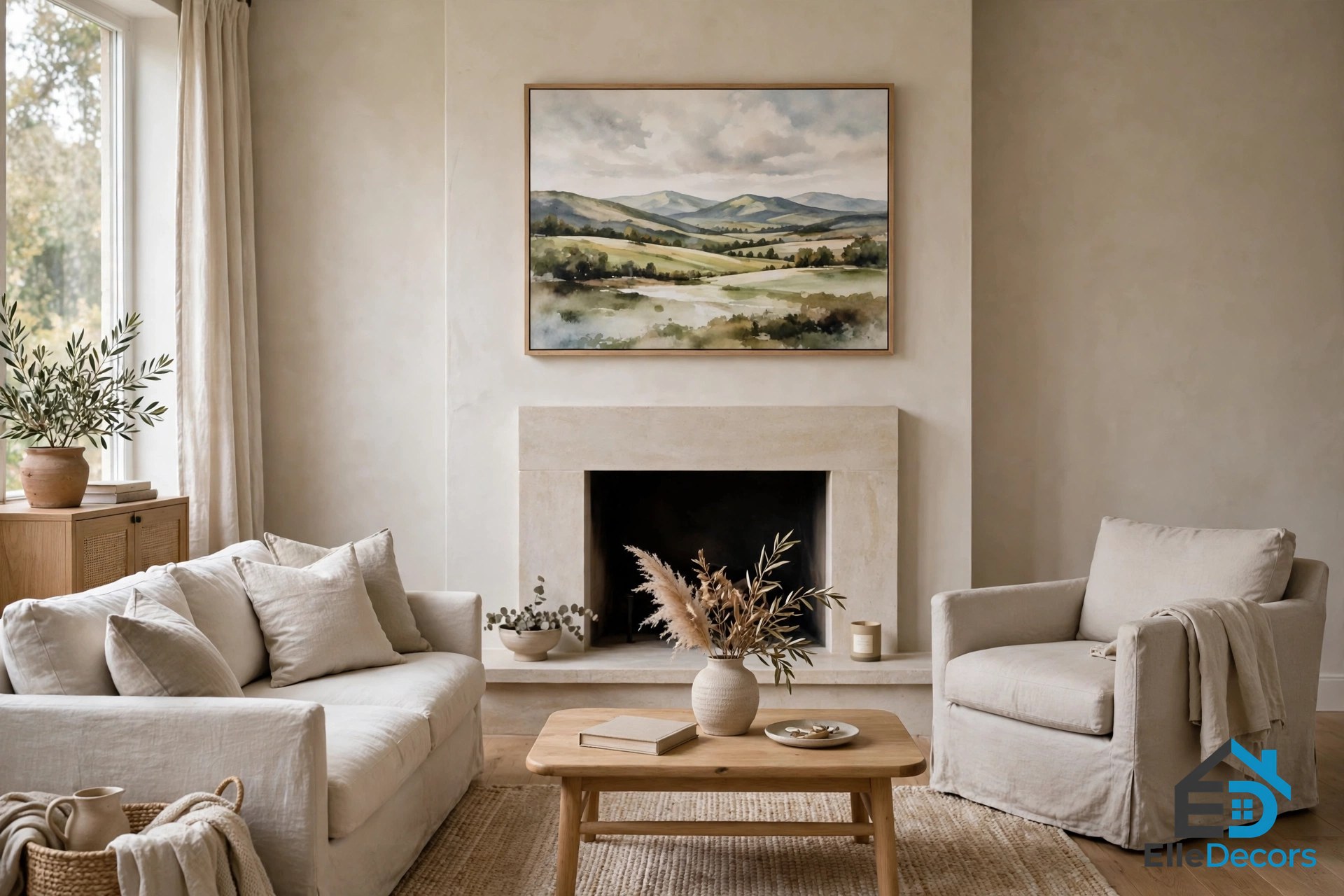
A calm room has one star. The focal point is the first thing the eye lands on: a fireplace, a large piece of art, a window with a view, or one strong piece of furniture. Everything else in the room should support it quietly.
The mistake to avoid is competition. A statement sofa, patterned curtains, a bold rug, and a gallery wall in one room all shout at once, and the room feels busy though every piece is nice. If your room feels restless, remove statements instead of adding them. Keep one, calm the rest down, and the room settles.
Small rooms need this most. One large artwork does more for a small living room than six small frames scattered around it. Scale up the focal point, scale down the rest, and a compact room reads as planned rather than cramped.
Repeat Materials for a Connected Home
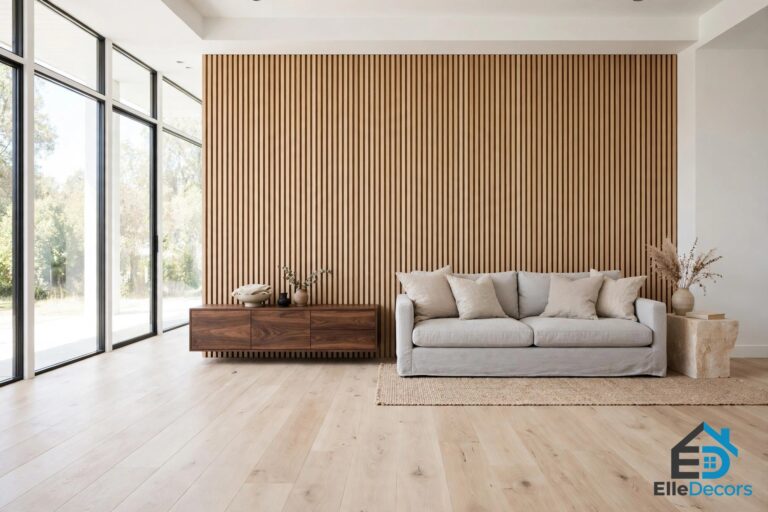
Rooms feel connected when the same materials show up again and again, in small doses. The same wood tone in a kitchen shelf, a living room side table, and a bedroom frame quietly ties three rooms together. The same black metal in lamp bases, handles, and a mirror frame does the same job.
Repetition is not matching. A full matching furniture set looks like a showroom, while repeated materials look like a choice. Wood is the easiest material to repeat because it works in every room and every style. Our guide to the best use of wood in modern designs shows how to mix light and dark pieces, show the grain, and let one hero piece lead each room.
Pick two or three core materials for the whole home, then let each room use them in its own way: the kitchen leans on the wood, the bathroom on the stone, the living room on the metal. The mix changes, the thread stays.
Layer Light in Three Levels
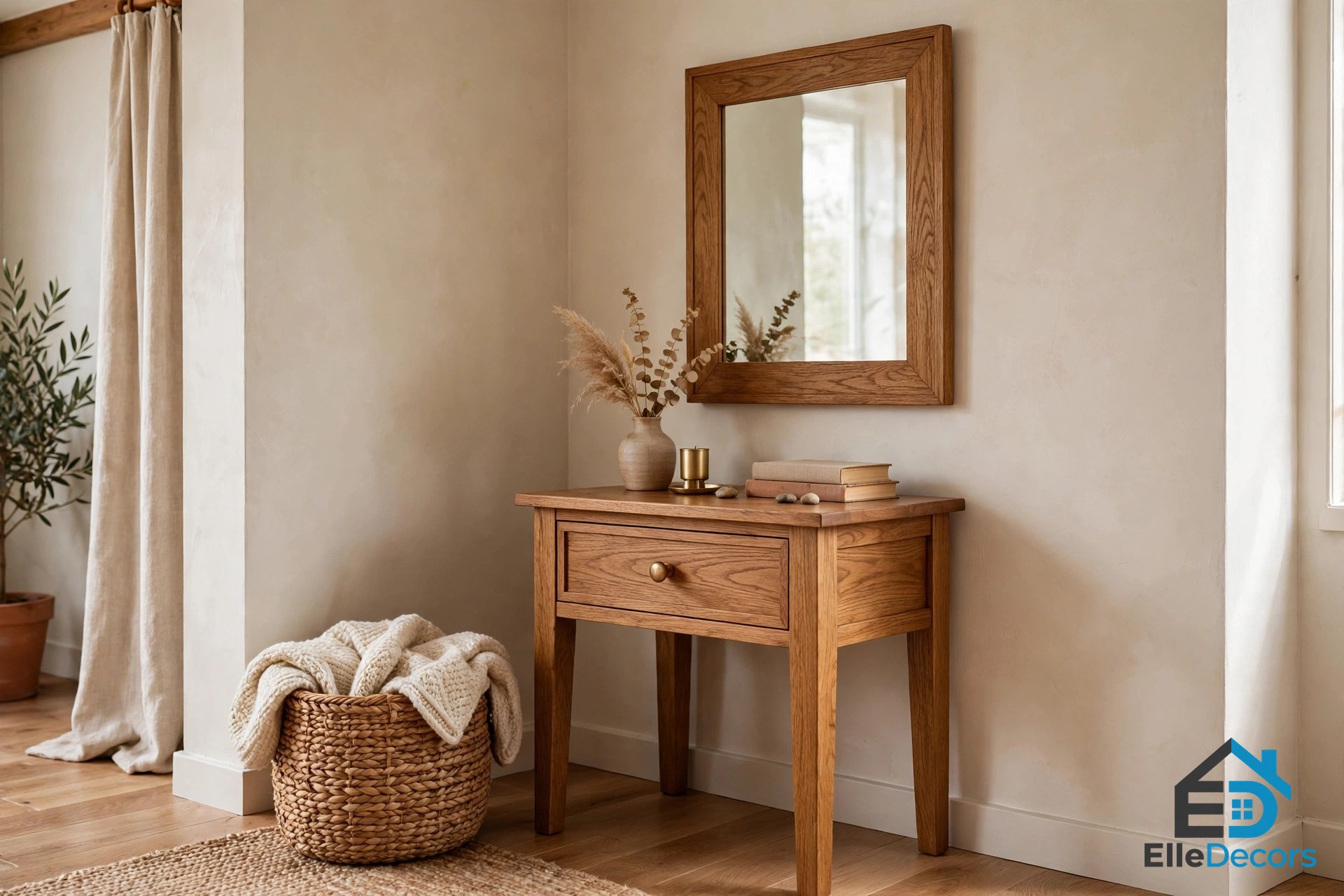
One ceiling light makes a room look flat, no matter how good the furniture is. Decorators light in layers instead, and the three layers are easy to copy:
| Layer | Its job | Where it comes from |
|---|---|---|
| Ambient | General light for the whole room | Ceiling lights, pendants |
| Task | Light for one job | Reading lamps, desk lamps, kitchen counter lights |
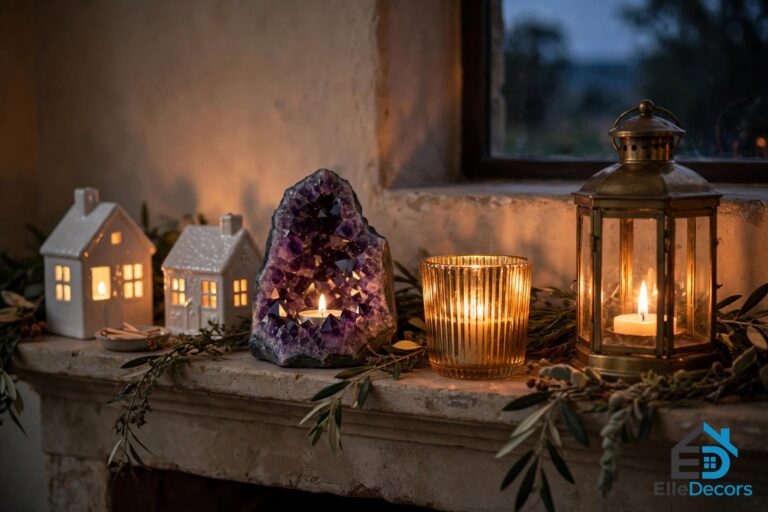
| Accent | Light that shows things off | Picture lights, small lamps, candles |
Aim for at least three light sources in a living room or bedroom, at different heights. Then check the bulbs. Warm light flatters living spaces, and the warm end of the scale sits around 2700K: ENERGY STAR’s light bulb purchasing checklist lists 2700K as warm white, the standard color of the old incandescent bulb. Matching the Kelvin number across a room’s bulbs keeps the light even.
Dimmers help more than any single fixture. The same room should feel bright at breakfast and soft at night, and a dimmer is the cheapest way to get both.
Let Texture Do the Quiet Work
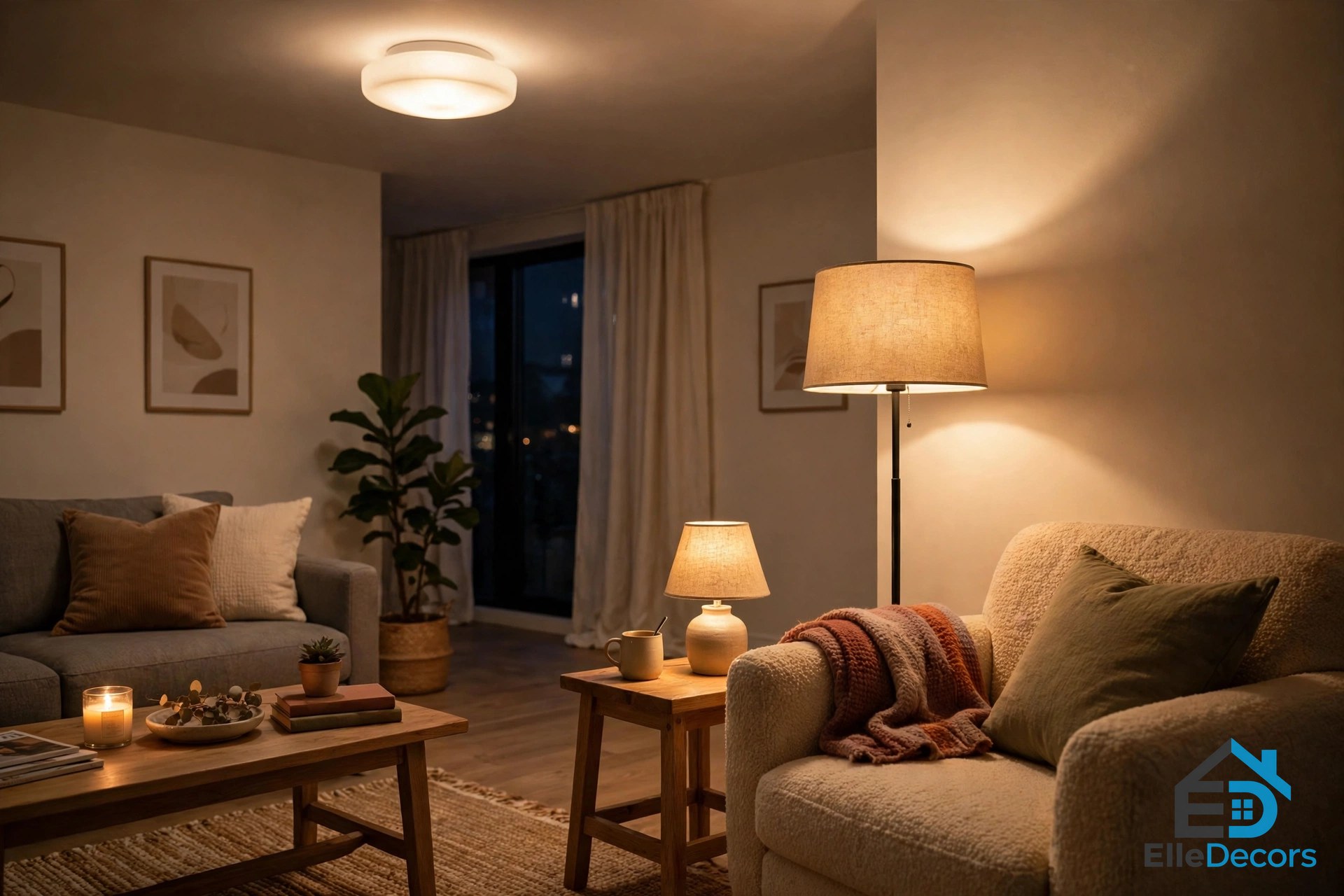
When a room feels flat but the colors are fine, the problem is usually texture, not color. A room done in one material looks dull even in a rich shade. A neutral room, on the other hand, can feel warm and full with almost no color if the surfaces differ: rough linen, soft wool, smooth wood, cool stone, a little brushed metal.
Add texture where hands and eyes already go. A wool throw on a linen sofa, a woven rug under a wood table, a clay pot beside a glass vase. Mix one rough thing, one soft thing, and one smooth thing in each area and the room gains depth without gaining clutter.
Plants count as texture too. One large plant in an empty corner adds shape and a living green no cushion can copy. Choose it for the light the corner actually gets: one healthy plant beats three struggling ones.
Fix the Layout Before You Buy More
Some of the best ideas for interior decorating cost nothing, because the room does not need new things. It needs the things it has moved. Two fixes solve a surprising share of layout problems.
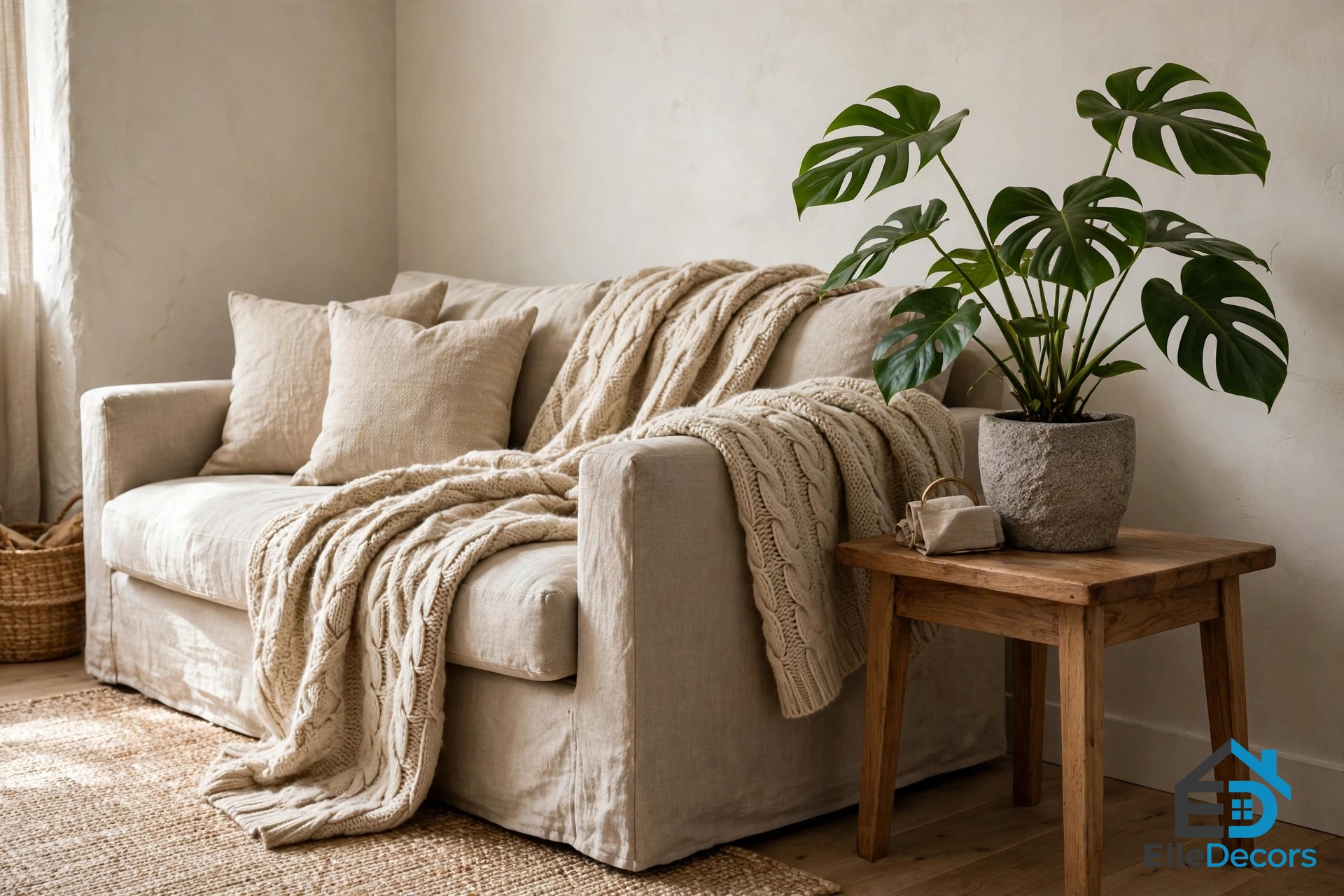
First, hang curtains high and wide. Mount the rod close to the ceiling and past the window frame on both sides. The window looks taller, the ceiling looks higher, and the curtains fall in full folds instead of skimming the glass. Second, pull furniture off the walls. A sofa floated a few inches out, with the front legs of the seating on one rug, makes a group that feels planned. Leave about three feet of clear space on the main walking paths so the room is easy to cross.
Live with the new layout for a week before buying anything. Many “I need a new sofa” rooms turn out to be “the sofa was in the wrong place” rooms.
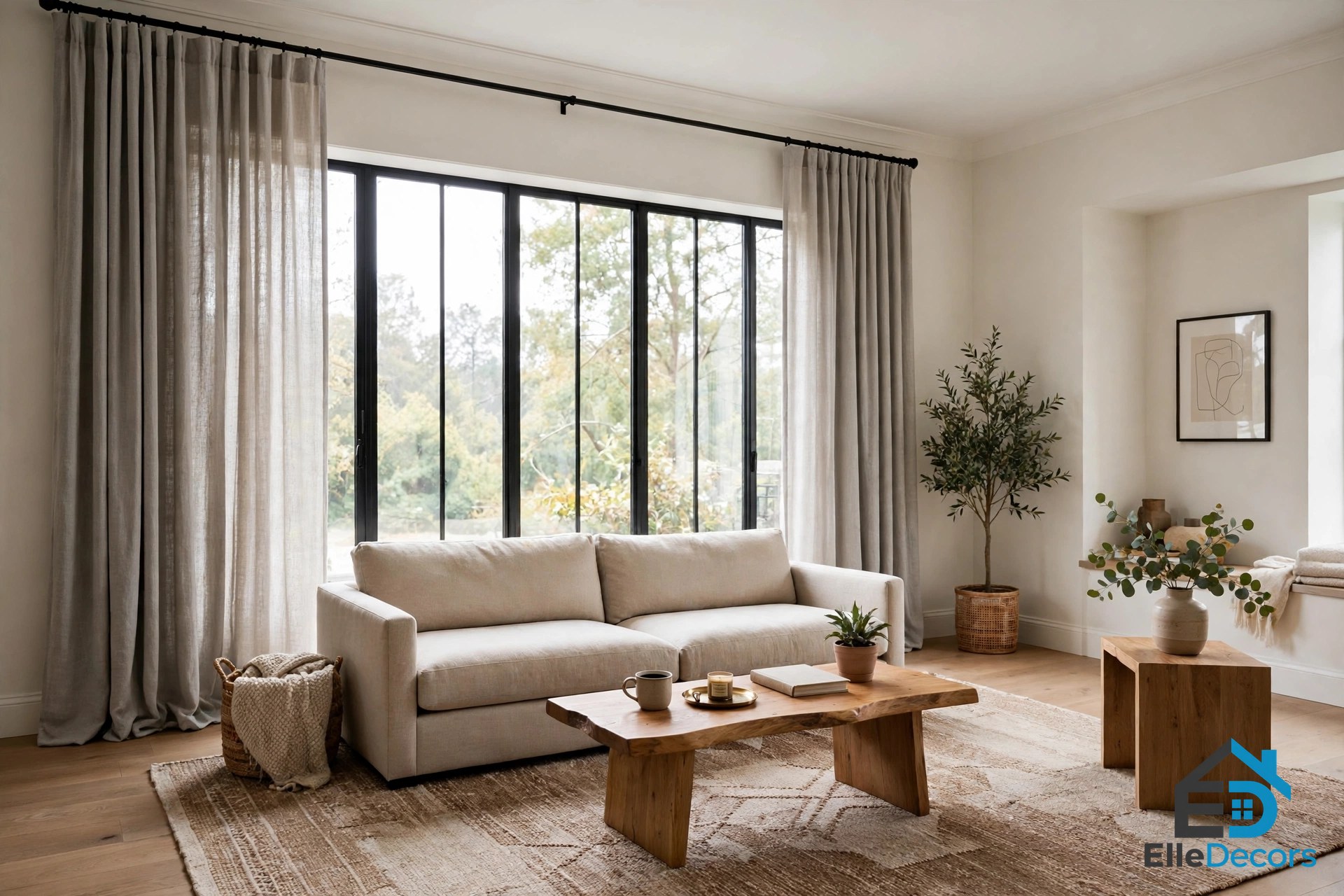
If you want to see these principles applied in real rooms, the video below is a clear walkthrough: a designer works through cohesion, layout, rug and art sizes, color and texture, and layered lighting.
Ideas for Interior Decorating, Room by Room
Principles are only useful once they land in real rooms. Here are the house interior design ideas from the sections above, applied to the four rooms people ask about most.
Living Room
Start with the anchor sofa and the rug. The rug should fit at least the front legs of every seat around it; a small rug floating in the middle makes the group look lost. Face seats toward each other and the focal point, not just the TV. Add the second and third light sources, style the coffee table with one group of three objects, and stop. A finished living room usually needs less added than taken away.
Bedroom
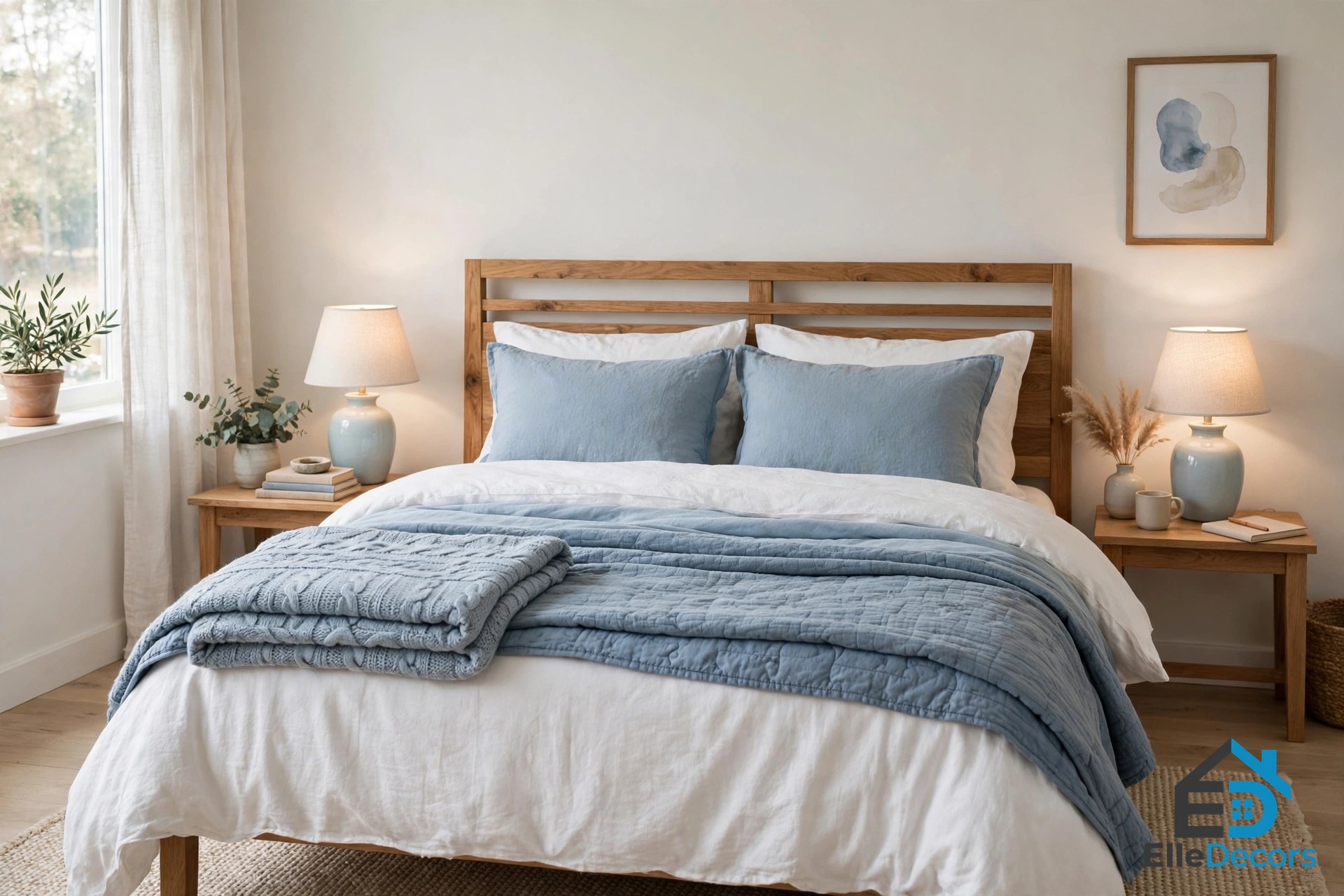
The bed is the focal point, so start there: a simple headboard, bedding in the room’s palette, and layers you can fold back, like a quilt or throw at the foot. Keep the palette soft and the surfaces clear. Two low lamps, one on each side of the bed, give the warm, even light this room wants. A bedroom should hold almost nothing that does not help you rest.
Kitchen and Dining
These rooms are mostly hard surfaces, so texture and the accent color do the heavy lifting. Open shelves or a counter styled in small groups, a wood board, a bowl of fruit, one plant, bring the same rules in without a remodel. Over the dining table, one pendant or a simple chandelier becomes the focal point, and a washable rug under the table softens the sound and marks the zone.
Home Office and Workspace Corners
A workspace needs task light first and calm second. Put the desk where daylight comes from the side, not from behind a screen, add a real desk lamp, and keep the background simple if you take calls. Even a corner of another room works if it has its own rug, light, and one closed cabinet for work clutter. For layouts and furniture picks for the job, see our small home office ideas guide.
Add Personality, Not More Stuff
The last of the core ideas for interior decorating is not a purchase at all. It is the layer no store can sell you: your own things. A shelf of books you actually read, photos in simple frames, one object from a trip, a chair that came from family. These are what make a room yours instead of a copy of a stranger’s home inspo board.
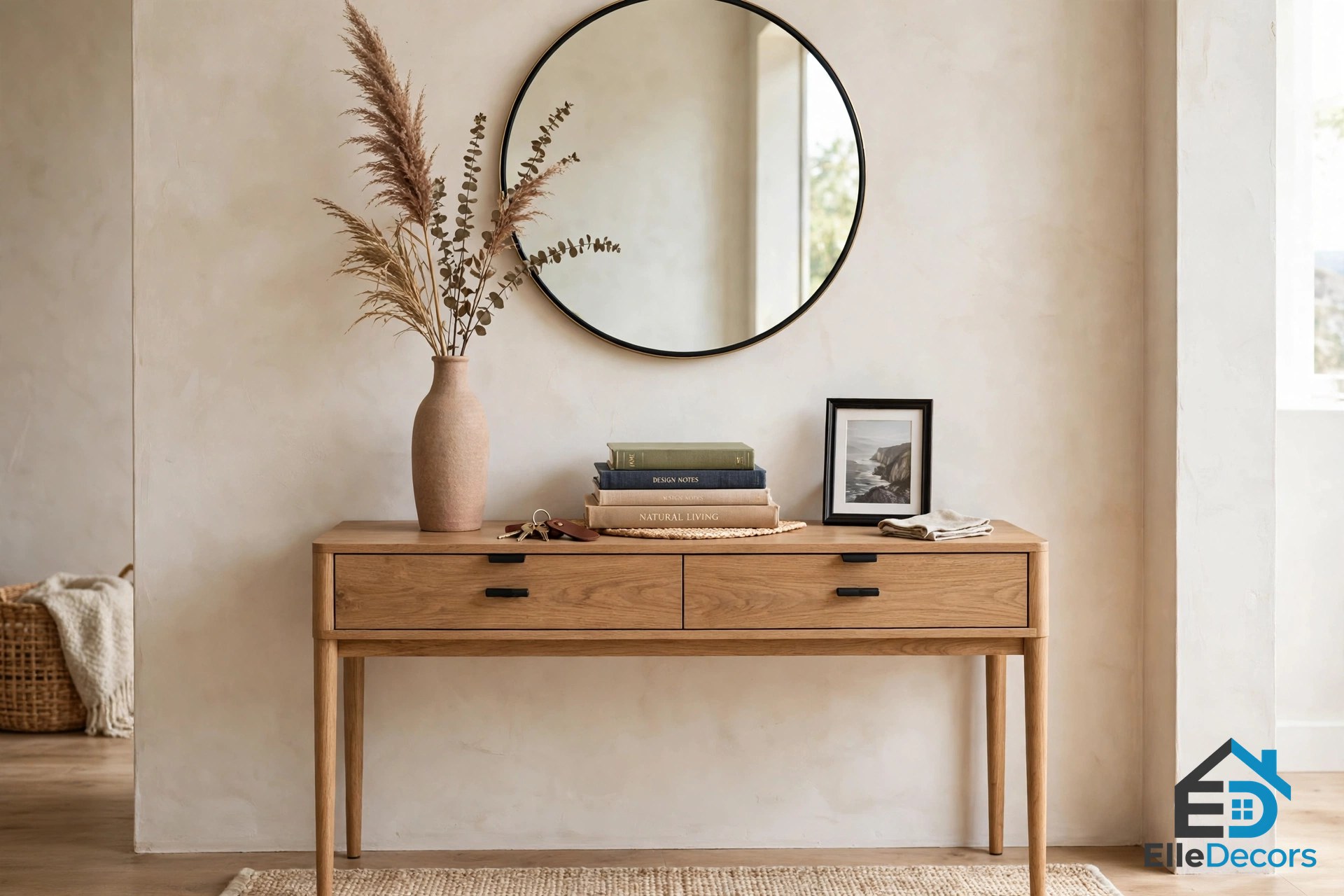
Style surfaces with a light hand. Groups of three objects at different heights, a tall, a medium, and a low, look good on a shelf, console, or coffee table, and the empty space around them is part of the look. If a surface feels full, take one thing away before you add anything.
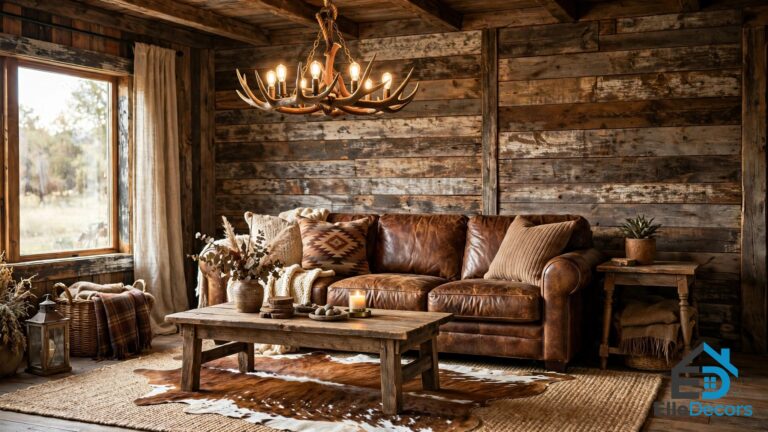
A named style can help you edit. When every new piece has to pass one test, like “does this fit a calm, material-led look”, choices get faster. Our western home decor guide is one example of that: a whole home steered by one short list of materials and colors. You do not need a named style of your own, but borrowing that discipline makes your own look clearer.
Small Spaces and Small Budgets
The cheapest ideas for interior decorating are the ones that use what you already own. Rearrange first, edit second, and shop last. Moving a chair to a bare corner, swapping lamps between rooms, or hanging the art you own at one consistent height can change a home in an afternoon for nothing.
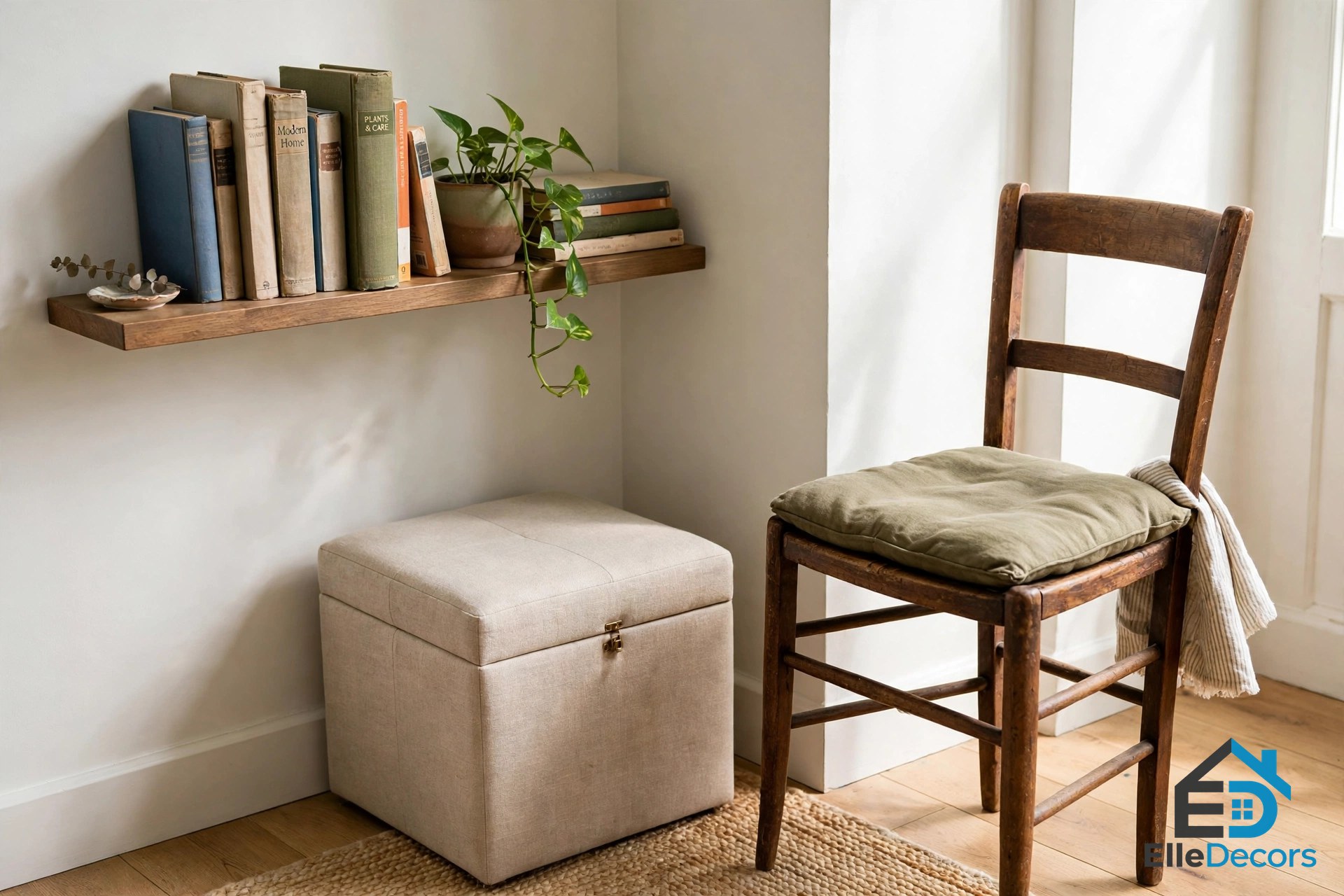
When you do buy, buy pieces that work twice: a storage ottoman, a bench with a shelf under it, a side table with a drawer. In a small room, choose fewer, right-sized pieces over many small ones. One proper armchair beats three stools no one wants to sit on.
Secondhand finds suit this style well, because honest materials age gracefully. Solid wood and metal can be cleaned, sanded, or repainted, and they bring character new flat-pack pieces lack. Check joints and legs for wobble, and measure the piece and your doorway first.
Mistakes That Undo Good Decorating
Even strong ideas for interior decorating can be undone by a few common habits:
- Buying before measuring. The piece fits the store floor, then blocks a door at home. Tape the outline first.
- Pushing everything against the walls. It leaves a dead space in the middle and makes conversation awkward.
- One light source per room. A single ceiling light flattens everything under it.
- Too many small objects. Ten tiny decor pieces read as clutter; one group of three reads as style.
- Matching everything. Matched sets and one-color rooms look flat. Repeat materials instead.
- Filling every wall and corner. Empty space is part of the design. Leave some.
Frequently Asked Questions
Where should a beginner start with decorating?
Start with one room and one problem. Decide how the room is used, measure it, and pick the anchor piece. Then set the palette with the 60-30-10 rule and add light in layers. Most beginners fail by shopping first; planning first is the whole secret, and it costs nothing.
What is the 60-30-10 rule?
It is a simple way to balance color. About 60 percent of the room is the dominant color, usually walls and large pieces. About 30 percent is a secondary color in curtains, upholstery, or bedding. The last 10 percent is an accent in cushions, art, and small decor. Treat the numbers as a guide, not a law.
How many house interior design ideas should I use in one room?
Fewer than you think. Pick two or three ideas per room, like a palette rule, one focal point, and layered light, and do them fully. Most rooms look unfinished because ten ideas were each done halfway. One calm, complete room teaches you more than a whole house done in pieces.
How can I decorate with no budget?
Use the ideas for interior decorating that cost nothing: rearrange the furniture, pull it off the walls, group the objects you own in threes, move lamps so each main room has more than one light source, and hang the art you already have at a consistent height. Editing what you own is real decorating, and it comes before buying in every good plan.
How do I make different rooms feel connected?
Repeat a small kit of parts in every room: the same two or three materials, one accent color that keeps showing up, and similar simple frames and lamp shapes. The rooms can still have different moods, but the repeated thread makes the whole home feel like one place.
Conclusion: Ideas for Interior Decorating That Last
Trends change every season, but the principles in this guide do not. Start with how the room is used. Set a small palette and hold to it. Give each room one focal point, repeat a few honest materials, and light in layers. Then add your own things slowly, and leave some space empty on purpose.
Work one room at a time, and let each finished room teach the next one. That is how ideas for interior decorating stop being photos in a folder and start being the home you live in: planned, calm, and clearly yours.