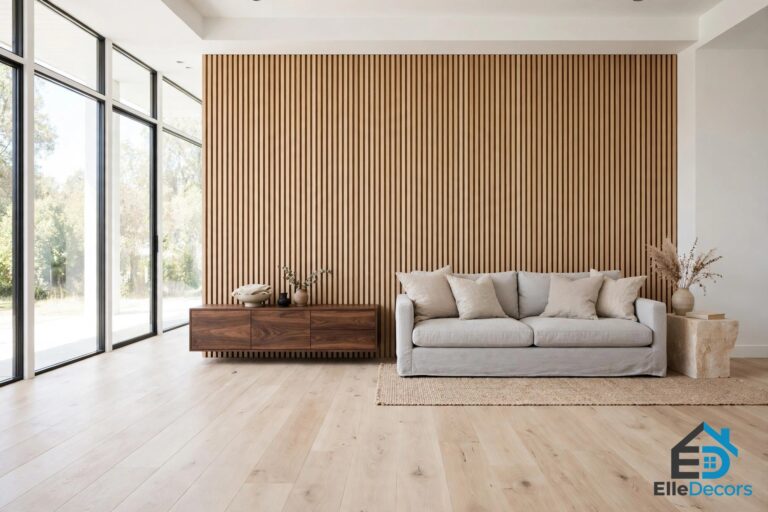
Western Home Decor Ideas That Bring Ranch Warmth to Any Room
Audio Summary
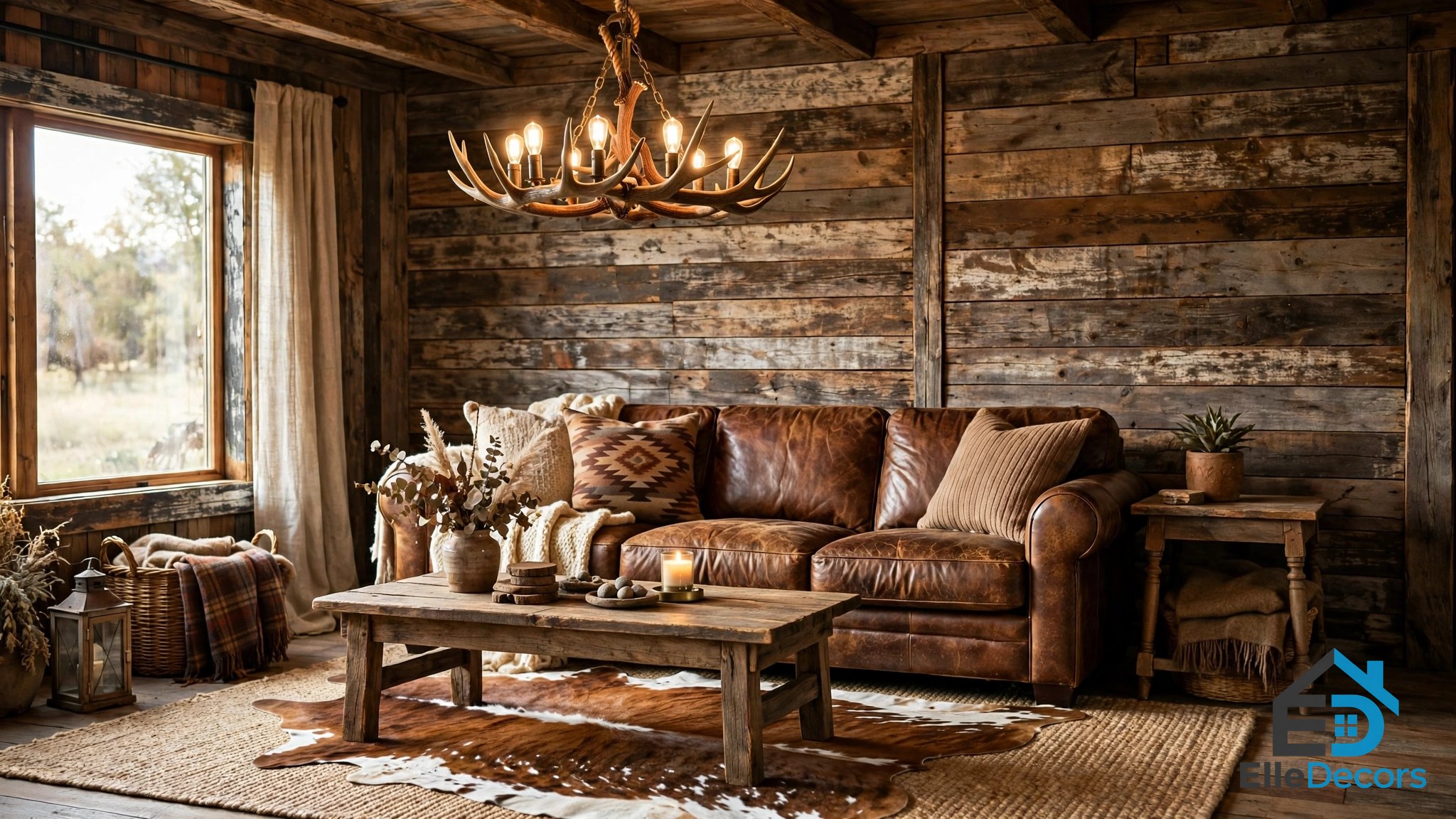
A good western room feels warm the moment you walk in. Sun-baked colors, worn leather, rough wood, and soft wool do that work, not novelty signs or plastic props. Western home decor takes the materials of ranch and frontier life and turns them into rooms that feel calm, sturdy, and lived in.
The style has a few branches. Classic ranch goes heavy on wood, stone, and leather. Modern western keeps the same materials with cleaner lines and more empty space. Western farmhouse softens the look with cream paint and worn finishes. Southwestern style leans toward desert colors and bold woven patterns. All four share the same base, which this guide builds first. Done with care, the result reads as heritage. Done with too many props, it reads as cowboy decor from a theme park gift shop.
What Makes the Style Work
Every room in this guide leans on the same short list of materials. Learn the list once, and western home decor gets much easier to build, because each new piece only has to match the list.
| Element | Pick this | Why it works |
|---|---|---|
| Wood | Barn wood, oak, pine, worn finishes | Adds age and grain no paint can copy |
| Leather | Sofas, chairs, ottomans in brown tones | Tough, and softens with use |
| Hide and wool | Cowhide rugs, wool throws, woven blankets | Pattern and softness for hard surfaces |
| Stone | Fireplace surrounds, hearths, small accents | Grounds the room like the landscape |
| Iron | Lighting, hardware, curtain rods | Dark contrast for soft textures |
| Turquoise | Small accents only: a vase, a pillow, a stone | One bright note that makes earth tones glow |
Notice what is not on the list: plastic, chrome, and anything glossy. Western rooms are matte, rough, and soft at once. If a piece looks too new, pair it with something worn. If a room feels too rough, add linen or wool.
Start With a Warm, Earthy Palette
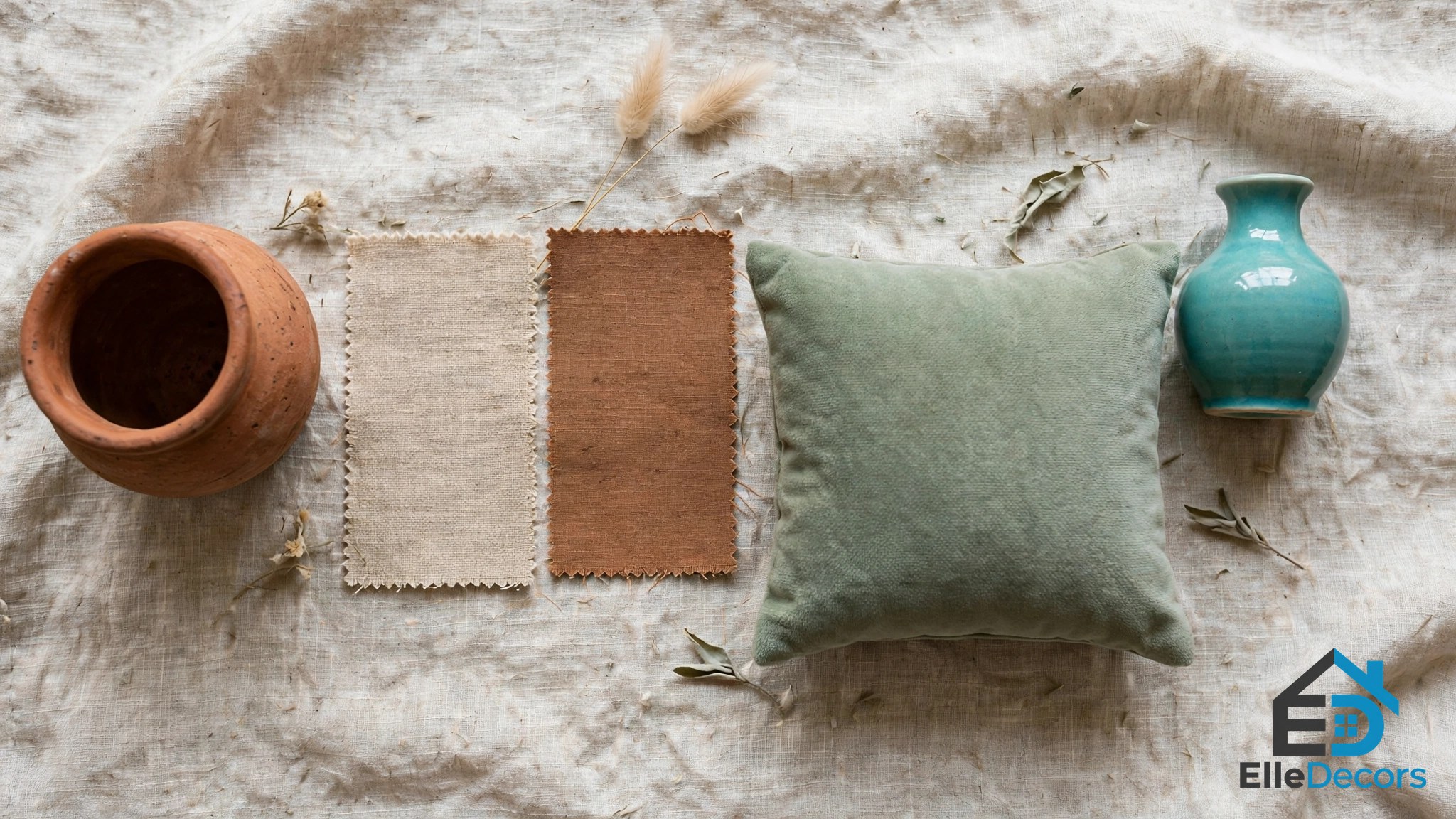
Color does most of the work in this style, and the palette comes straight from the land. Warm white or cream on the walls keeps rooms bright. Sand, clay, and terracotta carry the middle tones through rugs, upholstery, and pottery. Sage green and dusty blue cool things down. Deep brown in leather and wood grounds the scheme.
Work in layers of tone rather than strong contrast. A sand sofa on a cream wall with a clay throw looks rich because the shades sit close together. Add one dark note, like a charcoal iron lamp, so the room does not drift.
Turquoise is the accent, not the base. A pillow, a glazed vase, or a framed print with a band of blue-green is enough for a whole room. The color has a long history in the Southwest, and even its name tells a travel story: turquoise is the French word for “Turkish,” because the stone first reached Europe through Turkey, as Encyclopaedia Britannica explains. Use it like a river in dry land, in one bright line.
Build the Base With Barn Wood and Beams
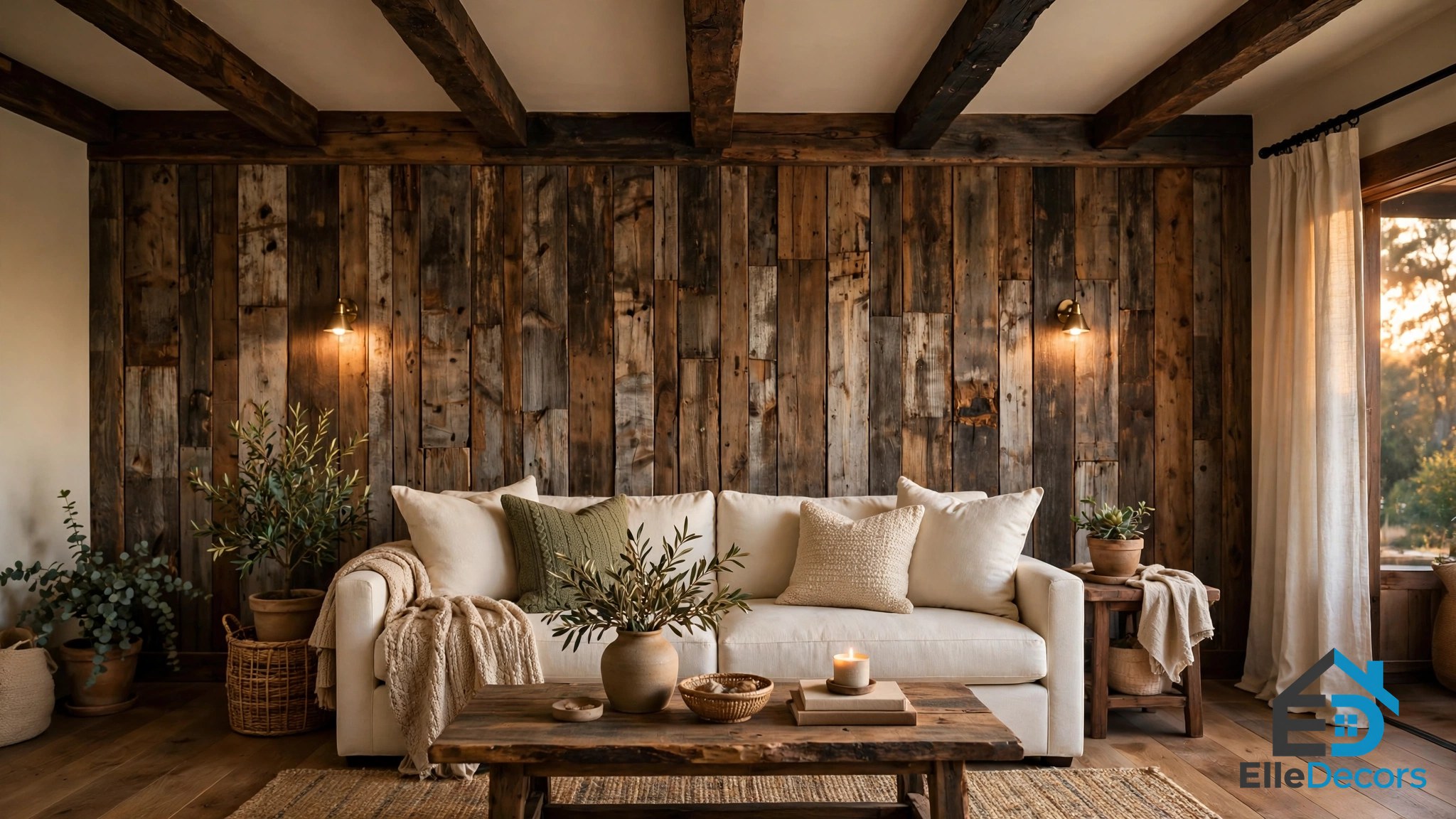
Wood is the skeleton of the western look, and the fastest way to add it is one strong surface. A barn wood accent wall behind a sofa or bed changes a plain room in a weekend. Boards with knots, nail marks, and mixed brown tones look best, because real barn wood was never uniform. For the full method, our guide to wood accent walls ideas covers board choice, layout, and finish.
Ceiling beams do the same job overhead. Real beams are rare in newer homes, but hollow faux beams are light and hard to spot once stained. Keep the rest of the room calm when the ceiling is busy: pale walls, plain curtains, and simple furniture let the wood lead.
Let Wood Furniture Do the Heavy Lifting
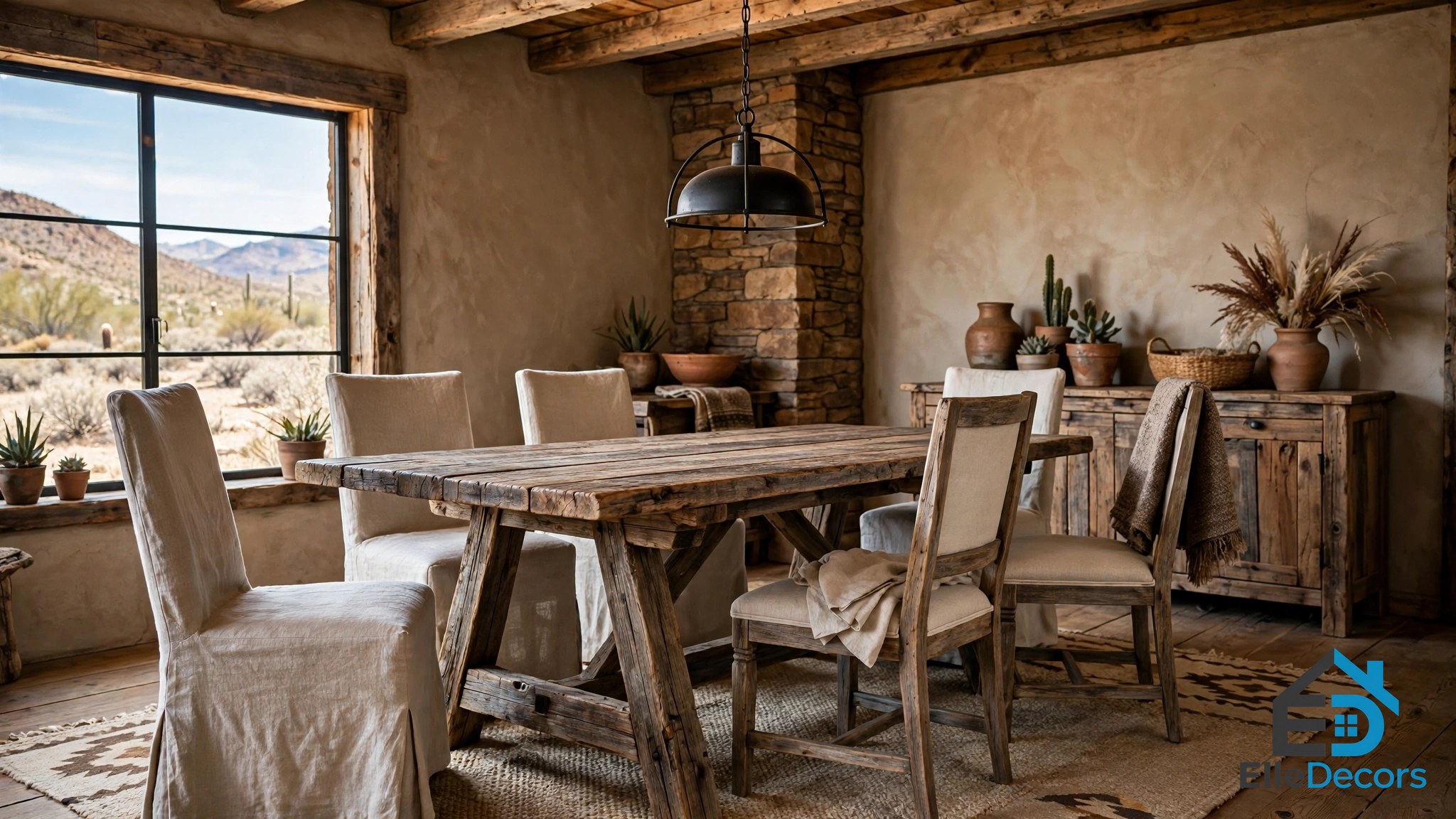
After the walls, furniture carries the style. Choose pieces with simple, sturdy shapes: a trestle dining table, a plank coffee table, a Shaker-style cabinet, a low console with plain legs. The shapes stay quiet while the grain does the talking. Oak, pine, and walnut all fit, and mixed tones look more honest than a matched set.
The same rules that govern the best use of wood in modern designs apply here: show the grain, mix light and dark pieces, and let one hero piece lead each room. Balance heavy wood with soft seats too. A trestle table with linen chairs feels welcoming, while heavy wood chairs on every side feel like a museum.
Anchor the Room With a Leather Sofa
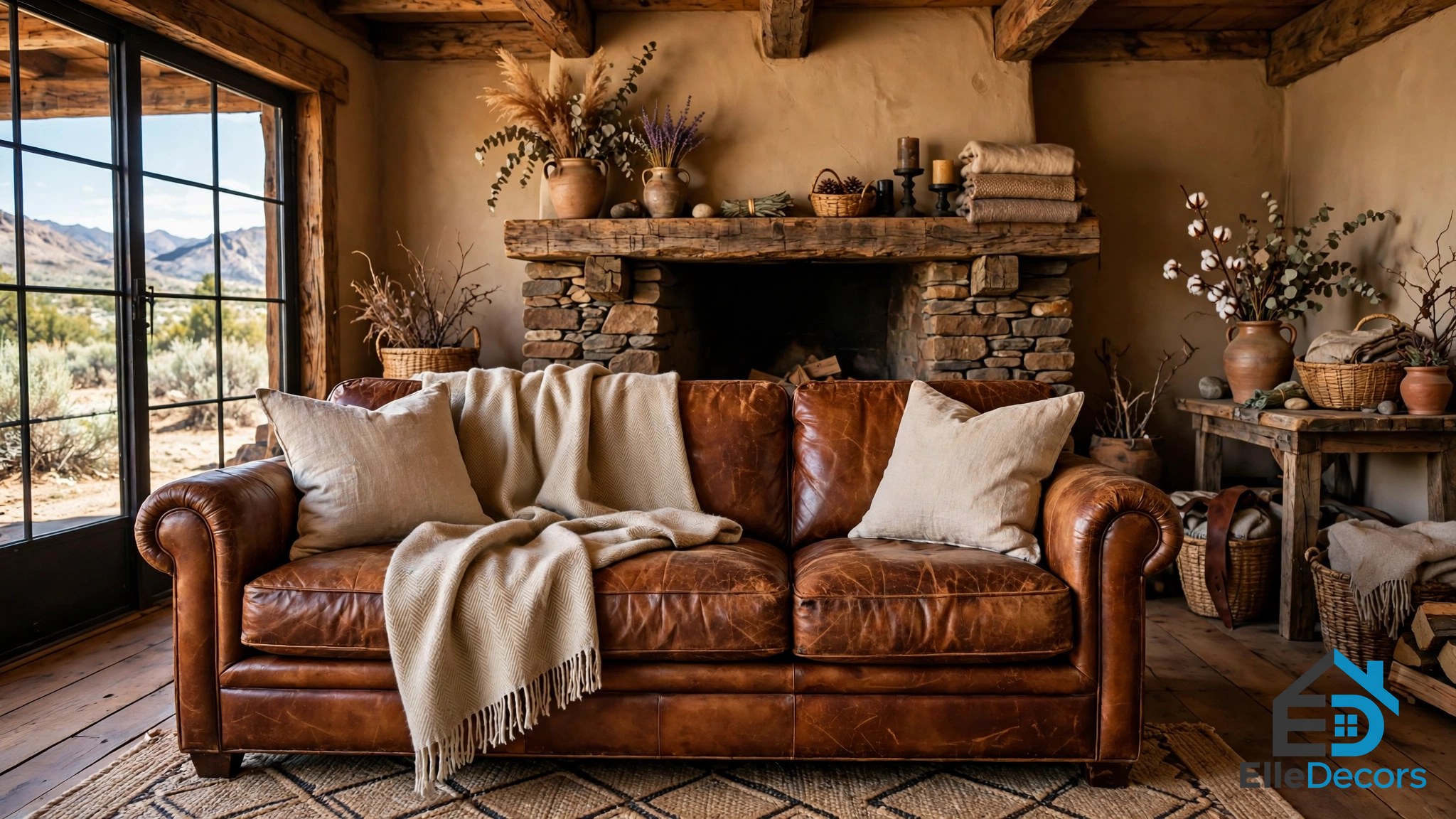
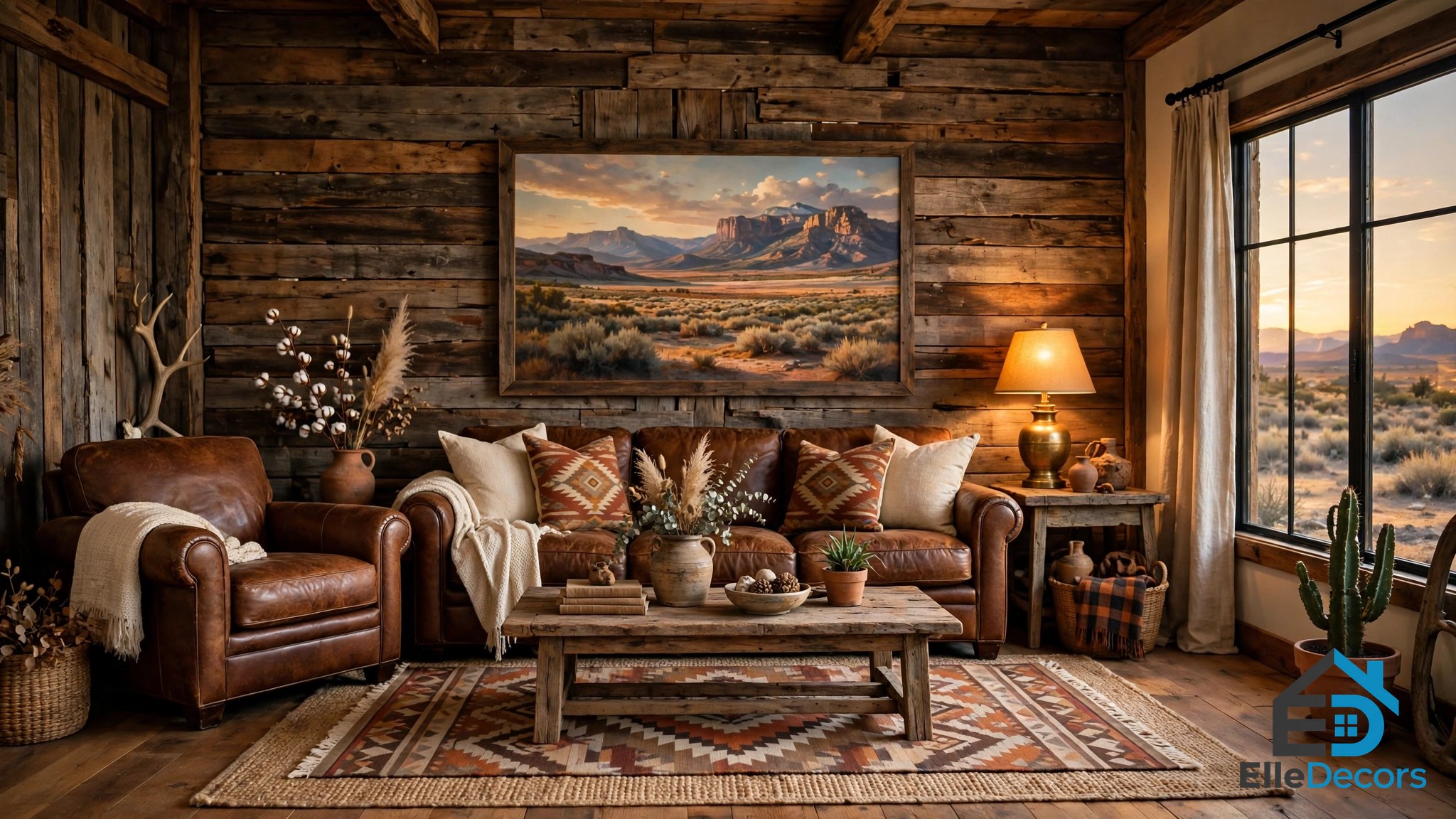
No single piece says western home decor like a worn leather sofa. Leather suits the style for practical reasons too: it shrugs off dust, wipes clean, and gains character from every scuff. Cognac, saddle brown, and deep chestnut are the classic tones, and all three sit happily next to wood, stone, and cream walls.
If a full sofa is too much, use one leather accent instead: an armchair, an ottoman, or a pair of cushions. One strong piece reads as a choice. Leather on every seat reads as a saloon.
Soften the leather with textiles. A nubby wool throw over one arm and two plain linen pillows keep the seat inviting rather than stiff.
Layer a Cowhide Rug Over Something Plain
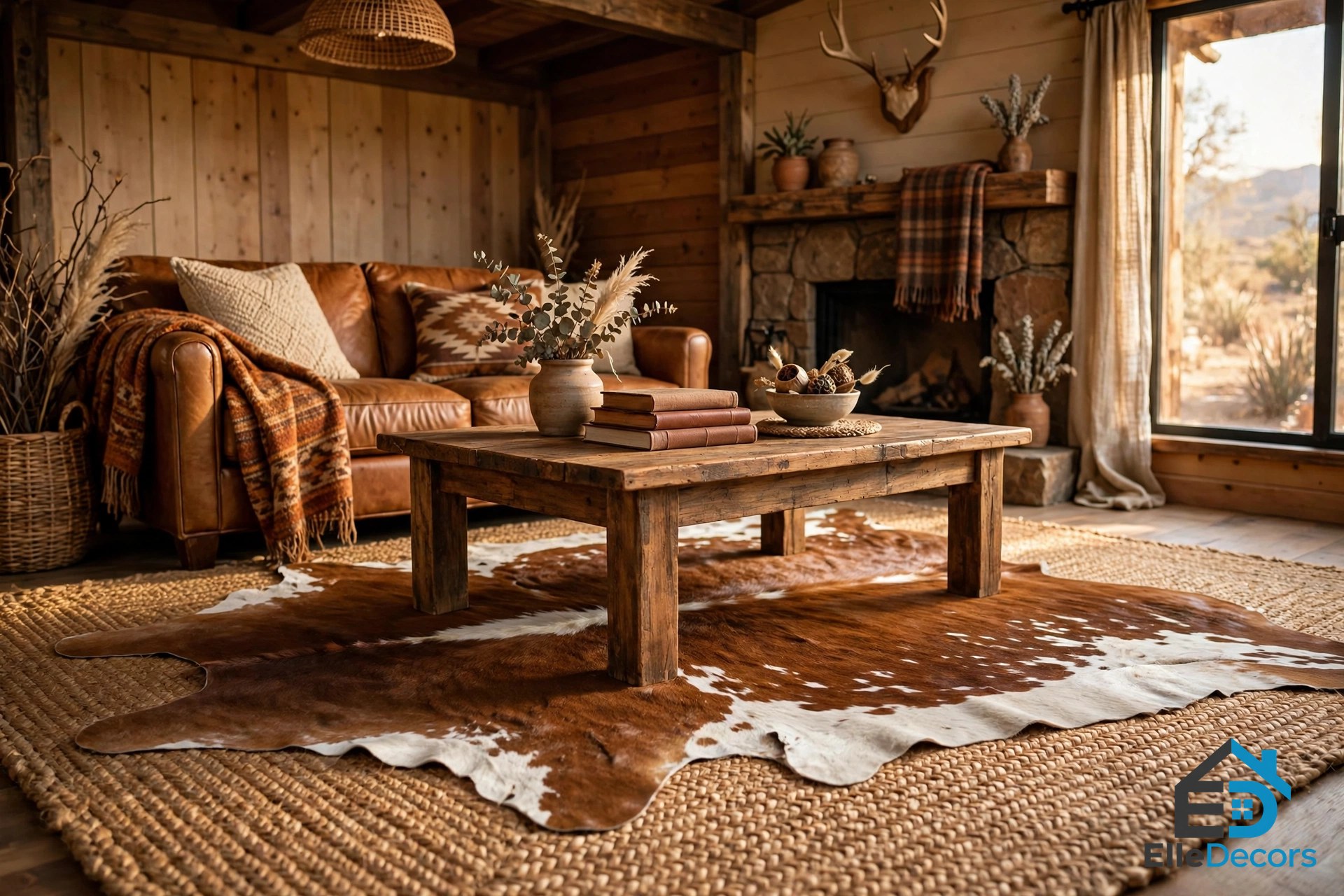
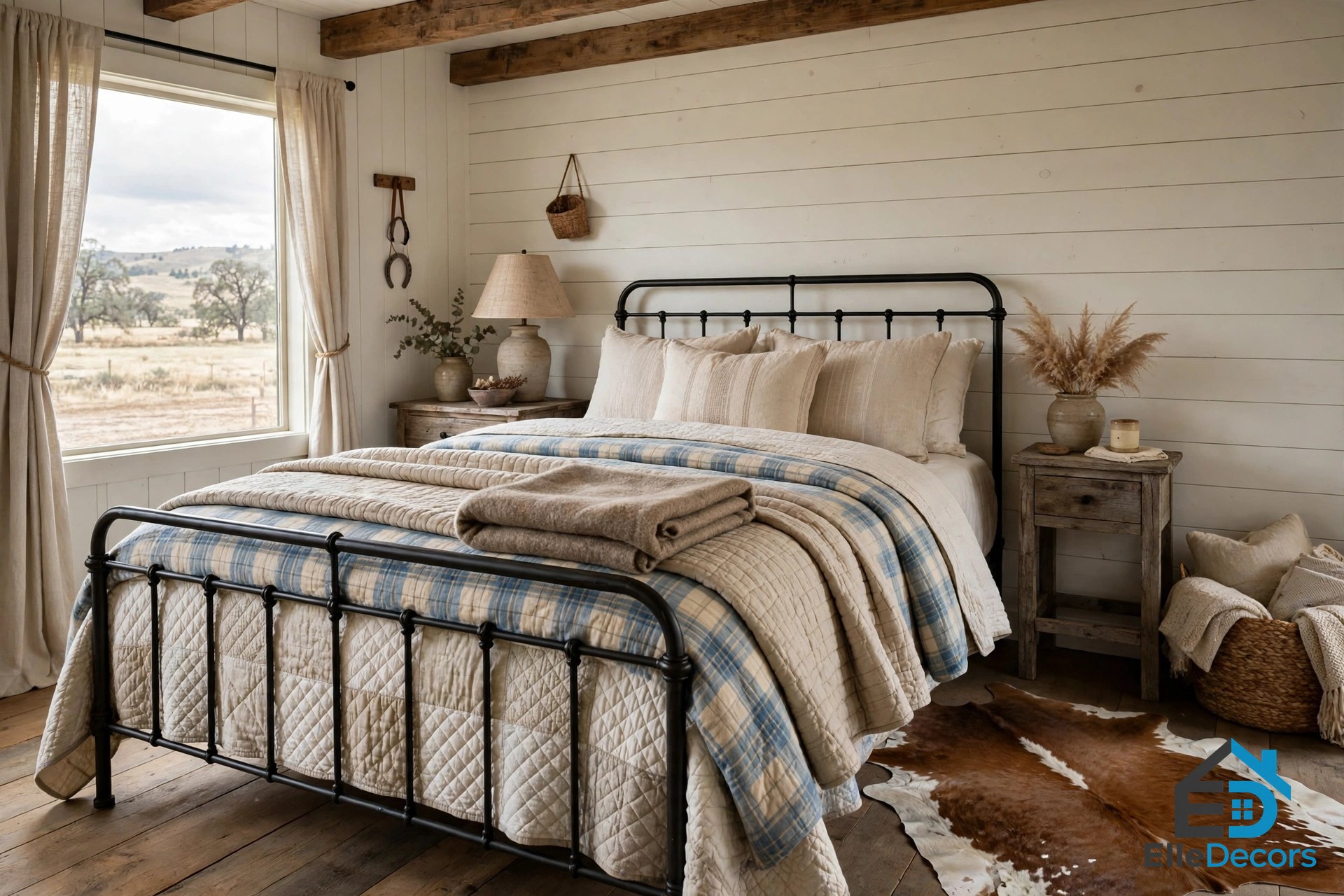
A cowhide rug is the fastest single change you can make to a room. The organic shape breaks up straight furniture lines, and each hide has a pattern no factory can repeat. Brown, cream, and soft brindle hides are easiest to live with, since they hide dust and pet hair between cleans.
The trick is layering. A hide on a bare floor can look lost and slide around. Lay it over a larger flat-weave or jute rug instead. The base rug defines the seating area, and the hide adds the western note on top.
Care is simple. Shake the hide outside, vacuum without a rotating brush, and blot spills fast rather than rubbing them. Kept out of harsh direct sun, a good hide lasts for years.
Soften Everything With Woven Textiles
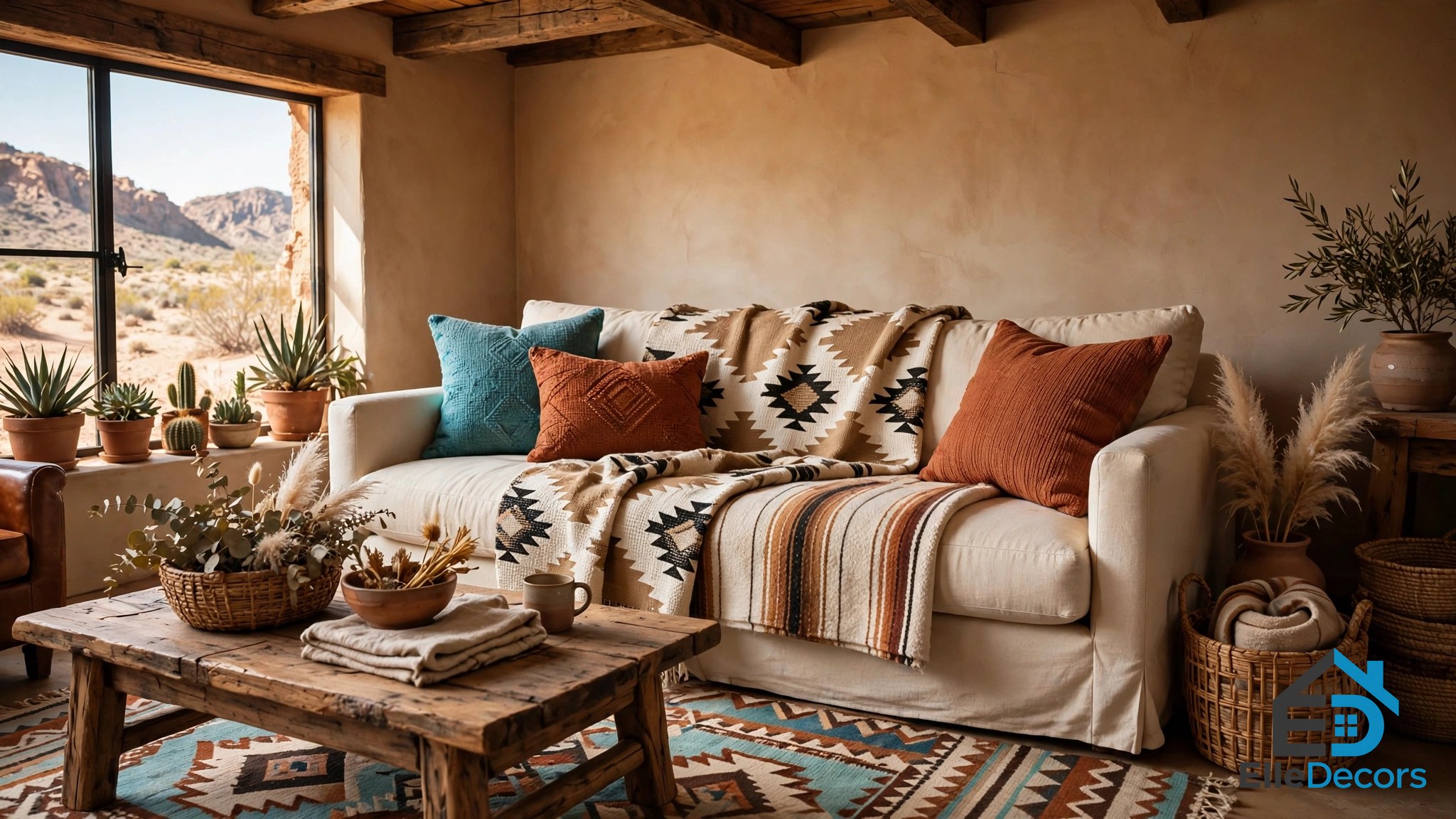
Hard materials give the style its bones. Textiles give western home decor its comfort. Wool throws, striped blankets, quilted coverlets, and woven pillows in rust, cream, ocher, and faded turquoise warm up leather and wood on contact.
Pattern needs a leash. Pick one bold woven pattern per room, like a geometric blanket or a striped rug, then let the rest stay solid: plain linen, canvas, and wool in the palette colors. Rooms feel collected when patterns work at different sizes, one large, one small, never two shouting at once.
Textiles are also the cheapest place to test the style. A folded blanket over a chair back and two new pillow covers can tell you in one evening whether you want more of this look or less.
Use Antler Accents Once, and Use Them Well
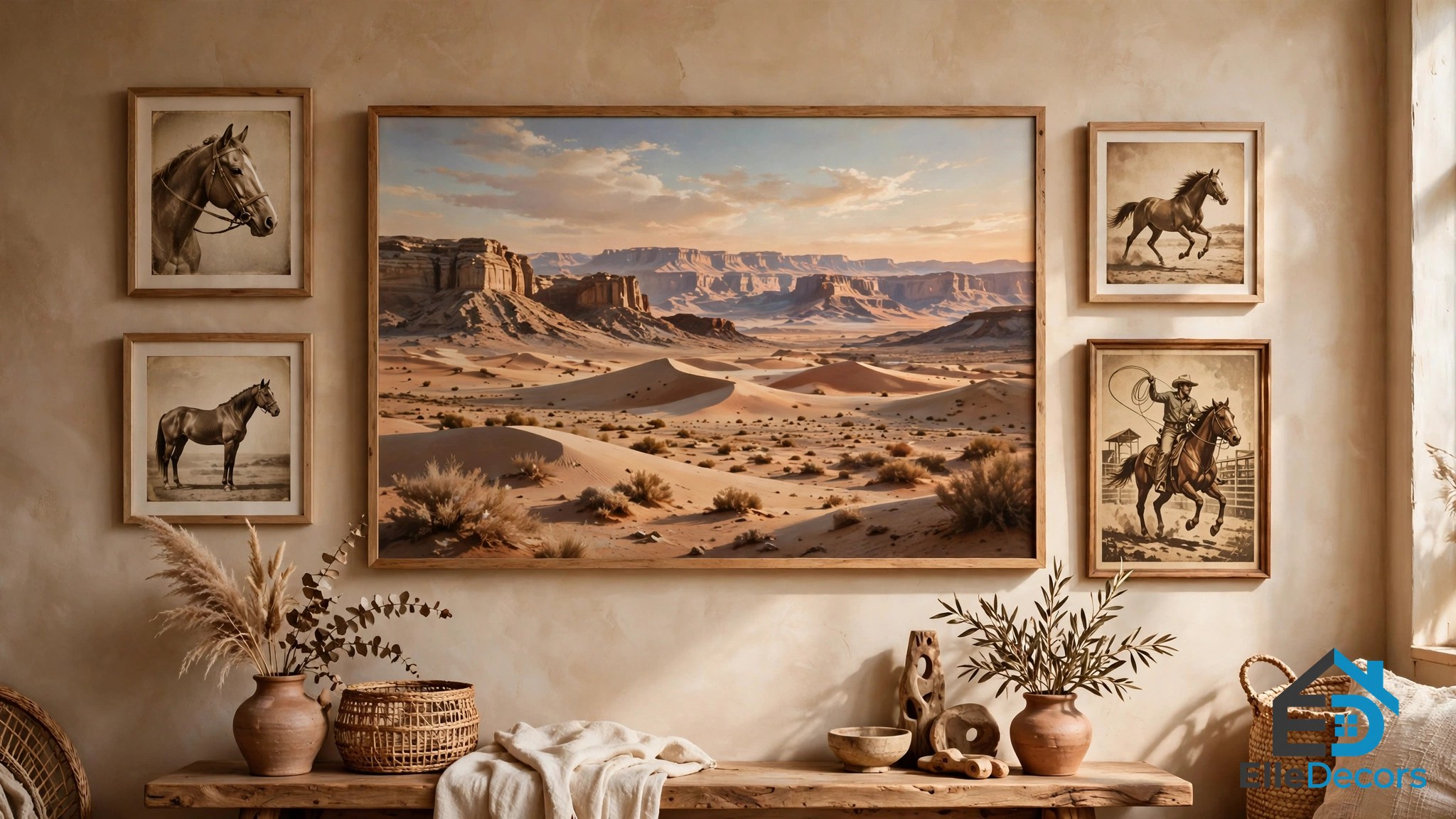
Antlers are the strongest symbol in the style, so treat them like hot sauce: one good dose, not a flood. A single antler chandelier over a dining table, a shed-antler mirror over a mantel, or one pair mounted by a door is plenty for most homes.
There is a kind reason to choose shed antlers. Deer and elk drop their antlers every year and grow a new set, while horns stay for life, as the National Park Service explains. A shed antler is a material the animal left behind on its own.
Keep the setting calm around an antler piece. Plain walls, simple pottery, and linen upholstery let the shape read as sculpture. Crowd it with horseshoes and signs, and the room tips into hunting lodge.
Add a Sliding Barn Door
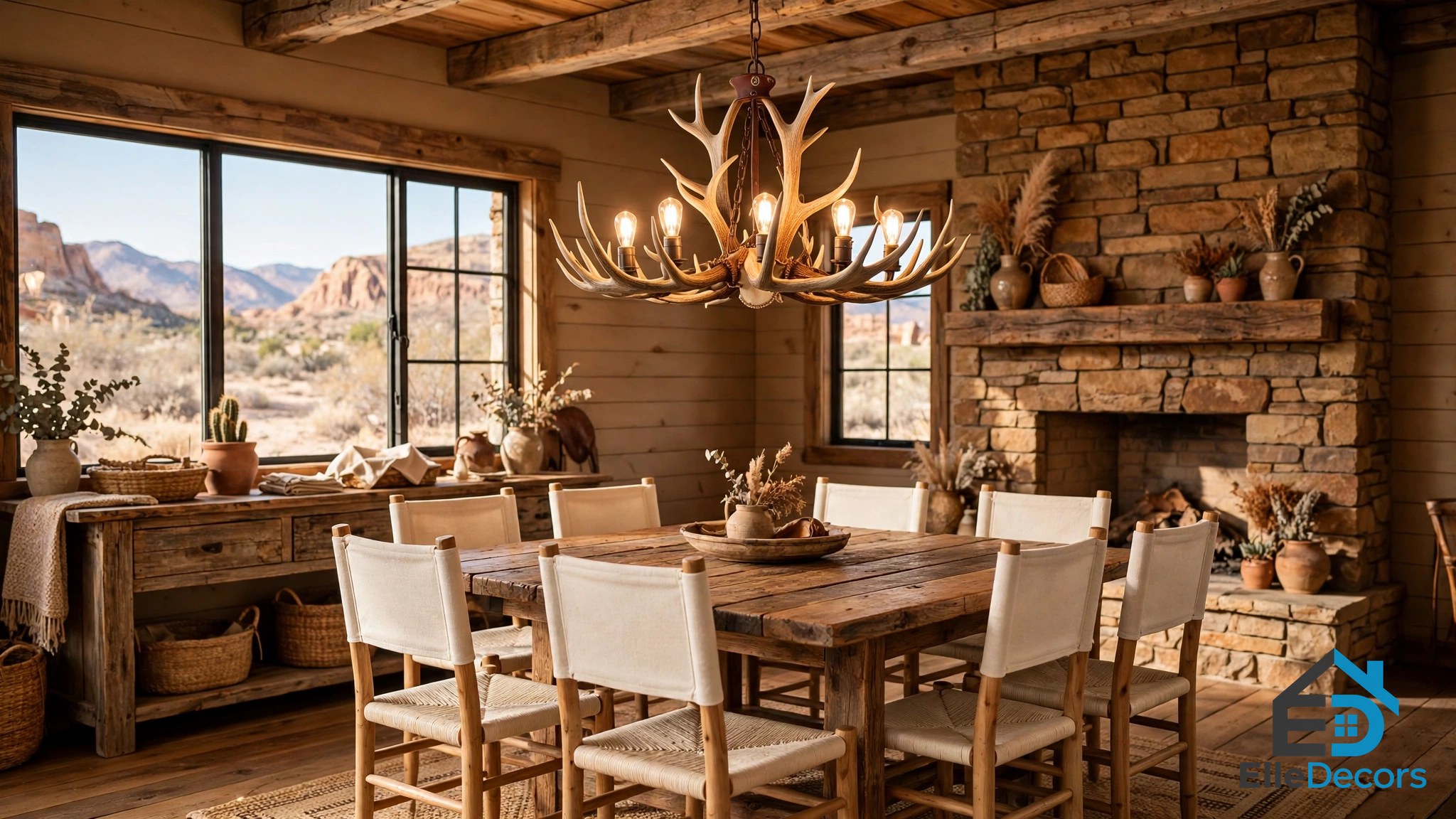
Few changes alter a room like a barn door. The wide planks, the black iron track, and the slow slide all speak the language of the ranch. Use one to close a pantry, a laundry space, or a main bedroom, anywhere a swinging door wastes space.
Reclaimed doors carry real age, but a new door in rough-sawn pine with a worn finish gets close. Paint is allowed: deep red and sage green are the classic choices, and both suit iron hardware. If you cannot hang a door, lean a vintage one against a wall behind a bench. It works as art and asks nothing of the wall but support.
Give the Room a Stone Heart
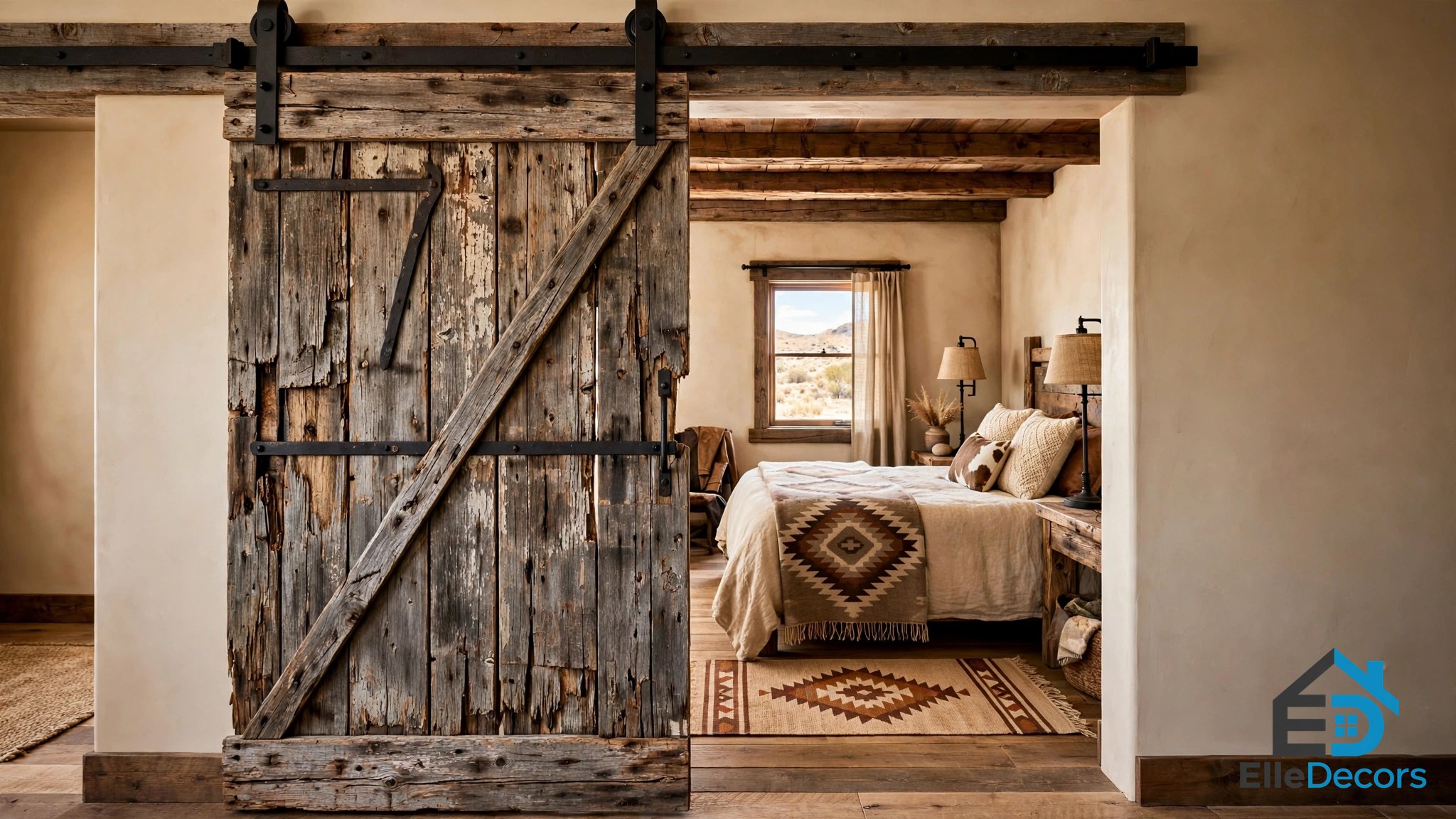
Ranch houses gathered around the fire, and a stone fireplace still anchors western home decor better than any art or screen. Fieldstone, limestone, and stacked stone veneer all work. Run the stone to the ceiling in a tall room, or keep the surround low and wide in a small one. A thick wood mantel, ideally one reclaimed beam, finishes the picture.
No fireplace? Borrow the structure. A stone hearth pad under a wood stove or a low stone bench along one wall gives the room the same weight: one honest, heavy material the furniture can gather around.
Style the mantel with restraint: one landscape painting, a pair of iron candlesticks, and a basket of firewood. Leave gaps. Empty space makes the few objects feel chosen.
Hang Art That Tells a Western Story
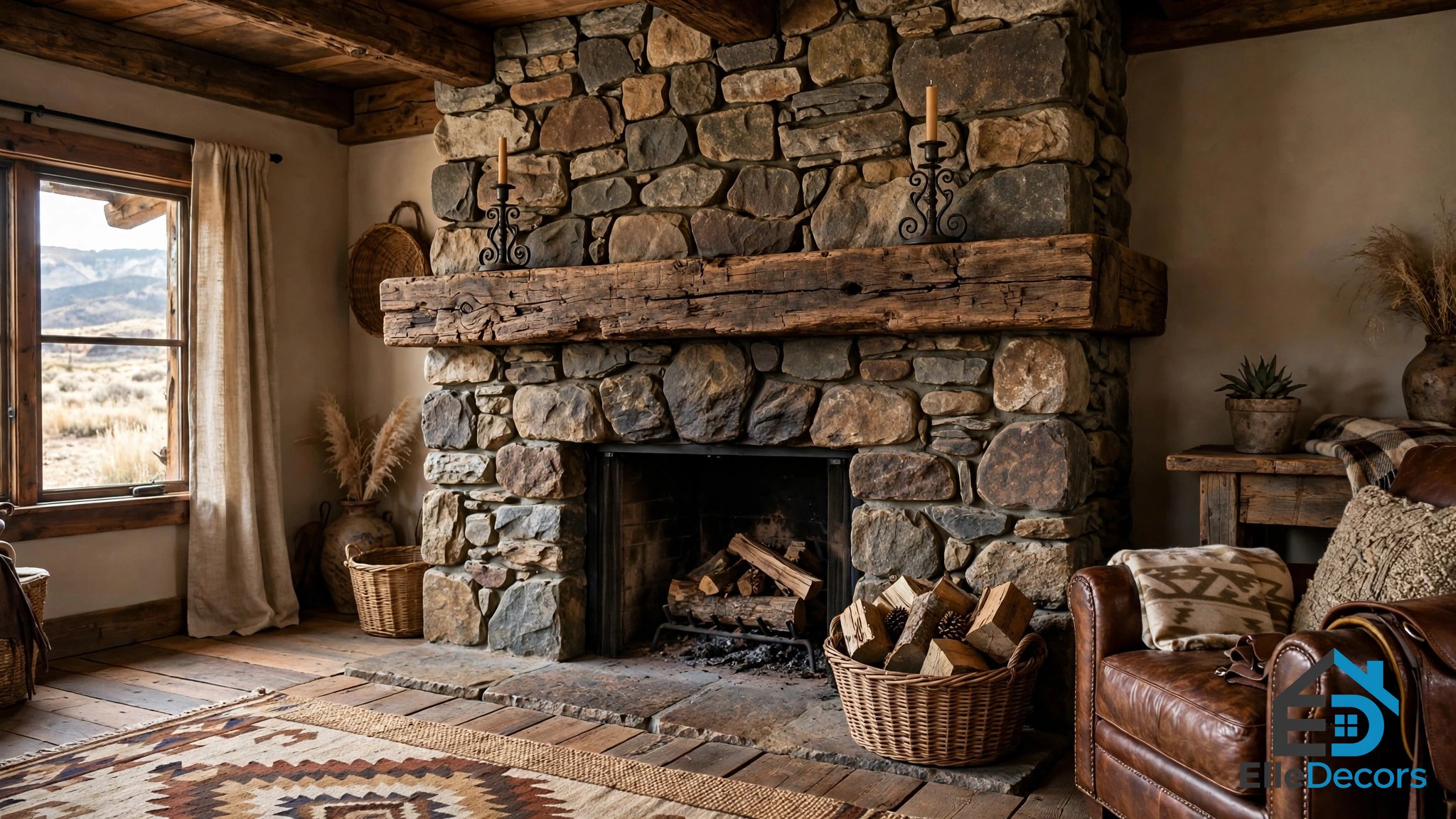
Western walls want land and animals, not slogans. Large landscape paintings or photos of mesas, prairies, and mountain light do the most work. Vintage rodeo posters, sepia ranch photos, and horse portraits add the human story. Frames stay simple: black metal, walnut, or distressed wood.
One oversized piece above a sofa beats six small ones. If you build a gallery wall, mix one sign into paintings and photos, and leave breathing room between frames. A longhorn skull can be the single bold piece on a plain wall, but it counts as your one statement, so let the rest of the wall stay quiet.
Light It With Iron and Warm Glass
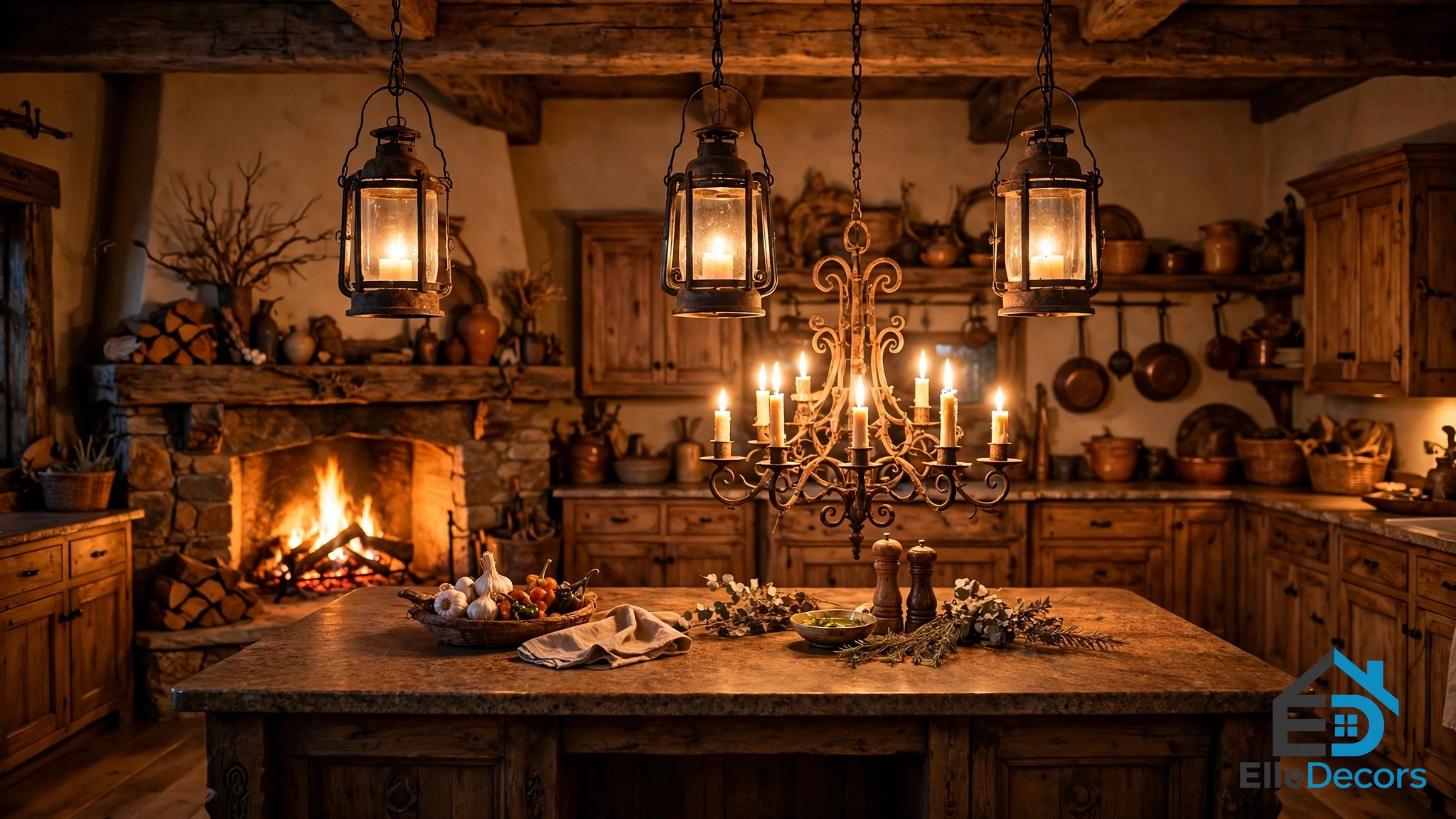
Western lighting is heavy, dark, and warm. Wrought iron lantern pendants, candelabra chandeliers, and simple iron sconces all fit, and their matte black finish ties back to door hardware and curtain rods. Warm bulbs matter as much as the fixture: the glow should feel like firelight, not office light.
Layer the light the way you layer rugs. One ceiling fixture for general light, a table lamp or two for reading, and a small lantern for the evening edge. Repeat the iron finish in a few small places, like cabinet pulls or a mirror frame, so the lighting does not sit alone.
Western Home Decor Ideas, Room by Room
The same base bends a little in each room. Here is the short version for the four spaces people ask about most.
Living Room
Start with the leather sofa, the layered rugs, and the stone or wood focal wall from the sections above. Add one woven throw, one piece of landscape art, and a wood coffee table. That is a complete room. Stop there for a week before buying more, because these rooms grow best in stages.
Bedroom
The bedroom is where western farmhouse shines: soft, worn, and calm. Layer the bed in order: cotton or linen sheets, a quilt or coverlet, then a wool blanket or striped throw folded at the foot. A wood or iron bed frame, simple nightstands, and warm low lamps finish it. For full room plans on the same bones, see our rustic bedroom guide.
Kitchen and Dining
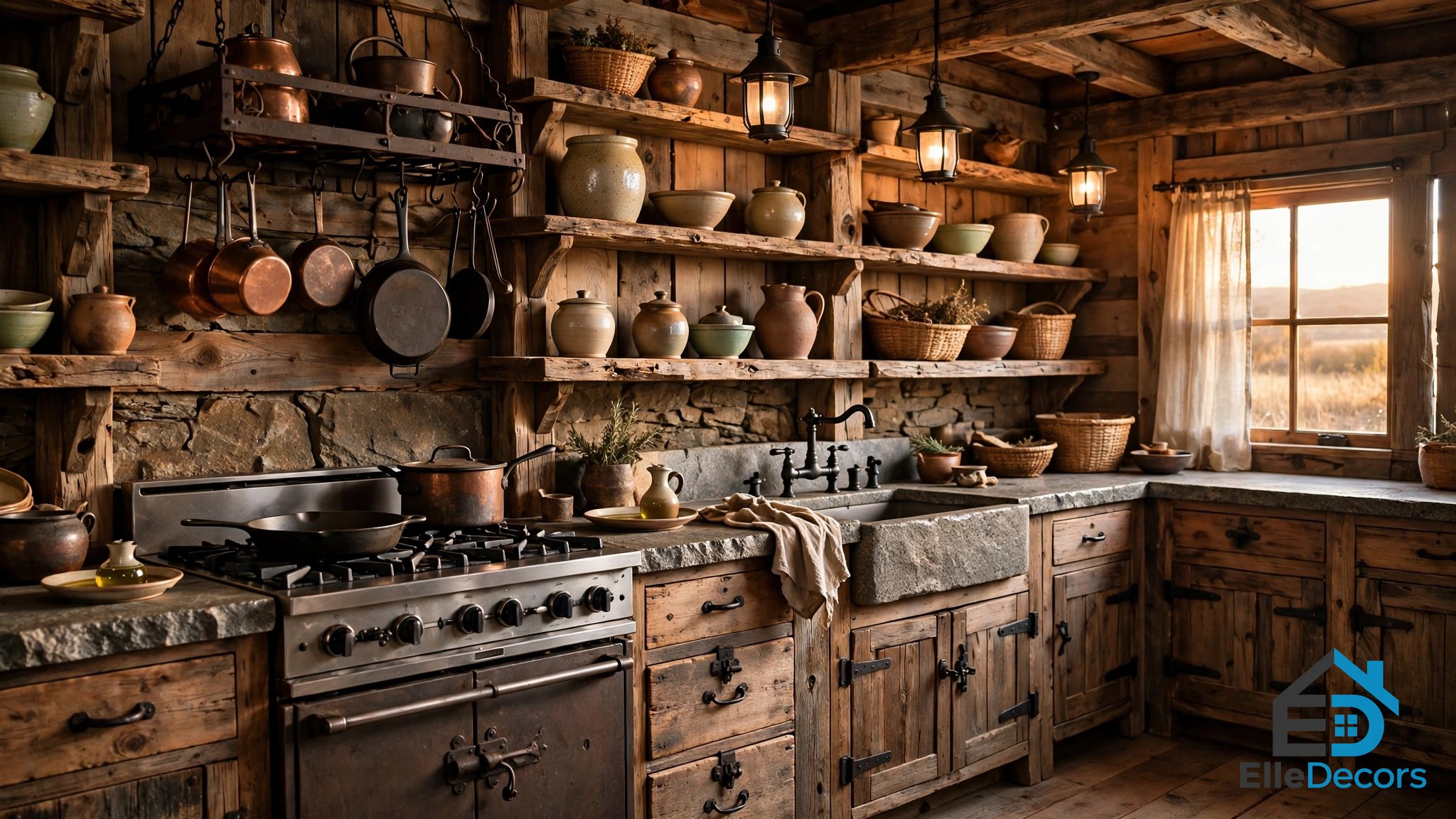
Kitchens take the style through materials rather than props. Open shelves in worn wood, stone or butcher block counters, iron hardware, and pottery on display carry the whole look. A trestle table and an iron or antler chandelier handle the dining side. Keep counters clear: enamelware, glass jars, and a bowl of fruit are decor enough.
Entry
The entry is the one place where the working gear of the West earns its display. Iron hooks or wood pegs for hats, a bench with boots lined beneath it, and a woven basket for gloves and scarves make a drop zone that is useful every day. A mirror in a worn wood frame and one landscape print keep it from feeling like a closet.

Western Style on a Budget
Western home decor was born in working homes, so it forgives a small budget better than most styles. The cheapest western decor for home is often the piece you already own: a wood table that needs sanding, not replacing, or a plain sofa waiting for a wool throw.
Thrift stores and flea markets are the natural hunting ground. Look for solid wood furniture with honest wear, leather chairs, woven baskets, old pottery, and framed landscape prints. Check wood for wobble and water damage, and smell leather before you buy. Small flaws are fine in this style, but broken joints are not a bargain.
Spend in the right order. First the anchor: one rug or one leather piece. Then textiles, which change the most per dollar. Art and small objects come last, one at a time. A room built over six months of finds will always beat a room bought in one cart.
Keep It From Looking Themed
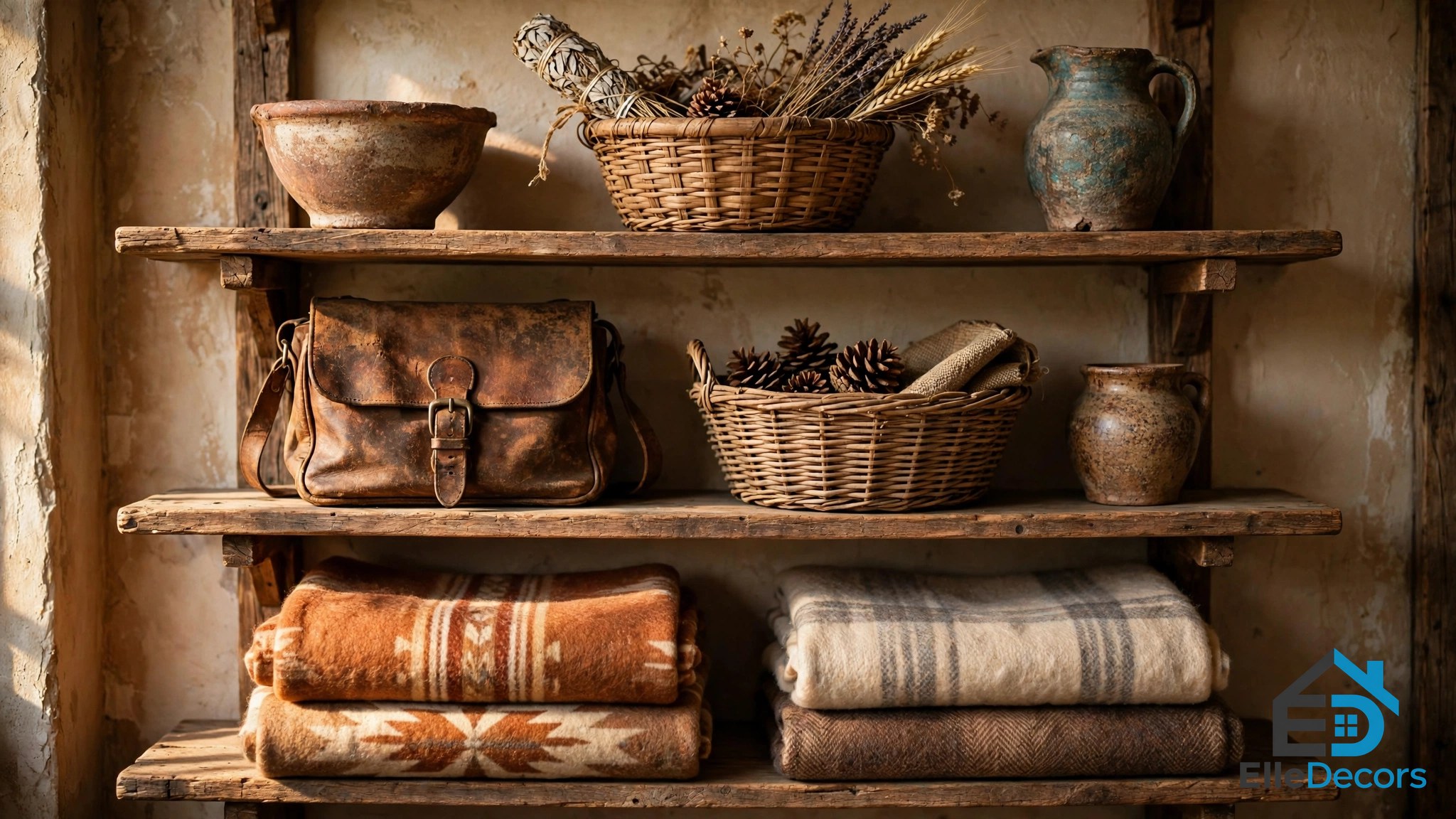
The line between a western room and a themed room is restraint. These are the mistakes that cross it:
- Too many symbols. Horseshoes, stars, skulls, lassos, and signs in one room shout. Pick one symbol per room and let materials do the rest.
- Everything distressed. If every surface is rough, nothing stands out. Mix worn pieces with clean ones so the eye can rest.
- Too dark. Brown wood, brown leather, and brown rugs in a low-light room turn muddy. Keep walls pale and add cream textiles.
- Props over comfort. A rope-wrapped lamp you cannot read by is a prop. Every piece should work, seat, hold, or light.
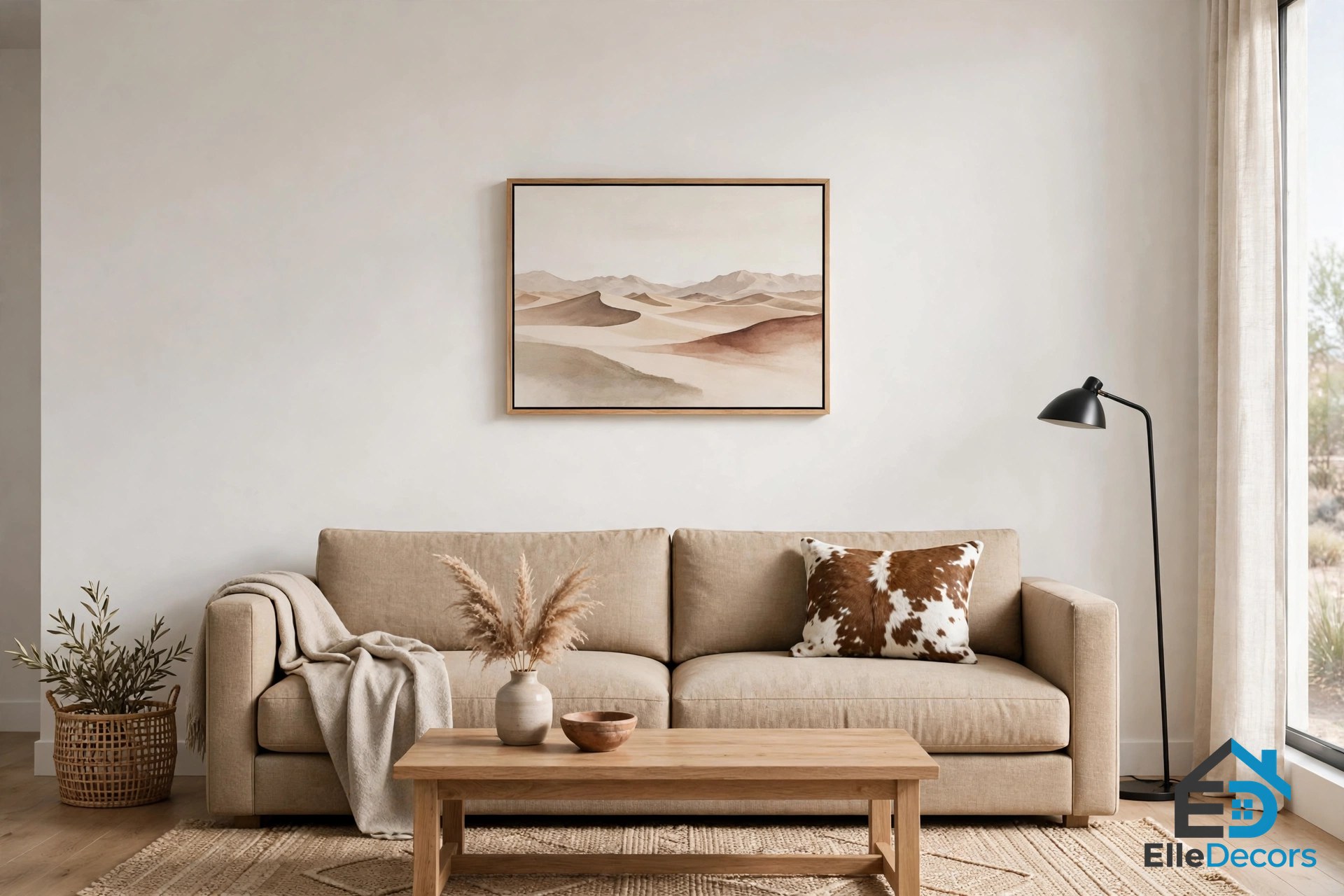
The short video below makes the same point with prints: bold western patterns work when clean lines and calm colors surround them.
Frequently Asked Questions
What is western home decor?
It is a style built from the materials of the American West: wood, leather, stone, iron, hide, and wool, in earthy colors drawn from the desert and prairie. Modern versions use the same materials with cleaner lines and fewer symbols, so rooms feel warm and sturdy rather than themed.
What is the difference between western and farmhouse style?
Farmhouse style uses soft whites, painted wood, and cozy vintage pieces. Western style uses darker wood, leather, hide, and iron, with desert colors and stronger shapes. Western farmhouse blends the two: the soft palette of farmhouse with the leather, wood, and woven pattern of the West.
How much cowboy decor is too much?
When the symbols outnumber the materials, it is too much. One hat wall, one skull, or one rodeo poster can charm a room. Add all three plus horseshoes and a wagon wheel, and guests stop seeing a home and start seeing a set. Keep symbols to one or two per room.
Can this style work in a small apartment?
Yes, if you scale down and edit hard. Use the palette, one leather or wood anchor piece, a small hide or woven rug, and textiles for pattern. Skip beams, barn doors, and large antler pieces, which need air around them.
Conclusion: Western Home Decor That Lasts
Western home decor lasts because it is built from honest materials and colors that never belonged to one decade. Start with the palette, lay down wood and leather, soften with wool and hide, and add one symbol at a time. Your rooms will feel like they grew over years of ranch life, even if they grew over a few weekends in the city. That warmth, earned rather than staged, is the whole point of the style.