Modern Extendable Dining Table Guide: 8 Picks That Grow With Your Guest List
A modern extendable dining table is the most practical piece of furniture a small home can own. On an ordinary Tuesday it seats four. On a holiday it seats ten. The rest of the year it does not eat up floor space you need for living.
This guide does both jobs: first, how to choose — measuring, mechanisms, materials, and shape; then eight tables you can buy right now, each checked on the store page that sells it. Prices are left out on purpose, since they change often.
How to Choose a Modern Extendable Dining Table
Measure Twice: Closed and Open
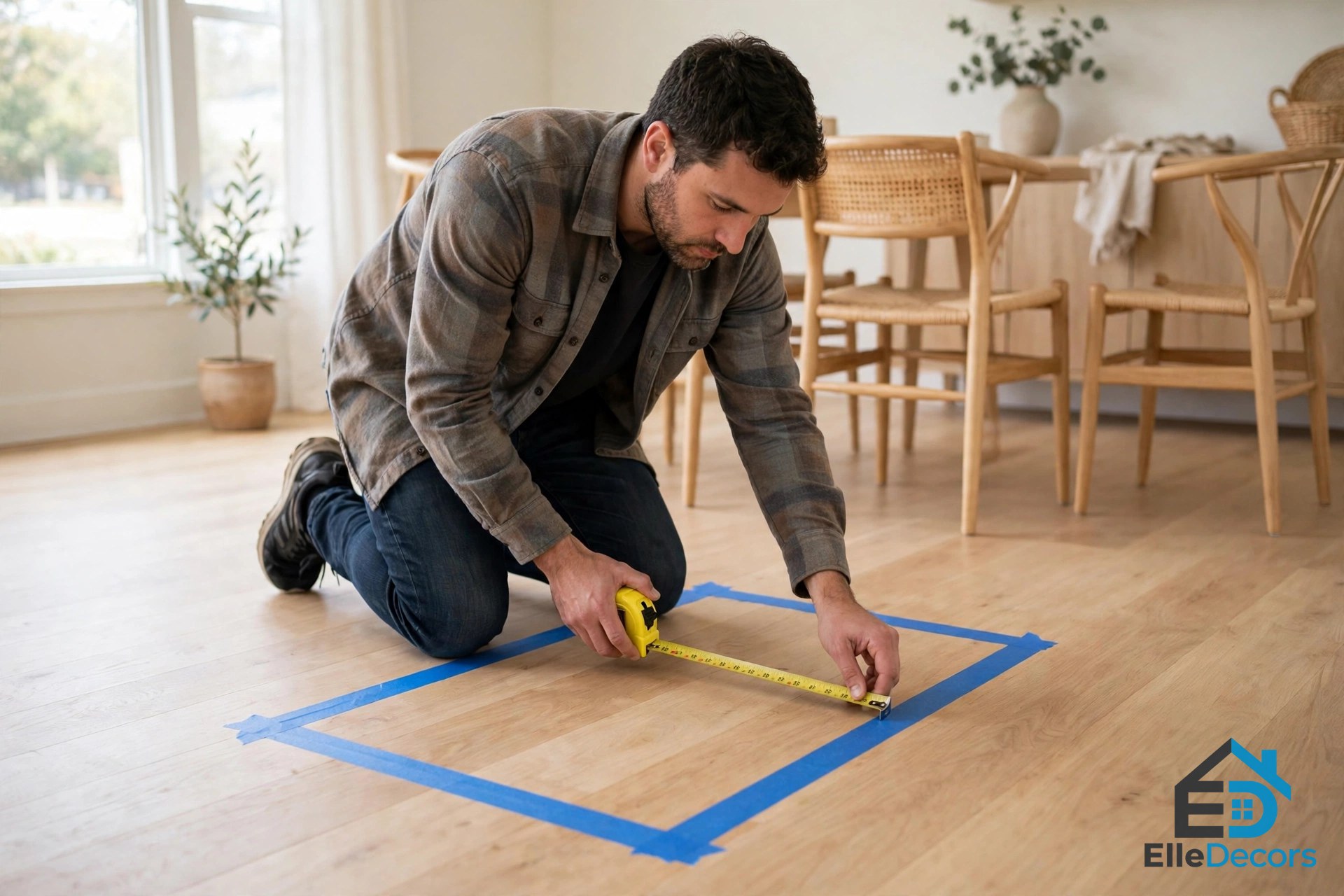
Before you order a modern extendable dining table, measure the room twice — closed, and fully open. A table that fits beautifully at four seats can block a doorway at ten. Allow at least 24 inches of table width per seated person, and leave at least 36 inches to the nearest wall, so people can push back a chair and stand. Check the route from the front door too, since a long table has to get into the room.
Think about chairs too: end chairs need room to pull out. Tape the open footprint on the floor and live with it for a day. If the taped outline gets in your way, the open table will too, and a smaller maximum size is the right call.
The Four Extension Mechanisms
The mechanism decides how easy the table is to live with. A modern extendable dining table usually uses one of four systems, and each one has a real trade-off.
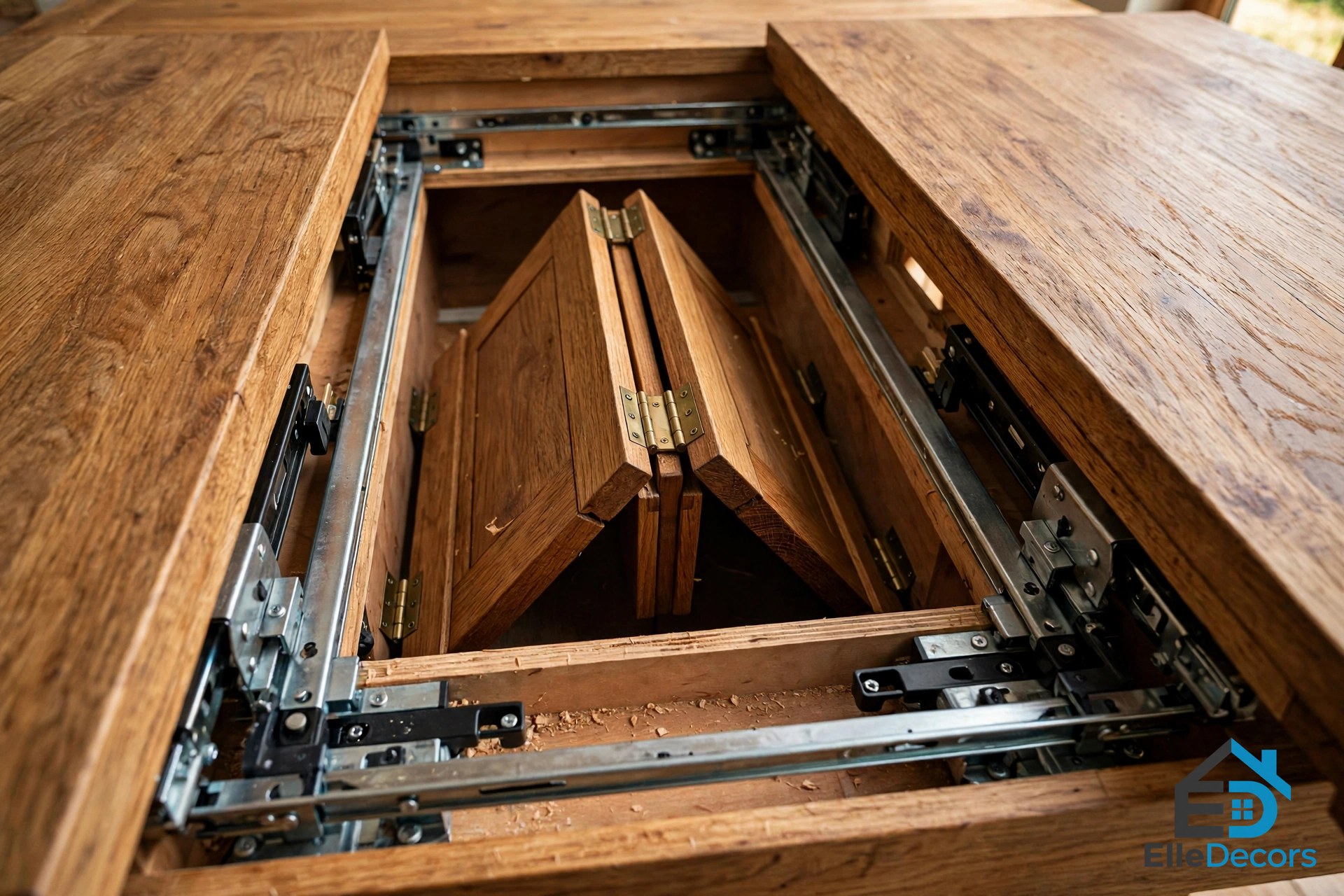
A butterfly leaf is the smoothest option for most homes. The tabletop splits in half, and the leaf folds out from inside the table. Nothing needs storing, and one person can usually open it in seconds. The catch is the seam down the middle.
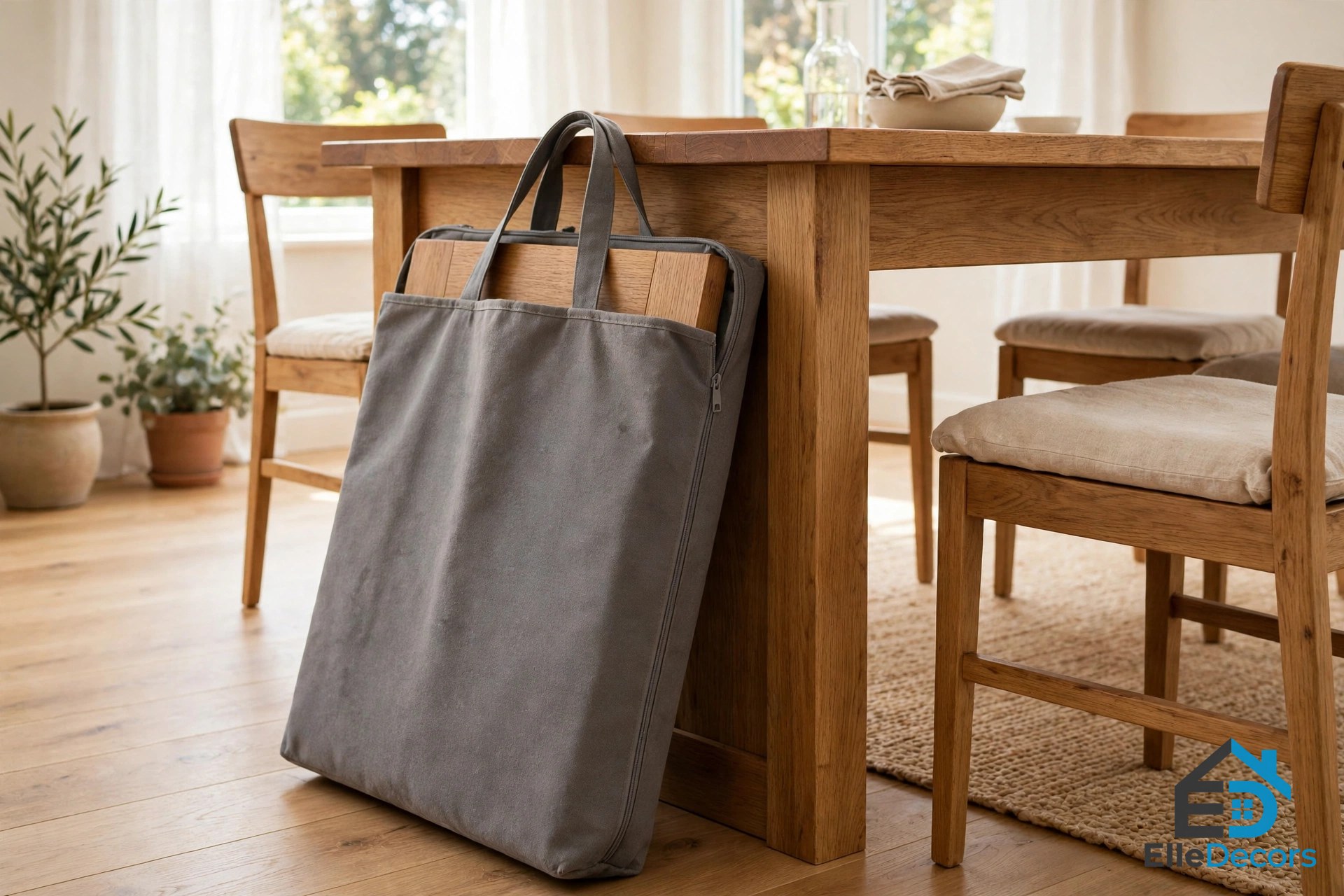
A drop-in or removable leaf gives the cleanest top, because the panel lifts out completely and the table closes flat with no visible joint. The trade-off is storage: the leaf lives in a closet or under a bed. Look for a storage bag, which protects the finish.
Drop leaves fold down along the sides of the table. They are the simplest system and suit narrow rooms. The trade-off is size: they usually add two seats rather than four.
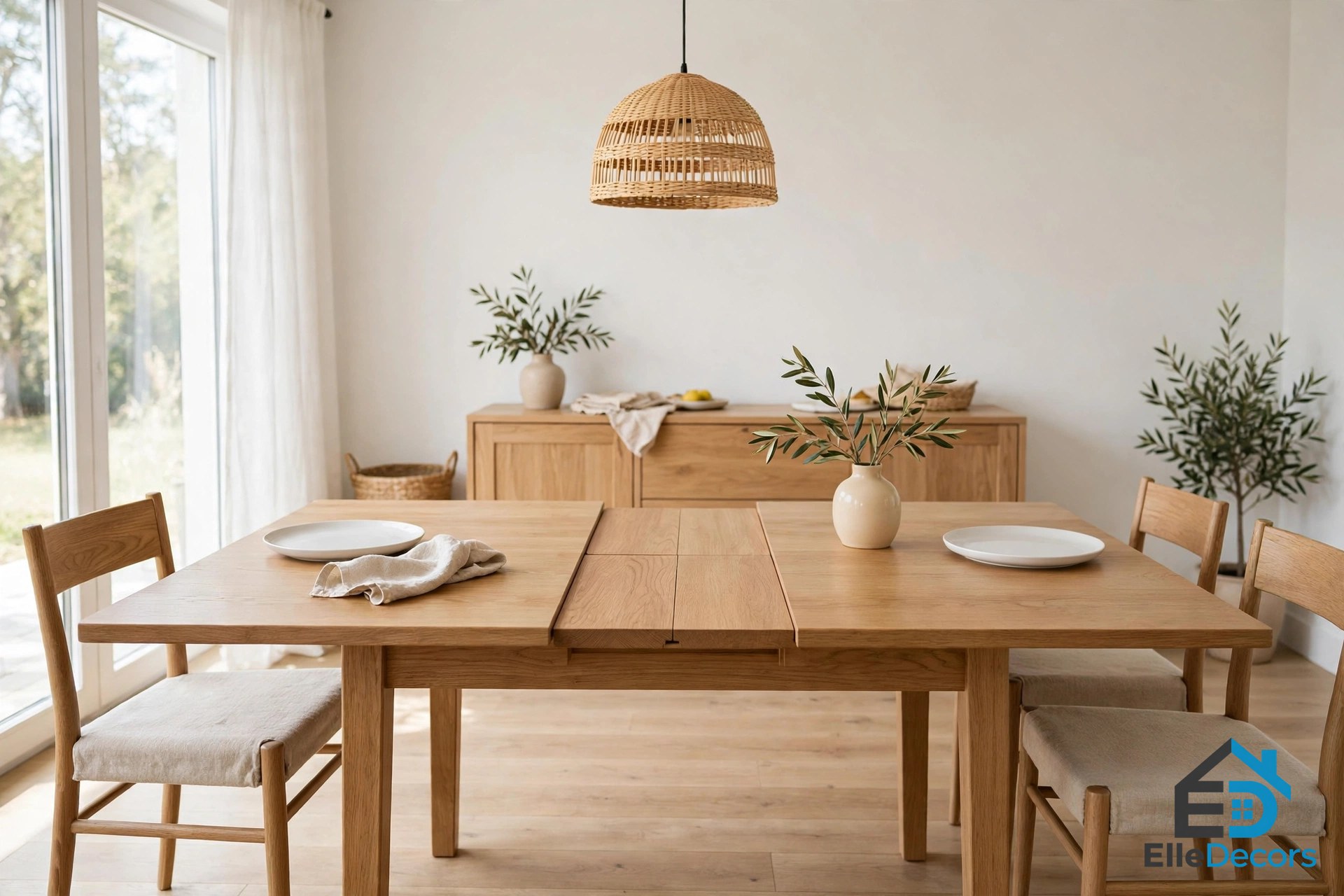
A panel or console system is the most dramatic. The table starts as a slim console and grows by clipping in panels, from seating two to seating twelve, which no other system matches. The trade-off is the panels themselves: they need a home when the table is small, and setting up takes a few minutes.
Try the motion before you commit: the slides should move smoothly, the leaf should sit level, and the lock should hold firm.
Materials and Tops
The top you choose decides how the table handles daily life. Solid wood is the classic choice: it can be sanded and refinished, and it ages with character. Acacia and oak are the workhorses — hard, warm, and forgiving of everyday knocks. Walnut is darker and more formal, and it deepens in colour over the years.
Veneer over a stable core is the sensible middle ground. A thick walnut or oak veneer looks like solid wood, costs far less, and stays flat through humidity changes. It cannot be sanded back like solid wood, so it suits lighter use.
Sintered stone and porcelain tops are the modern option for busy households. They resist heat, scratches, and stains, and spilled red wine wipes off without a mark. They are heavier than wood and feel cooler under the hand. Tempered glass is the lightest-looking option of all: it keeps sightlines open in a small room, and tempered glass is roughly four to five times stronger than regular glass, with good heat resistance. The trade-off is fingerprints, which show on glass more than on any other top.
Shape, Style, and Chairs
Shape is the quiet decision behind every meal. Rectangular tables suit long rooms and large families, offering the most seating per square foot. Round tables suit smaller or open-plan spaces, with easier movement and more conversational seating, and a round table that extends into an oval gives you both. A pedestal base keeps the floor clear and lets chairs slide in from any side, and our pedestal dining table guide covers that style in more depth.
Style follows the room, not the catalogue. A light oak table with tapered legs fits a Scandinavian or mid-century room, and a mid century dining table pairs naturally with the same warm woods and clean lines. A dark walnut table suits a formal dining room; glass and stone tops suit bright, minimal rooms.
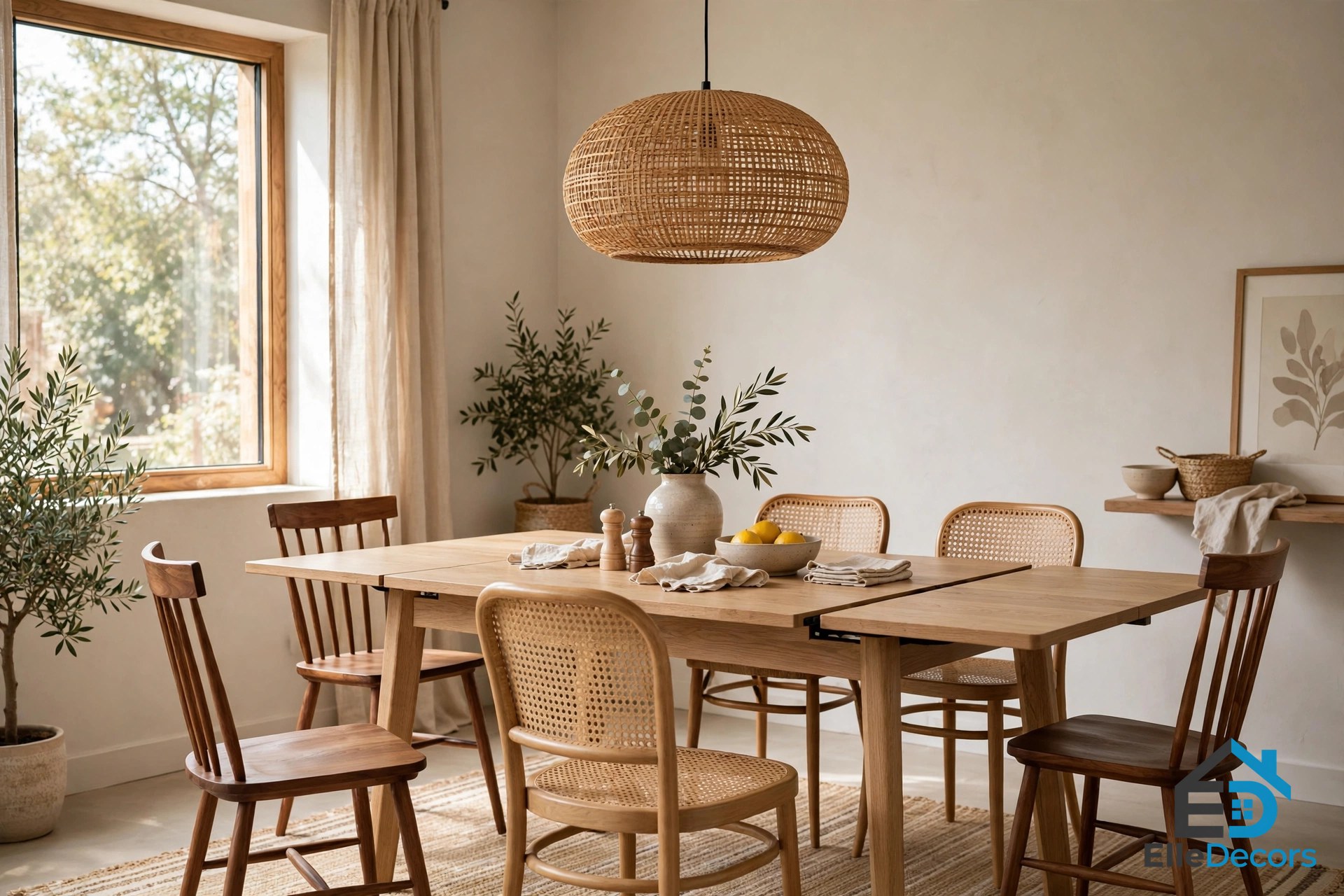
Chairs matter too. Tapered wood chairs are the traditional pairing, but woven cane seating has made a strong comeback, adding texture without visual bulk. A set of cane chairs dining brings that woven texture to a wood table and keeps the look light. Earthy tones and textured weaves complement wood grain; a bench along one side seats more people and tucks away when it is not needed.
The 8 Picks, Grouped by Shape and Use
Every modern extendable dining table below was checked on its seller page, so sizes and materials are the makers’ own. We left prices out on purpose, since they change often.
Rectangular Wood Classics
Transformer Table
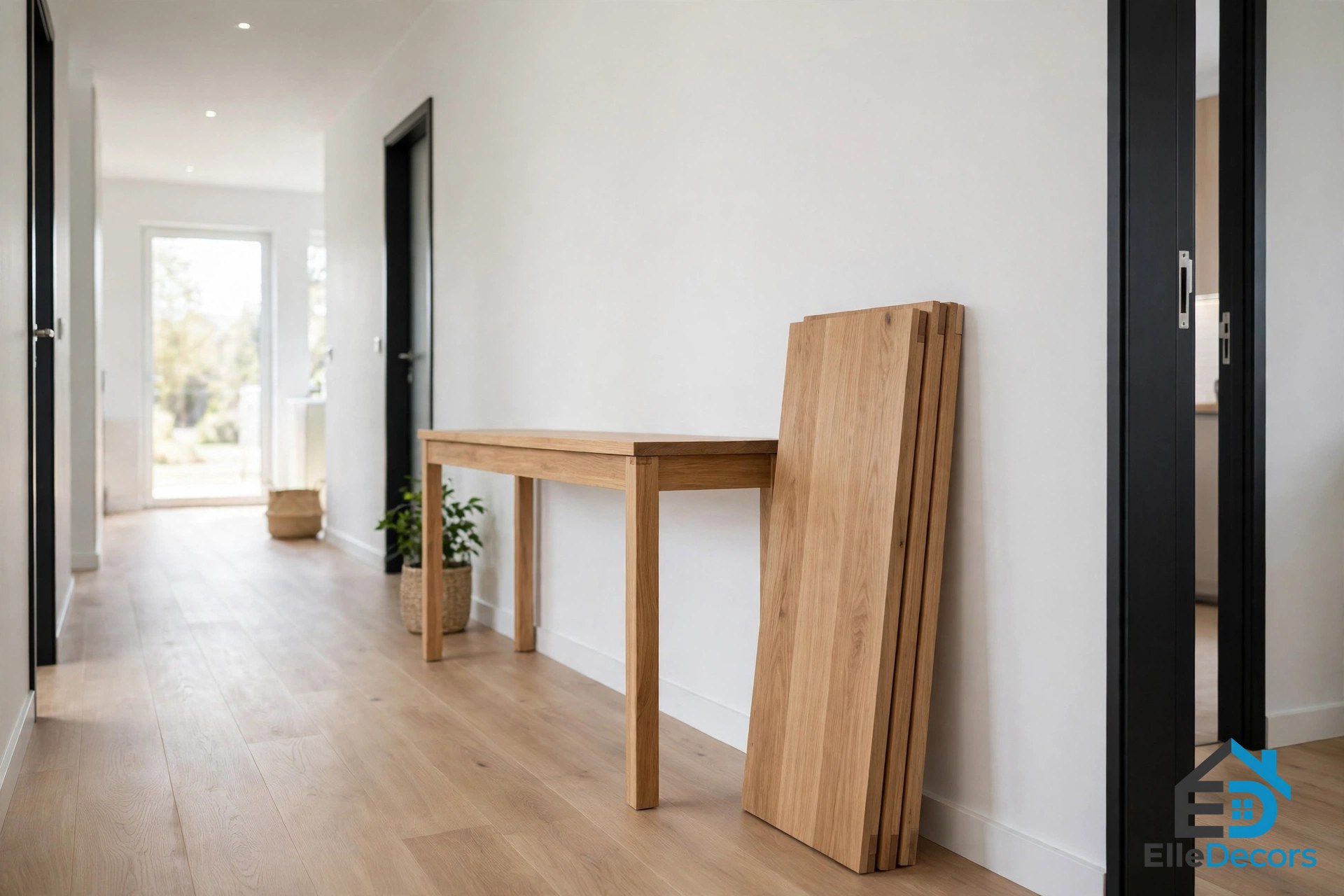
The Transformer is the most flexible table in this guide, and the most dramatic. It starts as an 18-inch console against a wall, and it grows to 118 inches by adding five 20-inch panels, seating two to twelve people. The table is 30 inches high and 37.5 inches wide, built from solid wood with reinforced steel hardware, and it supports up to 750 pounds. There is no assembly required, and the panels stack into a coffee table when the table is small, so nothing needs a closet. Pick it if your room has to be a hallway most days and a banquet room twice a year.
View the Transformer Table at Transformer Table
Castlery Seb Extendable Dining Table
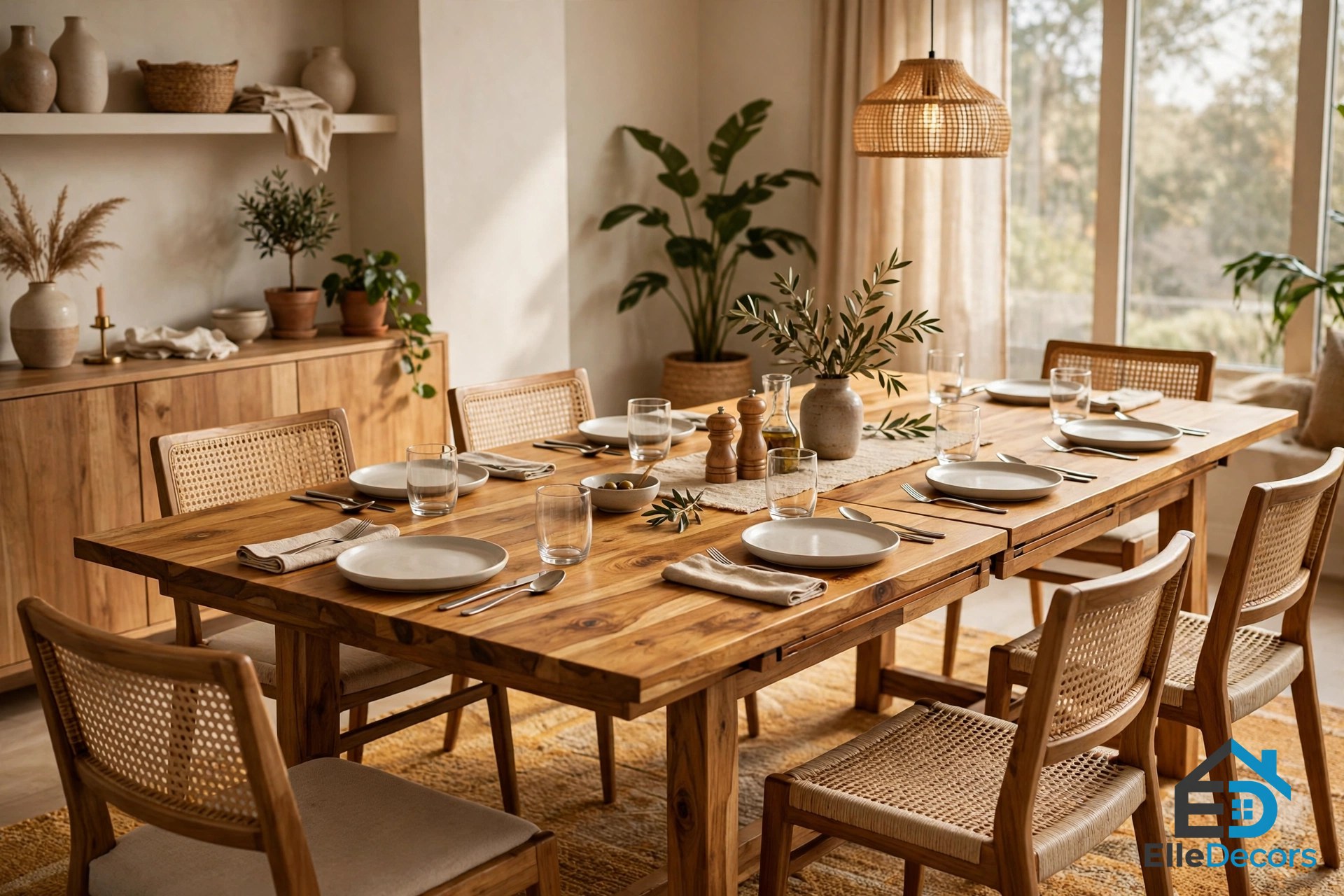
The Seb is the friendly everyday pick. Castlery builds it from solid acacia wood with a wire-brushed surface that shows off the grain, in a muted honey tone that suits modern farmhouse and mid-century rooms alike. The butterfly leaf folds out from inside the table, so it grows from 59 inches to 78.7 inches without any loose panel to store, seating four every day and six when guests arrive. It carries a 30-day return window and a warranty of up to five years. Pick it for a solid wood table that opens in seconds and never asks you to find storage.
View the Seb Extendable Dining Table at Castlery
Medley Palder Extendable Dining Table
The Palder is the heirloom pick. Medley handcrafts it in the USA from walnut, maple, or solid American white oak, all FSC-certified, with a low-VOC finish that resists heat and water. Two leaf inserts take it from 64 inches to 84 inches with one leaf, or 104 inches with both, seating eight. The angled legs give it a modern stance, and the solid wood can be sanded and refreshed over a lifetime of wear. It is made to order and ships in eight to ten weeks. Pick it when you want to buy once and keep the table for decades.
View the Palder Extendable Dining Table at Medley
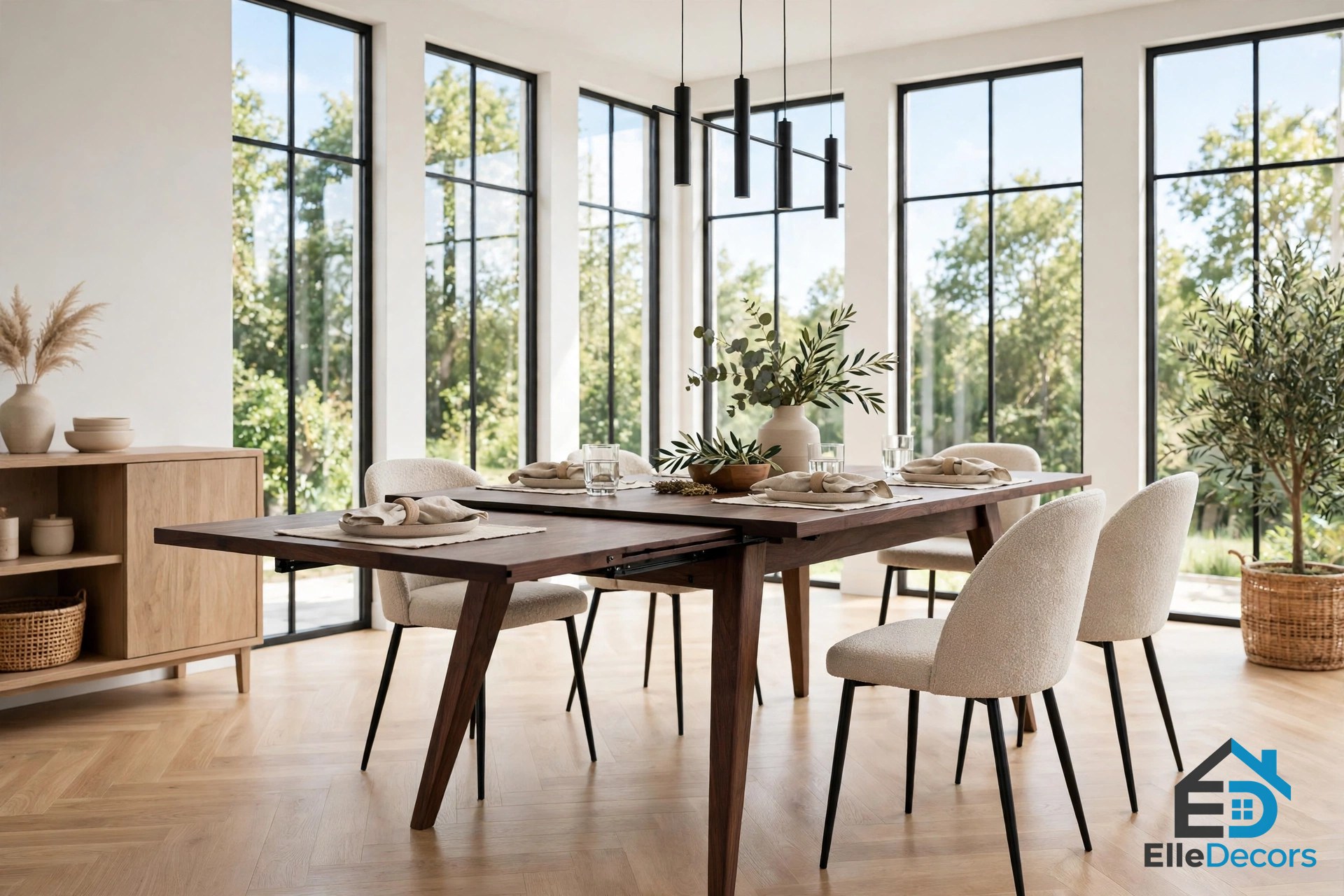
Blu Dot Second Best Extension Dining Table
Second Best is the quiet design-led pick. Blu Dot builds it with a walnut veneer top and solid walnut legs, with a beveled edge and a Scandinavian-inspired silhouette that lets the food be the star. A 21-inch removable leaf extends it from 74 inches to 95 inches, seating eight comfortably and ten at a push, and the leaf comes with a storage bag. Assembly is required. Pick it for a minimalist or modern home where the table should look calm and unadorned, even at full length.
View the Second Best Collection at Blu Dot
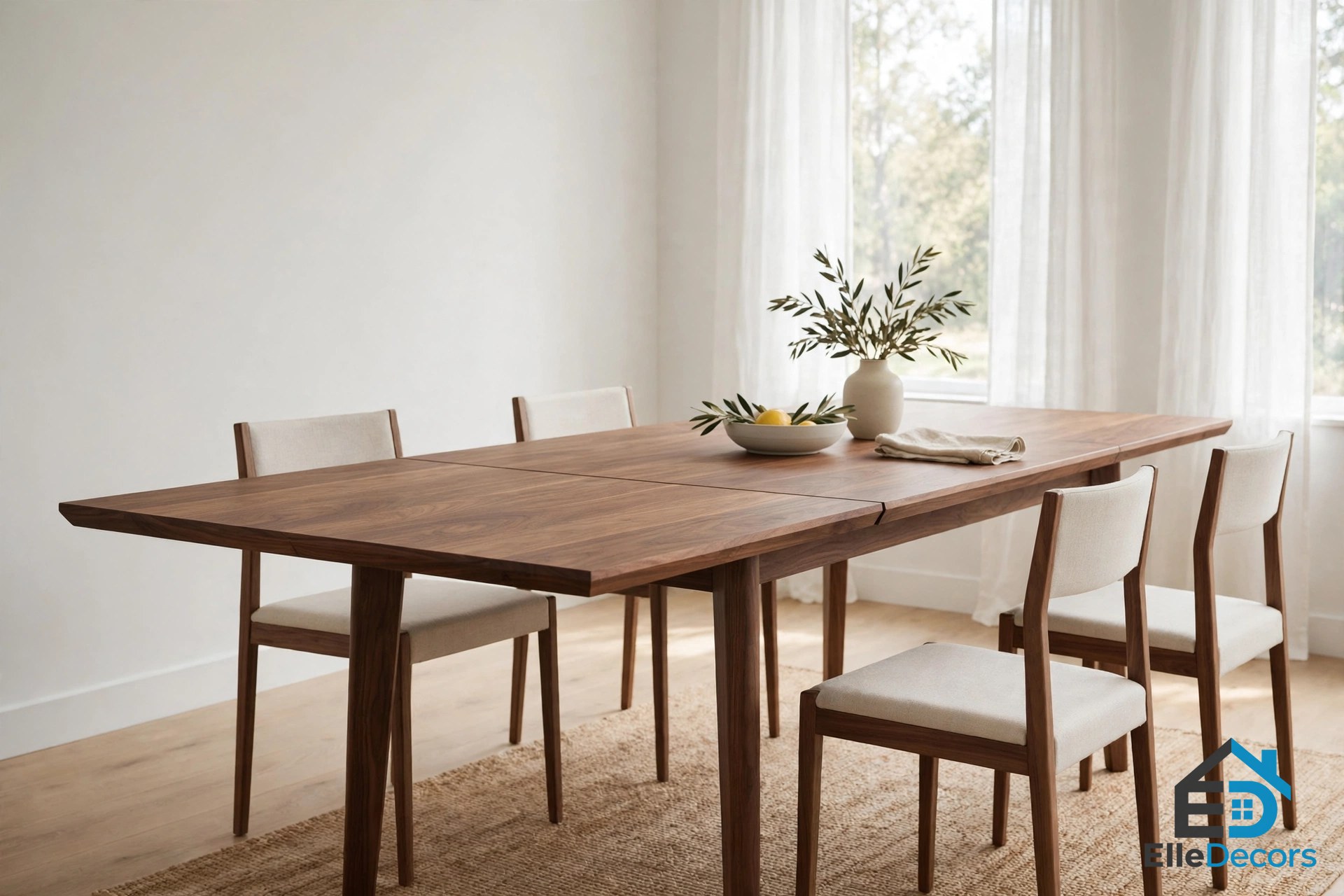
Round to Oval: Small Rooms, Easy Hosting
Transformer Round to Oval Table
The Round Table is the Transformer idea in a softer shape. It starts as a 45-inch round table for four and grows into a racetrack oval seating up to ten, on galvanized steel rails. The fluted pedestal base makes a statement in every configuration, and it hides storage cabinets inside the pedestals, so the panels have a home. The hybrid hardwood construction supports up to 400 pounds. Pick it if you love round tables for everyday meals but still need to host ten at Christmas.
View the Round to Oval Table at Transformer Table
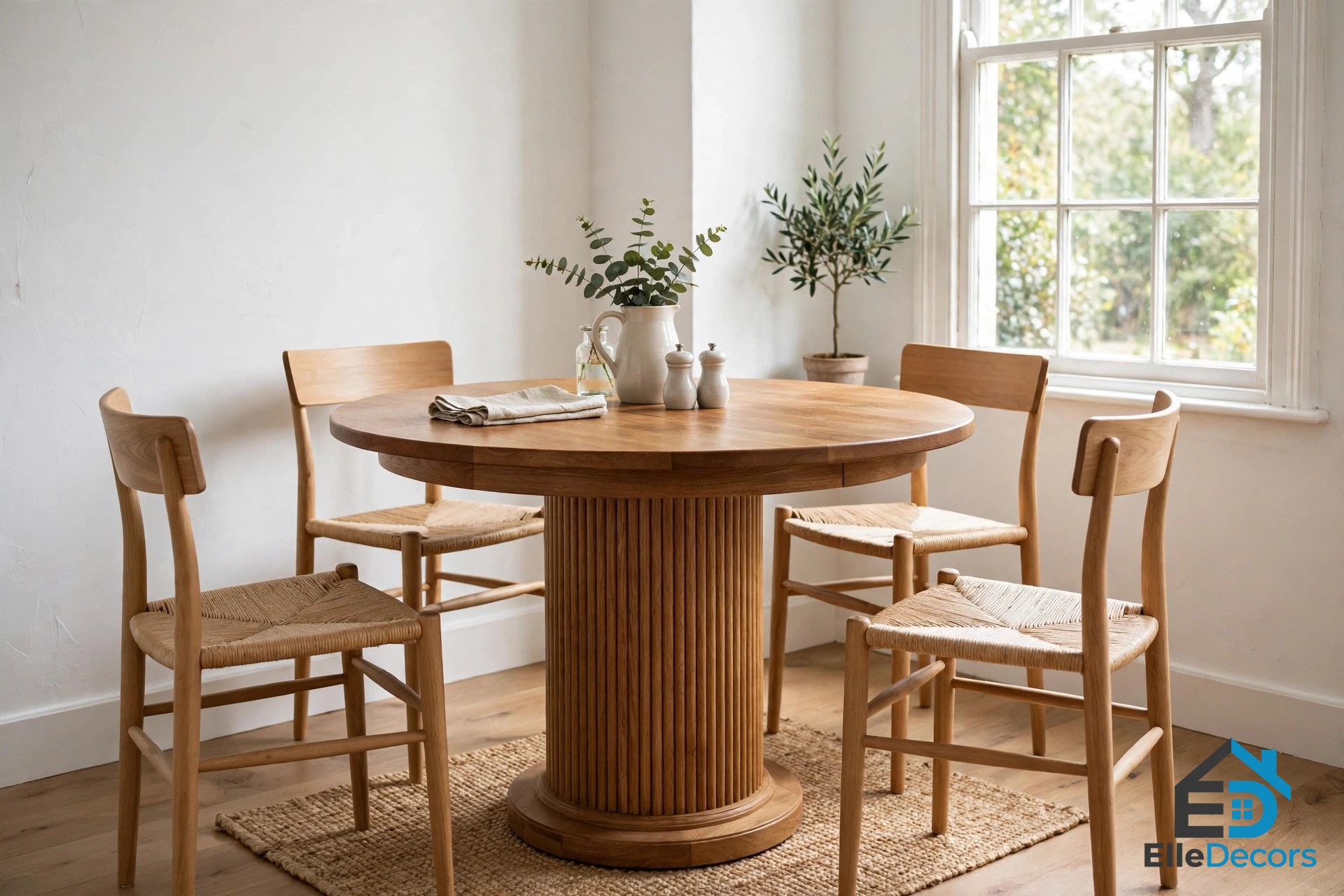
Povison Round Extendable Dining Table 47″-63″
The Povison Round is the small-space specialist. It stays a compact 47-inch round table for four on ordinary days, then glides open into a 63-inch oval for six, with the leaf storing inside the frame. The fluted pedestal base adds quiet texture without visual bulk, and the top glides on a smooth internal track with a latch that holds it level. Setup is simple: the main step is attaching the pedestal base. Pick it for an apartment or breakfast nook where a round table fits every day and six seats are only sometimes needed.
View the Round Extendable Dining Table at Povison
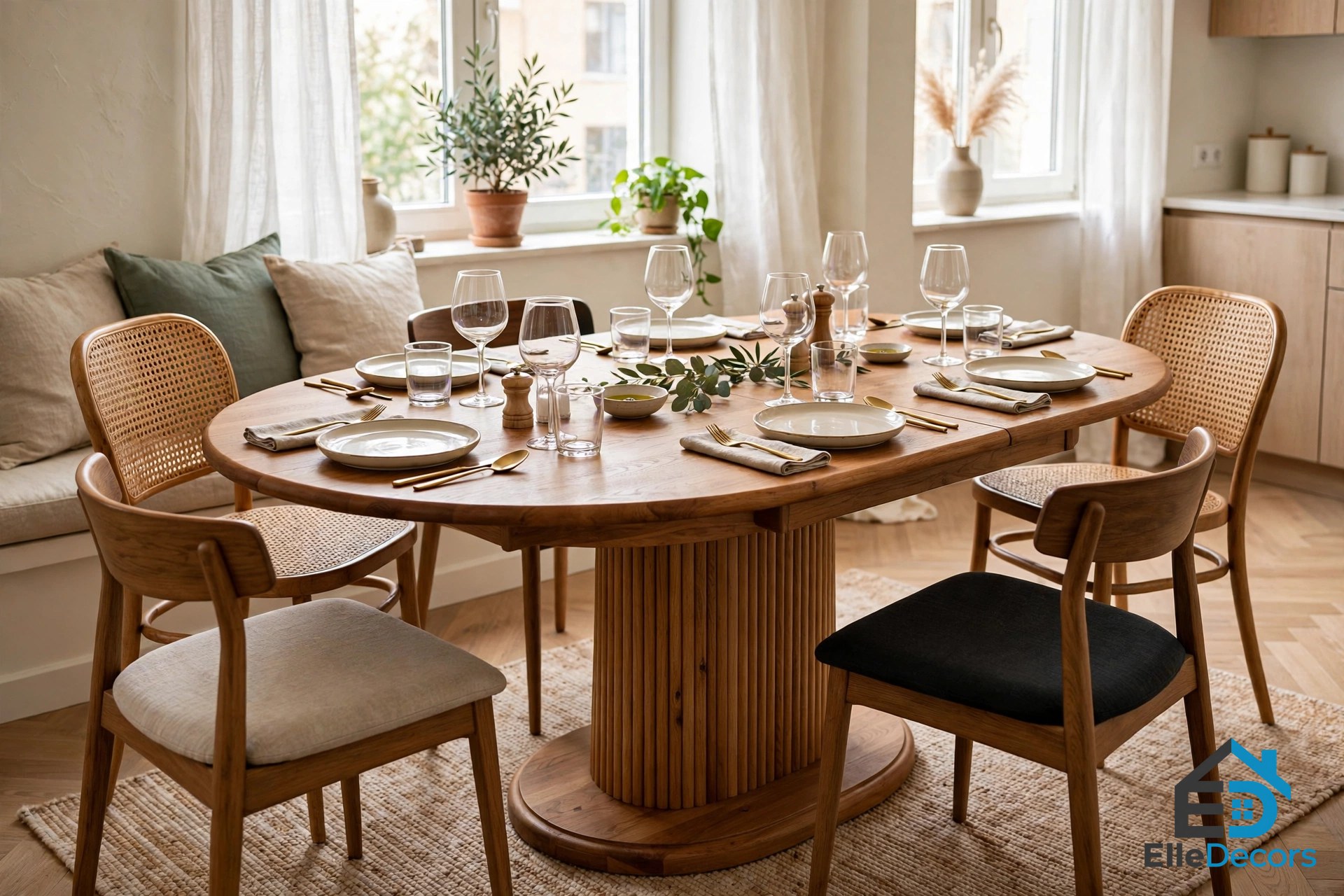
Statement and Light: Glass and Rich Wood
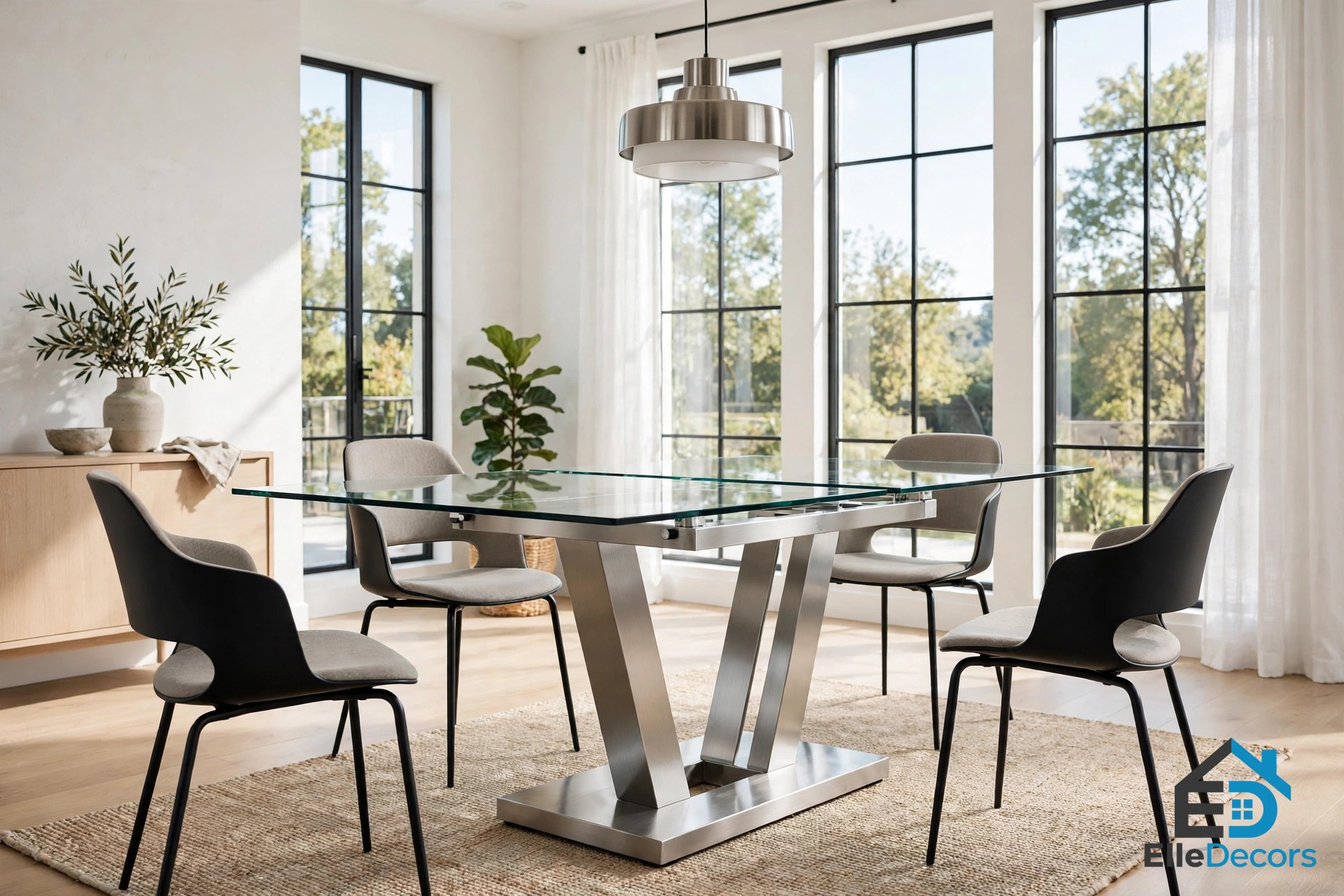
Povison Modern Transparent Glass Extendable Dining Table
The Glass Table is the lightest-looking pick here. Its clear tempered glass top stretches from 55 inches to 87 inches, seating four every day and eight when it is open, while the stainless steel base keeps the whole piece feeling clean and contemporary. Because the top is clear, the room keeps its sightlines even at full size, which suits a small modern dining room that would feel crowded with solid wood. It comes with a 30-day return window and a warranty of up to five years. Pick it when you want the seats without the visual weight.
View the Transparent Glass Extendable Dining Table at Povison
Grandin Road Sabino Rectangular Extending Dining Table
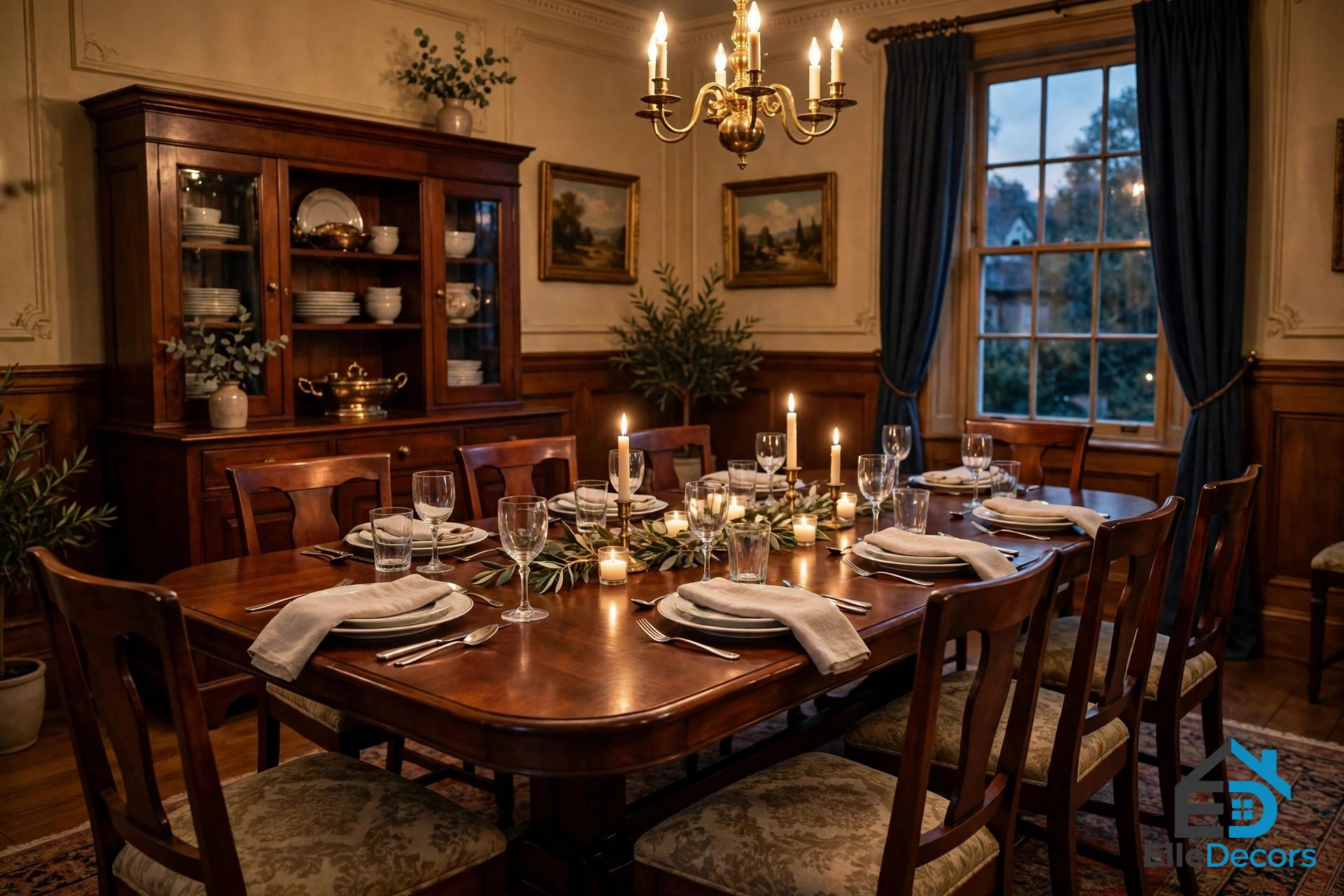
The Sabino is the warm traditionalist. Grandin Road builds it from mahogany with a rich brown finish and a transitional style for classic and modern rooms alike. It extends from 76 inches to 100 inches, seating six every day and eight when it is open. Pick it for a traditional dining room, where a wood table should feel substantial and familiar.
View the Sabino Extending Dining Table at Grandin Road
Keeping the Mechanism Smooth
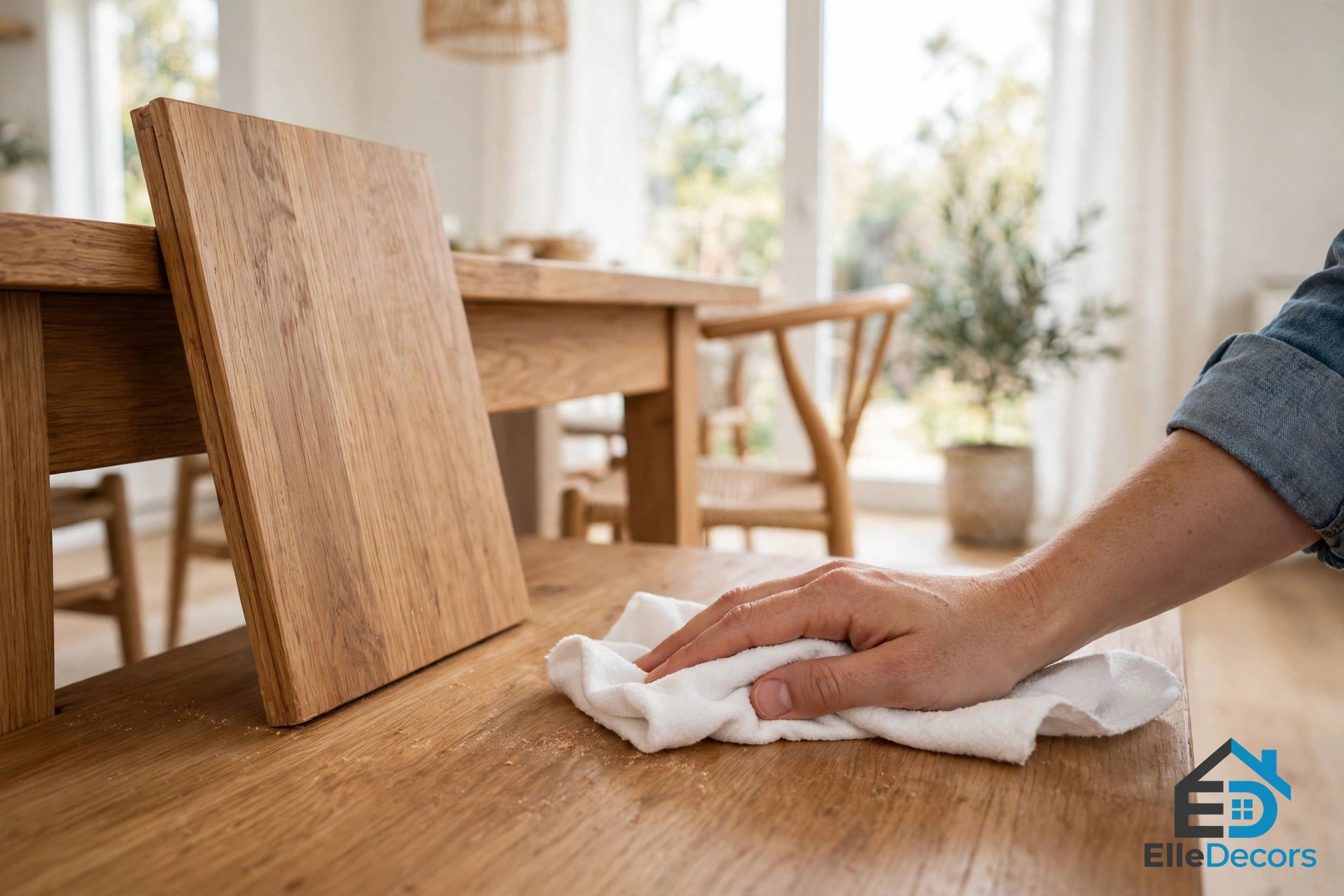
A good modern extendable dining table only stays good with a little care. Wipe up spills quickly, especially on wood, and use coasters and placemats against heat and moisture rings. Keep the slides and tracks free of crumbs and dust, and wipe them with a dry cloth once or twice a year so the leaf keeps gliding smoothly. Never force a stuck leaf: check for something caught in the track first.
Store removable leaves flat, in their bag if one came with the table, so they age evenly and do not warp. Glass tops need only glass cleaner. Wood tops benefit from a light oiling or waxing a couple of times a year.
All 8 Picks at a Glance
Use this modern extendable dining table comparison to narrow the list, then measure your room open as well as closed.
| Table | Closed → Extended | Seats | Leaf System | Best For |
|---|---|---|---|---|
| Transformer Table | 18″ console → 118″ | 2–12 | 5 clip-in panels | Console to banquet |
| Transformer Round to Oval | 45″ round → oval | 4–10 | 3 panels, fluted pedestal | Round everyday, big hosting |
| Castlery Seb | 59″ → 78.7″ | 4–6 | Self-storing butterfly leaf | Everyday solid wood |
| Medley Palder | 64″ → 84″ / 104″ | Up to 8 | 2 leaf inserts | Heirloom, made to order |
| Blu Dot Second Best | 74″ → 95″ | 8 (max 10) | 21″ removable leaf + bag | Minimalist modern rooms |
| Povison Round 47″–63″ | 47″ round → 63″ oval | 4–6 | Self-storing leaf | Small apartments |
| Povison Glass | 55″ → 87″ | 4–8 | Built-in extension | Light, modern rooms |
| Grandin Road Sabino | 76″ → 100″ | 6–8 | Extension leaf | Warm traditional rooms |
Watch: One Table, Tested From Console to Banquet
To see the most flexible table in this guide in action, watch Modern Castle test the Transformer Table: the design, the unboxing, how the panels clip in, and whether it is easy to expand. It is an independent review, not a maker video, so it shows the awkward bits as well as the satisfying ones.
Video: Modern Castle reviews the Transformer Table.
Frequently Asked Questions
What size modern extendable dining table do I need?
Start with the people, not the table. A modern extendable dining table needs at least 24 inches of width per seated person, so a family of four needs at least 48 inches of table edge and a family of six needs 72 inches. Then measure the room with the table fully open, and leave at least 36 inches to the wall.
Which extension mechanism is best?
A butterfly leaf is best for most homes: the leaf stores inside the table and one person can open it in seconds. A drop-in leaf gives the cleanest top but needs closet storage. Drop leaves suit narrow rooms and add fewer seats. A panel system gives the biggest range, from a console to a twelve-seat table, but setting it up takes a few minutes. Choose the mechanism you will actually use.
Are extendable tables sturdy when open?
A well-made extendable table is as sturdy open as closed, as long as the slides lock and the leaf sits level. Check that the lock holds firm when you lean on the table, and that the leaf does not rock or dip at the seam. Tables with steel rails and a central support leg stay the most stable at full length.
Is glass or wood better for an extendable table?
Wood suits most homes: it is warm, it can be refinished, and it hides wear. Glass suits small, bright, modern rooms, because it keeps sightlines open and makes the room feel larger. Sintered stone sits in between, with a stone look and strong resistance to heat and stains.
How do I care for the extension mechanism?
Keep the tracks free of crumbs and dust, wipe them dry once or twice a year, and never force a stuck leaf. Store removable leaves flat and in their bag so they age evenly with the top. Oil or wax a wood top a couple of times a year, and wipe up spills quickly on any top.
The Bottom Line
The right modern extendable dining table disappears into daily life. It seats four without a squeeze, grows for the holidays without a second table, and looks good when the room is empty. Start by measuring the room open as well as closed, then pick a mechanism you will use, then choose a top that fits your habits. The eight tables above cover every shape and room size, from a small round table in a nook to a console that becomes a twelve-seat banquet. Measure twice, and it will be the piece your home gathers around.