Scandinavian Chairs: 8 Picks That Earn Their Place at the Table
Audio Summary
A scandinavian chairs buyer faces a happy problem. The good ones have been in production for decades, and almost every chair here will still look right in ten years. The risk is a copy that falls apart, or an icon that does not fit your table. This guide does both jobs: first, how to choose — wood, form, comfort, and room fit; then eight chairs you can buy right now, each checked on the page that sells it. Prices are left out, since they change often.
Buying Guide: How to Choose Scandinavian Chairs
Wood First
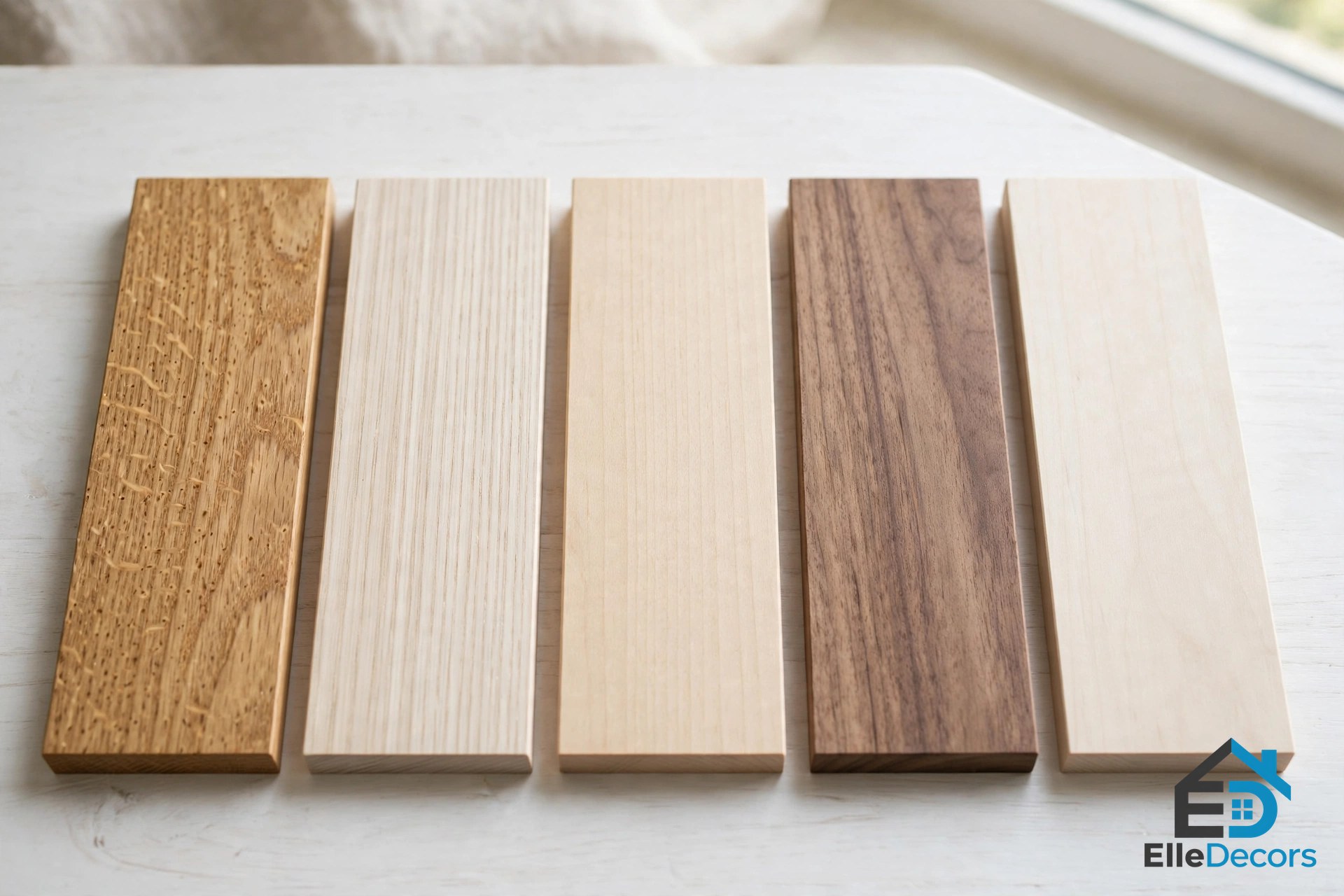
Wood is the first decision, because it sets the colour, the weight, and the care routine. Most scandinavian chairs are built from light woods — oak, ash, beech, or birch — with walnut for a darker room. Oak is the workhorse: strong, with a grain that looks better as it ages. Beech is smoother and takes paint well. Birch is pale and light, the classic Finnish choice, and it suits small rooms because it barely registers. Walnut is the dark option, warm rather than black.
Finish matters as much as species. Soaped wood feels raw and matte but needs re-soaping now and then. Oiled wood is warmer and more forgiving of marks. Lacquered wood is the easiest to live with: wipe it clean and move on. For daily family meals, choose lacquered or oiled.
The other honest materials are paper cord, moulded plywood, and recycled plastic. A paper-cord seat is woven by hand and firms up with use — it is not a cushion. Moulded plywood shells flex slightly and wipe clean. Recycled plastic takes colour well and shrugs off spills, which suits kitchens and homes with children.
Form Follows the Room
Form is the second decision, and it is where most people go wrong. A dining chair has one job: to let a person sit at a table for an hour without thinking about it. That means a seat height near 45 or 46 cm, a back that supports the lower back, and room for elbows. Every dining chair in this guide sits at 45 to 46 cm, the standard range.
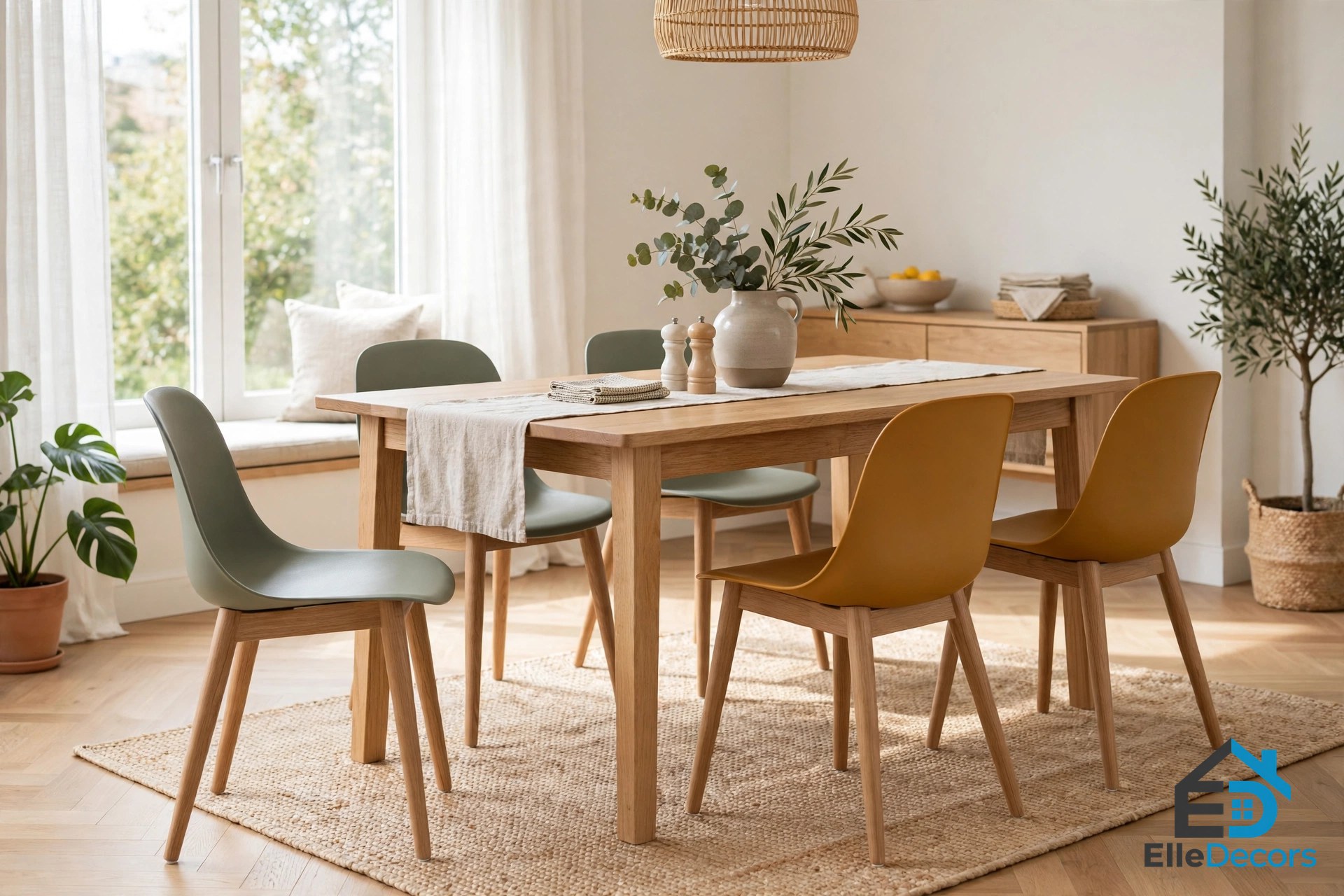
Armless chairs are the practical choice for a dining table: they slide fully underneath, take less space, and let you fit more along one side. Armchairs belong at the ends of the table, or in a lounge corner — never squeezed between armless chairs, where the arms collide. If your table is narrow, choose a slim chair; a wide shell will eat the elbow room of the person next to it.
The silhouette should match the room, not fight it. A pale birch chair disappears into a white room. A black shell chair anchors a pale room. A sculptural chair needs space around it: push it against a wall and it reads as clutter; give it a metre of air and it reads as design.
Comfort You Can Test
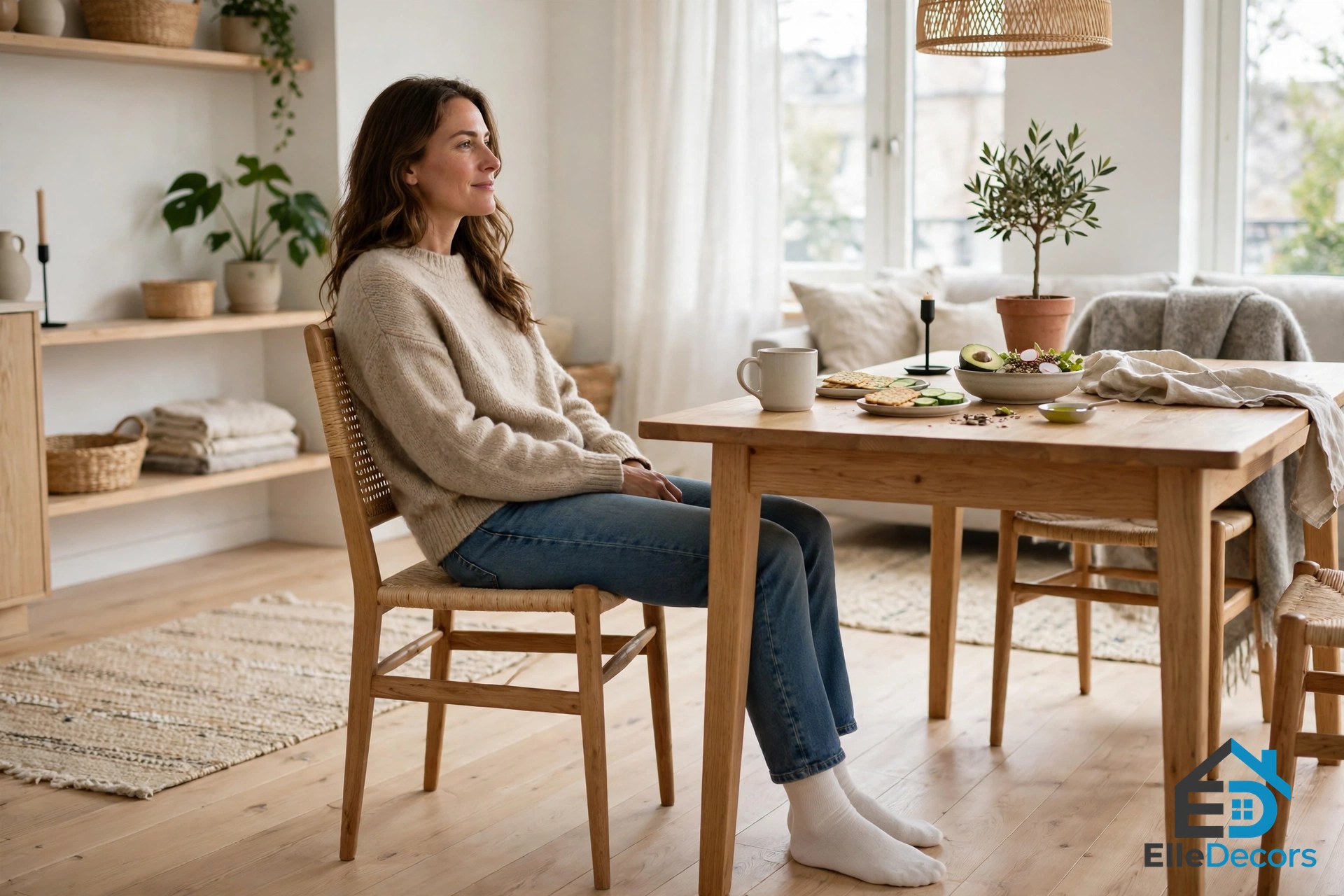
Comfort is where scandinavian chairs earn their keep. Three checks work in a shop or showroom. First, sit down with both feet flat and your thighs level — if your knees point up, the seat is too low; if your feet dangle, it is too high. Second, lean back: the backrest should meet your lower back without pushing your shoulders forward. Third, stay seated for five minutes — a chair that feels fine for thirty seconds and punishing after five is too flat or too hard.
Upholstery changes the answer. A bare wood or plastic shell is easy to clean but firmer; a thin seat pad solves that. A quilted or fabric shell is softer and warmer, and suits a chair that doubles as a desk or reading chair. Leather ages well and wipes clean, but it is cold in winter until it breaks in.
Weight is a quiet comfort factor: a chair you lift twice a day to sweep under the table should be light enough to lift with one hand. The lightest here are the moulded shells; the heaviest are the solid-wood lounge chairs, which are meant to stay put.
Room Fit
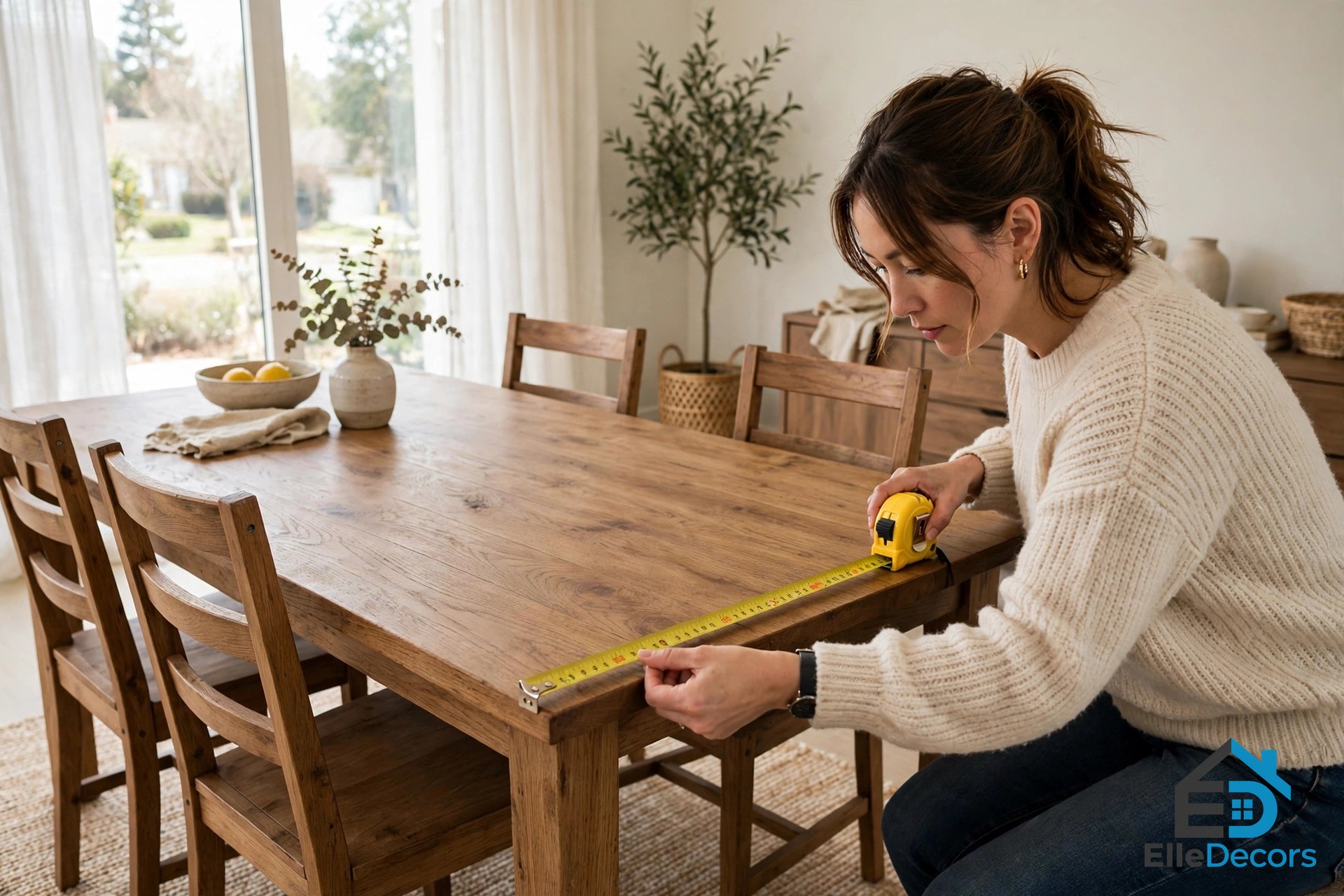
Room fit is the last check, and it is pure measurement. A dining chair needs about 60 cm of table width per person, and about 75 cm behind it to pull out and stand up. Measure the room, not the table: a chair that blocks the walkway will annoy you every day.
Small rooms want slim, armless, pale chairs that stack or tuck away — the Series 7 stacks twelve high. Large rooms can carry a lounge or wing chair in the corner as a reading spot. And if the dining table is also the desk, choose a chair with a little give in the seat, because you will sit in it far longer than a dinner lasts.
The 8 Picks, Grouped by Job
The eight scandinavian chairs below were each checked on the page that sells them. We left prices out, since they change often.
The Dining Icons
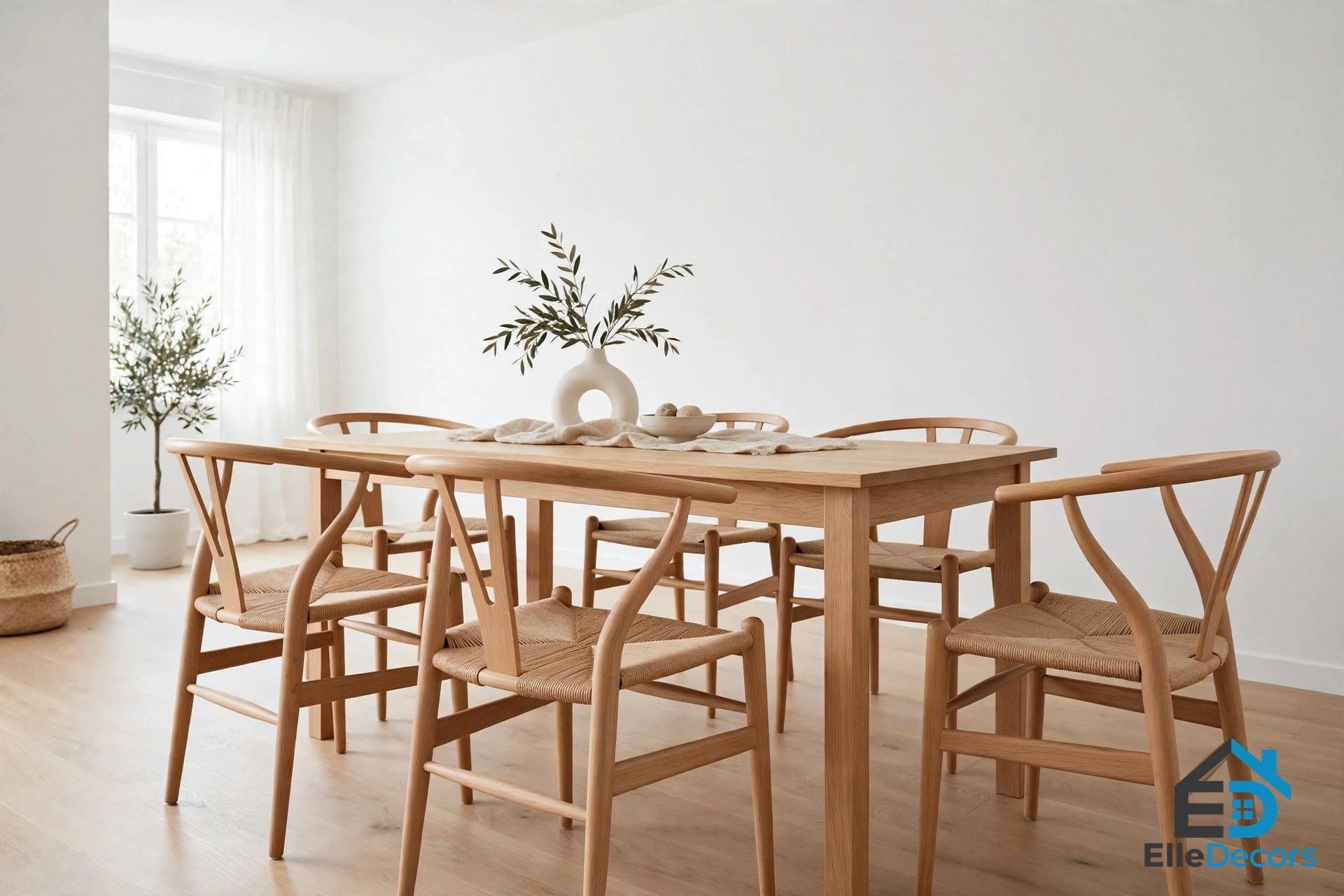
Carl Hansen CH24 Wishbone Chair
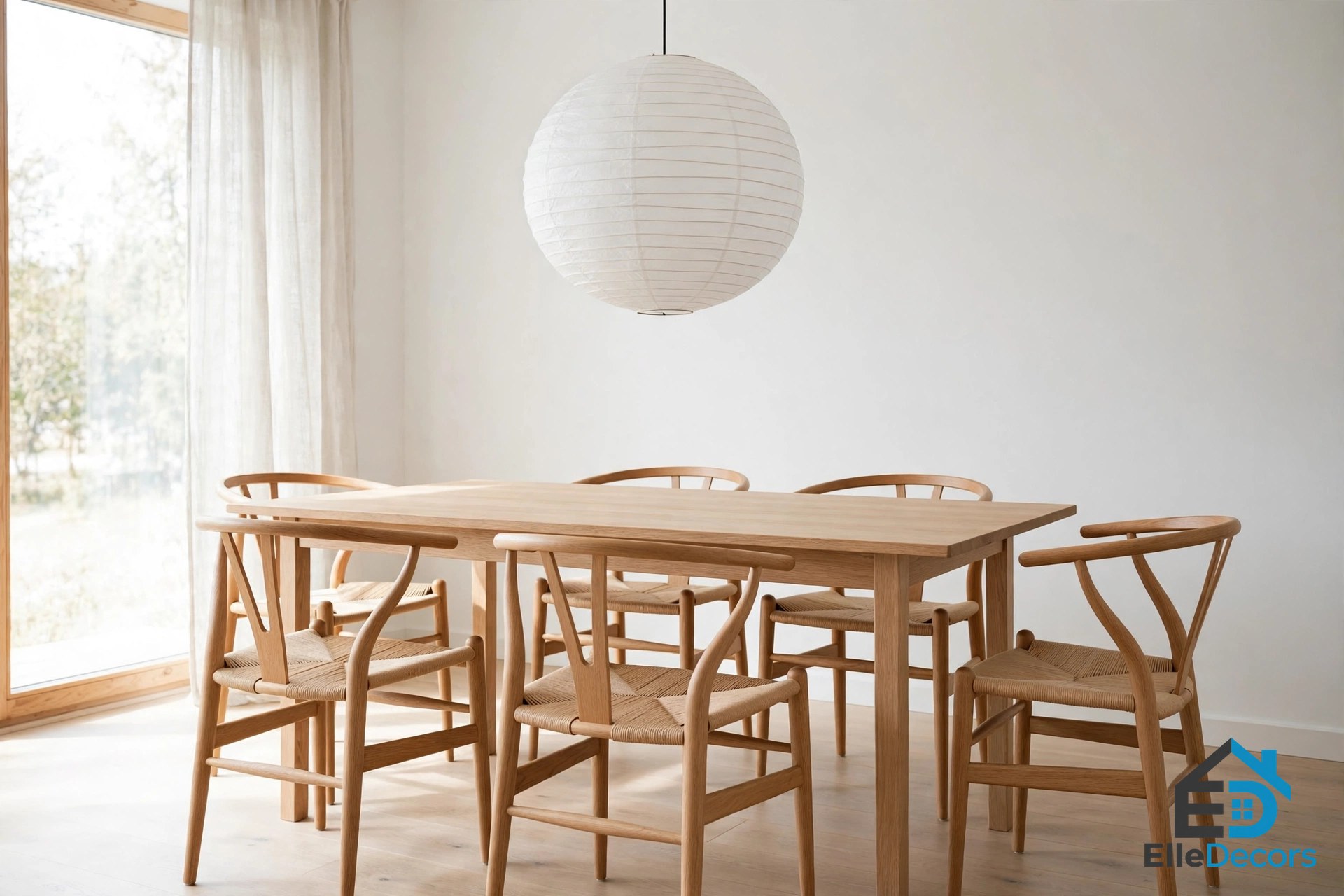
The Wishbone is the one icon to buy. Hans J. Wegner designed it in 1949; Carl Hansen and Son has made it since 1950. The Y-shaped backrest gives the chair its name, and the steam-bent top rail forms the back and armrests in one piece. The seat is hand-woven paper cord — over 120 metres of it — and more than 100 production steps go into every chair. The frame comes in oak, beech, ash, or walnut. It measures 55 cm wide and 76 cm high, with a 45 cm seat height. Of all scandinavian chairs, this is the one that defines the whole style.
View the CH24 Wishbone Chair at smow
Fritz Hansen Series 7 Chair
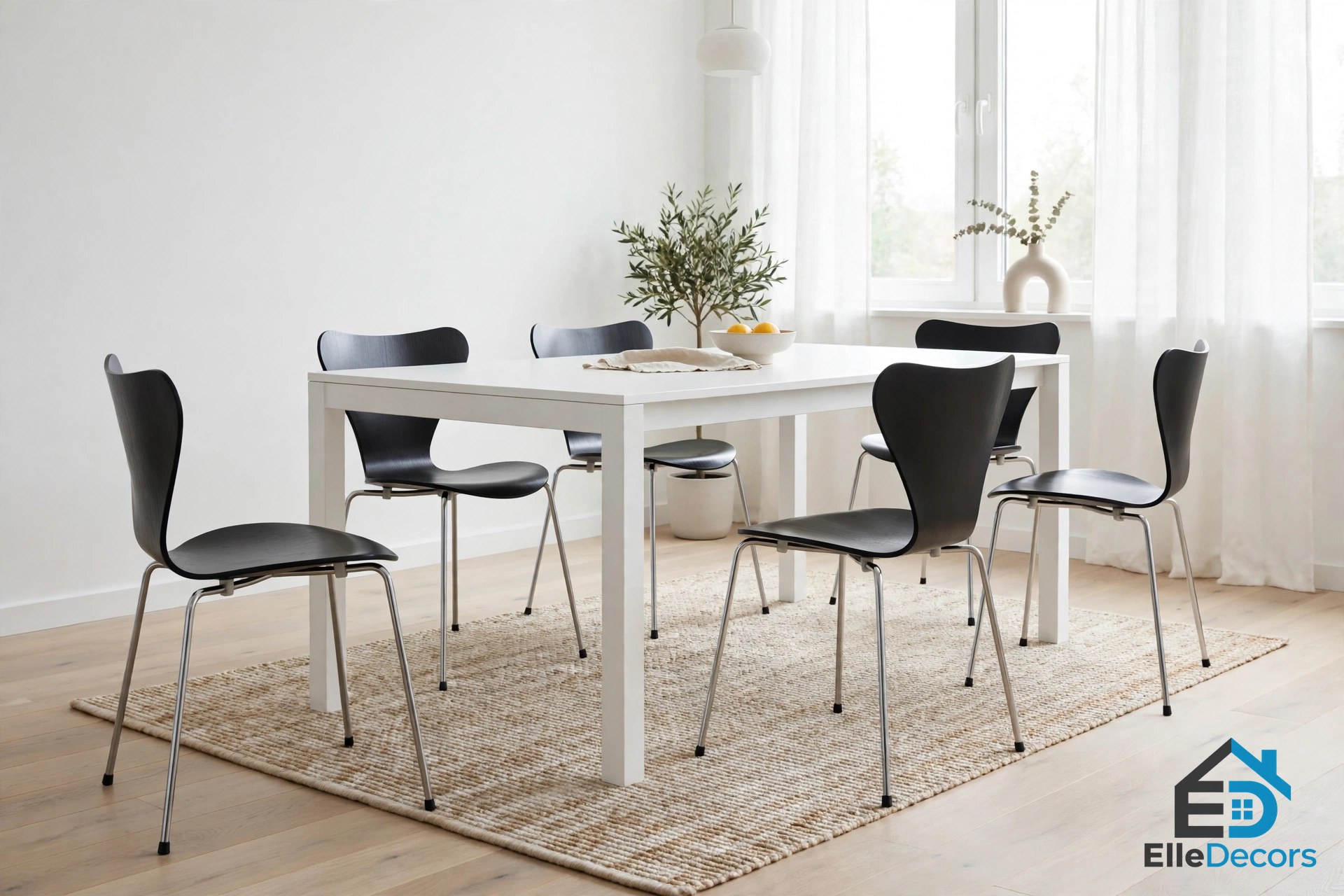
The Series 7 is the chair for a table used hard every day. Arne Jacobsen designed it in 1955; Fritz Hansen calls it the best-selling chair in its history. Its shell is nine layers of pressure-moulded veneer, strong and flexible despite its slim form, on a chromed steel tube base. The standard 3107 is 82 cm high, 50 cm wide, and 52 cm deep, with a 46 cm seat height and a weight of about 4 kg. It stacks twelve high and carries a ten-year warranty from an authorised dealer. The same clean lines work across an open-plan space, so pair it with mid century modern living room furniture and the whole floor feels planned. Pick it when you want a classic that survives daily life.
View the Series 7 Chair at Scandinavia Design
Everyday Dining
Artek Chair 69
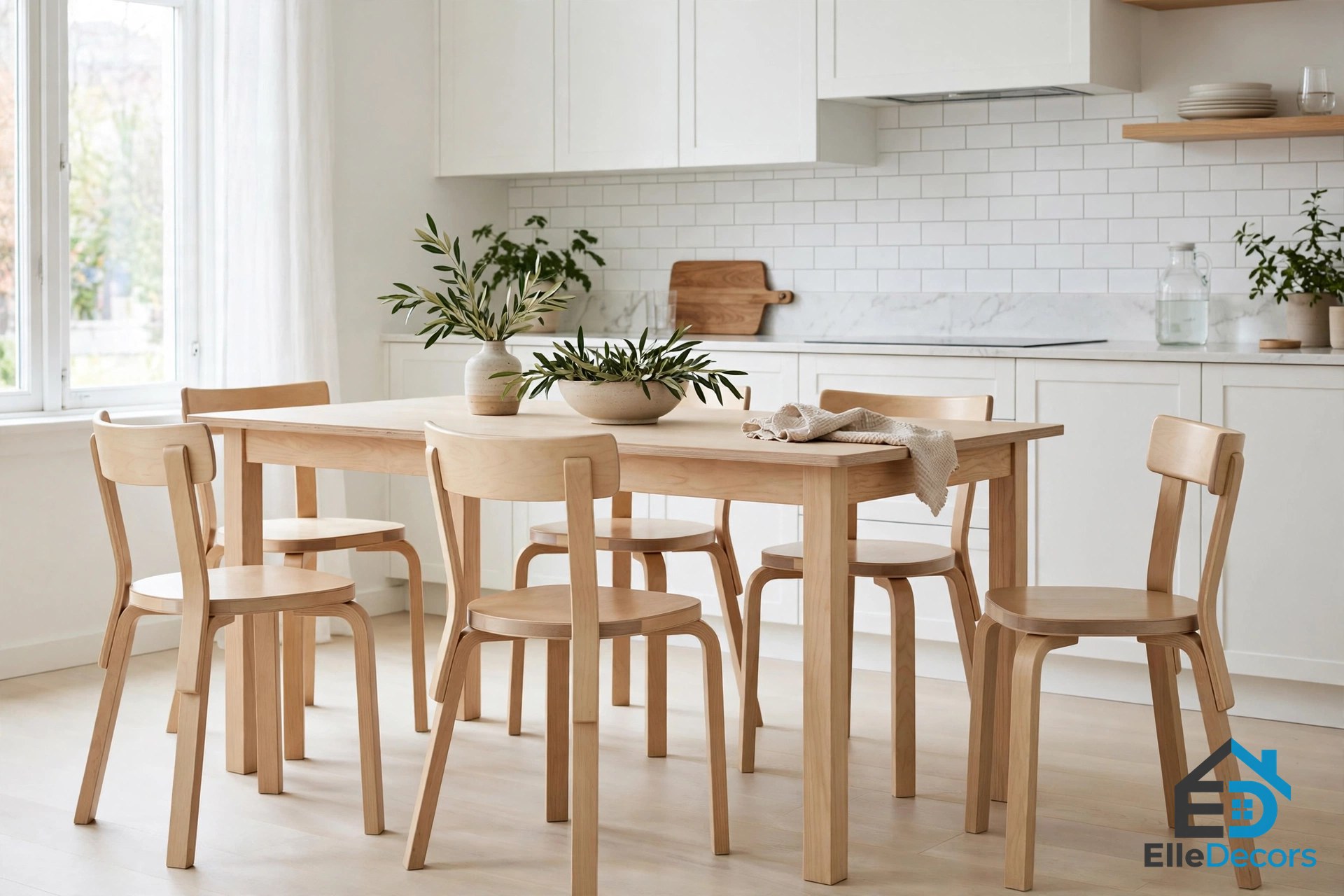
Chair 69 is the chair for a kitchen used three times a day. Alvar Aalto designed it in 1935 for Artek; it is still handcrafted in Finland. Its cleverness is the L-leg, patented in 1933: bent from solid wood and fixed directly under the seat, which makes the chair light, stable, and easy to move. Legs and seat body are solid birch, the seat surface birch veneer, the back thermoformed birch veneer. It is 44 cm wide, 47 cm deep, and 76 cm high, with a 45.5 cm seat height and a weight of 5.2 kg. Pick it for a wooden chair that is honest, light, and almost impossible to date.
View the Artek Chair 69 at Finnish Design Shop
Muuto Fiber Side Chair
The Fiber chair is the modern one, and the most practical for a family table. Iskos-Berlin designed it for Muuto; this version pairs a recycled-plastic shell with a solid oak base. The shell is at least 80 percent recycled plastic mixed with up to 25 percent FSC-certified wood fibres, while the oak legs keep it warm. It is 77 cm high, 49.5 cm wide, and 53 cm deep, with a 46 cm seat height. Its curves give more comfort than the slim profile suggests, and the shell wipes clean after every meal. Pick it for a family table that takes spills, children, and daily use.
View the Muuto Fiber Side Chair at Nest
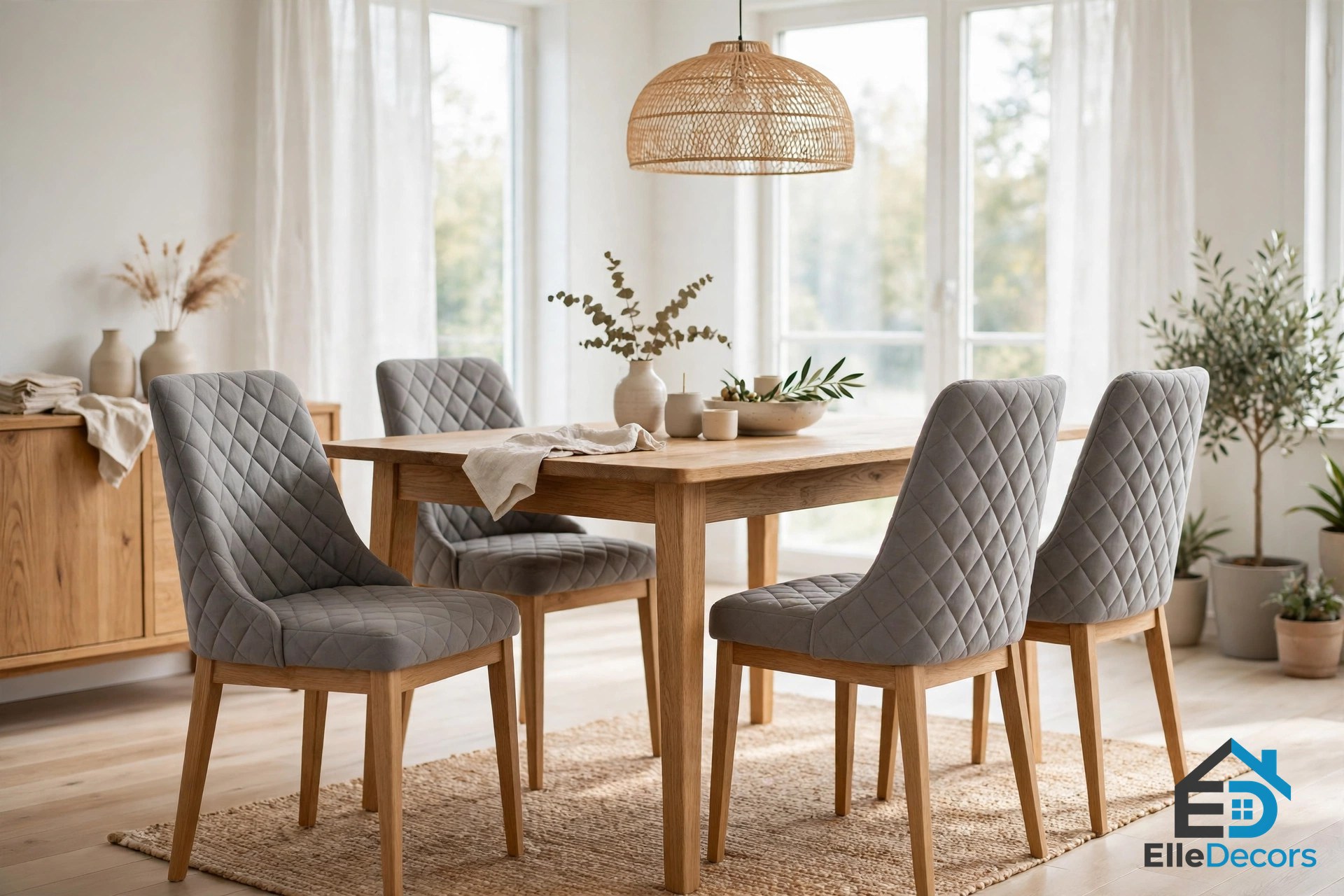
HAY About A Chair AAC 23 Soft
The AAC 23 Soft is the chair for dinners that run long. Hee Welling designed the About A Chair collection for HAY in 2010; the Soft version adds a quilted, upholstered shell. The shell is soft and curvaceous, the frame matt lacquered oak, the upholstery Kvadrat and HAY fabrics. It is 79 cm high, 59 cm wide, and 52 cm deep, with a 46 cm seat height and a 40 cm seat depth. Pick it when comfort matters more than a bare-wood look.
View the HAY AAC 23 Soft at Nest
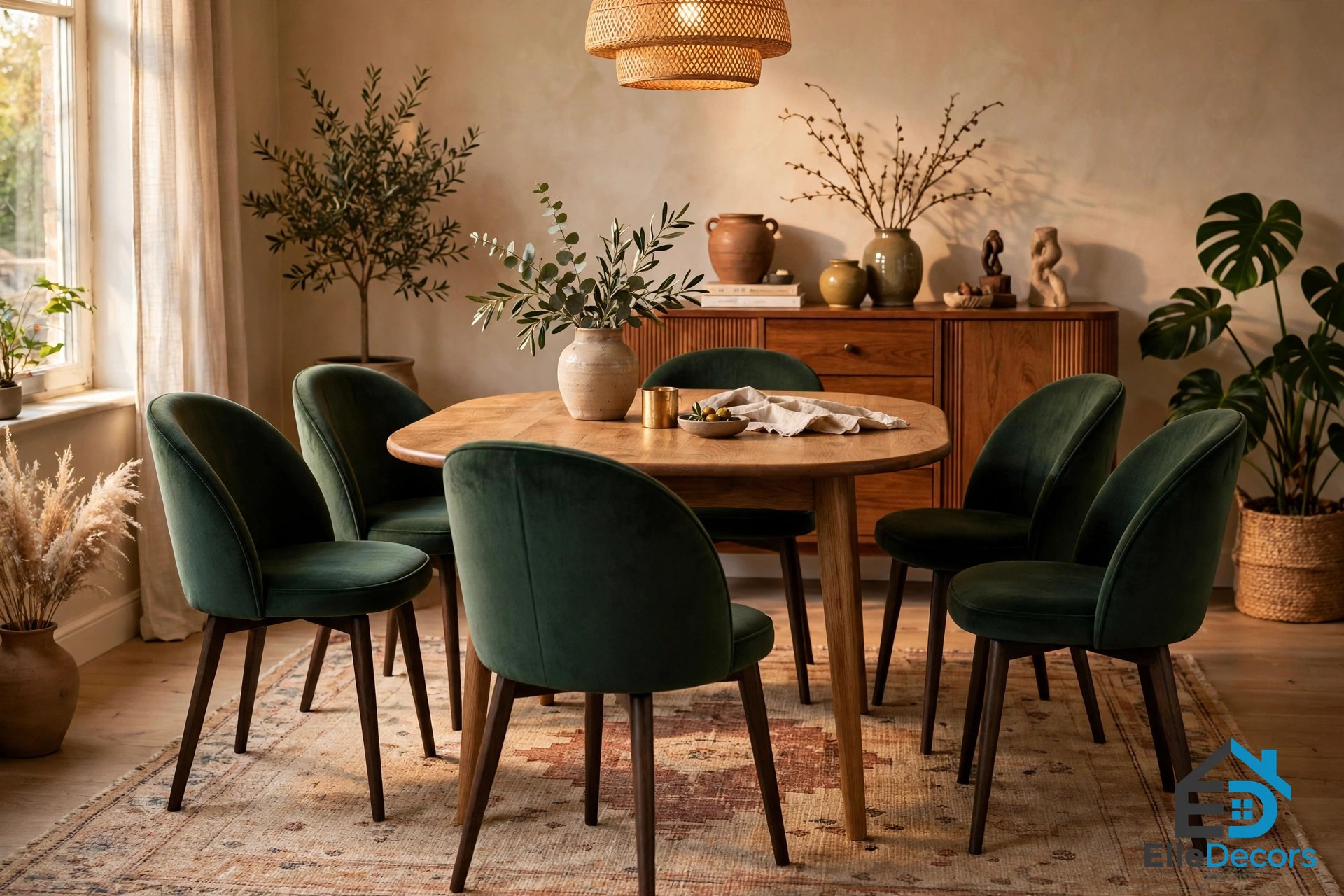
GUBI Beetle Dining Chair
The Beetle is the chair for a dining room that needs a focal point. GamFratesi designed it for GUBI in 2013, taking the shape from a beetle’s shell. The unupholstered version has a polypropylene shell on a metal conic base, in colours from alabaster white to dark green. It is 87 cm high, 56 cm wide, and 59 cm deep, with a 45.5 cm seat height, and GREENGUARD Gold certified. The shell flexes slightly as you move, so it feels comfortable despite its sculptural form. Pick it to let one chair design carry the whole room.
View the GUBI Beetle Dining Chair at Utility Design
Lounge and Reading
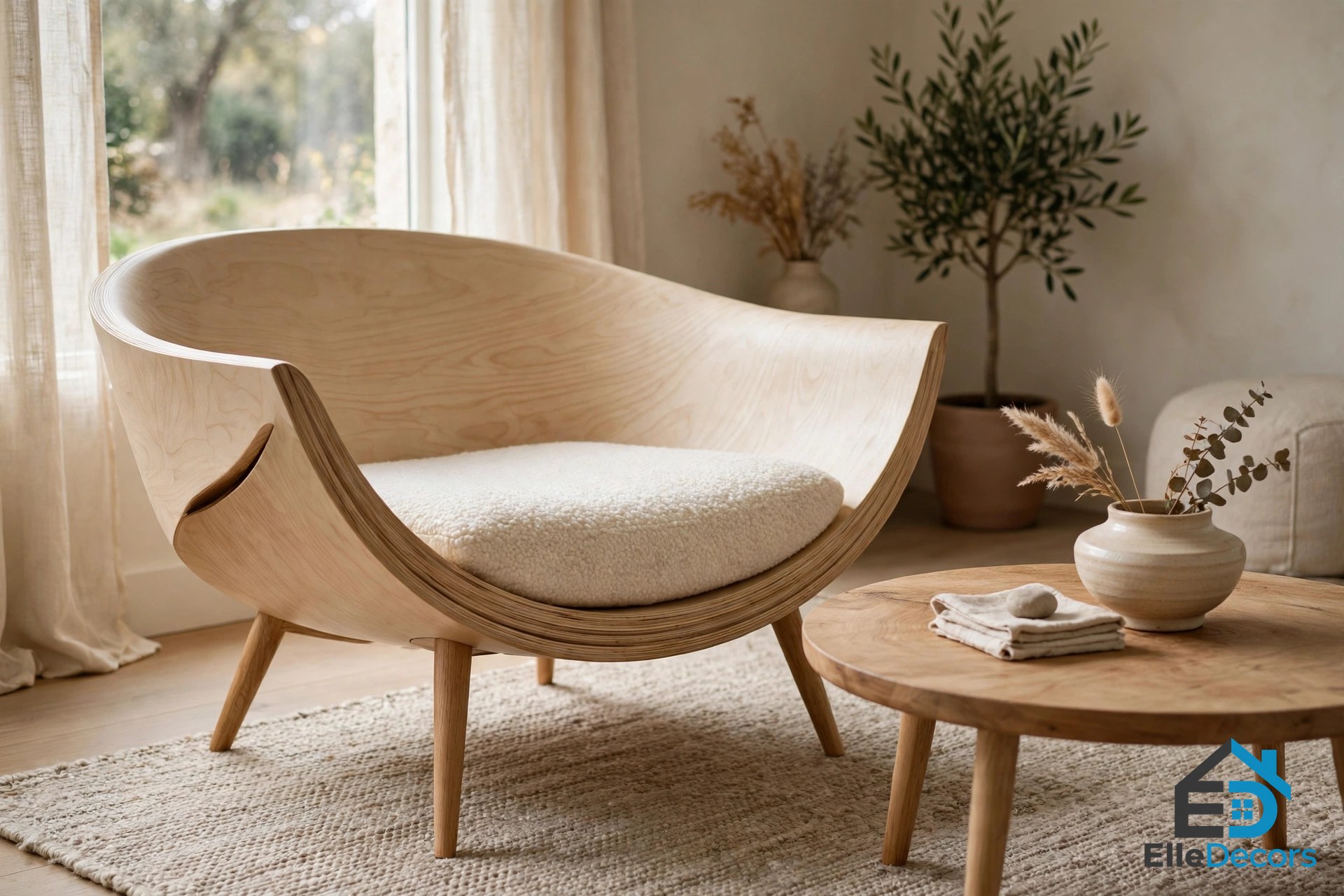
Carl Hansen CH07 Shell Chair
The Shell Chair is the lounge chair for sculpture you can sit in. Hans J. Wegner designed it in 1963; Carl Hansen and Son relaunched it in 1998. Its form-pressed veneer shell floats on three arched legs, which is why it is known as the smiling chair — the curve reads as a smile from across the room. The seat and back are upholstered in Kvadrat Fiord 2 wool fabric; the chair is 92 cm wide, 83 cm deep, and 74 cm high, with a low 35 cm seat height for lounging, not dining. Our sculptural chair guide covers more chairs in this spirit, but the Shell started the conversation. Pick it as a pair around a coffee table, or alone as the room’s statement.
View the CH07 Shell Chair at Nest
IKEA STRANDMON Wing Chair
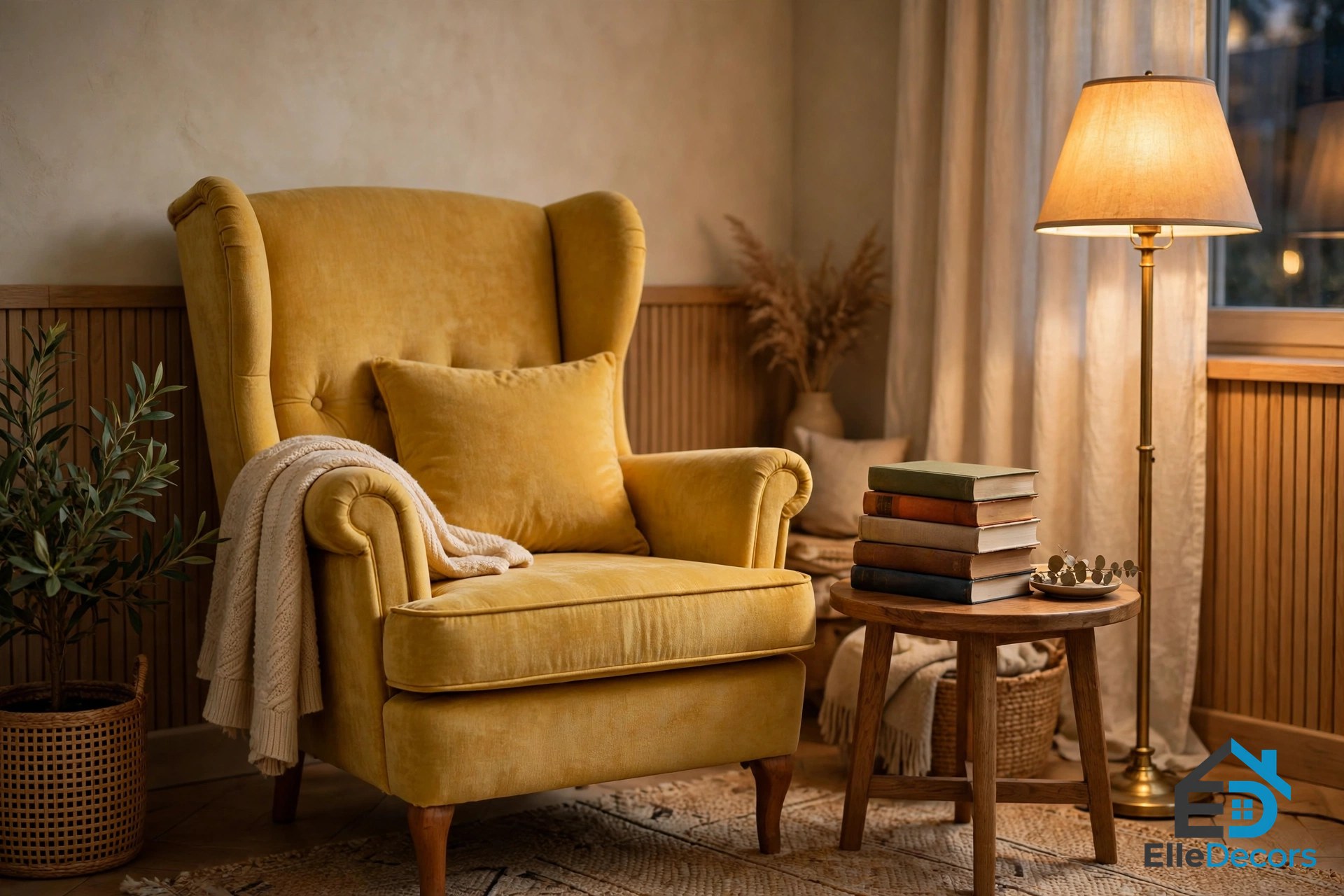
The STRANDMON is the chair for a real budget and a reading corner that matters. It is IKEA’s classic Swedish wing chair: a high back for the neck, wide wings that block draughts and noise, and a deep seat for long sits. The Tibbleby cover is a soft dope-dyed polyester with a slight lustre and a discreet herringbone pattern, in several colours. Owners rate it 4.6 out of 5 across more than 2,000 reviews, praising the comfort and value — and warning that fitting the wings during assembly is fiddly, so set aside time or an extra pair of hands. As one of our reading chairs, it belongs beside a lamp and a stack of books, not at the dining table. Pick it for a proper reading chair without the designer price tag.
View the STRANDMON Wing Chair at IKEA
Keeping Them Looking Good
A good chair only stays good with a little care. Dust wooden chairs with a dry cloth and wipe spills straight away; a damp cloth followed by drying is enough for a lacquered shell — Fritz Hansen’s own advice for the Series 7, which also warns against abrasive cleaners, steel wool, or polish. Soaped wood needs re-soaping now and then. Paper-cord seats should be kept dry and brushed clean, not scrubbed. Tighten the screws once a year — a wobble almost always starts with a loose fixing, not a bad design.

All 8 Picks at a Glance
Use this scandinavian chairs comparison to narrow the list, then measure your table.
| Chair | Seat Height | Material | Best For |
|---|---|---|---|
| Carl Hansen CH24 Wishbone | 45 cm | Solid wood, paper-cord seat | The one true icon |
| Fritz Hansen Series 7 (3107) | 46 cm | Moulded veneer, steel base | Hard daily use |
| Artek Chair 69 | 45.5 cm | Solid birch | Kitchens, everyday meals |
| Muuto Fiber Side Chair | 46 cm | Recycled plastic, oak base | Family tables, spills |
| HAY AAC 23 Soft | 46 cm | Upholstered shell, oak frame | Long dinners, desk use |
| GUBI Beetle Dining Chair | 45.5 cm | Polypropylene shell, metal base | Sculptural dining room |
| Carl Hansen CH07 Shell Chair | 35 cm | Form-pressed veneer, wool fabric | Lounge, statement piece |
| IKEA STRANDMON Wing Chair | Not stated | Polyester fabric, wood frame | Reading corner, budget |
Frequently Asked Questions
Are scandinavian chairs worth the money?
Scandinavian chairs are worth the money when the chair fits the room and the way you live. The classics here have been in production for decades — the Wishbone since 1950, the Series 7 since 1955, Chair 69 since 1935 — because their makers kept the materials honest and the form simple. A well-made one lasts for decades and holds its value; a cheap copy does neither. Buy the real chair once, or buy the budget original, and skip the copy in between.
What seat height do I need for my dining table?
A standard dining table pairs with a seat height of 45 to 46 cm, and every dining chair here sits in that range. If your table is higher than standard, such as a counter-height table, you need a counter stool instead — the Series 7 family includes one with a 64 cm seat.
Can I mix different chairs at one table?
Yes, and it often looks better than a matched set — but mix with discipline. Keep one thing constant: the same wood tone or the same seat height. A Wishbone at the ends with Series 7 chairs along the sides works because both are 45 to 46 cm high and share the same pale-wood language. A low lounge chair with dining chairs does not work, because the seat heights clash.
How do I spot a fake Wishbone or Series 7?
Check the marks, not the photo. A genuine Series 7 carries the Fritz Hansen logo, Arne Jacobsen’s signature, and a production code under the shell, plus a ten-year warranty from an authorised dealer. A genuine Wishbone is made by Carl Hansen and Son in Denmark, with a hand-woven paper-cord seat. Copies use thicker, cheaper plywood shells and no warranty worth the name.
How do I care for a paper-cord seat?
Keep it dry and brush it clean. Paper cord is strong — the Wishbone seat is woven from over 120 metres of it — but it is still paper, so blot spills at once and never scrub with water. Vacuum gently with a brush head and avoid standing on the seat. With that care, a cord seat firms up with use.
The Bottom Line
The right chair disappears into daily life: it holds you through dinner, slides under the table, and still looks chosen ten years later. Start with the wood, check the seat height, and only then fall for the form. Whether it is a Wishbone, a Series 7, a birch Chair 69, or a wing chair in the corner, the best scandinavian chairs are the ones that fit your room, your table, and the way you actually sit.