Bedrooms with Pendant Lighting: How to Hang Them, Where to Put Them, and 40 Ideas That Glow
Bedrooms with pendant lighting have quietly become the look people save most. The idea is simple: instead of one flat ceiling light, or two bulky lamps eating the nightstands, you hang lights from the ceiling on cords, chains, or rods, exactly where the light is needed. A pair beside the bed frees the tables for books and water. A cluster over the bed turns the ceiling into the room’s best feature. A single sculptural drop in the corner makes a reading chair feel like a destination. This guide covers the five placements that work, how low to hang each one, forty fixture ideas from the best-looking examples, and the mistakes that spoil the effect.
AUDIO SUMMARY: Bedrooms with pendant lighting feel calmer and look more designed than rooms lit by a single ceiling fixture, and this guide shows how to get there, step by step. It covers the five placements that work, how low to hang the lights, forty fixture ideas grouped by material and style, and the mistakes that make a bedroom feel like a hotel corridor.
Why Bedrooms with Pendant Lighting Work So Well
A pendant does three jobs at once, and that is why it beats a table lamp in so many bedrooms. First, it frees the nightstand. A lamp needs a base, a shade, and a patch of table; a pendant needs only a ceiling point, so the whole tabletop is yours again. Second, it draws the eye upward. A room with nothing hanging from the ceiling feels flat, however good the furniture is; a pendant gives the ceiling a purpose and makes the room feel taller. Third, it puts light exactly where you read, dress, or wind down, instead of washing the whole room from one central point.
The other reason is mood. Bedroom light should be warm and low, and a pendant on a dimmer is the easiest way to get it. Hang the shade so the bulb sits below your eye line when you sit up in bed, and the room glows instead of glares.
Five Placements That Work
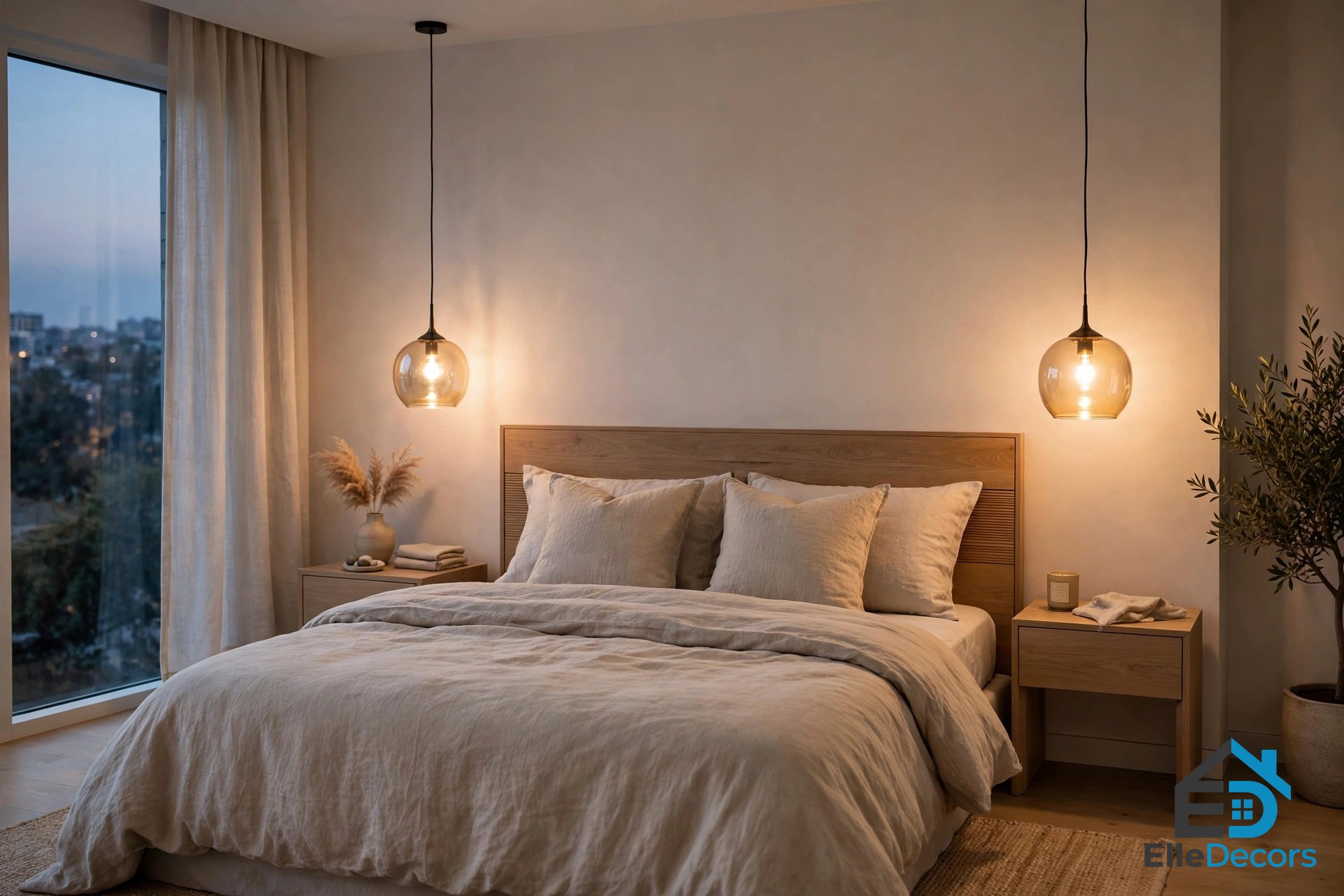
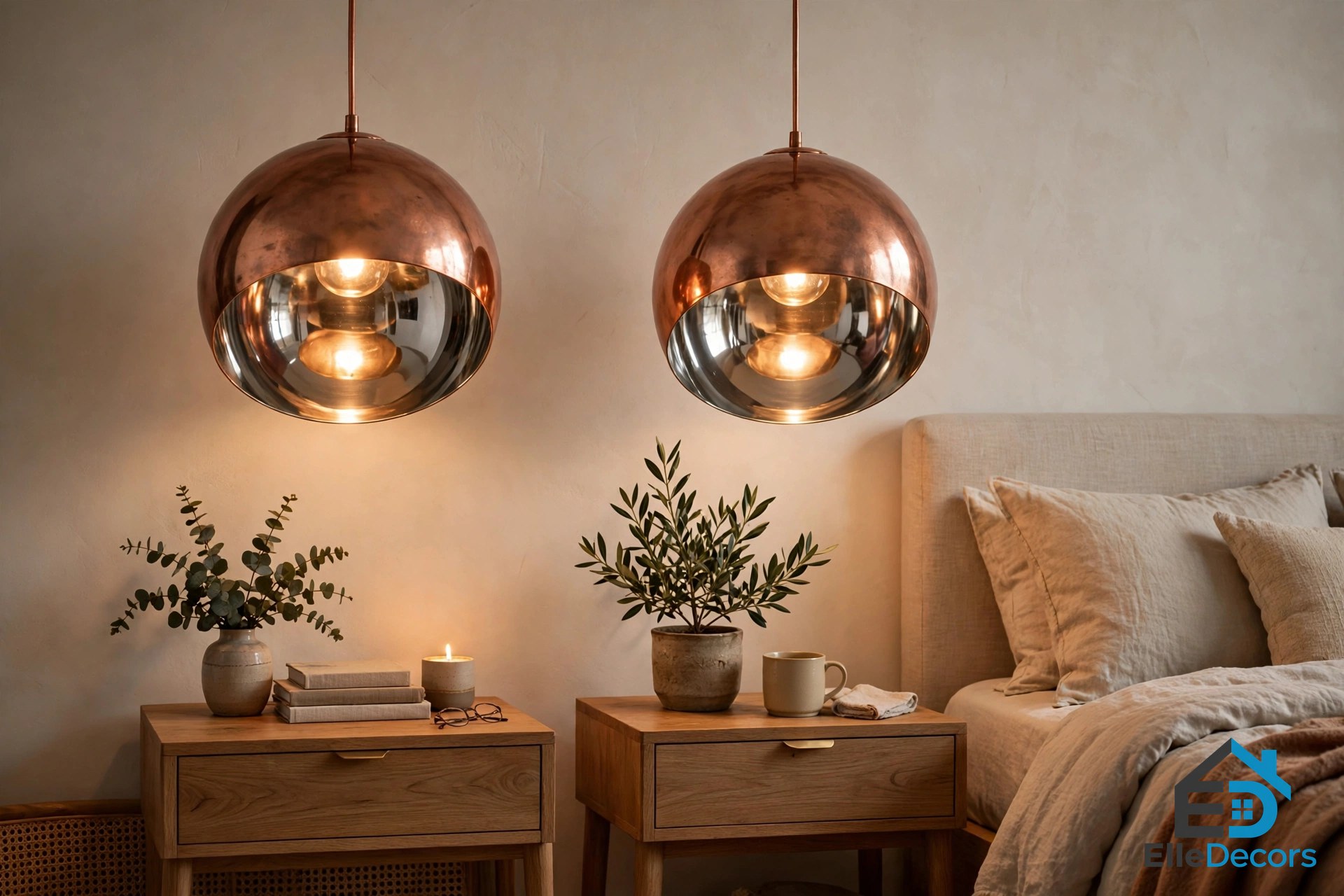
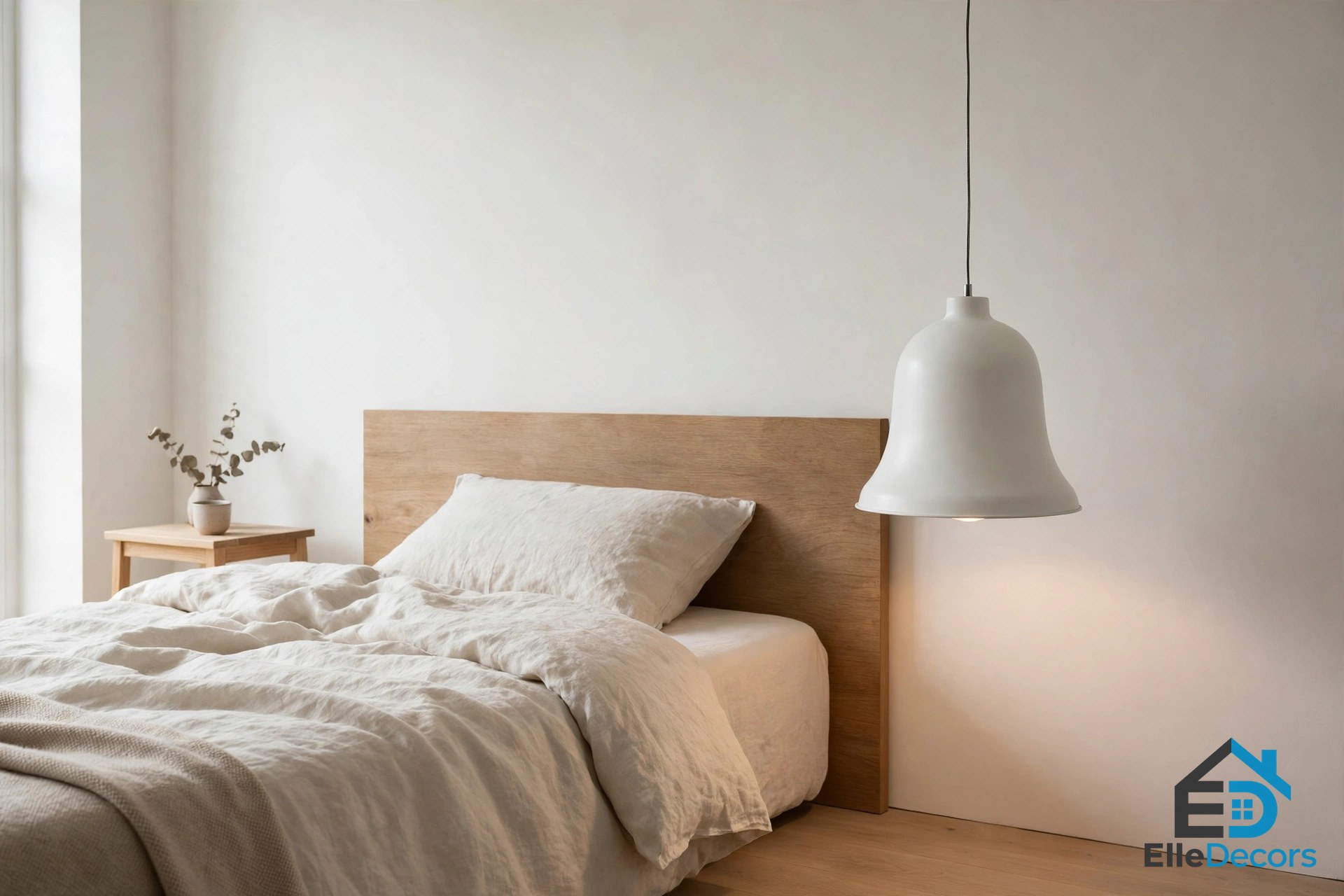
Start with the placement, because the same fixture can look perfect or pointless depending on where it hangs. The classic is the bedside pair: two matching pendants, one over each nightstand, framing the headboard wall with a soft, even glow. Bedrooms with pendant lighting in this arrangement feel the most intentional, because the symmetry does half the styling for you. Hang the pair at the same height with equal cords, and choose shades that throw light down onto the tables rather than out into your eyes.
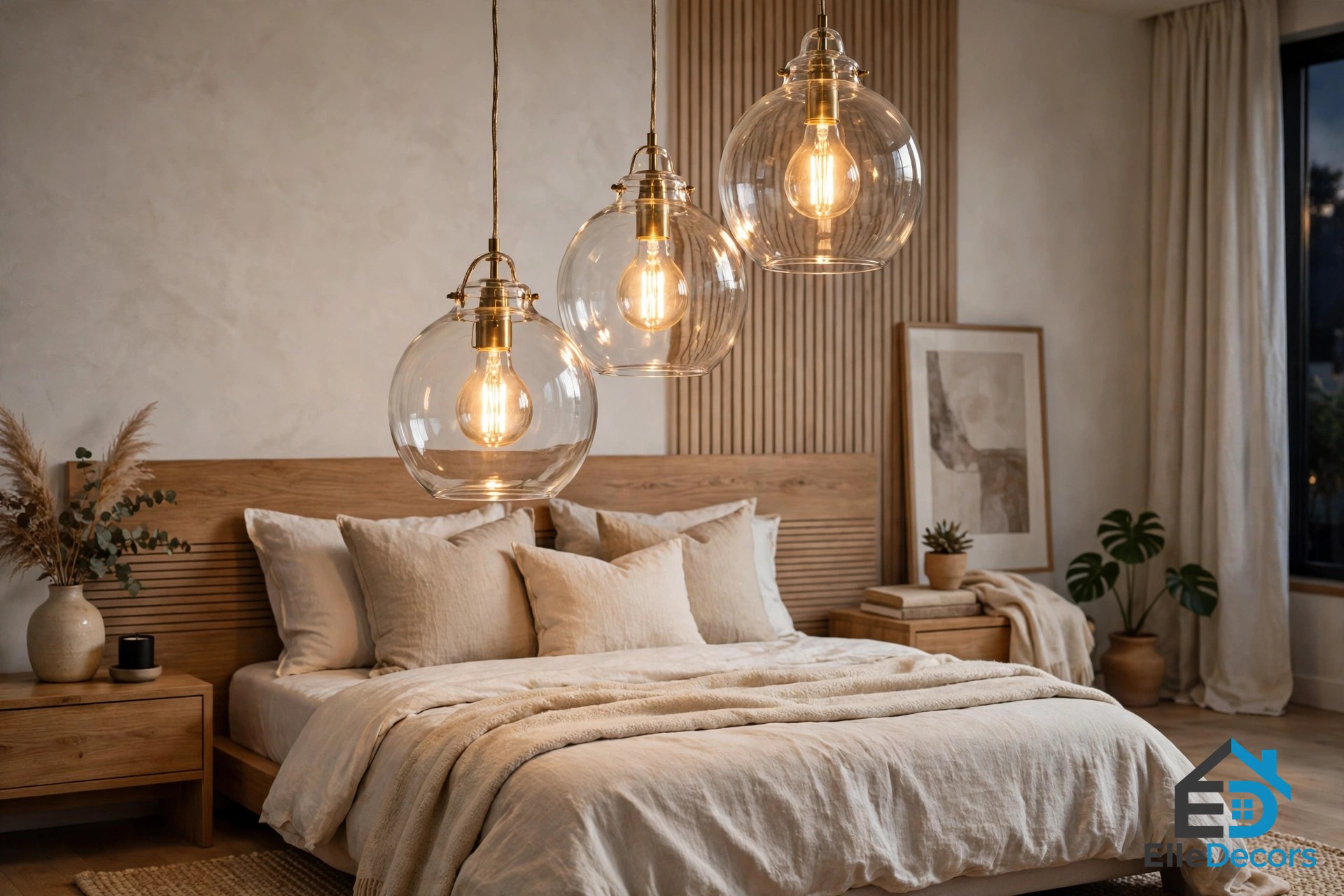
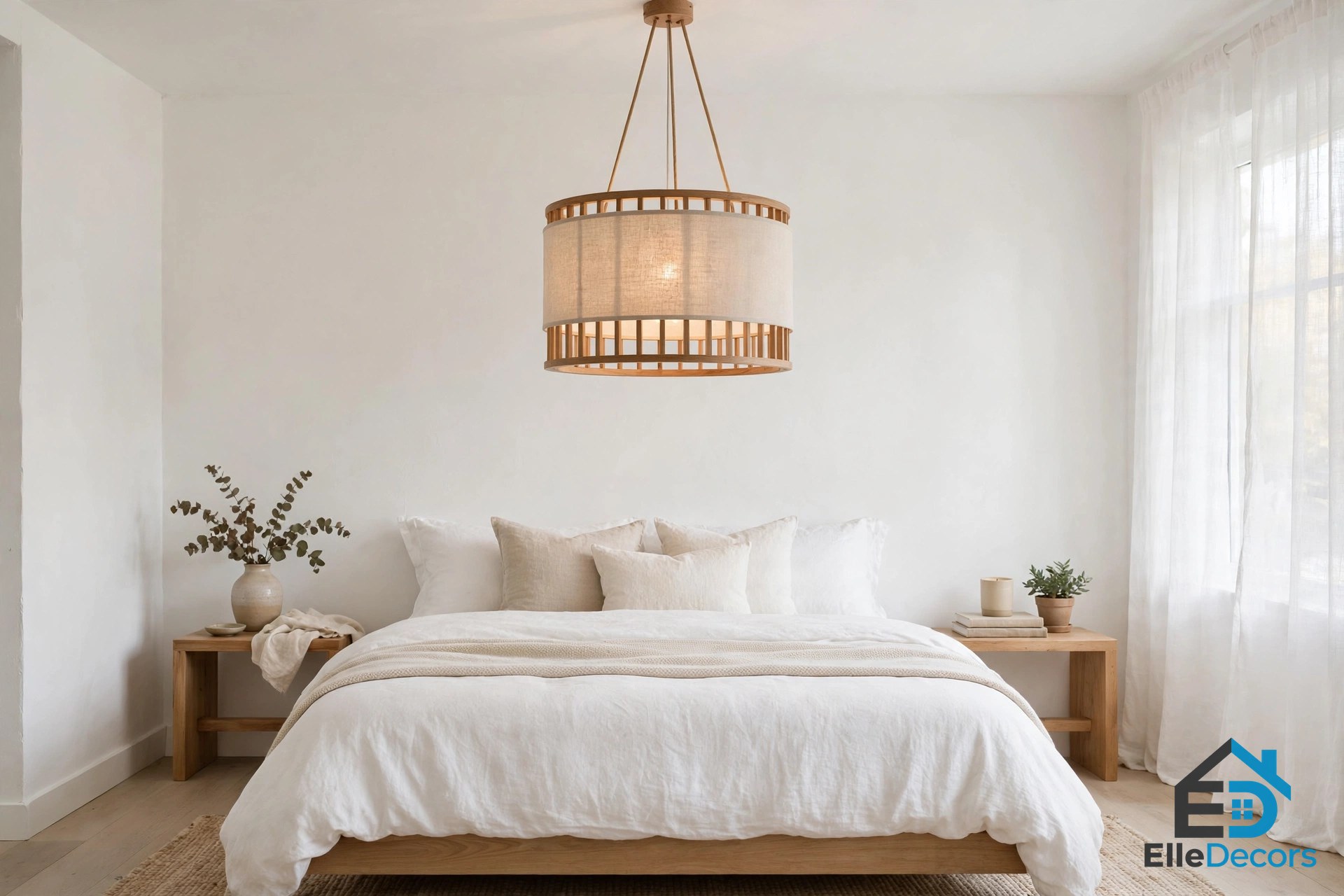
The second placement is a single pendant or a cluster centred over the bed. A cluster of copper orbs over the bed, or a trio of glass pendants at different heights, turns the bed into the room’s focal point. This works best with a shade that glows rather than a bare bulb. The third placement is the central pendant: one larger fixture in the middle of the room, for general light when you are folding laundry or making the bed. Keep it simple and high, so it never enters your sightline when you sit up.
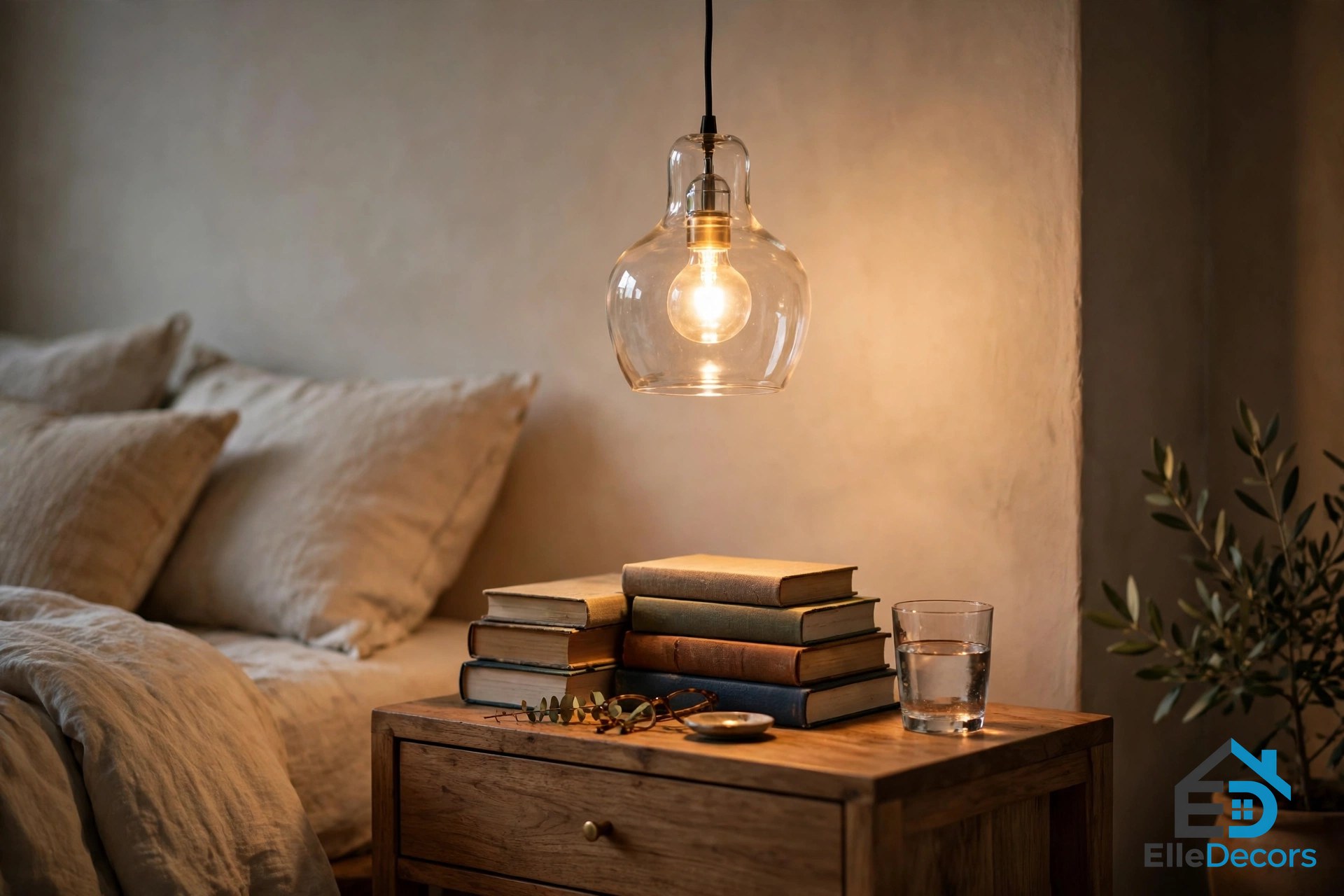
The fourth placement is the reading nook. If the bedroom has a chair, a small pendant hung low over it creates a corner that invites an evening with a book. The fifth is the corner cluster: three to seven small drops on one ceiling canopy, hung at staggered heights in a corner or over a dresser. Clusters are the most sculptural option, and they suit rooms where a single large fixture would feel too heavy.
How Low Should They Hang?
Height matters more than style. Hang a bedside pendant too low and the bulb sits in your eyeline every time you sit up; hang it too high and it stops being a reading light and becomes a ceiling decoration. Lighting guides put bedside pendants 28 to 36 inches above the nightstand, which clears the table surface while keeping the light close enough to read by. A second guide gives the same advice in metric, at 35 to 45 centimetres above the bedside table. Either way, the rule is the same: the bottom of the shade should sit roughly at shoulder height when you sit up in bed, and the bulb should be hidden by the shade from where you lie.
For a central pendant, hang it high enough that no one walks into it and low enough to read as a feature. Over the bed itself, a pendant should clear the tallest sleeper by a comfortable margin, yet hang low enough to feel connected to the bed rather than lost near the ceiling. If the ceiling is low, choose a shallow shade and a short drop; a deep shade on a long cord will dominate the room. And whatever the placement, use a warm bulb — lighting guides suggest around 2700K for bedrooms — and a dimmer, so the same fixture can be bright in the morning and soft at night.
Bedrooms with pendant lighting also need a second layer of light to feel complete. A pendant on its own leaves the corners dark, so pair it with a wall light, a small lamp, or even a strip of warm light behind the headboard. The pendant does the beautiful work; the second layer does the practical work.
Materials and Styles: Forty Ideas in Six Families
Bedrooms with pendant lighting come in six material families, and the family you choose decides the mood more than any single fixture does.
Glass is the most forgiving place to start. Blown glass hangs off copper or steel in the IC Lights S Pendant, and it surprises against a boldly coloured wall. The Mirrea Modern Mini Globe Pendant is copper on the outside and chrome on the inside, and its rounded form works well in sets of three. The Pharos, Calla, and Oculo pendants by Jeremy Pyles are glass too, and work best as a trio above bedroom shelving. A Drop Top Pendant presents its bulb in blown glass, in black or fawn, and a Kone Pendant uses acid-etched opal glass with metal, hung low beside a futon-style bed for maximum style.
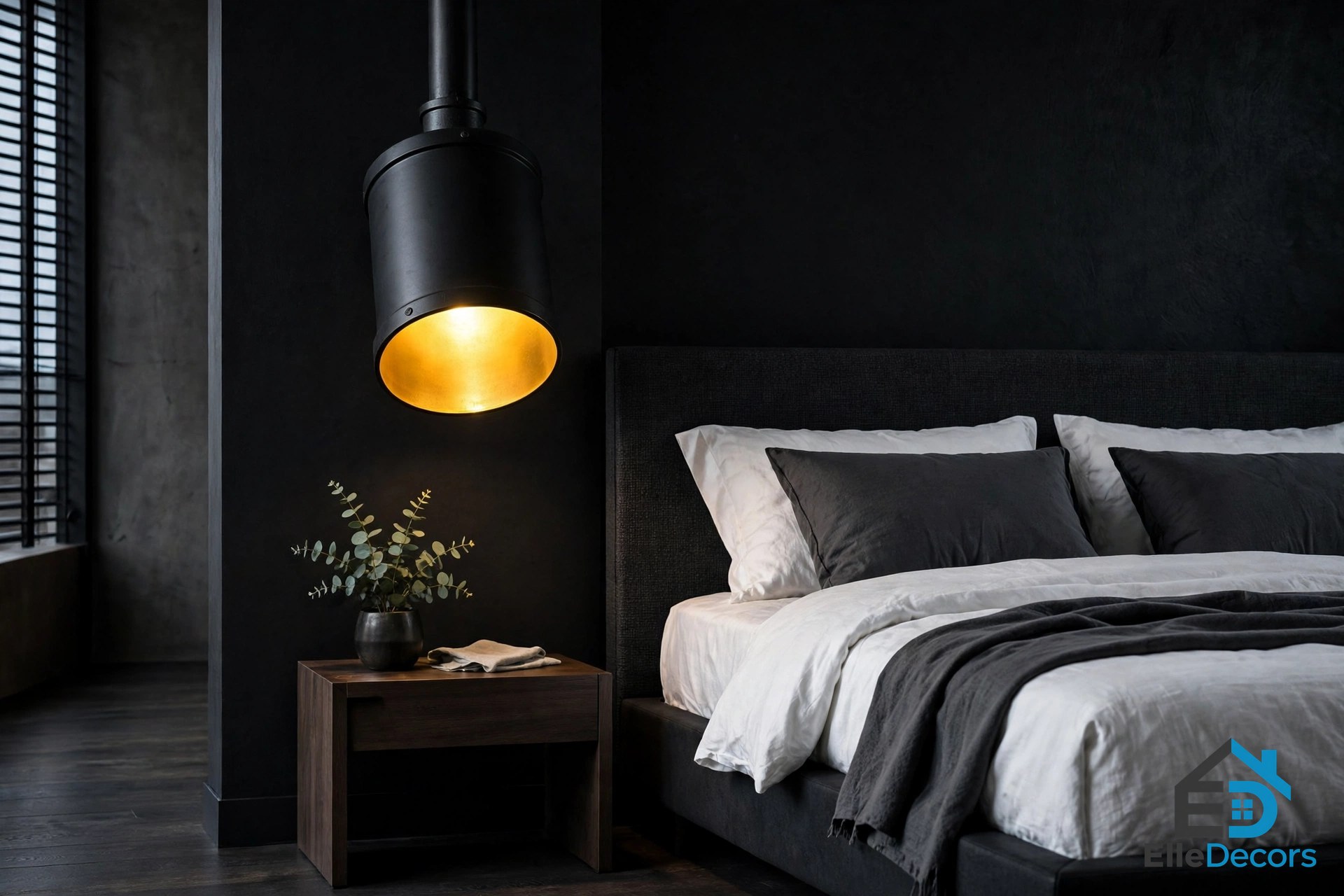
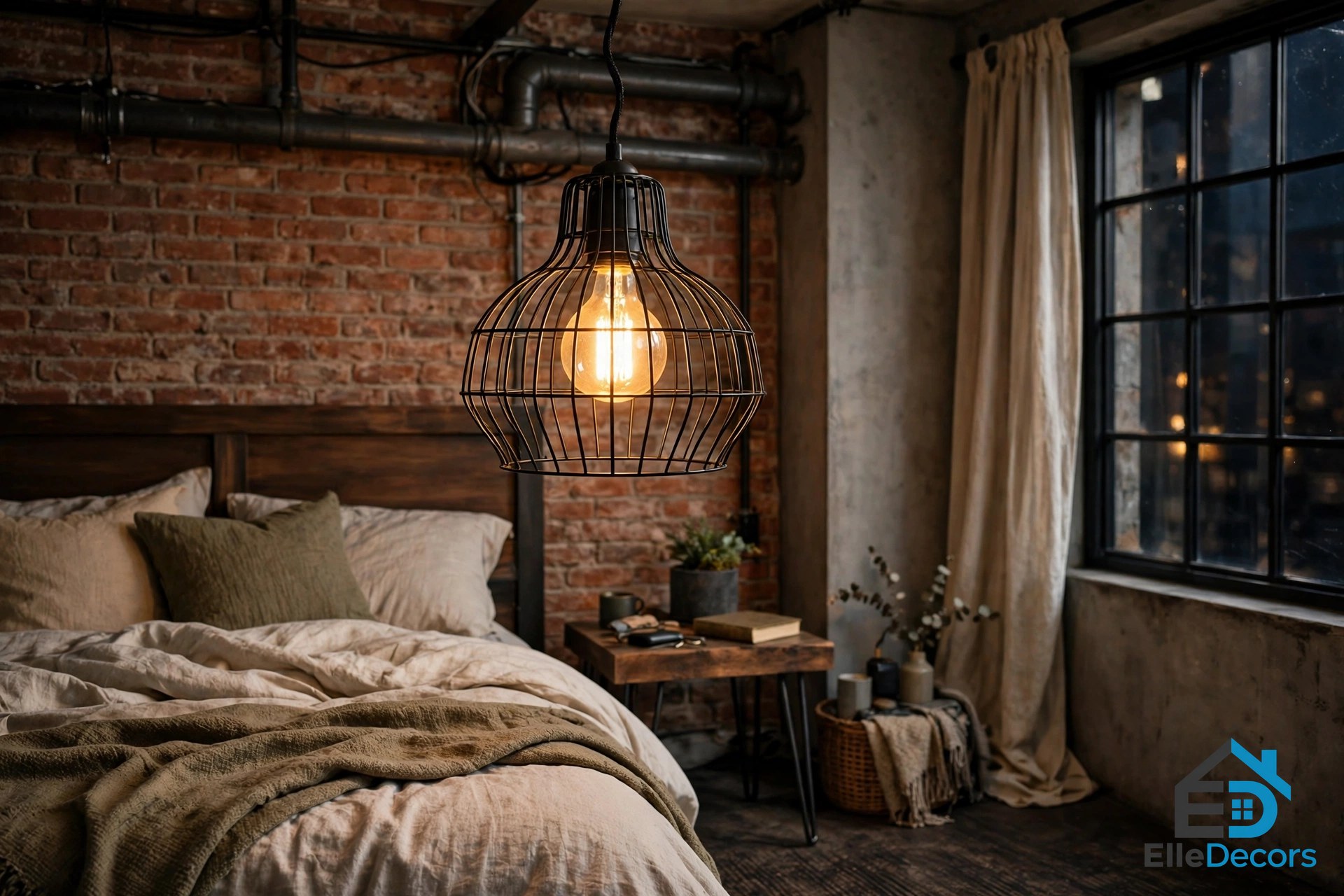
Metal gives the room its edge. A black pipe-shaped pendant, available in black and yellow or white and lilac, makes bedroom lighting cylindrical; hang a pair either side of the bed for a swanky alternative to a bedside lamp. The Piper Pendant in satin nickel is the quiet version, easily hidden as it snakes up the wall, emitting light without much design noise. The Beat Wide Replica has a metal outer and a copper inner, and the Beat Fat Replica comes with gold or copper on the inside, a structural twist on the classic Beat. The Normann Copenhagen Bell Pendant is light metal on suspension cords, and a wire-cage pendant dresses a simple bulb in a Victorian frame for an industrial touch.
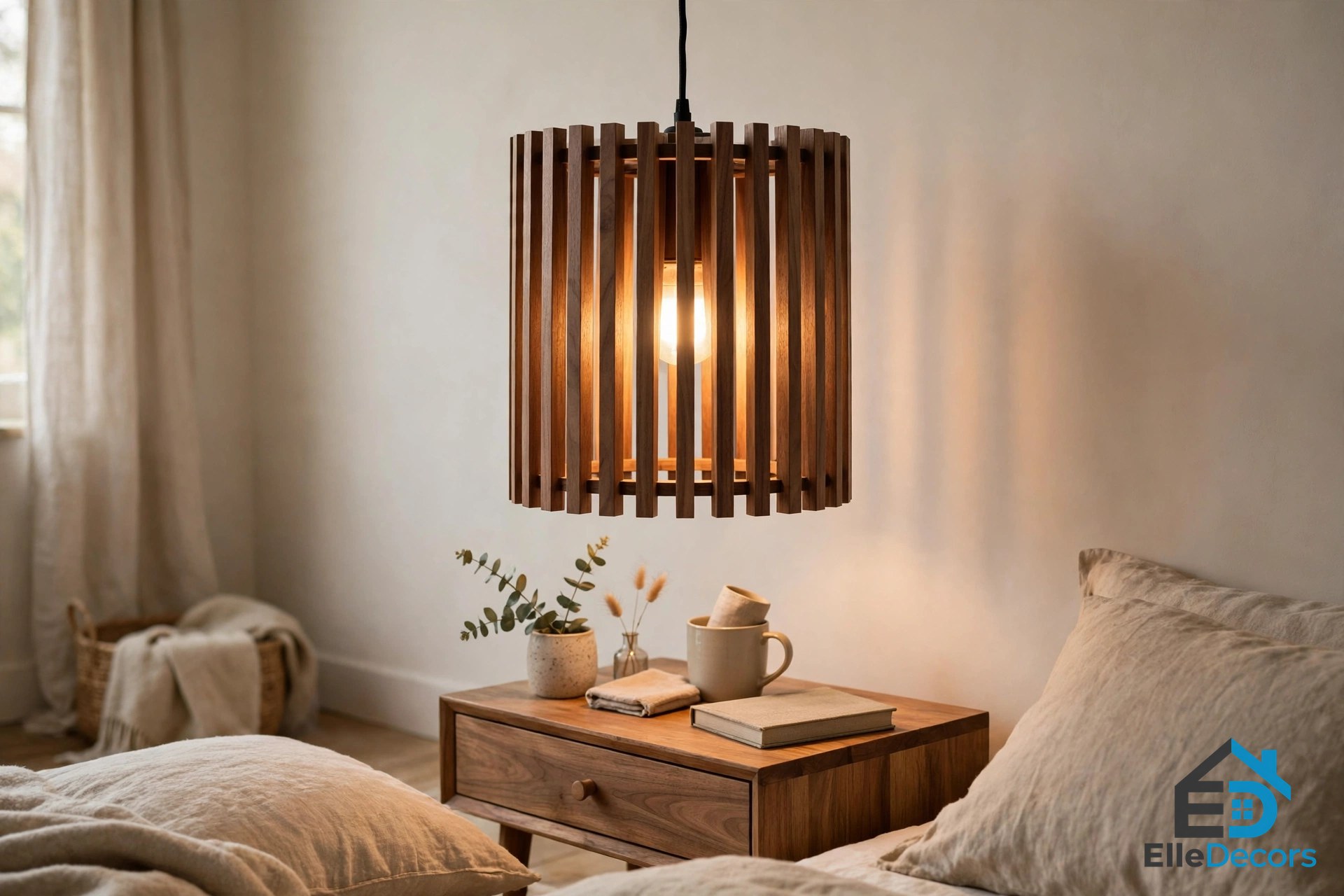
Wood brings warmth that metal cannot. Sculpted wood orb pendants hang as an array of baubles with lights underneath, and they match the bedside table or headboard for a funky way to light a room. The Secto Pendant by Seppo Koho uses slatted wood in black, white, or walnut to draw people closer together — hang it over the bedside table. A wood-and-fabric drum pendant belongs above the bed in a white-walled room, and the Moon Scraplight, with its cardboard frame and earthy tones, fits a natural-toned bedroom.
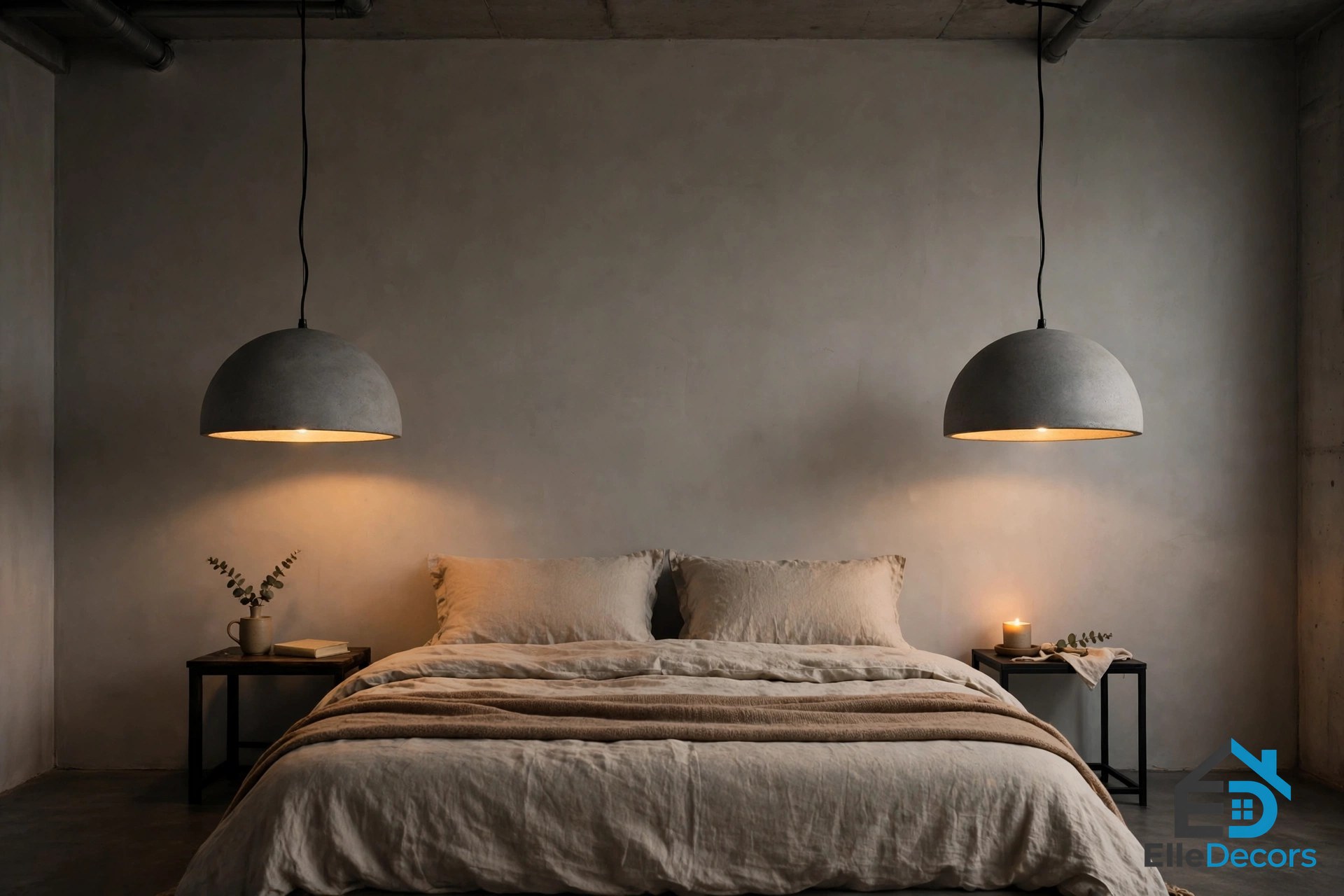
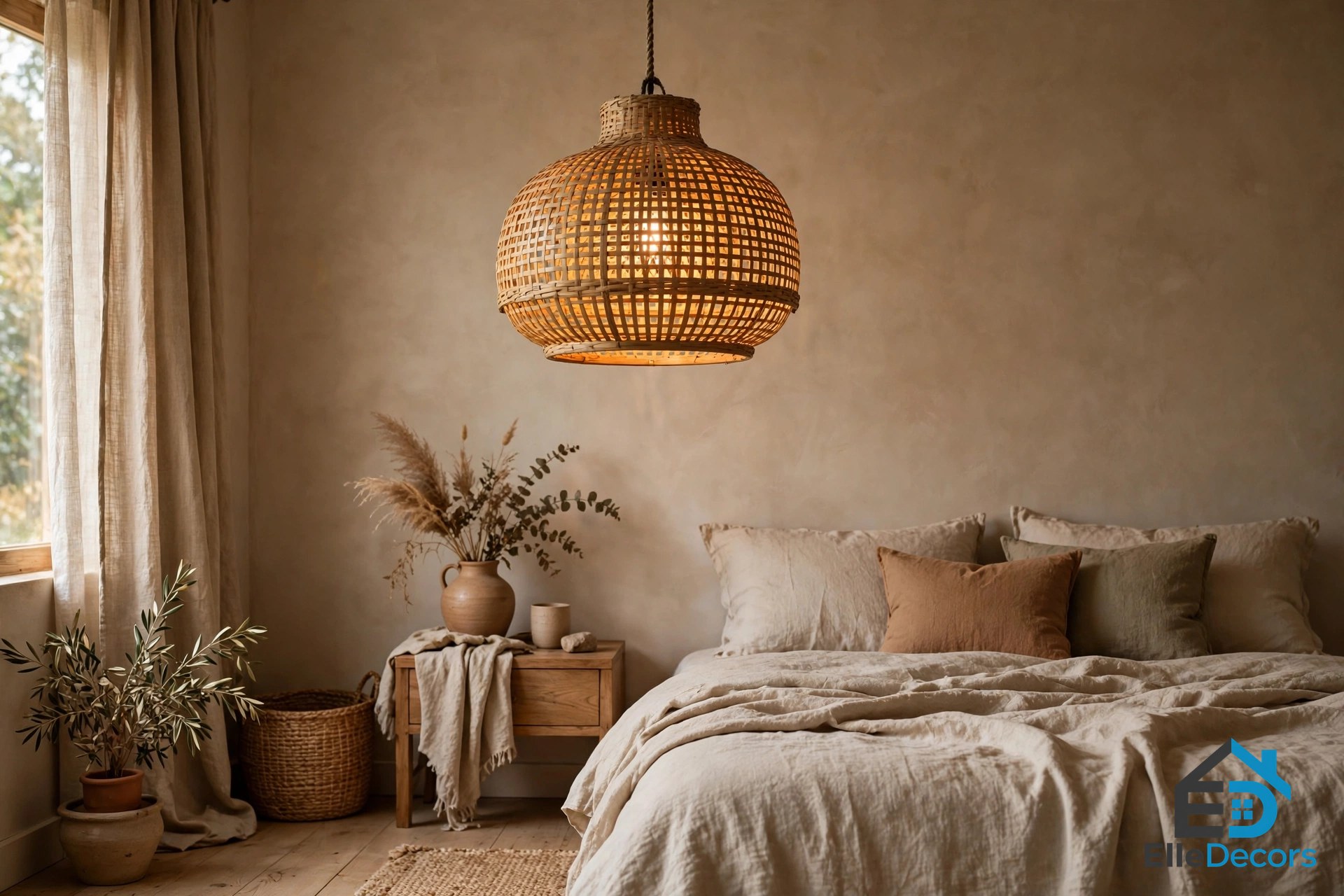
Concrete suits the industrial bedroom. A hanging concrete pendant overturns traditional fixtures beside the sheets, and a half-concrete, half-wood lamp works with loudly coloured bedrooms or subtle finishes alike. These heavy-looking fixtures need a plain wall behind them; against busy wallpaper they disappear. Fabric and paper soften everything: the Muuto Unfold Pendant is made from flattenable silicone rubber, the IKEA Krusning shade drapes 17 inches above the bed in a whimsical interior, and the Zeppelin Suspension creates a garden on the ceiling with silk paper. The IKEA Sinnerlig is handmade, so each one is unique, and its woven form gives an earthy warm glow.
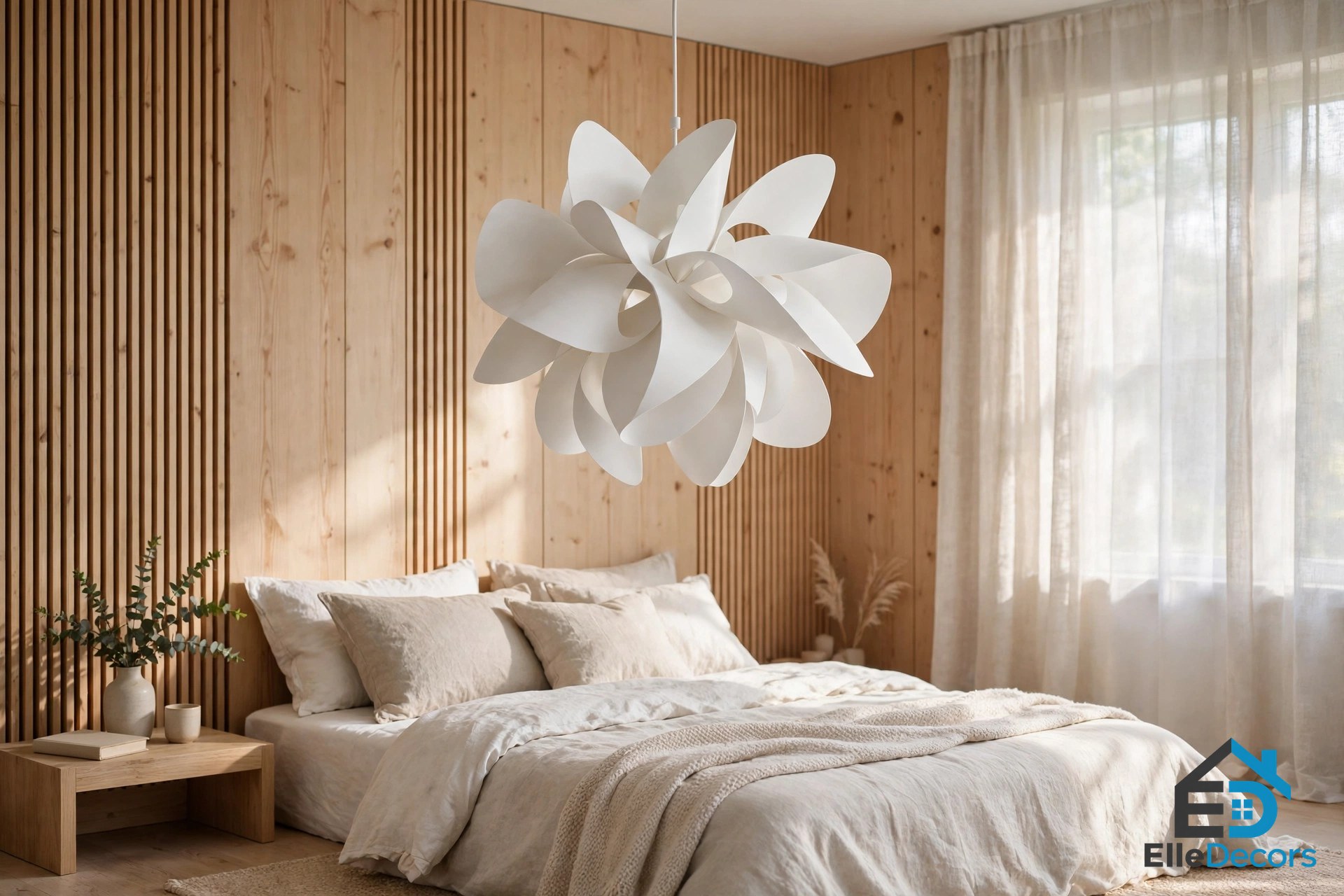
Then there are the sculptural pieces, for rooms that want a talking point. The Swirl 2 Pendant by Øivind Slaatto took its shape from a snail’s shell, and its plastic contours suit a slow evening. The Flowerpot VP1 Pendant by Verner Panton — who designed chairs for Kubrick’s 2001: A Space Odyssey — comes in twelve bold shades and pairs easily with an art deco bedroom. The Muuto Ambit is hand-painted in five hues, the Dome One Light is painted white steel strung off a high ceiling, and the Moooi Heracleum II lets each petal of its frame be twisted and turned to your satisfaction. The IKEA Maskros is a stainless steel dandelion, and the Magdalena Suspension — two metal hemispheres clamped together — produces patterns of light.


Choosing by Room
The right pendant depends on the room it hangs in. In a small bedroom, one slim pendant beats a pair: a slim aluminium-and-brass pendant dangles its fine form beside the bed, and it takes no floor or table space at all. A mini pendant suits a narrow nightstand or a tight alcove. With a high ceiling, go bigger — a large white steel dome has a grand presence without feeling heavy, and a cluster at staggered heights fills the vertical space a small shade would lose.
Dark rooms need glass or pale shades that scatter light; a white pendant both emits solid light and scatters it, which is why pale shades suit rooms with little daylight. Light rooms can take the drama: black metal, deep copper, or a coloured shade will stand out against white walls instead of vanishing. And if the bedroom already has a strong style, match the pendant to it — a steampunk pendant with a glass tube on a metallic fuse belongs in an eclectic room, while a nautical lantern suits a coastal one. The pendant should look like it grew out of the room, not like it was added as an afterthought.
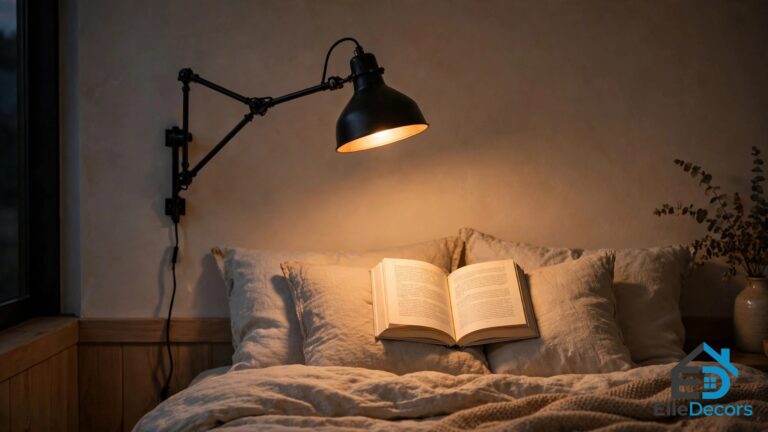
Bedrooms with pendant lighting are also a good place to mix old and new. A modern pendant over a vintage dresser, or a classic glass globe beside a contemporary bed, keeps the room from feeling like a showroom set. If you want a second opinion on the reading corner, a swing-arm lamp does the same job from the wall — our swing arm lamp guide covers the best of those. And if the bedroom pendant is the room’s statement piece, the same logic scales up: our modern crystal chandelier guide shows how a bigger fixture anchors a larger space.
Mistakes That Spoil the Effect
The most common mistake is hanging the pendant at the wrong height. Too low, and the bulb glares every time you sit up; too high, and the light stops reaching the bed. Measure from the nightstand, not from the ceiling, and sit on the bed to check before the fitting is fixed. The second mistake is a bare bulb with no shade in a bedroom. Bare bulbs belong in a workshop; in a bedroom they create hard shadows and a single glaring point. If you love the exposed-bulb look, choose a fixture that softens it — smoked glass, an opal bulb, or a cage that breaks up the light.
The third mistake is forgetting the dimmer: a pendant that is only ever full brightness will be switched off most evenings. The fourth is mixing too many pendant styles in one room: a pair at the bed plus a different cluster over the dresser plus a third style in the corner will fight each other. One family of fixtures, repeated, looks designed; three families look accidental. Finally, do not hang a pendant where it blocks a door, a wardrobe, or the path to the bathroom. Light should never be something you duck under in the dark.
Six Families at a Glance
Every fixture in this guide belongs to one of six material families, and the family decides the mood more than any single design does. This table sums up how bedrooms with pendant lighting change when you switch families, so you can choose by feeling first and by fixture second.
| Family | Look and feel | Best placement | Watch out for |
|---|---|---|---|
| Glass globes and clusters | Bright, airy, timeless | Bedside pair, trio over bed | Fingerprints show; needs dimming |
| Metal (pipe, Beat, bell) | Bold, sculptural, modern | Either side of the bed | Can glare if the bulb is exposed |
| Wood (orb, Secto, drum) | Warm, calm, natural | Bedside table, above bed | Heavy shades need a solid fixing |
| Concrete | Industrial, grounded, strong | Either side of the bed | Needs a plain wall behind it |
| Fabric and paper | Soft, diffused, romantic | Above the bed, reading corner | Dusts easily; keep bulbs cool |
| Sculptural (Flowerpot, Heracleum) | Playful, statement, art-led | Central, over the bed | One per room is enough |
For the same pendant logic next door, our modern living room lighting guide shows how these families work at a larger scale.
Frequently Asked Questions
What are bedrooms with pendant lighting, exactly?
Bedrooms with pendant lighting are bedrooms where the main or accent light hangs from the ceiling on a cord, chain, or rod, instead of sitting on a table or being fixed flush to the ceiling. The pendant can hang beside the bed, over the bed, in the centre of the room, or in a corner over a chair. The point is that the light drops to exactly where it is used, rather than washing the whole room from one central point.
How high should a bedroom pendant hang?
For a bedside pendant, lighting guides put the bottom of the shade 28 to 36 inches above the nightstand, which is roughly shoulder height when you sit up in bed. A second guide gives the same height as 35 to 45 centimetres above the bedside table. For a central pendant, hang it well above head height. Always sit on the bed and check before the fitting is fixed, and use a warm bulb with a dimmer.
Can pendant lights replace bedside lamps completely?
Yes, in most bedrooms. A pair of pendants over the nightstands gives the same reading light as two lamps while freeing the whole tabletop for books, water, and a phone. The trade-off is that a pendant cannot be moved or angled like a lamp, so if you read with the light in one exact spot, an adjustable cord — or a swing-arm lamp as well — is the safer choice. Keep one small backup light, such as a wall light, for the nights you want light without the pendant.
Do pendant lights work in a small bedroom or a low ceiling?
They do, if you choose the right one. In a small bedroom, a single slim pendant or a mini pendant beside the bed takes no floor or table space at all. In a low-ceiling room, choose a shallow shade and a short drop, and avoid deep shades on long cords, which will dominate the room. A white or glass shade also helps, because it scatters light and makes a low ceiling feel higher.
The Bottom Line
Bedrooms with pendant lighting work because they put light where it is used, free the nightstand, and give the ceiling something beautiful to do. Start with the placement — a bedside pair is the safest first move — then choose a family that matches the room, hang it at the right height, and add a dimmer and a warm bulb. One family of fixtures, repeated with care, will do more for the room than any number of lamps. Hang it low enough to read by and high enough to forget about, and the bedroom will glow the way the saved photos promise.