Modern Living Room Lighting: 5 Signature Styles and a Layered Lighting Guide
A well-lit living room is never about one bright ceiling light. This guide walks through five signature lighting styles from real living rooms, then shows how to layer ambient, task, and accent light, pick warm bulbs, and fix the mistakes that leave rooms flat or glaring. Start with three layers on dimmers, and let one statement fixture set the style.
A modern living room lighting plan does two jobs at once: it lets you see clearly, and it sets the mood of the room. The living room is where you read, watch films, entertain friends, and wind down at night, and no single fixture can serve all of those moments. The rooms that look best are rarely the ones with the most expensive furniture. They are the ones with layered light: a ceiling fixture for the room, lamps at seat level for reading, and a few small glows that highlight art, shelves, and texture.
This guide starts with the layering system designers use, then walks through five signature styles from real living rooms, and finishes with ceiling heights, colour temperature, small rooms, and common mistakes.
How to Layer Modern Living Room Lighting
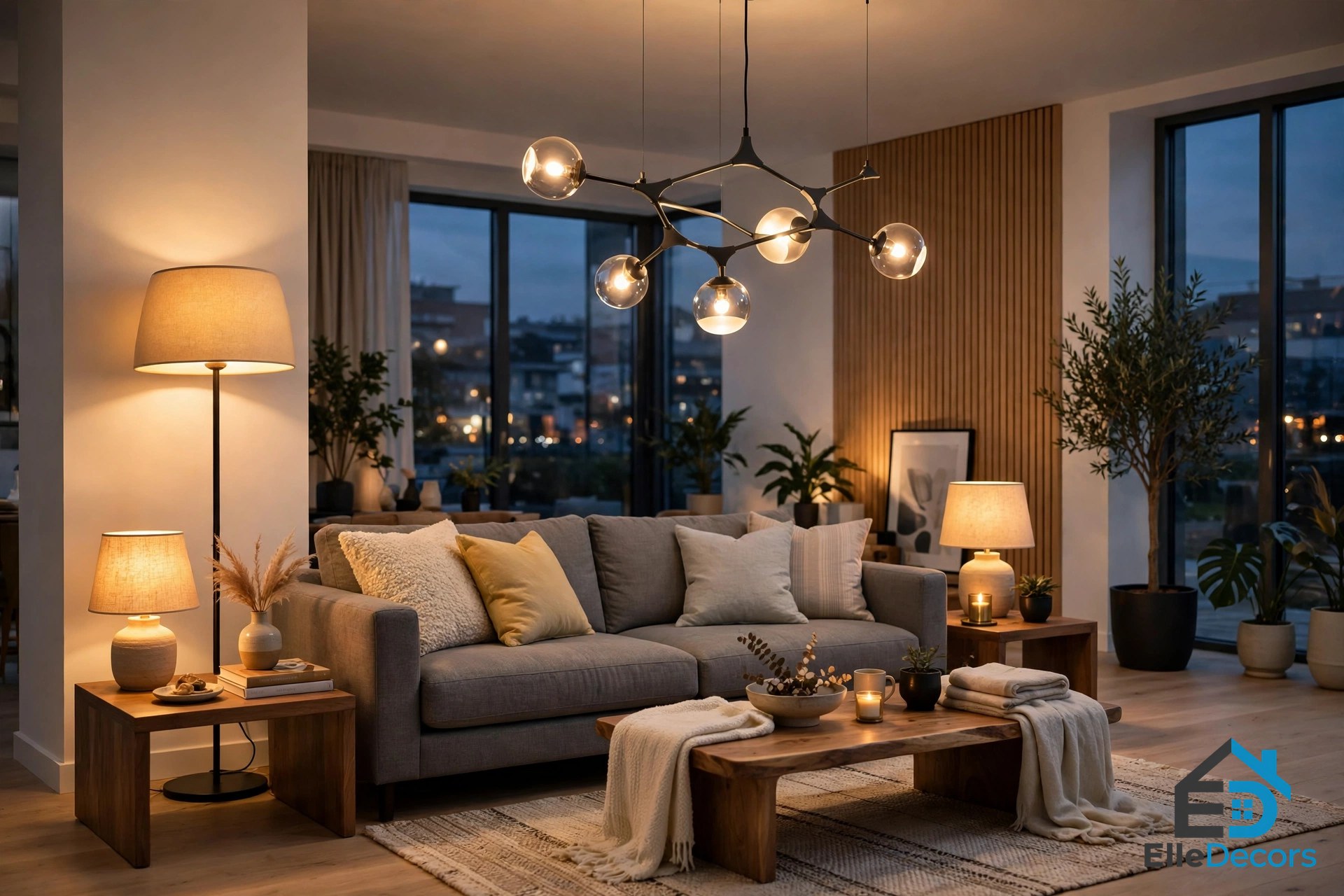
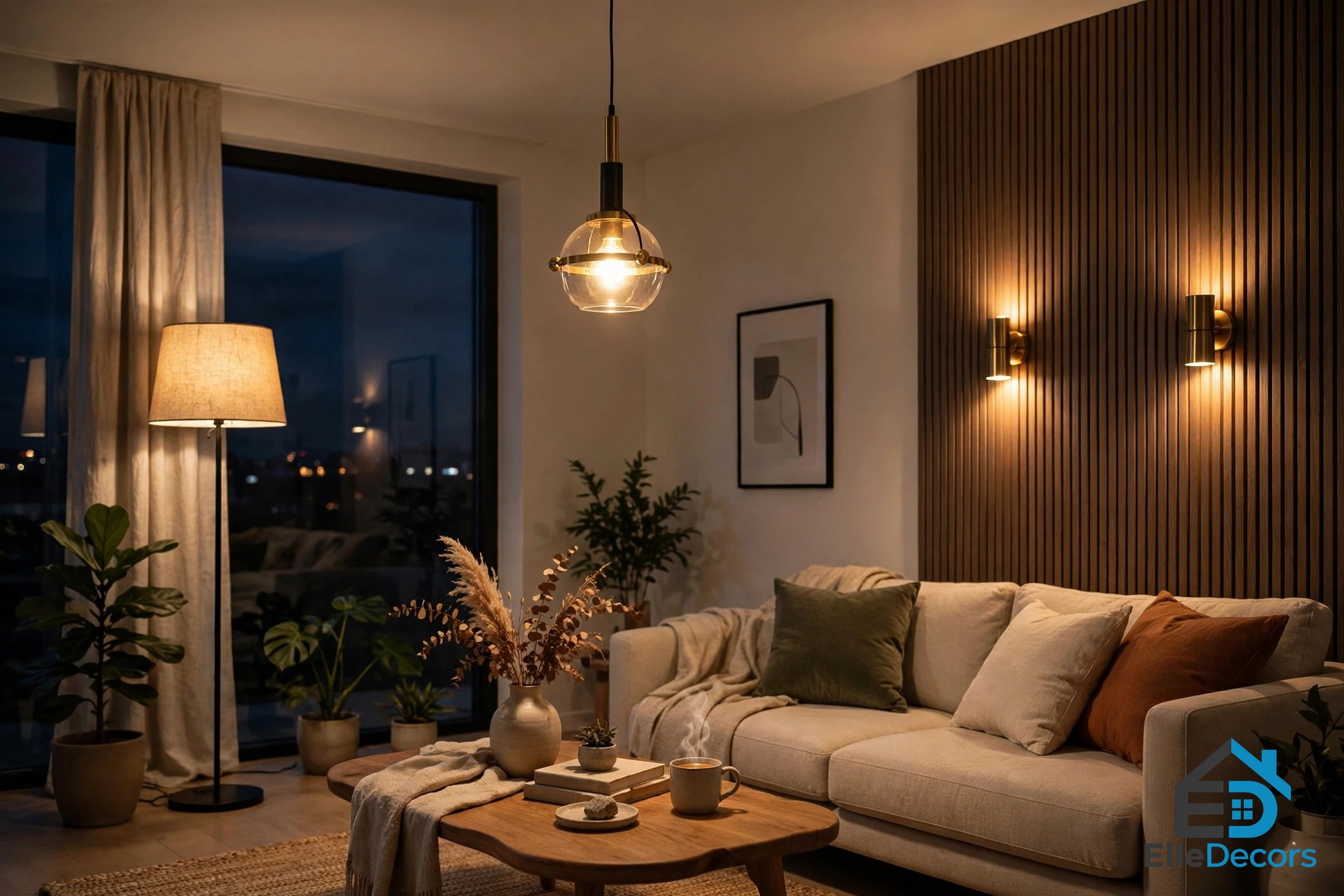
Layered lighting means building three kinds of light that work together. Ambient light is the base layer: the general glow that lets you move around the room safely. Task light is the focused layer: a floor lamp beside a reading chair or table lamps flanking the sofa. Accent light is the personality layer: picture lights over art, sconces beside a fireplace, or LED strips washing a bookshelf. A room with all three layers feels finished at every hour; a room with only one feels flat no matter how good the furniture is.
The recipe is simple: one ambient source, such as a central ceiling fixture on a dimmer; two task sources at seat level, one near the main sofa seat and one near a chair or desk zone; and one to three accent sources, such as an art light or a shelf light. Most well-layered living rooms end up with three to five light sources in total, all at one warm colour temperature, all on dimmers, each layer on its own switch.
Brightness is measured in lumens, not watts. A typical living room wants roughly 1,500 to 3,000 lumens across all its sources, with ambient light running about 10 to 20 lumens per square foot. Reading needs more: most reading tasks call for roughly 400 to 800 lumens at the page, which is why a dedicated reading lamp matters more than a brighter ceiling fixture. Keep every bulb at the same warm temperature, around 2700K to 3000K, so the layers blend instead of clashing.
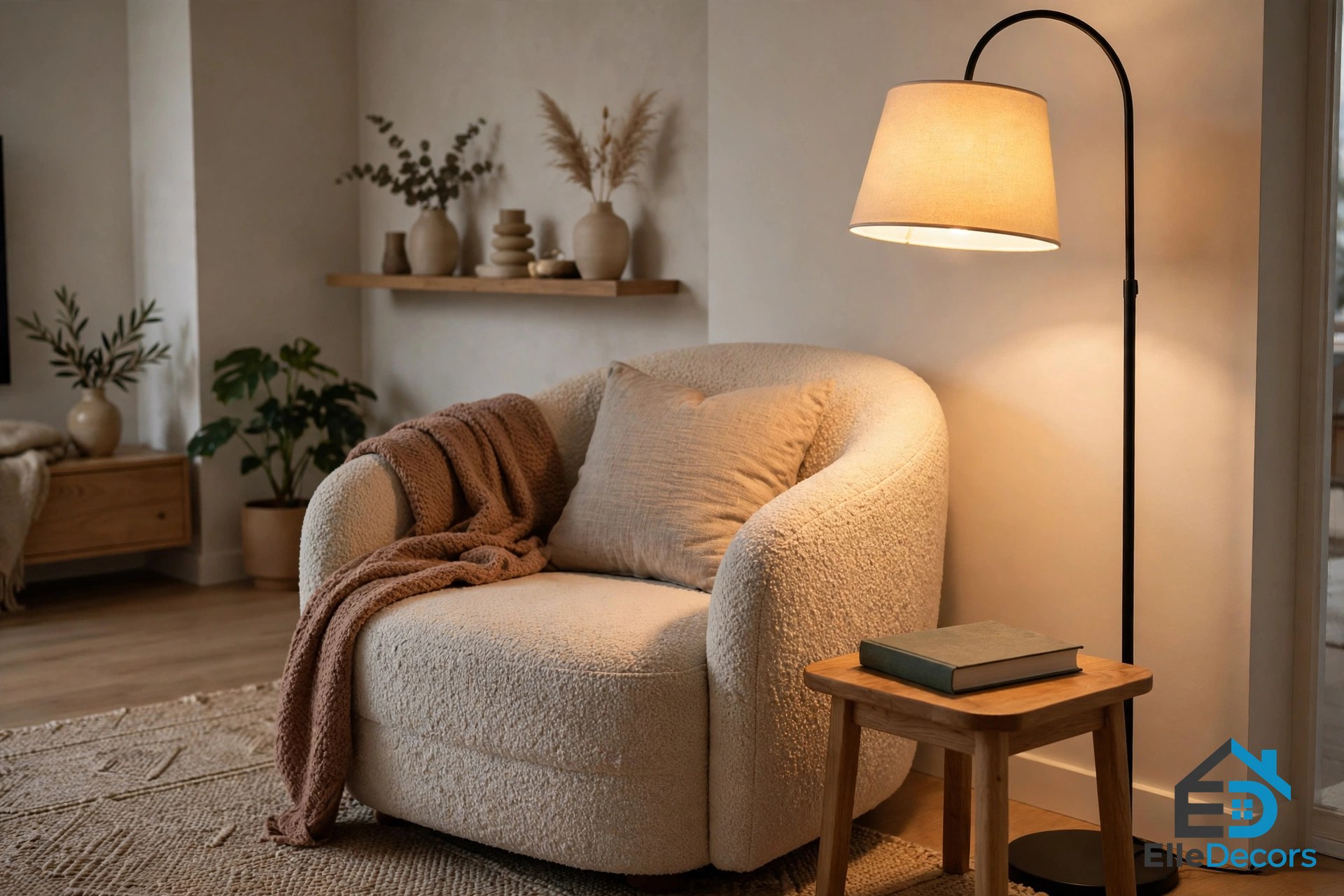
Placement matters as much as brightness. Put lights at different heights so the room gains depth: ceiling fixtures above, lamps at seat level, and accent lights low or high on the walls. A floor lamp beside a reading chair works best with the bottom of its shade roughly at seated shoulder height, so the light falls on the page without glare. Table lamps should sit with their shades at seated eye level, which usually means a total lamp height of about 58 to 64 inches.
The 5 Signature Styles
Each of these modern living room lighting styles comes from one of the five living rooms in the source collection. They are design ideas to borrow, not products to buy, and each one shows a different way to make light the signature of the room.
1. The Bookcase Room: Recessed Light and a Reading Lamp
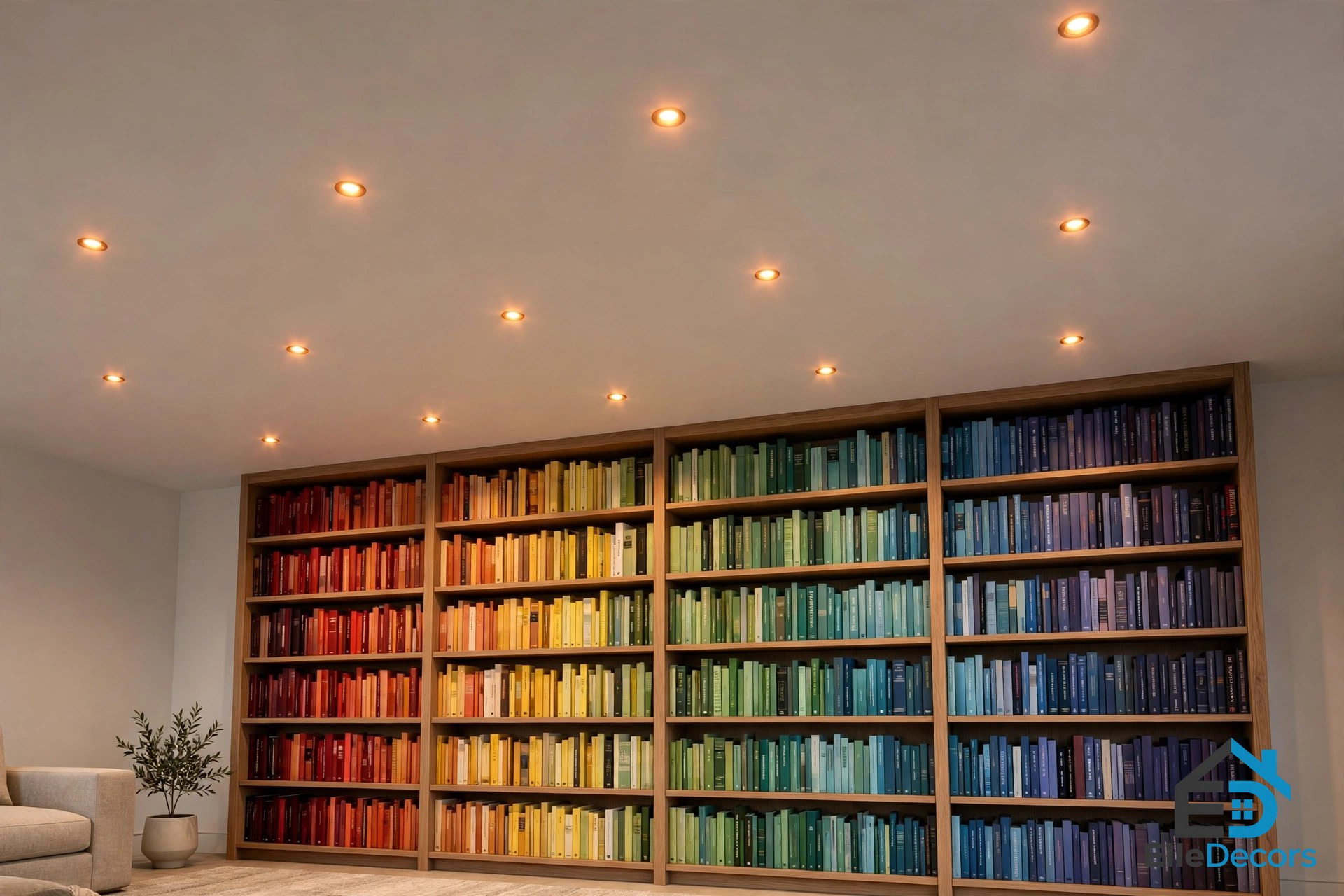
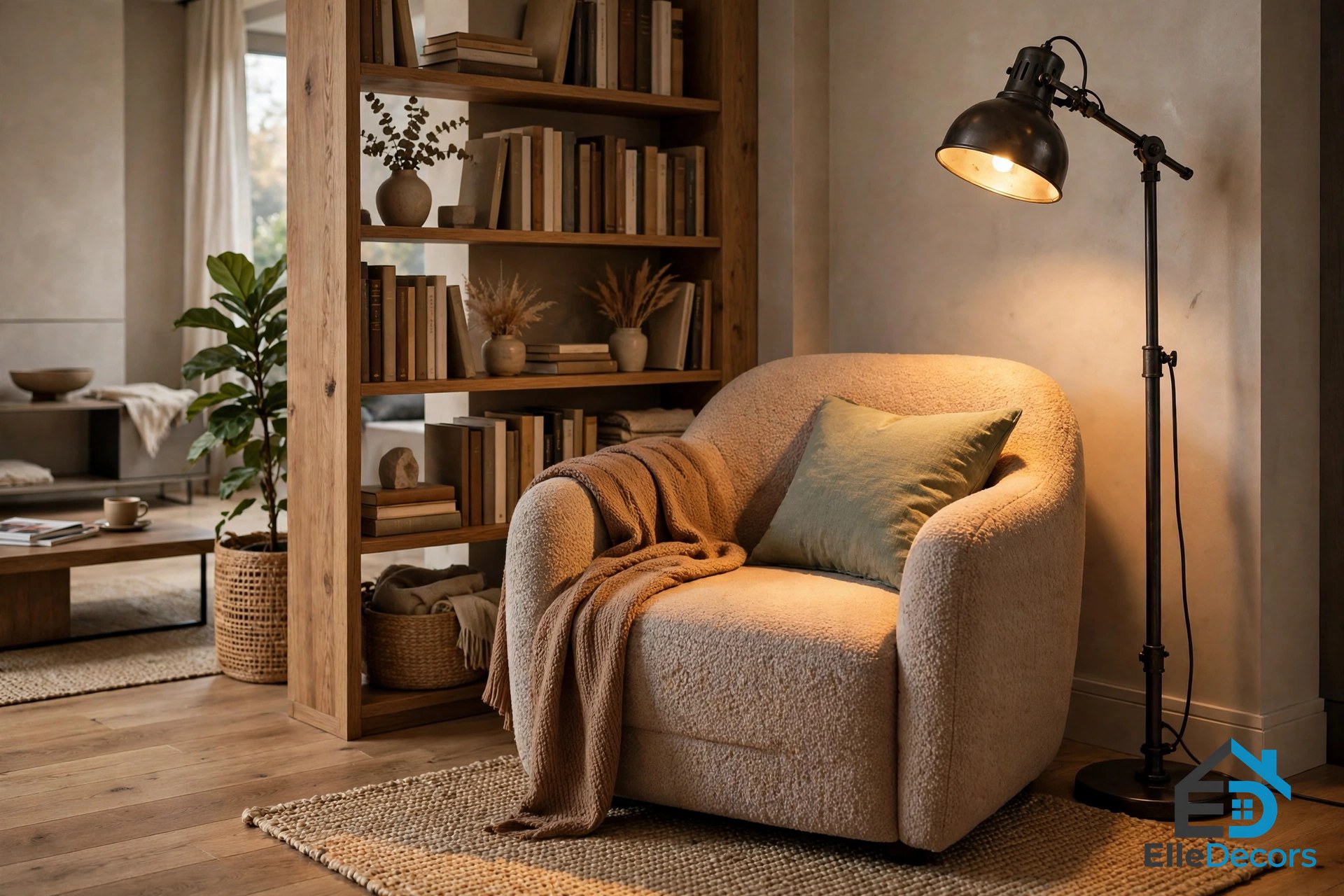
The first room is built around a distinctive bookcase, visualised by VIZION Studio. Smart recessed ceiling lights pick out the crucial areas, and a cool floor lamp stands beside the reading chair for task lighting. The bookcase itself is the hero: its volumes are sorted by colour on the top shelf, and the recessed lights above it turn ordinary storage into a display.
Borrow this style when your living room has one strong feature worth lighting. Recessed lights are the quietest ambient layer there is: they disappear into the ceiling and leave the room to speak. Pair them with one good floor lamp at the reading seat.
2. The Spherical Pendants: Sculptural Light Over the Sofa
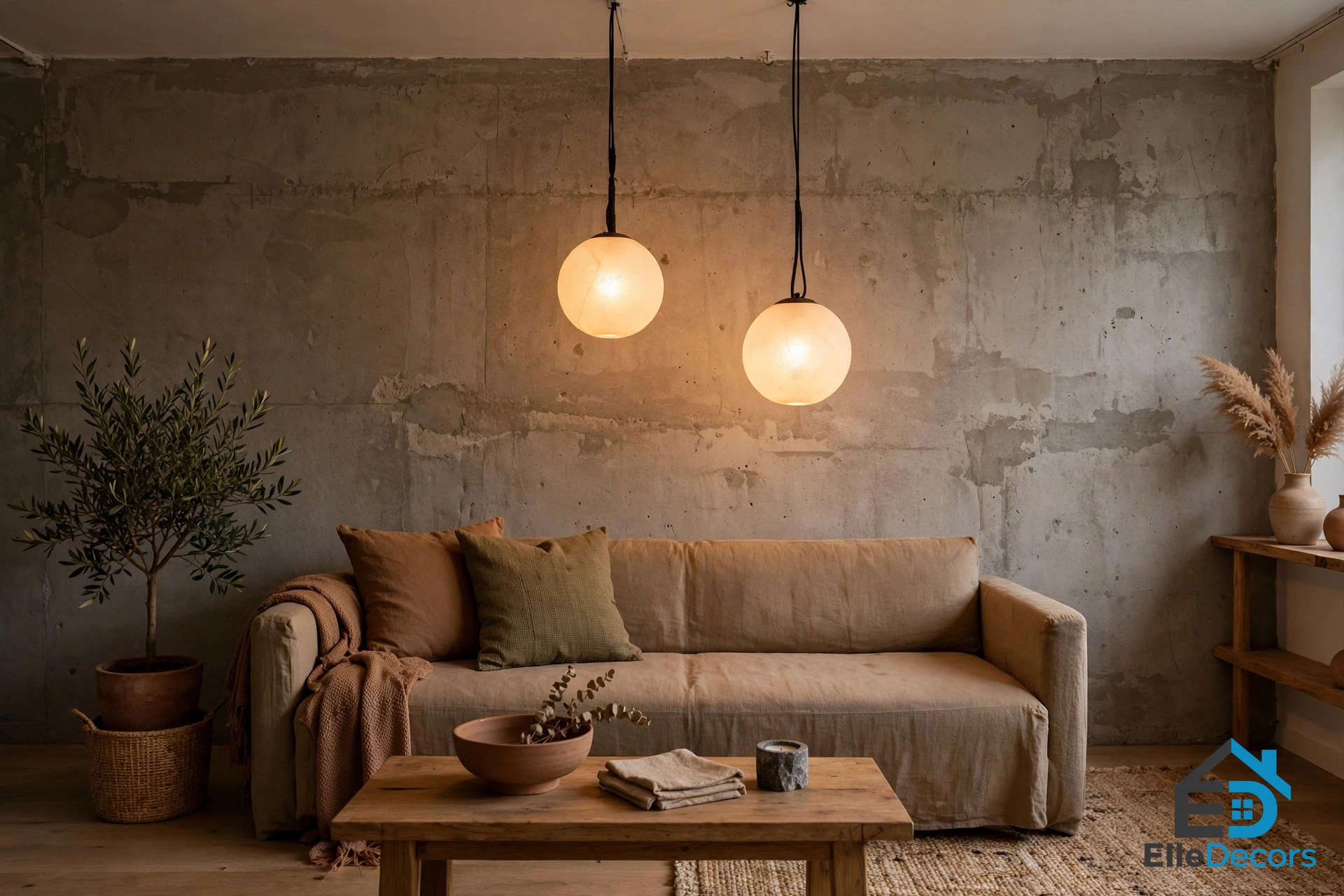
The second room, designed by Sergey Procopchuk, centres on a pair of spherical pendant lamps suspended over a simple seating arrangement. The lights are from the Random Light collection by Moooi, a design by Bertjan Pot. Their organic forms complement the earthy palette and the smooth edges of the furniture, and an adjustable task light in the far corner is perfect for reading in the evening.
Spherical pendants work because they are both a light and a sculpture. Two of them in a row mark the seating zone without a rug or a wall, and their glow falls softly over the sofa instead of glaring down from above. If your living room has a plain ceiling and a simple sofa, a pair of sculptural pendants is the fastest way to give it a signature.
3. The Double-Height Drama: Edison Pendants That Drip Down
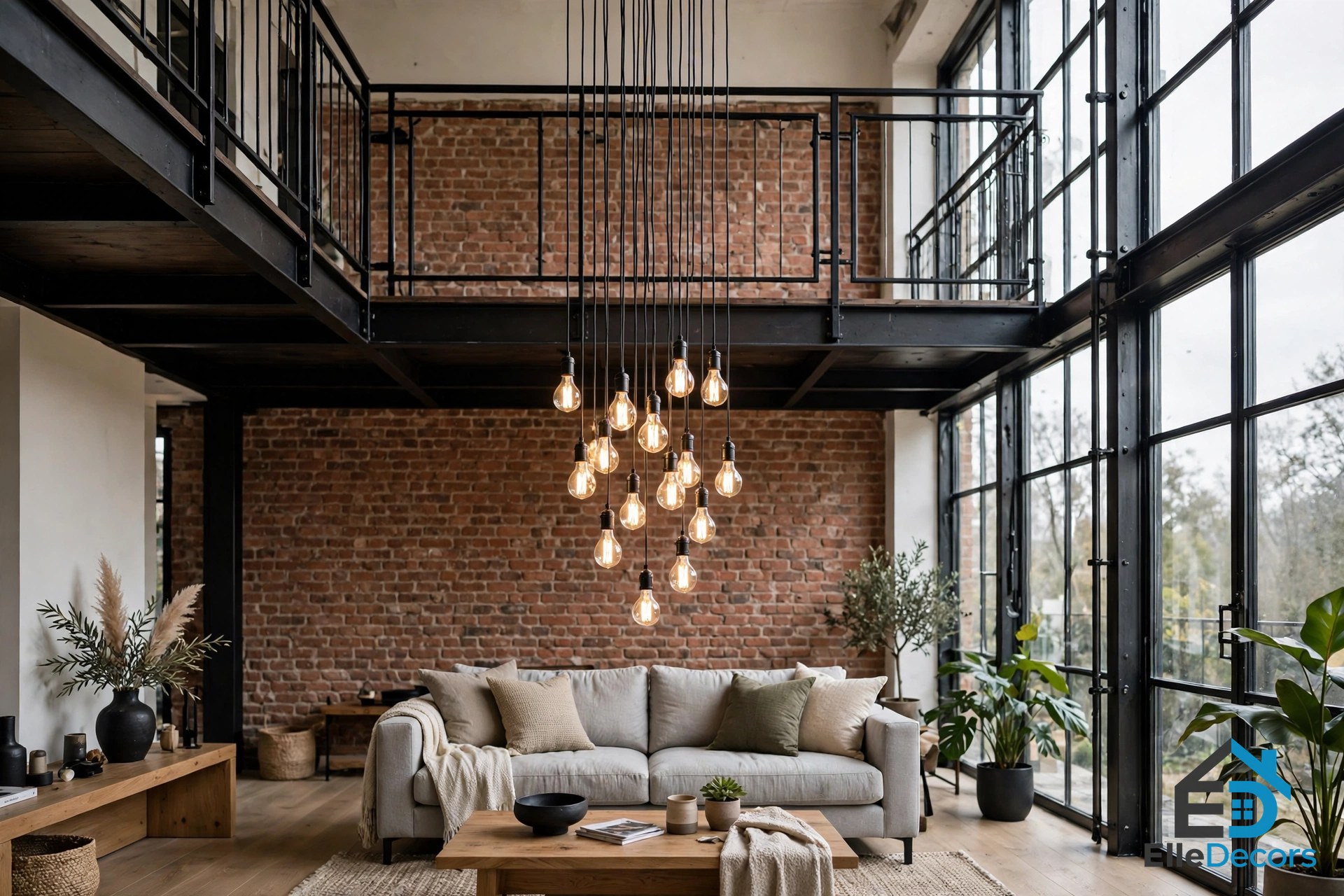
The third room, visualised by Elena Sedova for Kupinskiy and Partners, is an elegant double-height living room with tall windows, tray ceilings, and raw exposed brick. Its signature is a bundle of Edison bulb pendants that drip down from the upper atrium level to light the fireside spot on the sofa. Black cords accentuate the arrangement, and the smooth vertical lines form an artistic piece that spans both levels of the home.
This is the style for a room with height to spare. A single ceiling fixture would be lost in a double-height space, but a cluster of pendants at different drops fills the vertical volume and draws the eye down to the seating area.
4. The Minimal Room: Recessed Light and Brass Accents
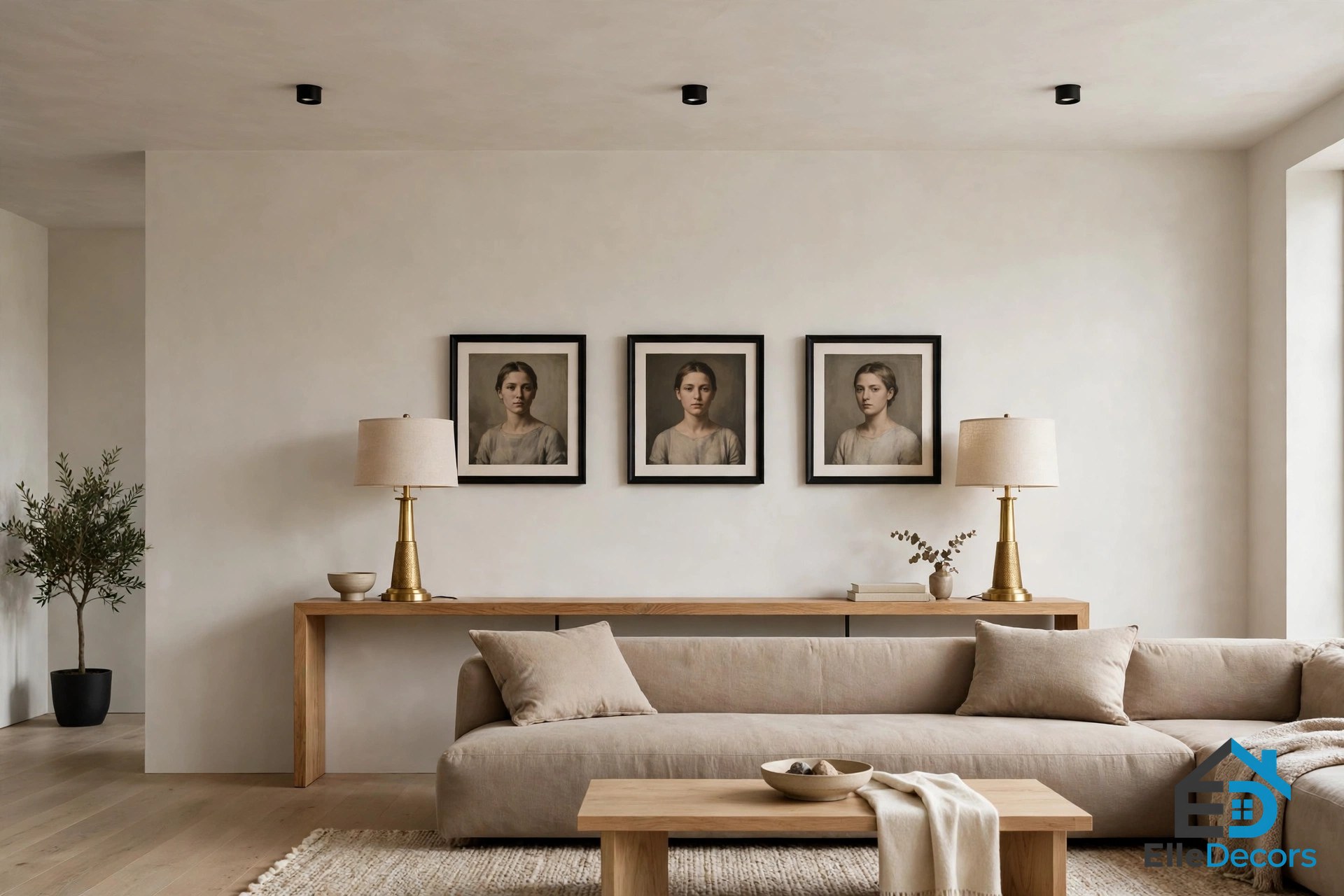
The fourth room, visualised by ReFL Studio, takes the opposite approach: simplicity. Most of the utilitarian lighting sits in simple black recessed fixtures in the ceiling, so the focus stays on the trio of portraits above the sofa. The accent fixtures are a pair of designer table lamps from the AJ series by Arne Jacobsen for Louis Poulsen, with brass bases that provide the only accent colour in the entire room.
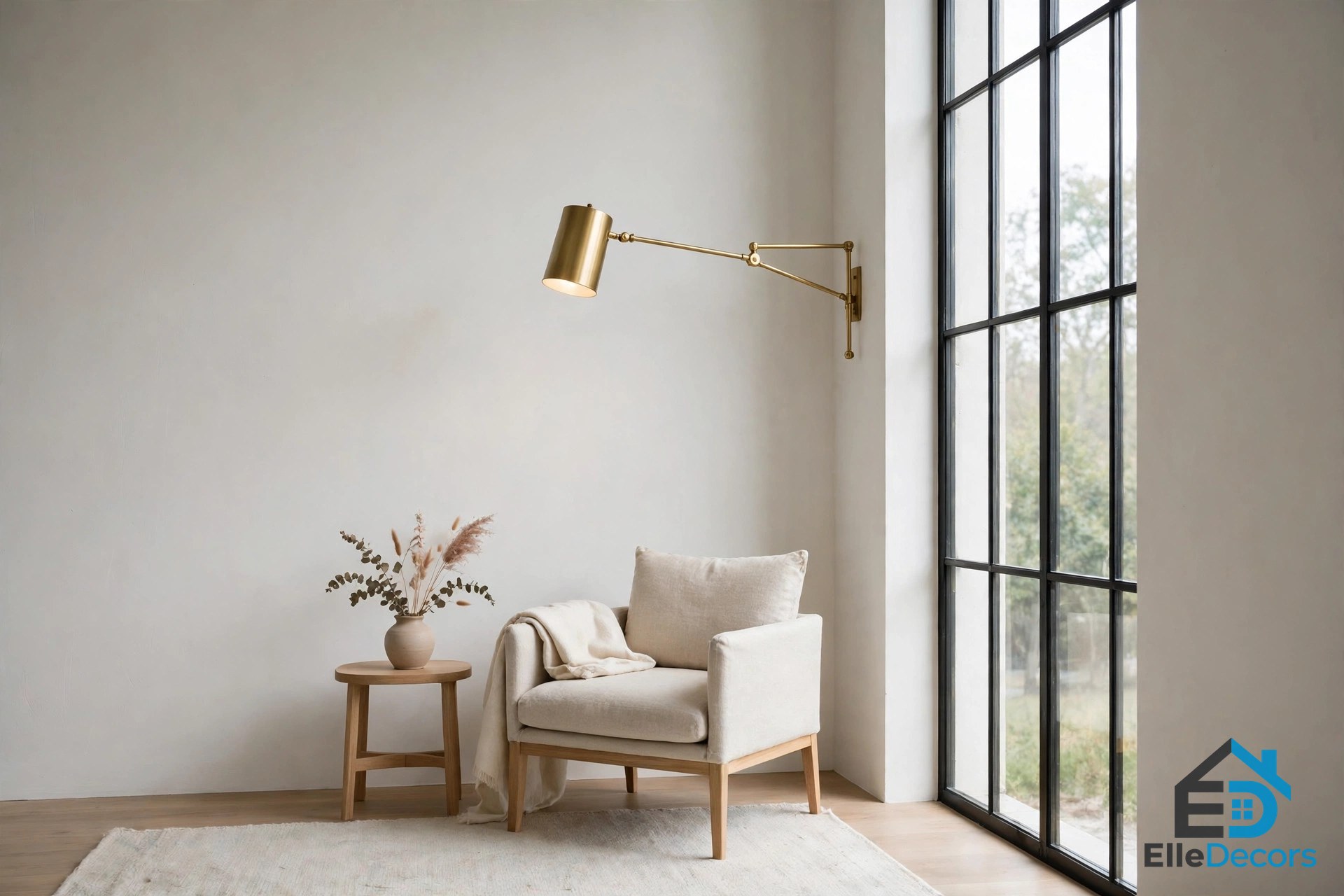
This style suits a room where the art or the architecture should lead. Recessed ceiling lights do the ambient work invisibly, and two small brass lamps add the only warm sparkle. The same room also shows a cantilever pendant light protruding from the wall near the window, lighting a small reading chair, and a standing lamp by Serge Mouille making a statement in the corner. Even a minimal room needs a task light where someone sits to read.
5. The Gallery Room: Cantilever Pendants and Colour
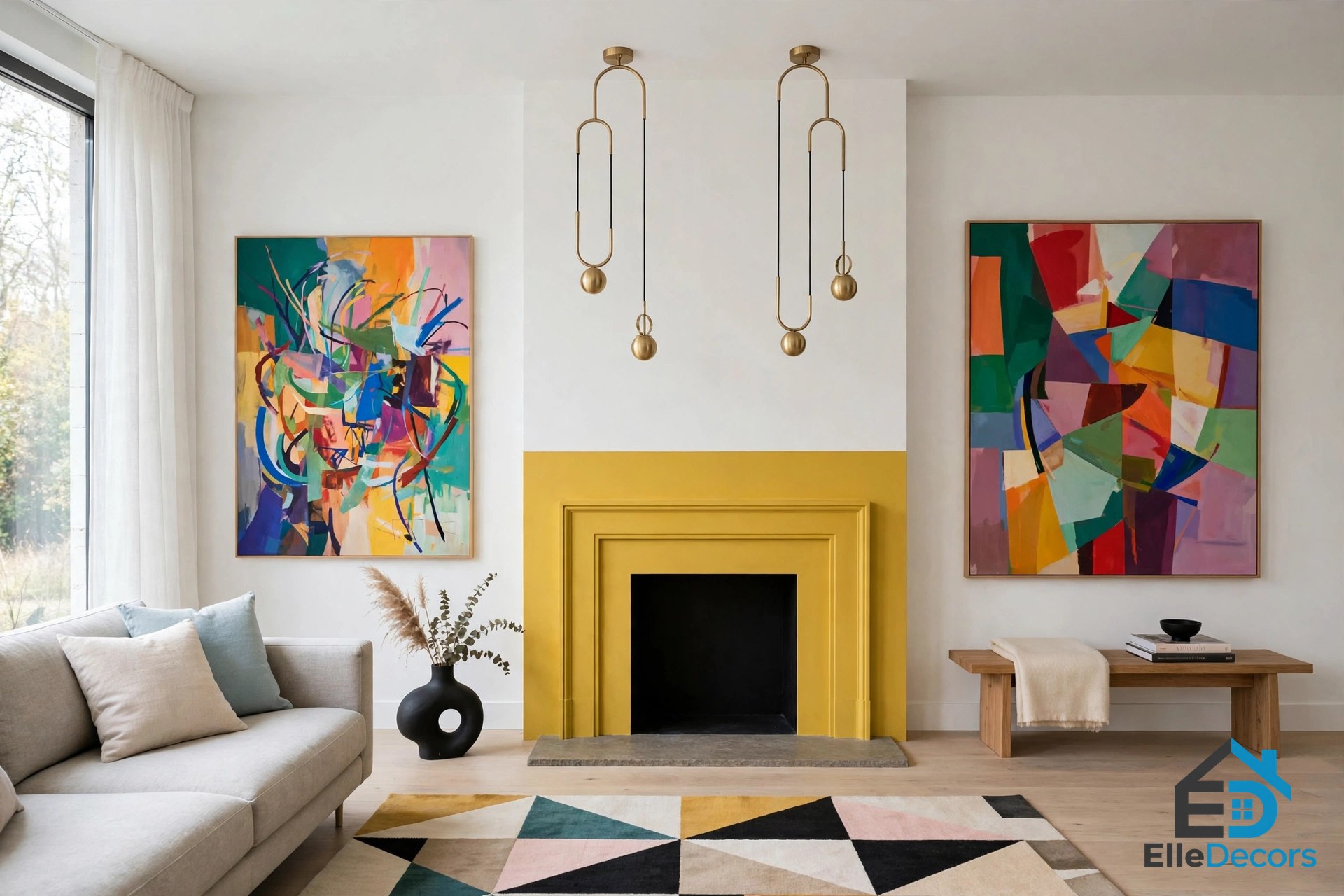
The fifth room is a minimal living room that reads like an art gallery. Its centrepiece is two cantilever pendant lights with two bulbs each, perfectly balanced in a straight line. Their brassy tones bring out a distinctive yellow painted fireplace and contrast with the subdued purples and blues of the canvases. A geometric rug echoes the yellow of the fireplace, and another cantilever lamp protrudes from the wall in the background.
Cantilever pendants are the most architectural choice here: they reach out from the wall instead of hanging from the ceiling, so they light the art and the fireplace wall as much as the room. This style works when the room has a strong colour story, because the fixture itself becomes part of the palette. Keep the rest of the lighting quiet and let the pendants and the fireplace carry the drama.
Choosing Fixtures by Ceiling Height
Ceiling height decides the fixture before taste does. In modern living room lighting, rooms with 8-foot ceilings benefit from flush or semi-flush fixtures and layered lamps, because a long pendant would hang too low and crowd the room. At 10 feet and above, chandeliers, taller floor lamps, and vertical accent lighting can fully activate the space. A double-height room, like the Edison pendant room above, needs a fixture with real vertical presence: a cluster or a long drop.
For a square room of about 14 by 14 feet, one central ceiling fixture plus lamps in the corners or beside seating usually covers the space. A rectangular room of about 12 by 20 feet needs two ceiling fixtures or one linear fixture to spread light evenly along its length, with floor lamps at each end to prevent dark zones. In an open-plan space, centre one fixture over the seating arrangement and use a floor lamp to separate the living zone from the dining zone.
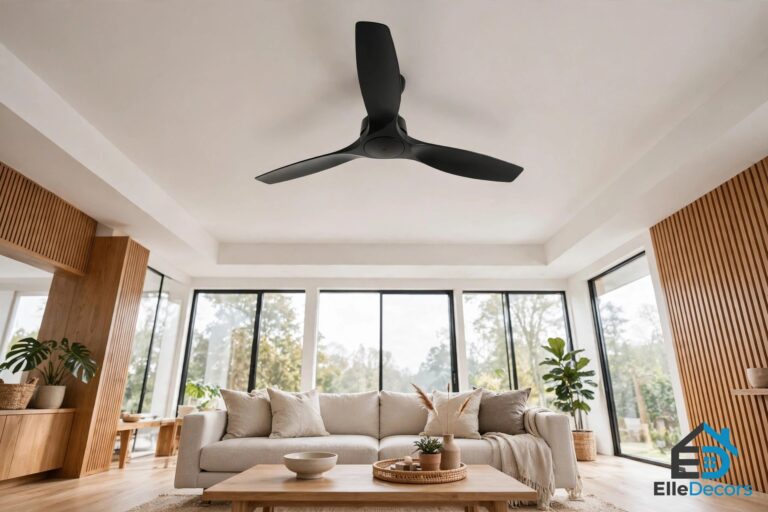
Our guide to contemporary ceiling fans covers the ceiling option for rooms where a pendant would hang too low but the room still needs air movement. A fan with a light kit can serve as the ambient layer while keeping the ceiling clear.
Colour Temperature, Dimmers, and Smart Controls
Warm white at 2700K to 3000K is the standard for modern living room lighting. It makes skin tones look healthy, wood look rich, and fabric look soft. Neutral white around 3500K suits a kitchen or a workspace, but in a living room it reads cooler and less cosy than most people expect. Keep every bulb in the room within the same warm range, so no single lamp looks blue next to a warm one.
A dimmer is the single most useful upgrade in a living room. It lets one fixture serve a bright family evening, homework at the table, and a low movie night, just by turning a dial. Put ambient, task, and accent layers on separate dimmers so each mood is one switch away. Check that the dimmer is rated for LEDs and that the bulbs are dimmable, because the wrong combination can flicker or buzz.
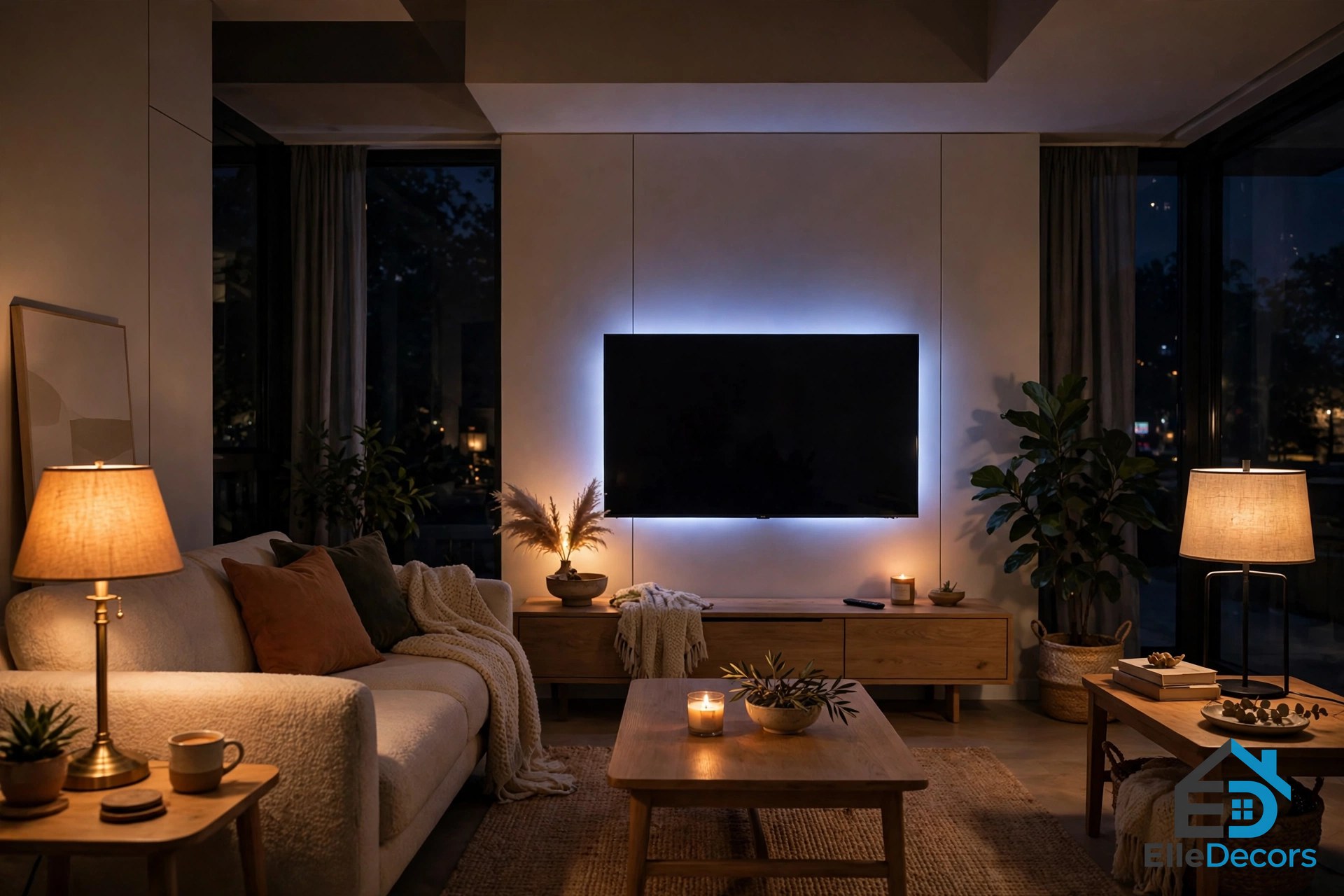
Smart controls add scenes on top of dimmers: a “Movie Night” scene that drops the ceiling light and raises the bias light behind the television, an “Entertaining” scene that brings every layer to a warm middle, a “Reading” scene that lights only the chair. The technology is optional; the dimmers are not.
Small Living Rooms and Dark Corners
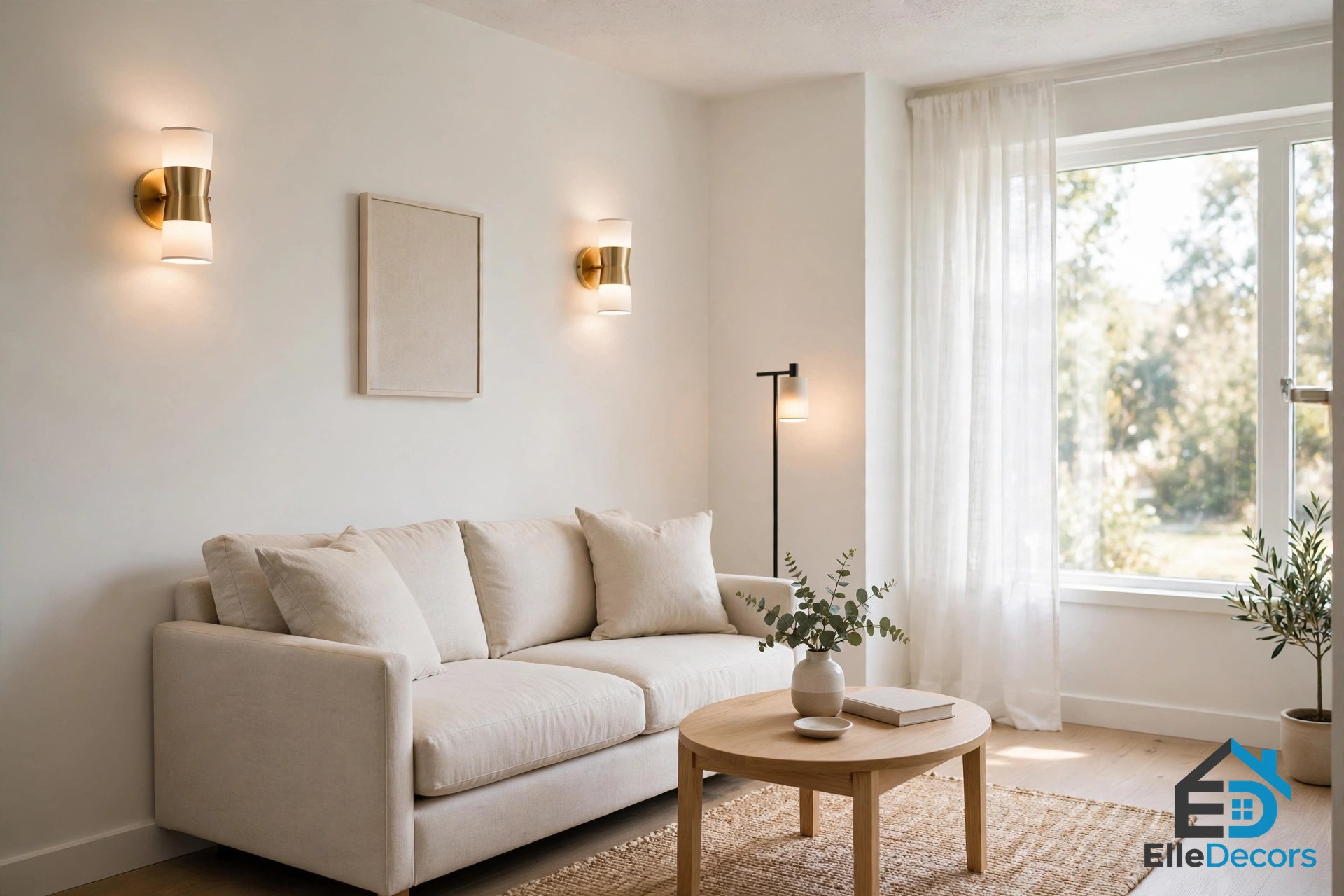
A small living room is where modern living room lighting earns its keep, because one bright ceiling fixture in a small room creates harsh shadows and a flat glare. Start with a single overhead fixture on a dimmer, then add two table lamps or one floor lamp paired with a table lamp. Wall sconces add a layer without taking up floor or table space.
Dark corners make a room feel smaller and unfinished. A floor lamp or a wall sconce in a corner expands the perceived space and adds visual balance. Place a lamp behind the sofa to add ambient light and depth, and use an arc floor lamp where ceiling lighting is not available. Mirrors help too: position an oversized mirror opposite a window to reflect daylight.
Glare on the television is the most common complaint in a living room. Position ambient lights to the sides of the television rather than behind the viewer, or add a soft bias light behind the set. Never put a bright downlight directly above the seating area facing the screen.
Mistakes That Flatten a Room
Four mistakes spoil most modern living room lighting plans. The first is relying on a single overhead fixture: it creates harsh shadows and flat, unflattering light with no flexibility. Fix it by pairing the overhead light with floor lamps, table lamps, and wall sconces. The second is placing all lamps on side tables, which concentrates light around the seating perimeter and leaves the centre dim.
The third is putting everything at the same height. When all illumination comes from similar levels, the room looks one-dimensional, so mix ceiling fixtures, table lamps, floor lamps, and wall-mounted lighting. The fourth is skipping dimmer controls, which locks the room into one brightness level. A fifth mistake is neglecting the corners: dark, unused corners make a room feel smaller, and one lamp in each dark corner is often all it takes to finish the space.
The 5 Styles at a Glance
Use this table to compare the five signature styles before you plan your own room.
| Style | Signature Fixture | Ambient Layer | Best Room |
|---|---|---|---|
| Bookcase room | Recessed lights, floor lamp | Recessed ceiling lights | Room with one feature wall |
| Spherical pendants | Moooi Random pendants, pair | Pendant glow over sofa | Simple sofa, plain ceiling |
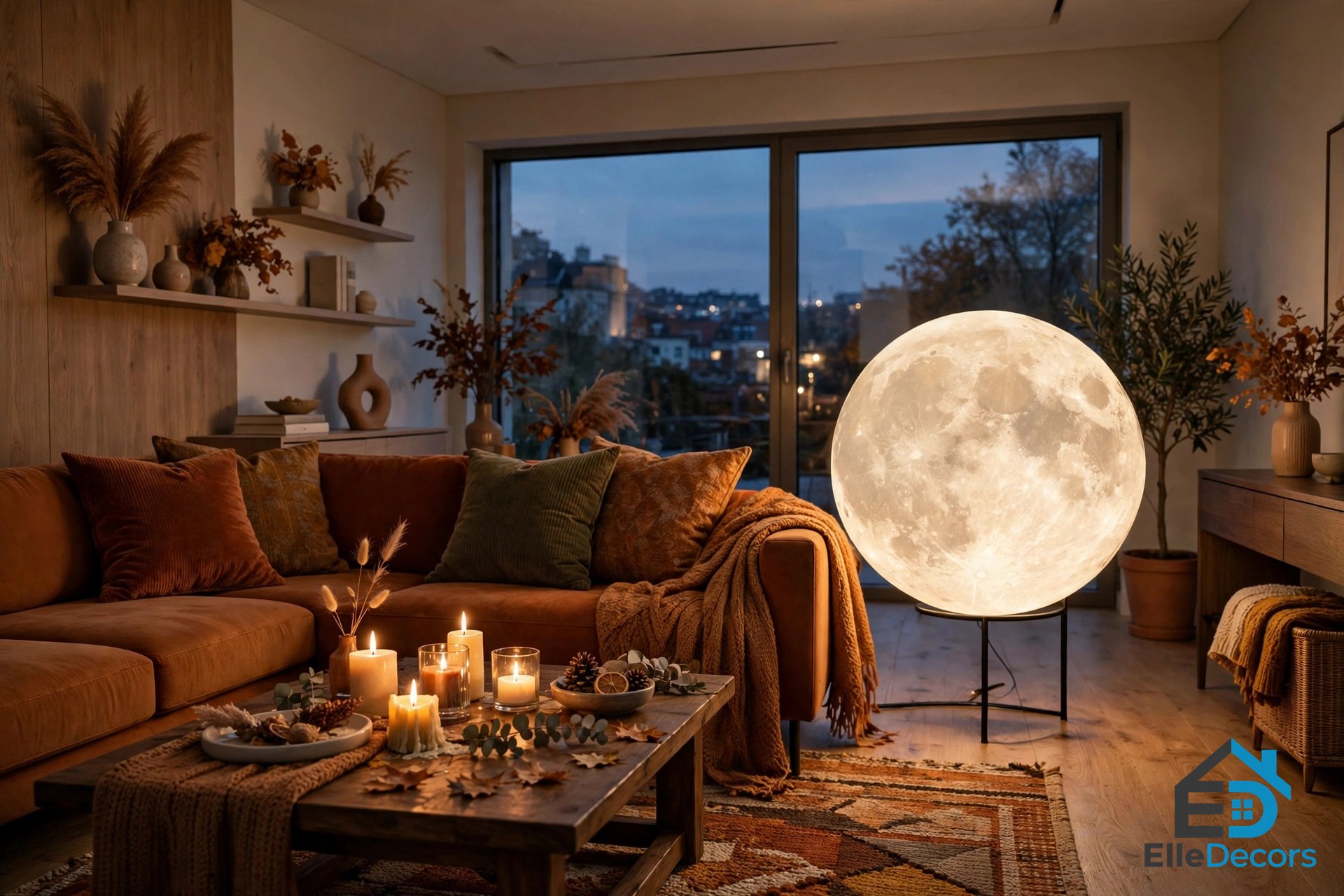
| Edison drip pendants | Edison bulb cluster | Full Moon floor lamp, console backlight | Double-height room |
| Minimal brass | AJ table lamps, brass bases | Black recessed fixtures | Art-led or minimal room |
| Gallery cantilevers | Cantilever pendants, brass | Recessed, dimmed ambient | Colour-led, art-filled room |
Watch: Lighting Tips for Your Home
Watch Livspace’s guide to lighting tips for the home, which walks through layering, ceiling treatments, and accessory lighting with real-room examples. It is a general home lighting guide, not a living-room-only video.
Video: Livspace explains lighting tips for the home, including layering.
Frequently Asked Questions
What is modern living room lighting?
Modern living room lighting is a layered system, not a single fixture: ambient light for the whole room, task light where people read or work, and accent light that highlights art, shelves, and texture. The modern part is the restraint: clean fixtures, warm dimmable bulbs around 2700K to 3000K, and one statement piece rather than a room full of competing lights.
How many light sources does a living room need?
Most living rooms need three to five light sources in total: one ambient source such as a ceiling fixture on a dimmer, two task sources at seat level such as floor and table lamps, and one to three accent sources such as sconces or shelf lights. A large room of about 20 by 25 feet may need six to eight fixtures.
What colour temperature is best for a living room?
Warm white at 2700K to 3000K is best for a living room. It flatters skin tones, warms wood and fabric, and suits evening use. Keep every bulb at the same temperature so the layers blend, and avoid cool white above 4000K, which makes a living room look clinical.
Can I use a chandelier in a living room with a low ceiling?
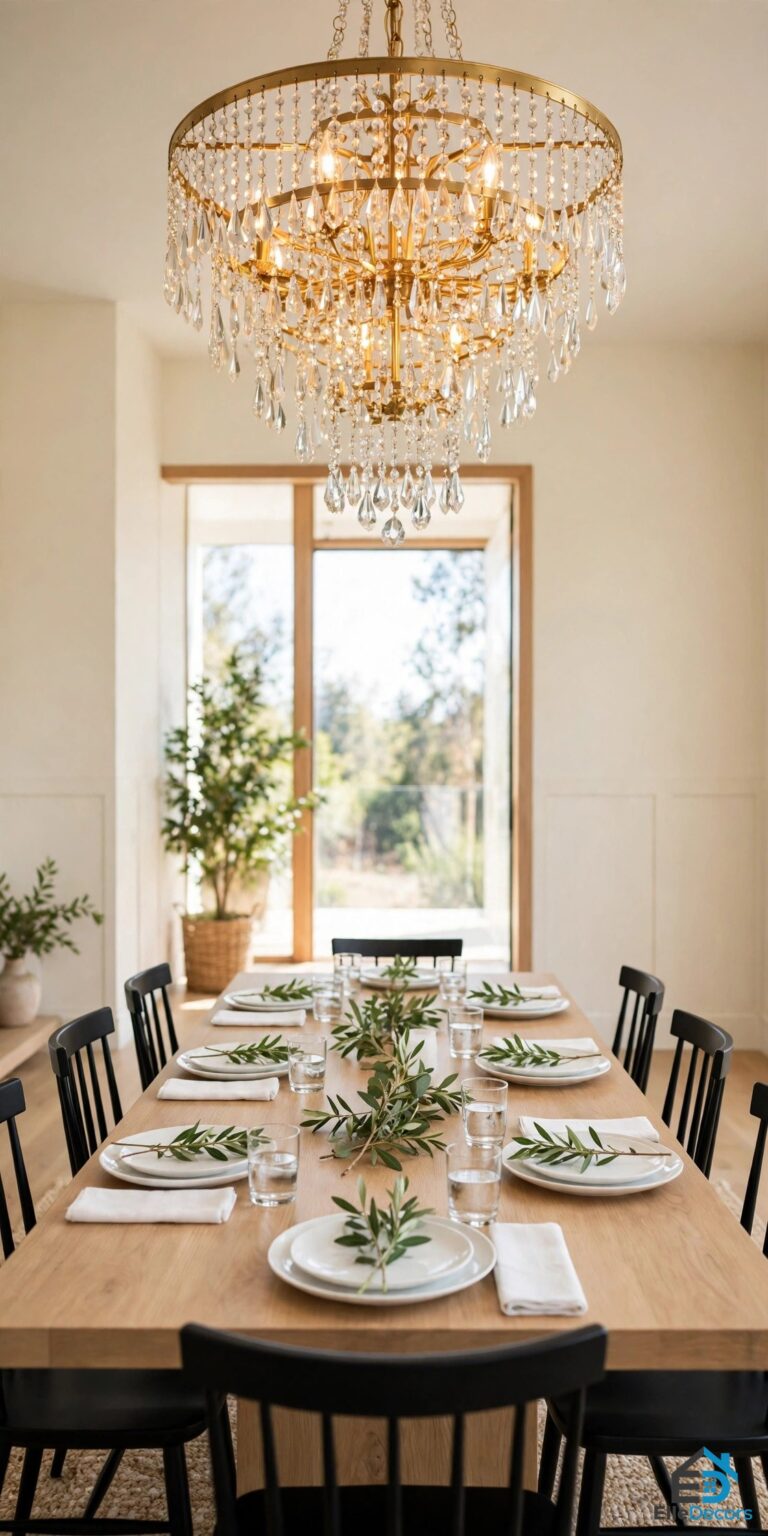
Yes, with the right form. On an 8-foot ceiling choose a flush or semi-flush fixture, or a compact chandelier that hugs the ceiling. Save long-drop and tiered fixtures for ceilings of 9 feet and up. Our modern crystal chandelier guide covers the sizing rules for statement fixtures.
How do I light a living room with no ceiling fixture?
Use floor and table lamps as the ambient layer: a torchiere floor lamp that bounces light off the ceiling, an arc lamp over the seating area, and table lamps on end tables and consoles. Add wall sconces or plug-in picture lights for the accent layer. Our swing arm lamp guide covers adjustable wall-mounted options that work well beside a reading chair when there is no ceiling light.
The Bottom Line
Start with the three layers, not the catalogue photograph. Choose one ambient source on a dimmer, add task light where people actually sit, and finish with one or two accent glows that point at what you love in the room. Then let one fixture be the signature: a pair of spherical pendants, a drip of Edison bulbs, or two brass table lamps in an otherwise quiet room. The right modern living room lighting fits your ceiling, your seating, and your evenings, with warm bulbs and a dimmer on every layer.