Unusual Floor Lamps: 8 Statement Picks and a Buying Guide
AUDIO SUMMARY: A statement lamp can rescue a dull corner, but only when its job, height, and light are right. This guide rounds up eight sculptural designs, from a hand-woven rattan hourglass to a feathered floor lamp, then covers sizing, placement, bulbs, and materials. Pick the job first, measure the height, and let the lamp be the room’s talking point.
Unusual Floor Lamps: 8 Statement Picks and a Buying Guide
Any guide to unusual floor lamps has to start with an honest warning: a sculptural lamp is bought with the eyes, but it lives or dies on the light it gives. The eight designs below all earn their place as objects in their own right, from a rattan hourglass to a lamp dressed in real goose feathers, yet each one still has to do the ordinary work of lighting a chair, a corner, or a whole room. This guide walks through the eight picks first, then the sizing, placement, bulb, and material rules that keep a statement lamp from becoming an expensive ornament.
How to Choose Unusual Floor Lamps for Your Room
Choose the lamp’s job before its shape. A floor lamp does one of three jobs: ambient light that fills a room, task light aimed at a chair or desk, or statement light where the lamp itself is the decoration. Mixing the jobs up is the most common mistake. A sculptural lamp bought for looks will disappoint if it is expected to light a whole room, and a bright task lamp will glare if it is parked in a corner meant for soft evening light.
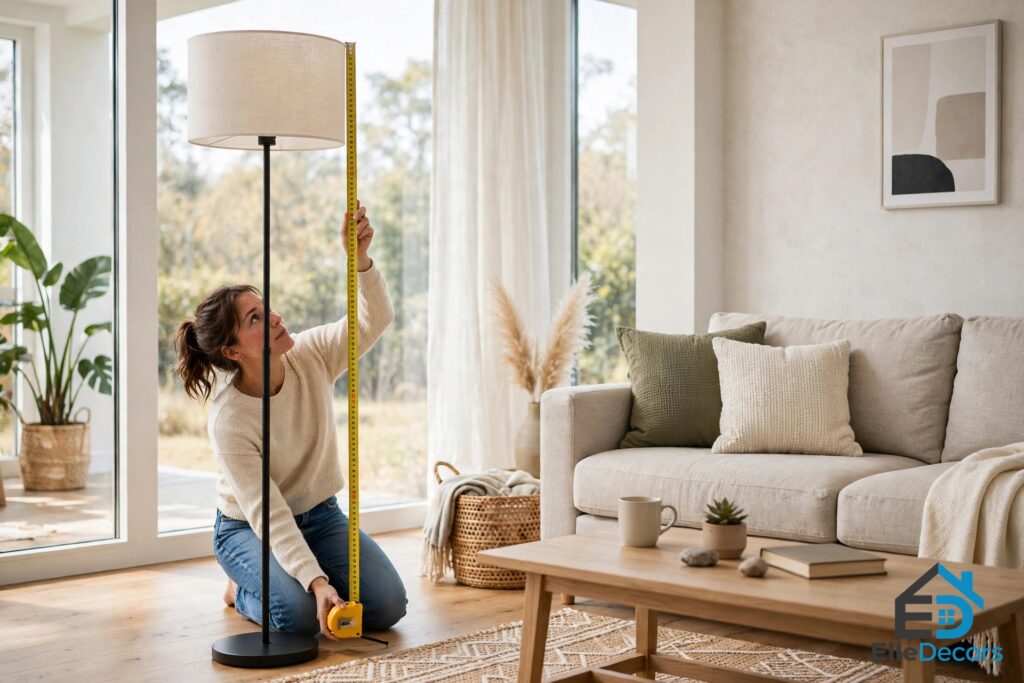
Height is the next decision, and it matters more than style. Most floor lamps stand between 58 and 64 inches tall, and the rule that keeps them comfortable is the eye-level rule: sit in the chair the lamp will serve and check that the bottom of the shade sits at about your seated eye level, so you see light rather than a bare bulb. A reading lamp should put its bulb roughly 48 to 60 inches off the floor, shining over your shoulder onto the page. A taller lamp suits ambient light, because it spreads light across the room instead of into your eyes. In a low-ceilinged room a very tall statement lamp can crowd the space; our guide to contemporary ceiling fans covers the overhead option for rooms where a tall standing lamp would hang too low in the sightline.
Brightness follows the job. For general ambient light, aim for roughly 800 to 1,600 lumens; for focused reading light, 450 to 800 lumens aimed tightly at the page is enough. Warm white light at 2700 to 3000K keeps a living room calm and makes wood, rattan, and brass look their best, while cooler light above 4000K turns a cosy room clinical. A dimmer lets one lamp serve both evenings and reading.
The 8 Picks
Every one of these unusual floor lamps comes from a 50-design roundup of statement designs, and each one is described only with the details that roundup itself gives. None of the eight carries a buy link here, and that is deliberate: the roundup’s buy links are shortened affiliate links whose destinations could not be verified, so no link is printed rather than a link nobody checked. No prices are printed anywhere in this guide.
1. Handmade Rattan Hour Glass
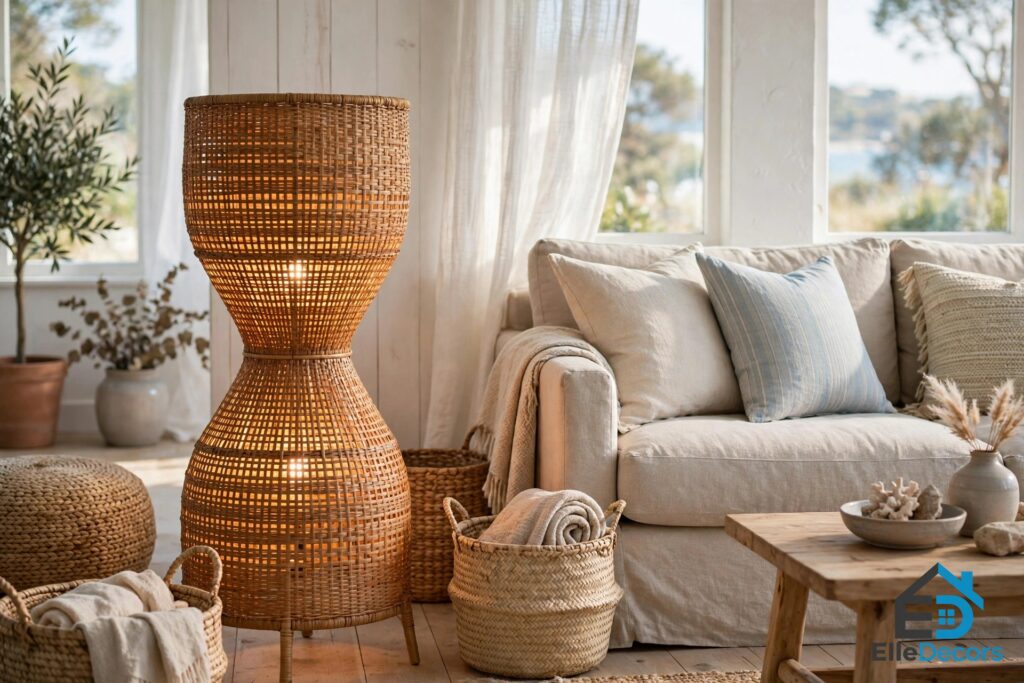
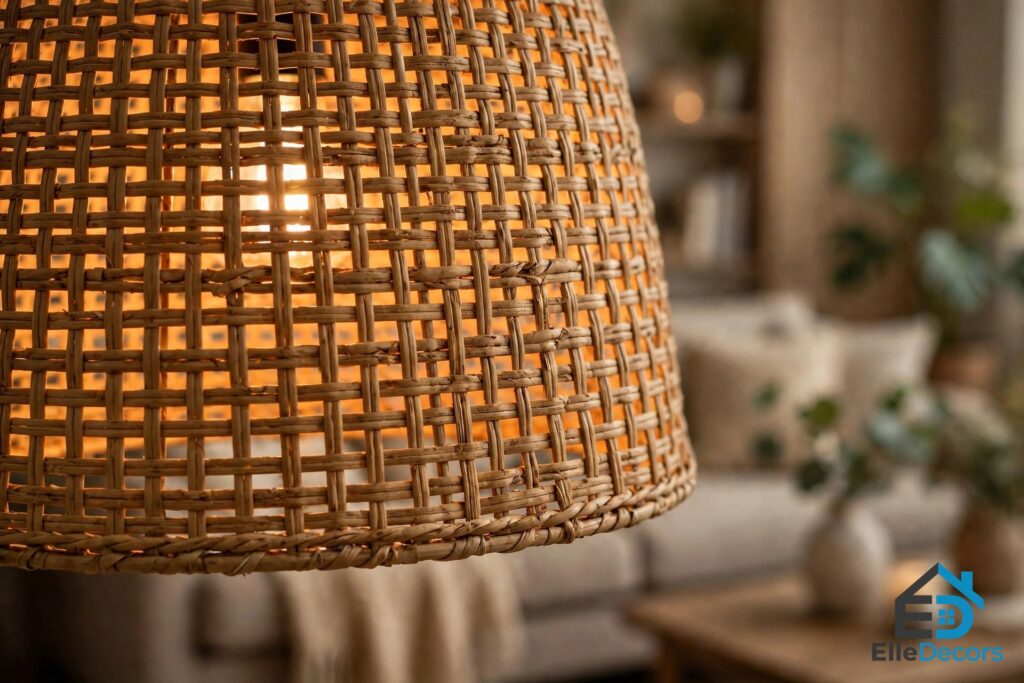
A hand-woven rattan lamp shaped like an hourglass, and the most versatile pick here. The roundup notes that it can read as rustic, nautical, or tropical depending on the room around it, which makes it a safe first statement lamp: the same lamp works beside a linen sofa, in a coastal bedroom, or in a plant-filled reading corner. The woven texture throws a soft, broken light rather than a hard glare.
Best for: a living room or bedroom that wants warmth and texture without a heavy silhouette.
2. S7 Snake Like Floor Lamp
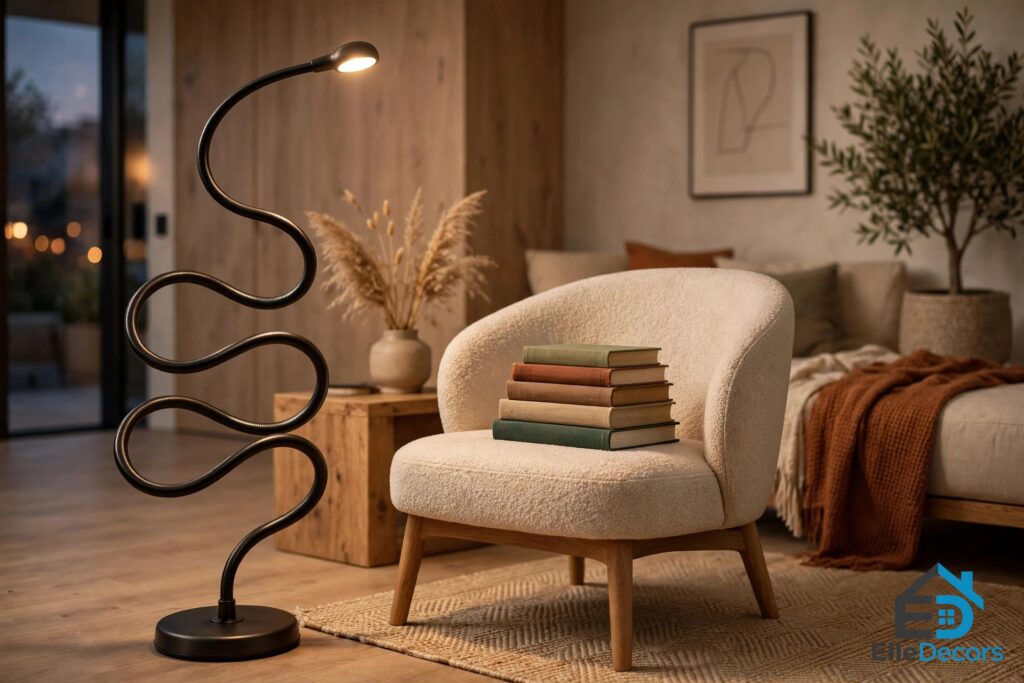
Designed by Nicolas Pichelin, the S7 is the most flexible of these unusual floor lamps, and the most fun to live with. It twists, rotates, bends, and holds whatever shape you give it: coil it up for a shorter lamp, or let it stand up to 78 inches tall to throw light across the room. That playfulness is exactly why guests remember it.
Best for: a creative room or studio where the lamp gets moved and reshaped often. Give it open floor space.
3. Vine Shaped Floor Lamp
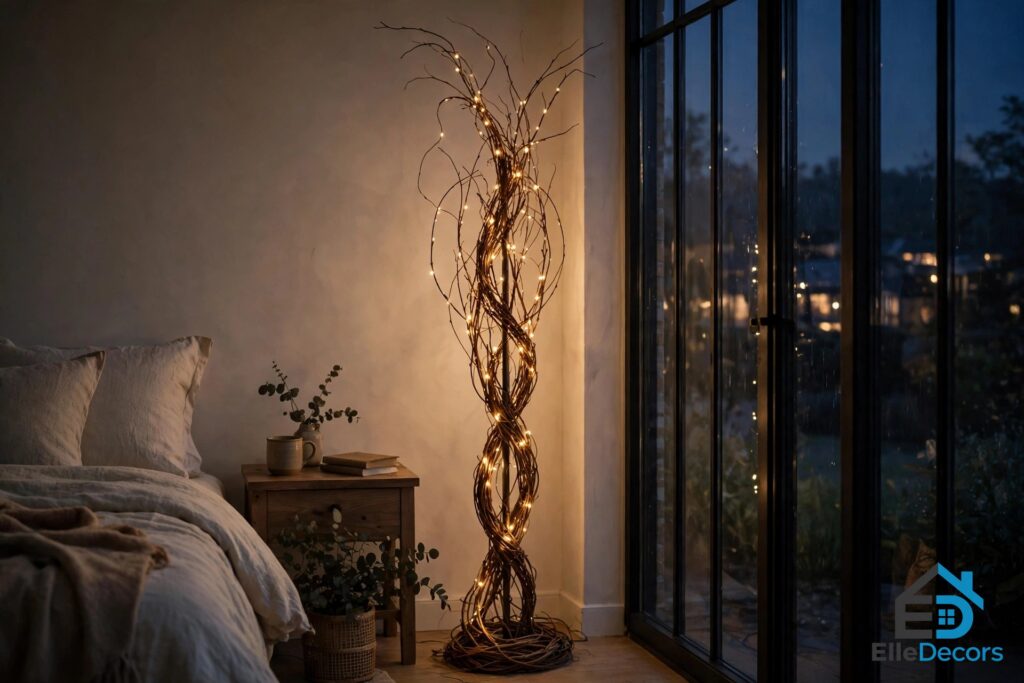
A flexible willow vine strung with 144 individual lights, stretching up to 8 feet long. It climbs, drapes, and winds wherever you guide it, up the side of a window or along a wall, and the many small lights cast a soft glow rather than a single bright point. The roundup suggests it for a bedroom or as subtle mood lighting.
Best for: a bedroom or window wall where the lamp is decoration first and light second.
4. Wooden Sculptural Floor Lamp
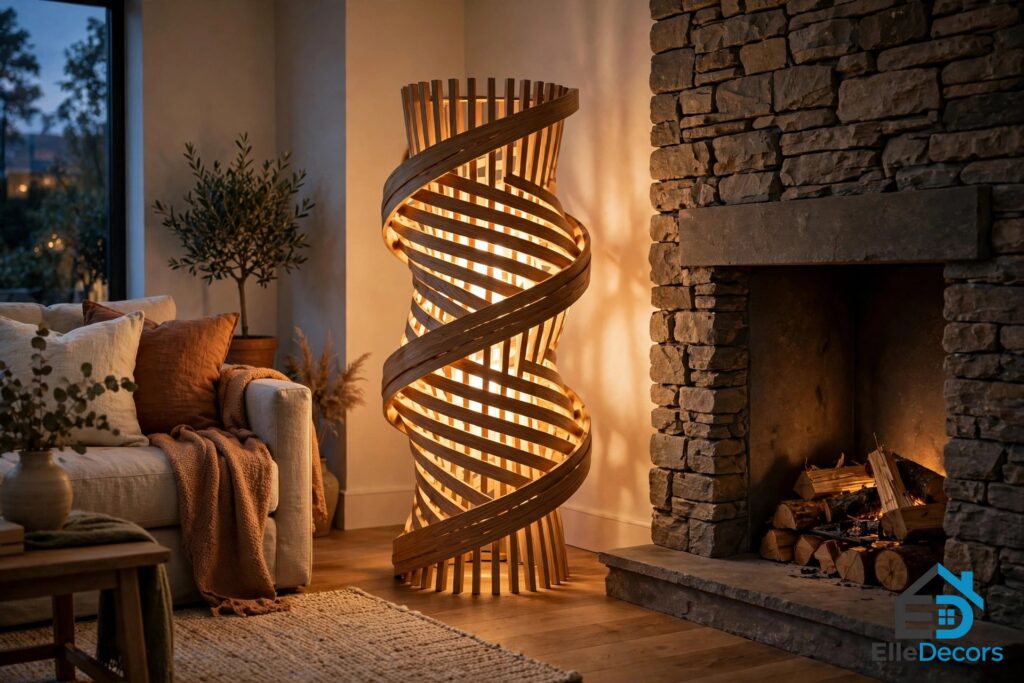
A spiral of 110 interlocked wooden slats, lit from within, so the lamp looks like a wooden sculpture by day and a glowing column by night. It comes in oak, mahogany, walnut, or metal, which lets the same form fit a rustic room or a contemporary one. The slats are the design, and the light is the reward.
Best for: a living room corner or beside a fireplace, where the lamp can be seen from across the room.
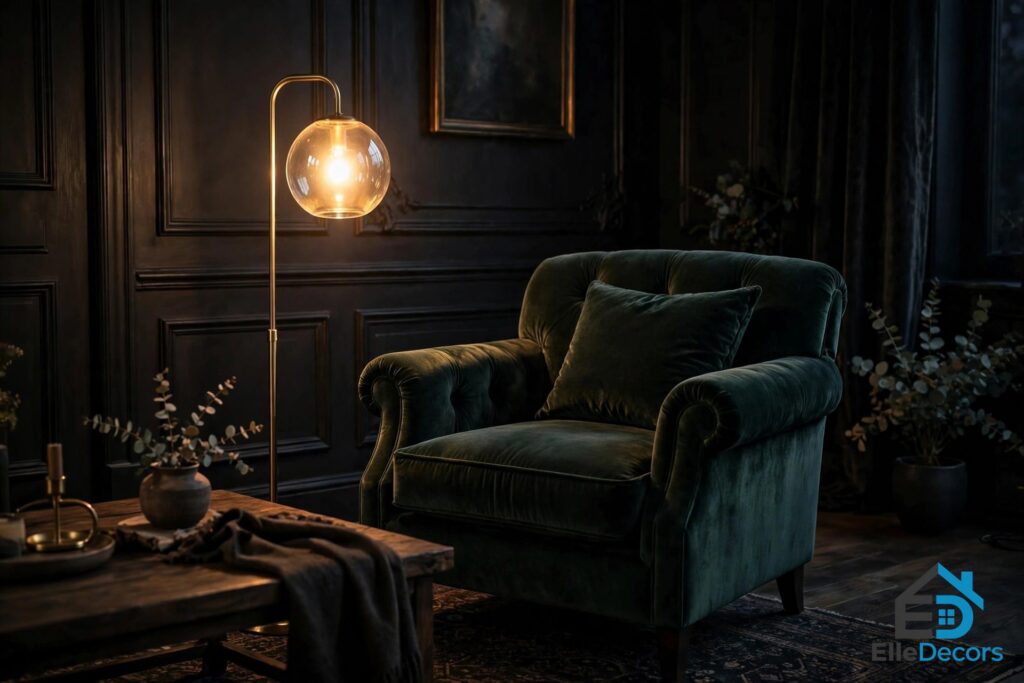
5. Flos IC F2 Floor Lamp
Designed by Michael Anastassiades in 2014, the IC F2 is the most grown-up pick here: a slim stem holding a glowing glass globe, shown in a burnished finish while the better-known version is brass. It appears in photo shoots and luxury interiors around the world, and it earns that place by doing very little: one sphere, one stem, one warm glow. Choose it when the room already has strong furniture and the light should be quiet.
Best for: a refined living room or bedroom where the lamp should glow rather than shout.
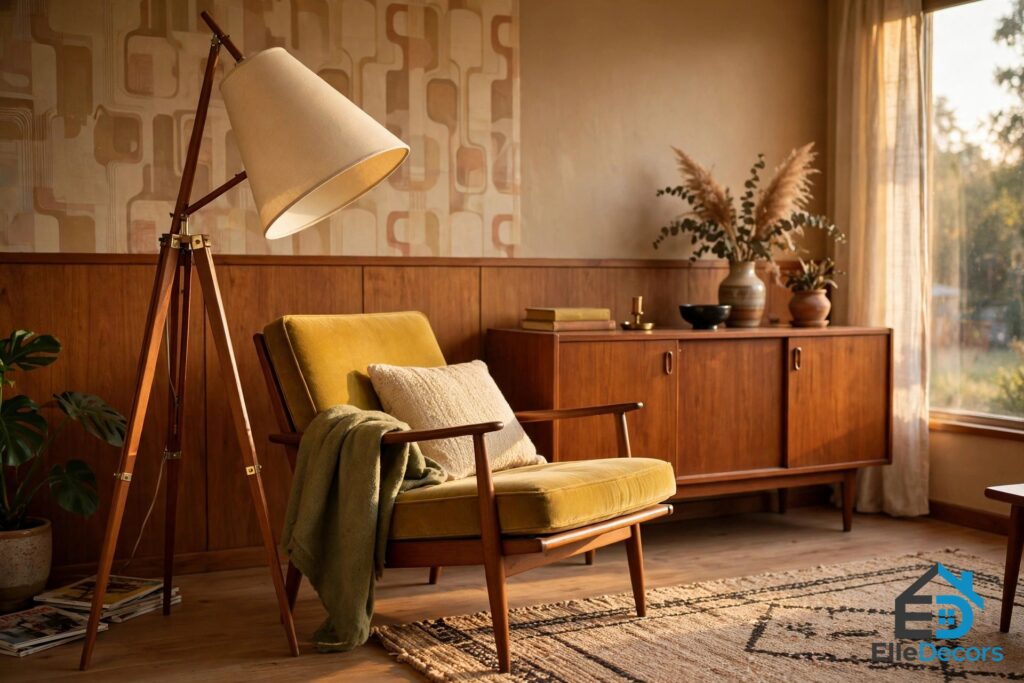
6. Grasshopper Floor Lamp Replica
Greta Grossman’s Grasshopper, first developed in 1948, puts a sleek mid-century spin on the tripod lamp: a slender angled stem, a conical shade, and three slim legs. Good replicas make the design easy to own, while the original comes in a wide palette of modern and retro colours. It speaks the same language as a low sofa and a teak sideboard, so it suits a mid-century room.
Best for: a mid-century living room or a reading corner with a low lounge chair.
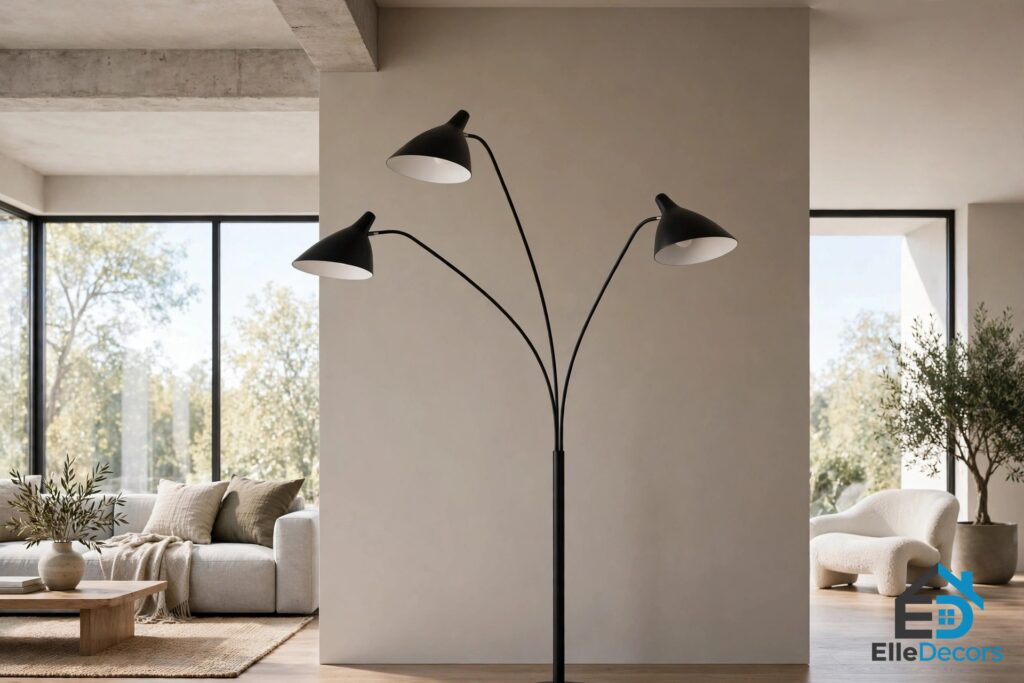
7. Serge Mouille Three-Arm Floor Lamp
Mouille’s three-arm design predates his better-known single-arm lamp, and it is the most architectural pick here. A carbonized steel body with subtle copper details carries three arms, each with a shade whose white interior reflects and directs the light. It suits a space with strong lines and little clutter.
Best for: a large living room or studio where the lamp can stretch its arms without crowding furniture.
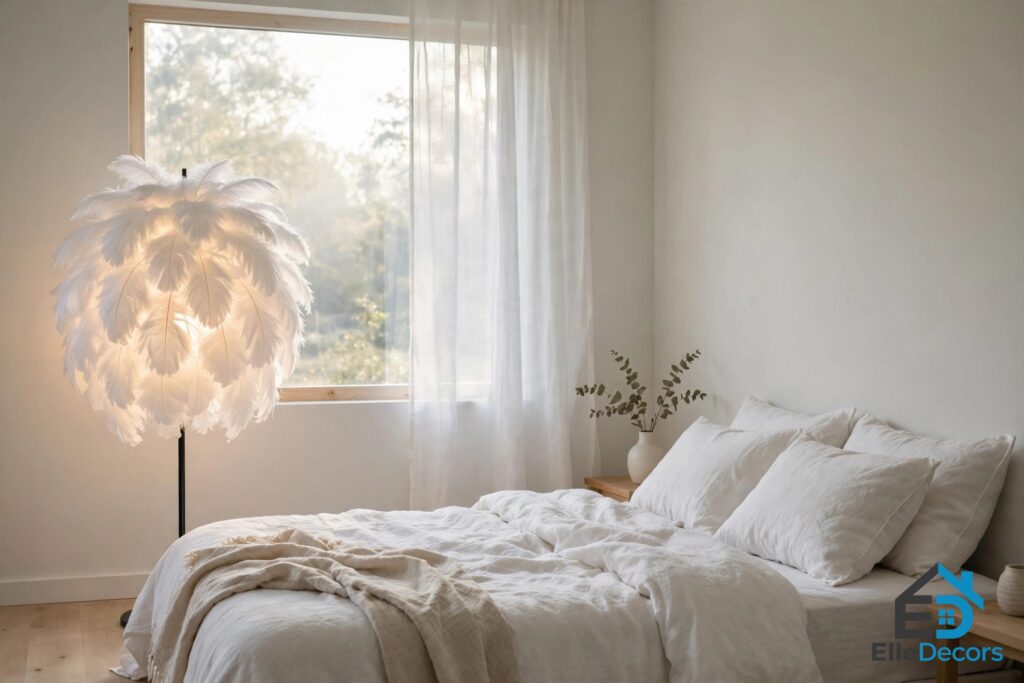
8. Vita Copenhagen Eos Floor Lamp
Fluffy as a cloud, the Eos is dressed in real goose feathers, taken from waste that would otherwise be burnt. By day it is a soft white sculpture; by night the feathers glow and the lamp seems to float. It is the softest lamp here, and the one most likely to make a guest reach out and touch it.
Best for: a calm bedroom or serene living room where softness is the whole point.
Where to Put It: Placement Rules
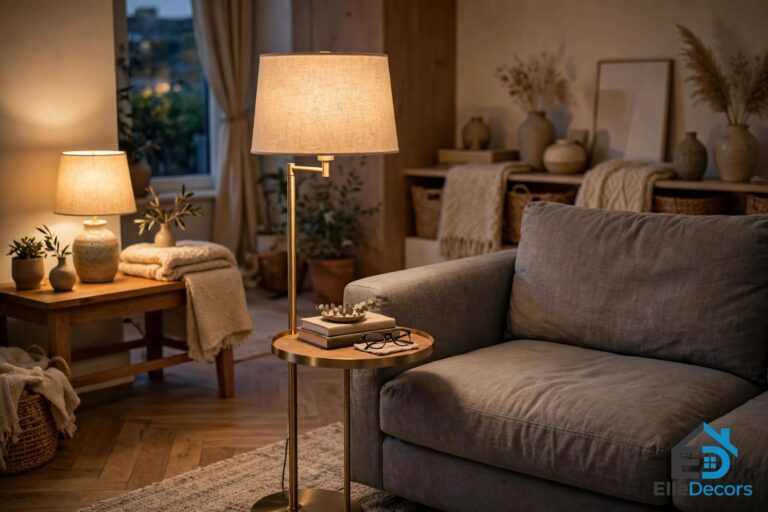
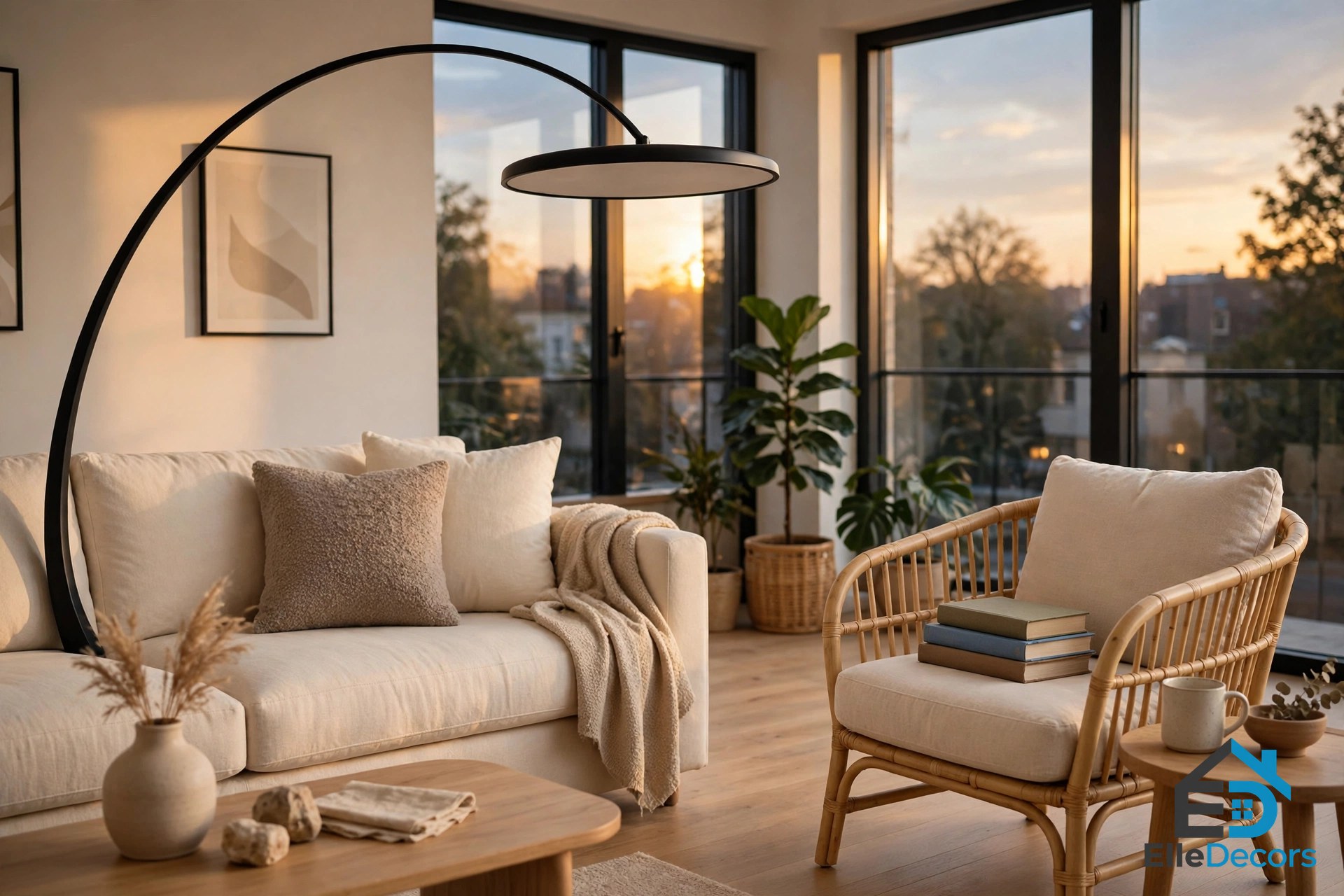
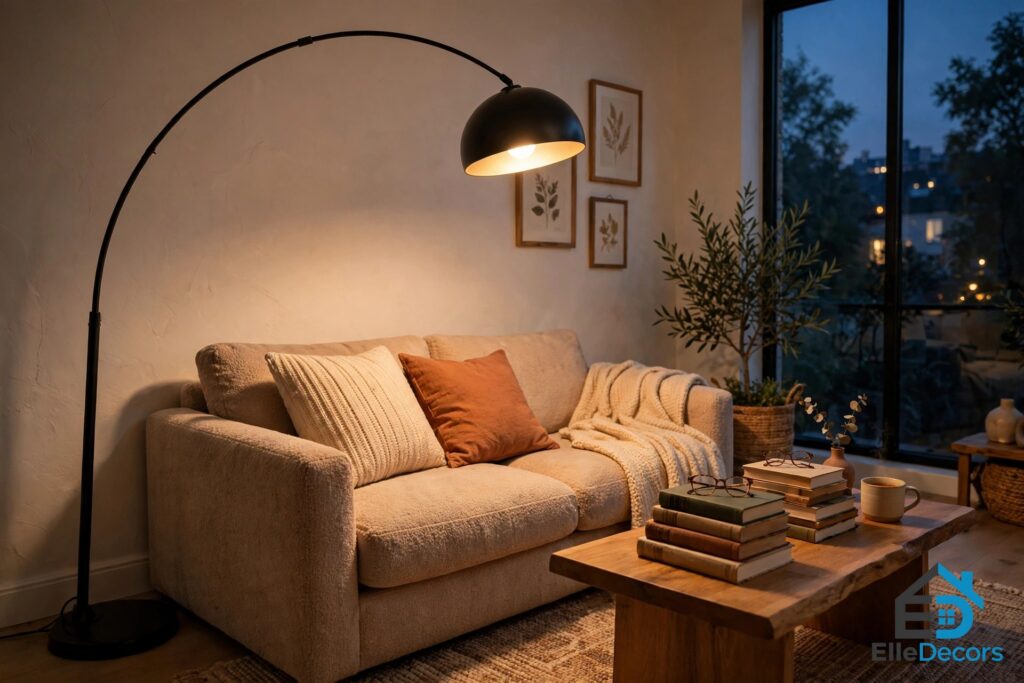
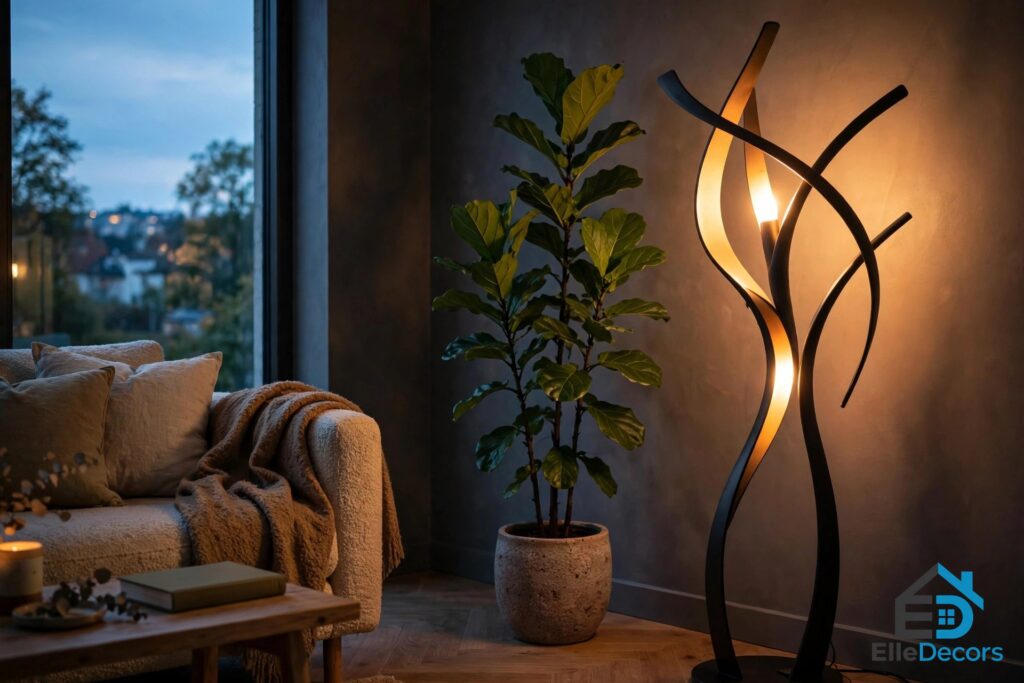
Most unusual floor lamps earn their keep in one of three spots: beside a reading chair, behind or beside a sofa, or in a dead corner. Beside a reading chair, the lamp should sit level with your shoulder when seated, with the light falling over your shoulder onto the page. Behind a sofa, an arc lamp works best, with its shade hanging roughly a foot in front of and a foot above where you sit, so the light reaches the book without glare. In a dead corner, an uplighter or a sculptural lamp turns a forgotten spot into a deliberate moment; place it at least a foot from both walls so the light has room to spread and the shadows stay soft.
Keep the lamp out of the flow of traffic. Doorways and narrow hallways are the wrong places for a sculptural lamp, however beautiful it is. Measure the base footprint, not just the pole height, before you buy, because a tripod or an arc base can spread much wider than the shade. In a small room, a slim tripod or a single-arm lamp avoids eating into the visual space, while a large room can hold an arc or a tripod with a wide shade.
Light Colour, Brightness, and Dimming
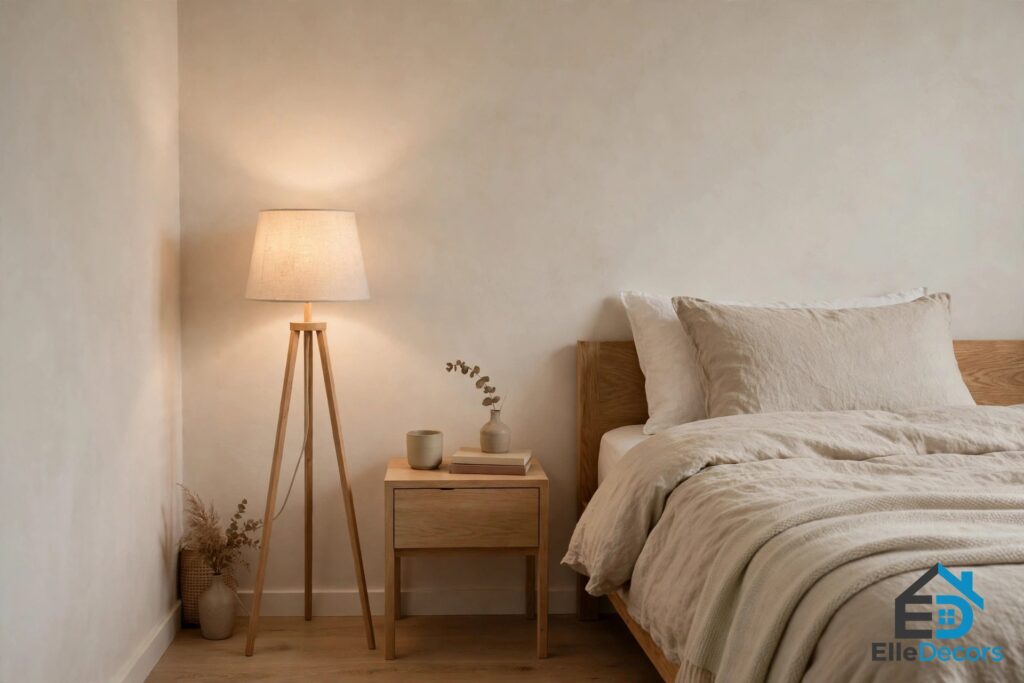
Unusual floor lamps on a dimmer are twice the lamp: bright for reading and homework, low for an evening film or a quiet conversation. Match the dimmer to the bulb, and check that the lamp is dimmable before you buy, because not every sculptural lamp is. Warm white at 2700 to 3000K suits living rooms and bedrooms, and it flatters rattan, wood, brass, and feather alike. Neutral white around 3500K suits a home office or a mixed-use room. Cool white at 4000K and above makes a living room feel like an office, so keep it out of the rooms where you relax.
Layer the light as well. One floor lamp, however beautiful, leaves a room flat if it is the only source. Add a table lamp on a sideboard, a wall light over art, or a swing arm lamp beside a second reading chair, so the room has pools of light at different heights. Shade material changes the spread: a translucent fabric or paper shade lets light through in all directions, while an opaque shade pushes it up or down. A paper shade, like the one on the IKEA Regolit in the source roundup, gives a gentle diffused glow that suits a bedroom, while a metal shade aims a sharper pool of light at the floor.
Materials That Make a Lamp Unusual
Material is what separates a statement lamp from a standard one. Rattan and woven paper bring warmth and a broken, dappled light, and they suit coastal, bohemian, and Scandinavian rooms. Wood, whether interlocked slats or a turned stem, brings craft and weight, and it suits rooms with other timber in them. Metal, from carbonized steel to brass to copper, brings precision and shine; a brass globe lamp or a copper arc lamp can carry a whole room’s metallic accent on its own. Glass gives a clean glow, and feather gives softness nothing else can match.
Match the material to the room’s most visible finishes and keep to one metal plus at most one accent. If the statement piece should hang from the ceiling rather than stand on the floor, our guide to the modern crystal chandelier covers the same sizing and sparkle questions for overhead light. And remember that a sculptural lamp is also a dusting job: feathers, slats, and woven rattan all collect dust faster than a smooth metal pole.
Mistakes That Flatten a Statement Lamp
Three mistakes undo a good lamp. The first is buying on shape alone and finding the light too dim, too harsh, or aimed at the ceiling: check the lumens and the shade direction before you order. The second is wrong height, with the bulb glaring into seated eyes or lighting the top of your head instead of the page: use the eye-level rule and measure from the chair, not from the catalogue photograph. The third is hiding the lamp behind furniture, so a sculptural piece becomes a glowing edge peeking out from behind a sofa: a statement lamp needs a clear sightline from the room’s main seat.
Bulb choice deserves its own warning. A bare bulb in an open sculptural lamp glares, so choose a frosted or opal bulb, or a shade that hides the source. LEDs are the practical pick for most statement lamps: they run cool, which matters for feather, paper, and rattan shades.
The 8 Picks at a Glance
Use this table to compare the unusual floor lamps in this guide before you measure your chair. All values come from the source roundup; where the roundup does not state a figure, the table says so.
| Pick | Form | Material | Stated Size | Best Room |
|---|---|---|---|---|
| Rattan Hour Glass | Hourglass, hand-woven | Rattan | Not stated | Living room or bedroom |
| S7 Snake Like | Flexible, twists and bends | Not stated | Up to 78 in tall | Studio or reading corner |
| Vine Shaped | Flexible willow vine | Willow, 144 lights | Stretches 8 ft | Bedroom or window wall |
| Wooden Sculptural | Spiral of slats | Wood, 110 slats | Not stated | Living room corner |
| Flos IC F2 | Slim stem, glass globe | Brass, glass | Not stated | Refined living room |
| Grasshopper Replica | Tripod, conical shade | Not stated | Not stated | Mid-century living room |
| Serge Mouille Three-Arm | Three arms, steel body | Carbonized steel, copper | Not stated | Large living room |
| Vita Copenhagen Eos | Feathered column | Goose feathers | Not stated | Calm bedroom |
Watch: How to Buy a Floor Lamp
Watch Lamps Plus explain how to buy a floor lamp for living rooms and more, covering the eye-level height rule, the main lamp types, and which design suits reading, ambient light, or both. It is a general buying guide, not a review of the eight picks above: use it to see the shapes in real rooms before you commit to one.
Video: Lamps Plus explains floor lamp height, types, and buying tips.
Frequently Asked Questions
How tall should unusual floor lamps be?
Most unusual floor lamps stand between 58 and 64 inches tall, which suits most living rooms. For reading, what matters is not the total height but the bulb position: the bottom of the shade should sit at about your seated eye level, with the light falling over your shoulder onto the page. A lamp that is too short glares; a lamp that is too tall lights your hair instead of your book.
Can a sculptural lamp be the only light in a room?
It can fill a small room, but it rarely lights one well on its own. A sculptural lamp gives one pool of light from one direction, so pair it with a second source, such as a table lamp or a wall light.
Are LED bulbs right for a statement lamp?
Yes, for most designs. LEDs run cool, which protects feather, paper, and rattan shades, and they come in warm 2700 to 3000K versions that flatter natural materials. Check that the lamp is dimmable if you want to use a dimmer, and match the dimmer to the LED driver or bulb.
How do I keep a feather or rattan lamp clean?
Dust it gently and often, before the dust settles into the texture. A feather lamp needs a soft brush; a rattan lamp can be dusted with a dry cloth. Keep both away from damp rooms.
The Bottom Line
Pick the job first, then the height, then the shape. A reading chair needs a lamp whose shade sits at seated eye level; a dark corner needs an uplighter or a sculptural piece with room to breathe; a large room can hold an arc or a three-arm lamp that a small room cannot. The right unusual floor lamps pick is the one that lights the chair you actually sit in, at the warmth you actually relax in, and still looks like sculpture when it is switched off. Get those three things right and the talking point takes care of itself.