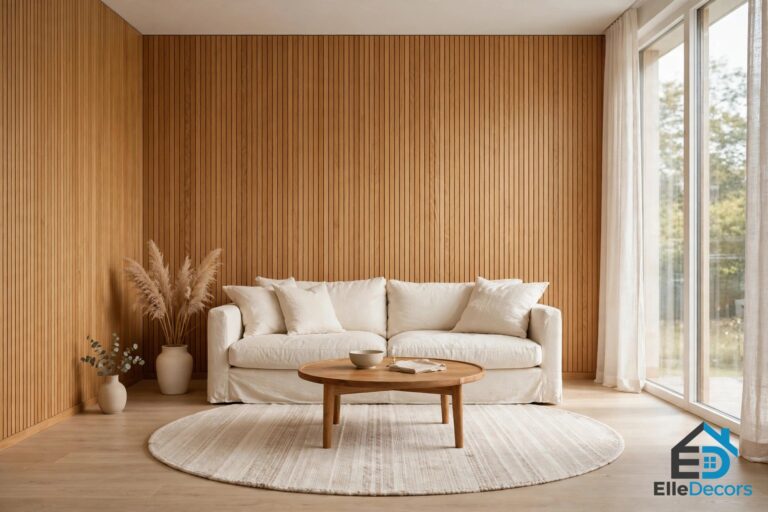
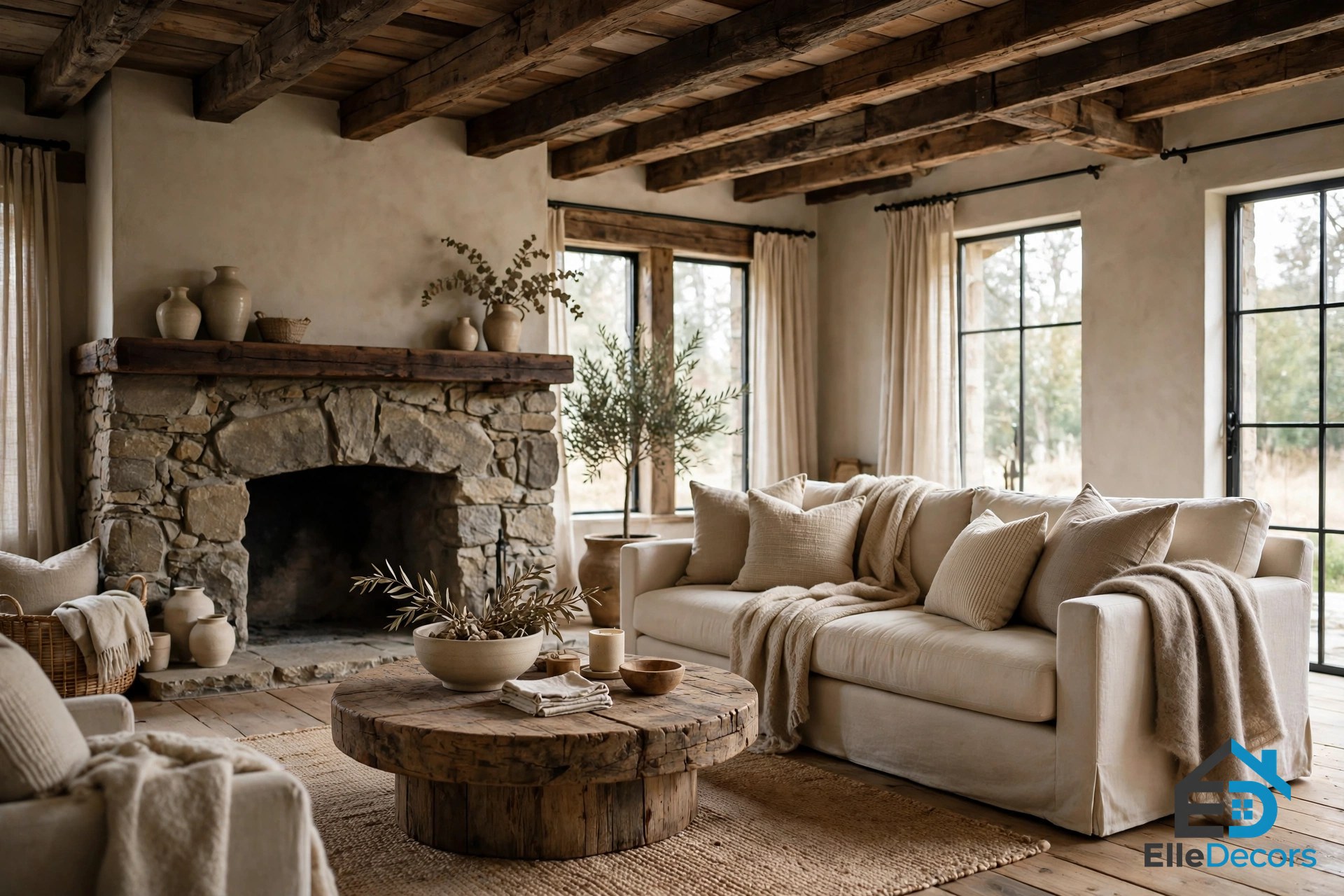
Rustic Chic Style Guide: Warm Wood, Stone, and Quiet Elegance
Audio Summary
Some rooms feel cold the moment you walk in. Others feel like a deep breath. The best rustic chic rooms belong to the second kind. They pair rough, honest materials with soft, polished finishes, so a space feels both grounded and graceful at once.
This guide explains the style from the ground up: the eight elements that define it, two Mediterranean homes that put it into practice, and room-by-room ideas for a living room, kitchen, bedroom, or bathroom. It also covers the palette, the materials, and the mistakes that tip the look from charming into cluttered. For a close cousin of the style, with more leather, iron, and layered textiles, see our guide to western home decor.
What Is Rustic Chic?
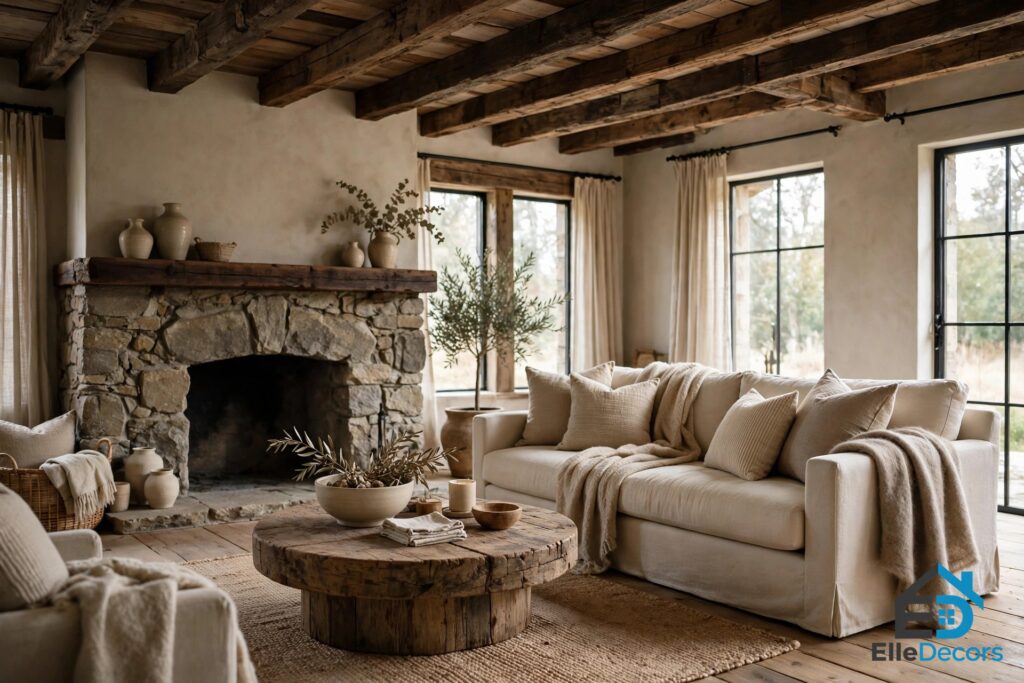
Rustic chic is a balance, not a theme. The rustic half brings in nature: rough wood, stone, worn leather, and pieces that show their age. The chic half brings in polish: clean-lined sofas, smooth marble, and tailored linen. Neither half is allowed to take over. Too much rough wood and the room reads as a cabin. Too much polish and the warmth drains out.
The style has its roots in countryside living: farmhouses, cabins, and lodges where function came first and beauty grew out of honest construction. In a modern home, that same honesty is the point. Age shows, and the room is better for it. What separates the style from simply looking old is intention: every piece should feel chosen, not just worn out.
The 8 Elements of Rustic Chic
Every room in this style is built from the same eight elements. Get them right and the look holds together, large room or small.
1. Natural Materials
Wood, stone, and metal carry the style. Salvaged wood shows up in floors, beams, and furniture, and its dark or weathered tones set the rustic mood, while lighter wood finishes give a fresher, more modern feel. Stone and brick add depth and texture: stone fireplaces, feature walls, and stone floors bring an earthy, grounded feel. Metal accents give the modern edge: wrought iron light fixtures, metal-framed furniture, and industrial-style shelving contrast with the organic materials and keep the room from feeling like a period set.
Wood is the backbone of the style. Exposed ceiling beams are the most dramatic option, whether genuine structural beams or decorative box beams in a newer home. At the smaller end, refinishing a second-hand wooden table brings the same warmth in. Our guide to the best use of wood in modern designs shows how wood can carry a whole home, wall to wall.
2. An Earthy, Neutral Palette
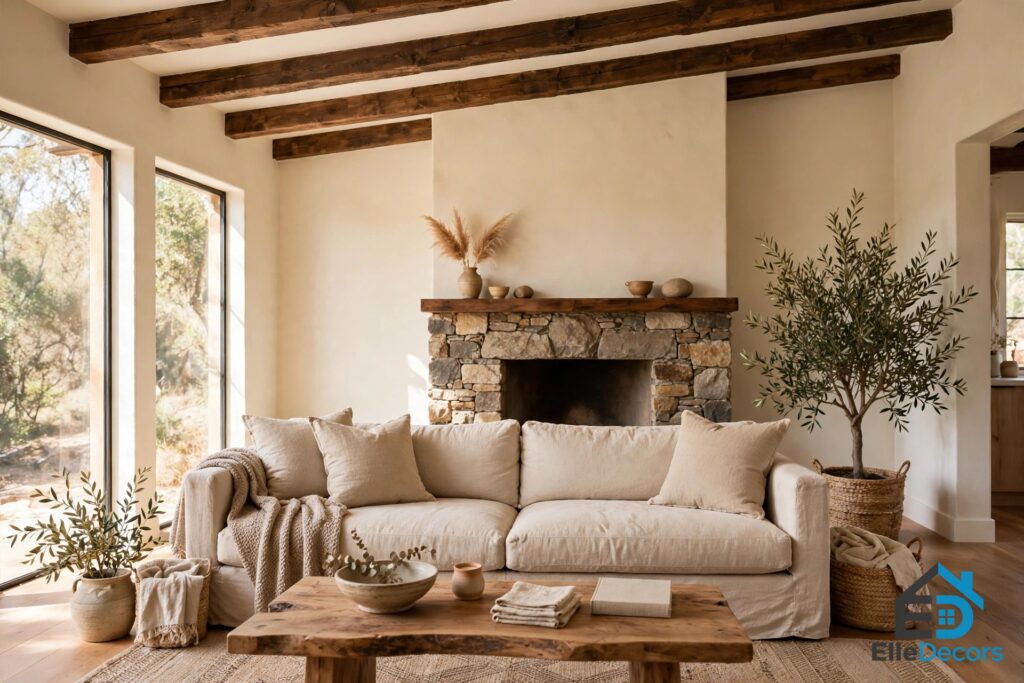
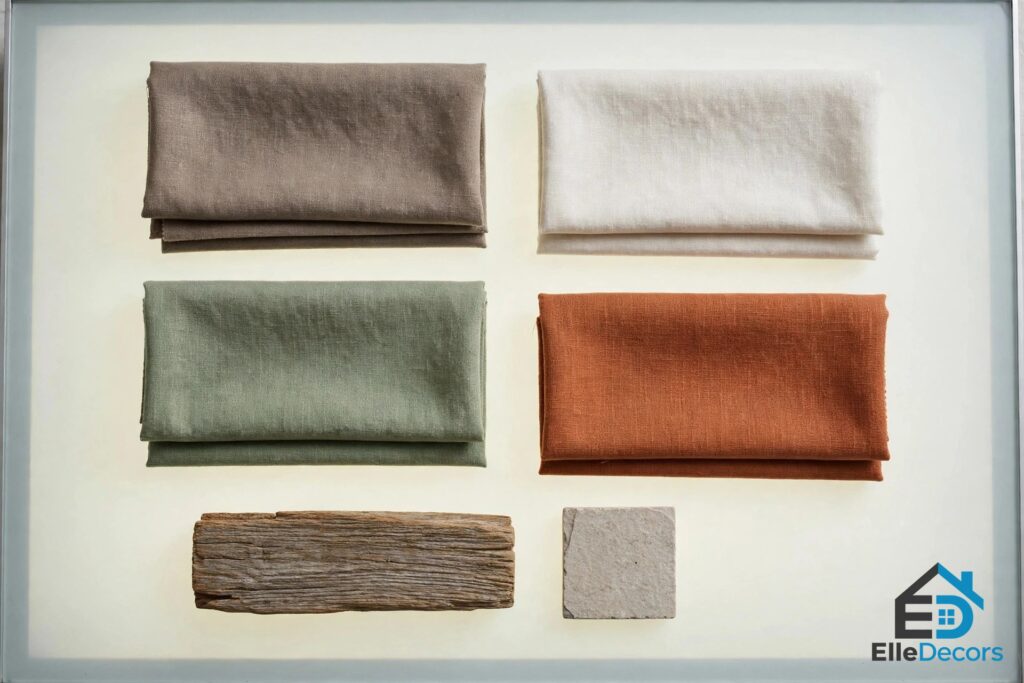
The palette is drawn from nature. Beige, taupe, and cream form the base, and deeper browns, greys, and greens bring warmth and depth. Muted blues, burnt orange, and gold can add personality as accents without breaking the calm. Walls stay quiet, because they are the backdrop, not the statement. Warm whites, soft taupes, muted sage greens, and deep terracottas all work, and the finish should be flat or matte. Anything with a sheen reads as too polished.
3. Vintage and Antique Pieces
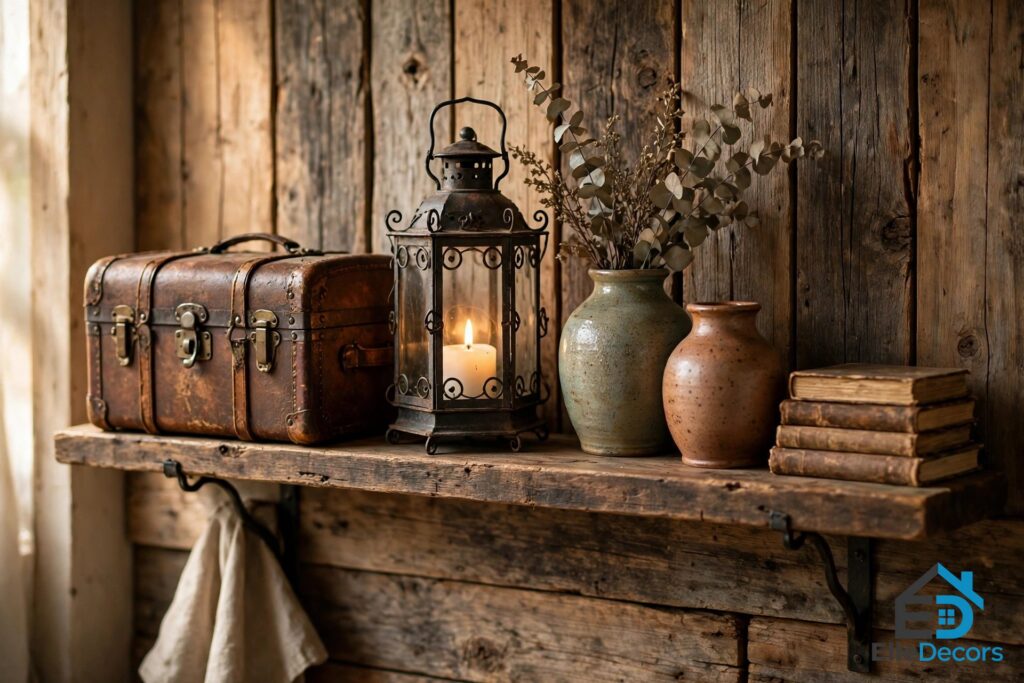
A vintage or antique piece is a landmark of the look. These pieces have a story behind them, and their worn, imperfect finish gives a room character that new furniture cannot copy. An old trunk, a weathered coffee table, a vintage mirror, or ceramic vases all do the same job: they make the room feel collected over time rather than bought in one trip. Thrift stores and online marketplaces are the usual hunting grounds, and thoughtful placement keeps each piece from overwhelming the room.
4. Open, Airy Layouts
The chic half of the style needs air. Furniture is arranged so people can move around comfortably, and large windows, open shelving, and a clear floor plan all add to the sense of space. Heavy window treatments work against the style, because the look is rooted in a connection to the outdoors, and thick drapes block exactly that. Keep the layout open and let the materials speak.
5. Layered Lighting
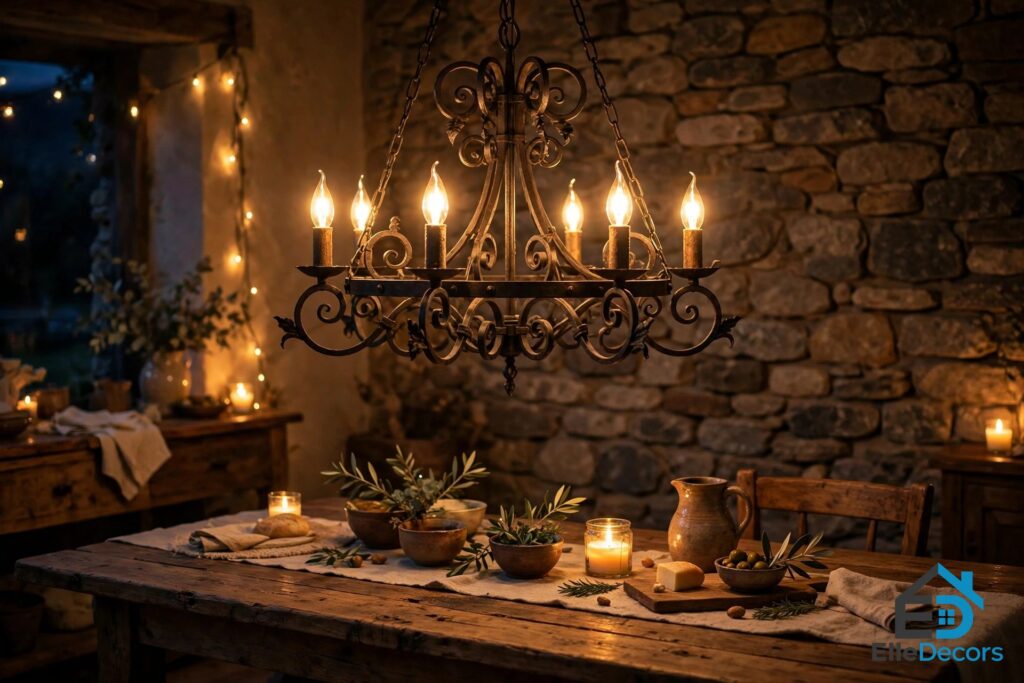
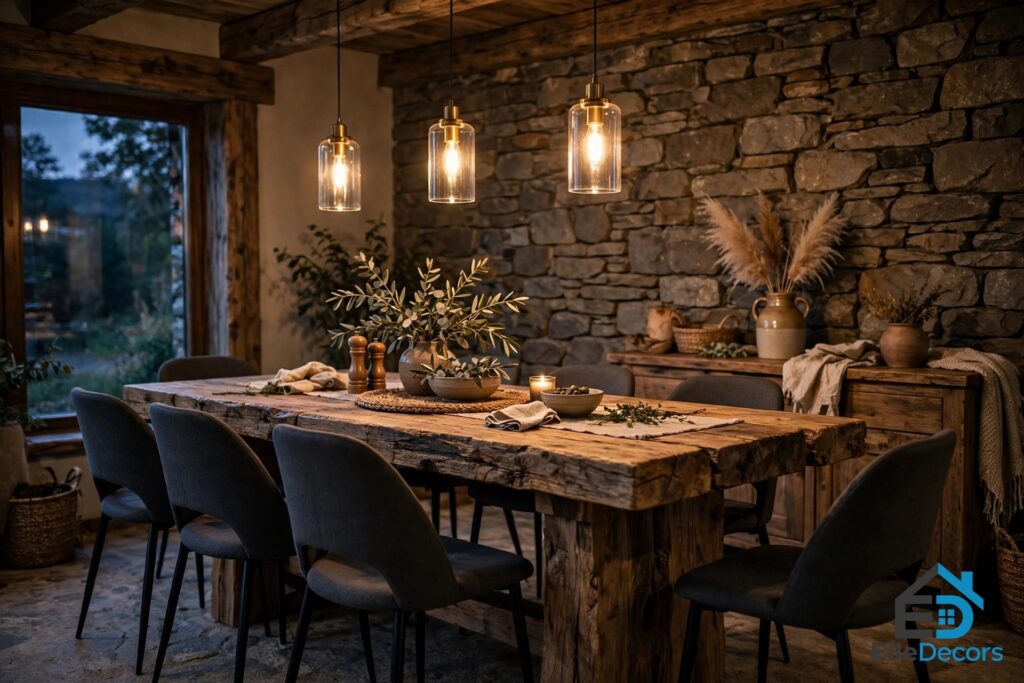
Lighting does heavy work in this style. It is layered in three parts: ambient light for general glow, task light for reading nooks and kitchen counters, and accent light that draws the eye to architectural features or artwork. Fixtures often blend old and industrial notes: wrought iron chandeliers, rough pendant lights, and lantern-style lamps. Warm-toned bulbs with dimmers cast a gentle glow that suits the layered textures, and clear windows let daylight in.
6. Statement Furniture
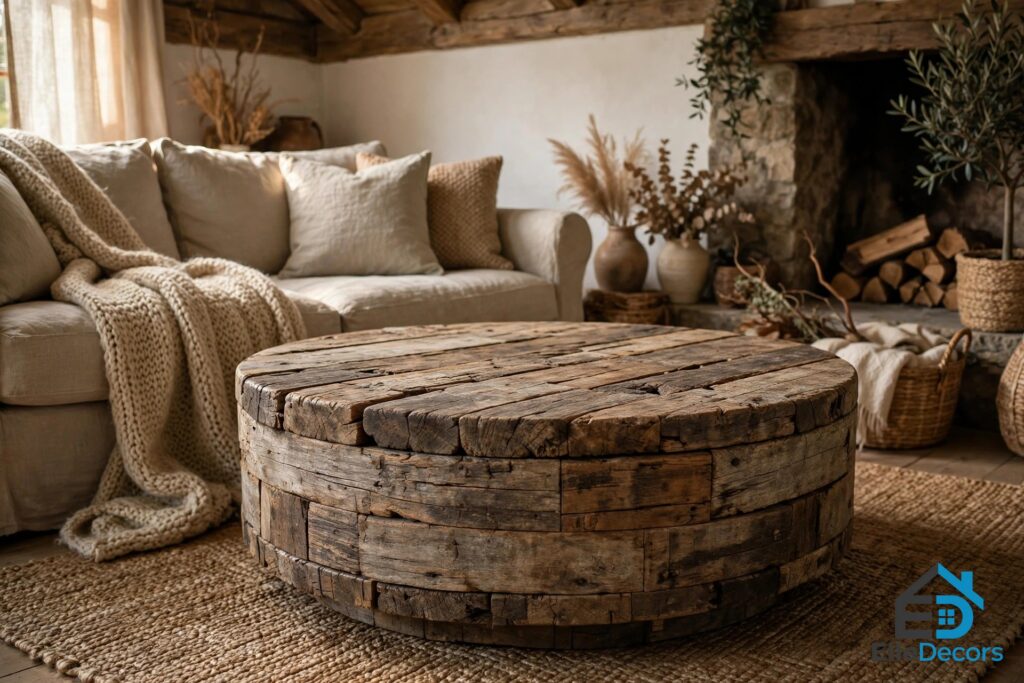
While the style worships simplicity, it does not avoid statement pieces. Big, cozy sofas with plush cushions, oversized armchairs, and solid wooden tables are the basics. A large leather sofa in rich brown or tan can anchor a whole living room, and a reclaimed wood coffee table with textured throws completes the picture. The rule is one or two strong pieces per room. More than that, and the room starts to shout.
7. Greenery and Natural Touches
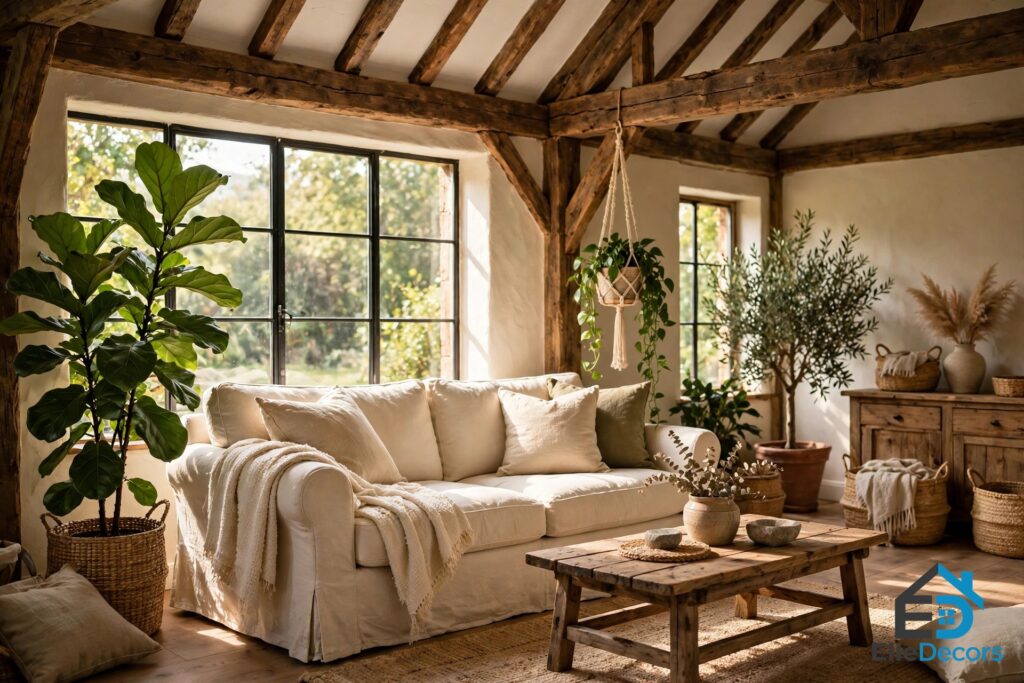
Bringing the outdoors in is essential. Plants add a pop of color and a sense of life that softens the hard edges of wood and stone. Large indoor plants like fiddle leaf figs, succulents, and hanging plants all work, and flowers or potted plants on windowsills and shelves pull the look together. Small herb gardens on a kitchen counter add the same freshness with a practical use.
8. Mixing Old and New
Balance old with new. That is the core philosophy of the style, and the hardest part to get right. Pair an antique or vintage piece with a contemporary arrangement: a reclaimed wood dining table with sleek metal chairs, or traditional wooden shelving dressed with minimalist accessories. The blend of past and present gives the look an ageless appeal that still feels modern and fresh.
| Material | Where it works best | Keep in mind |
|---|---|---|
| Pine and oak | Floors, beams, tables | Imperfections add character |
| Sandstone and limestone | Fireplaces, accent walls | Use for earthy appeal |
| Wool, linen, and jute | Throws, cushions, rugs | Layer textures for coziness |
| Wrought iron | Lighting, frames, shelving | Pair with warm bulbs and dimmers |
| Reclaimed wood | Tables, shelving, feature pieces | Check for sound condition first |
Two Mediterranean Homes That Show the Style
The clearest way to understand the style is to walk through homes that live it. Two Mediterranean homes, both featured as rustic chic tours, show the same balance in two different moods.
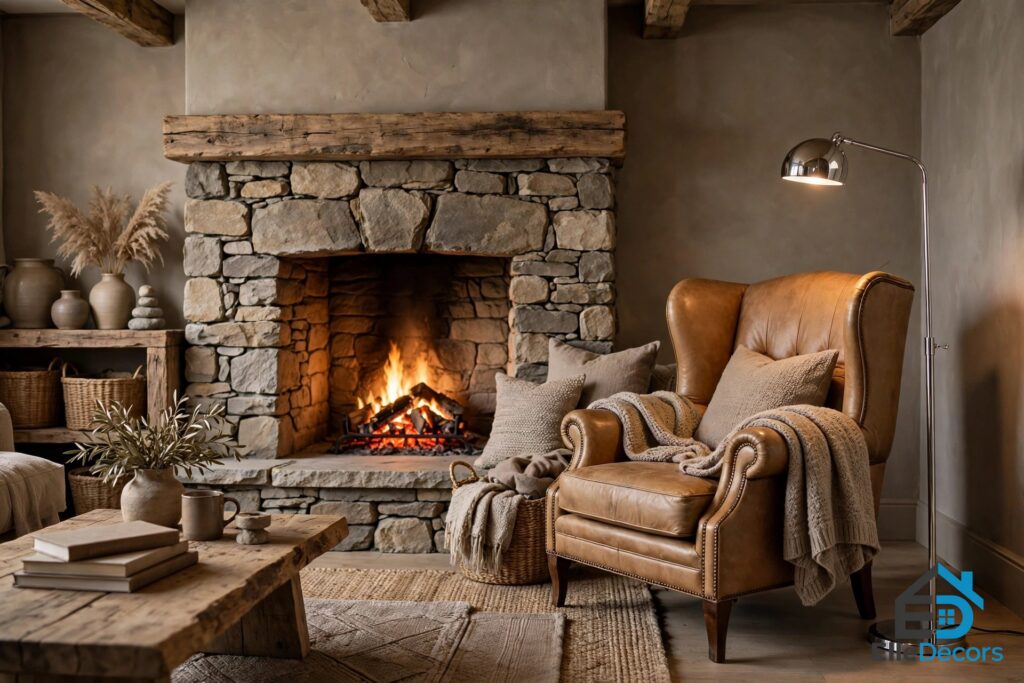
The first is an Italian villa in the Umbria region. At first glance, the large open-plan rooms with high wooden rafters and exposed stone look like a high-end American ranch house. Then the furniture swings the interiors in a more European direction: linear sofas, contemporary end tables, and accent chairs. The palette is a quietly relaxed play on taupe, with bolder tan elements. An L-shaped modern sofa divides the open-plan living area from the dining room, while a winged reading chair in contrasting tan sits under a chrome standing lamp. In the centre, a chunky round wooden coffee table pulls the contemporary notes back into the rustic mood.
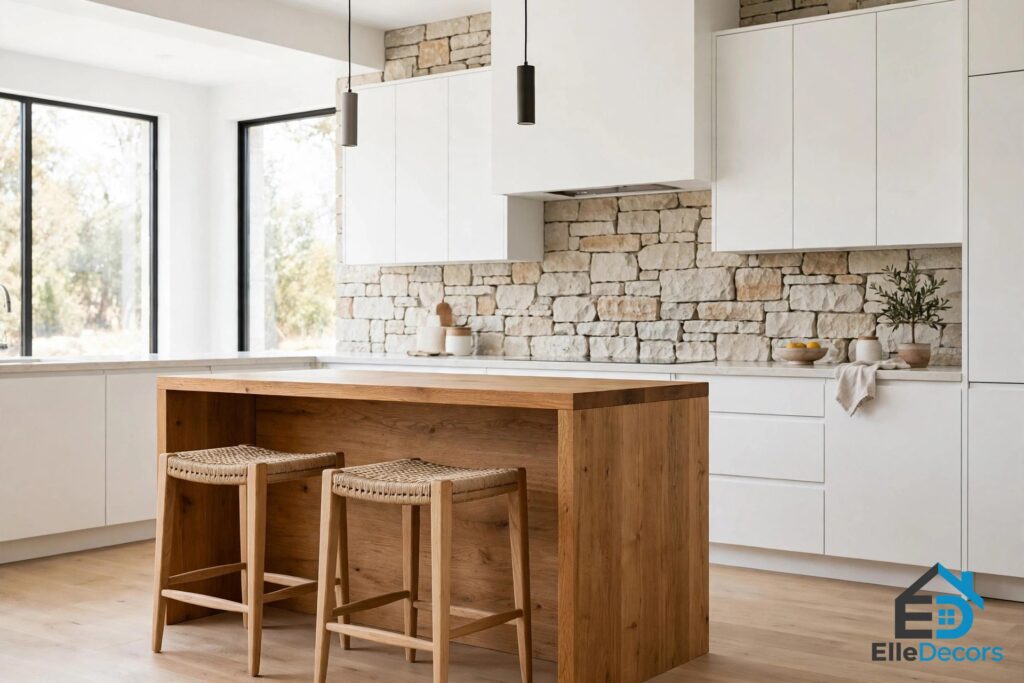
The villa kitchen is sleek and ice white, with a freestanding island and two woven-seat bar stools on wooden legs. The woven seats are not the obvious choice for a minimal kitchen, but they complement the natural stone wall perfectly. In the dining area, a chunky wooden table seats modern dining chairs under pendant lights, and a fireplace behind the table sends a cozy glow through the room.
Upstairs, the master bedroom has an upholstered bed with an oversized headboard, and the ensuite bathroom is covered in marble, warmed back up by a wooden shelving unit with plants softening the edges. The children’s room follows the same balance: plaid bedcovers and a rope pendant light keep the rough elements playful. Hexagonal tiles with terracotta colouring and irregular edges give the bathroom a traditional Mediterranean feel with a quirky contemporary twist.
The second home is a two-storey house on the Mediterranean coast, designed to embrace the seaside atmosphere and feel vibrant and cosy. The interior was meant to look slightly aged, with personality that grows over time. Driftwood furniture carries the seaside memory through the house: two driftwood coffee tables look as though they could have washed right up onto the beach. Light, warm tones recall sand at the seashore, while antique beams above old stone walls give the feeling of a house built long ago but still full of life.
Two huge rattan pendant light shades hang like disused fishing baskets over the living space. In the dining area, beachy wooden wall decor sits on a stone wall under mother-of-pearl pendant lights, and a glass-fronted dresser displays the best crockery. Wooden doors provide a focal point in the white space, and the kitchen pairs heritage grey units with a ceramic tile backsplash that resembles fish scale, plus traditional faucets with a modern undermount sink.
A slab of eye-catching stone clads the next wall, and driftwood frames the mirrors. In the bedrooms, industrial-style lighting adds a stronger note, a rocking chair keeps a simple rustic line, and old suitcases serve as a bedside table in one room. The last bedroom is coastal and breezy in white, with rattan light shades keeping the beach feeling alive.
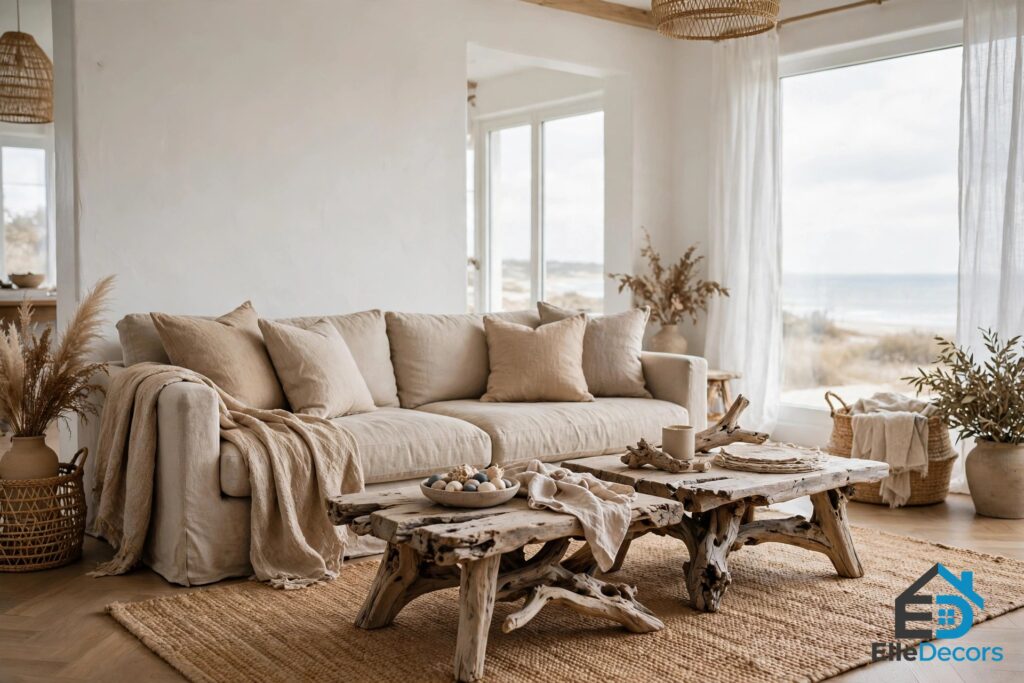
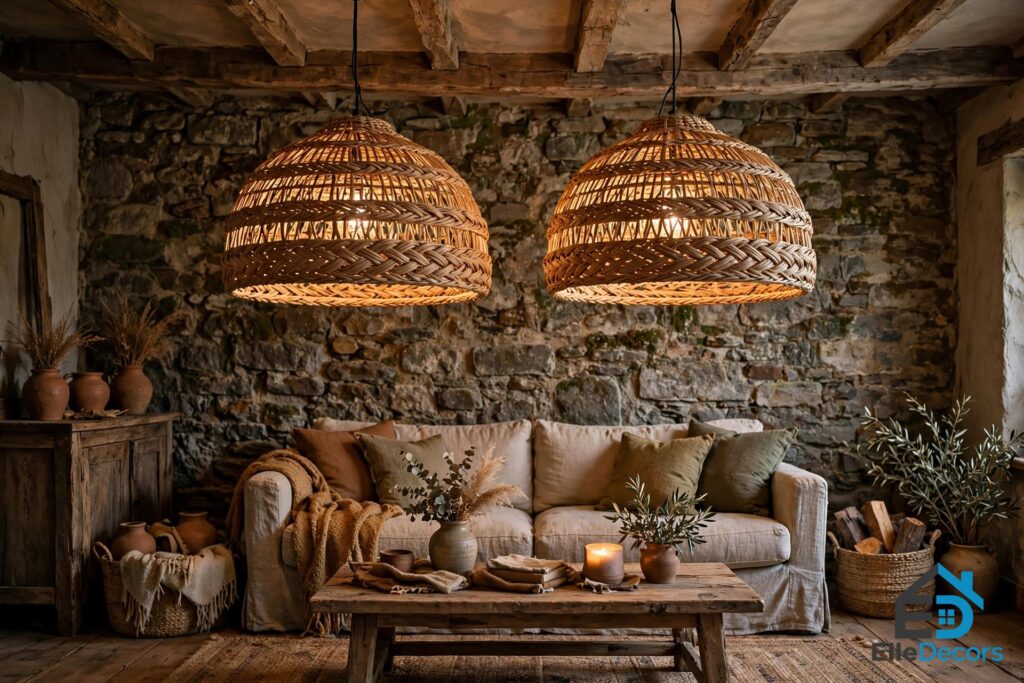
Together, the two homes show the same lesson: the style is not one fixed recipe. The villa leans tailored and European, with tan leather and chrome; the coastal house leans beachy and weathered, with driftwood and rattan. Both keep the same rustic chic balance of rough and refined.
Rustic Chic Room by Room
The elements stay the same, but each room uses them differently.
Living Room
Start with the largest surfaces. A stone fireplace or an exposed beam ceiling sets the tone, then a big comfortable sofa in linen or leather anchors the seating. A chunky wooden coffee table grounds the middle of the room, and layered lighting, a floor lamp for reading and a pendant for glow, finishes it. Keep one vintage piece in view, like a trunk or an old mirror, and let plants soften the corners.
Kitchen
The kitchen is where the style meets daily use. Light wood cabinetry with deep shades of green or navy in tiles or accessories makes the room feel welcome and organic. Open shelving in reclaimed or stained wood changes a kitchen fast and shows off simple ceramic dishes and glassware. A freestanding island with woven-seat stools adds warmth, and a stone wall or ceramic tile backsplash brings in the texture. Keep worktops clear so the materials can be seen.
Bedroom
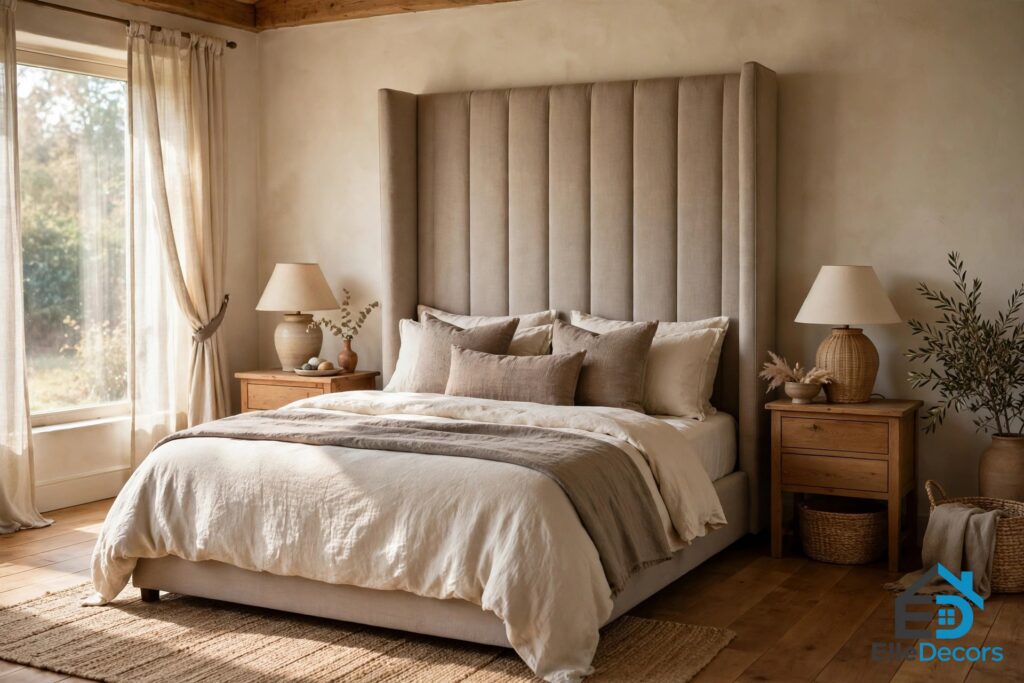
The bedroom should be the calmest room in the house. An upholstered bed with an oversized headboard gives a soft focal point, and warm mid-tones beat dramatic darks for rest. Layer wool and linen bedding in cream and taupe, add a worn leather chair at the foot of the bed, and keep lighting low and warm. A wooden shelving unit or a vintage trunk doubles as storage and as the room’s one antique note.
Bathroom
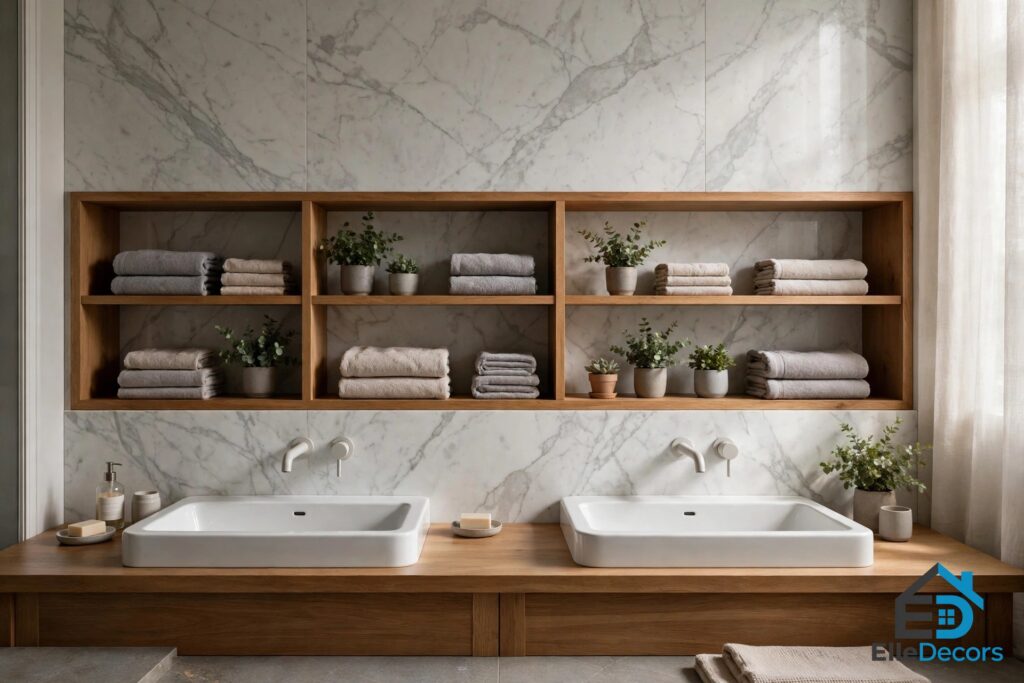
Bathrooms suit the style when the materials are chosen for wet rooms. Marble walls bring the chic half, and a wooden shelving unit or a driftwood-framed mirror brings the warmth back. Keep the palette grey and natural wood, with crisp white basins. Hexagonal tiles in a terracotta tone add a traditional Mediterranean note, and a mosaic floor finishes the look. A small potted fern softens the hard surfaces.
The Palette in Practice
A simple palette keeps the style calm. Start with warm white or cream on the walls, then add taupe and beige through the sofa and rug. Bring in brown through wood and leather, and sage green through plants and textiles. One accent is enough: burnt orange in a throw, muted blue in a cushion, or gold in a lamp base. Two accents compete, and the calm breaks.
Mistakes to Avoid
- Filling every surface. The style needs air. Leave shelves half empty and tables clear, or the room reads as clutter.
- Faking the age. Brand-new furniture distressed on purpose often looks like a costume. One genuine vintage piece beats five fake-aged ones.
- Going all dark. Dark wood on every surface drinks the light. Balance dark pieces with cream walls and pale linen.
- Ignoring the light. Heavy curtains and a single ceiling light flatten the room. Layer the lighting and keep windows clear.
- Mixing too many eras. One antique with modern furniture is a conversation. Five antiques from five decades is a jumble.
- Forgetting comfort. A beautiful chair nobody can sit in for long is a failed choice. Test seating before you commit.
Frequently Asked Questions
What is the difference between rustic and rustic chic?
Rustic on its own leans fully into rough materials, old wood, stone, and a cabin feeling. The chic half adds polish: clean-lined furniture, smooth stone or marble, and tailored textiles. The two halves stay in balance, so the room feels warm and refined rather than rough or formal.
Can I use this style in a small apartment?
Yes. Small rooms suit rustic chic well, because the style depends on materials and light rather than space. Keep the palette light, choose one statement piece instead of several, use open shelving rather than heavy cabinets, and let a large plant and a linen throw do the work.
Which wood works best for the look?
Pine and oak are the most common choices, because both show their grain and take a weathered finish well. Salvaged or reclaimed wood adds the most character. Lighter finishes read more modern, darker weathered tones more traditional. Mix at most two wood tones in one room so the palette stays calm.
How do I keep the style from looking like a cabin?
Keep the furniture lines clean and modern, use linen and smooth stone to balance the rough wood, and leave breathing room around each piece. One stone feature wall or one beam ceiling is enough; when every surface is wood, the room tips into cabin territory.
Does the style work in a kitchen or bathroom?
Yes, with the right materials. In kitchens, use sealed wood, stone, and ceramic tile where water lands. In bathrooms, pair marble or stone with a wooden shelving unit or a driftwood-framed mirror, and choose plants and tiles that handle humidity.
The Bottom Line
The style works because it is honest. Real wood, real stone, and real wear tell the truth about a home, and a few polished pieces keep that truth elegant. Start with one room. Pick your materials, set your palette, add one vintage piece with a story, and layer the light until the room glows. Then step back and check the balance. If the room feels warm and calm at the same time, you have the rustic chic balance right.
Still choosing between styles? Browse more ideas for interior decorating to see how this look can sit with the rest of your home. The best rooms are the ones that feel lived in from the first day, and only get better with age.