Contemporary Mediterranean Decor: Coastal Elegance for Modern Homes
Good contemporary mediterranean decor starts with sunlight, not shopping. A Mediterranean room fails when it is too dark, too cluttered, or too cold in colour, and no amount of decoration fixes that. Get the light, the palette, and the materials right, and almost any room works. This guide covers the ideas that hold up: colour, stone and tile, arches, light, and room-by-room styling.
Audio Summary
What Contemporary Mediterranean Decor Really Means
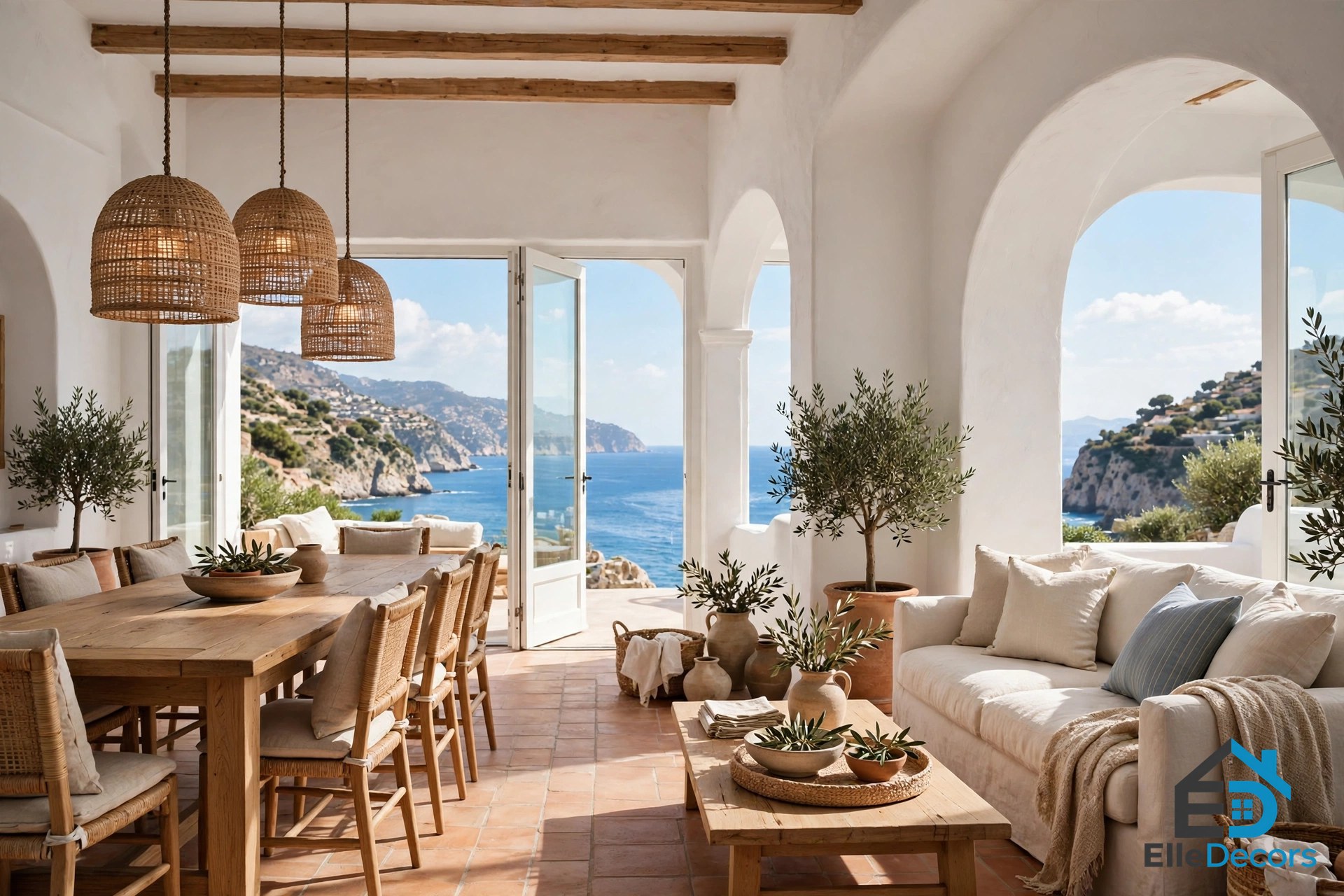
The style comes from the sun-drenched villas of Spain, Greece, and Italy, but the contemporary version leaves the heavy, old-world parts behind. What stays is the warmth — natural materials, earthy tones, and airy, open spaces.
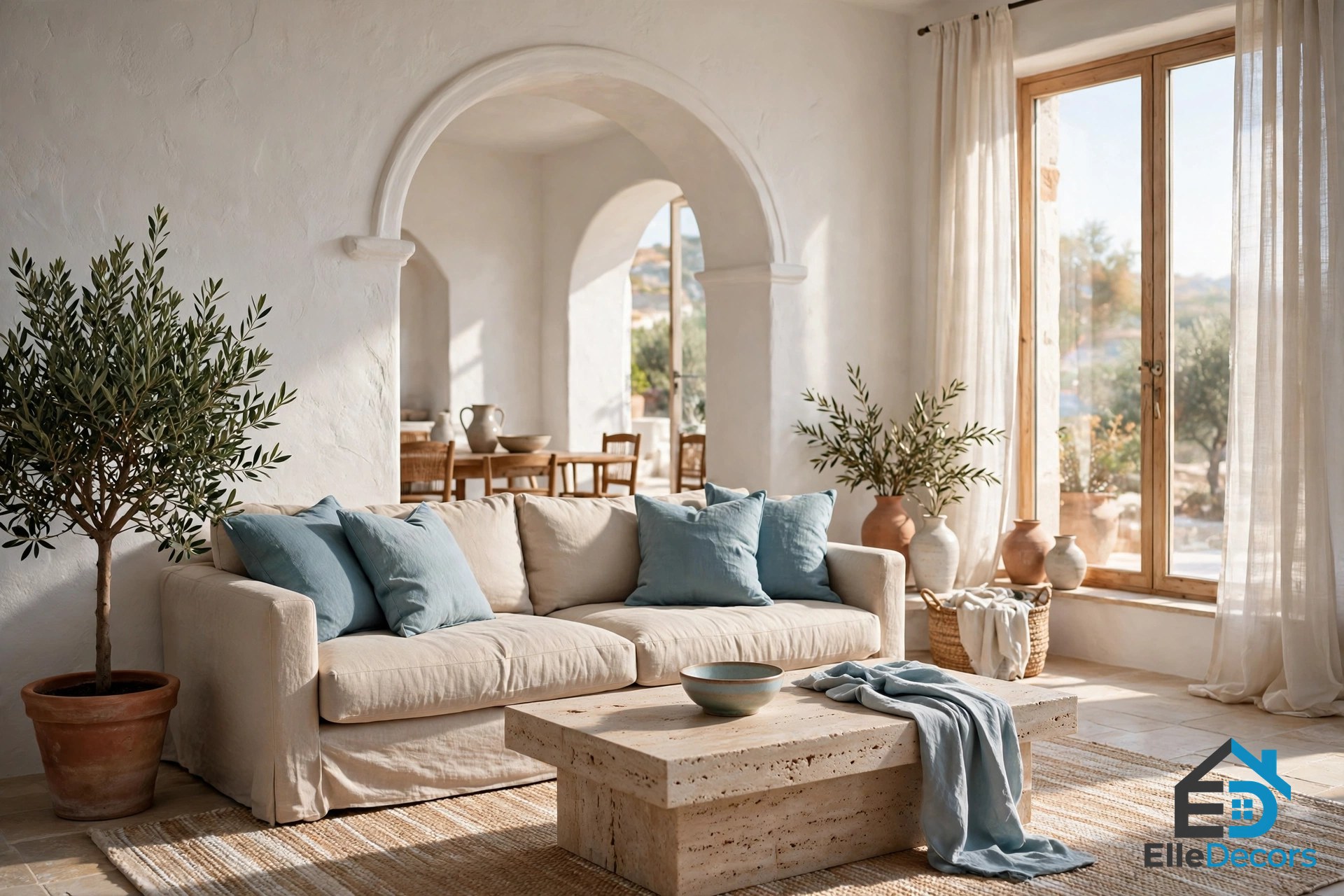
Think of it as a blend: the Mediterranean side brings stone, wood, rattan, plaster, and terracotta, while the contemporary side brings clean lines, open plans, and minimal clutter. A modern mediterranean interior design keeps the soul of a coastal villa and drops the visual weight, so the room feels calm rather than staged.
The style is also about how a home feels to live in. Rooms connect to each other and to the outside: doors open onto terraces, windows stay large, and the same palette runs through the house. A mediterranean interior should feel welcoming on an ordinary Tuesday, not just on a holiday.
The Palette: Sun-Washed Neutrals, Sea Blues, Terracotta
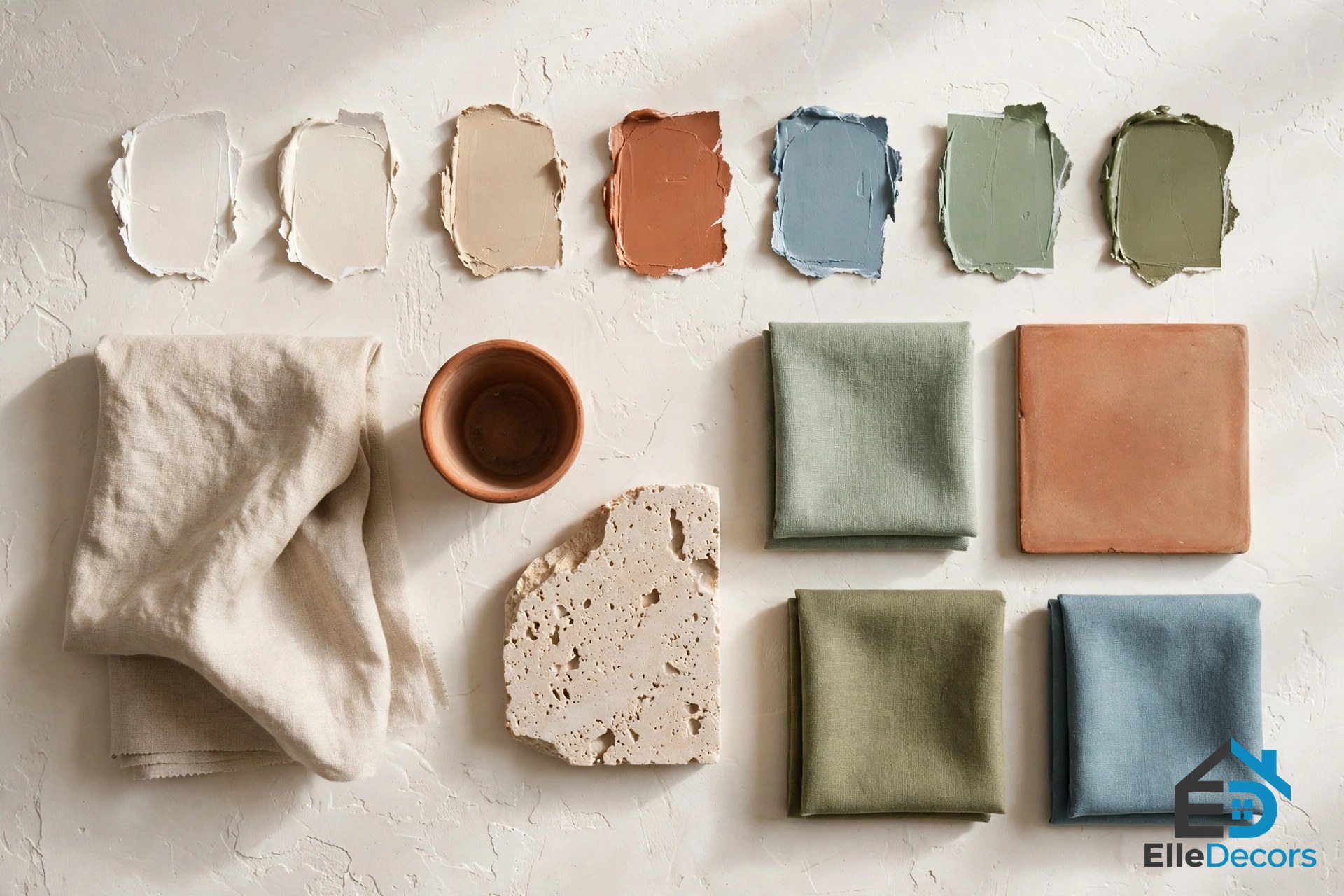
The palette is where contemporary mediterranean decor begins, and it is simple to get right. Start with warm whites — white plaster, cream, sandy beige, soft greige with a warm undertone — for the walls, the big sofa, and the bedding. Avoid stark, cool whites, because they kill the warmth the style depends on.
Add one sea colour. Deep blue, dusty blue, or soft sage green, used in cushions, a throw, tiles, or one painted wall. The blue nods to the sea without turning the room into a beach theme. One blue is enough; two blues start to argue with each other.
Add one earth colour: terracotta, clay pink, rust, or olive green, used in pots, ceramics, a rug, or a single chair. Terracotta is the signature warmth of the style, the colour of sun-baked clay, and used sparingly it makes a pale room feel grounded and lived in.
Keep the ratio simple: roughly two-thirds warm neutrals, with the sea and earth colours sharing the rest. When in doubt, take one thing out rather than adding another.
Materials That Carry the Look
The materials are what make contemporary mediterranean decor feel honest rather than themed: choose a few real materials and repeat them through the house, instead of filling rooms with Mediterranean-looking objects.
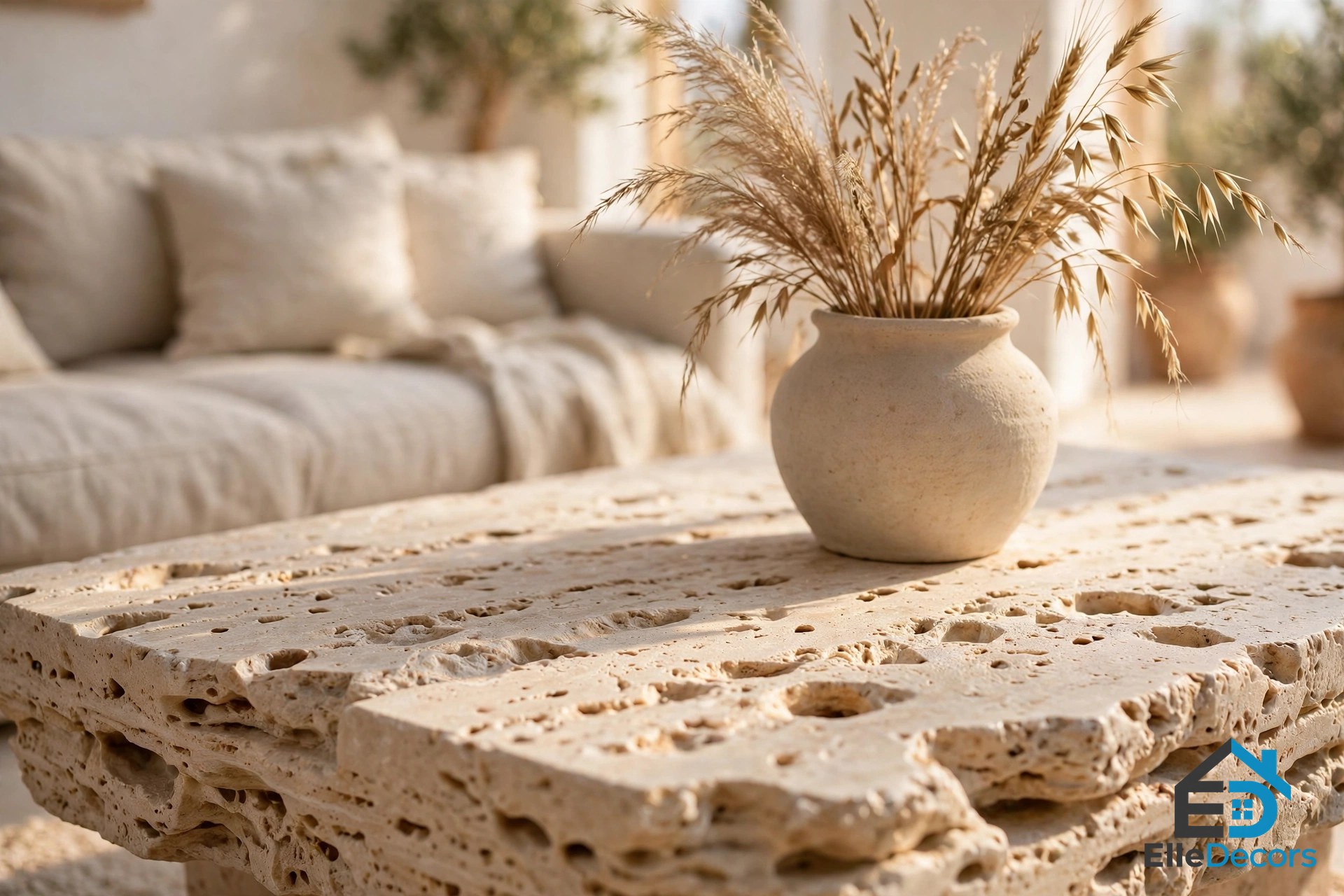
Travertine is the stone to know. It is a form of limestone deposited by mineral springs, especially hot springs, and it comes in white, tan, cream, and rusty varieties. Its name comes from the Italian travertino, from the Latin tiburtinus, meaning “of Tibur”, the modern town of Tivoli near Rome. It is properly a type of limestone, not marble, and its pitted, layered surface is the point: it looks like stone shaped by water and time. Use it for a coffee table, a fireplace surround, or a vanity top.
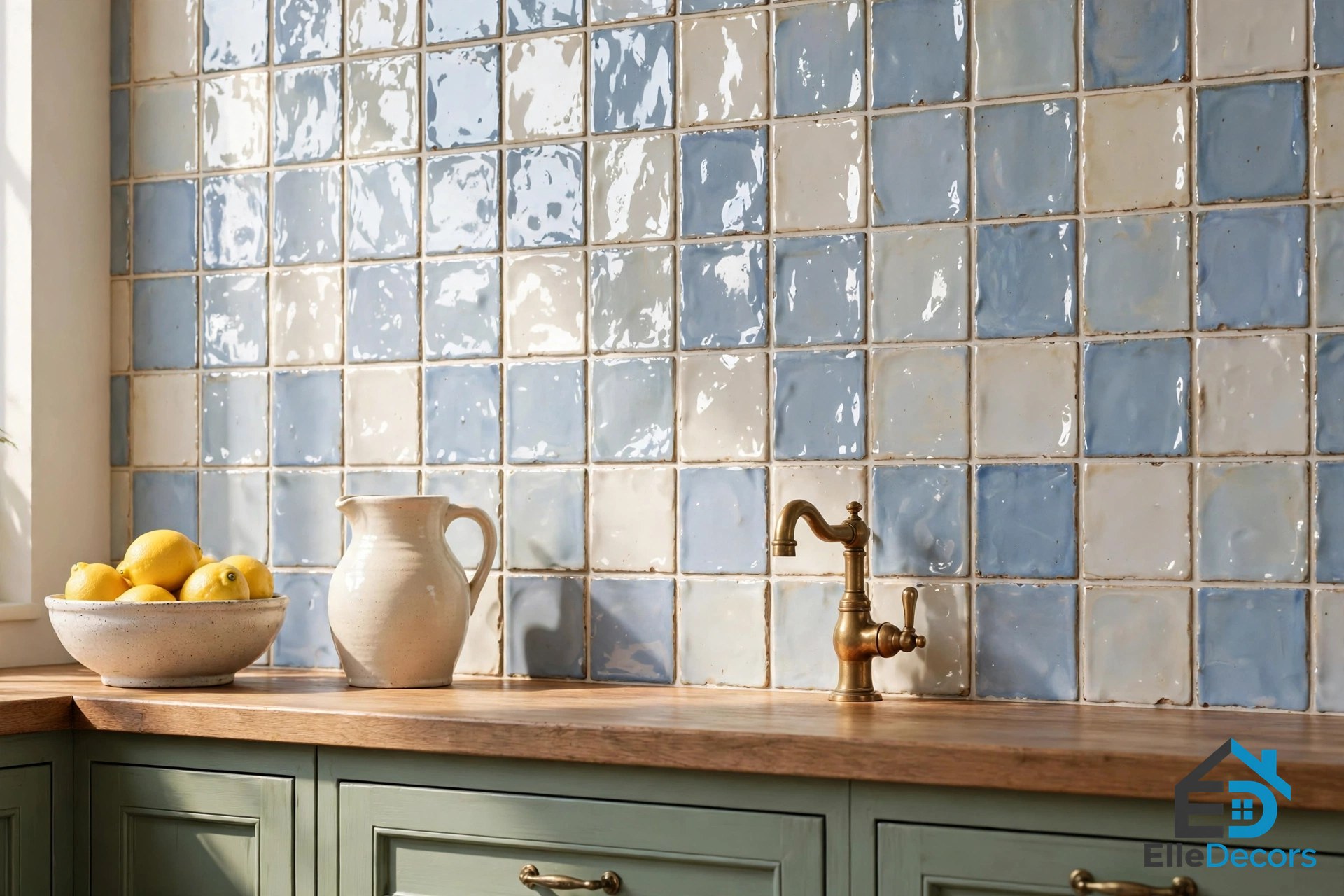
Zellige tile is the tile to know: a handmade Moroccan glazed terracotta tile, traditionally made in and around Fez. Each tile is pressed from natural clay, dried, fired, dipped in a mineral glaze, fired again, then cut and shaped by hand, so no two pieces come out exactly alike. The craft goes back roughly a thousand years, to the 10th century. The glossy glaze sits on a slightly wavy surface, which catches light in a way flat machine-made tile cannot. Use zellige for a kitchen backsplash or a bathroom wall, and let its uneven glaze be the decoration.
Wood should be warm and visible. Light oak keeps a room bright, walnut adds depth, and reclaimed or weathered wood adds texture. Exposed ceiling beams, a solid wood table, or a simple wooden bench all work, with a matte finish so the wood looks natural instead of varnished.
Warm wood and leather also anchor western rooms, and our western home decor guide shows how the same warm materials work in a different style. If you already own warm wood furniture, you are closer to this look than you think.
Rattan, cane, and woven textures add the softness stone and wood lack: a rattan pendant light, a cane-front cabinet, a woven rug, or a rattan chair brings pattern without colour. Linen and cotton do the same for textiles, softening hard surfaces in warm rooms.
Arches, Curves, and Light
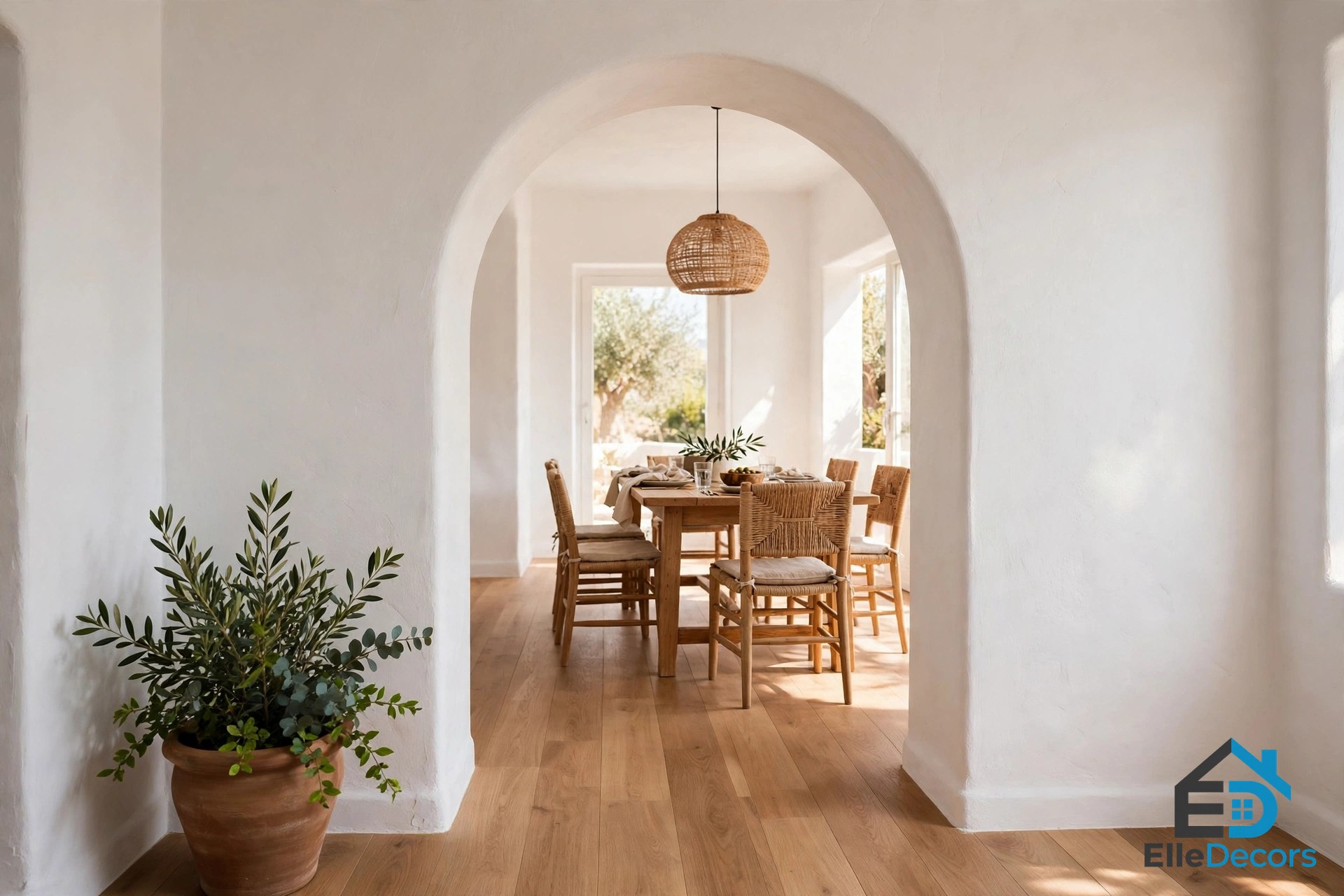
Arches are the signature shape of Mediterranean design, and they are what separate it from plain modern minimalism. A curved archway, an arched built-in shelf, an arched mirror, or an arched window all soften a boxy modern house, and you do not need to rebuild: an arched mirror gives the same feeling at a small scale.
Curves belong on furniture too: a low, rounded sofa, a round coffee table, a curved headboard, or a sculptural chair keeps the room from feeling sharp. If most of the room is straight lines, add one or two curves and the room relaxes.
Classical arches and symmetry also define neoclassical interior design, which shares the Mediterranean love of proportion and pale stone. The difference is mood: neoclassical rooms are formal and grand, while Mediterranean rooms are relaxed and sunlit. Borrow the arch, leave the formality.
Light is the other half of the style. Large windows, French doors, and glass doors to the outside matter more than any single piece of furniture, and sheer linen curtains filter the light instead of blocking it. If a room is dark, fix the light first: pale walls, a mirror opposite the window, and fewer heavy objects near the glass.
The Living Room: Low, Soft, and Open
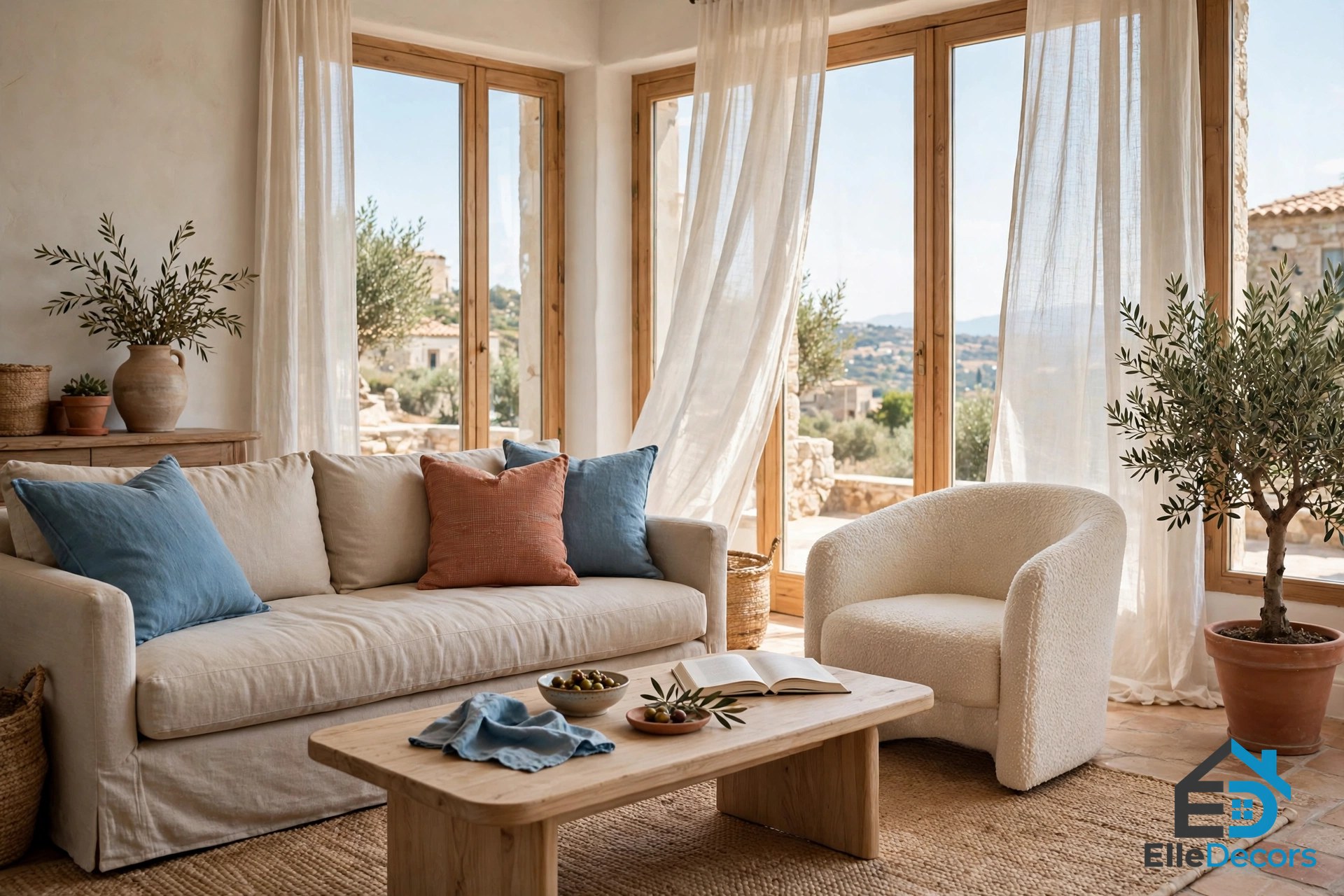
A living room is where contemporary mediterranean decor earns its keep, because it is the room you sit in every day. Keep the furniture low and soft: a low-profile sofa in a warm neutral fabric, a boucle or linen accent chair, and a woven rug set the tone, with a travertine or light wood coffee table anchoring the middle.
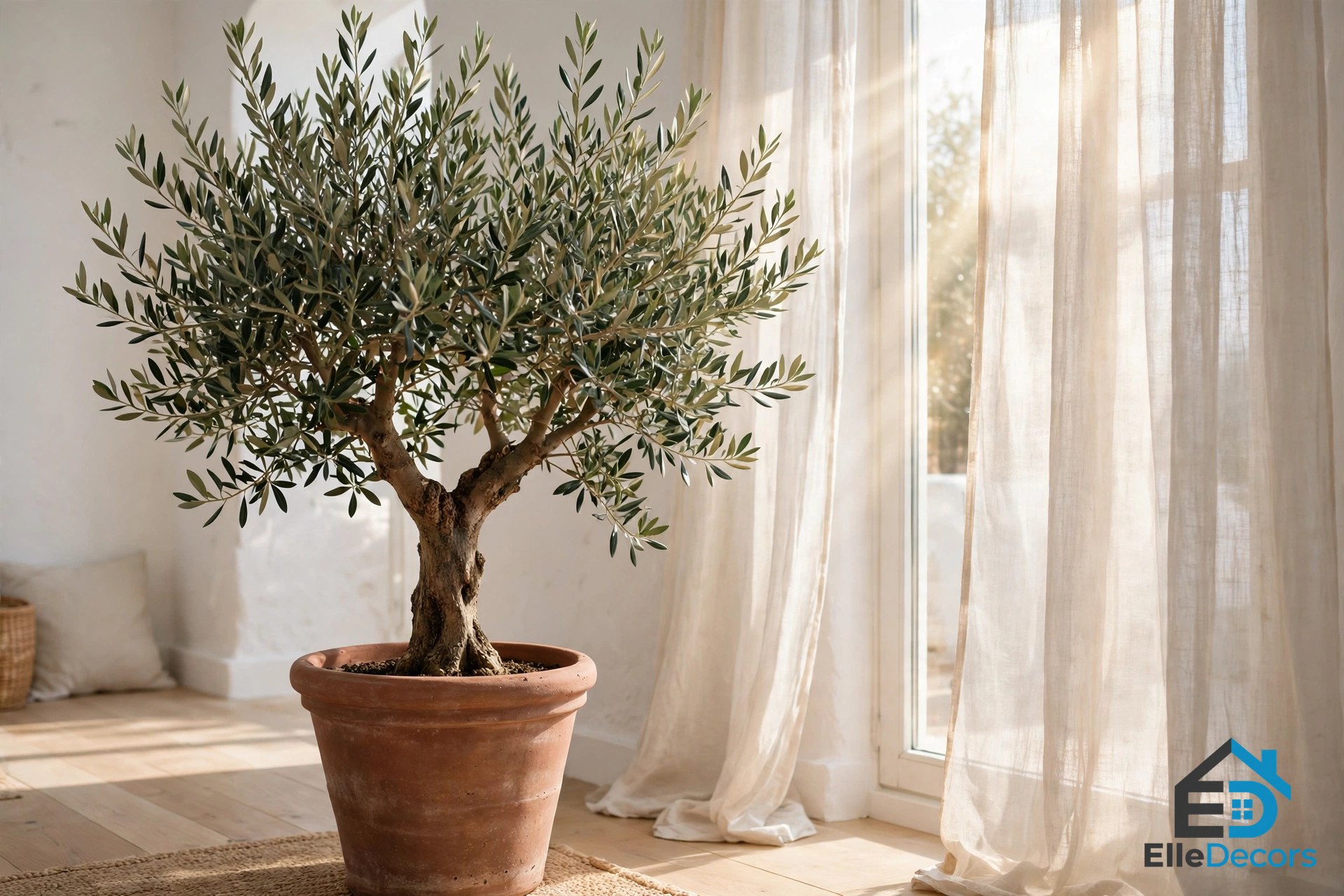
Built-in niches hold a few handmade ceramics; a few pieces beat a shelf full of objects. An olive tree in a terracotta pot is the classic living-room plant, doubling as sculpture with silvery-green leaves against a white wall.
Arrange the seating for conversation, not for the television: two chairs facing the sofa, one angled toward the window, and a small side table for a book and a drink. Leave space to walk through without squeezing past furniture.
Keep the styling restrained: a linen throw, two or three cushions in sea blue and terracotta, a ceramic vase with fresh stems. When the room is mostly neutral, each object matters, so choose objects you actually like and remove the rest.
The Kitchen: Sage Green, Stone, and Patterned Tile
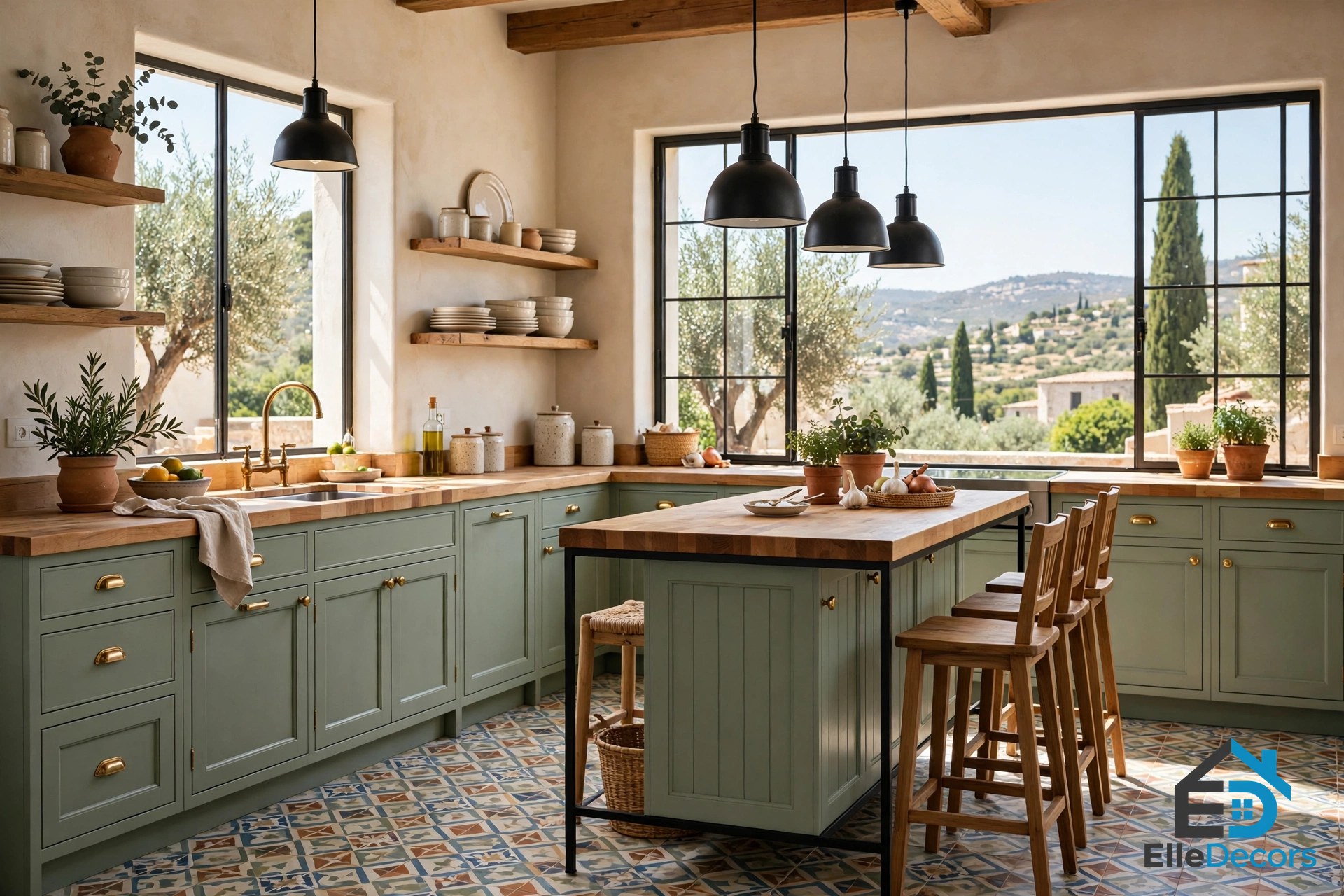
The kitchen is where contemporary mediterranean decor turns practical, because it is the hardest-working room in the house. Sage-green or warm beige cabinetry with simple panel detailing gives the Mediterranean feeling without a full renovation, while brass hardware and a butcher-block countertop add the warmth and wood tone the room needs.
A zellige or patterned tile backsplash is the one place to be bold: a glossy handmade tile in soft blue or cream, or a patterned tile floor in a traditional motif, gives the kitchen its character while the rest stays calm. Matte black pendants over the island add a modern contrast.
Keep the island simple: a slim metal frame, a stone or wood top, room for two or three stools. Open shelving works if you keep it to pieces you use every day; closed cabinets suit a busier household. A bowl of lemons, a wooden board, and a jug of olive oil are decoration enough.
The Bedroom: Linen, Cane, and Quiet Colour
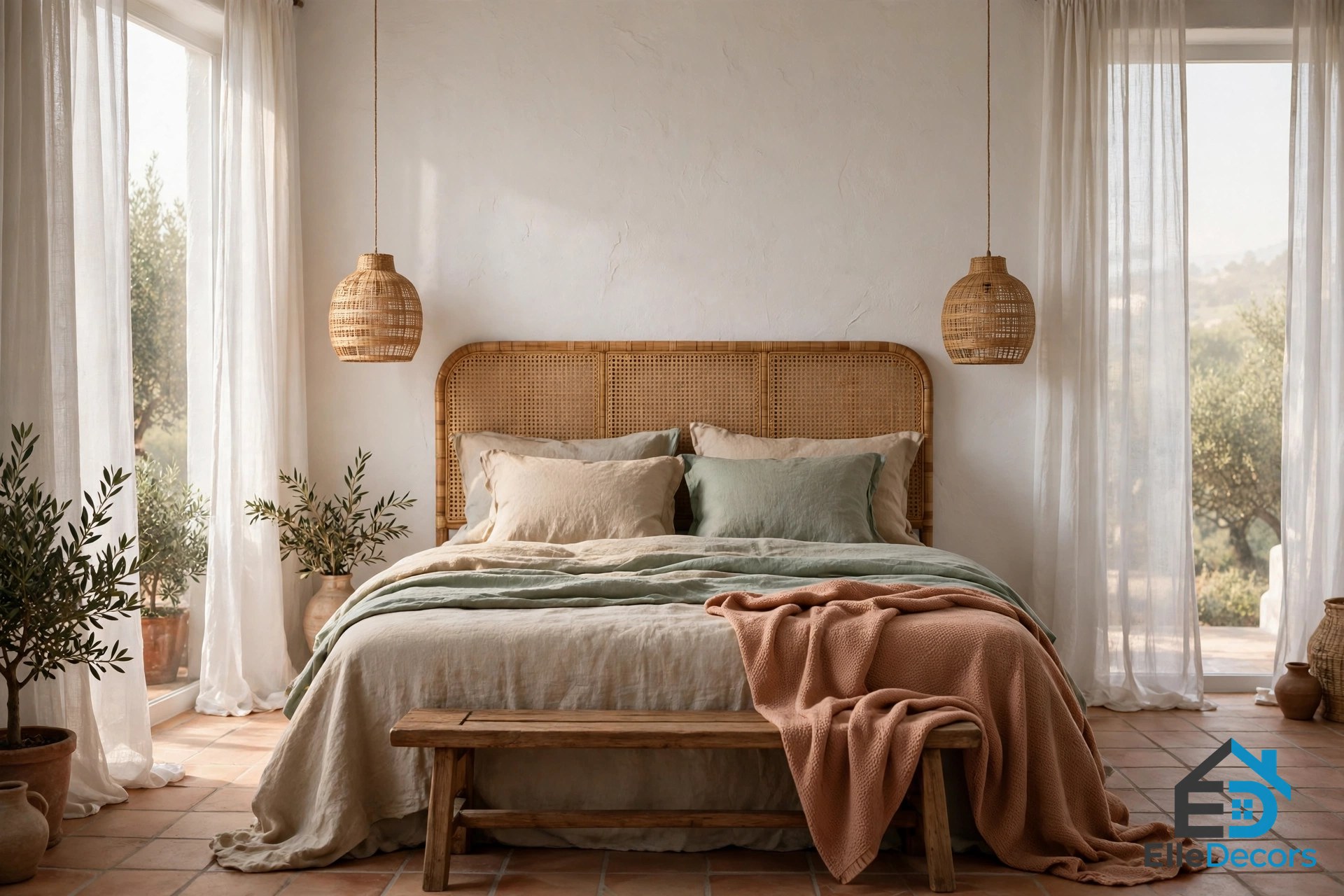
The bedroom should be the calmest room in a modern mediterranean interior design. Raw plaster walls, a slatted wood ceiling or exposed beams if you have them, and a bed dressed in textured linen in sandy tones. A woven cane headboard is the classic Mediterranean bed: it adds pattern and warmth without colour, and it suits almost any bed frame.
Layer the bedding rather than matching it: a crisp white fitted sheet, a linen duvet in warm white or soft sage, a throw in terracotta or olive at the foot of the bed, and two or three textured pillows. The layers make the bed look inviting and cost less than new furniture.
Pendant lights with a handcrafted, stone-like finish hang beside the bed instead of table lamps, freeing the nightstands. Floor-to-ceiling curtains frame the window, and a wooden bench at the foot of the bed finishes the room without clutter.
The Bathroom: Stone, Plaster, and Warm Metal
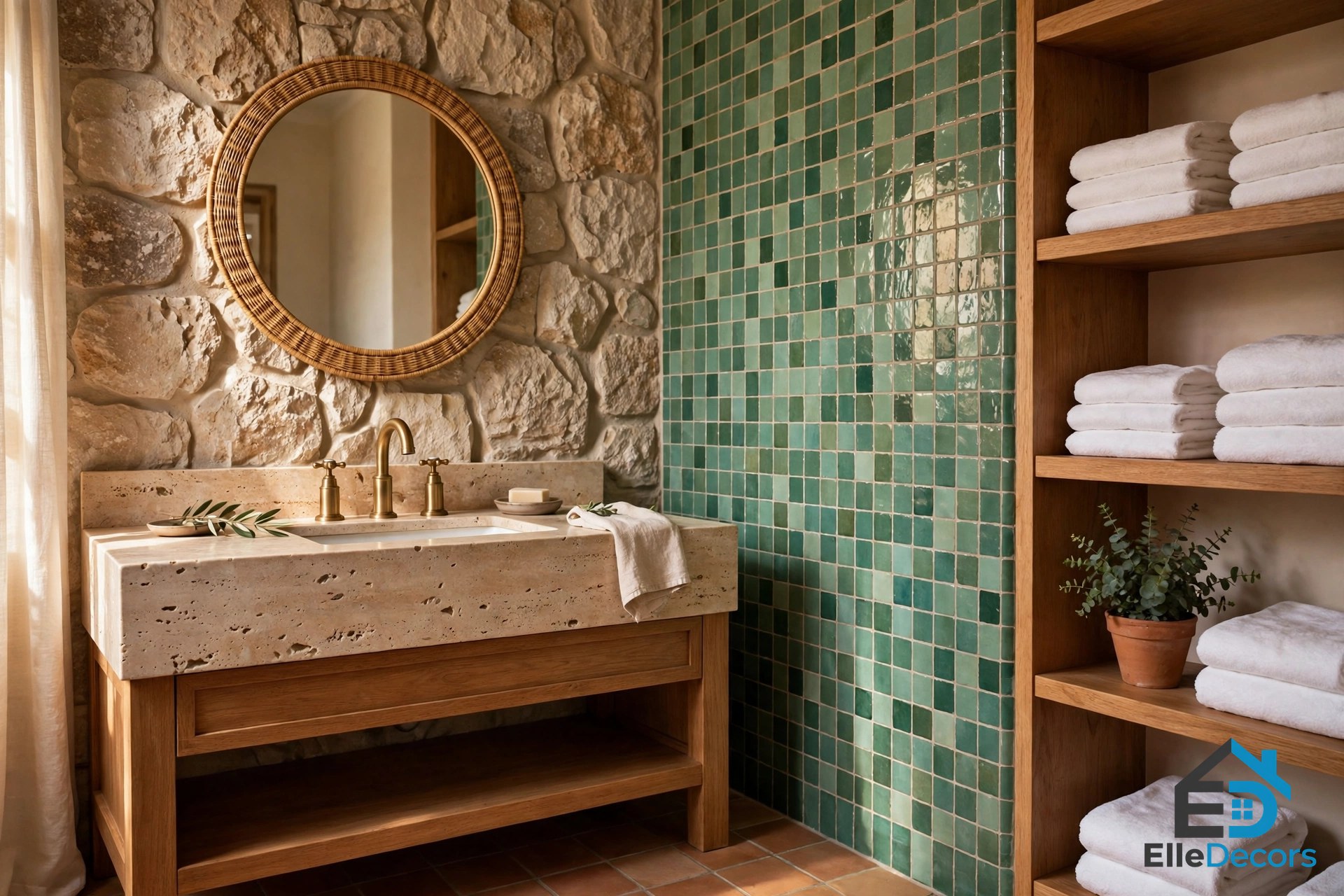
A Mediterranean bathroom runs on stone and plaster: a stone-textured accent wall, a travertine vanity top, or a plastered wall in warm white. Zellige tiles on one wall, behind the basin or in the shower, add the handmade glaze that makes the room feel crafted.
Keep the fittings warm: brushed brass or matte black taps, a simple round mirror, and wooden open shelving for folded towels. A terracotta pot with a small green plant softens the hard surfaces, while chrome and glossy white plastic read as cold against stone and plaster.
Small bathrooms suit the style well: pale walls, one patterned tile, and a large mirror make a small room feel larger, and the style needs very little to work.
Indoor-Outdoor Living
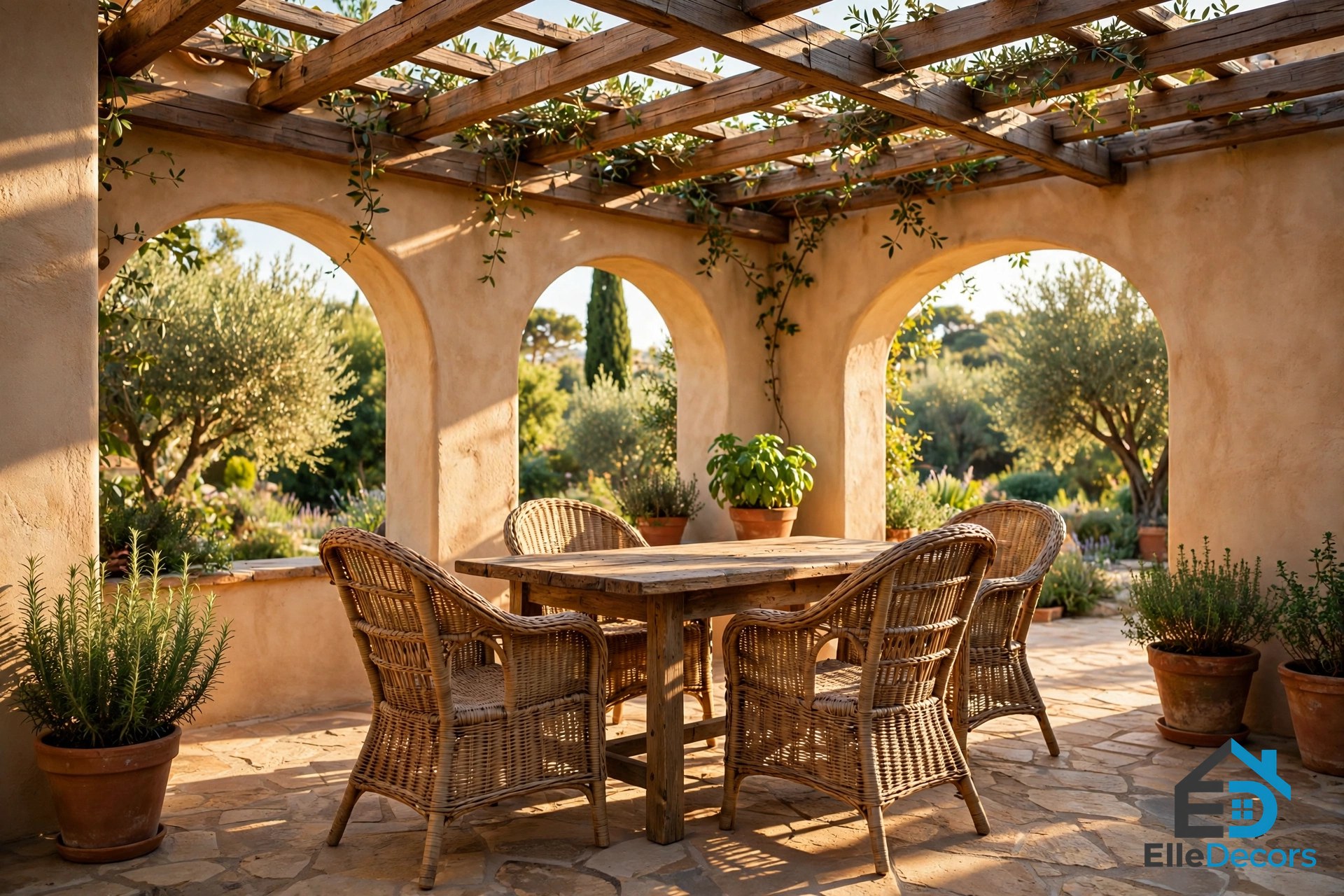
Indoor-outdoor living is the heart of mediterranean interiors, and it works even without a sea view. Floor-to-ceiling windows or glass doors open the living room onto a terrace or garden, and the same floor material inside and out makes the two spaces feel like one room.
On the terrace, keep it simple: a wooden dining set, woven chairs, a few terracotta pots with herbs, and a pergola or beams overhead for shade. A stone or tiled floor outside echoes the stone inside, and the goal is a place for long lunches and slow evenings.
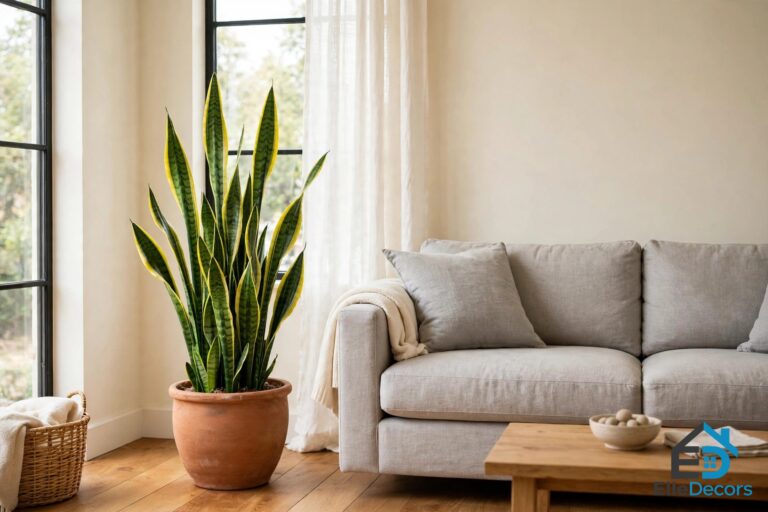
Greenery ties the inside to the outside. An olive tree is the signature choice, and it needs at least 6 hours of direct sun a day, ideally at a south- or west-facing window, and water about every 1 to 2 weeks, when the top 2 inches of soil are dry. Overwatering is the most common cause of trouble, and olive trees are drought-tolerant, preferring to dry out between waterings; too little light leads to weak, leggy growth and leaf drop.
Lighting: Warm, Layered, and Sculptural
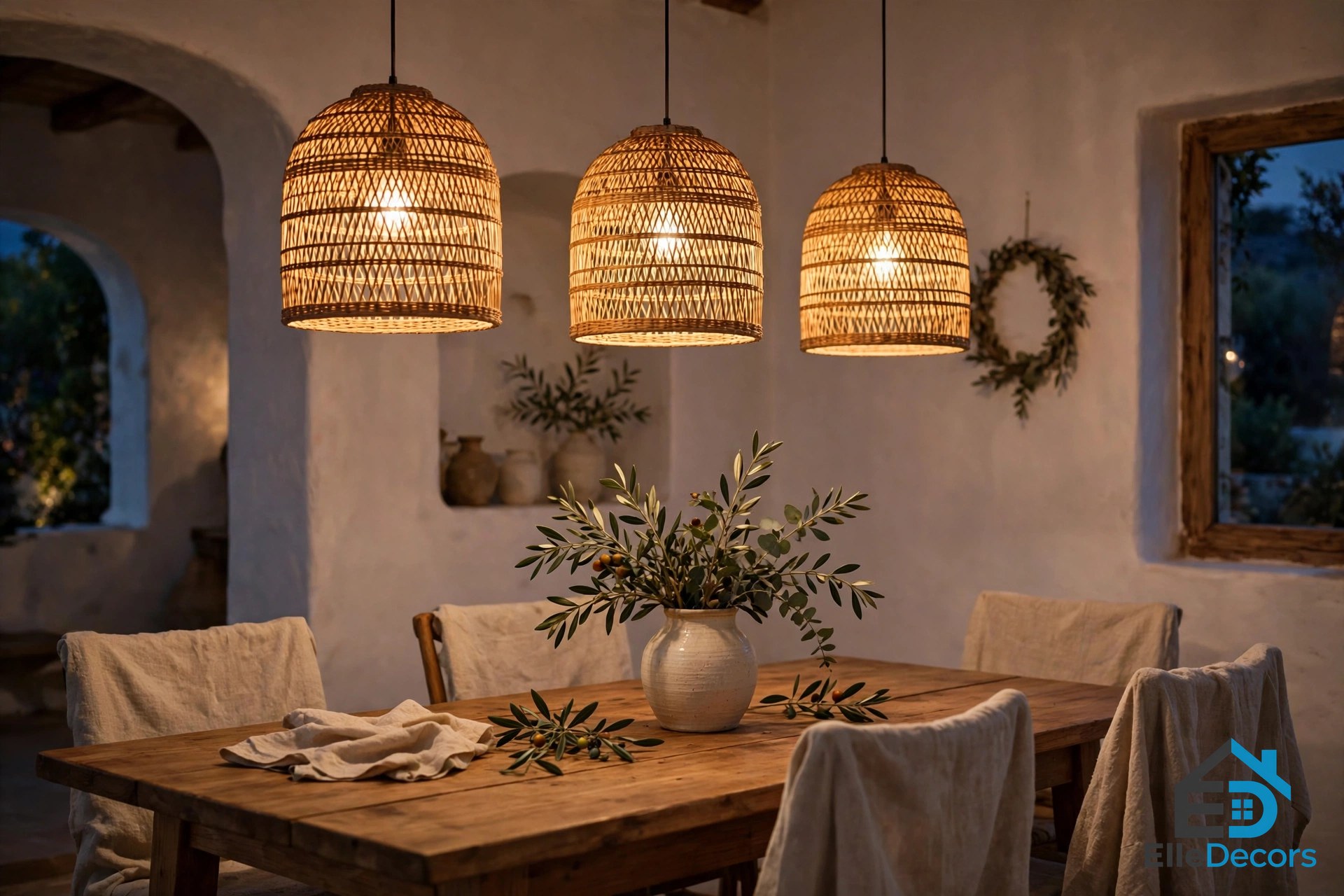
Lighting makes or breaks a Mediterranean room after dark. Use warm, layered light: a sculptural pendant over the table, a floor lamp beside the sofa, and small lamps on shelves or sideboards. Woven rattan pendants are the classic choice, their shadows adding texture to plain walls, while a wrought-iron chandelier suits a formal dining room.
Dimmers matter more here than in most styles, because the same room hosts bright mornings and low evening meals. Keep the light warm rather than white, and avoid a single harsh ceiling light as the only source.
Place lights where people actually sit and eat: a pendant centred over the table, not over the middle of the room, is the rule that matters most.
Textiles and Styling: Linen, Ceramics, and Restraint
Textiles carry the softness in mediterranean interiors. Linen curtains, cotton throws, flat-weave wool rugs, and linen bedding all breathe in warm rooms and age gracefully. Choose natural fibres over synthetics where you can; they suit the style’s honest-material rule.
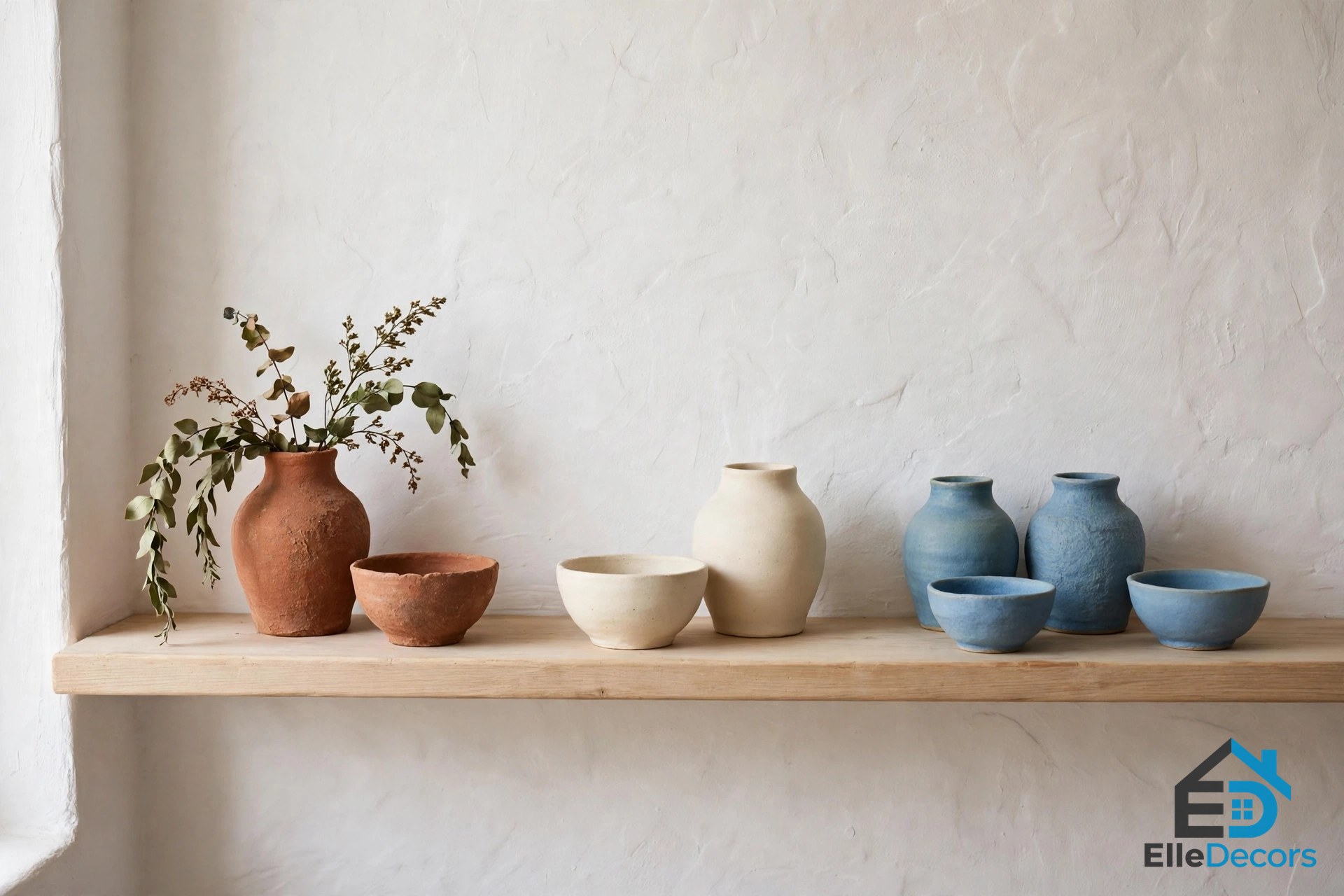
Ceramics are the decoration: handmade bowls, vases, and plates in terracotta, cream, and sea blue, grouped in twos and threes on a shelf or a table, give a room its Mediterranean character without a single themed object.
If you are starting from scratch, our ideas for interior decorating guide covers the broader decorating basics, from choosing a focal point to layering a room, before you add the Mediterranean-specific pieces.
Styling mistakes to avoid are simple: too many themed objects, too many colours, and furniture too dark or heavy for the room. One olive tree is a statement; five potted plants in every corner is a greenhouse. One patterned tile floor is character; patterned tiles on the floor, the backsplash, and the fireplace is noise.
Mediterranean Decor at a Glance
Use this table to turn contemporary mediterranean decor into a plan: match the room you have to the move that matters most.
| Room | Key Move | Materials | Colour Note |
|---|---|---|---|
| Living room | Low soft seating, open layout | Travertine table, linen sofa, rattan light | Warm white, sea blue cushions |
| Kitchen | Sage or beige cabinets, tiled backsplash | Zellige tile, butcher block, brass | Sage green, cream, terracotta |
| Bedroom | Layered linen, cane headboard | Cane, linen, light wood | Sandy tones, soft sage |
| Bathroom | Stone wall, one tiled feature | Travertine, zellige, brass taps | Warm white, stone grey |
| Terrace | Wooden dining set, pots, pergola | Wood, terracotta pots, stone floor | Terracotta, olive green |
| Entryway | Arched mirror, bench, one plant | Plaster, wood, woven basket | Warm white, one blue accent |
Watch: A Modern Mediterranean Home Tour
Watch ABI Interiors tour Casa Franc, a modern Mediterranean home on the Gold Coast in Australia, where creamy render, arched timber doors, sweeping curves, and arches enclosing an alfresco space show the curves and indoor-outdoor flow in this guide working in a real house.
Video: ABI Interiors tours Casa Franc, a modern Mediterranean home with arches and an alfresco space.
Frequently Asked Questions
What is contemporary mediterranean decor?
Contemporary mediterranean decor is the modern, pared-back version of the Mediterranean style from Spain, Greece, and Italy. It keeps the warm materials, white plaster walls, and sea-and-earth palette, and drops the heavy old-world furniture and clutter, so the room feels calm and current.
What colours work in a Mediterranean style interior?
A mediterranean style interior starts with warm whites, cream, and sandy beige, then adds one sea colour such as deep blue or sage green and one earth colour such as terracotta or olive, keeping roughly two-thirds neutrals.
Can I use this style in a small flat?
Yes. The style suits small rooms well, because it depends on light and pale walls rather than large furniture. A mediterranean style interior in a small flat needs a pale palette, one arch or curved shape, warm wood, and a single statement plant.
What is zellige tile, and where should I use it?
Zellige is a handmade Moroccan glazed terracotta tile, made in and around Fez, with each tile pressed from natural clay, glazed, and fired so no two pieces are alike. Use it for a kitchen backsplash, a bathroom wall, or a fireplace surround, where its uneven glaze catches the light.
How do I keep an indoor olive tree alive?
Give it at least 6 hours of direct sun a day at a south- or west-facing window, and water about every 1 to 2 weeks, only when the top 2 inches of soil are dry. Olive trees are drought-tolerant, so overwatering is the most common mistake.
The Bottom Line
Start with light and a warm neutral palette, choose a few honest materials such as travertine, zellige, wood, and linen, and add one arch or curve. Get the room right, and the Mediterranean feeling follows on its own. That is what contemporary mediterranean decor does best — a home that feels like a long summer, every day of the year.