Luxury Interior Design: How to Create a Home That Feels Truly Luxurious
Luxury interior design is not about filling a room with expensive things. It is about choosing fewer, better things and giving them room to be seen. A marble slab with dramatic veining, a chair built to your exact measurements, silk curtains that catch the afternoon light: each piece earns its place. The difference between a luxury interior and an expensive one is not the budget. It is the care. This guide explains what makes a home feel luxurious, walks through a modern Moroccan villa that shows the idea in practice, and then covers materials, colour, lighting, furniture, and each room in turn.
What Makes Luxury Interior Design Different
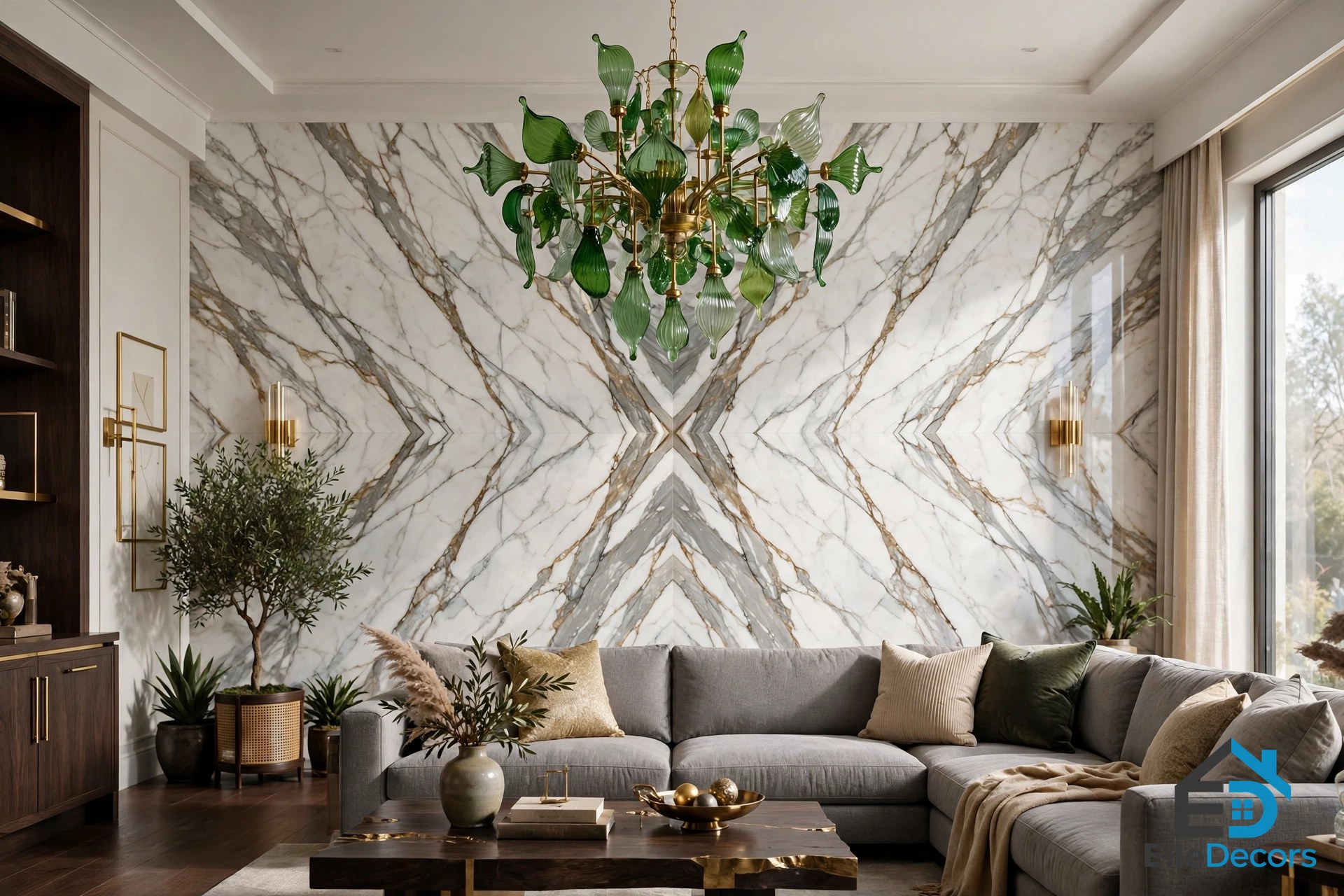
Three things separate luxury from standard interior design: material quality, attention to detail, and customisation. Material quality means natural stone, solid wood, real brass, and honest textiles, chosen for how they feel and age, not just how they photograph. Attention to detail means the grout lines line up, the curtain hem falls exactly to the floor, and the hardware matches throughout the room. Customisation means furniture built to fit the room and the people in it, rather than a catalogue piece squeezed into a space it was never measured for.
Luxury is also restraint. A luxury room is rarely full. It has breathing space around the furniture, one statement piece per room, and a palette that stays consistent. Modern luxury in particular is about quality over quantity: clean lines, thoughtful choices, and materials that age beautifully. If a room feels calm when you walk in, even before you notice any single object, the design is doing its job. Our guide to the basics of luxury design covers the same ground from the definition up, and it is a good companion to this one.
The Materials That Make It Luxury
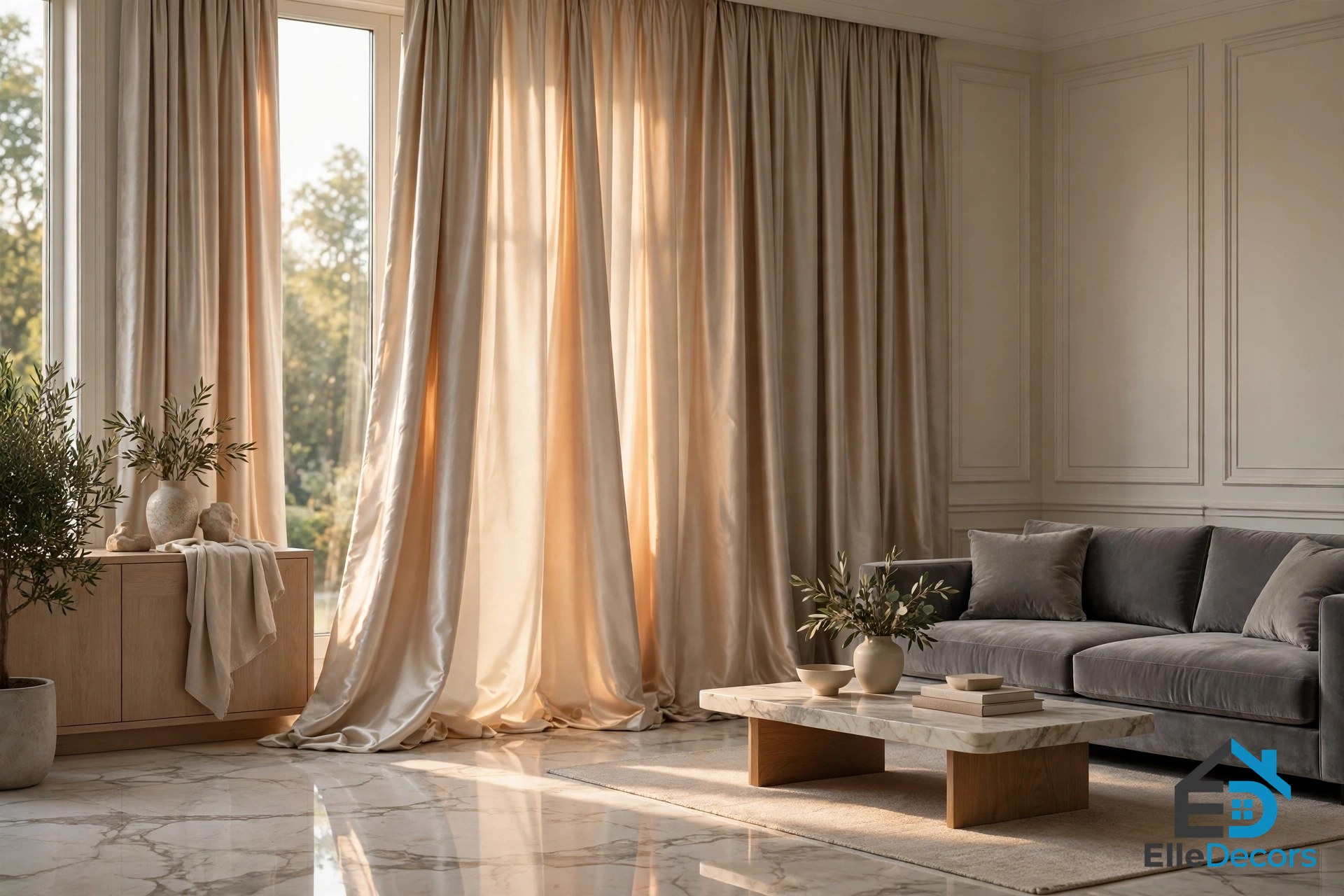
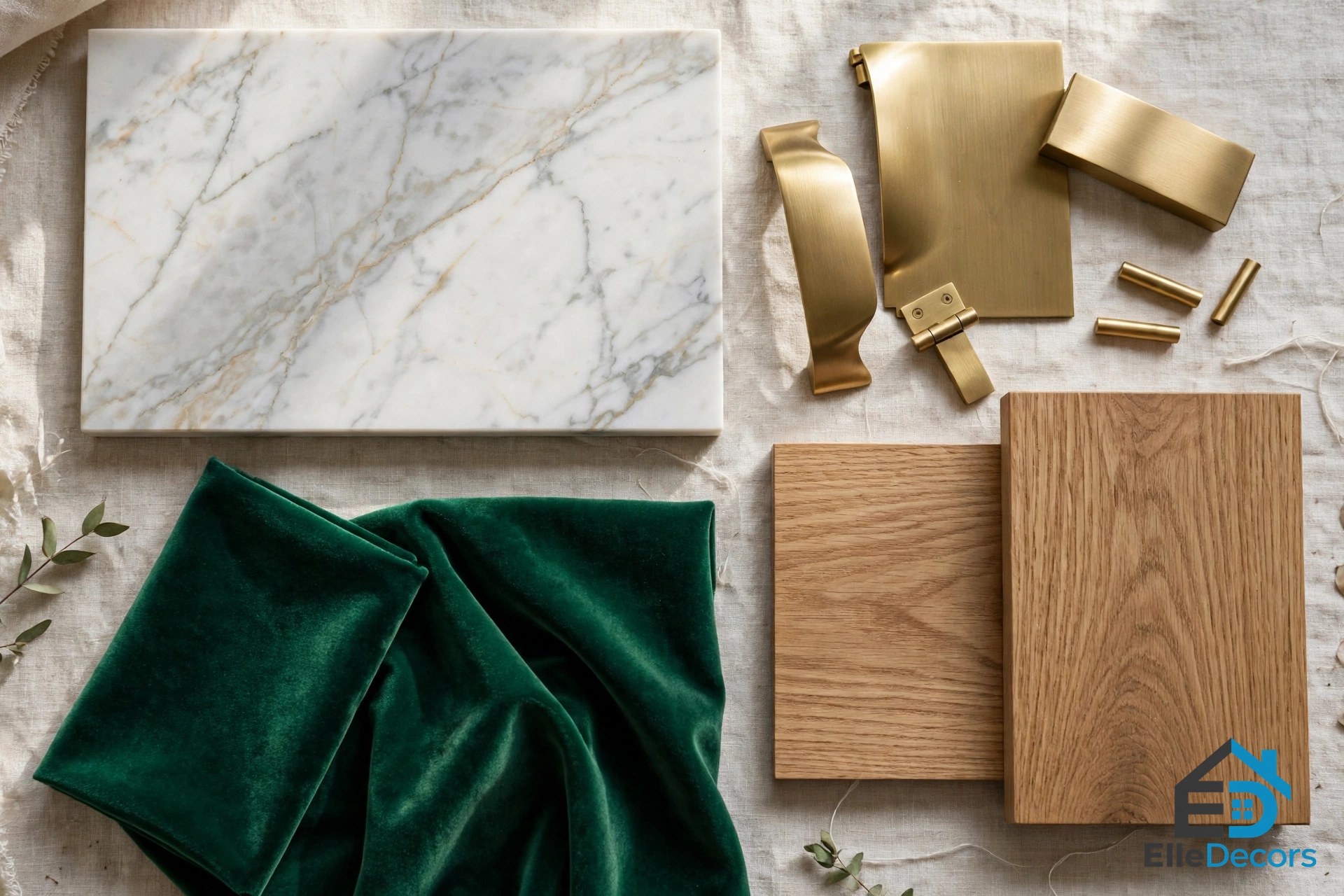
Materials decide whether a room reads as luxury or as imitation, and in luxury interior design they are the first decision, not the last. Natural stone anchors most luxury projects: Carrara marble in bathrooms, Calacatta with dramatic veining on a kitchen island, quartzite counters that handle heat without flinching. Hardwood floors in walnut, oak, or mahogany give warmth that engineered alternatives cannot copy. Metals matter too: brass fixtures, chrome hardware, gilded bronze details. Brass dominates current luxury work; unlacquered brass develops a patina over time, while lacquered brass stays bright.
Premium textiles complete the picture. Silk drapery belongs in formal rooms, where it catches light like no synthetic can. Velvet upholstery suits statement pieces. Cashmere throws add layered texture. Linen brings relaxed luxury to bedrooms and casual seating. Leather, glass, ceramic, and handmade ceramics each add a different surface quality. The rule for combining them is simple: one room should mix at least three textures, such as stone, wood, and a soft fabric, so the palette never looks flat. And use each material where it performs: stone where water and heat live, wood where feet and hands touch, and soft textiles where bodies rest.
A Case Study: The Modern Moroccan Villa
The clearest example of modern luxury in this guide is a villa in Morocco, designed by the team at Studia 54. It is worth studying because it breaks from the traditional Moroccan interior entirely: no arched doorways, no intricate carving, no coloured glass lamps, no swagged fabric canopies. Instead the villa heads in a crisper, more luxurious direction, with a toned-down colour palette, sleek granite and bookmatched marble walls, fresh contemporary furniture, and a series of stunning modern chandeliers that hang low and large like art installations. Abundant gold accents make gleaming additions to a bold scheme of dark wood, black, and grey.
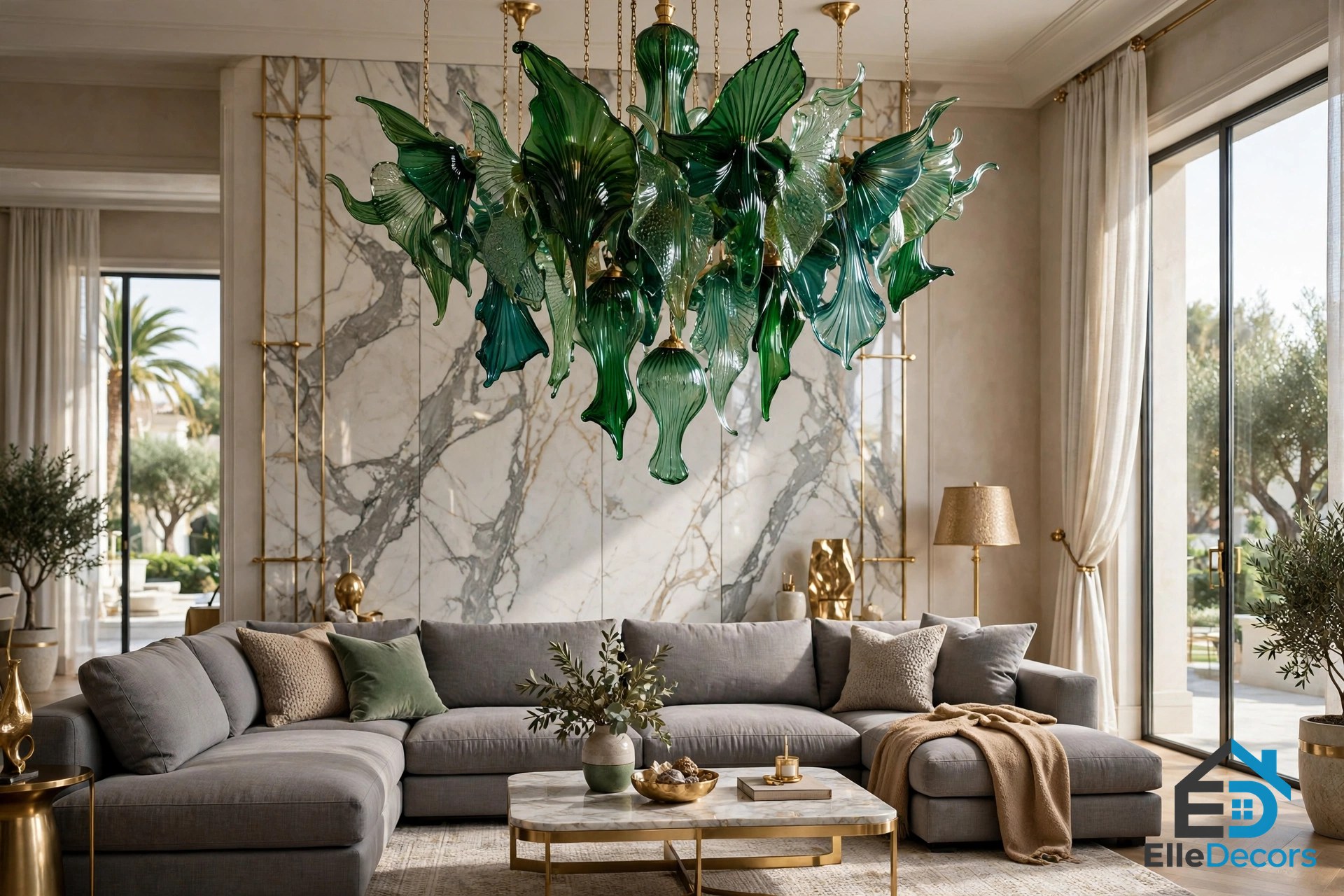
The living room shows how the palette works. Green glass rains down from a crystal chandelier, like the leaves of a great hanging plant, and green accent cushions enliven a sprawling grey, beige, and brown sectional sofa. Decorative screens divide the vast room into zones for relaxing, entertaining, and dining. Black and white elements bring crispness: a cowhide-effect ottoman coffee table, black and gold furniture by the double entry doors, which carry theatrical golden handles. A triple-headed floor lamp lights a zebra-print ottoman in a snug sectioned off from the open plan.
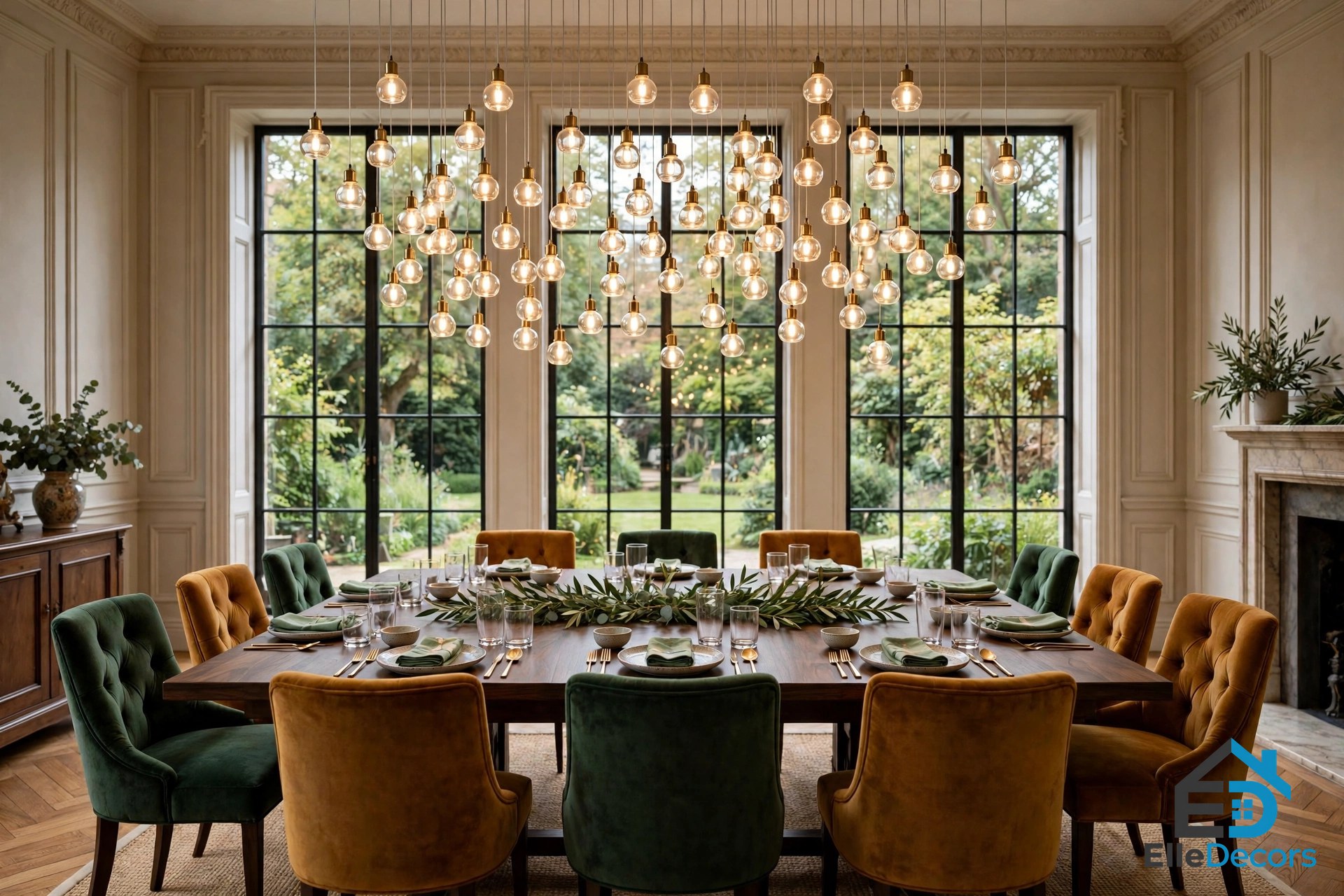
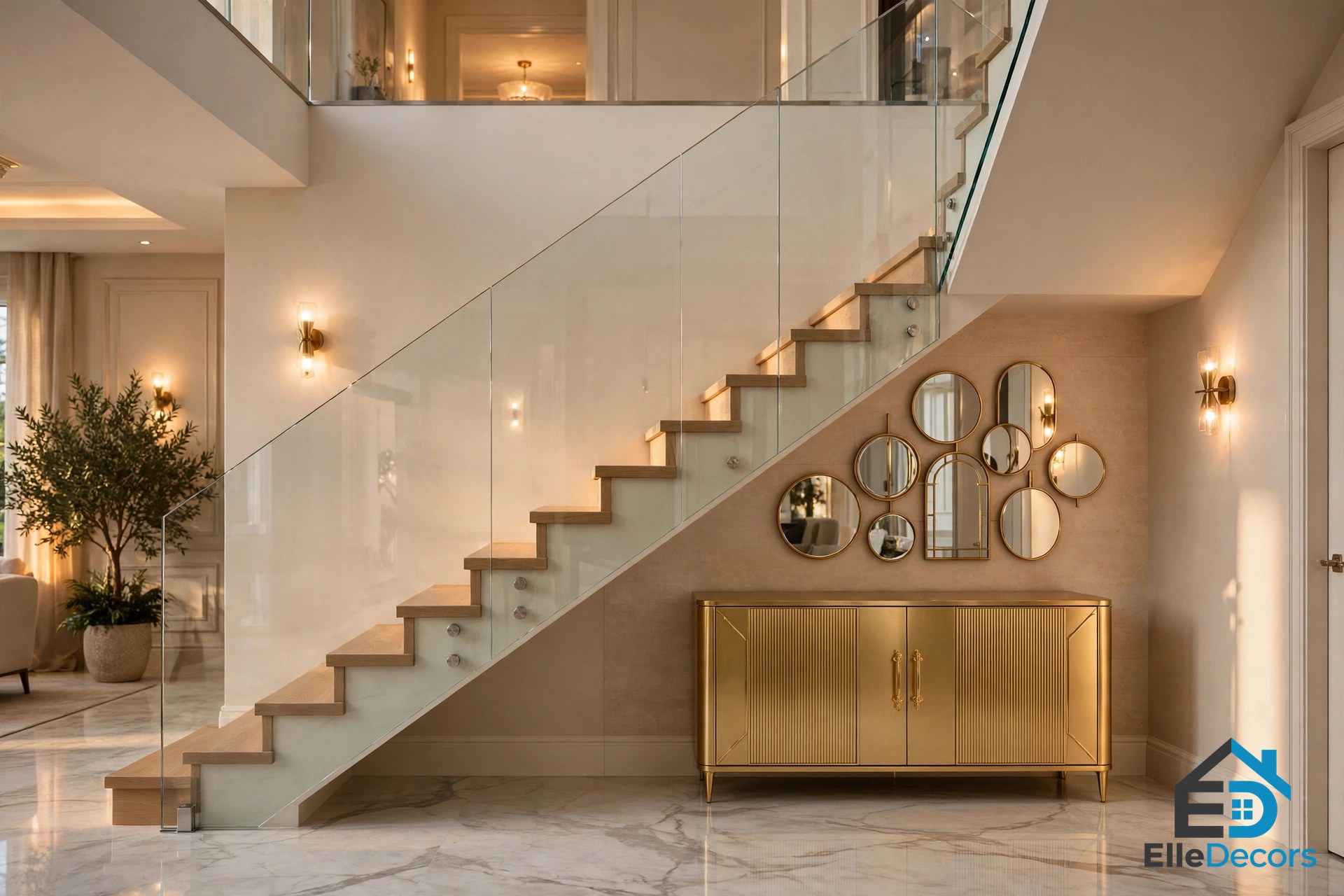
The dining room continues the same language. A shoal of pendant lights floats over the formal dining table, and green and amber dining chairs blend with the garden view and the ruddy wood tones of the walls. In a second dining spot, crystal pendant lights drip like stalactites, white cactus sculptures push up from the floor, and tree imagery fills the golden frames of the screens dividing the dining room from the main living space. The staircase runs through the home with a continuous glass balustrade, and a gold cabinet gleams in the stairwell below decorative wall mirrors.
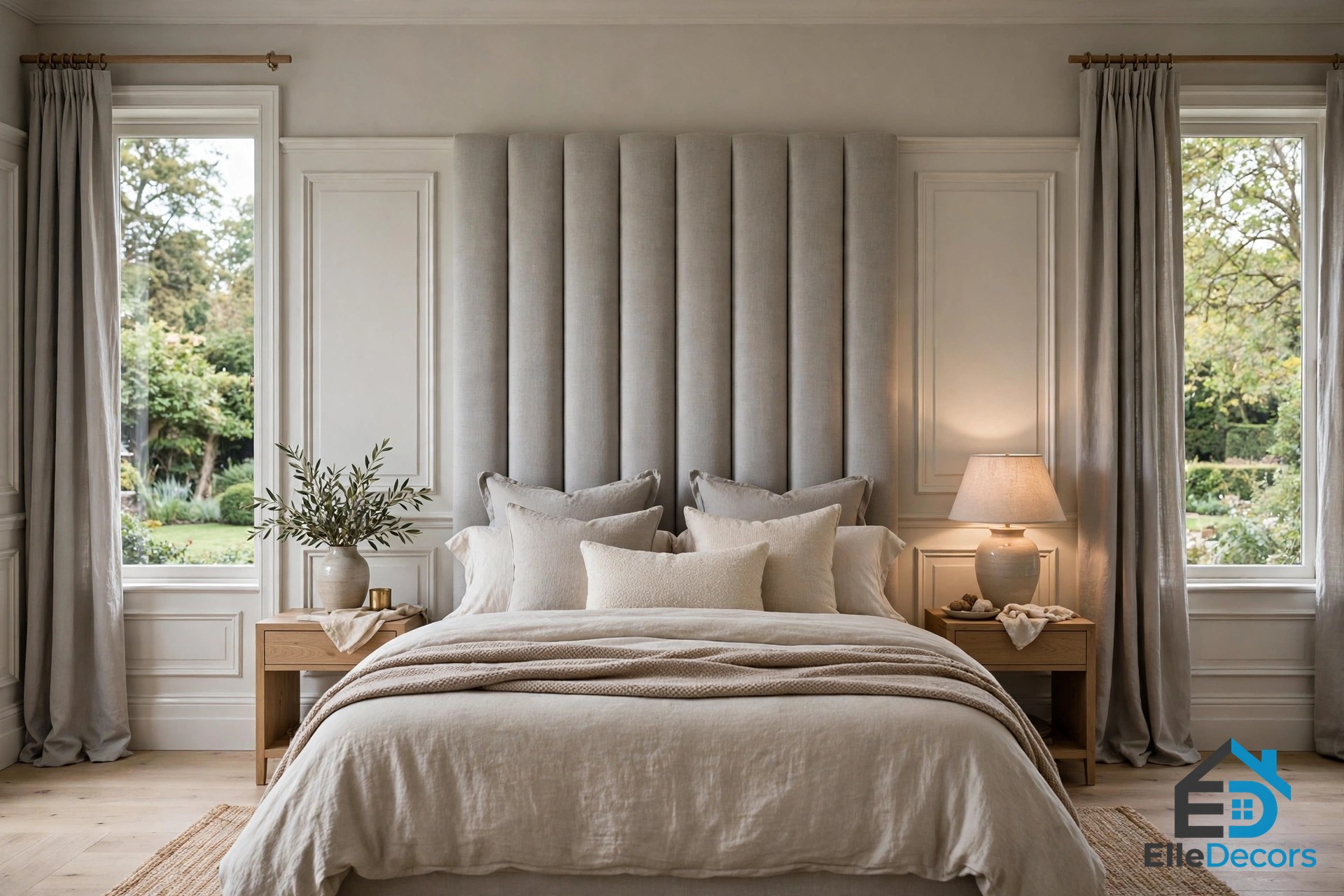
The bedrooms are quieter. Wainscot panels flank the headboard in the main bedroom, and soft grey curtains draw back to reveal a garden view. A second bedroom has a curved headboard hugging the sleep space and a winged chair; a third has a winged black headboard against a wood-panelled feature wall run through with gold strips, with black paint darkening the other walls.
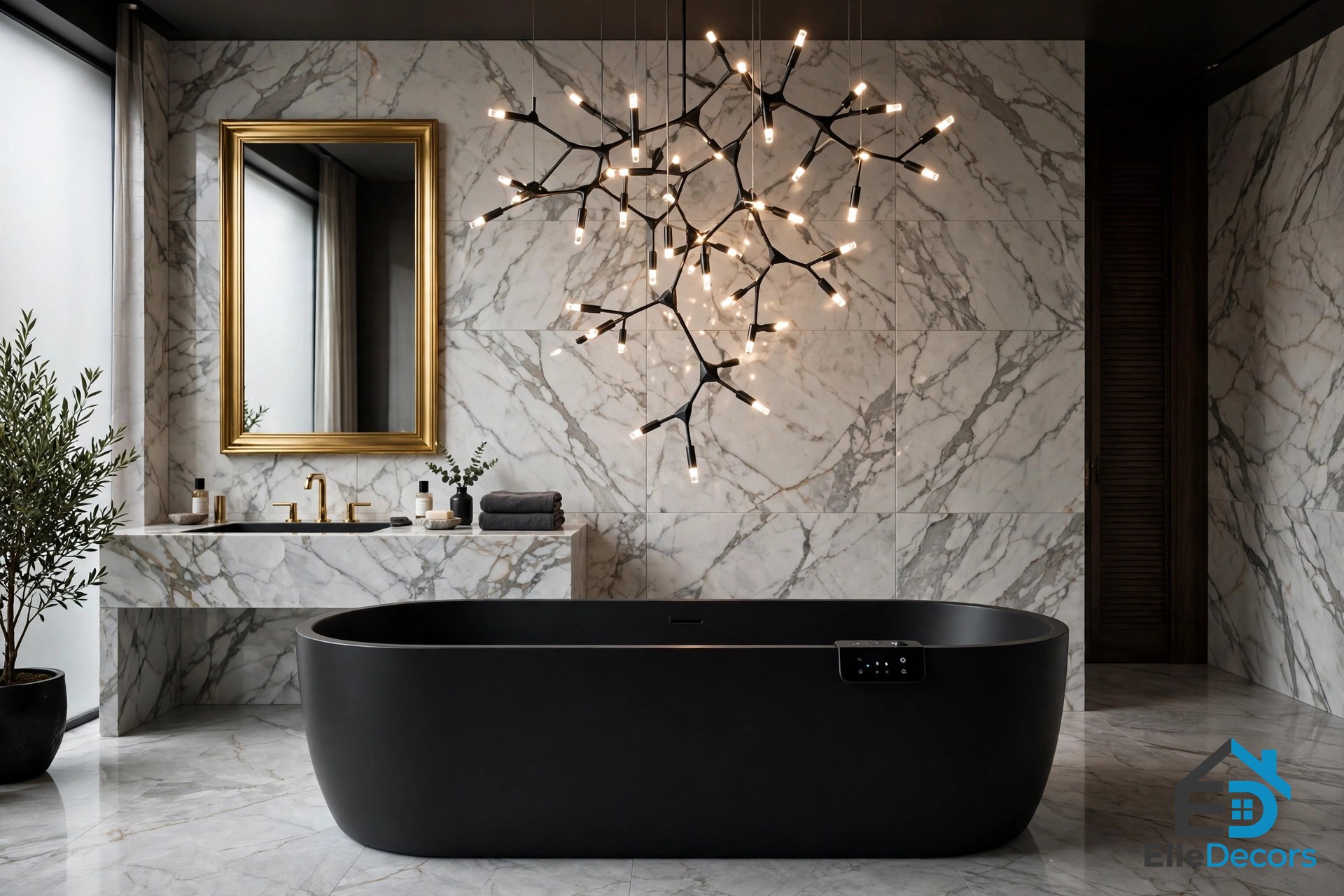
The bathrooms are bolder: amber droplets shower from a modern bathroom chandelier over a solid granite vanity with two integrated basins, marble tiles pattern the walls around a gold-framed mirror, and a second bathroom holds a smart black bathtub and a show-stopping light installation. The villa’s lesson is not to copy Moroccan style. It is that luxury comes from a disciplined palette, a few spectacular lights, and materials used with confidence.
Colour: Neutrals With One Bold Move
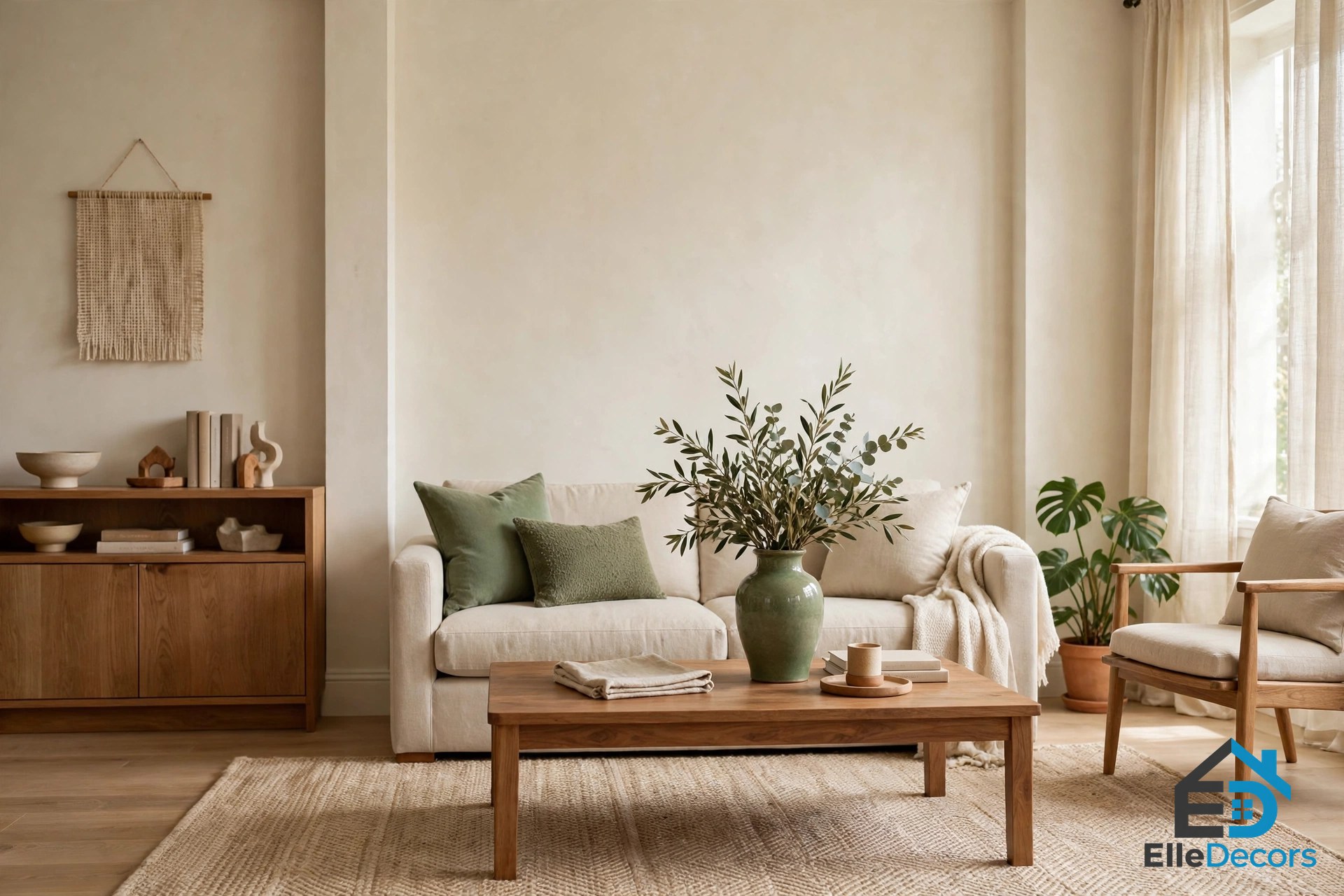
A sophisticated luxury palette usually starts with neutral foundations: cream, beige, warm grey, taupe, or soft white. The villa above builds on grey, beige, and brown, with black for structure and gold for warmth. The bold move is a single accent colour used with discipline: in the villa, green appears in the chandelier glass, the cushions, the dining chairs, and a bathroom pouf, and almost nowhere else. That repetition is what makes the accent feel intentional rather than random.
Warm luxury uses natural materials, earthy colours, soft textiles, timber, stone, and ambient lighting to feel inviting. Cool luxury leans on grey, white, black, and chrome for a crisper mood. Either can work. What fails is a room with three competing accent colours and no dominant neutral. Pick the neutral first, add one accent, and repeat that accent at least three times in the room, in different sizes: a large piece, a medium piece, and a small one. Then stop. The restraint is the luxury. Colour is where the discipline shows most clearly: the palette is decided before the shopping starts.
Lighting in Layers
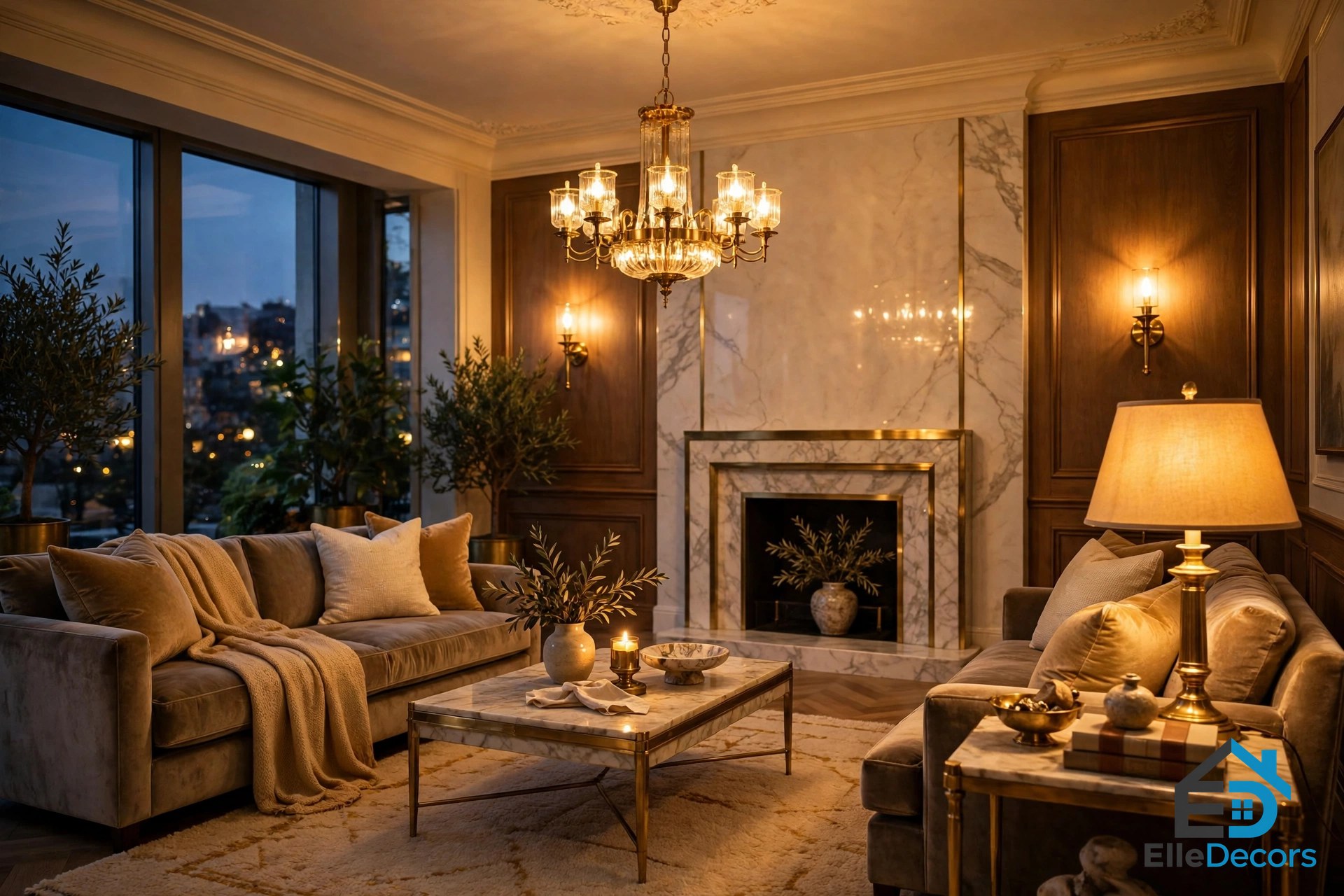
Lighting transforms a luxury interior design faster than any other element, and layered lighting separates professional work from amateur attempts. A luxury room has at least three layers: ambient lighting for overall illumination, task lighting for reading, cooking, and working, and accent lighting to highlight art and architecture. Decorative lighting, the chandelier or sculptural pendant, adds a fourth layer of character.
In the villa, the chandeliers are the decorative layer and they are treated as art: the green glass crystal chandelier in the living room, the layered pendants descending over a round coffee table, the shoal of pendants over the dining table, the crystal stalactites in the second dining spot, and the amber droplet chandelier in the bathroom. Recessed lighting handles the ambient layer without visual clutter. Table and floor lamps add task light, and wall sconces wash the screens and mirrors.
Keep the colour of the light warm, around 2700 to 3000K, in living rooms, dining rooms, and bedrooms. Warm light makes marble glow, brass shine, and velvet look deep. Cool light above 4000K makes the same materials look flat and clinical. Put the statement fixtures on dimmers, so one room can shift from bright and social to low and intimate. Good lighting makes premium materials look even more impressive, and bad lighting wastes them.
Bespoke Furniture and Proportion
Bespoke furniture is one of the clearest marks of luxury interior design. A sofa built to the exact length of a wall, a dining table sized to the room, a wardrobe fitted to an awkward corner: each piece fits because it was made for the place. A luxury interior designer measures the room before choosing the sofa, not after. Custom furniture also hides storage where a bought piece cannot, and it lets the designer choose the exact fabric, finish, and proportion. In the villa, the sprawling sectional, the gold cabinet in the stairwell, and the end-of-bed storage bench in houndstooth all read as made for their spots rather than bought for them.
Proportion matters as much as custom work. A luxury room balances its furniture: a large sofa needs a substantial coffee table, a tall ceiling needs a tall light, and a long wall needs a wide piece of art or a mirror, not a small frame lost in the middle. Leave negative space. A room with one empty wall and one full wall looks richer than a room with every wall filled. The same discipline applies to decoration: a few large, considered pieces beat many small ones. The villa’s elliptical mirrors, gold-framed screens, and black-and-white photography are all large-scale pieces that match the scale of the rooms they sit in.
Room by Room
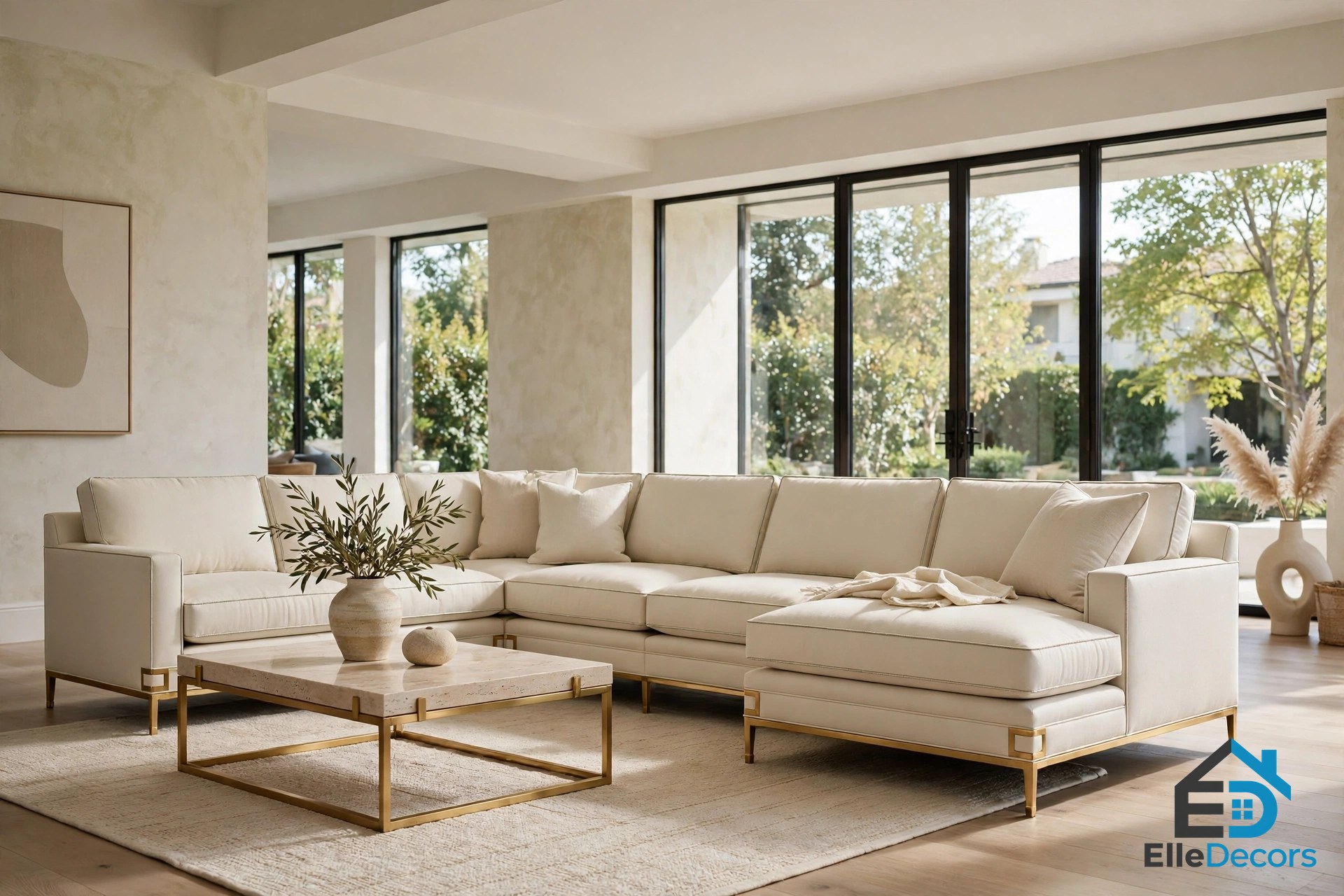
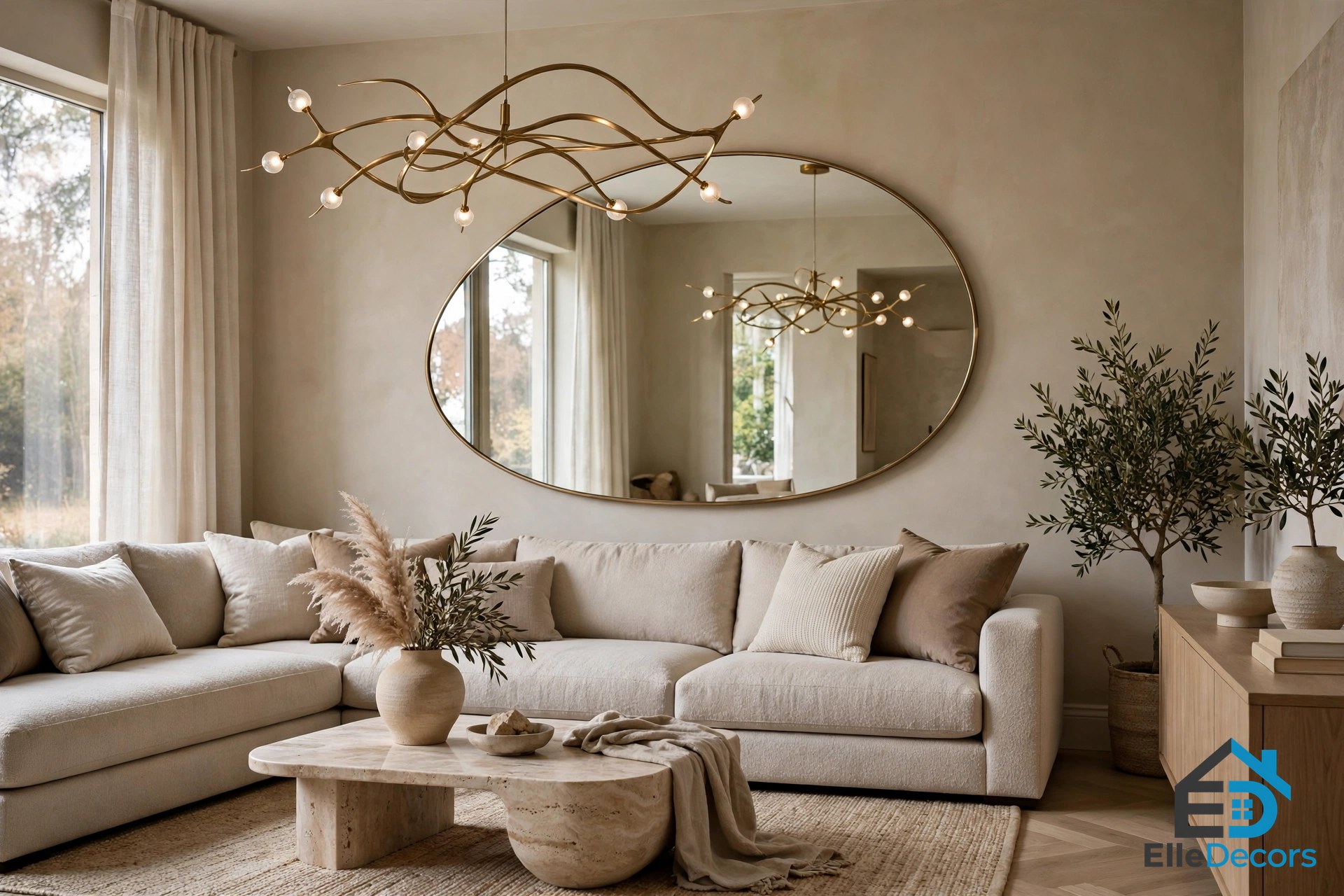
The living room is where luxury interior design shows first. Anchor it with the largest piece, the sofa, then add the statement light above it and one strong art piece or mirror. Keep the palette neutral and let one accent repeat. The dining room needs a table that fits the room with space to walk around it, chairs that are comfortable for a long meal, and a pendant hung low enough to light the table and high enough to see across it. A shoal of pendants, like the villa’s, works over a long table where one fixture would leave the ends dark.
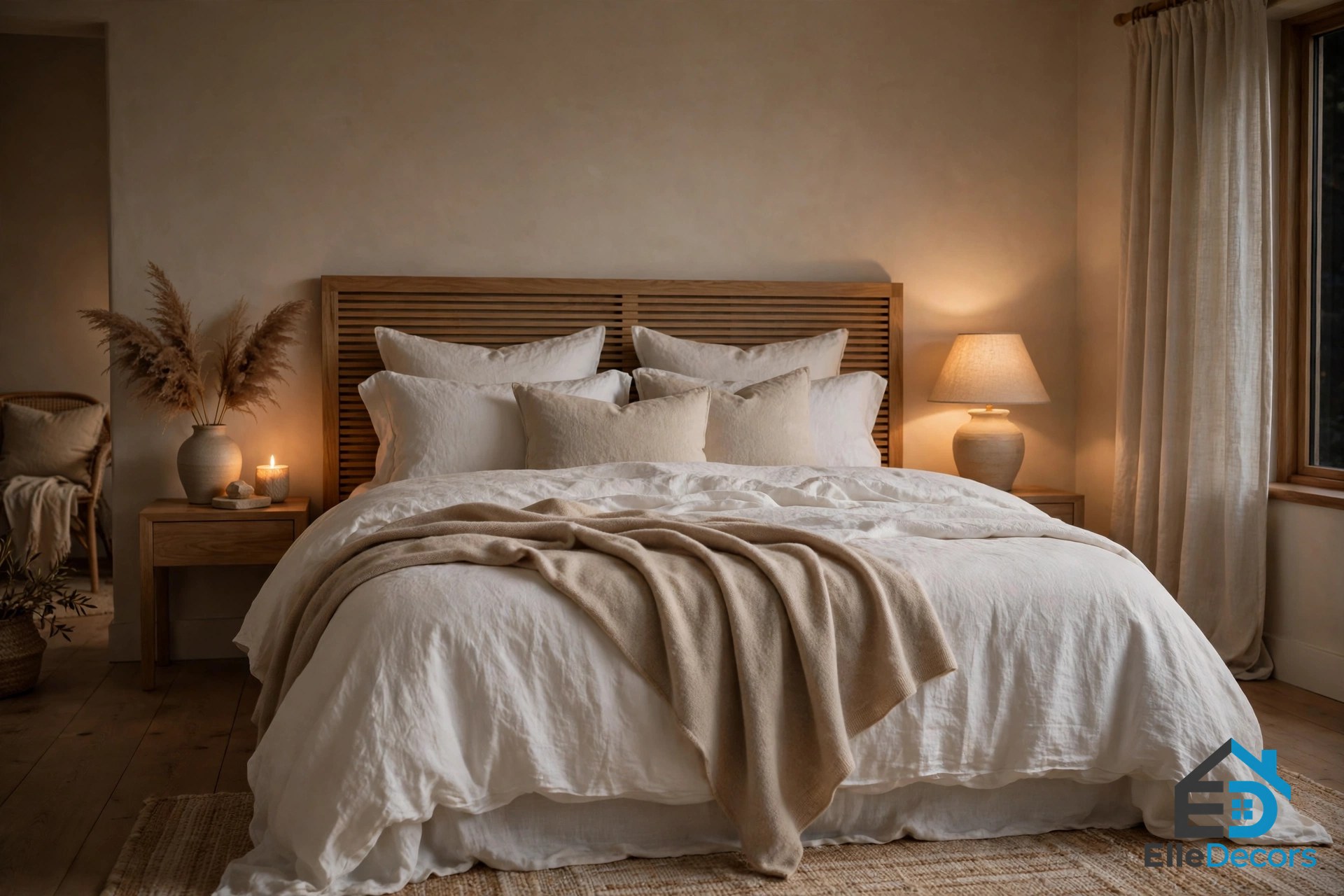
The bedroom should be the calmest room in the house. Layer the bed with linen and a cashmere throw, flank the headboard with panels or sconces, and keep the lighting warm and low. The villa’s bedrooms do this with wainscot panels, curved and winged headboards, and soft grey curtains. The bathroom can be the boldest room: marble walls, a gold-framed mirror, a black bathtub, and a chandelier, as the villa shows. Stone and brass handle water well, and a single dramatic light makes a small room feel grand.
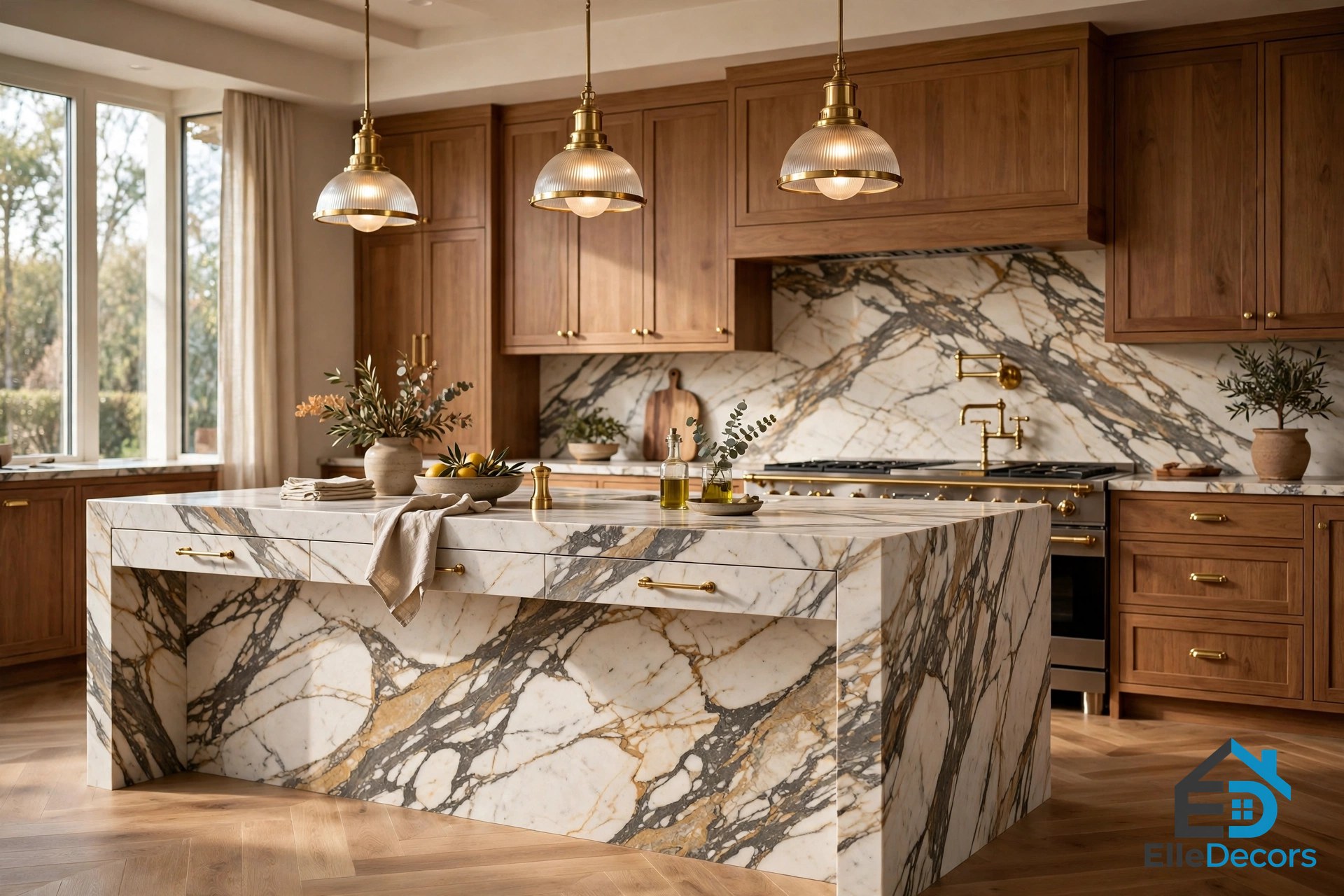
The kitchen is where luxury meets daily use. Natural stone counters, solid wood or lacquered cabinetry, brass hardware, and a statement pendant over the island carry the luxury, while the layout carries the work. Our guide to high end kitchens covers the same ground in detail, from stone choice to lighting. A home workspace, like the small desk by the window in the villa’s second bedroom, needs only a good chair, a wood and gold desk, and wall shelves: luxury in a workspace is quiet, light, and uncluttered.
Luxury Styles Compared
Luxury is not one style. The table below compares five directions, all built from the same ingredients: good materials, layered light, and restraint. The villa in this guide is the Moroccan-modern row. Neoclassical interior design is the closest cousin to it on this site, with its own guide.
| Style | Palette | Key materials | Lighting |
|---|---|---|---|
| Modern luxury | Warm neutrals, one accent | Marble, walnut, brass, linen | Sculptural pendants, recessed |
| Neoclassical | Cream, gold, soft grey | Marble, gilt, silk, mahogany | Crystal chandeliers, sconces |
| Moroccan-modern | Grey, black, gold, green | Bookmatched marble, granite, glass | Green glass chandeliers, pendants |
| Warm minimalism | Beige, cream, natural wood | Oak, stone, wool, rattan | Warm recessed, paper pendants |
| Classic traditional | Deep tones, rich reds | Mahogany, velvet, bronze | Candle-style chandeliers, lamps |
Watch: A House Built on Restrained Luxury
Watch a tour of a modern house built on restrained luxury, with a garden, a pool, and minimalist design, from the architects Line Architects. It shows the same ideas as this guide in a different house: stone walls, ash wood ceilings, quiet rooms, and light used as a material. Use it to see how little a luxury interior needs when the materials and the light are right.
Video: A modern house tour showing restrained luxury, garden, pool, and minimalist design.
Frequently Asked Questions
What is luxury interior design?
Luxury interior design is a specialised approach to creating residential and commercial spaces using premium materials, bespoke furniture, and meticulous craftsmanship. What separates it from standard design comes down to three things: material quality, attention to detail, and customisation. It is not defined by how much money is spent, but by how well each choice is made and how carefully the room is finished.
How do I make my home look luxurious on a smaller budget?
Spend on the things you touch and see most: the sofa fabric, the light fixtures, and the largest surfaces. Choose one good material, such as a marble-look stone or solid wood, and use it where it shows. Add layered lighting with warm bulbs and dimmers, keep the palette neutral with one accent, and remove clutter before buying anything new. A calm, uncluttered room with good light reads as luxury before any single object does.
What colours work best in a luxury interior?
Start with neutral foundations: cream, beige, warm grey, taupe, or soft white. Then add one accent colour, repeated at least three times in the room at different sizes. Warm luxury uses earthy colours with timber and stone; cool luxury uses grey, white, and black with chrome. Avoid three competing accents with no dominant neutral, which makes a room look busy rather than rich.
Is luxury interior design always modern?
No. Luxury is a standard of quality, not a style. Neoclassical, traditional, Moroccan-modern, and warm minimalist rooms can all be luxurious if they use good materials, layered light, and disciplined proportion. What they share is restraint: one statement piece per room, a consistent palette, and space around the furniture. The style is a choice; the quality is the constant.
The Bottom Line
Luxury is not a shopping list. It is a way of choosing: fewer pieces, better materials, light in layers, and one accent used with discipline. The Moroccan villa shows the idea at full scale, with bookmatched marble, green glass, gold, and dark wood held together by a single palette. Your home can use the same rules at any scale. Start with the neutral base, pick the one material worth showing off, hang the light that deserves to be art, and leave room around everything. A luxury interior design is the one that feels calm the moment you walk in, and still rewards a second look an hour later.