High End Kitchens: The Craft, Stone, and Quiet Details That Make a Kitchen Feel Luxury
Audio Summary
Walk into a truly luxurious kitchen and you may not spot one single showy thing. There is no glitter, no giant logo on the fridge, no gold everywhere. Instead, everything fits. The cabinet doors line up. The stone veins flow from the counter up the wall. The room is quiet, calm, and easy to cook in. That feeling is what high end kitchens are really about, and it comes from craft and planning far more than from cost.
This guide breaks the feeling down into parts you can copy at any scale: the layout numbers designers trust, cabinets built for the room, stone used with confidence, appliances that disappear, light in layers, and hardware that ages with grace. It also shows where the money in a luxury kitchen truly shows, where it hides, and which mistakes make even an expensive room look cheap.
What “High End” Really Means
A high end kitchen is not a price bracket. It is a way of building. Three things set it apart from a standard kitchen.
First, the room is made to measure. Cabinets are built for the exact walls, not picked from stock sizes and filled in with strips. Appliances sit flush. Nothing looks squeezed in or padded out.
Second, the materials are real and used with restraint. One or two fine materials, like natural stone and solid wood, carry the whole room. They are repeated calmly instead of mixed with ten other finishes.
Third, everything is integrated. The fridge, the dishwasher, the storage, even the lighting plan are part of one design. Most high end kitchens feel peaceful because your eye never lands on clutter or on a machine that shouts for attention.
Keep those three ideas in mind. Every section below is just one of them, worked out in detail.
Start With the Layout: Zones, Aisles, and Room to Move
Luxury starts with space to move. A grand kitchen that is cramped to cook in will never feel high end, so designers plan the layout before they pick a single finish.
The old rule was the work triangle, the path between the sink, the stove, and the fridge. The National Kitchen and Bath Association (NKBA) still gives it simple limits: each side of the triangle should be 4 to 9 feet long, and all three sides together should add up to no more than 26 feet. In big kitchens, though, one triangle is not enough, so high end kitchens are planned around zones instead: a prep zone, a cooking zone, a cleaning zone, and a social zone where guests can sit without standing in the cook’s way.
Whichever plan you use, the clearance numbers stay the same. The NKBA asks for a work aisle of at least 42 inches for one cook, and 48 inches when two people cook. A plain walkway, where nobody works, can be 36 inches. Around an island, leave about 24 inches of counter length for each seat, with roughly 15 inches of knee room under a counter-height top, so seated guests are comfortable and not cramped.
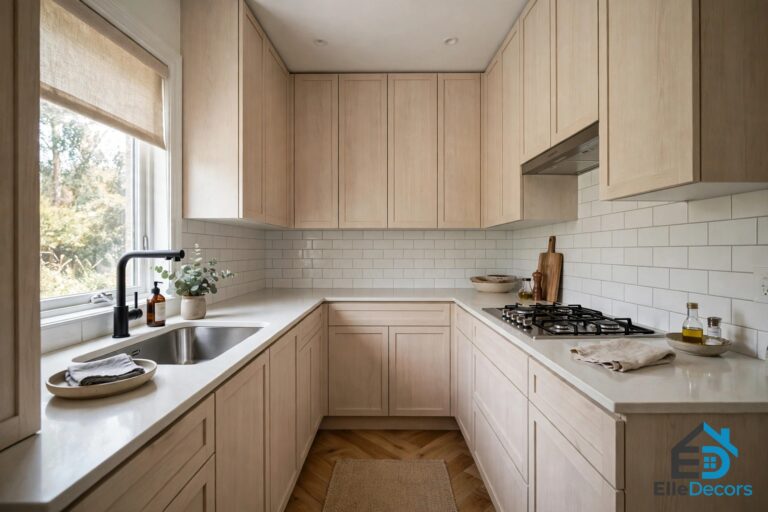
These numbers are not fancy, but they are the skeleton of every calm, expensive-feeling kitchen. The same planning rules work at the other end of the size scale too, as our guide to ideas for a small kitchen layout shows.
Cabinetry: The Backbone of High End Kitchens
If one thing decides whether a kitchen reads as luxury, it is the cabinets. They cover most of the walls, they hold everything you own, and you touch them a hundred times a day.
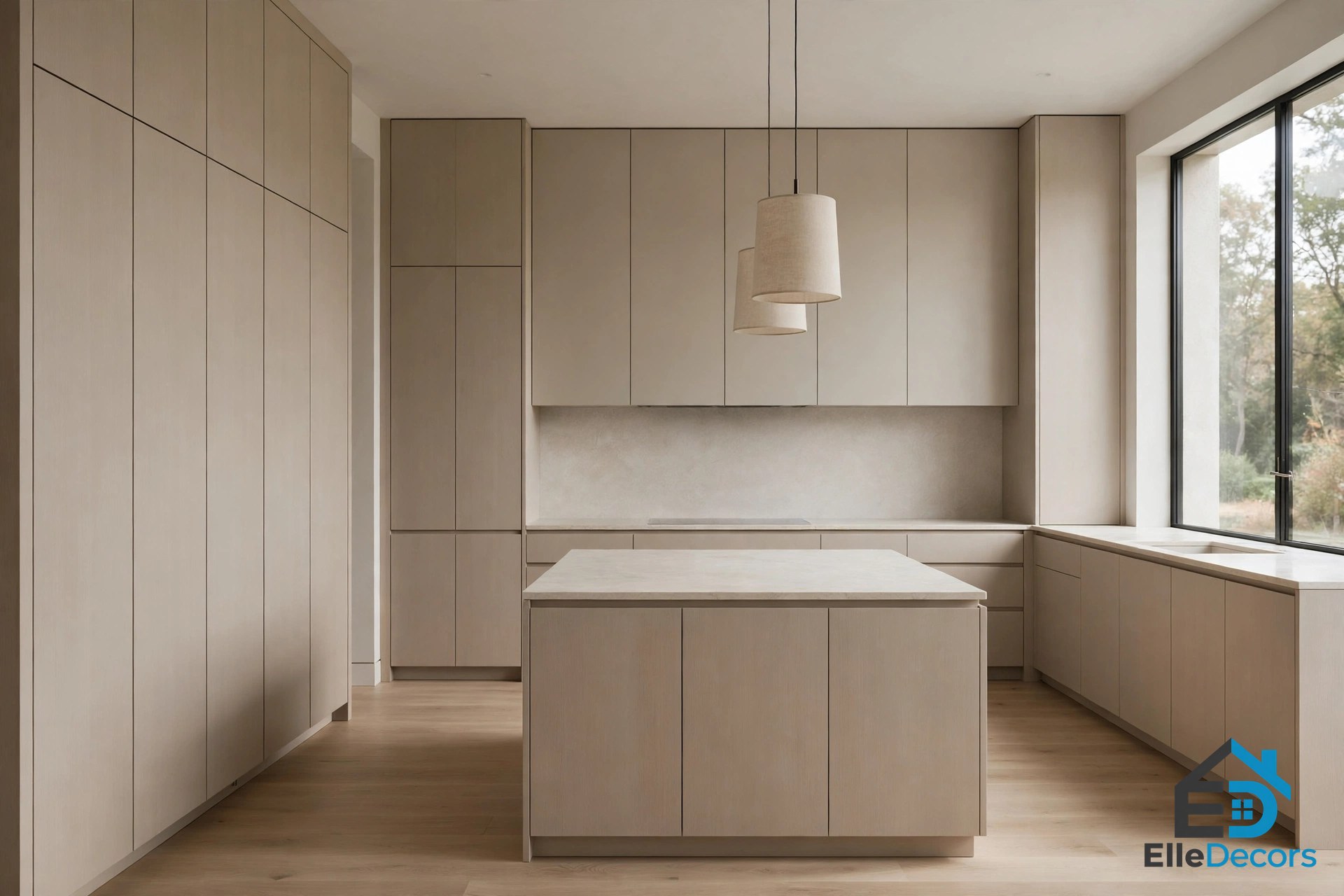
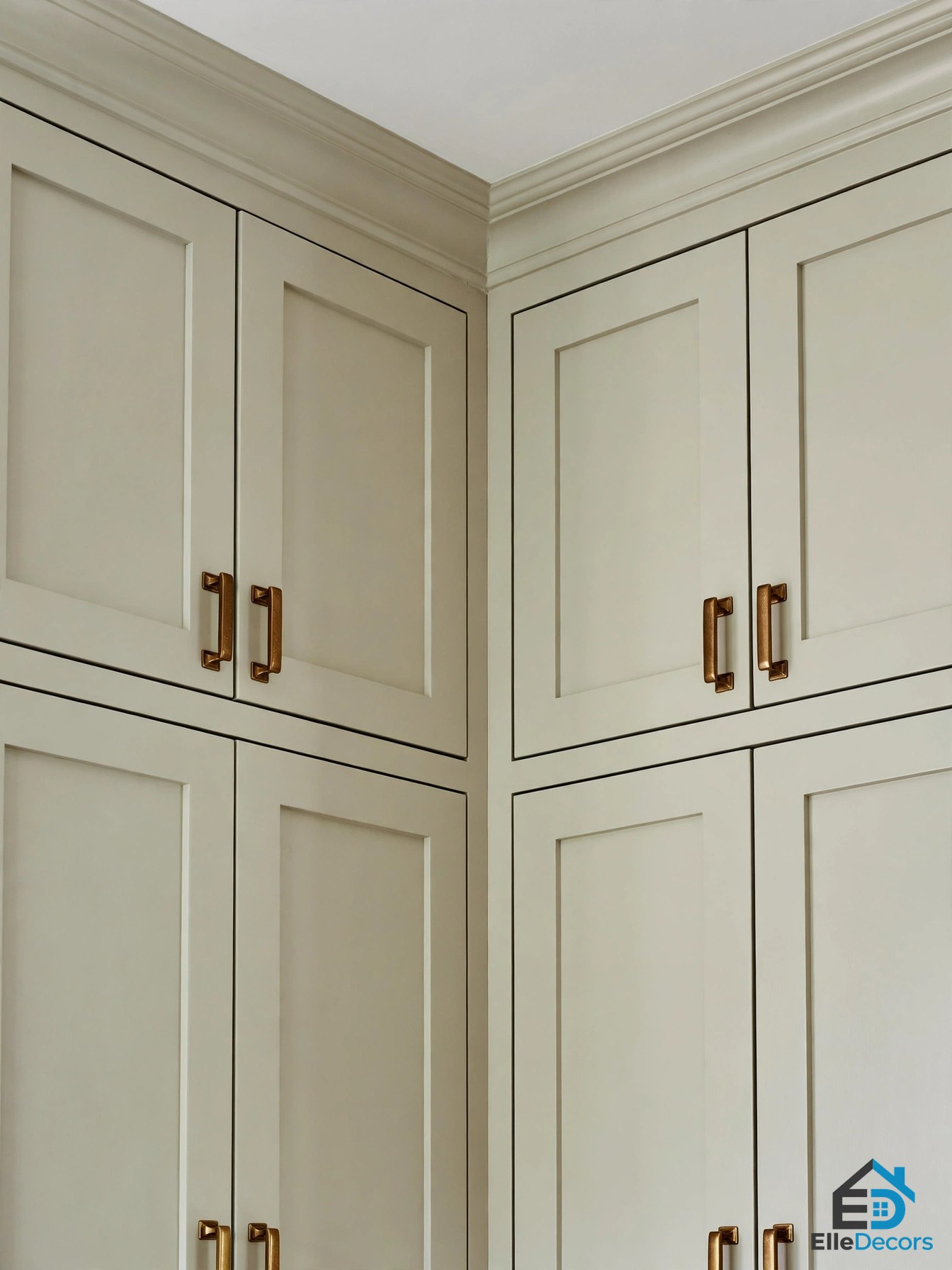
They run to the ceiling. Cabinets that stop short leave a dusty gap that always looks unfinished. Full-height cabinets use the whole wall, add storage, and make the room feel taller. It is one of the clearest signs the kitchen was built for that room alone.
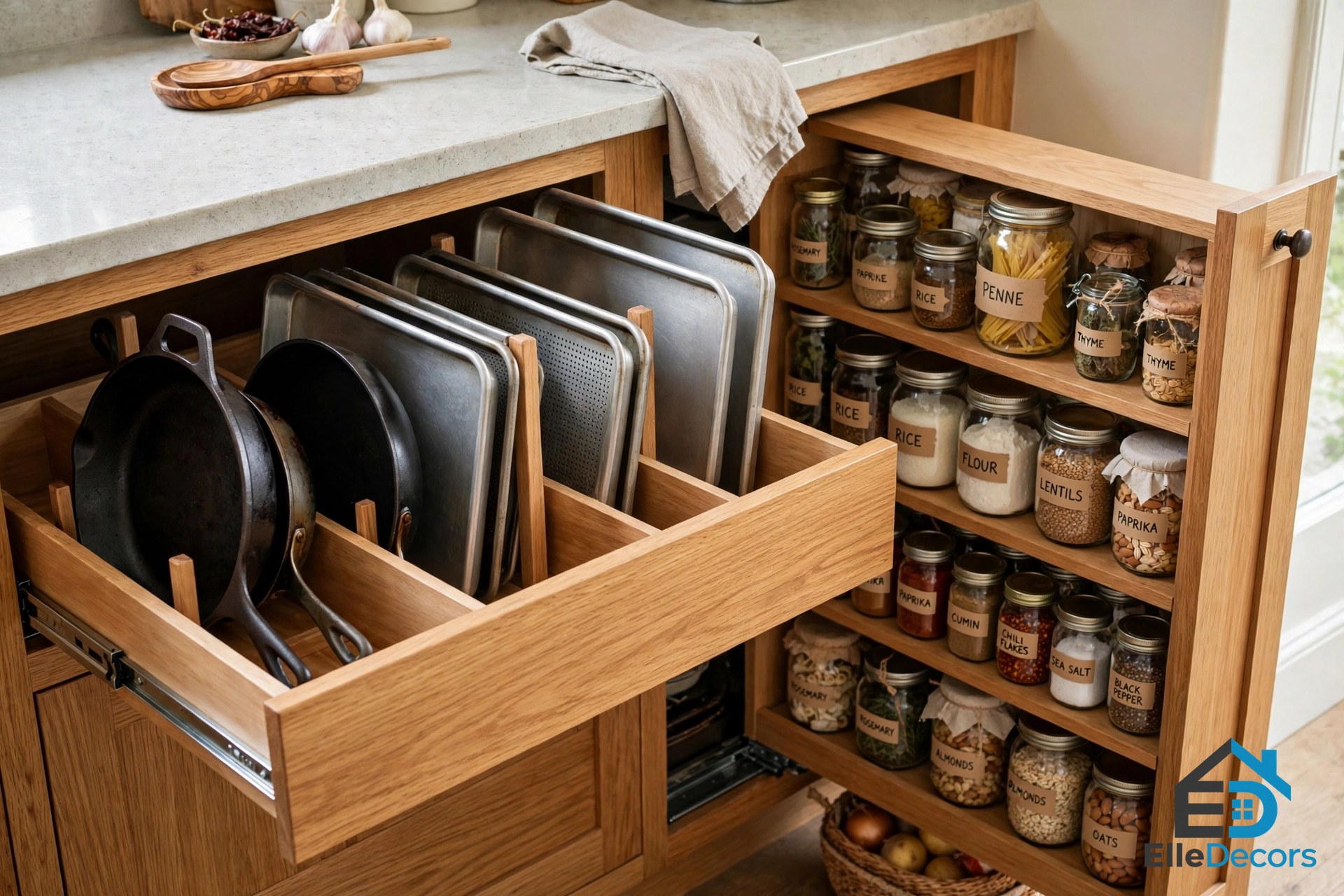
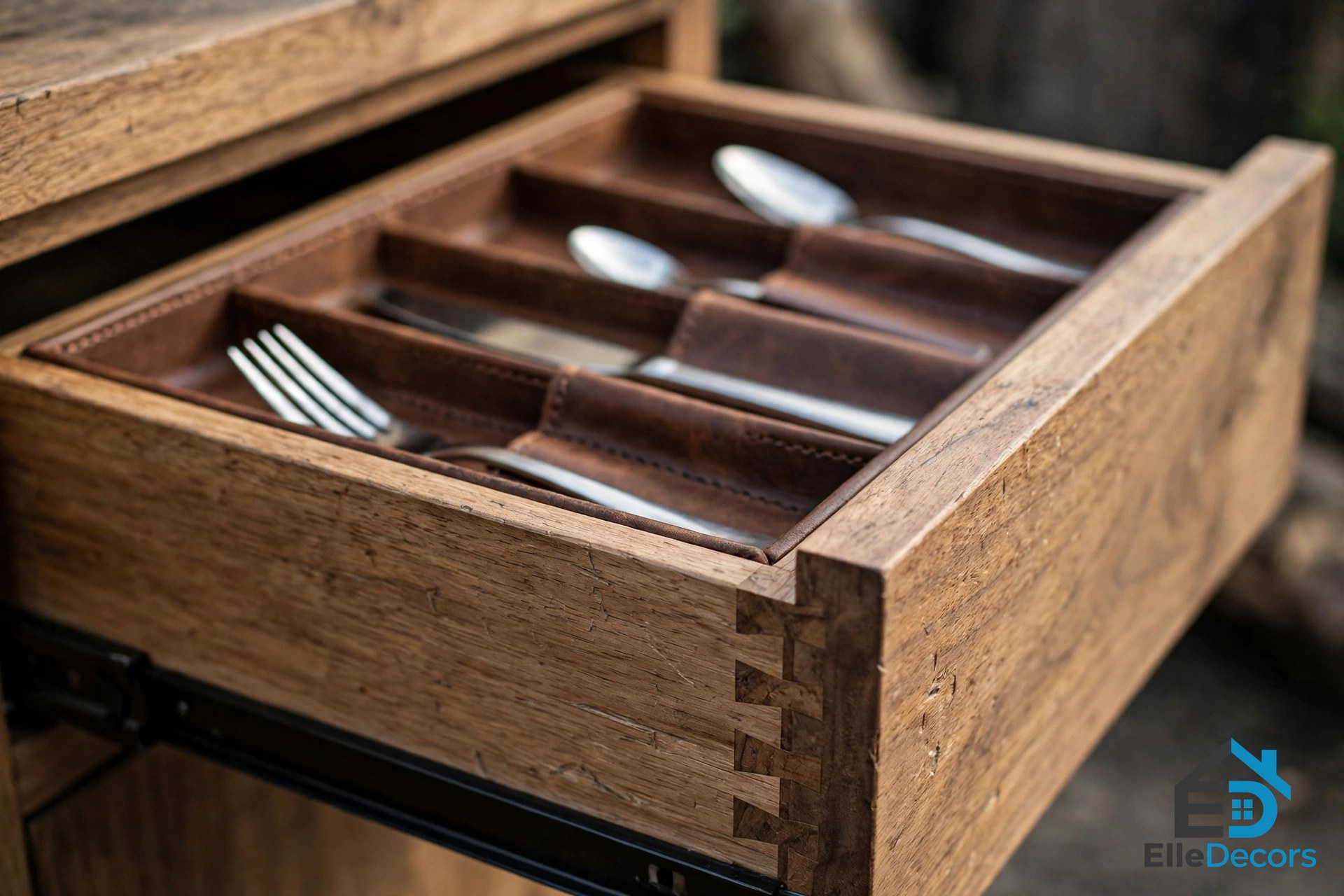
They are built like furniture. Doors sit inside their frames or close with fine, even gaps. Drawers are solid, often with dovetail joints, and they glide shut softly on full-extension runners. Inside, the storage is planned, not empty boxes: deep drawers for pans, dividers for trays, pull-out shelves for heavy mixers, and a tall larder for food.
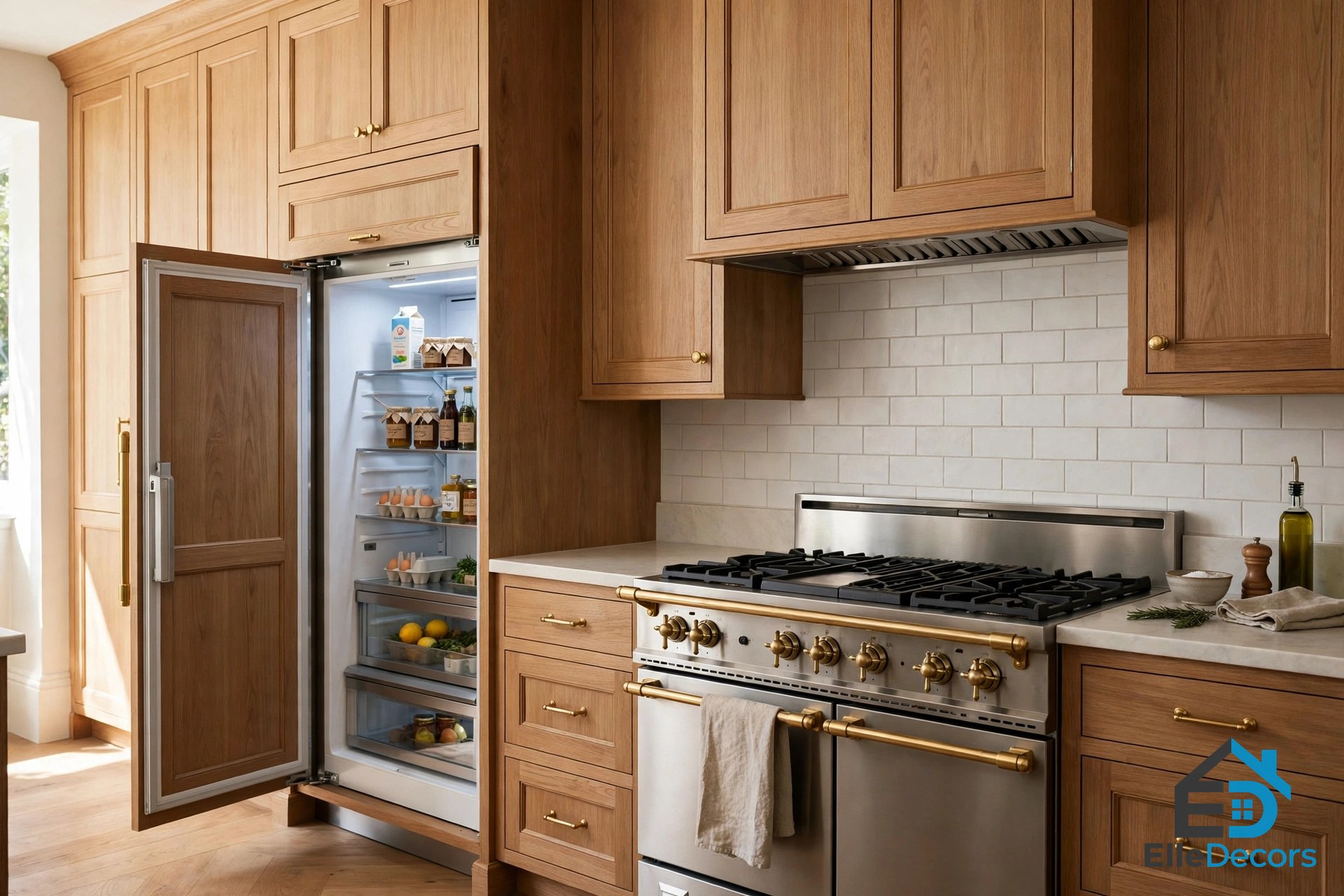
They hide the working parts. Fridges and dishwashers wear cabinet panels, so the wall of cabinets reads as one calm surface. Handles, when they exist, are solid and heavy in the hand. In many luxury modern kitchen designs the handles vanish completely, and doors open with a push or a slim hidden rail.
Good cabinets are not loud. You feel their quality in the weight of a door and the silence of a drawer, long before you notice their style.
Stone That Earns Its Place
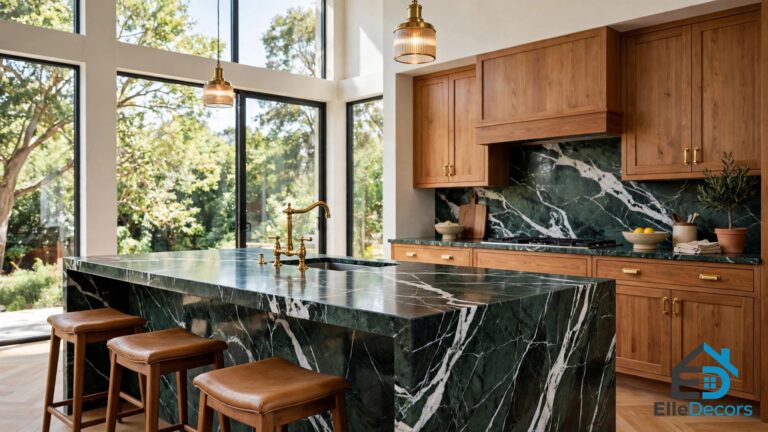
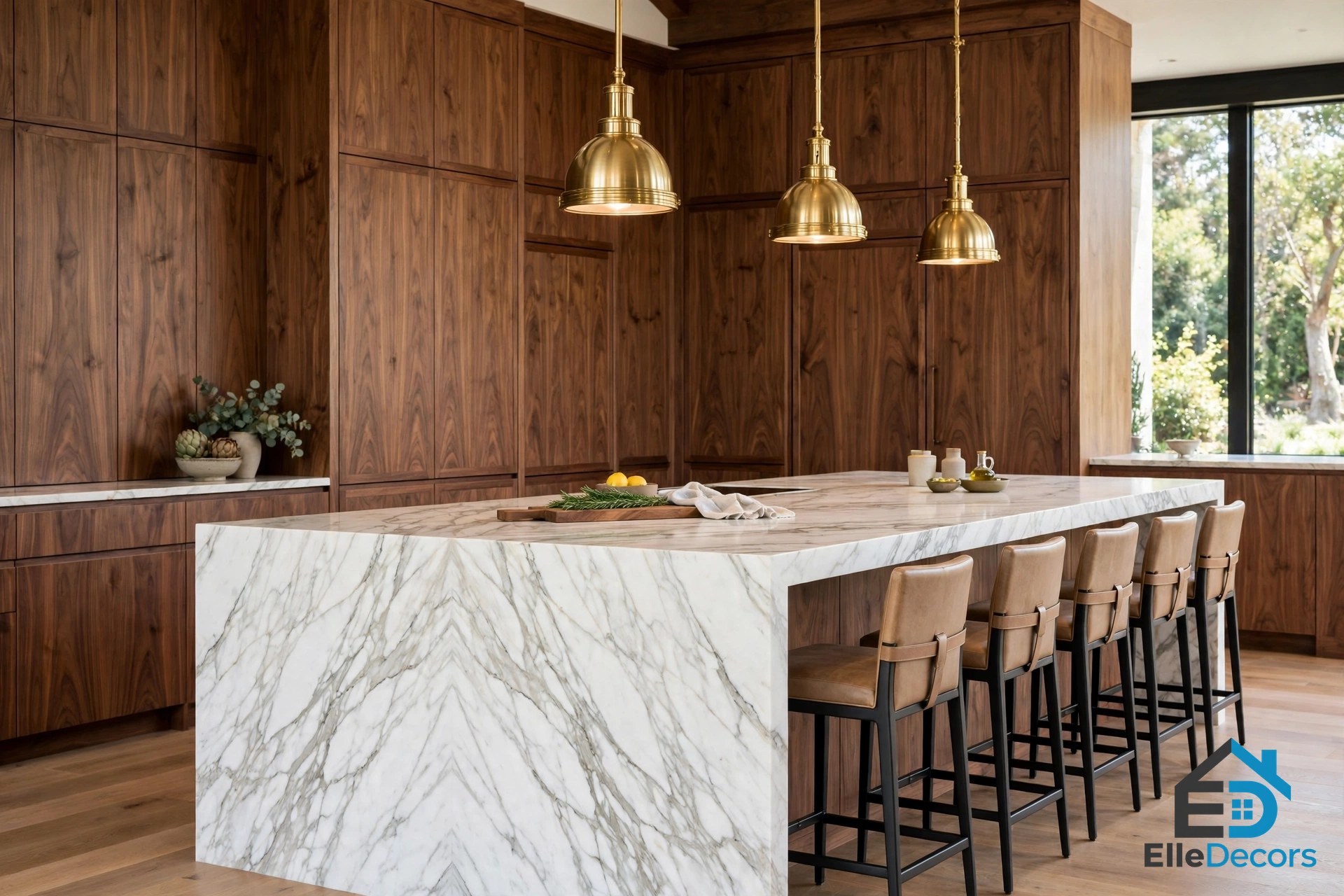
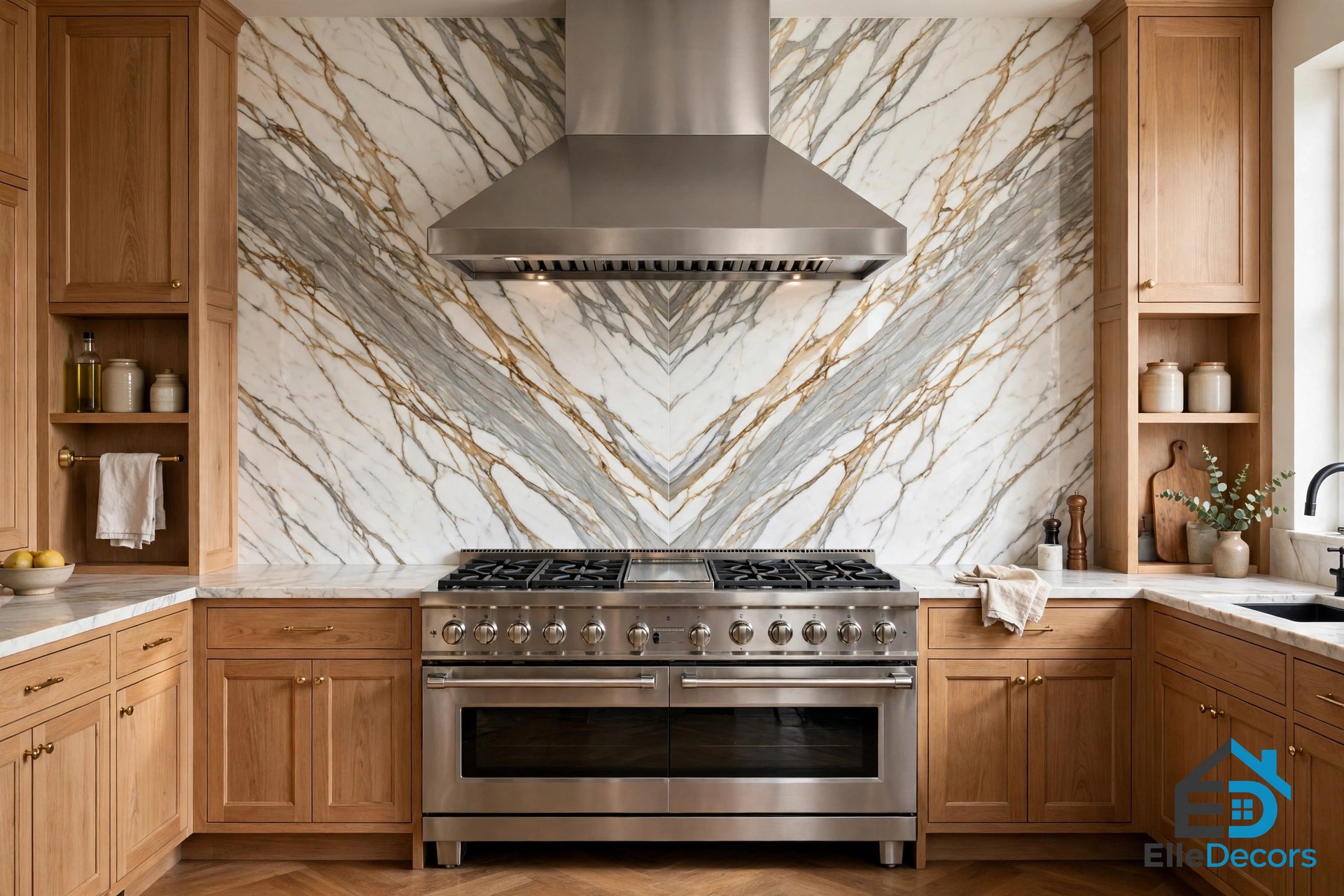
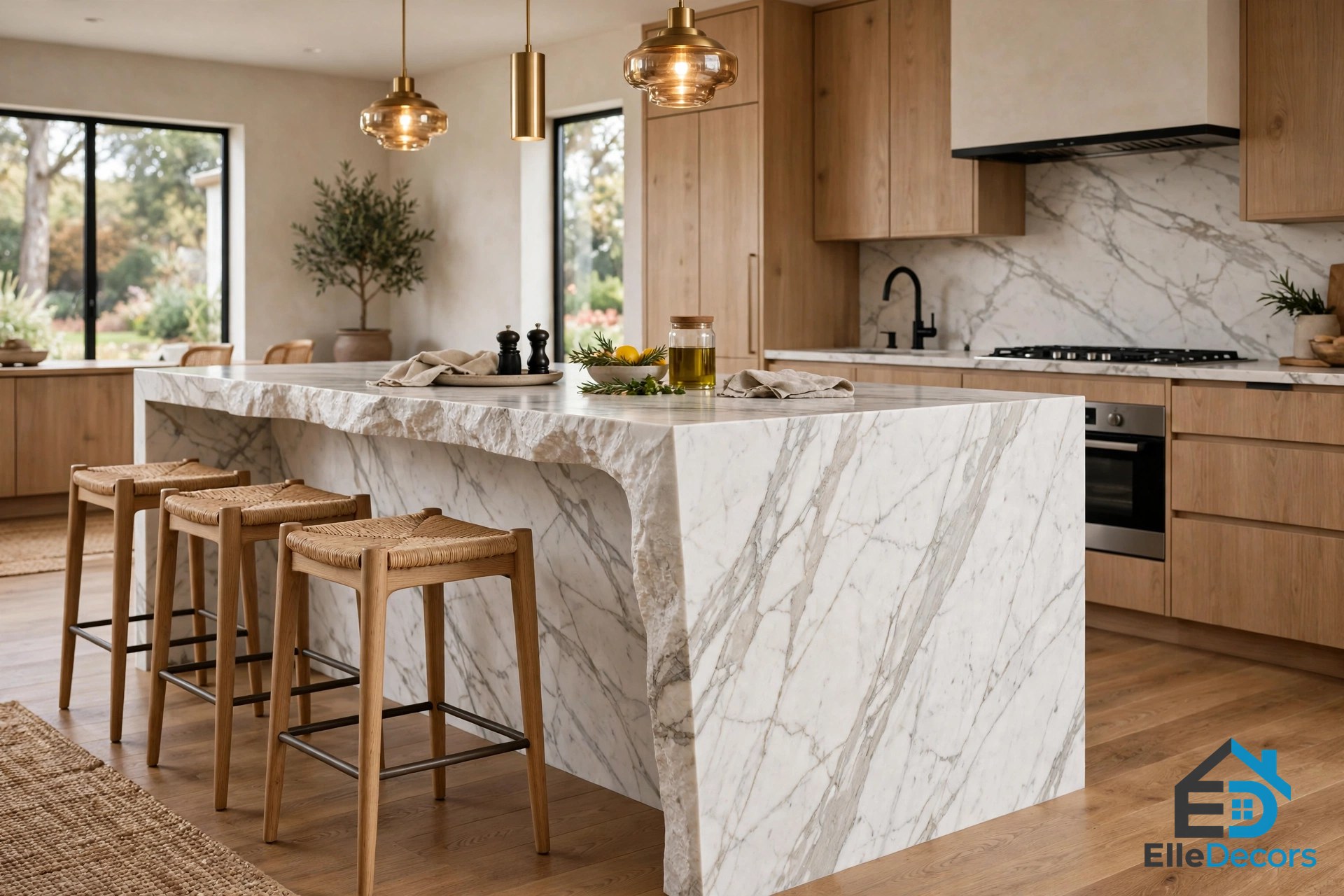
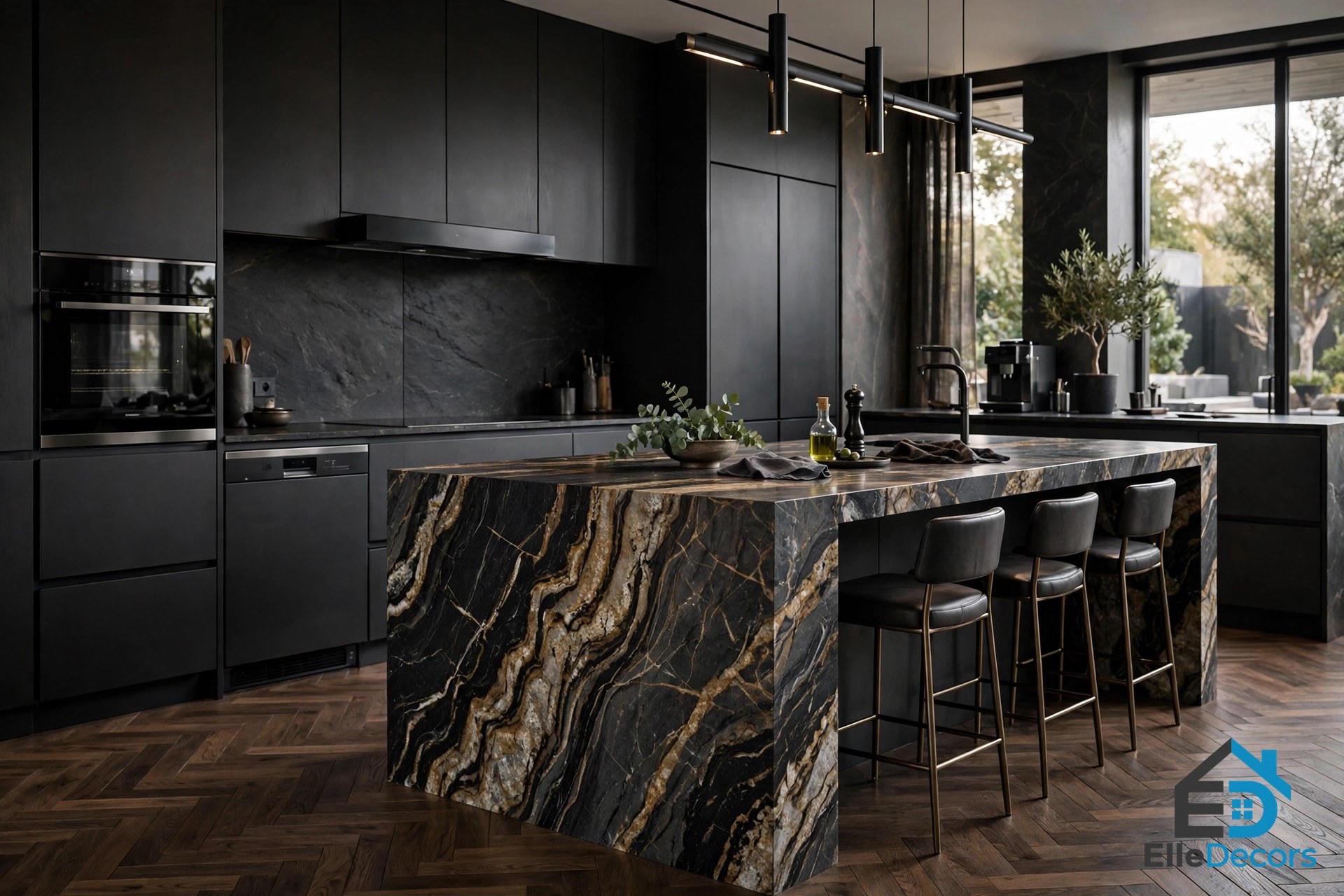
Stone is the material people picture first in a luxury kitchen, and in high end kitchens it is used at a bigger scale. One full slab runs across the island. The same stone climbs the wall as a full-height backsplash, with no grout lines to break it up. On the best islands, two slabs are bookmatched, mirrored like the pages of an open book, so the veins form a pattern. A waterfall edge, where the stone turns and flows down the side of the island to the floor, is another favorite.
Choosing the stone is a balance of looks and daily life:
- Marble is the classic. Its veining is soft and cool, and no two slabs match. But marble is made of calcium carbonate, so it sits low on the hardness scale, around 3 to 4 out of 10. Acids like lemon juice, vinegar, and wine can etch it, leaving a dull mark, and it needs sealing again every 6 to 12 months.
- Quartzite is the hard-wearing twin. It is a natural stone formed from sandstone, it is much harder, around 7 out of 10, and it does not etch from acids. It still needs sealing once or twice a year, but it shrugs off the daily spills that mark marble.
Neither choice is wrong. Marble suits cooks who love a surface that ages and tells a story. Quartzite suits busy homes that want the marble look with less worry. If deep, dramatic color is more your style, the stones in our guide to rich colored marble kitchen trends show how far kitchen stone can go.
The Island as a Piece of Furniture
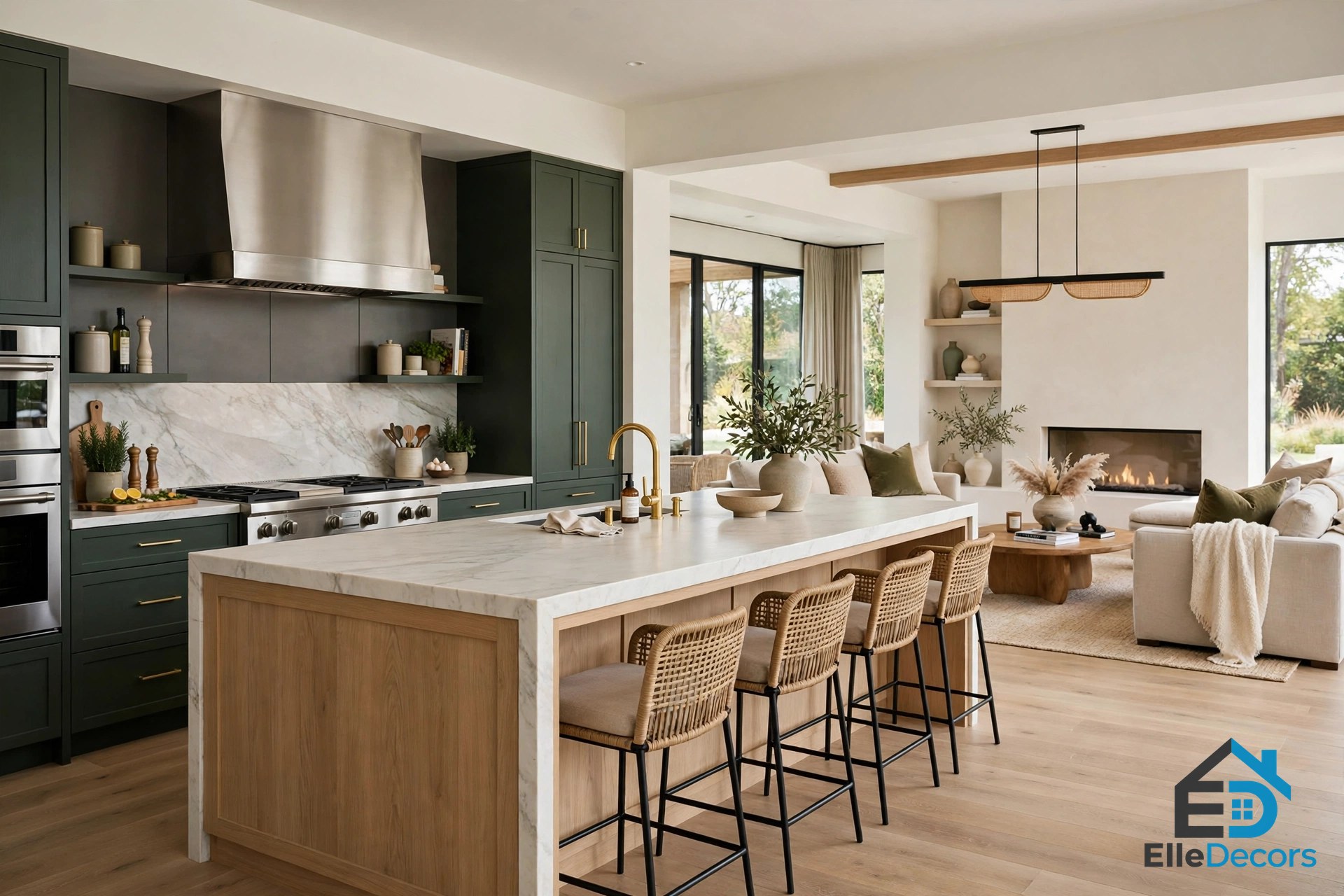
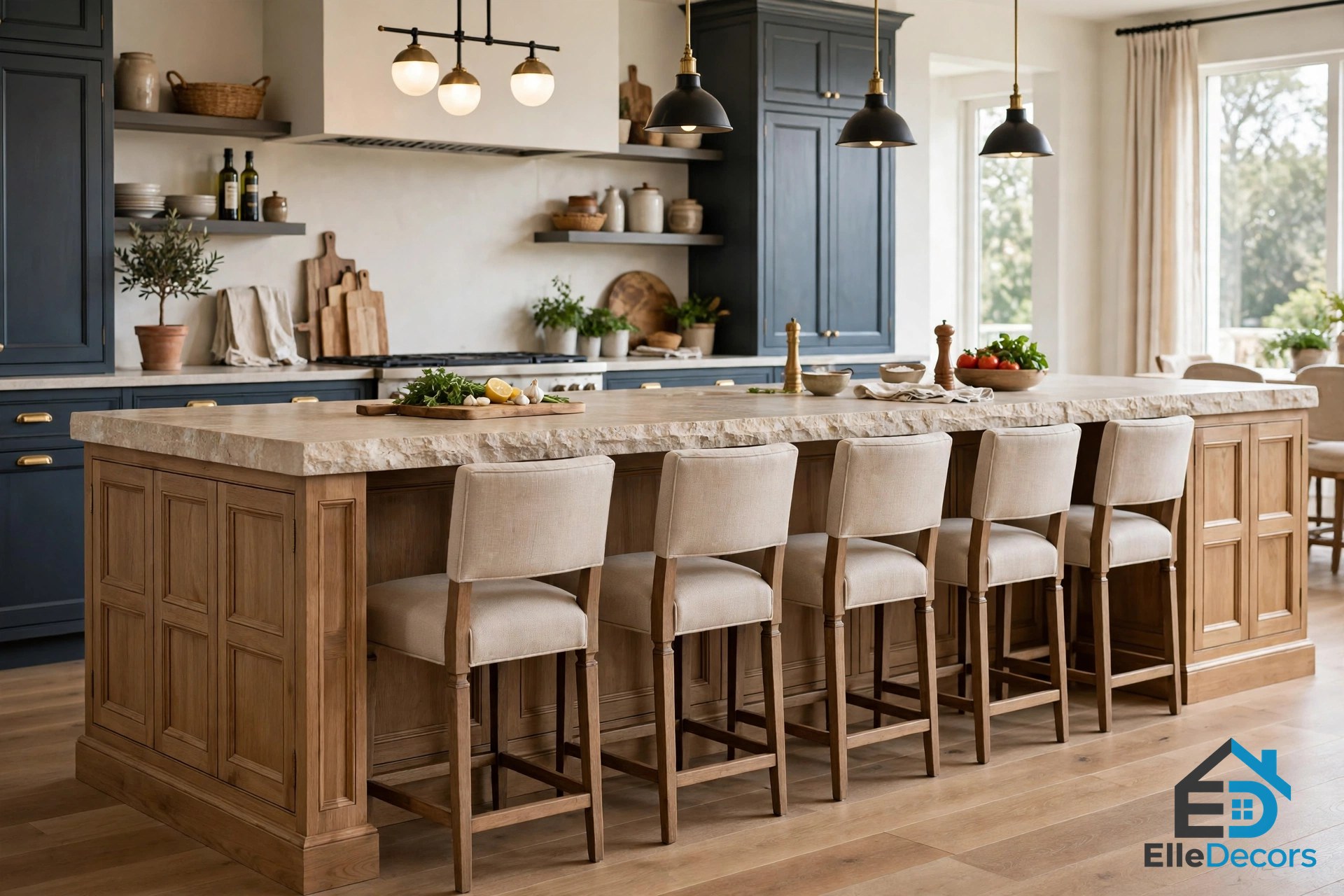
In most luxury kitchens, the island is the center of the room. It is part work bench, part dining table, part sculpture. The finest ones are treated like furniture, not like a block of cabinets: panelled ends, shaped legs or a recessed plinth, and a stone top with a carefully shaped edge.
A good island earns its size. One end may hold a prep sink and bins, the middle gives clear space to roll dough or lay out serving dishes, and the far end seats family and guests on stools. Wine storage, a drinks fridge, and charging points for phones often hide inside it. What it should never do is block the room. If the aisles around it shrink below the numbers above, the island is too big, and the kitchen will feel worse, not grander.
Reading about islands is one thing; seeing one work is another. This remodel tour walks through a real luxury kitchen with custom white oak cabinets, a curved island, and layered designer lighting:
Appliances That Do the Work Quietly
Walk into most high end kitchens and you will not see many appliances at all. The fridge and freezer hide behind tall cabinet doors. The dishwasher wears a panel. Small machines, the toaster, the blender, the coffee maker, live in a special cabinet or a pantry, not on the counter.
Behind those calm fronts sits serious equipment: a wide range cooker or a sleek induction hob, a steam oven for vegetables and reheating, a warming drawer, and column fridges and freezers that can be split up and placed where each is needed. The point is not the badge on the door. There is no badge. The point is strong, quiet tools that fit the way the family cooks, hidden inside the design instead of pasted onto it.
Light in Layers
One ceiling light is the mark of a basic kitchen. Designers plan light in three layers, and each layer has its own switch or dimmer.
- Ambient light is the soft, general glow: ceiling spots, a skylight, or light washed over the tops of cabinets.
- Task light is bright and focused where you work: strips under the wall cabinets that light the counter with no shadows, so chopping is safe and easy.
- Accent light is the pretty layer: pendants over the island, small lights inside glass cabinets, a glow at floor level along the plinth.
Layered light lets the same room feel bright and sharp at breakfast and low and warm at a dinner party. It costs far less than stone or cabinets, yet it changes the mood of the room more than almost anything else.
Hardware, Faucets, and Finishes That Age Well
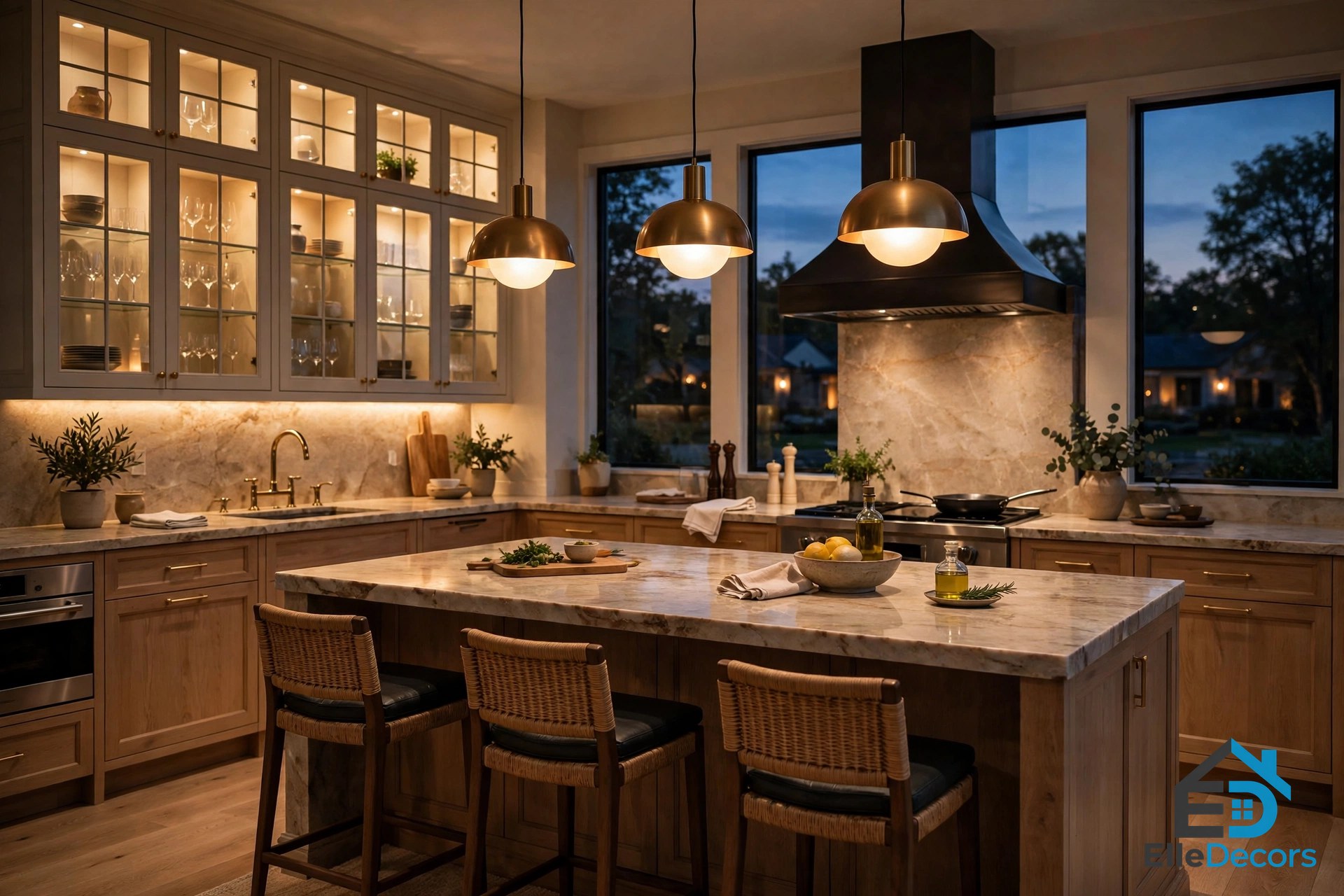
The small metal parts of a kitchen get touched all day, so their quality is easy to feel. Solid brass pulls have real weight. A good faucet moves smoothly and does not wobble. These details are small, but they are where cheap kitchens give themselves away.
Many designers choose unlacquered brass for these parts. It is brass with no protective coating, a living finish. As the metal meets air, water, and your hands, it slowly deepens and grows a patina, darker in the corners and brighter where it is touched most. No two taps age in quite the same way, and that gentle change is part of the charm. Lacquered brass, by contrast, stays bright and even, if you prefer a finish that never changes.
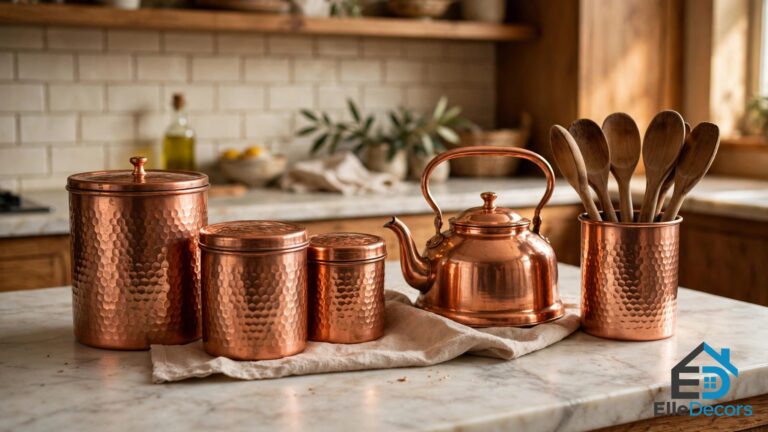
Copper behaves in a similar living way, warming and deepening with use, which is why the pieces in our guide to copper kitchen accessories fit so naturally into a high end scheme. Whichever metal you pick, keep it to one or two finishes across the room, echoed in the faucet, the pulls, and the light fittings, so the kitchen reads as one calm whole.
The Hidden Half: Pantry, Scullery, and Clear Counters
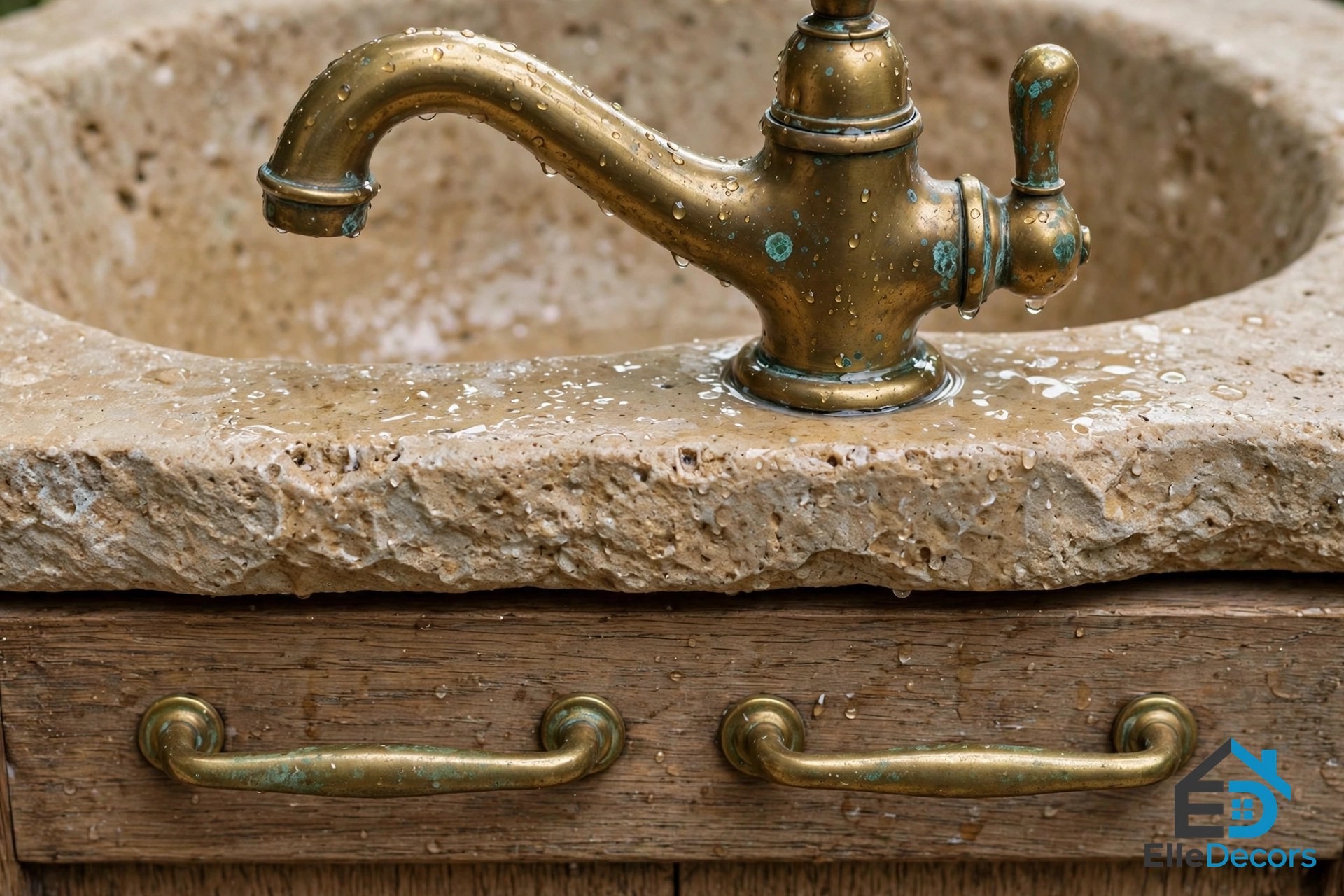
Many owners name a room you cannot see: the pantry. A walk-in pantry or a full larder wall holds food, spare dishes, and the big platters that crowd normal cabinets. Bigger homes add a scullery or back kitchen, a second small room with its own sink and dishwasher, where party mess and morning clutter stay out of sight.
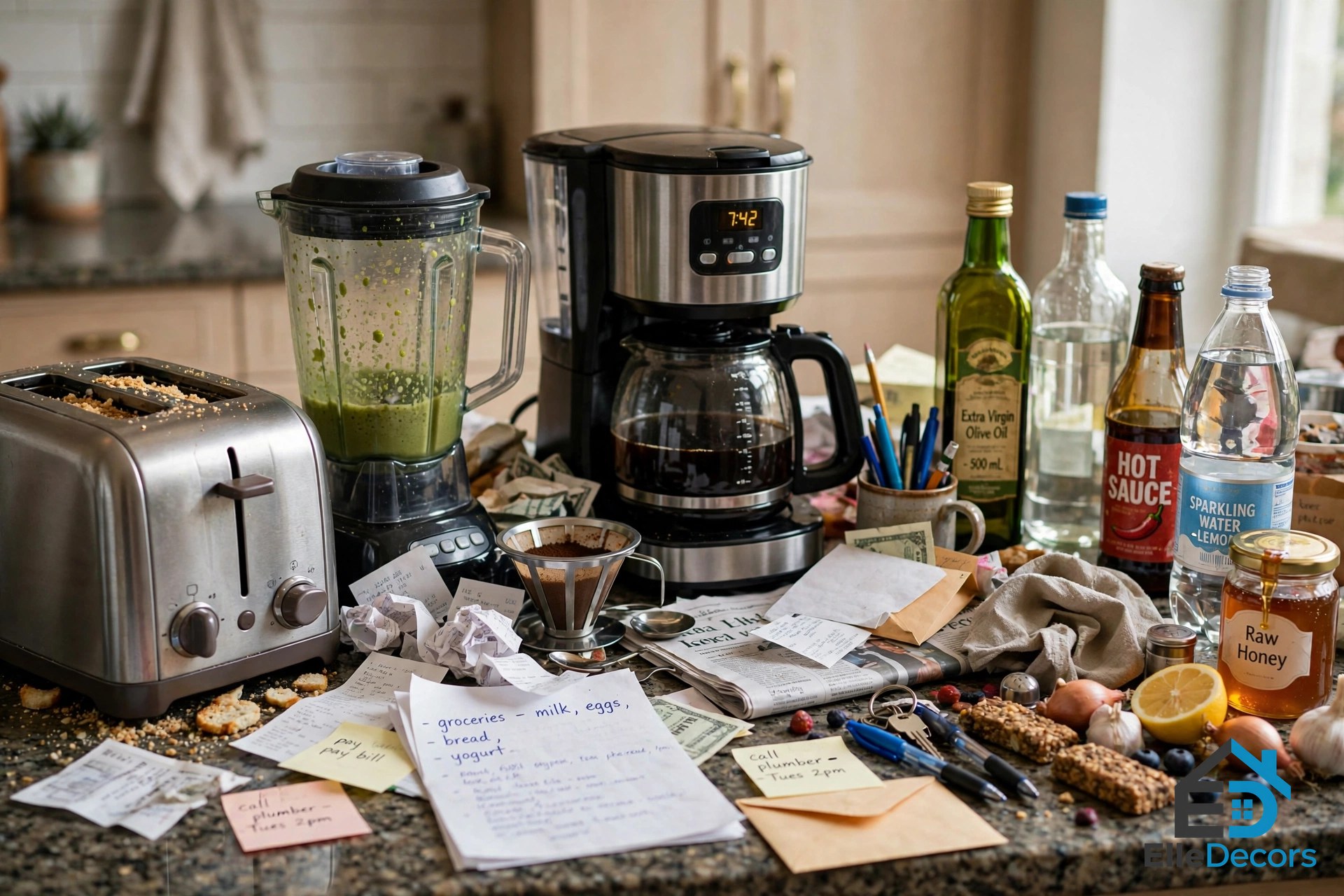
Even without an extra room, the rule is the same: a home for everything, and counters kept clear. A luxury kitchen at rest should show stone, wood, and maybe a bowl of fruit, not a crowd of machines and paper. That calm, empty surface is one of the strongest luxury signals there is, and it is free once the storage is planned.
Where the Money Shows, and Where It Hides
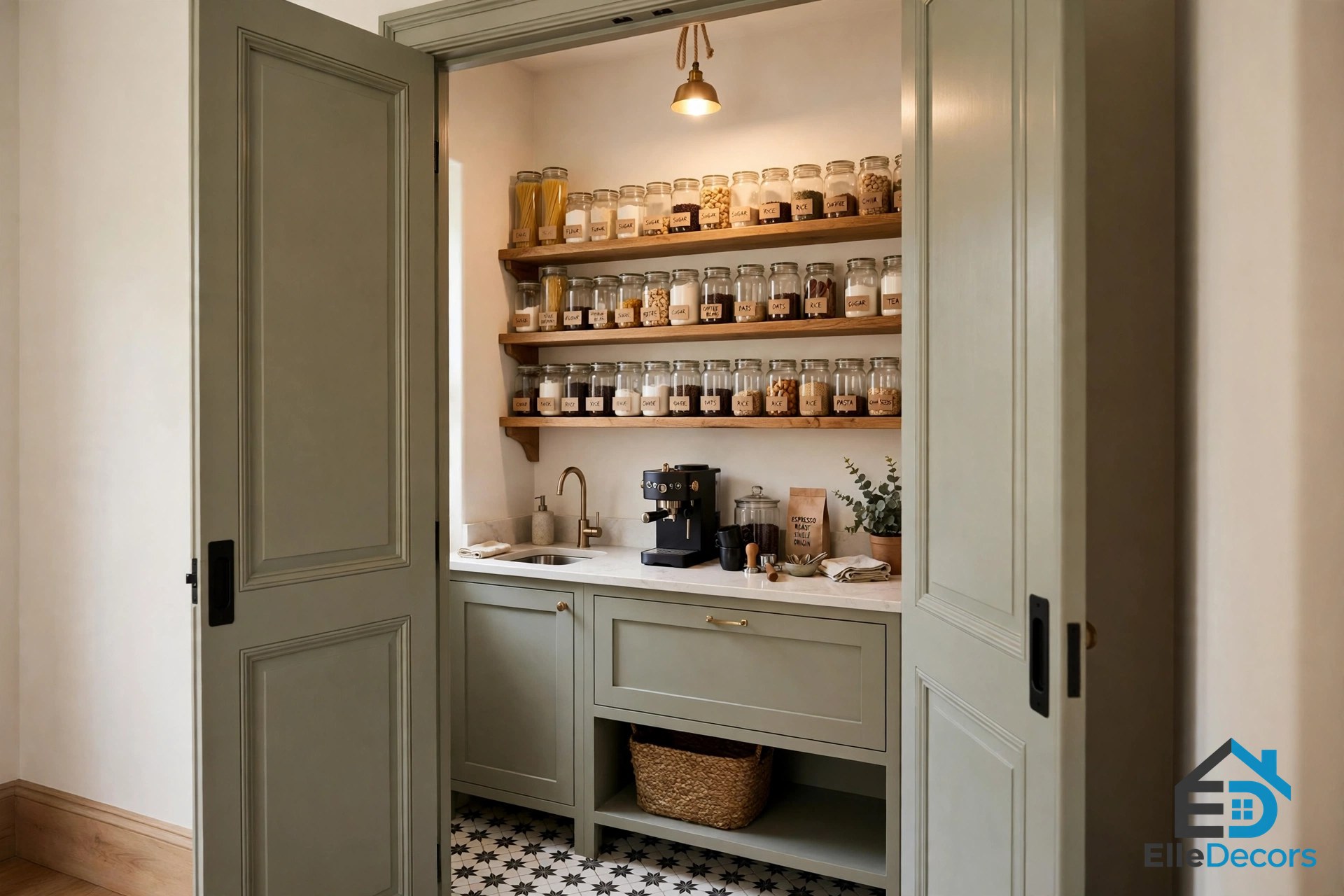
Some parts of a high end budget are on full display. The stone island, the wall of cabinets, the range cooker, and the pendant lights announce themselves the moment you walk in.
The rest hides, and it matters just as much: in drawer runners that glide for decades, in the extra inches of aisle, in plumbing and wiring placed exactly right, in dimmers on every light, and in the hours of planning before a single cabinet was ordered.
When people say a kitchen feels expensive, they are usually feeling the hidden half. The visible half is just where you notice it first.
Mistakes That Make an Expensive Kitchen Look Cheap
Money alone does not protect a kitchen. These are the errors that drag even costly rooms down:
- Squeezing the layout. A huge island in a room that is too small for it, with aisles under 42 inches, feels cramped, not grand.
- Too many materials. Four stones, three woods, and two metals in one room fight each other. Luxury is calm; pick one or two stars.
- Skimping on light. A single ceiling fitting over fine cabinets is like a suit with cheap shoes. It gives the game away.
- Filling the counters. The finest kitchen looks ordinary the moment every machine the family owns lines the worktop.
- Choosing stone with your eyes only. Marble on a busy family island will etch and mark. If that will upset you, quartzite is the wiser luxury.
- Chasing trends too hard. The best luxury modern kitchen designs borrow what is current, shapes, colors, a new finish, but keep the bones timeless, so the room still looks right in ten years.
Frequently Asked Questions
What is the difference between a luxury kitchen and a normal kitchen?
The difference is fit and finish, not just cost. A luxury kitchen is made to measure for its room, uses real materials like natural stone and solid wood, hides its appliances behind cabinet panels, and plans light in layers. A normal kitchen uses stock parts that are adapted to fit, which is why small gaps, mixed finishes, and clutter show more.
Which stone is better for a high end kitchen, marble or quartzite?
Both appear in high end kitchens, and the better choice depends on how you cook. Marble is softer, around 3 to 4 on the hardness scale, and acids can etch it, so it suits careful cooks who accept a lived-in look. Quartzite is harder, around 7, does not etch, and needs less day-to-day worry, so it suits busy families.
Do high end kitchens have to be big?
No. Size helps, but it is not the point. A small kitchen with full-height cabinets, one beautiful stone, clear counters, and layered light can feel more luxurious than a huge room with stock cabinets and one ceiling light. The rules in this guide scale down as well as up.
What are bookmatched slabs?
Bookmatching is a way of cutting and placing stone. Two slices are taken from the same block, polished on the facing sides, and set side by side like the open pages of a book. The veins mirror each other and form a pattern. It is often used on island fronts and full-height backsplashes where the stone is the star.
How do I make my current kitchen feel more high end without a full rebuild?
Start with the calm. Clear the counters and give every small appliance a home in a cabinet. Add under-cabinet lighting and put the main lights on dimmers. Swap thin, light handles for solid ones in one metal finish, used everywhere. These steps cost little next to new cabinets.
A Final Word on Quiet Luxury
The finest kitchens are rarely the loudest. They are the ones where the cabinets fit to the millimetre, the stone was chosen with open eyes, the light can change with the hour, and nothing sits out that does not need to. Build those habits into your plans, whether your kitchen is vast or modest, and you will have the thing money alone cannot buy: a room that feels calm, crafted, and completely yours. That is the secret behind high end kitchens that stay beautiful for decades.