Industrial Bedroom: 15 Bold Ideas for a Raw, Liveable Loft Look
AUDIO SUMMARY: An industrial bedroom is a converted-loft look built from brick, concrete, steel, and reclaimed wood, softened so it sleeps well. This guide covers fifteen ideas drawn from a forty-room source gallery — exposed brick, concrete feature walls, iron bed frames, factory windows, Edison lighting, leather, and bold colour — plus keeping the raw shell warm and making it work in a small room, and which single statement piece to buy first.
An industrial bedroom starts with the bones of an old factory: exposed brick, bare concrete, iron pipes, and unpolished wood. The style borrows the calm, cool mood of a converted warehouse. The source gallery behind this guide shows forty rooms that prove the range — from a stark concrete box softened with linen to a brick loft dressed with velvet and copper. The trick in every one of them is the same: keep the raw shell honest, then soften it until it feels like a bedroom and not a building site. For the wider look beyond the bedroom, our guide to modern industrial interior design covers the same materials across a whole home.
What Is an Industrial Bedroom?
The industrial style comes from old factories and warehouses turned into homes. It celebrates the materials most styles hide: brick left bare, concrete left unpainted, pipes and ducts left on show, steel beams left exposed. Floors stay unpolished, windows keep their black steel frames, and furniture is built from iron and reclaimed timber. Colour stays restrained — greys, charcoals, browns, and whites — with one bold accent doing the talking. Every hard surface is paired with something soft: wool throws, suede chairs, leather bedding, or a shaggy rug.
1. Lead With an Exposed Brick Wall
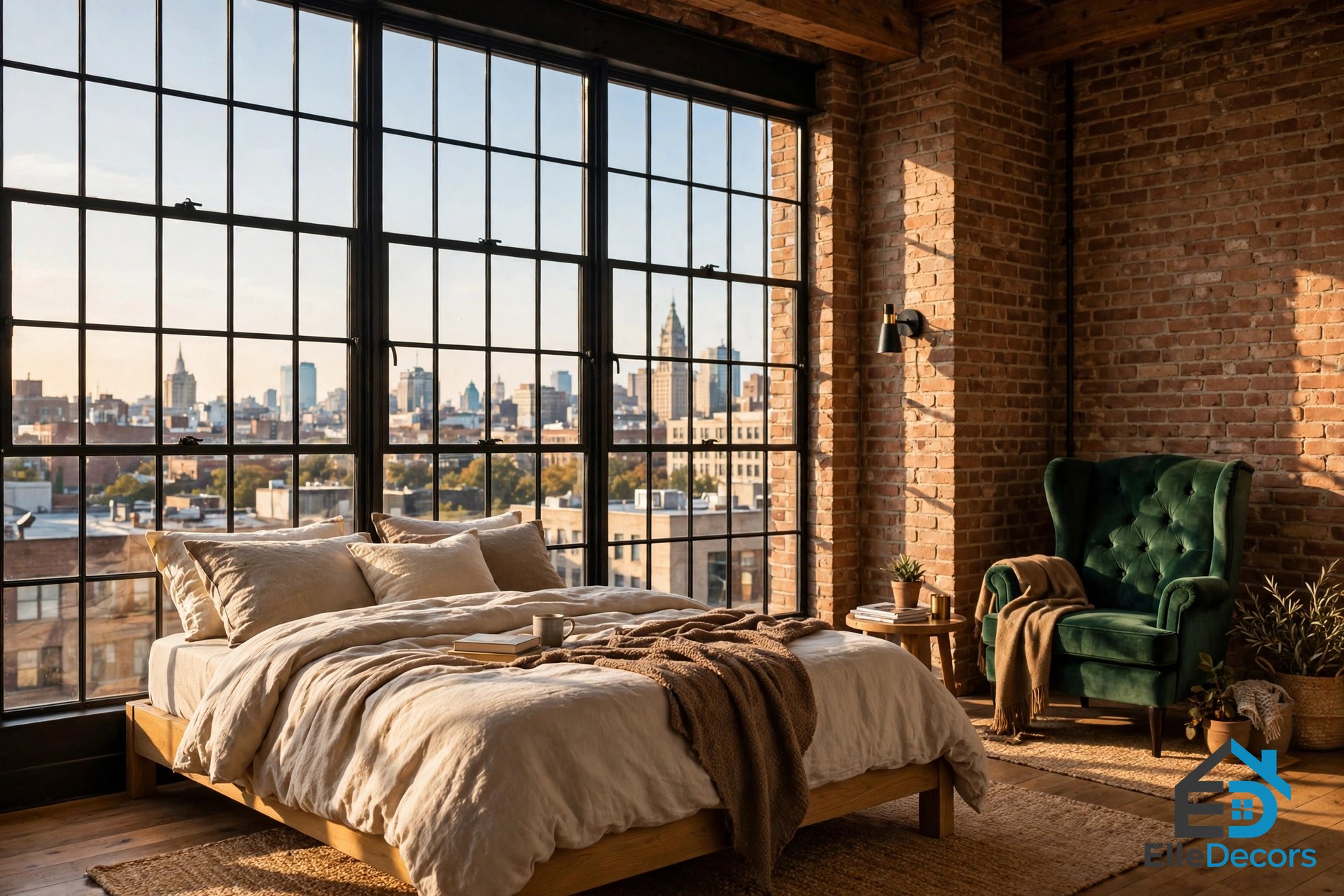
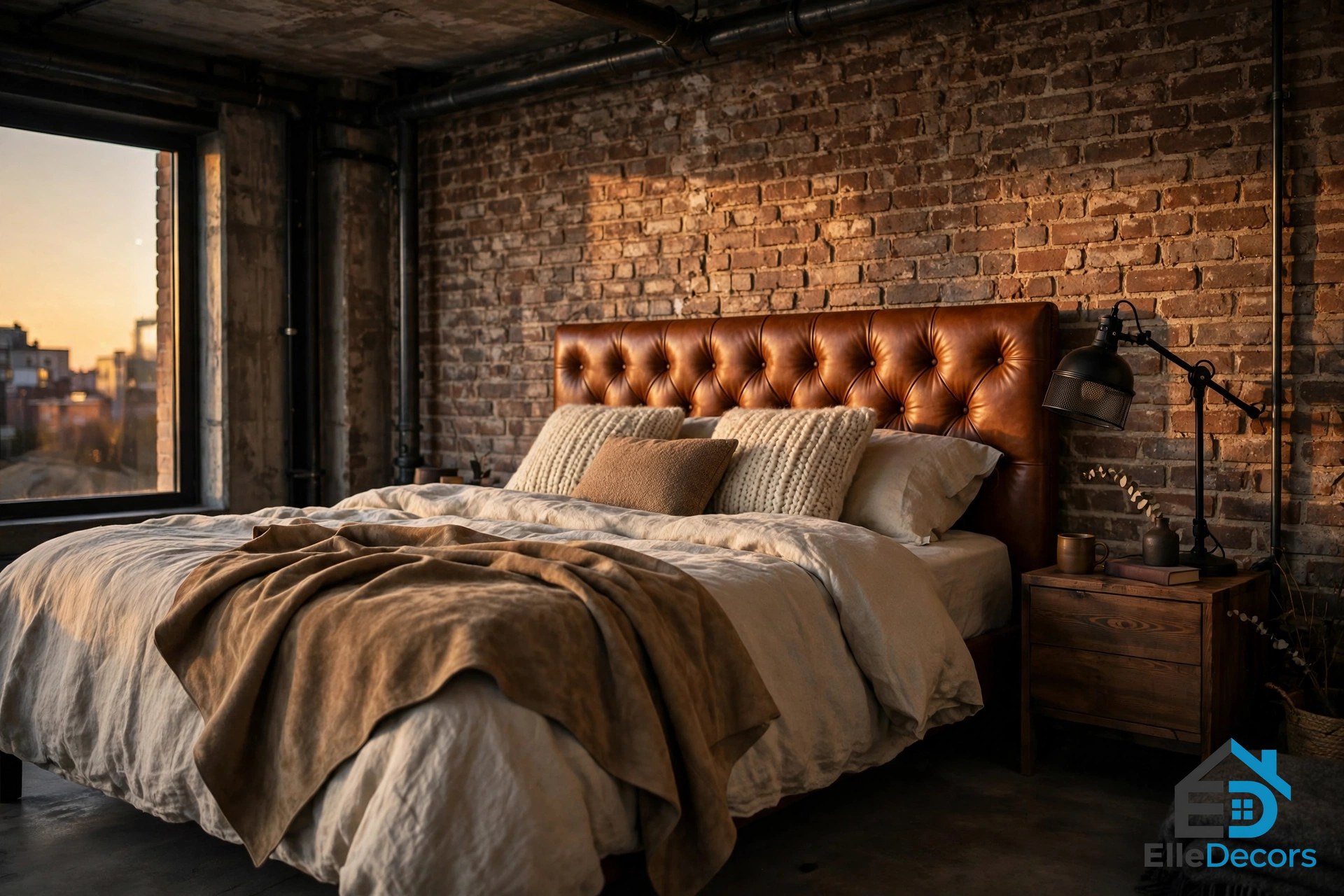
If your room has one strong move in it, this is the one. An exposed brick wall is the signature of the style, and the source gallery returns to it in room after room. One bedroom pairs the brick with a chalkboard triptych, caged lighting, and a slatted wooden ceiling. Another keeps it simple: brick, a futon bed, a greyscale sketch, and a knitted ottoman. If your walls are not brick, a brick-look wallpaper or a thin brick veneer panel gives the same effect on a single feature wall.
2. Make Concrete the Feature Wall
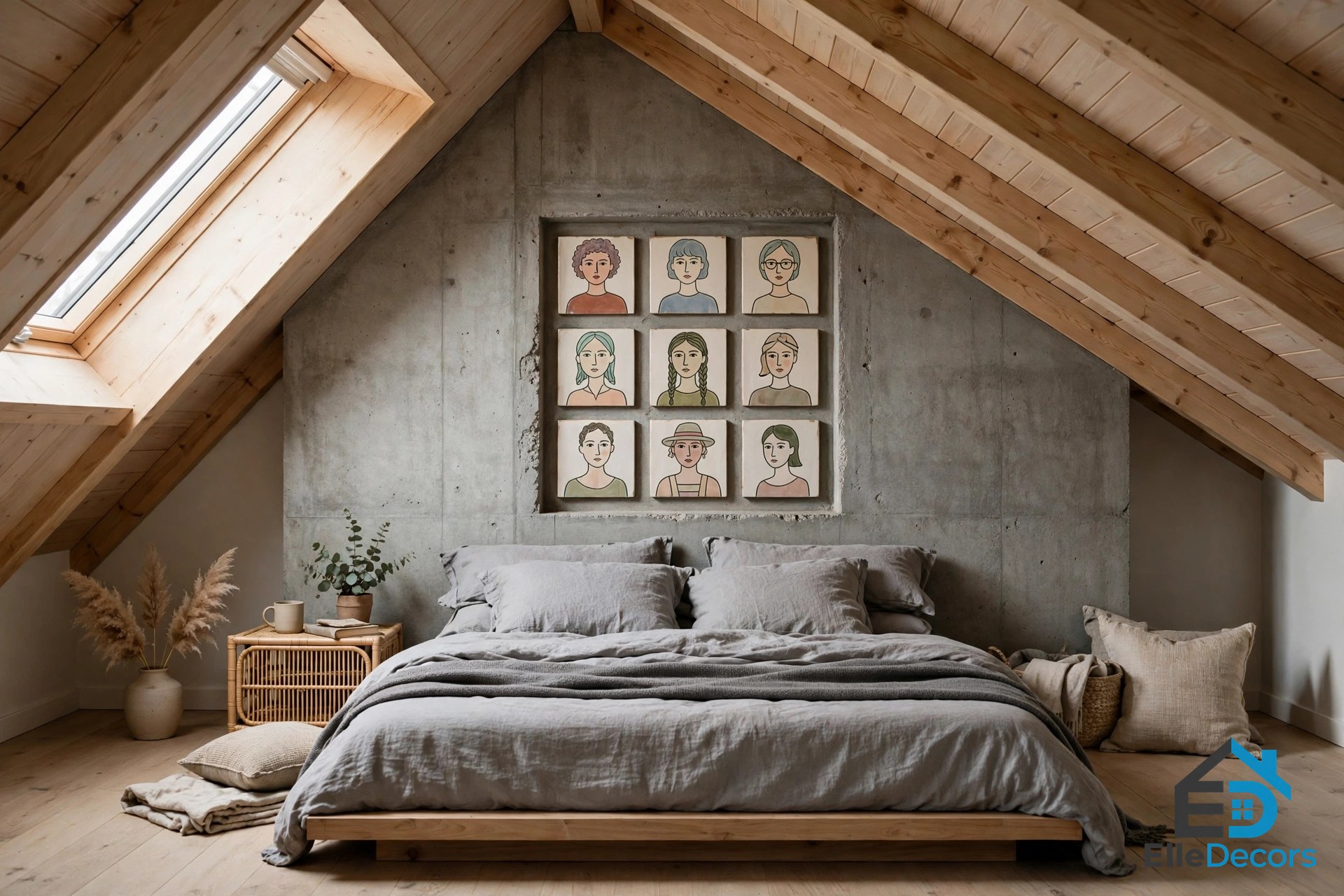
Concrete is the quieter cousin of brick, and it suits bedrooms that want to feel calm rather than rugged. The gallery shows an attic-roofed room where portrait tiles are built into a concrete wall as an art piece, and a minimalist room where a gap in the concrete lets LED light shine through. If real concrete is out of reach, a concrete-effect paint or a microcement finish on one wall gives the same flat, matte backdrop. Let one warm material stop the room feeling like a bunker.
3. Choose an Iron or Metal Bed Frame
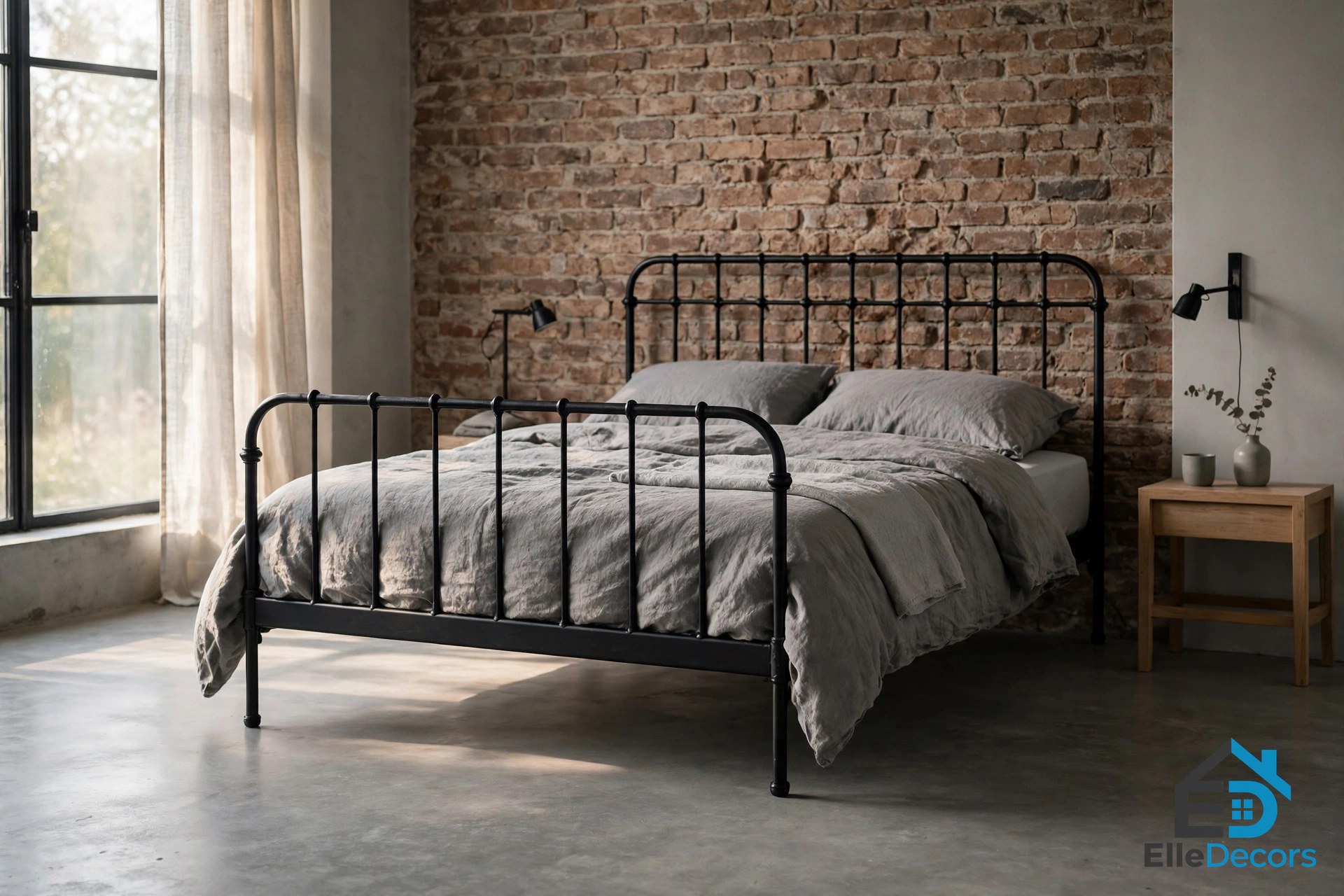
The bed is the biggest object in the room, so its frame sets the tone. A black metal frame, a steel pipe frame, or a wheeled factory-cart bed all read industrial at a glance. The gallery shows a bed on a wheeled trolley base against a rusted metal wall, a low black metal frame with white sheets and black leather, and a wooden crate bed hung from the ceiling over concrete floors. A metal frame also solves a practical problem: it is slim, so a small room keeps its floor space. That slim profile is why an industrial bedroom in a small flat so often starts with the frame. Dress it with soft linen or wool bedding.
4. Keep the Factory Windows
Tall, black-framed factory windows are the light source the style was built around. The gallery shows bedrooms where the windows do most of the decorating: one lets sunlight flood a brick wall beside a futon bed, another frames a city view behind a velvet wingback chair, and a third uses shattered factory windows filled with stained glass as a deliberate feature. If your windows are ordinary, black steel-look frames or simple black window trim move the room in the same direction. Keep the glass clear and the curtains light.
5. Leave the Pipes on Show
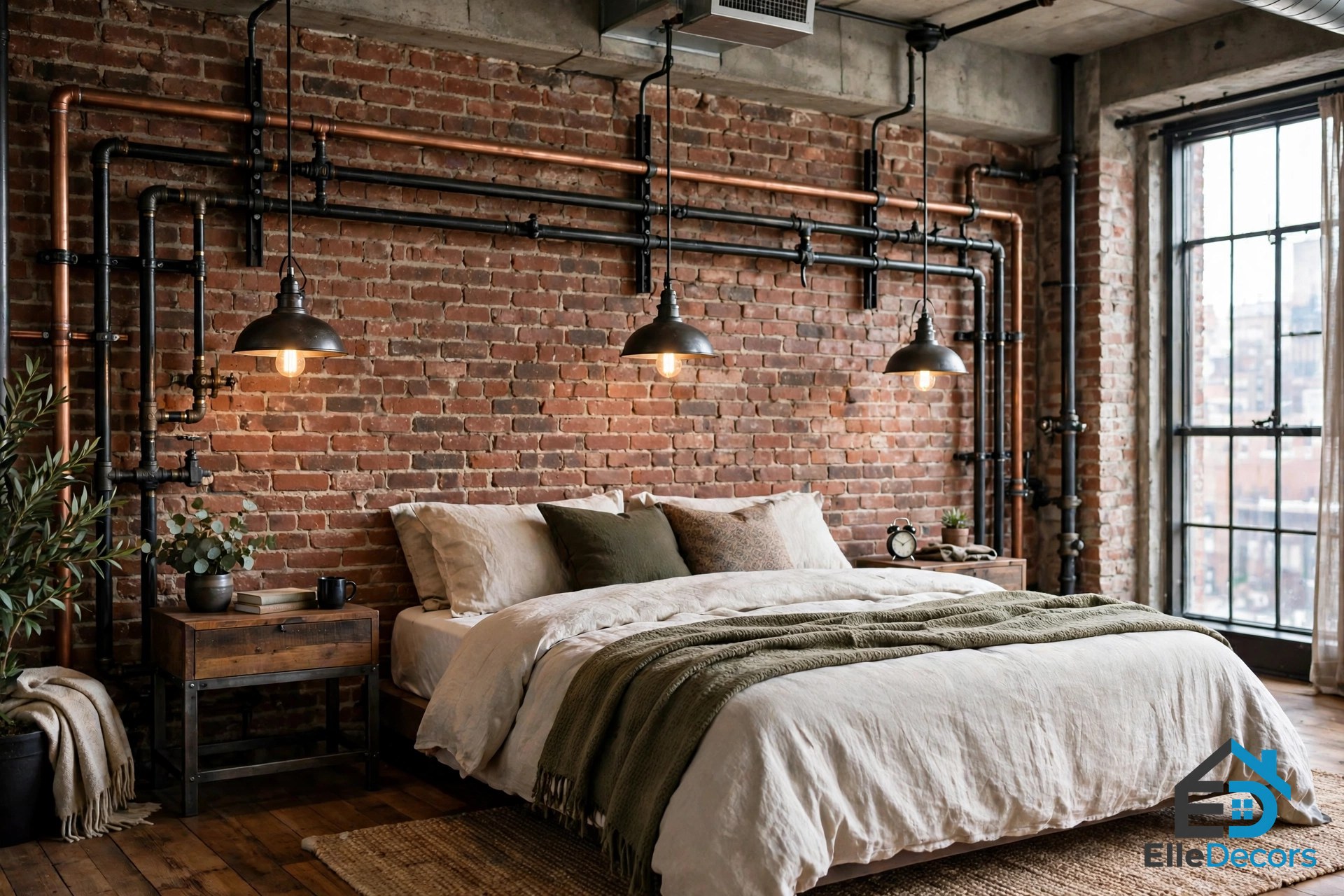
Most styles hide the plumbing. Industrial design frames it. One room in the gallery runs two iron plumbing lines from wall sconces to draw a frame around the bed, with hanging metal lamps for support. Another snakes large metal pipes across the room, with a clock mounted over the bed and metal stacks used as bookcases. If your room has no real pipes to show, a run of black iron pipe shelving beside the bed, or copper pipe used as a curtain rail, gives the same honest, functional line.
6. Bring in Reclaimed Wood
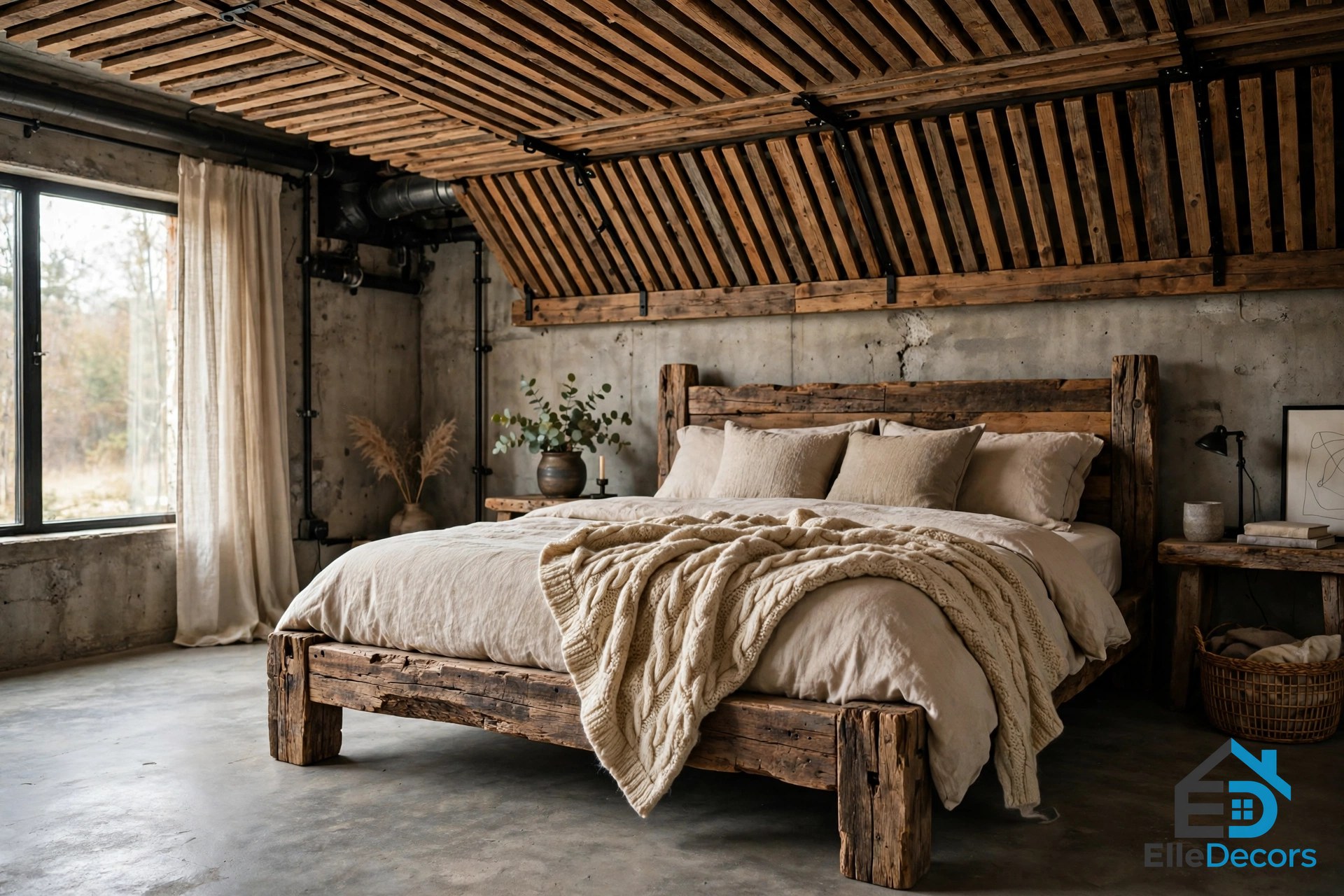
Wood is what stops an industrial room feeling like a warehouse. The gallery leans on it everywhere: rough-hewn bed frames, slatted wooden ceilings, wooden floors, and a treehouse-style room where unpolished wood holds the bed and LEDs glow beneath it. Reclaimed timber works best because its marks and nail holes carry the history the style celebrates. Use it for the bed frame, a chunky bedside table, or a single feature panel on the wall. Keep the finish matte and unpolished. One warm wood piece per wall is enough; more than that and the room tips toward rustic, and our guide to rustic bedroom ideas covers that warmer direction.
7. Soften Everything With Leather and Suede
Leather is the industrial style’s favourite softener. The gallery shows pumpkin leather bedding, a leather chair matched to brick tones, a black leather bed frame, and suede chairs set beside factory carts. A velvet wingback chair appears in two rooms, adding luxury to steel and concrete. Leather ages well, which suits a style built on materials that look better worn. A leather headboard, a suede throw, or a single leather chair beside the bed is enough. Choose cognac, tan, or black.
8. Light It With Edison Bulbs and Cages
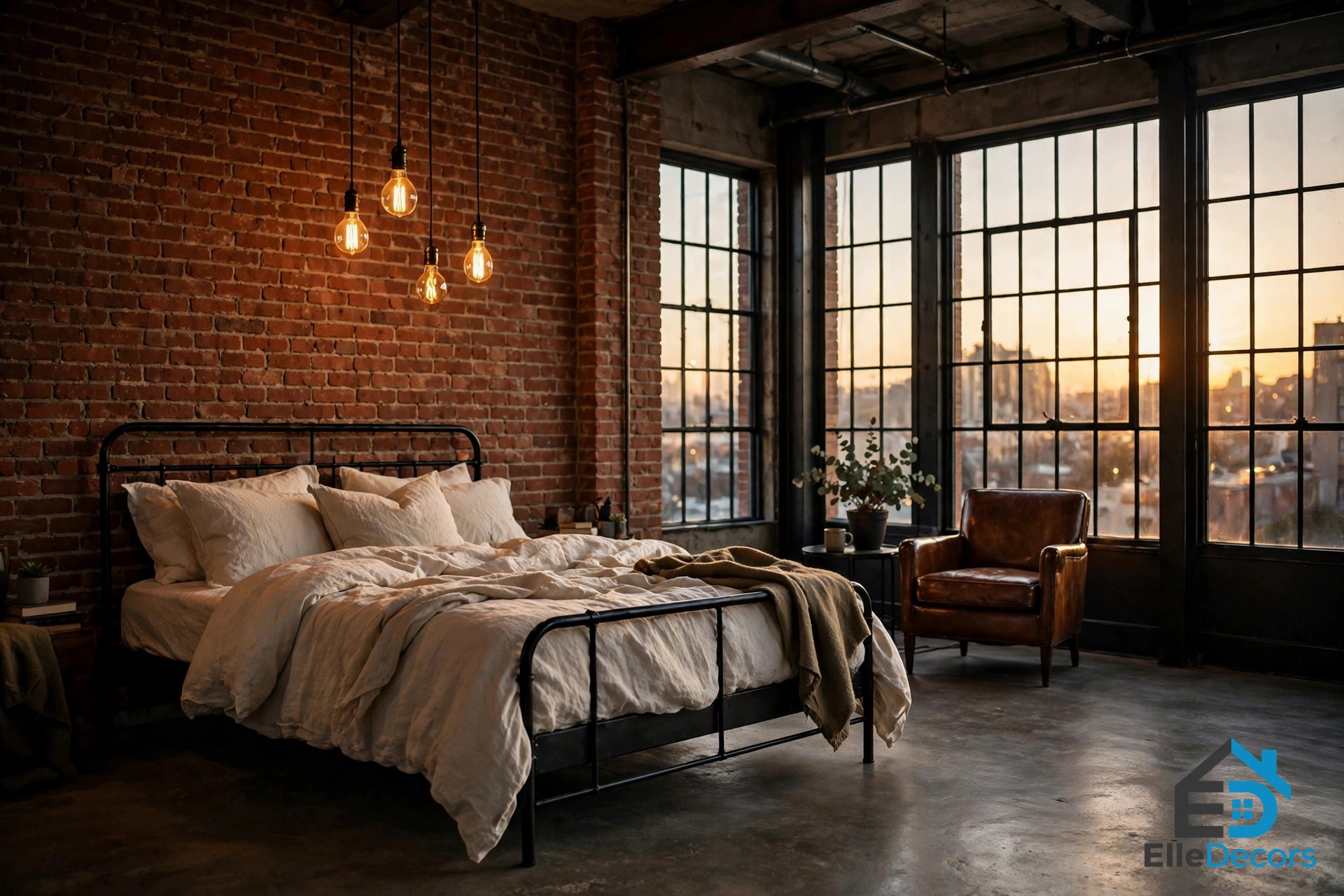
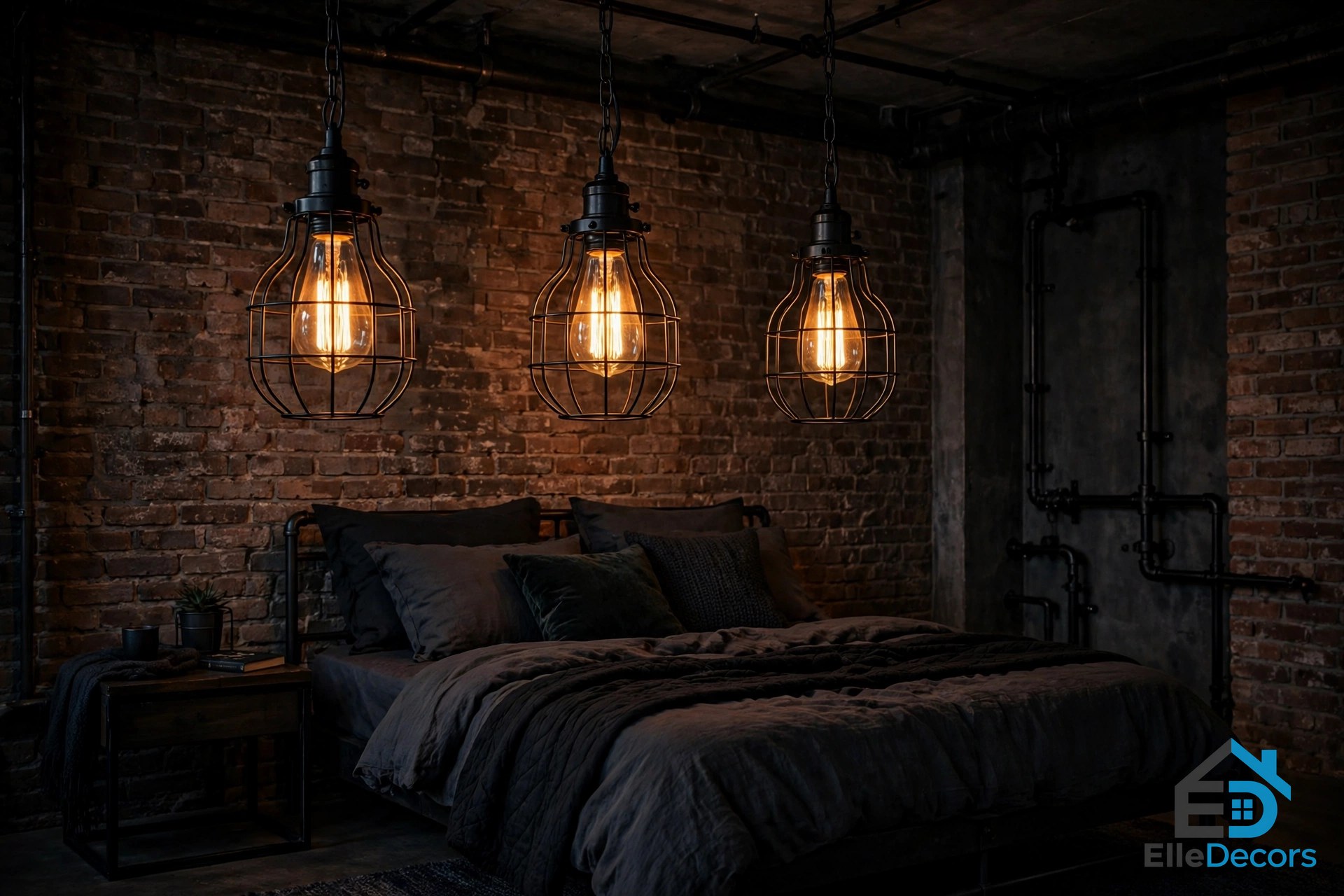
Lighting makes or breaks this style. Bare Edison bulbs, caged pendants, and steel hover lamps appear throughout the gallery: caged lights over a chalkboard triptych, pendant baubles glowing against a grey brick wall, and a spider chandelier beside a metal cabinet. The warm amber glow of an Edison bulb is doing real work here — it takes the edge off concrete and brick after dark. Hang one large caged pendant over the bed or cluster three small ones at different heights. Keep the fittings black metal or brass, and skip the shades: the bare bulb is the point.
9. Go Dark and Moody — Then Add One Bold Colour
The industrial palette is dark by nature: charcoal, slate, black, and grey. One gallery room works entirely in black and white, with white sheets on black leather and a fluffy rug tying the dark and light together. Another uses a moody grey scheme with a darker mottled rug and greyscale photographs. But the rooms people remember most break the palette exactly once. A double-angled violet painting hangs on a stark concrete wall. A sliced-orange moon and a copper dog sit against concrete panels. A dark palette is the default of an industrial bedroom, so the one bold accent gets all the attention. Spend it on one piece: the art, the cushions, or one painted wall.
10. Mix in Vintage and Found Objects
Industrial rooms love objects with a past. The gallery is full of them: a factory cart used as a bed base, an antique headboard, a telescope, a bicycle hung as wall art, an extractor fan pipe, and a wooden crate suspended from the ceiling as a bed. A bicycle leaning against the wall, a vintage trunk at the foot of the bed, or a set of old metal lockers used as a wardrobe all fit. The test is simple: if the object looks like it came from a workshop, a factory, or a flea market, it belongs. One or two found pieces per room is the right dose — more turns the bedroom into a museum.
11. Build a Hanging or Loft Bed
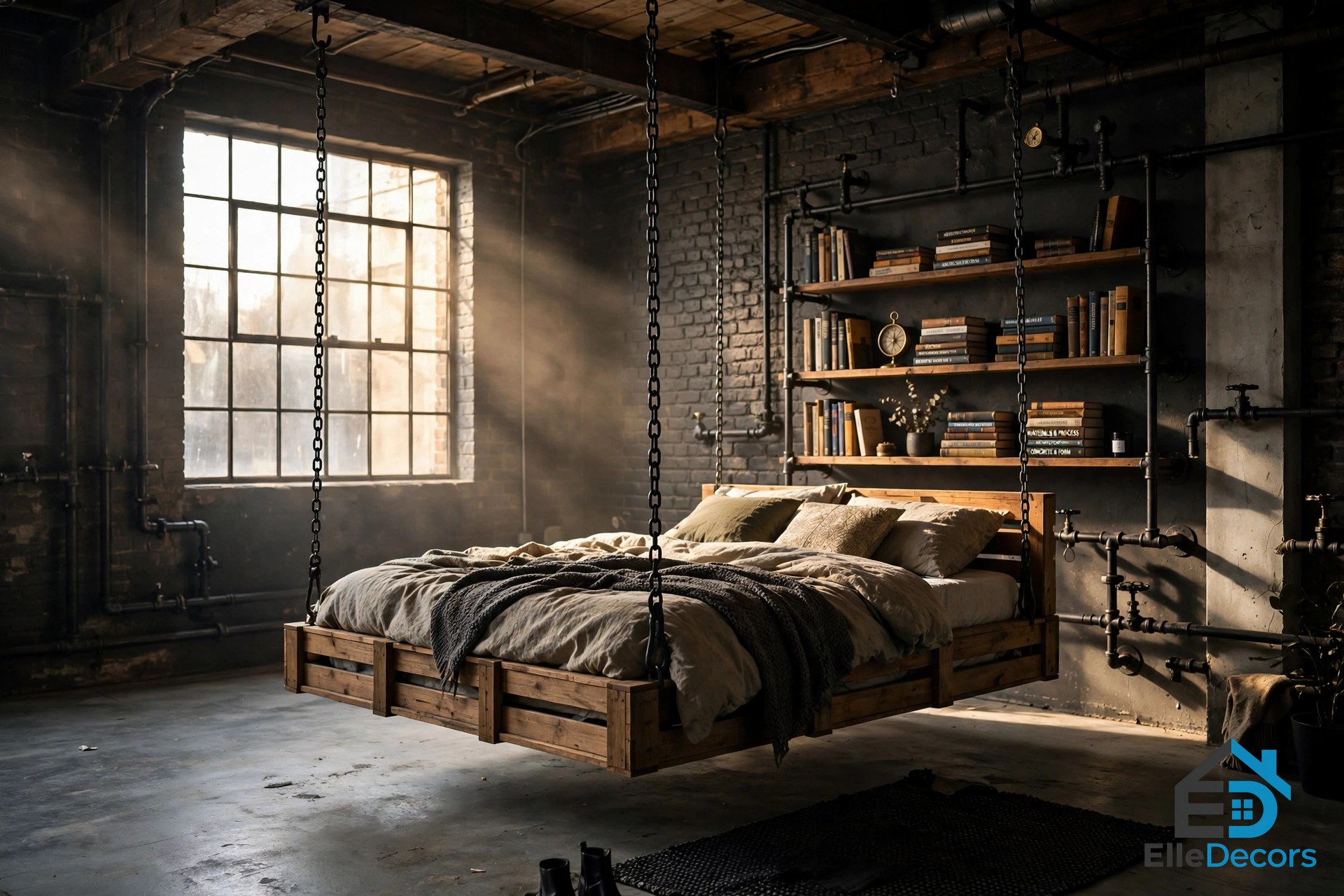
The most dramatic rooms in the gallery lift the bed off the floor. One hangs a wooden crate bed from the ceiling over concrete, with the crate extending into a built-in shelf for books and ornaments. Another hangs a rough wooden bed from the ceiling in a room with iron pipes on the wall. A hanging bed is a big commitment, and it needs proper fixings and a professional check before anyone sleeps in it. A simpler version of the same idea is a low platform or floor bed, which the gallery also shows several times. Either way, the bed becomes the architecture, not just the furniture.
12. Make a Small Room Work Harder
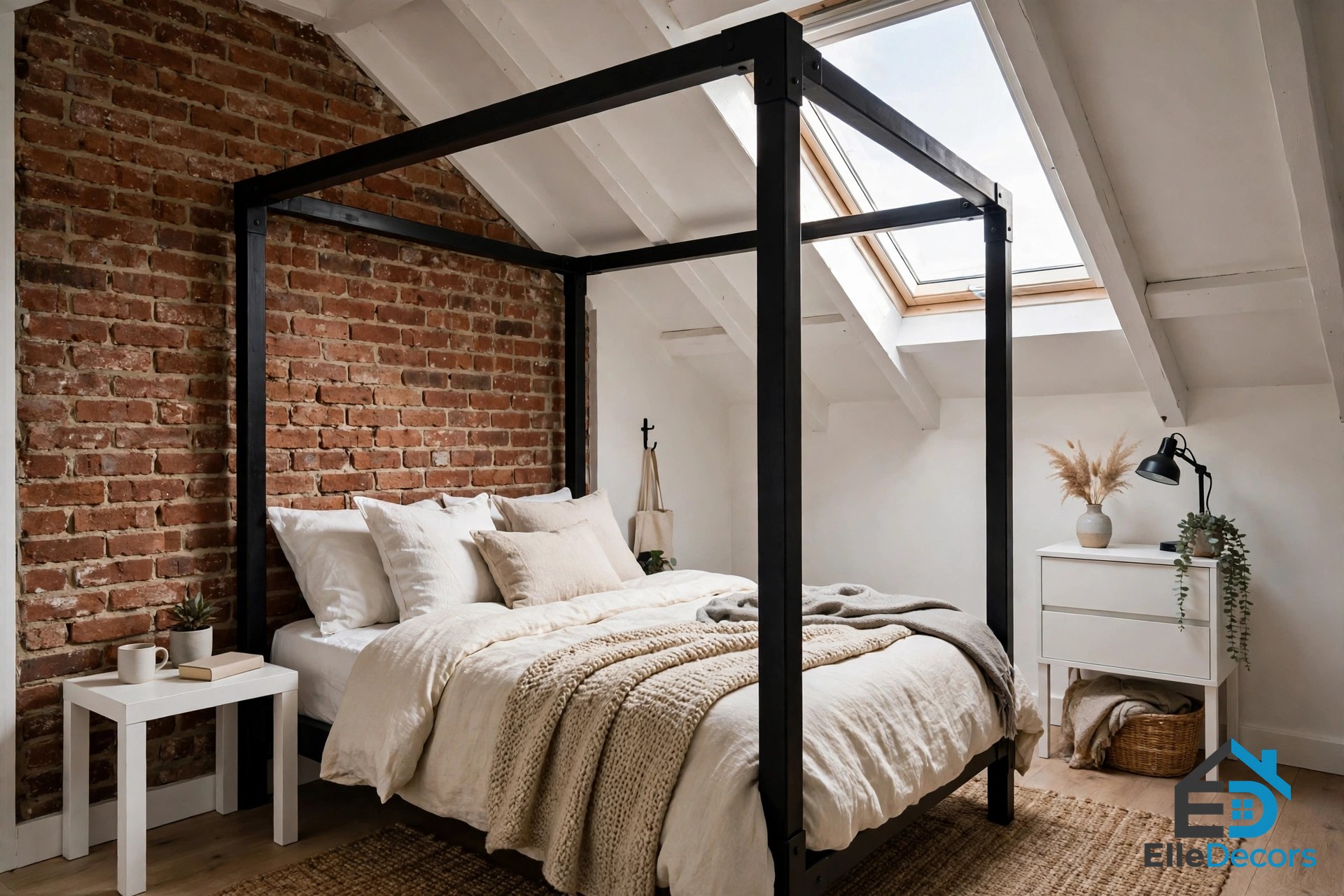
Industrial style suits small bedrooms because its materials are honest and its furniture is slim. The gallery shows an over-the-stair bedroom with a typographic artwork as its centrepiece and clever inlets in the divider acting as a bedside table. An attic bedroom pairs an exposed brick wall with white walls and thick black joinery. The rules for an industrial bedroom in a small space are: keep the big pieces pale, use one dark wall instead of four, choose a metal frame over a bulky wooden one, and let a single texture — brick or concrete — carry the style.
13. Add Plants Against the Raw Shell
Green is the cheapest softener in the industrial palette. The gallery shows an indoor tree beside a painted metal staircase and a potted tree keeping a treehouse bedroom full of colour. Plants do two jobs here: their organic shapes break up the straight lines of steel and concrete, and their green is the one colour that never clashes with brick, rust, or charcoal. A large plant in a concrete pot or a small tree beside the bed is enough. Keep the pots plain — concrete, black metal, or terracotta — so the plant, not the pot, is the accent.
14. Layer Rugs and Textiles to Warm the Floor
Concrete and wood floors look right in this style, but they feel cold underfoot. The gallery answers with rugs in almost every room: a geometric rug under a slatted ceiling, a darker mottled rug in a grey loft, a sky-blue rug under a hovering chandelier, and a fluffy rug tying black and white together. Layer a wool throw over the bed, add linen cushions, and let the bedding pool slightly instead of tucking it tight. The textiles are what make the room sleepable, and they are also the easiest part to change.
15. Finish With One Statement Piece
Every memorable room in the gallery has one object you remember after you leave: the hanging crate bed, the rusted metal wall, the violet painting, the spider chandelier, the flying bicycle. Pick yours and let the rest of the room stay quiet. A statement piece works best when it is big, simple, and a little bit strange — a huge piece of abstract art, an oversized industrial clock, or a single dramatic light. If everything in the room shouts, nothing does. For the wider industrial look beyond the bedroom, our guide to industrial homes shows how the same materials work across a whole house.



Caring for the Raw Shell
Brick, concrete, and iron need a little care to stay beautiful. Dust brick regularly with a soft brush, and vacuum the mortar lines with a brush attachment. Seal raw concrete once, then wipe it with a damp cloth; never soak it, and treat marks quickly before they set. Keep iron and black steel dry and lightly waxed so rust stays a look rather than a problem. Reclaimed wood wants the same treatment as any timber: dust it, keep it out of damp corners, and oil it once a year if the maker recommends it.
Quick Comparison: All 15 Ideas
This table sums up the fifteen ideas in this guide, with the key move for each and the room it suits best.
| Idea | Key move | Best for |
|---|---|---|
| Exposed brick wall | Bare brick feature wall | The bed wall |
| Concrete feature wall | Matte concrete finish | Calm, minimal rooms |
| Iron bed frame | Black metal frame | Small rooms |
| Factory windows | Black steel frames | Lofts and bright rooms |
| Exposed pipes | Iron or copper runs | The bed wall |
| Reclaimed wood | Matte timber | Warmth and texture |
| Leather and suede | One cognac piece | Softening the shell |
| Edison and cage lighting | Bare amber bulbs | Evenings |
| Dark palette, one bold colour | Charcoal base, accent | Drama without clutter |
| Vintage finds | Factory cart, bicycle | Character |
| Hanging or loft bed | Bed as architecture | High ceilings |
| Small-room rules | Pale pieces, dark wall | Compact bedrooms |
| Plants | One large plant | Breaking straight lines |
| Rugs and textiles | Wool and linen layers | Warmth underfoot |
| One statement piece | Single bold object | The finishing touch |
Watch: 1 Bedroom Unit Makeover — Scandinavian-Industrial-Minimalist
Watch Studio Ploy transform a 28-square-metre one-bedroom unit into a Scandinavian-industrial-minimalist home, with a concrete-finish feature wall built by hand and the same raw-meets-soft balance this guide recommends. It shows the concrete wall technique up close, which is the hardest part of the look to get right first time.
Video: Studio Ploy builds a concrete feature wall and a Scandinavian-industrial bedroom in a small unit.
Frequently Asked Questions
What defines an industrial bedroom?
It is a bedroom built from the materials of old factories and warehouses: exposed brick, bare concrete, iron and steel, reclaimed wood, and black-framed windows, in a restrained palette of grey, charcoal, brown, and white. The style works when the hard shell is softened with textiles, leather, plants, and warm light.
Can an industrial bedroom feel cosy?
Yes, and the source gallery proves it. The cosy rooms all do the same three things: they layer wool throws and linen bedding, they add one leather or suede piece, and they light the room with warm Edison bulbs. A rug underfoot and a plant in the corner do the rest.
Does industrial style work in a small bedroom?
It works well, because the furniture is slim and the materials are honest. Keep the big pieces pale, use one dark wall instead of four, choose a metal bed frame, and let a single texture carry the style. The gallery’s over-stair bedroom and attic rooms show how little space the look actually needs.
Is exposed brick hard to maintain?
Brick needs less work than most people expect. Dust it regularly with a soft brush, vacuum the mortar lines with a brush attachment, and wipe marks with a barely damp cloth. Avoid soaking it and avoid harsh cleaners, which can damage the mortar.
How much does an industrial bedroom cost to create?
It depends on how much of the shell you already have. If the brick or concrete is already there, the look can cost very little: a metal bed frame, a caged pendant, a rug, and a tin of paint for one bold wall. If you are adding brick veneer or a concrete-effect finish, budget for the wall first and keep the furniture simple.
The Bottom Line
The best industrial bedroom starts with the shell — brick, concrete, or steel — then softens it with wood, leather, textiles, and plants. Pick one feature wall, one metal frame, one bold colour, and one statement piece, and let the rest of the room stay calm. The forty rooms in the source gallery all follow that formula, and the ones that feel most liveable are the ones that never forget the room is for sleeping. Start with the wall, add the light, and let the soft layers do the rest.