Large House Plants Low Light: 8 Big Plants That Thrive in Dim Rooms
Audio Summary
Good large house plants low light choices start with honesty, not hope. A big plant in a dim corner will not grow the way it would beside a bright window. It will grow slower, stay smaller, and need far less water. Pick the right species and that is fine. This guide covers eight large plants that genuinely tolerate low light, their real sizes, and how to care for them.
Finding Large House Plants Low Light That Fit Your Room
Before you buy anything, measure the spot. A large plant needs floor space, headroom, and a pot big enough to hold it steady. A tall plant in a small pot will topple. Measure the width of the space, the height to the ceiling, and the distance to the nearest window. Then choose a plant whose mature size fits those numbers, not the size it is in the shop.
Light matters more than size. Stand in the spot at midday: if you can read a book there without turning on a lamp, most of the plants in this guide will manage. If you need a lamp to read at noon, the spot is too dark for almost any plant. Low light does not mean no light. It means no direct sunbeams on the leaves, a north-facing window, or a spot several feet back from an east or west window. Buy for the light you have.
What Low Light Really Means for a Big Plant
Low light is a range, not a single condition. A spot a few feet from a north-facing window is low light. A corner ten feet from any window is very low light. A windowless bathroom with only a ceiling light is effectively no light, and no plant on this list will thrive there for long. That is the first rule of large house plants low light care: in low light, growth slows down, and that changes everything.
A plant that grows slowly uses water slowly, so its soil stays wet for much longer after watering. The most common way people kill large low light indoor plants is watering them on a bright-room schedule. Water only when the top few inches of soil feel dry, and always empty the saucer so the pot never sits in standing water. Root rot, not darkness, is what kills most dim-room plants.
Leaves also tell the truth about light. Dark green leaves usually cope better in shade, because they are built to catch what little light there is. Variegated leaves, with white or yellow patches, need more light to hold their pattern, and they often fade to plain green in a dim corner. Wipe broad leaves with a damp cloth every few weeks, so they can catch what light there is.
The 8 Large Picks
Every plant below is a species, not a named shop product, so there are no retailer links here. Each pick was checked against nursery and care sources for low-light tolerance and genuinely large indoor size, using the conservative size band where sources disagreed. No prices are printed anywhere in this guide. These are the large house plants low light buyers ask for most.
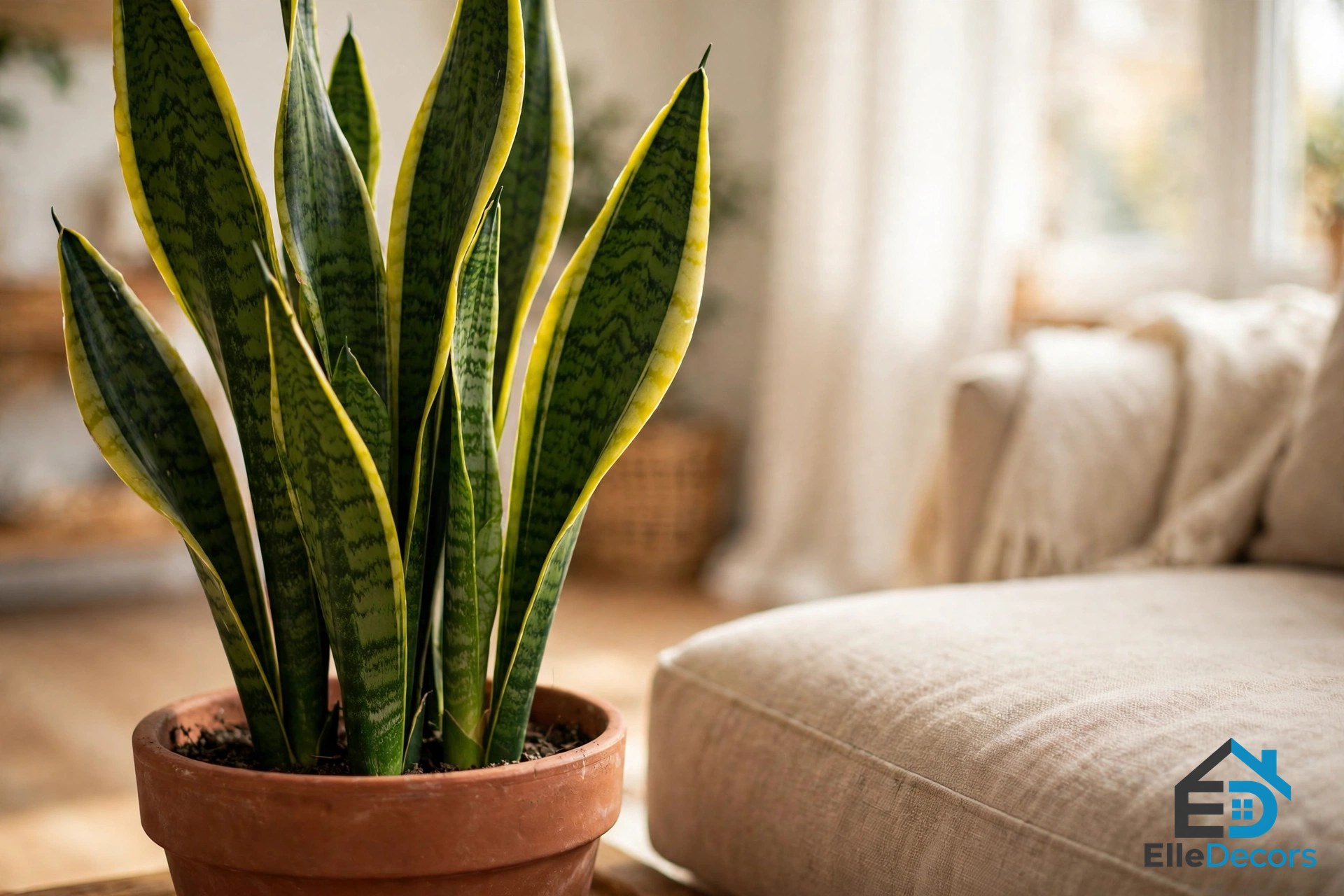
1. Snake Plant
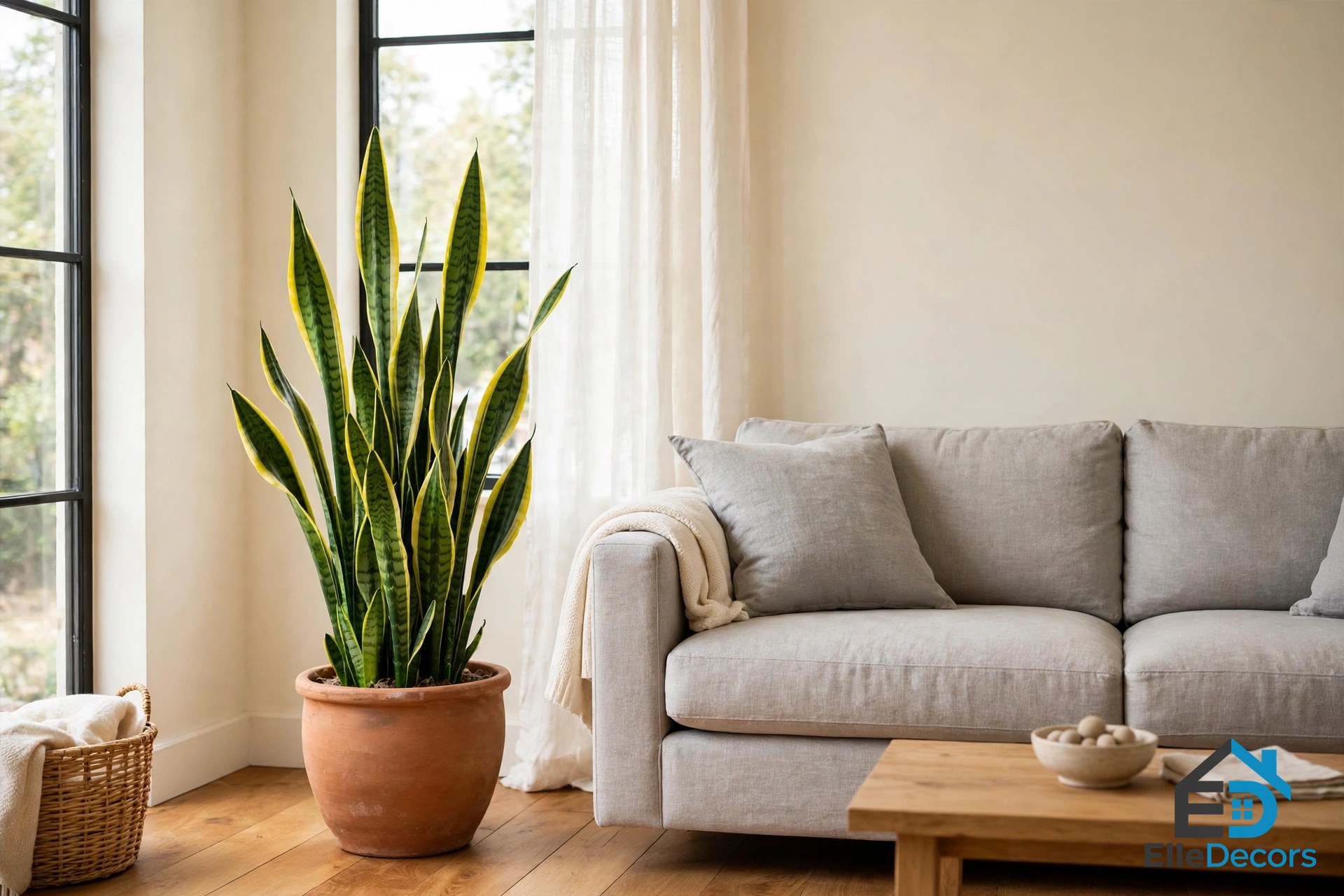
The snake plant is the toughest large plant for a dim room. Its upright leaves fit narrow gaps beside a sofa or a door. Indoors it reaches about 2 to 4 feet tall, depending on the variety, and it keeps its shape for years with almost no attention. It tolerates low light well, though growth slows in the dimmest spots.
Water only when the soil has dried right through, roughly every two to three weeks in summer and even less in winter. Its thick leaves store water, so underwatering is safer than overwatering. Snake plants are toxic to cats and dogs if chewed, so keep them out of reach of pets that nibble leaves. Use a heavy pot so it cannot tip over.
2. Cast Iron Plant
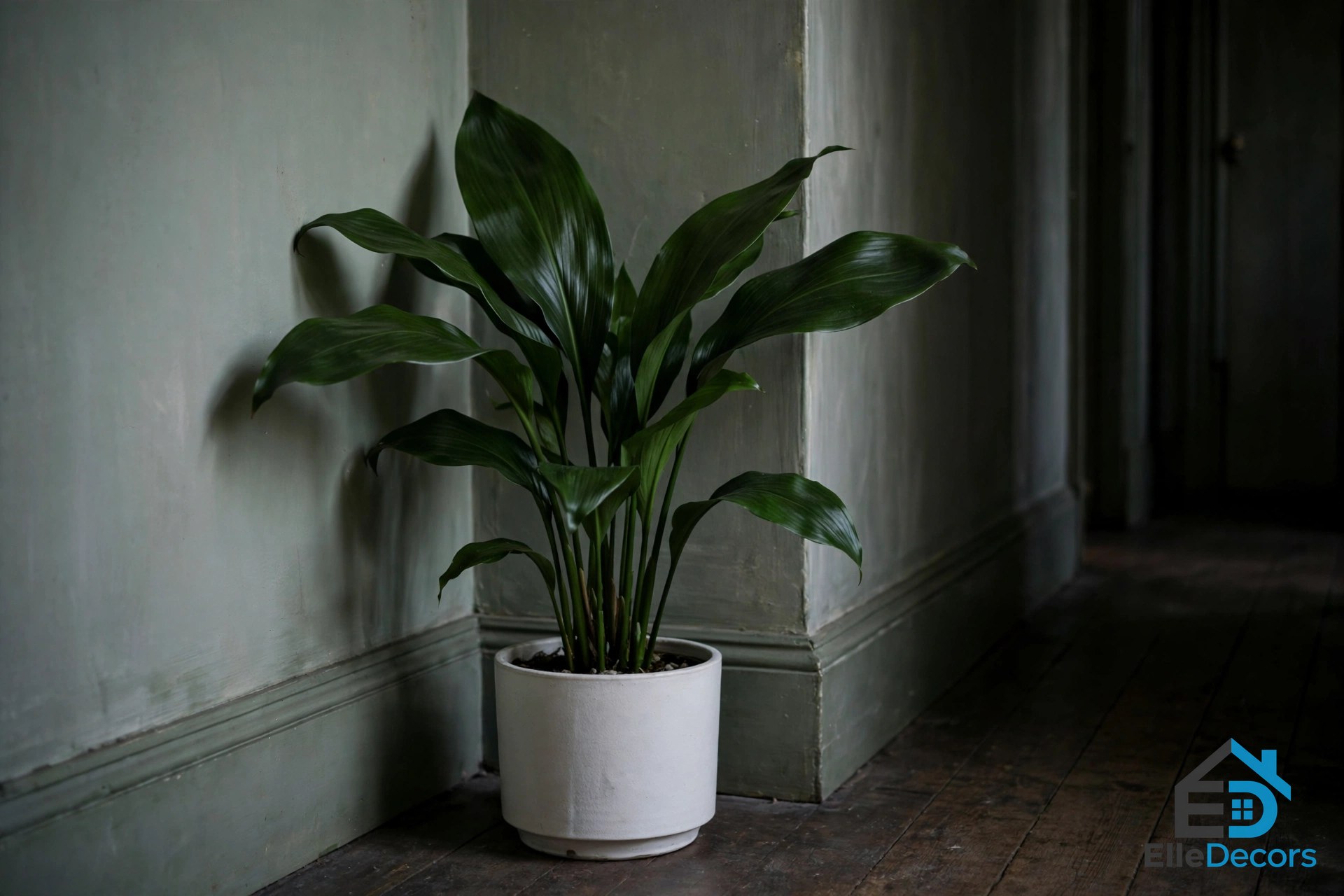
The cast iron plant earned its name in Victorian houses with gas lamps and dim parlours. It is one of the few plants that genuinely likes a dark corner. Its broad, dark green leaves reach about 2 to 3 feet tall, and it grows slowly, so it will not outgrow its spot in a hurry.
It is happy in low or filtered light and should be kept out of direct sun, which can bleach and burn its leaves. Keep the soil lightly moist in spring and summer and a little drier in winter, and never let it sit in soggy compost. Wipe the leaves now and then to keep them dust-free. It is non-toxic to pets, and suits a hallway or landing where most plants would fail.
3. ZZ Plant
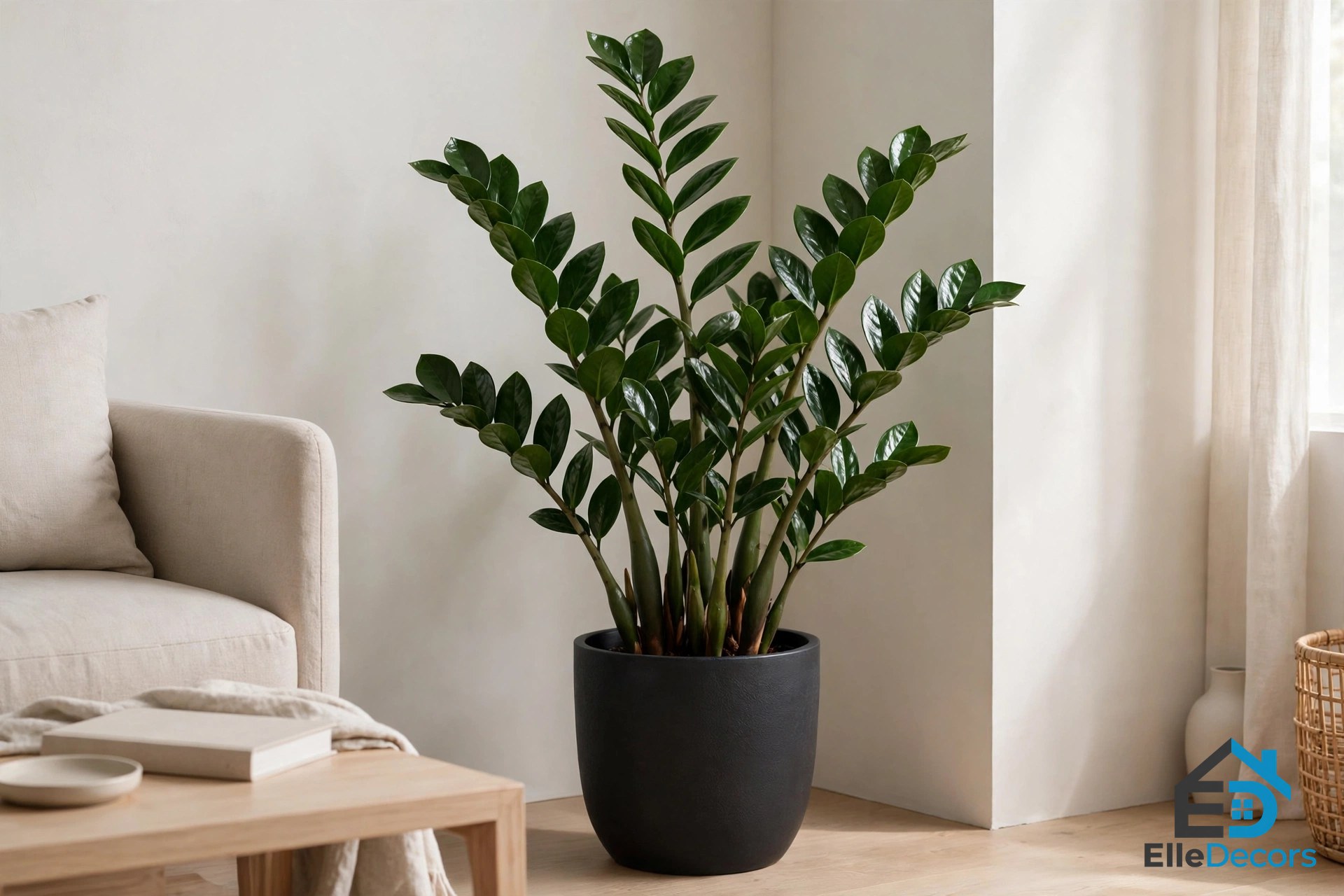
The ZZ plant is the set-and-forget option. Its glossy, dark green leaflets grow on upright stems to about 2 to 4 feet tall and wide, and it stores water in thick underground rhizomes, so it can go weeks without a drink. It suits low light and offices where nobody waters anything. It grows very slowly in deep shade.
Give it at least a little indirect light each day, and keep it out of direct sun, which can scorch its leaves. Water every two to three weeks, letting the soil dry out between waterings, and protect it from cold draughts and temperatures below about 45 degrees Fahrenheit. The ZZ plant is toxic if ingested by people or pets, so place it where children and pets cannot chew it. Buy the green form for the dimmest spots.
4. Monstera
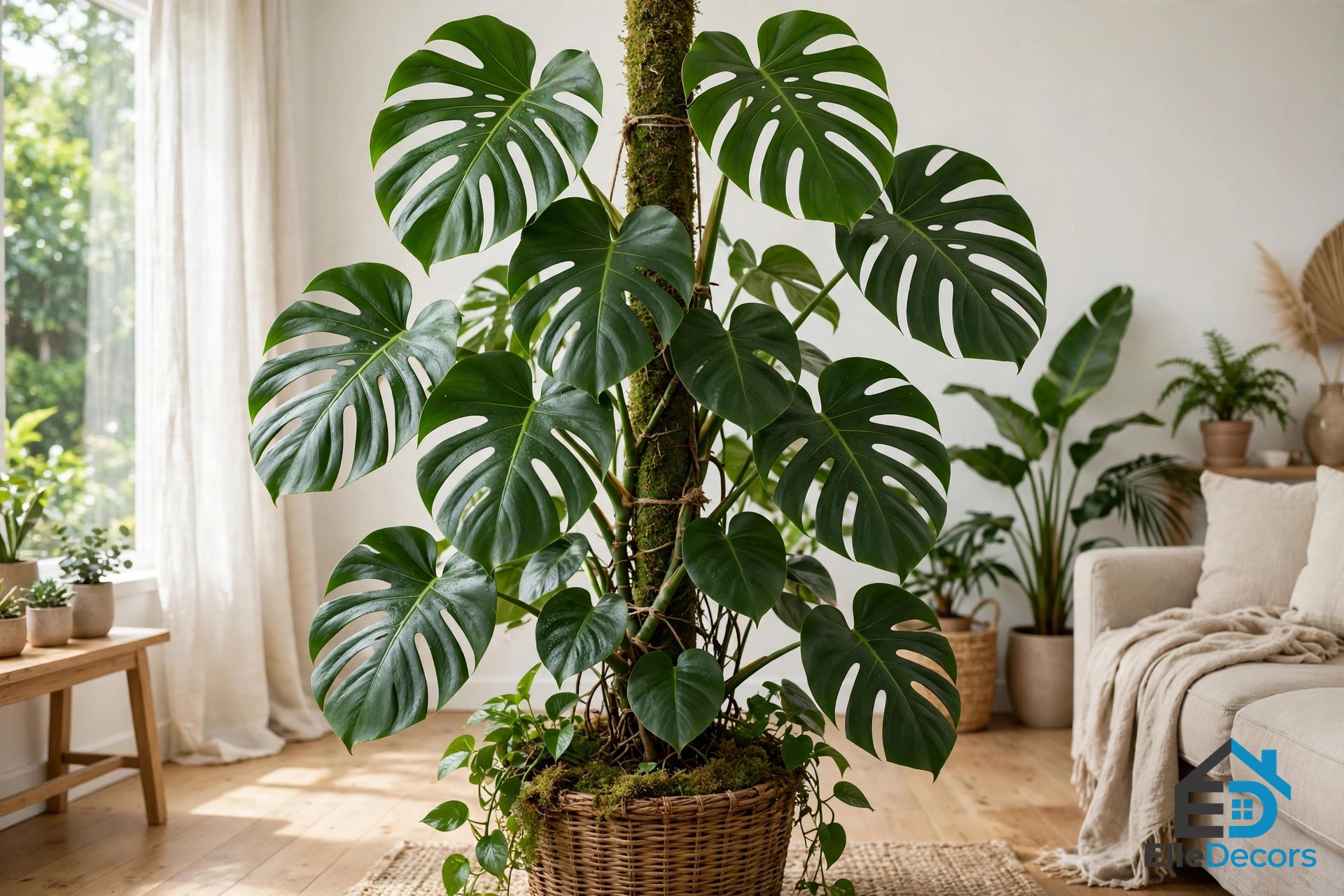
The monstera is the most dramatic plant on this list, and the one that needs the most honest framing. With support and bright indirect light it can reach 6 to 8 feet tall, with leaves that develop splits as they mature. In low light it will still live, but it will stay much smaller, at about 3 to 4 feet, and its new leaves will be smaller and mostly solid, without the famous splits.
Large house plants low light buyers often choose a monstera for its looks, then wonder why it never develops holes. The answer is light: the splits appear on mature growth in brighter indirect light, not in a dark corner. For the full look, give it the brightest indirect spot you have. Monsteras climb, so give yours a moss pole to grow up. Water every one to two weeks, and keep it away from direct midday sun. It is toxic to pets if ingested.
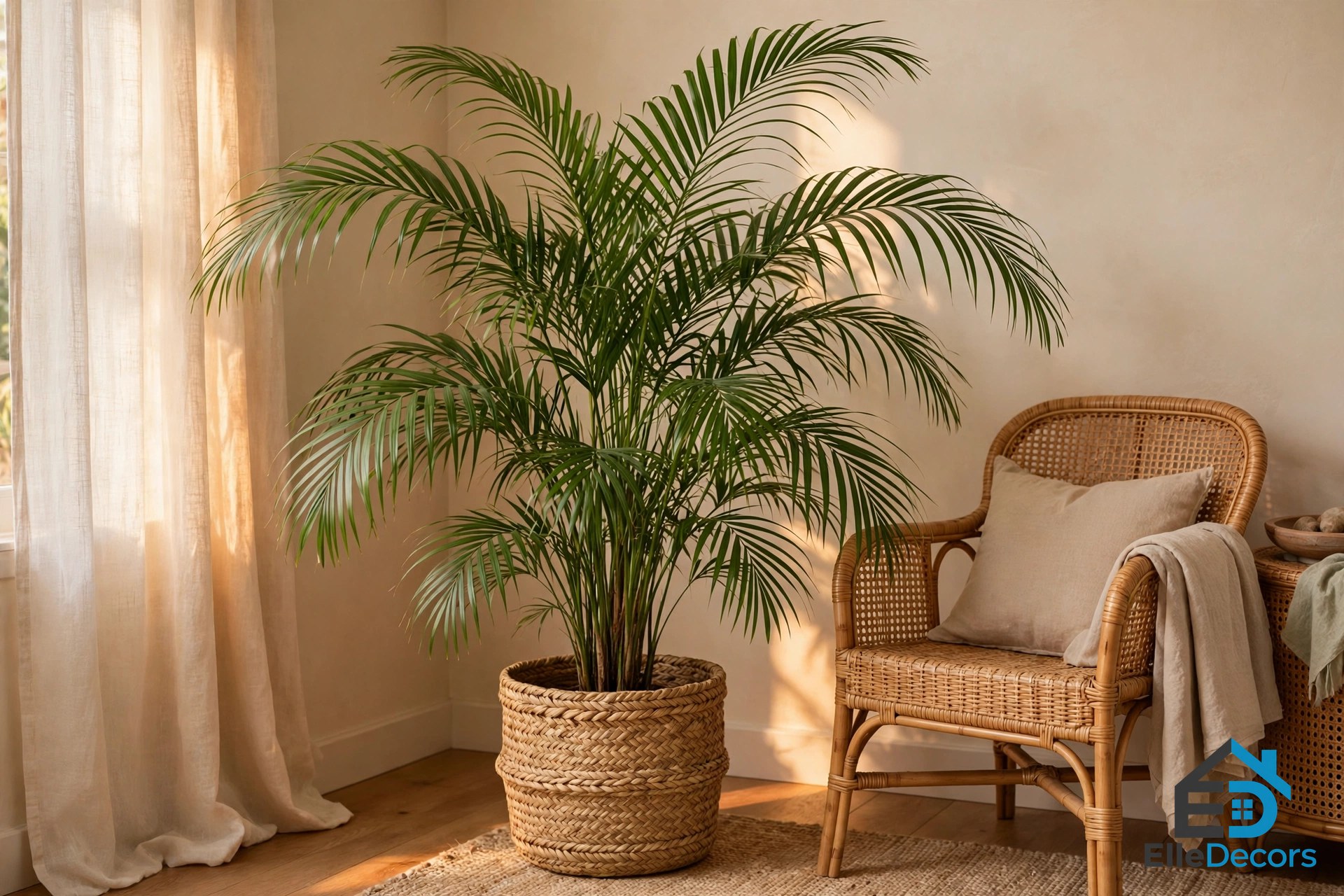
5. Parlor Palm
The parlor palm is the classic indoor palm, and one of the few palms that genuinely tolerates low light. Its feathery fronds reach about 2 to 6 feet tall indoors over several years. It grows slowly, so buy the size you want.
It does best in bright, filtered light, often with a northern exposure, but it copes with lower light, where its growth slows and its fronds may turn a slightly yellow-green. Keep it out of direct sun, which scorches the frond tips, and away from cold draughts and temperatures below about 50 degrees Fahrenheit. Water when the top inch or two of soil feels dry, and do not let it sit in waterlogged soil. The parlor palm is non-toxic to pets, and it likes moderate humidity, so a bathroom with a window or a kitchen suits it well.
6. Money Tree
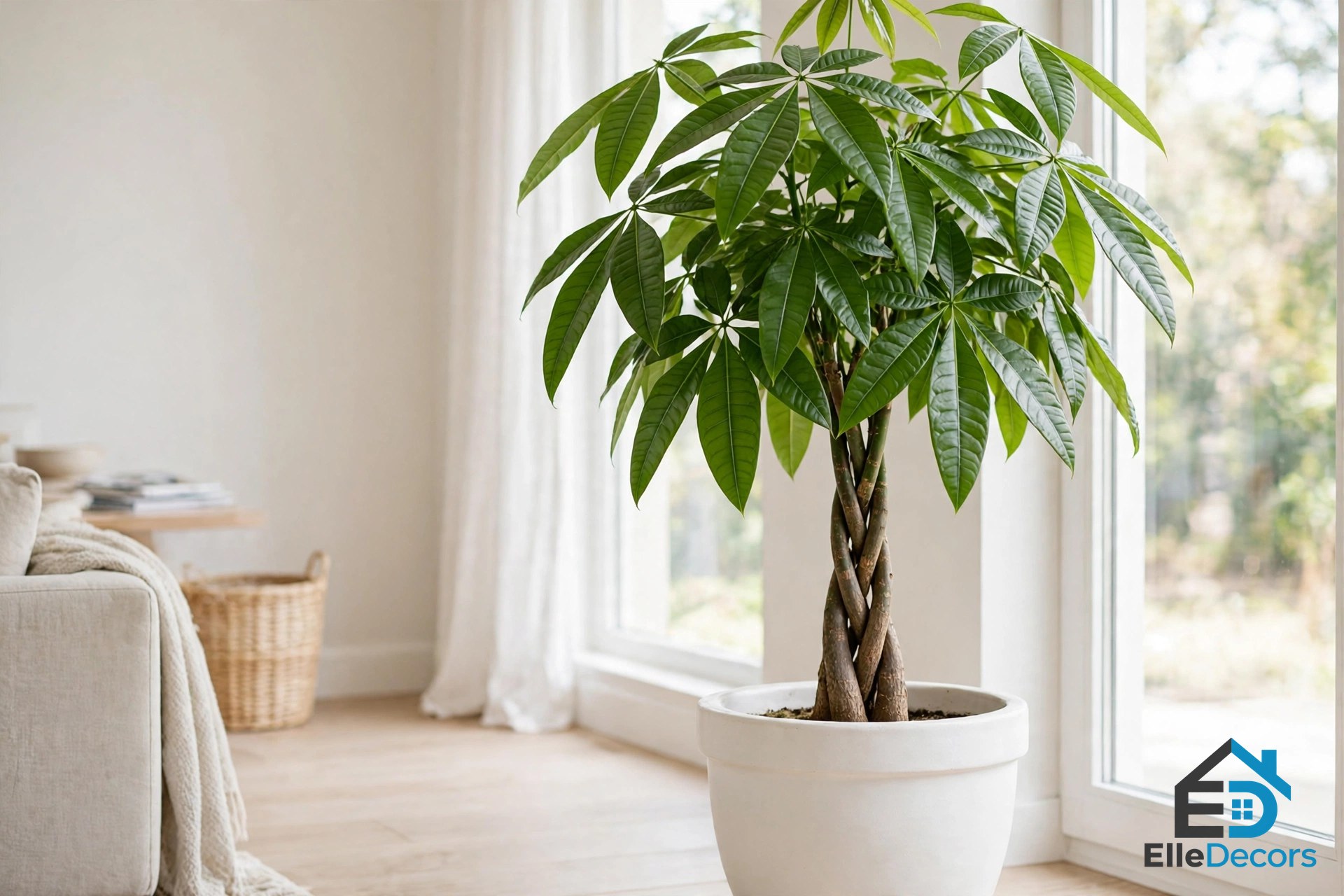
The money tree is a real tree in miniature, with a braided trunk and umbrella-shaped leaves made of five to seven leaflets. Indoors it typically reaches 6 to 8 feet tall in bright indirect light, and about 3 to 5 feet in low light, where it grows more slowly and with longer gaps between leaves.
It tolerates low light, but it still needs some indirect sunlight to stay healthy, so place it near a window with filtered light, not in a windowless corner. Direct sun can scorch its leaves. Water every one to two weeks, letting the soil dry a little between waterings, and keep it in temperatures between about 65 and 75 degrees Fahrenheit, away from draughts. The money tree is non-toxic to pets. It suits a large floor pot in a tall, empty corner.
7. Mass Cane
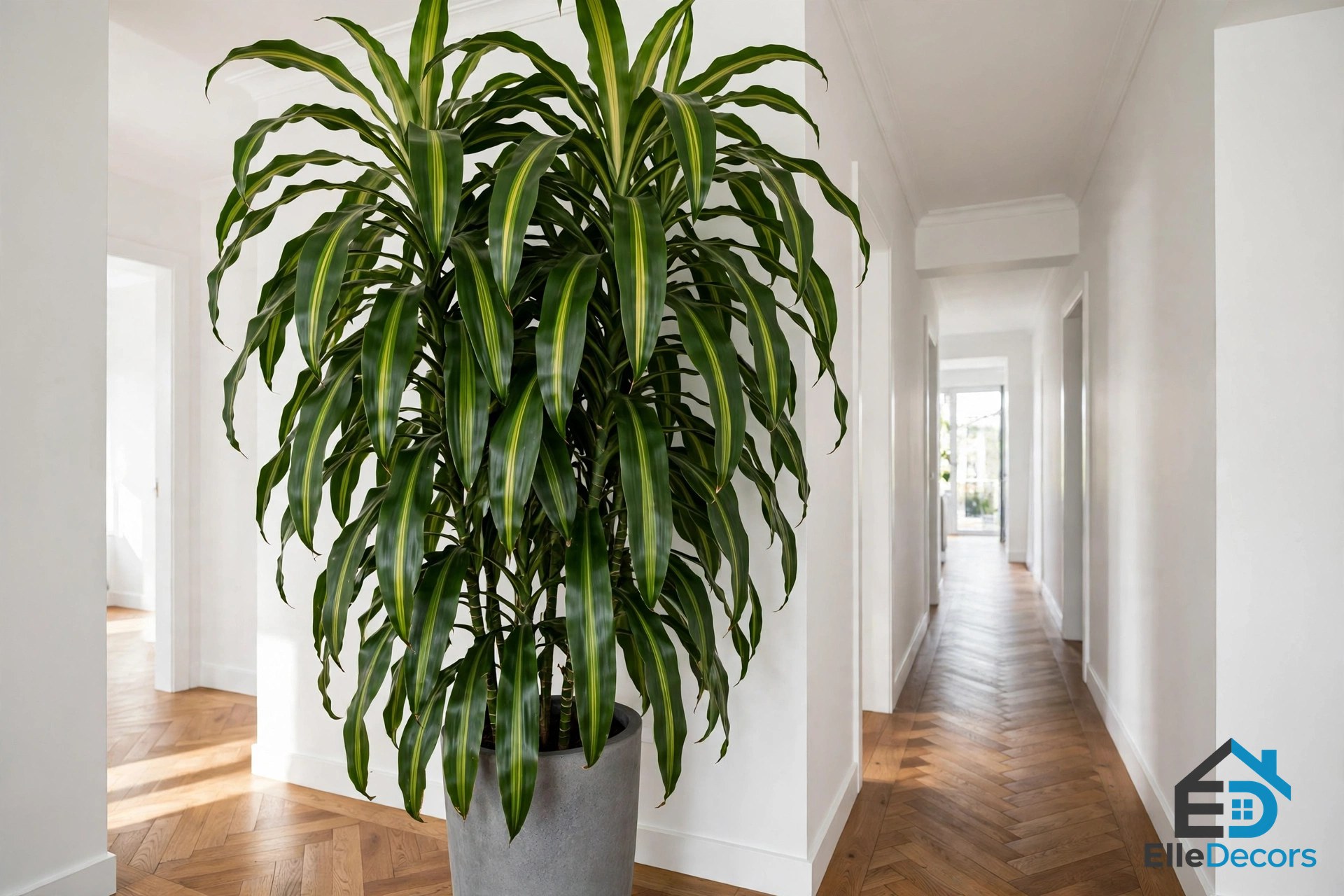
The mass cane, also sold as the corn plant, is a tall, architectural plant with a woody cane stem and broad, arching leaves striped with a creamy yellow centre. Indoors it reaches about 4 to 6 feet tall, with a spread of about two feet.
It tolerates low light, but its growth slows there, its stems can become leggy, and the yellow stripe fades towards pale green. For the best colour, give it bright indirect light. Keep it out of direct afternoon sun, which bleaches and scorches the leaf margins. Water every ten days to two weeks, letting the top inch or two of soil dry between waterings, and never let it stand in water. The mass cane is toxic to pets if ingested.
8. Dieffenbachia
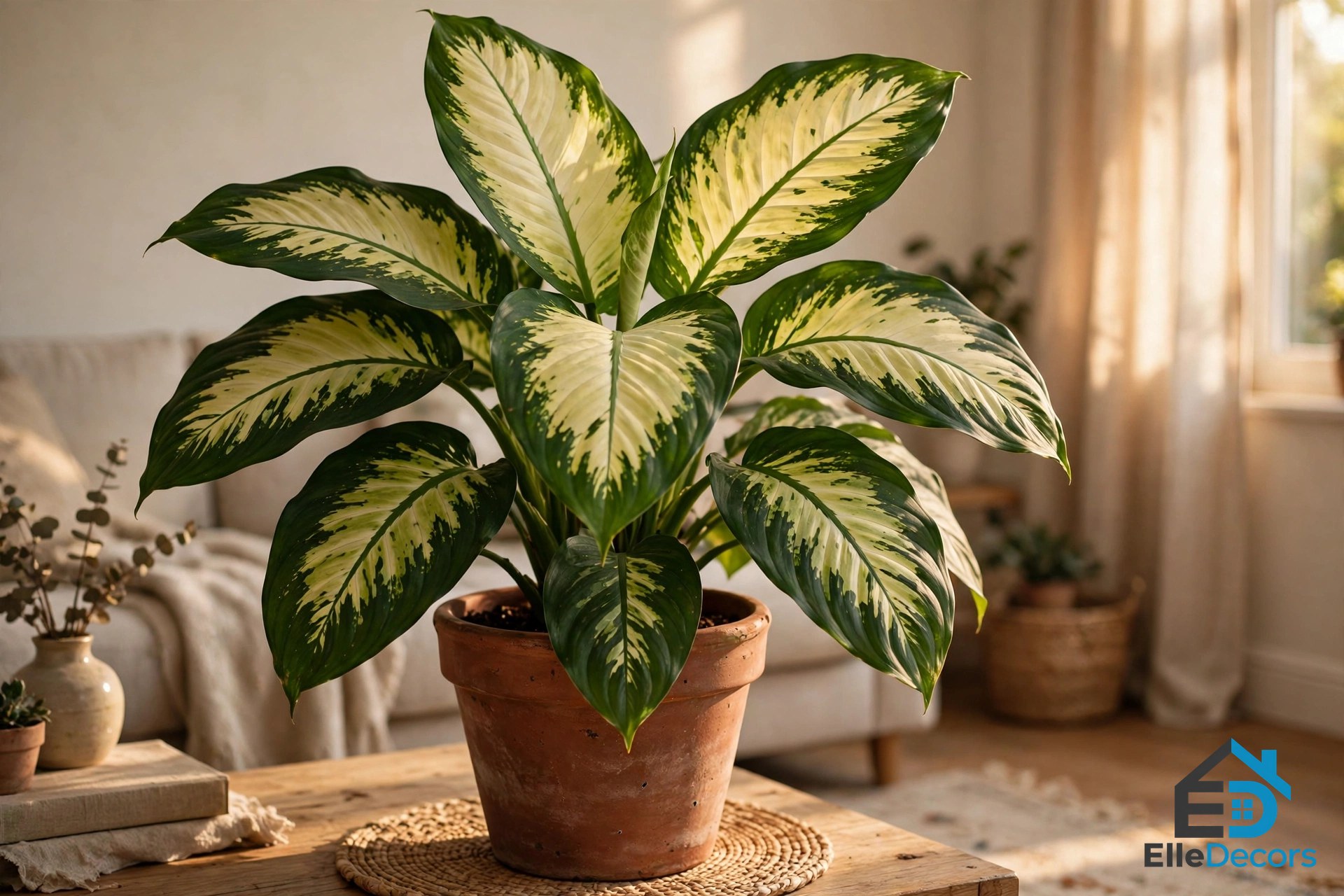
Dieffenbachia, also called dumb cane, is a bold foliage plant with large, variegated leaves on thick, upright canes. Indoors it grows about 3 to 6 feet tall, with cream and green patterns that suit a dim room.
It thrives in bright indirect light and tolerates low light, but in dimmer spots it grows more slowly and its variegation may fade to plain green. Choose a greener variety for the darkest corner. Keep it out of direct sun, water when the top one to two inches of soil are dry, and keep it warm, between about 65 and 80 degrees Fahrenheit, away from cold draughts. Dieffenbachia is toxic: its sap contains calcium oxalate crystals that burn if chewed, so keep it away from toddlers and pets that chew leaves.
Watering Large Plants in Low Light
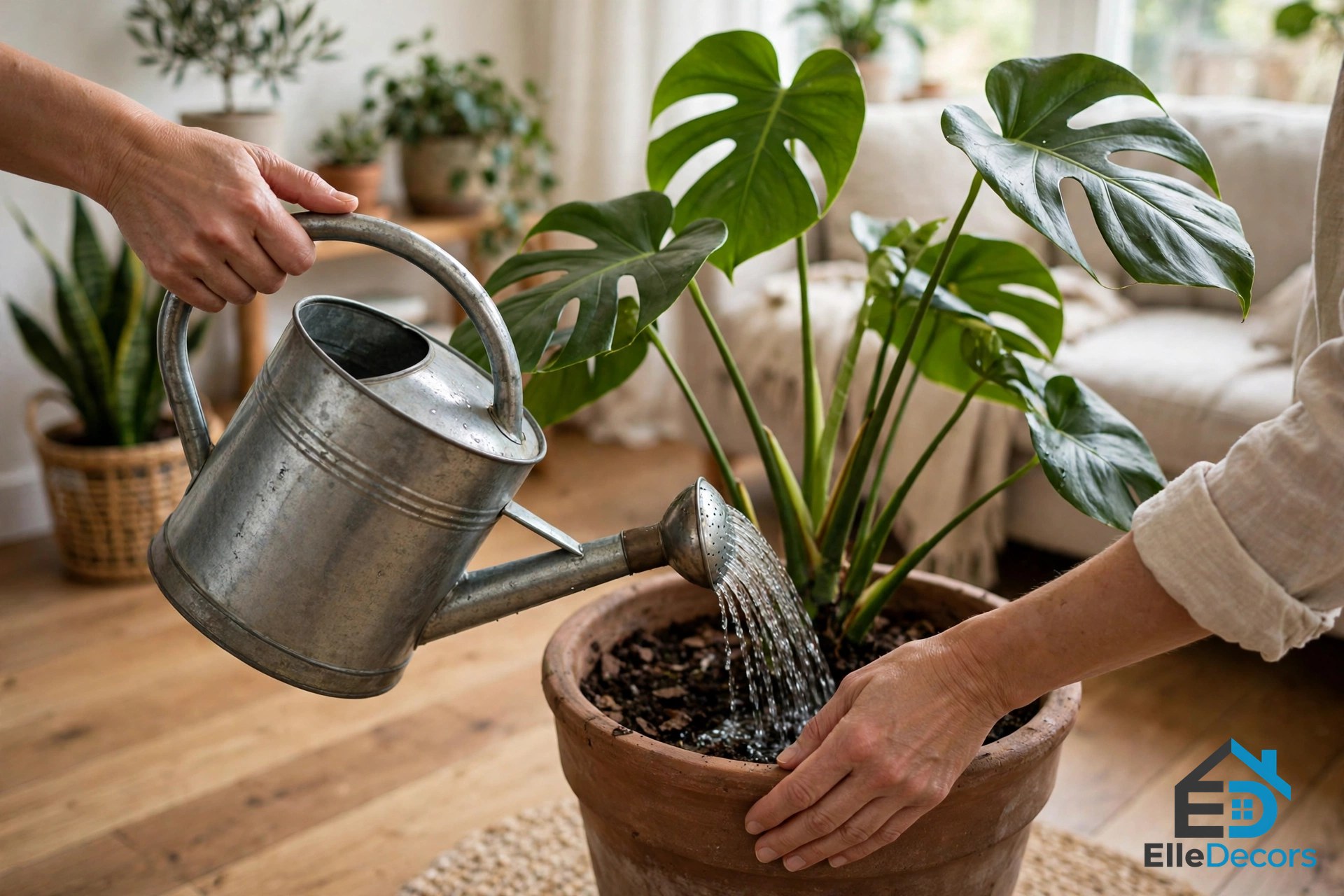
Watering is where most dim-room plants are lost. A large plant in low light drinks slowly, so its soil can stay wet for weeks after a thorough watering. Check before you water: push a finger two inches into the soil. If it feels damp, wait. If it feels dry, water thoroughly until a little runs from the drainage holes, then empty the saucer. That habit matters more than any fertiliser.
Use a pot with drainage holes, always. A decorative pot without holes is a slow death sentence for a plant in low light, because the water has nowhere to go. If you love a pot without holes, use it as a cover pot over a nursery pot. Water less in winter, when growth slows and the days are short. Feed lightly, only in spring and summer.
Placing and Styling a Large Plant
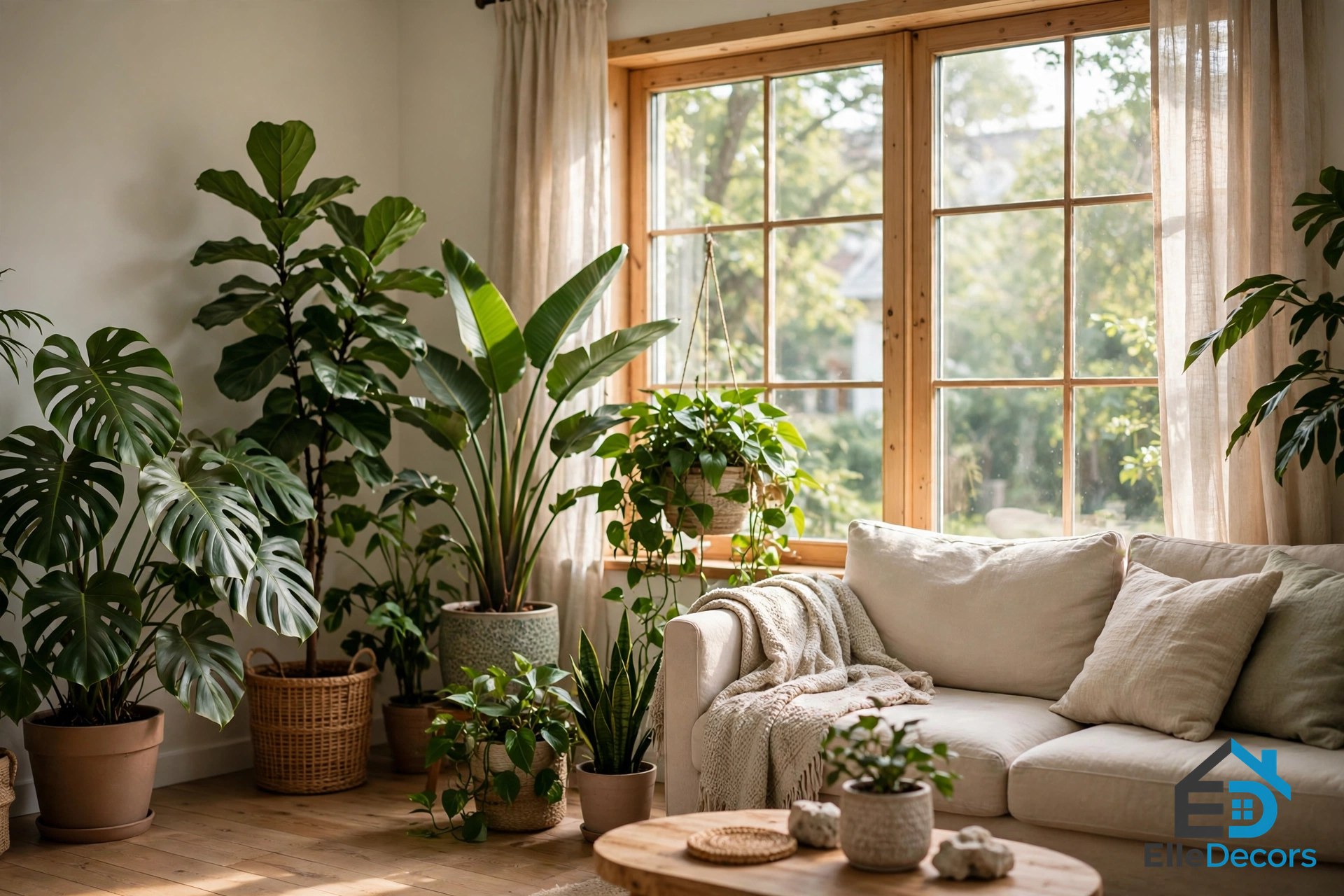
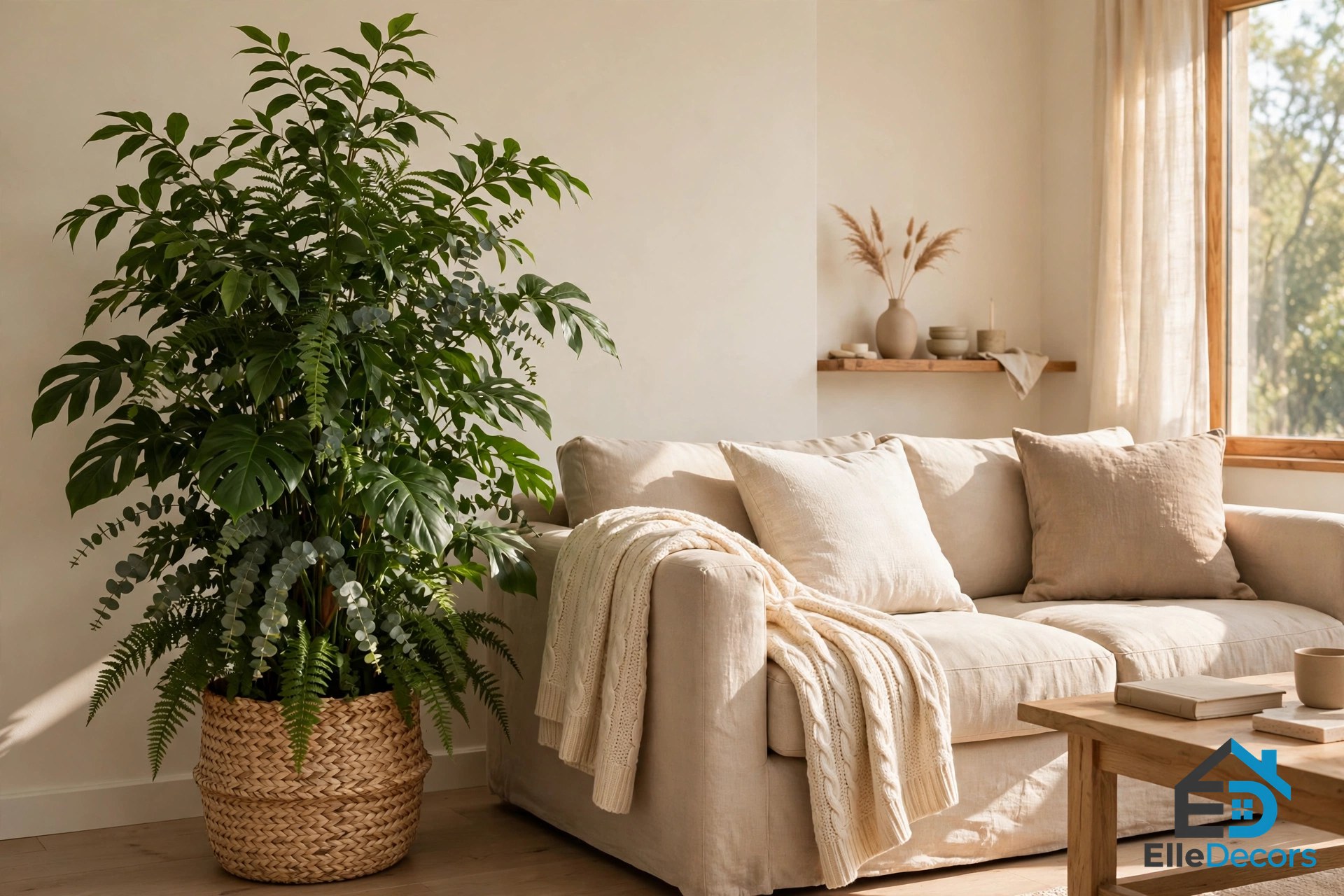
A large plant is furniture, not decoration. Place it where it anchors the room: beside a sofa, in an empty corner, or framing a doorway or a window. Leave space around it so the leaves are not pressed against a wall.
The pot matters as much as the plant. A tall plant needs a heavy, stable pot, and the pot should suit the room. Terracotta warms a pale room; a woven basket softens a hard corner. Our best use of wood in modern designs guide shows how wood planters and stands can tie a plant into the rest of the room.
Keep it simple: one plant, one pot, a clear floor. For a calmer, more minimal look, our japanese decor guide shows how a single plant in a plain pot can carry a whole corner without any other decoration. Large house plants low light styling works best when the plant is treated as part of the room’s layout, not as an afterthought. Our ideas for interior decorating guide covers how to place a statement piece so it balances the furniture around it, and the same rule applies to a plant.
Large Low Light Plants at a Glance
Use this table to compare the large house plants low light picks before you buy: match the mature size to your space, check the light it needs, and note whether it is safe around pets.
| Plant | Mature Size Indoors | Light | Water | Pet Safety |
|---|---|---|---|---|
| Snake Plant | 2–4 ft | Tolerates low light | Every 2–3 weeks, when dry | Toxic |
| Cast Iron Plant | 2–3 ft | Low or filtered light | Lightly moist, drier in winter | Non-toxic |
| ZZ Plant | 2–4 ft | Bright to low indirect | Every 2–3 weeks, when dry | Toxic |
| Monstera | 3–4 ft in low light; 6–8 ft with support in brighter light | Tolerates low light; brighter for splits | Every 1–2 weeks | Toxic |
| Parlor Palm | 2–6 ft | Tolerates low light | When top soil dries | Non-toxic |
| Money Tree | 3–5 ft in low light; 6–8 ft in brighter light | Tolerates low light | Every 1–2 weeks | Non-toxic |
| Mass Cane | 4–6 ft | Tolerates low light | Every 10 days–2 weeks | Toxic |
| Dieffenbachia | 3–6 ft | Tolerates low light | When top soil dries | Toxic |
Watch: Low Light Plants That Actually Cope
Watch Harli G’s tour of ten genuinely low-light-tolerant houseplants, filmed room by room: most low-light plants survive in dim rooms rather than thrive there, so placement and watering matter as much as the species.
Frequently Asked Questions
What are the best large house plants low light rooms can support?
The best large house plants low light rooms can support are the toughest species: snake plant, cast iron plant, and ZZ plant for the dimmest spots, with parlor palm and money tree for brighter low-light rooms. Monstera, mass cane, and dieffenbachia also cope, but they grow slowly and lose pattern or leaf splits in very dim light.
How big will a large low-light plant get indoors?
For large low light indoor plants, it depends on the species and the light. A snake plant or ZZ plant reaches about 2 to 4 feet indoors, a cast iron plant about 2 to 3 feet, and a parlor palm about 2 to 6 feet over several years. A monstera or money tree can reach 6 to 8 feet with support and brighter indirect light, but stays at about 3 to 5 feet in a dim corner. Pot size, light, and pruning all limit the final height.
How often should I water large plants in low light?
Water far less often than you would in a bright room. Most large low light indoor plants need water only every one to three weeks, and only when the top few inches of soil feel dry. Always use a pot with drainage holes, empty the saucer after watering, and never water on a fixed schedule without checking the soil first. Overwatering is the most common killer of plants in dim rooms.
Which large low-light plants are safe around pets?
The cast iron plant, parlor palm, and money tree are non-toxic to pets. The snake plant, ZZ plant, monstera, mass cane, and dieffenbachia are toxic if chewed, so keep them out of reach of pets that nibble leaves. Stick to the three non-toxic picks if your pet chews plants.
The Bottom Line
Measure the spot, check the light at midday, and choose a plant whose mature size fits the space. Water only when the soil is dry, and use a pot with drainage holes. The large house plants low light rooms reward most are the tough ones: snake plant, cast iron plant, and ZZ plant for the darkest corners, and parlor palm, money tree, and monstera where the light is a little better.