Pink Bathroom Ideas: Soft Colour, Smart Tile, and Styles That Work
A good pink bathroom starts with a decision, not a shopping trip. Pink can be soft and calm, or loud and joyful, depending on how much of it you use and what sits next to it. This guide covers the shades, the tile, the vanity, the fixtures, and the small-room tricks that make pink work in a real home.
Audio Summary
Finding Your Pink Bathroom: Pick a Shade First
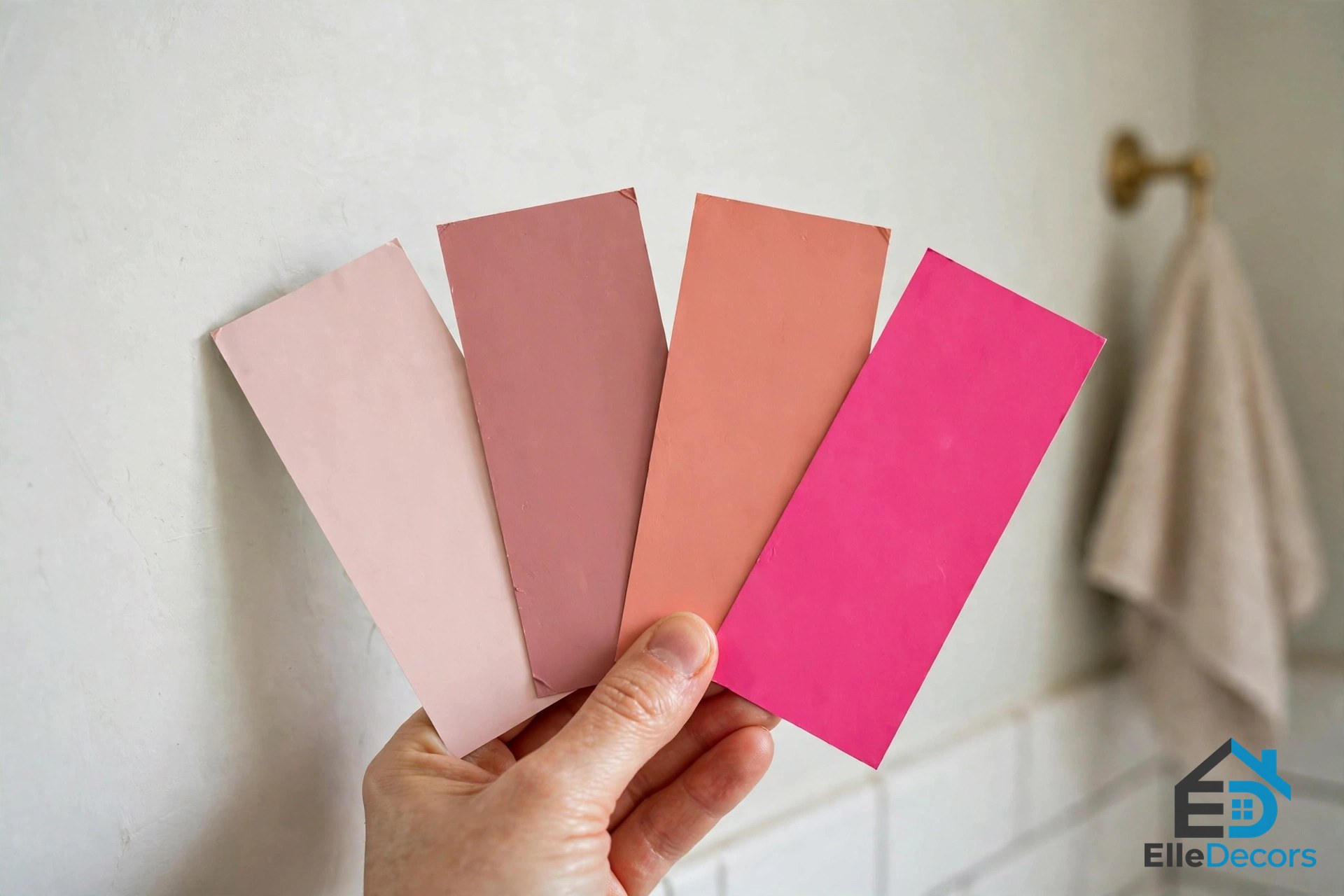
Pink is not one colour. It runs from the palest blush, which reads almost like a warm white, through dusty rose and salmon, to coral and full hot pink. The shade you pick sets the mood of the whole room, so choose it before you choose anything else.
Blush is the safest starting point. A pale, slightly beige pink works like a neutral: it warms white fixtures, flatters skin in the mirror, and pairs with almost any wood or metal. Dusty rose is deeper, with a grey or mauve undertone. Salmon and coral bring energy and warmth. Hot pink is a statement, and it works best in small doses.
Test the shade in your own room first: pink changes under different light, and a shade that looks soft in a shop can turn peachy under warm bulbs. Paint a large test patch and check it morning and evening, then stay inside one pink family — warm, cool, or dusty.
The amount of pink matters as much as the shade. A full pink room feels like a cocoon: calm when the shade is pale, electric when it is hot. Paint is the easiest pink to change and tile is the hardest, so put the boldest pink where it is cheapest to undo.
Seven Styles That Work
Pink suits more styles than most people expect. The trick is to let one other material do the grounding, so the pink reads as a choice rather than a theme. A well-planned pink bathroom pairs the colour with something solid: wood, marble, black metal, or green.
Soft Blush and Brass: The Classic
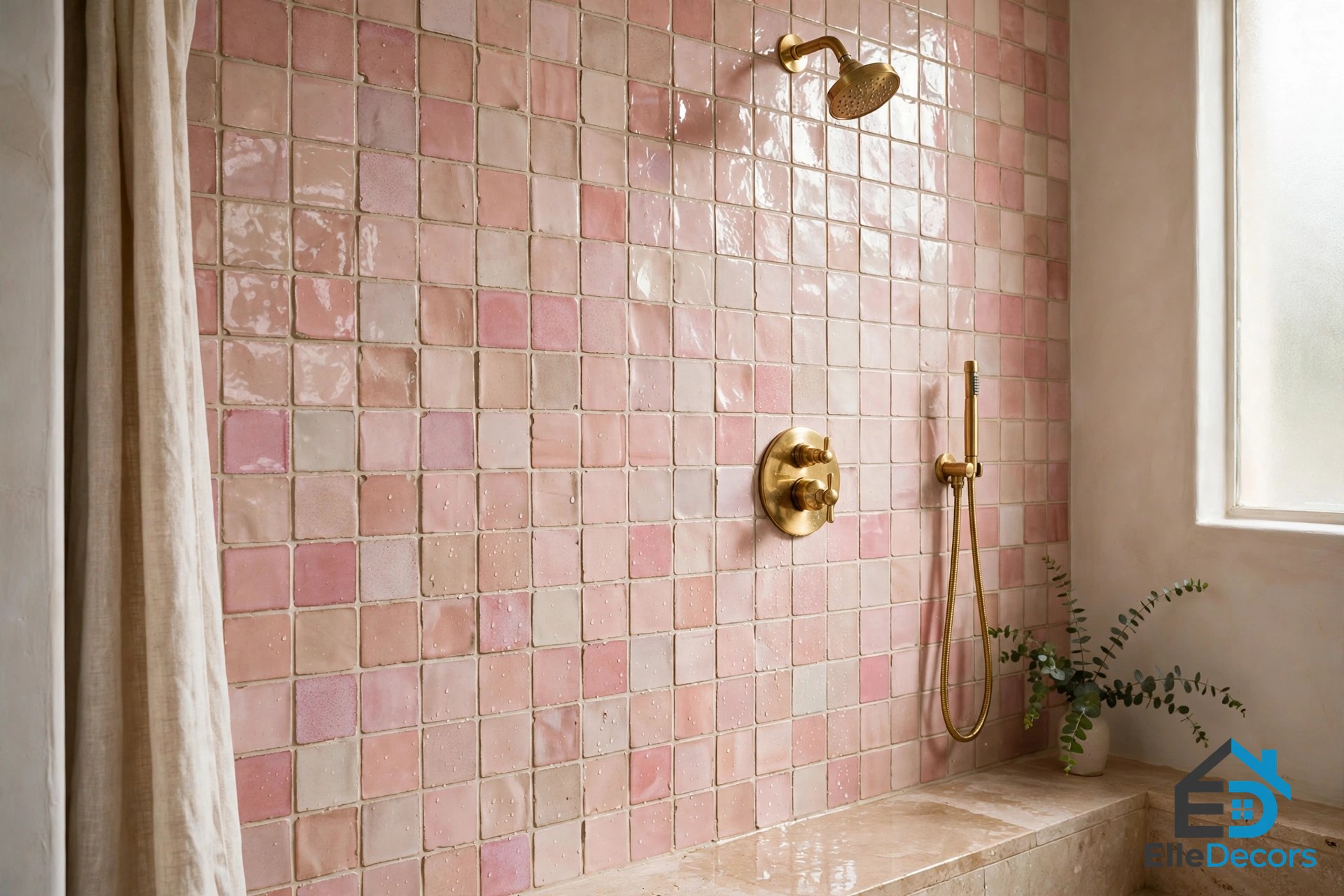
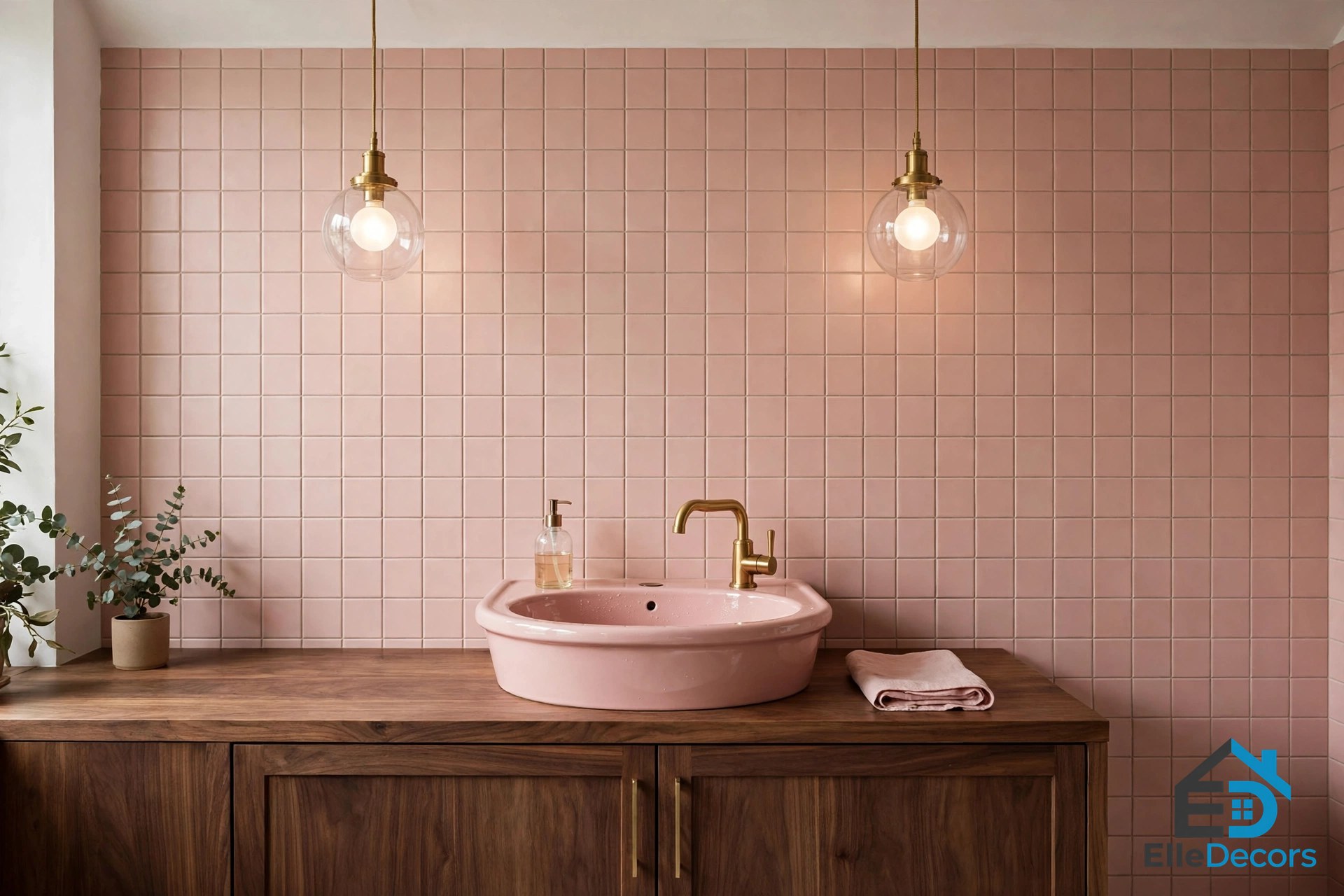
Blush tile in the shower with warm brass fixtures feels fresh without trying hard. A clean white vanity and light wood keep the palette grounded, so the blush reads as elevated rather than sugary. Globe vanity lights add a soft glow.
Pink and Gold Glam
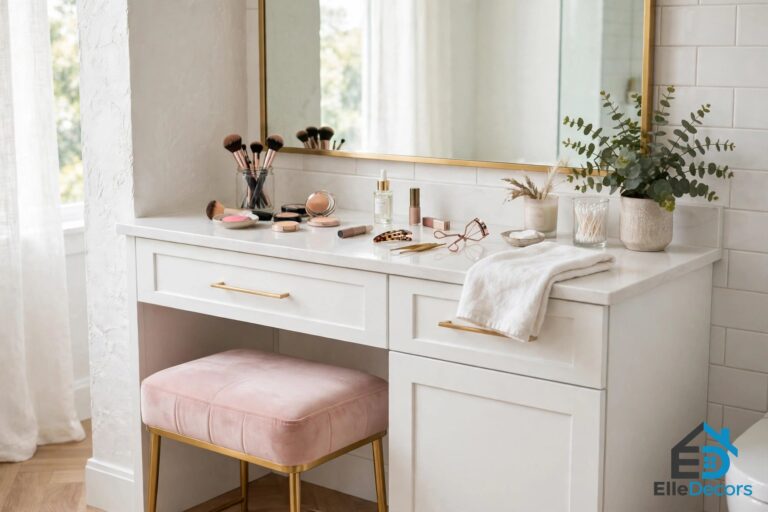
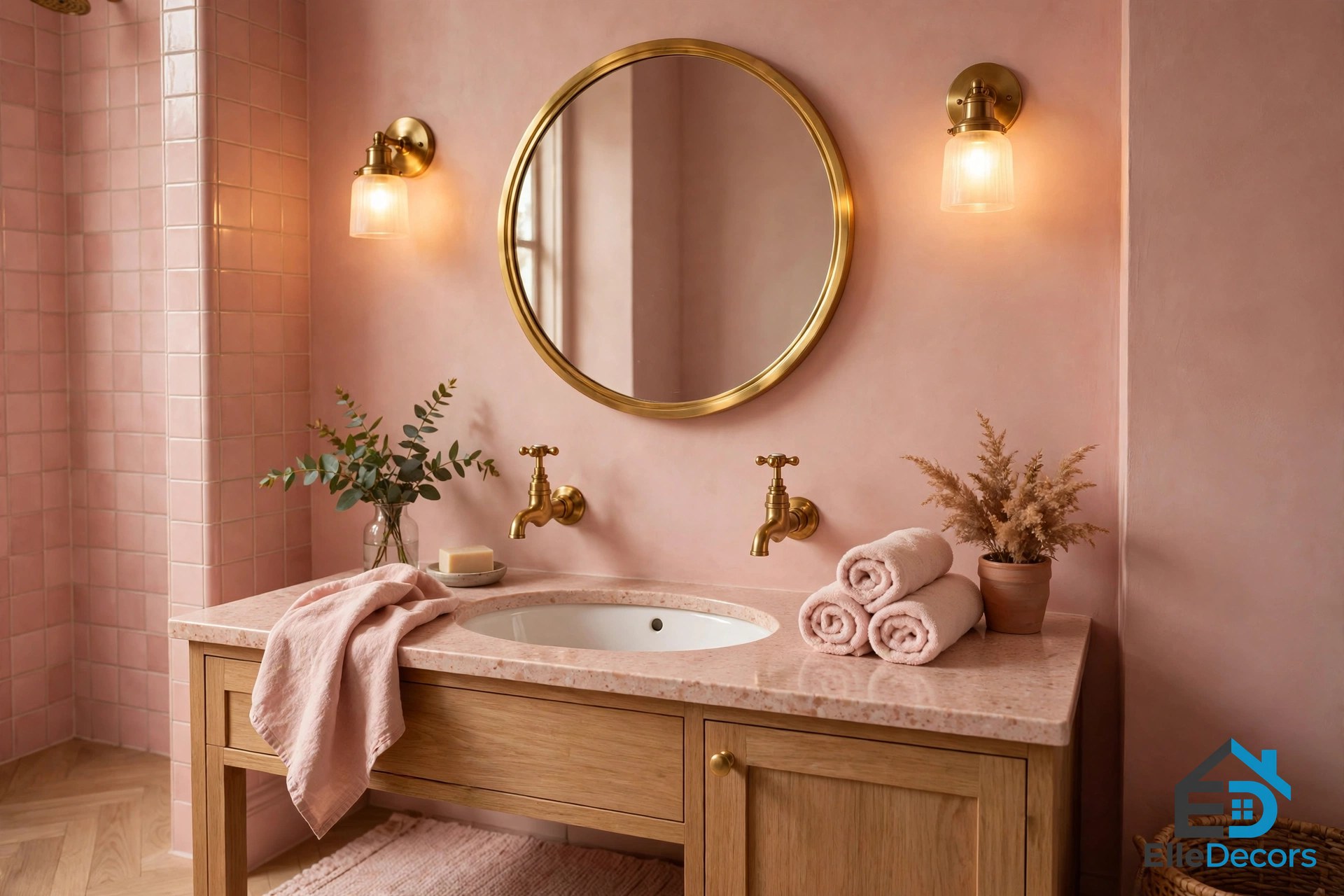
Pink and gold hold undeniable glamour. A pink vanity with gold taps, a gold-framed mirror, and sparkling crystal lights turns a small room into something that feels like a boutique hotel. White marble with pink veins, or a pink marble top, keeps the glamour from tipping into glitter.
Hot Pink, Used Boldly
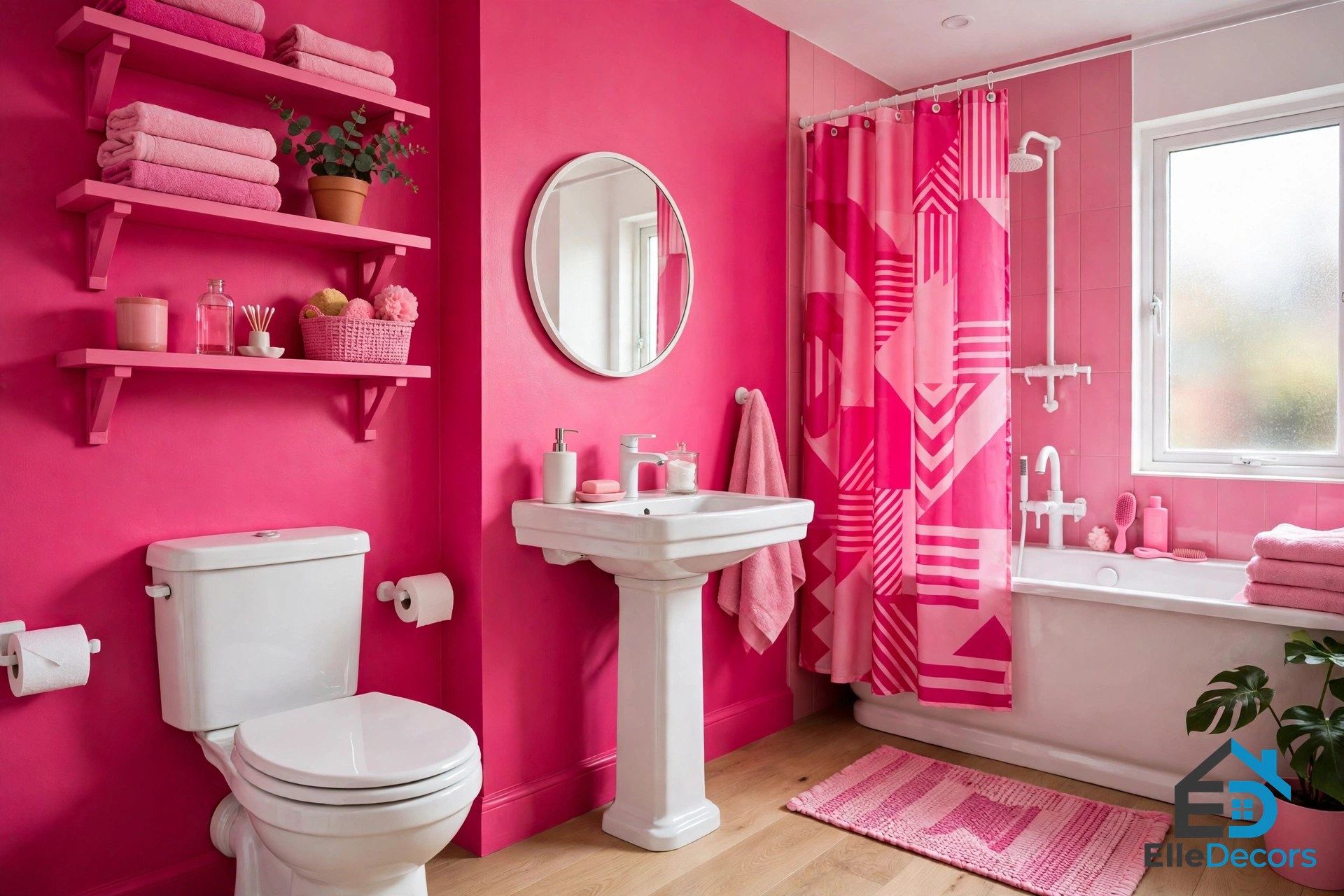
Hot pink is for rooms that want to be noticed. A fully hot pink room, with a graphic pink shower curtain, pink shelves, and even a pink toilet seat, amps up the fun. The trick is commitment: half a hot pink room looks like a mistake, while a whole one looks like a decision. White fixtures give the eye somewhere to rest.
Pink and Green: The Fresh Contrast
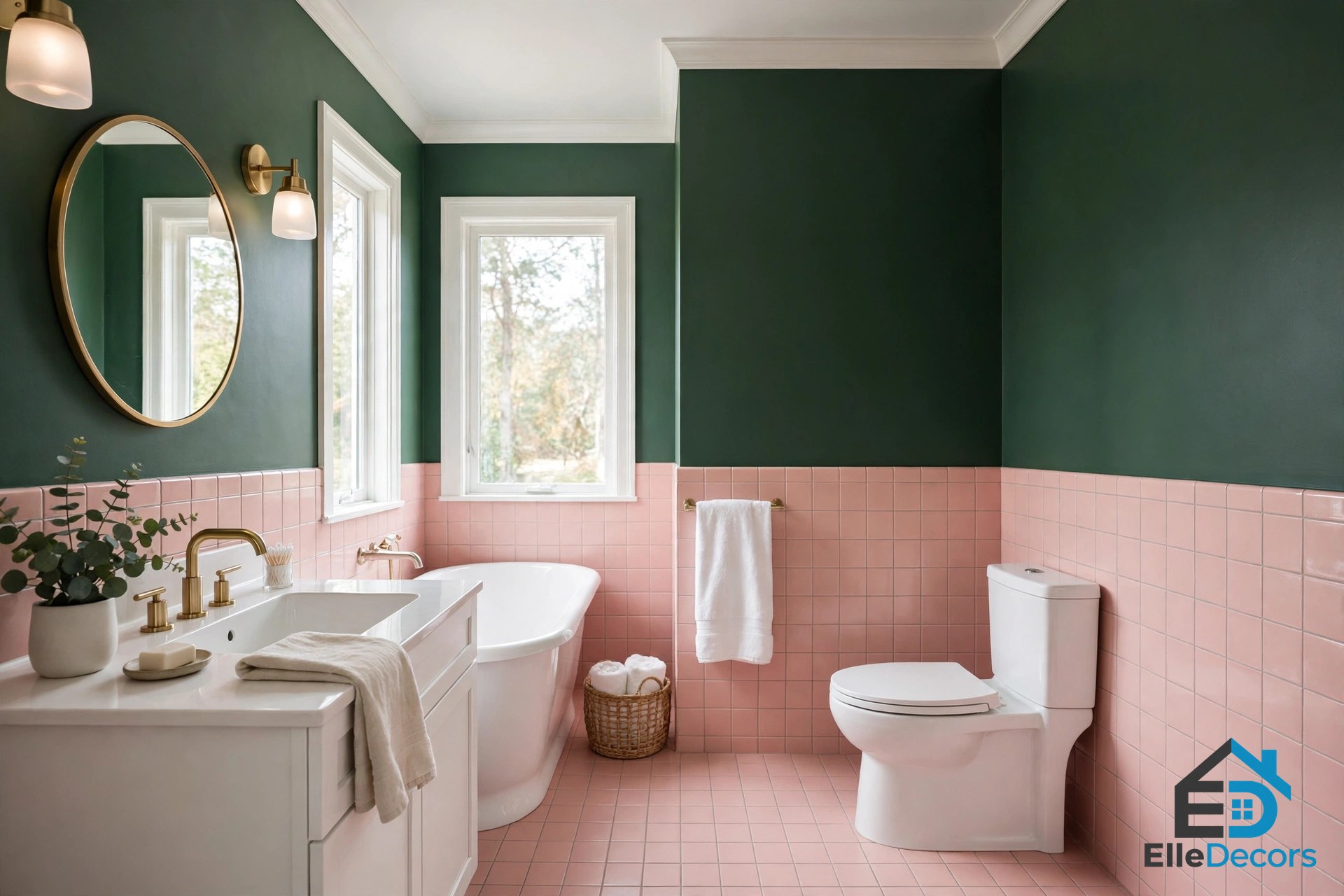
Green is pink’s best friend. Aqua-blue and deep green elements create strong contrast without heading toward black and white, and the pairing feels fresh rather than sweet. Try green paintwork on the upper walls with pink tile below, or a dark green vanity against blush walls. Colour-match small things like the loo brush and the bin to the walls, so they almost disappear.
Vintage Revival: Boiserie and Claw Feet
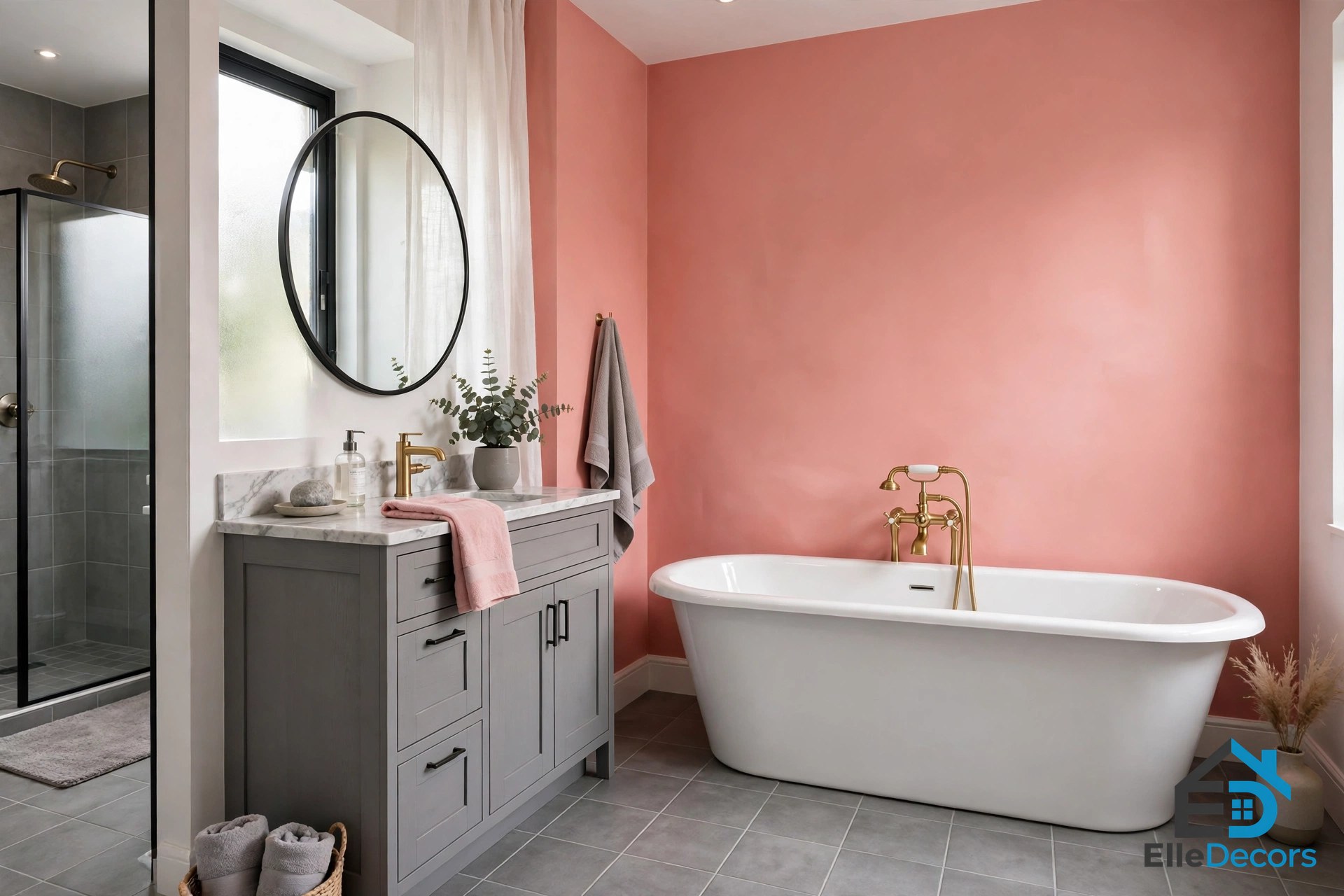
Pink has a long history in bathrooms, and the vintage look leans into it. A pink boiserie or wainscot-panelled room, a traditional pedestal sink, and a roll-top bath with claw feet give the old manor-house feeling. Retro salmon-pink walls, balanced with grey, bring back the fifties and sixties without feeling dated.
Botanical Pink: Plants Against Blush
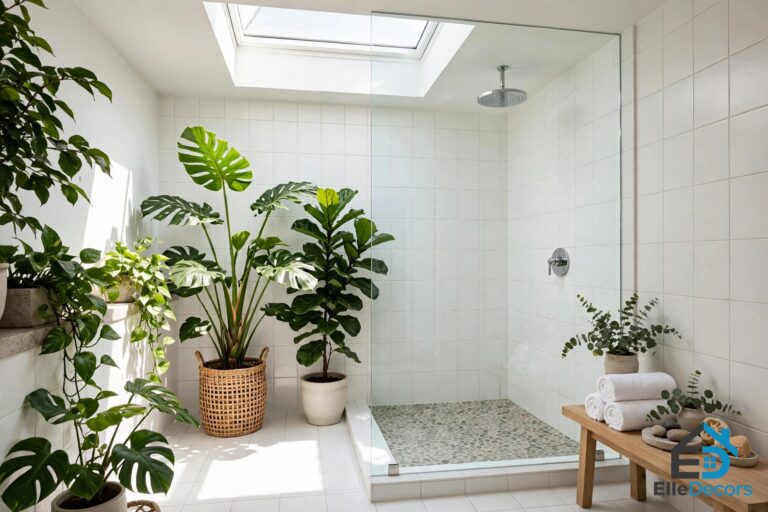
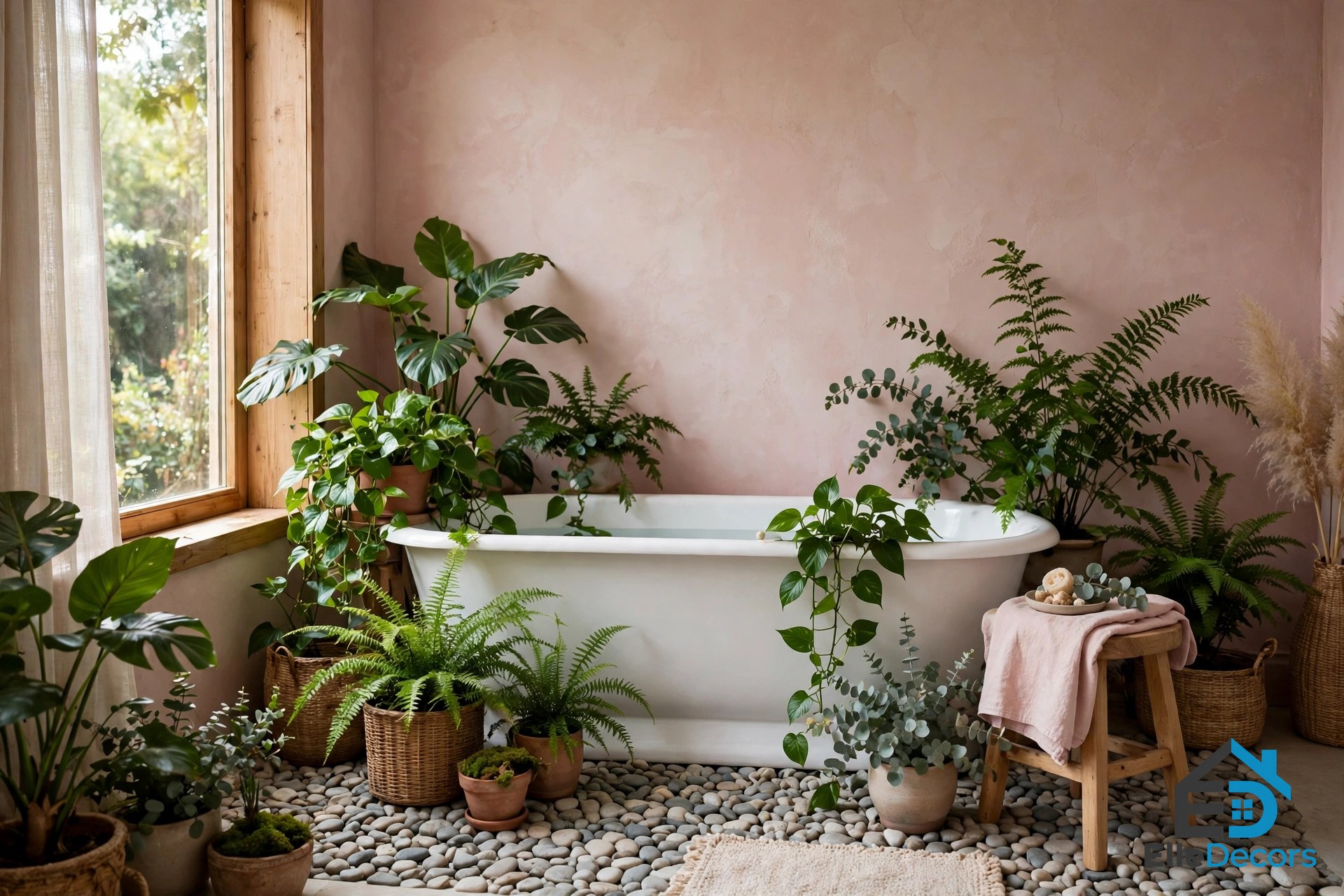
There is something fresh about lush greenery against a canvas of pink and grey. Live indoor plants around the bathtub, pebbles at its base, and planters at different heights turn the room into a small courtyard.
Pink and Concrete: Industrial Chic
Raw grey concrete makes pink look sharp. Put pink elements — a pink vanity, pink towels, a pink basin — into a concrete room and every item suddenly looks deliberate. The grey takes the sweetness out of the pink, and the pink takes the cold out of the concrete.
Tile: Where Most Pink Bathroom Ideas Start
Tile sets the personality of the room: it covers the largest areas and is the hardest to change, so choose between a little tile used well and a lot used boldly.
Zellige-style tile is the most loved option right now. Handmade-looking tiles in dusty blush or muted rose have slight variations in glaze, so they reflect light differently across the wall and the pink feels organic rather than flat. Architectural Digest’s tour of Sarah Paulson’s room shows the boldest version: floor-to-ceiling handmade Zellige tile.
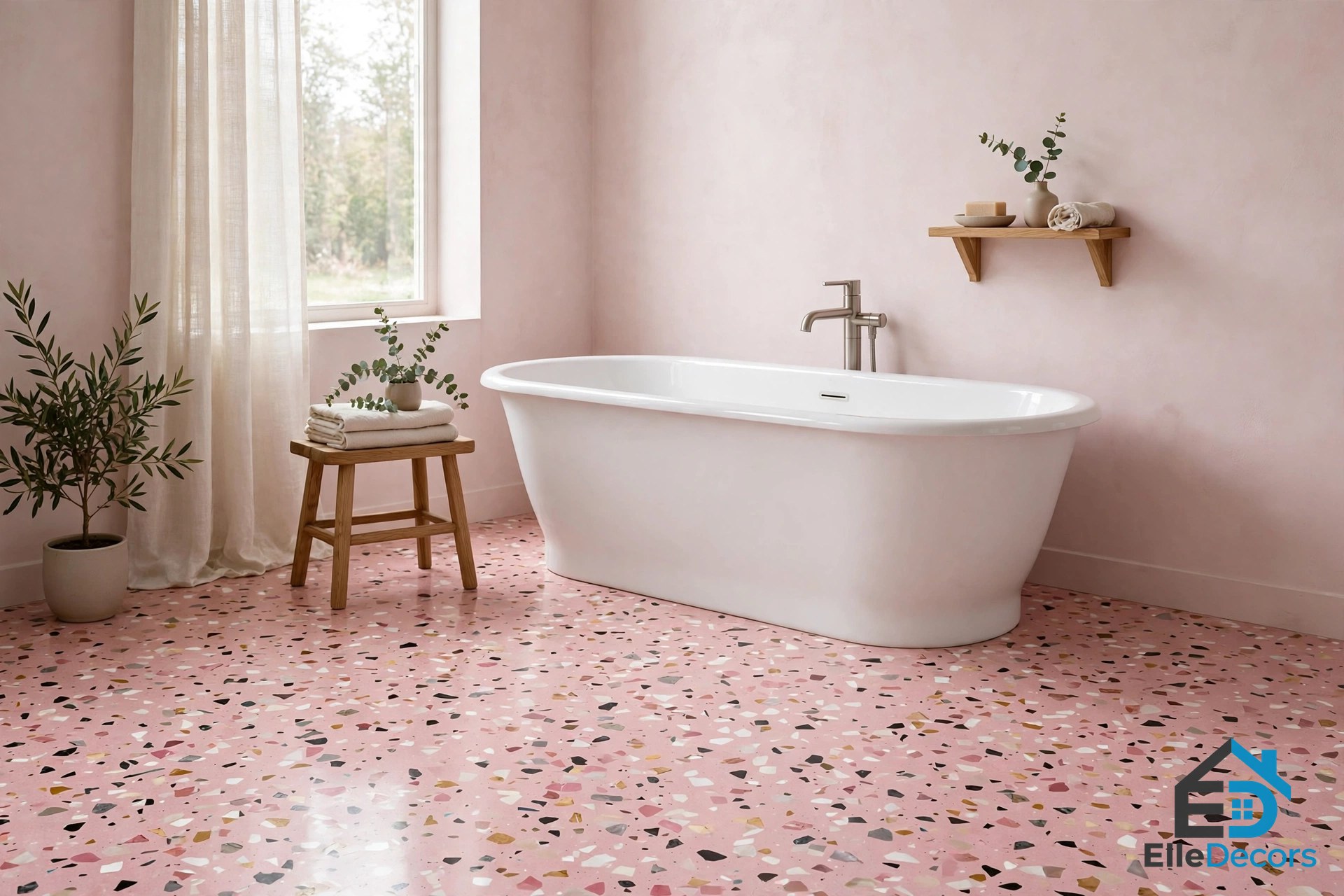
Terrazzo is the playful option. A pink terrazzo floor, with its confetti pattern, gives a fun edge to a plain pink scheme, and a rose terrazzo backsplash brings in colour without solidity.
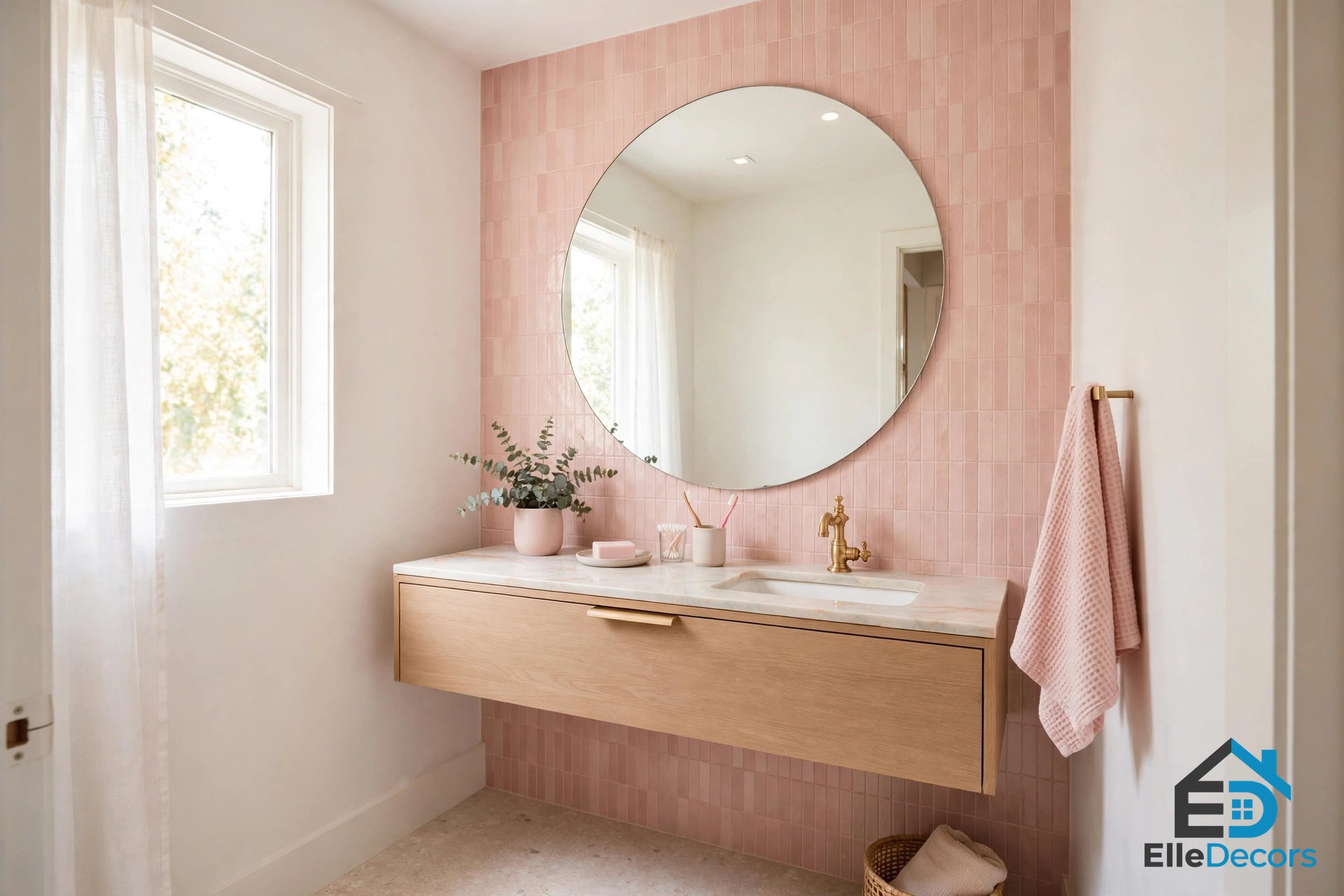
Subway tile in blush is the quiet classic: a familiar shape with an unexpected colour, working as a backsplash behind the vanity, a border around plain white tiles, or a single feature wall. Black grout gives pale pink tiles a graphic edge, while white grout keeps them soft. Ribbed tile adds another layer: the vertical ribs catch light and shadow, so a flat pink wall gains depth.
For a full commitment, floor-to-ceiling blush tile wraps the room in a cocoon. It works best when the shade is muted and the fixtures are white. Shake up a top-to-bottom pink scheme with sections of different tile texture, or smoked black glass on blush pink.
The Vanity: The Room’s Anchor
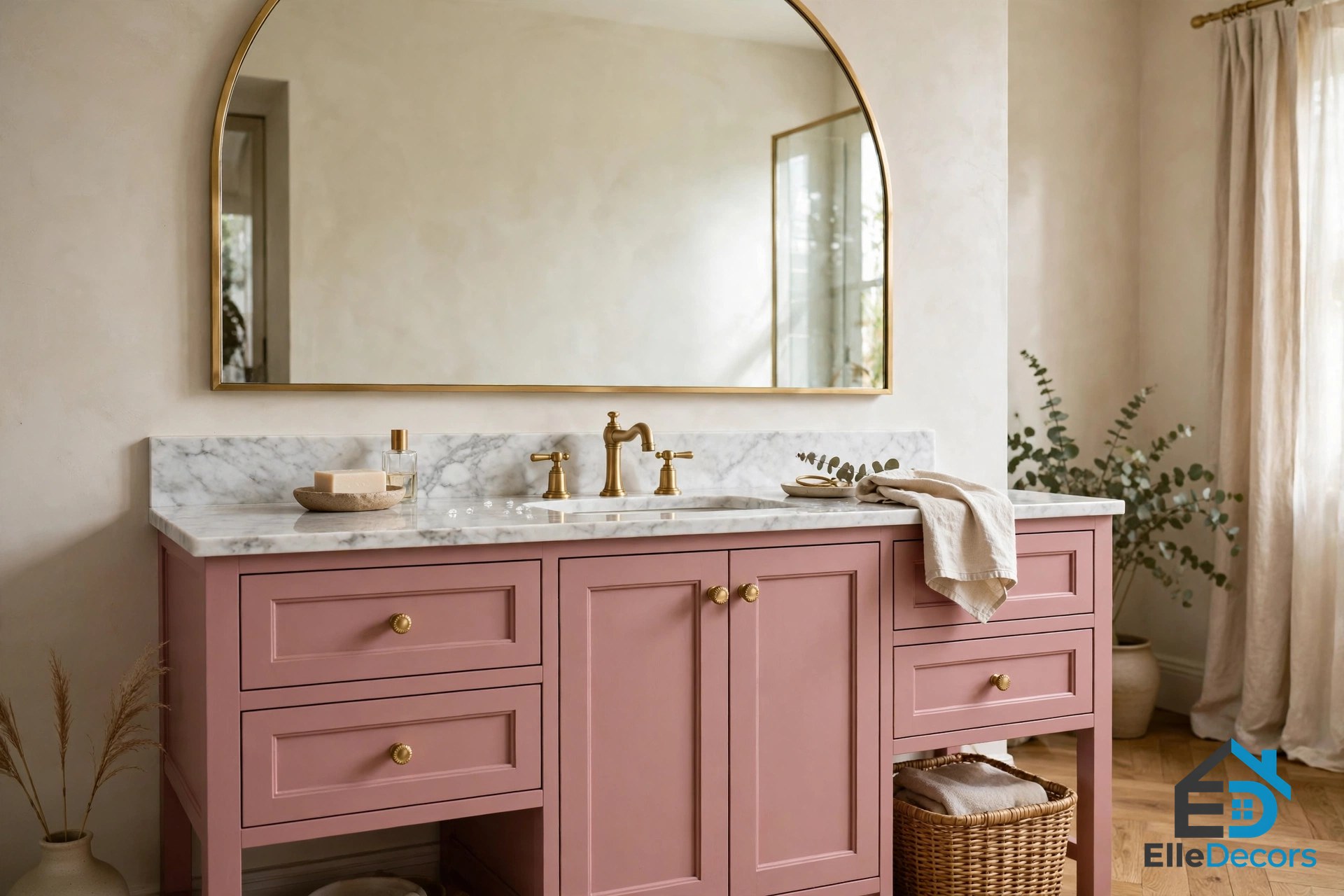
The vanity is the piece of furniture the room is built around, so it carries more of the pink than anything else. A pink vanity unit aligned with a pink backsplash wall makes a neat statement, and a dusty rose vanity under a marble countertop feels sweet but polished.
Height matters more than colour here. A standard vanity places the countertop 30 to 32 inches above the finished floor, and a comfort-height vanity places it 34 to 36 inches up, close to kitchen counter height. The planning guidelines from the National Kitchen and Bath Association take a wider view, recommending a height between 32 and 43 inches chosen to fit the person who uses the room.
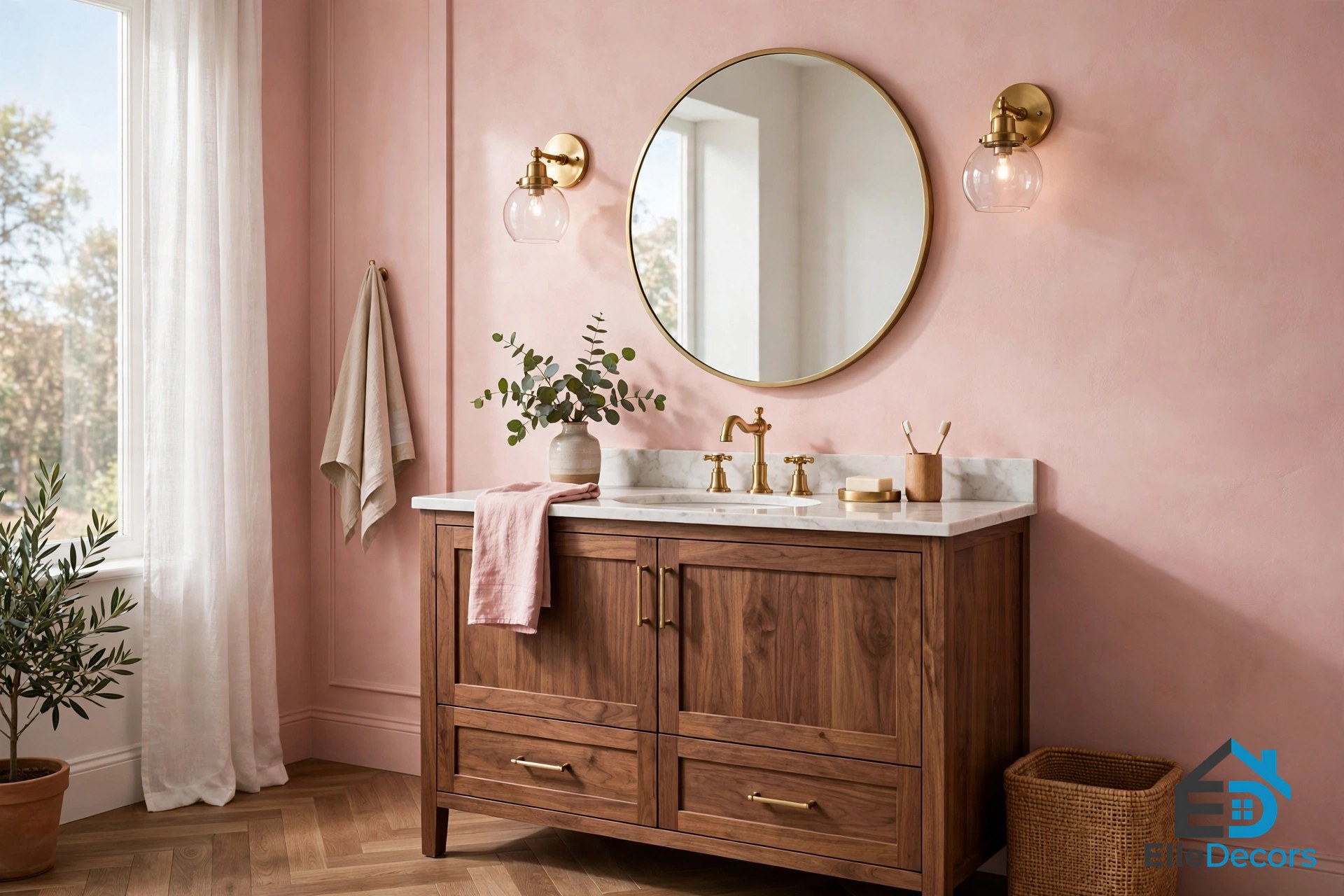
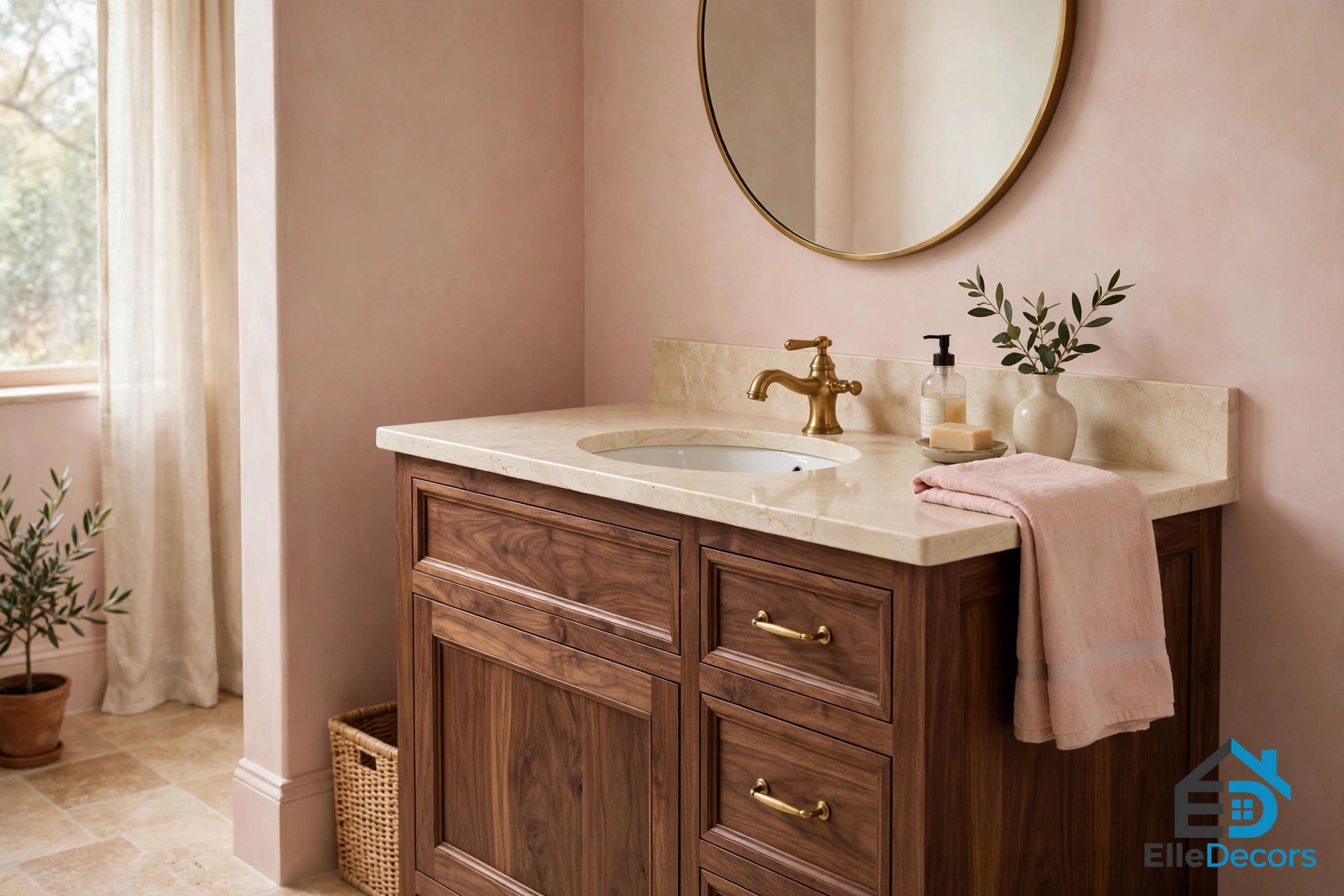
Wood grounds a pink vanity better than any other material. A walnut vanity is one of the easiest ways to make pink feel architectural and mature: dusty pink tile, a walnut vanity, a cream stone countertop, and an aged brass tap have warmth without becoming decorative. Our best use of wood in modern designs guide covers how wood tones change the mood of a room: light wood lifts pink, dark wood deepens it.
A double vanity is a good place for a pink hero piece. One pink basin in a monochrome room has a showstopping effect, and a pair of pink basins on a double vanity does the same job twice over.
Fixtures, Fittings, and the Small Details
Fixtures decide whether the room feels finished. Brass and gold are the natural partners for pink: warm metal against a soft shade feels rich, and brushed brass is softer than polished gold, which suits a calm room. Black fixtures give a sharper contrast, and they work best with pink marble or a monochrome scheme.
The pink toilet and the pink basin are the boldest fixture choices, and they come from the vintage era. A single towering column of pink ceramic as a basin sets a style statement on its own. In a modern room, one pink fixture is usually enough: a pink basin with white everything else, or a pink bath with white walls.
Lighting deserves the same care as the tile. A trio of vanity lights over the mirror, a backlit mirror, or an LED strip under the vanity turns a pink feature wall into a second statement after dark. Keep the light warm: cool white bulbs can turn blush grey, while warm light keeps it rosy.
Mirrors matter more in a pink room than in a white one, because they bounce the colour around. A large mirror doubles the pink, so a small room feels wrapped in it.
Colour Pairings That Keep Pink Grown-Up
Pink on its own can drift toward sweet, so pair it with one strong partner and let that partner set the tone. Grey is the easiest: areas of grey balance a bold salmon wall, and a pale grey floor calms a hot pink room. Black is the boldest: a pink-and-black room, with everything rosy at eye level and solid black below, makes the pink feel deliberate.
Warm colours are the natural family for pink. A warm color interior built on terracotta, cream, and warm wood lets pink sit comfortably, because the whole room shares the same warmth. Cool partners work too: aqua, sage, or duck-egg green feels fresh. The rule is one cool partner, not three.
Our ideas for interior decorating guide covers how to balance a bold colour with neutrals, and pink follows the same logic: one bold move, one grounding material, and everything else quiet.
Small Rooms and Powder Rooms
Small rooms are where pink works hardest: the colour makes a cramped space feel intentional instead of leftover. A small pink bathroom needs the same rules applied more strictly: pick one shade, put it on one surface, and keep everything else white or pale wood.
Paint is the best first step in a small room. Limiting pink to paint only creates a scheme that can be changed quickly and cheaply, without calling in a plumber, and a single pink feature wall is enough to change the whole room. Even a tiny guest washroom — the kind of small pink restroom you find off a hallway — feels finished with one blush wall, a white basin, and a brass tap.
Tile in a small room should stay low or stay pale. A half-height blush backsplash, pink tile only in the shower niche, or a blush border around white tiles gives the colour without closing the room in. A big mirror is the cheapest way to open a small pink room: it doubles the light and the colour at once.
Paint, Practical Rules, and Keeping It Looking Good
Pink paint is the easiest way into the look, and the easiest to get wrong. Bathrooms are wet rooms, so the finish matters as much as the shade. Satin or semi-gloss finishes work best, because they repel water and hold up to frequent cleaning. Flat and matte finishes absorb moisture, so they are not recommended for most bathrooms.
Ventilation matters more than the paint. Even the best finish will fail if steam sits on the walls for hours, so run the extractor fan during and after every shower.
Grout and sealant need care in a pink room because they show every mark. Black grout looks graphic against pale pink tile but shows soap marks, while white grout needs regular cleaning to stay white. Seal natural stone tops and terrazzo floors when they are fitted. Strong colour also makes mess louder, so give everything a home: a tray for the bottles, a basket for the towels, a hook for the robe.
Accessories: The Low-Commitment Way In
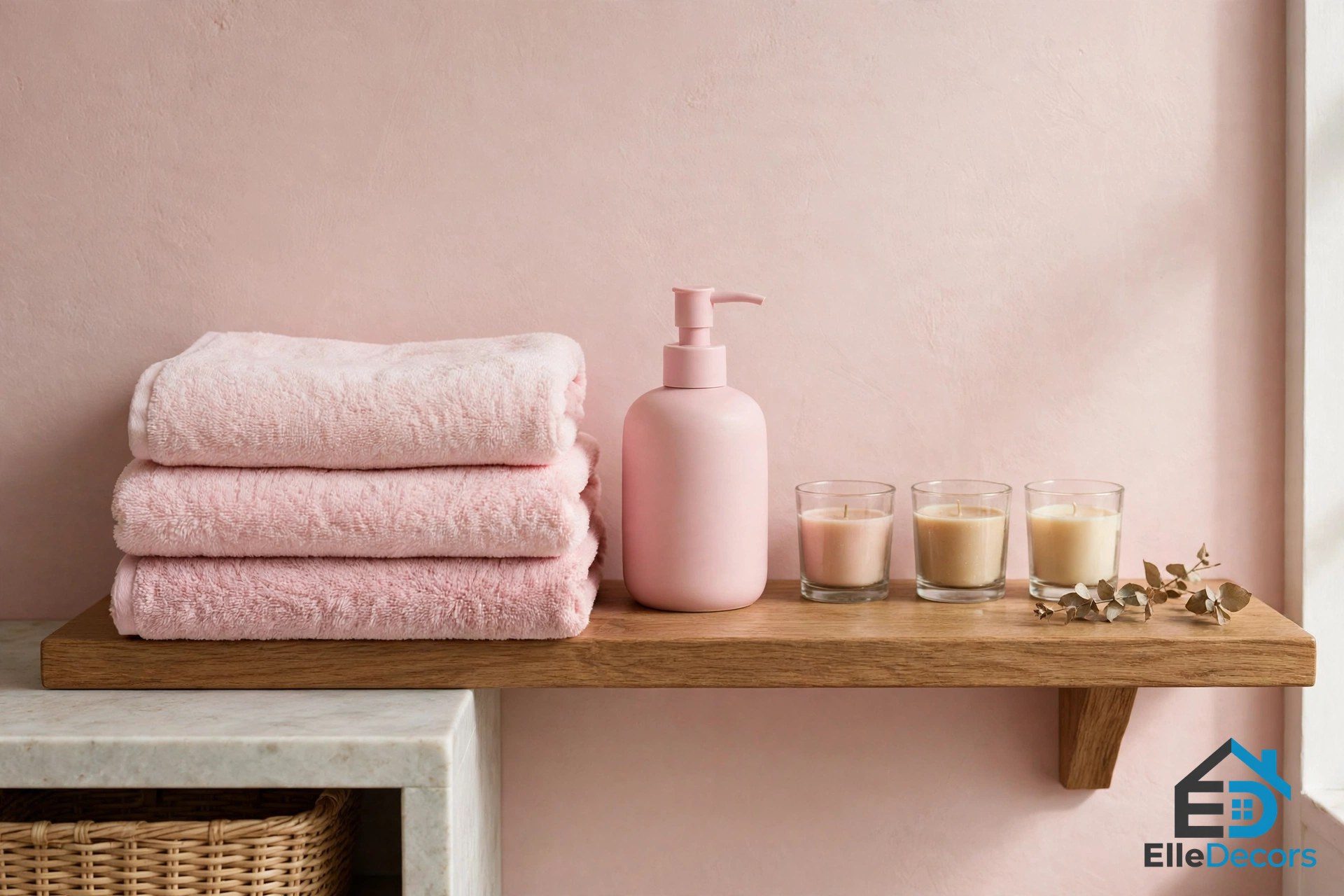
If you are not ready to tile or paint, accessories are the way into a pink bathroom. A pink vanity unit topped with pink candle holders, pink towels, and pink soap dispensers is enough to change the room, and all of it can be swapped in an afternoon. A pink shower curtain is the single biggest accessory move: it covers a large area and sets the tone.
Towels are the easiest test. Buy one set in the shade you are considering and live with it for a week. If you love seeing it every morning, the shade is right. A fluffy pink bath mat, a pink soap dish, and a small vase of fresh stems complete the look without touching a wall.
Styles at a Glance
Use this table to turn pink bathroom ideas into a plan: match the mood you want to the shade, the surfaces, and the partner material, then check the numbers against your own room.
| Style | Shade | Key Surfaces | Partner Material | Best Room |
|---|---|---|---|---|
| Soft blush and brass | Pale blush | Blush tile, white fixtures | Brass, light wood | Everyday family room |
| Pink and gold glam | Dusty rose | Marble, pink vanity | Gold, crystal light | Small glamorous room |
| Hot pink bold | Hot pink | Pink tile, pink accessories | White fixtures, black grout | Powder room, guest room |
| Pink and green | Blush + deep green | Pink tile below, green above | Dark green paint, pale wood | Small room, good light |
| Vintage revival | Salmon, retro pink | Boiserie panels, pink tile | Claw-foot bath, brass | Period home |
| Botanical pink | Blush + grey | Pink walls, pebble floor | Live plants, natural stone | Room with daylight |
| Pink and concrete | Any pink | Concrete walls, pink vanity | Raw grey concrete, black metal | Modern flat |
| Small-room pink | Pale blush | Paint only, half-height tile | White fixtures, large mirror | Tiny room, powder room |
Watch: A Floor-to-Ceiling Pink Tile Tour
Watch Architectural Digest’s short tour of Sarah Paulson’s blush-tiled room, where handmade Zellige tile covers the walls floor to ceiling. It is a celebrity-home tour, not a shopping video.
Video: Architectural Digest tours Sarah Paulson’s blush-tiled room with floor-to-ceiling Zellige tile.
Frequently Asked Questions
Where do I start with a pink bathroom?
Start with a pink bathroom that fits your room, not a photograph of someone else’s. Pick one shade from one pink family, test it in your own light, and put the boldest pink where it is cheapest to change.
What shade of pink works best in a small bathroom?
Pale blush works best, because it reads almost like a warm white and keeps the room feeling open. Put it on one wall or as a half-height tile, keep the fixtures white, and add a large mirror.
Can I mix pink with other strong colours?
Yes, when the mix is deliberate. Pink and deep green is the classic pairing, and pink with aqua gives a fresh contrast. Keep to one strong partner and let everything else stay neutral.
What paint finish should I use here?
Use a satin or semi-gloss finish: both repel water and hold up to frequent cleaning. Flat and matte finishes absorb moisture and are not recommended for most bathrooms.
Will pink look dated?
Pink has been in bathrooms since the fifties, and it comes back because it suits the room: it flatters skin, warms white fixtures, and works with wood, marble, and brass. A muted shade with one strong partner looks current, while a single-colour themed set is the version that dates fastest.
The Bottom Line
Pick one shade from one pink family, put the tile where it earns its keep, set the vanity at a height that fits the people who use it, and pair the pink with one strong partner — wood, marble, green, or black. Start pale, add one bold move, and the pink bathroom you build will still feel right years from now.