Luxury Bathroom: 12 Ideas to Copy at Home
AUDIO SUMMARY: A bathroom becomes luxurious not by size but by the feeling it gives you: warm water, soft light, stone underfoot and a tub worth lingering in. This guide covers twelve ideas copied from real high-end bathrooms, from framing a freestanding tub and doubling the vanity to marble walls, copper details, backlit mirrors and a sunken bath, plus the small-bathroom tricks that bring the same feeling home. Start with the tub, then layer the light.
Luxury bathroom design is not about the size of the room or the size of the budget, it is about the feeling the room gives you when you step in: warm water, soft light, stone underfoot and a tub worth lingering in. This guide gathers twelve ideas from a gallery of fifty high-end bathrooms, each one a trick you can copy, from framing a freestanding tub to doubling the vanity, warming the room with wood, and letting copper and marble do the talking.
How to Design a Luxury Bathroom
Start with the feeling, then choose the pieces that create it. A luxury bathroom has one hero piece, usually the tub or the vanity, one generous material, usually stone or wood, layered light that can go soft in the evening, and something living, a plant or a view of green. Everything else is support: storage that hides the clutter, mirrors that bounce the light, and hardware in one consistent finish so the room reads as a single composition rather than a collection of fittings. Plan the layout around the longest wall, give the tub the best spot, and keep the palette to three materials at most, because restraint is what reads as expensive.
Our guide to an aesthetic bathroom shows the same quiet-palette trick in more detail.
1. Frame the Hero Tub
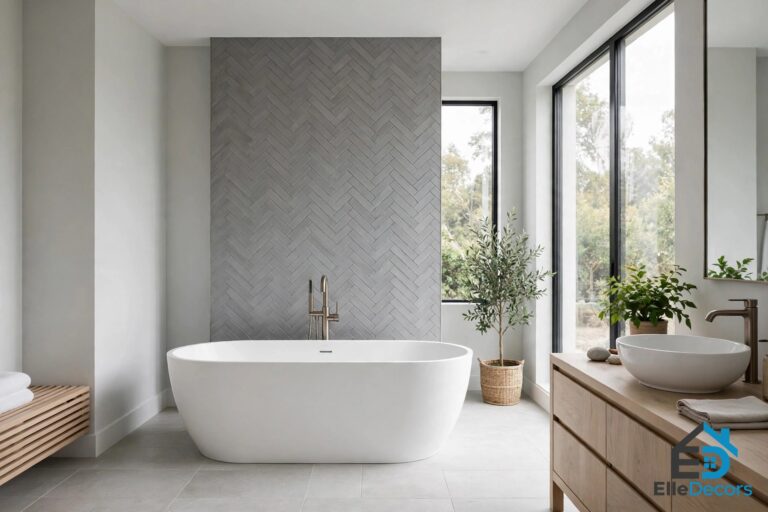
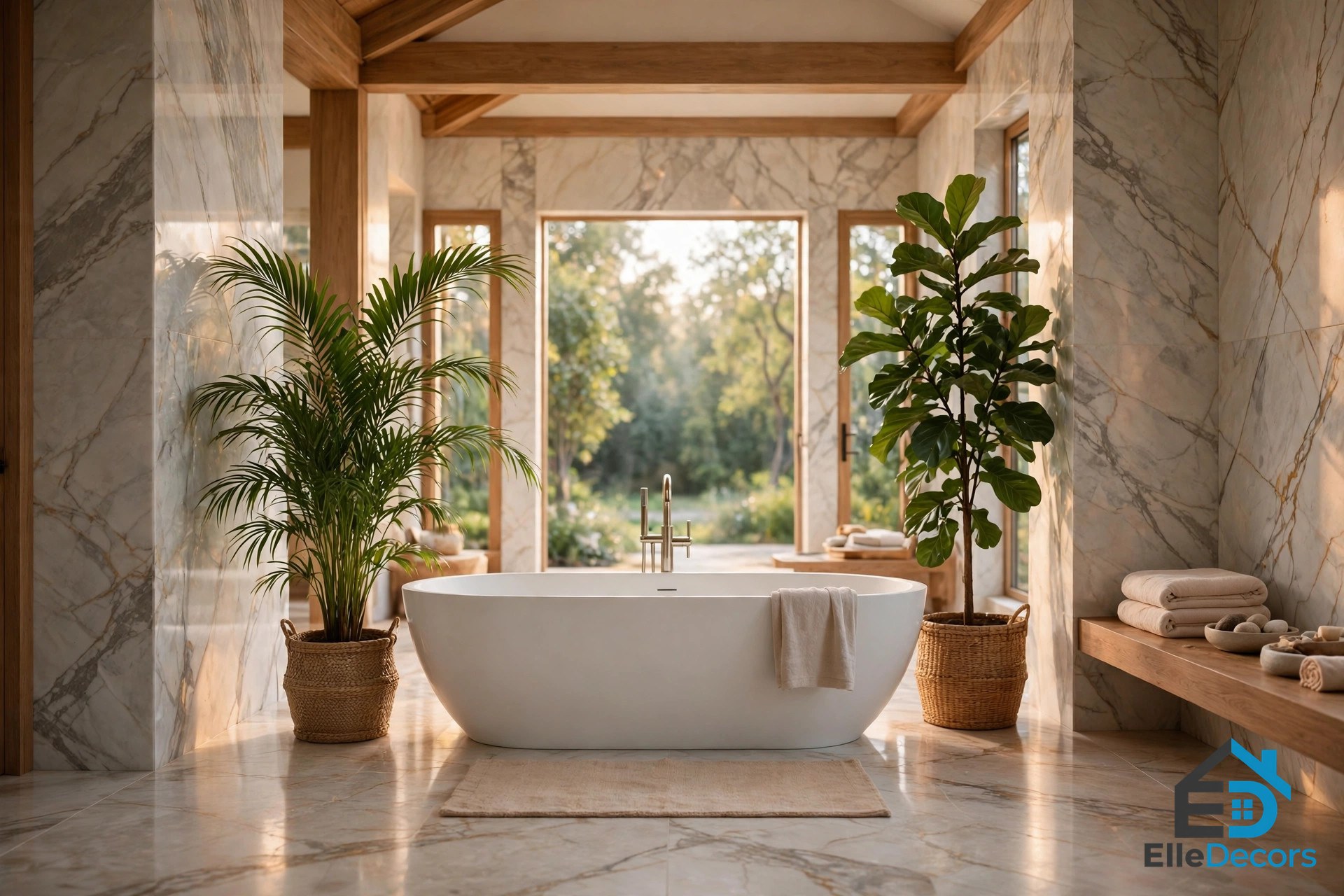
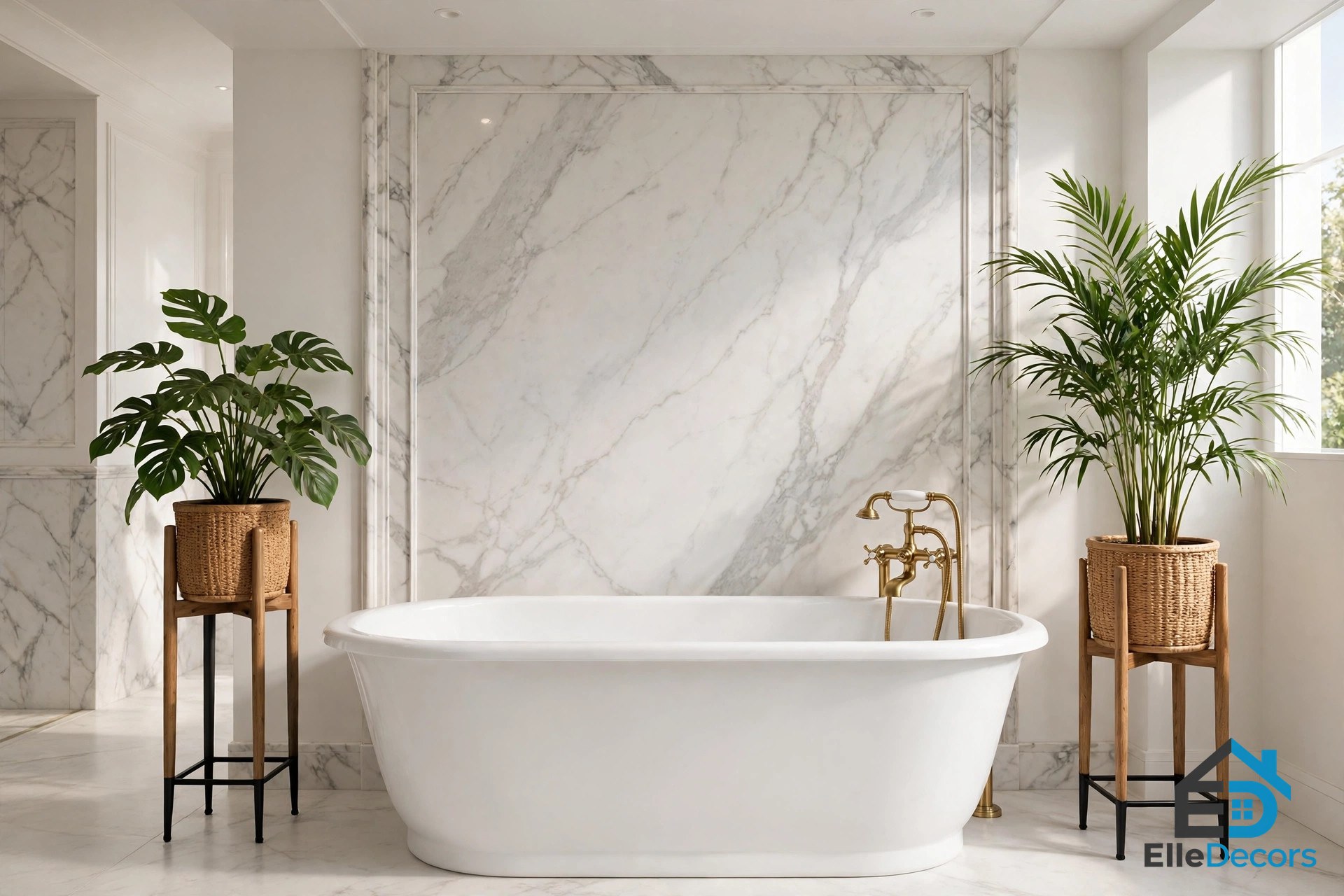
Every great bathroom in the source gallery has a hero piece, and most often it is a freestanding tub. Frame it the way the gallery does: two tall plant stands on either side, a low stool or a small table within reach, and nothing else competing for attention. The tub should sit where the eye lands first, ideally against the longest wall or in front of a window, with clear floor around it so it reads as sculpture rather than plumbing. A luxury bathroom built around a framed tub needs little else, because the tub itself is the decoration, and the plants soften the hard edges of tile and stone around it.
2. Blur the Line With the Garden
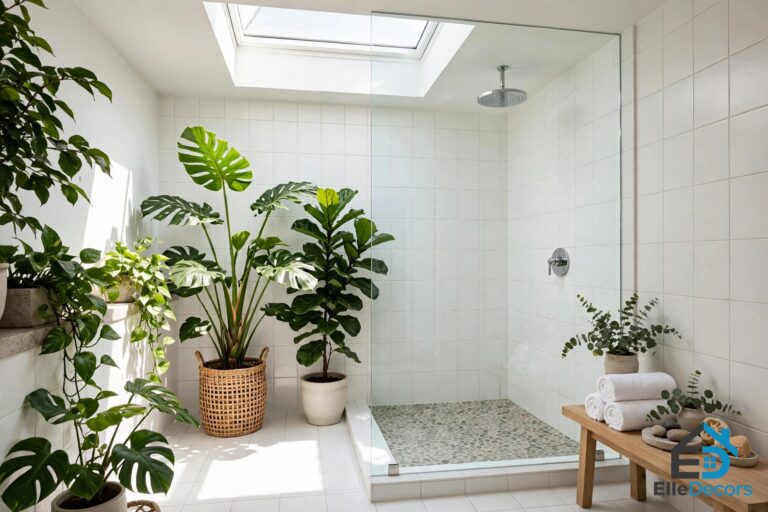
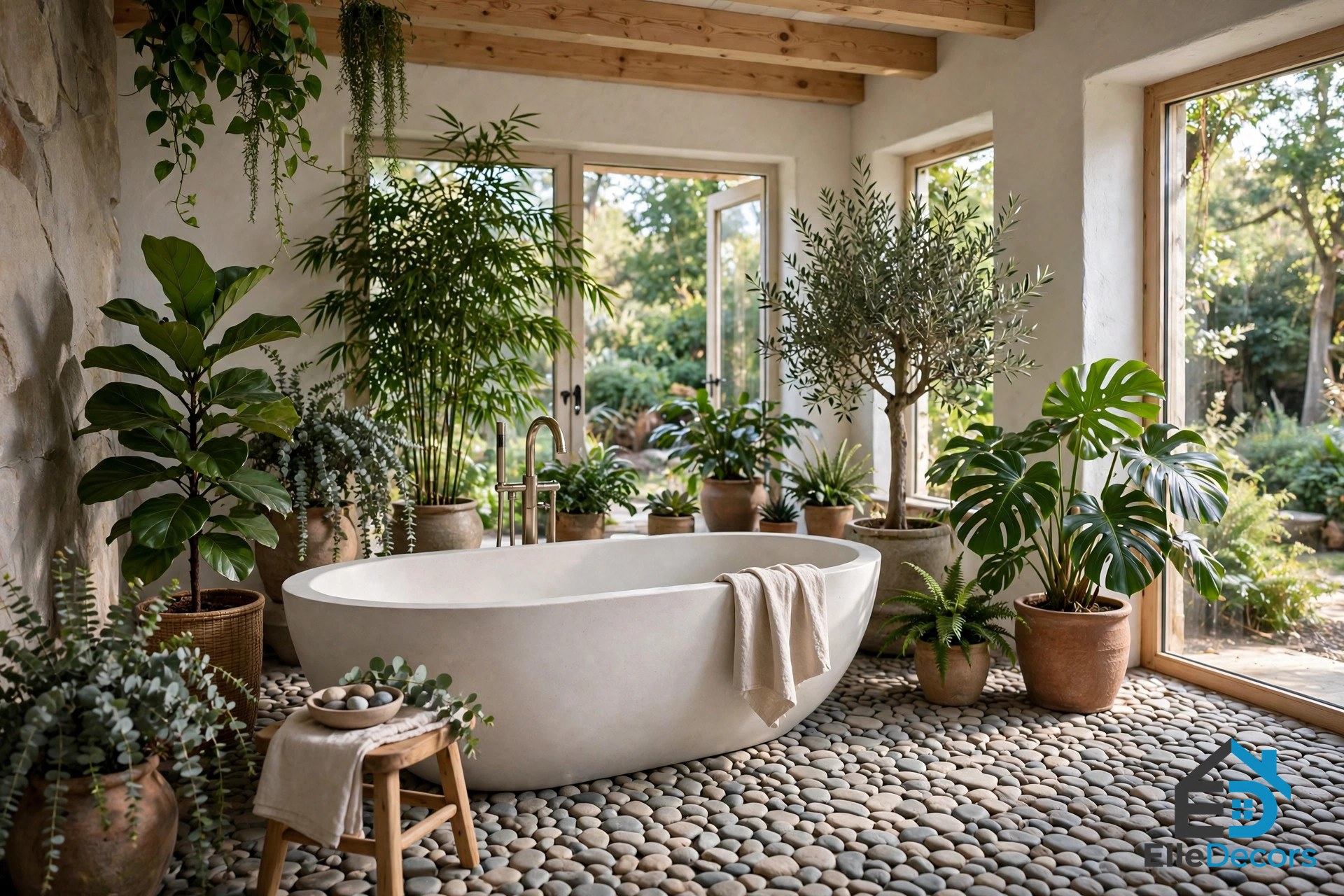
The most relaxed bathrooms in the gallery borrow from the garden. A luxury bathroom that borrows from the garden feels calm before you even step into the water: one sets the tub on a floor of smooth pebbles, so the room flows into the outdoors; another grows a vertical garden wall beside the shower; a third fills the room with potted plants with long fronds until the bathroom feels like a greenhouse.
You do not need a garden window to copy this: a pebble-textured bath mat, three large plants in matching pots, and a wooden stool can suggest the same flow in an ordinary room. Choose plants that like humidity, keep them in raised stands so water never pools beneath them, and let one large plant do the work of five small ones.
3. Set the Mood With Soft Light
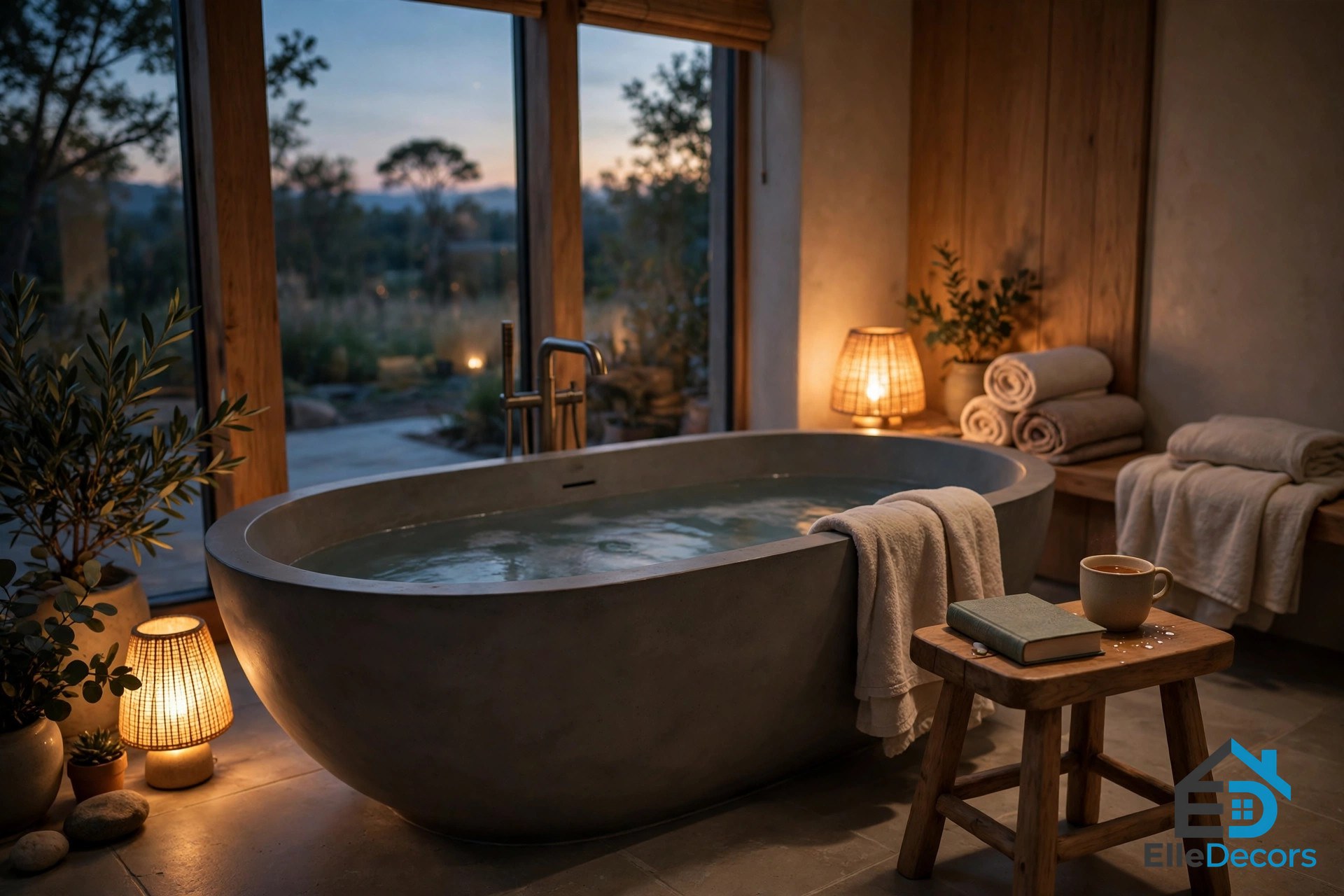
Forget harsh overhead lighting when it is time to sink beneath the bubbles. The gallery’s calmest rooms use soft glowing lamps beside the tub, a book in hand, a coffee on the stool, and nothing bright overhead at all. Layer the light instead: a dimmable ceiling light for mornings, small lamps for evenings, and a focused task light at the vanity. Warm bulbs matter more here than anywhere, because cool white light makes stone and tile feel clinical, while warm light makes the same room feel like a spa.
4. Make It His and Hers
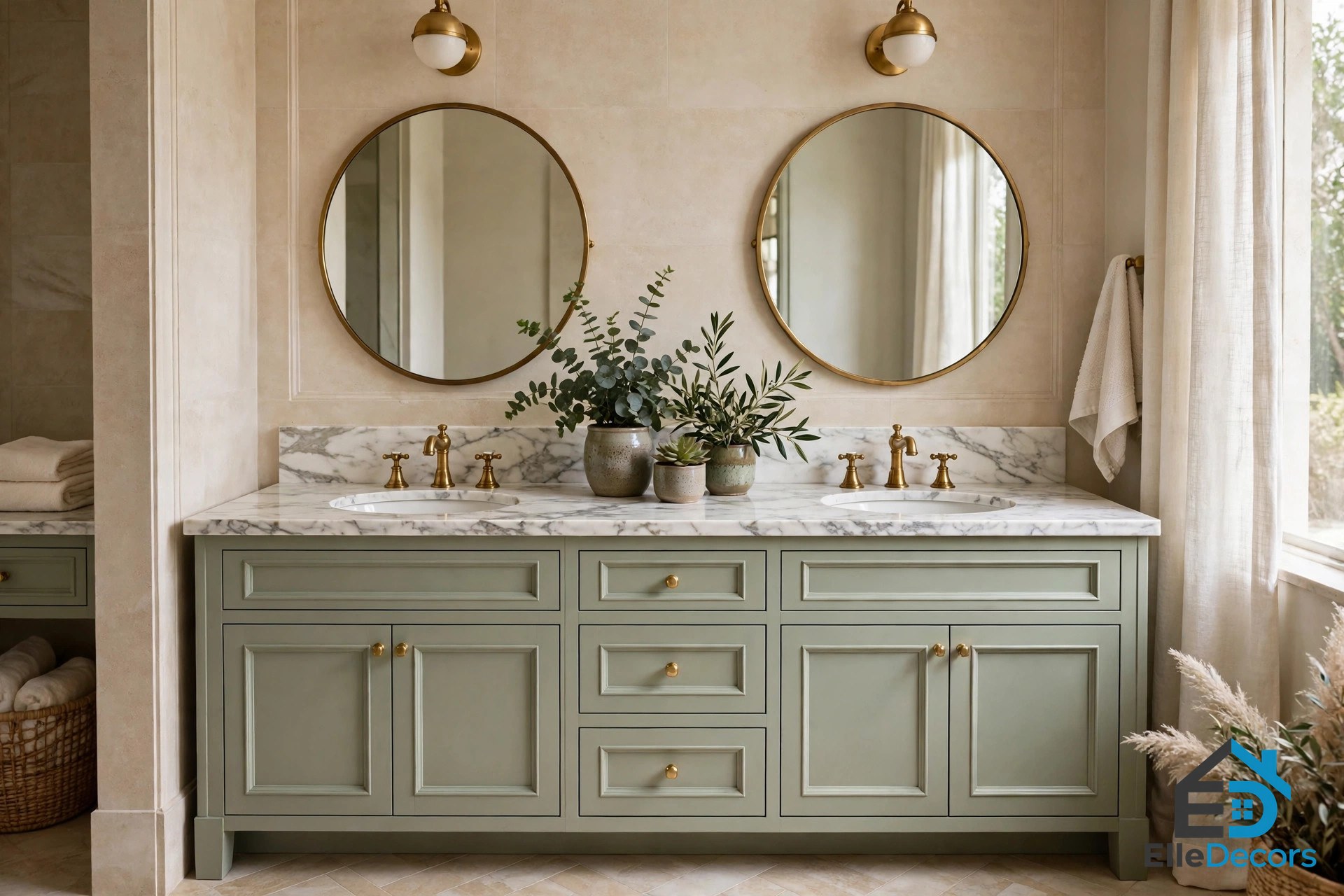
Twin vanities are familiar, but the gallery pushes the idea further: twin bathtubs, designed by Patricia Urquiola for the Hansgrohe Axor brand, with flowing curves and an abundance of indoor plants tying the pair together. Most homes will copy the spirit rather than the pair of tubs, with a double vanity, two mirrors and two sets of fittings, so two people can use the room at once without negotiating.
5. Suspend Light Over the Tub
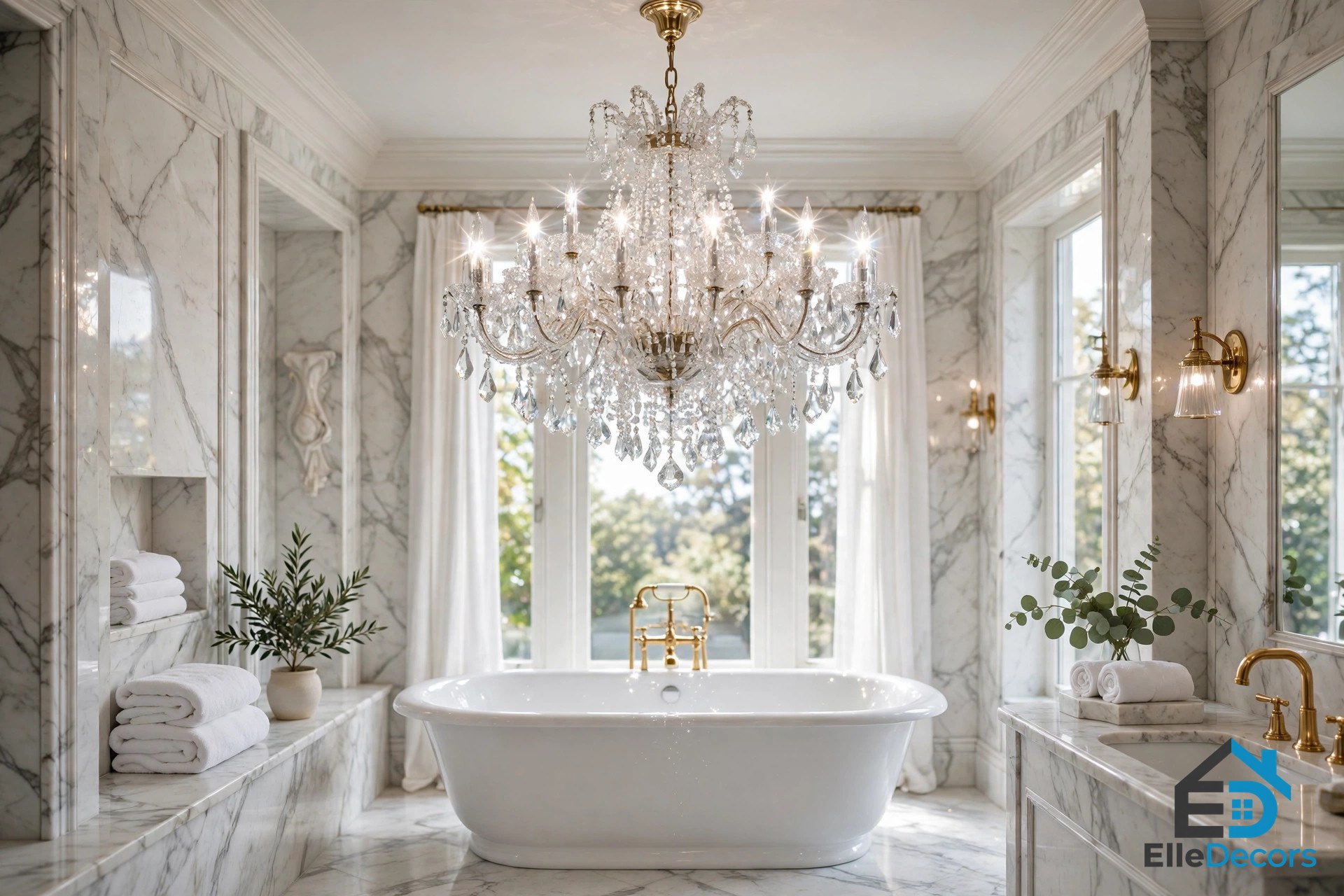
Nothing else has quite the same decadence as statement lighting suspended over a freestanding bathtub, whether a sparkling chandelier or a row of shining globe pendants. In a luxury bathroom the suspended light becomes the jewellery of the room, and the tub below it becomes a stage. Keep the fitting high enough that steam never reaches it and the light never glares into the eyes of someone lying in the tub, and choose a dimmable fitting so the sparkle can soften to a glow. In a smaller room, a single globe pendant does the same job at a smaller scale, and a pair of small pendants flanking a mirror carries the idea into the vanity zone.
6. Warm It With Wood
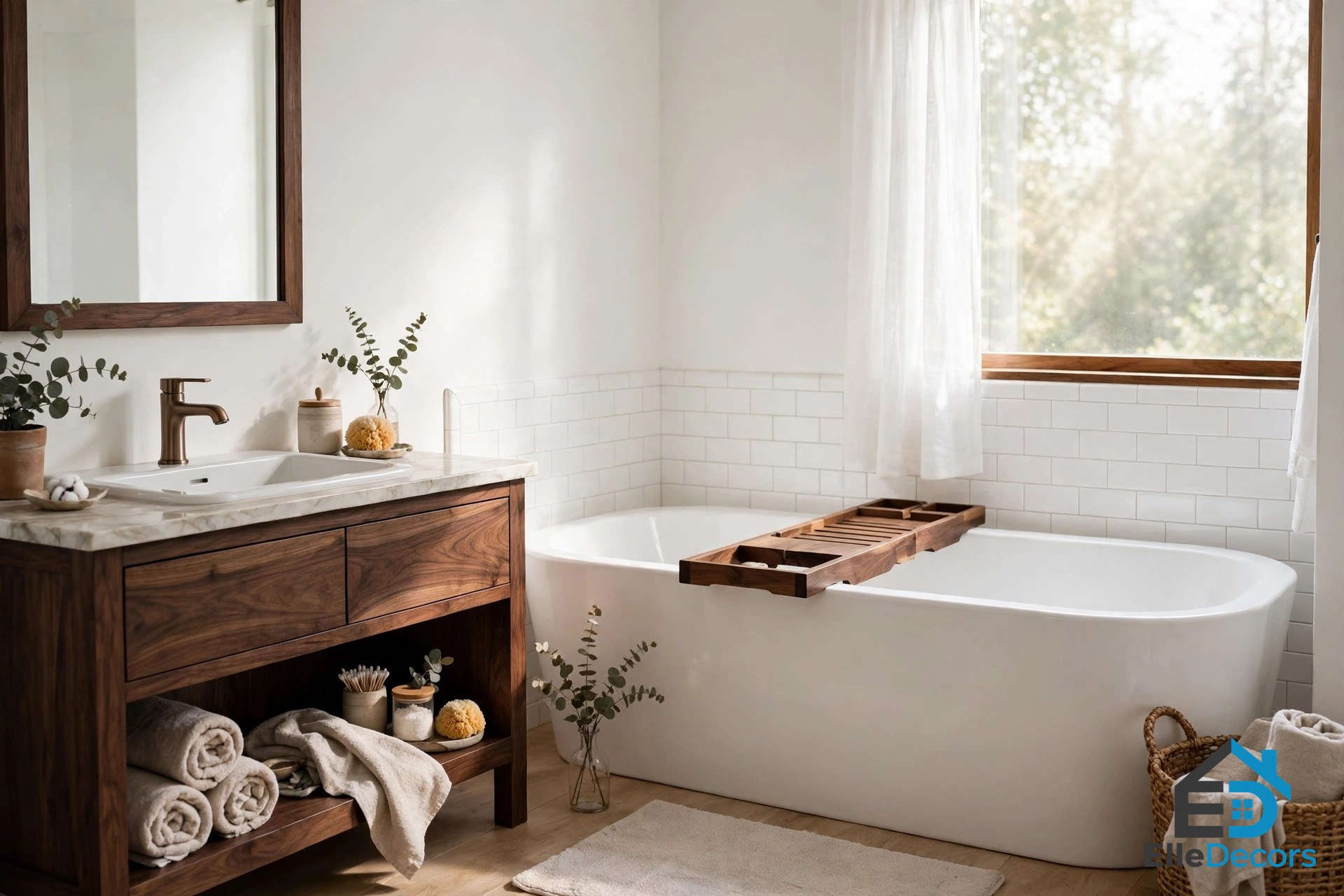
If an all-white bathroom feels cold, a few wooden accents go a long way. The gallery shows it both ways: pale wood warming a crisp white scheme, and dark wooden decor creating a sumptuous look enriched by flickering tea lights. Wood works on the vanity front, as a bath bridge across the tub, or as a warm floor underfoot, and it is the fastest way to make stone and tile feel inviting. Choose wood sealed for wet rooms, keep it away from direct spray, and let one strong wooden piece carry the warmth rather than scattering small wooden bits everywhere.
7. Colour It With Copper
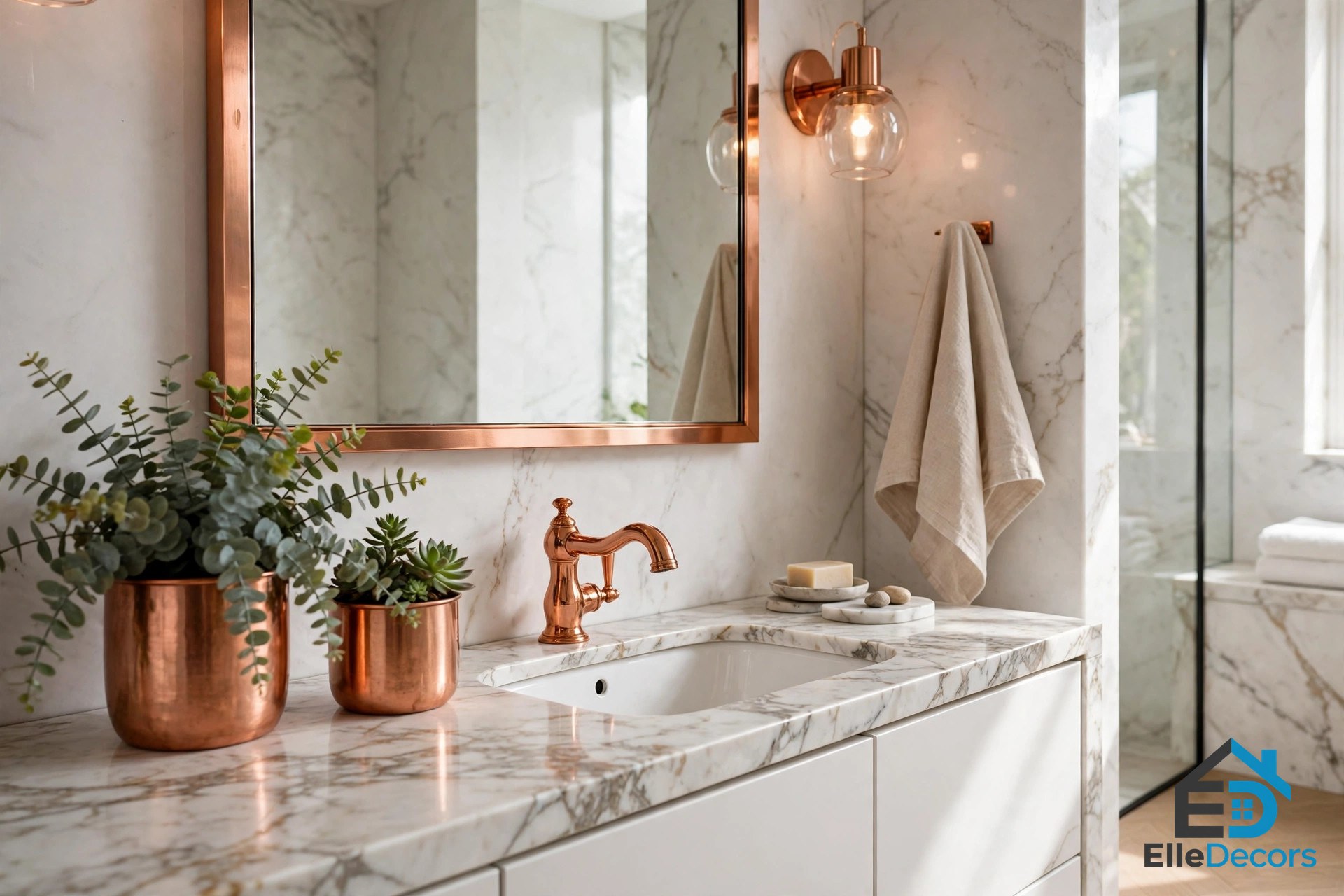
Copper accessories can now be sourced for every corner of the bathroom, and the gallery uses them to carry a warm metallic thread through the room: a mirror frame, candle holders, lighting, faucets and planters, all in the same copper tone. The trick is consistency, one metal, repeated three or four times, so the eye reads it as a decision rather than an accident. Copper suits both dark schemes, where it glows against charcoal tile, and pale ones, where it warms white marble.
8. Make Marble the Star
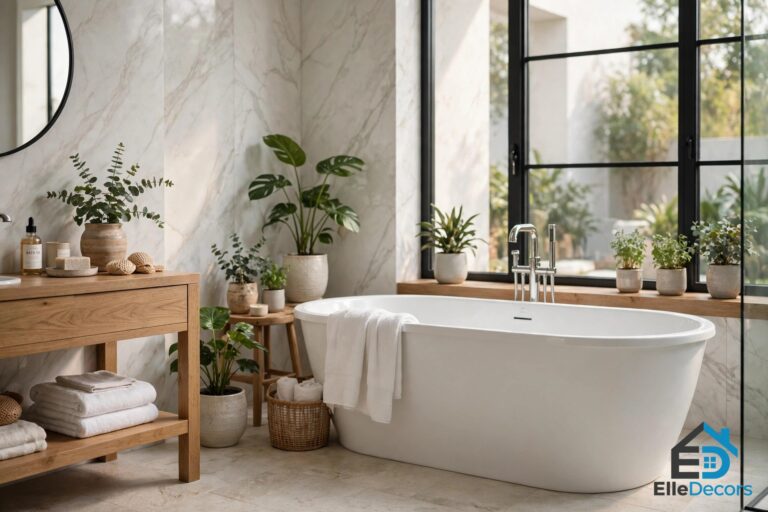
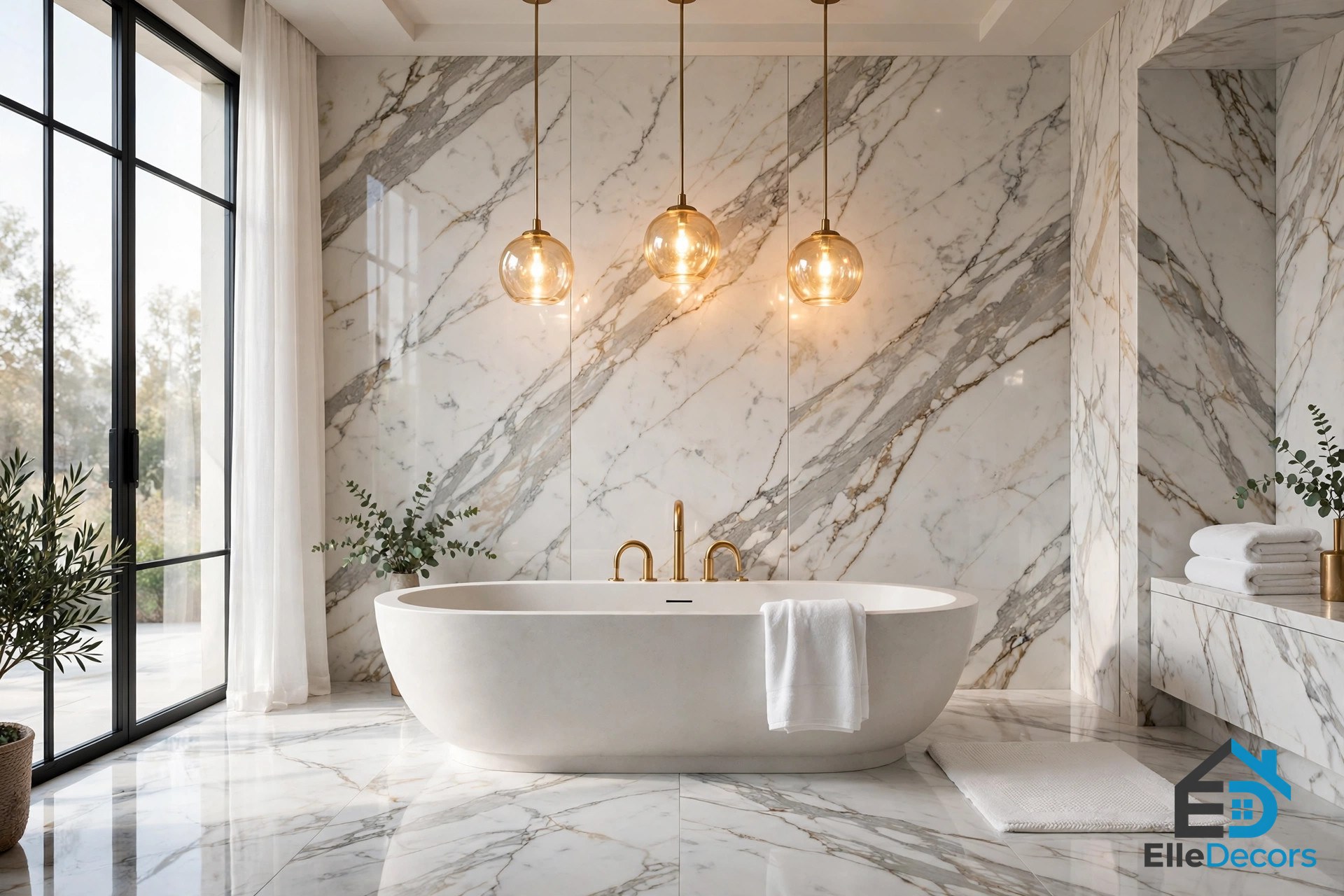
Marble has spanned the ages, and the gallery gives it the starring role: marble wall tiles, flooring, bathtubs and vanities, all in elegantly veined stone lit by beautiful pendant lights. Marble works because the veining does the decorating, so the room needs little else, and because it reads as expensive at a glance. Use it generously on one surface, the wall behind the tub or the vanity top, and keep the rest of the room quiet so the stone can speak. Honed marble hides water marks better than polished, and a good seal keeps it looking new.
9. Fit a Waterfall Faucet
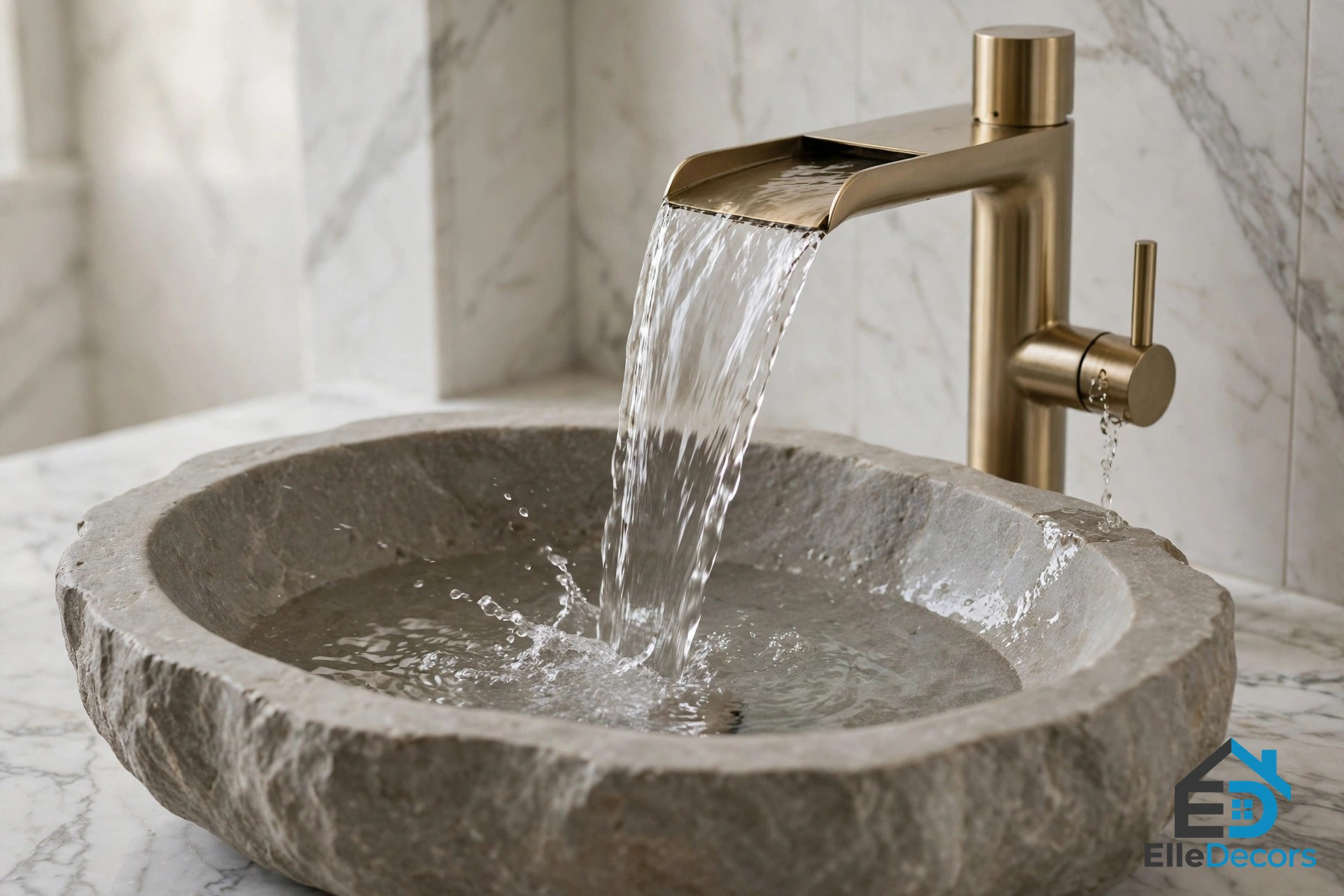
In a luxury bathroom, even a plain basin looks special with a unique faucet, and the gallery’s waterfall tap proves it: water falling in a clear sheet turns the everyday act of washing hands into a small piece of theatre. The same idea applies to the sink itself, because unusual sinks stake their own place in a bathroom with or without the help of an unusual faucet. Choose the faucet and the basin together, because a tall waterfall tap needs a deep basin to catch the fall without splashing, and keep the finish matched to the rest of the room’s hardware. Our guide to the types of bathroom sinks will help you pair the tap with the right basin shape.
10. Set Feature Walls Aglow
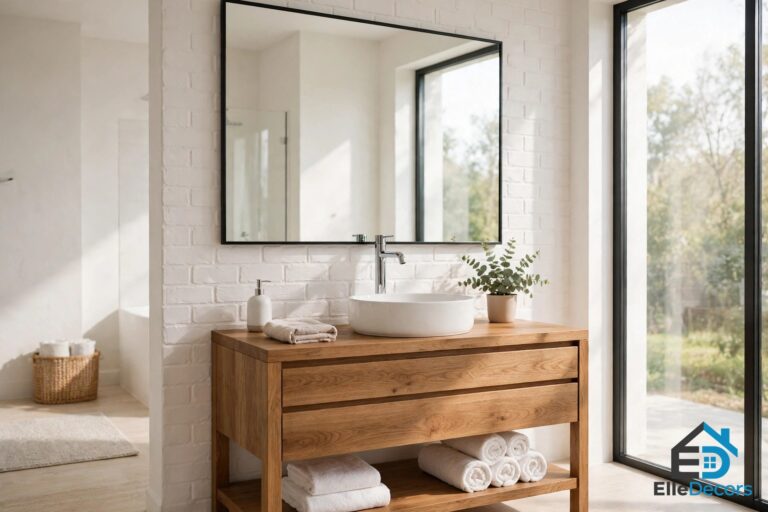
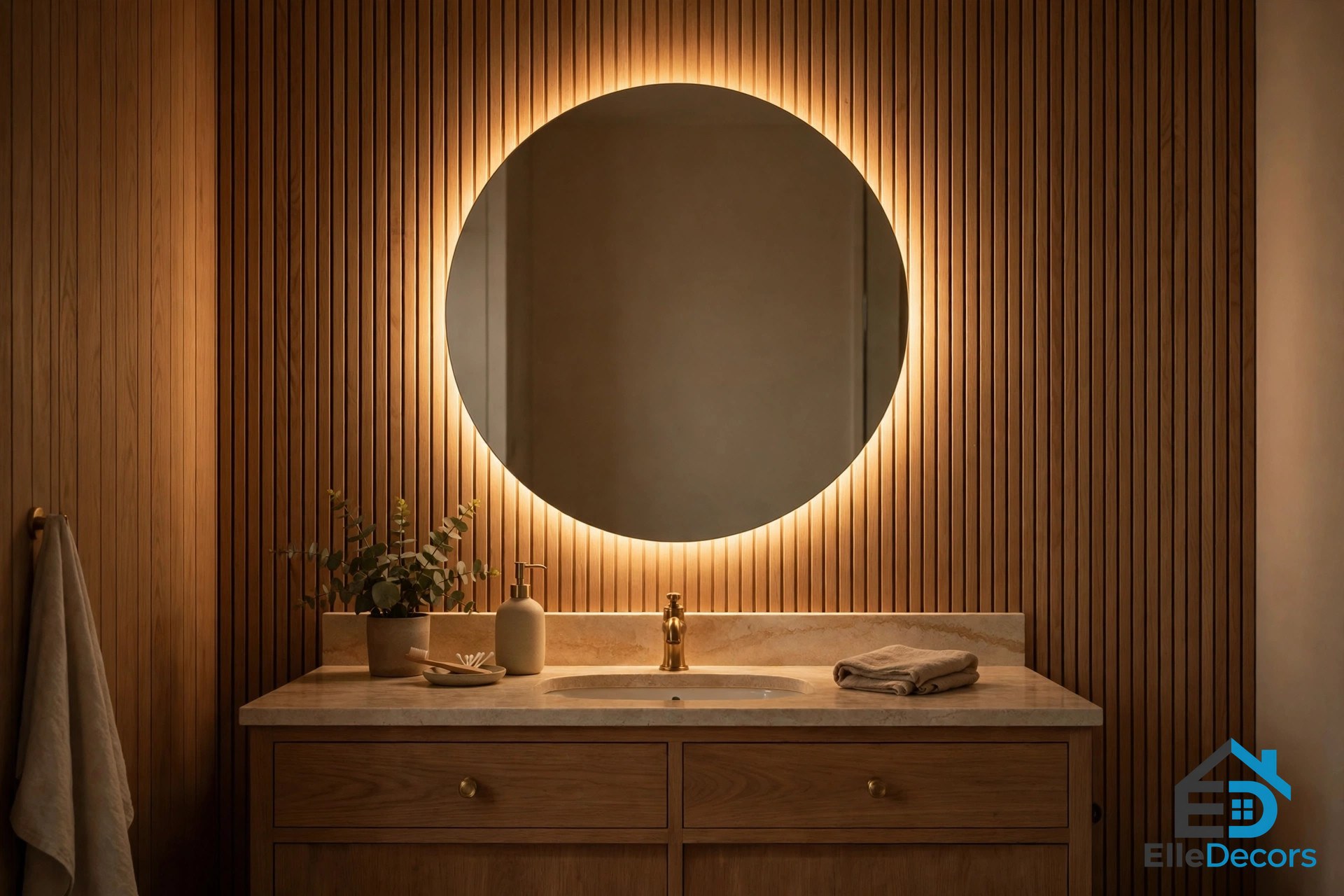
A backlit mirror sends out subtle illumination over a wooden vanity wall, and the same trick works on any feature wall: light from behind a panel, a fretwork screen or a mirror frame turns a flat surface into a glow. Backlighting is kind to faces, because it lights the room without a visible bulb, and it is kind to small rooms, because a glowing wall reads as depth. Keep the light warm, hide the source completely, and let the glow be the decoration rather than the fitting that makes it.
11. Sink Into a Sunken Bath
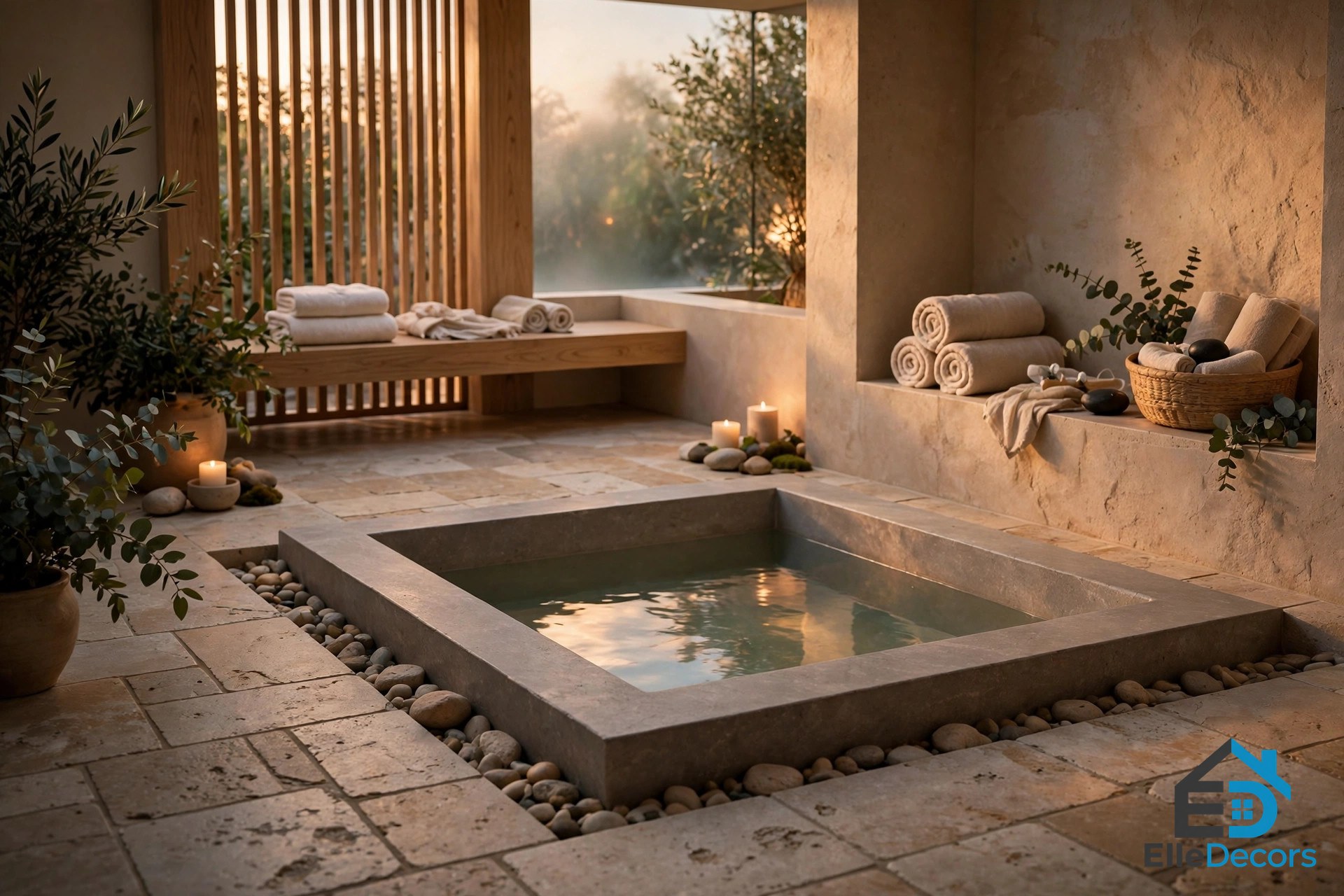
Take inspiration from the Four Seasons spa room in Milan, where the bath is sunk into the floor so the bather steps down into the water rather than climbing over a rim. A sunken bath turns bathing into an occasion, and the low profile makes the room feel taller and calmer around it. Most homes will copy the feeling rather than the excavation, with a low freestanding tub set on a raised platform or a deep soaking tub with a wide rim to sit on. A luxury bathroom with a low, generous tub reads as a spa even without the sunken floor, because the proportions do the work: low tub, tall room, nothing in between.
12. Cosy Up With a Fireplace
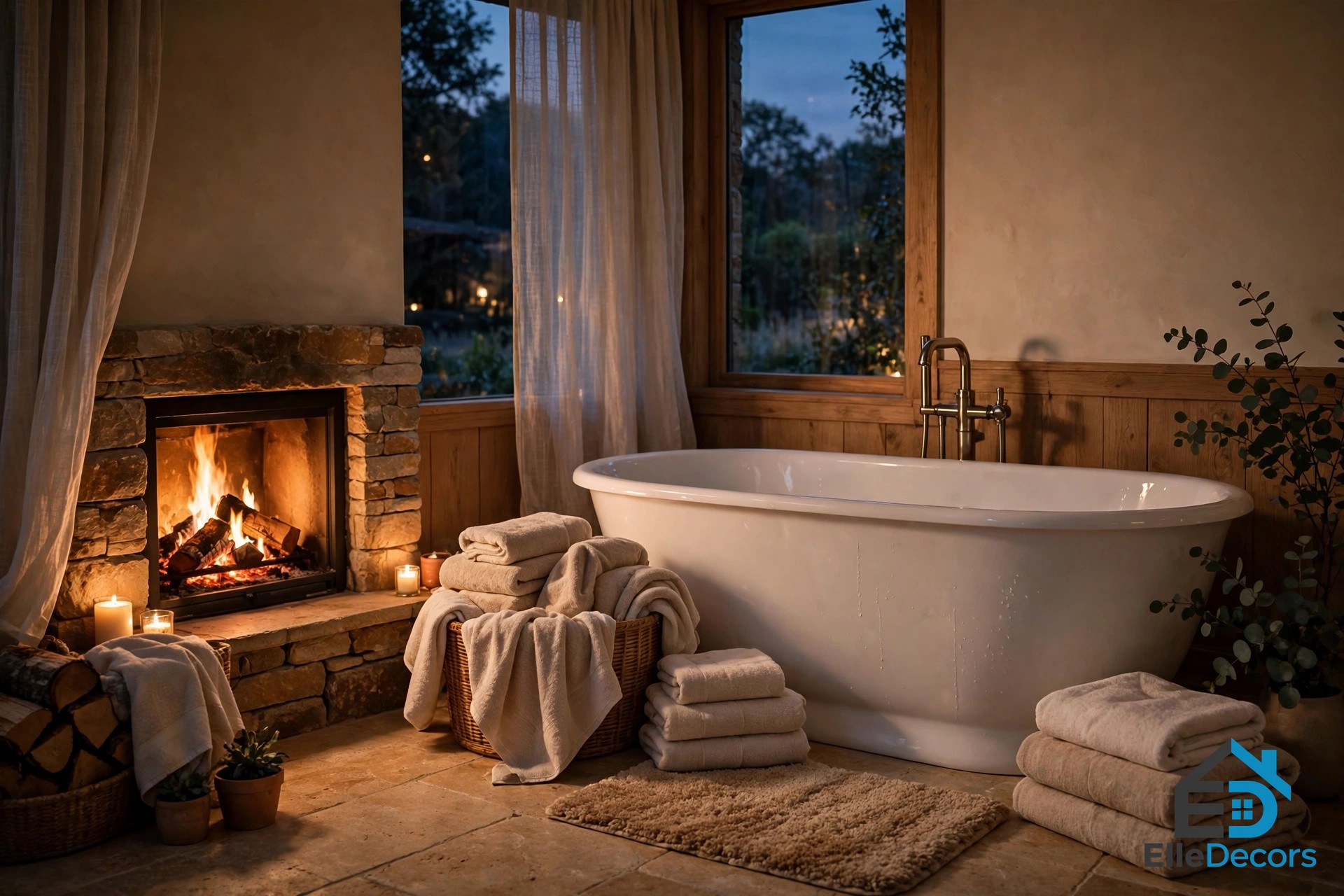
A roaring open fire and a bubble bath is the gallery’s most indulgent pairing, and it works because the fire gives the bathroom the one thing tile and stone cannot: moving warmth and a flickering focal point. A real fireplace needs proper venting and a safe distance from water, so most homes will borrow the idea instead, with a small electric flame-effect heater on the wall opposite the tub, or simply candles in hurricane lanterns on the floor beside it.
Small Rooms Can Feel Luxurious Too
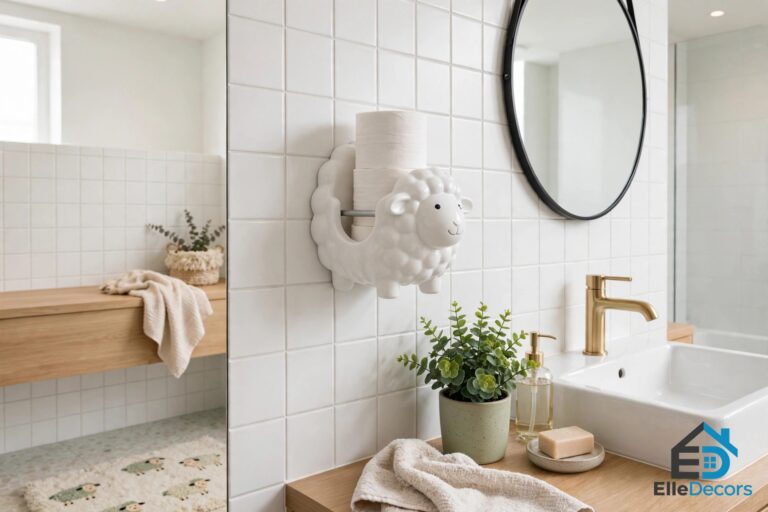
A small bathroom does not need a freestanding tub or a fireplace to feel luxurious. The gallery proves it with a single idea: a unique vanity can transform a small bathroom on its own. Pick one hero piece, a sculptural basin, a floating vanity in warm wood, or a backlit mirror, and let the rest of the room stay quiet. Keep the palette pale, the floor continuous into the shower so the room reads larger, and the storage hidden behind the mirror or under the vanity.
Quick Comparison: All 12 Ideas
The table below sums up the twelve ideas, with the cost of the idea and the room it suits best.
| Idea | Best for | Effort |
|---|---|---|
| Frame the hero tub | Any size | Low, plants and a stool |
| Garden blur | Rooms with light | Low, plants and pebbles |
| Soft mood light | Evenings | Low, lamps and dimmers |
| Double vanity | Shared bathrooms | Medium, new vanity |
| Suspended light | High ceilings | Medium, one fitting |
| Warm wood | Cold white rooms | Low, one wooden piece |
| Copper thread | Any scheme | Low, matched accessories |
| Marble star | Statement rooms | High, stone surfaces |
| Waterfall faucet | Any basin | Medium, tap and basin |
| Backlit feature wall | Small rooms | Medium, lighting behind |
| Sunken bath | Large rooms | High, structural work |
| Fireplace glow | Cold climates | High, fire or flame effect |
Watch: A Luxury Master Bath Turned Home Spa
Watch Max Solo of Max Built LLC and designer Heather from Land and Sky Designs walk through a master bathroom rebuilt as a spa retreat, with a custom sauna, a doorless shower, heated floors, Taj Mahal quartzite slabs and integrated lighting in zones for the sauna, the shower and the vanity. It is a useful companion to this guide because it shows the same ideas at full scale: the hero tub replaced by a wet room, the layered light in separate zones, and the stone doing the decorating.
Video: “Transforming a Master Bath into a Luxe Home Spa Oasis with Sauna” (Max Built LLC) — spa retreat with sauna, doorless shower, heated floors and zoned lighting.
Frequently Asked Questions
Can a small bathroom feel luxurious?
Yes. Pick one hero piece, a sculptural basin, a floating vanity in warm wood or a backlit mirror, and let the rest of the room stay quiet. A luxury bathroom in a small footprint works because the eye has one beautiful thing to rest on and nothing cluttering the view, so keep the palette pale and the storage hidden.
How do I get the look on a budget?
Start with the cheapest ideas in this guide: plants, soft lamps on a dimmer, copper accessories in one finish, and a wooden bath bridge. Those four changes cost little and change the feeling of the room completely. Save the marble and the new vanity for later, and spend first on light and warmth, because those are what the eye reads as luxury. For a softer colour story, our guide to a pink bathroom shows how a single warm tone can carry a whole room.
Is marble hard to look after?
Marble needs a little more care than porcelain: seal it when it is installed and reseal it regularly, wipe up water and cosmetics promptly, and avoid harsh acidic cleaners. Honed marble hides water marks better than polished, and a marble-look porcelain tile gives the same veining with almost no maintenance.
What lighting works best in a bathroom?
Layered light: a dimmable ceiling light for mornings, soft lamps or a backlit mirror for evenings, and a focused task light at the vanity. Keep the bulbs warm white, put the evening lights on a dimmer, and avoid a single bright overhead fitting, because it flattens faces and makes stone look cold.
Do I need a freestanding tub?
No. A freestanding tub is the classic hero piece, but a deep built-in soaking tub with a wide rim, a good faucet and a view of something green gives the same feeling for far less work. What matters is the ritual around the tub, the light, the warmth and the time set aside, not the shape of the basin.
Conclusion
A luxury bathroom stops feeling like a utility room and starts feeling like a retreat, and the twelve ideas here all serve that one change. Frame the tub, soften the light, warm the room with wood, let one generous material do the decorating, and keep the clutter hidden so the eye can rest. You do not need all twelve, and you do not need the largest room: one hero piece, one warm material and one layer of soft light are enough to change the feeling completely.
Start with the room you already have, not the one in the photographs. Swap the overhead bulb for a warm dimmable one, add a plant that likes humidity, roll the towels instead of folding them, and clear one surface completely. Those four small moves cost almost nothing, yet they change how the room feels the next morning. Then add one bigger piece when the budget allows — a backlit mirror, a wooden stool, a deep soaking tub — and let each addition earn its place before the next one arrives.