Eclectic Living Room: How to Mix Styles, Colour, and Texture Without the Chaos
The eclectic living room is the most forgiving style in interior design, and also the easiest to get wrong. Done well, it looks like a room collected over a lifetime: a modern sofa beside a vintage chair, bold art above a quiet rug, a bright mural sharing a wall with dark wood. Done badly, it looks like a furniture sale that never ended. The difference is structure. Eclectic design has rules, they are just looser than most styles, and once you know them you can mix almost anything with confidence.
This guide is built from a gallery of 51 eclectic rooms published by Home Designing, ranging from tropical murals and orange fireplaces to neoclassical boiserie and quiet monochrome schemes. The rooms share one idea: everything is welcome, no matter the period or motif, as long as it earns its place. Below are the principles that hold them together, the moves that make them work, and the mistakes that undo them.
AUDIO SUMMARY: An eclectic living room mixes periods, patterns, and colours on purpose, and this guide shows how to do it without the chaos. Learn the colour thread that holds a mixed room together, how to choose furniture that earns its place, and the gallery-wall, lighting, and layout tricks that make the style feel collected rather than cluttered, from the first sofa to the last cushion.
What Makes an Eclectic Living Room Work
Eclectic design began at the École des Beaux-Arts in nineteenth-century France, where architects and designers mixed elements from different historical styles into single buildings. The idea travelled into interiors and never left: a room that borrows freely from many periods instead of obeying one. The source gallery puts it plainly, describing the style as a fusion of elements from different design schools that ends in an unapologetic maximalist statement. Maximalist is the key word. Eclectic rooms are abundant by nature, and abundance needs an anchor, or the eye has nowhere to rest.
That anchor is usually one of three things: a repeated colour, a single strong focal point, or a consistent thread of texture. Pick one before you buy anything else. A room with a clear anchor can hold a dozen competing pieces. A room without one falls apart after three. The rest of this guide is about choosing your anchor and then layering around it.
The other thing to know is that eclectic does not mean random. In the best rooms in the gallery, every piece has a job. A chunky coffee table holds the centre of the room. A statement fireplace gives the eye a place to rest. A gallery wall gives the room its story. If a piece has no job, it is clutter, however beautiful it is on its own.
Start With a Colour Thread
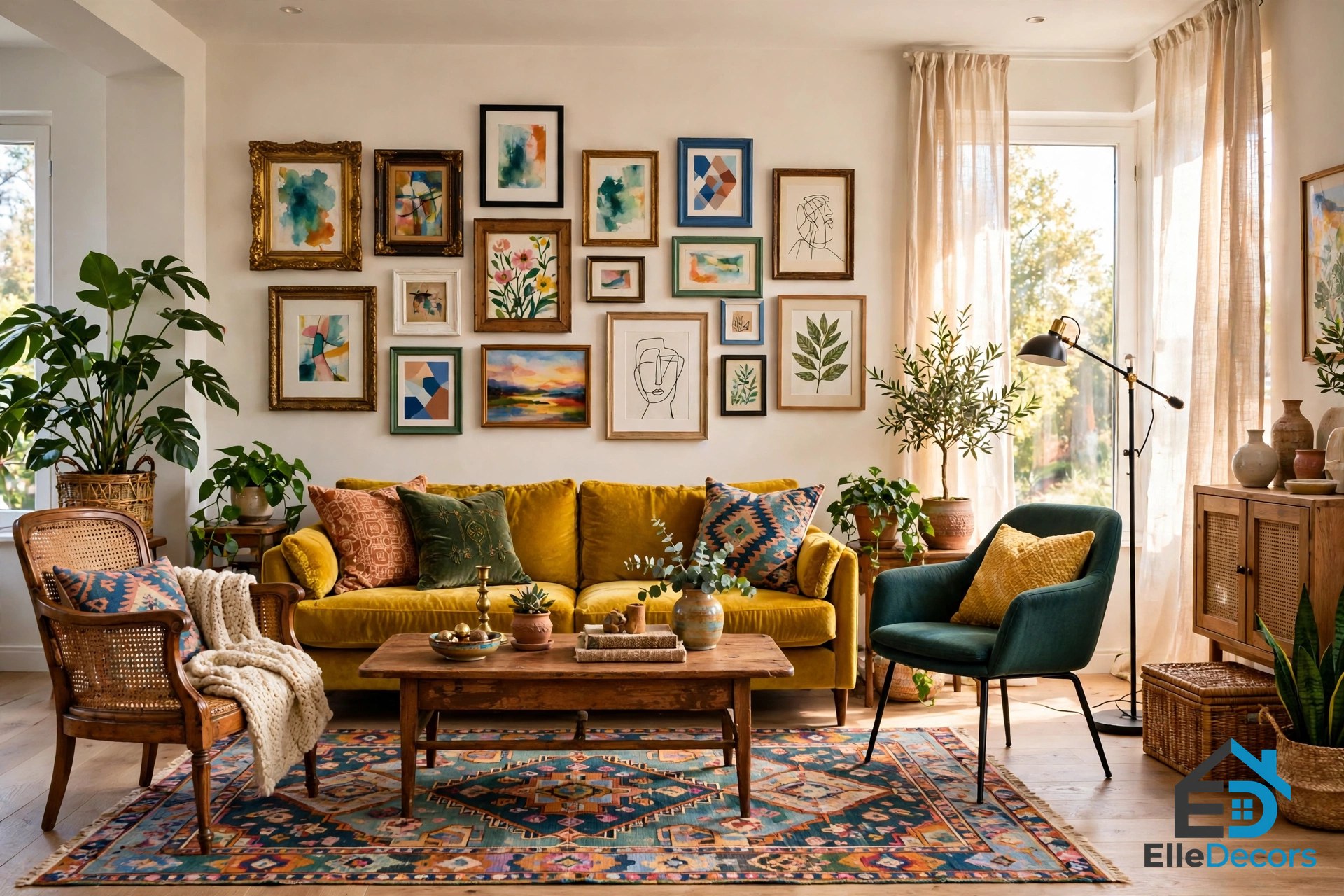
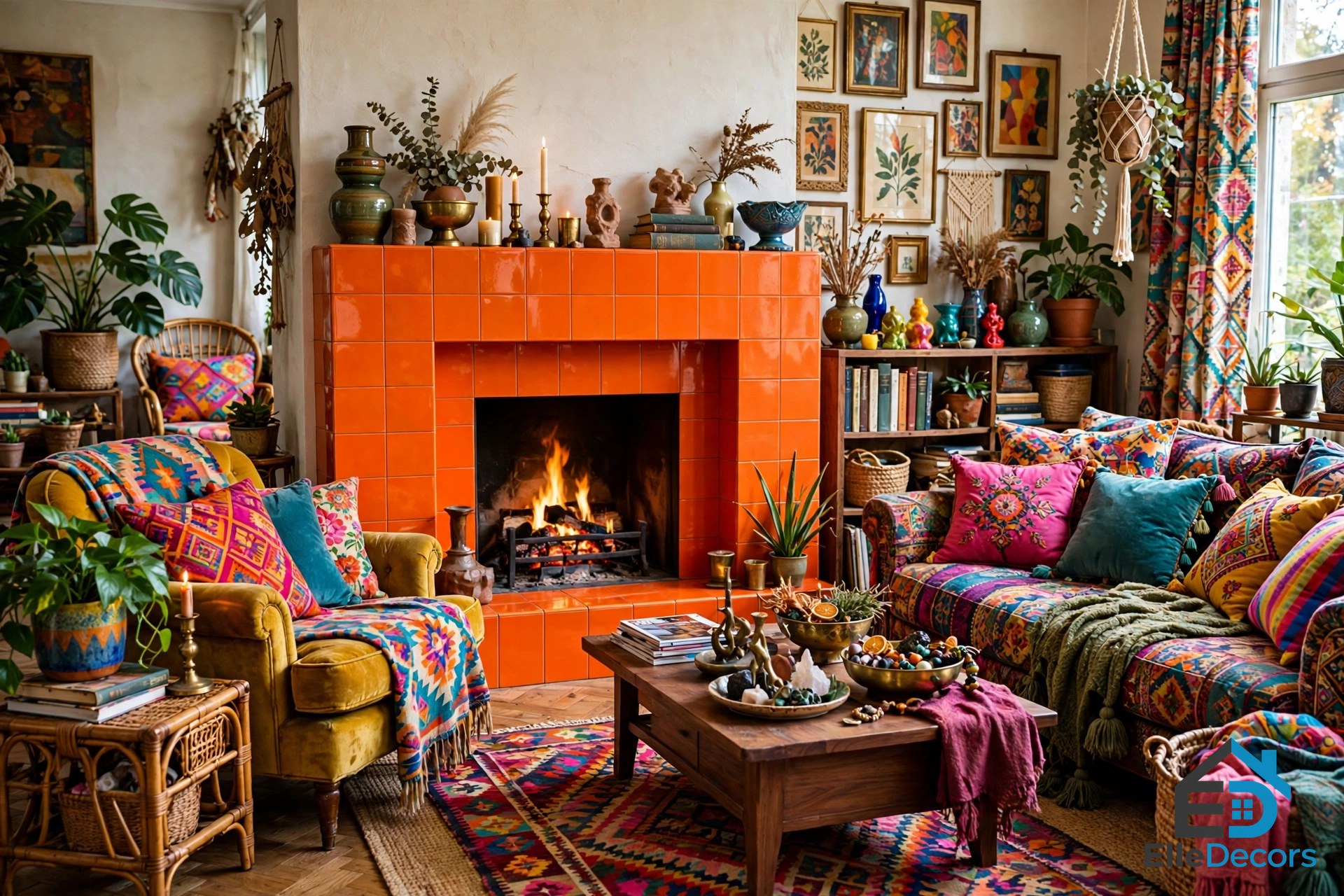
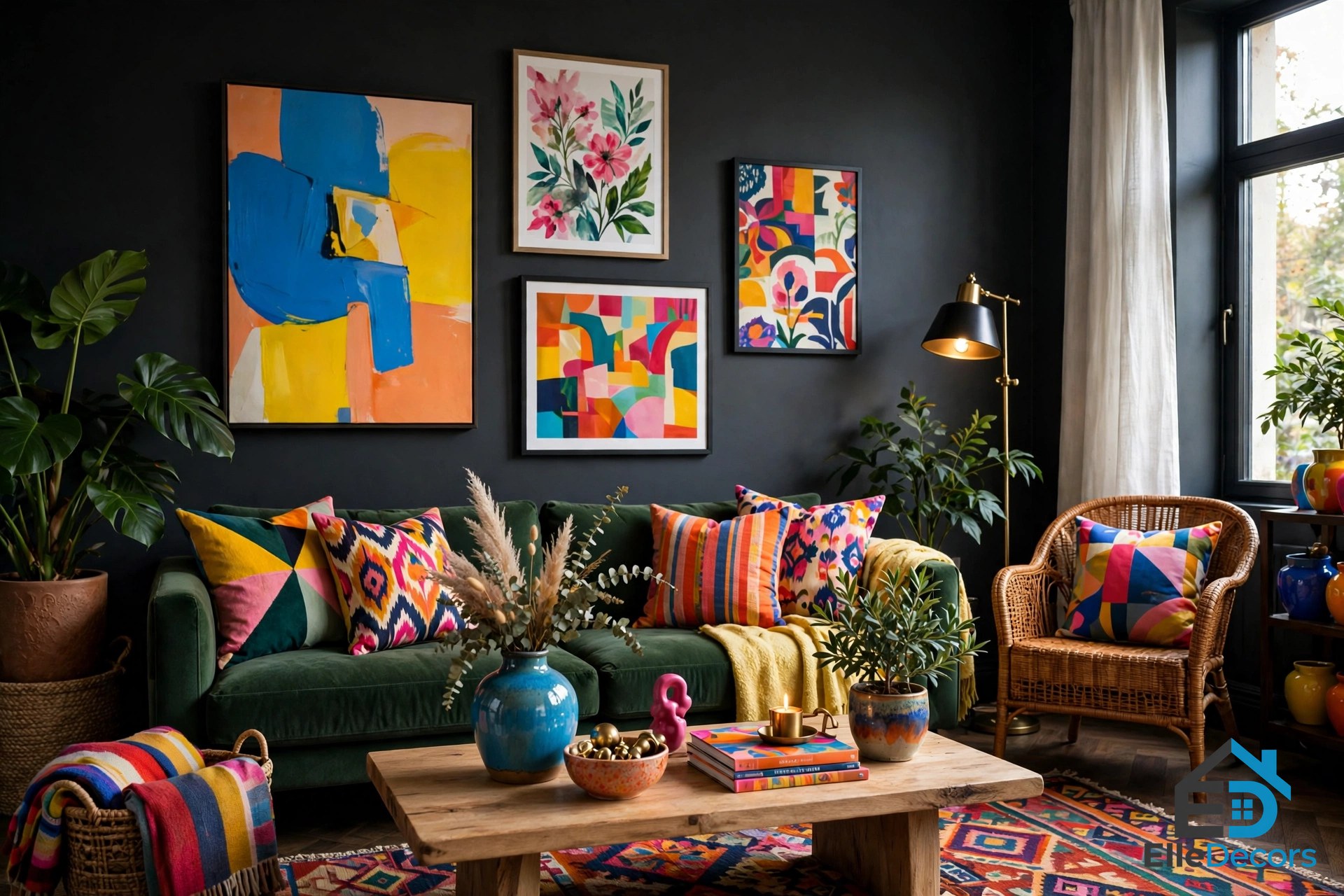
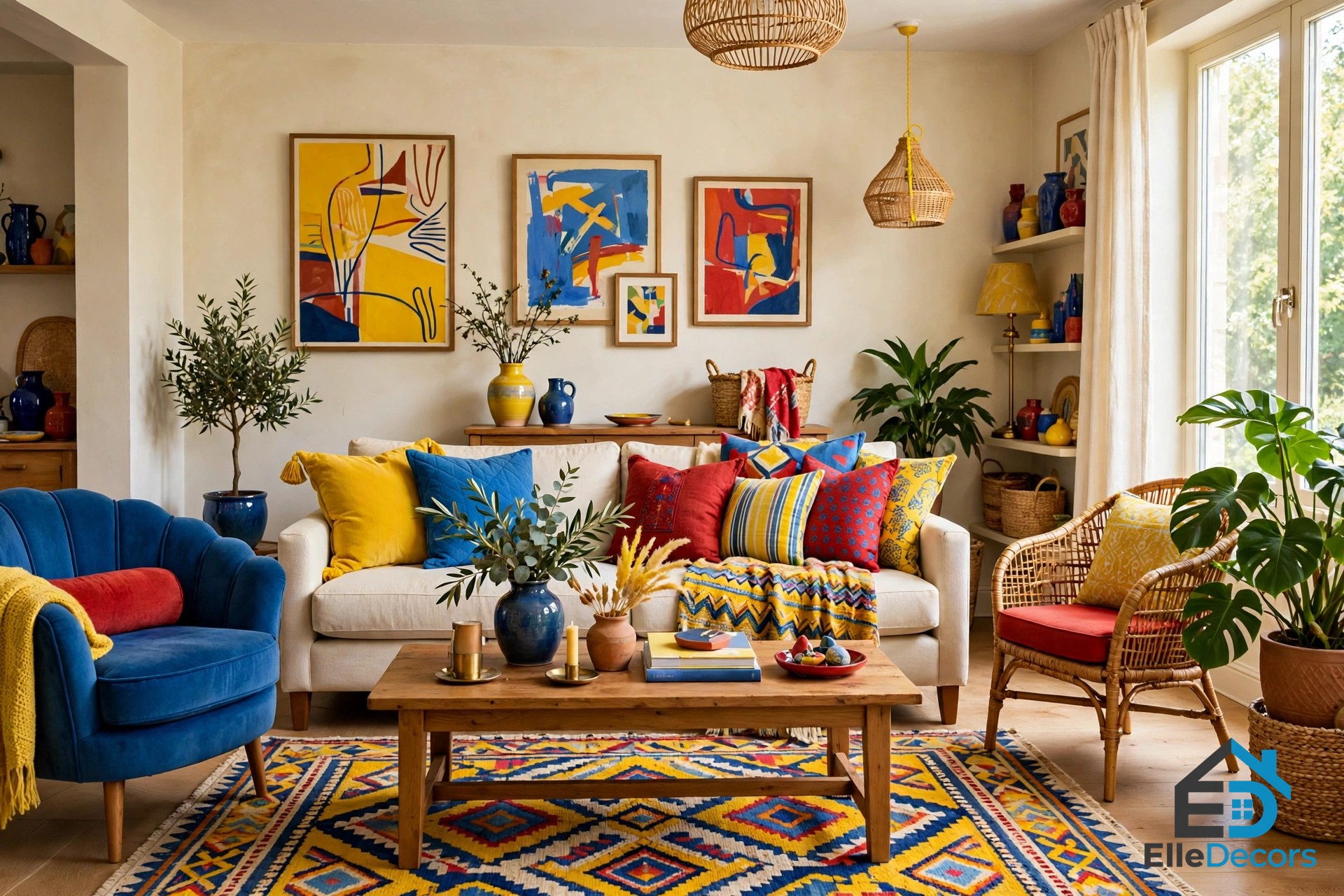
Colour is the simplest anchor, and the one most eclectic rooms rely on. The method is straightforward: choose two or three colours and repeat them around the room, in different sizes and textures, so the eye reads the mix as deliberate. A yellow accent room in the gallery works because the same yellow appears in the art, the cushions, and a single chair, while everything else stays calm. A tri-colour scheme works the same way: three bold colours, repeated in small doses, with a neutral base underneath to give them room. See our grey living room guide for a grey base that steadies bold colour.
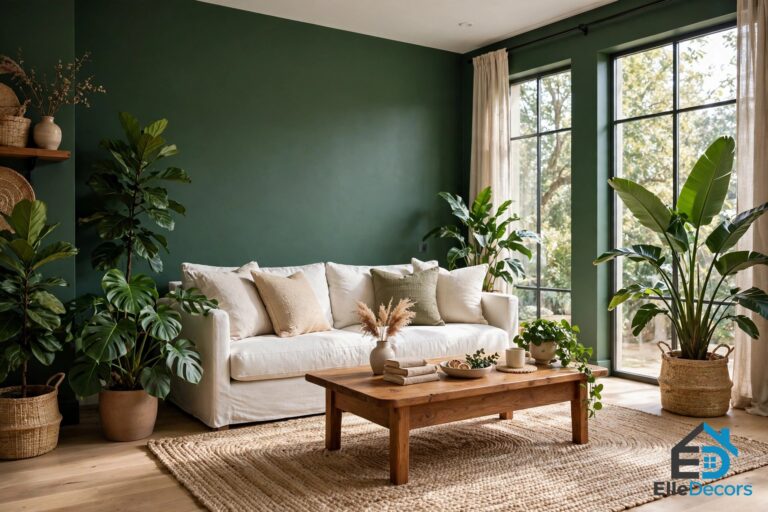
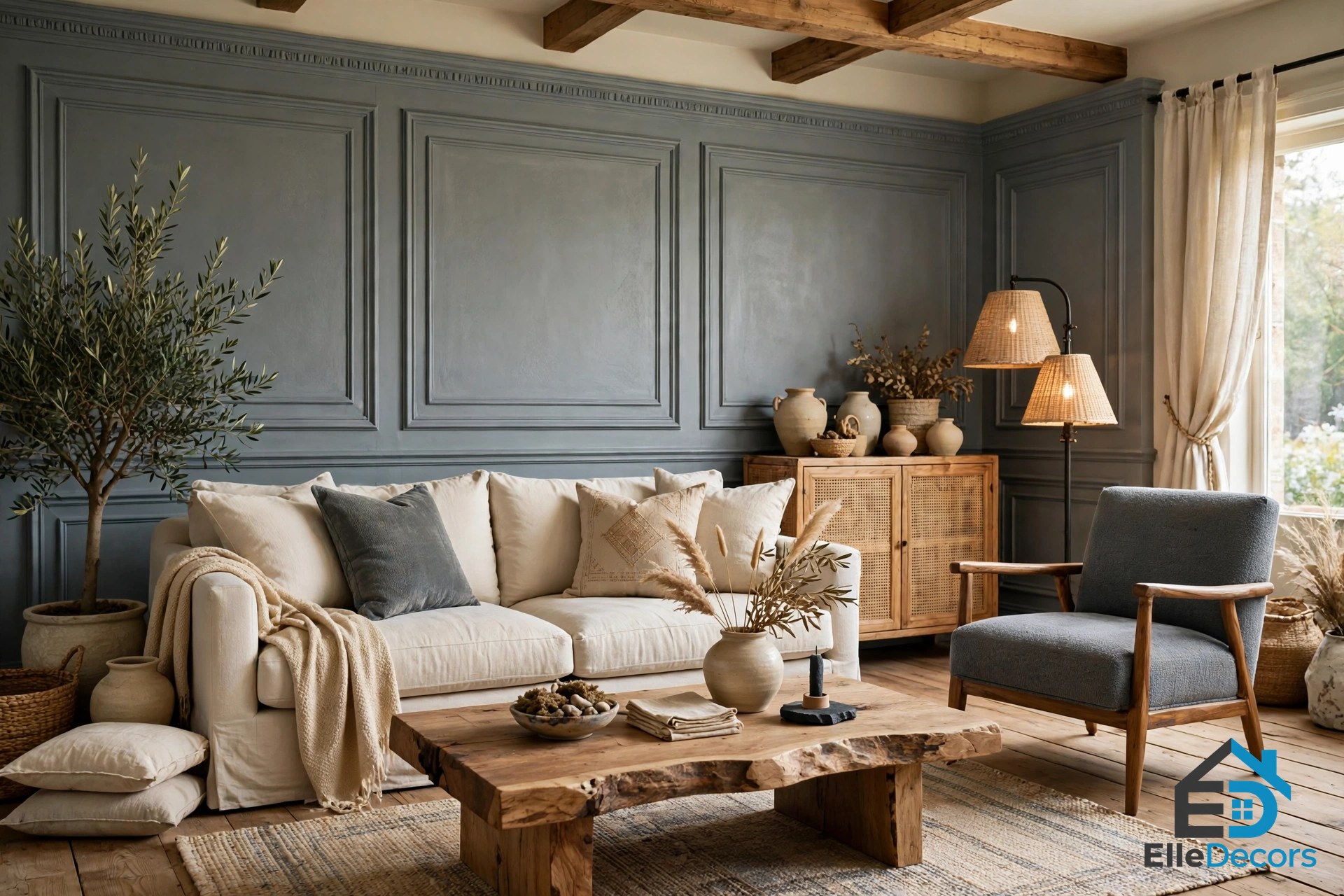
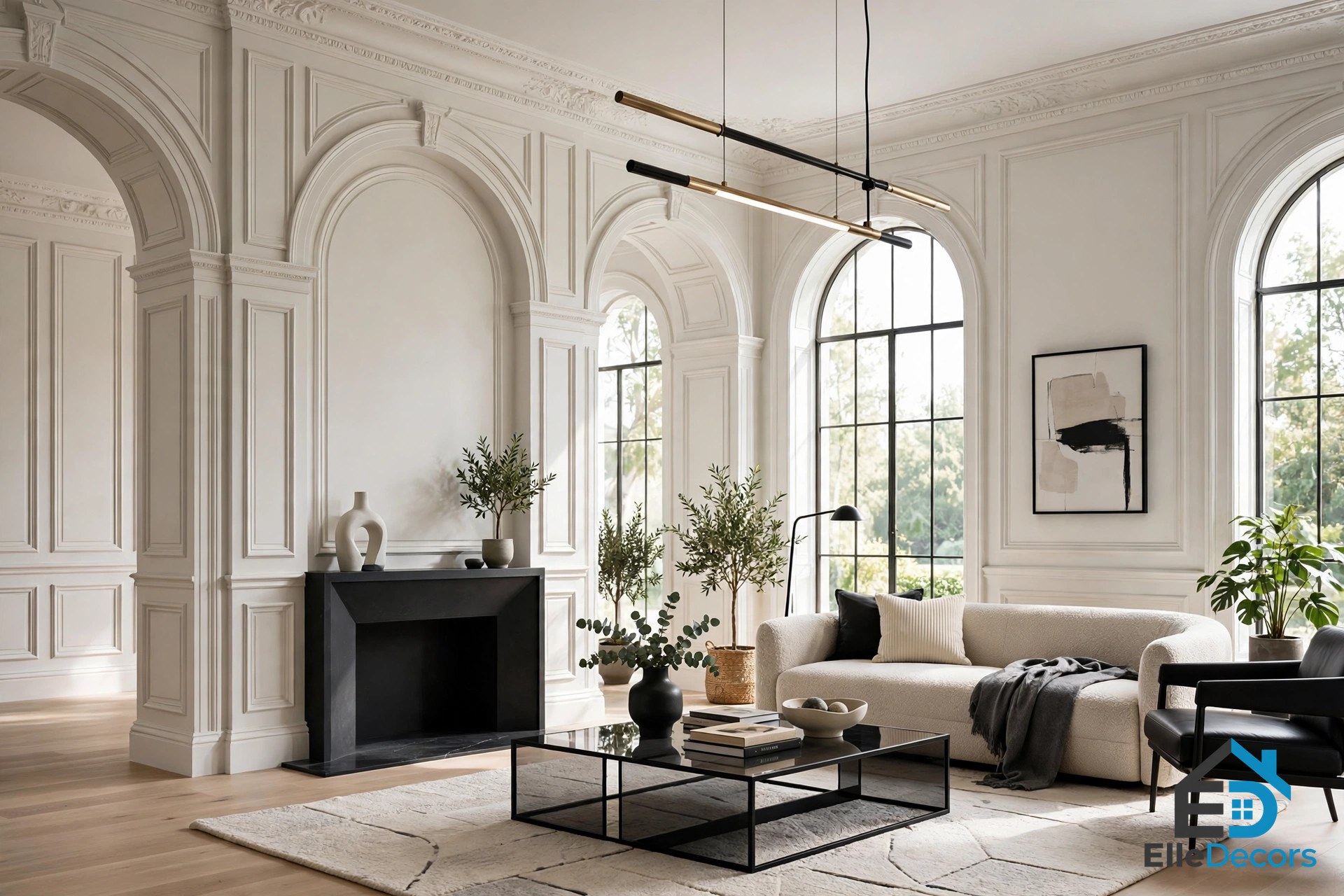
If you love colour but fear chaos, start with a muted base. Cream walls, a natural wood floor, and a plain sofa give bright pieces somewhere to land. The gallery’s earthy rooms do exactly this: shades of cream, beige, slate grey, and rich natural wood hold the room steady while rustic live-edge furniture and neoclassical framing supply the character. The simplest way to keep an eclectic living room from tipping into clutter is to let the base stay quiet and spend your colour in the accessories, where it is cheap to change and easy to move.
Every Piece of Furniture Earns Its Place
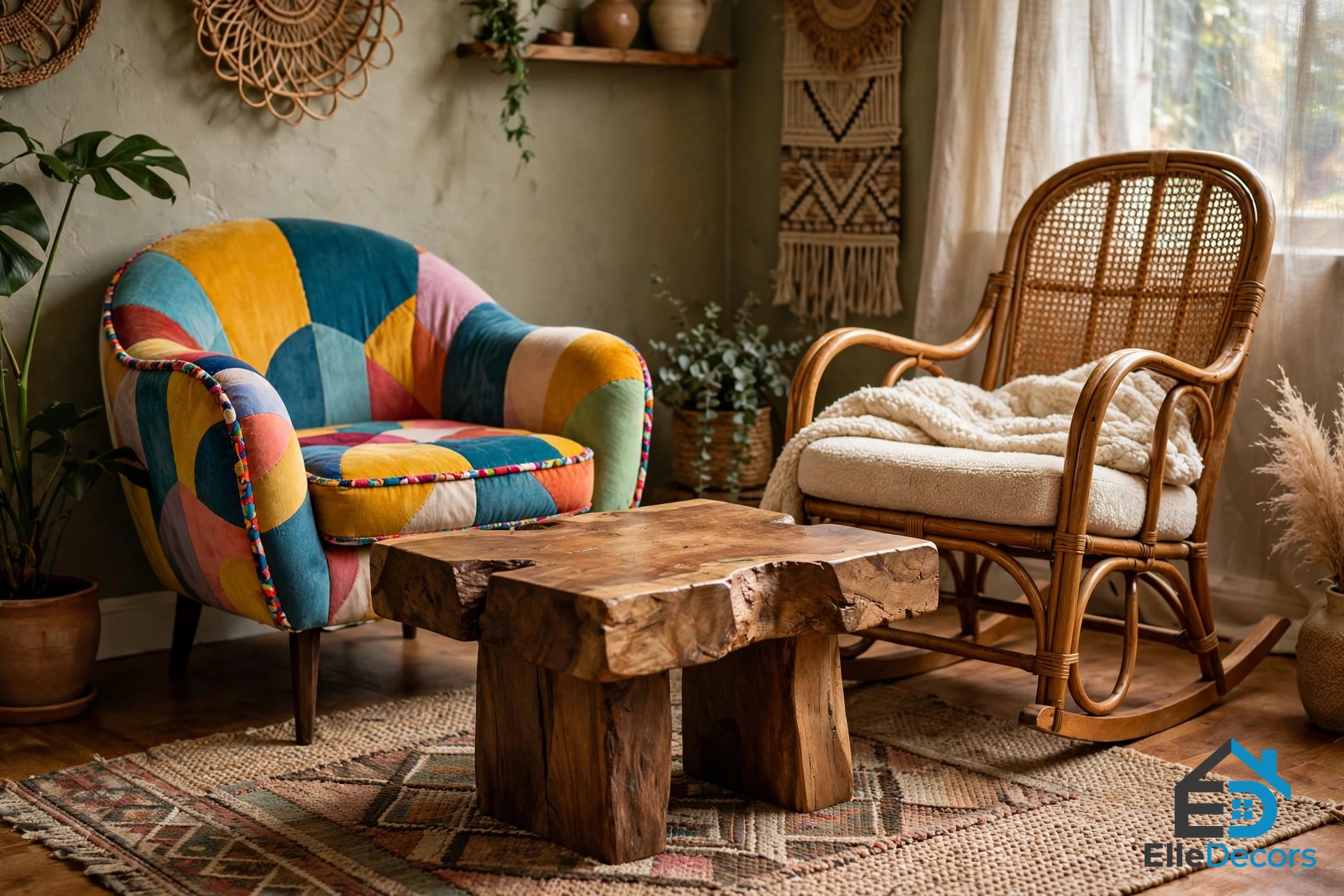
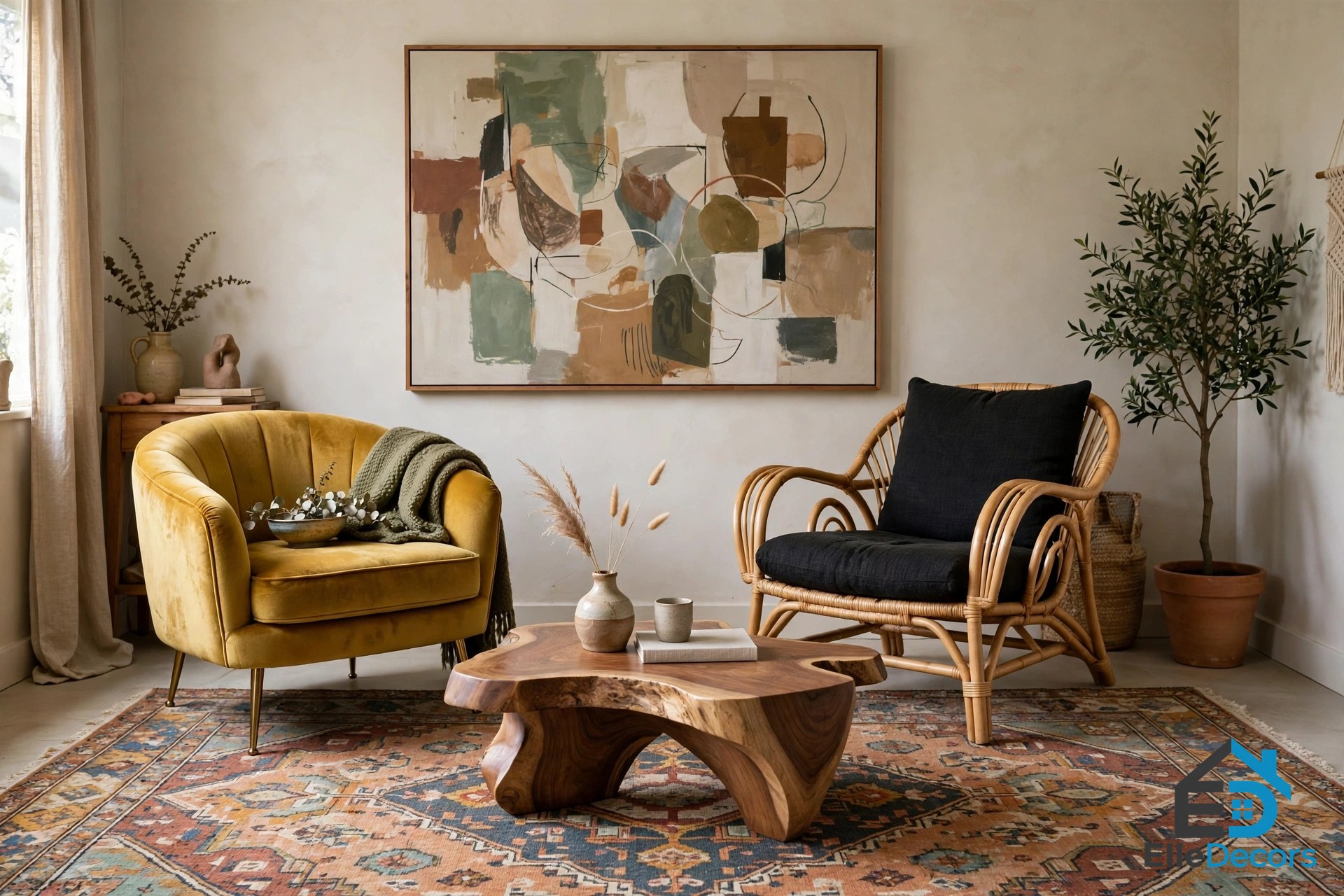
In an eclectic room, furniture is not a matching set. It is a cast of characters, and each one should look like it was chosen, not delivered. The gallery shows this clearly: a small lounge with just three pieces, a chunky coffee table, a quirky lounge chair, and a rocking chair, each with a standout character of its own. Three strong pieces beat six forgettable ones, and the empty space between them is what lets each one be seen.
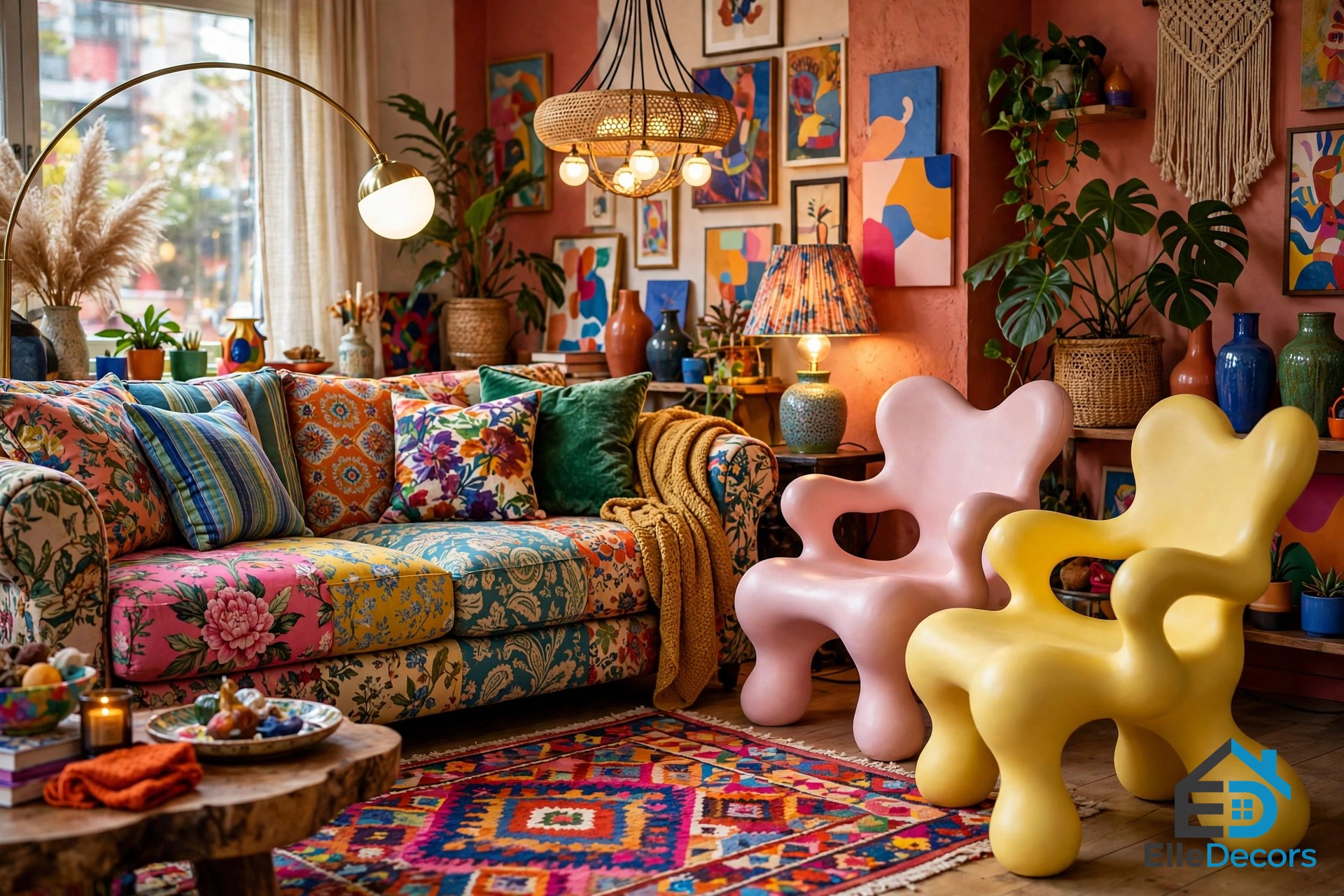
Start with the largest piece, usually the sofa, and let it set the tone. The pieces in our mid century modern living room furniture guide fit naturally here. A sofa upholstered in several different coloured fabrics and floral prints can carry the whole room on its own, as one gallery room shows, but if your sofa is that loud, everything else should calm down. A plain sofa, on the other hand, gives you freedom: pair it with a sculptural chair, a vintage side table, and a patterned rug, and the room still reads as eclectic because the pieces disagree with each other in an interesting way.
Scale matters more than style. A tall bookshelf, a low sofa, and a mid-height chair give the room a rhythm the eye can follow. When everything sits at the same height, the room feels flat, however interesting the individual pieces are. Mix heights deliberately, and leave breathing space: the gallery’s own advice is to leave gaps between curated items so each one gets its moment to shine.
Art First, Furniture Second
In several of the gallery’s strongest rooms, the furniture plays second fiddle to the art. One room by designer Maria Llado lets intriguing art and sculpture dominate, with the seating kept quiet so the artwork can do the talking. Another, a hotel interior by Kelly Wearstler, is built around a backstory: the designer imagined a bohemian woman’s artful salon, complete with a black cat, and furnished the room as that character’s home. The lesson is that a room with a story is easier to furnish than a room with a shopping list. Decide what the room is about, then let the art carry that idea.
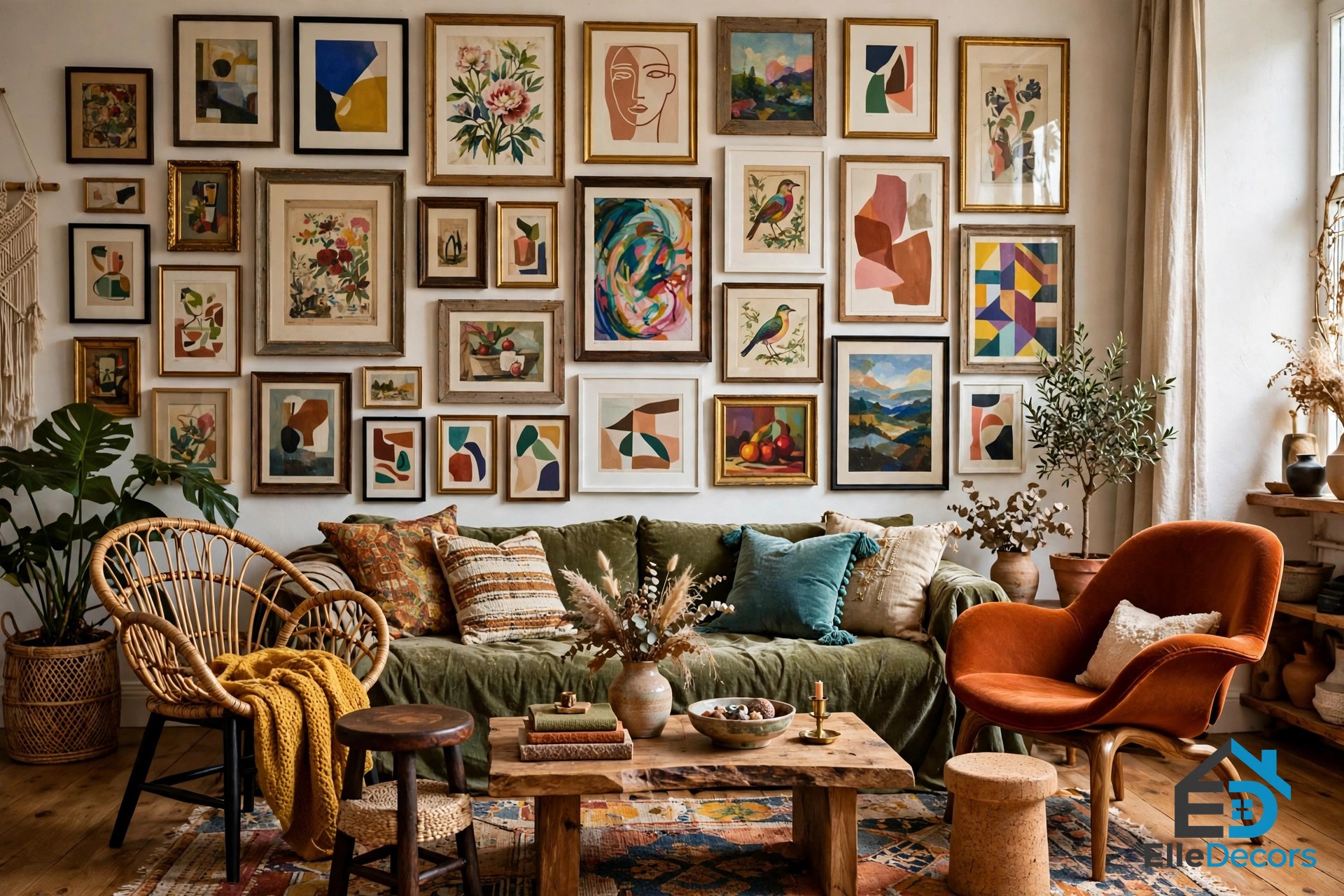
A gallery wall is the fastest way to give a mixed room a point of view. The rule from the gallery is simple: the bigger the abundance of styles, frames, and colour, the better. Mix frame sizes, mix art styles, mix photographs with prints and objects. The frames do not need to match. What they need is a shared thread, one repeated colour, one repeated material, or one repeated shape, that tells the eye the wall is one composition rather than a pile of pictures.
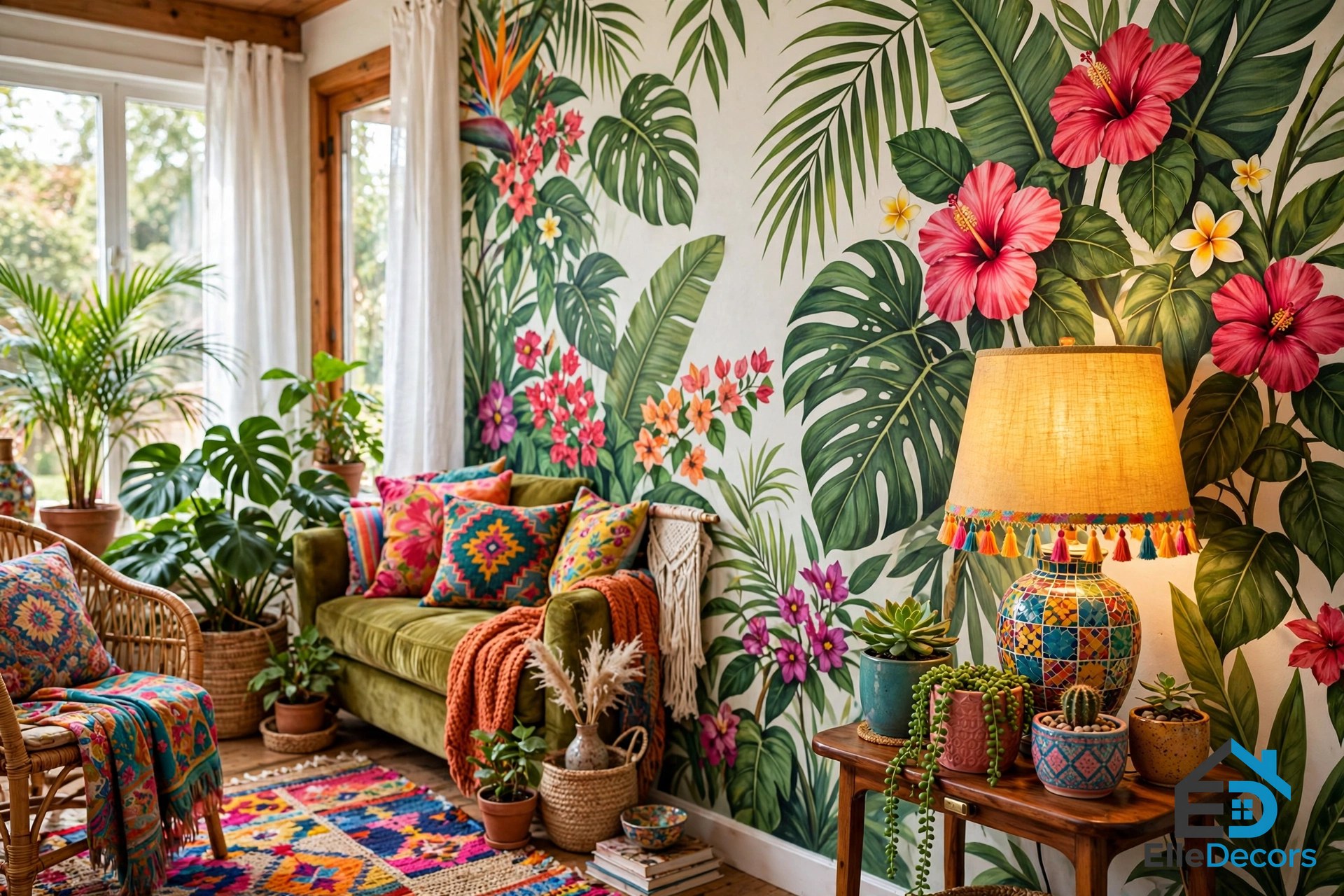
Murals deserve a special mention. A wall mural that blooms with tropical colour can set the palette for the entire room, and the gallery’s mural room spills that colour into the lamp, the planters, and the small side table until the whole space feels like one painting.
Pattern, Texture, and the No-Match Rule
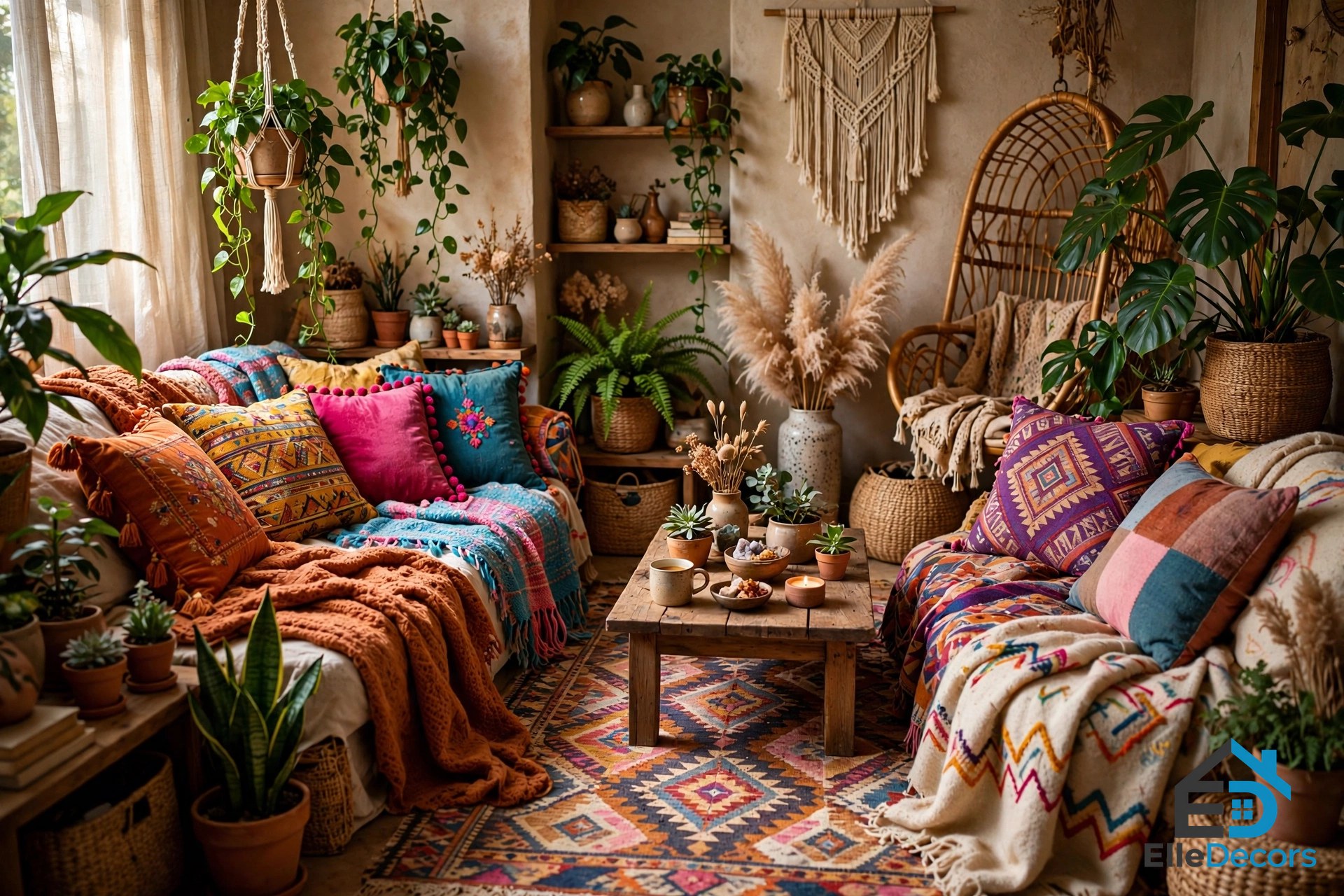
Pattern is where eclectic rooms either sing or scream. The gallery’s advice is cheerful: why choose one pattern when you can have two? The method is to vary the scale. A large floral on the sofa, a small geometric on the cushions, and a stripe on the rug can live together because the eye reads them at different sizes. Two patterns at the same scale, in the same colours, will fight. Two patterns at different scales, sharing one colour, will cooperate.
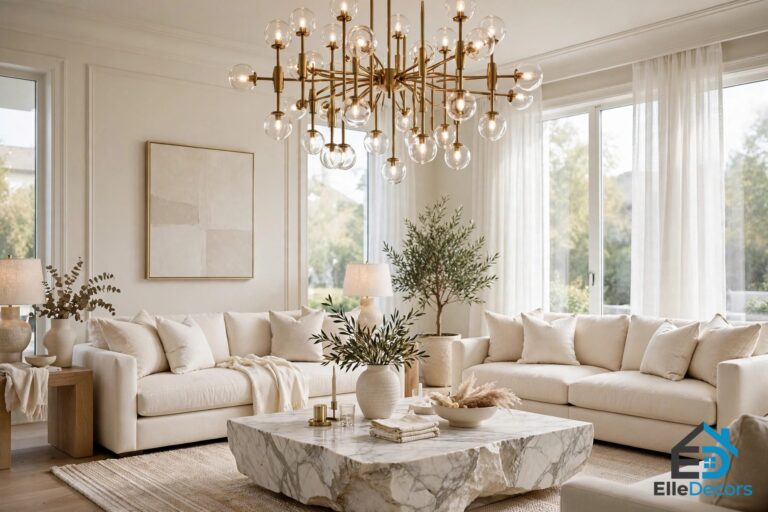
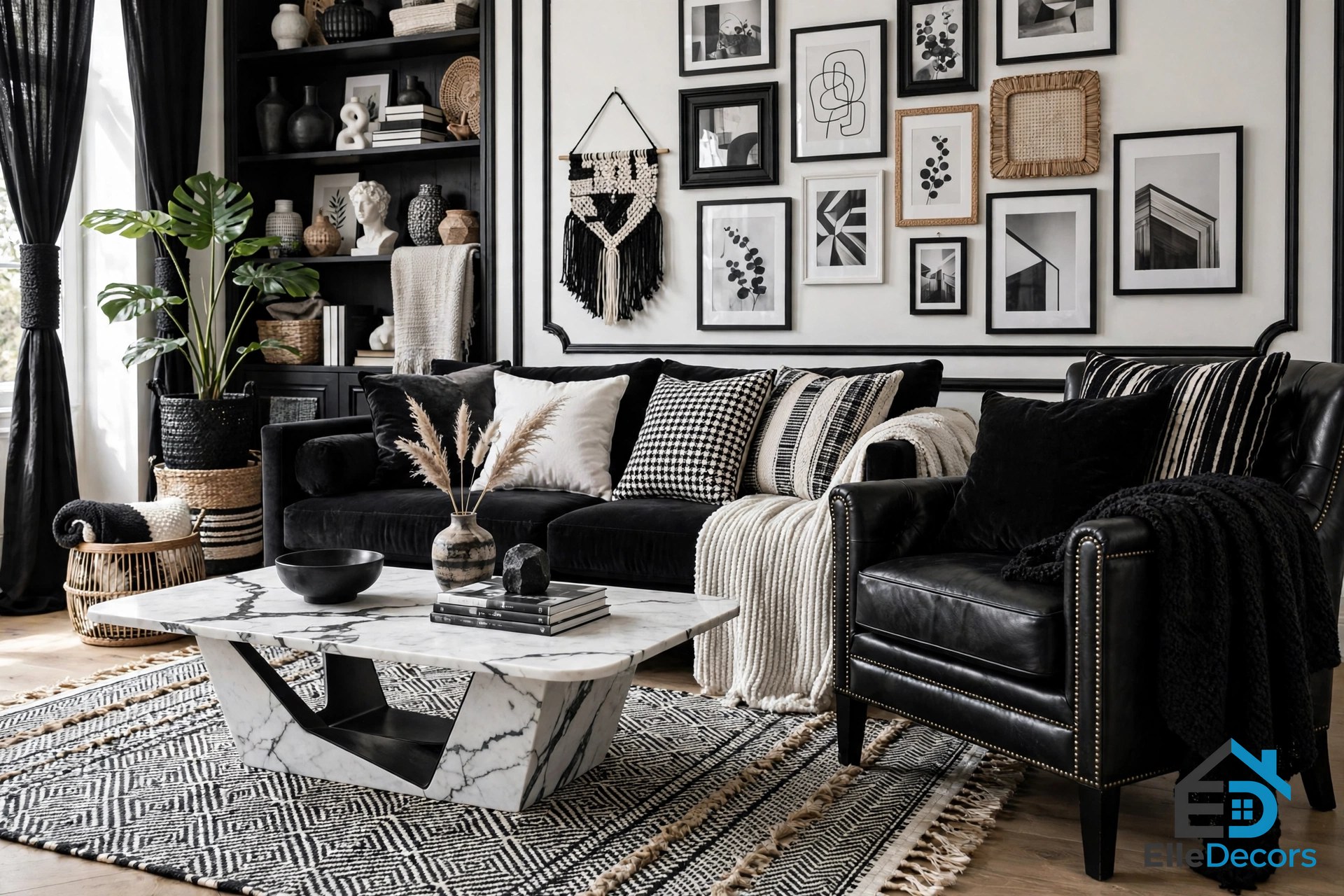
Texture does the same job more quietly, and it is the answer for people who love the eclectic spirit but not the colour. The gallery puts it directly: if colour clashes are not your thing, keep your palette cohesive and add interest with texture instead. A monochrome room in black and white, with a marble coffee table, velvet cushions, a woven rug, and a leather chair, can feel just as layered as a rainbow room.
The no-match rule is the heart of the style. Cushions do not need to match each other. Chairs do not need to match the sofa. Lamps do not need to match each other. What they need is a relationship: a shared colour, a shared material, or a shared era. A brass lamp and a brass picture frame are related. A rattan chair and a woven basket are related. Once you start looking for relationships instead of matches, the room starts to assemble itself.
Light It Like a Gallery
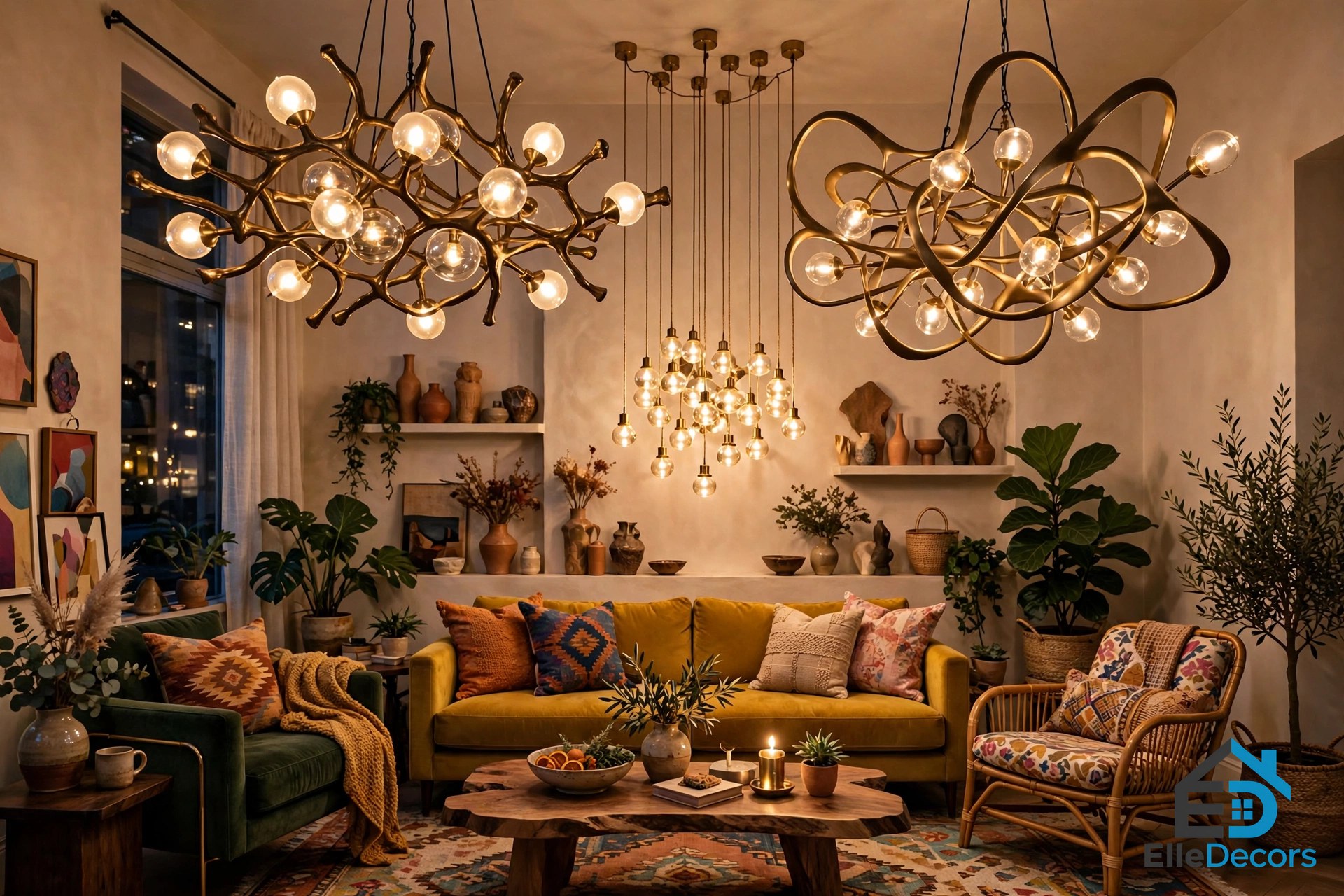
Lighting is the most underrated tool in an eclectic room, and the gallery returns to it again and again. One room doubles up on statement chandeliers, two large fixtures instead of one, in tribute to the abundant style. Another uses a multitude of small pendants to fill a large room, so the light itself becomes a sculpture. The principle is that in a room full of objects, the lighting should be an object too, not an afterthought.
Layer three kinds of light. Our modern living room lighting guide covers these three layers in detail. A ceiling fixture or chandelier gives the room its overall glow and its first focal point. A floor lamp or table lamp beside the reading chair gives a pool of warm light at sitting height. Small accents, a picture light over the gallery wall, a lamp on a bookshelf, a candle on the coffee table, give the room its evening mood.
Small Rooms and Awkward Layouts
A small eclectic living room actually suits the style well, because the style is about curation rather than quantity. The gallery’s small rooms work because they choose fewer, stronger pieces: three standout items instead of eight, a single bold rug instead of three small ones, one gallery wall instead of art scattered on every surface. The rule is to let one thing be big and everything else be small. A large rug anchors a small room better than a small rug, because it defines the seating area in one gesture. A single large artwork beats five small frames on a short wall.
Storage is the practical problem. Eclectic rooms collect things, and collections need somewhere to live. The gallery’s answer is open shelving for display, with a few concealed cabinets for the less attractive necessities. Built-in bookshelves are the ideal solution: they hold books, objects, and art in one tailored unit, and they make a collection look intentional instead of accidental.
Mistakes That Undo the Look
The most common mistake in an eclectic living room is buying everything at once. A room furnished in a single weekend from a single shop looks like a showroom, not a collection. The style needs time: one strong piece, lived with for a while, then the next. If you are starting from scratch, buy the sofa and the rug first, live with them for a month, and let the art and accessories follow. The room will tell you what it still needs.
The second mistake is matching too much. A matching sofa and chair set, matching lamps, matching frames, all of it works against the style. If two pieces came as a set, split them up: keep the chair in this room and move its partner somewhere else. The third mistake is the opposite, no repetition at all. A room where every single object is a different colour, a different material, and a different era has no thread for the eye to follow. Repeat something, anything, three times: a colour, a wood tone, a metal finish, a shape. Three repetitions turn a pile into a pattern.
The fourth mistake is forgetting the ceiling and the floor. Eclectic rooms are so focused on furniture and walls that the ceiling stays blank and the floor stays bare. A painted ceiling, a statement light, or even a bold rug changes the whole room, because it gives the vertical space the same attention as the horizontal.
Before You Buy: A Quick Checklist
Walk the room once more and ask whether your eclectic living room still has one clear anchor, one colour thread, one focal point, or one repeated texture. If you cannot name it, the room does not have one yet, and the next purchase should supply it. Then check the heights, the breathing space, and whether every large piece earns its floor space. If the answer to all three is yes, the room is ready for the fun part: the small objects, the art, and the plants that make it yours.
Use this table to plan your eclectic living room before you buy anything. It covers the six decisions that matter most, with the simplest version of each choice.
| Decision | Simplest choice | If you want more drama |
|---|---|---|
| Anchor | One repeated colour | One bold focal wall |
| Sofa | Plain, in a neutral tone | Patterned or multi-fabric |
| Art | One large canvas | Full gallery wall |
| Pattern | Two scales, one shared colour | Three patterns, bold colours |
| Lighting | One statement fixture plus a lamp | Doubled chandeliers, pendants |
| Storage | Built-in shelves with gaps | Open shelving plus cabinets |
Watch: One Room, Three Styles
Watch a designer furnish the same living room in three completely different ways, including an eclectic look that starts about eight minutes in. It is a useful watch because you see the same grey floor and the same shell of a room take on a traditional, an eclectic, and a contemporary character, which shows how much of the style comes from the choices rather than the architecture.
Video: A designer styles one living room three ways, with the eclectic look at 8:05.
Frequently Asked Questions
How do I start an eclectic living room from scratch?
Start your eclectic living room with the largest pieces first: the sofa and the rug. Choose a plain sofa in a neutral tone if you want freedom later, or a bold patterned sofa if you want it to carry the room. Then pick one anchor, a colour thread or a focal point, and repeat it three times around the room. Add art next, then lighting, then the small objects last. Live with each stage for a few days before adding the next, so the room grows instead of arriving all at once.
Can an eclectic room work with a small budget?
Yes, and it may work better than with a large one. The style rewards secondhand finds, inherited pieces, and things collected over time, which are usually cheaper than new matching sets. Spend your money on the sofa and the rug, and let the rest come from thrift shops, markets, and pieces you already own.
How many colours should an eclectic room have?
Two or three main colours, repeated around the room, with a neutral base underneath. The base can be cream, grey, white, or natural wood. The accent colours can be as bold as you like as long as each one appears at least three times. If a colour appears only once, it looks like a mistake. If it appears three times, it looks like a decision.
Does eclectic style suit a small living room?
It does, because the style is about curation rather than quantity. Choose fewer, stronger pieces, one large rug, one large artwork, and leave breathing space between items. A small room with three strong pieces beats a large room with twenty forgettable ones.
The Bottom Line
An eclectic living room works when the mix is deliberate: one anchor, a colour thread or a focal point, furniture chosen piece by piece, art that carries the story, and enough empty space for each thing to be seen. Start with the sofa and the rug, repeat your anchor three times, and let the room grow slowly. The result is a room that looks collected rather than decorated, and that is the whole point of the style: a living room that could only belong to you.