Grey Living Room Ideas: Colour Schemes, Styles, and Styling That Works
Grey is the quiet workhorse of living-room colour. A grey living room never shouts, which is exactly why it works: it lets the sofa, the wood, the art, and the light do the talking. The catch is that grey is never just grey. Pick the wrong undertone for your light and the room feels cold and flat; pick the right one and the same walls feel calm, layered, and expensive. This guide covers undertone, shade, colour pairings, style, sofa, lighting, and small rooms.
Audio Summary
Finding Your Grey Living Room: Start With the Undertone
Every grey carries a hidden colour underneath — a whisper of blue, green, violet, or beige. That undertone decides whether your room feels serene or sterile. The first decision in any grey living room is not the paint name on the tin. It is the undertone, matched to the light your room actually gets.
Cool greys lean blue or green: crisp and architectural, best in bright, sun-drenched rooms. Warm greys lean beige or taupe: softer in daylight, forgiving in rooms that get little direct sun. Greige sits between the two — grey and beige blended almost evenly, the easiest grey to live with, pairing effortlessly with natural wood and woven textures. Charcoal is grey at its deepest edge: dramatic, but it needs strong light or warm accents to balance it.
Test before you commit. Paint a one-metre swatch on the wall and photograph it in morning, midday, and evening light. Hold a plain white card beside it and the undertone will reveal itself at once. North light and lamplight can shift grey significantly, so a shade that looked perfect in the shop can read differently on your wall.
Match the undertone to your windows. North light is cool and flat and can make grey feel colder — choose a warm grey or greige there, with brass lamps and warm-toned bulbs to soften it. South light is generous and warm, so cool greys shine without feeling icy. If daylight mixes with lamps of different temperatures, keep bulbs consistent.
The Shade Ladder: Light, Mid, and Charcoal
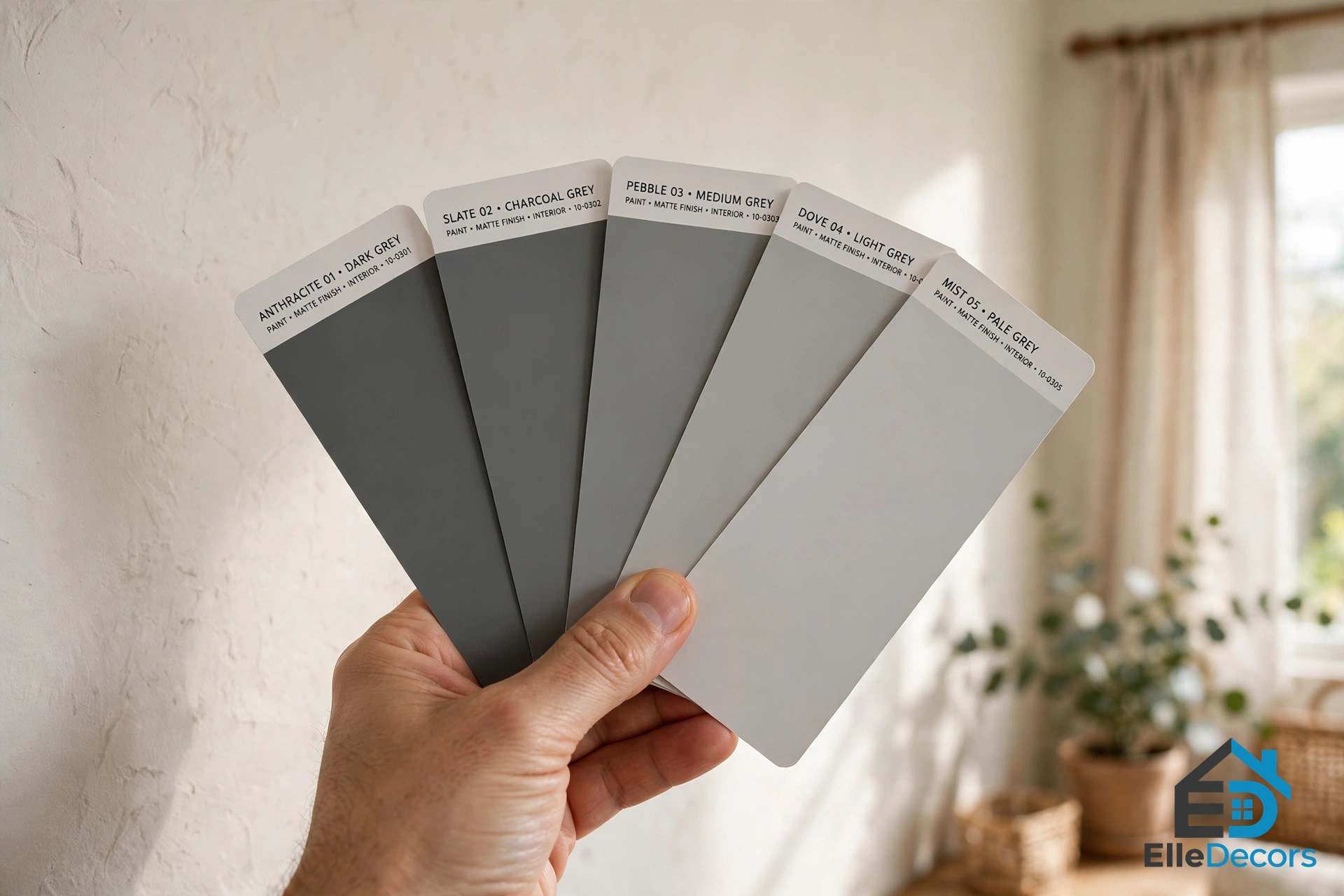
A grey living room can run from almost white to almost black, and each step on the ladder does a different job. Lighter greys open the space while deeper greys add intimacy and texture, so choose the depth for the feeling you want, not just the colour you like.
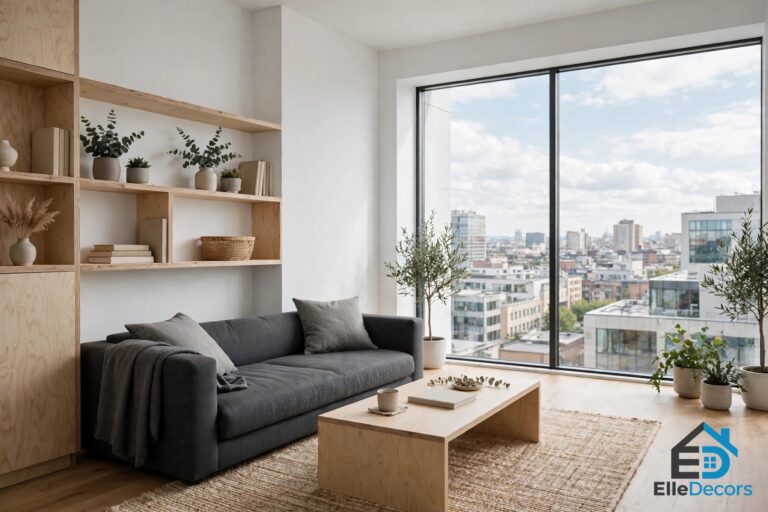
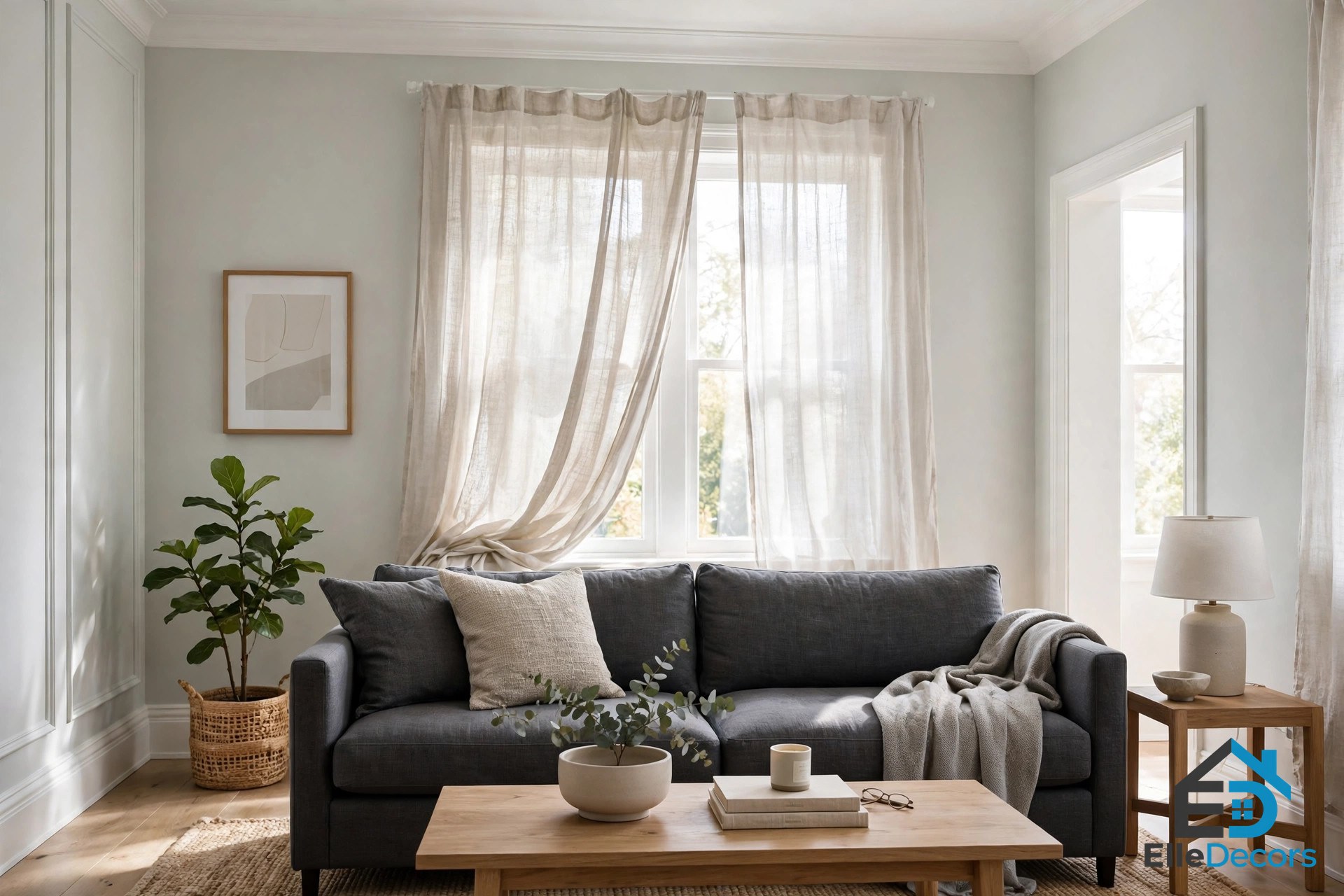
Light grey is the safe default and the best friend of small or dim rooms. Pale grey walls bounce daylight around, pair with white trim and sheer linen curtains, and make a room feel bright and airy. Let the furniture carry the contrast: a charcoal sofa, a walnut coffee table, black-framed art. Add texture — a wool throw, a woven rug, a linen cushion — or it reads as bare plaster.
Mid grey is the working shade. It has enough depth to anchor a room and enough lightness to live with every day. A mid-grey wall behind the sofa makes art and plants stand out, and it pairs with almost any accent, from dusty blue to mustard. Use it on one feature wall and keep the others pale.
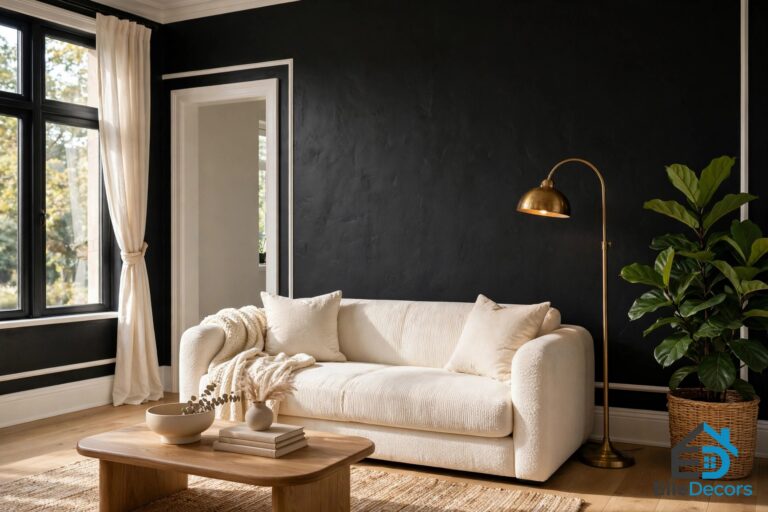
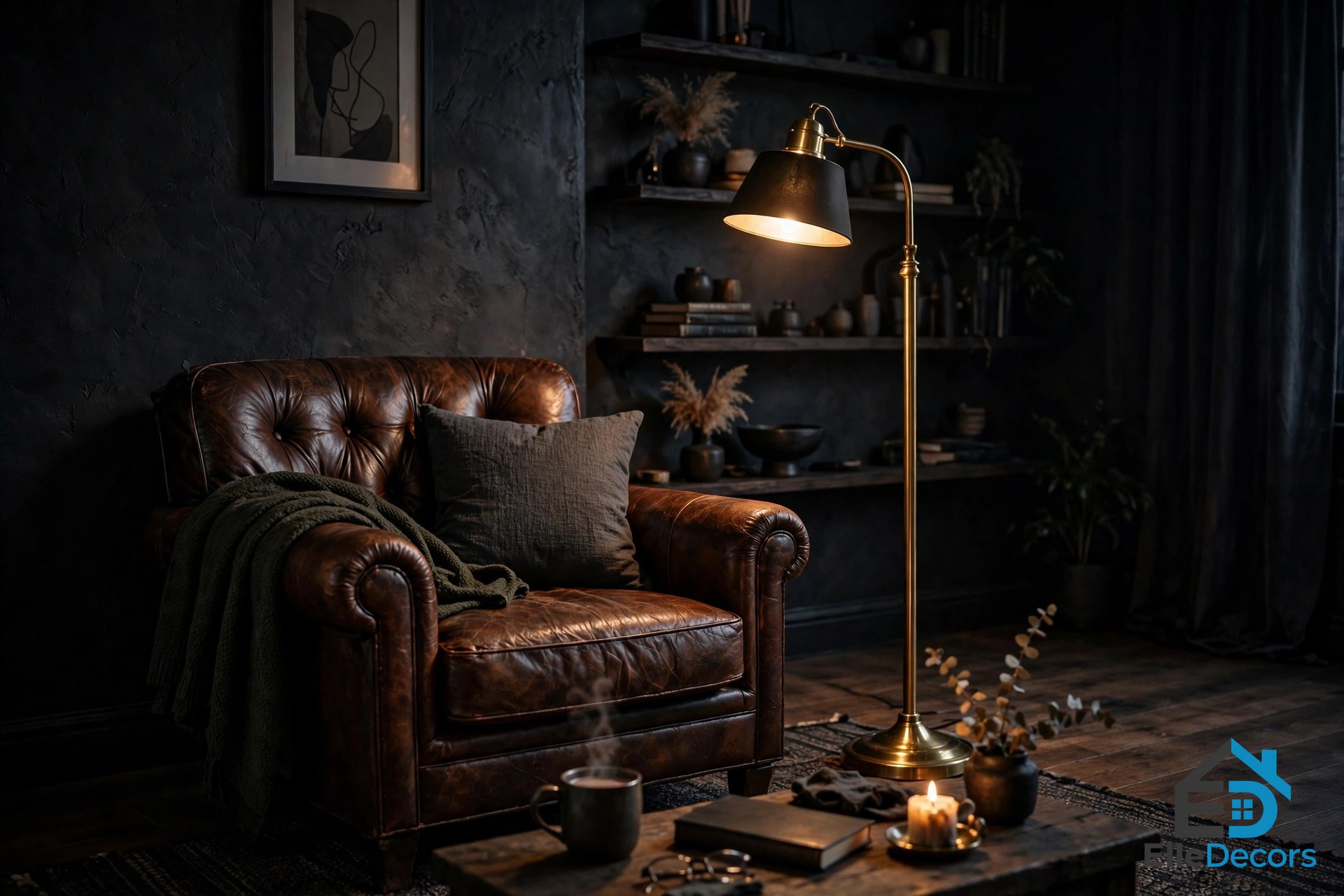
Charcoal is the statement. A charcoal wall, sofa, or fireplace surround turns an ordinary room into an evening room — a space that glows after dark with lamps and candles. Balance it with a large mirror or a pale rug. It needs good lighting more than any other shade, because dark walls absorb light — use dimmable bulbs and a second layer, such as a floor lamp.
Layer your greys rather than matching them. Light walls, a mid-grey sofa, and charcoal cushions feel designed in a way that a single flat grey never does.
Colour Pairings That Work
Grey is a base, not a finished scheme. The accent colour you choose decides the room’s personality. Pick one accent colour and one metal, and repeat them in small doses — cushions, a throw, a lamp, a vase — rather than scattering five colours around the room.
Grey and white is the classic pairing: crisp, airy, and timeless. White trim and ceilings frame grey walls and lift the finish, and a white sofa against a mid-grey wall is one of the easiest good-looking combinations there is. If the pairing reads cold, warm it with wood — a walnut coffee table or oak floorboards — rather than adding another colour.
Grey and blue is the calmest pairing. Dusty blue and sage sit naturally beside cool grey, and a deep navy accent wall works with charcoal without ever feeling heavy.
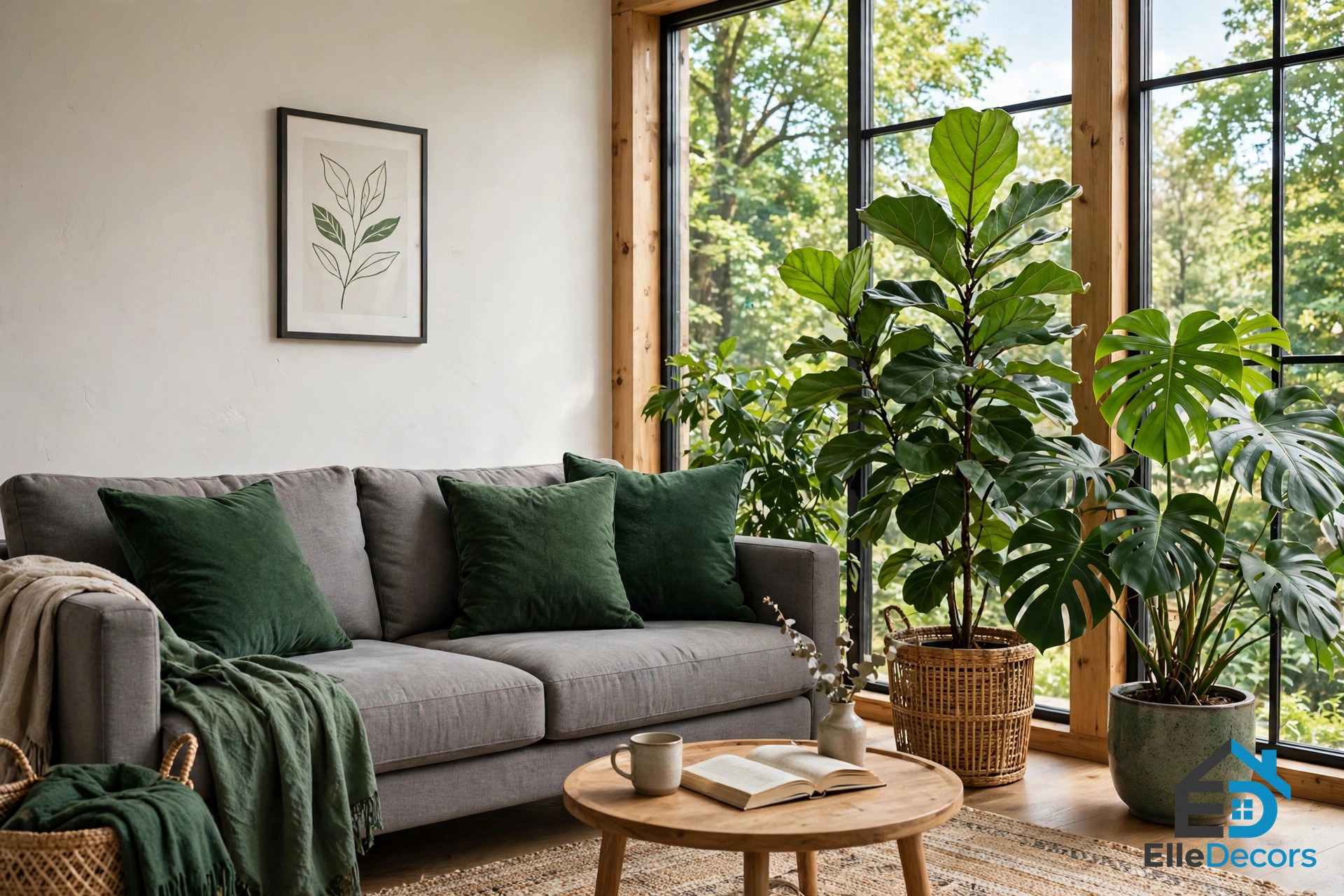
Grey and green brings the outside in. Forest green cushions, olive walls, and real plants all warm grey up, and the combination suits both modern and rustic rooms. Green reads as alive against the neutral base.
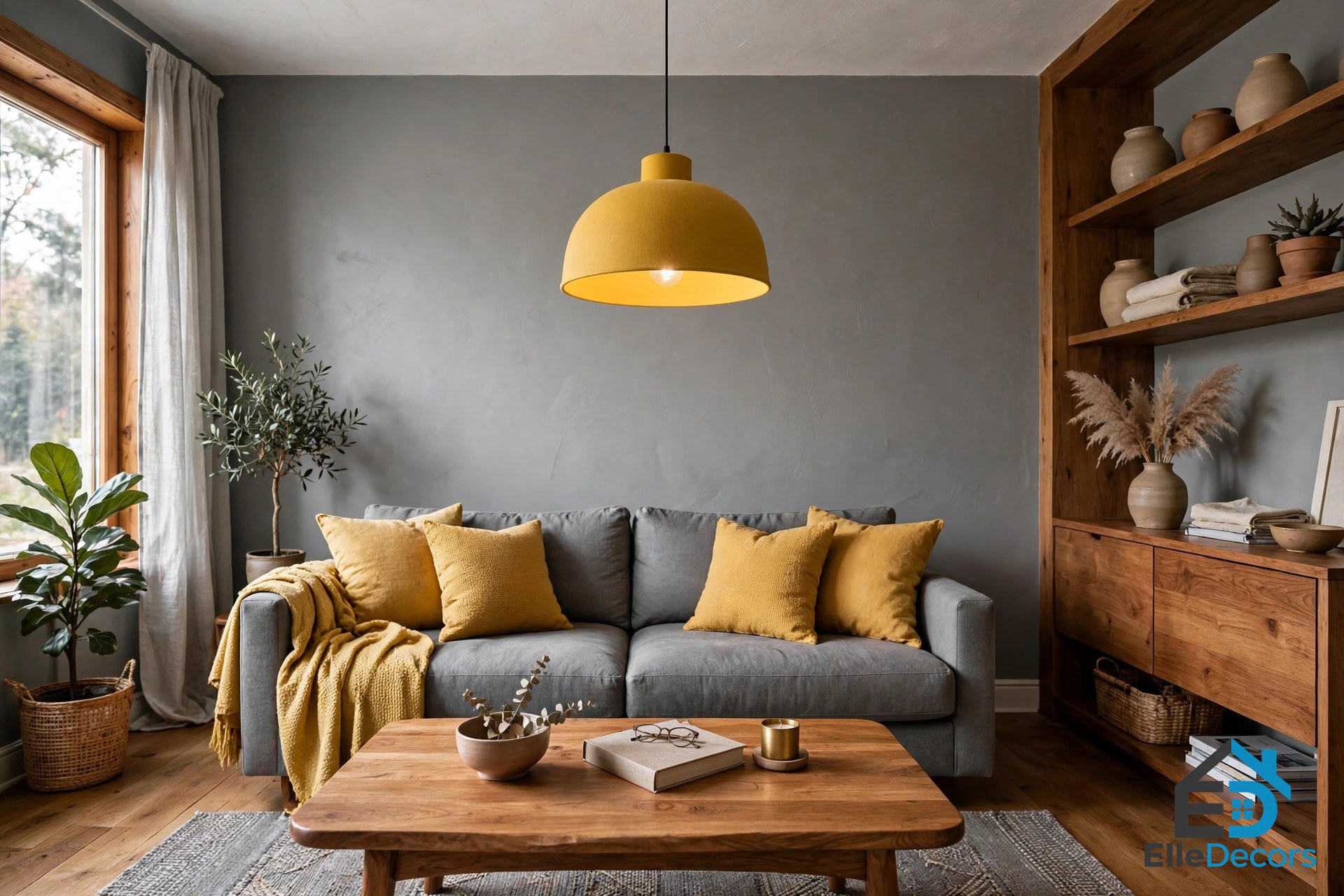
Grey and yellow is the cheerful pairing. Mustard cushions, a buttercup pendant, or a single yellow armchair lift a mid-grey room without overwhelming it.
Grey and black is the boldest pairing, and the easiest to get wrong. Black window frames, black metal fittings, and a black coffee table give a grey room sharp edges and a modern feel, but too much black turns the room into a photograph with no warmth. Warm wood and one soft texture — wool, leather, boucle — keep the monochrome scheme human. Our black and white interior guide covers how much black a room can take.
Six Styles That Work in Grey
Grey suits almost every style because it is a background colour. The style comes from the furniture, the materials, and the light — not from the grey itself. Pick the style that fits how you live, then let the grey support it.
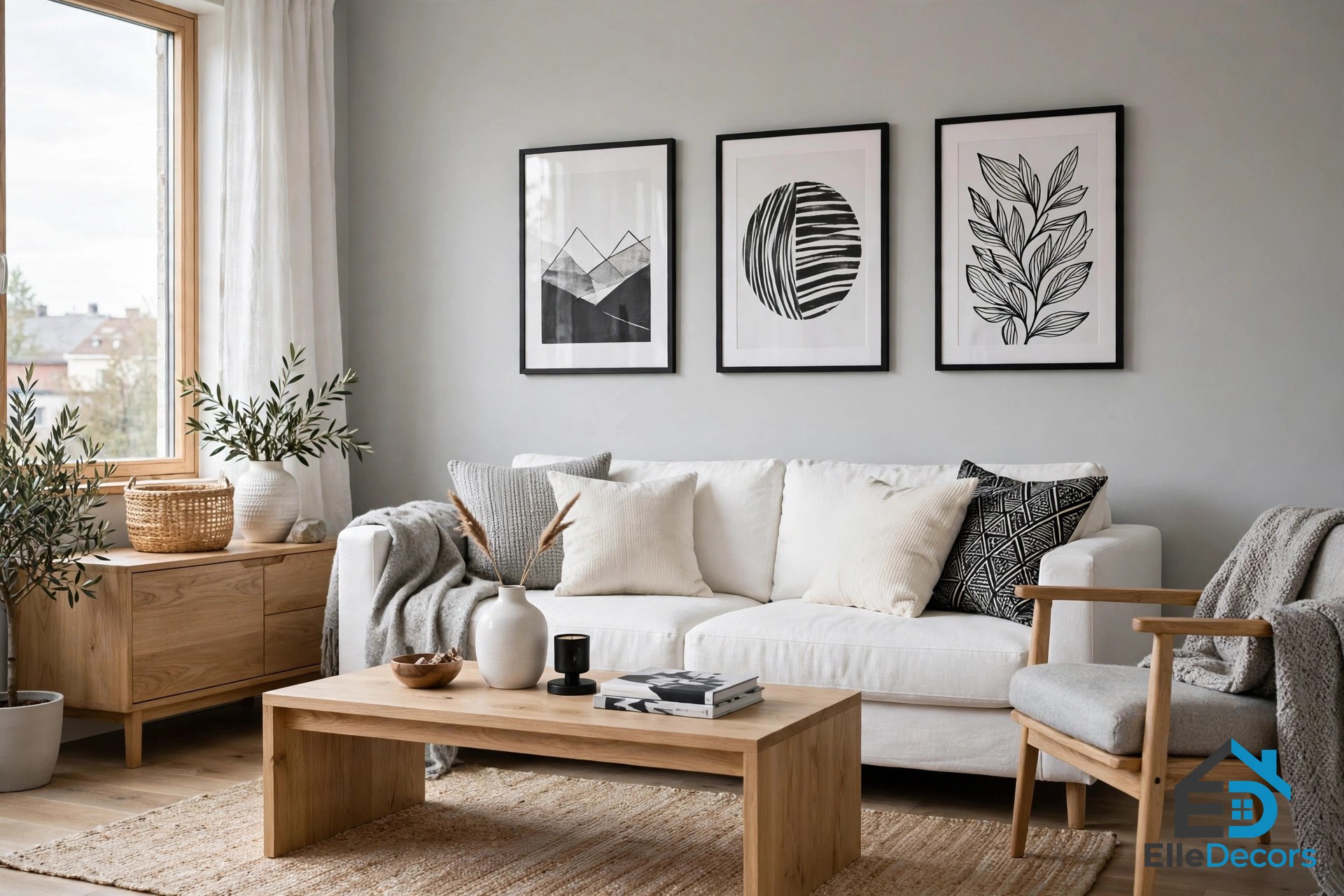
Scandinavian: Pale, Warm, and Calm
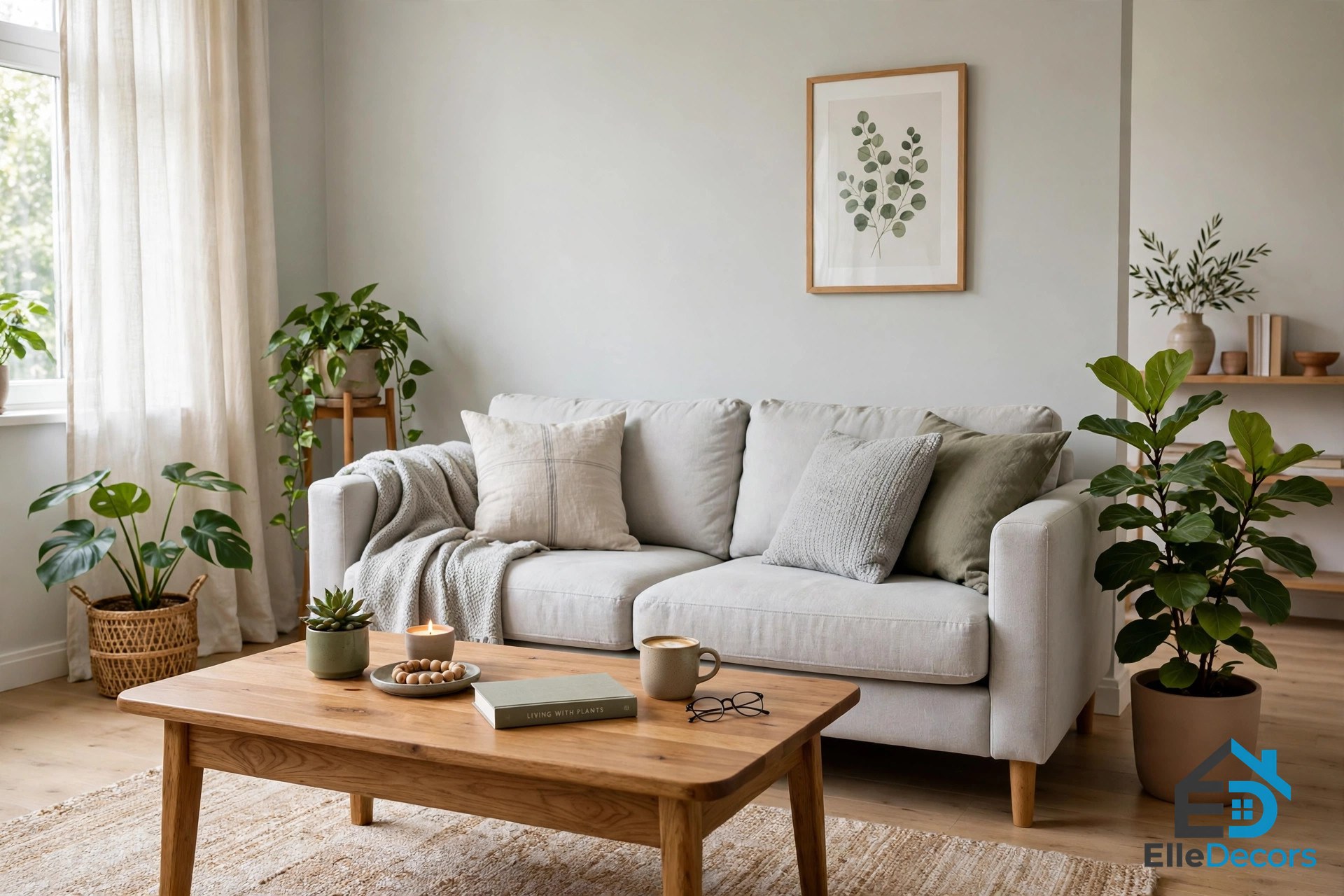
Scandinavian grey rooms run on white walls, pale grey sofas, light oak, and one or two soft accent colours. The look depends on natural light, so let the sofa sit near the window when the room allows it, and keep surfaces clear. A linen runner and a wool throw warm it without any colour shouting.
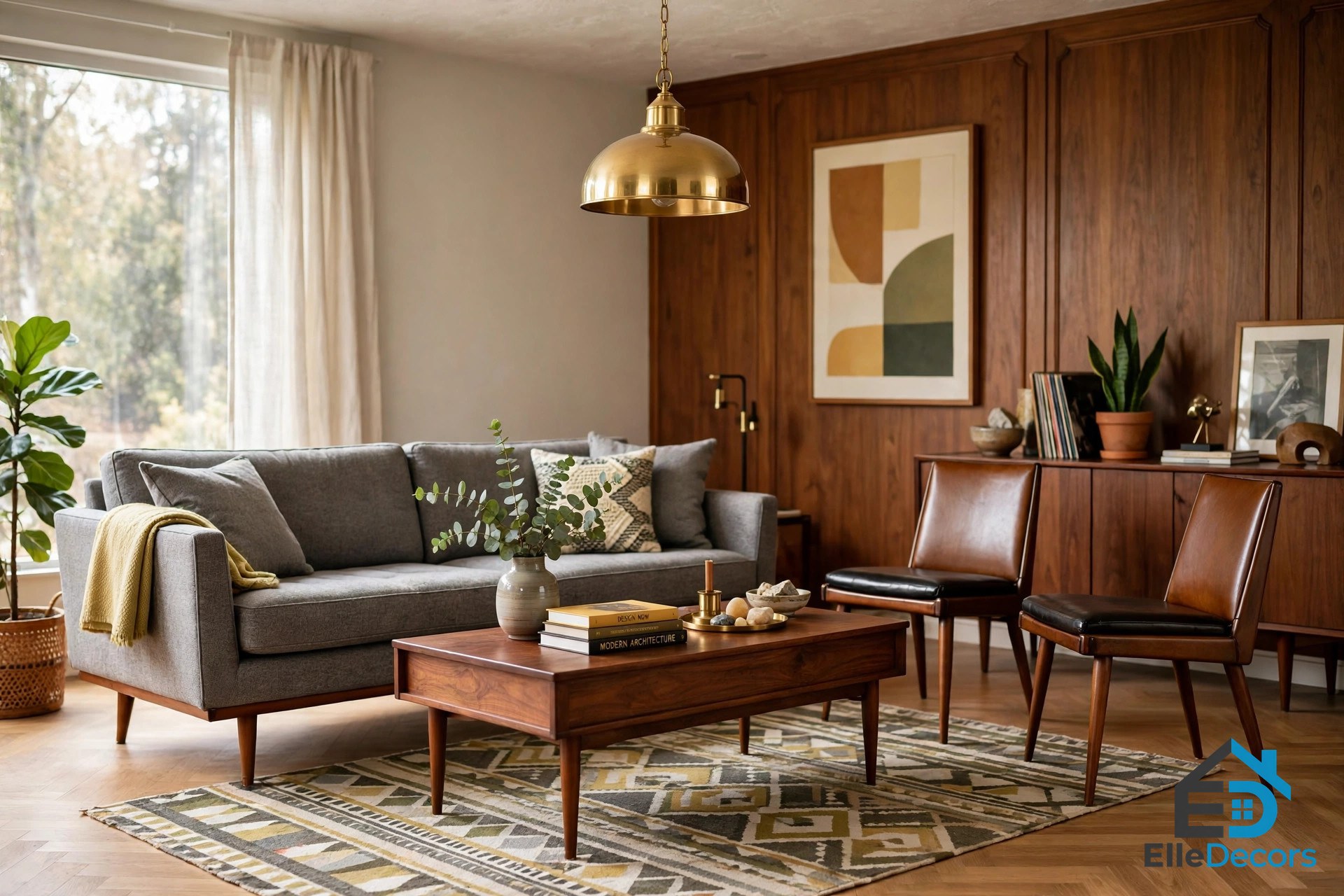
Mid-Century Modern: Warm Wood and Tapered Legs
Mid-century grey rooms pair warm walnut or teak with tapered legs and sculptural chairs. A grey sofa with walnut legs, a low teak coffee table, and one statement light — a brass or blown-glass pendant — finishes the look without clutter. Our mid century modern living room furniture guide covers the iconic pieces and layouts that still work.
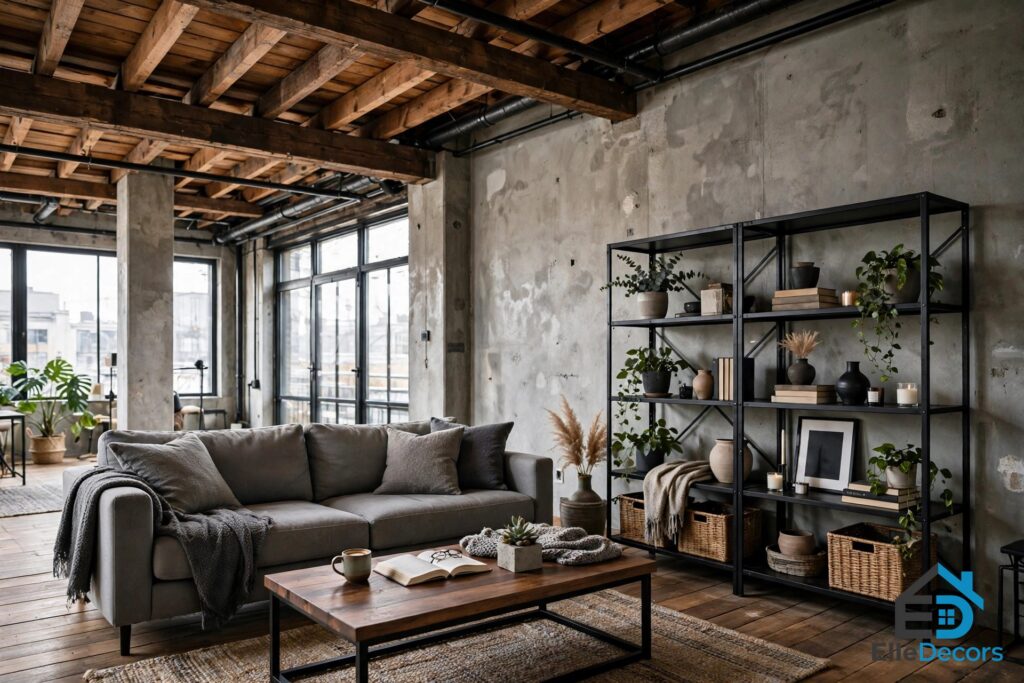
Industrial: Concrete, Black Metal, and Honest Materials
Industrial grey rooms mix exposed brick or concrete with black metal and reclaimed wood: a grey sofa on a black steel frame, a rough wooden coffee table, and a row of metal pendant lights. Grey is the whole palette here, warmed by wood and softened by a rug.
Minimalist: Fewer Pieces, Better Lines
Minimalist grey rooms strip the room to its essentials: a sofa, a coffee table, one light, and almost nothing else. Grey is the perfect minimalist shade: a colour and a neutral at once. The risk is a room that feels cold, so the one or two objects you do keep must earn their place: a sculptural vase, a single piece of art, a textured rug.
Dark and Moody: Drama After Dark
Dark grey rooms use charcoal walls, deep green or navy, black furniture, and brass accents to make evening conversations feel like an occasion. Dark walls absorb light, so use a dimmable fixture and a second layer, such as wall lights or candles.
Rustic: Grey With Wood and Earth
Rustic grey rooms keep the palette stripped back and let natural materials do the work. Grey works particularly well with earthy tones — terracotta, olive, warm brown — and with wood in every form: floorboards, ceiling rafters, a rustic coffee table, open shelving. A grey sofa on a wooden floor, a wool rug, and firewood by the fireplace make a room that feels like a retreat.
The Sofa: Your Biggest Grey Surface
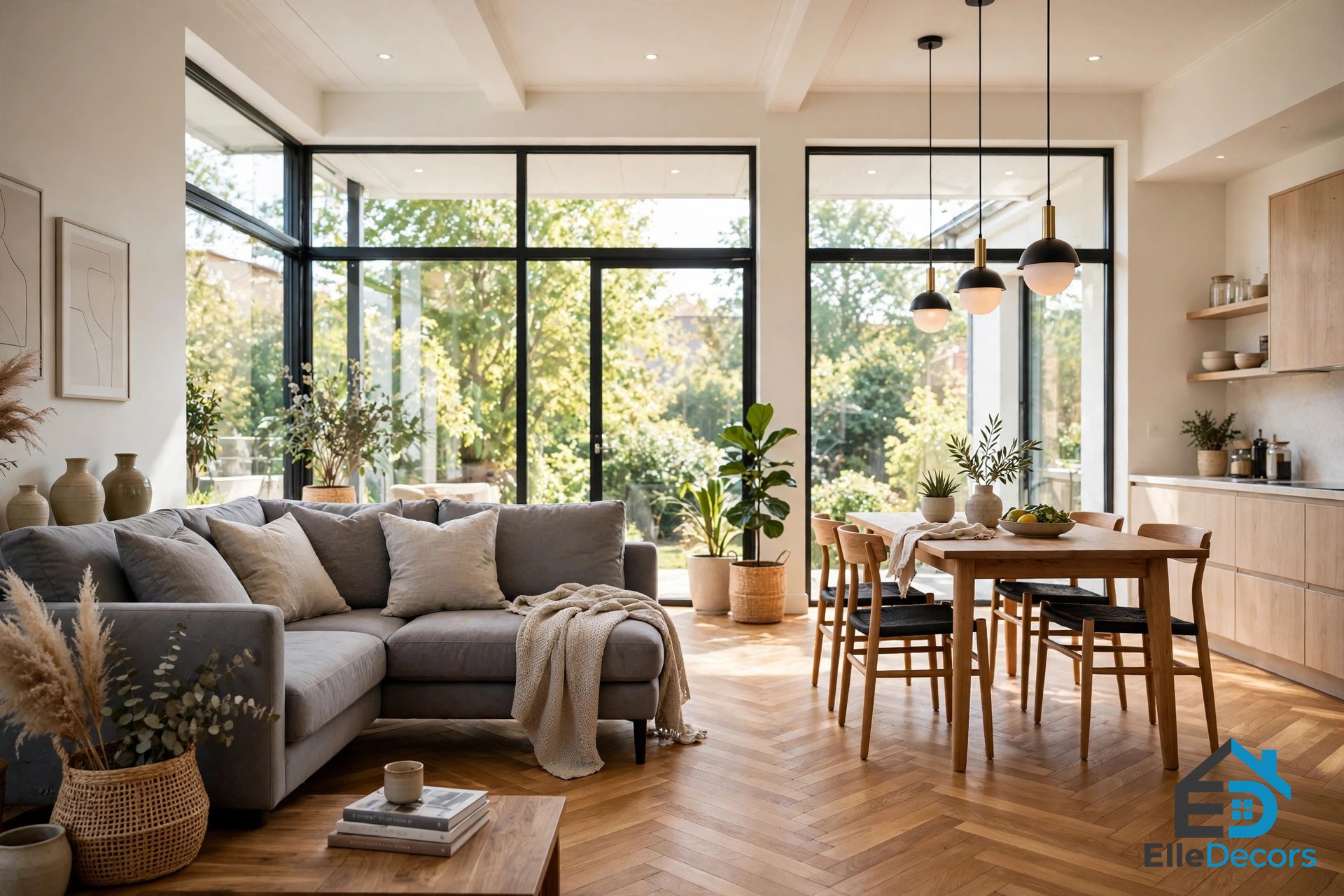
In most rooms the sofa is the largest grey surface, so it decides the scheme more than the walls do — the sofa is the anchor of a grey living room, and everything else should be chosen to sit happily beside it. A light-grey sofa keeps a room bright and pairs with any cushion colour you fancy next year. A charcoal sofa anchors a room and hides marks, but it needs pale walls and warm light around it or the room closes in.
Choose the shape for the room, not the showroom. A sectional suits a large family room, giving the scheme its main block of colour in one piece. A two-seater with two armchairs suits a smaller room, leaving the floor visible. For contrast from the sofa itself, a white sofa against grey walls is the boldest look — our modern white sofa guide covers the fabrics and shapes that hold up.
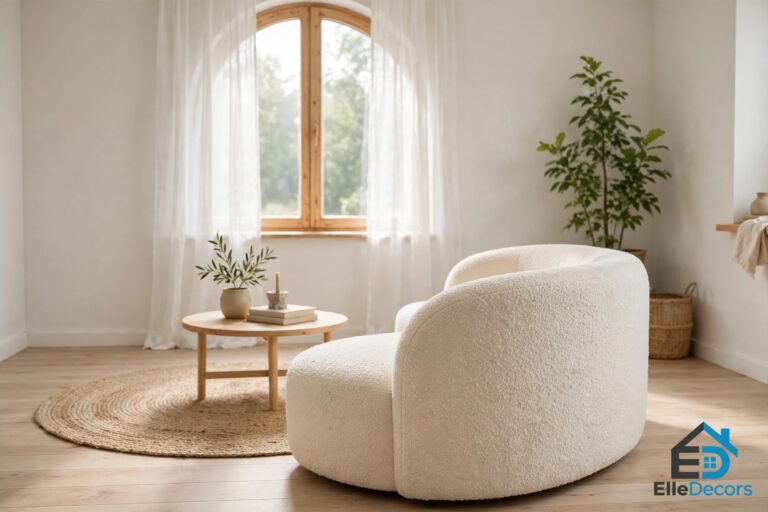
Fabric matters as much as colour. Velvet reads rich and suits charcoal and dark rooms. Linen reads relaxed and suits pale grey and Scandinavian rooms. Leather reads warm and suits industrial and traditional rooms. Boucle reads soft and modern, and it is the easiest way to make a plain grey sofa feel designed. Mix textures on the cushions — velvet on linen, wool on leather — so the seating area has depth.
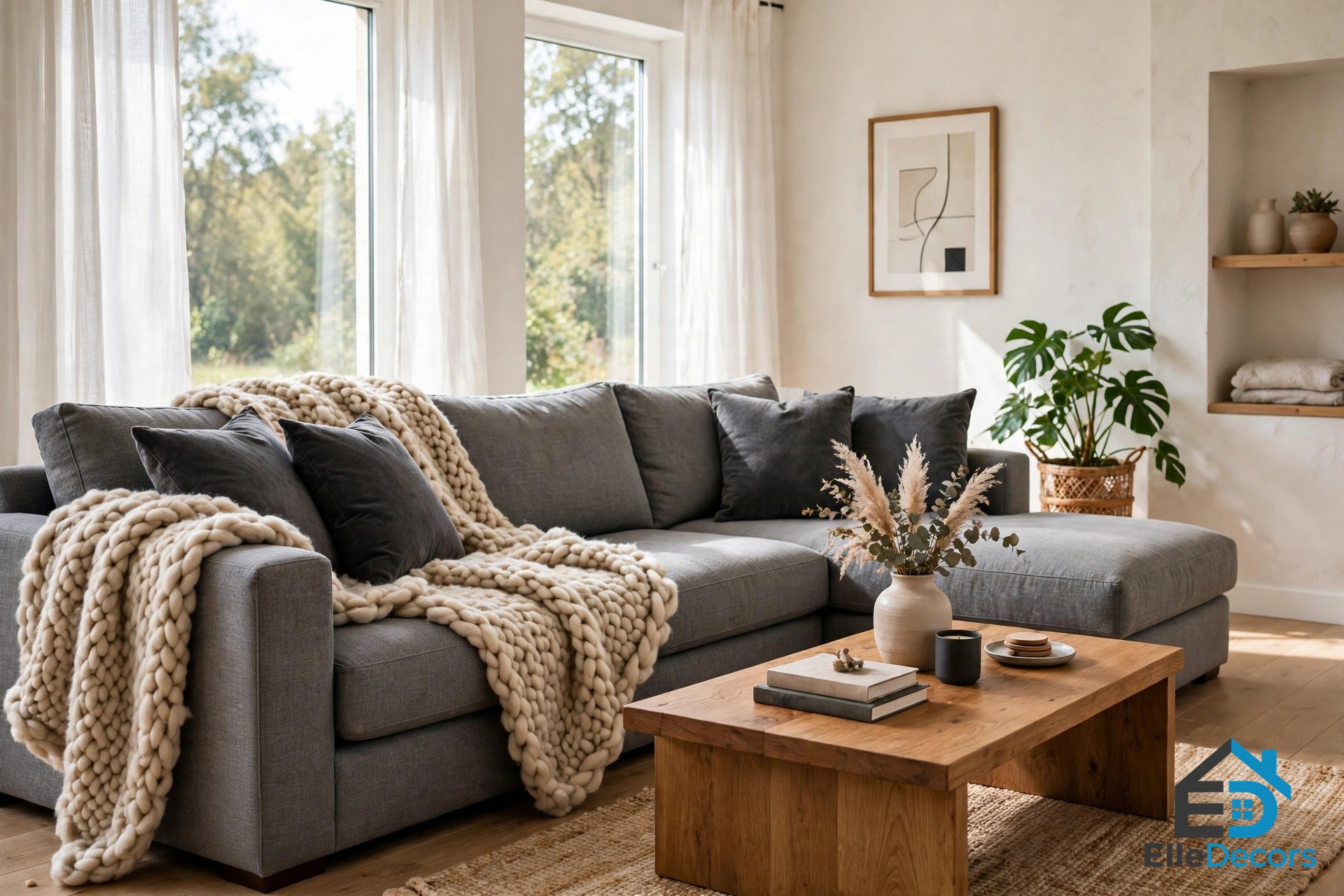
Lighting and Texture: Warming Grey Up
Grey’s biggest weakness is coldness, and light and texture are the fix. A grey room that feels cold is almost always a room with one cold overhead light and flat surfaces. Warm light keeps a grey living room from feeling cold, and it costs nothing to get right: choose your bulb temperature with your grey, not after it.
Warm bulbs (2700K) intensify the beige and gold undertones in grey, so they suit warm greys and greige. Cooler bulbs (4000K) sharpen the blue and green undertones, so they suit cool greys in bright rooms. Keep bulbs consistent where daylight mixes with lamps, so the grey does not shift tone corner to corner. Dimmable bulbs matter most here, because the same room hosts bright mornings and low evenings.
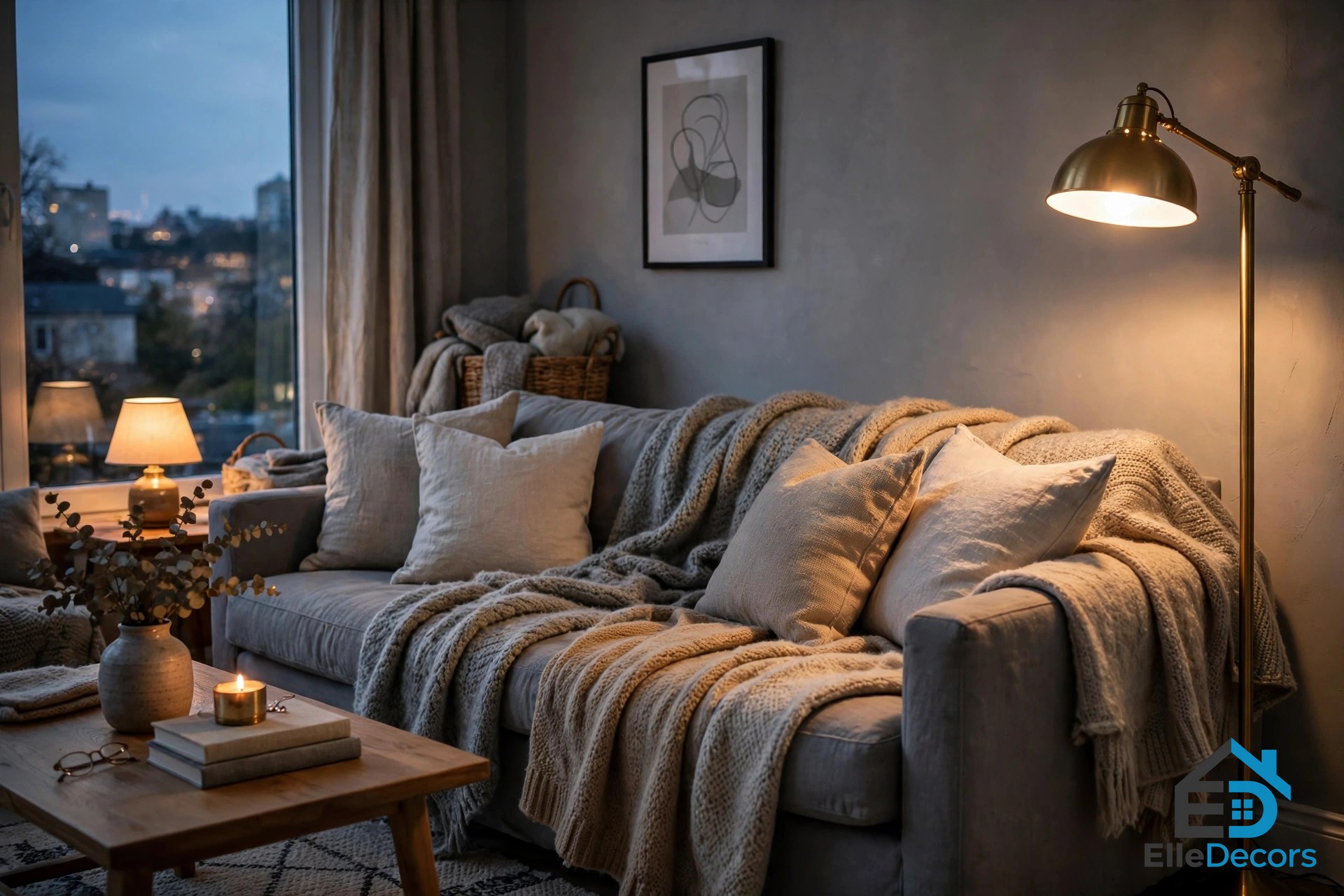
Layer the light. One overhead fixture is not enough for a room used morning and night. Add a second layer: a floor lamp beside the sofa, a table lamp on the sideboard, or candles on the coffee table. A swing-arm lamp warms a reading corner, and a pendant over the coffee table marks the seating zone. Let one surface catch the light — brass, glazed ceramic, glass — because grey needs shimmer after sunset.
Layer texture the same way. Use at least three textures — smooth, woven, and soft — against the grey wall. A wool throw, a stoneware vessel, a linen cushion, a wooden tray: this is what turns neutral into inviting. Contrast in texture does the work that contrast in colour does in a brighter room.
Small Rooms: Grey Without the Squeeze
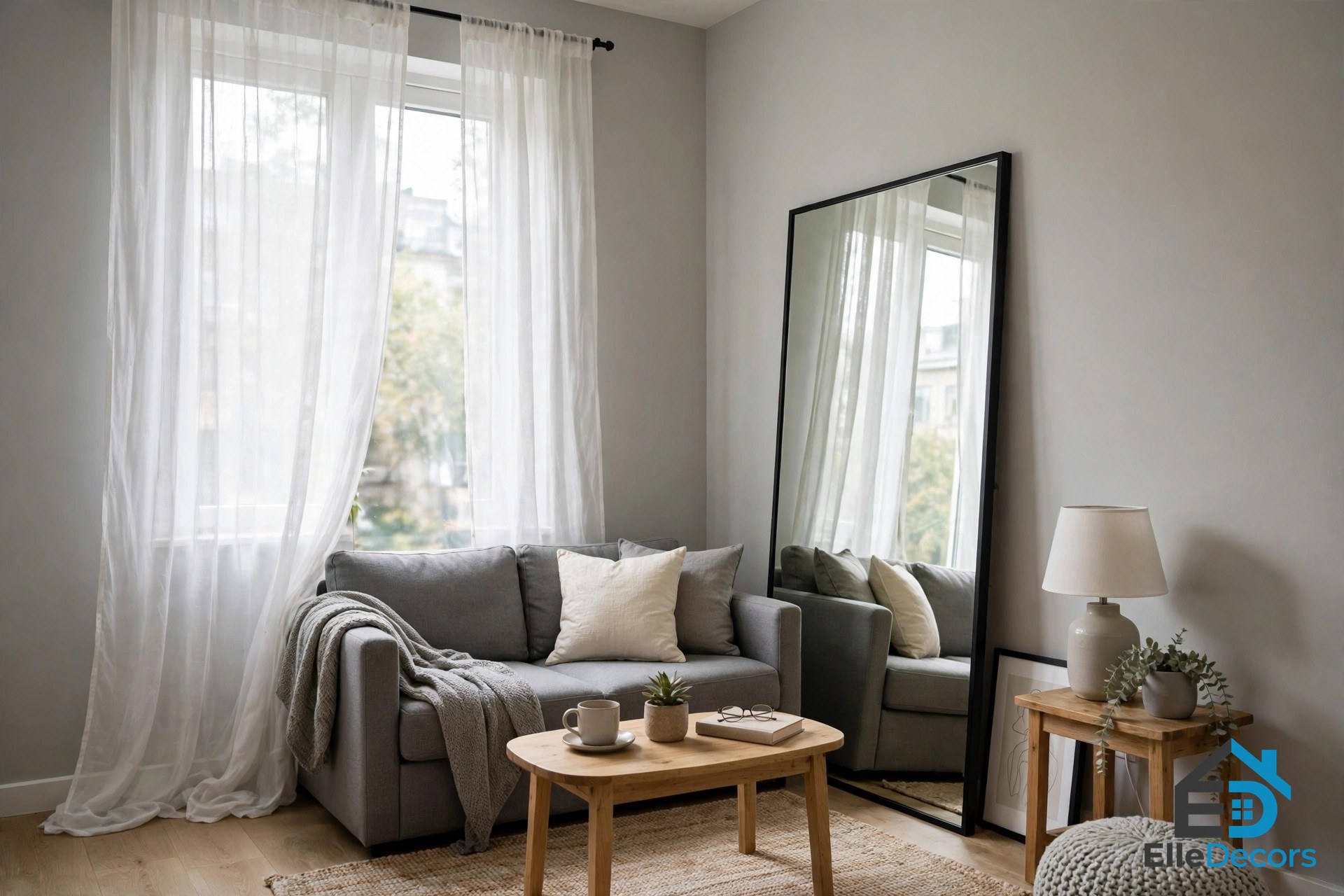
Small spaces do not automatically need pale walls. What matters more is how much light a colour bounces back. Light greys with a higher light reflectance value (around 60–75) will open a small room visually, especially with sheer curtains and a mirror opposite the window — this is the safer default for compact spaces. Dark greys can still work in a small room with strong natural light and minimal clutter; the walls seem to recede rather than close in, especially with warm wood tones grounding the space.
Keep the furniture low and the floor visible. A low grey sofa, a glass or open-frame coffee table, and one tall plant draw the eye up without filling the floor. A mirror opposite the window doubles the daylight. A pale rug under the coffee table keeps the floor light and the room open. One accent colour is enough in a small room; two start to crowd it.
Finishing the Room: Rug, Art, and Cushions
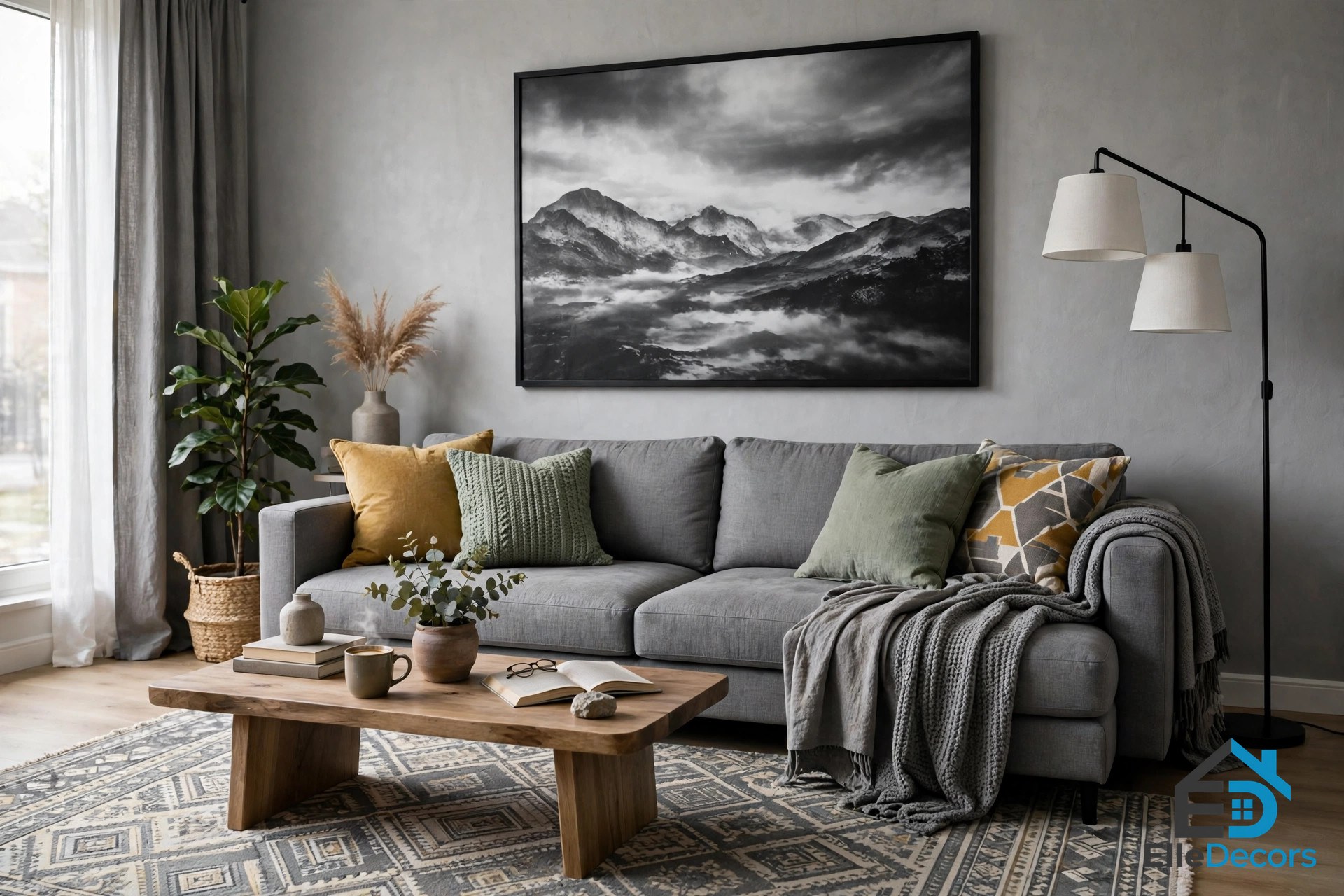
The rug under the coffee table should be large enough that the front legs of the sofa and chairs sit on it — a rug that floats in the middle of the floor makes the seating area look lost. A low-pile rug is the practical choice. In a grey room the rug is your chance to add pattern: Turkish, geometric, or mottled wool.
Art belongs on the wall the sofa faces, at a height where seated people can enjoy it. Monochrome prints are perfect for grey rooms — a full-length photographic print, a set of six matching frames, or one large abstract canvas in grey, black, and white. Keep art colours to one or two that already appear in the cushions.
Cushions are the cheapest way to change a grey room. Two or three cushions in the accent colour, one in a contrasting texture, and one plain one in a lighter grey works in almost every room. Swap them with the seasons and the grey base never needs repainting. Keep the coffee-table centrepiece low: a vase with fresh stems, a stack of books, and a candle are enough.
Grey Colour Schemes at a Glance
Use this table to plan your grey living room: match the grey type you have to the accents and materials that suit it, then check the combination against your room’s light before you commit.
| Grey Type | Best Accent Colours | Materials to Pair | Ideal Style |
|---|---|---|---|
| Warm grey | Terra-cotta, mustard, forest green | Oak, rattan, boucle | Cozy traditional, rustic |
| Cool grey | Dusty blue, sage, blush pink | Linen, brushed steel, glass | Bright and airy, contemporary |
| Greige | Cream, camel, olive | Woven jute, walnut, wool | Japandi, minimalist |
| Charcoal | Gold, burgundy, emerald | Velvet, brass, dark leather | Moody and dramatic |
Watch: One Room, Three Styles on Grey Floors
Watch Tara Pallay’s video, where she takes one hypothetical living room with grey flooring and furnishes it three completely different ways — traditional, eclectic, and contemporary. It shows how the same grey base can hold three very different rooms.
Video: Tara Pallay styles one living room three ways on grey floors.
Frequently Asked Questions
Where do I start with a grey living room?
Start with a grey living room that fits your light, not a photograph of someone else’s. Find the undertone first — warm, cool, greige, or charcoal — test a swatch in morning, midday, and evening light with a white card beside it, and match your bulb temperature to the grey.
What colour goes best with grey walls?
It depends on the grey. Warm greys pair beautifully with terra-cotta, mustard, and forest green, while cool greys suit dusty blue, sage, and blush pink. Greige pairs with cream, camel, and olive, and charcoal pairs with gold, burgundy, and emerald.
Is charcoal too dark for a living room?
Not if the room has strong natural light or brass and wood accents to balance it. Charcoal creates a cozy, intimate feel rather than a heavy one, especially with a large mirror or a pale rug to keep the room grounded.
Can I mix different shades of grey in one room?
Yes — layering greys is better than matching them. Light walls, a mid-grey sofa, and charcoal cushions feel designed in a way that a single flat grey never does. Keep undertones in the same family.
The Bottom Line
Find the undertone, test it in your light, match your bulbs to it, and choose one accent colour and one metal to warm it up. Layer in wood, linen, and wool, and let the style come from the furniture. A grey living room that follows those steps looks designed and feels like home — calm in the morning, warm in the evening, and easy to change with a cushion swap whenever you fancy a new mood.