How to Style Piano: Make It the Star of Your Living Room
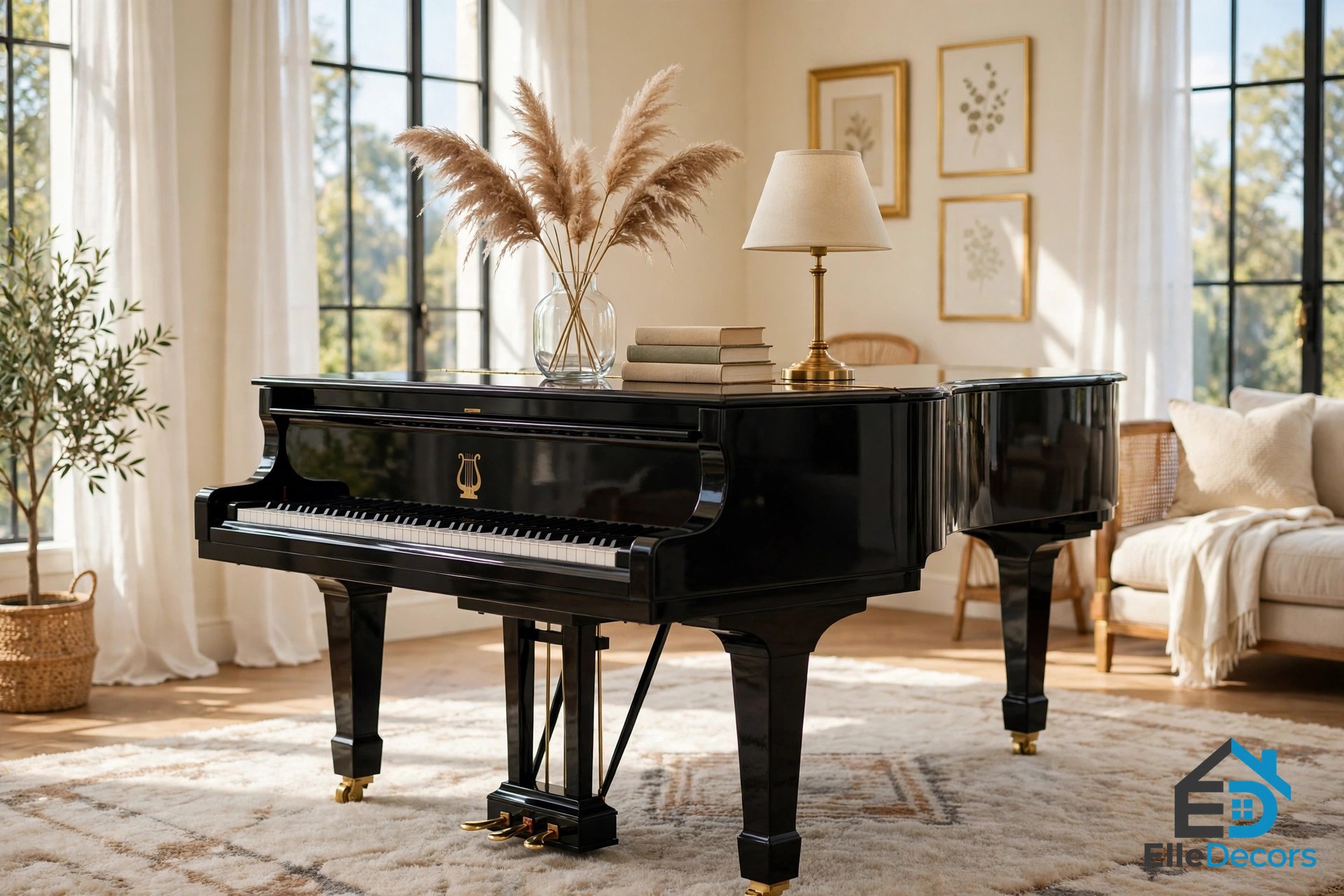
If you are learning how to style piano placement and decor, start with one honest fact: a piano is the biggest, heaviest piece of furniture most living rooms will ever hold. It cannot be tucked away or styled around as an afterthought. Done well, it becomes the room’s focal point — a black grand against white walls, a honey-toned upright anchoring a reading corner, a painted piano setting the whole colour scheme.
This guide covers the decorating side only — placement, the piano top, the wall, lighting, and styling around it — not playing technique.
Start With Placement, Not Decor
Placement is the first chapter of how to style piano well, and it is the one people rush. A piano’s wood — the soundboard, the pinblock, the finish — reacts to heat, sunlight, and damp, so where it sits decides both how it sounds and how it looks in five years’ time.
For an upright, the best spot is against an interior wall, which holds a steadier temperature than an exterior wall. Leave a gap of two to four inches behind it so air can circulate. Keep it out of direct sunlight, which fades the finish and dries out the internal wood; sheer curtains diffuse strong sun, and a heavy cover helps when the light is at its strongest. Keep it away from radiators, fireplaces, and heating or air-conditioning vents: rapid temperature changes destabilise tuning.
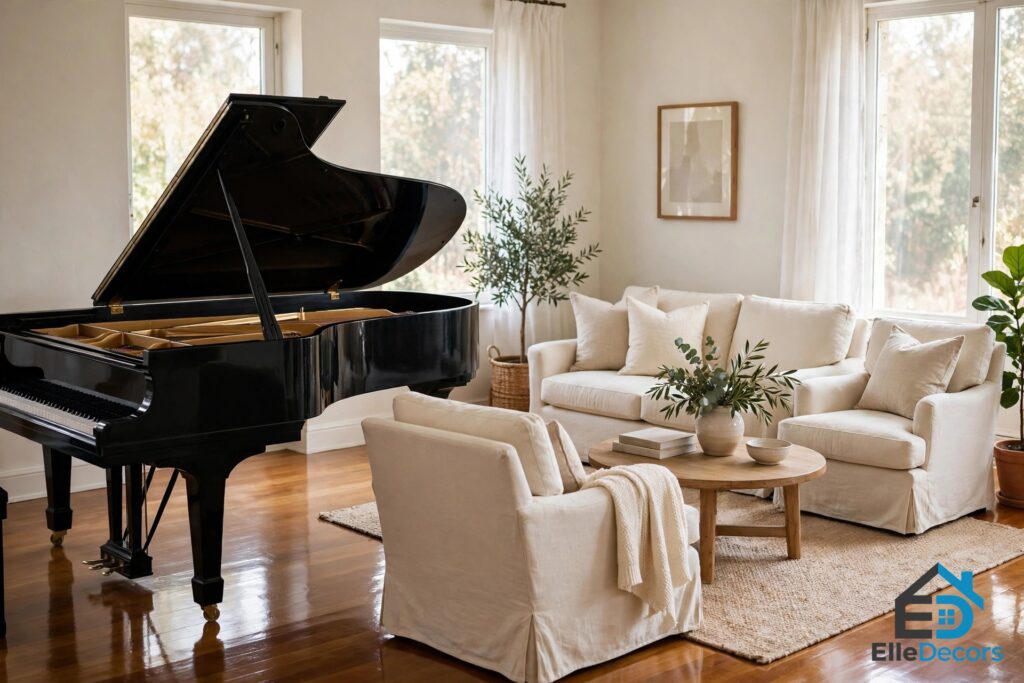
A grand piano plays by different rules. Angle it into the room rather than pushing it flat against a wall, with the curved side facing the seating and the straight edge near the wall. The player should face the seating or sit perpendicular to it, so the open lid and the curve are what guests see. Give it clear floor all around — a grand pushed into a corner reads as storage, not as a centrepiece. Whatever the shape, leave at least three feet of clear space for the bench to slide in and out, and keep the pathways around the piano open.
How to Style Piano for a Grand or an Upright
A grand is a sculpture: it needs floor space, air around it, and very little on top. An upright is a wall piece: it needs the wall above it to do the work.
Use this quick comparison before you decide how to style piano for the room you actually have.
| Grand piano | Upright piano | |
|---|---|---|
| Placement | Angled into the room, curved side to the seating | Flat against an interior wall |
| Wall above | Open space; art on nearby walls instead | Gallery wall, mirror, or floating shelves |
| Piano top | One piece on the closed end of the lid | A small group of two or three items |
| Lighting | Pendant or floor lamp nearby | Piano lamp or wall light above |
| Bench | Substantial bench, cushioned if you like | Slim bench or upholstered stool |
| Best room | Large living room or open plan | Small room, nook, or studio flat |
| Watch out for | Needs clear floor all around it | Needs a gap from the wall for air |
What to Put on Top of a Piano
The top is where most people learning how to style piano go wrong, because restraint feels like doing nothing. It is not. A piano top with two or three well-chosen objects looks deliberate; a top crowded with photos, candles, and souvenirs looks like a shelf that happens to make music.
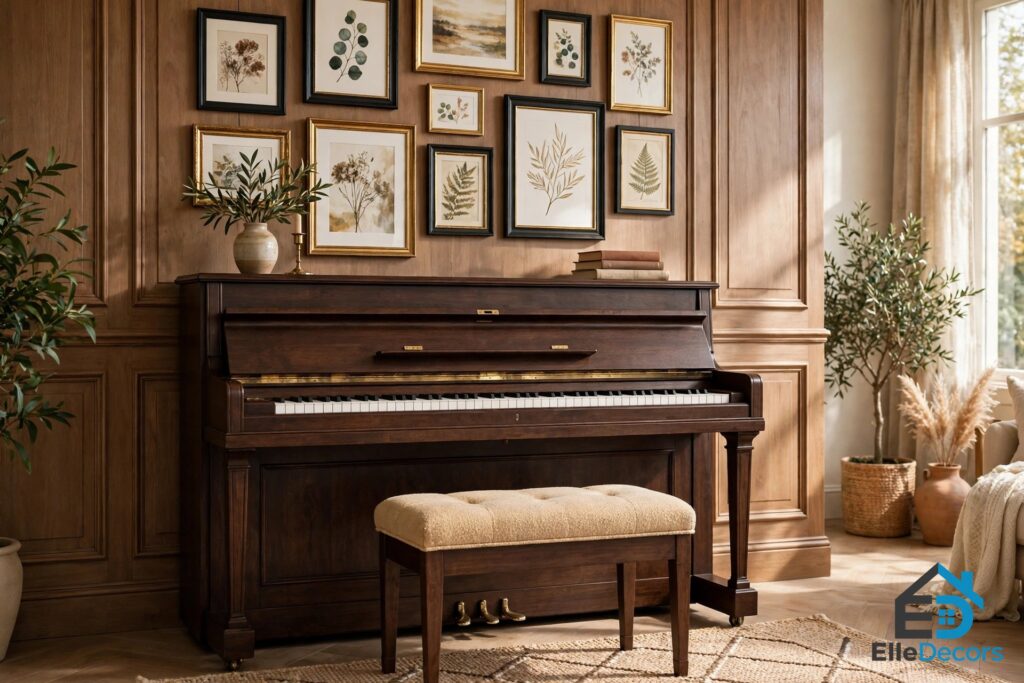
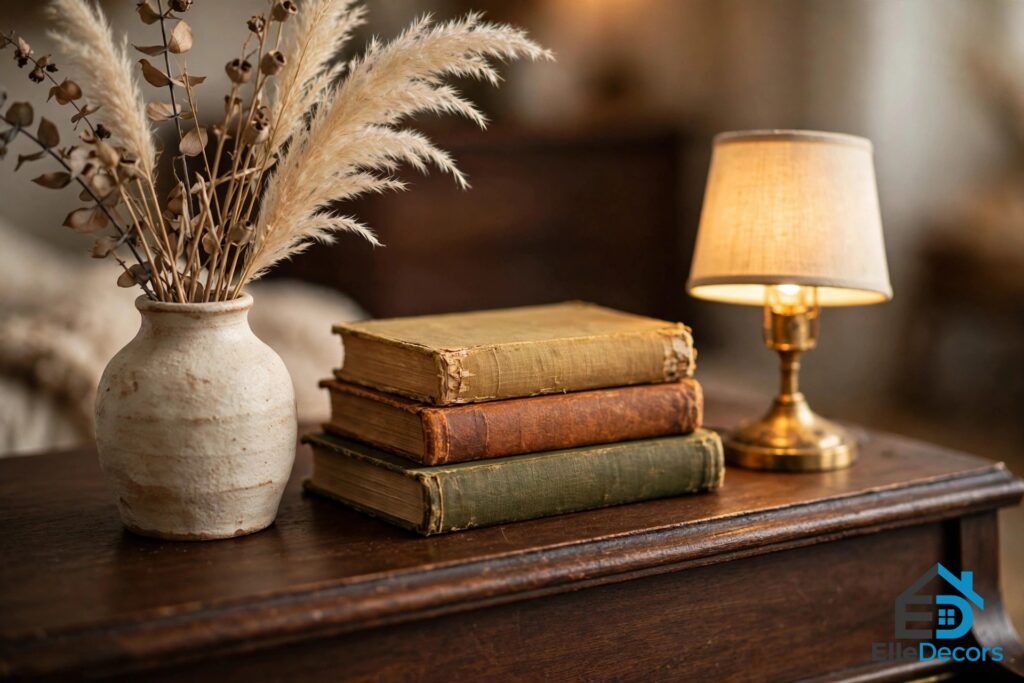
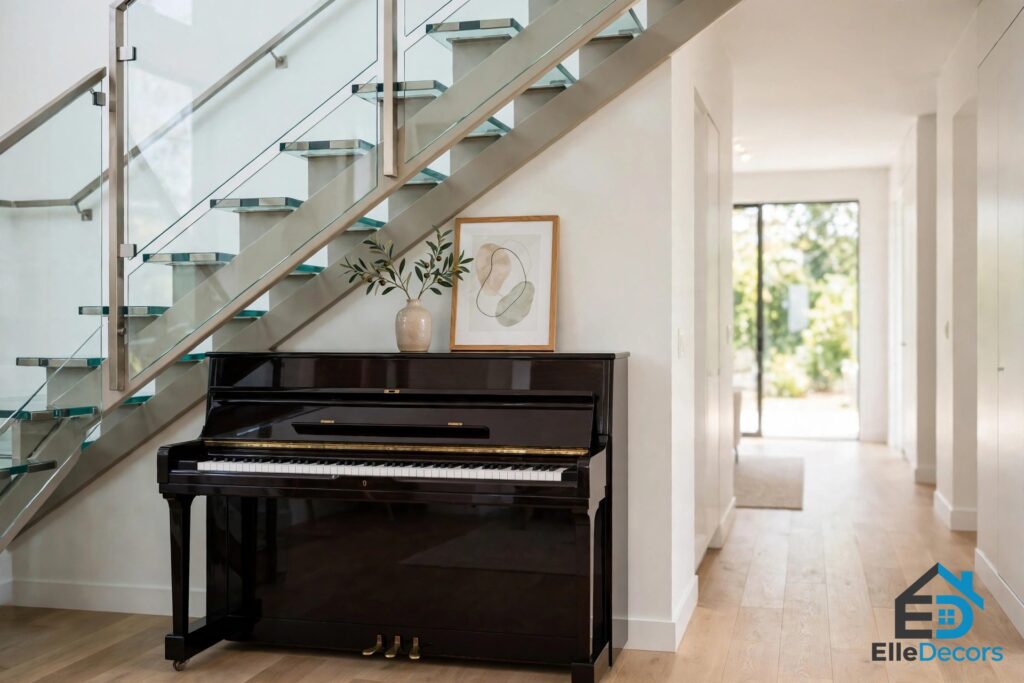
For an upright, use a simple formula: one medium-sized item, roughly eight to twelve inches tall, on one side, balanced by one or two smaller items on the other. A vase with dried stems, a framed photo, a small sculpture, or a stack of two or three books all work. Group items in threes where you can, mix textures — metal, ceramic, wood, greenery — and lean a framed print against the wall for a casual, layered look.
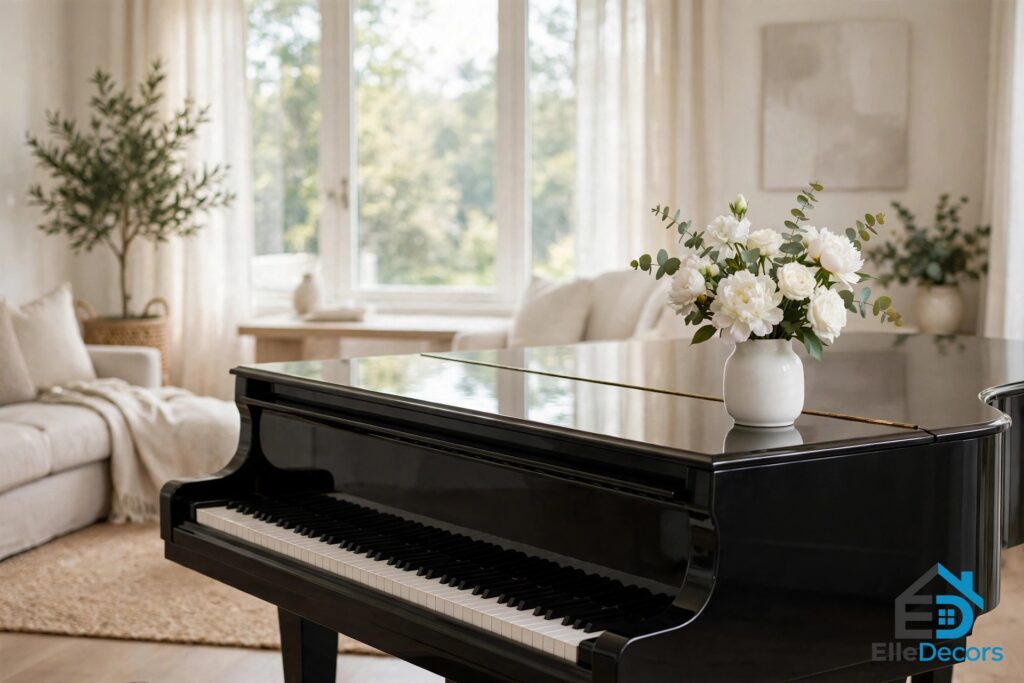
For a grand, go more minimal still: one piece on the closed end of the lid, along the curve near the music desk, with the playing area completely clear.
Protect the finish whatever you place. Put felt pads or protective coasters under every object, and take everything off before playing — vibrations can make objects buzz against the wood. The piano is not a storage shelf either: books, mail, and bags belong in proper storage nearby, not on the instrument.
Water deserves a special warning. Fresh flowers in a vase look lovely, but water and a piano’s wood and internal parts are a bad combination, and several styling guides warn against vases on the instrument for exactly that reason. The safe version: use dried or faux stems in a vase on the piano, or keep fresh flowers on a nearby side table. The same rule covers plants — never water a plant while it is sitting on the piano.
Style the Wall Above the Piano
The wall above an upright piano is the largest blank canvas in the room, and it is where the styling either comes together or falls apart. A bare wall makes the piano look stranded; a wall that is overfilled competes with it.
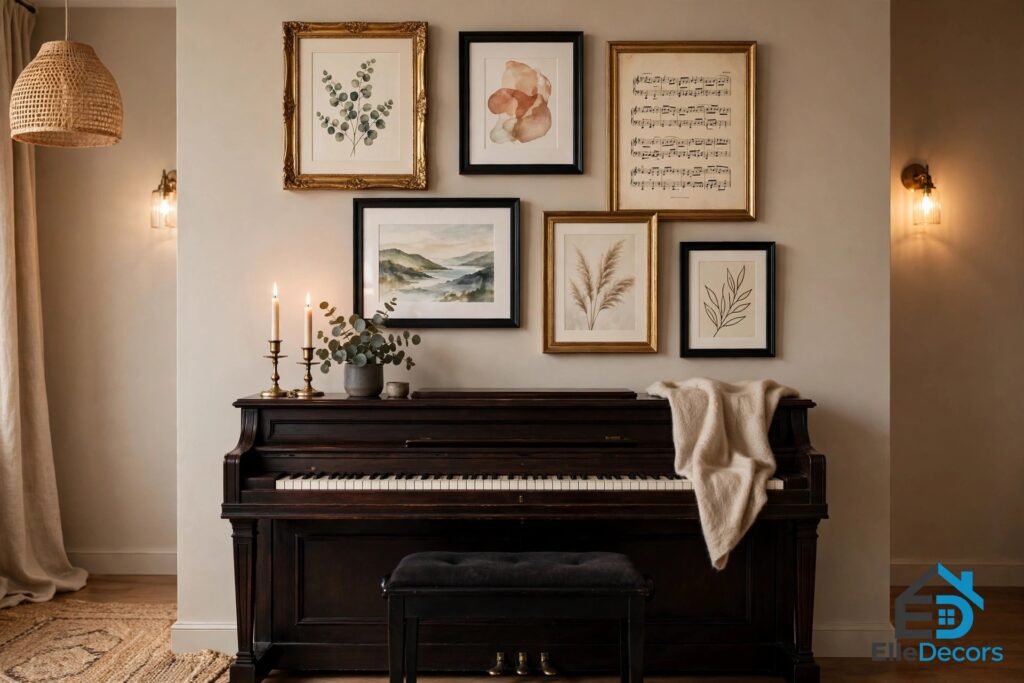
A gallery wall is the most reliable choice. Hang four to six frames in coordinating finishes — black, gold, or natural wood — mixing family photos, abstract prints, and music-themed art such as framed sheet music. Hang the centre of the arrangement at eye level, roughly 57 to 60 inches from the floor, with the lowest frame about six to twelve inches above the piano lid so the group reads as one composition with the instrument.
A large mirror is the second good option, especially in a small or dark room: it reflects light and makes the space feel larger, but anchor it securely — never lean a heavy frame against the piano. Floating shelves are the third option: two or three slim shelves above the piano hold small plants, books, and objects without taking floor space.
Lighting That Makes the Piano Glow
Lighting is the part of how to style piano that gets skipped most often, and it is the part guests notice first after dark.
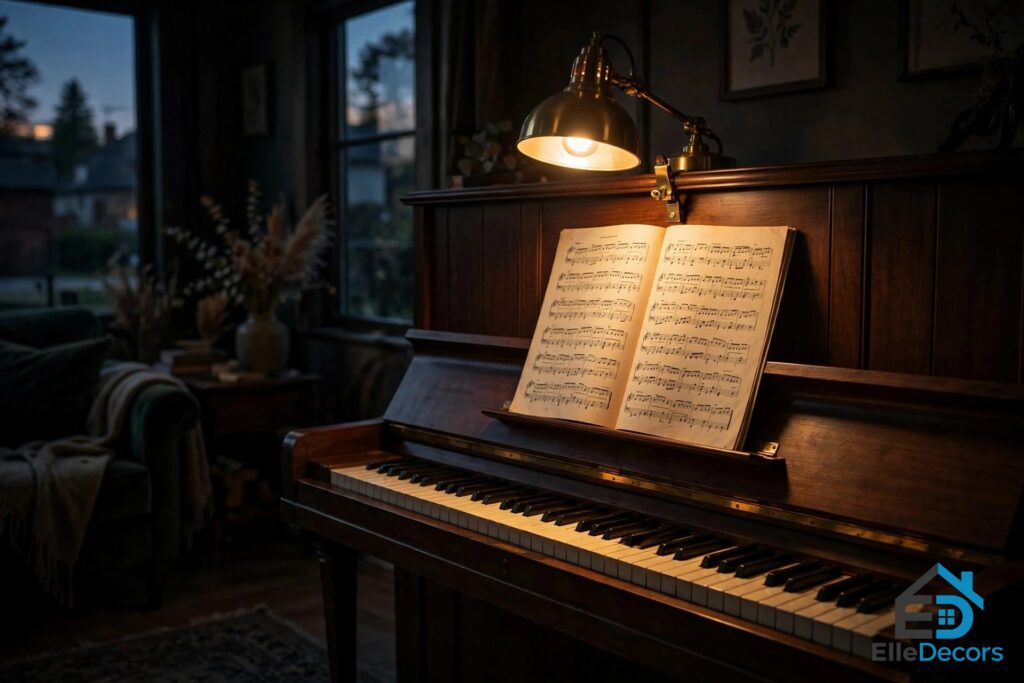
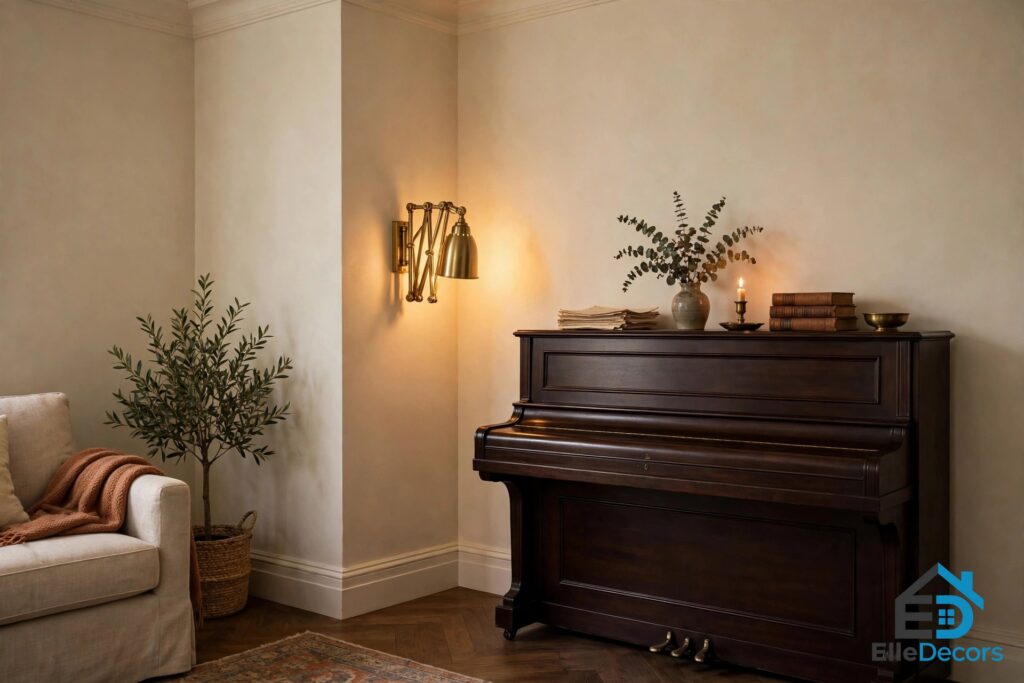
Start with task light. A dedicated piano lamp with an adjustable arm directs light onto the music desk without throwing glare across the glossy finish, and an LED lamp is ideal because it produces minimal heat that will not harm the finish. A swing arm lamp mounted on the wall beside the piano does the same job and doubles as a design detail, swinging out for practice and folding back when the room is for entertaining.
Then add ambient light. A pendant hung low over a grand, dimmers on the overhead lights, or a pair of wall lights flanking an upright all give the piano area its own glow in the evening. Warm white bulbs, around 2700K to 3000K, keep the mood cosy rather than clinical. Candles add atmosphere too, but never burn them directly on the piano. Battery-operated LED candles give the same flicker with none of the risk.
Colour, Texture, and the Rest of the Room
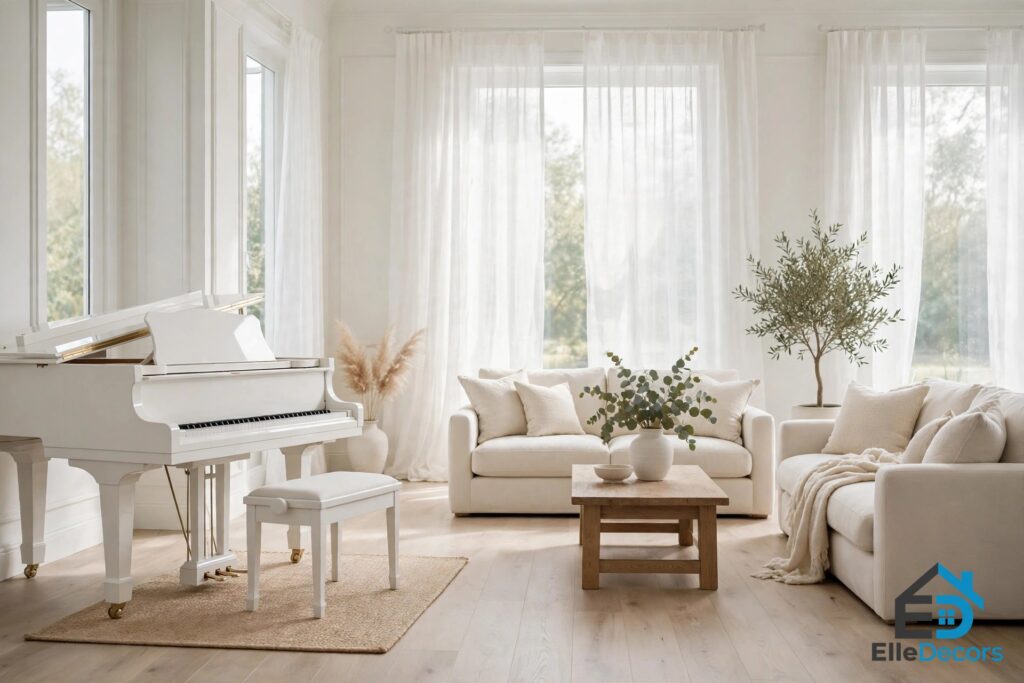
For a black piano, embrace contrast: crisp white or cream walls make it pop, with gold, brass, or jewel tones like emerald or burgundy for warmth. For a wood-toned piano, echo the warm tones — sage, terracotta, warm taupe — keeping wood tones in the same temperature family. For a white piano, stay serene in whites and creams or add bold colour through the rug and artwork.
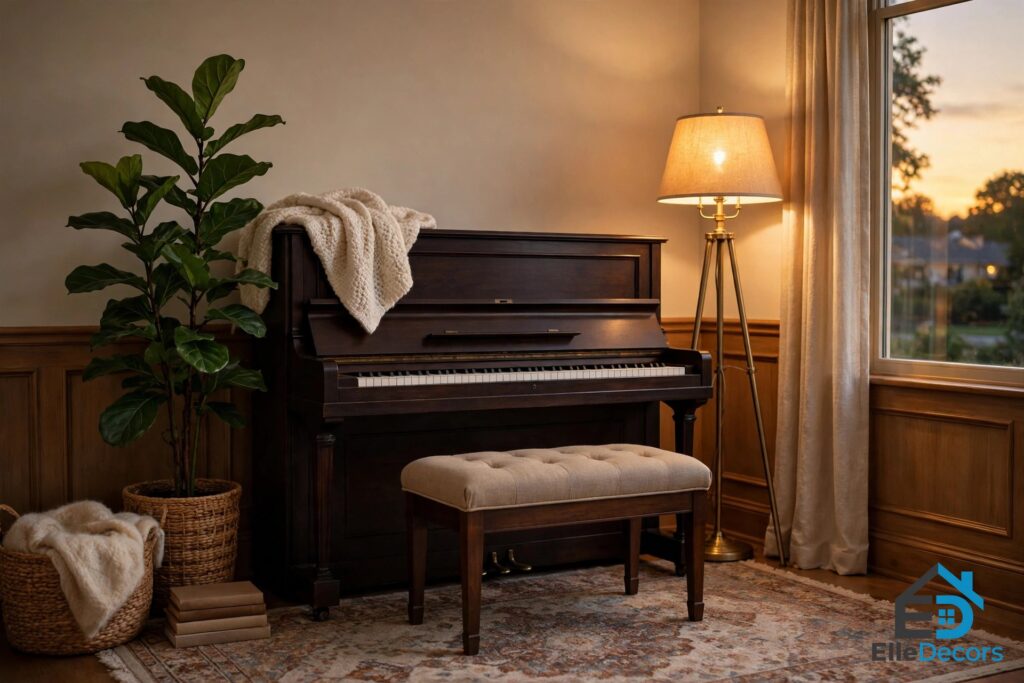
Texture does the rest of the work. A piano’s finish is smooth and glossy, so balance it with linen curtains, a wool area rug, velvet cushions on nearby seating, and matte ceramic vases. A large rug anchors the instrument — for a grand, position it so the piano sits partially on the rug; for an upright, let the piano sit just behind the rug’s edge or entirely on it. The rug also softens the room’s acoustics. The bench deserves the same attention: a cushion in a coordinating fabric makes it part of the design, and a storage bench hides sheet music that would otherwise pile up on the piano.
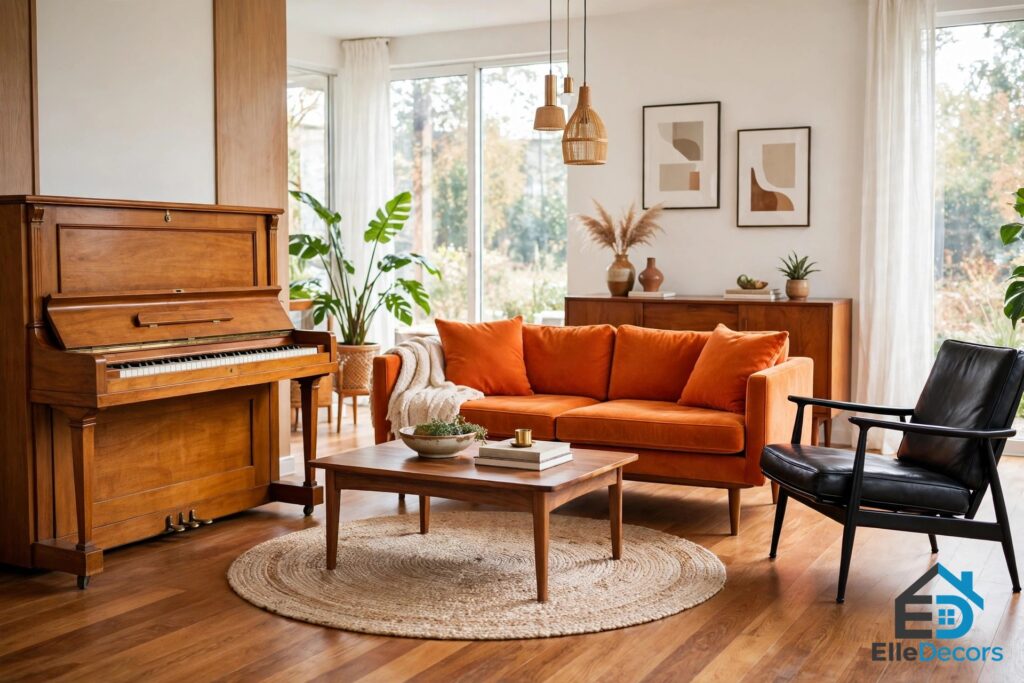
Furniture around the piano needs to match its scale. In a small room with a grand, choose streamlined sofas and chairs with exposed legs to keep the look light; in a large room, substantial pieces stop the space feeling disjointed. The warm woods and clean lines of mid century modern living room furniture pair naturally with a piano — a punchy sofa and a black chair let a glossy grand shine.
Small Spaces: Styling a Piano in a Studio or Nook
Small rooms are where how to style piano gets genuinely creative, because every inch has to earn its place.
Start by finding the dead space: the gap under a staircase fits an upright neatly, and a hallway or entryway wall turns the piano into the first thing guests see.
In an open floor plan, an upright can work as a room divider, defining the living zone from the dining or study area without a bulky partition. Position it sideways with the keys facing the area you want to highlight, put a rug underneath to anchor it visually, and keep clearance behind it for access. The same zoning tricks in our studio flat furnishing ideas guide transfer directly to a piano corner.
Go vertical for storage — floating shelves above the piano, a storage bench for sheet music — and build a cosy nook around it: a soft rug, a floor lamp, a cushioned bench, and an accent chair for listeners. Keep the palette calm and the top sparse.
Three Ready-Made Looks to Steal
Three styles show up again and again in the rooms people save and share.
Mid-century modern keeps it warm and clean: a wood-toned piano, muted colours, tapered-leg furniture, and one punchy accent — a rust or mustard chair or a pendant light.
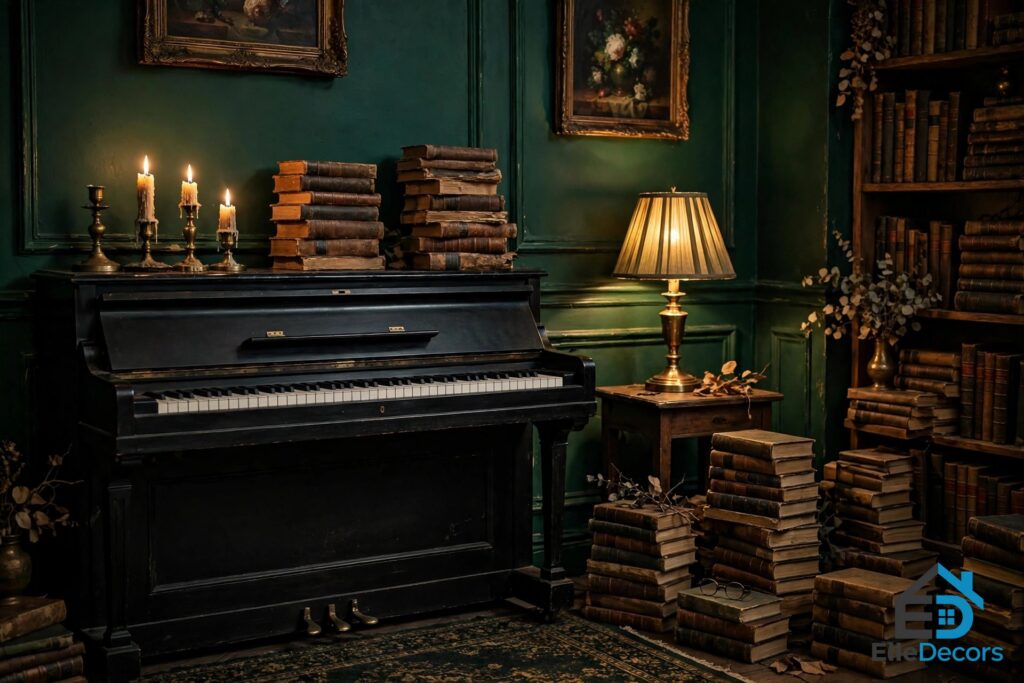
Dark academia goes moody and bookish: deep emerald, burgundy, or navy walls, stacks of books, candles in holders, and low-maintenance plants like snake plants or pothos that thrive in lower light.
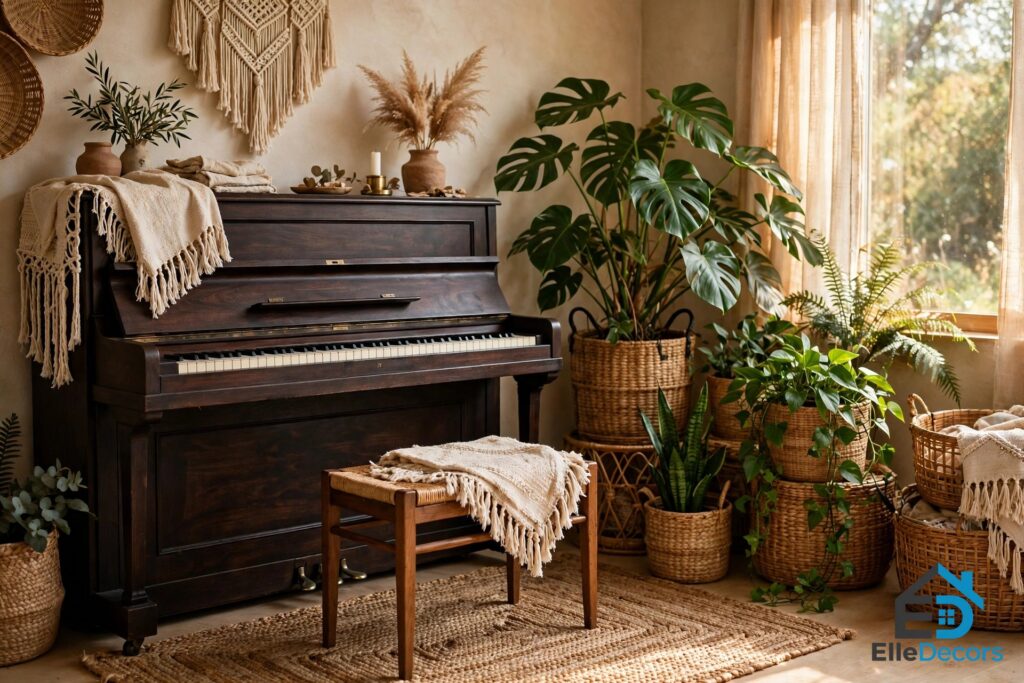
Boho stays relaxed and textural: indoor plants, a jute rug, rattan baskets, fringe textiles, and a dark piano creating contrast against all that softness.
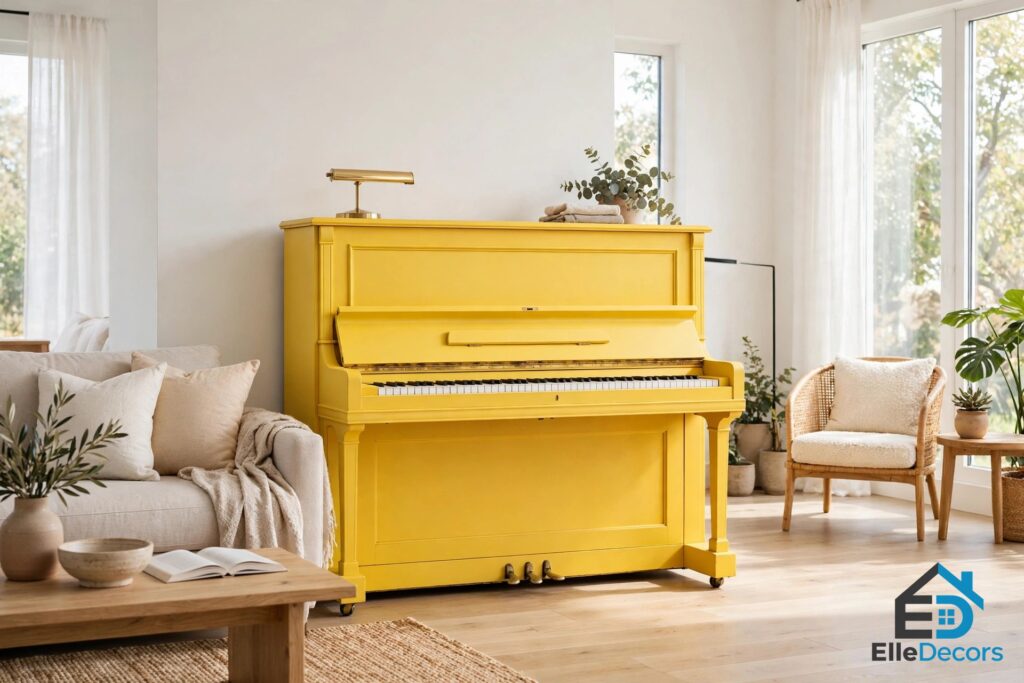
And if none of those fit, consider paint. A piano painted a cheerful yellow becomes the unrivalled focal point of a room, and a mint green finish can turn a tired upright into a playful statement piece. Painting is a bold move, though: use specialised piano paint, lacquer, or enamel rather than standard wall paint, protect the keys and interior while you work, and think twice before painting a rare or antique instrument — a professional refinisher handles it properly, and a painted antique can lose value.
Common Mistakes to Avoid
Most piano styling goes wrong in the same handful of ways, and all of them are easy to avoid once you know them.
Overcrowding the top is first. Limit yourself to two or three carefully chosen items, all easily removable, and keep the centre clear. Using the piano as a storage shelf — books, mail, bags — is second: it damages the finish and tells everyone the instrument is furniture, not a piano.
Ignoring climate is third. Sunlight, radiators, fireplaces, and air-conditioning vents all pull a piano out of tune and harm its finish over time. Fourth is mismatched scale: a formal grand drowned in ultra-minimal decor, or an ornate Victorian upright in an industrial room, creates visual discord unless shared colours or metals bridge the gap.
Poor lighting, blocked access, and harsh cleaners round out the list: no task light for reading music, furniture jammed against the bench, or chemical cleaners that damage the finish — dust items away from the piano and use only piano-approved cleaners on it.
Last is neglecting the piano in the overall design. Build the room around the instrument instead, and it stops being the awkward object in the corner and starts being the reason the room works.
Watch: Grand Piano Rooms for Inspiration
For a quick tour of what these ideas look like in real rooms, watch this slideshow of grand piano rooms — black grands in bright living rooms, white baby grands in calm spaces, pianos styled with art, plants, and warm light. It is a photo slideshow, not a tutorial: treat it as a lookbook and borrow one idea at a time.
Video: “70+ Relaxing Grand Piano Room Decorating Ideas” (slideshow).
Frequently Asked Questions
How to style piano in a small living room?
Go vertical. How to style piano in a small room comes down to using the wall above it — art, a mirror, or floating shelves — while keeping the top to two or three small items. Put a rug under the bench to mark the zone, and use a storage bench and shelves for sheet music so nothing piles up on the piano itself.
What should I put on top of my piano?
Two or three items at most: a vase with dried stems, a framed photo, a small sculpture, or a stack of books. On an upright, place one medium item eight to twelve inches tall on one side and one or two smaller items on the other. On a grand, keep it to a single piece on the closed end of the lid. Use felt pads under everything and remove items before playing.
What should I hang above a piano?
A gallery wall of four to six coordinating frames, a large mirror, a single oversized artwork, or framed sheet music. Hang the centre at eye level, roughly 57 to 60 inches from the floor, with the lowest frame about six to twelve inches above the lid, and anchor everything to the wall rather than leaning it against the piano.
Can I put a plant on my piano?
Better not to. Watering a plant on the piano risks spills onto the wood and into the instrument. Keep plants beside it instead — a tall floor plant four to six feet high fills a corner, and snake plants, pothos, and ZZ plants tolerate lower light. If a small plant must sit on top, use a waterproof saucer and never water it there.
Should a grand piano face the seating?
Yes. Angle the grand so its curved side and open lid face the seating, with the straight edge near the wall. That way the piano’s best lines are what guests see.
The Bottom Line
Once you know how to style piano placement, the rest is editing: two or three objects on top, one strong piece on the wall, light that flatters the finish, and a bench that invites someone to sit down. Start with placement, protect the finish, and let the piano do the talking.