Interior Scandinavian: 12 Lived-In Looks That Make Minimalism Feel Like Home
AUDIO SUMMARY: Scandinavian rooms look simple, but the lived-in ones are the hardest to get right. This guide walks through six real homes from our source, from a powder-blue Warsaw lounge to a monochrome final home, and pulls out twelve ideas for warmth, plants, pale wood and personal clutter that still feels calm. Start with white walls and pale wood, then add one soft colour.
Interior Scandinavian: 12 Lived-In Looks That Make Minimalism Feel Like Home
Interior scandinavian design is famous for rooms that look beautiful in magazines and impossible to live in, all white linen sofas that gloss over chores, guests and children’s mess. The Scandinavian answer was different: make the messy modern. White walls, pale wood floors and simple, cost-efficient tones let the things you live with — books, plants, a favourite chair — become part of the beauty instead of clutter to hide. This guide walks through six real homes from a source roundup of lived-in Scandinavian interiors, and pulls twelve ideas from them, room by room, so you can borrow the look without living in a showroom.
What Is Scandinavian Interior Design?
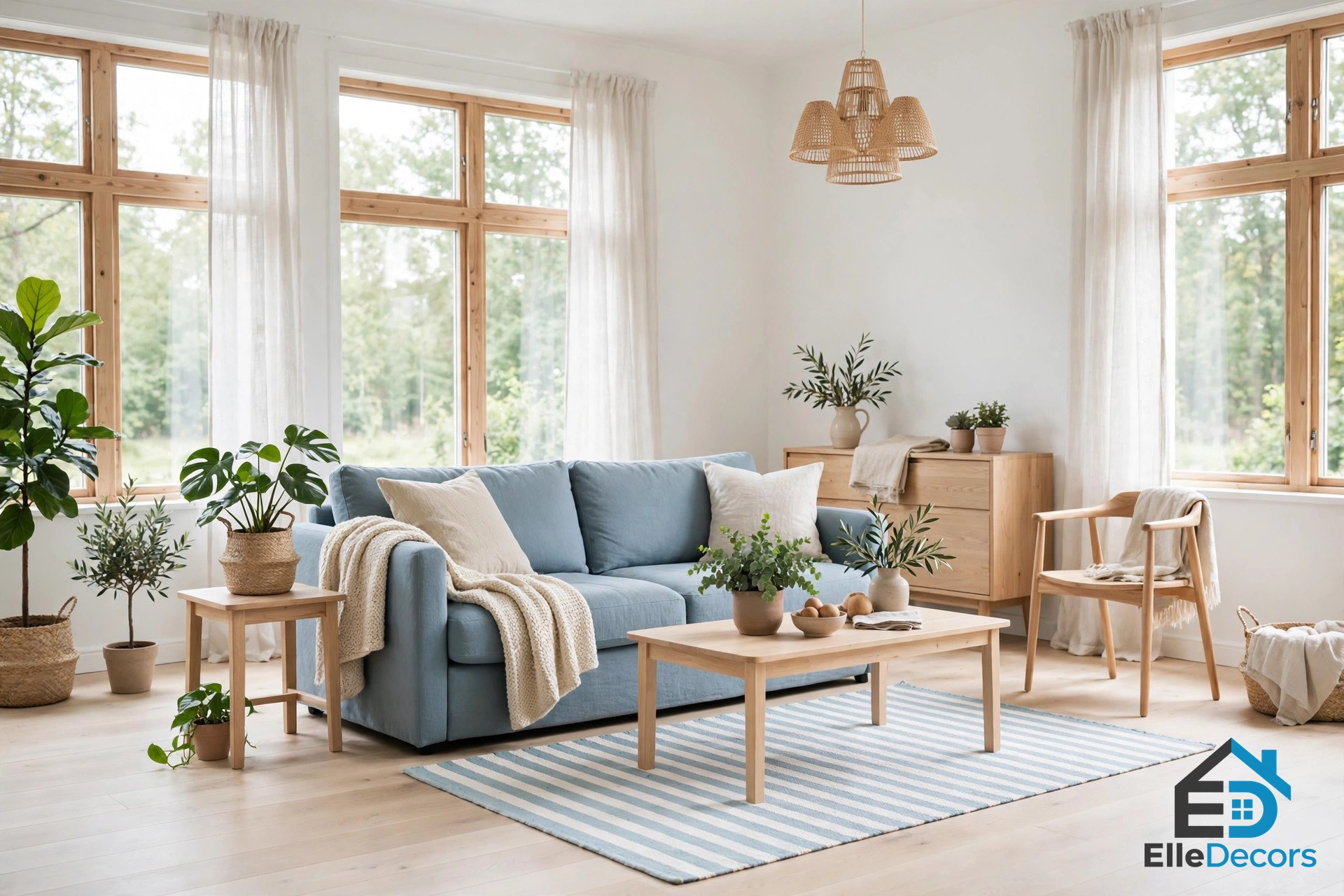
Scandinavian interior design comes from Denmark, Sweden, Norway and Finland, where long dark winters made light and comfort a priority. Rooms have white or pale walls, light wood floors and furniture, simple shapes, wool and linen textiles, and only the things you use and love. The lived-in version adds one more rule: the room should show signs of life. A bookcase full of books, plants on every surface, a chair that is sat in every day — these are not flaws in the style, they are the point. Interior scandinavian rooms work because the calm white and wood backdrop lets personal things shine, and the six homes below show exactly how that balance is struck.
1. Start With a Powder-Blue Sofa and a Striped Rug
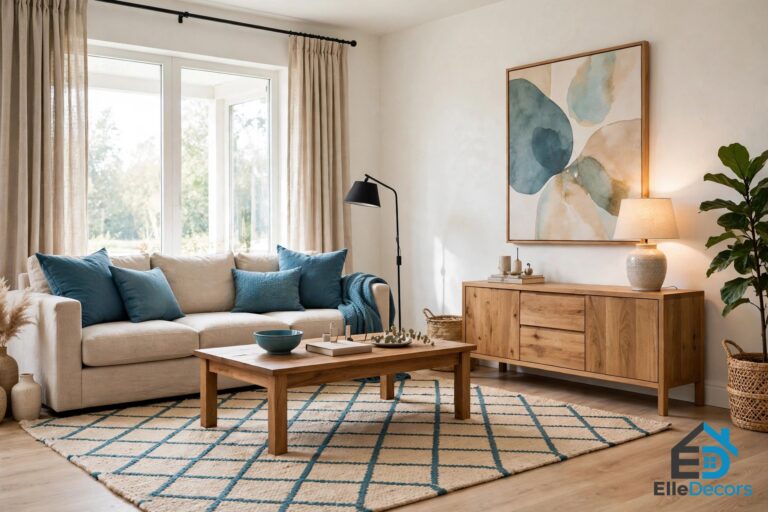
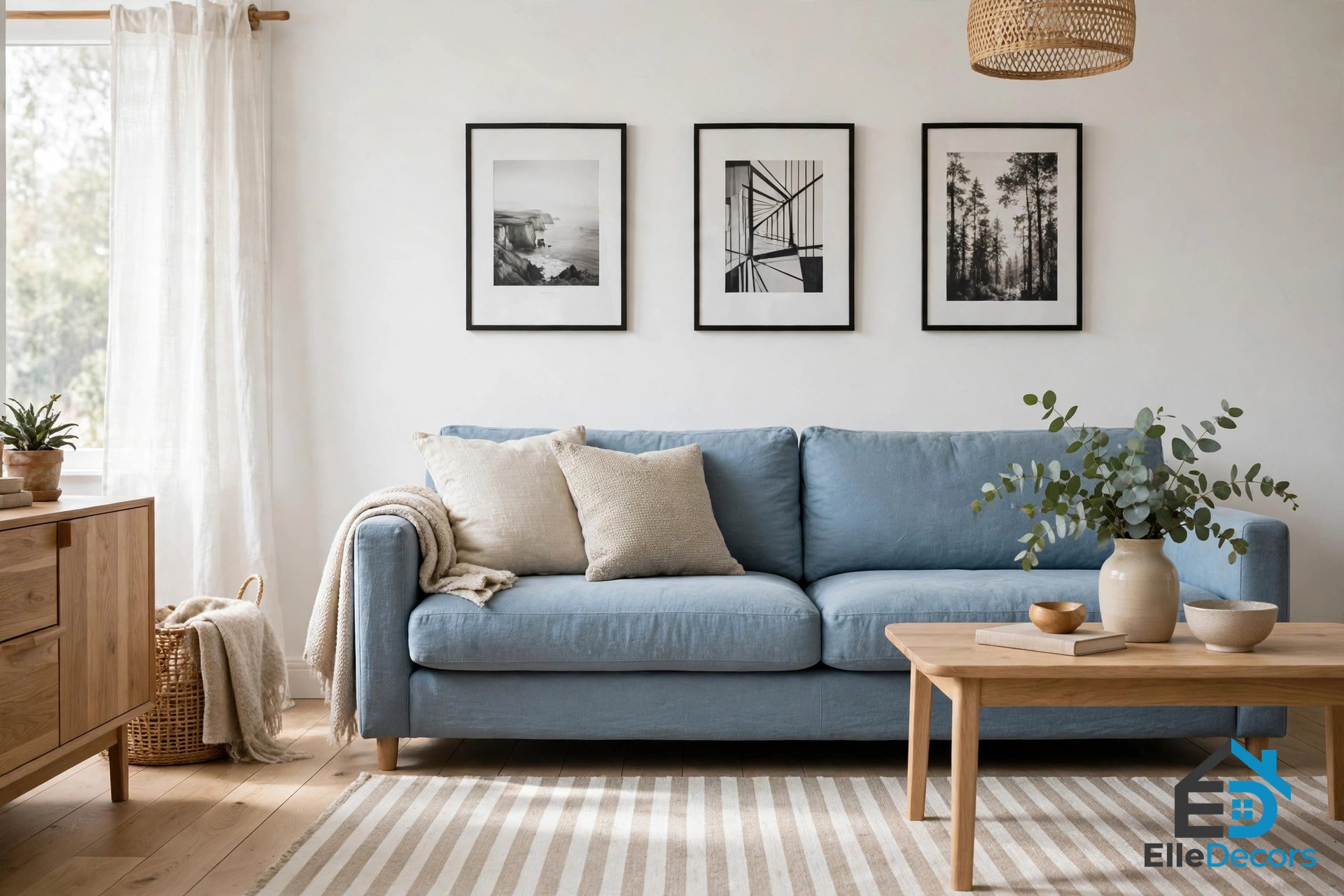
The first home in the source roundup is a cosy nest for a couple of two in Warsaw, Poland, and its living room makes its first impact with a powder-blue couch and a striped rug. White walls and wooden floors give the pale blue room to breathe, while wooden furniture and monochromatic prints complement the tones without repeating them exactly. The lesson is to pick one soft colour and let it lead: the powder blue appears on the sofa, then echoes in small touches, never shouting.
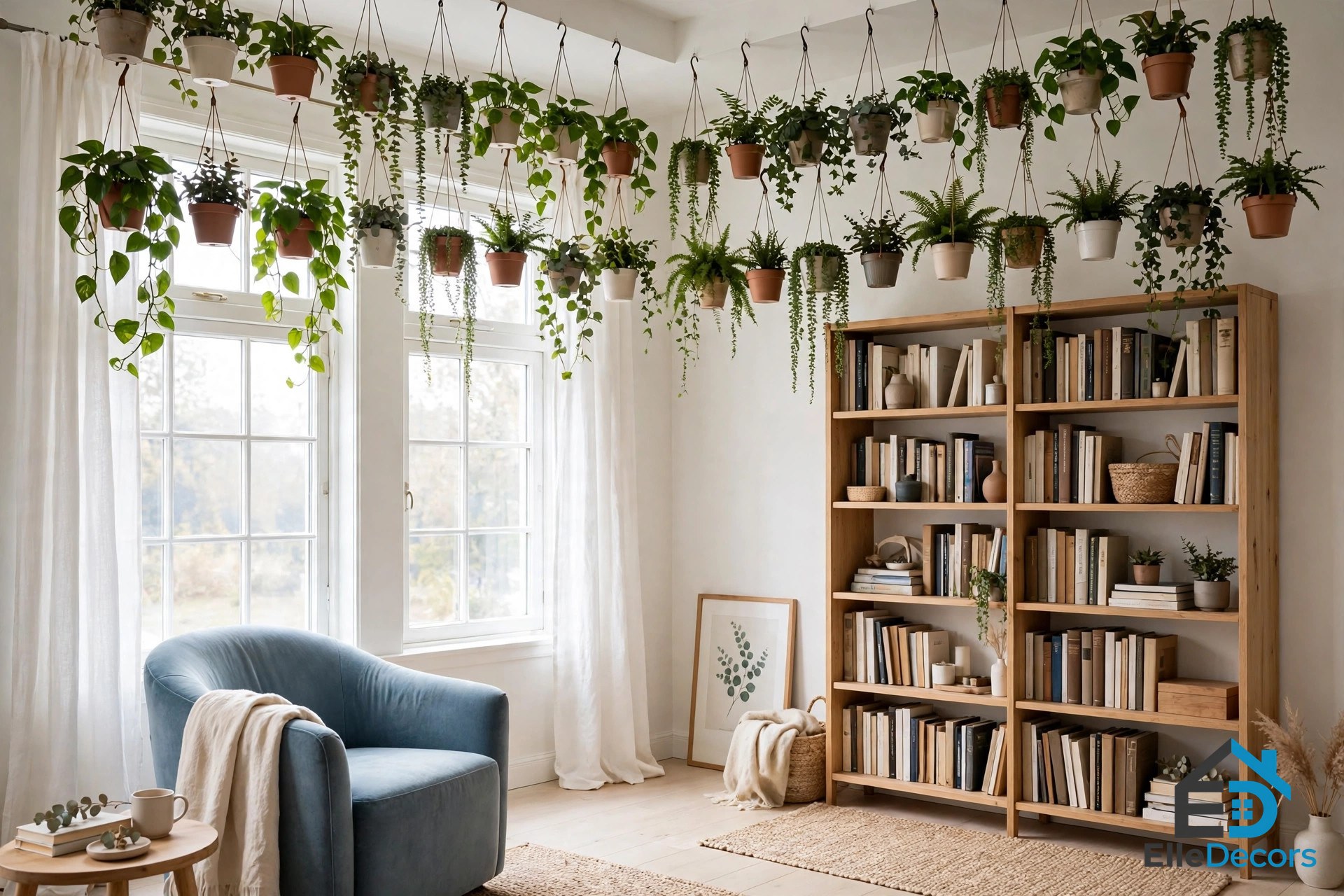
2. Let Hanging Plants Become the Feature
In the same Warsaw home, the little things take greater force once you look past the sofa. Rows of hanging pot plants become features in themselves, and a standing bookcase acts as a cabinet of knowledge, full of books and objects that belong to the people who live there. A powder-blue chair by white-swaddled windows offers a seat to take it all in. Plants are the cheapest way to make a white room feel alive, and hanging them frees the floor and the shelves for other things.
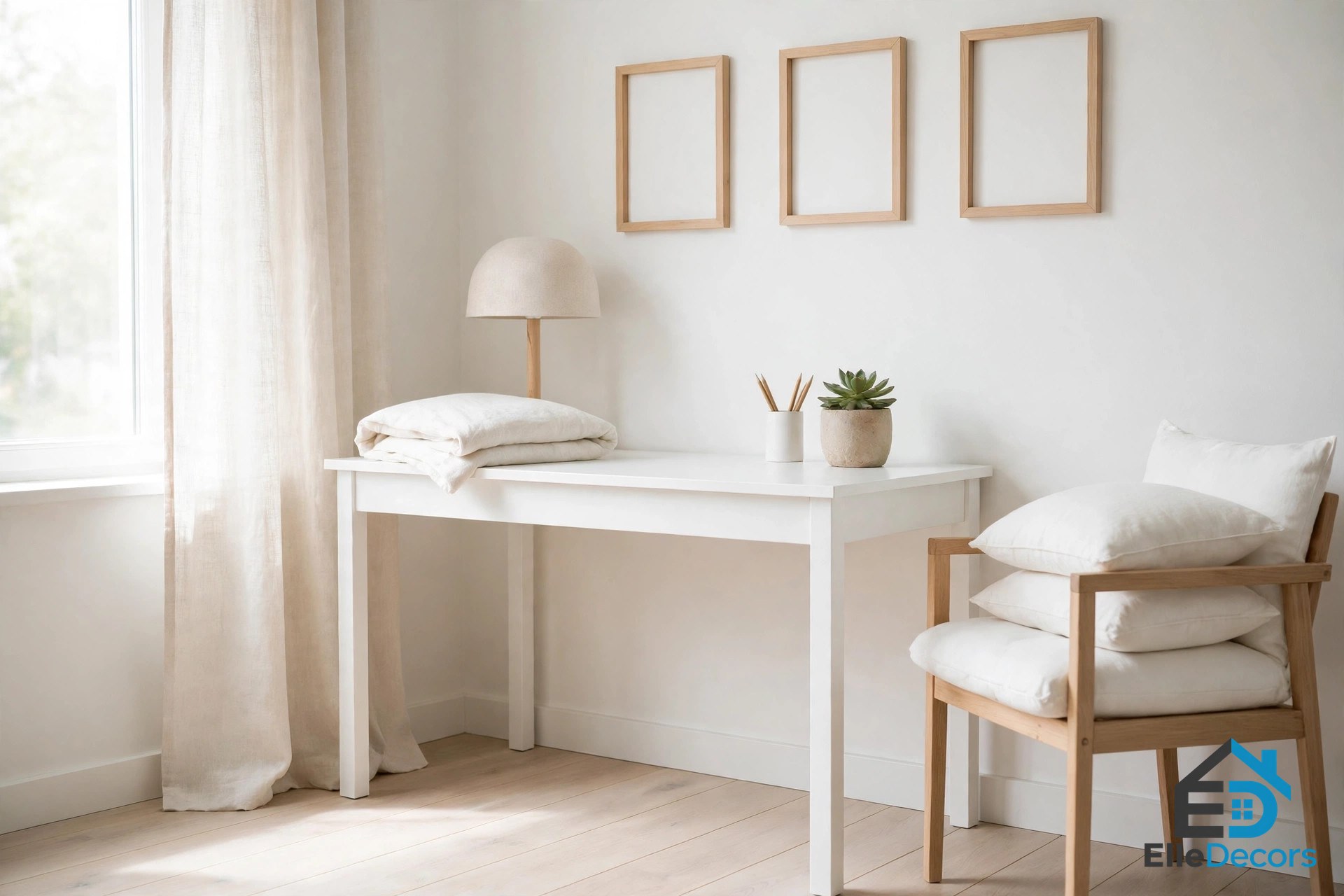
3. Keep the Desk Simple, White and Wood
A desk needs no introduction in the Warsaw home: it uses the same white and wood elements as the rest of the flat, with a trio of wooden frames marking a place for work while harking back to the lounge. Potted plants and small white ornaments are magnified in white cushions and a lampshade on opposing sides. The idea is that a work corner in an interior scandinavian home should not look like an office dropped into a home — it should use the same materials and the same calm palette, so work and rest share one room without arguing. Three matching frames above a desk cost almost nothing and make the corner feel finished rather than improvised.
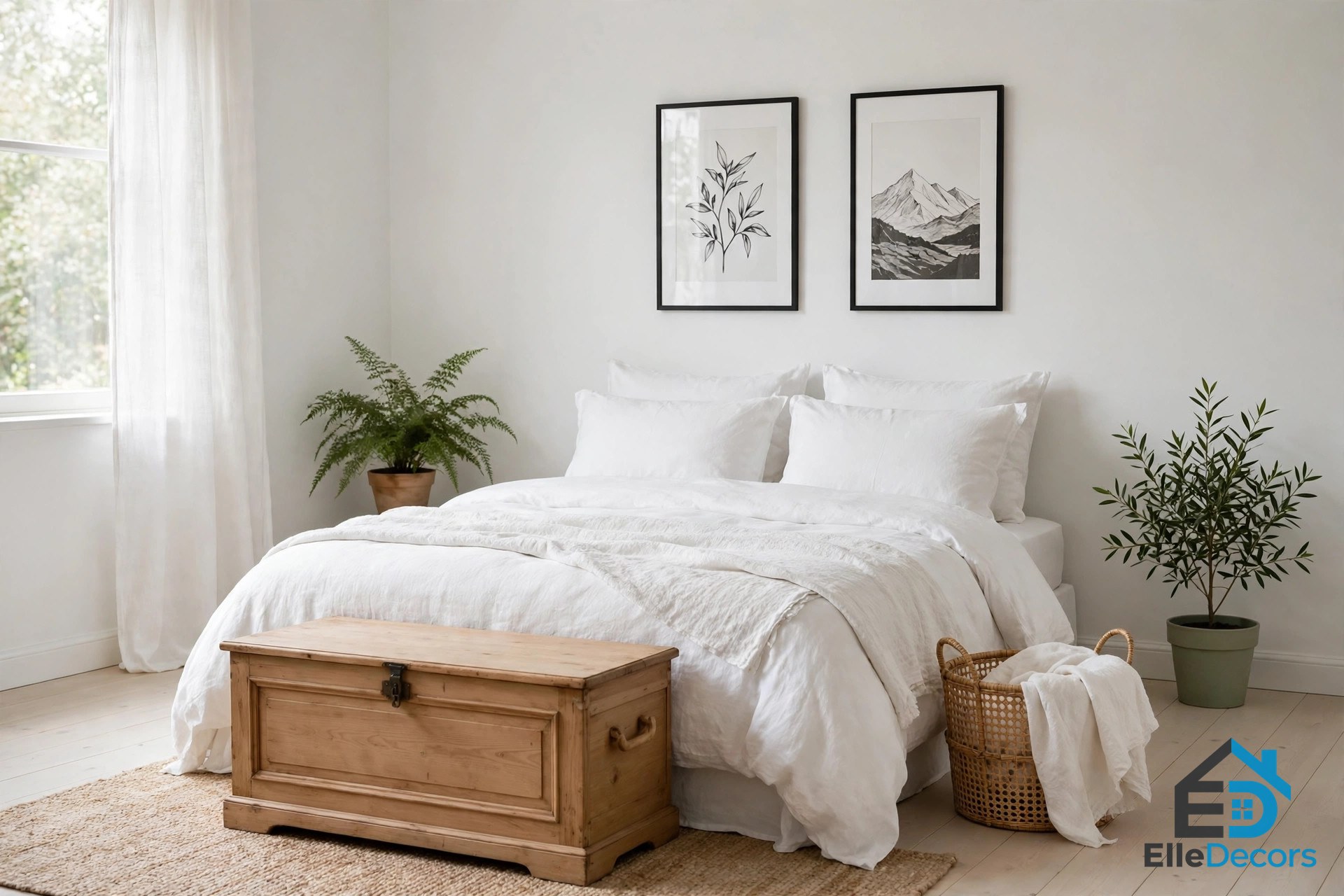
4. Make the Bedroom a Canvas of White and Wood
Simple yet lived-in, the Warsaw bedroom is a canvas of white pocked by wood. Even the undesirables become part of the scheme: a heated rail and blinds disappear into the white, while a wooden chest and a cane basket hold personal items, and green frames each corner. Four monochrome prints reflect on the study and lounge, mimicking the wardrobe’s compartmentalisation, and a mirror relaxes to the side. The trick is storage that looks like furniture — a chest, a basket, a wardrobe — so the things you own have a home and the white walls keep their calm.
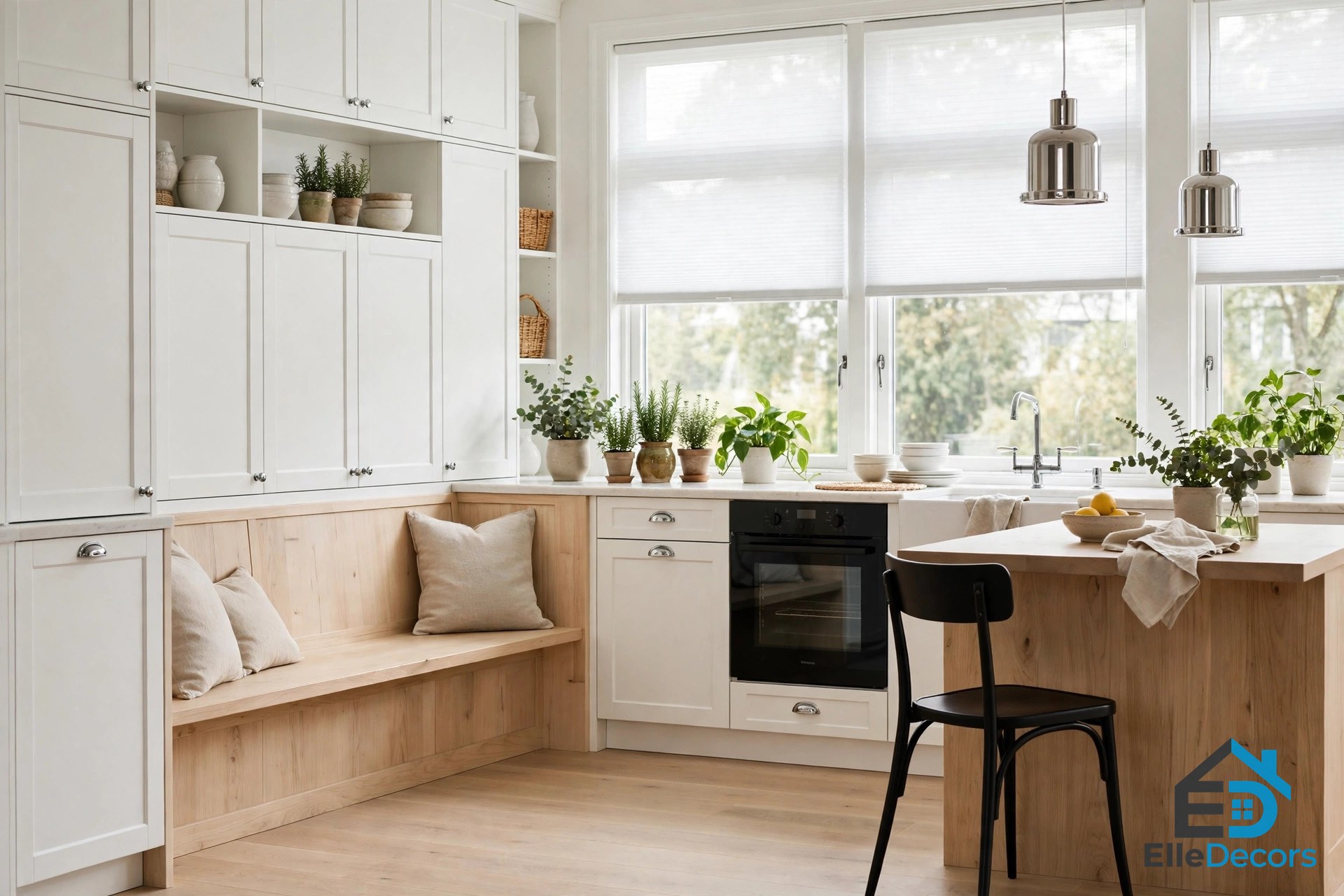
5. Let Black Pops Surprise a White Kitchen
The Warsaw kitchen keeps its light and breeze despite its many elements. White cabinetry, windows and blinds are matched by light wood in benches and floors, and that pale backdrop allows pops of black to surprise — in an oven and a chair — while green and chrome talk to one another. The black is the key: without it, an all-white kitchen can look washed out, but a few strong dark touches give the eye somewhere to land. This is the same balance that makes the whole style work — pale everywhere, dark in small, deliberate doses.
6. Use Light Wood as the Canvas for Kitsch
The second home in the source roundup is much more kitsch, dotted in a variety of textures and tones, yet its Scandinavian framework keeps it clean and stylish. In the central area, light wooden chairs, floors and chests provide a perfect canvas. A stencil chandelier is fixed by a block of black, as a grey rug opposite mimics its shape, and grey and khaki meet with potted plants that hang, sit and hide amongst the wooden. Terracotta pots, books and prints are lit by French windows. The lesson of this interior scandinavian home is that a pale wood base forgives almost any amount of personality: the more colour and pattern you own, the more you need that calm canvas underneath it. Our guide to scandinavian chairs shows the seating that carries this look, from pale timber dining chairs to sculptural lounge pieces.
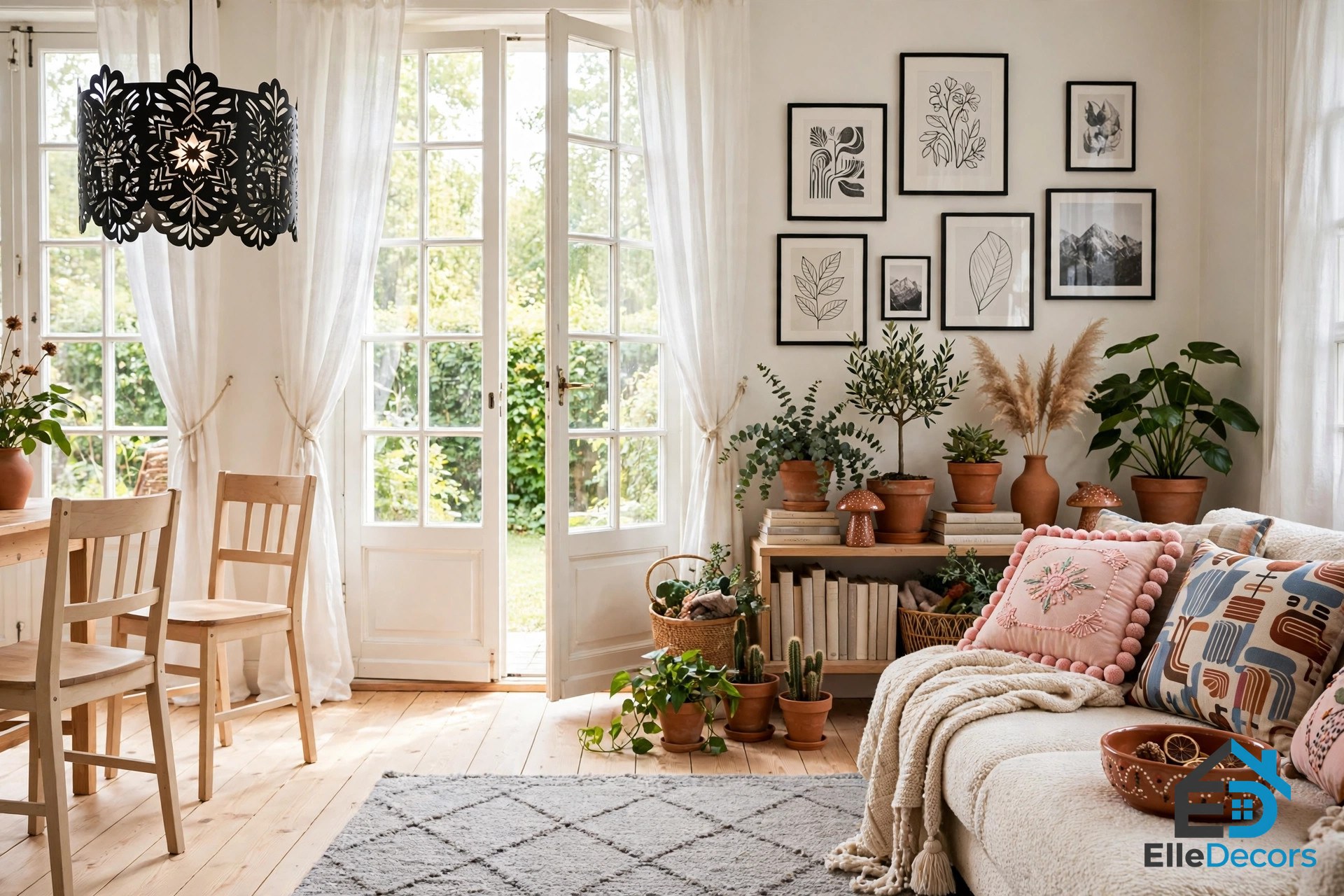
7. Mark Each Zone With Plants
In the second home, the study and TV areas mark their spaces by plants rather than by walls. In the study, a small-leaved potted plant drapes over the ceiling, partially obscuring a drop-down light. In the TV room, potted plants sit on library shelves and a TV cabinet, giving prominence to the TV and the central wall, while light wood grounds the plant and finer ornamental detail, making the busy look basic. Plants are the gentlest room dividers there are: they mark a boundary without blocking light or sightlines, and they make each zone feel intentional.
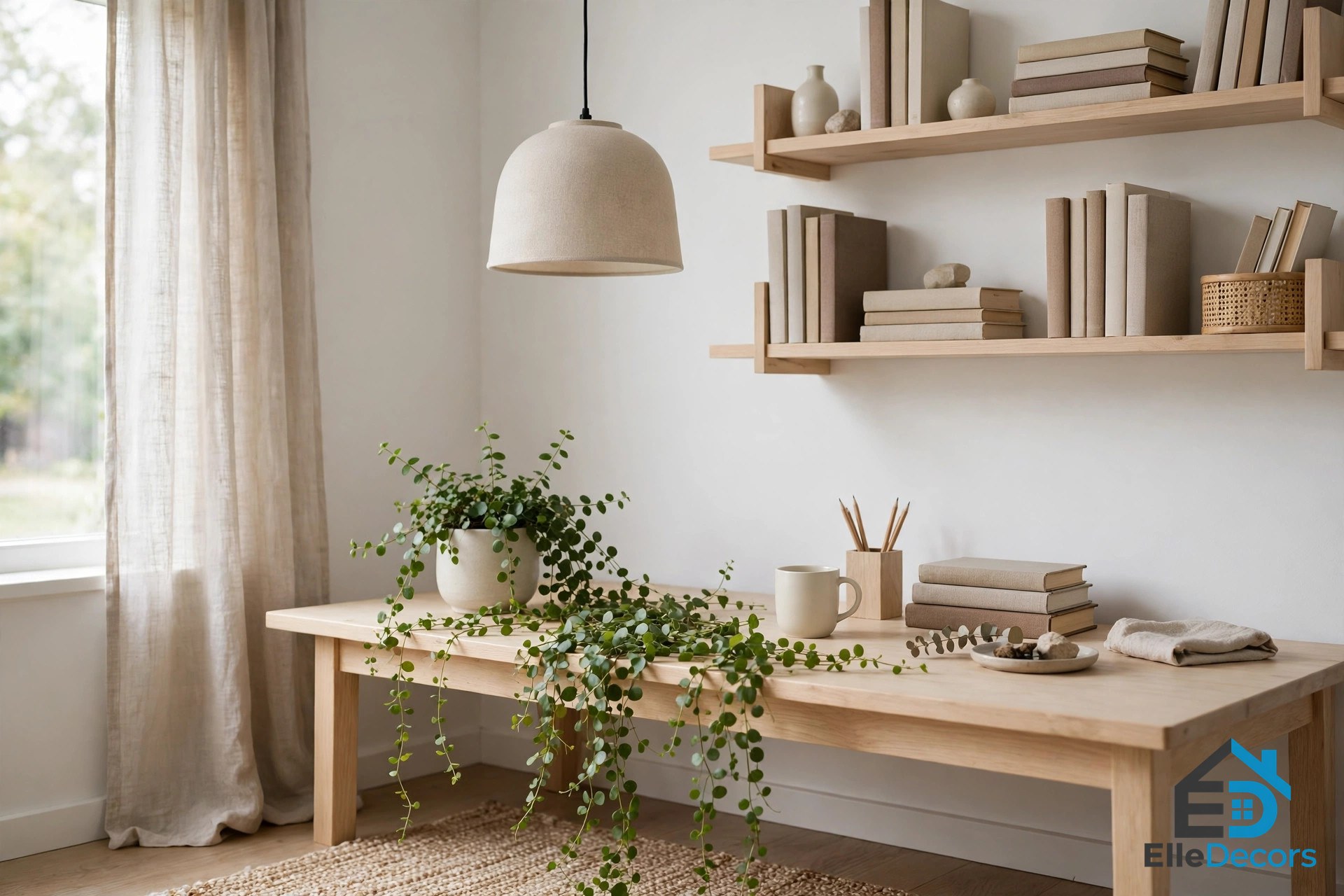
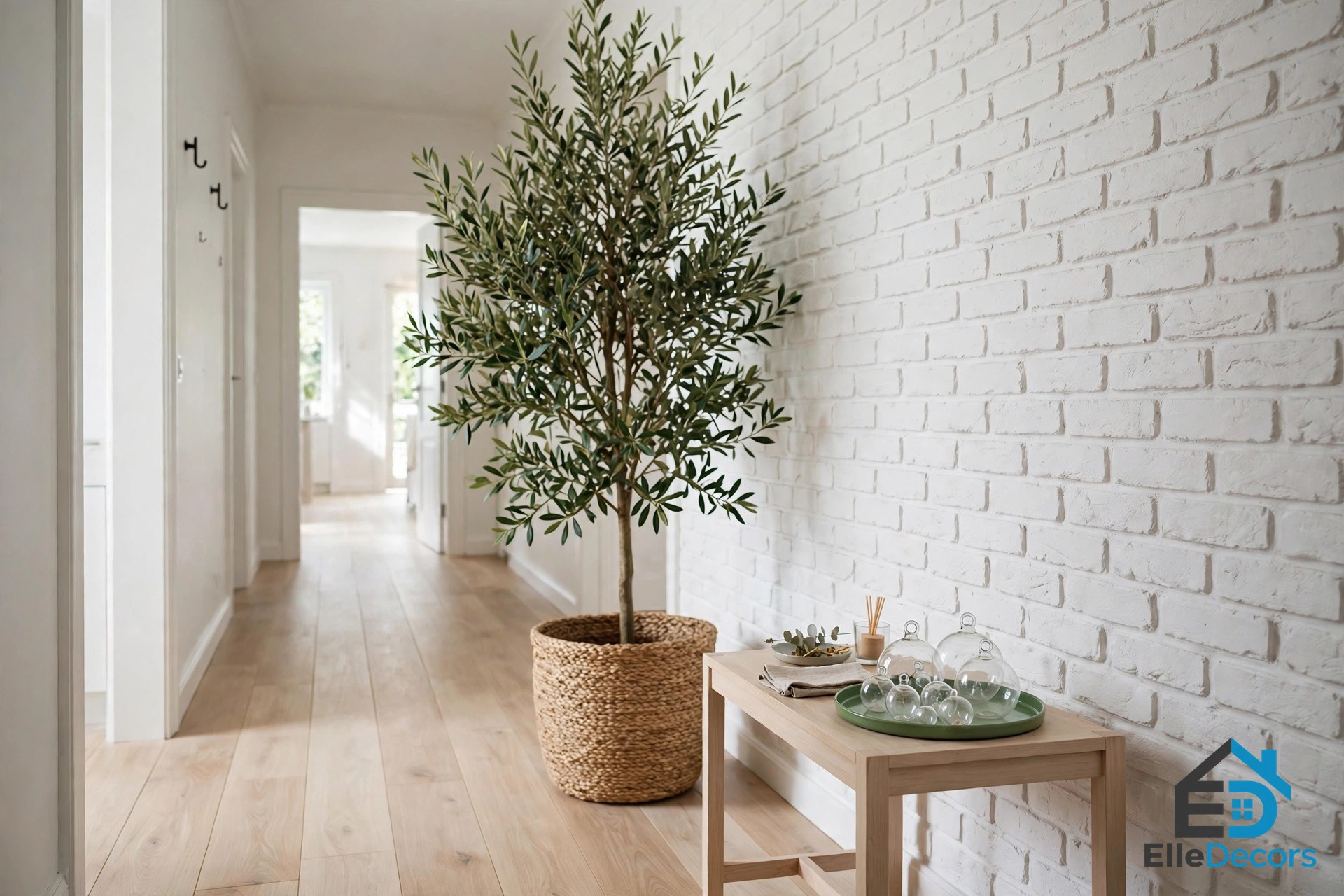
8. Let One Tree Do the Work of a Whole Scheme
White spaces oscillate between over-piling and minimalism, and the second home shows both ends. A barn-door entranceway houses a heap of clothes, chequered and multi-coloured, on grey floral tiles. The TV room corridor, by contrast, features one potted tree against a white brick wall, with glass baubles and a green tray sitting to the side, and both spaces suit the tone of the home. The corridor is the better lesson: a single large plant against a plain wall does more than a dozen small decorations, because the scale gives it presence.
9. Mix Monochrome With the Muted
The third home in the source roundup is a two-bedroom flat that is a lot less ornamental but no less patterned. The lounge shows a myriad of undertones and shapes in collaboration: classic white walls and wooden floors open up to a grey couch and curtains, a mottled rug and different-coloured cushions, while a range of cubed and circular art pieces adorn the central table and a standing lamp hovers beside a print. The look is monochromatic, mixed with the muted, and it works because every colour is either grey or a muted version of a colour, so nothing shouts.
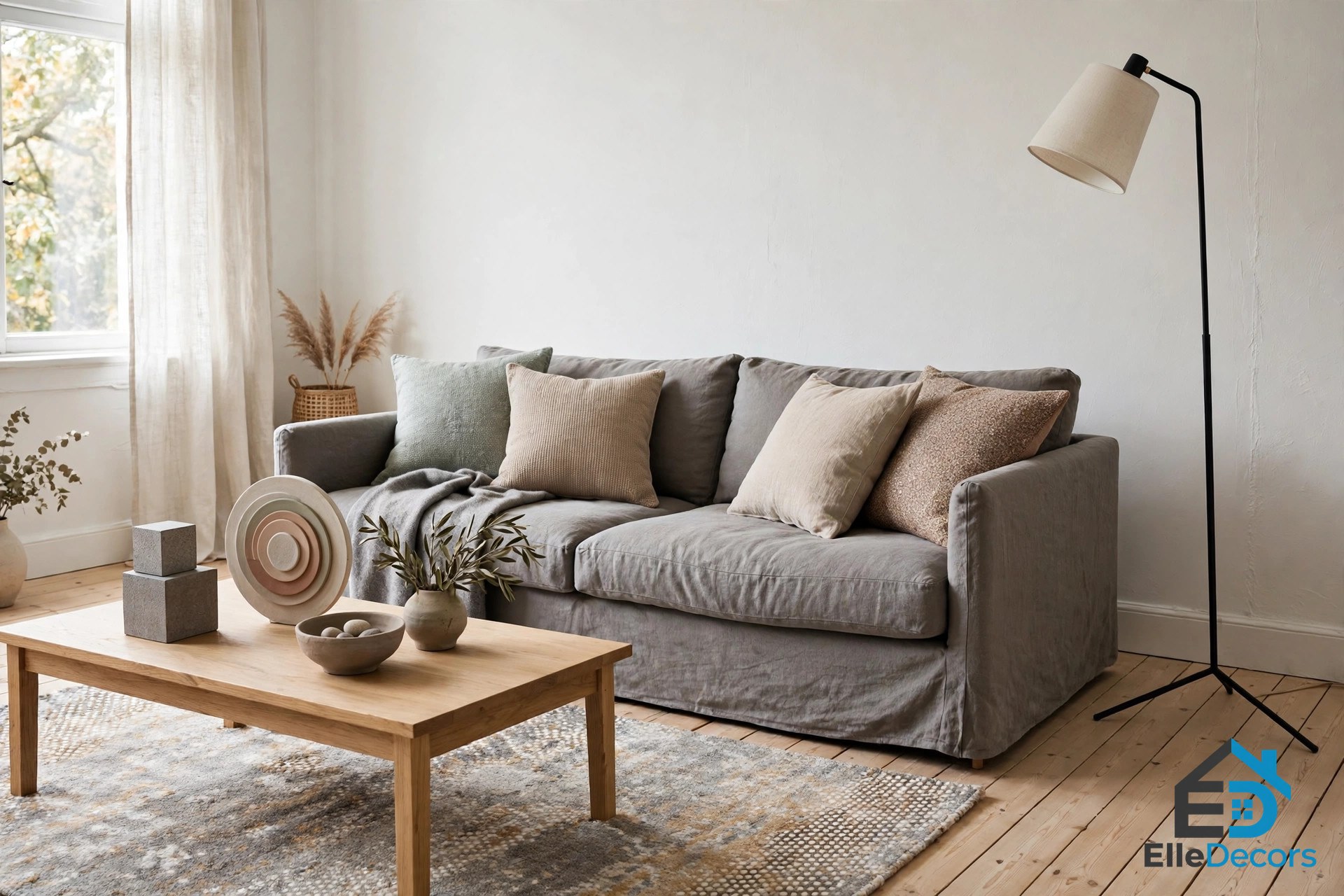
10. Add One Unexpected Colour
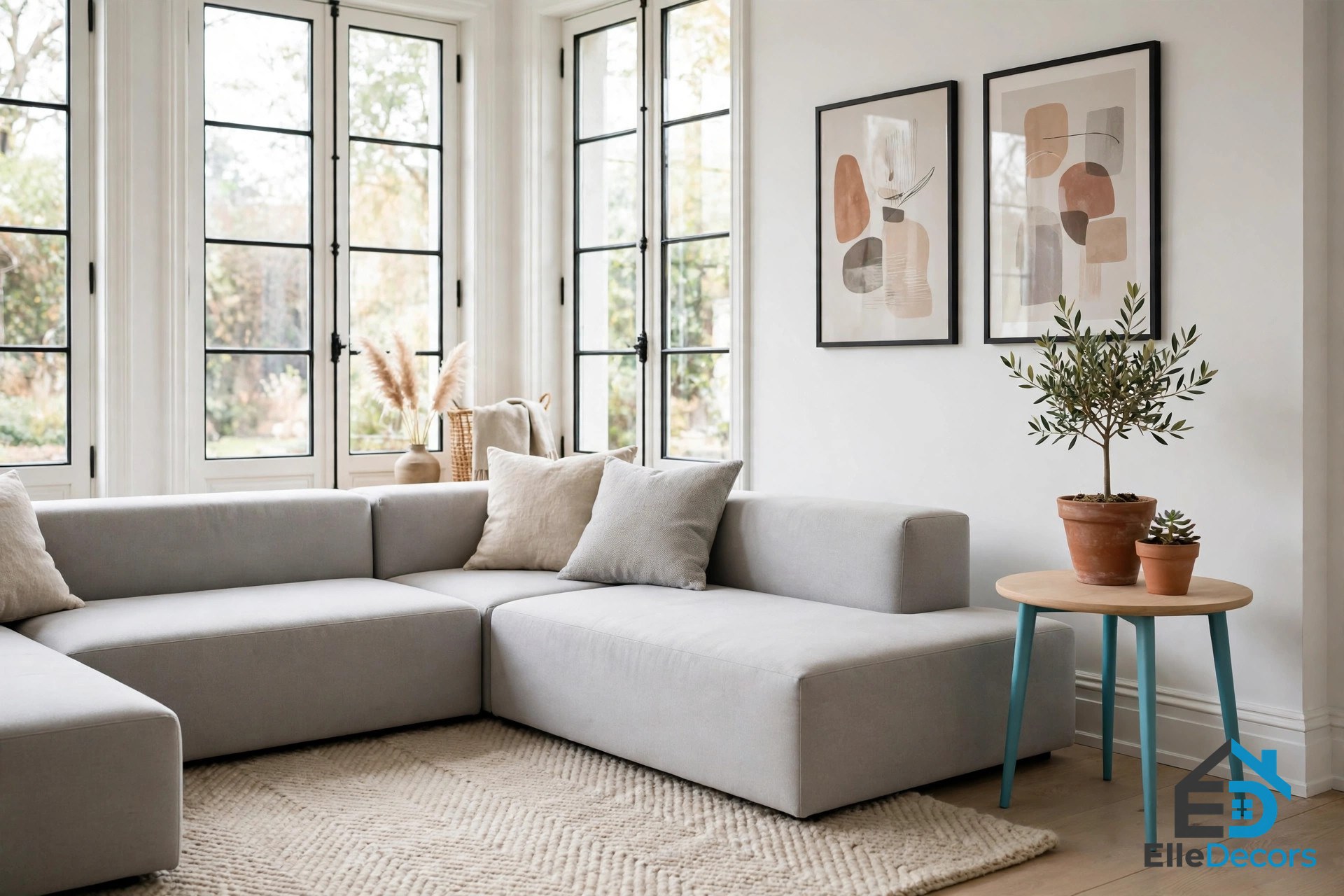
The fourth home looks a lot simpler, and it is. An L-shaped block sofa carries matching cushioning, while abstract prints shine in the same hue. White fixtures in window joinery, a light and a side table are made different by abstract sparks — turquoise table legs here, terracotta pots there — while a golden trumpet and a beige woollen rug add warmth. The turquoise legs are the whole lesson: one unexpected colour, used twice, is enough to wake up an otherwise calm room. Interior scandinavian rooms often fail when they are too disciplined, and a single playful touch is what keeps them feeling lived in rather than staged. Pick your spark colour, use it in exactly two places, and leave the rest alone.
11. Inject Pastel and Pattern in Small Doses
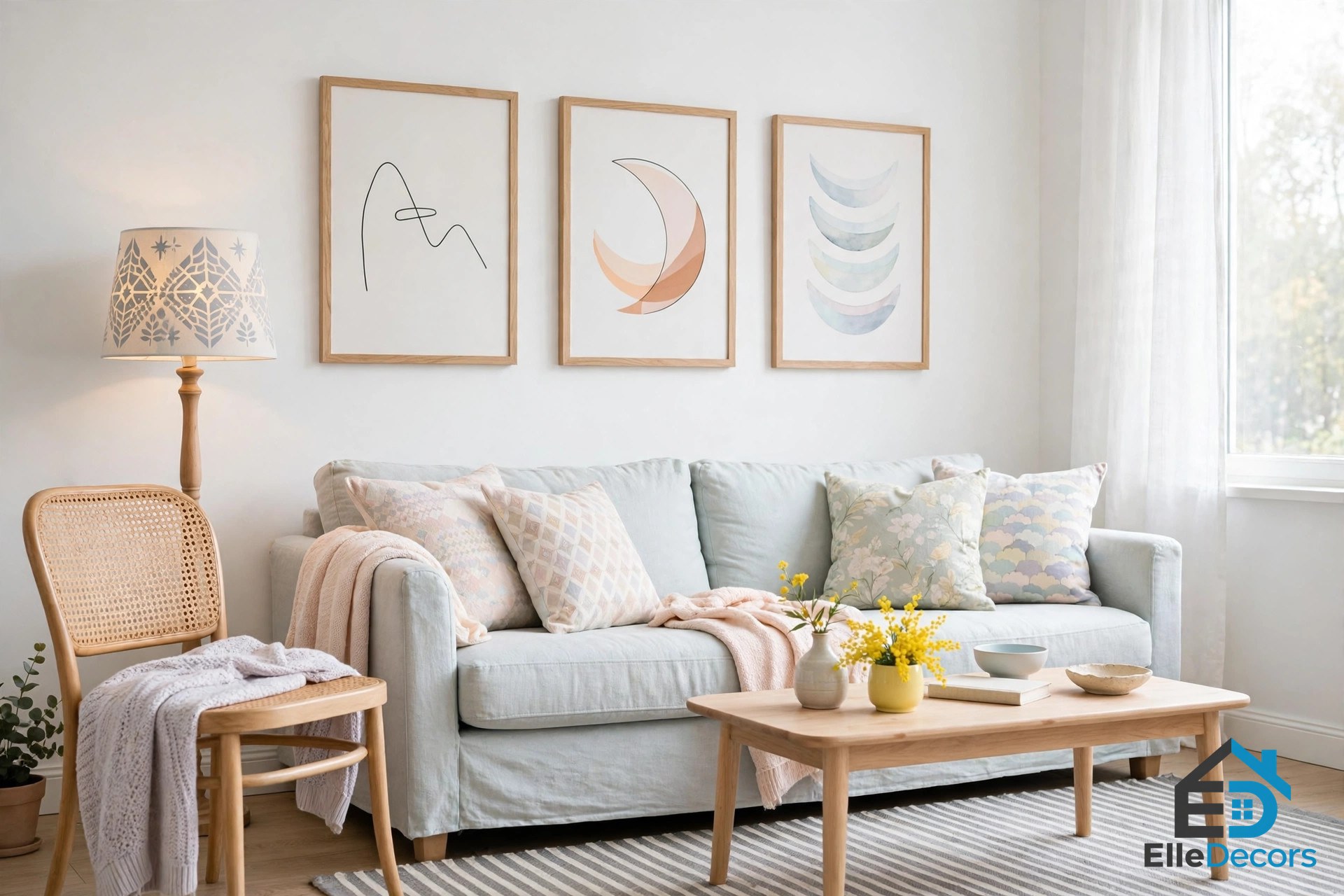
The fifth home injects a bit of pastel for inspiration. Not content with charcoal and wood, a proliferation of patterns adds pizzazz to the white-coated living room: cushions sidle next to each other in a variety of detailing, three frames gradate from minimalist lines to coloured crescents, all framed in light wood, and a stencilled standing lamp is reflected in cane chair-backing and a side table grate. Yellow pops on the table below a branched bulb light, dangling elusively from the ceiling, while grey and white stripes set the scene. The discipline here is scale: the patterns are all small — a cushion, a frame, a lamp — so the room reads as lively rather than busy.
12. Master Monochrome, Then Add Green
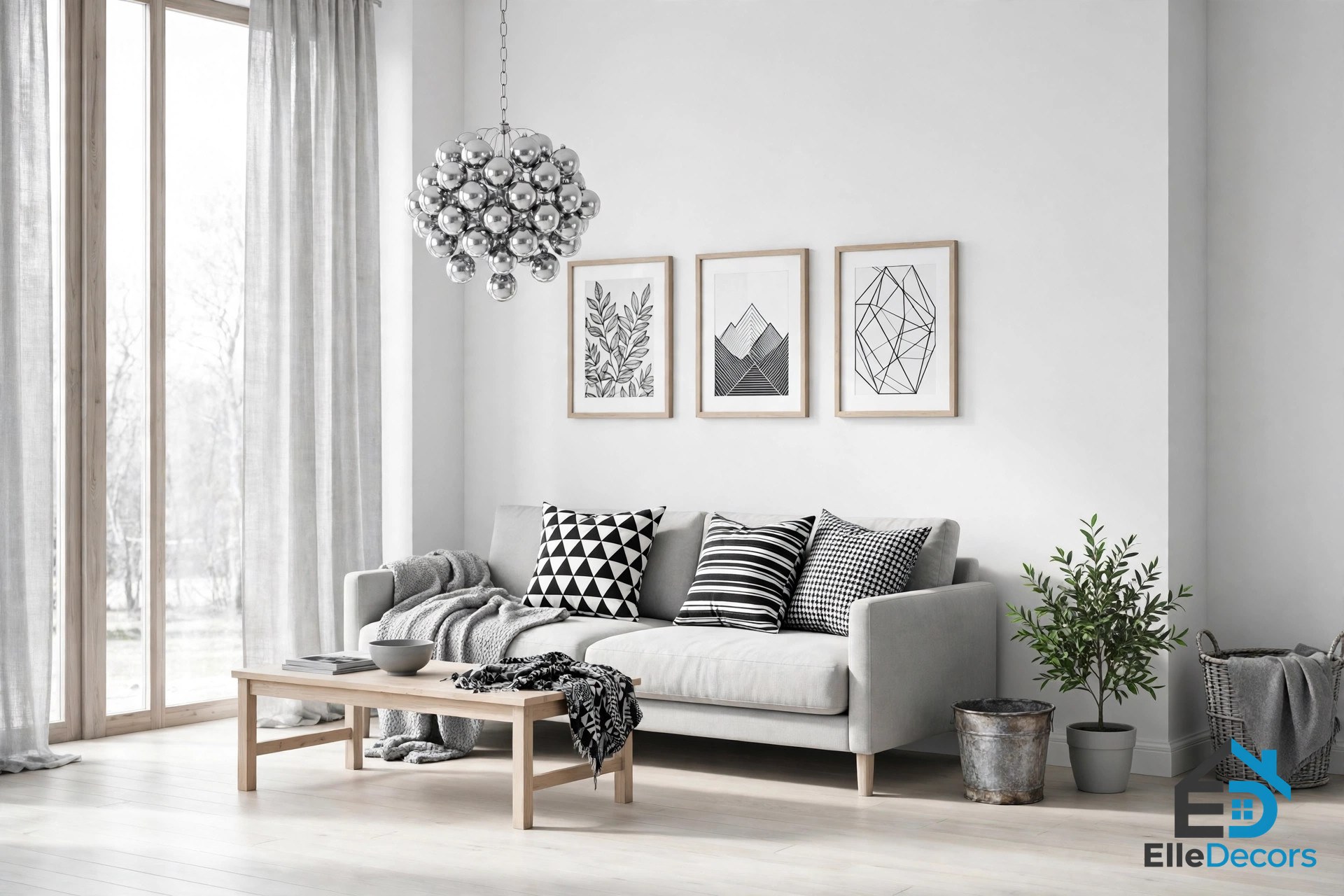
The final home is a masterpiece in monochrome. Black and white adorn cushions and prints before nestling into grey, the living room holding their colouring in a black stencil and wooden frames, while natural green and a rustic bucket add the living. A silver bauble chandelier takes it into the modern day, and the kitchen makes monochrome its guiding principle, with black dotted in all the right places — drawer and cupboard handles, ovens and a benchtop — while a faint outline in the tiles combines the two opposing shades, and a chrome fridge and plumbing quell their differences among green and wood elements. Monochrome is the easiest Scandinavian palette to get right, because it has only two colours, but it needs the green and the wood to stop it feeling cold.
The Six Homes at a Glance
These interior scandinavian ideas draw from all six homes in the source roundup. Each home has a different personality, but the same bones: white walls, pale wood, one leading soft colour, black in small doses, and plants everywhere.
| Home | Leading idea | What to borrow |
|---|---|---|
| Warsaw couple’s flat | Powder blue, striped rug | One soft colour, led by the sofa |
| Warsaw plants and desk | Hanging plants, white desk | Plants as features, work in white |
| Warsaw bedroom and kitchen | White and wood, black pops | Storage as furniture, black hardware |
| Kitsch second home | Light wood canvas, stencil light | Pale base forgives bold taste |
| Kitsch zones and corridor | Plants mark zones, one tree | One large plant beats ten small |
| Patterned two-bedroom | Monochrome mixed with muted | Muted colours, cubed art |
| Simple fourth home | Turquoise spark, terracotta | One unexpected colour, used twice |
| Pastel fifth home | Pastels and small patterns | Pattern on movable things only |
| Monochrome sixth home | Black, white, grey, green | Monochrome plus wood and green |
How to Get the Lived-In Look, and Mistakes to Avoid
Three mistakes make a Scandinavian room feel like a showroom instead of a home. First, buying everything new and matching: the six homes work because they mix old and new, a worn chair beside a new sofa, a market find beside a plain white wall. Second, removing every sign of life: a room with no books, no plants and no personal objects is not minimal, it is empty, and the lived-in look depends on the things you actually use being visible and loved. Third, forgetting the black: without a few dark touches, white and pale wood wash out into blandness, so add black hardware, a black frame, or a black chair. Interior scandinavian style is not about owning less; it is about giving the things you keep a calm backdrop that lets them shine. Our guide to scandi style covers the same balance in more rooms, and our guide to japandi decor shows where the look meets its Japanese cousin.
Quick Comparison: Which Home Is Your Starting Point?
If you love colour, start with the Warsaw flat or the pastel fifth home, where one soft colour leads and plants do the rest. If you own a lot of pattern and objects, start with the kitsch second home, where pale wood forgives almost anything. If you want the easiest version, start with the monochrome sixth home: black, white, grey, one plant and one timber piece, and you are most of the way there.
Watch: Warm Scandinavian Luxury Home Tour
Watch Safa Simple Decor’s tour of a warm Scandinavian luxury home, a useful companion to this guide because it shows the same principles — warm ivory and cream tones, natural oak, soft beige textiles, handmade ceramics, delicate greenery — in a finished home rather than as a list of rules. The tour moves through a cream living room, a minimalist kitchen, a warm dining area, a reading corner and a peaceful neutral bedroom, so you can see how the palette holds together from room to room.
Video: “Warm Scandinavian Luxury Home Tour | Cozy Minimalist Interior Design” (Safa Simple Decor) — warm ivory and cream tones, natural oak, soft beige textiles, handmade ceramics and greenery.
Frequently Asked Questions
Is Scandinavian interior design only for minimalists?
No. The six homes in this guide range from spare to kitsch, and the style handles both, because the pale base — white walls, light wood — forgives a lot of personality on top. Minimalism is one version of the look, not the whole of it. What matters is that everything in the room is used and loved, not that the room is empty.
How do I keep a white room from feeling cold?
Add wood, textiles and one dark accent. Pale timber floors and furniture warm the room physically and visually, wool throws and linen cushions add softness, and a black frame or chair stops the white from washing out. Plants help most of all: green is the one colour that appears in every warm interior scandinavian room, and it costs almost nothing.
What colours work in a Scandinavian home?
White and pale wood first, then one soft leading colour — powder blue, sage green, blush pink or warm grey — then black in small doses. The leading colour should appear on the sofa or the rug and echo in two or three small touches. Avoid strong, saturated colours on large surfaces; save them for the one unexpected spark, like the turquoise table legs in the fourth home.
Can I mix Scandinavian with other styles?
Yes, and the homes in this guide already do: the kitsch second home mixes in bohemian texture, the third home leans towards muted monochrome, and the fifth adds pastel pattern. An interior scandinavian base mixes well with Japanese minimalism, mid-century furniture and coastal looks, because all of them share pale wood, simple shapes and natural materials.
Do I need to buy new furniture to get the look?
No. Start with what you own: paint the walls white or pale, uncover the wood floor if you have one, remove the pieces you do not use, and add plants and one dark accent.
Conclusion
Scandinavian design earned its reputation not by being the prettiest style in the magazine, but by being the most livable one. The six homes in this guide are full of books, plants, children, work and cooking, and they still look calm, because the white walls and pale wood give every object room to breathe. That is the whole secret of the interior scandinavian look: a home that is simple enough to rest in, and personal enough to feel like yours.