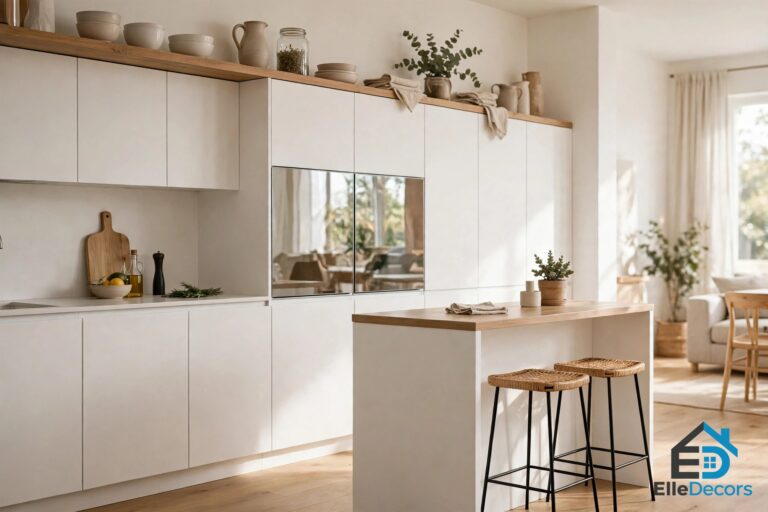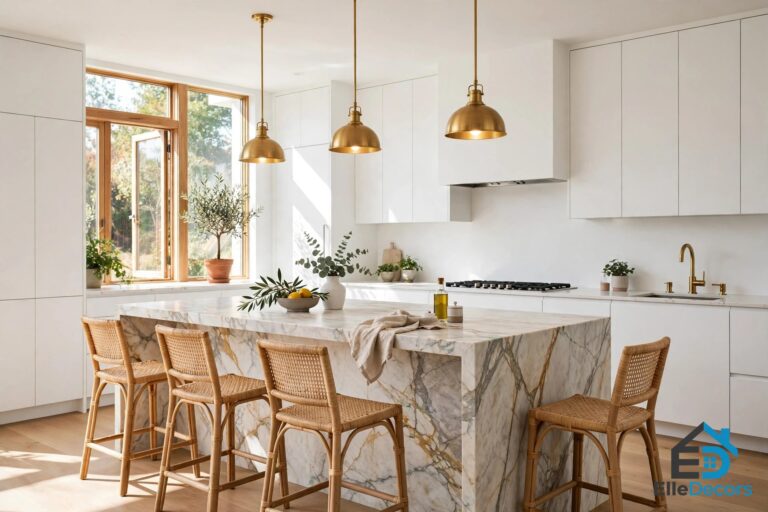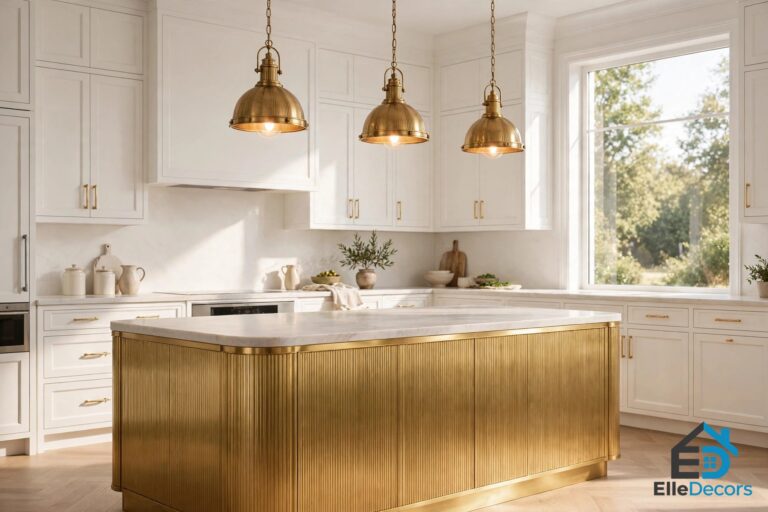
Mid Century Modern Kitchen Island: 7 Styles, Materials, and Layout Rules That Still Work
A kitchen without an island still cooks. It just never quite gathers people the way a kitchen with one does. The mid century modern kitchen island is the piece that turns a cooking room into the room everyone drifts toward, holding the prep work, the breakfasts, and the wine glasses at the end of the day.
This guide covers seven island styles, the materials that suit them, and the sizing, seating, and lighting rules that finish the job.
What Makes a Mid Century Modern Kitchen Island
Mid century modern design grew out of the post-war years, when homes opened up and kitchens stopped hiding behind closed doors. The style rests on clean lines, simple forms, and honest materials, and the island is where all three meet. Flat-fronted cabinets with little detail, rich wood tones, and the occasional bold geometric pattern are the signatures.
A true mid century island looks simple at first glance, then rewards a closer look. The wood grain runs in one calm direction, the legs taper, and the hardware is minimal, usually brushed brass or nickel. Every detail earns its place by doing a job, the “form follows function” idea the era is known for.
Seven Island Styles That Define the Look
1. The Walnut Waterfall Island
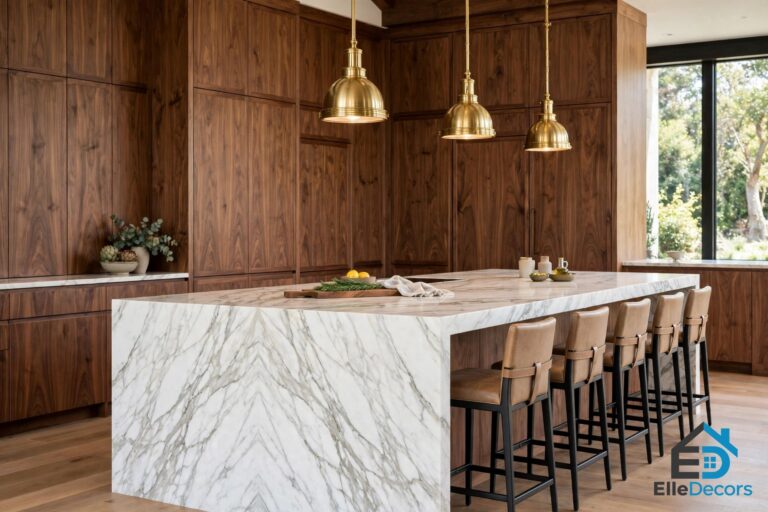
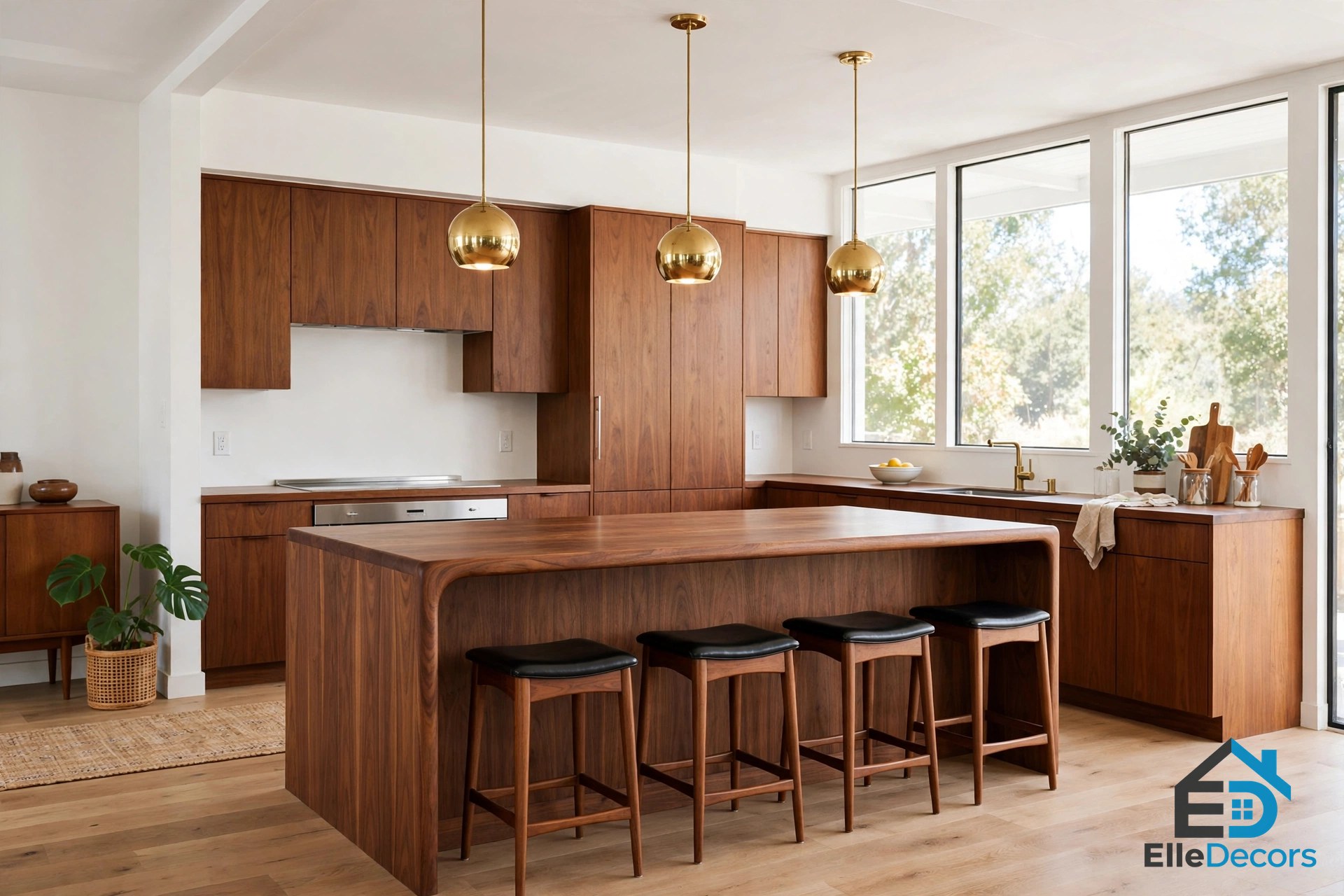
Walnut is the wood most people picture when they think of this style, and the waterfall edge is its best showcase. The countertop wraps down the sides in one continuous plane, so the whole piece reads as a single sculpted block. A mid century modern kitchen island with a waterfall edge in walnut feels warm and grounded, and the unbroken line is exactly the clean silhouette the era prized. Pair it with flat-front slab doors and a light oil finish, which lets the grain show honestly.
Best for: Open plan kitchens where the island is the visual anchor
2. The Butcher Block Workhorse
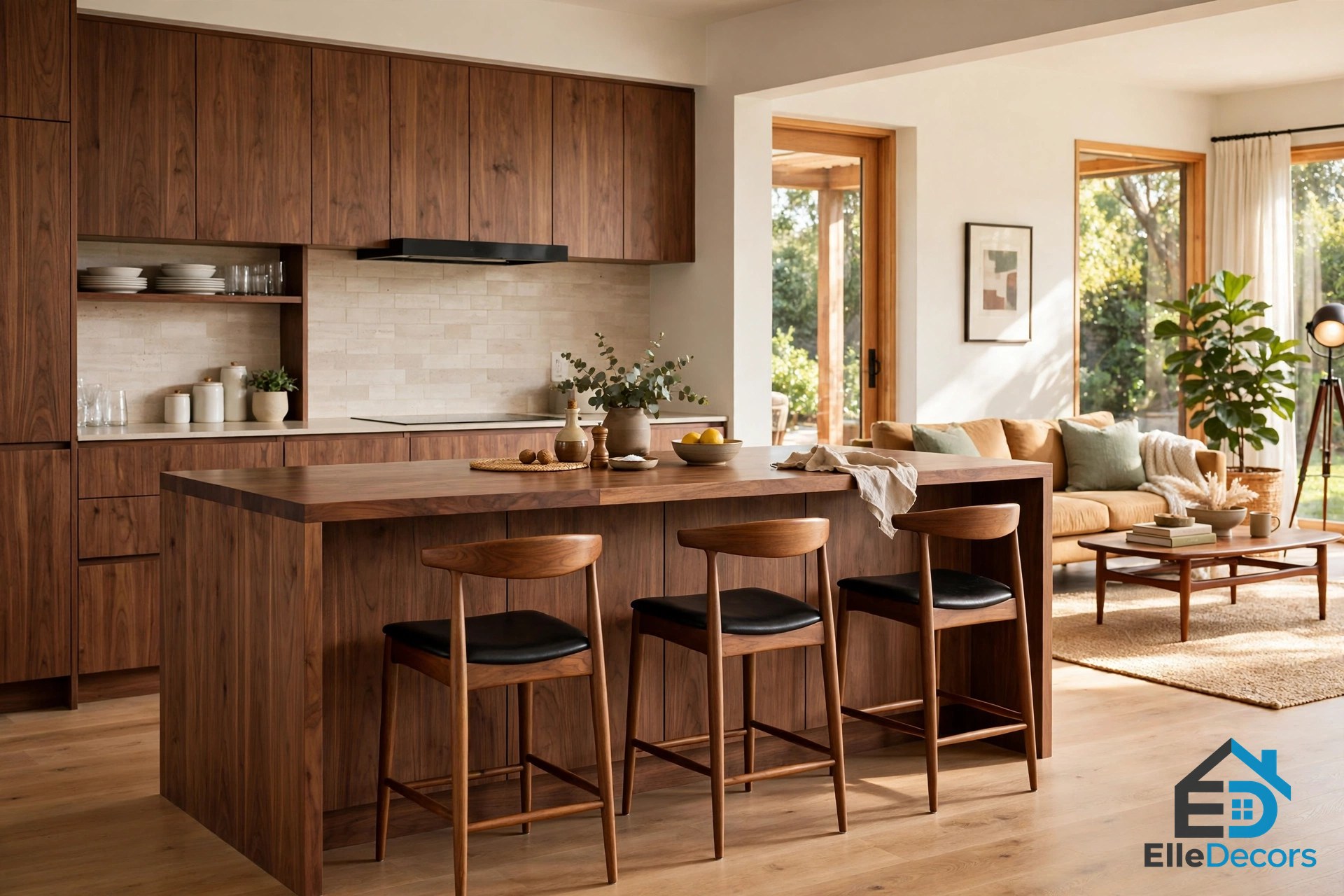
Butcher block is the practical side of the style. A thick timber top on a simple base gives you a surface you can chop on, knead on, and gather around, and it ages gracefully with regular oiling. A butcher block top pairs well with a painted or walnut base, and it is the friendliest island for a smaller kitchen, since a timber top on a compact base reads lighter than a full stone slab.
Best for: Cooks who want a real prep surface, smaller kitchens
3. The Slatted Front Island
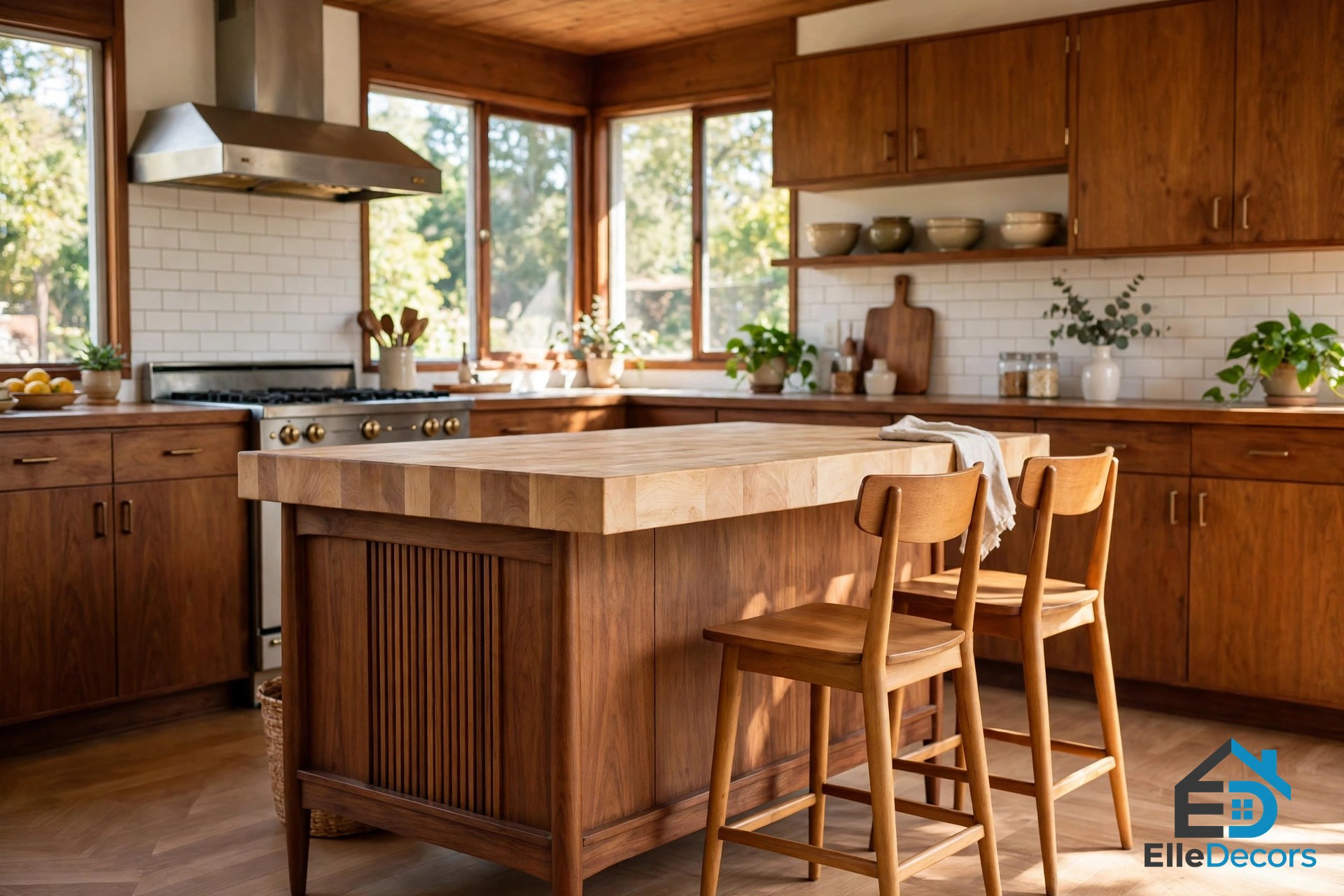
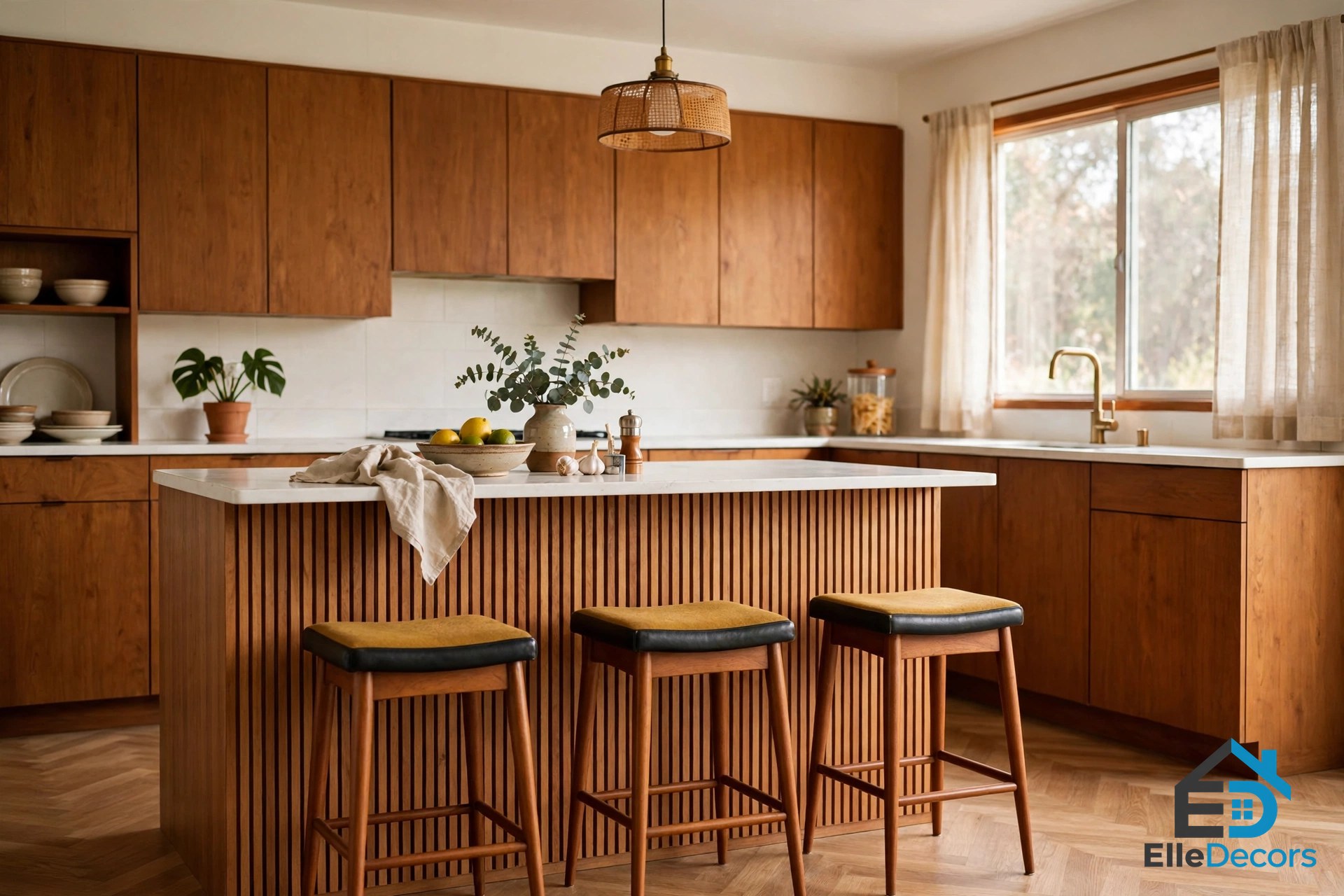
Wood slats are a mid century texture that has come back strong. Thin vertical battens across the island front add rhythm and shadow without adding bulk, and they tie the island to other slatted details in the room, like a feature wall. Slats work best in a single wood tone, matched to the rest of the kitchen, with even gaps and vertical lines. The front also hides a practical secret: the slatted panel can conceal deep drawers behind its tidy face.
Best for: Kitchens with other wood details, lovers of texture
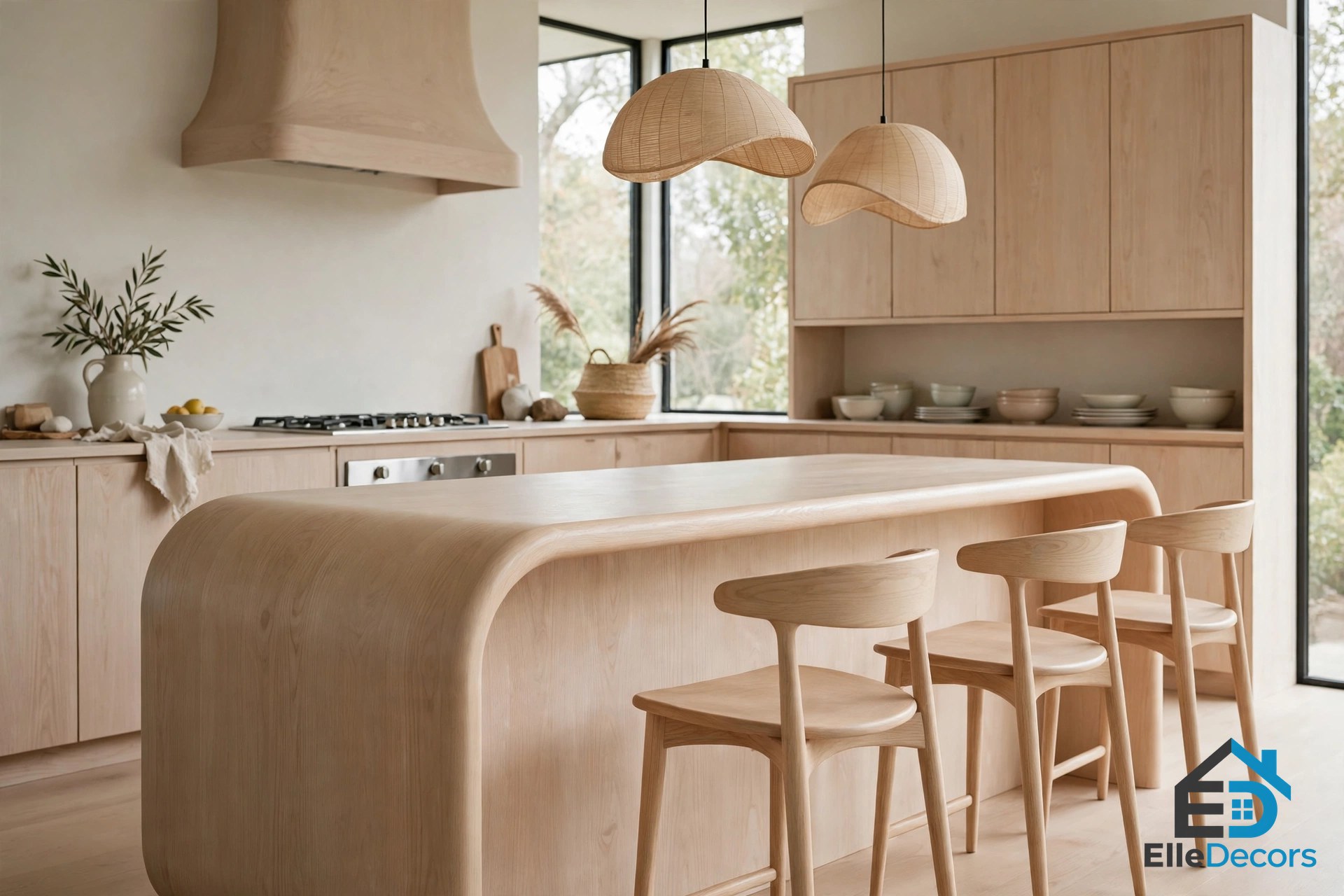
4. The Curved and Rounded Island
Not every mid century island is a rectangle. Curved and rounded islands borrow the organic shapes of the era, the kidney tables and oval coffee tables that softened all those straight lines. A curved end breaks up a linear kitchen and makes the room feel welcoming rather than severe. A rounded island in white oak or pale timber, with matching curved stools, reads calm and sculptural. Keep the rest of the room fairly straight so the curve stays the star.
Best for: Family kitchens, rooms with strong straight lines elsewhere
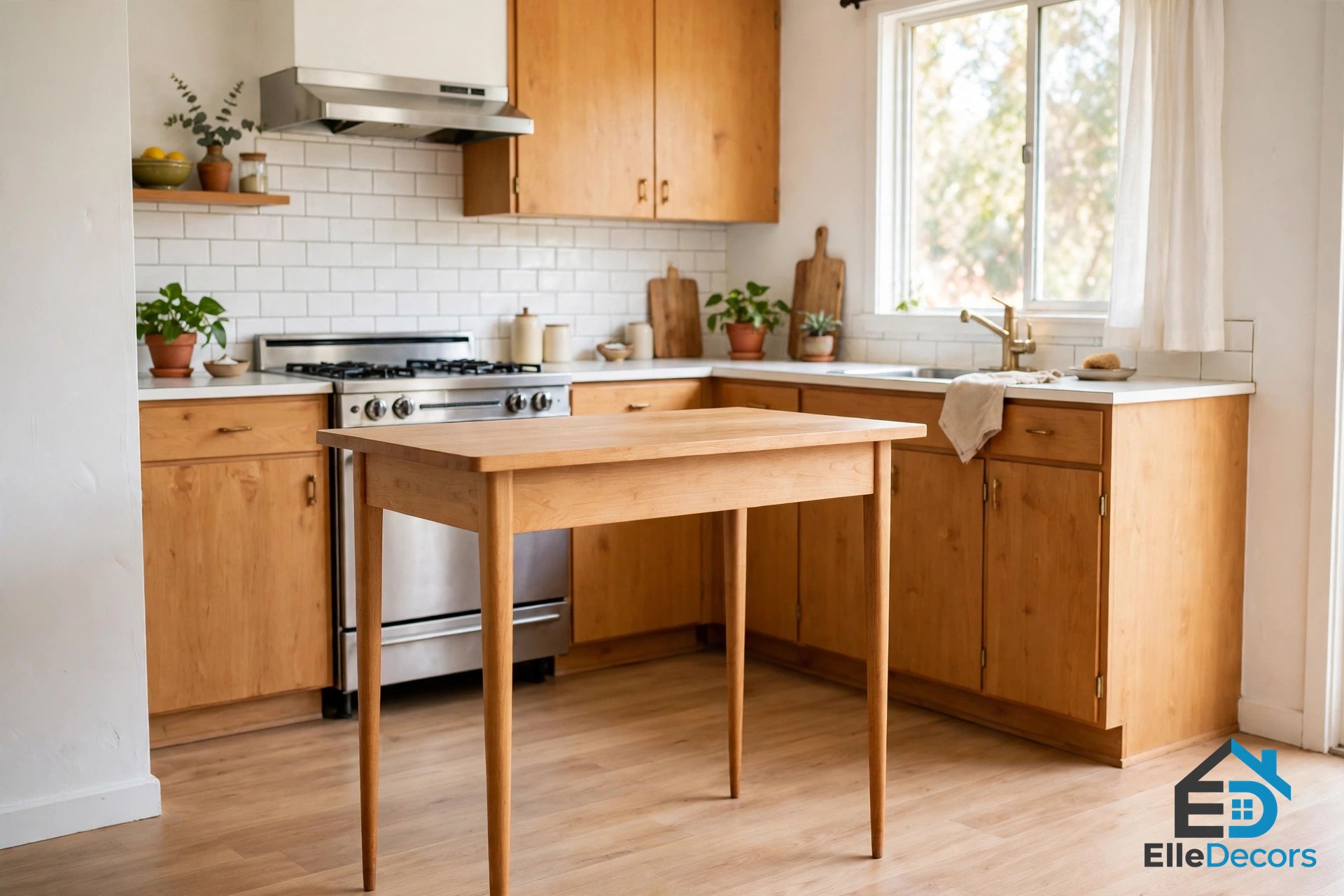
5. The Tapered-Leg Floating Island
Tapered legs are the hallmark detail of mid century furniture, and they translate beautifully to the kitchen. An island lifted a few inches off the floor on slim, angled legs looks like it floats, and the whole kitchen feels lighter for it. This style suits islands that act more as a table than a workhorse: a breakfast bar, a serving station, or a compact prep spot. Keep the top slim and the legs truly tapered, wider at the top and narrowing toward the floor.
Best for: Small kitchens, breakfast-bar islands, light and airy rooms
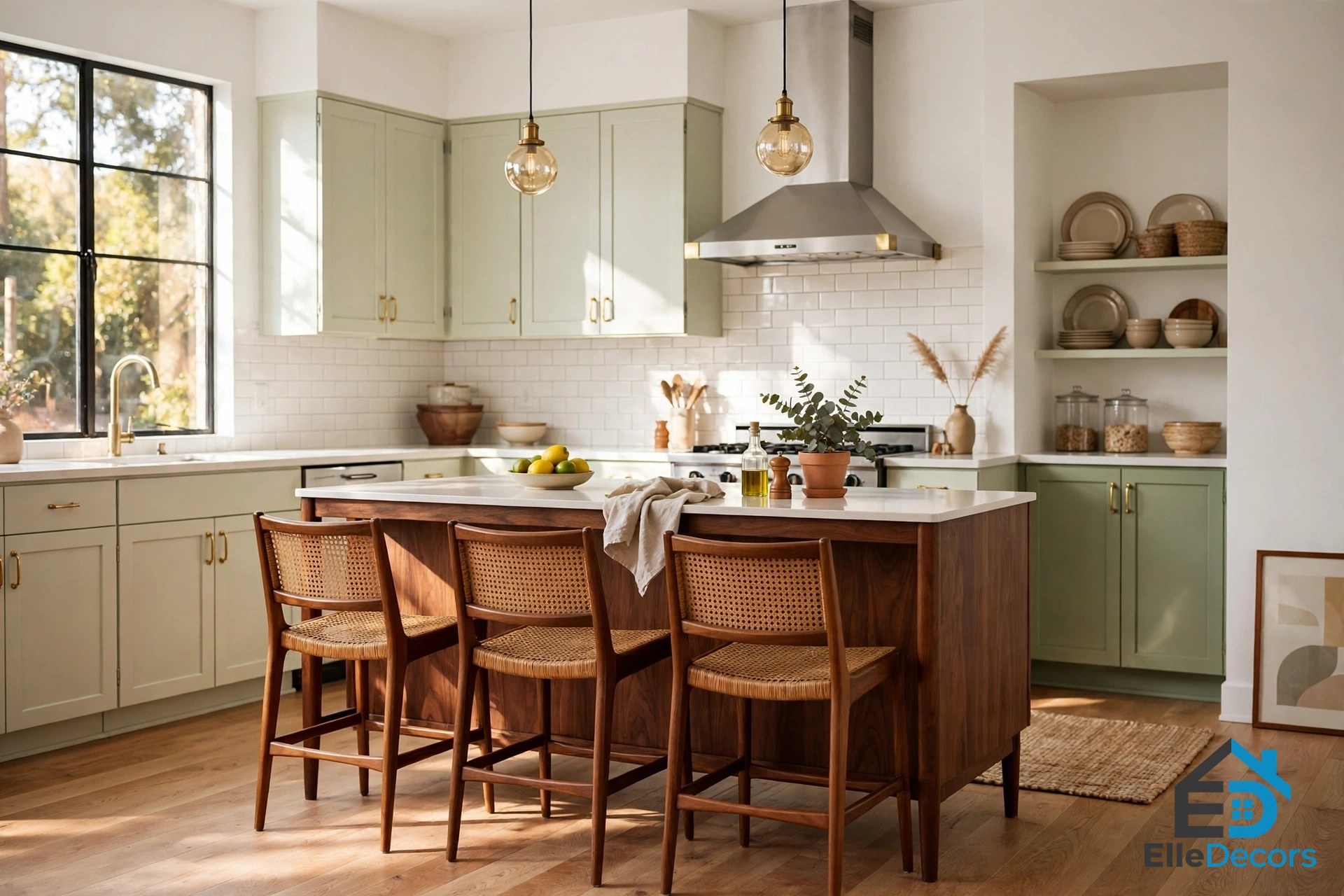
6. The Two-Tone Island
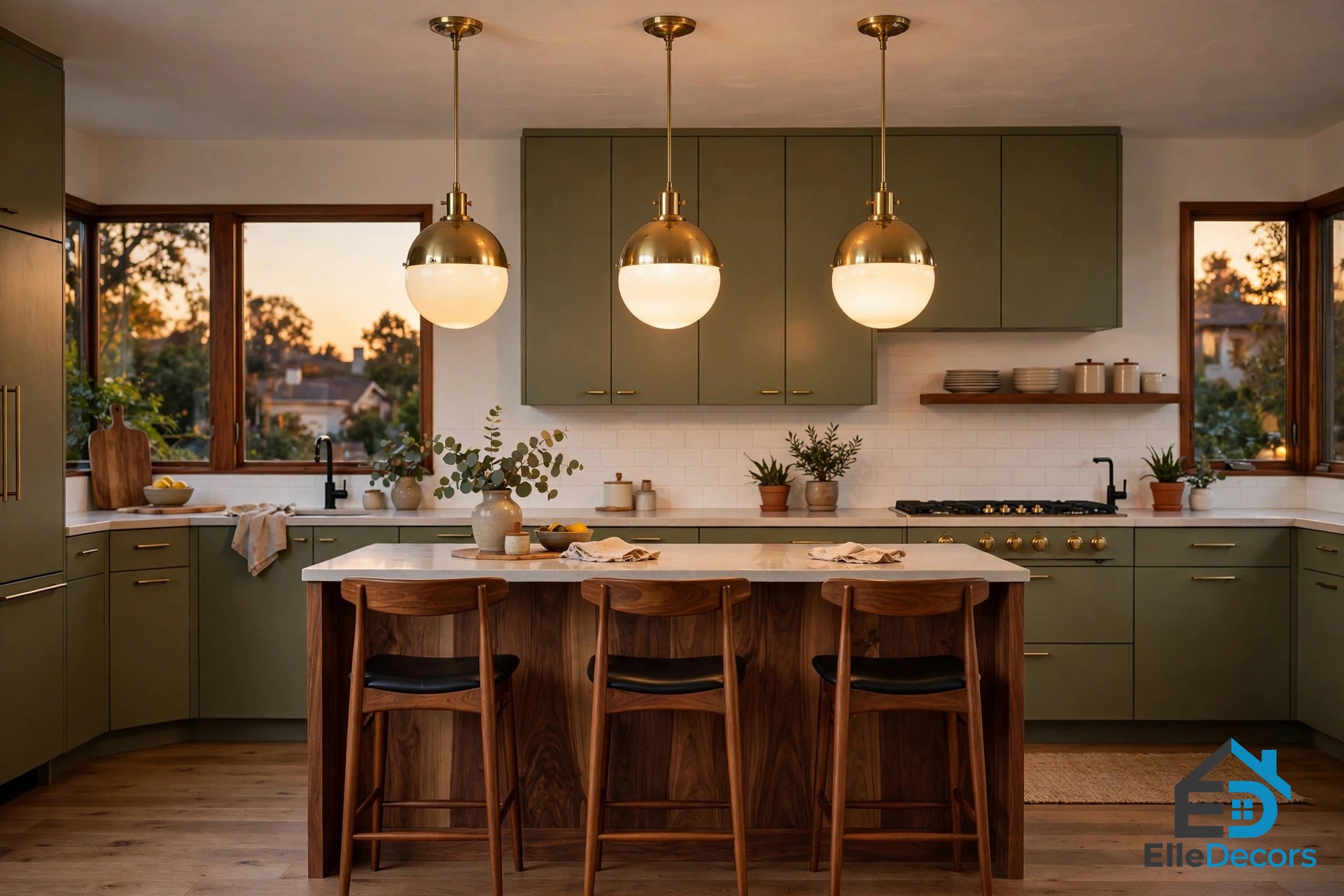
One of the smartest moves in a modern take on the style is to paint the perimeter cabinets and let the island carry the wood. Warm off white or sage green cabinets with a walnut island as the centrepiece shift the whole room from generic to intentional, and the single wood element gets all the attention it deserves. This hybrid approach also solves the heavy-wood problem: a full walnut kitchen can feel dark, but one walnut island against pale cabinets feels balanced. The reverse works too.
Best for: Renovations where full wood cabinetry feels like too much
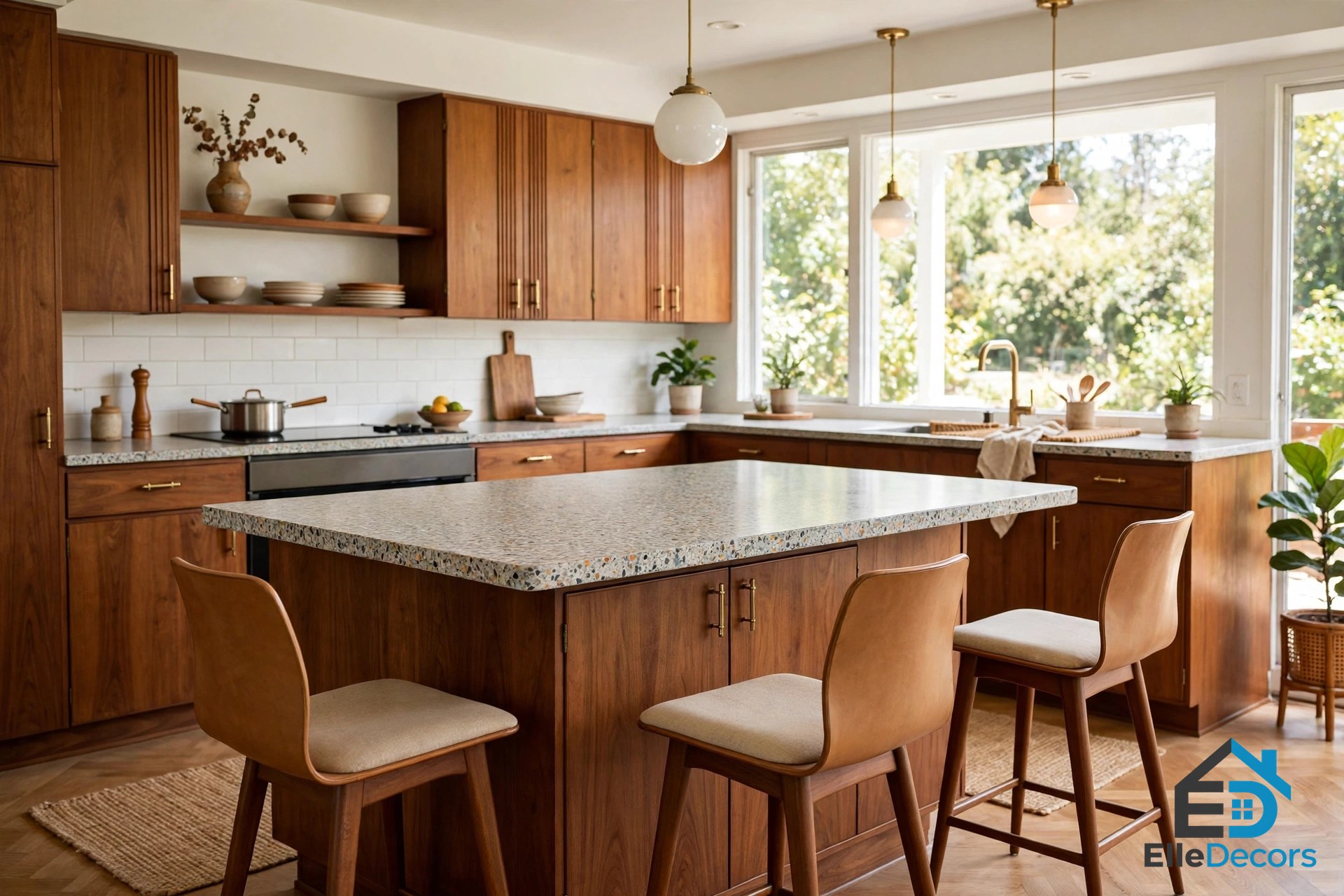
7. The Terrazzo and Stone Island
Terrazzo reached its peak in the mid century period, and it is having a revival now. A terrazzo island top, with its chips of natural stone set in a calm base, brings pattern and history in one surface. A grey stone countertop against warm wooden cabinets works the same way, and a white quartz top with soft grey veining feels contemporary while still sitting happily with wood cabinetry. The rule is one statement surface at a time: if the island top is bold, keep the cabinets and backsplash quiet.
Best for: Making the island the single bold surface in the room
Materials: Wood, Stone, and Laminate
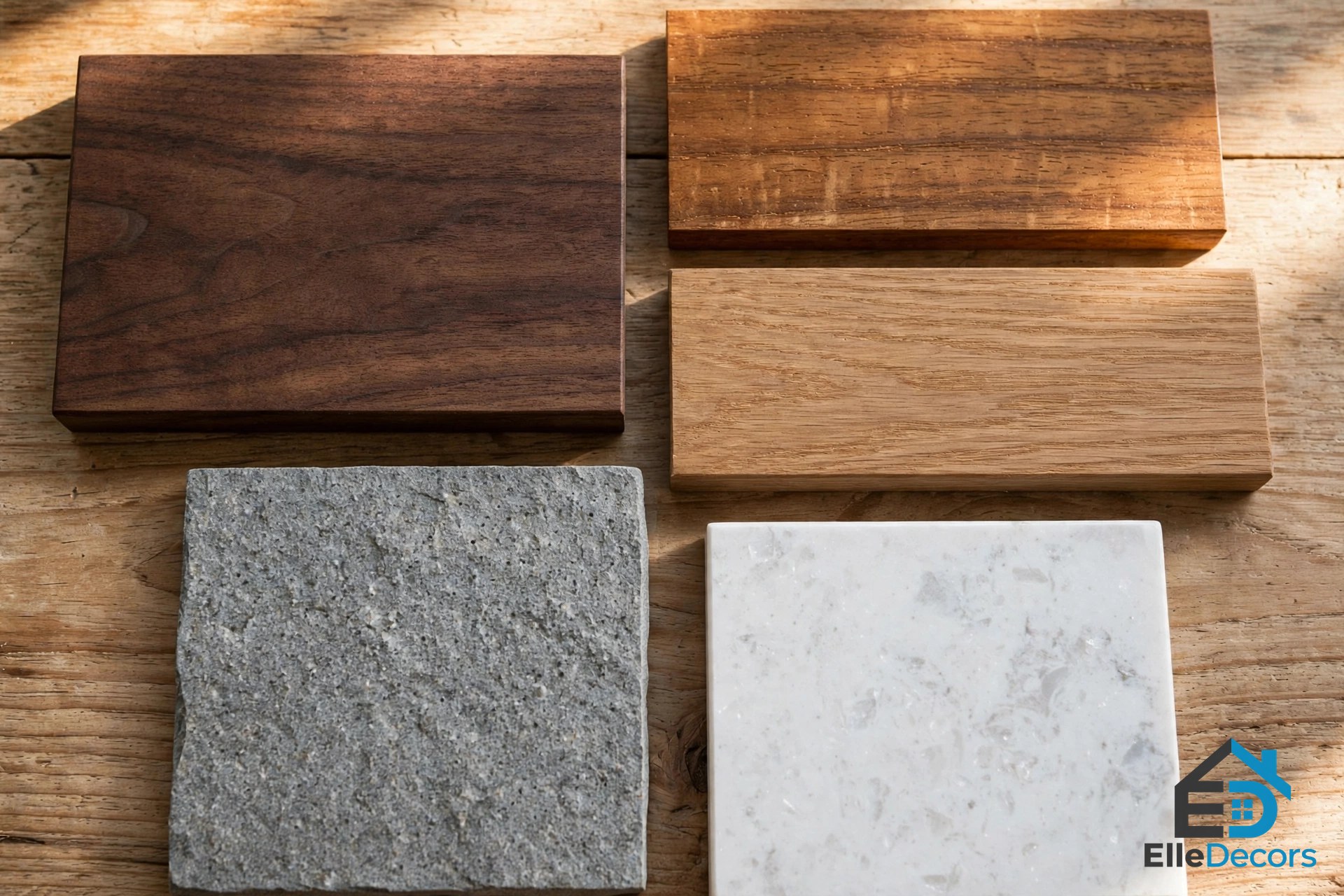
The material you choose decides how the island looks, how it ages, and how much care it asks for. Wood is the warmest choice. Walnut, teak, and oak each have their own grain and colour, and all three age beautifully when looked after. Wood needs gentle cleaning with a damp cloth and mild soap, plus regular oiling to keep it from drying out.
Stone and quartz sit at the other end of the scale: cool, hard, and calm. A stone top on a mid century modern kitchen island gives you a durable work surface that wipes clean and never needs oiling. Rich stone is having a real moment in kitchens right now, and our guide to rich colored marble kitchen trends shows how bold stone can anchor a whole kitchen design. Laminate is the practical third option: durable, scratch and stain resistant, and easy to clean.
Colour and Pattern Around the Island
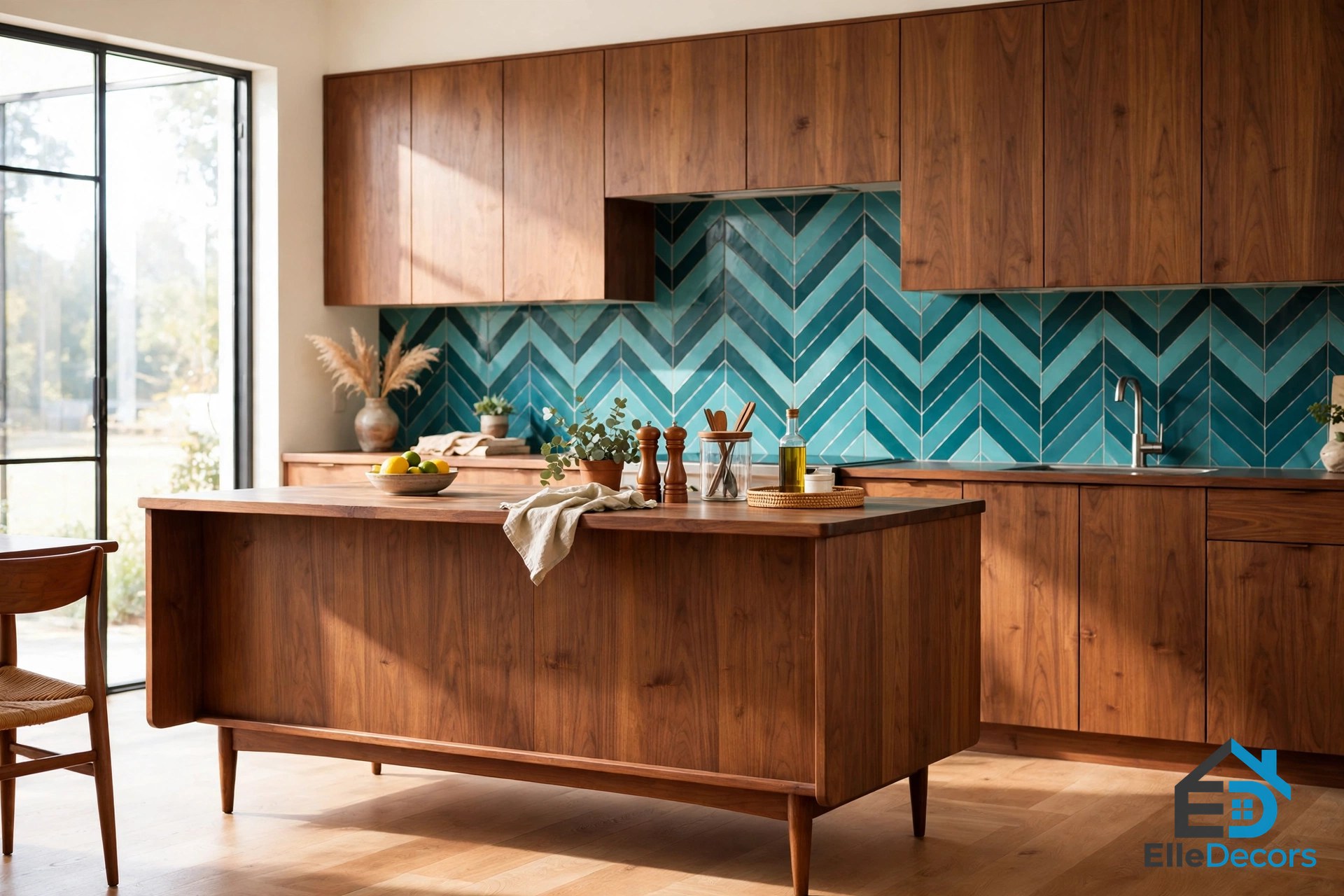
Mid century kitchens are famous for colour, but the trick is restraint. Teal, mustard, burnt orange, and avocado green are all historically accurate choices, not novelty ones. Limit bold colour to one surface, usually the backsplash, and let the island and cabinets stay calm.
Geometric tile is the other great pattern source. Chevron, hexagon, diamond, star, and cross shapes defined backsplashes in original mid century homes. If you want to push the look further, our guide to kitchen decor avant garde shows how bold, art-led kitchens balance drama with restraint.
Sizing and Planning: Getting the Fit Right
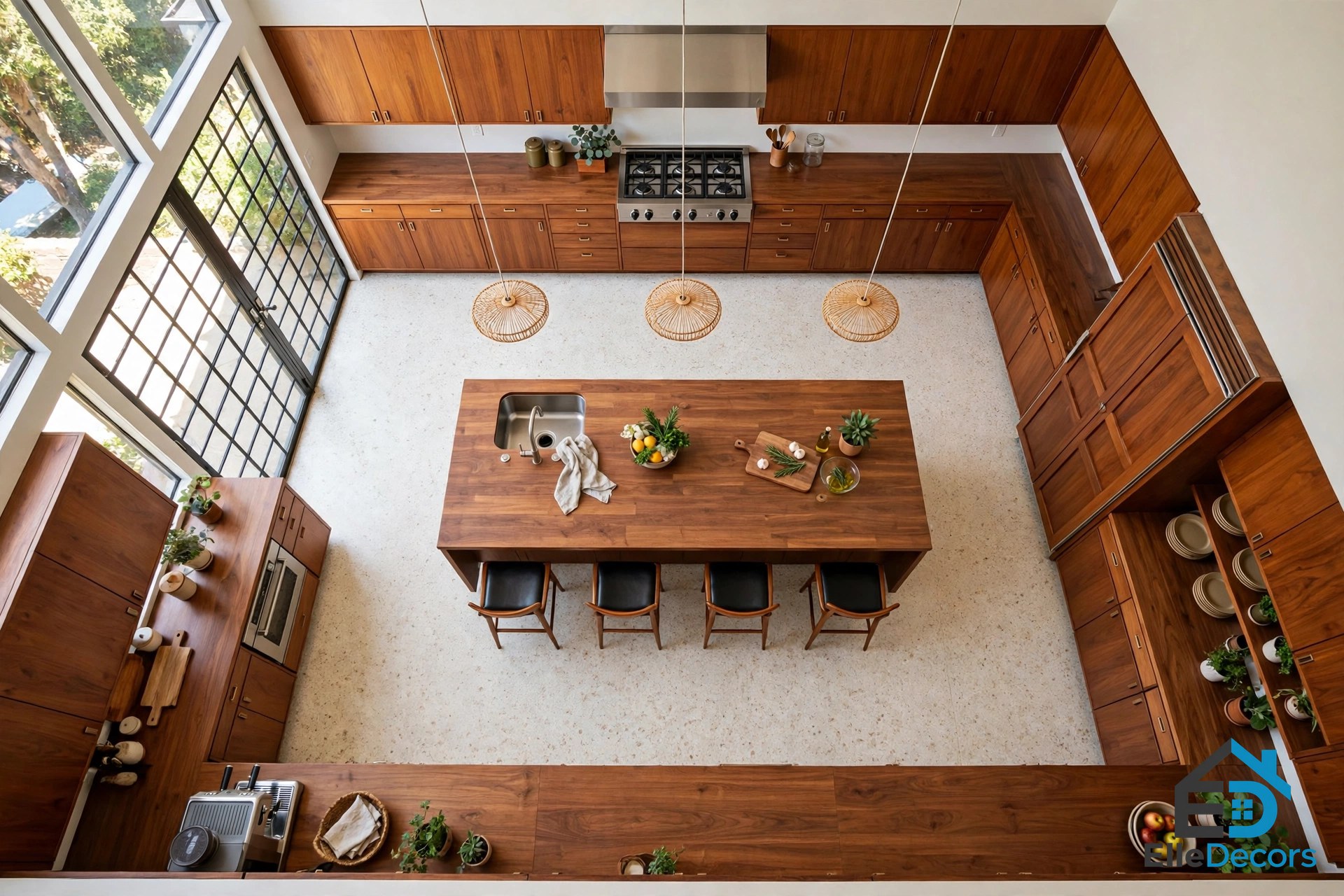
Before you order a mid century modern kitchen island, measure twice and draw the room to scale. The island must be proportional to the kitchen: a small kitchen needs a compact island, while a large kitchen can carry a substantial piece. An island that is too big for its room turns even the most beautiful design into an obstacle.
The number that matters most is the walkway. Leave at least 36 inches of clear space around all sides of the island so two people can pass without shuffling sideways. Size it for its job: a prep island needs deep worktop space, while a dining island needs an overhang for knees and stools. An island with a sink or a hob needs plumbing and electrical work, which means professional help.
Seating That Sits Right
Seating is where a mid century modern kitchen island succeeds or fails, and it is the detail people most often get wrong. The overhang matters first: allow at least 12 inches of counter overhang so knees fit comfortably under the top. Anything less, and sitters perch on the edge instead of settling in.
The stools themselves should be low profile with tapered legs, not the bulky farmhouse types that crowd the sightline. Wire-frame seats and moulded shell seats keep the visual weight low, which matters in a style built on lightness.
Lighting Above the Island
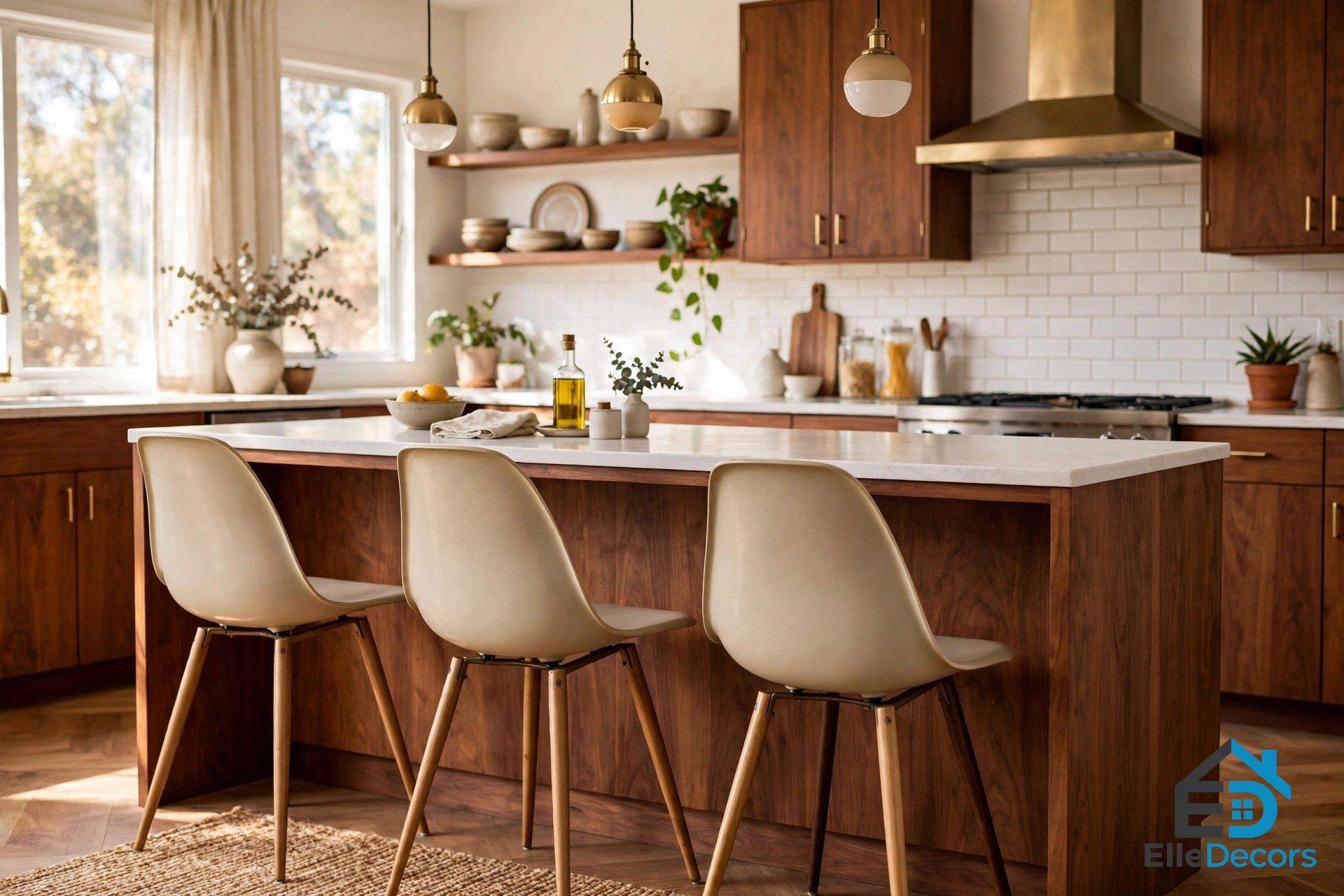
Pendant lighting is what makes the island feel like the centre of gravity in the room. Two or three fixtures with brass arms and opal glass shades, hung 30 to 36 inches above the counter surface, create a pool of focused light that flatters both the food and the people around it. If the island is longer than 8 feet, three pendants spaced evenly work better than two stretched apart.
The fixtures themselves are sculptural objects, not just light sources. Globe and dome pendants give even, glare-free light over a work surface, which is what you need when you are chopping at night. Under-cabinet strips set to 2700K warm white remove the shadows that overhead pendants create.
Storage and the Social Side
Inside a mid century modern kitchen island is where the era’s “form follows function” idea does its quiet work. Deep drawers with wood dividers belong on the working side, keeping knives, boards, and pans in order. Open display shelving belongs on the social side, where cookbooks and ceramics can be seen and the horizontal lines echo the long cabinet banks of a mid century layout.
Built-in appliances like a microwave drawer slot into the island and keep the worktop clear. Keep the outside calm while the inside works hard.
Finishing Touches: Hardware and Accessories
The small details are what make an island read as mid century rather than just modern. Hardware should be minimal: slim pulls in brushed nickel or brass, nothing ornate or fussy.
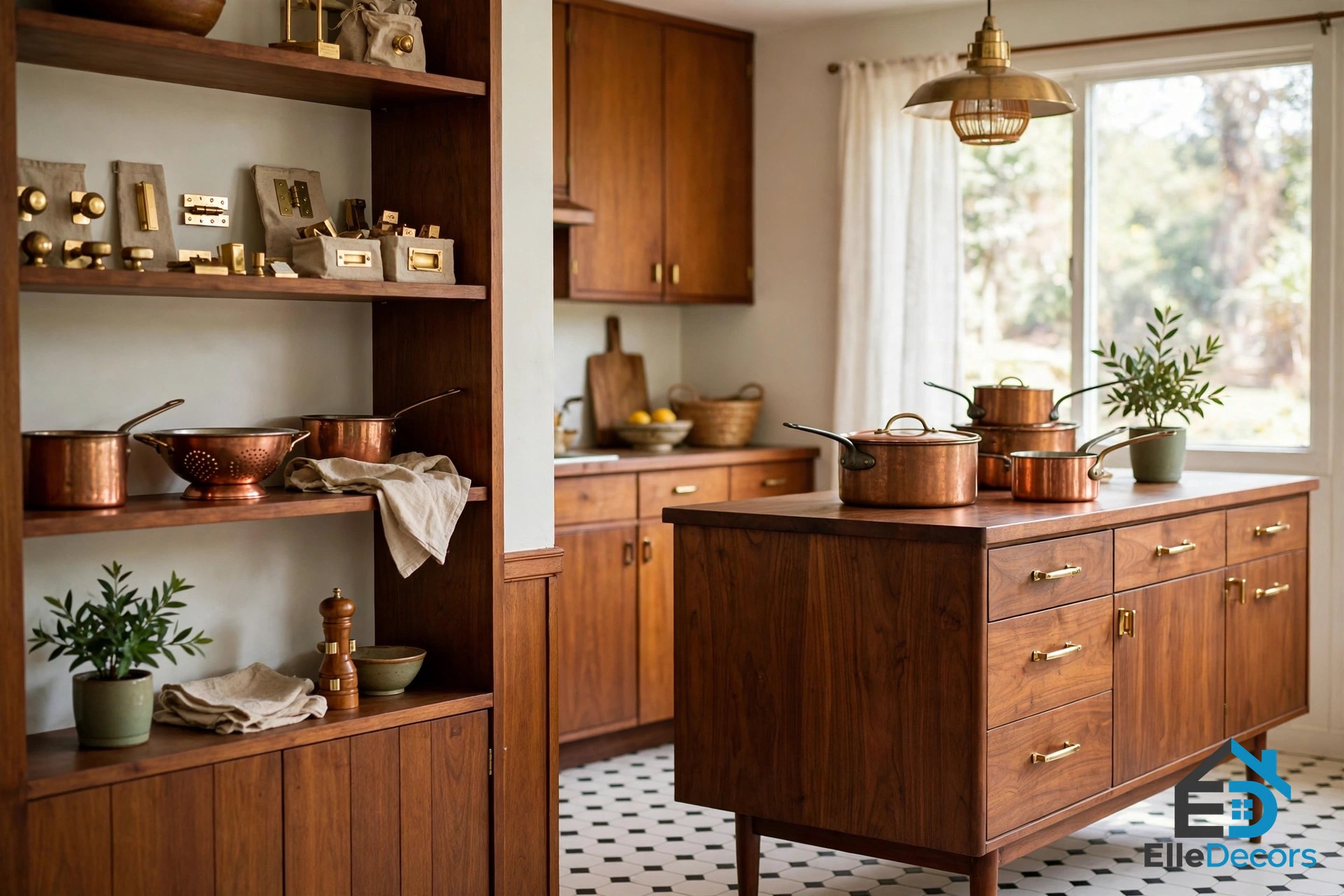
Copper has a natural home in this style, warm metal against warm wood, and our guide to copper kitchen accessories shows how to use it without tipping into clutter. A copper pot or two on open shelving, a brass fruit bowl, or a small plant on the island’s social end adds life. Keep the worktop mostly clear: the island’s clean lines are the decoration.
Small Kitchens: Islands That Still Fit
A common myth says mid century islands only suit large kitchens, but a mid century modern kitchen island can still work in a small one. Keep the 36-inch walkways, choose a slim profile, and let the island do two jobs at once, prep and dining, rather than sprawling.
If even a compact fixed island is too much, a mobile butcher block cart on casters gives you the island benefit without the permanent commitment. Roll it out when you cook, push it aside when you need the floor.
Mistakes to Avoid
- No walkway clearance. An island with less than 36 inches around it turns cooking into a shuffle. Measure first, order second.
- Too little overhang. Stools need at least 12 inches of knee space, or nobody will sit there twice.
- Bulky farmhouse stools. Heavy stools crowd the sightline and fight the style’s lightness.
- Busy everything. One bold surface per kitchen.
- Mixing pendant styles. One fixture type over the whole island, spaced evenly. Mixed pendants look accidental.
- Dark wood everywhere. A walnut island is a statement. Walnut island, walnut cabinets, walnut floor, and walnut ceiling is a cave.
- Ignoring the light. Cool white bulbs strip the warmth out of walnut. Warm 2700K light keeps the wood glowing.
Frequently Asked Questions
Can this style of island work in a small kitchen?
Yes. Choose a compact island, keep at least 36 inches of walkway clearance on all sides, and pick a slim or tapered-leg profile so the room still feels open.
What is the best countertop for a mid century modern kitchen island?
It depends on how you cook. Butcher block is warm and practical for prep but needs regular oiling. Stone and quartz are durable and wipe clean. Laminate is the easiest to live with and resists stains well.
How high should pendant lights hang above the island?
Hang pendants 30 to 36 inches above the counter surface. Two fixtures suit most islands, and three work better when the island is longer than 8 feet. Keep the same fixture throughout and space them evenly.
What stools go with this style of island?
Low-profile stools with tapered legs, moulded shell seats, or wire frames suit the style best. They keep the sightline open and echo the era’s furniture. Allow at least 12 inches of counter overhang so sitters are comfortable.
Where the Style Comes From
The island makes more sense once you know the movement behind it. This short film from Wayfair’s “A Style Is Born” series traces the history of mid century modern design, from its post-war roots to the iconic chairs and designers who shaped it:
The Bottom Line
The island is the decision that shapes the whole kitchen. Get the style right, size it to the room, give it proper seating and light, and the rest of the kitchen falls into place around it. The right mid century modern kitchen island does three jobs at once: it works hard, it gathers people, and it makes the room look intentional.
If you want the wider picture first, our guide to mid century modern kitchen design shows how the island sits within the whole room. Choose the island that fits your space and your habits, and it will still look right in twenty years.