Contemporary Home Office Design: Layout, Furniture, and Light That Help You Focus
A spare room with a desk in it is not yet an office. A good workspace feels calm when you sit down, keeps everything you need within reach, and lets you close the door on work at the end of the day. That is what a contemporary home office should do: clean lines, honest materials, and a layout shaped around how you actually work.
This guide covers the four decisions that matter most: where the desk goes, what furniture earns its place, how the light is layered, and where everything is stored. It also includes modern home office ideas for small rooms, shared spaces, and awkward corners, so the advice works whether you have a whole room or half of one.
What Makes a Contemporary Home Office?
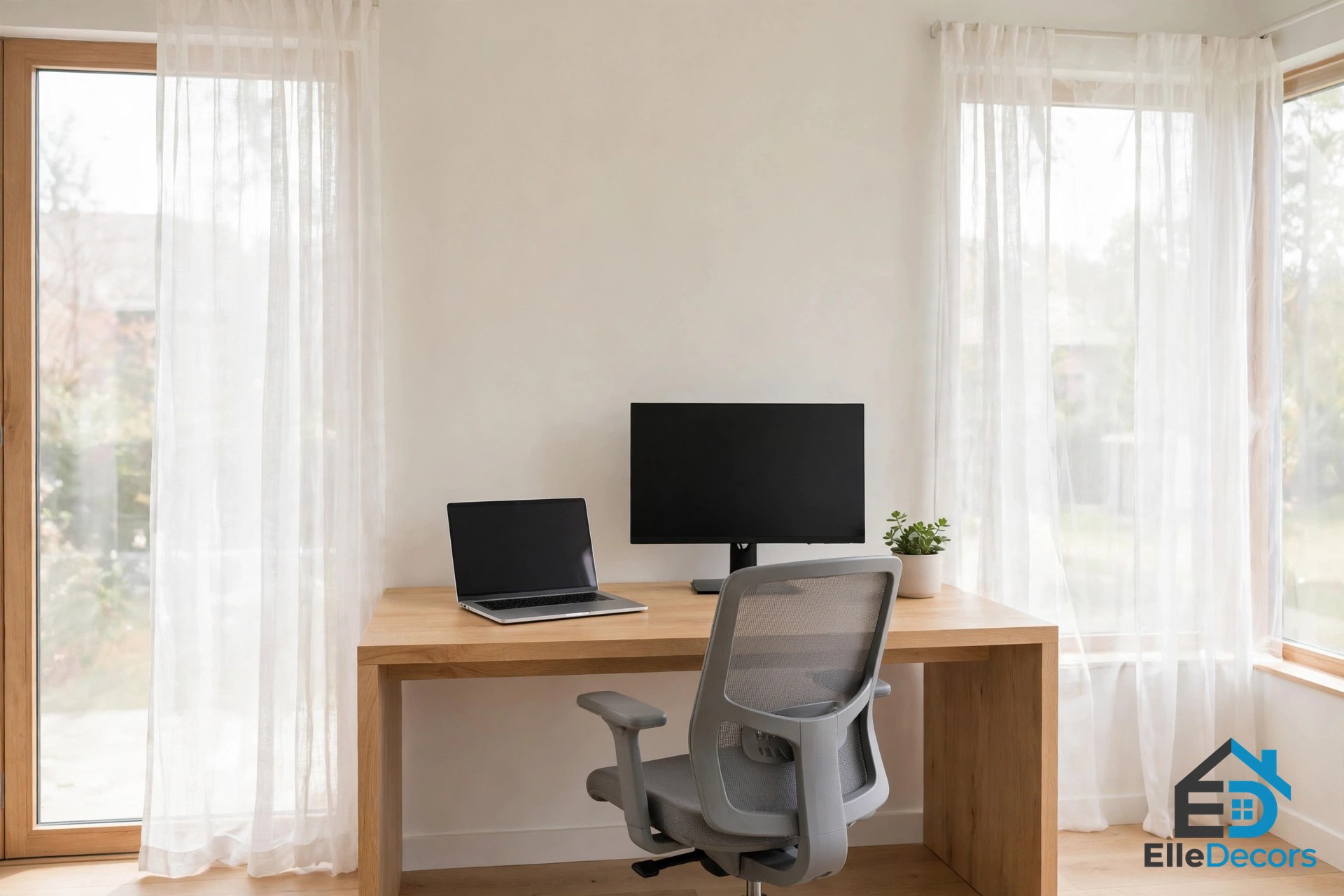
Contemporary style is not a fixed look from one decade. It is the style of right now: simple shapes, uncluttered surfaces, natural materials, and a few warm touches. A contemporary home office usually has a pale or neutral base, one wood tone, black or matte metal accents, and very little on the desk that does not earn its place.
The difference from a purely minimal office is warmth. A rug underfoot, a plant on a shelf, or a timber desk top keeps the room from feeling like a showroom. The goal is a room that looks calm in a video call and feels good to sit in for hours.
Start with how you work before you buy anything. Do you spend the day on video calls, or mostly writing and reading? Do you need two screens, or just a laptop? Do you spread papers out, or work from a single notebook? The answers decide the desk size, the storage, and even which wall the desk should face.
Start With the Layout
Layout comes first because it is the hardest thing to change later. The desk is the anchor of the room, and everything else — the chair, the storage, the light — is arranged around it.
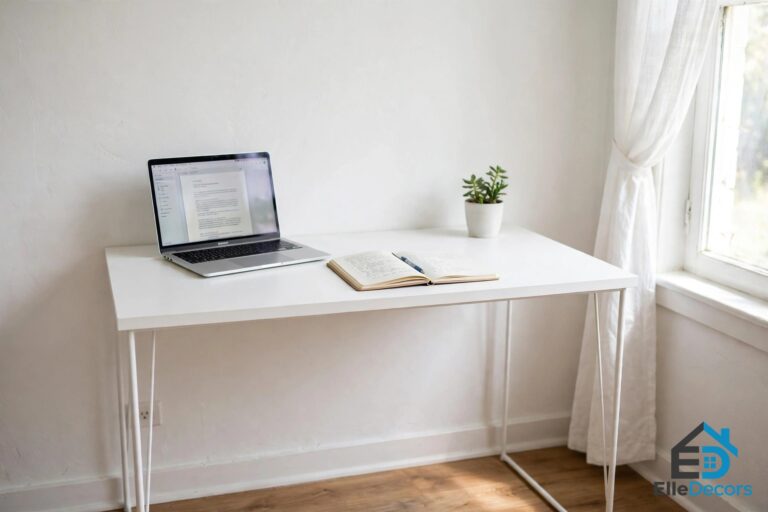
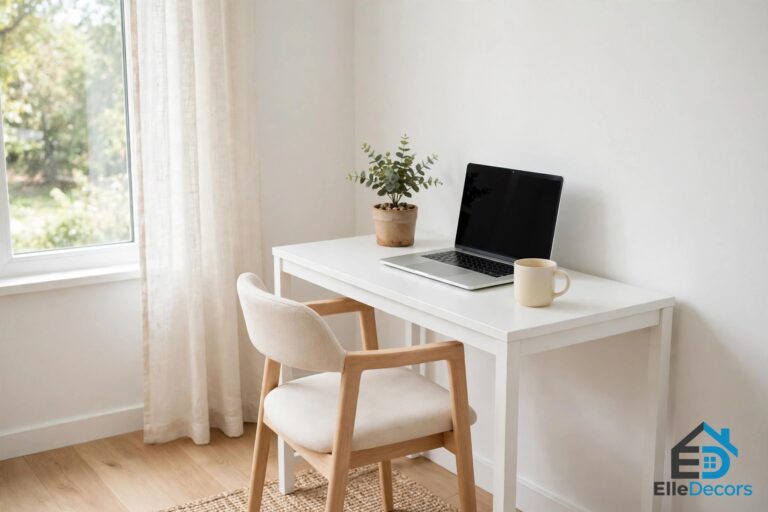
Face the door or a window, not a blank wall. Sitting with your back to the door feels exposed, and facing a bare wall all day feels cramped. If the room has one window, place the desk at right angles to it, so daylight falls across the desk from the side. That gives you natural light without glare on the screen and without turning you into a silhouette on video calls. Design guides from Toll Brothers give the same advice: face the door or a window, and keep the window light coming from the side.
Leave room to move. You need space to push the chair back, stand up, and reach the shelves without shuffling sideways. A clear path from the door to the desk matters more than squeezing in one more cabinet.
Zone the room by task. Most home offices hold three zones, even in a small room: the desk zone for focused work, a storage zone, and a small pause zone — a reading chair or a clear stretch of floor. Marking the zones with a rug, a shelf unit, or a low partition keeps the room from becoming one blurry desk area. The source gallery shows this again and again: low partition walls, raised platforms, and shelving runs that divide a room without closing it off.
Layouts that work
- The single wall run. Desk, shelving, and storage along one wall. Best for narrow rooms and spare bedrooms.
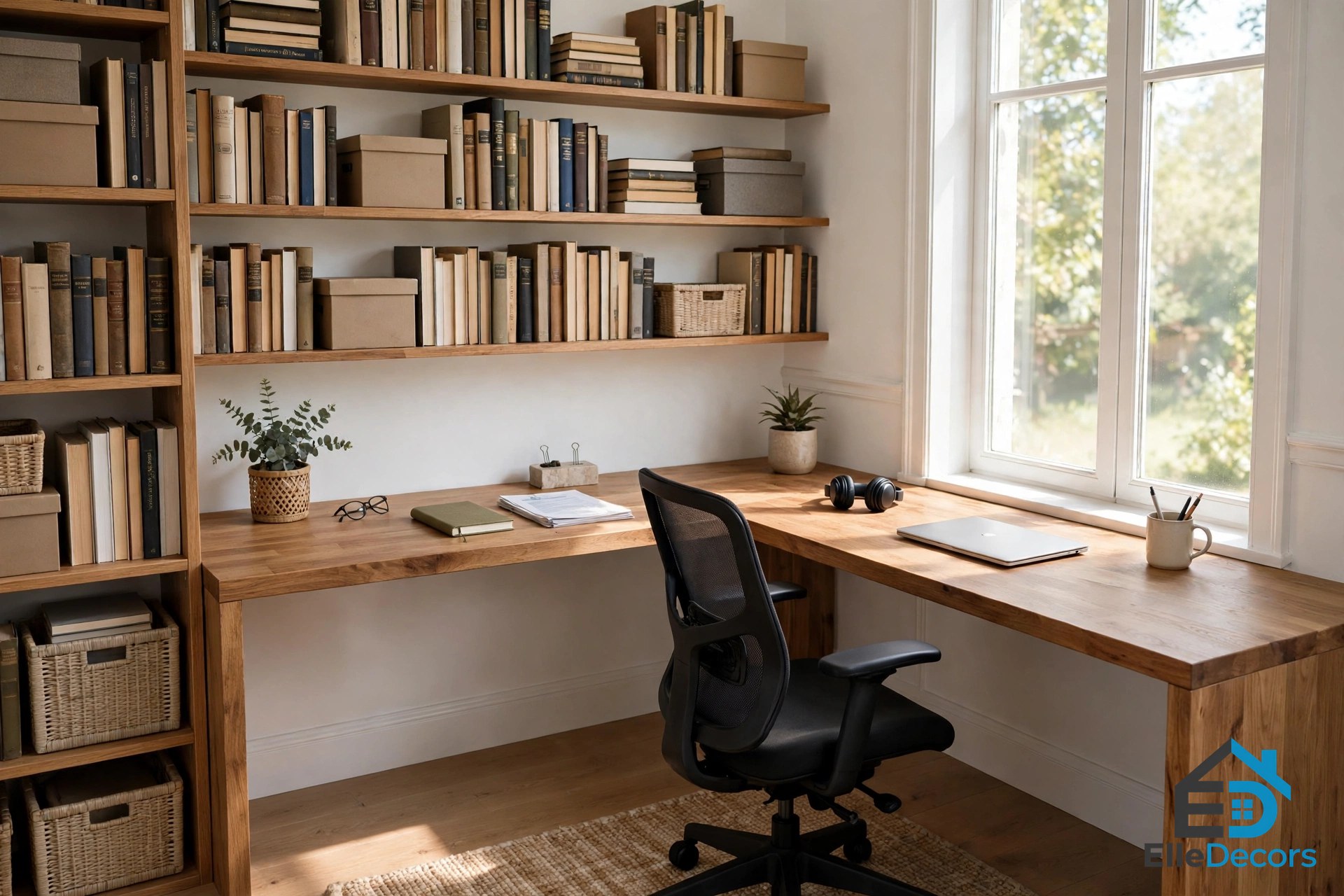
- The L-shaped corner. A desk that turns the corner gives you a main surface and a second one for papers or a second screen.
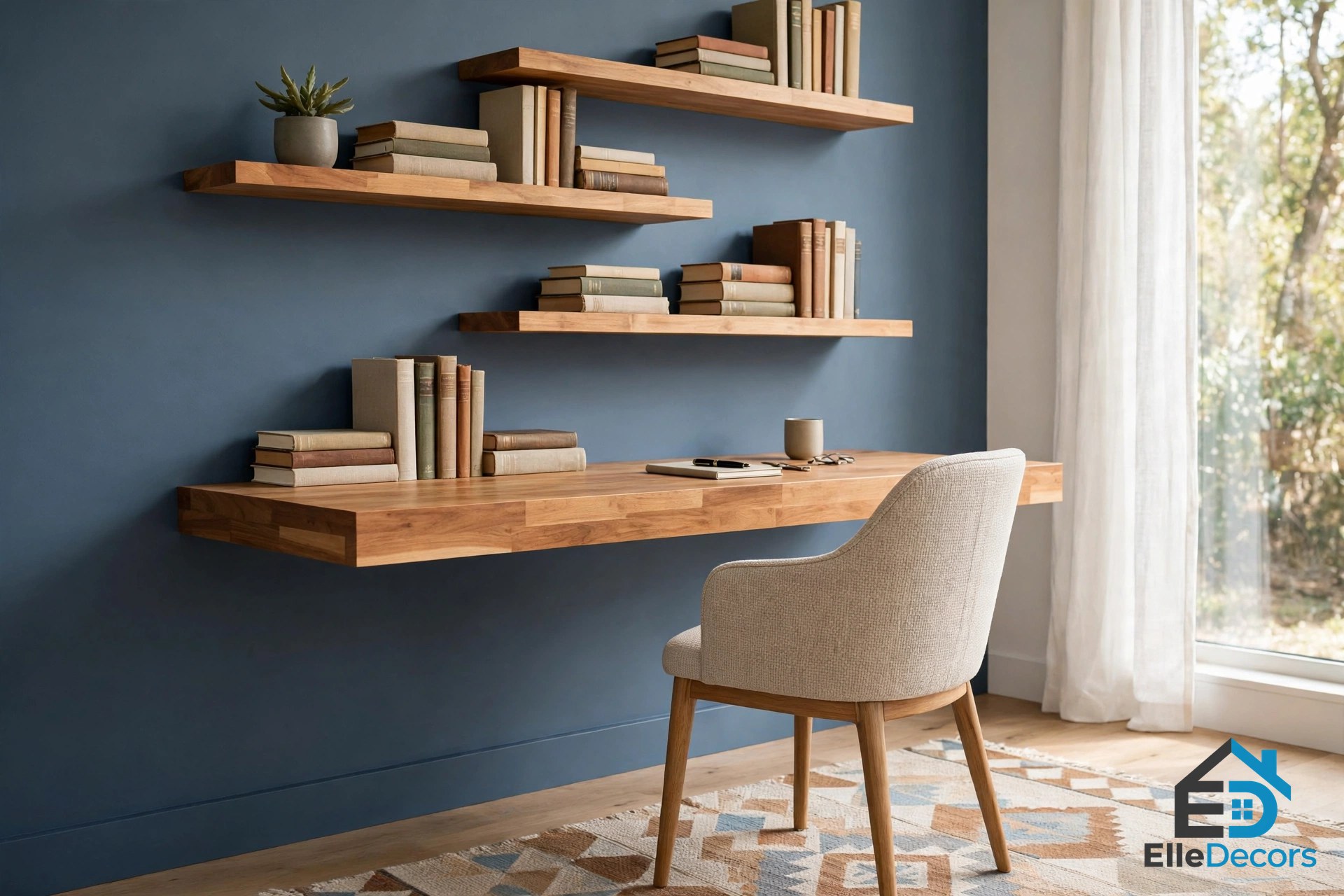
- The floating desk. A wall-mounted desk slab with no legs keeps the floor clear and suits small rooms and alcoves.
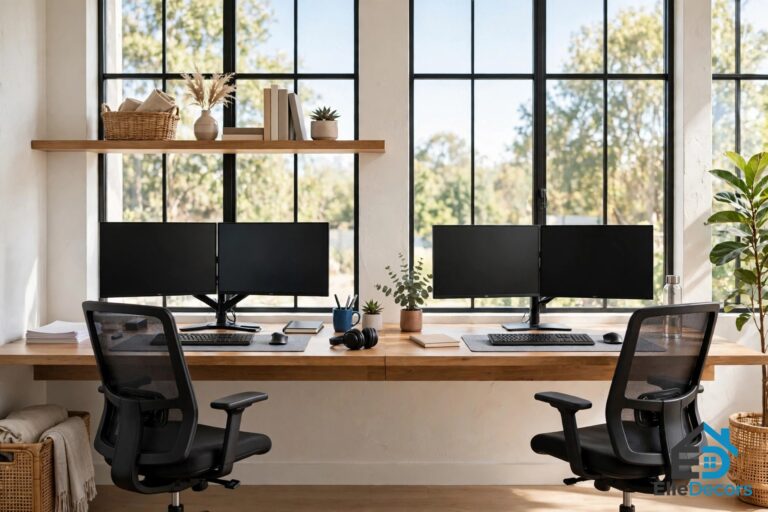
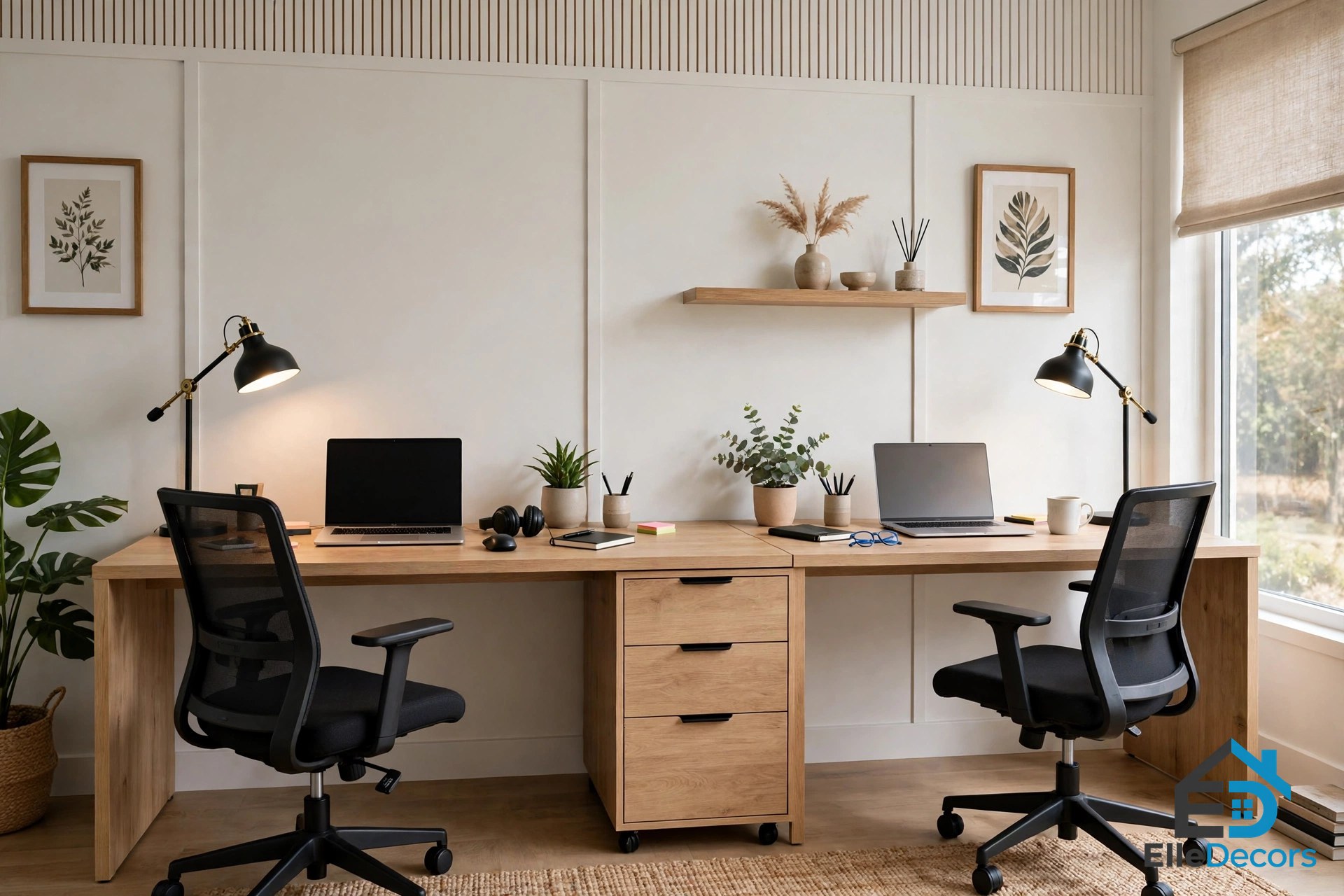
- The double desk. Two workstations along one long surface, with drawer units in the middle as supports.
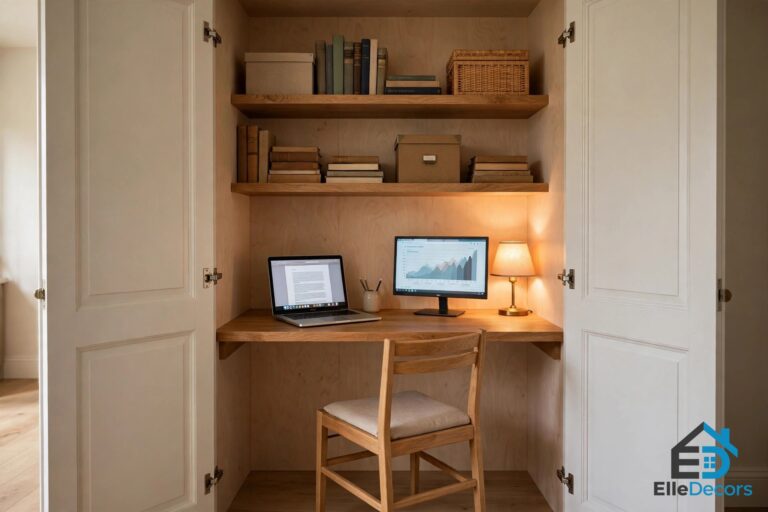
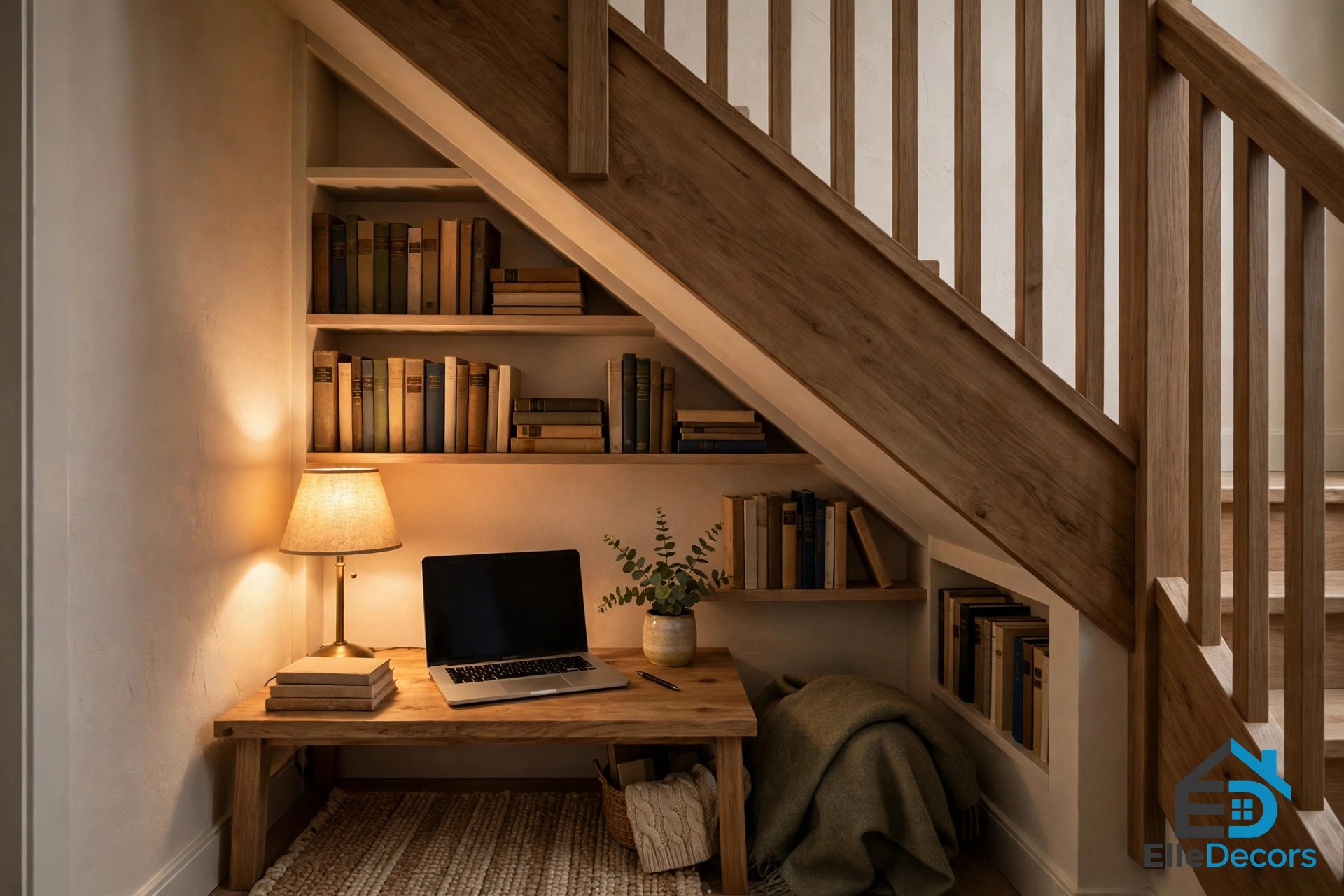
- The tucked-away nook. An alcove or the space under the stairs can hold a small desk and shelves, as long as it has light and a clear boundary.
Choose Furniture That Works All Day
Furniture is where comfort meets style. A beautiful chair that hurts after an hour is a bad chair, and a desk that is too small will be covered in clutter by Friday. Buy the desk and the chair first, and let everything else follow.
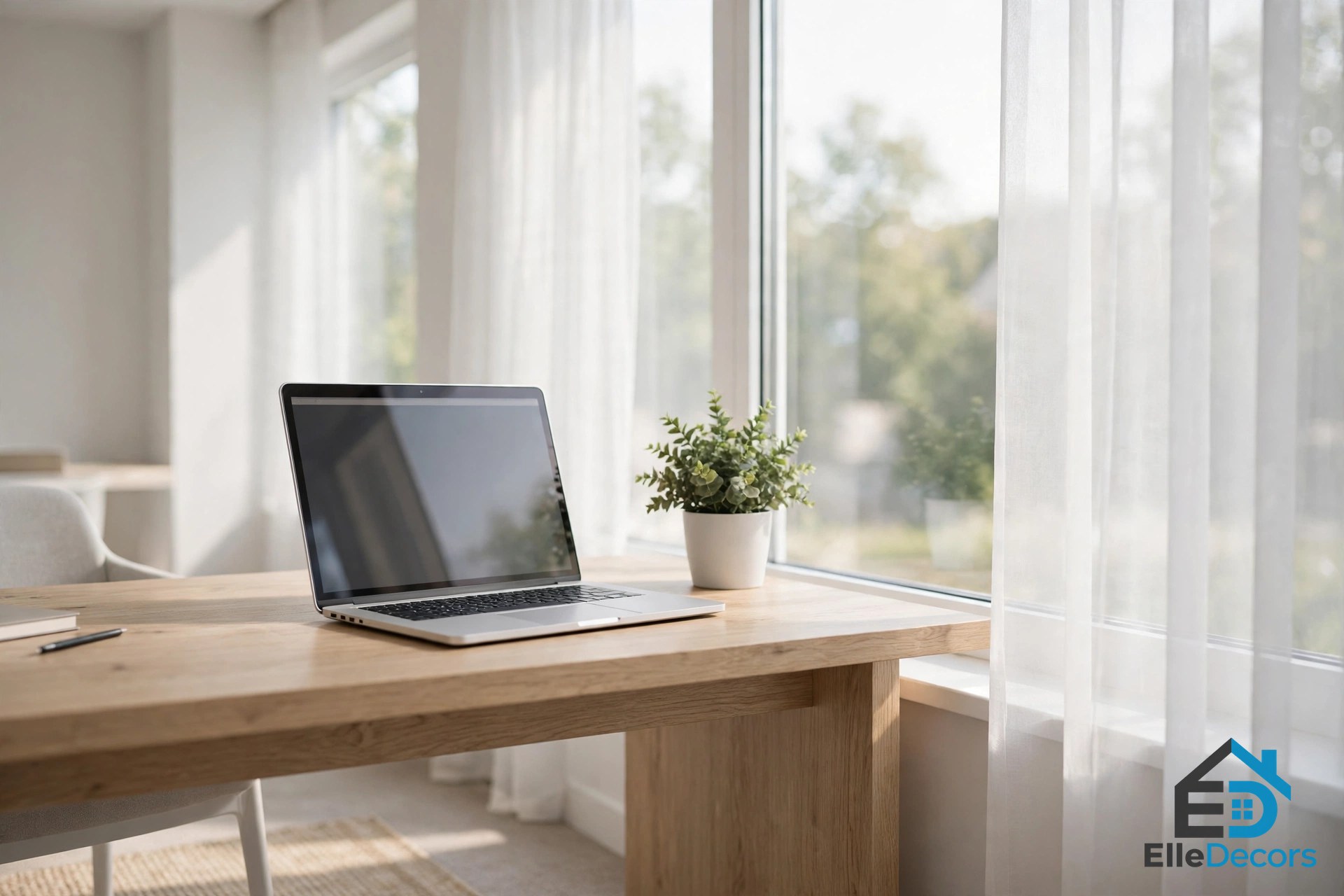
The desk. A plain rectangular desk suits most people. An L-shaped desk suits people who juggle a screen, papers, and a notebook at once. A standing desk suits people who like to change position through the day. Whatever the shape, the surface should be deep enough to hold the screen at a proper distance with room for your arms in front of it. If you are still deciding, our guide on how to choose a minimalist computer table walks through size, height, and legroom step by step.
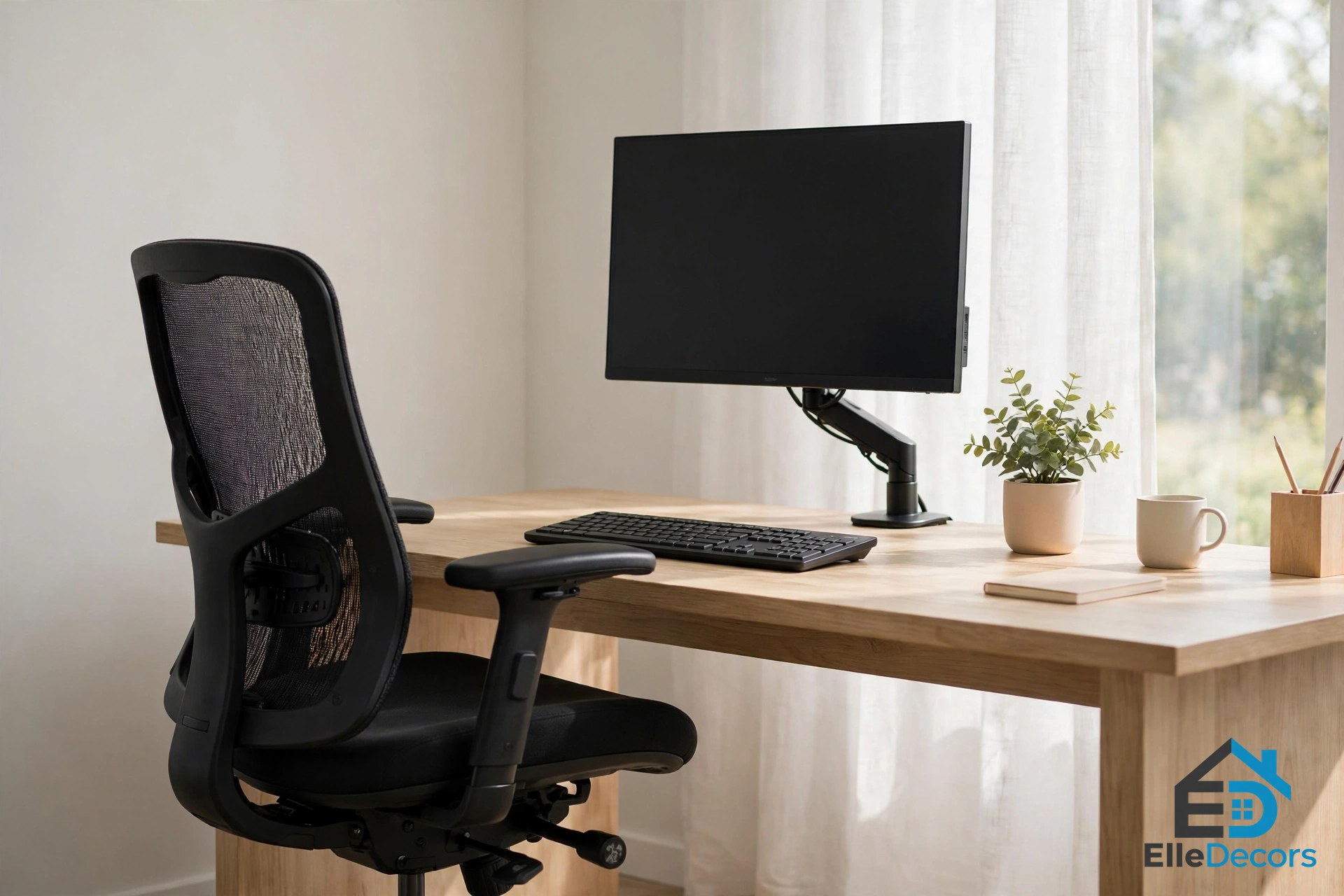
The chair. An ergonomic chair with adjustable height, lumbar support, and armrests is the single most important purchase in the room. Sit in it before you buy if you can. The seat should let your feet rest flat on the floor, and the back should support your lower back without forcing you upright.
Set the screen right. The Occupational Safety and Health Administration’s computer workstation guidance gives a simple starting point: place the monitor directly in front of you, at least 20 inches away, with a preferred viewing distance of 20 to 40 inches, and keep the top of the screen at or slightly below eye level. A monitor arm makes this easy to adjust, and it frees desk space too. These are general starting points, so adjust until you can read comfortably without leaning forward or tilting your head back.
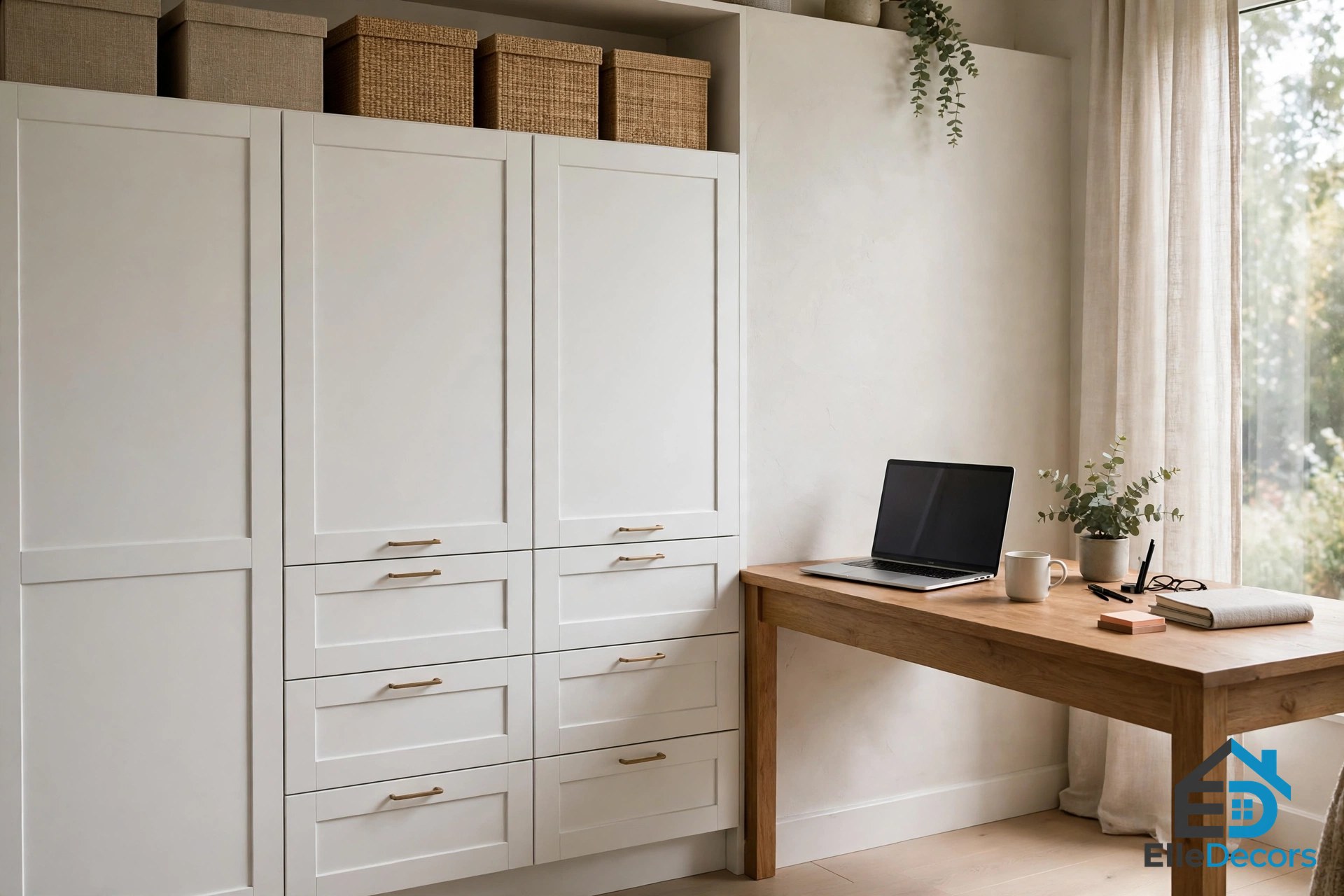
Storage furniture. A low cabinet or a set of drawers beside the desk holds the things you reach for daily. Tall shelving belongs on a side wall, not behind the desk where it crowds your headspace. If the room is small, fitted furniture — a made-to-measure desk with matching cupboards and shelves — uses every inch, as several of the source gallery’s small-space designs show.
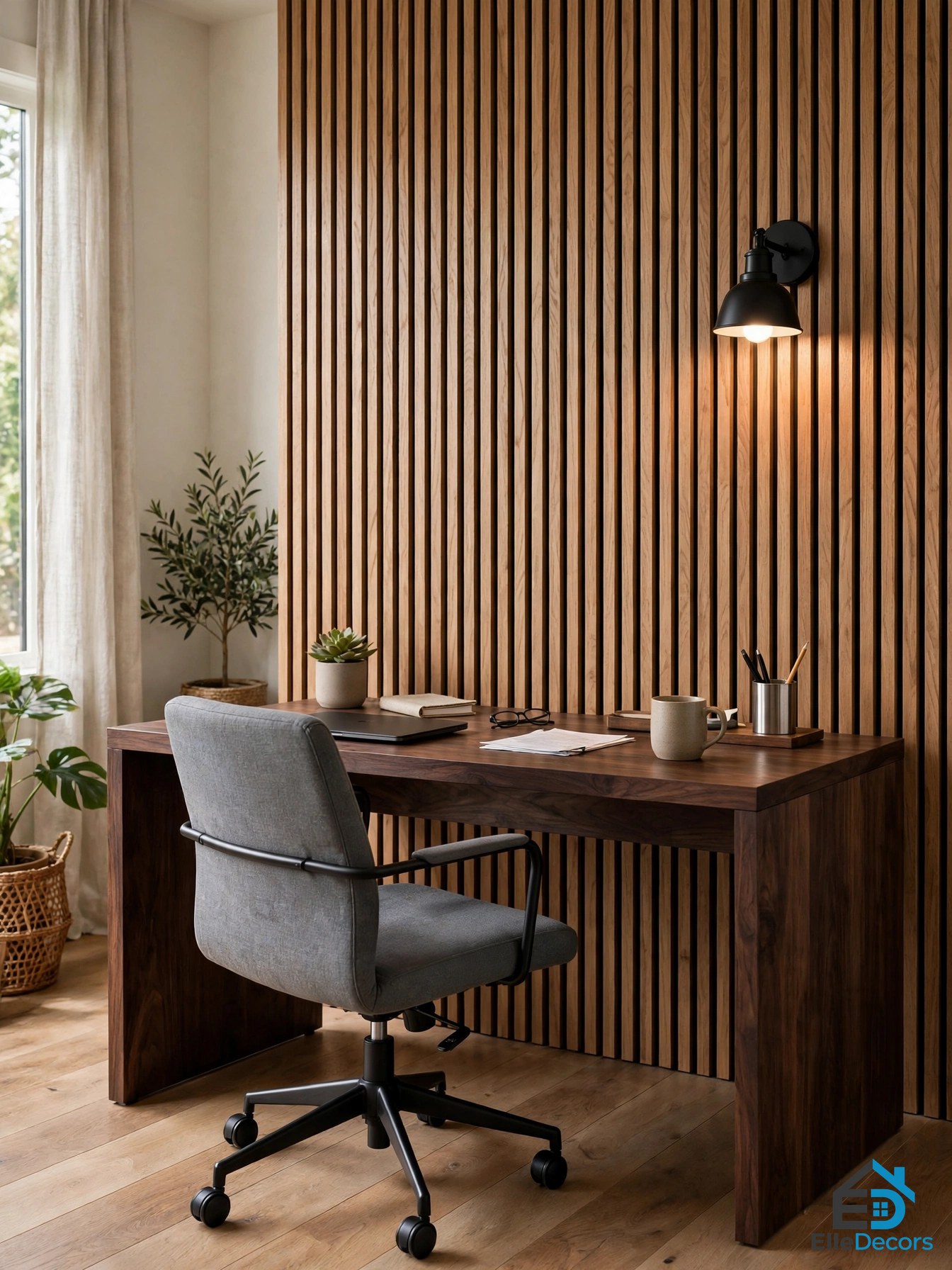
A contemporary home office keeps the furniture quiet so the work can be loud. Pale wood, white, soft grey, and black are the usual palette. One material repeated through the room — the same oak on the desk and the shelves, for example — ties everything together without any effort.
Layer the Lighting
One ceiling light is never enough for a room where you read, write, and meet people on camera. Good lighting in a contemporary home office comes in three layers, and each one has a job.
Natural light first. Daylight is the best light for working, and it is free. A desk near a window gets it, but the angle matters. Light from the side is ideal. Light from behind you throws glare across the screen, and light from directly behind the desk turns you into a dark shape on video calls. Sheer curtains soften strong sun without blocking it, and a blind you can tilt gives you control on bright afternoons.
Ambient light second. This is the general light that fills the room: ceiling lights, recessed spots, or a floor lamp. Put ceiling lights on a dimmer if you can, so the room can be bright for work and soft for an evening call.
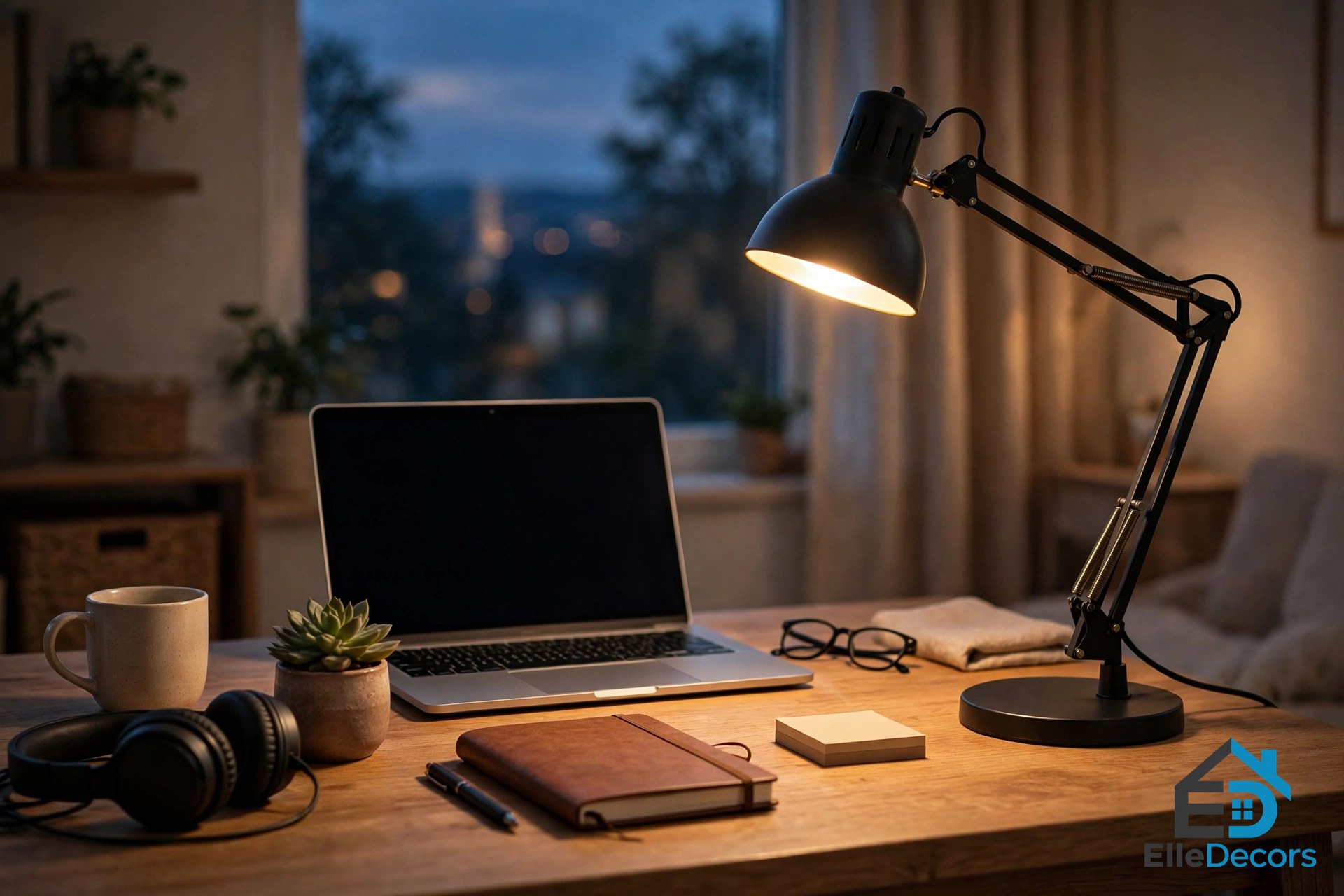
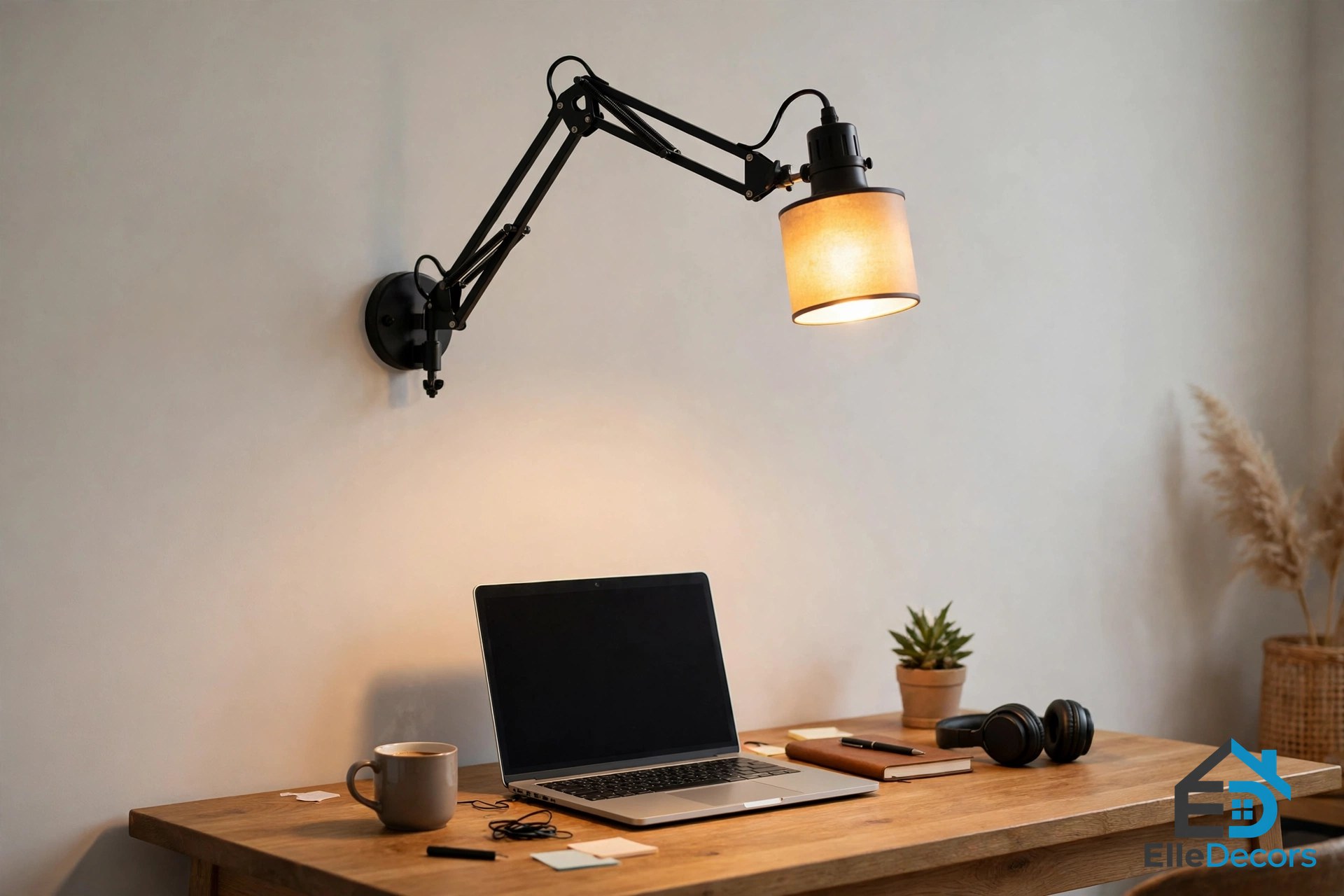
Task light third. A desk lamp with an adjustable arm puts light exactly where you are reading or writing, and it is the layer that saves your eyes at the end of the day. A swing arm lamp is the classic choice here because it moves with you: pull it close for paperwork, push it back for screen work. See our guide to the swing arm lamp for the styles that suit a modern desk. Wall sconces above the desk do the same job without taking up any desk space at all.
Keep the colour of the light warm, not cold and clinical. One consistent warm tone across the ceiling light, the desk lamp, and any shelf lighting makes the room feel settled. Mixed tones make a room feel restless even when you cannot say why.
Storage That Keeps the Desk Clear
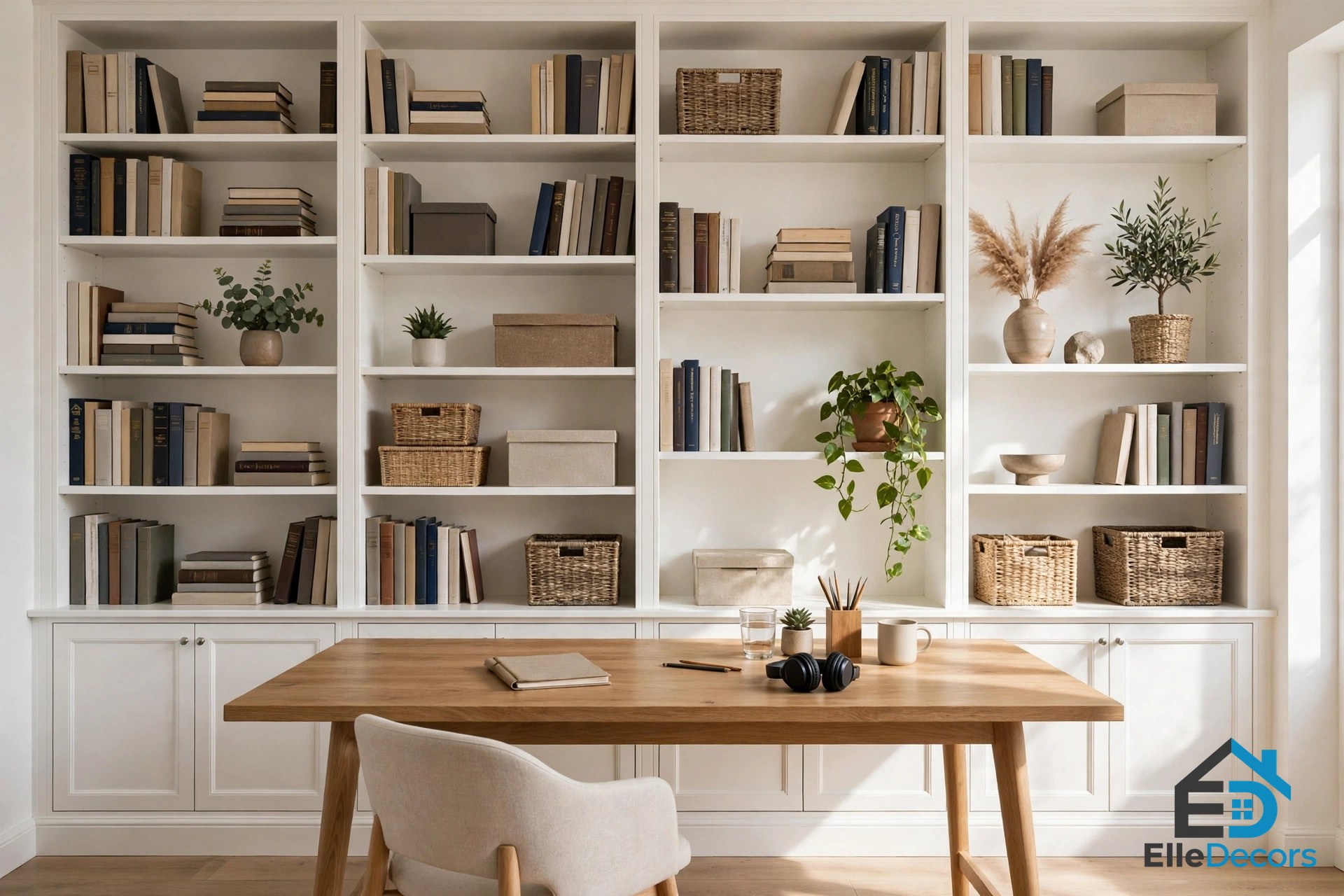
A desk covered in clutter is not a style choice; it is a storage problem. The fix is not a bigger desk. It is a place for everything that is not the work in front of you. Floor-to-ceiling built-ins with open shelves, closed cabinets, and deep drawers use wall space that would otherwise sit empty.
Group like with like. Papers in one place, cables in another, stationery in a third. Magazine files, small boxes, and baskets keep the groups apart inside a drawer or on a shelf.
Keep the daily tools within reach. The notebook, the pen, the charger, and the headphones you use every day belong on or beside the desk. Everything else belongs in storage.
A contemporary home office hides its storage in plain sight. Matching boxes, one wood tone, and closed doors where the mess lives will make even a busy room look calm.
Colour, Texture, and Personality
Colour sets the mood of the room, and a workspace needs a calmer mood than a living room. Pale neutrals — white, soft grey, warm beige — are the usual base in a contemporary home office because they reflect light and stay out of the way of your thoughts. A single accent wall in a deeper tone, such as slate blue or soft green, adds character without shouting. The source gallery shows both: bright white rooms with one bold colour, and dark wood rooms warmed by brass and soft textiles.
Texture does the work that colour cannot. A wool rug under the desk softens sound and warms bare feet. Linen curtains soften the hard lines of a desk and shelves. A timber desktop or a ceramic lamp adds a natural touch that flat surfaces lack. Mix two or three textures, not six: wood and wool, or metal and linen, is enough.
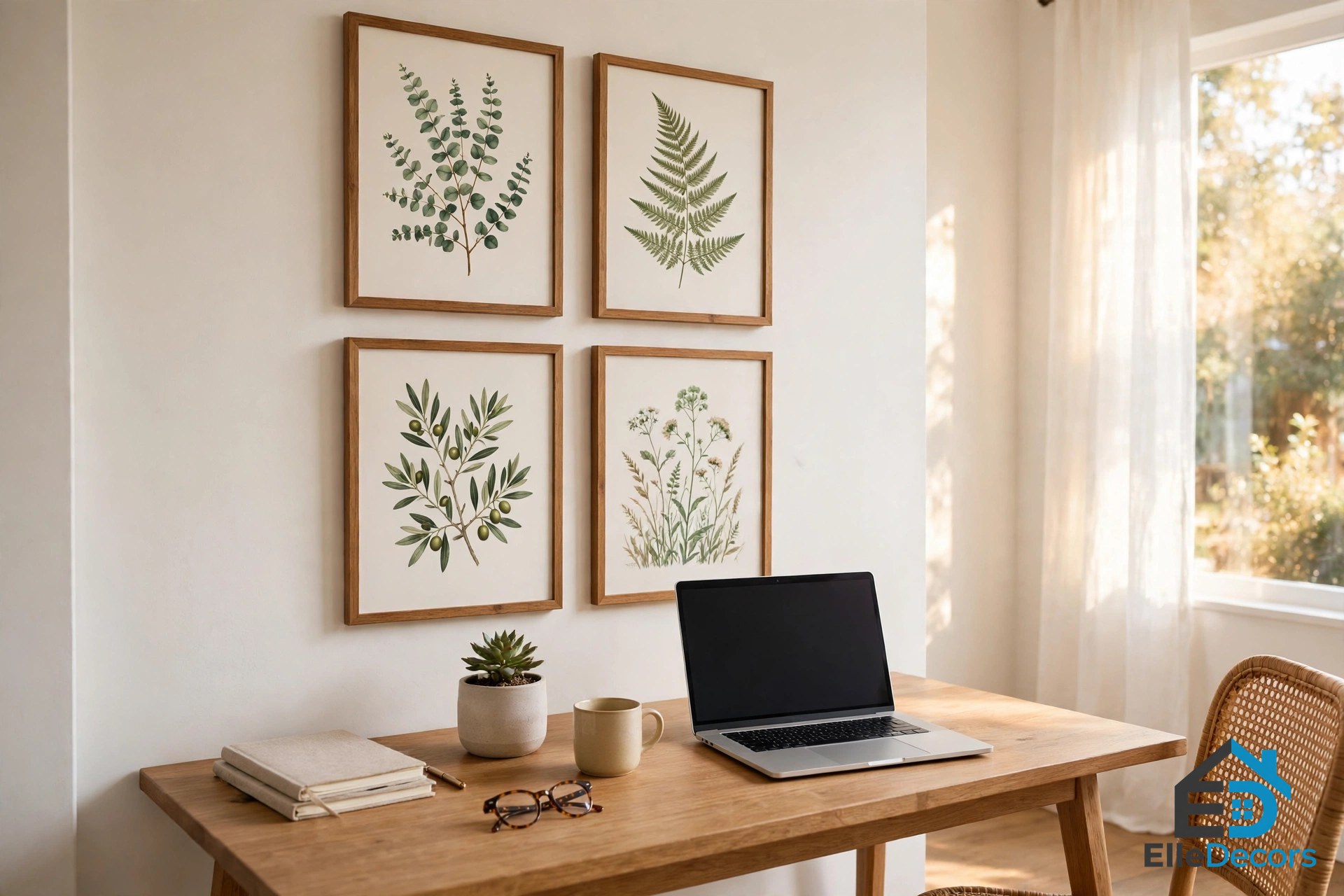
Personality comes last, and it should be yours. A gallery wall of prints you chose, a few framed photographs, or a shelf of books you actually read will make the room feel like yours in a way no catalogue set ever will. Keep it to a few pieces, though. A desk covered in ornaments is a desk with no room to work.
Plants earn their place here. A trailing plant on a high shelf, a small potted plant on the desk, or a tall plant in the corner adds life and softens the straight lines of the furniture. Choose plants that suit the light you have, and keep them where they will not crowd the screen.
Watching a real office come together shows how these pieces fit. This video finishes a built-in home office with a bulletin board, a gallery wall, and a rug and shade — the same finishing steps this guide describes:
Small Spaces and Shared Rooms
Not everyone has a spare room, and a contemporary home office does not require one. Some of the best workspaces in the source gallery are alcoves, corners, and under-stair nooks.
The alcove office. A shallow alcove holds a wall-mounted desk, a shelf above, and a chair that tucks away. Paint the back wall a different colour and the alcove reads as a deliberate room of its own.
The under-stairs office. The space under a staircase fits a small desk and recessed shelving, and the slope of the stairs gives it a cosy, den-like feel. Good light is essential here, since stairs rarely have a window nearby.
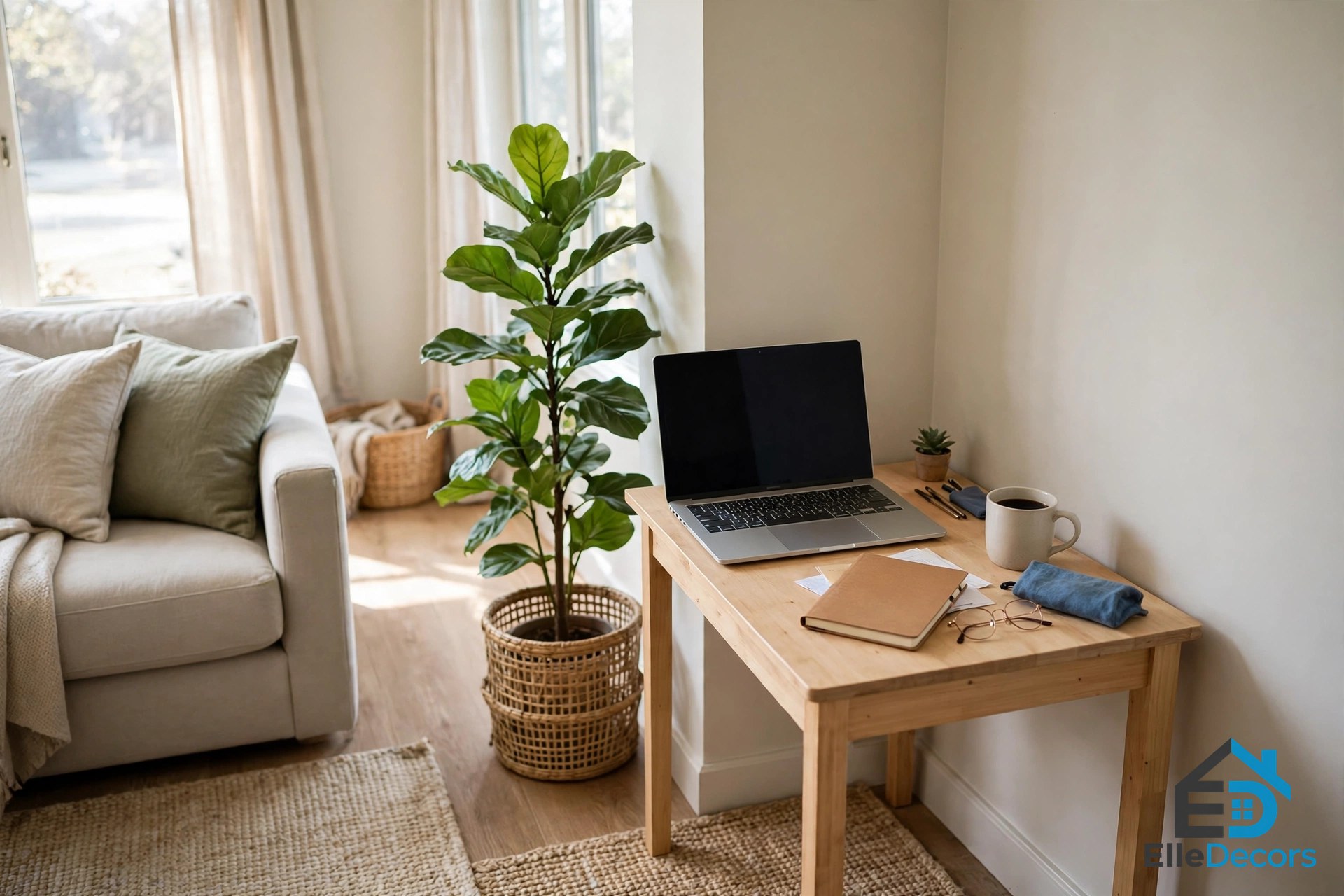
The living-room corner. A corner desk with a low partition, a shelving unit, or even a tall plant marks the office off from the rest of the room without building a wall. A fold-away desk or a computer bureau closes up at the end of the day, so the room goes back to being a living room.
The shared room. Two people in one office need two of everything that matters: light, legroom, and storage. A long double desk with a drawer unit in the middle gives each person their own zone.
If your space is tight, start with our collection of small home office ideas for corners, closets, and nooks that still feel like real workspaces.
Mistakes to Avoid
- Facing a blank wall. It feels cramped by the second week. Turn the desk toward the door or the window.
- One overhead light. A single ceiling bulb flattens the room and tires your eyes. Layer natural, ambient, and task light.
- A chair chosen for looks. If it cannot adjust, it will hurt. Comfort first, style second.
- No storage plan. Without a home for papers and cables, they will live on the desk.
- Too many colours. Three tones are plenty. A fourth usually fights the rest.
Frequently Asked Questions
How do I set up a home office in a small room?
Start with a wall-mounted or narrow desk, a chair that tucks under it, and shelves above the desk instead of furniture on the floor. Keep the palette pale so the room feels larger, and use one good task lamp rather than several small ones.
Where should the desk go in a home office?
Place it so you face the door or a window, with daylight coming from the side rather than from behind you or behind the screen. Keep a clear path from the door to the chair, and leave enough space to push the chair back and stand up easily.
How far should my monitor be from my eyes?
The OSHA workstation guidance suggests at least 20 inches away, with a preferred range of 20 to 40 inches, and the top of the screen at or slightly below eye level. Adjust within that range until you can read comfortably without leaning in.
Can a home office share a room with something else?
Yes. A corner desk with a partition, a shelf unit, or a fold-away bureau can share a living room or bedroom well. The key is a clear boundary — even a rug or a change of wall colour marks where work starts and the rest of the room ends.
The Bottom Line
A good office is a room that helps you work and lets you stop. Pick the layout first, choose a desk and chair that fit your body, layer the light, and give everything a place to live. Add colour and texture slowly, and keep only the personal touches that make the room feel like yours.
Of all the modern home office ideas in this guide, the best one is the layout that fits your room and your working day. Start there, and the rest of the contemporary home office will follow: a calm room, a clear desk, and a chair you are happy to sit in tomorrow morning too.