Gold Kitchen: How to Design a Luxe Kitchen With Gold Cabinets, Hardware, and Light
A gold kitchen is the fastest way to make a cooking space feel expensive, but it is also one of the easiest looks to get wrong. Used with restraint, gold brings warmth, light, and a sense of occasion to the hardest-working room in the house. Used everywhere at once, it turns loud and tiring. The trick is deciding where gold earns its place and where it stays quiet, and this guide works through that decision: the cabinets, the hardware, the lighting, the island, and the colours that sit beside gold without fighting it.
What Is a Gold Kitchen, Exactly?
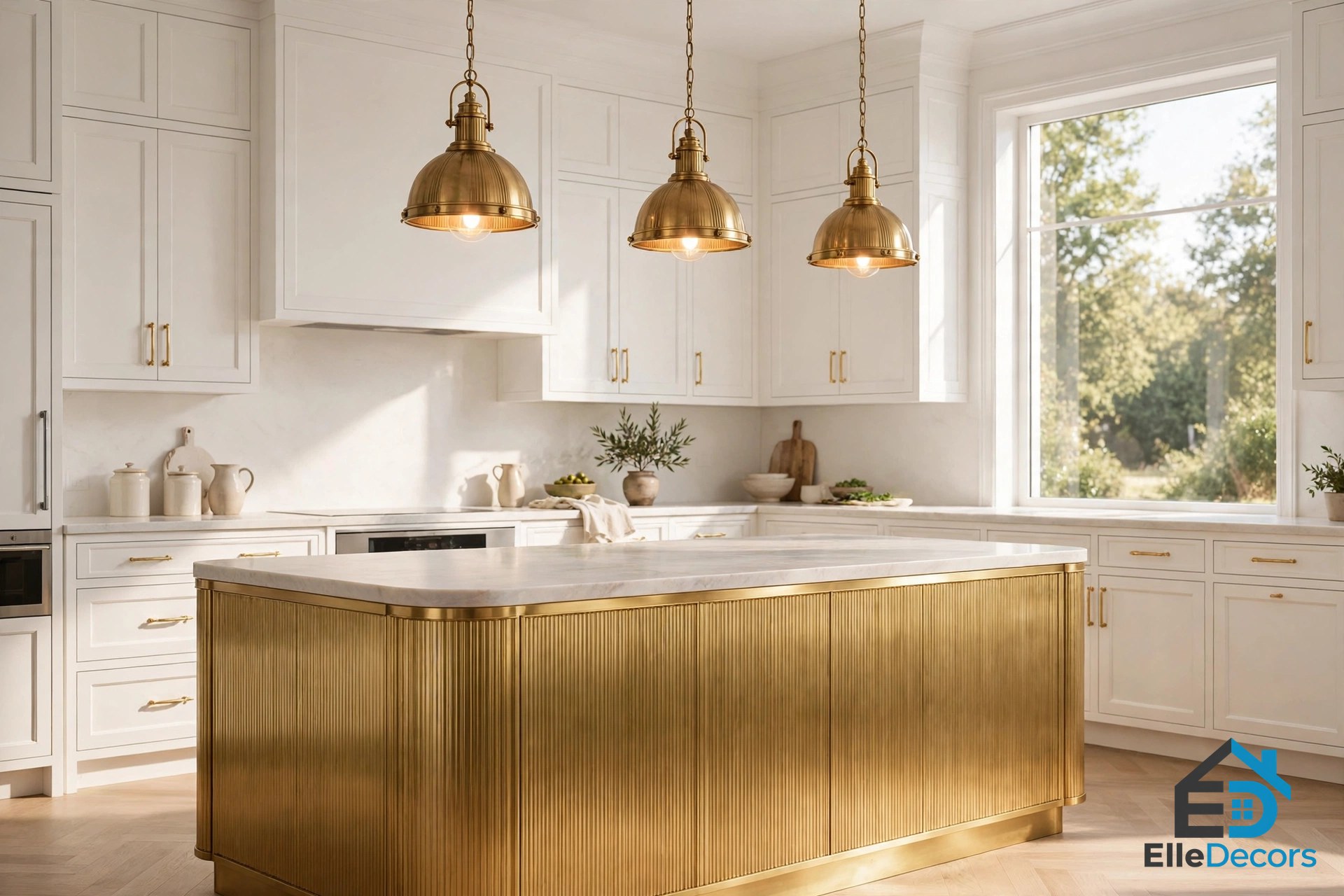
A gold kitchen is a kitchen where gold is the main accent metal, carried across the cabinets, the hardware, the lighting, or the island in warm metallic tones. It is not one single look. At one end sits the full treatment: gold cabinets, a gold backsplash, and a gold island for an all-out Midas touch. At the other end: white cabinets, a gold faucet, gold handles, and a few gold accessories. Most of the best examples sit in between, with one or two strong gold moments and everything else calm.
The look works when gold is treated as the main metal and everything else supports it: one gold tone through the room, not three competing ones, and plenty of plain surfaces around it so the eye has somewhere to rest. White is the classic partner because it creates a spacious pause between bold accents, while natural wood grain brings earthy balance. A little gold, placed with intent, reads as luxury; a lot of it, placed without a plan, reads as noise.
Where Gold Works Best
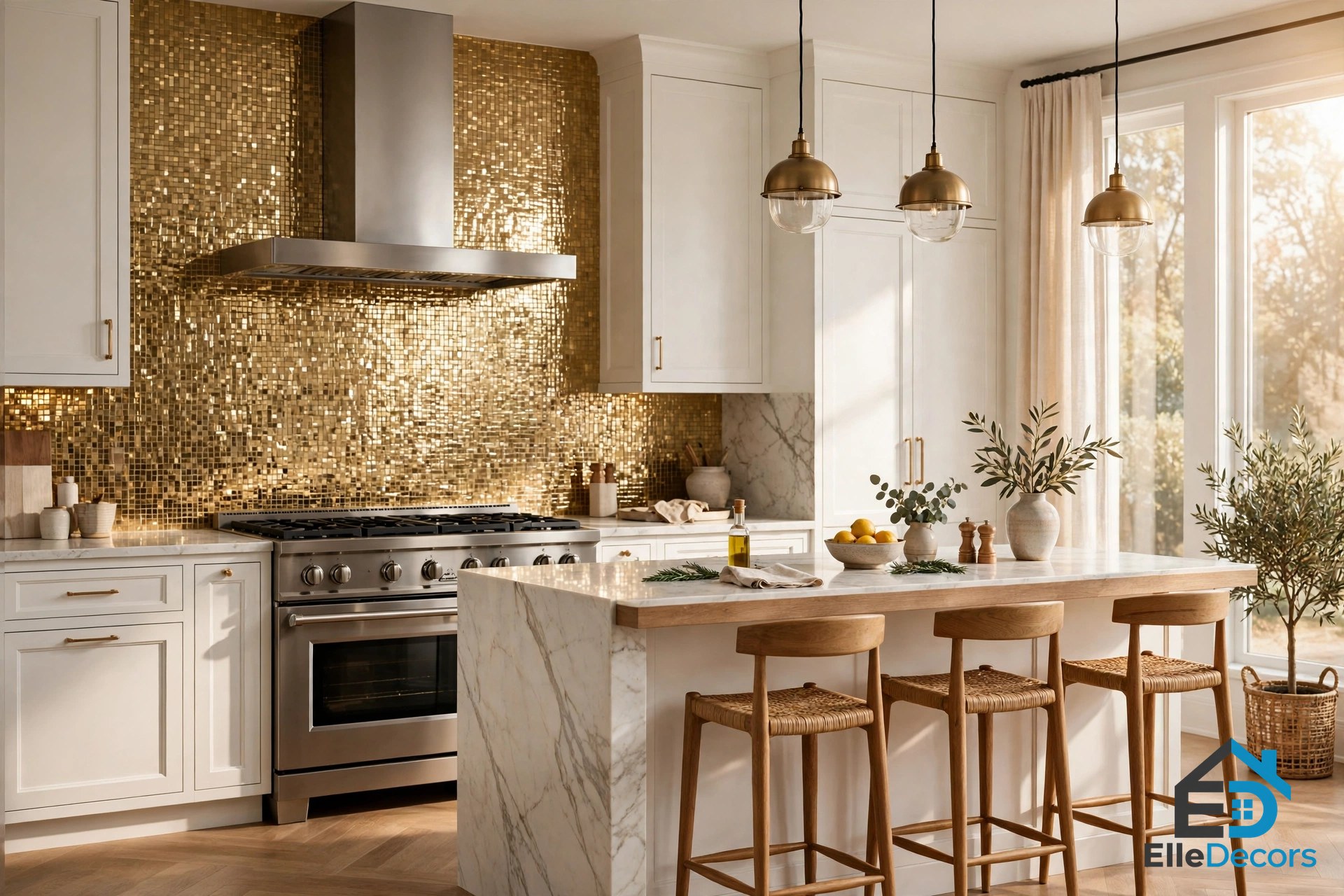
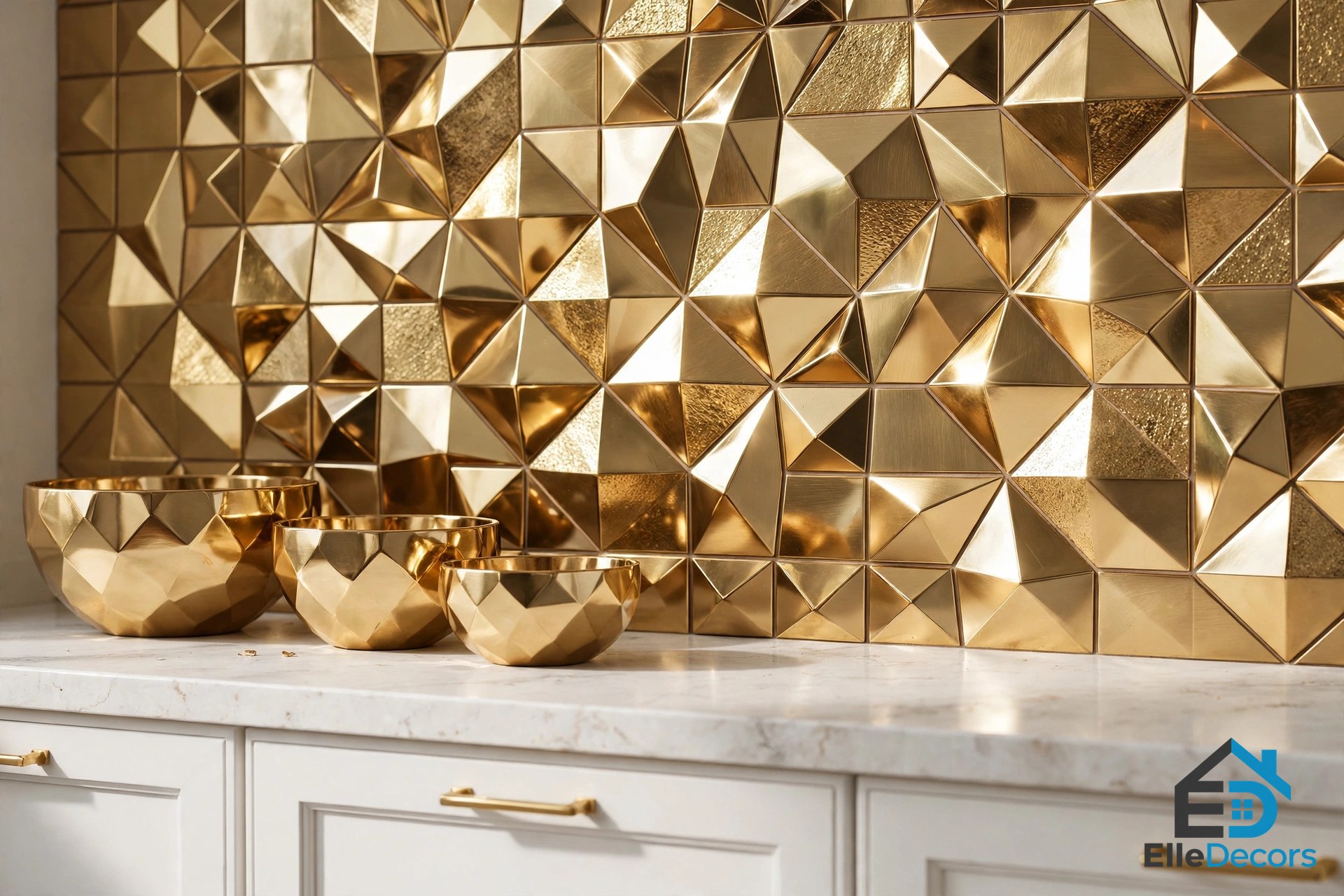
Start by deciding how far you want to go, because gold works at every scale and the entry points are cheap to change later. A gold backsplash can be retrofitted into an existing kitchen and will look right at home when teamed with upgraded gold hardware, so it is the simplest first step. Small gold accessories, new pendant lights, and upgraded bar stools are another low-commitment way in.
At the bigger end, gold appliances can be integrated into a run for one solid expanse of gold, and a gold island can anchor the whole room. A gold extractor unit can be the showpiece of a kitchen. Whichever scale you choose, keep the gold in a few clear places rather than scattered thinly across every surface.
Gold Cabinets: Full Gold or Accent Units?
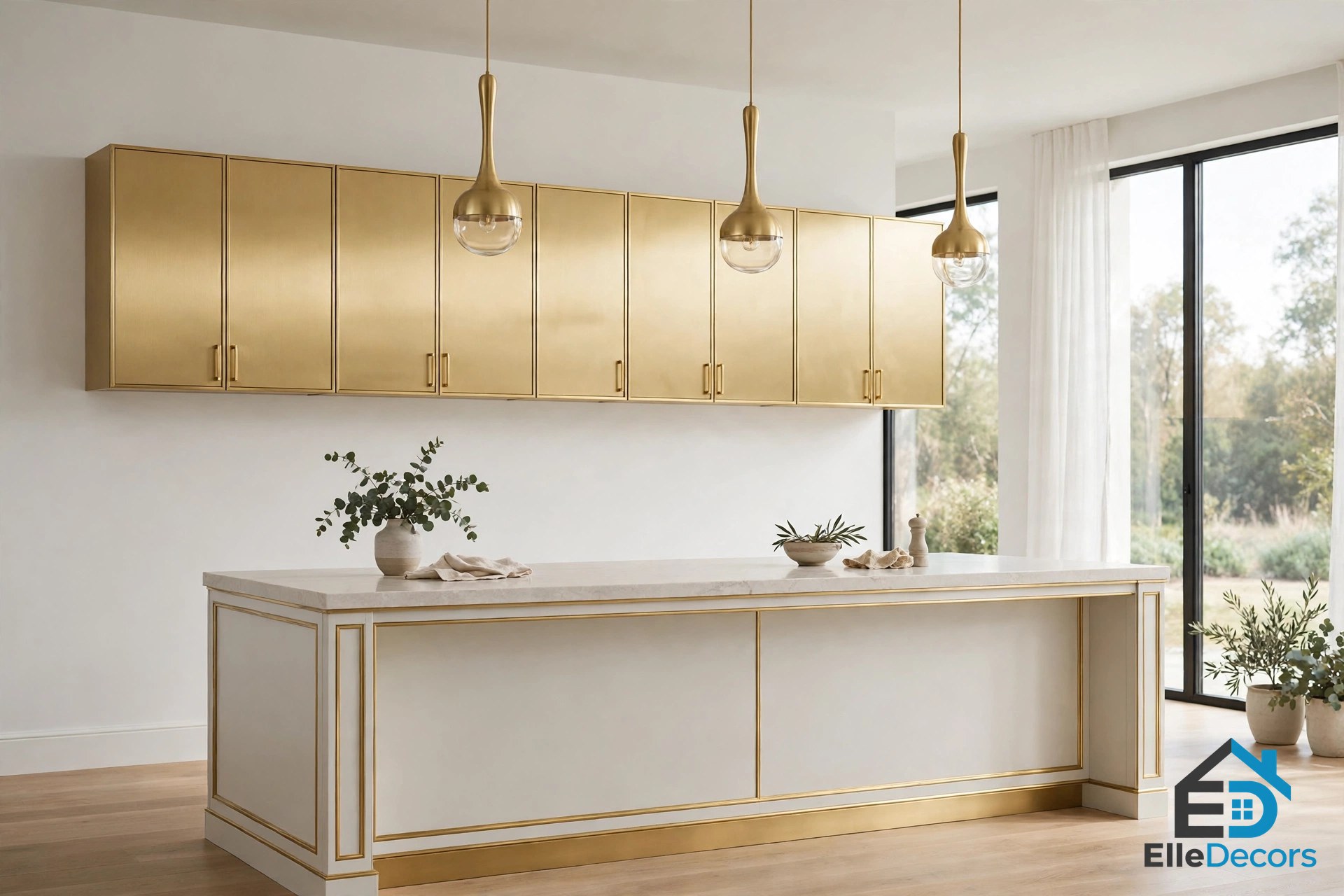
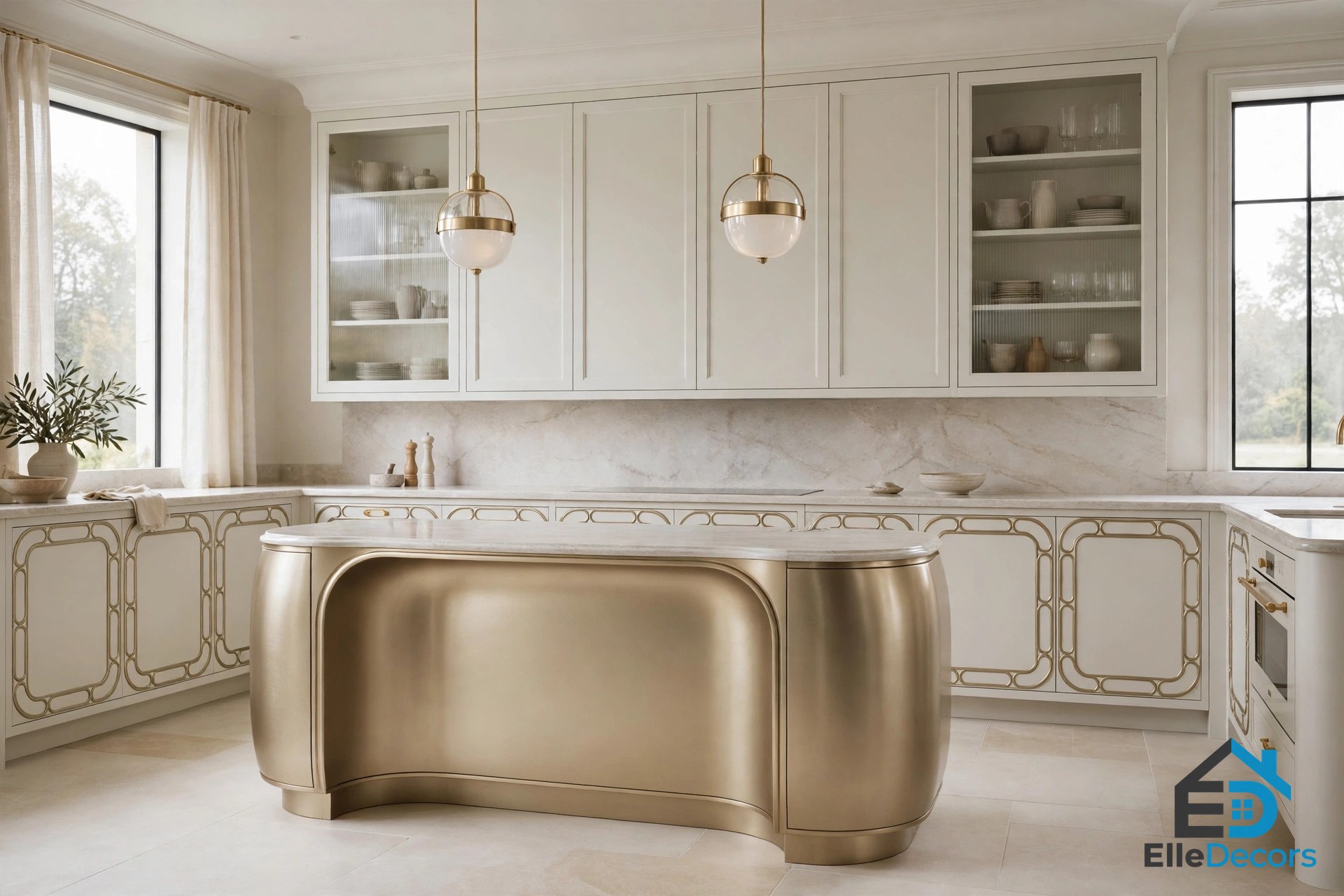
The cabinet decision is where a gold kitchen is won or lost. Full gold cabinets give the all-out Midas touch and work best in a large room with plenty of natural light. In a smaller room, a few accent units achieve the required luxurious fullness without becoming overpowering. A single row of gold wall cabinets mingling with a gold-trimmed island is a good middle ground, and it keeps the gold at eye level where it reads as deliberate rather than accidental.
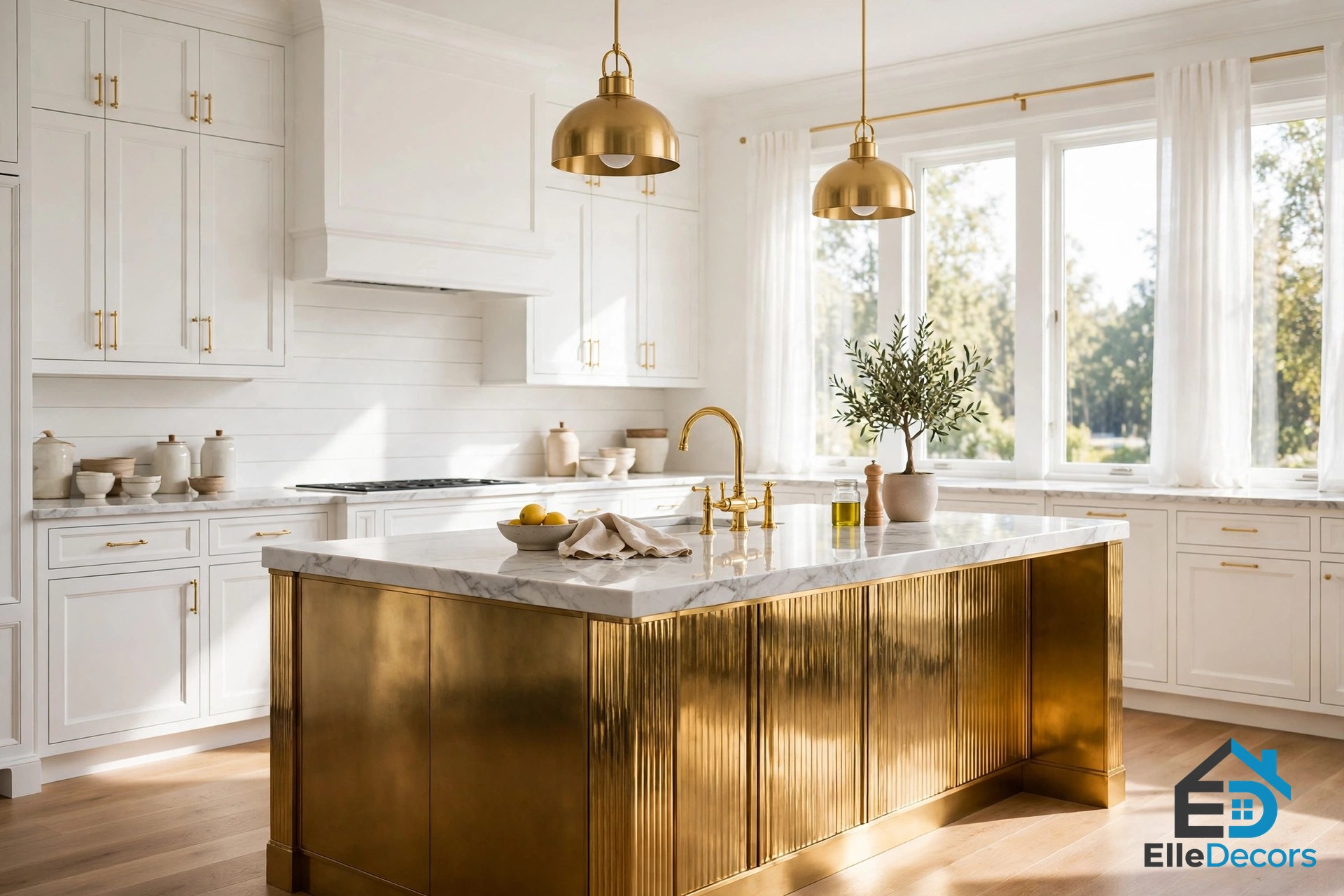
Texture matters as much as colour when gold covers a large area. Instead of splitting gold cabinets with a different coloured front, break up the run with contrasting texture, like a smooth and slatted arrangement side by side. A gold island in a white kitchen creates tonal interest without painting every cabinet. If the cabinets are gold, keep the worktops plain: white marble, pale stone, or warm wood lets the gold stay the star.
Hardware, Faucets, and the Finish That Decides Everything
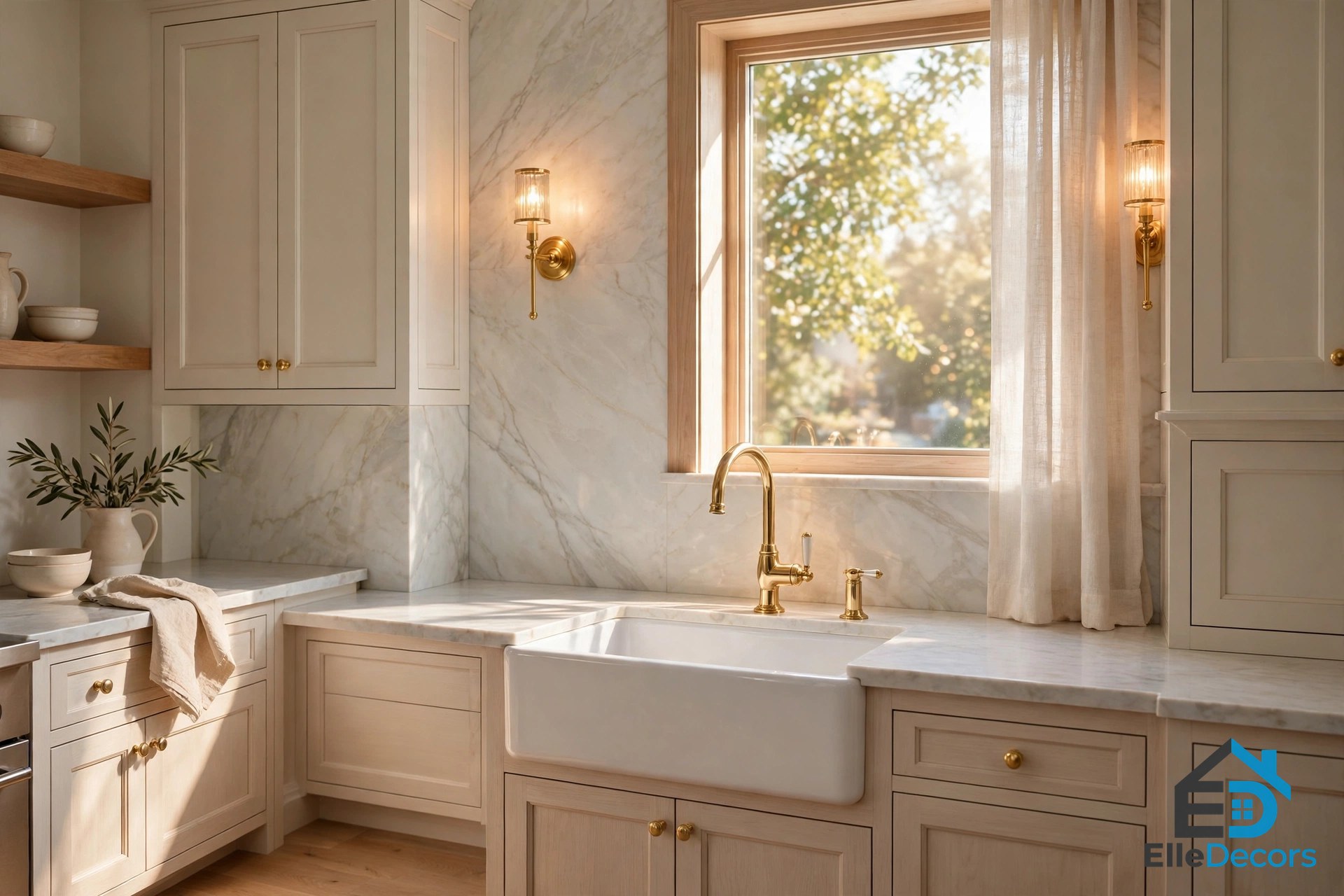
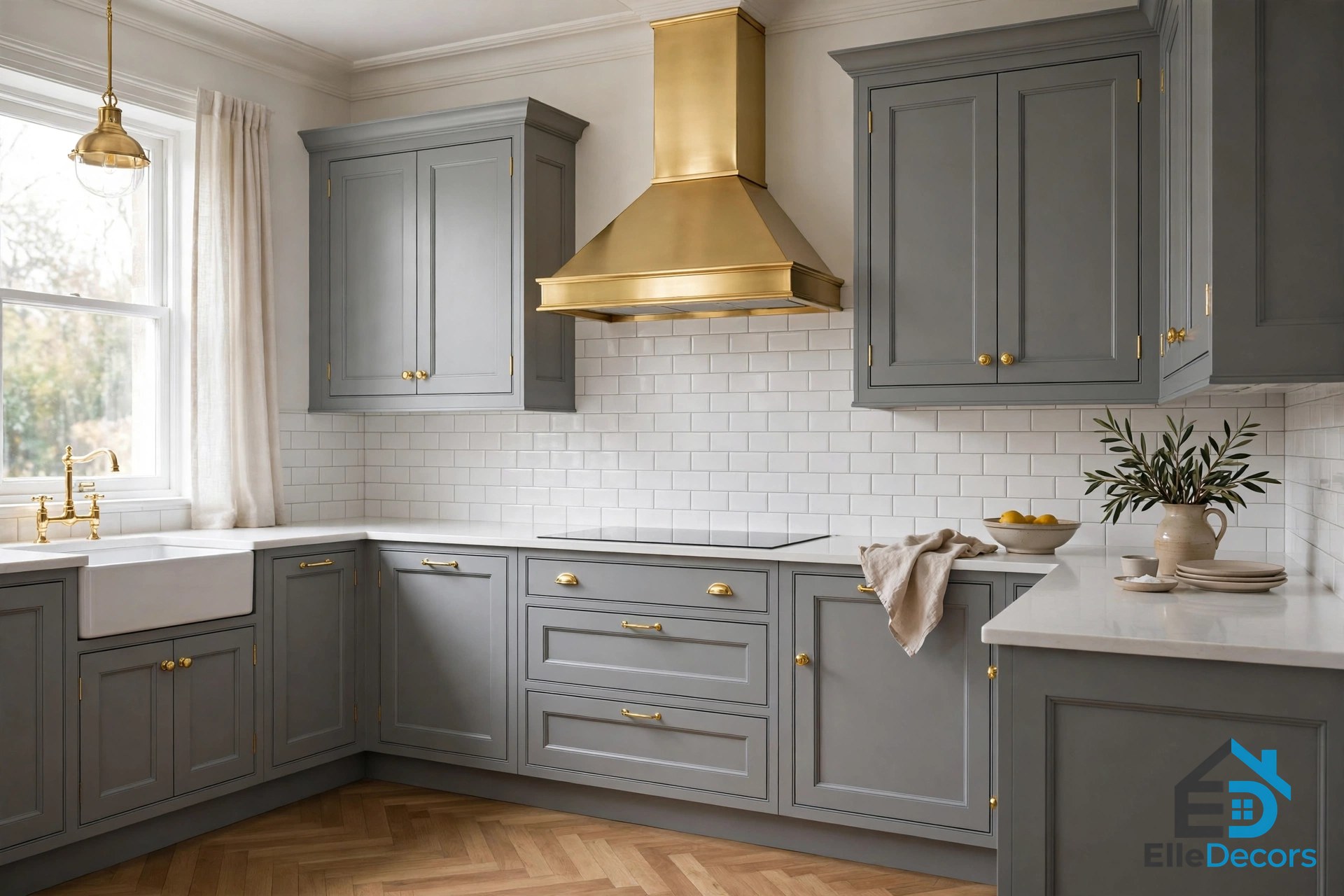
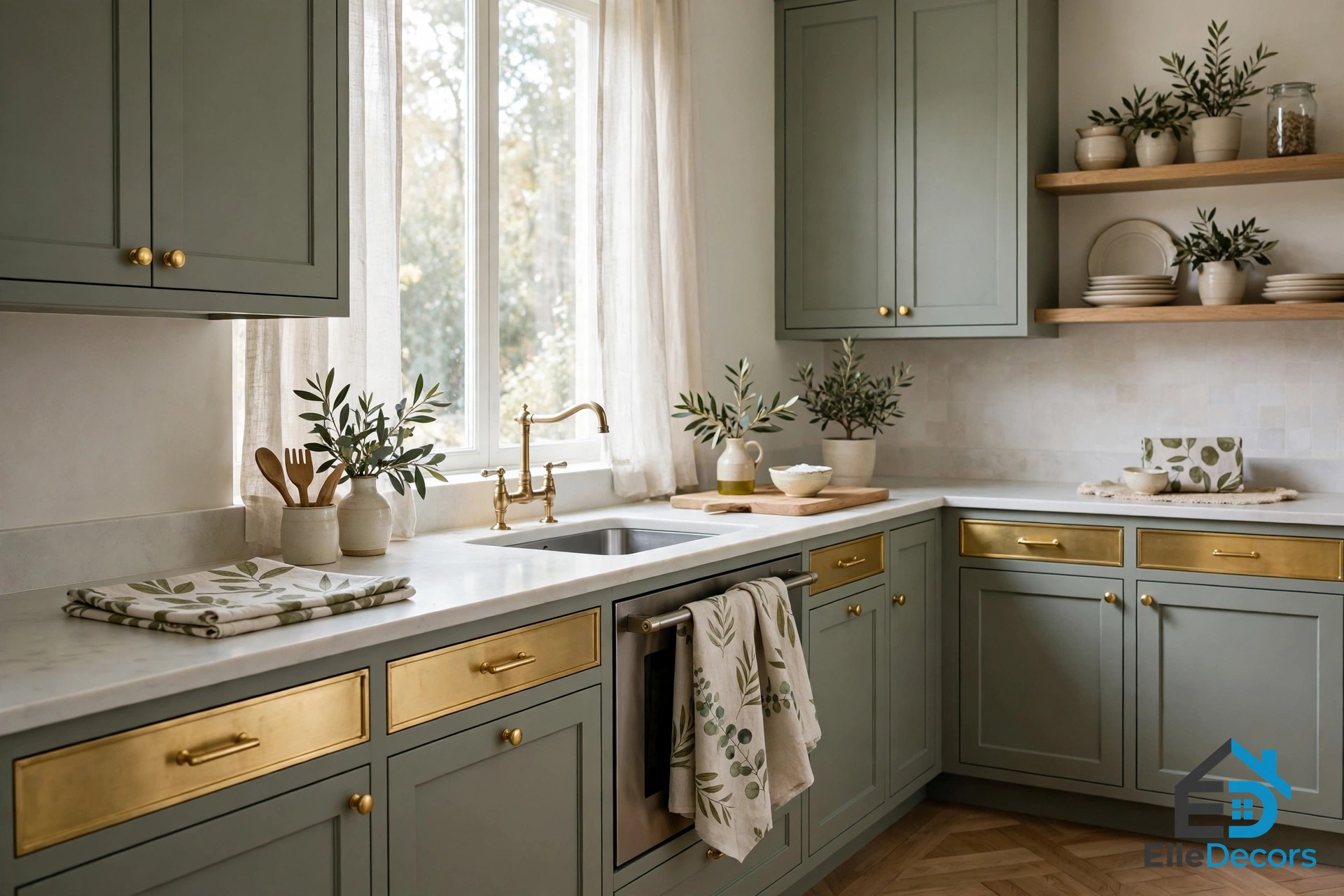
Hardware is where most gold kitchens are actually built, because handles, knobs, taps, and hinges are the gold a hand touches every day. A painted grey kitchen with gold hardware speaks of classic elegance, and a gold faucet can carry a whole scheme on its own. The catch is that not all gold is the same metal, and the difference decides how the room looks in five years.
Solid brass is an alloy of copper and zinc, heavy, durable, and resistant to corrosion. It is often protected with a clear lacquer finish to maintain its shine and prevent oxidation, and lacquered brass needs only gentle cleaning with a soft, damp cloth, since harsh chemicals or abrasive pads will damage the lacquer. Unlacquered solid brass is a living finish: exposed to the air, it will naturally oxidise and form a dark, muted patina over time. Keeping its original shine requires regular polishing with a mild abrasive cleaner, so choose it only if you like a finish that ages and changes character as you use it.
Gold plating, or electroplating, applies a microscopically thin layer of real gold onto a base metal, usually brass, steel, or zinc, using an electric current. The layer is measured in microns and is highly susceptible to wear and chemical damage, so plated fixtures need mild soap and water and nothing acidic or abrasive. Brass plating does the same with a thin layer of the copper-zinc alloy on a cheaper base metal. The most resilient option is physical vapour deposition, known as PVD: metal ions, often titanium nitride, are vaporised in a vacuum chamber and molecularly bonded to the surface, creating a layer far harder and more scratch-resistant than electroplating. PVD finishes are not necessarily real gold but a durable gold-coloured compound, and they can be engineered to mimic bright polished gold, champagne gold, or warm brushed gold. Satin champagne gold makes a more delicate statement than yellow gold, which is why champagne is often the safer pick for a busy family kitchen.
This table sums up how the finish of a gold kitchen behaves over time, so you can match the finish to how hard the room is used.
| Finish | Look | How it ages | Care |
|---|---|---|---|
| Solid brass, lacquered | Warm golden-yellow, steady shine | Stays bright while the lacquer holds | Soft damp cloth, no harsh chemicals |
| Unlacquered brass, living finish | Warm golden-yellow, darkens with use | Develops a dark, mottled patina | Polish with a mild abrasive |
| Gold electroplating | Bright, saturated, slightly reddish-orange | Thin micron layer, wears and chips | Mild soap and water only |
| Brass plating | Mimics solid brass | Thin layer, fragile | Mild soap and water only |
| PVD gold-tone | Bright polished, champagne, or brushed gold | Hard bonded layer, resists tarnish and scratches | Most household cleaners will not harm it |
Lighting: Pendants, Chandeliers, and Sconces
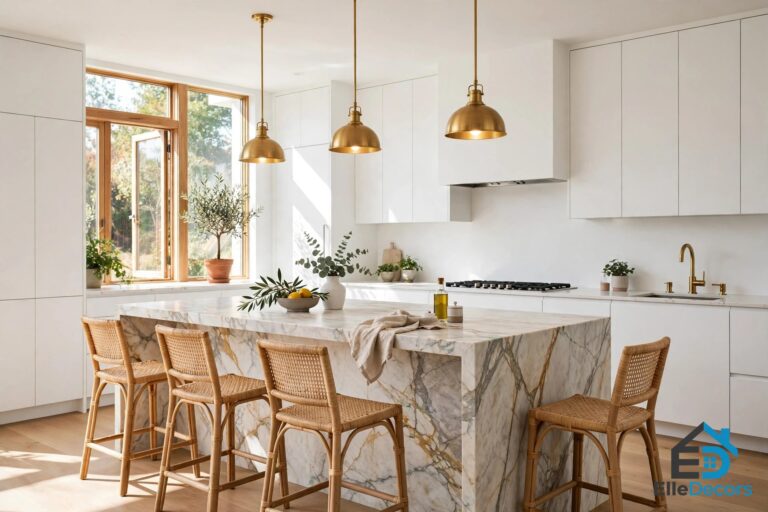
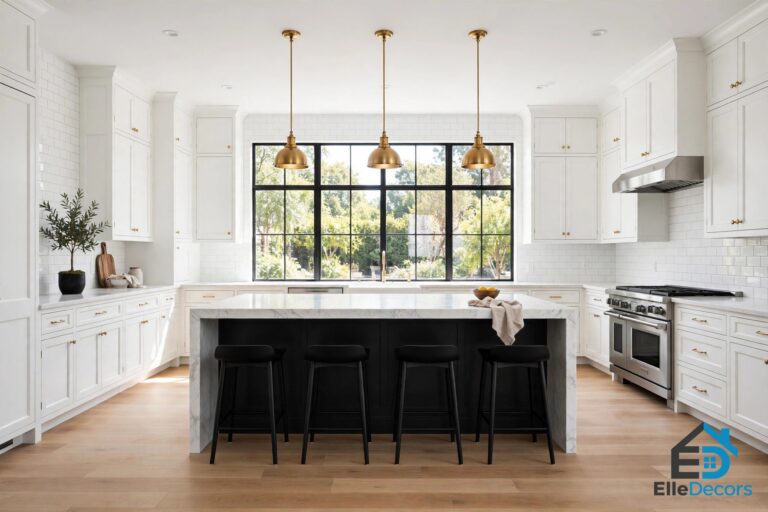
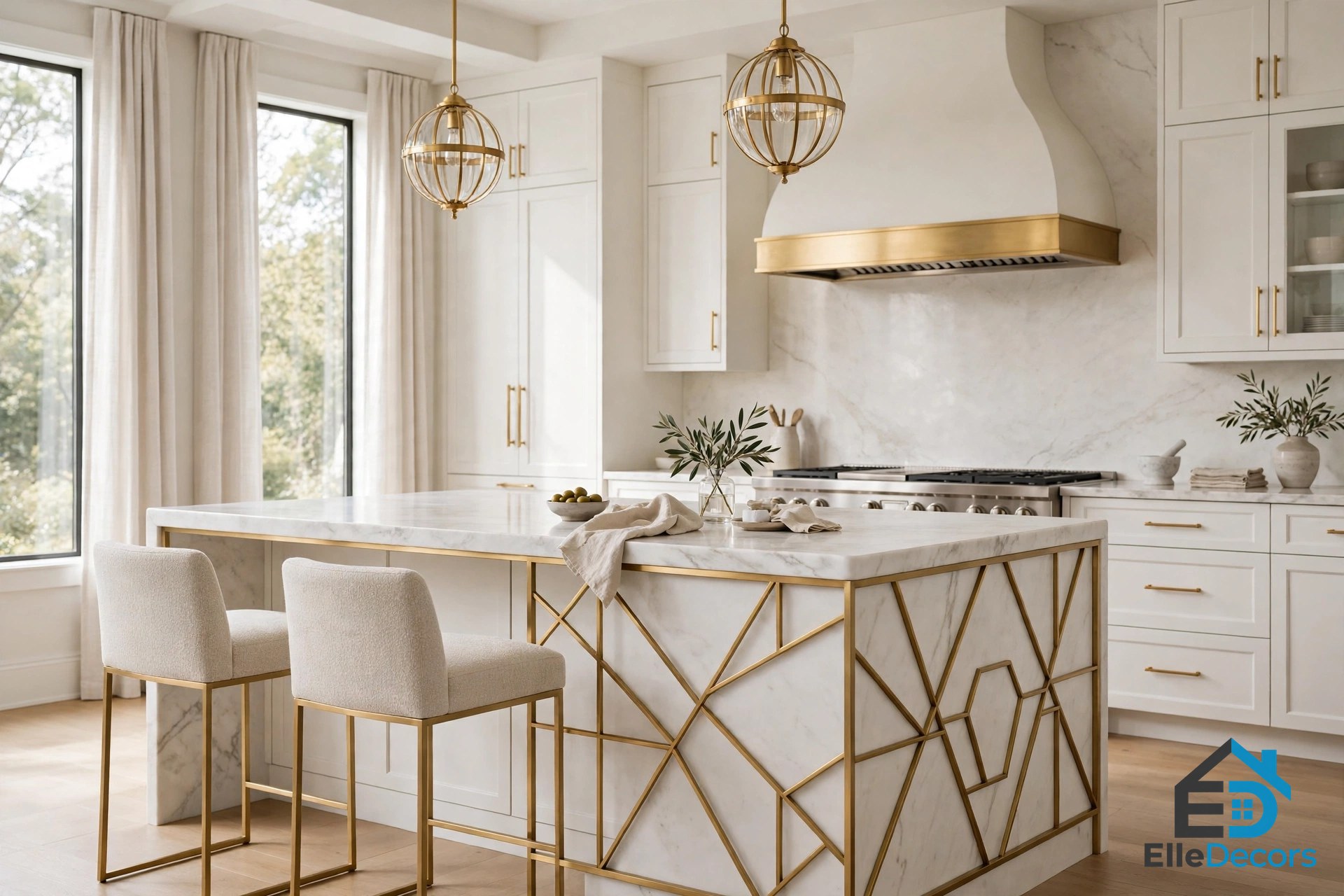
Gold lighting makes the metal glow after dark, and it is the easiest place to be bold because a fitting can be changed without touching the cabinets. Metallic surfaces look their best when they are reflecting light, so a gold pendant over an island or a gold sconce on the wall does double work: it lights the room and it lights itself. A trio of low-hanging pendants can thread contrasting elements together, and a smaller chandelier doubled over a dining peninsula creates the wow factor.
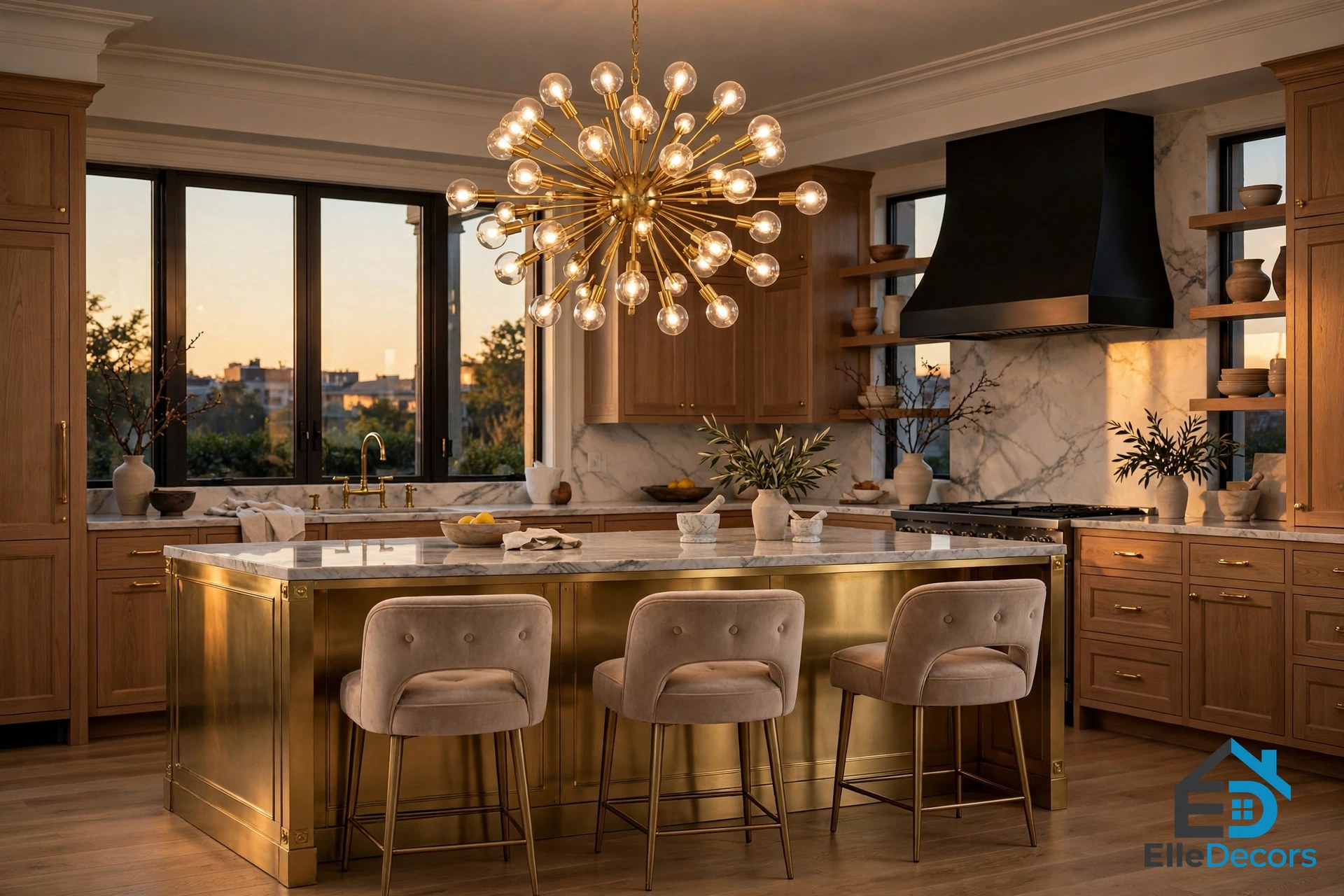
For real drama, an oversized gold sputnik chandelier makes a grand companion for a gold-clad island, with upholstered bar stools providing comfortable seating below. Golden orb pendants crown a dusky rose and terrazzo scheme. Gold wall sconces dapple gold around the room like a second, softer layer of light. Keep the bulbs warm rather than cool white: warm light deepens gold, while cool light can make it look flat and grey.
The Island: Gold as the Centrepiece
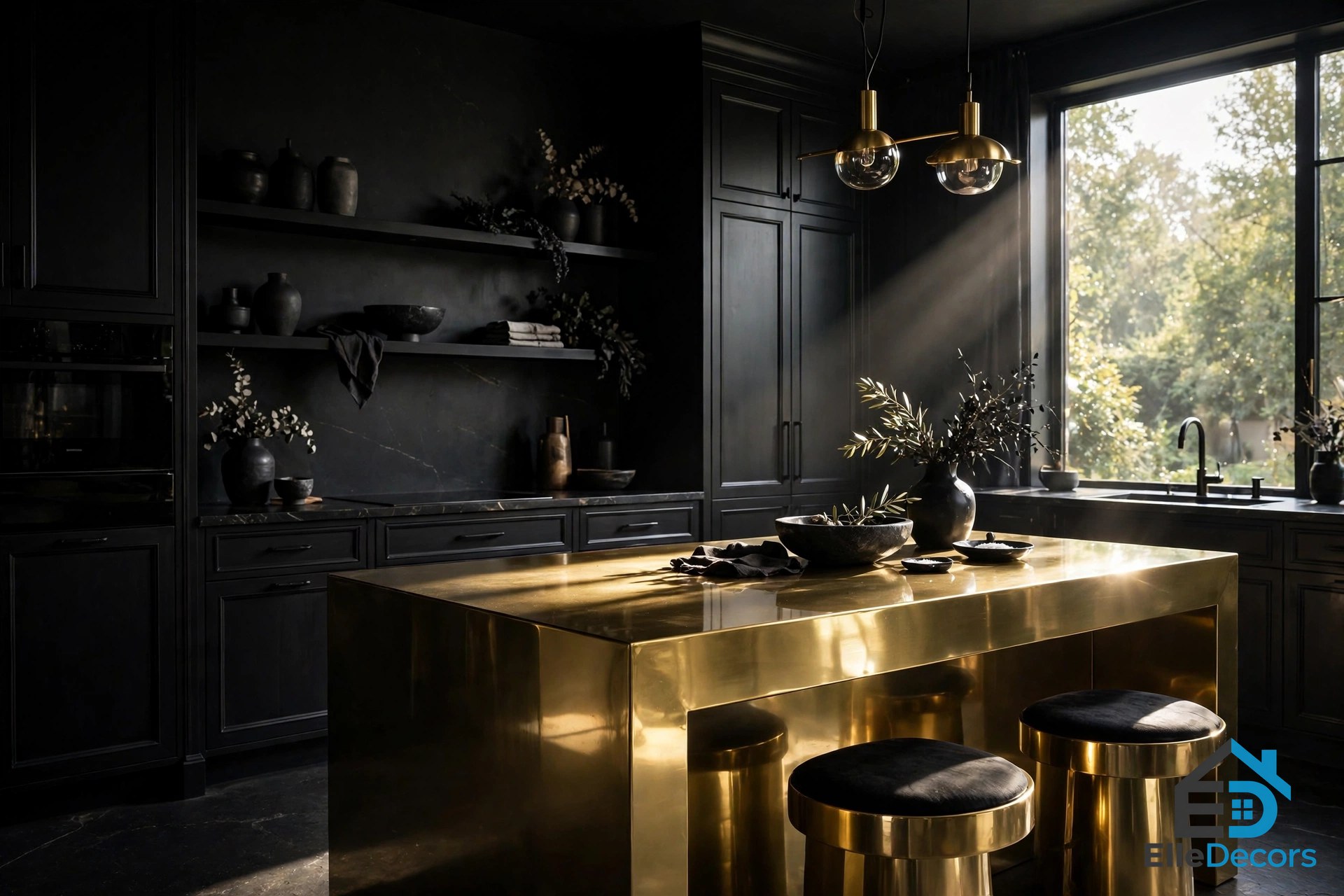
The island is the natural home for gold, because it is the biggest single surface in most kitchens and the one guests gather around. A hi-shine gold island positioned to catch natural light from a neighbouring window draws the eye out of an otherwise black kitchen, and a gold island brightens a dark grey and black kitchen. A solid gold island bar with a cantilevered wood countertop for contrast is the boldest version of the idea.
One island idea worth stealing is the multi-level worktop that seems to overspill the sides of the island in molten drops of liquid gold, which turns the worktop itself into the decoration. Our guide to the mid-century modern kitchen island shows how an island can carry a whole kitchen design, and the same thinking applies here: give the island one clear job, whether that is cooking, eating, or showing off, and let the gold support that job rather than competing with it.
Colour Pairings That Work With Gold
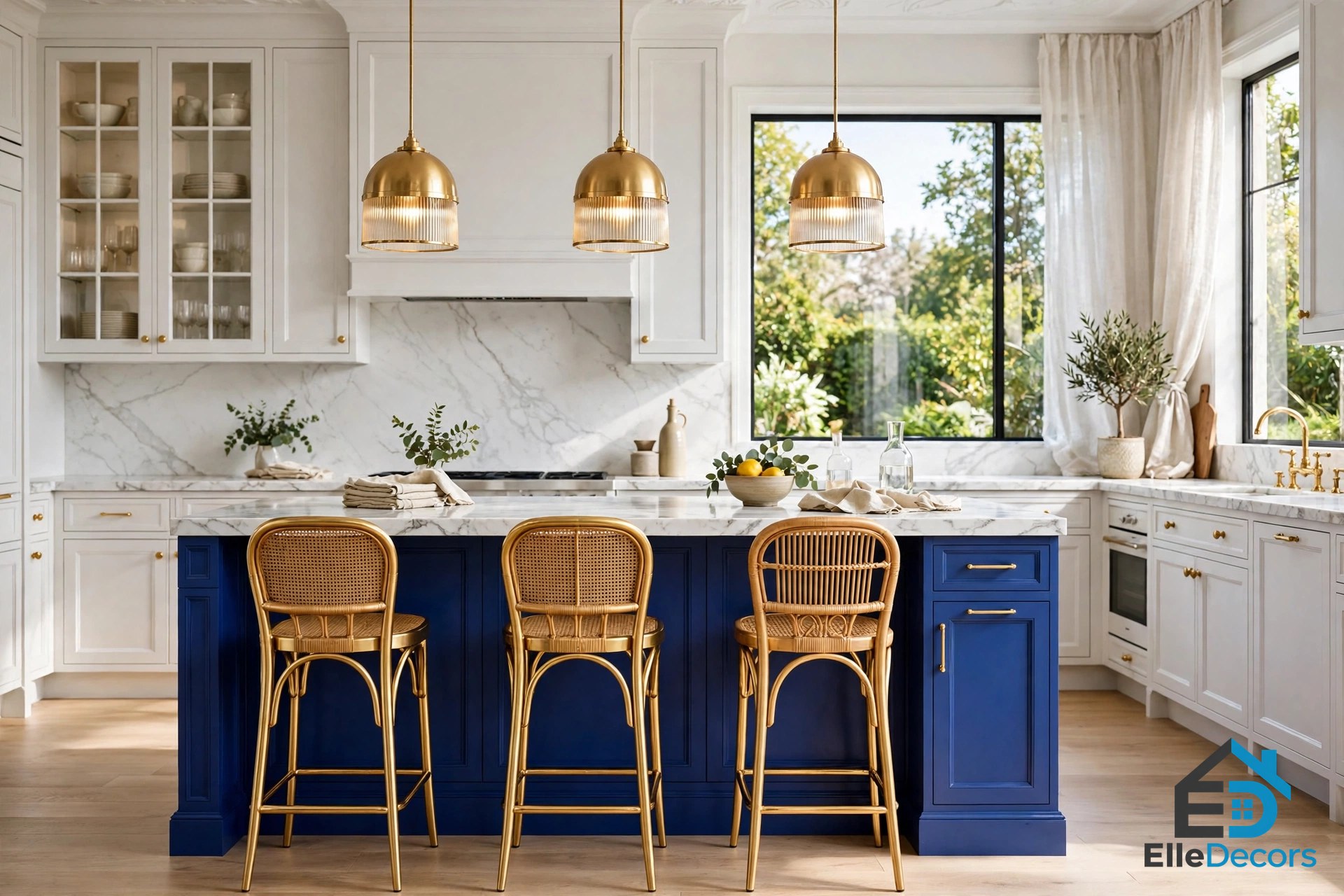
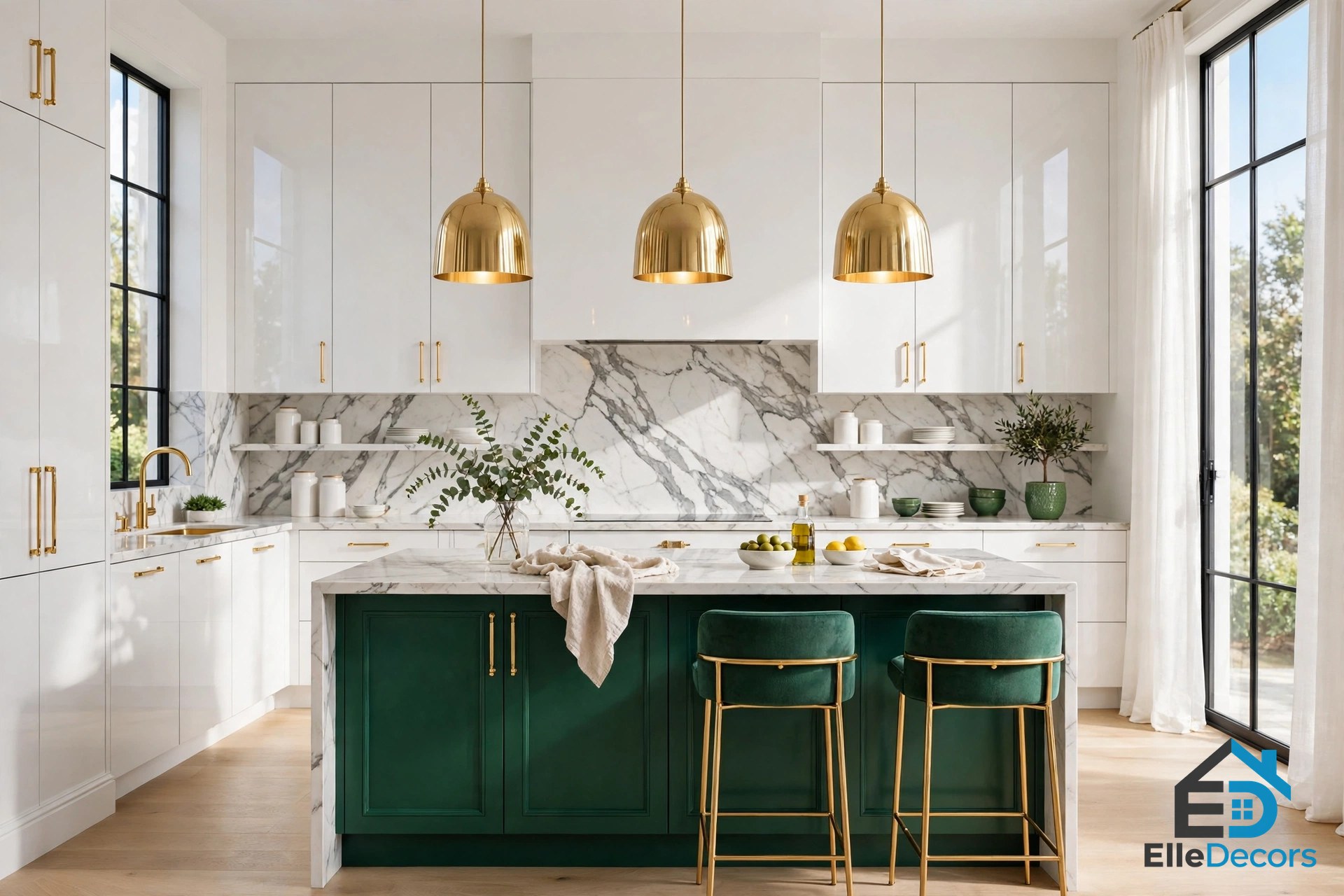
Gold is a warm metal, so it needs partners that either cool it down or warm it up further, and the source gallery shows both routes working. Regal gold meets royal blue in one design, where gold bar stools and gold pendants make a rich union with a solid blue island. Grey and gold is the classic pairing: a painted grey kitchen with gold hardware speaks of classic elegance. Green is the other great partner: golden drawer fronts add a glorious accent strip above muted green cabinets, sage green and gold looks dreamy with black accent pieces to anchor it, and emerald green and gold accents provide jewellery for a predominantly white gloss and marble ensemble.
Pink softens gold in a different way. A blush pink island combines with a green streaked backsplash and bright gold cabinets to make a colourful fusion, and a dusky rose and terrazzo scheme is crowned with golden orb pendants and a gold tap. Orange walls with gold cabinets make a warm meld that seems to glow, and red and gold earthed with wood turns up the heat. Marble itself is one of gold’s best friends: our guide to rich colored marble kitchen trends shows how warm veining in coloured stone picks up gold tones across the whole room. Whichever partner you choose, leave swathes of white between the bold accents so the room can breathe, and let natural wood grain bring earthy balance.
Accessories and Small Touches
If full gold cabinets feel like too much, accessories are the honest way in. A collection of small gold accessories, new pendant lights, and upgraded bar stools will nod to the metallic look without a renovation. Decorative bowls take the golden accent across the countertop, and a gold shelf nook, a gold faucet, and matching pendant lights combine into a dazzling result even though each piece is small. Razor-thin gold worktops are another small addition that adds up to a lot.
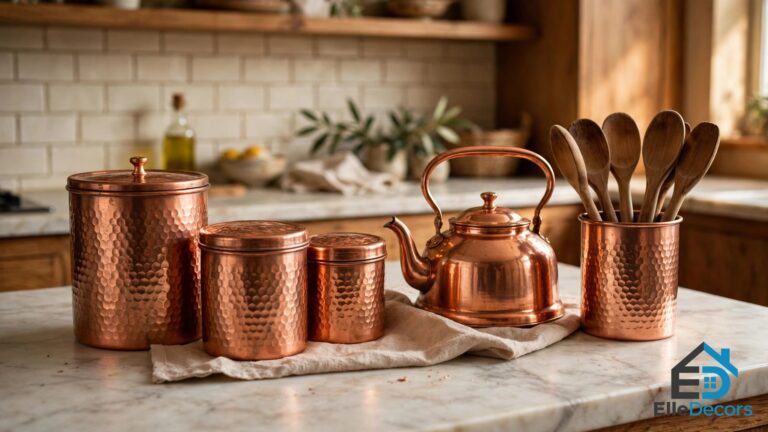
Gold also mixes well with other warm metals. Gold and silver are shining examples of how mixed metals make a luxurious combo, and introducing elements of natural wood tone warms the look through. Our guide to copper kitchen accessories shows how copper sits in the same warm family as gold, so the two metals can share a room without clashing. One playful object is enough: a golden statue adds personality to a serious black and gold layout, but two will turn the room into a joke.
Mistakes That Turn Gold Gaudy
The first mistake in a gold kitchen is using gold everywhere at once. Gold on the cabinets, the backsplash, the island, the extractor, the faucet, the lights, and the stools leaves the eye nowhere to rest, and the room feels like a showroom rather than a kitchen. Pick two or three gold moments, keep the rest plain, and let white or wood do the quiet work between them. The second mistake is mixing gold tones without thinking: bright polished gold, champagne gold, and aged brass are three different colours, and using all three in one room looks accidental. Choose one tone and repeat it.
The third mistake is forgetting that metallics reflect: a gold island can beautifully reflect a chevron floor and make it appear larger, but it would be undesirable to double up a bin or a flaw in the floor, so use reflective finishes wisely. The fourth mistake is choosing a living finish by accident: unlacquered brass will darken and patinate, which is lovely if you expect it and disappointing if you wanted a permanently bright gold. The fifth mistake is skipping the warm balance: gold with no wood, no plants, and no soft texture feels cold and hard. A wooden stool or a green plant is usually all the warmth the room needs.
Watch: A White Kitchen Remodel With Brass and Gold
Watch a finished remodel tour by Central Kitchen Bath and Showroom, filmed in a real home with Starmark Cabinetry: white shaker cabinets with brass bar pulls, a large island with a white countertop and gold pendant lights, a custom painted range hood, and a white sink with a brass pull-down faucet. The most useful takeaway is the one the showroom states plainly: repeat your metal finish on the pulls, the pendants, and the faucets for a cohesive look.
Video: A white kitchen remodel tour with brass hardware and gold pendant lights, by Central Kitchen Bath and Showroom.
Frequently Asked Questions
What is a gold kitchen?
A gold kitchen is a kitchen where gold is the main accent metal, used on the cabinets, the hardware, the lighting, the island, or the accessories. It ranges from full gold cabinets to white cabinets with a gold faucet and gold handles. The look works when one gold tone runs through the room and plain surfaces like white, marble, or wood give the eye somewhere to rest.
What colours go best with gold in a kitchen?
White is the safest partner because it creates a spacious pause between bold accents, and grey is the classic one for a graceful, elegant feel. Royal blue and gold make a rich, regal combination, while sage green, emerald green, and pistachio green all sit well with gold, especially with black accents to anchor them. Blush pink, dusky rose, orange, and red all warm gold further, and natural wood grain brings earthy balance.
Can a gold kitchen work in a small kitchen?
Yes, and it may work best there, because gold is a reflective metal that bounces light around a small room. Start with the small additions that add up: a gold backsplash, a gold faucet, gold handles, and a pair of gold pendant lights. Keep the cabinets white or pale, use one gold tone throughout, and let the reflective surfaces do the work of making the room feel larger.
Does gold mix with silver and other metals?
Yes. Gold and silver are a luxurious combination when they are used deliberately, and gold sits happily beside copper and brass because they share the same warm family. Introduce natural wood tone to warm the mix through, and keep one metal dominant so the room has a clear lead.
The Bottom Line
A gold kitchen is not about how much gold you can fit into a room; it is about where you put it and how well you look after it. Start with the scale that suits your room, pick one gold tone and one finish you can live with, pair it with white, wood, or a colour you love, and leave enough space for the gold to shine. Do that, and the room will feel warm, bright, and luxurious.