Arch Designs Home: 10 Arch Types, Rooms, and Styling Ideas
A straight doorway does its job and disappears. An arch does the same job and becomes the feature people remember. A curve softens a hard corner, frames the room beyond it, and makes a plain hallway feel considered.
The best arch designs home owners choose are the ones that fit the house they already have. A tall Roman curve suits a high ceiling. A shallow segmental arch suits a low one. A plaster arch painted the same colour as the wall reads calm and modern, while a stone or wood-trimmed arch reads traditional. This guide covers ten arch types, the rooms each suits, the materials that carry the look, and the safety checks before any wall is touched. For the wider picture of warm, natural materials, our guide to the best use of wood in modern designs shows how wood works across a whole home.
Why Arches Work So Well Indoors
An arch changes a room without adding furniture or taking floor space. It marks the line between two rooms while keeping them connected, so an open plan still has a sense of arrival.
Arch Designs Home: The 10 Main Types
1. Roman Arch
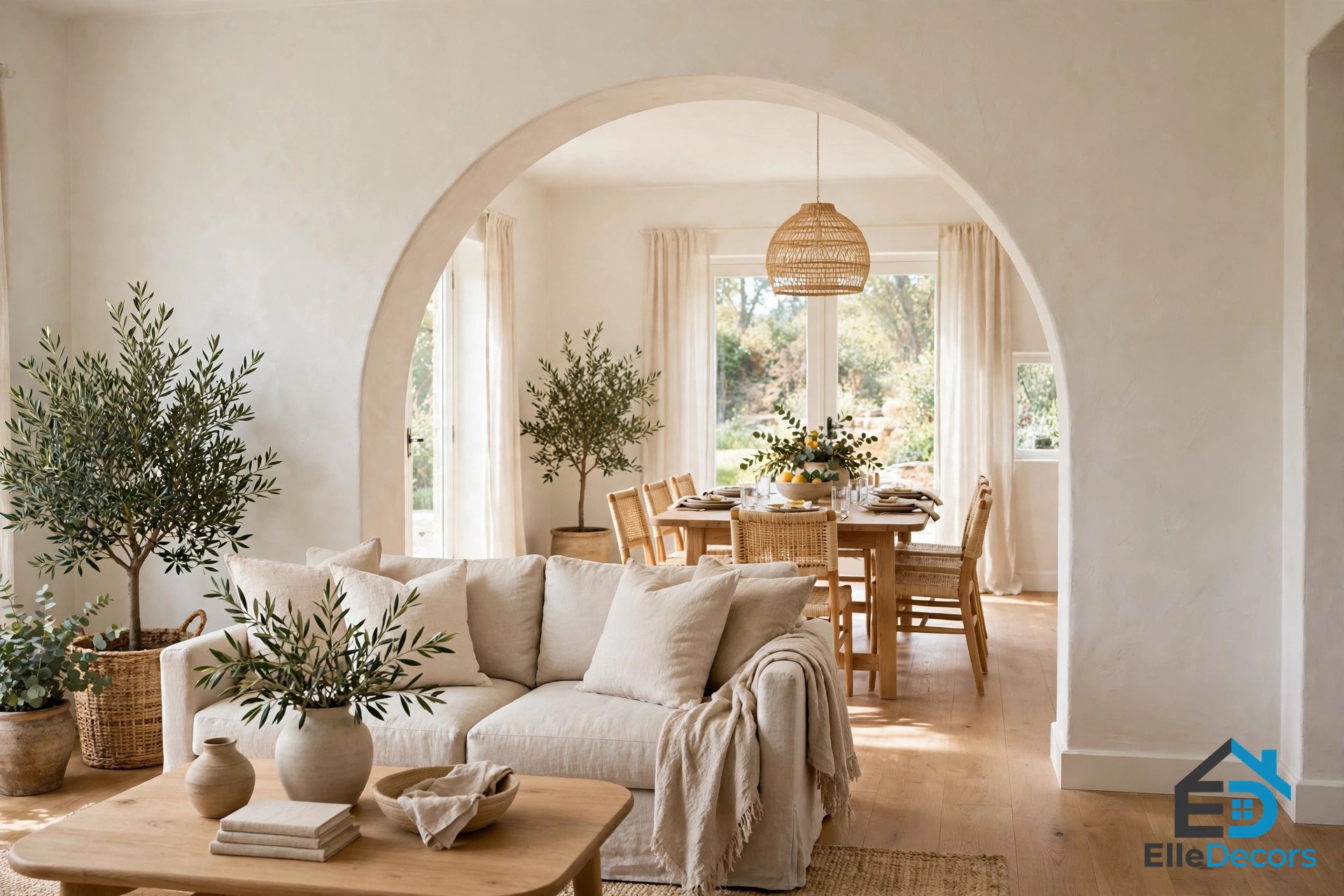
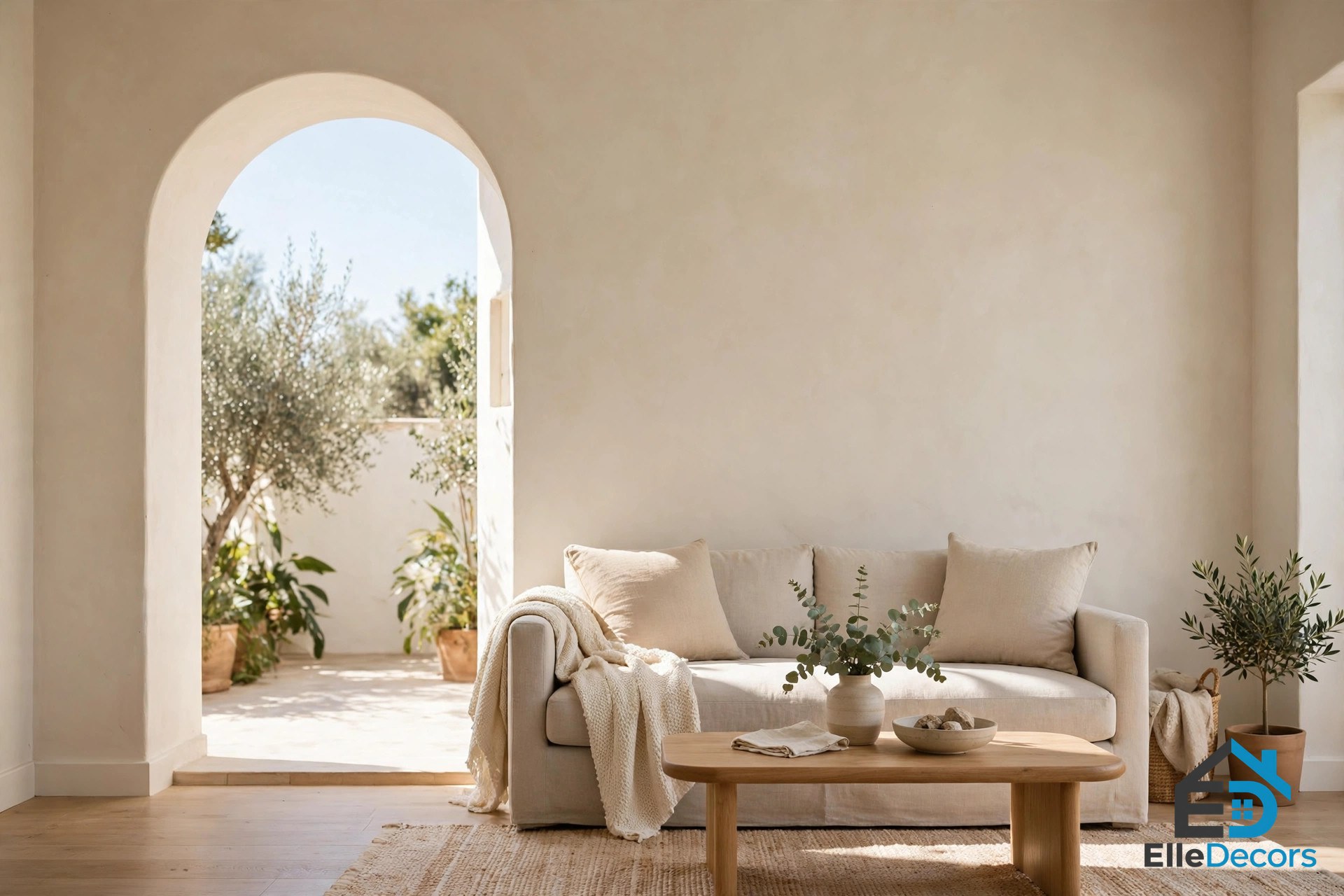
The Roman arch is the classic: a perfect semicircle resting on two parallel supports. It is the most recognisable arch shape there is, and it reads as calm, balanced, and timeless rather than tied to one period. It suits entryways and living-room openings best,. It needs height, though — because the semicircle drops at its outer edges, a low ceiling can make the opening feel smaller rather than grander.
Best rooms: Living room, entryway, hallway
2. Segmental and Elliptical Arch
A segmental arch uses a shallow curve, while an elliptical arch is wider and flatter than a semicircle. Both give you the softness of a curve without taking up as much vertical space, which makes them the practical choice for most modern homes. They suit wide openings especially well — between a kitchen and a dining room, for example — where a full semicircle would eat too much height.
Best rooms: Kitchen to dining room, living room, wide hallways
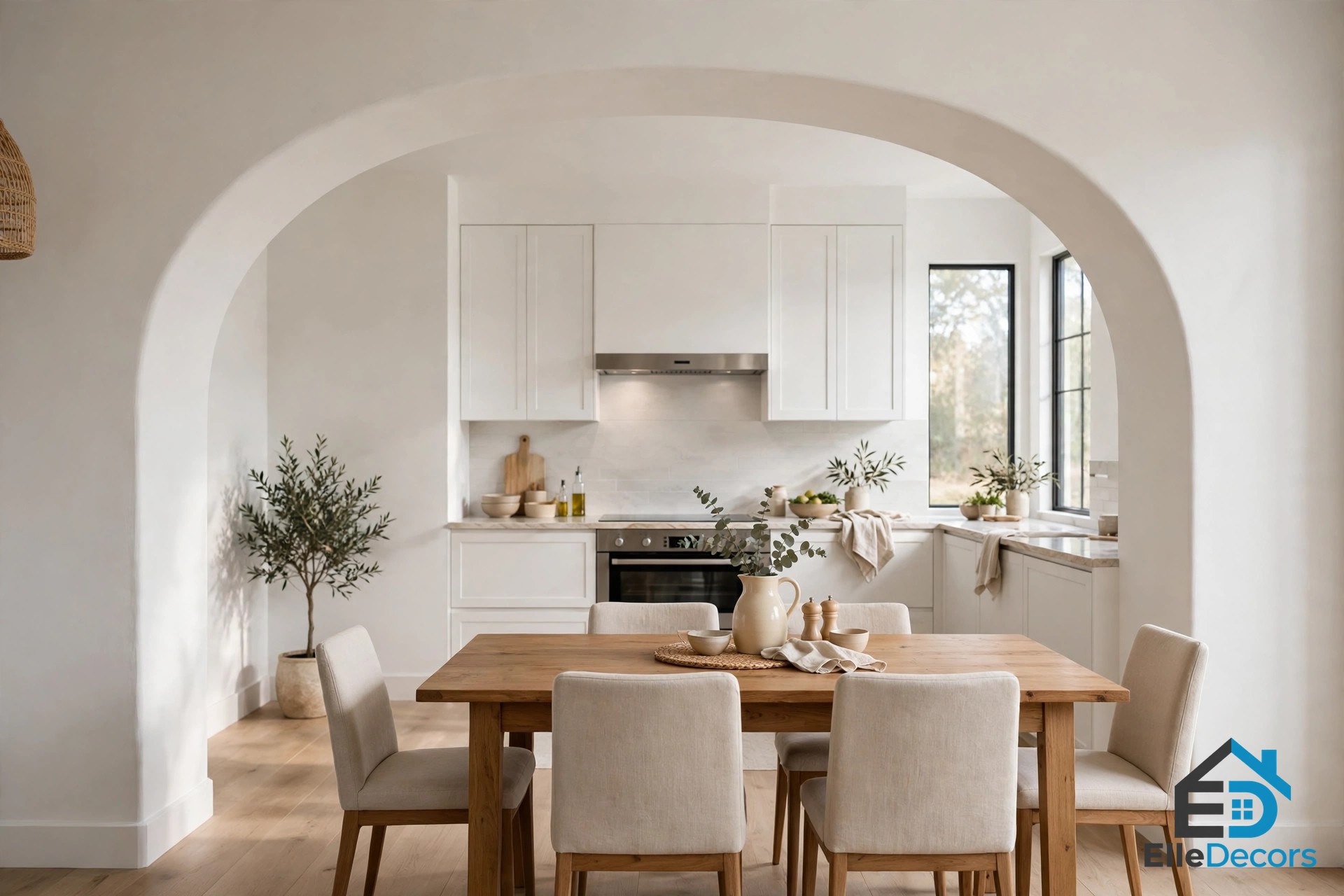
3. Three-Centred Arch
A three-centred arch flattens the curve of a Roman arch, moulding a style that sits gracefully in large contemporary spaces. The curve is gentler at the top and flows gradually into the straight sides, so the opening feels wide and composed rather than tall and formal. It works well as a long feature, running the length of a dressing room or a gallery wall, where it draws the eye steadily forward.
Best rooms: Dressing room, gallery hallway, large living room
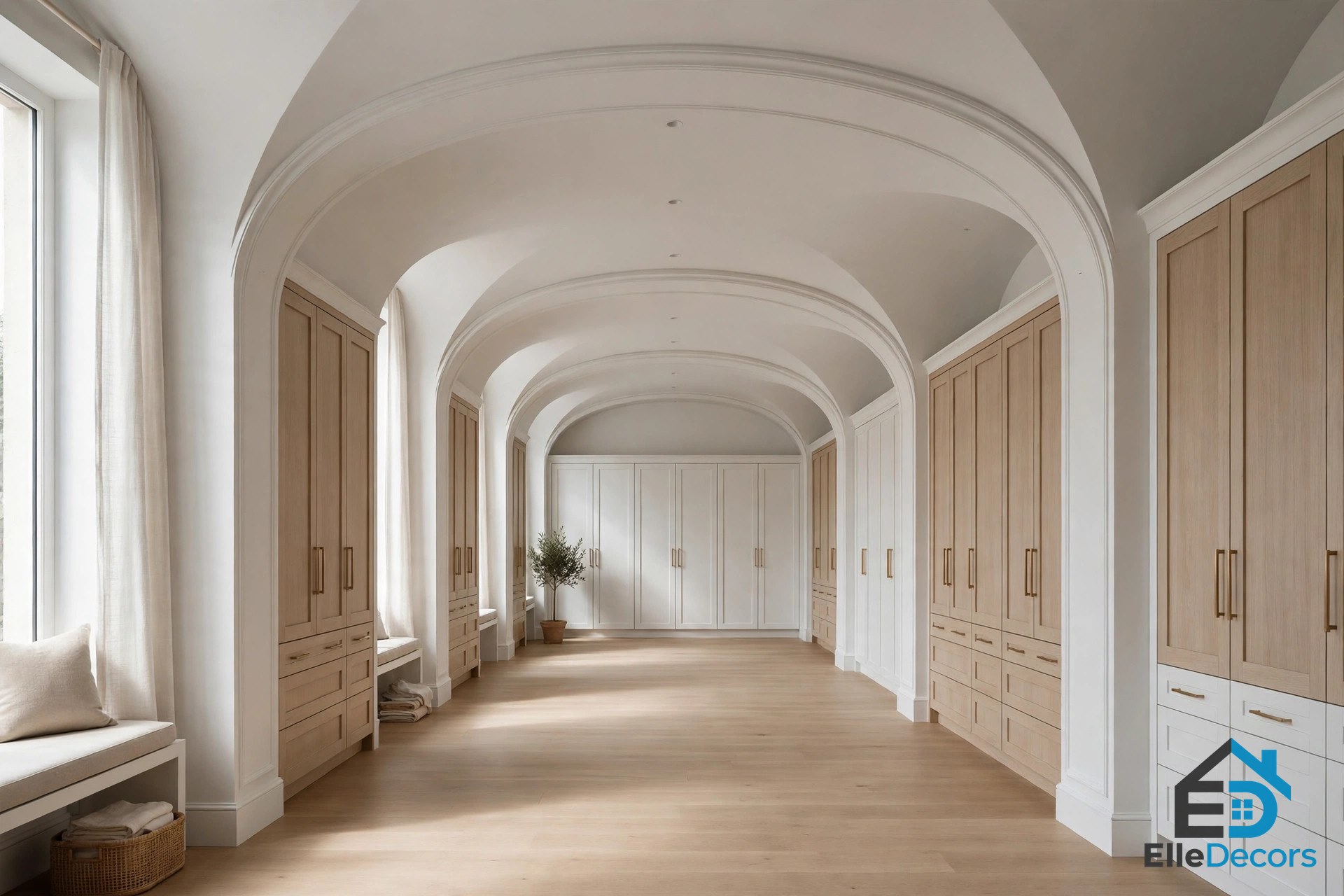
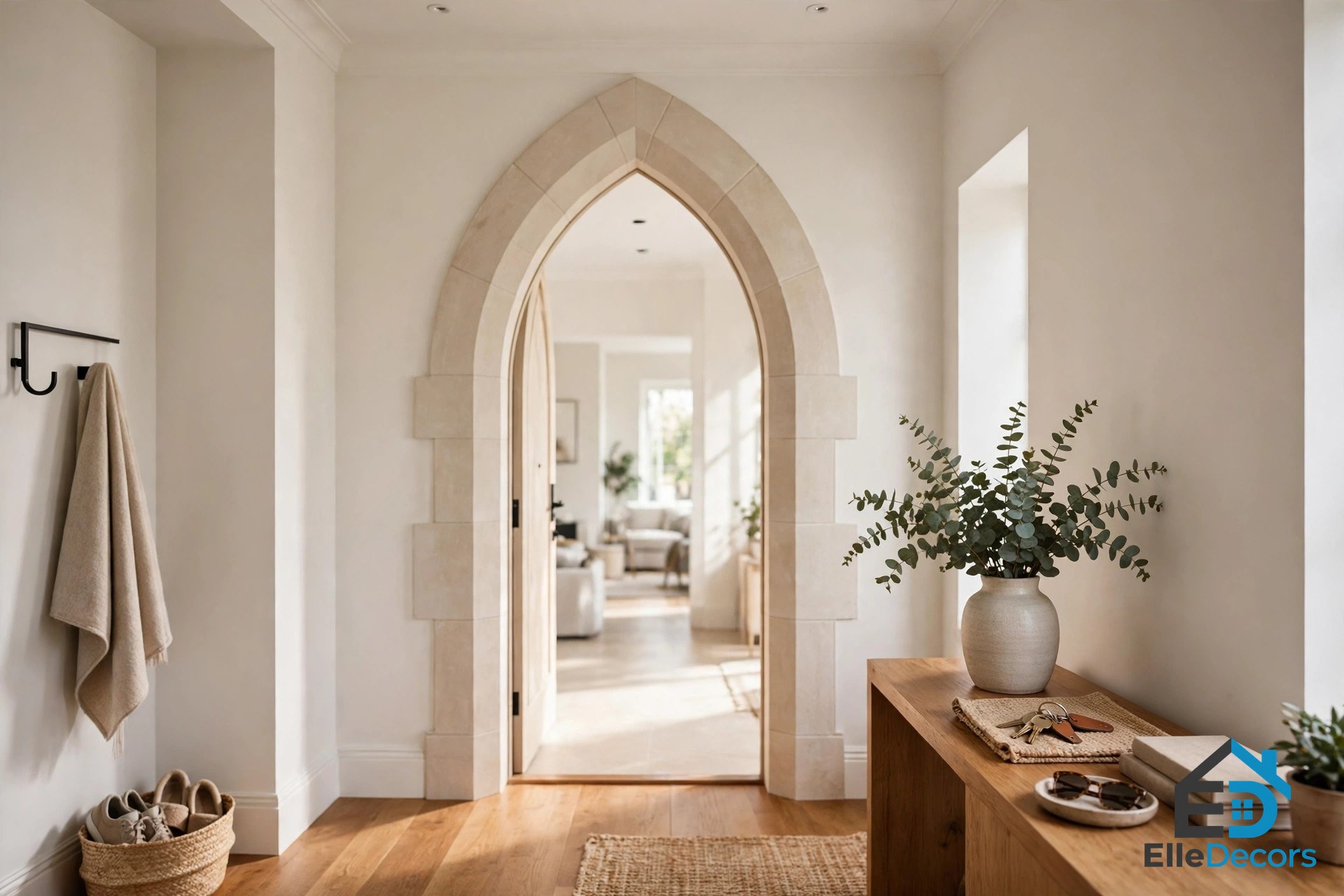
4. Gothic and Pointed Arch
Gothic arches are pointed at the top, sharpened at their apex, and instantly eye-catching. They bring a sense of height and ceremony to a room, and they work in combinations: a tall pointed arch beside a wider, softer one gives variety without chaos. Because of their high crest, they prove very effective in homes with higher ceilings. Save them for spaces with height to spare.
Best rooms: Entryway, living room with high ceilings, staircase hall
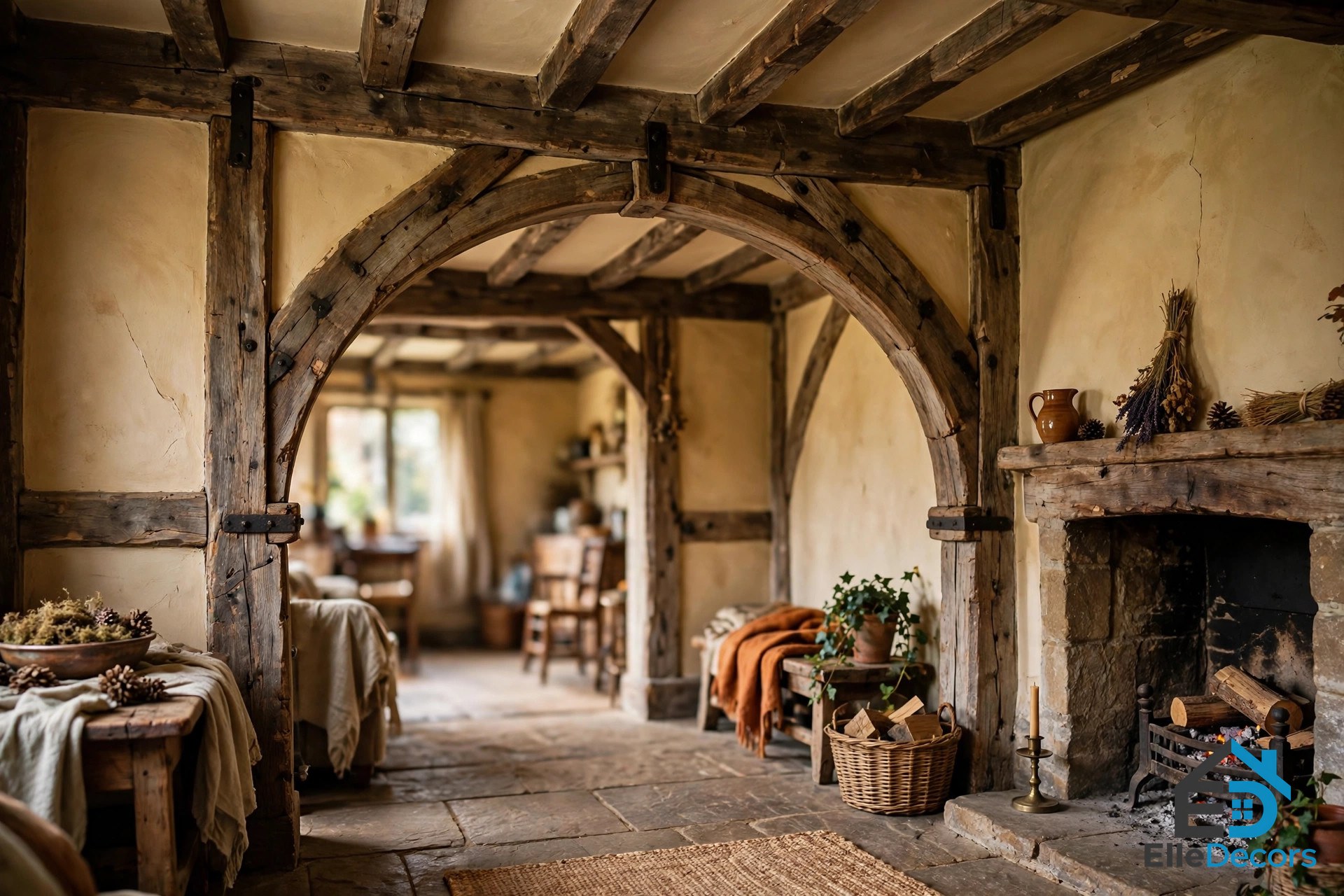
5. Tudor Arch
The Tudor arch has a shallow pointed arc that is wider than it is tall, giving it the appearance of being flattened under pressure. It is a good style to use under low ceilings, or where you need to avoid ceiling beams, because it takes far less height than a full Roman or Gothic curve. It reads as warm and traditional without being heavy, and it suits doorways and windows in cottages, farmhouses, and older homes.
Best rooms: Cottage living room, low-ceiling hallway, bedroom doorway
6. Moroccan and Turkish Arch
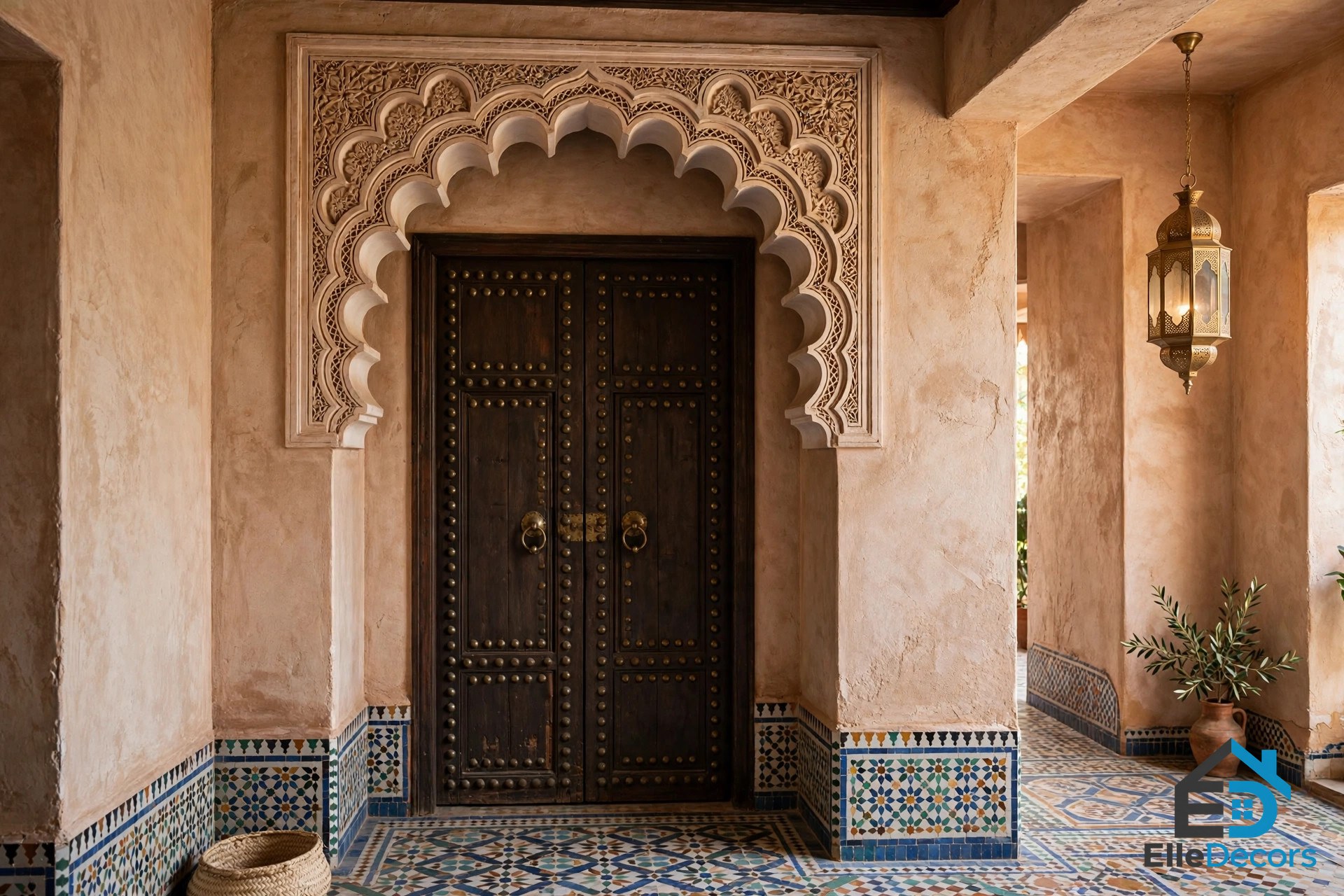
Moroccan and Turkish arches offer more adventurous outlines for highly detailed interiors. Their curves step, scallop, and point in ways a plain semicircle never does, and they often frame something worth showing off — a set of studded doors, a tiled alcove, a courtyard beyond. Used once, as a single doorway or window frame, they become the room’s talking point. Used everywhere, they overwhelm.
Best rooms: Entryway, courtyard door, bathroom feature wall
7. Multifoil and Mughal Arch
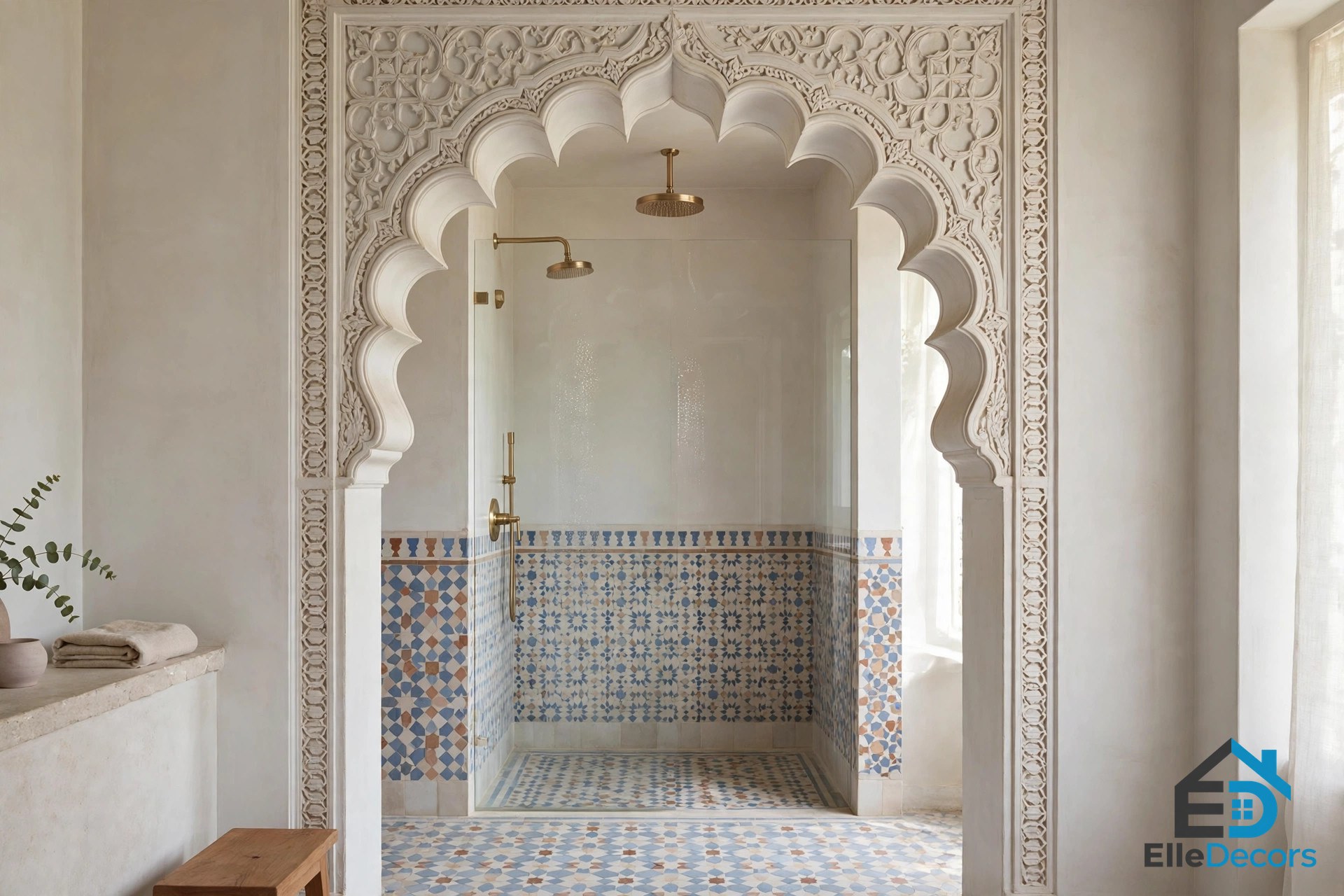
Multifoil arches — arches made of several small lobes or foils — communicate an Indian or Mughal style. They are ornate by nature, and they turn a small opening into a piece of decoration in its own right. A multifoil arch makes a unique surround for a shower area, a prayer niche, or a display recess, and the shape repeats well in wall panels and screens. Keep pale, plain walls around them so the detail does not turn busy.
Best rooms: Bathroom, terrace, display niche, living room feature wall
8. Barrel Vault and Arcade
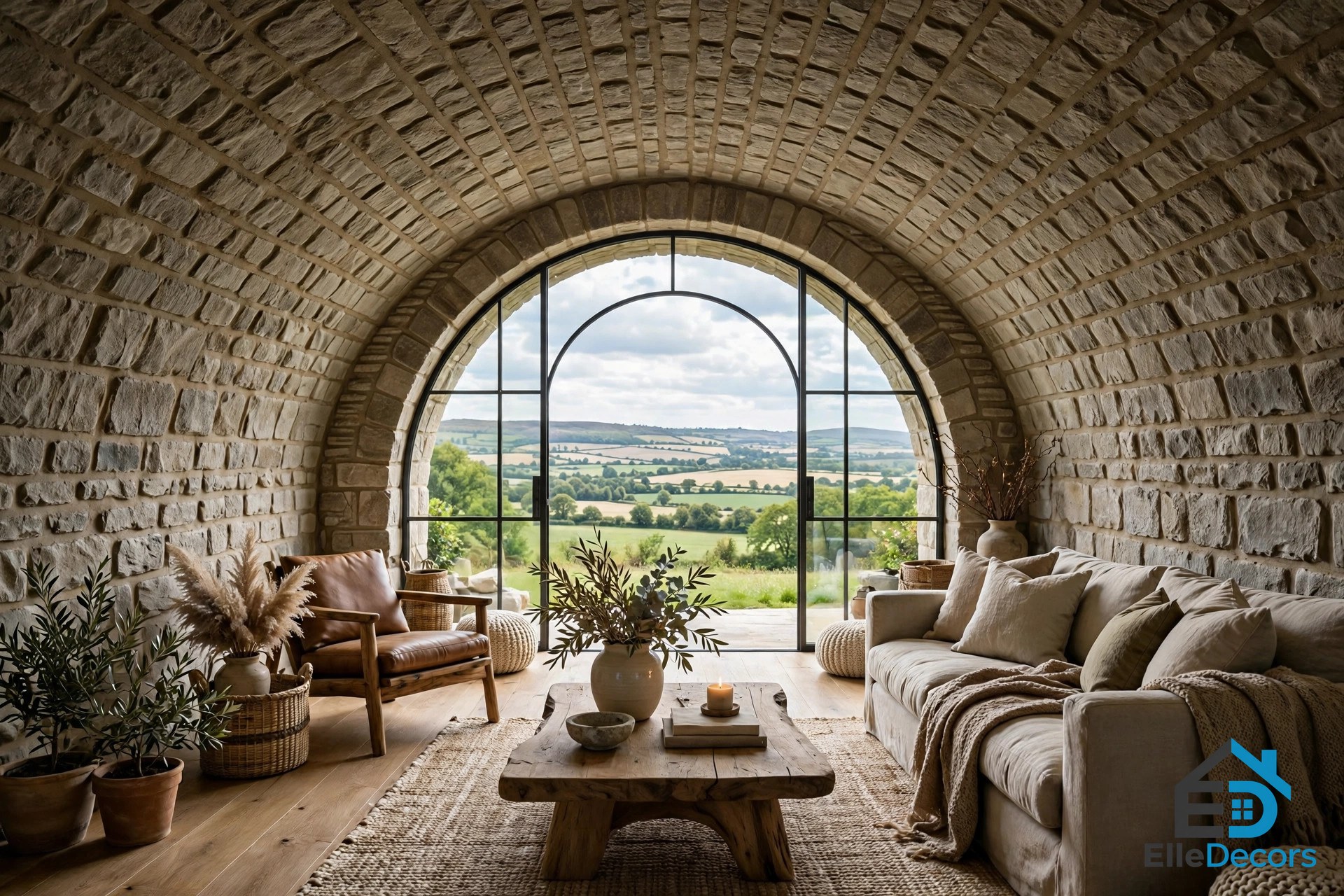
A barrel vault — also called a tunnel vault — is an arch stretched along a whole ceiling. A stone barrel vault across a modern rustic living room is an awe-inspiring feature, and a glazed arch at its end can frame sweeping views beyond. At a smaller scale, a row of arches on columns forms a colonnade, or arcade, that divides one space from another without closing it off. An arcade works beautifully between a lounge and a kitchen diner: the repeated arches give rhythm, the columns give structure, and light still passes through. This is the boldest of the arch designs home renovators take on, so it belongs in a room with the scale to carry it.
Best rooms: Living room, open-plan lounge and kitchen, long hallway
9. Arched Niches and Nooks
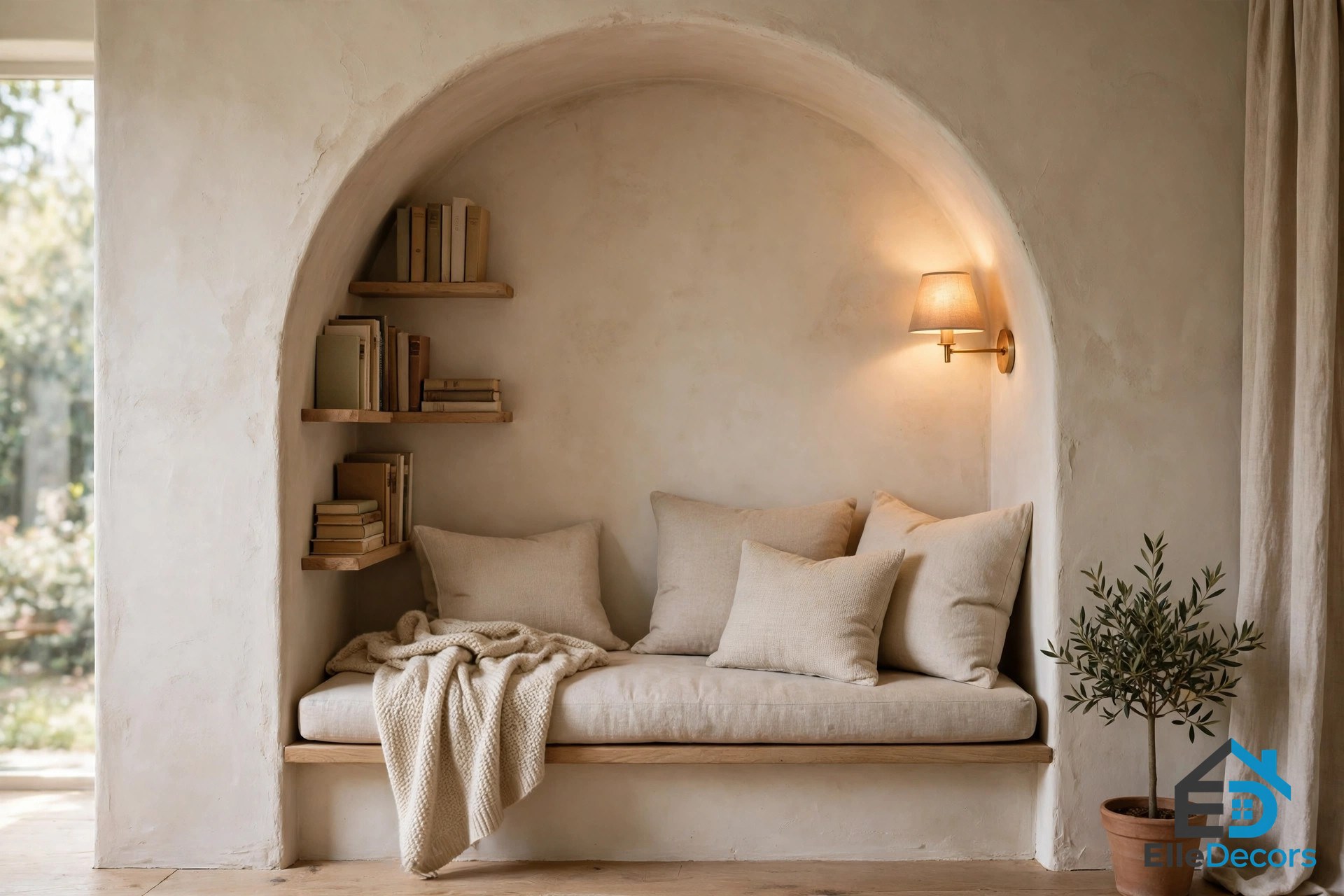
An arch does not always have to lead to another room. A shallow arched recess can become a reading nook, a display niche, or a quiet corner for a chair and a lamp. Built-in benches, small shelves, and a wall light turn the curve into a place to sit, not just a shape to look at. Niches work in bedrooms, living rooms, hallways, and under stairs — anywhere the architecture leaves an unused pocket.
Best rooms: Bedroom, hallway, under-stairs corner, walk-in closet
10. Painted and Decorative Arches
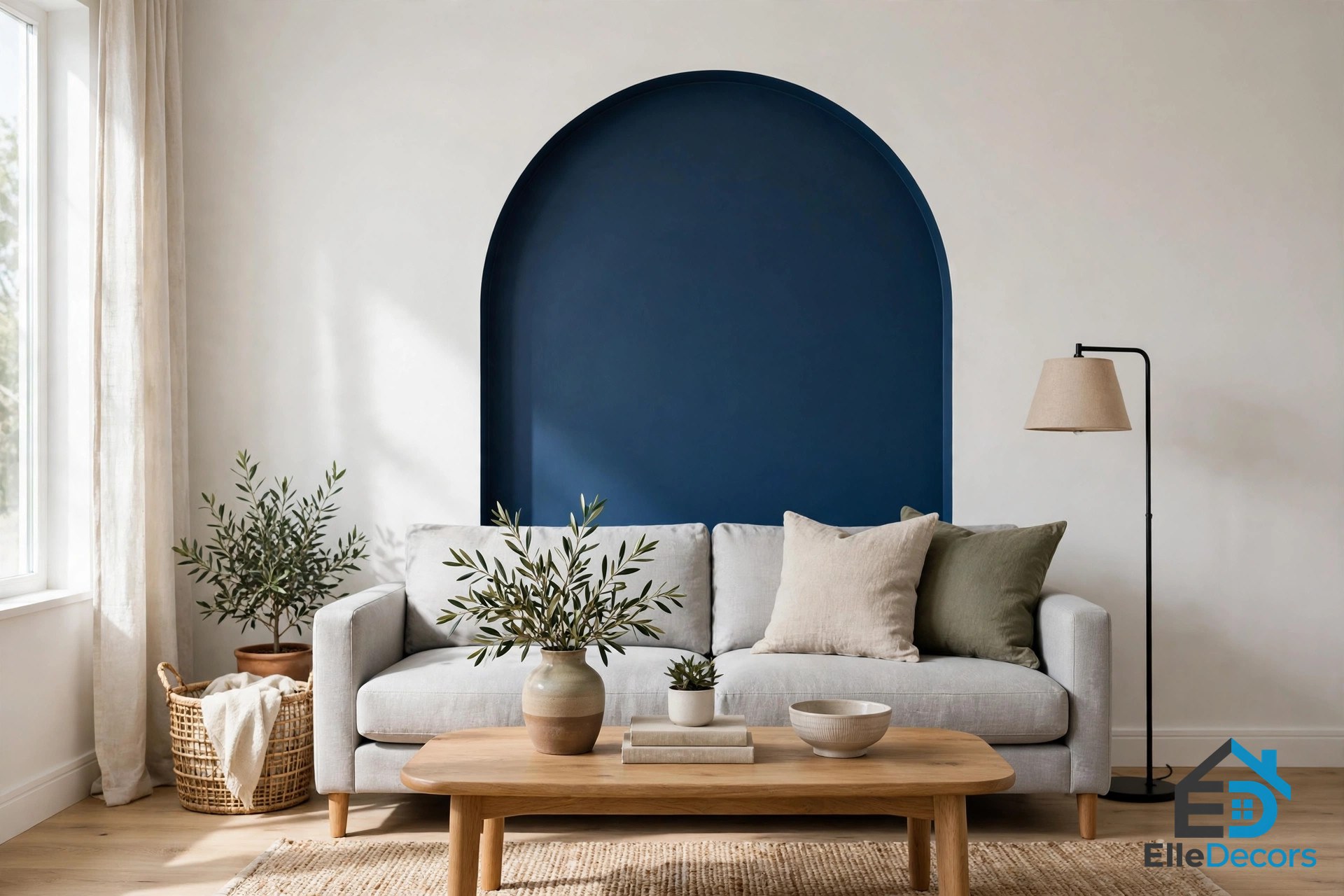
The simplest arch of all may not be built from plaster or stone. A painted arch — a bold curve drawn directly on the wall — turns a flat surface into an architectural feature for very little effort. A dark blue partial arch behind a sofa, a candy-coloured edge around a doorway, or a black outline tracing an opening all use the same trick: the shape suggests architecture where there is none. This is the best place to start if you are renting, unsure, or short on time.
Best rooms: Bedroom feature wall, living room, hallway, rented homes
Where Arches Work Best, Room by Room
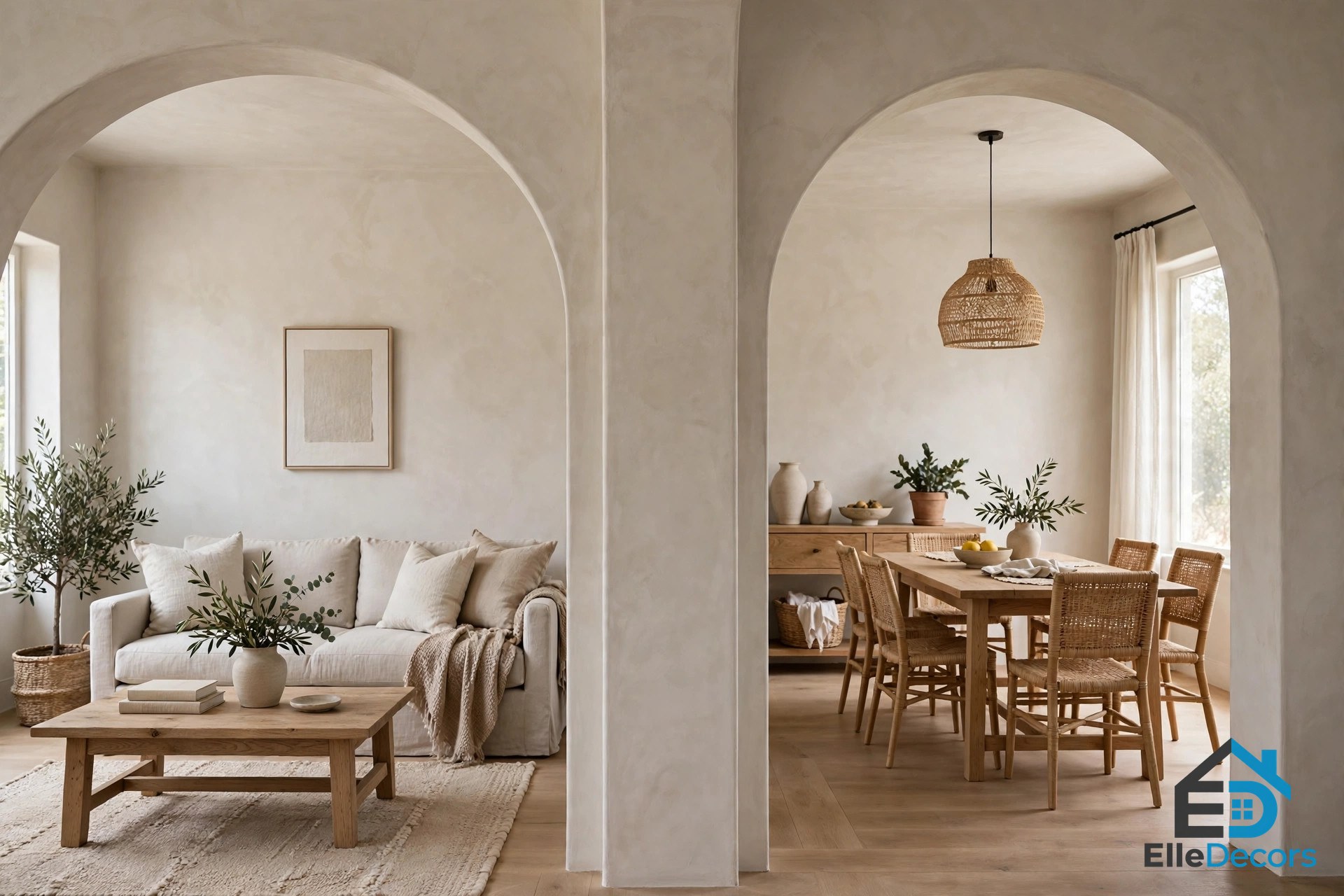
The best arch designs home ideas match the arch to the room’s job. In a living room, a wide arch between the lounge and dining area keeps both spaces connected while giving each its own identity — frame the dining table through it and the view does the decorating.
In kitchens, an arch between the kitchen and breakfast area lets conversation and serving flow while keeping cabinets and appliances visually contained. In hallways, a sequence of repeated arches creates rhythm and draws the eye through the space — keep the walls simple, and put a console, artwork, or plant at the end where the arches can frame it.
Materials and Finishes
Among arch designs home finishes, the material decides whether an arch reads modern or traditional. Smooth plaster, painted the same colour as the surrounding walls, is the quietest option and suits minimalist, Scandinavian, and organic-modern homes. Warm white, cream, soft beige, and light greige emphasise the subtle shadows along the curve.
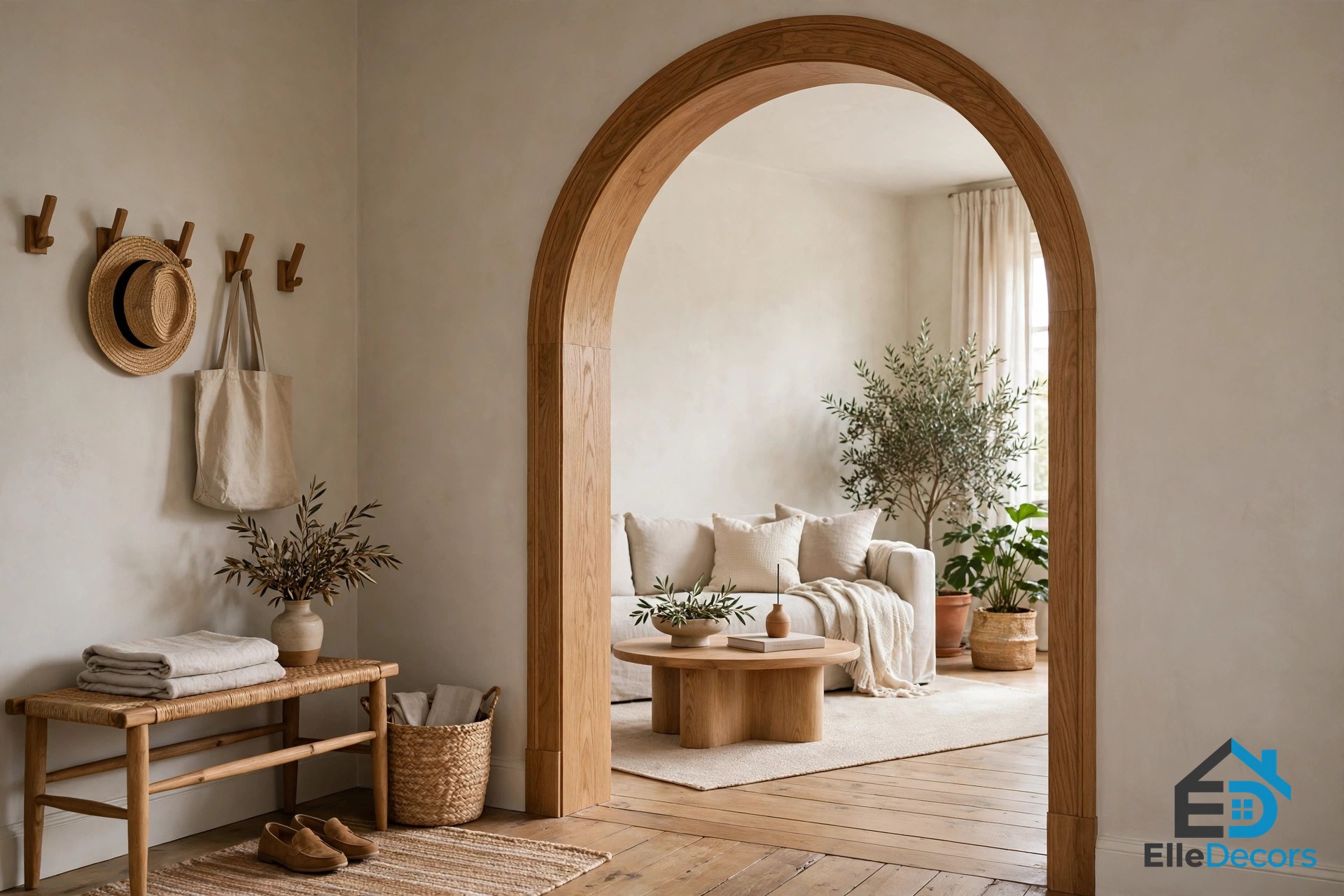
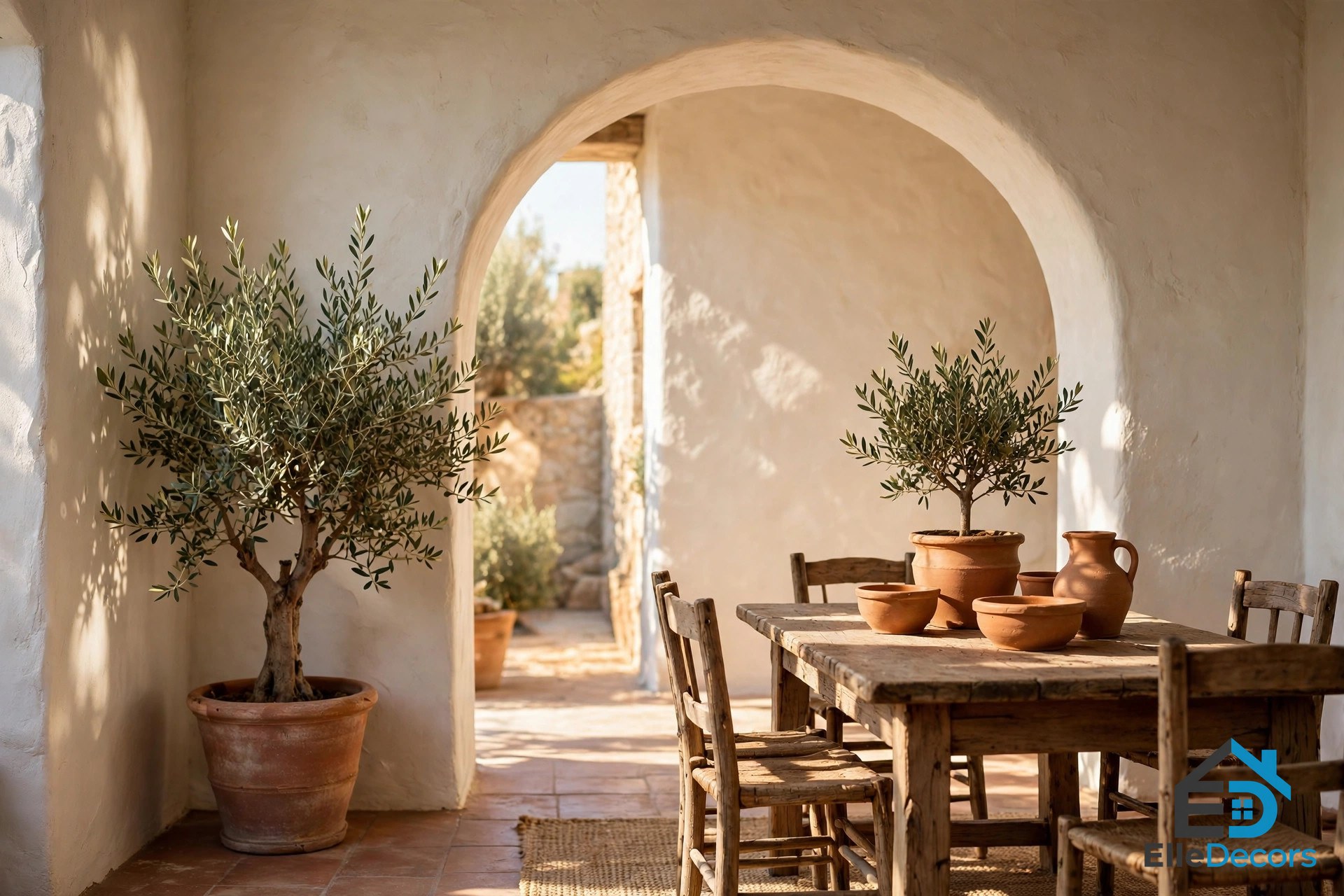
Wood adds warmth and definition. A wood-trimmed arch between an entryway and a living area introduces texture at once, and repeating the wood tone in furniture, shelving, or flooring keeps the arch from looking disconnected. Light oak suits contemporary neutral homes; darker walnut creates a more dramatic effect. Exposed brick gives a rustic, industrial warmth, while stone — light limestone for organic-modern rooms, rougher stone for Mediterranean ones — gives an arch real presence, though its weight and thickness need proper support. Whatever you choose, keep the level of detail consistent with the rest of the house.
Planning, Proportions, and Safety Before You Build
The arch designs home renovators plan best start with flow, not decoration. Notice how people move through the existing doorway. Does a swinging door block furniture? Does a narrow passage make two rooms feel disconnected? Would a wider opening expose kitchen clutter from the front entry? Removing an unnecessary door may be enough. Widening by even a modest amount can make carrying groceries or moving furniture feel easier — but wider is not automatically better, since a fully open wall removes space for cabinets, artwork, switches, and furniture.
Get the proportions right. A narrow arch in a large wall looks timid, while an opening that leaves only thin wall sections at the sides looks awkward. Where possible, align the top of a rectangular opening with nearby door and window heads, and let the arch rise above that line only where the curve begins deliberately. A useful test costs nothing: outline the proposed width and shape directly on the wall with painter’s tape, mark the highest point and where the curve begins, then walk through it several times carrying something bulky.
Check what is inside the wall before you cut anything. The wall may support floors, ceilings, or the roof, and it may contain plumbing, wiring, ductwork, or gas lines. Do not assume a wall is safe to alter based only on its position. Have a qualified contractor, architect, or structural engineer evaluate it, and if support is required, a properly designed header or beam must carry the load safely. Permit rules vary by location, so check with your local building department before work begins. And think about who uses the passage: accessible doorways commonly provide at least 32 inches of clear width, a useful reference when planning a comfortable opening for strollers, mobility devices, and furniture.
Watching one doorway become an arch makes the steps much clearer. This video turns a standard squared doorway into a dreamy arched doorway, step by step:
Arches belong in the plan, not as an afterthought. If you are sketching a new layout or an extension, it helps to look at how whole floor plans handle room relationships and circulation — our guide to 3 bedroom house plans shows how openings, sightlines, and room sizes work together in a complete home.
Styling an Arch Once It Is Built
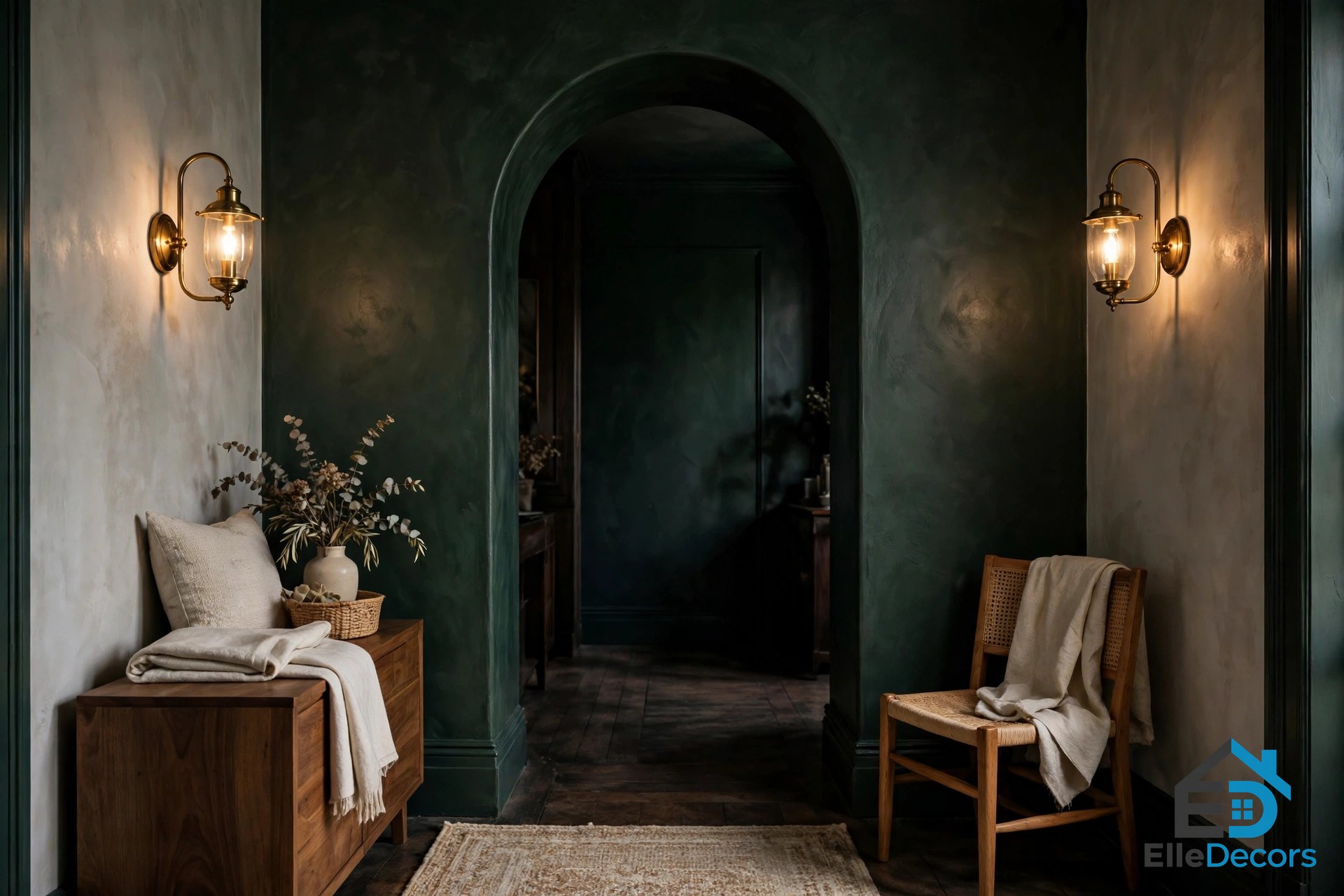
Once the shape is in, styling should be restrained. Restraint is what makes arch designs home styling work: the arch is the decoration, so the furniture around it should support it, not compete with it. Position furniture so the view through the arch feels balanced, and keep the surrounding decor simple so the curve stays dominant. Matching wall lights on either side reinforce symmetry.
Use the arch as a frame: place a large artwork or a sculptural chair on the far wall so it becomes visible through the opening.
Mistakes to Avoid
- Forcing a deep curve under a low ceiling. A full Roman arch needs height. Under a low ceiling it makes the passage feel smaller, not grander — choose a segmental, elliptical, or Tudor arch instead.
- Cutting a wall without a structural check. A wall that looks plain may carry load or hide services. Get a professional evaluation first, every time.
- Going wide and losing the room. An opening that leaves no wall for furniture, switches, or art makes both rooms feel unfinished. Keep enough wall on each side.
- Mixing too many arch styles. One house can carry two related shapes, but Roman, Gothic, Moroccan, and multifoil arches in the same sightline will fight each other. Pick one family and repeat it.
- Over-decorating the arch itself. Heavy moulding, bright paint, patterned tile, and dramatic lighting all at once bury the shape. Choose one treatment and let it speak.
- Ignoring the view through it. An arch frames whatever lies beyond. If that view is clutter, a blank wall, or a blocked path, fix the far side first.
Frequently Asked Questions
What is the easiest of these arch designs home ideas for a beginner?
Start with a painted arch or a shallow arched niche. A painted arch needs only paint and a steady hand, and it can be changed in an afternoon. A small niche needs no structural work at all.
Can I add an arch to an existing home?
Yes, in most cases. Decorative arches are relatively simple to add; load-bearing walls need a professional assessment.
Which arch shape suits a low ceiling?
A segmental, elliptical, or Tudor arch. All three use a shallow curve that takes far less height than a full semicircle, so the opening still feels generous.
Do arches suit modern homes?
Yes. A smooth plaster arch painted the same colour as the wall, a drywall return with no casing, or a simple black-framed arch all read as modern.
Should an arch match the rest of my trim?
It should relate to it. If the house has simple flat trim, a modest casing or a drywall return will feel at home; an elaborate moulded surround will look disconnected. If the house already has layered moulding and panelled doors, a more detailed arch surround fits naturally.
The Bottom Line
An arch is a small change with an outsized effect. It softens a room, defines a boundary without closing it, frames a view, and gives a plain house a detail worth noticing. The arch designs home owners love most are rarely the grandest — they are the ones that fit the ceiling height, the room’s job, and the style of the house around them.
Still choosing a style? Browse more ideas for interior decorating to see how an arch can sit with the rest of your room. Of all the arch designs home ideas out there, the best one is the curve you will still love in ten years — the one that makes the everyday walk between rooms feel just a little more graceful.