Black and White Kitchens: How to Balance the Boldest Palette in the Home
black and white kitchens are impossible to ignore. They are bold and versatile, and they let the architecture, fixtures, and materials stand at centre stage. This guide uses a 40-design gallery tour from home-designing.com as its reference, and the tour proves the point: the same two colours can build a traditional panelled kitchen, a futuristic white box, an industrial concrete room, or a vintage-inspired space with chequered floors. The difference is never the colours themselves. It is where each one goes, how much of it there is, and what softens it.
What Are Black and White Kitchens, Exactly?
A black-and-white kitchen is a kitchen built on two colours only, with grey, wood, and metal allowed in as supporting players. Black gives the room depth and definition; white gives it light and air. Together they create a visual rhythm that feels intentional: dark edges frame bright surfaces, and bright surfaces keep the dark ones from closing the room in. The contrast also does practical work: it makes the line of a cabinet, the shape of an island, and the pattern of a floor visible in a way a single-colour room rarely manages. That is the honest definition of black and white kitchens: two colours, one balance, and everything else in service of that balance. The palette suits almost any style, because the palette is the constant and the style is the variable: panelled cabinets with a marble backsplash look elegant in it, and so does a futuristic kitchen with an angled island.
Black and White Kitchens and the 60/40 Balance Rule
The most useful rule in this whole guide is a ratio. A 50/50 split between black and white usually feels too harsh, like two halves arguing with each other. Aim instead for roughly 60/40 or 70/30, with one colour clearly leading. If white leads, the kitchen feels bright and open, with black arriving through the island, the fixtures, or the appliances. If black leads, the room feels bolder and needs more light and white surfaces to breathe. Decide the leader first: every later choice either supports it or fights it. Light matters as much as the ratio: a bright kitchen with a big window can carry more black cabinetry, while a darker room needs lighter uppers and pale walls to stay open. Finish changes the feeling too: matt black cabinets look softer than glossy ones, veined worktops and textured tiles stop large areas from looking flat, and softer blacks and warm whites take the edge off, especially with wooden floors. Our guide to black and white interior goes deeper into how this same contrast behaves across a whole home, room by room.
Three Schemes, Three Moods
The three schemes below are the fastest way to choose your direction. Each one is a different answer to the same question, and black and white kitchens change completely depending on which one you pick. Read the trade-offs first: the scheme that looks best in a bright, large room can feel very different in a small, dark one.
| Scheme | How it looks | Best for | Watch out for |
|---|---|---|---|
| Black-dominant | Matt black cabinets, white worktops and backsplash, one white volume for light | Large, bright rooms; a bold, enclosed feel | Feels heavy without strong light and pale surfaces |
| White-dominant | White cabinets and walls, black island or black stools and pendants | Small or dark rooms; a bright, open feel | Looks plain without one strong black anchor |
| Balanced | Black lowers with white uppers, or a black island in a white room | Most homes; the safest starting point | A 50/50 split can read as two halves arguing |
Cabinets: Where the Contrast Lives
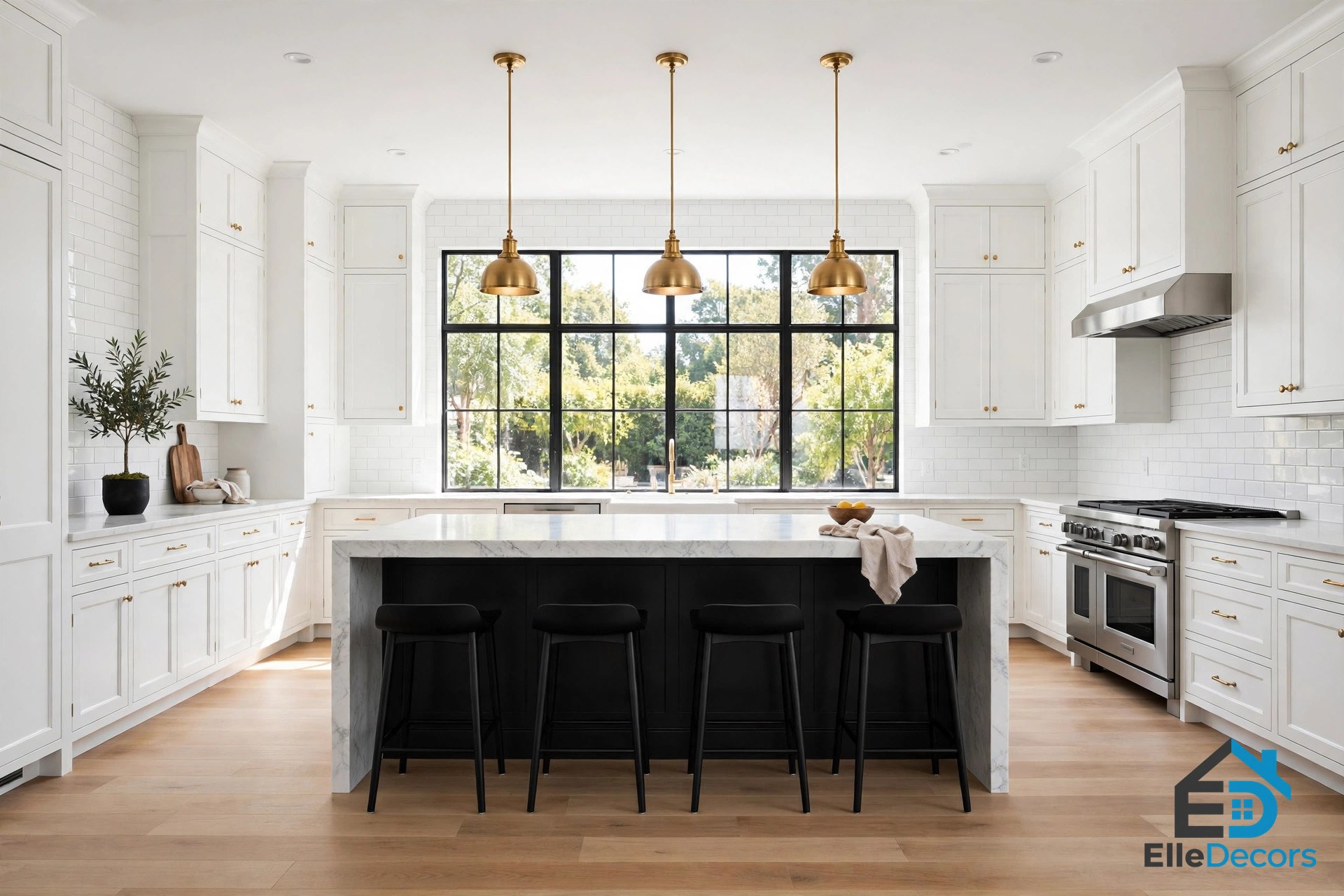
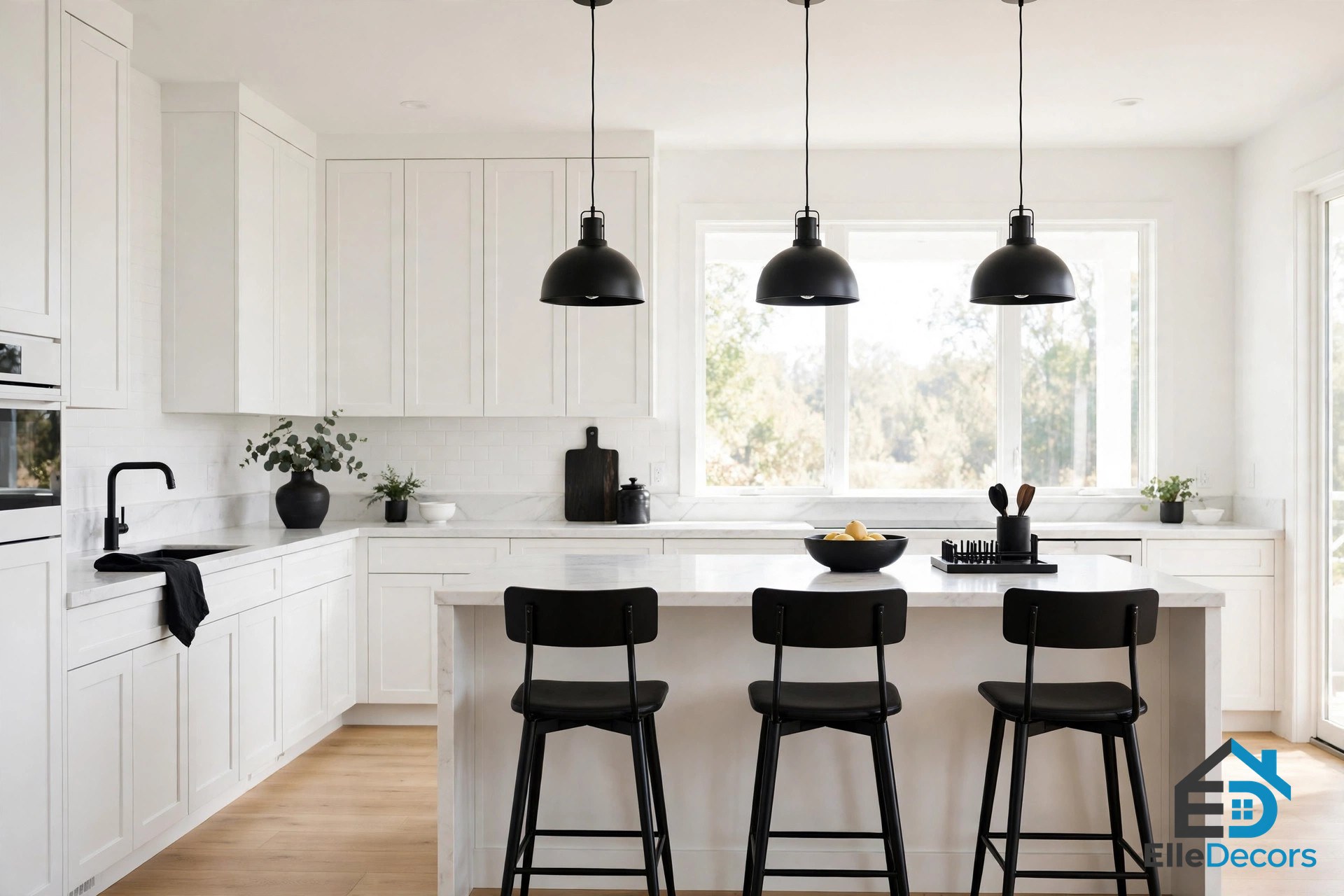
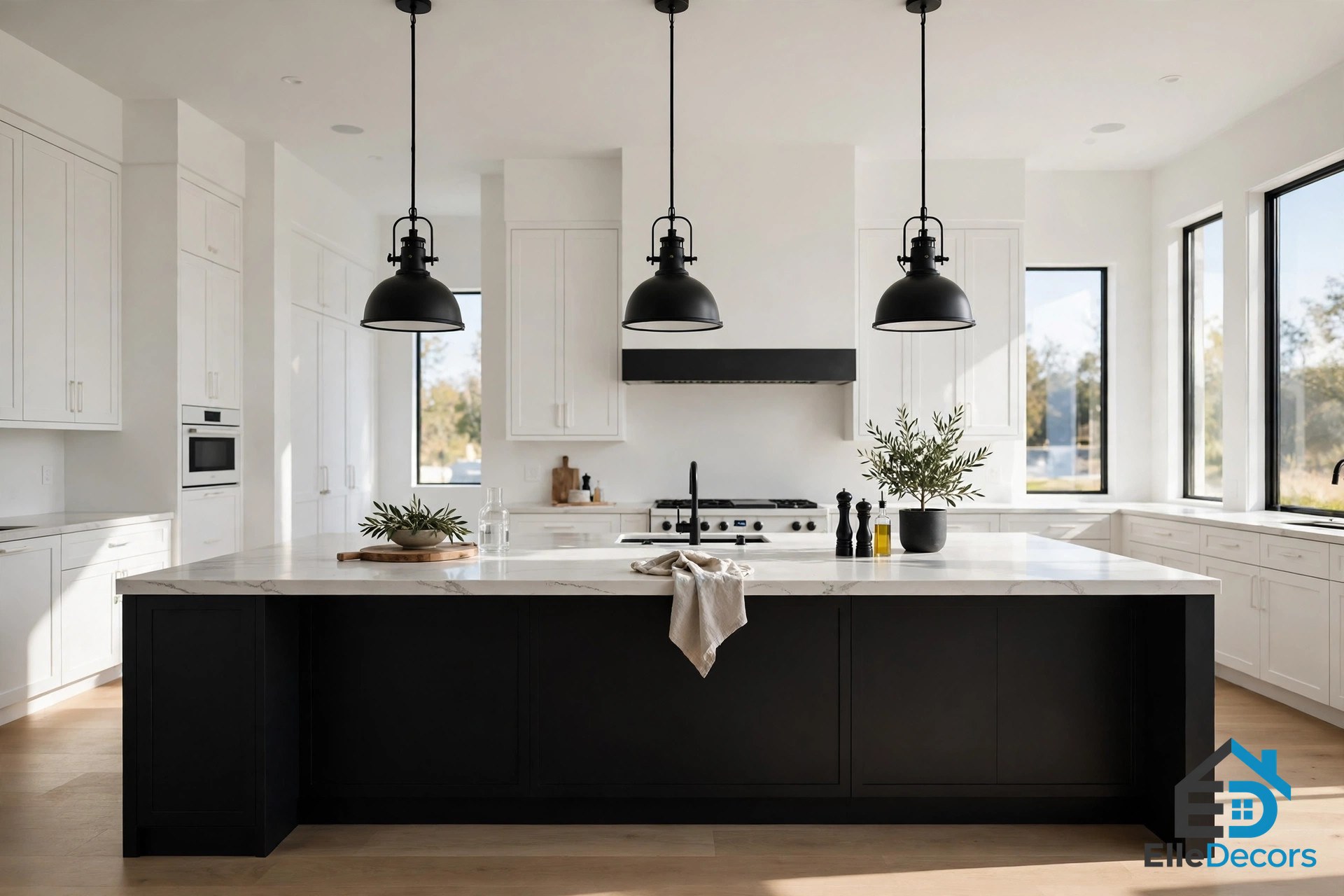
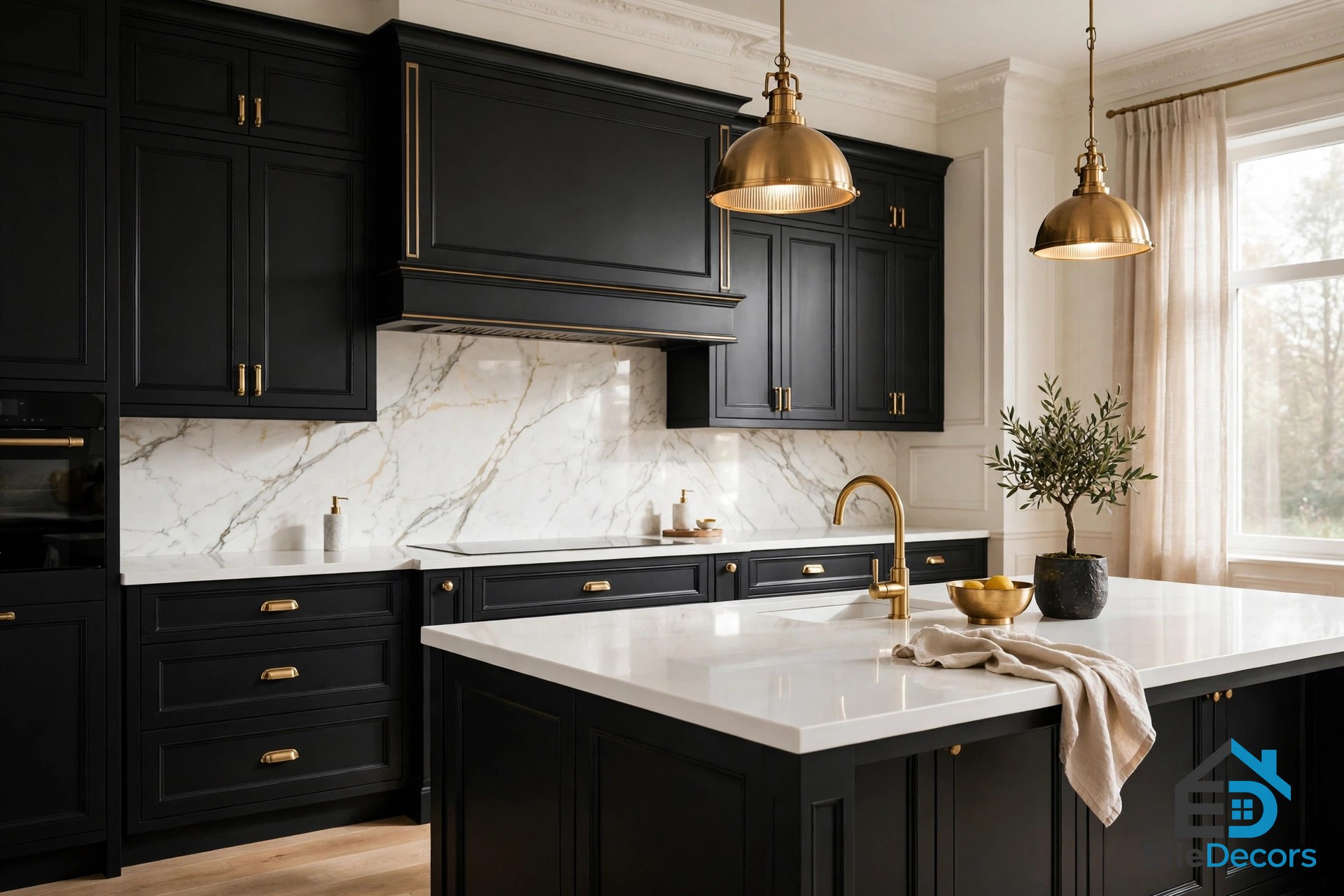
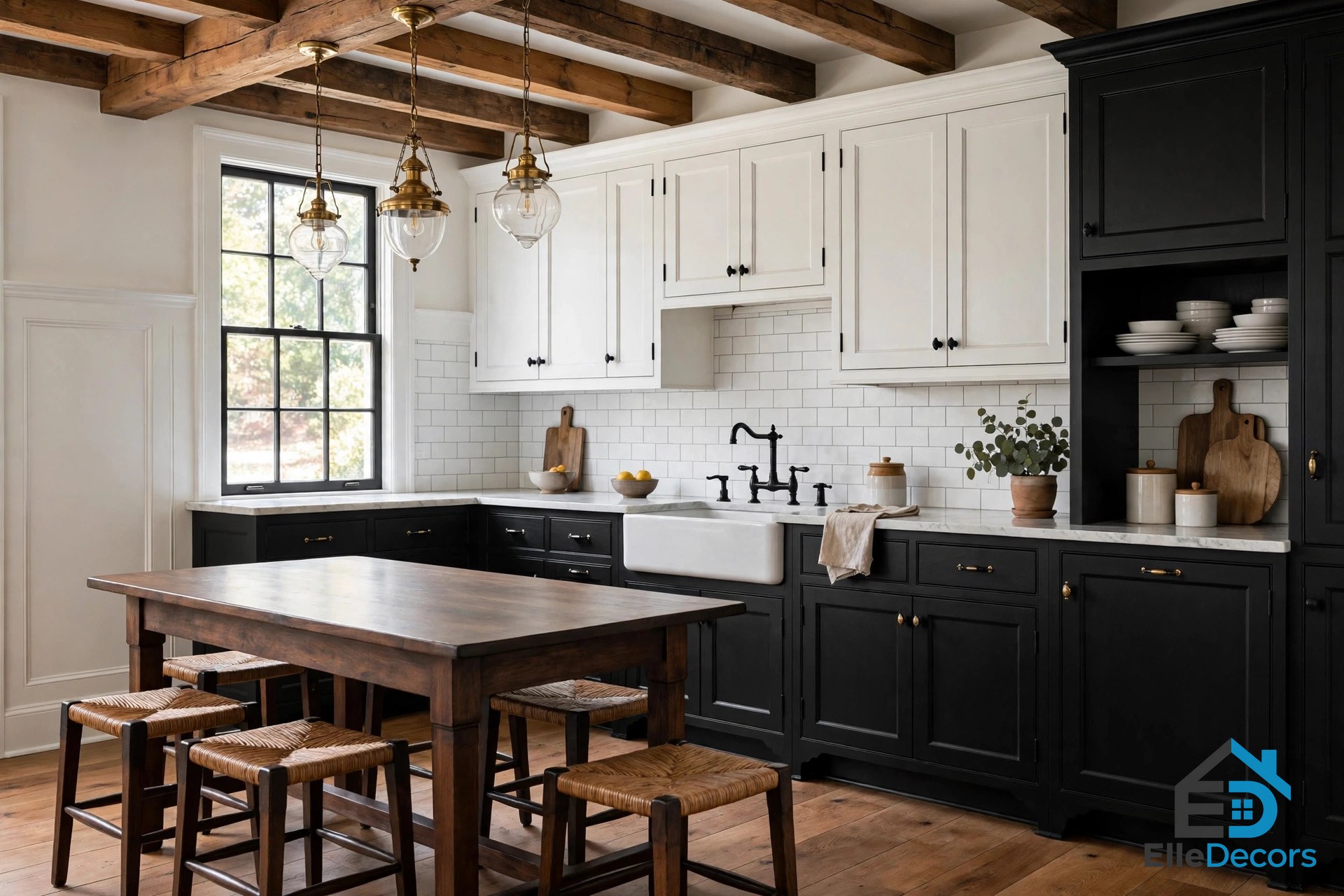
Two-tone cabinets are the classic entry point into black and white kitchens, and they work because the dark sits low and the light sits high. Black lower cabinets ground the room, white uppers keep the ceiling feeling tall, and one shared handle finish ties the two halves together so they read as one plan rather than two kitchens stacked on top of each other. Keep the worktop white and the backsplash quiet, and let the cabinets carry the contrast. The other classic move is the black island in a white room: a massive black island with a white worktop becomes the centre of the space, and the white around it keeps the room bright. An all-white kitchen with black stools and black pendant lights is the lightest version of the look, with a practical advantage: the stools and lights can be swapped for a different accent colour any time, without touching the cabinets. Our modern white kitchen guide covers the all-white side of this balance in more detail. Whichever route you take, keep the door style the same on both colours: matching fronts look deliberate, different fronts look accidental.
Countertops and Backsplashes
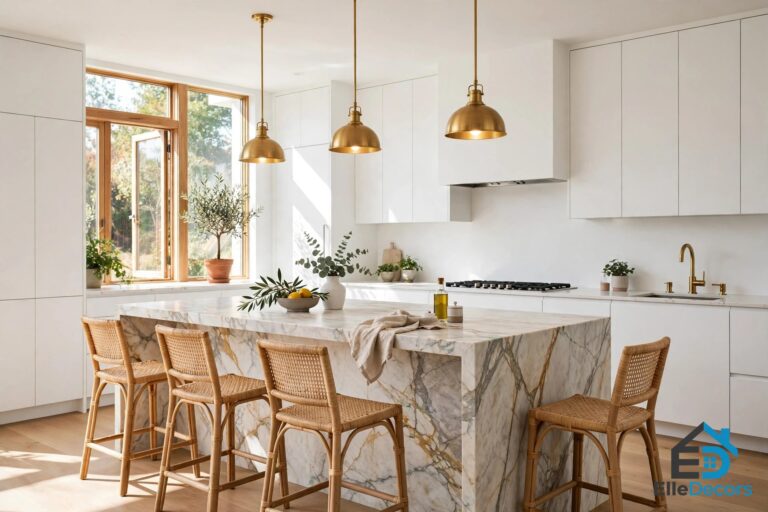
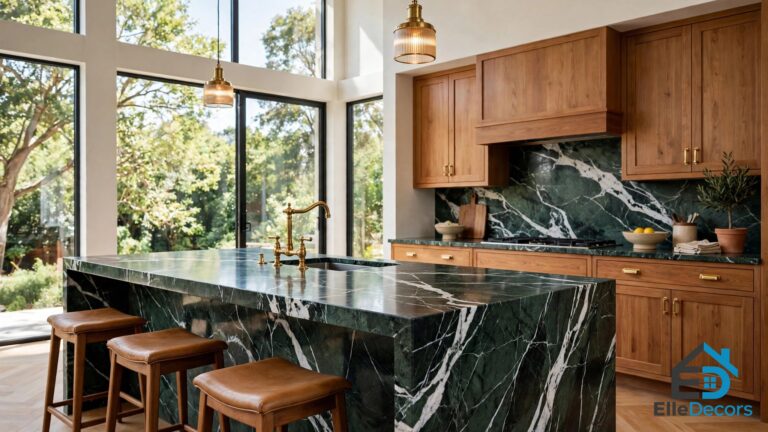
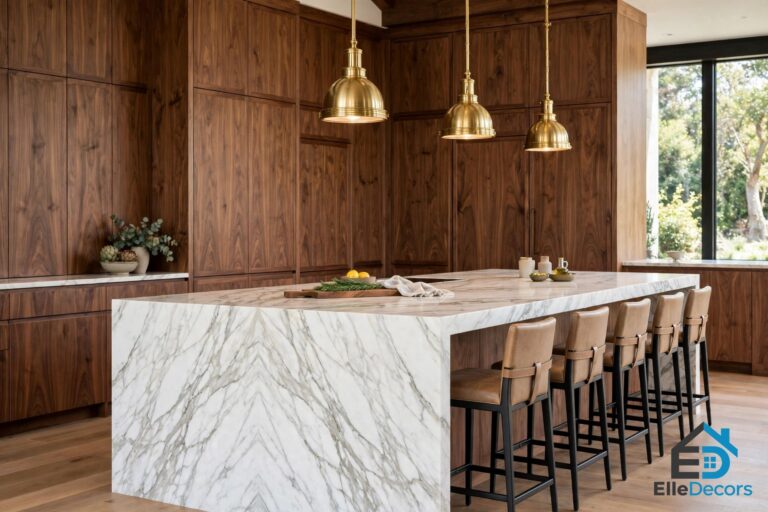
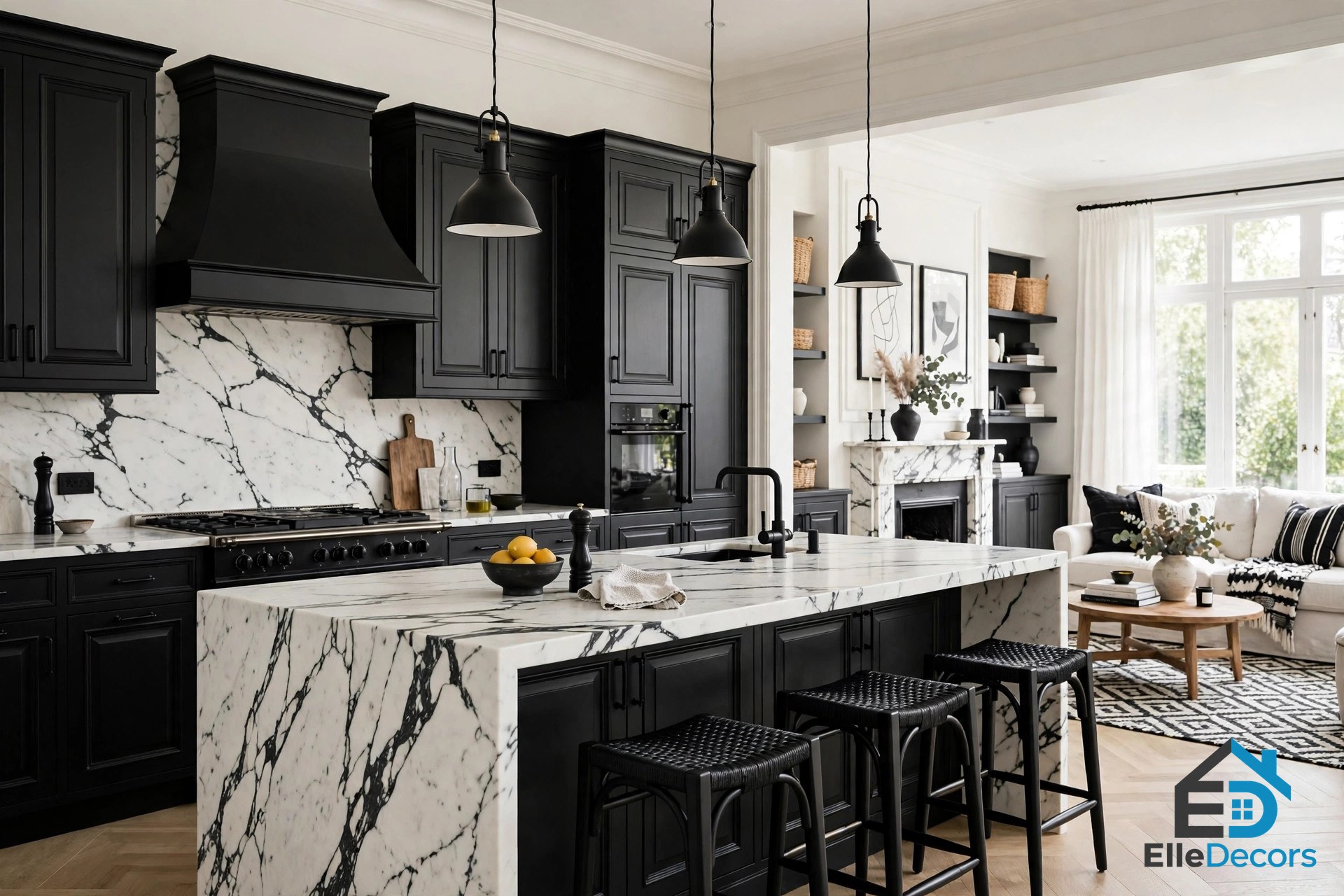
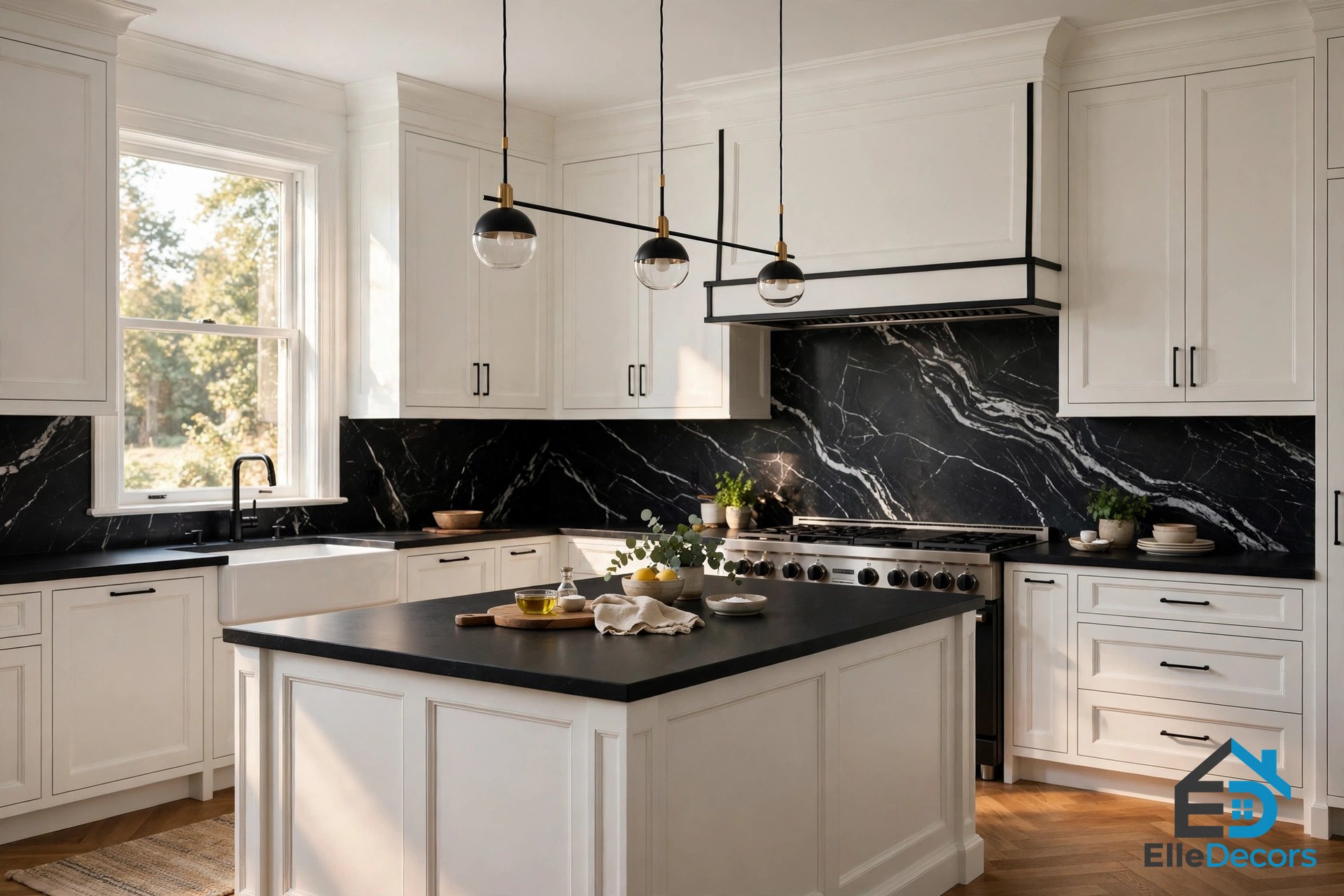
Countertops and backsplashes are where the palette gets its luxury, and marble does most of that work. White marble with bold black veining, or a good marble-look quartz, runs over the worktop and, on an island, down the sides in a waterfall edge. A black marble backsplash with white veining does the same job on the wall, and brass and marble together bring a classic luxury that the modern construction underneath would not suggest on its own. Our guide to rich colored marble kitchen trends looks at how veined stone is being used across kitchen styles right now. The backsplash can carry the pattern too: white tiles with black grout tie in with black doors, taps, or appliances, while a black backsplash against glossy white cabinets is one of the cleanest contrasts in the palette. Grey earns a mention too: black and white both show dirt quite easily, but grey is a little more forgiving, which is why grey worktops sit so comfortably between the two extremes. Keep statement surfaces to one: if the worktop is veined marble, let the backsplash stay quiet, and vice versa.
Floors That Do the Decorating
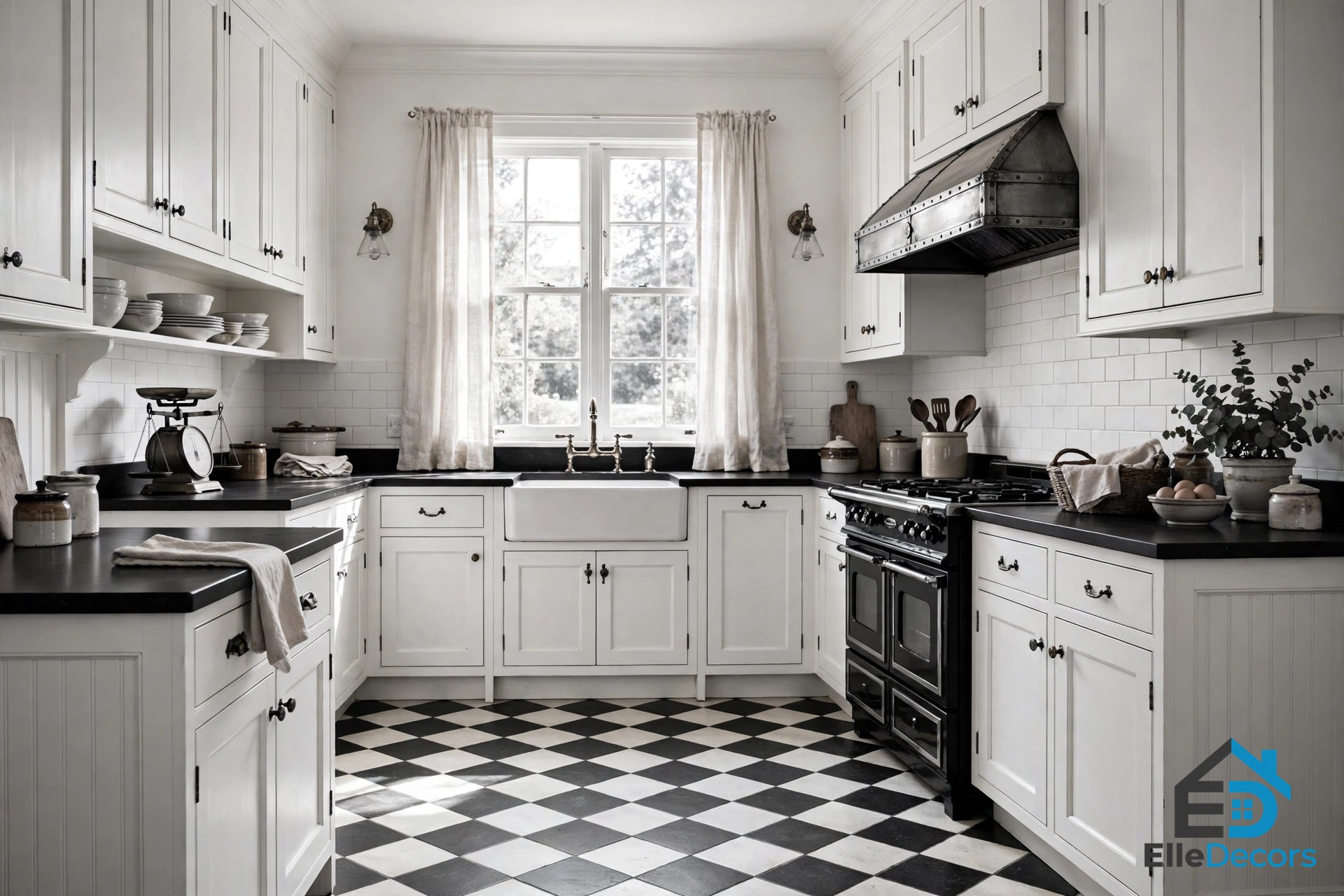
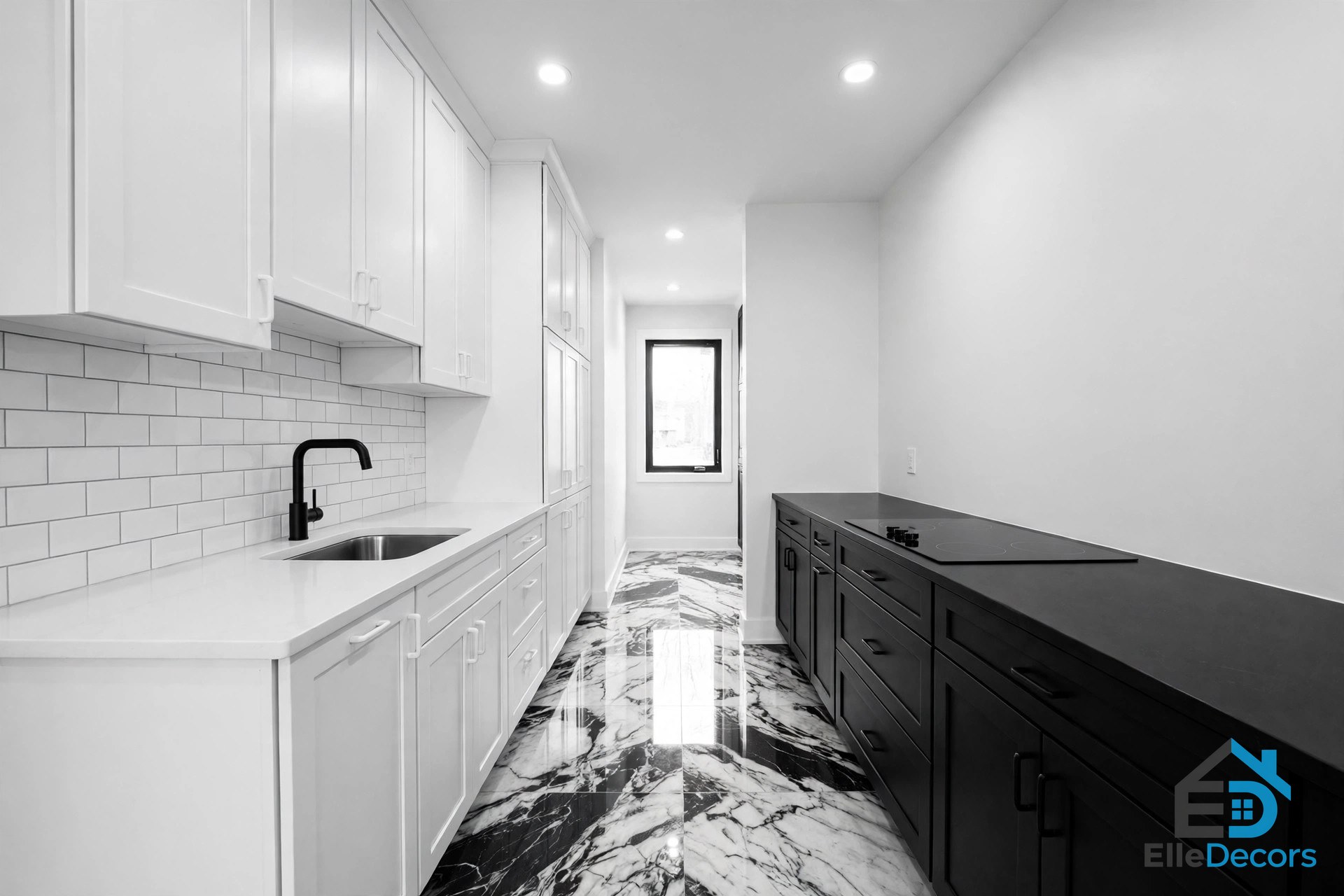
In a two-colour room, the floor can do the decorating while everything else stays calm. A checkerboard floor is the oldest idea in this palette, and it still works, because the pattern carries the room and the cabinets can stay simple. Chevron floorboards do a quieter version of the same job, adding direction under a modern kitchen. Black floors add character to solid white surfaces, and the dark underfoot warms the pale room above it. At the other extreme, huge unbroken floor tiles make a kitchen feel simple and minimal, with no grout lines breaking the surface. A narrow kitchen shows how much the floor matters: the same small room feels warm and traditional with wooden floors, and sleek and modern with polished marble, while the cabinets never change. Choose the floor after the scheme, not before: a patterned floor and a patterned backsplash in the same room will fight each other for attention.
Warmth: Wood, Brass, and Marble
The most common fear about this palette is that it will feel cold, and the fix is material, not colour. Wood is the easiest warmer: wood worktops bring a touch of chic charm to a stark room, muted wood tones add a natural feel without breaking the greyscale theme, and dark wood is a traditional and striking choice that looks especially good paired with white and black cabinetry. A brass chandelier underscores the warmth of wood floors, and brass and marble together lift a modern kitchen into something more classic. Plants help too: rows of indoor herb planters above an island give you fresh herbs to clip and add green life to a monochrome room, and a white volume can hold a small vertical garden with herbs on demand. The rule is simple: when the palette feels stark, add a warm material before you add a third colour.
Lighting as the Focal Point
A minimal room needs a focal point, and in this palette the light itself often plays that role. A sculptural pendant or a creatively routed island light gives the eye somewhere to land, and the contrast of the fixture against its background does half the work: a dark pendant against a white ceiling, or a bright light against a black wall. The dining pendant also helps to anchor the space, pulling the table and the kitchen into one composition instead of two separate zones. Keep the fixtures in one metal family. One strong light, well placed, is worth more than a row of small ones scattered across the ceiling.
Walls With Personality: Chalkboard and Type
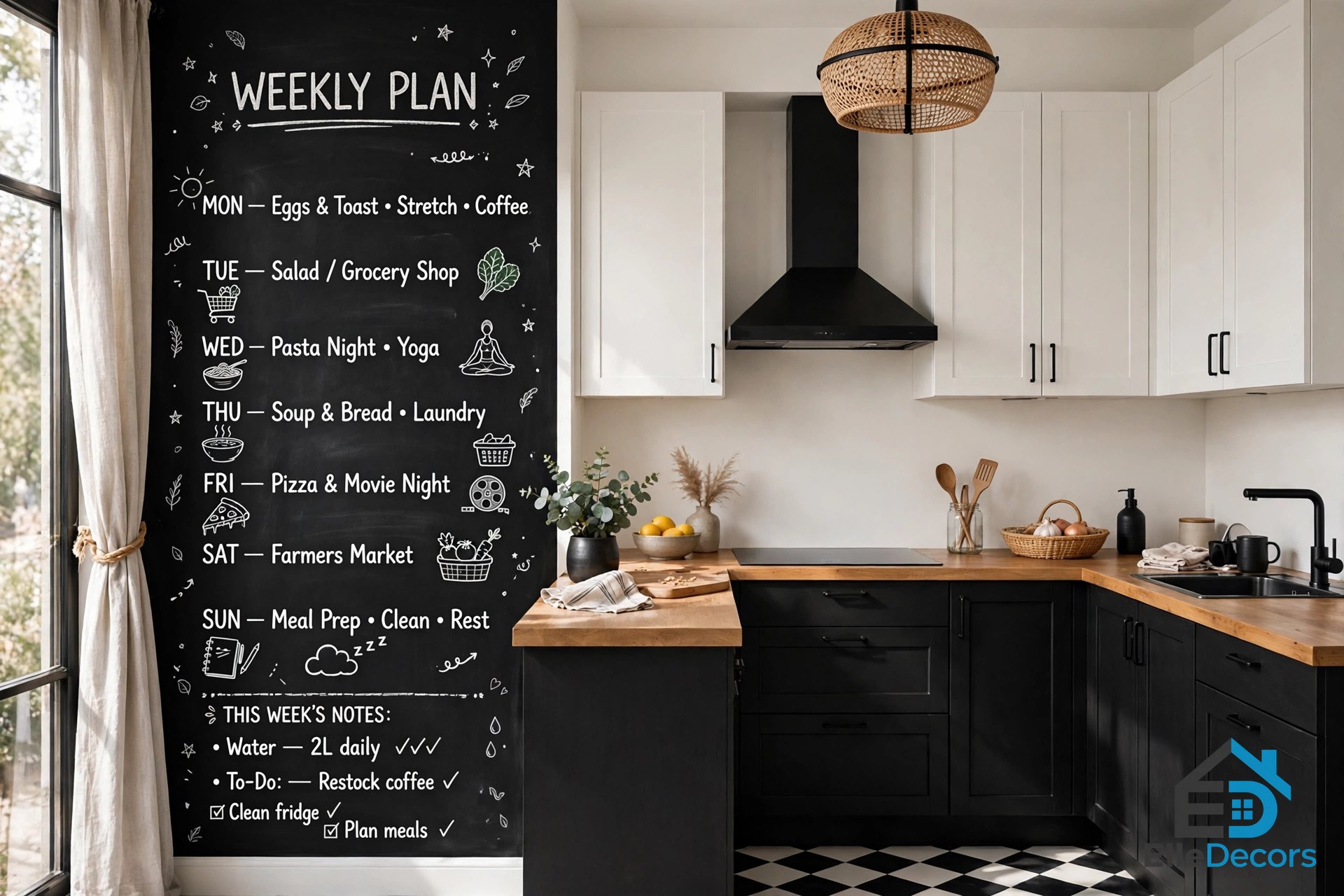
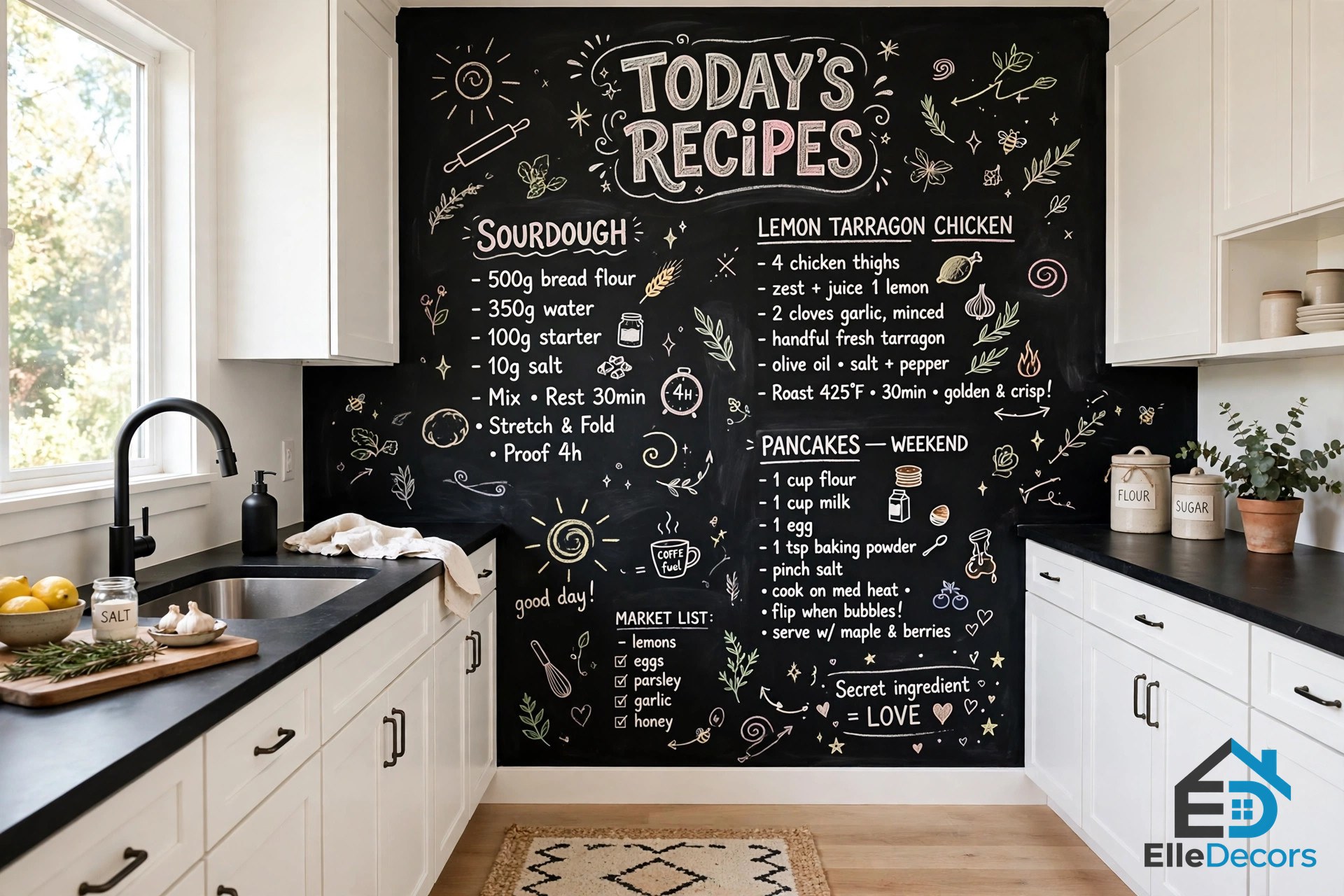
The walls are where this palette gets playful, and the cheapest way in is a chalkboard. A chalkboard wall beside the stove can hold a weekly plan, grocery lists, or recipe notes, and another version uses the chalkboard purely for decoration, showing what a single dark wall can do for a white room. Typography makes a different kind of statement: a bold motivational phrase on the wall, worth remembering when a recipe does not go as planned. White geometric patterns catch the eye at once, and the shadows between panels complement a black breakfast bar and a black backsplash. Even a single black wall can work, as long as the rest stays light: glossy surfaces contrast with a matt black wall in both texture and tone. One decorated wall, chosen on purpose, is enough.
Small Kitchens
A small kitchen is where this palette earns its keep. A narrow room benefits from a restricted colour theme, because the greyscale canvas ties the space together instead of chopping it into pieces. Put white cabinets on the window side and black lowers opposite, keep the worktops white, and let a black and white runner lead the eye down the middle. A galley layout suits the palette better than most, because the two parallel runs are already a contrast waiting to happen. Avoid the two mistakes small rooms punish most: a 50/50 split that cuts the room in half at worktop height, and a patterned floor fighting a patterned backsplash in a space too small for both. Keep the upper half light and one dark anchor low.
Styles Inside the Palette
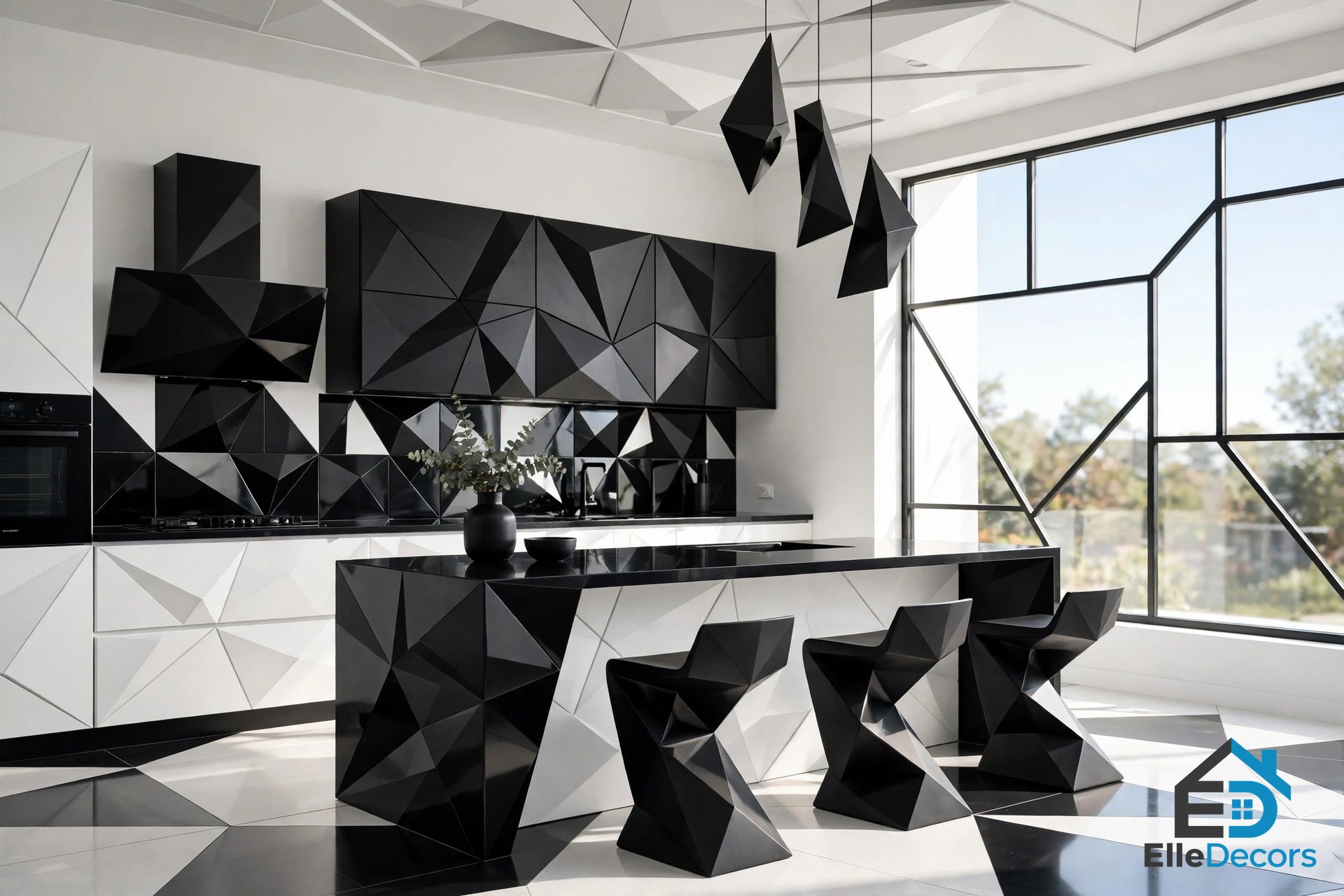
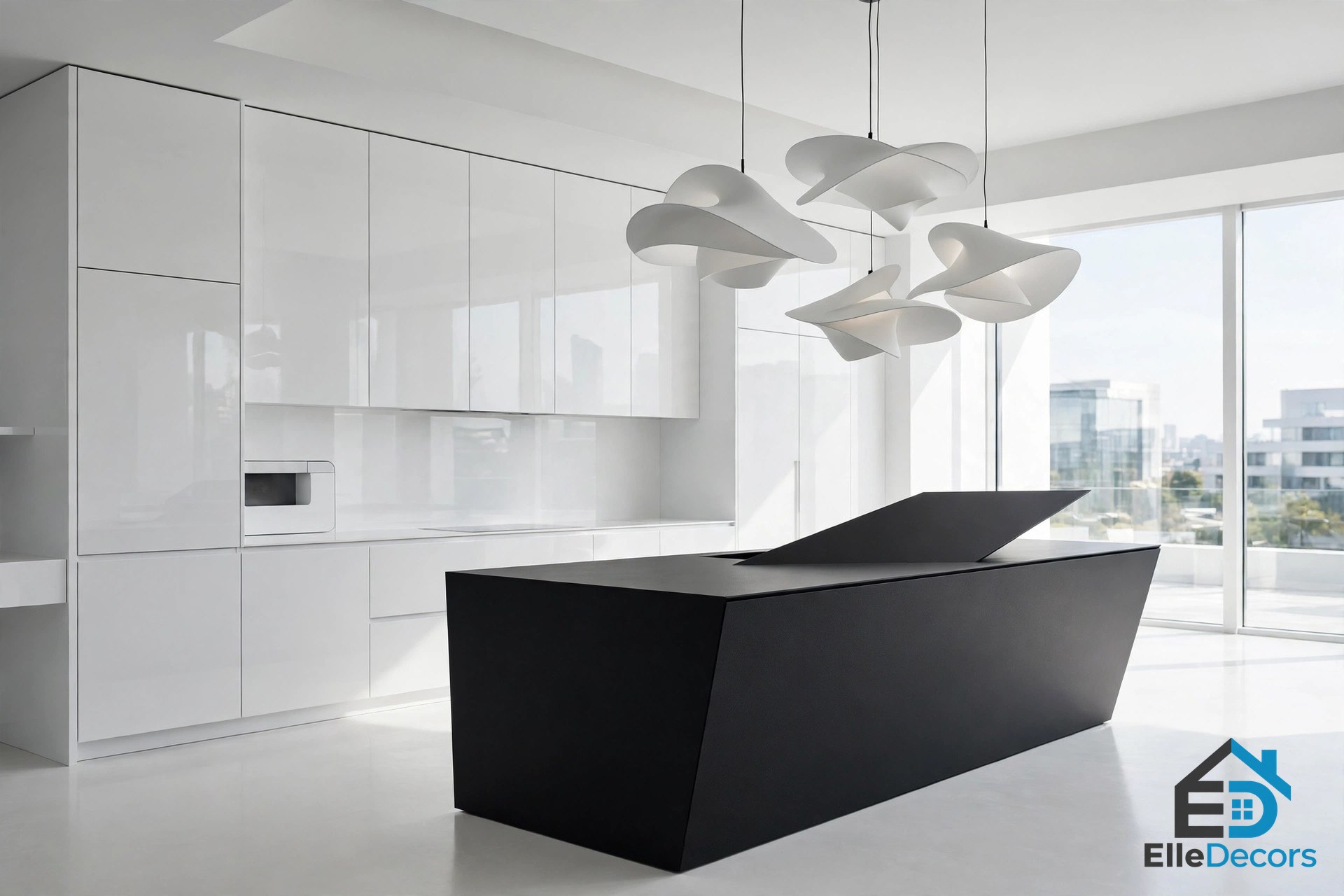
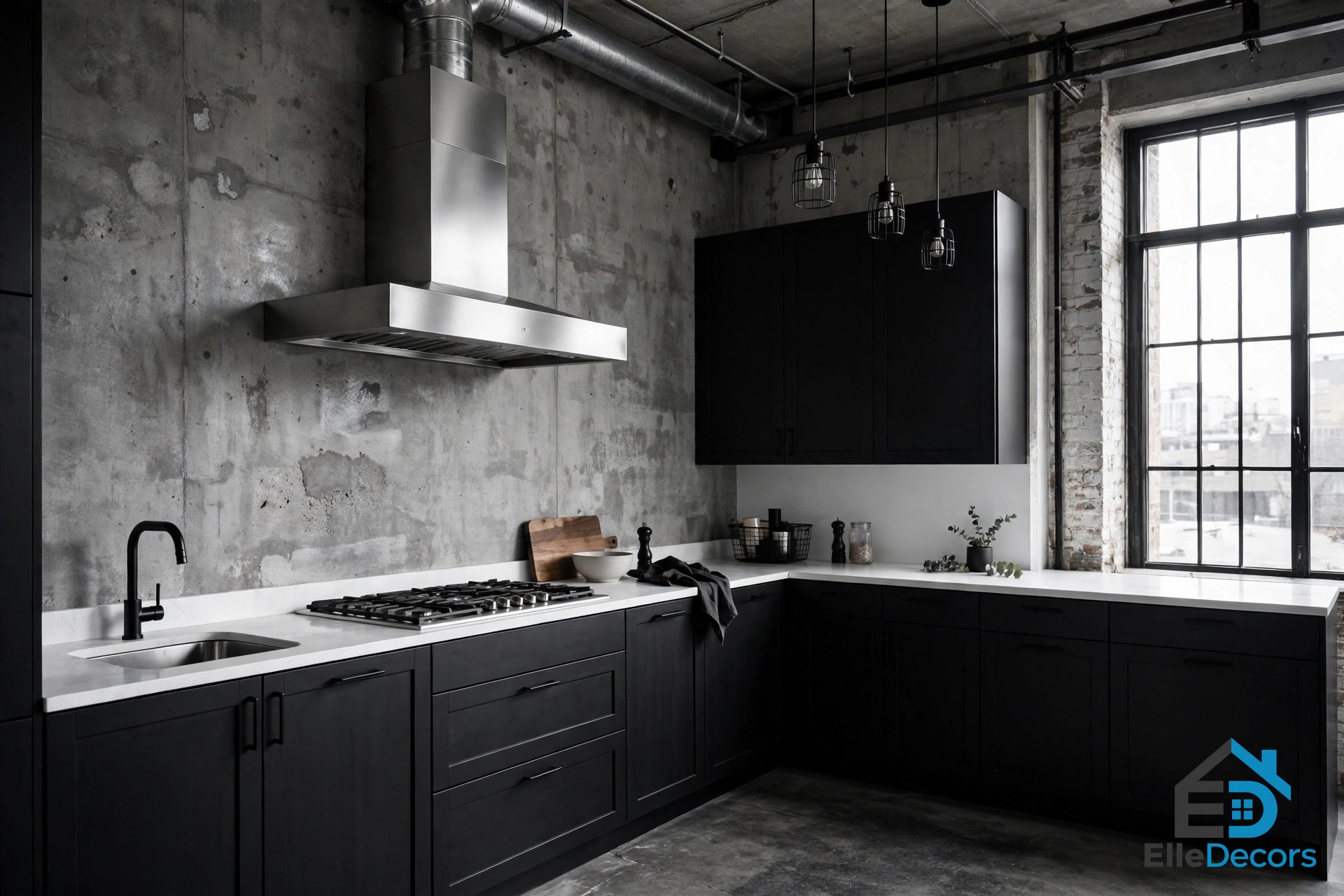
The same two colours can wear four very different styles, and the gallery tour shows all of them. Traditional is the warmest: paneled cabinetry, a rich marble backsplash, chevron floorboards, a rustic sliding ladder, classically influenced chairs, and vintage-inspired decor. Futuristic is the boldest: a neutral theme chosen because the larger elements are hard to change later, custom cabinetry, a worktop that angles inward at the leg, and black and white elements swapping places for contrast. The chairs in one futuristic design were designed in the 1960s yet remain just as forward-thinking today — a reminder that a neutral theme lets you change the small things without rebuilding the room. Industrial is the rawest: a concrete accent wall and a stainless steel range hood. Minimal is the quietest: simple, clean surfaces with no breaks, where even the floor tiles are huge. Pick the style first, then spend the palette inside it.
Mistakes That Spoil the Look
The most common mistake is too much black without enough light: a bright room can carry black cabinets, a dark one cannot, and no styling fixes a ratio the light cannot support. The second is the 50/50 split, which cuts the room in half and makes both colours look indecisive. The third is no warmth at all: no wood, no metal, no plants, and the room feels like a showroom. The fourth is two patterned surfaces fighting each other, with neither one winning. The fifth is mixing door styles in two colours, which looks accidental. The sixth is glossy black everywhere: black and white both show dirt quite easily, so choose finishes for living with, not just looking at. And the last is forgetting the focal point: a minimal room with no anchor feels unfinished, and one sculptural light or one black island fixes it.
Watch: 20 Modern Kitchen Design Ideas
Watch Remodelaholic’s tour of 20 modern kitchen design ideas, covering cabinets, lighting, backsplash tile, and islands. The first idea is a modern black-and-white kitchen: black cabinets against white walls, black and white veining in the worktops, and wood tones in the decor, stools, and floors balancing the drama. Use it as a tour to study, and note how the wood keeps the contrast from feeling cold.
Video: A tour of 20 modern kitchen design ideas from Remodelaholic, including a black-and-white kitchen with wood tones.
Frequently Asked Questions
What are black and white kitchens?
Black and white kitchens are kitchens built on a two-colour palette: black for depth and definition, white for light and air, with grey, wood, and metal as supporting players. The look works in almost any style, because the palette stays constant while the style changes. The key is the balance: one colour leads, roughly 60/40 or 70/30, and warm materials keep the contrast from feeling cold.
Can I add warm wood and brass to a monochrome kitchen?
Yes, and you should. Wood is the easiest warmer here: wood worktops, a dark wood table, or muted wood tones soften the contrast without breaking the two-colour discipline. Brass adds the same warmth in a smaller dose — a chandelier, handles, or brass and marble together lift a modern kitchen into something more classic. Add green plants, and the room stays monochrome while feeling lived in.
Do black and white kitchens work in small kitchens?
Yes. A narrow room benefits from a restricted colour theme, because the greyscale canvas ties the space together instead of chopping it into pieces. Put white cabinets on the side with the window, black lowers on the opposite run, and keep the worktops white on both sides. A galley layout suits the palette especially well, since its two parallel runs are already a contrast waiting to happen. Keep the upper half light, one dark anchor low, and no 50/50 split.
How do I keep the contrast from feeling cold?
Add warmth through materials rather than a third colour. Start with wood — a worktop, a floor, or a table — then brass or copper in the fixtures, then green plants. Use warm whites and softer blacks instead of the starkest versions, and layer the lighting so the evening light is warm rather than cool. If the room still feels cold, the answer is usually more wood, not more colour.
The Bottom Line
Black and white kitchens reward discipline: pick a leader, keep the ratio near 60/40, warm the contrast with wood and metal, and let one focal point do the talking. Start with the cabinets, because they carry most of the contrast, then choose the worktop, the floor, and the light in that order. Do that, and the boldest palette in the home becomes the easiest one to live with.