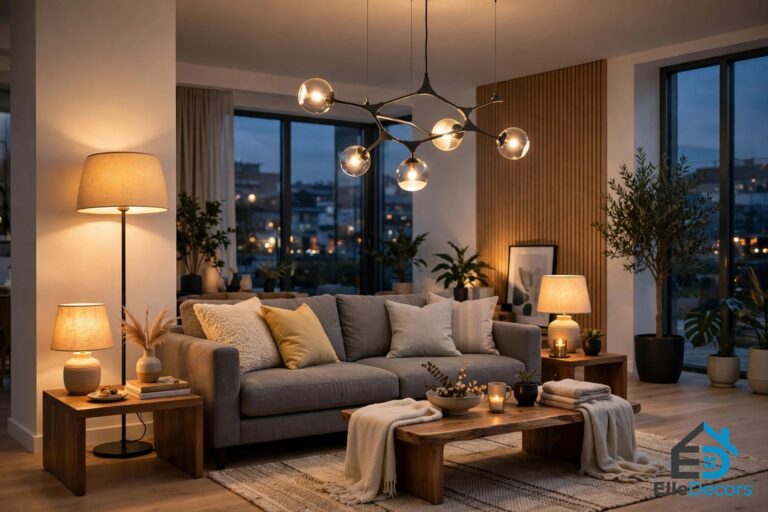
Table and Floor Lamps: 12 Brilliant Pairings That Transform Any Room
AUDIO SUMMARY: Table lamps and floor lamps do their best work as a pair, not as rivals. This guide walks through twelve pairings, from a brass floor lamp with a built-in side table to arc lamps, reading corners and sculptural heroes, with the height and shade rules that keep the light soft and the room balanced. Start with one shared finish, then vary everything else.
Table and floor lamps are the easiest lighting to buy and the easiest to get wrong. A room with one overhead light feels flat at night, while a room with lamps at only one height feels lopsided. The fix is a pair: a floor lamp that brings height and a table lamp that brings glow at eye level, working together so the light comes from two places at once.
This guide walks through twelve pairings that work in real living rooms and bedrooms, led by the source roundup’s product of the week, a modern brass floor lamp with a built-in side table. The rules come from designers who pair lamps for a living, and every idea keeps the same promise: no rewiring, no matching sets, just two lamps that belong in the same room.
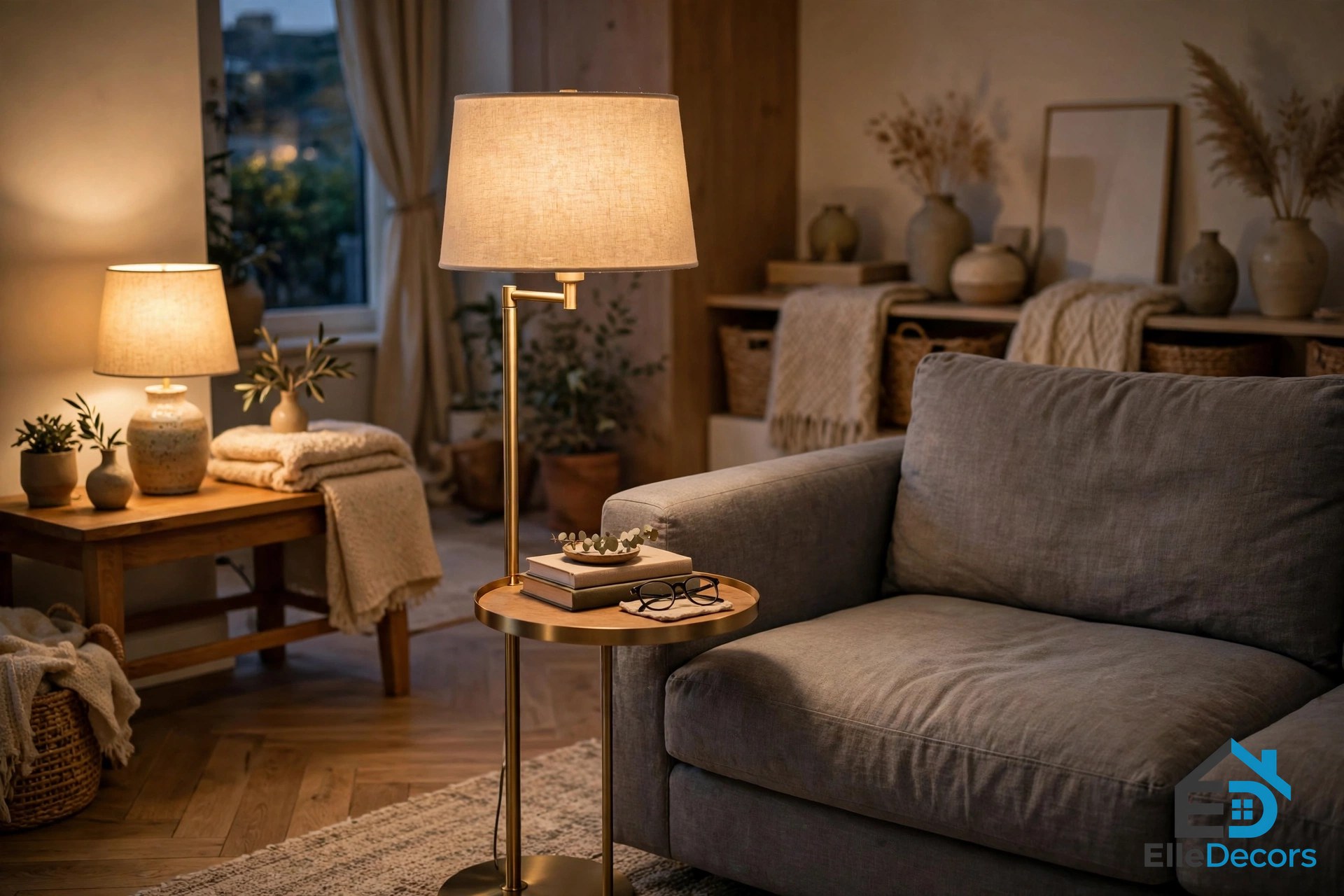
1. Start With a Brass Floor Lamp and a Side Table in One
The source roundup’s product of the week is a modern brass floor lamp with a side table built in, and it is the perfect starting point because it solves two problems at once. The lamp brings tall, warm light to a sofa corner, and the attached table holds a book, a cup or a phone, so the corner becomes a place to sit rather than a dead space.
Put it beside the arm of the sofa, not behind it, so the light falls over a reader’s shoulder and the table stays within easy reach. If the shade is fabric, the glow will be soft and forgiving; if it is metal, the light will be more direct and better for reading. Either way, one piece does the work of two, and the room gains a corner with a purpose.
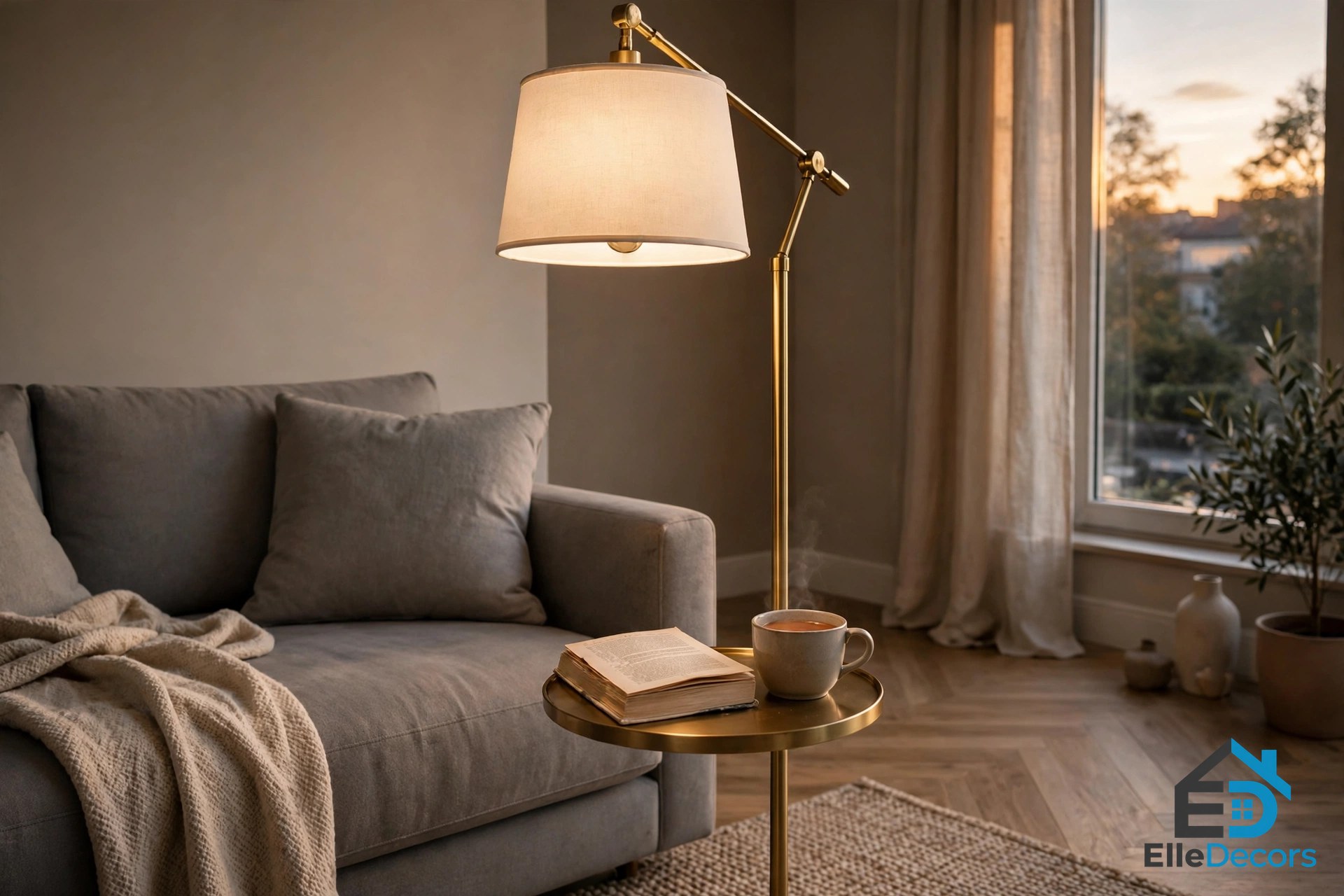
2. Pair a Tall Arc Lamp With a Low Ceramic Table Lamp
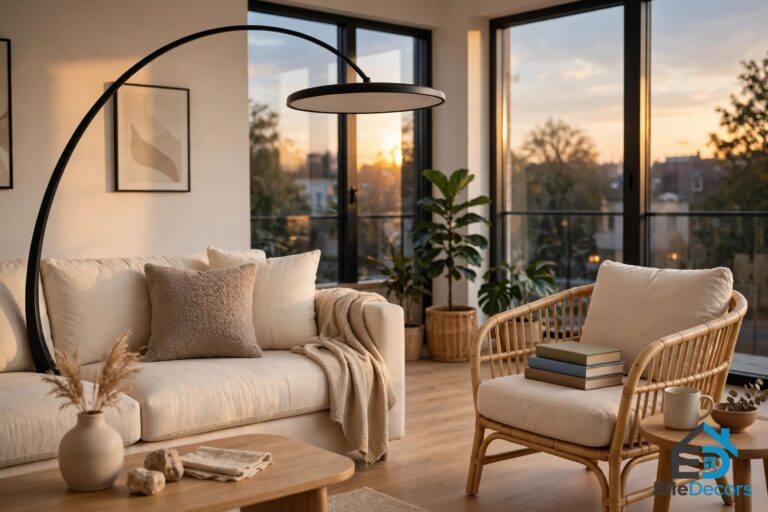
An arc floor lamp and a low ceramic table lamp look like opposites, and that is exactly why they work together. The arc sweeps up and over the seating area, throwing a wide pool of light from above, while the small ceramic lamp sits low on a side table and fills in the middle height of the room. The contrast in height is the point: designers talk about mixing heights like a skyline, and a tall arc next to a squat ceramic base gives the eye somewhere to travel.
Keep one thing in common so the pair reads as intentional rather than accidental. A brass arc and a ceramic lamp with a brass rim, or two lamps in the same warm white shade, is enough of a thread. Table and floor lamps do not need to match, but they do need to agree on one detail, and a shared finish is the easiest agreement to make.
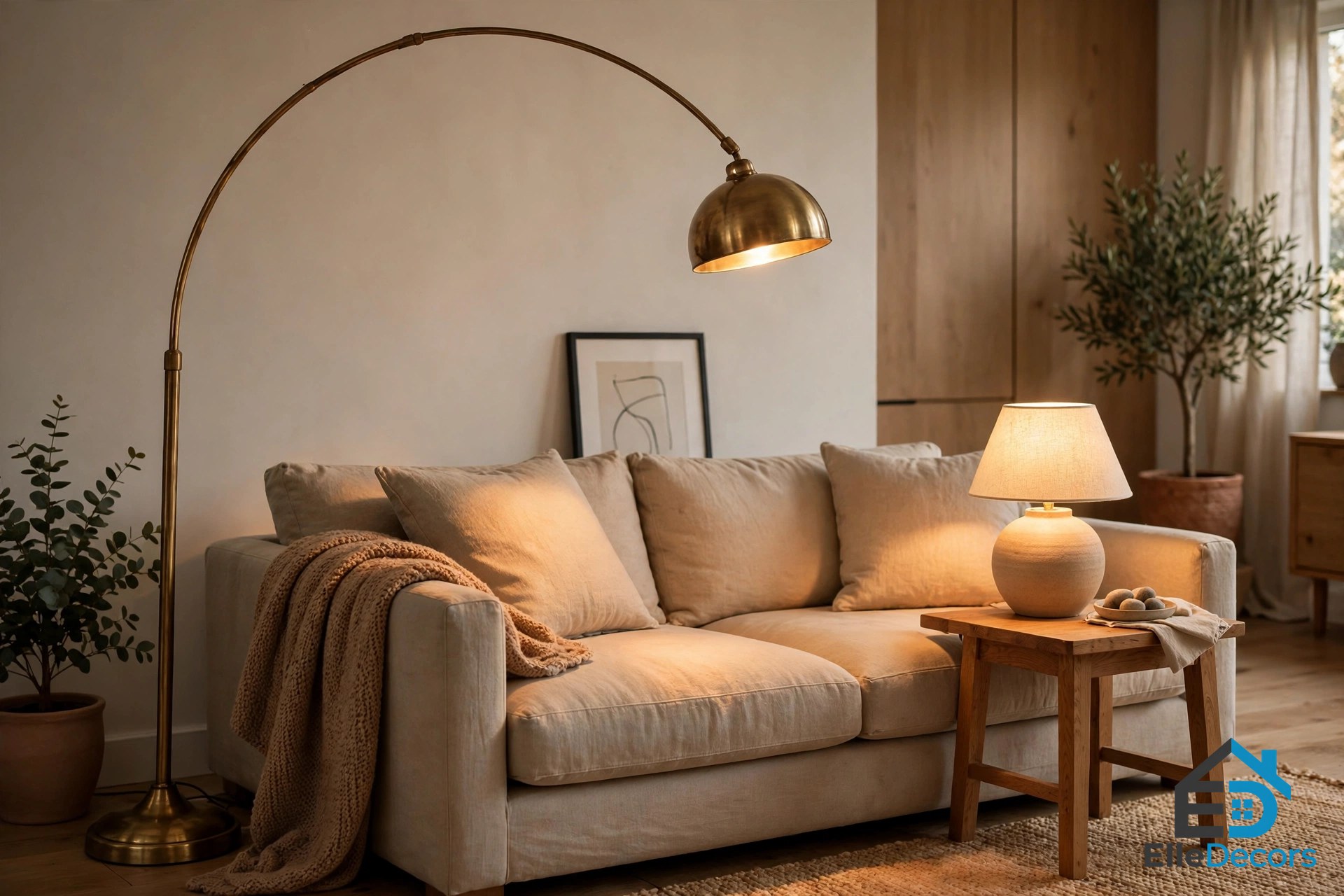
3. Build a Reading Corner With a Task Lamp and a Soft Glow
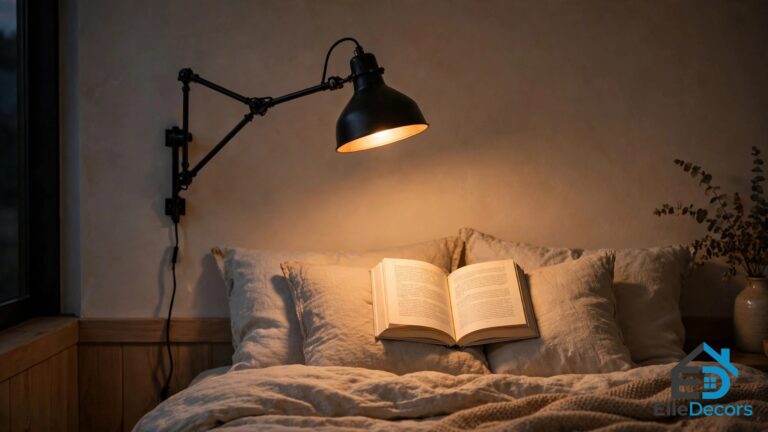
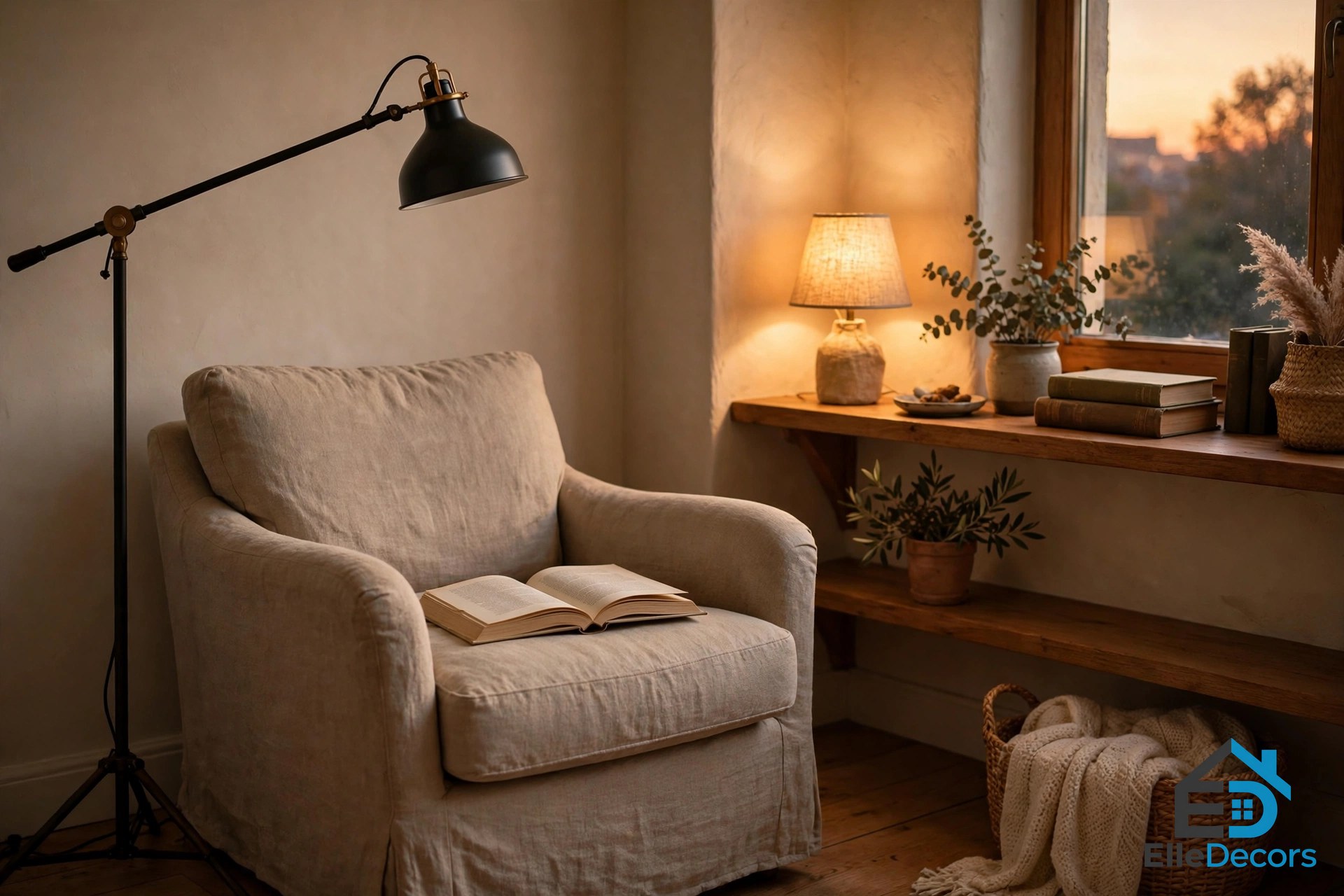
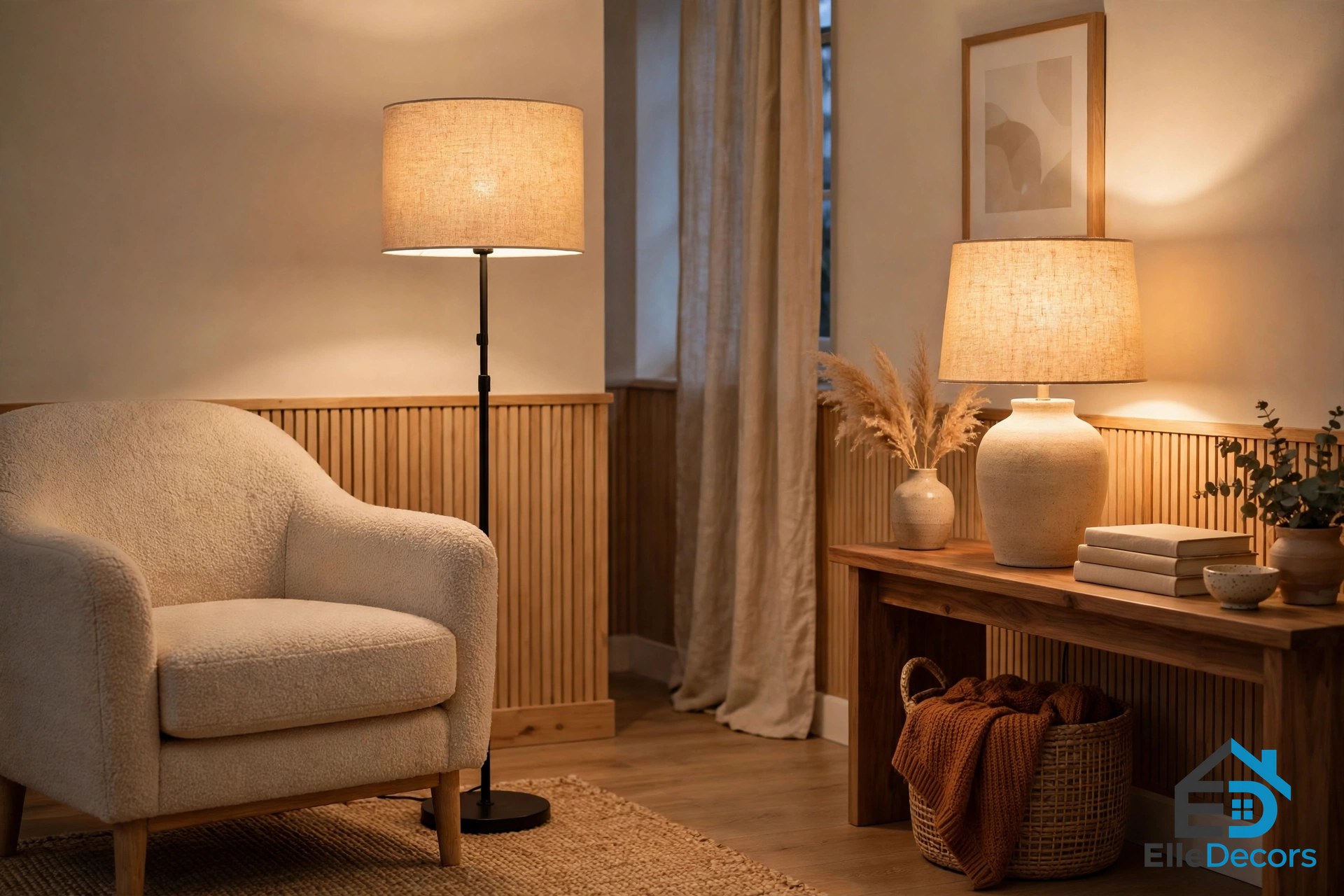
A reading corner needs two kinds of light at once: a direct beam for the page and a soft wash so the corner does not feel like an interrogation room. Put an adjustable task floor lamp beside the armchair, with its head aimed at the book, and set a small table lamp with a fabric shade on the other side of the chair or on a nearby shelf.
The fabric shade diffuses its light, so the corner stays gentle while the task lamp does the precise work. The shade of the floor lamp should cover the bulb when you are seated, so no bare bulb glares into your eyes; a good rule of thumb is a floor lamp around 68 inches tall next to a standard armchair, though the real test is sitting down and looking up.
4. Match the Metal, Vary Everything Else
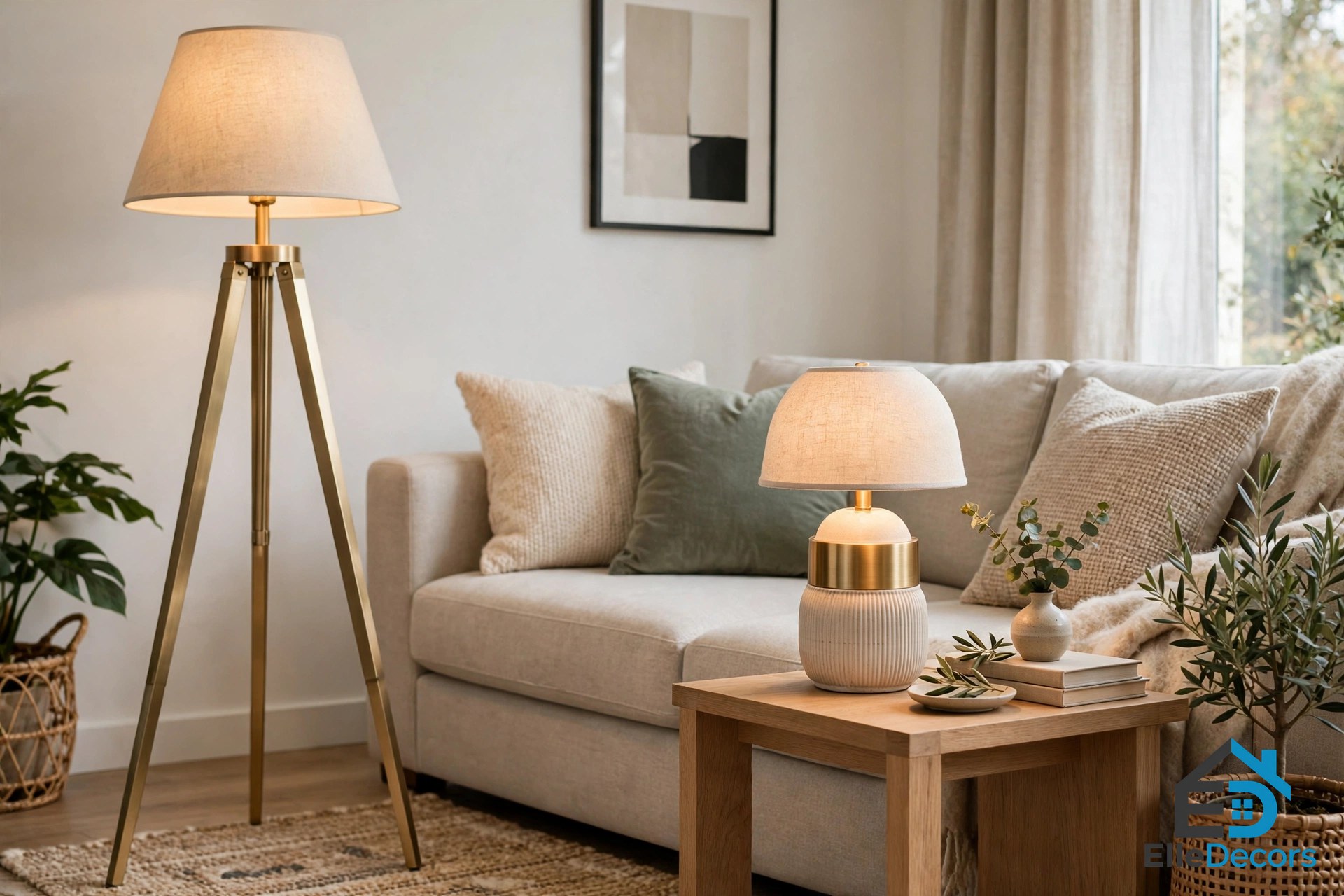
The simplest pairing rule in this guide is also the most forgiving: match the metal, vary everything else. A brushed brass floor lamp, a brass-ringed table lamp base and a brass picture light will feel like a family even when their shapes have nothing in common. The finish is the thread, and once it is set, the silhouettes are free to differ — a curvy ceramic table lamp beside an angular metal floor lamp, a tall tripod next to a squat dome.
Table and floor lamps in one shared finish let you shop slowly, too. Buy the floor lamp first, live with it for a month, then find a table lamp that carries the same metal in a different shape, and the room will look collected rather than purchased in a single afternoon.
5. Flank the Sofa, Then Anchor the Corner
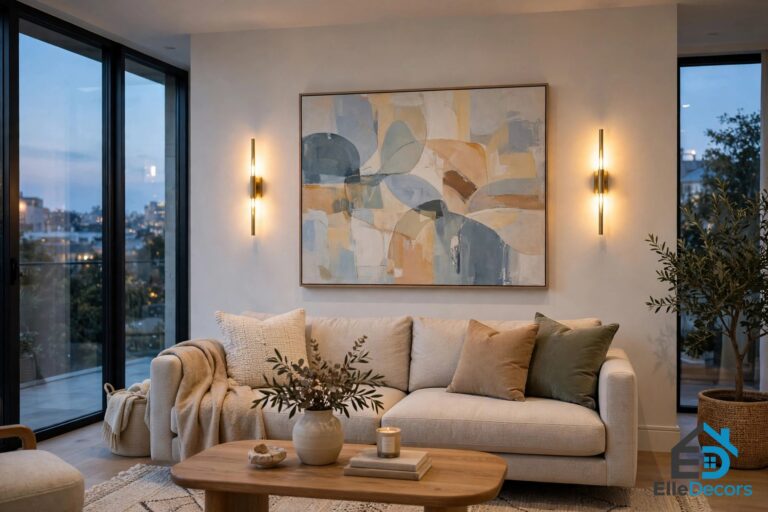
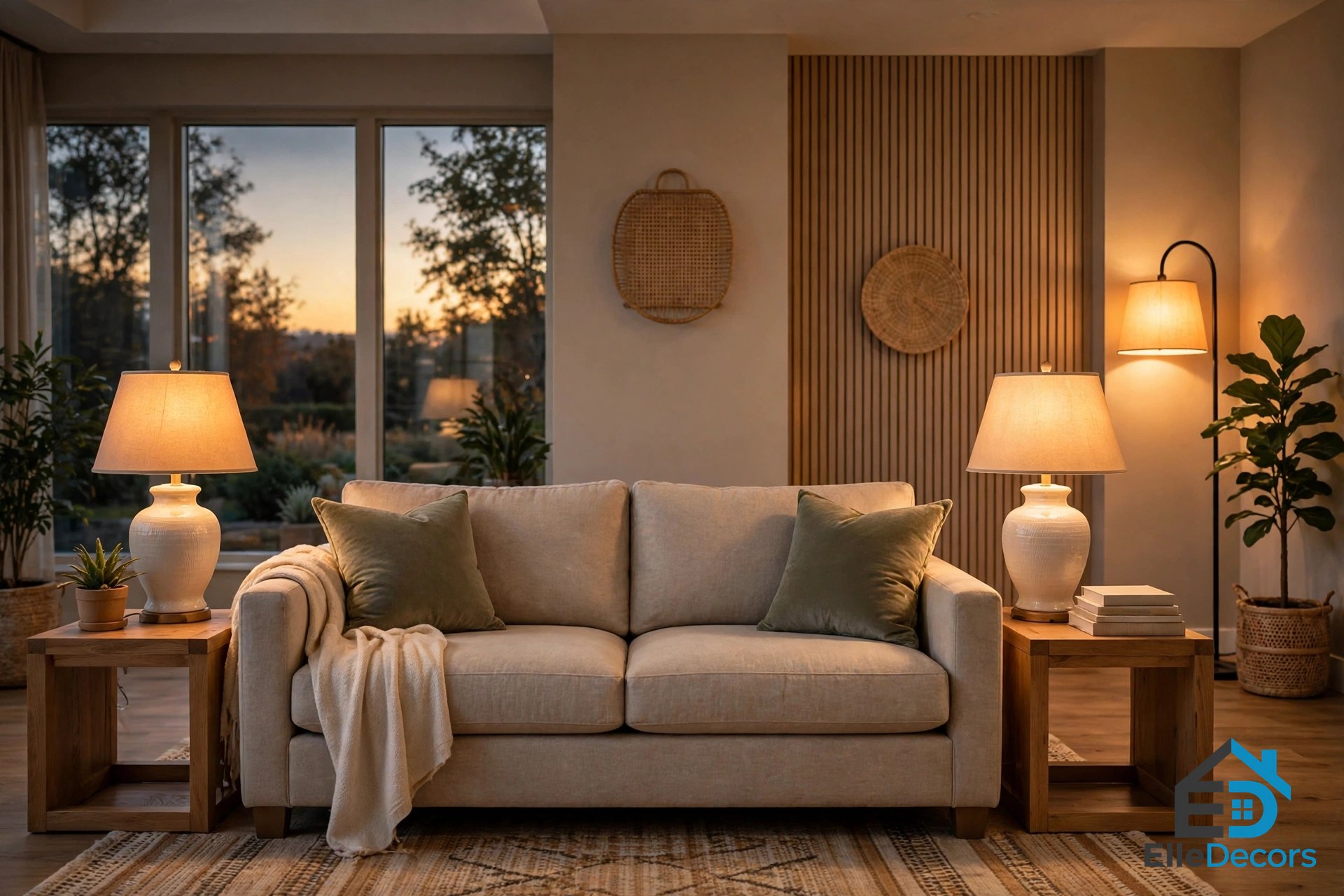
Symmetry has its place, and the sofa wall is it. Two matching table lamps on the end tables flanking a sofa give the room a calm, balanced frame, and then a single floor lamp in the far corner breaks the symmetry just enough to keep the room from feeling like a hotel lobby.
The two table lamps should sit at eye level when you are seated, so their shades glow at the same height as the people on the sofa, while the floor lamp rises above them and washes the corner and the ceiling. Table and floor lamps arranged this way also make the room easy to use at night, because each seat has its own light within reach, and the corner lamp means nobody has to cross a dark room to switch anything on.
6. Layer Three Heights and Skip the Ceiling Light
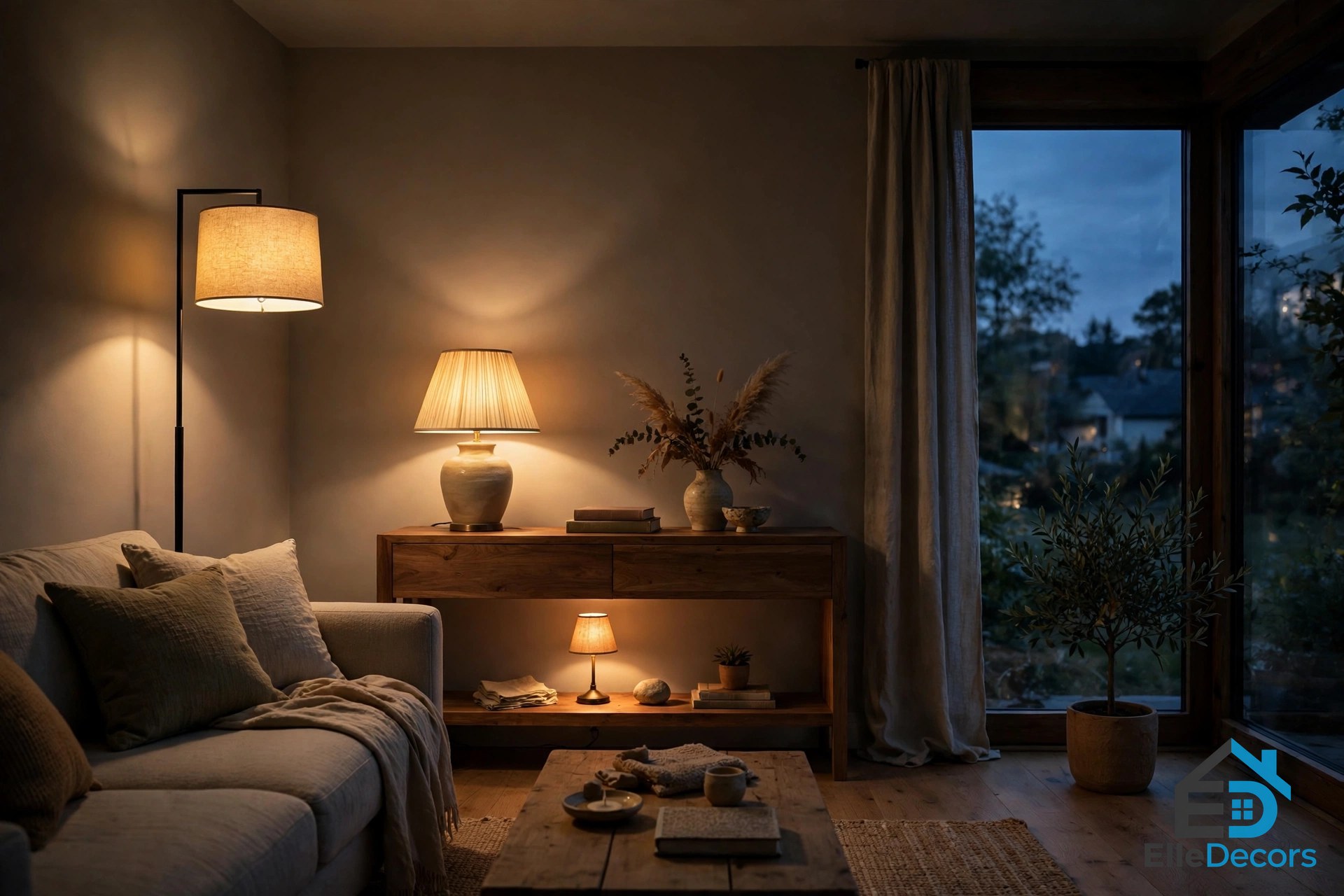
The most flattering rooms are lit at three heights, and a pair of free-standing lamps plus one more small source is all it takes. A floor lamp brings the high light, a table lamp brings the middle light, and a tiny accent lamp on a shelf or a sideboard brings the low light that grounds the floor. Designers describe the split as roughly seventy percent ambient light and thirty percent task light, with a small share held back for accent, but the numbers matter less than the feeling: light coming from above, from eye level and from below at once makes a room feel deep rather than flat.
Try it for one evening with the ceiling light off. If a corner still feels dark, move the floor lamp there; if faces look shadowed, raise the table lamp on a stack of books until its shade sits at eye level. Our guide to modern living room lighting shows how the same three heights work across a whole living room, not just one corner.
7. Give the Bedroom Two Bedside Lamps and One Floor Lamp
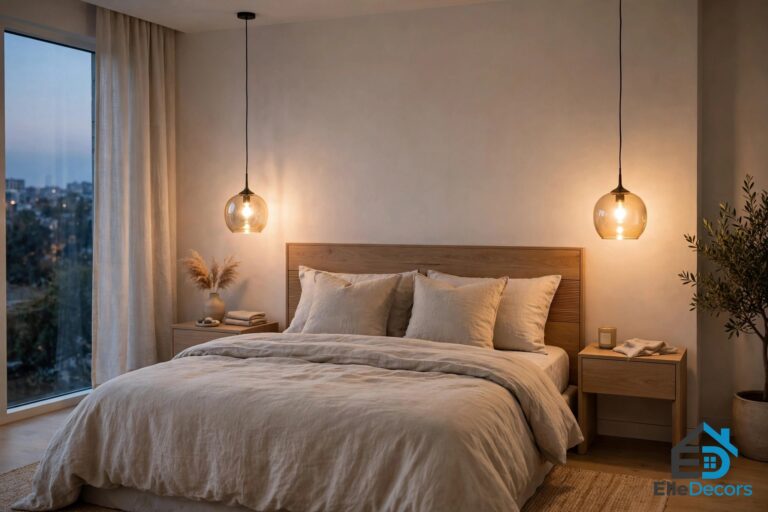
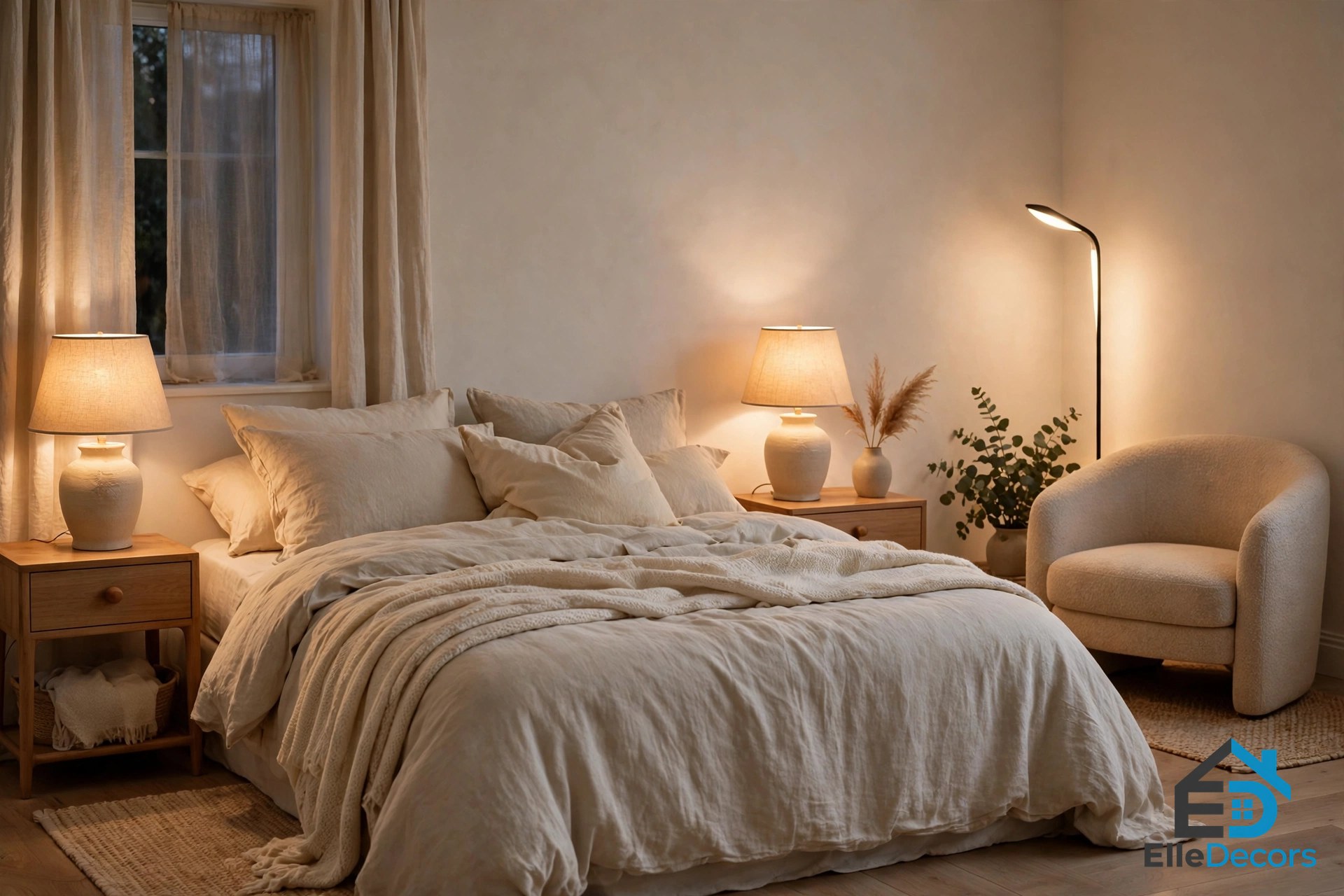
Bedrooms suit this pairing as well as living rooms do, and the recipe is nearly the same. Two table lamps on the bedside tables give each sleeper their own light for reading, and a floor lamp beside the bedroom chair or the dressing table fills the corner that the bedside lamps never reach.
Warm bulbs matter more here than anywhere else: a warm white glow flatters skin and bedding, while a cool white bulb makes a bedroom feel like an office. Table and floor lamps in a bedroom should also be easy to switch off from the bed, so put the floor lamp on a switched outlet or a smart plug with the bedside lamps, and one tap will settle the whole room for the night.
8. Let a Combo Lamp Rescue a Small Room
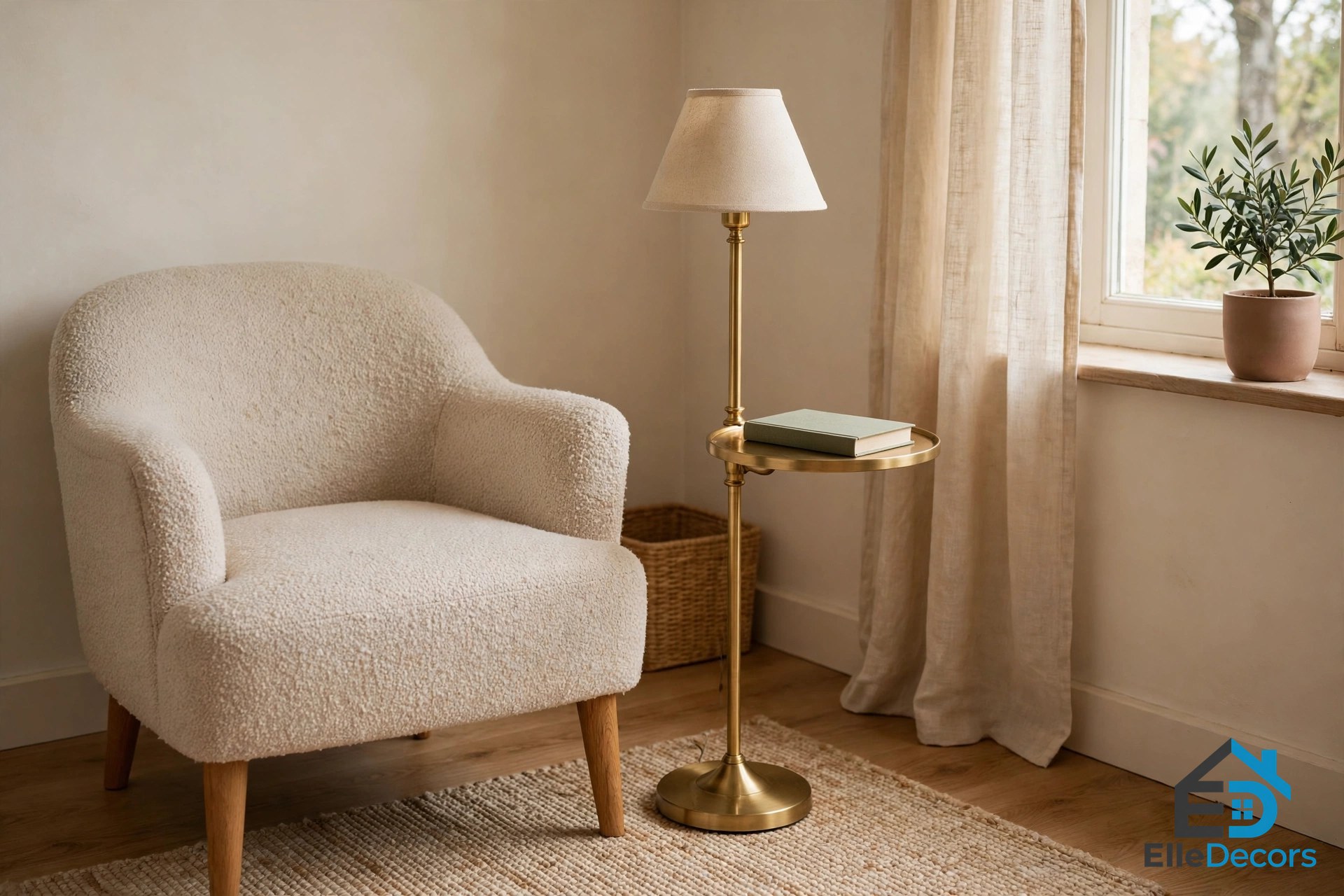
Small rooms punish clutter, and a floor lamp with a built-in table is the most space-efficient pairing there is. One footprint holds the light and the surface, so a studio flat or a small living room gains a reading light and a place for a cup without a second piece of furniture.
Real examples of the idea are easy to find: a brass floor lamp with a table from Threshold, a Possini Euro Design Volta with a glass tray table and a white drum shade, and the JONATHAN Y Charles side-table floor lamp all combine the two functions in one stand. None of them needs a separate side table, which is the whole point in a tight room. The trick is restraint: a combo lamp with a crowded tabletop looks like storage, while the same lamp with a single book on it looks like design.
9. Make One Lamp the Hero and Keep the Other Quiet
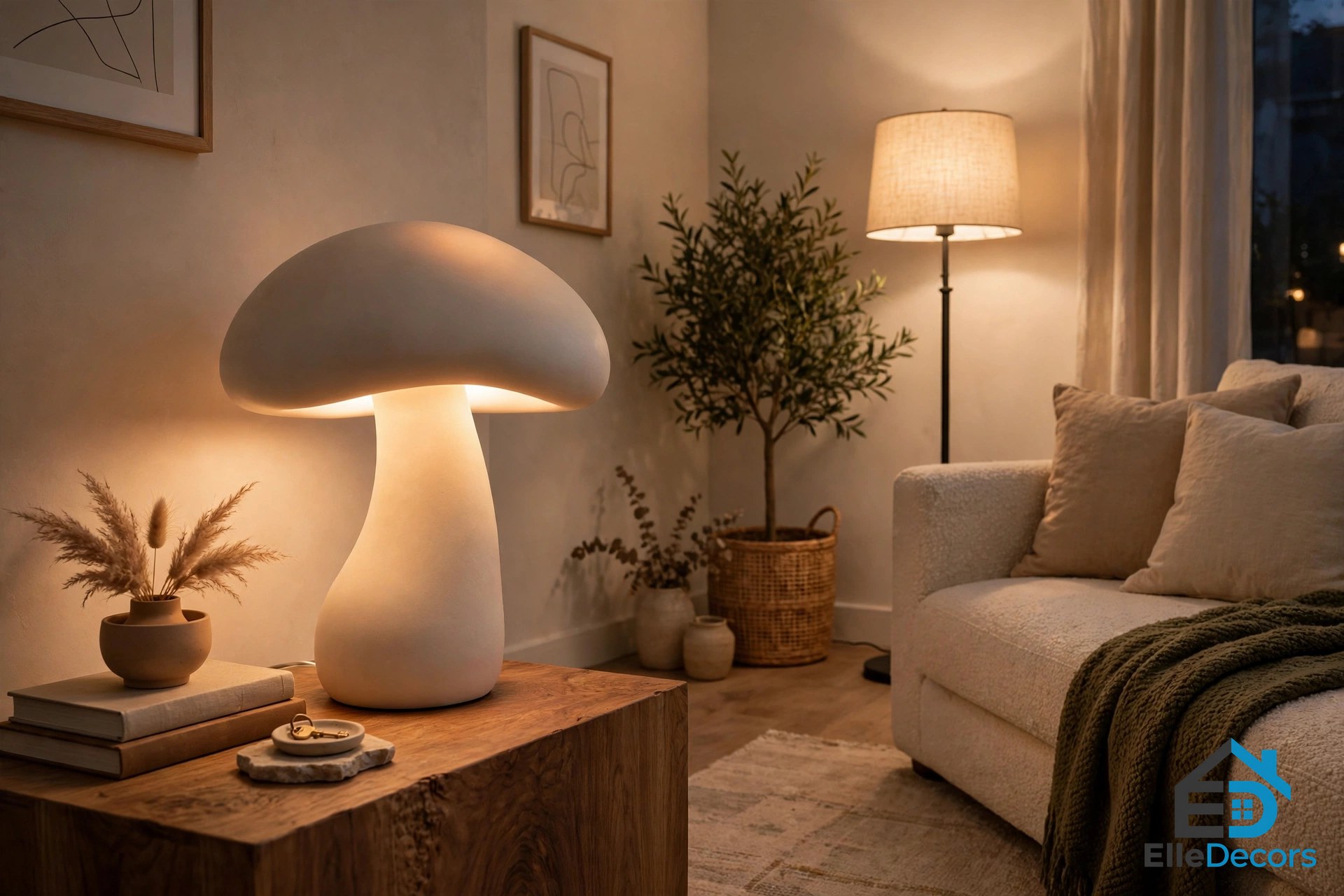
A sculptural lamp — a mushroom shade, a stacked Bauhaus form, a globe on a curved stem — works best as the only statement in the room. Pair it with a plain partner and let the hero do the talking: a bold ceramic table lamp beside a simple linen-shade floor lamp, or a dramatic arc floor lamp with a quiet little table lamp across the room.
The quiet lamp should share one detail with the hero, a colour or a finish, so the pair still feels related, but it should never compete for attention. Table and floor lamps chosen this way give a room a focal point without a gallery wall or a new sofa, and the hero lamp earns its place even when it is switched off, because its shape is interesting in daylight too.
10. Keep One Colour Temperature Across the Room
Two lamps with different bulb colours will fight each other all evening, so pick one colour temperature and hold it across the room. Warm white, around 2700K, suits living rooms and bedrooms, giving skin and wood a golden tone; a cooler white belongs in a workspace, not a sitting room. The same rule applies to dimming: if one lamp dims and the other does not, the dimmed lamp will look grey beside its bright partner, so match dimmable bulbs across the pair or dim them together with a smart plug. Table and floor lamps that share a warm bulb colour blend into one glow, and the room reads as a single warm space rather than two lit islands.
11. Weave in Rattan, Ceramic and Woven Texture
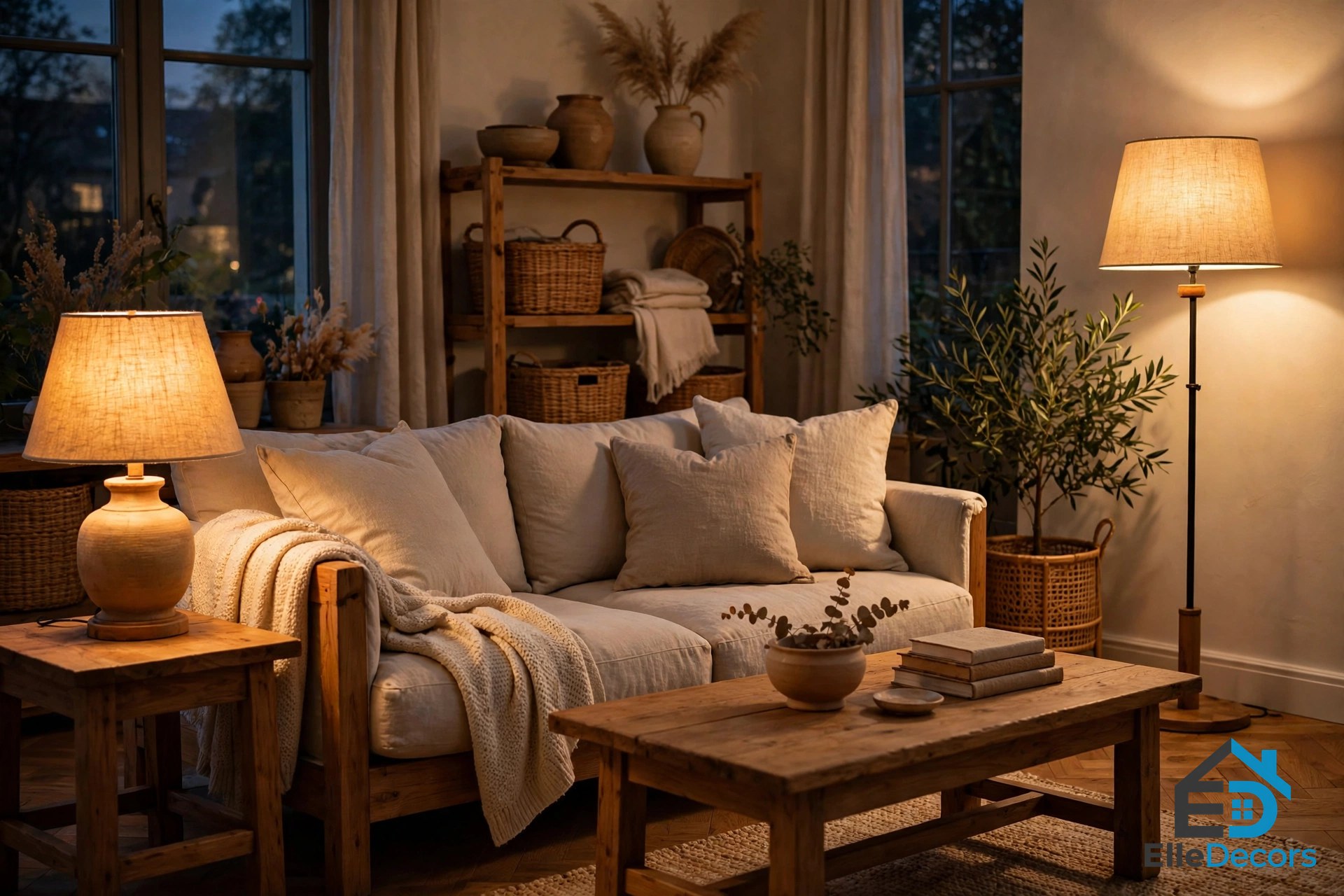
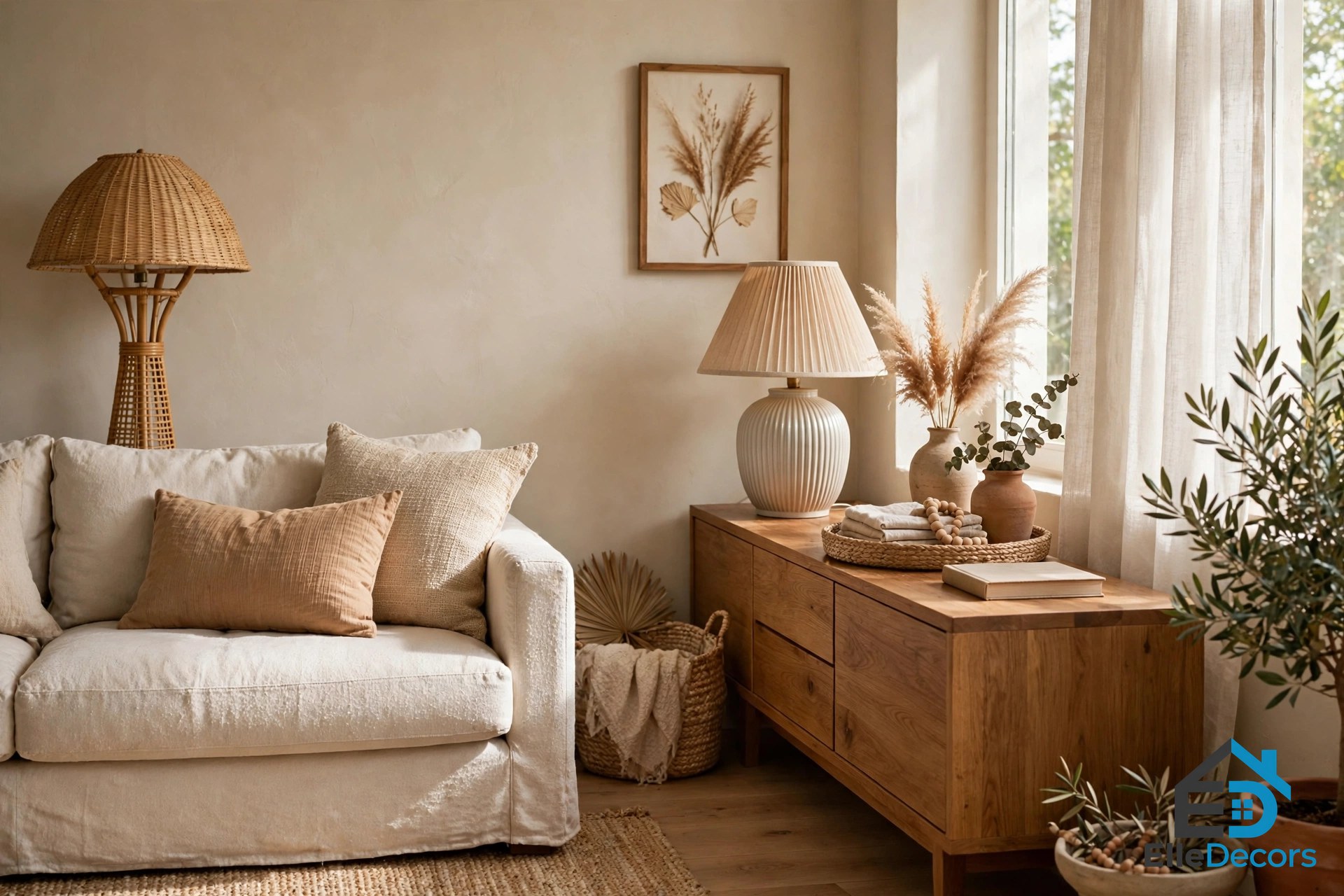
Metal and glass lamps can make a room feel cold if they are the only materials in it, so weave in a natural texture. A rattan floor lamp with a woven shade softens a modern room, a ribbed ceramic table lamp adds a handmade feel to a plain console, and a jute-covered base brings warmth to a room full of smooth surfaces.
The texture is the second thread after the finish: a woven floor lamp and a ceramic table lamp in the same warm tone will feel related even when their shapes differ completely. If the room already has woven baskets, a cane chair or a linen sofa, echo that material in one lamp and the whole scheme will tighten up without any new furniture.
12. Check the Shade Height Before You Buy
The final rule is the one to check before money changes hands, and it is simple: sit down. The bottom of a floor lamp’s shade should sit at about eye level when you are seated, so the bulb stays hidden and the light washes the wall rather than glaring into your eyes.
A table lamp on a side table should do the same, with its shade at eye level whether you are seated beside it or standing at a console. If you can see the neck of the bulb or the socket from your chair, the lamp is too tall for that spot, and no amount of styling will fix the glare. Table and floor lamps that pass the seated test are the ones worth keeping, because they are the lamps you will actually switch on every evening.
The Pairings at a Glance
These twelve ideas share one structure: a tall lamp and a low lamp, one shared thread, and light at more than one height.
| Pairing | Tall lamp | Low lamp | Shared thread |
|---|---|---|---|
| Brass combo | Brass floor lamp with table | None needed | Brass finish |
| Arc and ceramic | Arc floor lamp | Low ceramic table lamp | Warm white shade |
| Reading corner | Adjustable task floor lamp | Small fabric-shade table lamp | Soft diffused glow |
| Matched metal | Brushed brass floor lamp | Brass-ringed table lamp | Brass finish |
| Sofa flank | Corner floor lamp | Two matching table lamps | Matching shades |
| Three heights | Tall floor lamp | Table lamp plus accent lamp | Warm bulbs |
| Bedroom set | Slim floor lamp | Two bedside table lamps | Matching shade colour |
| Small room combo | Floor lamp with table | None needed | One footprint |
| Hero and quiet | Plain linen floor lamp | Sculptural table lamp | One shared colour |
| Warm temperature | Any floor lamp | Any table lamp | Warm white bulbs |
| Natural texture | Rattan floor lamp | Ribbed ceramic table lamp | Warm natural tone |
| Seated check | Floor lamp at eye level | Table lamp at eye level | Hidden bulbs |
Watch: Where to Put Your Lamps
If the height rules feel abstract on the page, watch them in a real room. In the video below, James Kendall of KES Lighting & Home walks through a living room and shows where the light should come from: two table lamps, a floor lamp, control of the ceiling light, and the bulb chosen before anything else. Table and floor lamps are easier to place once you have seen someone count the light sources in a room and move them into a triangle around the seating, so watch the walkthrough before you move a single lamp of your own.
Video: “Where to Put Lamps in Your Living Room (and Why One Ceiling Light Isn’t Enough)” (James Kendall, KES Lighting & Home) — two table lamps, a floor lamp, light at three heights, the dimming rule and bulb choice.
Conclusion
A room lit by a single ceiling fixture feels unfinished, and a room lit by lamps at only one height feels lopsided. The pairings in this guide fix both problems with the same move: a tall lamp and a low lamp, sharing one finish or one shade colour, placed so the light comes from two directions at once. Start with the brass combo lamp that led this guide, or with the lamps you already own moved into opposite corners, and check the seated test before you buy anything new.
Table and floor lamps reward patience more than spending, because the right pairing is usually a matter of moving what you have, matching one detail, and keeping the bulbs warm. Try one pairing this weekend, live with it for a week, and the room will tell you whether the second lamp belongs beside the sofa or across the room. Our guide to unusual floor lamps offers bolder tall-lamp ideas for the corner, and our swing arm lamp guide covers the adjustable reading lamp that suits almost any armchair.