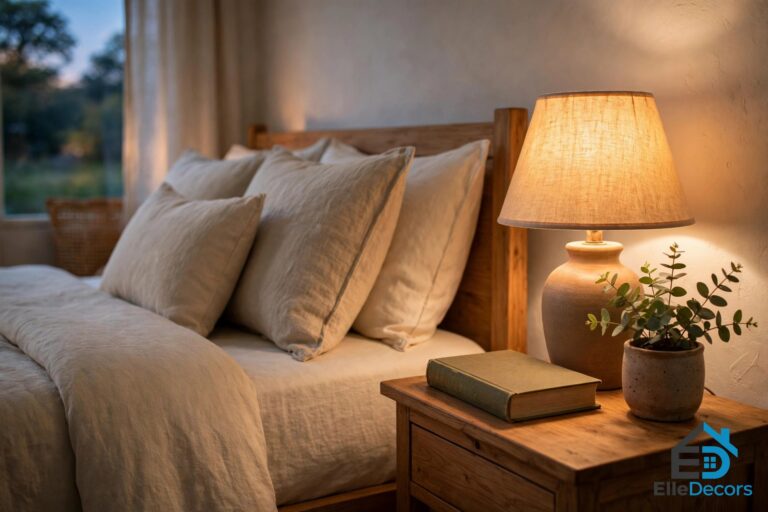
Wall Lamp: 12 Modern Ideas for Every Room
AUDIO SUMMARY: Wall lighting is the quietest way to change a room: no floor space lost, no tabletop taken, just warm light exactly where you need it. This guide covers twelve modern ideas, from the slim black-and-gold Edge LED fixture to swing-arm reading lights, plug-in sconces for renters, and pairs that frame a sofa or a mirror, plus the heights that keep glare away. Choose the job first, then the fixture.
Wall lamp choices decide how a room feels after dark, and they do it without taking a single inch of floor or tabletop. A ceiling light floods everything at once; a sconce gives you light exactly where you need it, at the height your eye actually reads. This guide gathers twelve modern ideas built around one real product, the Edge Indoor Modern LED light bar from the Home Designing product of the week, plus the types, placements and heights that make wall lighting work in every room.
What Is a Wall Lamp?
A wall lamp is a light fixture mounted on a wall, also called a sconce, that throws light up, down or out into the room instead of down from the ceiling. It can be hardwired or plugged in, fixed or swung on an arm, and it can serve as mood, accent or task lighting depending on where it sits and which way it points. The best ones are chosen for a job first and a look second: reading by the bed, washing a hallway, flanking a mirror, or framing a piece of art.
1. Start With the Edge LED Light Bar
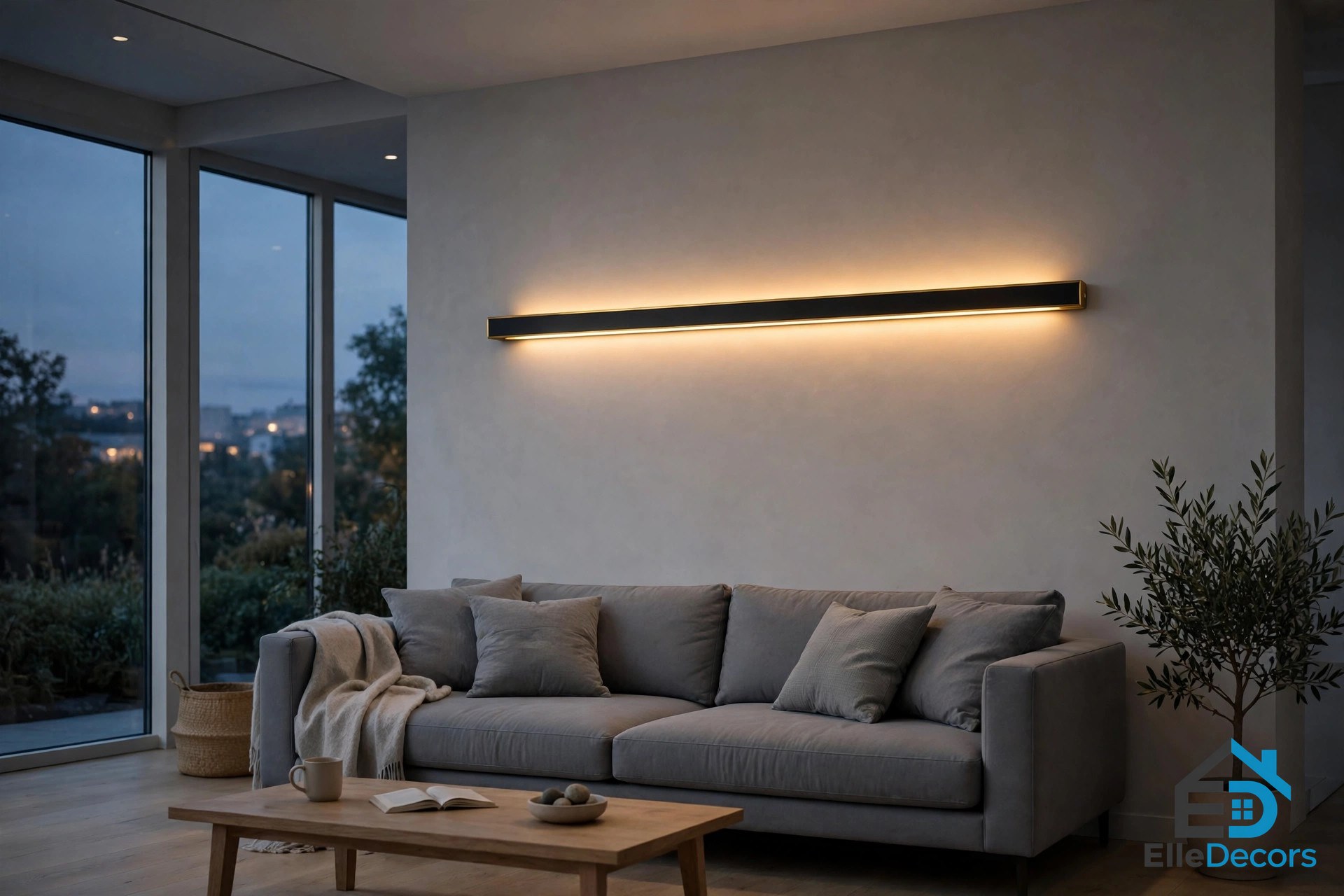
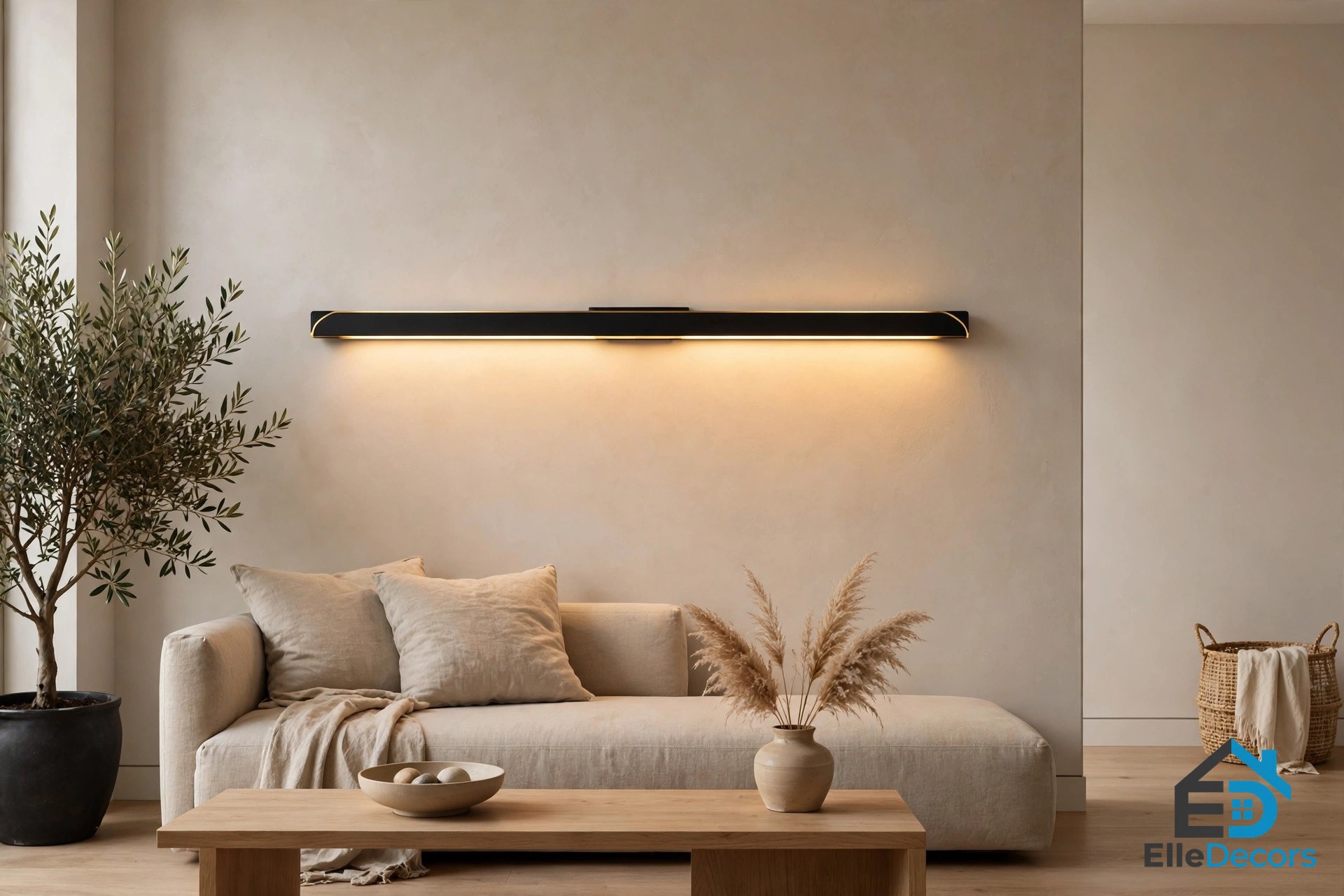
The Edge Indoor Modern LED Wall Lamp is the product pick behind this guide, and it shows what a modern fixture can do with almost nothing: a slim metal bar in black and gold, with an acrylic diffuser that softens the light, available in lengths from 60cm to an impressive 200cm. It is dimmable, with warm and natural light options, and the built-in LED keeps it energy-efficient while it frames a living room wall, highlights a dining room feature or glows gently beside the bed. The maker’s own page lists it as a metal and acrylic indoor fixture, hardwired, with the bulb included.
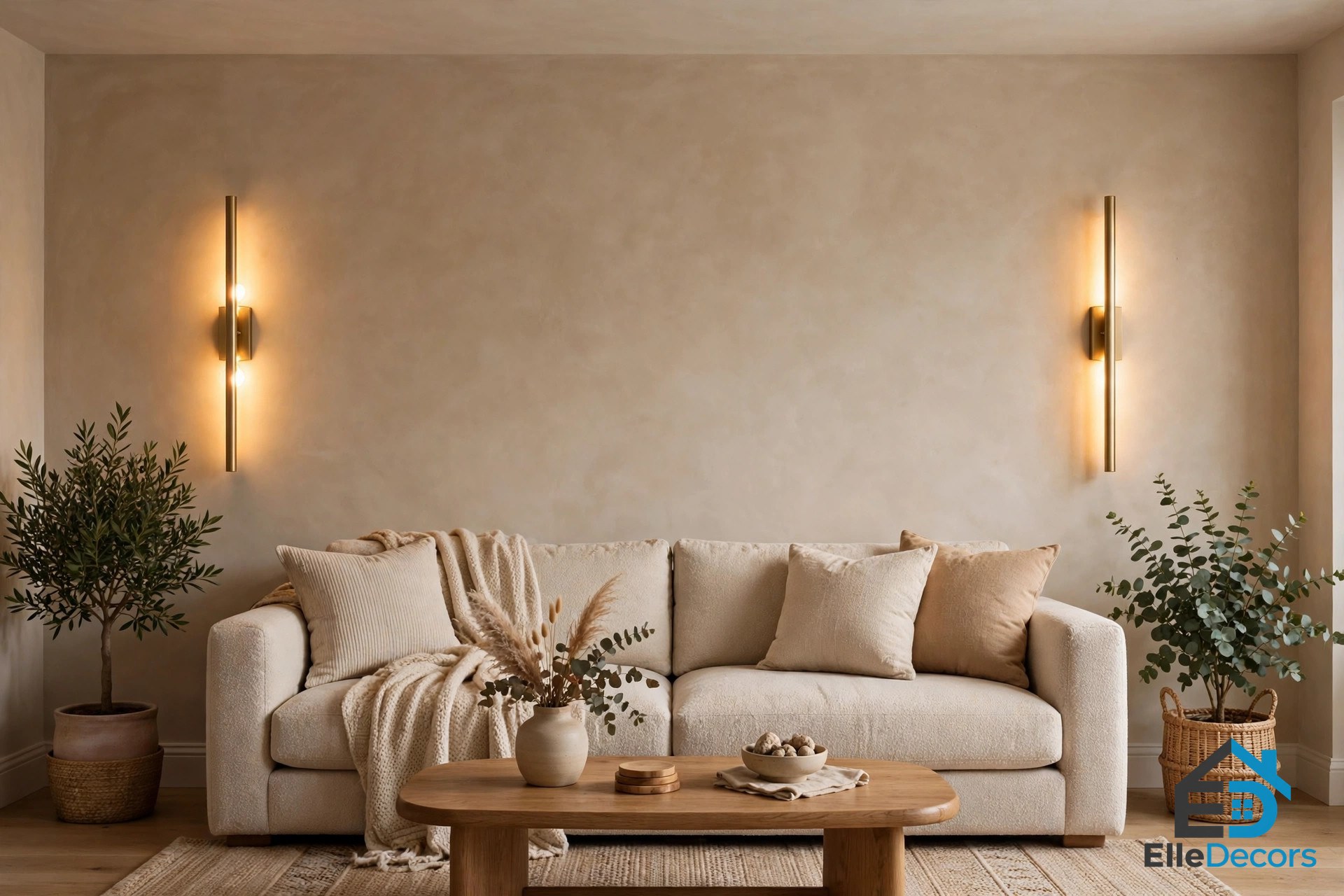
2. Flank the Sofa in Pairs
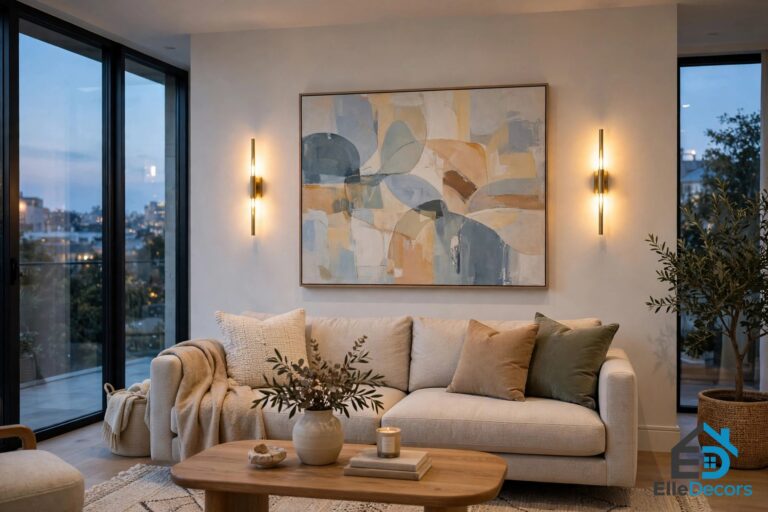
One sconce over a sofa looks like an afterthought; two, one on each side, look like a plan. A pair frames the seating area, balances the room and gives both ends of the sofa their own pool of light for reading. Keep the pair identical and mount them at the same height, roughly 130 to 150cm above the floor, just above a seated person’s head, so the light lands on shoulders and pages rather than in eyes.
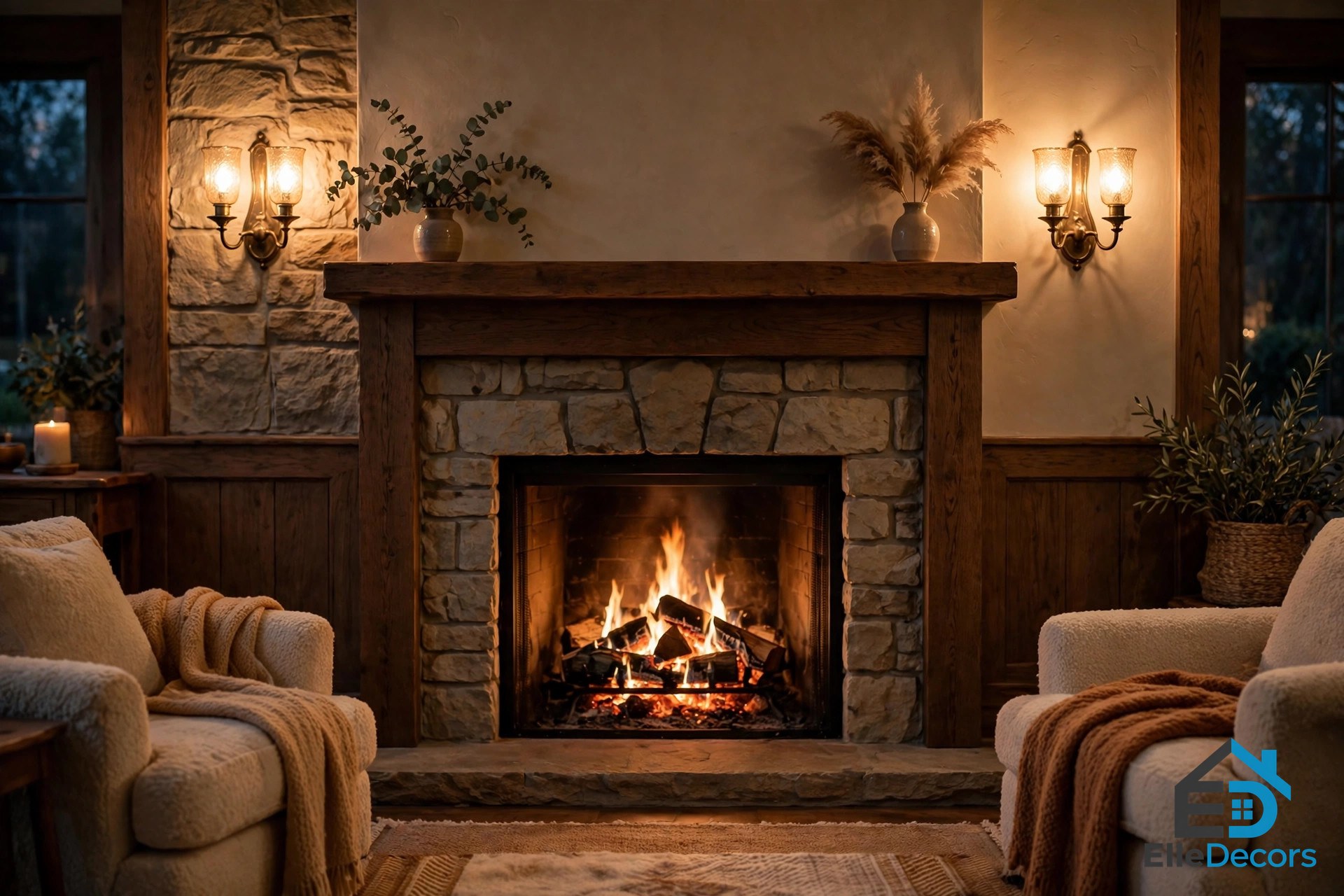
3. Frame the Fireplace
A fireplace is the natural focal point of a living room, and a pair of sconces on either side of the mantel makes it look finished rather than bare. This is the classic placement, and it works because the symmetry does the decorating: the eye reads the fireplace, the two lights and the mantel as one composition. Choose fixtures with a warm glow that matches the firelight, and put them on a dimmer so the room can go from bright conversation to quiet evening. Our guide to modern living room lighting shows how pairs like these sit inside a full layered scheme.
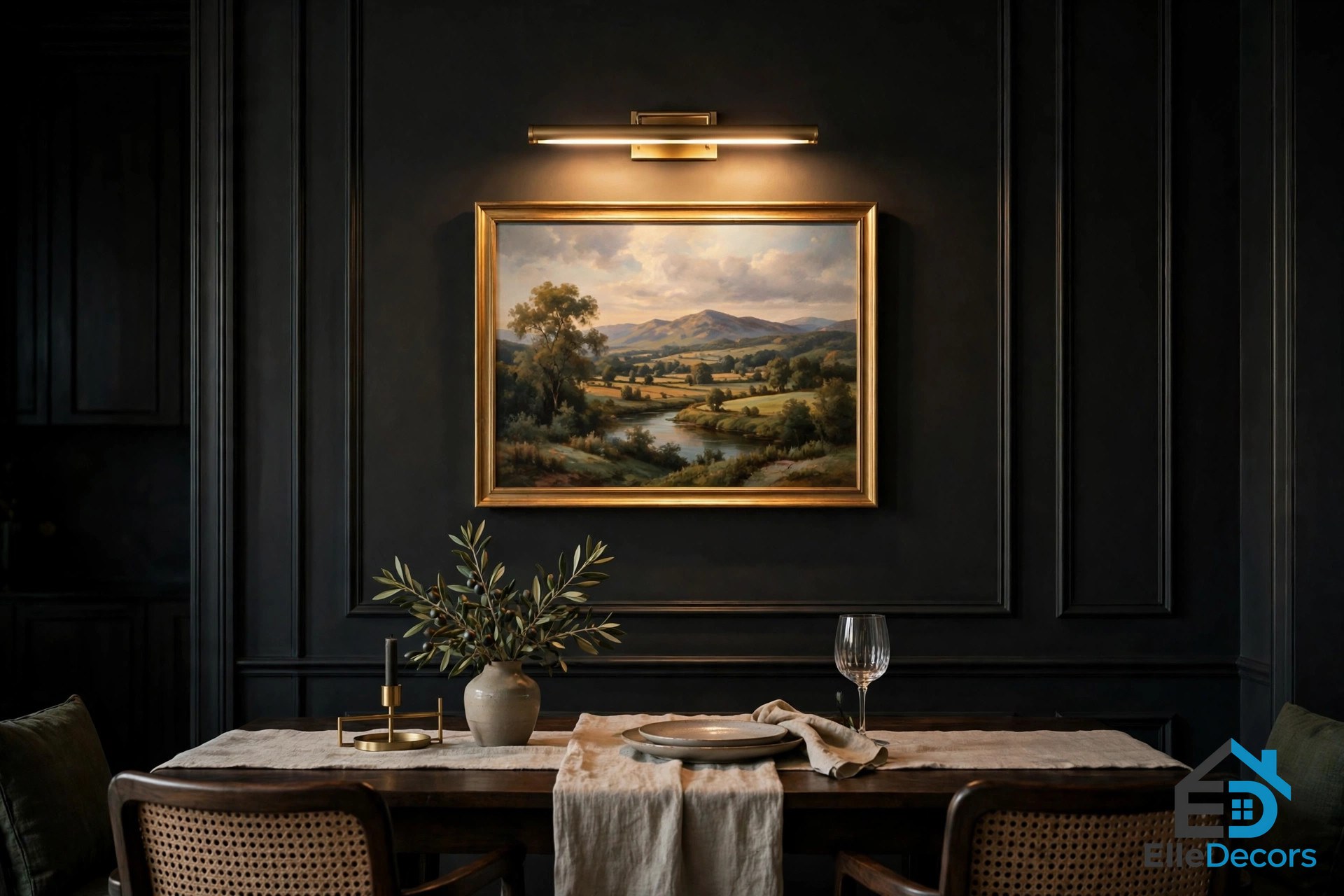
4. Light the Art, Not the Wall
A picture light is a narrow fixture mounted above a painting, a mirror or a shelf, and it turns an ordinary wall into a gallery. The trick is to aim the light at the art, not at the room: a slim bar or a pair of small spots washing down over the frame makes colours richer and gives the wall a focal point after dark. Mount it close above the frame, keep the beam tight, and choose a warm colour temperature so the art looks lit by lamplight rather than interrogated. This is the cheapest way to make a hallway or a dining room feel curated.
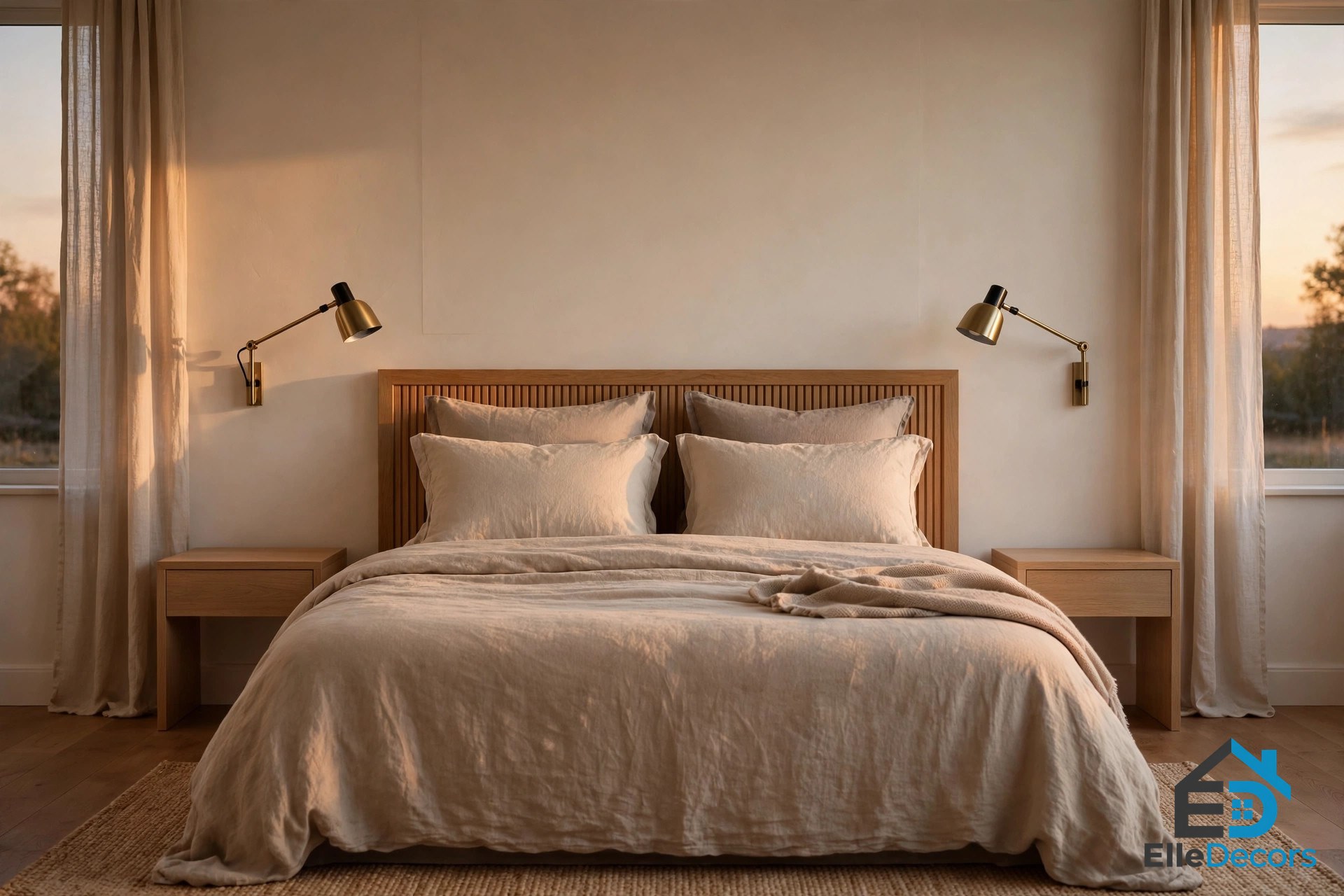
5. Free the Bedside Table
Two bedside table lamps eat the only surface in a small bedroom. A wall lamp on each side of the bed gives the same reading light and leaves the whole table free for a book, a glass of water and a phone. Mount them roughly 48 to 60 inches from the floor, a little above the mattress, so you can reach the switch without sitting up, and pick a fixture with its own switch or a pull cord if you do not want to wire a wall switch.
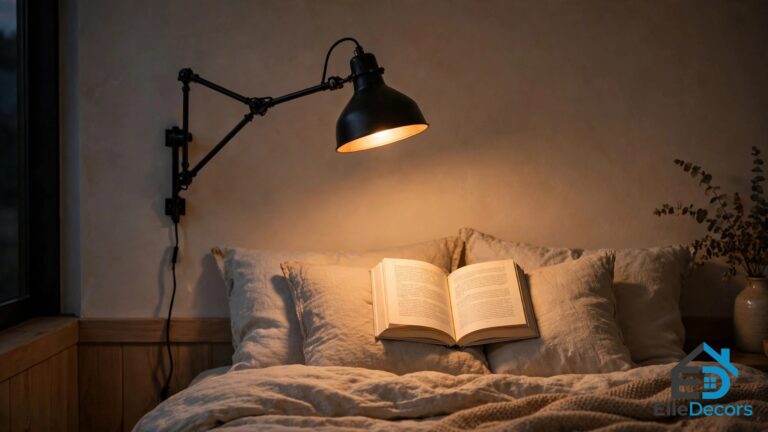
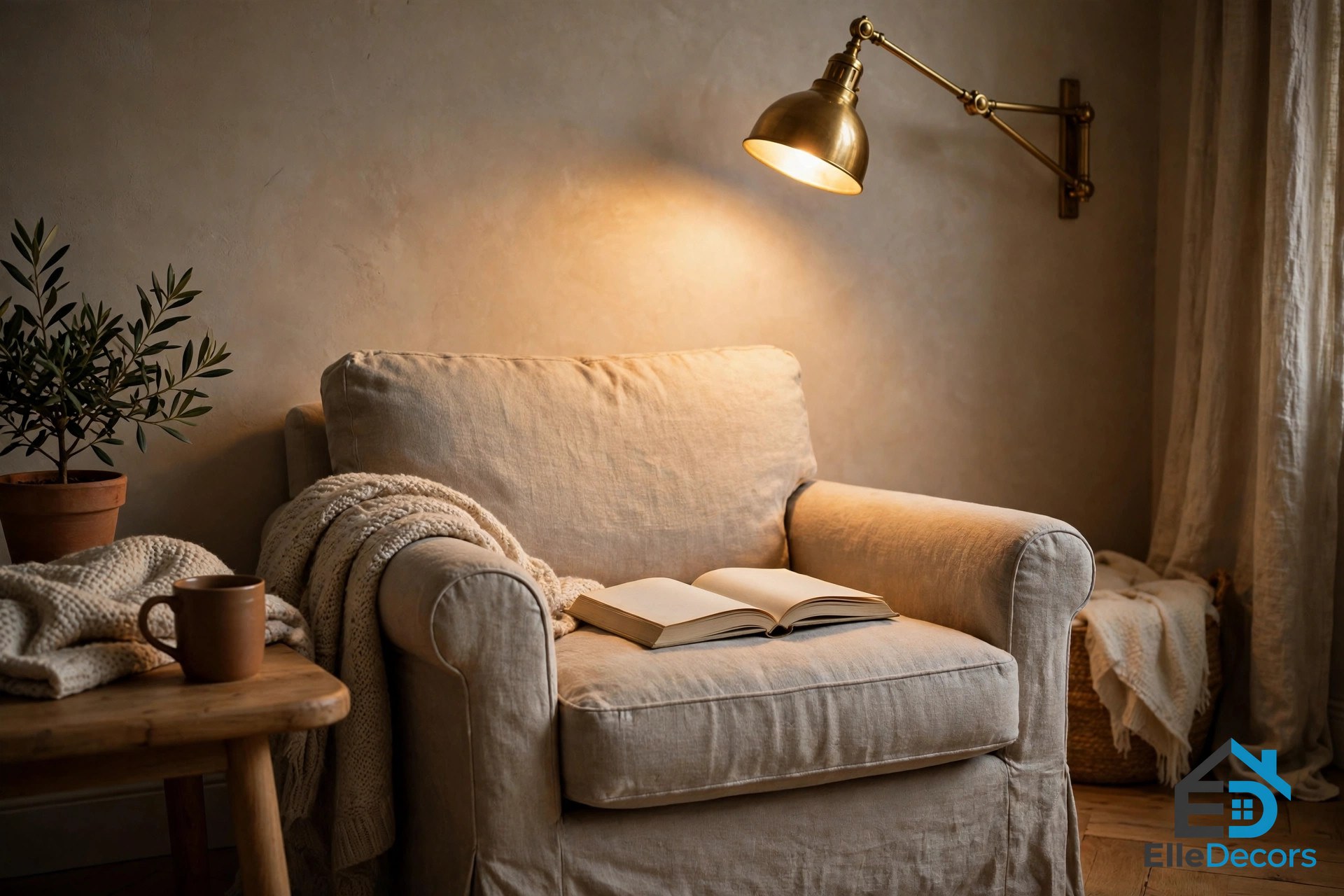
6. Swing an Arm Over the Reading Chair
A swing-arm fixture is the most useful single fitting in this guide, because it moves. Pulled out, it lights a book; pushed back, it becomes a quiet glow on the wall. That is why it suits a reading chair, a desk and a bedside equally well, and why it is the first type to consider when you can only fit one fixture in a room. Our guide to the swing arm lamp covers the same idea in more detail, with the reach and the mounting height that keep the light on the page and out of your eyes.
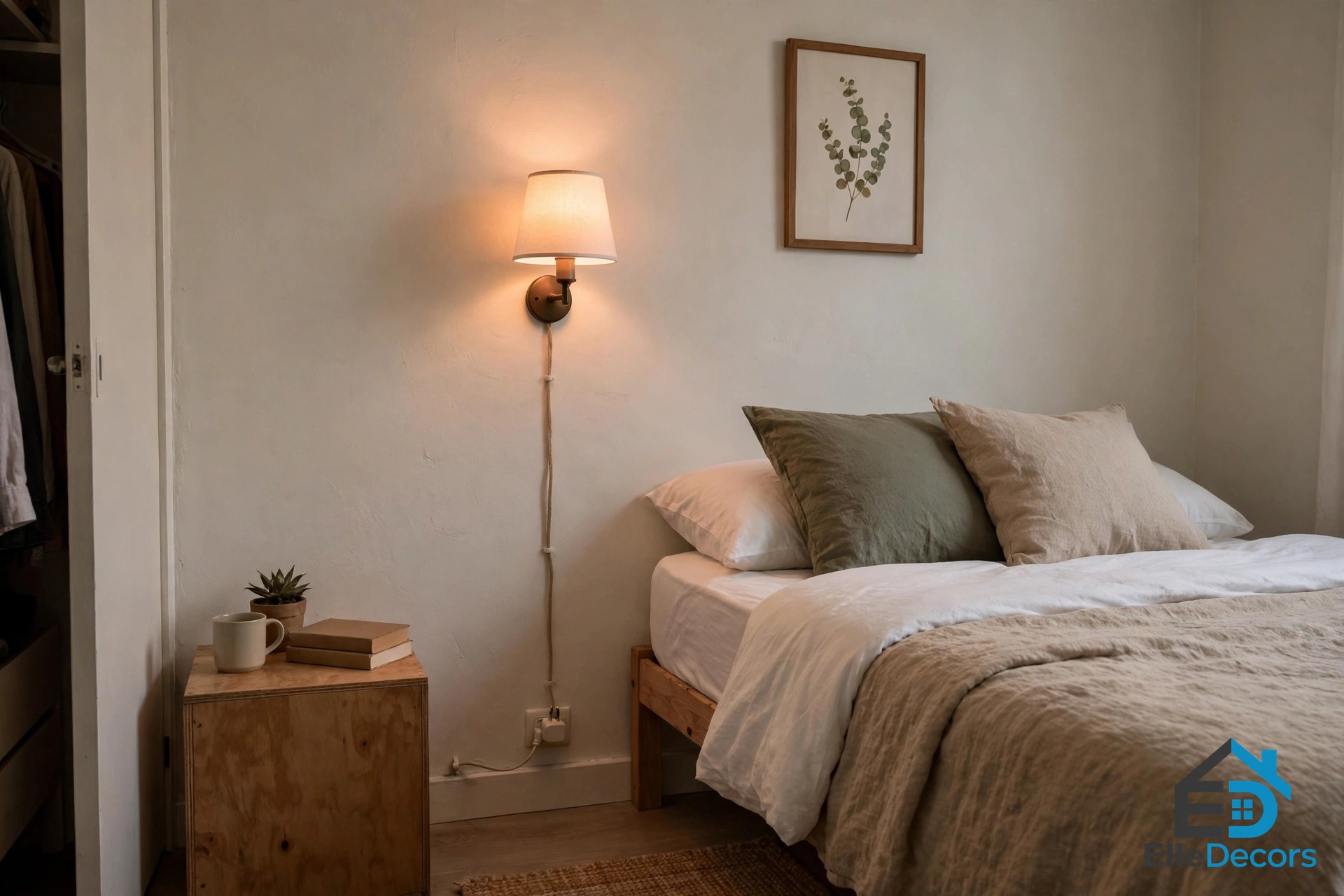
7. Go Plug-In When You Rent
Hardwiring is not always an option, and that is where plug-in sconces earn their keep. They mount with a couple of screws, the cord runs down the wall to an outlet, and they come off again when you move, which makes them the renter’s best friend and the quickest room update there is. Hide the cord with a slim cover painted the same colour as the wall, or let a fabric-covered cord hang as part of the look. Plug-in fixtures work best in pairs flanking a bed or a mirror, where the symmetry hides the fact that nothing is wired in.
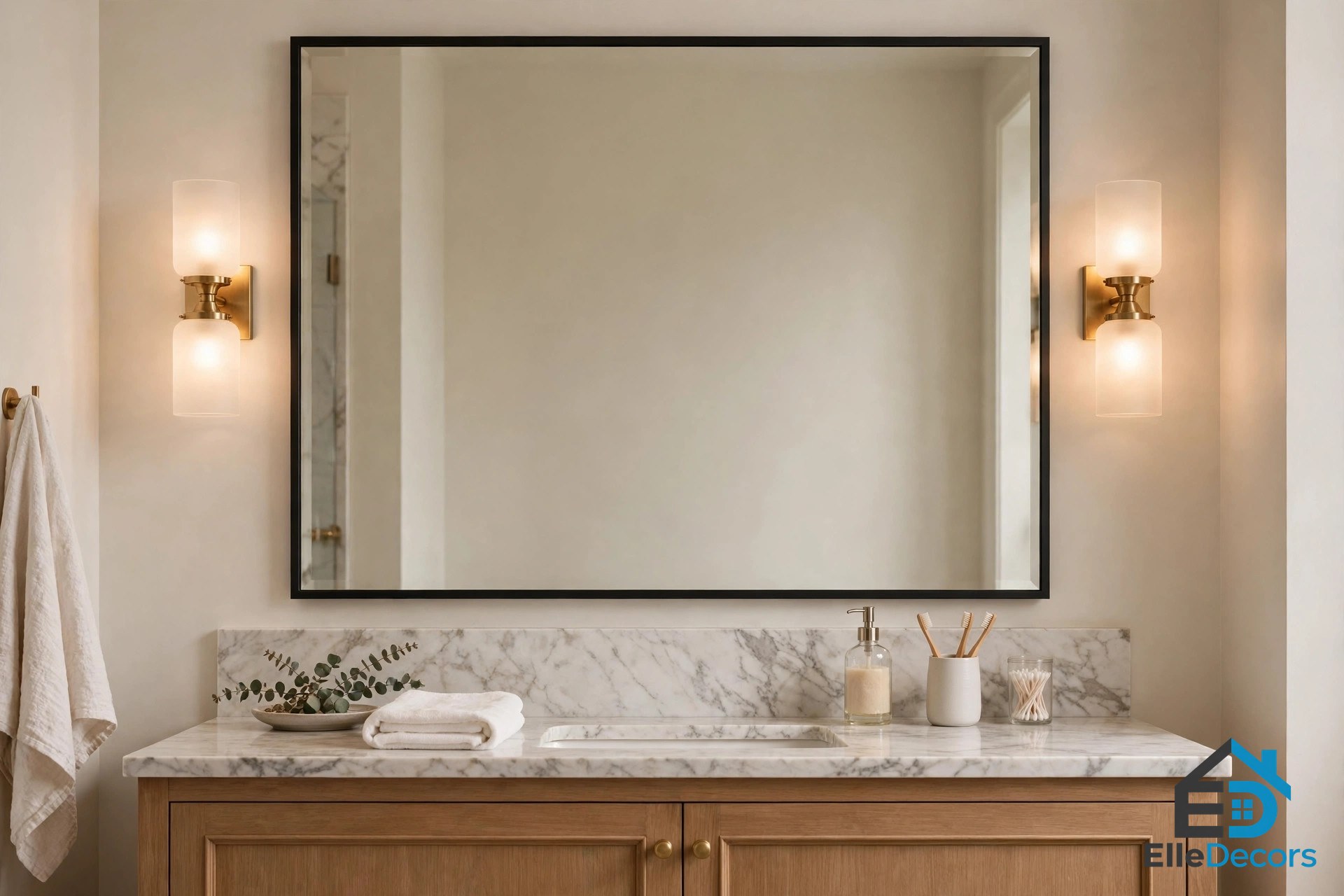
8. Pair Them at the Bathroom Mirror
The bathroom is where placement matters most, because a single overhead light casts shadows down the face. Two fixtures, one on each side of the mirror, at roughly 60 to 70 inches from the floor, wash the face evenly from both sides with no shadows under the chin or the brow.
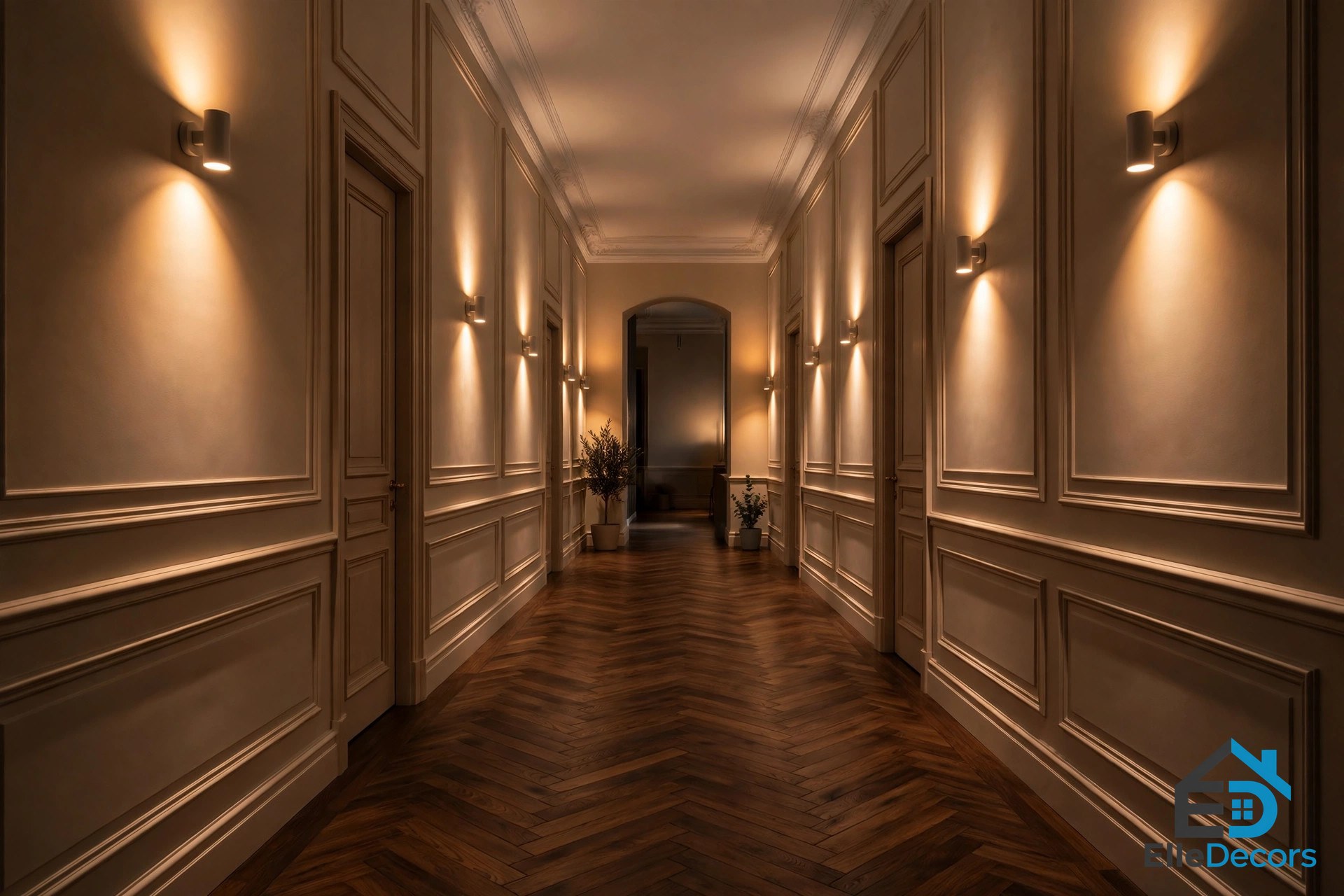
9. Wash a Hallway in Soft Light
Hallways are the most forgotten rooms in a house, and they are where wall lighting does its best work. A row of small up-and-down fixtures, spaced about six to eight feet apart and mounted with their centres around 60 to 66 inches from the floor, turns a dark corridor into a gallery of light and shadow on the walls. The upward wash lifts a low ceiling visually, the downward wash lights the floor, and the rhythm of repeated fixtures gives a long hallway a sense of pace. Keep the fixtures small and identical, and put the whole row on one dimmer so the hallway can glow gently at night.
10. Make One Sculptural Statement
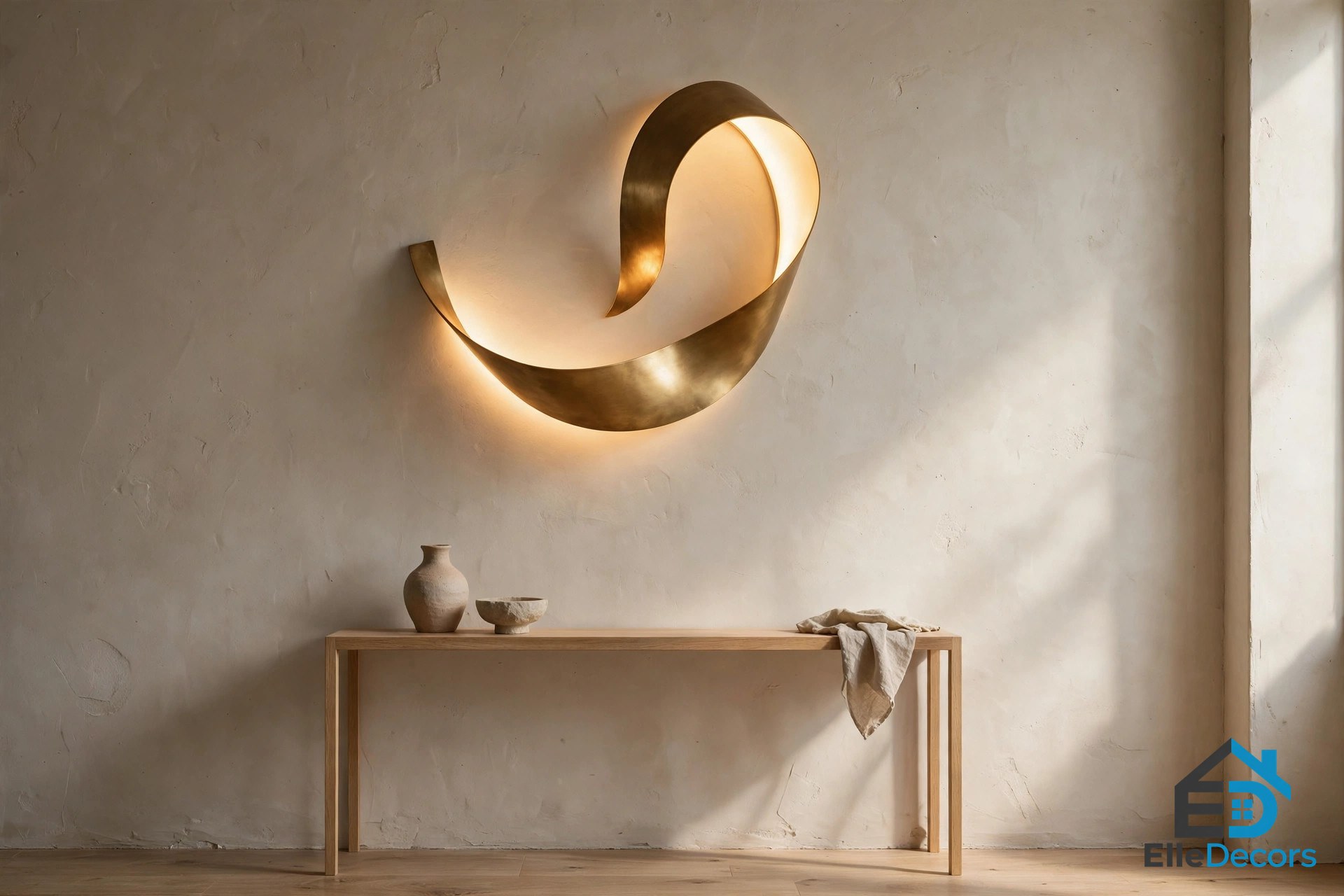
Some fixtures are bought for the light and some for the shape, and the sculptural ones do both. A curved brass arc, a cluster of glass globes or a ceramic form that throws patterned shadows can anchor a blank wall the way a painting does, and it earns its place even switched off. A wall lamp like this belongs where it gets a clear run of wall, above a console table or a sideboard, with nothing competing beside it.
11. Add a Little Glamour With Crystal
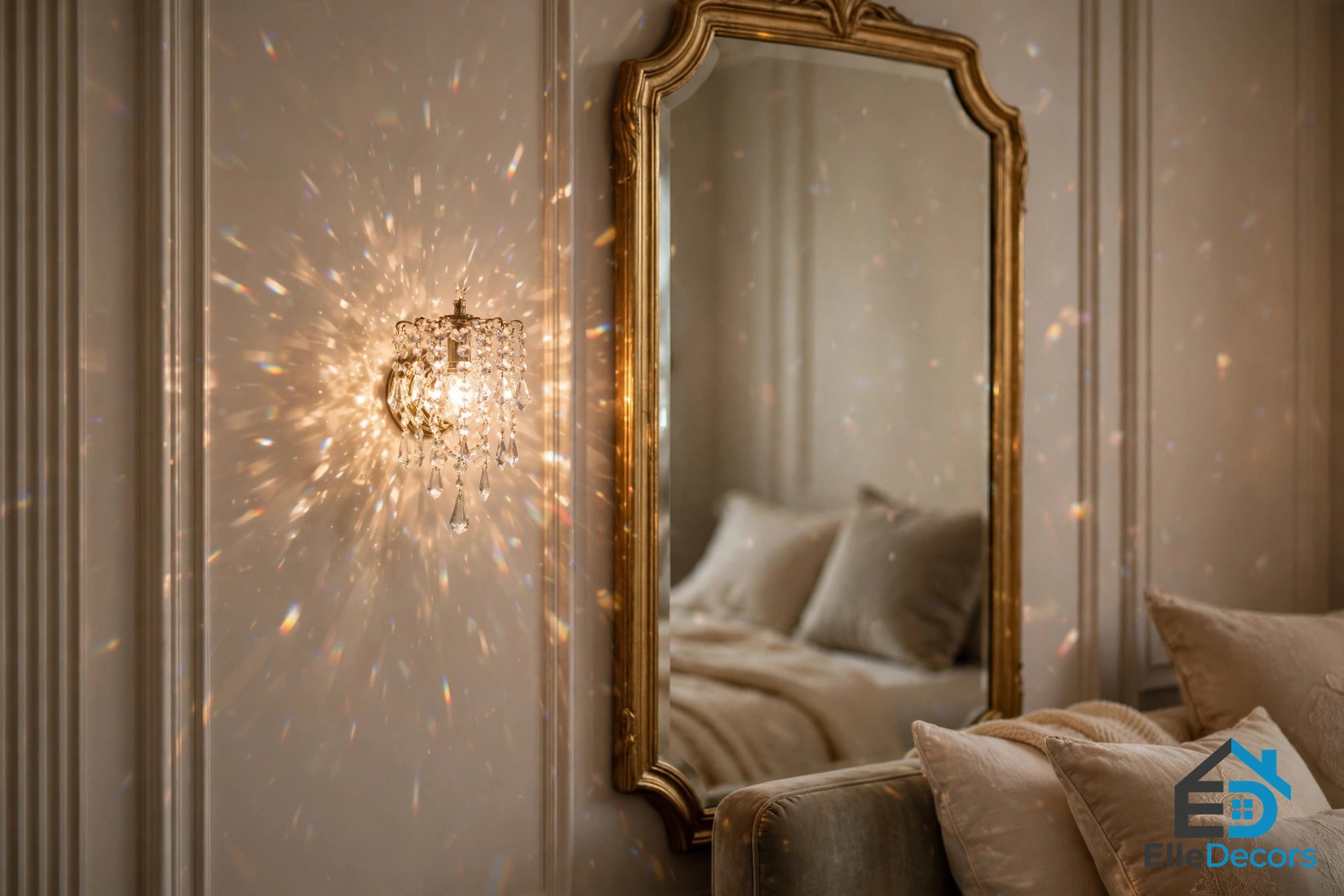
Crystal and glass fixtures catch the light and throw it around the room in small bright fragments, which is why they suit dining rooms and bedrooms that want a dress-up feel. Keep the crystal clean, because dust dulls the sparkle faster than anything, and pair it with warm bulbs so the fragments read as candlelight rather than glare. In a modern room, one crystal fixture against plain plaster is a deliberate contrast; in a traditional room, a pair is the expected finishing touch.
12. Dim It and Layer It
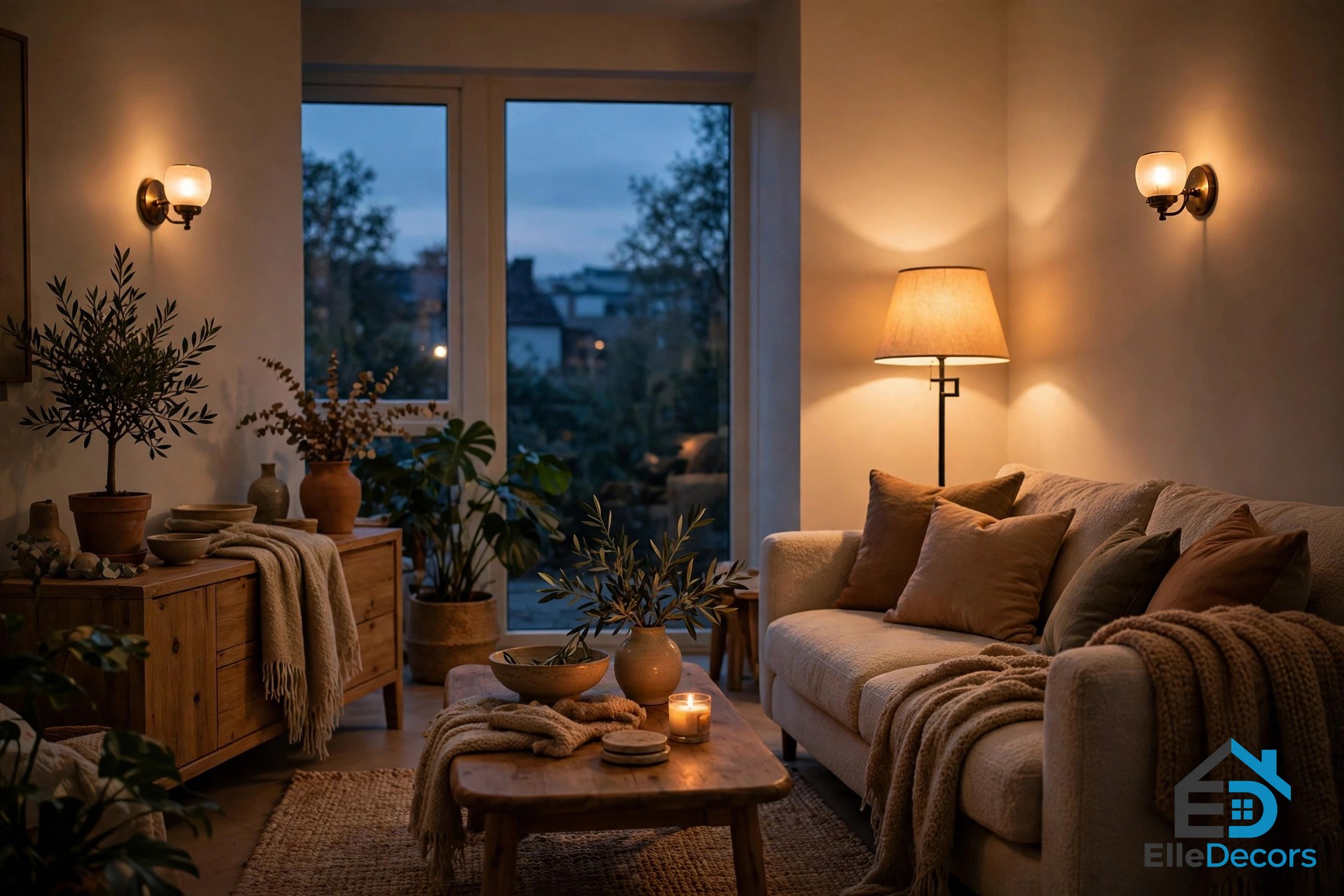
The last idea is not a fixture at all, it is a habit: a wall lamp on a dimmer is two fixtures in one, so put wall lights on dimmers and layer them with the rest of the room. A room lit only from the ceiling feels flat; the same room with a ceiling light, two sconces and a floor lamp feels deep, because the light comes from three heights at once.
Dimmers matter more here than anywhere, because a sconce at full brightness is a task light and the same sconce at half brightness is mood lighting. Our guide to unusual floor lamps shows the floor-level half of the same layered trick. Wire the sconces to their own switch, dim them down in the evening, and let the walls do the work the ceiling never could.
How High Should You Hang Them?
There are no hard rules, only guidelines that keep fixtures in proportion, and the ones master electrician Heath Eastman gives on This Old House are the most quoted: around a headboard, 48 to 60 inches from the floor; around a bathroom vanity, 60 to 70 inches; for accent or task lighting, 60 to 72 inches. Space a row of fixtures six to eight feet apart, keep them six to twelve inches from a door casing, and scale the fixture to the room. Measure from the furniture or the feature the light serves, not from a level line across the wall, and always check the height by standing in the room and looking, not just by measuring.
Quick Comparison: All 12 Ideas
Every wall lamp in the table below solves a different problem, so pick by the job first and the style second.
| Idea | Best room | What it does |
|---|---|---|
| Edge LED light bar | Living room | Long horizontal glow, frames a bare wall |
| Sofa pair | Living room | Balances seating, reading light both ends |
| Fireplace pair | Living room | Symmetry that finishes the focal point |
| Picture light | Dining room, hallway | Turns art into a gallery after dark |
| Bedside pair | Bedroom | Frees the table, reading light each side |
| Swing-arm | Bedroom, study | Moves to the book, folds back to glow |
| Plug-in sconce | Rented rooms | No wiring, easy to move, quick update |
| Mirror pair | Bathroom | Shadow-free light on the face |
| Hallway row | Hallway | Rhythm of light, lifts a low ceiling |
| Sculptural piece | Living room | Art on the wall that also lights it |
| Crystal sconce | Bedroom, dining room | Sparkle and glamour without a chandelier |
| Dimmer layering | Every room | One fitting, two moods, deeper light |
Watch: How to Install a Sconce
Watch Kichler’s installation video for a pin-up sconce, showing how a fixture mounts, wires and sits on the wall. It is a useful companion to this guide because it shows the practical side the ideas above skip: the bracket, the wiring and the finished position.
Video: “Kichler Sconce Installation Video” (Kichler) — installing a pin-up sconce, bracket, wiring and finished position.
Frequently Asked Questions
How many do I need in a living room?
Two, in most rooms: one pair flanking the sofa or the fireplace gives balanced light and a finished look, while a single fixture can leave the room lopsided. A large room can take a second pair on the opposite wall, but start with one pair and live with it for a week before adding more.
How high should I hang a sconce?
Follow the guidelines in the height section above: 48 to 60 inches around a headboard, 60 to 70 inches at a bathroom vanity, and 60 to 72 inches for accent or task lighting. A wall lamp hung too high throws light at the ceiling and leaves faces in shadow, while one hung too low glares straight into the eyes, so check the height at eye level before you fix anything.
Are plug-in sconces a good idea?
Yes, especially in rented homes or when you want to test a placement. They need no electrician, they come off cleanly when you move, and modern designs hide the cord well. The trade-off is a visible cord and no wall switch, so choose one with a switch on the cord or a smart bulb you can control from your phone.
Can I use them in a bathroom?
Yes, with two conditions: the fixture must be rated for damp locations, and the placement must flank the mirror rather than sit above it, so the light falls evenly on the face. Keep the light warm white, keep the shade frosted or opaque, and keep the fixture clear of direct water spray from the shower.
Do LED fixtures save energy?
Yes. LEDs use far less energy than old incandescent bulbs for the same brightness, and they last far longer, which is why most modern fixtures, including the Edge light bar in this guide, build the LED in rather than taking a replaceable bulb. Choose a dimmable LED and a warm colour temperature, and the fixture will run cool and soft for years.
Conclusion
A room lit only from above feels flat, and a room with well-placed sconces feels finished, because the light comes from the height your eye actually lives at. The twelve ideas here share one rule: choose the job first, a reading light, a mirror pair, a hallway wash, a single sculptural statement, and let the fixture follow. Measure the height, hang them in pairs where symmetry matters, dim them in the evening, and let the walls carry the light. A wall lamp is a small fixture with an outsized effect, and the right one makes a room feel considered rather than merely lit.
Before you commit to a whole house of new fixtures, try one room first and live with it for a week. A single sconce beside the bed or over the console will tell you more about the light you actually want than any catalogue photograph: whether the glow is warm enough in the evening, whether the shade throws shadows where you read, and whether the switch sits where your hand expects it. Change the bulb before you blame the fitting, because a cool white bulb can make even a beautiful brass arm feel clinical, while a warm dimmable bulb softens the same fitting into something you reach for every night.
Keep the finish consistent with the room around it — one metal, repeated twice, reads as deliberate, while three different metals in one small space read as an accident. And when the first room works, copy the formula, not the fixture: same height, same warmth, same restraint, in a shape that suits the next room.