Rich Colored Marble Kitchen Trends: Bold Stone for Counters, Islands, and Backsplashes
Audio Summary
White marble had a long run. For years, the standard kitchen formula was a pale slab with soft grey veins. That look is giving way to something braver. The rich colored marble kitchen trends now shaping new kitchens use dark green, burgundy, black, and plum stone with strong veining. As Urvashi Agarwal, creative director at Stone World London, told Ideal Home, homeowners are getting braver, and “the days of safe whites and greys are over.” This guide covers the colors that lead the trend, the best places to use them, how to pair them with cabinets and metals, and the care they need.
Why Kitchens Are Moving to Rich, Dark Marble
The old look had a name: quiet luxury. Pale stone sat on pale cabinets, and contrast stayed low. It was calm, but it could feel cold, and many kitchens started to look the same. Kitchens are social rooms now, and people want warmth and character in them. Designers say there is a clear appetite for stone with more depth and personality.
Colored stone answers that want in one move. “Bold veining and saturated tones are becoming the new neutrals,” Agarwal says, and mix-and-match kitchens with contrasting stones and finishes are the look people now ask for. A bold slab also adds strong color without painted cabinets, so the rest of the room can stay simple. That balance sits at the heart of the current rich colored marble kitchen trends: one surface leads, and everything else supports it.
The Colors Behind Rich Colored Marble Kitchen Trends
Four color families do most of the work in this trend. Each one has named stones that are worth asking for by name at the stone yard.
Dark Green Marble: Verde Alpi Leads
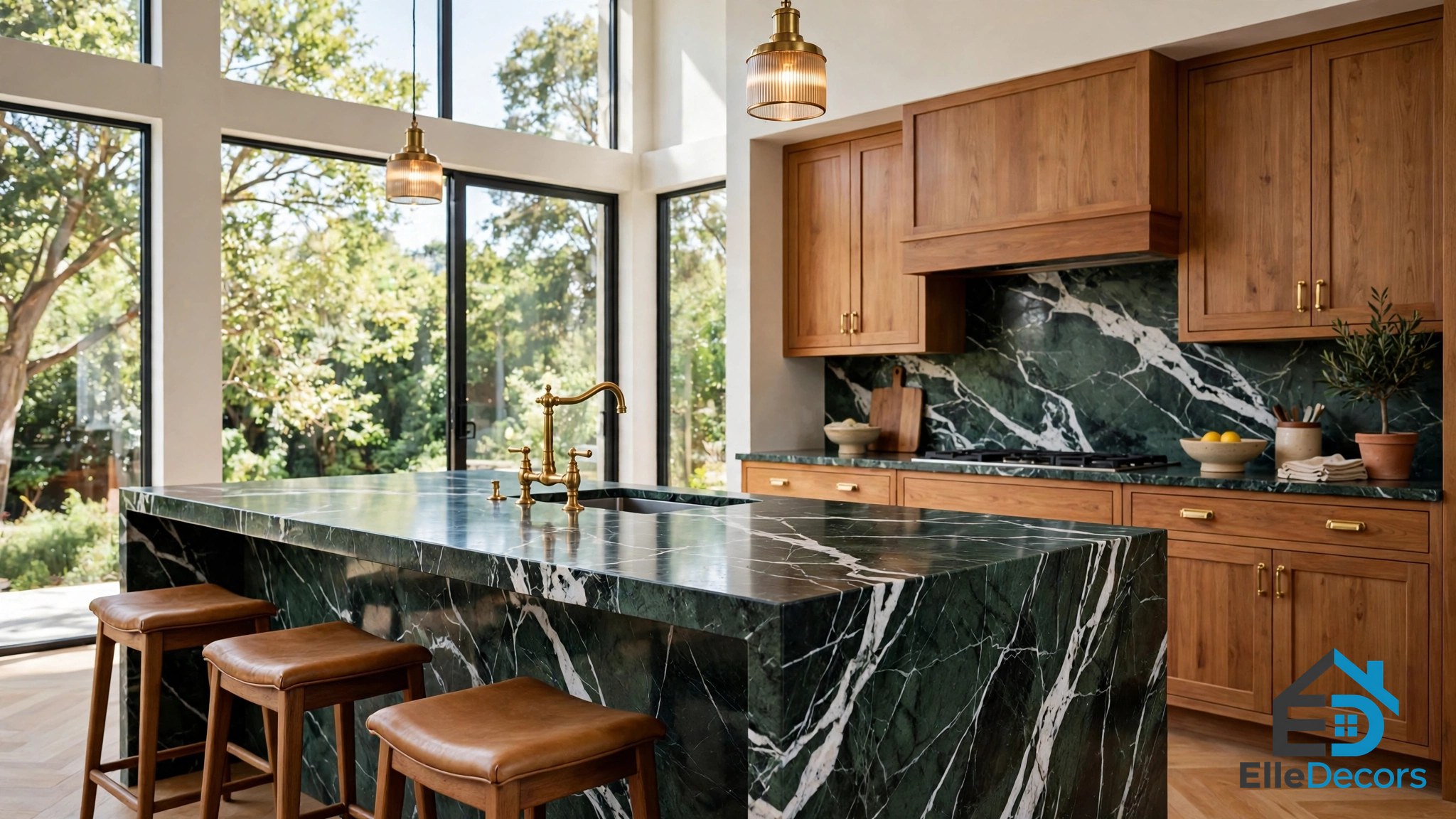
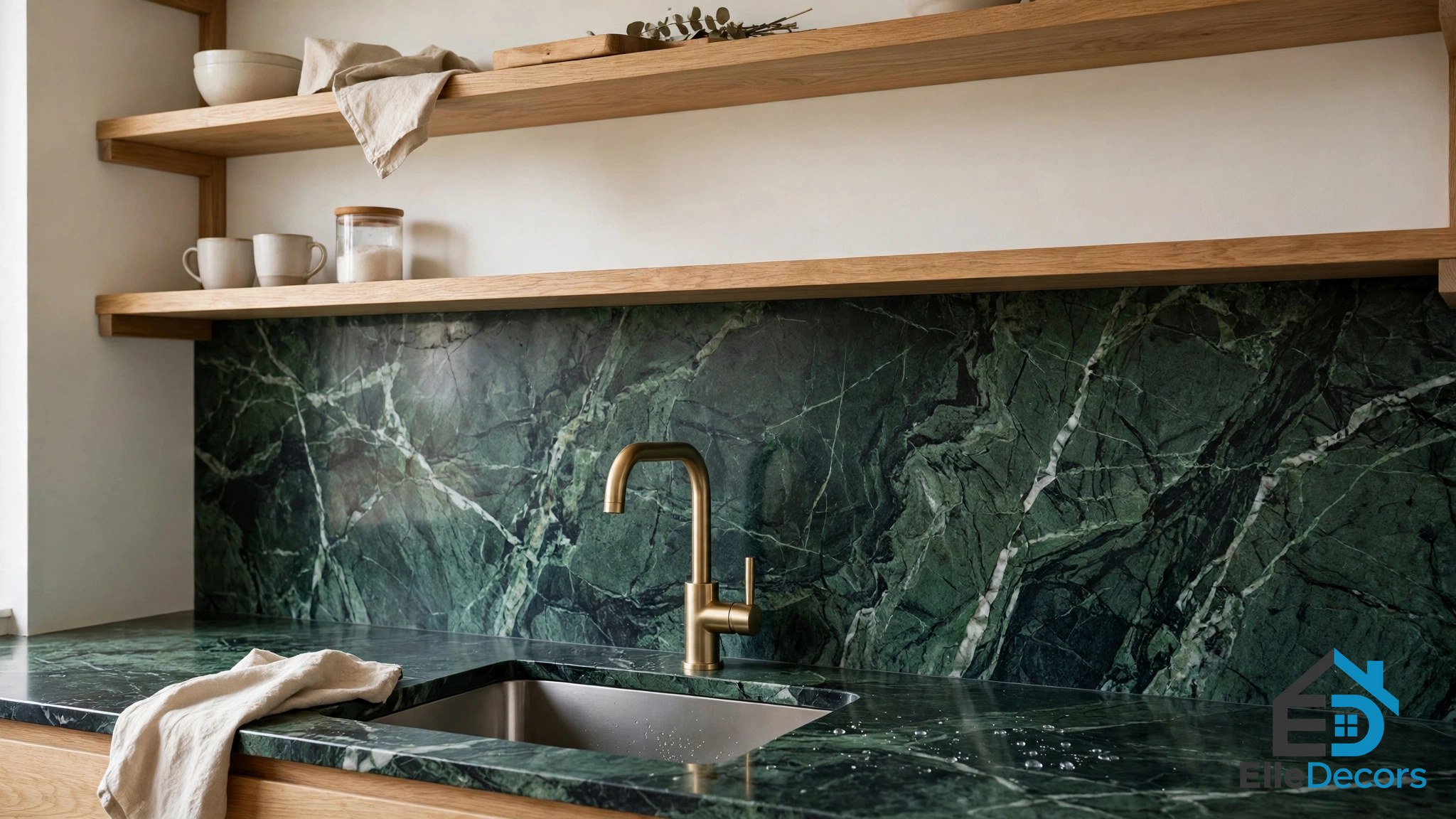
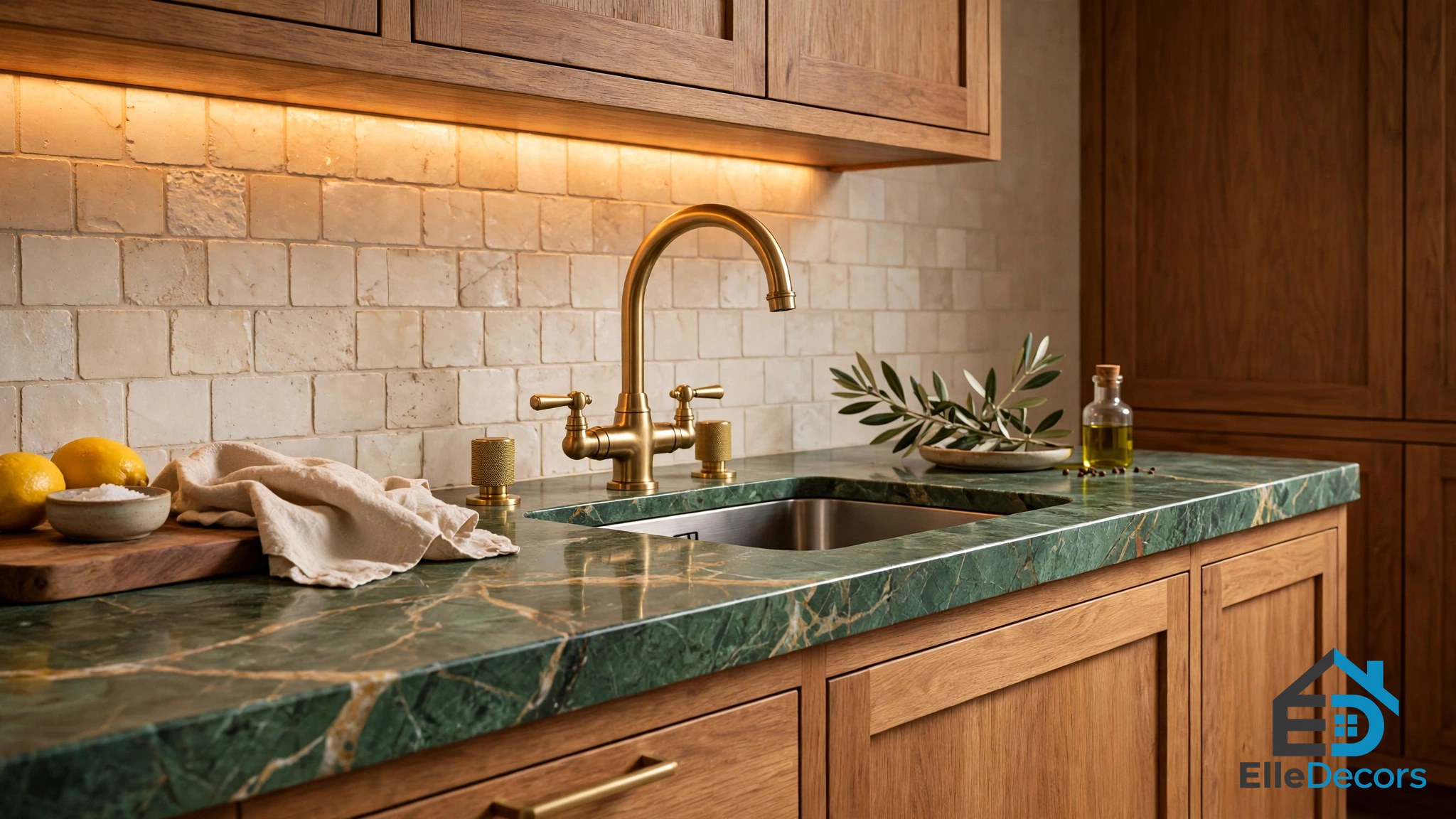
Verde Alpi is a dark green Italian marble with white and pale green veins. Livingetc calls a dark green, heavily veined counter and backsplash a timeless choice, and it feels calm and close to nature. In one Nordic kitchen, designer Jonna Karlsson paired Verde Alpi with dark oak. She said the green brings a natural sense of calm and energy, and the marble wall behind the sink lets the stone take center stage. Green leads the rich colored marble kitchen trends because it pairs with so much: warm wood, brass, steel, and white all sit well next to it.
Burgundy and Red Marble: Rosso Levanto and Calacatta Viola
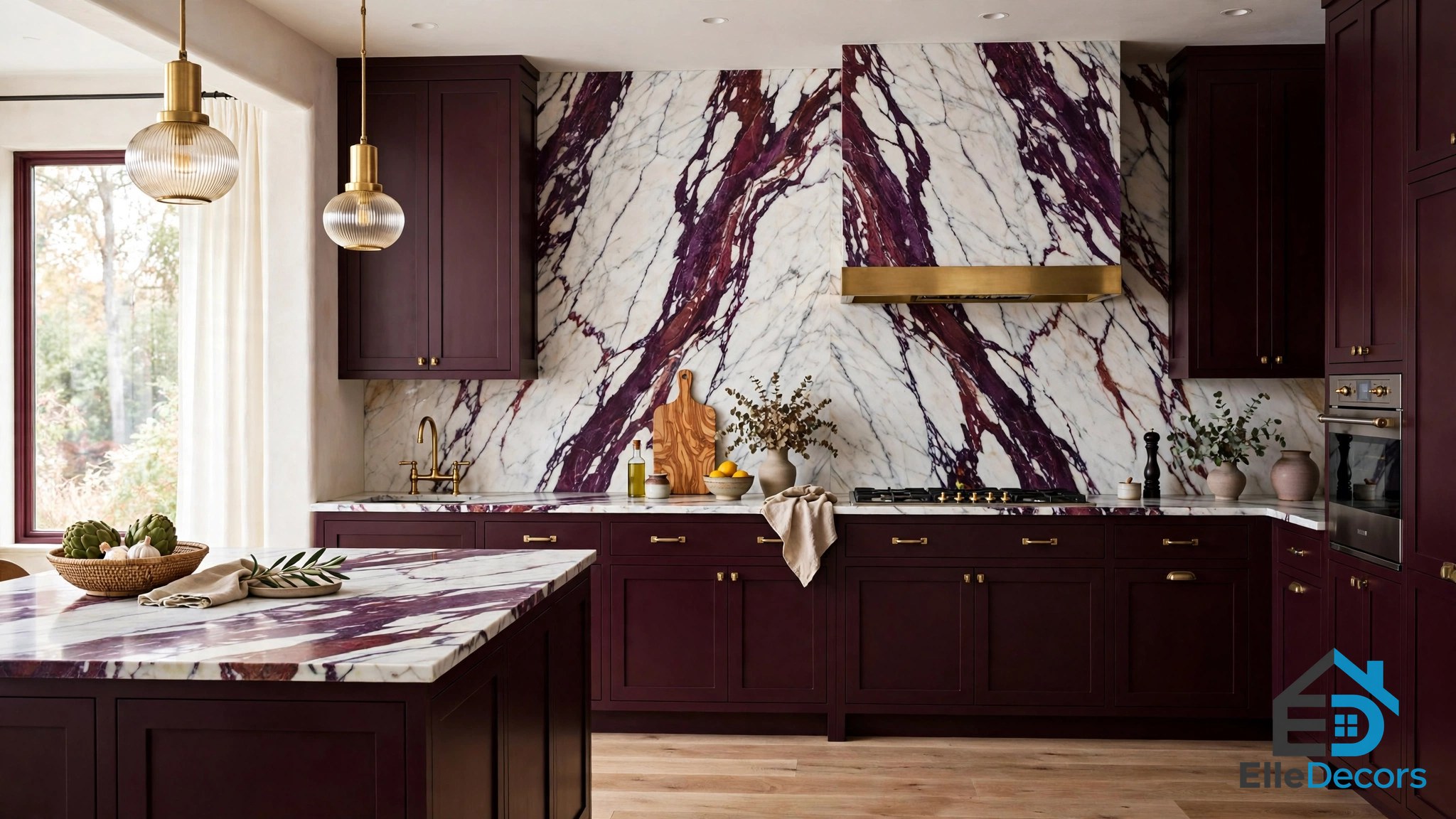
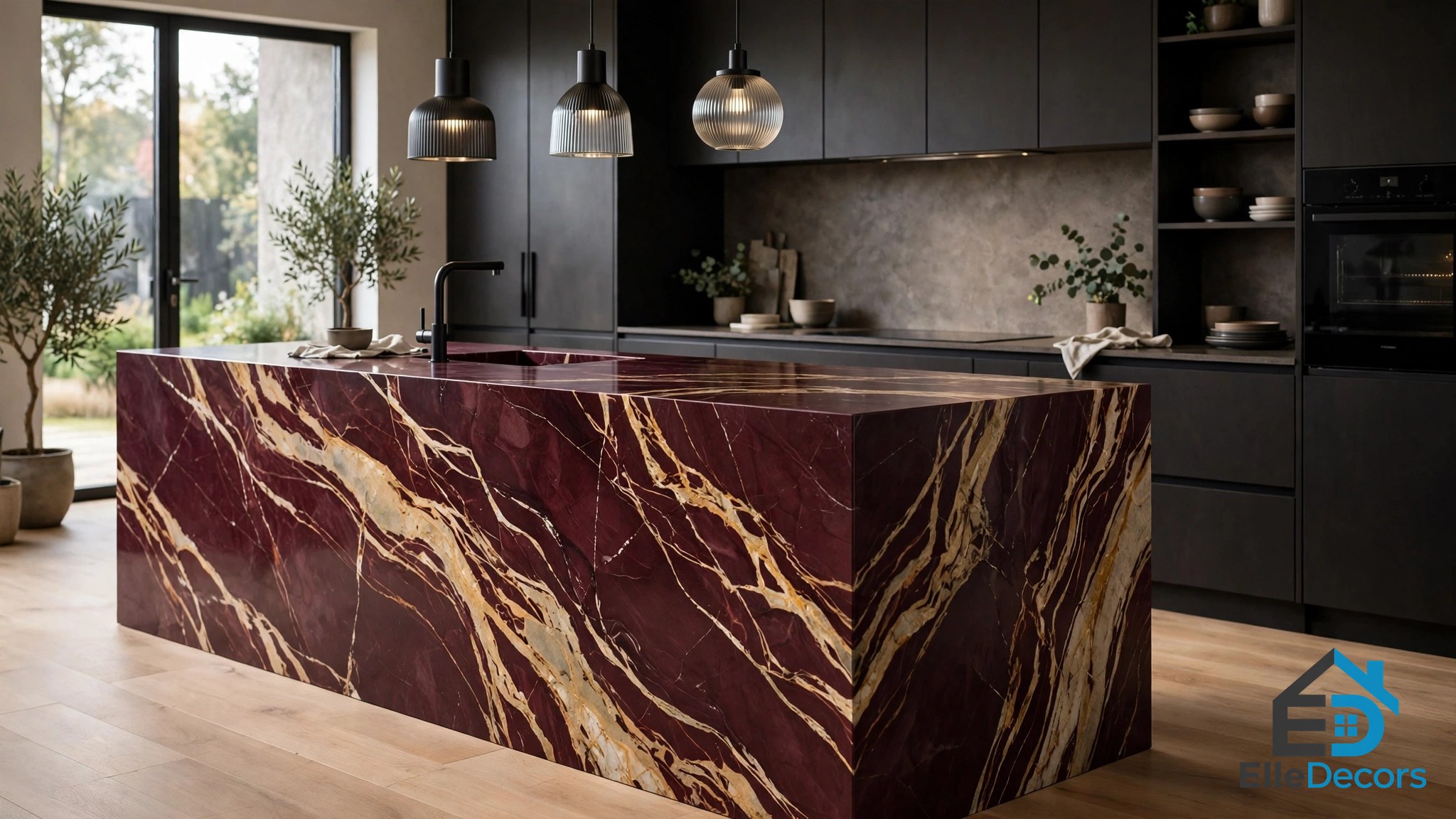
Burgundy came up as a color trend in 2025, and Ideal Home expects it to run through 2026. Rosso Levanto is the true red of the group, a dark cherry-red stone with strong white veins. Calacatta Viola is different: a creamy white Italian marble cut by burgundy and purple veins. Oliver Webb, director at Cullifords, says it looks like ice sheets over a red sea. The Cullifords Calacatta Viola worktop won best kitchen worktop at the 2025 Kitchen Awards. Livingetc notes that burgundy pairs well with neutral shades, wood tones, and metallic accents, and that it suits modern and country kitchens alike.
Black Marble: Drama That Hides Daily Wear
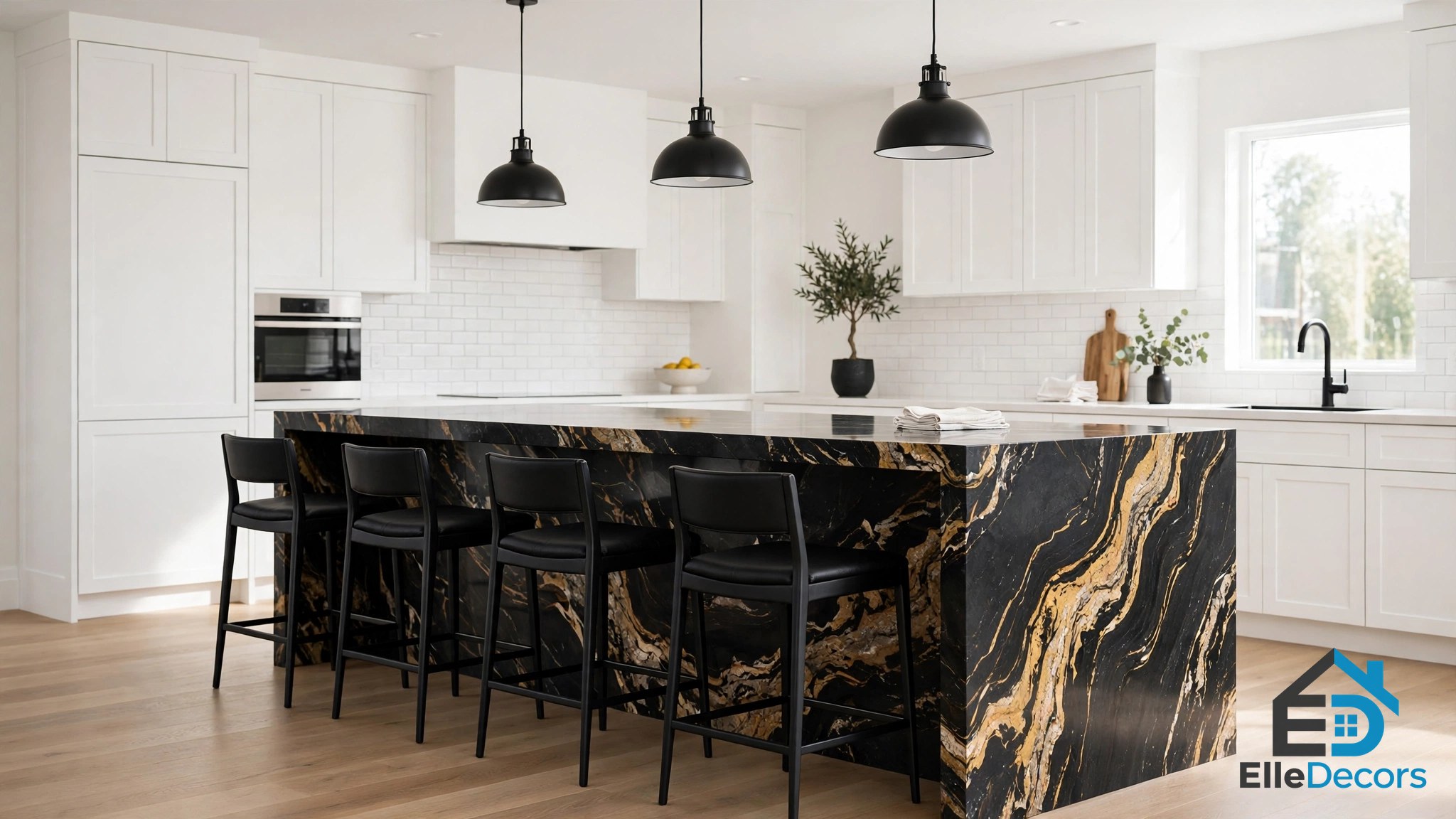
Black marble with white or gold veins is the boldest neutral of the set. It also has a practical side. Livingetc points out that black counters hide stains, cracks, and daily spills well. In one kitchen, a designer used a black island with matching counters and cabinets as the center of an otherwise white kitchen, which gave the room a strong, calm contrast. Black is not a shy choice, but it earns its place in busy homes.
Pink, Plum, and Purple Veining
The softer end of the trend is warm, not weak. Rosa Portugallo is a Portuguese pink marble with white or grey veins. Four Seasons Pink is one of the stones Agarwal names among those bringing warmth back into kitchen palettes. Breche de violette is a purple and green veined marble that designer Nate Berkus has praised as a risk worth taking. These tones often work best in smaller doses: a sink, one backsplash wall, or a single run of counters.
| Marble color | Stones to ask for | Pairs well with |
|---|---|---|
| Dark green | Verde Alpi | Warm wood cabinets, brass, steel |
| Burgundy and red | Rosso Levanto, Calacatta Viola | Cream cabinets, white tile, warm metals |
| Black | Black marble with gold or white veins | White cabinets, black accents, brass |
| Pink and plum | Rosa Portugallo, Four Seasons Pink | Warm neutrals, aged metals, cream |
Where Rich Colored Marble Works Best in a Kitchen
Counters are only the start. Designers now run colored marble up walls, down the sides of islands, and into sinks, so one stone can shape the whole room.
Islands and Countertops
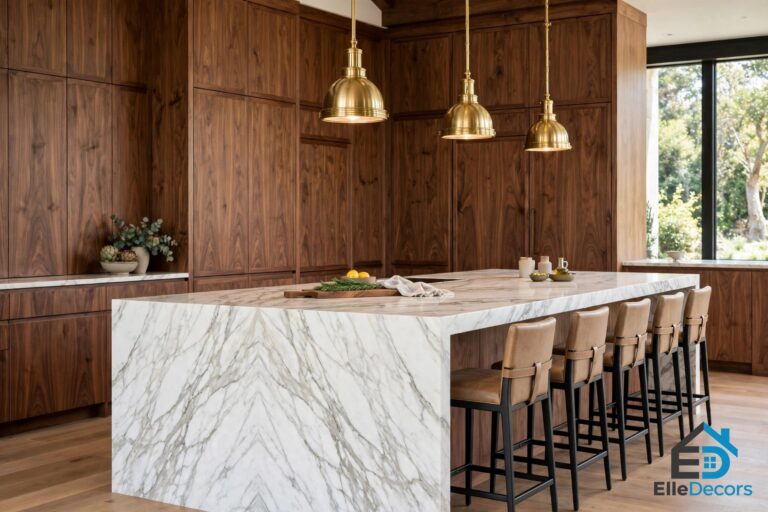
The island is the natural home of bold stone. One slab can act as the main piece of art in the room, and it works as a counter at the same time. Two slab tricks add more. A waterfall edge lets the vein pattern flow from the counter down the side panel. Bookmatching mirrors two slabs so the veins form a symmetric pattern, like a print made by the stone itself. Both tricks need large, well-matched slabs, so plan them with your fabricator early.
Full-Height Backsplashes
A slab backsplash runs from the counter up to the cabinets, or all the way to the ceiling. It removes grout lines, so the wall reads as one clean sheet of stone. Oliver Webb notes that Calacatta Viola also works well for cladding and full-height wall installs. Behind a range, a full-height slab is the simplest way to give a plain kitchen one rich surface.
Sinks, Tiles, and Small Doses
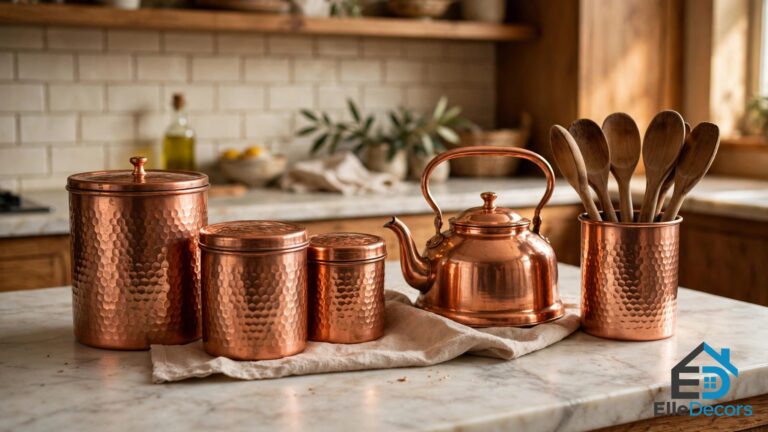
You do not need a full slab budget to use this trend. A carved marble sink turns a daily tool into a feature. Colored marble tiles in viola tones can cover one splash zone for less than a slab. Even serving boards and trays in bold marble carry the look to the counter. Warm metal pieces pick up the tones in the veins, too. A rail of copper kitchen accessories over a green or burgundy counter ties the scheme together at low cost.
In this short Architectural Digest tour, one kitchen runs Italian marble from the counters into a custom marble sink:
Pairing Colored Marble With Cabinets and Metals
Most rich colored marble kitchen trends work because one stone leads and the rest of the room supports it. The 60-30-10 rule that many designers use gives the lead material the main share of the room’s color weight, with support colors and accents making up the rest. Keep cabinet shapes and layouts classic, and the stone can be as bold as you like.
White and cream cabinets reflect light and keep dark stone from closing the room in. Warm wood does a different job: it softens dark shades and links the stone to natural textures. Our guide to the best use of wood in modern designs shows how to place wood so it supports a strong surface instead of fighting it. Cabinet color also changes how the stone reads. In one kitchen, cabinets in a black with aubergine undertones pulled the burgundy out of Calacatta Viola, while plain black cabinets made the same kind of veining read more grey.
Warm metals are the safe match. Brushed brass and aged metals sit well with Calacatta Viola, and brass, copper, and gold amplify the warm veining in many colored stones. If you want to build the whole scheme on that warmth, a gold kitchen palette carries the same tones across taps, handles, and lights. Steel and chrome count as neutrals, so they let the stone stay the focus.
Light matters as much as color. Dark marble absorbs light, so rooms with strong daylight carry dark stone with ease. In a dim room, limit the rich stone to one surface and add layered light: ceiling lights, task lights, and accent lights. A polished finish reflects more light, while a honed finish looks softer and calmer.
Care, Sealing, and the Honest Costs of Marble
The rich colored marble kitchen trends come with one honest cost: upkeep. Marble is porous, so it soaks up liquids, and spills need a fast wipe. Seal kitchen counters with an impregnating sealer, and reapply it every one to two years. Acid is the other risk. Lemon juice, vinegar, and harsh cleaners can etch the surface, so clean with a pH-neutral stone cleaner instead.
Marks and a soft patina build up over time. That is part of owning natural stone, and most owners accept it as character. Honed and leathered finishes help a little: they soften glare and show wear less than a high polish. If the upkeep sounds like too much, marble-look quartz or porcelain gives you the same rich colors with far less care. You give up the one-of-a-kind veins, but you keep the look.
Frequently Asked Questions
Will a colored marble kitchen date fast?
Any bold choice can date if the whole room chases fashion. The safer pattern in these kitchens is a classic layout, plain cabinet shapes, and one rich stone as the lead. Calacatta Viola is a classic Italian stone that fell out of favor and then came back, which shows that these stones cycle rather than expire. Choose the color you love, keep the rest calm, and the kitchen ages well.
Which rich marble color is easiest to live with?
Across the rich colored marble kitchen trends, black is the forgiving pick for daily mess, since it hides stains and spills well. Dark green is the flexible pick: it pairs with wood, brass, and steel, and it suits counters or a backsplash wall. Burgundy is the warmest and boldest of the three, so it rewards a room with good light and calm cabinets.
Does dark marble work in a small kitchen?
Yes, in a smaller dose. Dark stone absorbs light, so a small room does better with rich marble on one surface, such as the island or the backsplash, rather than on every counter. Light cabinets, pale walls, and layered lighting keep the room open. One clear feature can even help: it makes a small kitchen feel planned, not plain.
How do you care for a colored marble countertop?
Seal it on install, and reapply the sealer every one to two years. Wipe spills at once, since marble is porous and soaks up liquid. Clean with a pH-neutral stone cleaner, and keep acids like lemon and vinegar off the surface, because they etch stone. Expect a soft patina over the years. Most owners see it as character, not damage.
Can you mix two marbles in one kitchen?
Yes, and designers do it on purpose. Mix-and-match kitchens with contrasting stones are the current look. In one kitchen, a Rosso Levanto counter was paired with Calacatta Viola on the cooktop wall, with the colors flipped to make the scheme more dynamic. The rule is simple: let one stone lead and the second one support, and share at least one color between them.
Final Thoughts
Rich colored marble kitchen trends ask for one brave choice, then reward it for years. Pick the color family that suits your light, let one surface lead, and pair it with calm cabinets and warm metals. Take samples home first, sealed and unsealed, and live with them for a few days before you commit to a slab.