Red Brick Houses: 12 Stunning Design Ideas for Every Style
AUDIO SUMMARY: Red brick has never been just a traditional material. This guide covers twelve design-led ideas from a forty-home roundup, from diamond-patterned screens and folded facades to lace brickwork, round windows and storybook manors, plus the pairings and planting that keep brick looking fresh and timeless. Listen in for the moves that suit modern homes, heritage streets and small city plots alike.
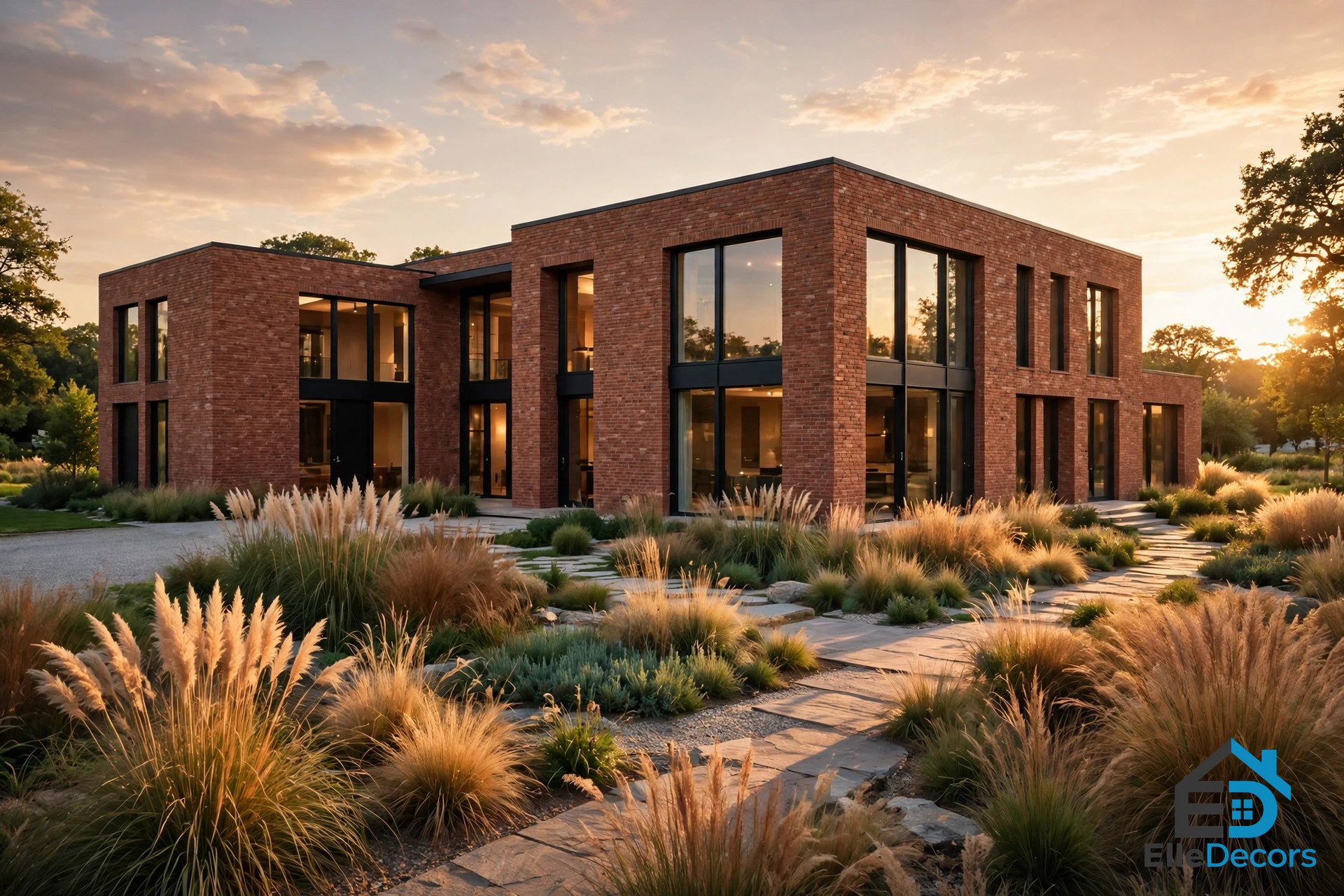
Red brick houses have a warmth that few materials can match, and the best of them prove that brick is not stuck in the past. One material can look sculptural, traditional, industrial or soft, depending on how it is laid and paired. This guide gathers twelve design-led ideas from a source roundup of forty red-brick homes, ranging from avant-garde towers to enchanting manors with a heritage feel.
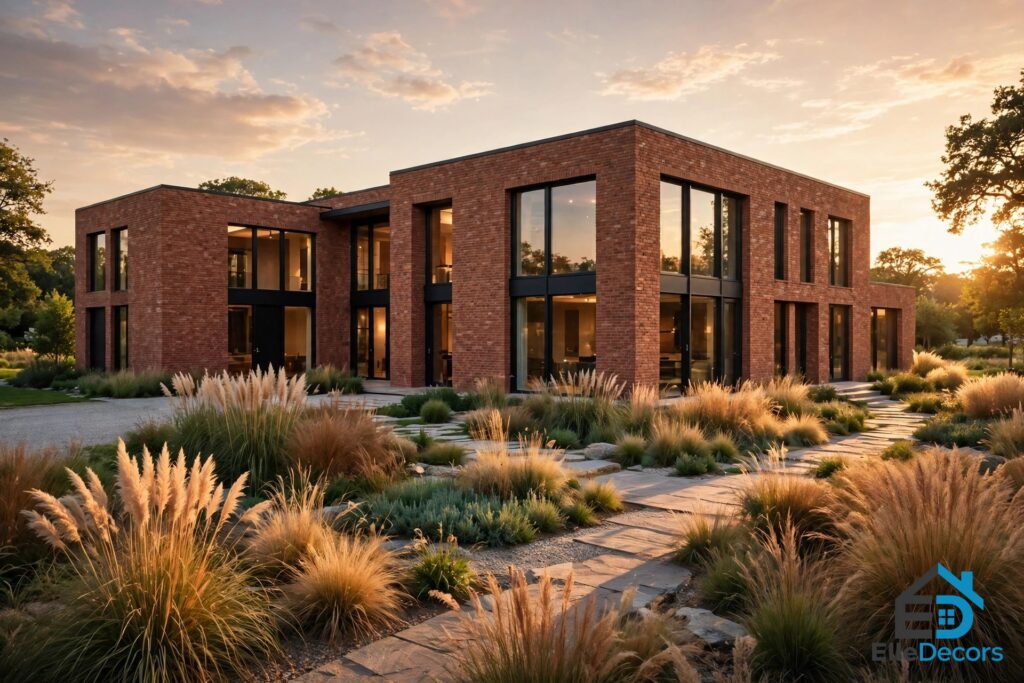
What Makes Red Brick Houses So Enduring?
Red brick endures because it is both a structure and a finish: the wall is the decoration, and its colour deepens rather than fades as it weathers. The source roundup describes the collection as a demonstration of the enduring versatility of red brick as a medium for artistic expression, moving from bold geometric forms to heritage manors, and from industrial concrete pairings to great expanses of glass.
The twelve ideas below are organised by the design move each home makes, not by style alone, so you can borrow one move for your own home. A pattern, a window shape, a pairing or a planting choice can change a facade completely without rebuilding it. Red brick houses reward that kind of thinking: small decisions in bond, mortar, trim and landscaping show up large on the finished wall.
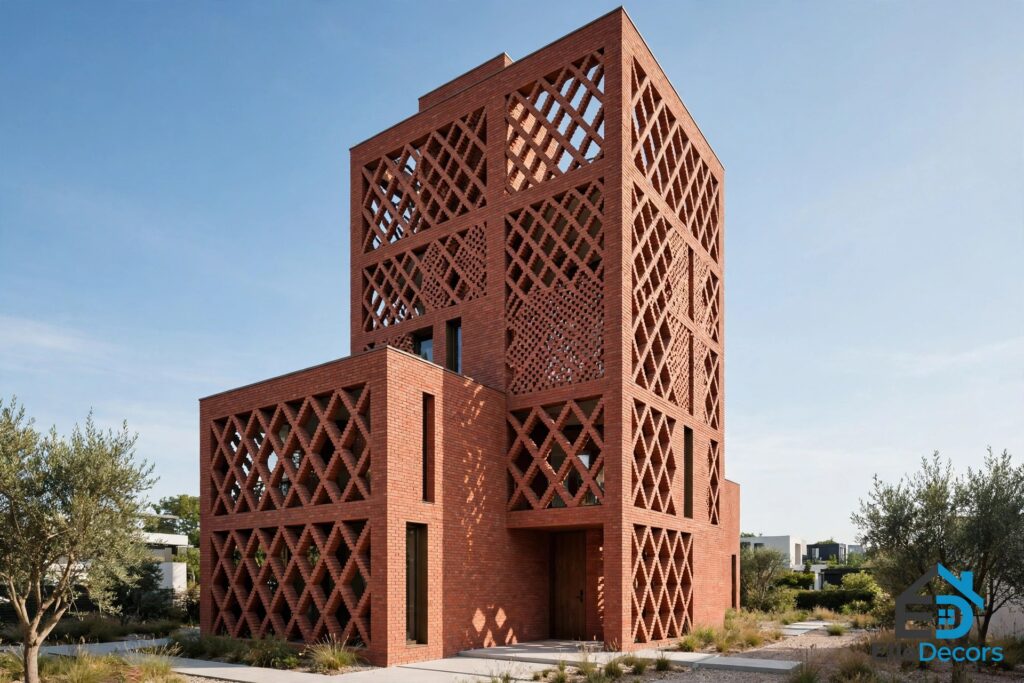
1. Cut Diamond-Patterned Screens Into the Facade
The most striking home in the source roundup is a contemporary tower by Studio Humane, where the brickwork is formed into diamond-shaped fenestration and attractive light-filtering screens. Instead of solid walls with punched windows, the brick itself becomes a lattice, letting daylight through in a shifting pattern while keeping the interior private.
This move suits a home that needs privacy without gloom: keep the pattern regular and the openings generous, and pair it with plain brick elsewhere so the pattern has room to breathe.
2. Fold the Facade Like an Accordion
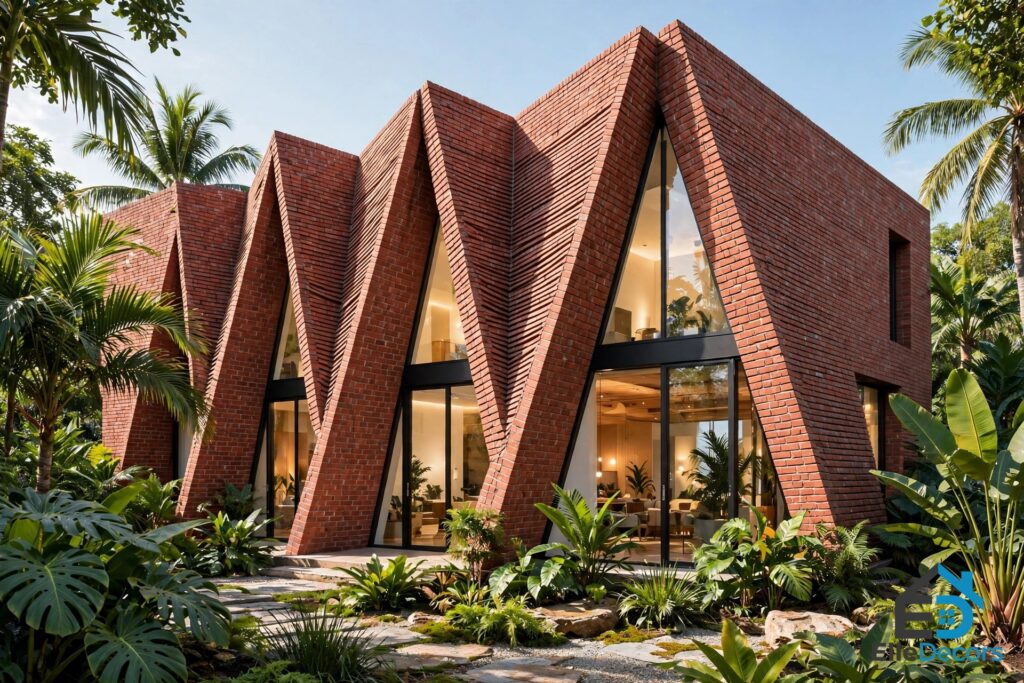
H and P Architects built a facade that folds like an accordion, each slope a light and air-permeable sheet that keeps the interior bright and cool. The folds turn a flat wall into a sequence of angled planes, so the house catches light and shadow differently on every face.
Folding works when the rest of the house stays calm, so keep the roofline and trim simple. It suits warm climates and tight urban plots, and a single folded bay borrows the same rhythm at a smaller scale.
3. Weave Lace-Like Decorative Brickwork
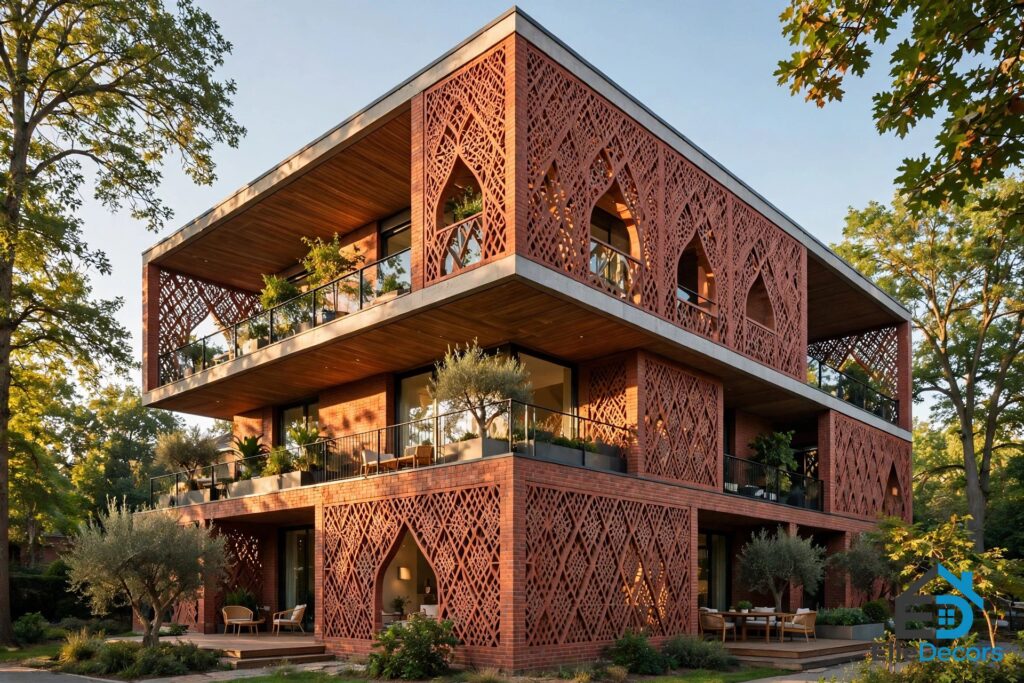
Aangan Architects used decorative brickwork to build a lace-like effect across the solid sides of a residential building, with third-storey volumes overhanging second-storey terraces to create wide cutaways. The brick reads as fabric rather than masonry, delicate from a distance and richly textured up close. It is proof that red brick houses can be ornamental without a single applied decoration: the pattern is the brickwork itself.
Lace brickwork belongs where people can see it up close, on an entry wall or terrace edge, with plain brick beside it so the eye has somewhere to rest.
4. Peak the Gables and Cut a Round Window
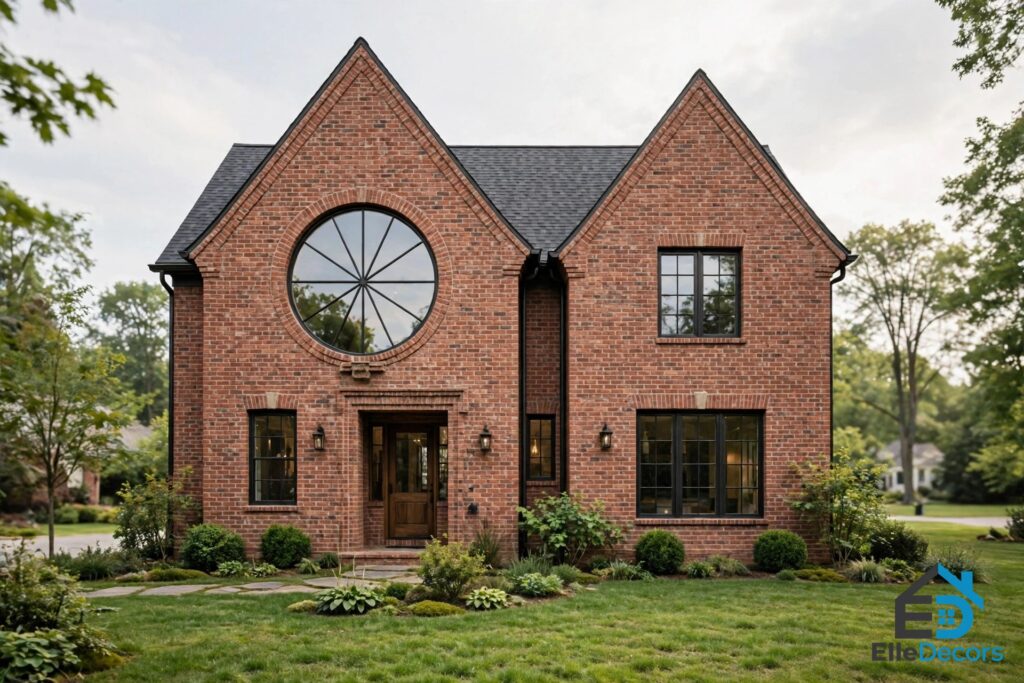
State of Kin designed a home where red brick gables cut an interesting roofline, peaking above a huge circular window at the front and a second at the back. The round window is the hero: a simple geometric move that gives the whole facade a focal point and floods the interior with light. The gables add height and rhythm, so the house reads as playful rather than severe.
A circular window works on almost any brick home: place it high on a gable, keep the frame slim, and pair it with rectangular windows below for contrast.
5. Frame Glass With Jet Black
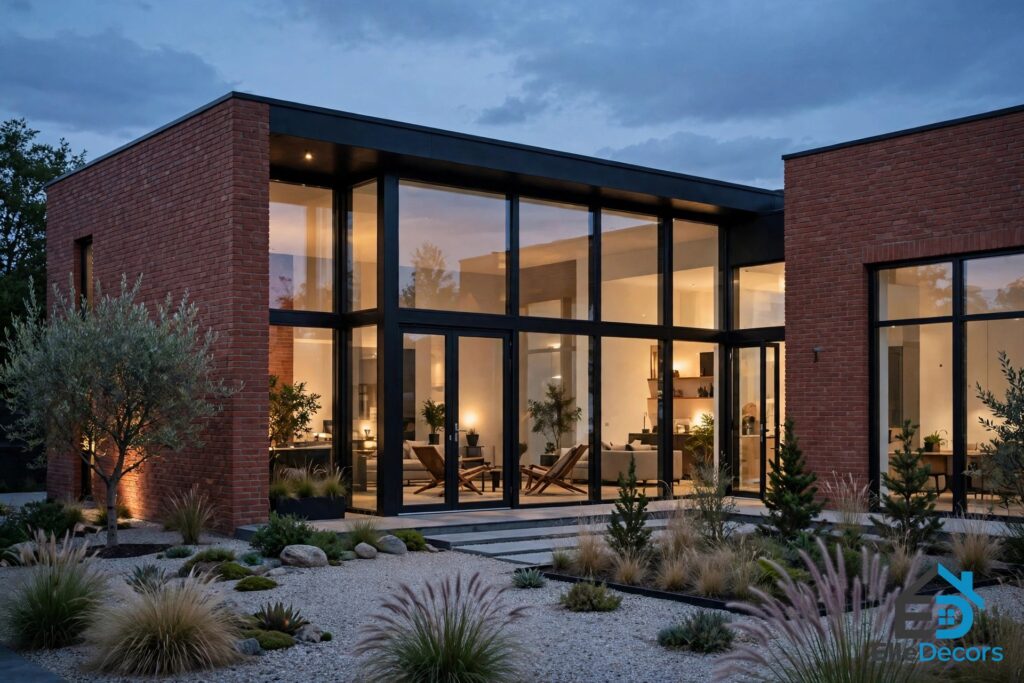
Naghshe Khak Architectural Group wove red brickwork into light-filtering walls around every corner of a modern exterior, with jet black facades framing imposing floor-to-ceiling windows. The black frames make the glass read as a single dark plane, and the warm brick beside it looks warmer by contrast. It is the most modern pairing in the roundup, and it shows how brick can anchor a glass-heavy design instead of fighting it.
Black window frames are the easiest way to borrow this look: keep the frames slim and the glass large, and let the brick run uninterrupted between openings. Our guide to outdoor house designs shows more ways to balance brick, glass and planting outside a home.
6. Use a Brick Wall as a Privacy Curtain
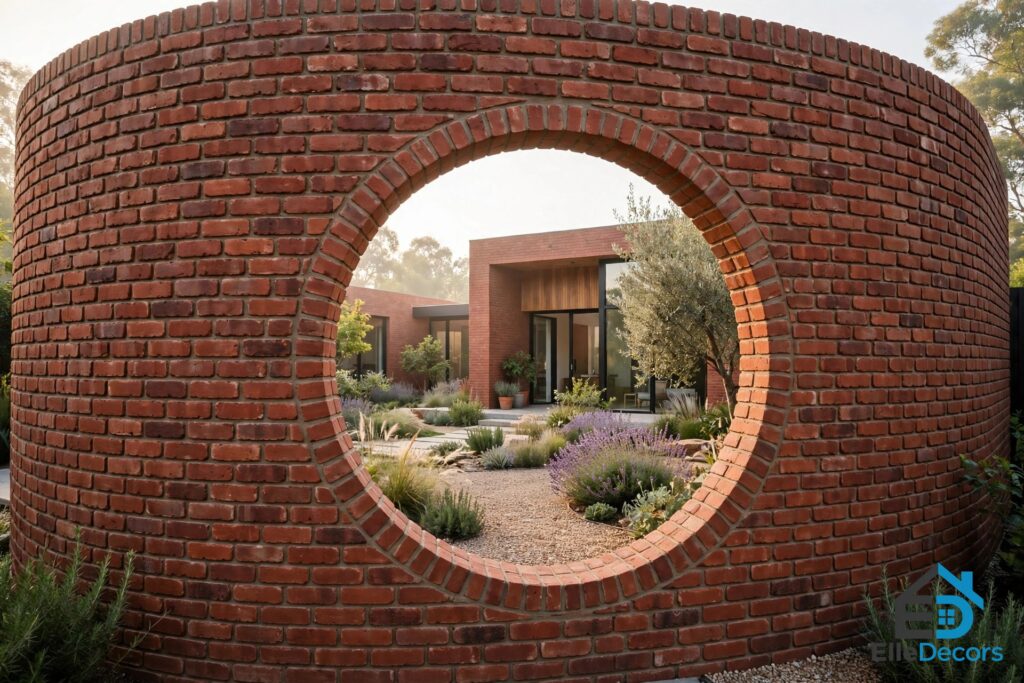
Design Work Group built a modern home where a brick wall acts as a curtain of privacy from the main street, its open construction manipulated to form a circular motif at one end. The wall screens the house without sealing it off: light and air pass through, neighbours see texture instead of a blank barrier, and the home behind it feels sheltered rather than hidden. It is a generous idea, giving the street a beautiful object instead of a fence.
A privacy curtain suits any home close to the road: build it lower than the house behind it, in matching brick, with planting in front to soften the base.
7. Curve the Balcony and the Entry
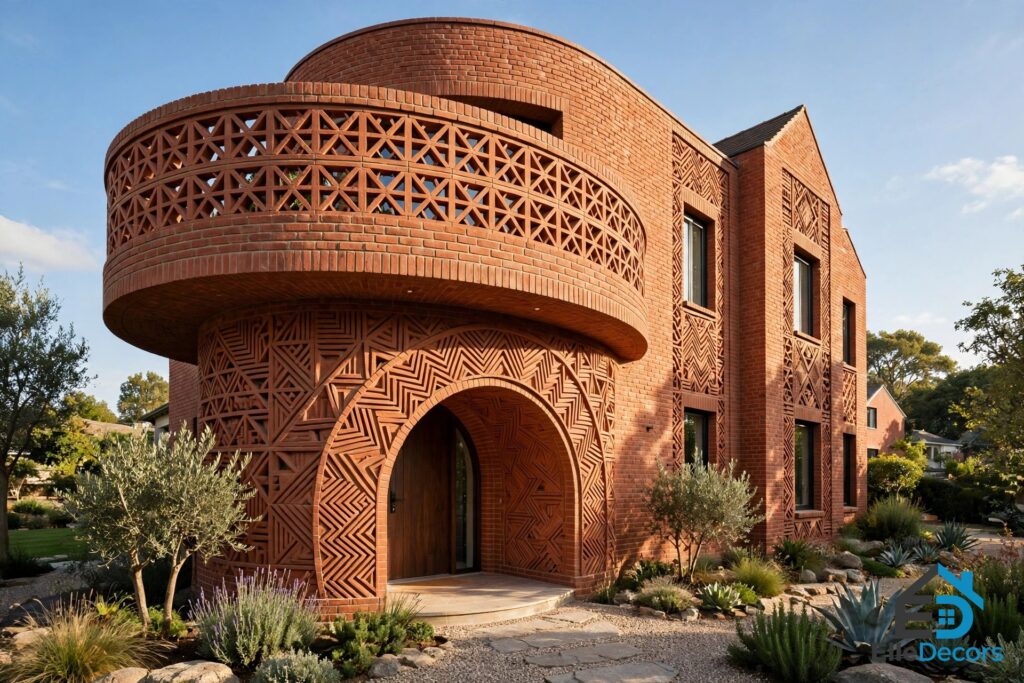
Sifti Design Studio crafted a curved balcony and entryway that forms a spectacular geometric spectacle, expertly made and irresistibly tactile. Curves in brick are hard to build and easy to love: they soften a rectangular house, catch the light along their edge, and make the entrance feel like an arrival rather than a doorway. The curve becomes the memory of the house, the part visitors describe afterwards.
Curves work best as a single feature, a balcony or an entry porch, with tight brickwork and planting that follows the same arc.
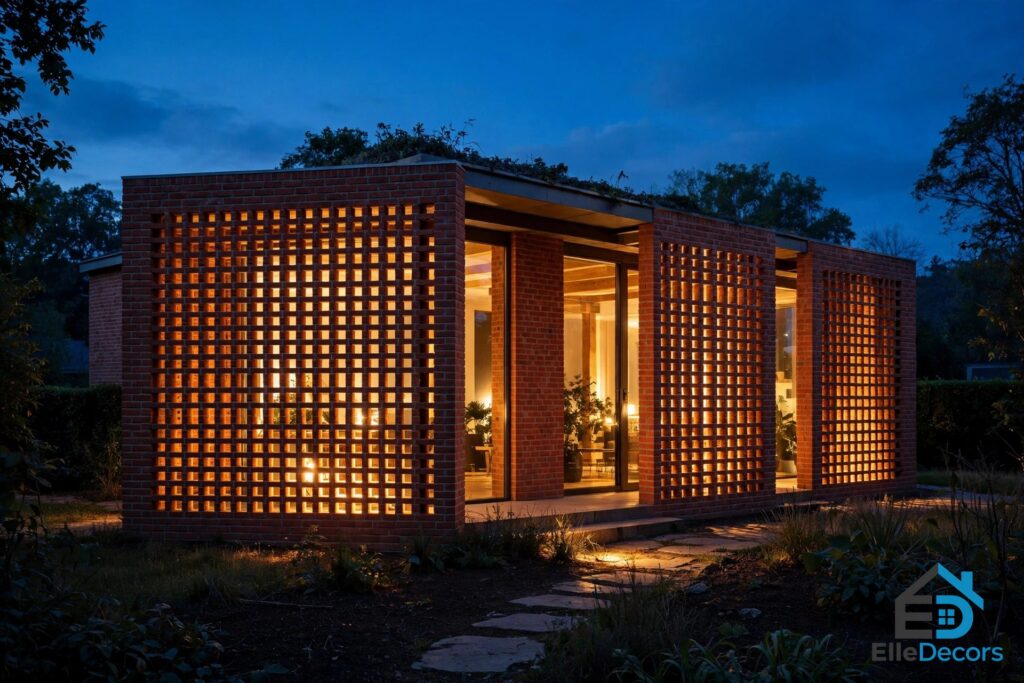
8. Let Open Brickwork Glow Like a Lantern
Srijit Srinivas Architects designed a home where open brickwork turns the house into a lantern of golden light at dusk. The gaps in the brick let the interior light spill out in a warm pattern, so the house glows from within instead of being lit from outside. By day the same openings ventilate the rooms. It is a move that is beautiful at night and useful by day.
Plan warm lighting near the screened walls and use the effect on an upper storey or a stairwell, where the glow can be seen from the street. Red brick houses that glow this way feel welcoming after dark, and the pattern of light becomes a signature the whole street recognises. It is also a reminder that a wall does not have to be solid to be a wall.
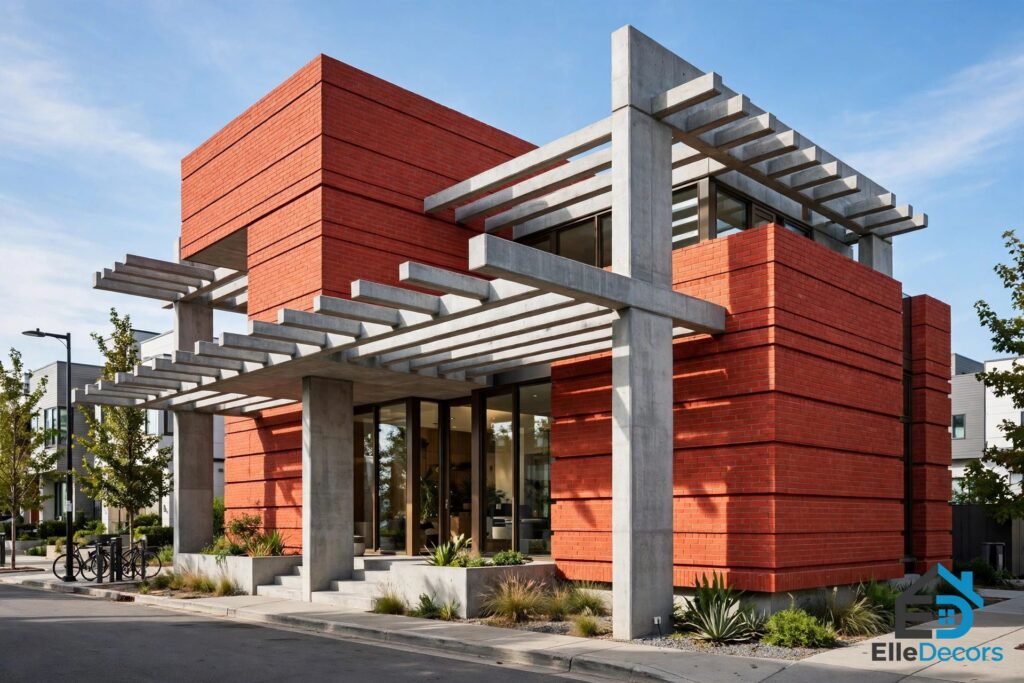
9. Pair Brick With Raw Concrete
K and N Associates extended concrete posts, columns, canopies and fins from bright red brickwork volumes in a city dwelling, and the contrasting materials create what the source calls an adventure for the eyes. Concrete cools the warmth of the brick, brick warms the grey of the concrete, and the fins and canopies add shadow lines that change through the day.
Concrete works as an accent, not a rival: use it for the entry canopy or a garden wall and let brick carry the larger surfaces. A modern Spanish house shows a different warm pairing, but the principle is the same.
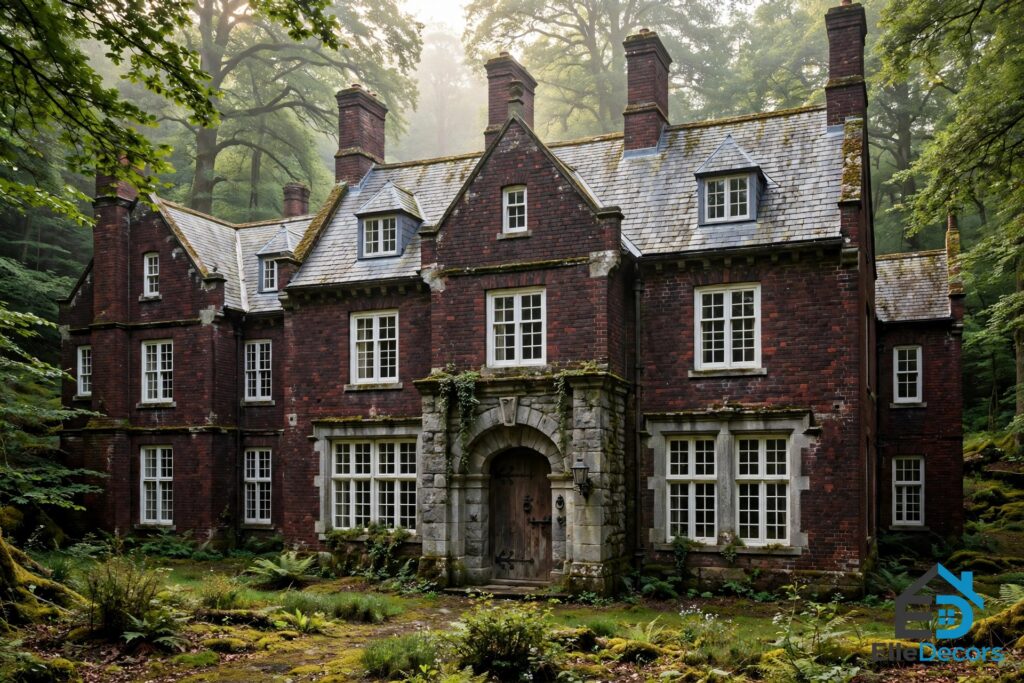
10. Build a Manor in the Forest
Castro Design Studio designed a traditional home where a stone entryway appears cleanly defined against a backdrop of dark red brick and grey slate, with a lush green forest behind it giving the house a fairytale look. The manor works because the materials are few and the setting does the rest: dark brick, pale stone, grey slate, green trees. Nothing shouts, and everything belongs. It is the quietest idea in this guide, and one of the most convincing.
A manor look depends on proportion more than size: a symmetrical front, a defined entry and a dark roof will make even a modest house feel stately, with pale stone against dark brick drawing the eye to the door.
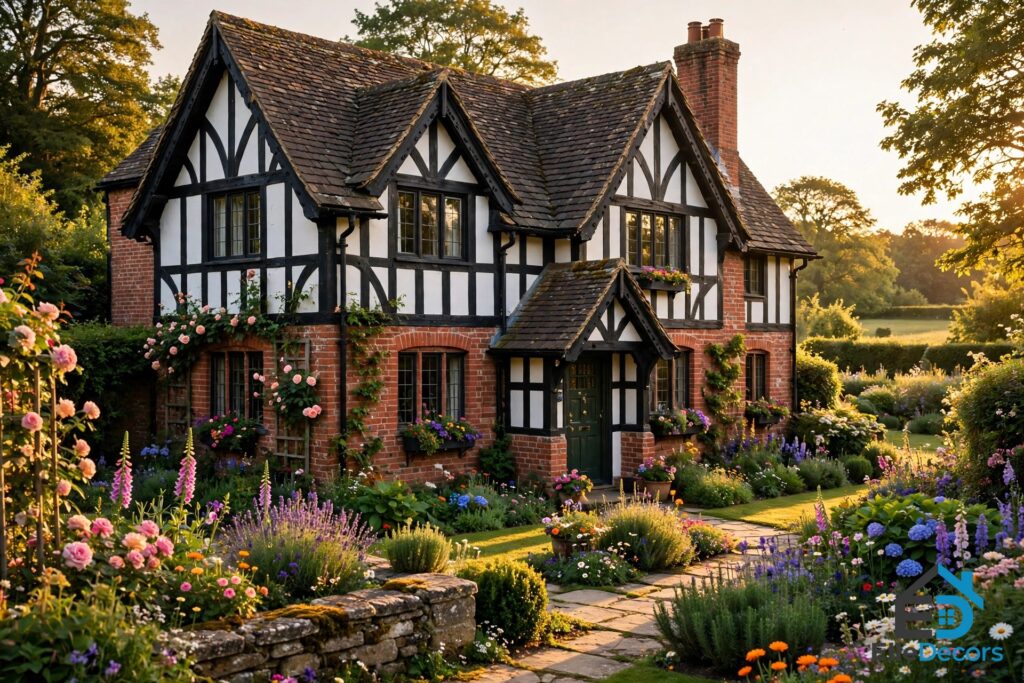
11. Tell a Tudor Story With Timber and Brick
Rochman Design-Build created a Tudor Revival home where black timber frames plus white wattle and daub crown the brickwork, and an English country garden weaves a magical border around it. The timber pattern is the decoration, laid over the brick like a drawing, and the steep gables and diamond-paned windows complete a storybook look. It is a style that asks for commitment: half-hearted Tudor details look like a costume, while a full commitment looks like a home with a history.
Commit to the details that matter: dark timber, pale infill and steep gables. Our guide to mid-century modern house designs takes the opposite approach, but the lesson is shared: a style works when every element agrees with it.
12. Prove That Small Can Be Detailed
Wardle Studio designed a small home packed with detail, a tiny house that stands out from the rest of the city crowd. Its lesson is that a small brick house does not need to be a plain brick box: extruded bricks, a letterbox window, a curved perimeter and a sapling growing through the deck, all details noted in the source roundup, give a compact home more character than many large ones. Smallness is not a limitation here; it is a reason to be precise.
On a small house, every detail counts twice, so choose a few and execute them well: one extruded brick course or a deep window reveal beats a dozen half-finished gestures.
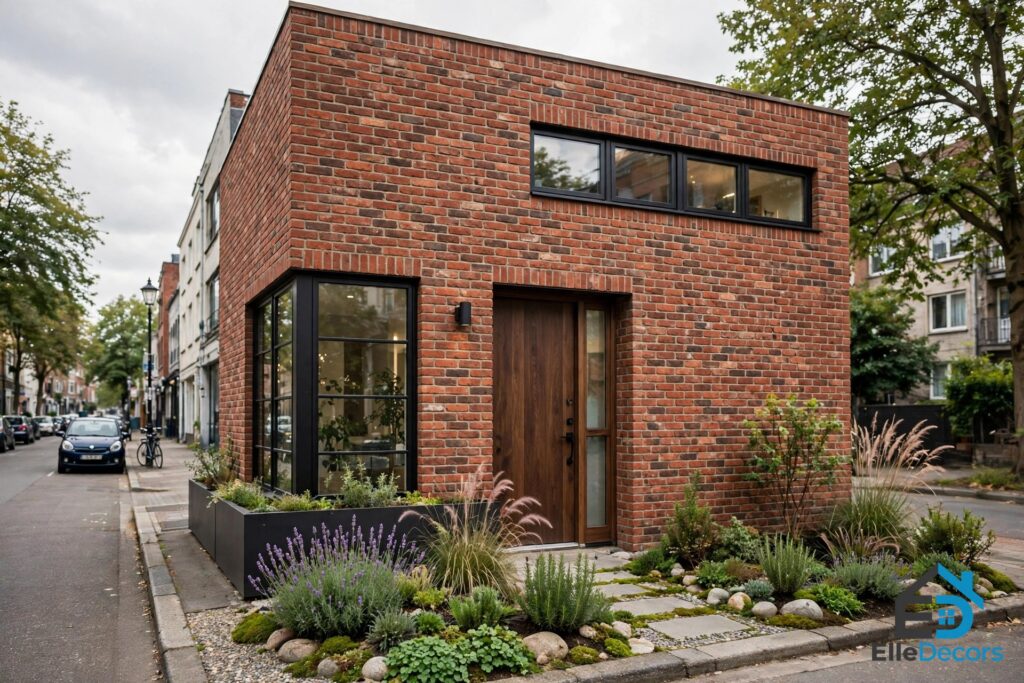
The 40-Home Roundup at a Glance
The source behind this guide is a roundup of forty red-brick homes, and the twelve ideas above are its strongest design moves: screens and folds show brick as flexible, lace and curves show it as ornament, and the manor, the Tudor and the small house show it as a storyteller.
Quick Comparison: All 12 Ideas
This table sums up the twelve ideas, with the design move each one makes and the home it suits best.
| Idea | Design move | Suits best |
|---|---|---|
| Diamond screens | Patterned brick lattice | Homes needing light and privacy |
| Accordion fold | Folded brick planes | Warm climates, tight urban plots |
| Lace brickwork | Decorative patterned brick | Entry walls and terraces |
| Round window | Circular focal window | Almost any brick home |
| Black-framed glass | Dark frames, large glass | Modern glass-heavy designs |
| Privacy curtain | Freestanding brick screen | Homes close to the road |
| Curved balcony | Curved brick entry | Homes wanting a memorable arrival |
| Lantern glow | Open brickwork at dusk | Upper storeys and stairwells |
| Brick and concrete | Raw concrete accents | Urban houses with a raw edge |
| Forest manor | Dark brick, stone, slate | Large gardens and green settings |
| Tudor timber | Black timber over brick | Storybook and heritage lovers |
| Small and detailed | Precise details at small scale | Compact city plots |
Watch: A Brick and Timber Home Above the Ocean
The Local Project tours Yowani, a brick and timber home above the ocean on the New South Wales coast, designed by Atelier Marks Gaal. The house answers its site with descending roof forms, stone walls and large openings that dissolve the boundary between inside and outside. It is a useful companion to this guide because it shows brick as part of a landscape, not just a facade: the interplay of brick, timber and natural stone gives the home a sense of permanence. Red brick houses are at their best when they belong to their place this completely, so watch how the arrival sequence compresses and then opens toward the water.
Video: “Architects Design a Brick and Timber Home Above the Ocean (House Tour)” (The Local Project) — a coastal brick and timber house shaped by its clifftop setting.
Frequently Asked Questions
Are red brick houses only for traditional styles?
No. The roundup shows brick in avant-garde towers, folded facades, glass-heavy modern homes and industrial pairings with concrete, as well as in manors and Tudor Revival houses. The material is neutral; the design move decides the style. A diamond screen or a black-framed glass wall makes brick read as modern, while timber framing and steep gables make the same brick read as traditional.
What pairs best with red brick?
Black-framed glass, raw concrete, pale stone, warm timber and grey slate all appear in the source roundup, and each pairing changes the mood. Black glass makes brick look modern, concrete makes it look urban, pale stone makes it look stately, and timber makes it look warm and traditional. Planting matters just as much: ornamental grasses, wispy shrubs and mature trees soften brick and keep it from feeling hard.
Can I add character to an existing brick house?
Yes, and the cheapest moves are often the strongest. A round window in a gable, a bold front door, black window frames, a freestanding brick garden wall or a single patterned course of extruded bricks can change a facade without rebuilding it. Planting is the other lever: climbing roses, a manicured hedge or a brick pathway will make the same wall feel considered.
Do red brick houses need a lot of maintenance?
Brick itself is a low-maintenance material: it does not need painting, and its colour deepens as it weathers rather than fading. What needs attention is the mortar, the pointing and the details around windows and doors, where water can find its way in. Keep gutters clear, check the pointing every few years, and clean the brick gently rather than with harsh pressure washing, which can damage the surface.
How do I choose between modern and traditional brick design?
Let the setting decide. A tight urban plot, a coastal site or a glass-heavy brief suits the modern moves: folded facades, black frames, concrete pairings and screens. A green setting, a heritage street or a garden you love suits the traditional moves: manors, Tudor timber, round windows and stone entries. Red brick houses work in both directions because the material itself is timeless; the design move is what dates a house.
Conclusion
Red brick is not a style, it is a material with a hundred styles inside it, and the twelve ideas here are twelve different ways to let it speak. A diamond screen, a folded facade, a lace wall, a round window or a glowing lantern wall can each carry a whole house. Red brick houses reward the designer who treats brick as a living material, shaped by light, planting and pairing rather than hidden behind decoration.