Kitchen Decor Avant Garde: Bold, Art-Led Ideas for a Kitchen That Still Cooks
Audio Summary
Most kitchens follow the same safe recipe. White or gray cabinets. Plain stone tops. Steel tools that all match. There is nothing wrong with that, but it is not the only way to cook.
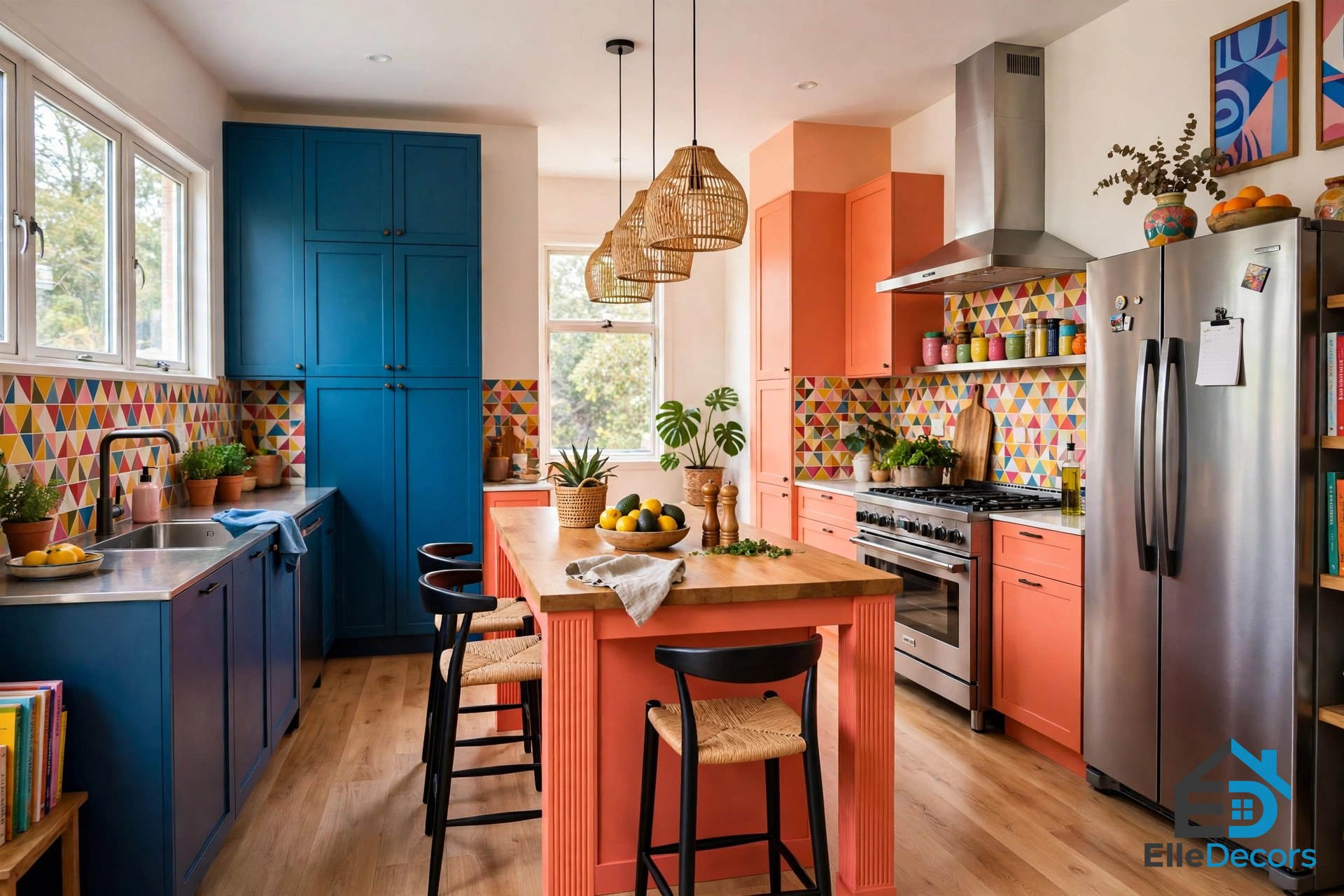
Kitchen decor avant garde takes its cues from art, not from showrooms. It uses brave color, strange and lovely shapes, and materials you would not expect in a room built for hard work. The goal is a kitchen that feels like a piece of art you can also cook in.
The term itself points the way. Avant-garde is French for “advance guard,” the soldiers who scout ahead of the army, and the Getty Museum uses it for art that is experimental, new, and ahead of its time. That scouting spirit is the whole style in one phrase.
This guide borrows four clear lessons from famous art movements and turns each one into kitchen choices you can actually make. It also shows where to stop, so the art never gets in the way of dinner.
What Kitchen Decor Avant Garde Really Means
Strip away the drama and the style rests on three simple ideas.
First, color is brave. It can be one loud block of red or blue, or a planned clash of pastel and neon. What it is not is beige on beige, chosen because it offends no one.
Second, form comes first. Cabinets, islands, and lights are shaped like sculpture. Curves, angles, and odd sizes are all welcome, as long as each piece still does its job well.
Third, materials surprise you. Speckled laminate, mirror, concrete, colored glass, and raw steel all show up where plain wood and tile usually sit.
None of this means chaos. The best rooms pick one idea and push it hard, then keep the rest calm. Used with that kind of care, kitchen decor avant garde feels brave and clear at the same time, like a good painting that knows when to stop.
Lesson One, From Bauhaus: Let Function Lead
The Bauhaus was a school of design in Germany that ran from 1919 to 1933. It was founded in Weimar by the architect Walter Gropius, and it taught art and craft as one thing, as Encyclopaedia Britannica explains. Its big idea was simple: a thing should work well, be made from honest materials, and drop any fuss that does not help.
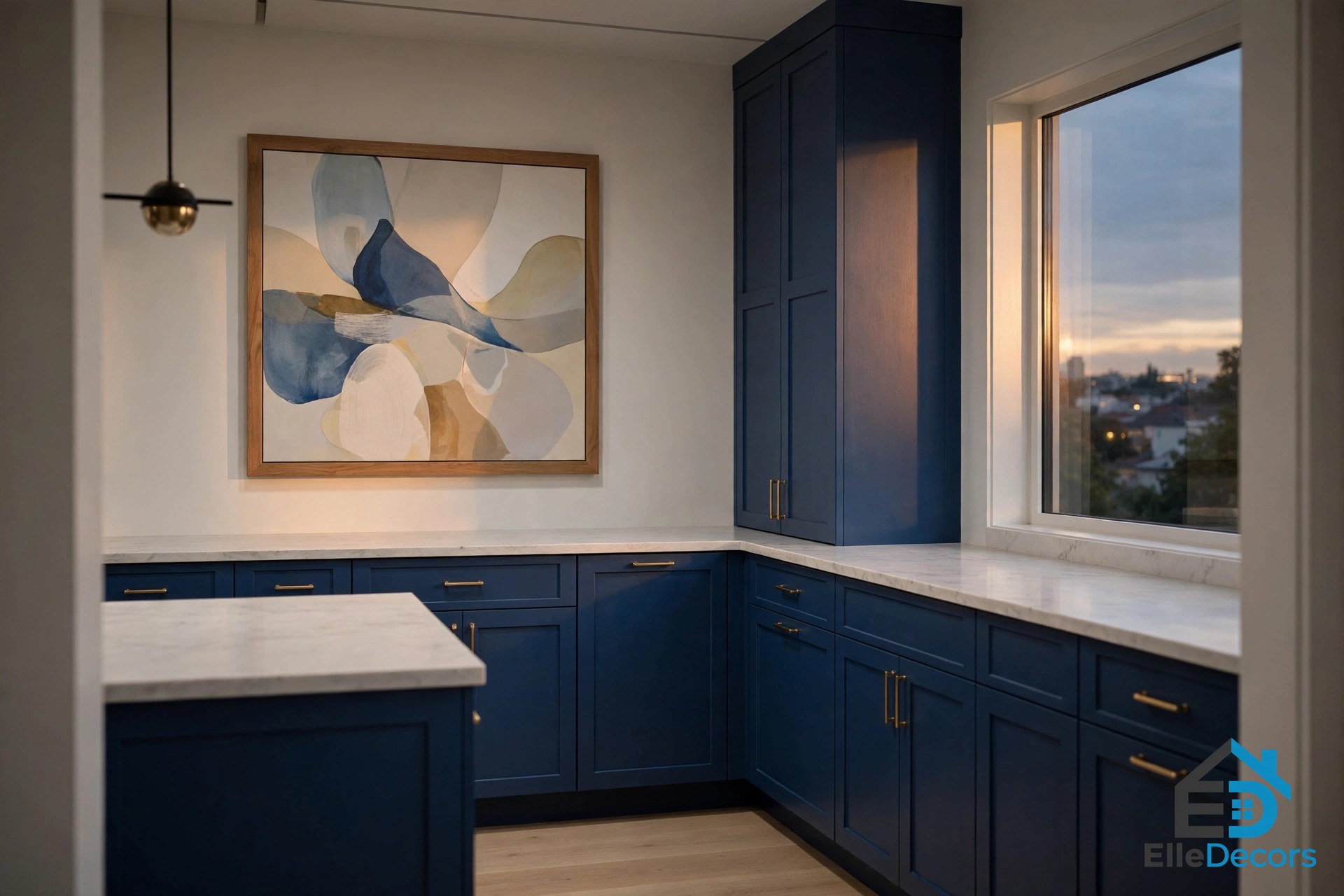
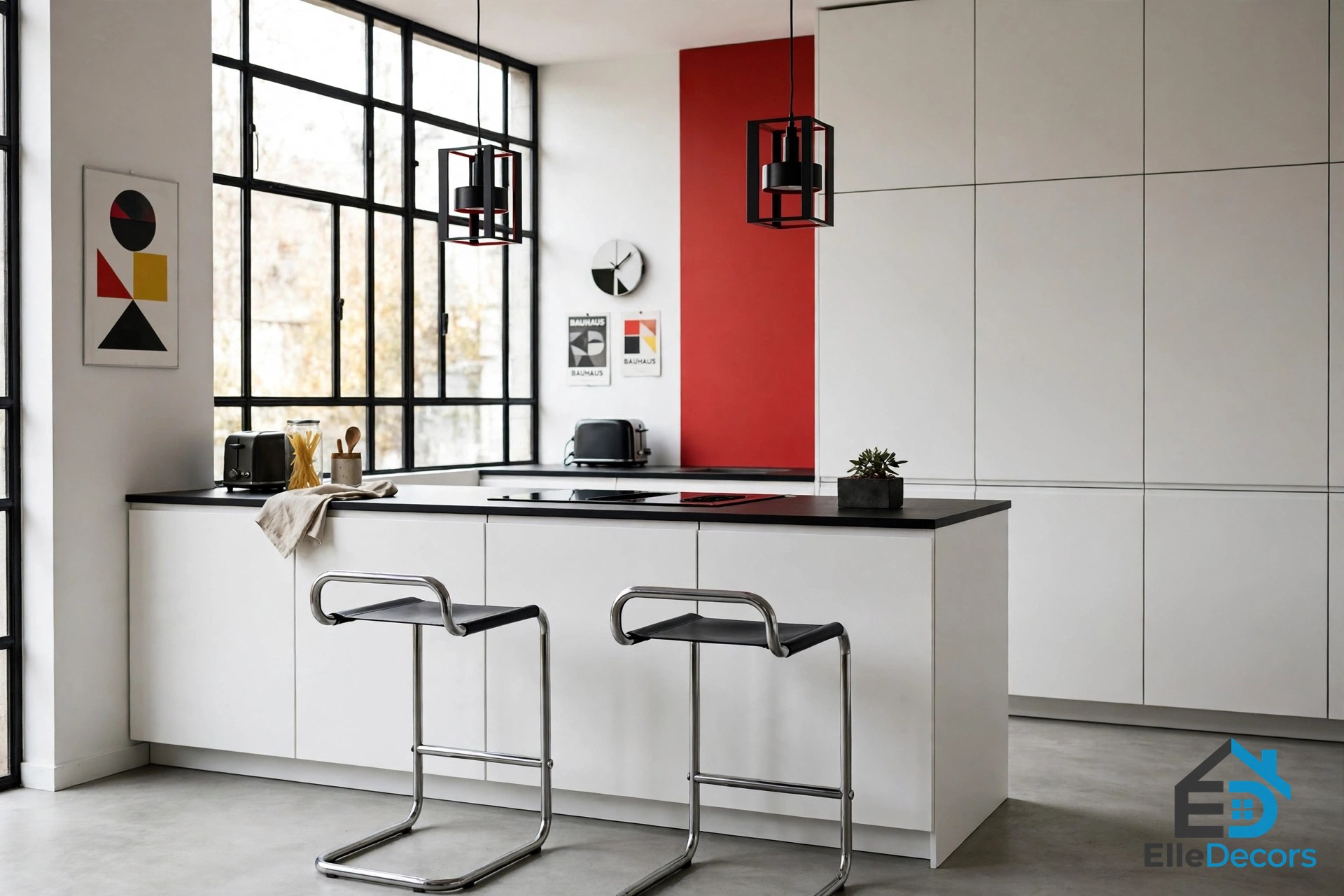
That idea is gold in a kitchen. Bauhaus thinking gives you flat, handleless cabinet fronts, clear work tops, and steel, glass, and concrete used plainly, with nothing to hide. Color shows up in single bold notes, like one red stool or one blue panel, set against calm white, black, and gray.
It also guards the layout. Keep the sink, stove, and fridge close together, in the loose triangle cooks have leaned on for decades. When function leads like this, kitchen decor avant garde stays honest: the art grows out of the work, not on top of it.
Lesson Two, From De Stijl: Block Your Color
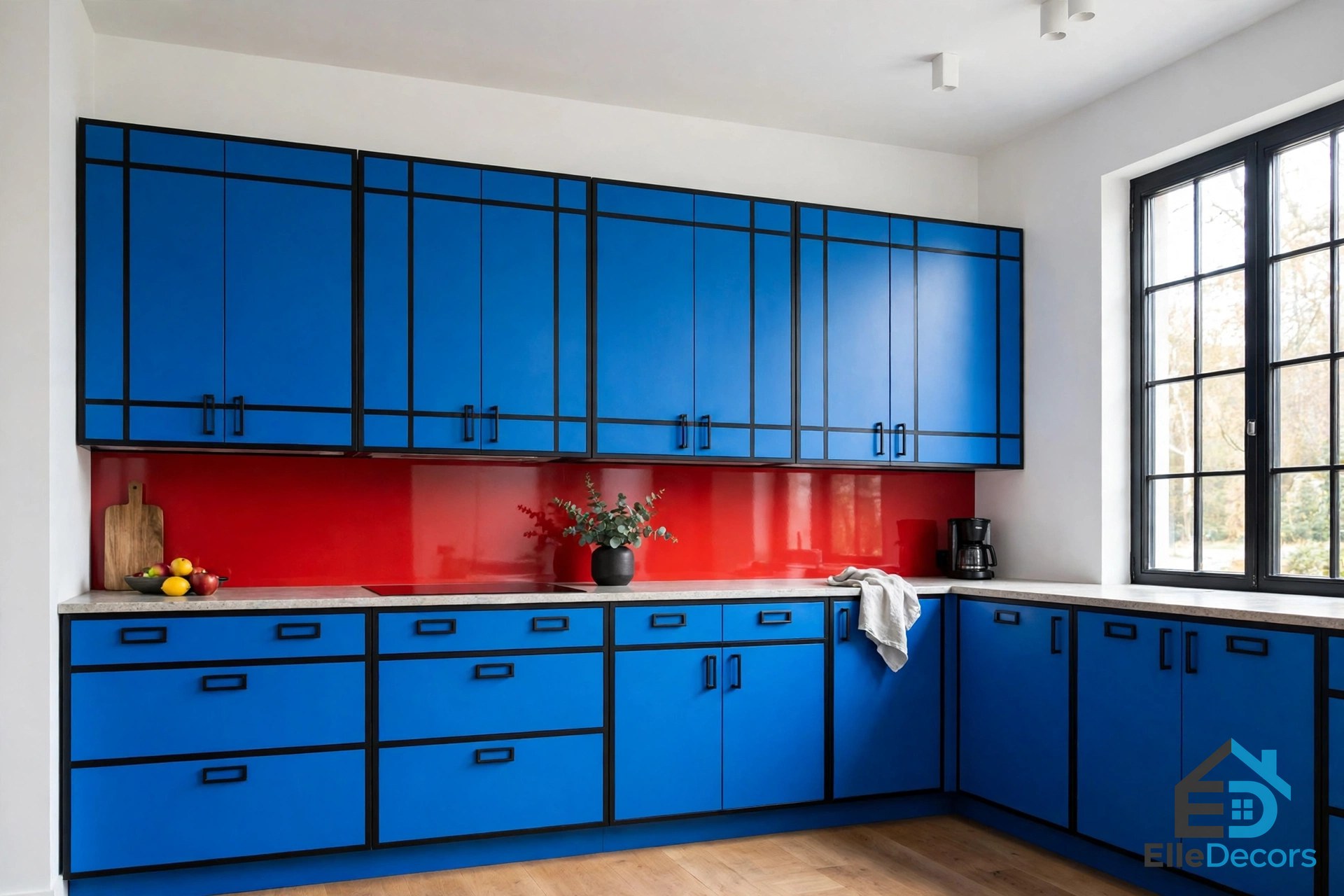
Dutch artist Piet Mondrian built his famous paintings from straight black lines, white space, and flat blocks of red, blue, and yellow. His movement, De Stijl, cut art down to those few parts and no more, and the result still looks fresh a century later.
A kitchen can borrow that grid. Paint one run of cabinets a clear primary color and keep the rest white or pale. Or block the room by zone instead: a blue island, a red splashback panel, a yellow stool, each one in its own clean shape with breathing room around it. The black lines in the paintings become black frames, black handles, or a dark floor edge that holds the blocks apart.
The trick is the limit. Mondrian used three colors, not thirteen. Pick your blocks, repeat each one two or three times so the room feels planned rather than random, and let the white space do the quiet work between them.
Lesson Three, From Memphis: Pattern Is Not the Enemy
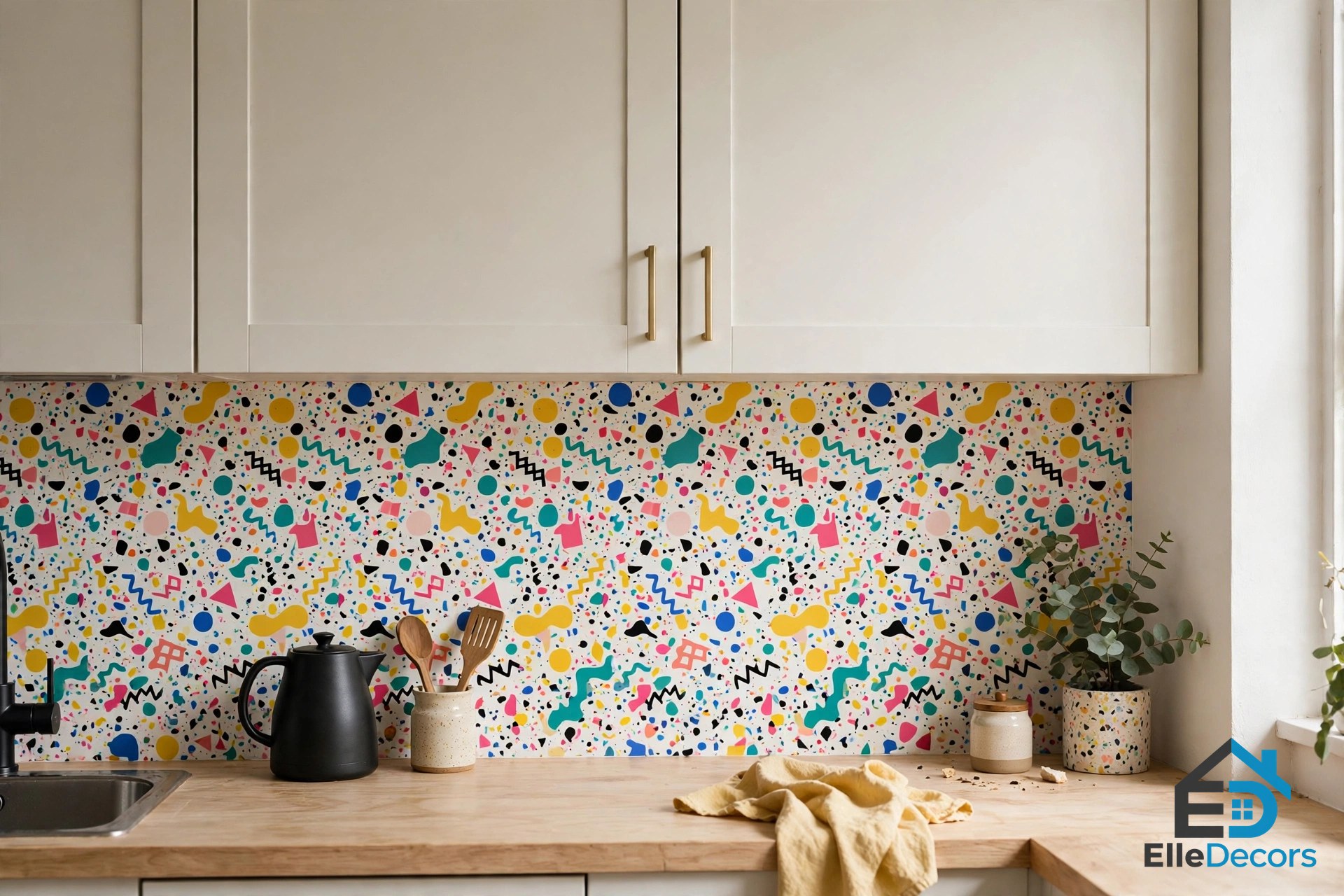
If Bauhaus is calm, Memphis is the loud friend who walks in laughing. The Memphis group was set up in Milan in 1981 by designer Ettore Sottsass, and it rejected plain good taste on purpose. The National Gallery of Victoria notes that the group loved geometric forms and a sense of fun, and made wide use of plastic laminate with printed patterns.
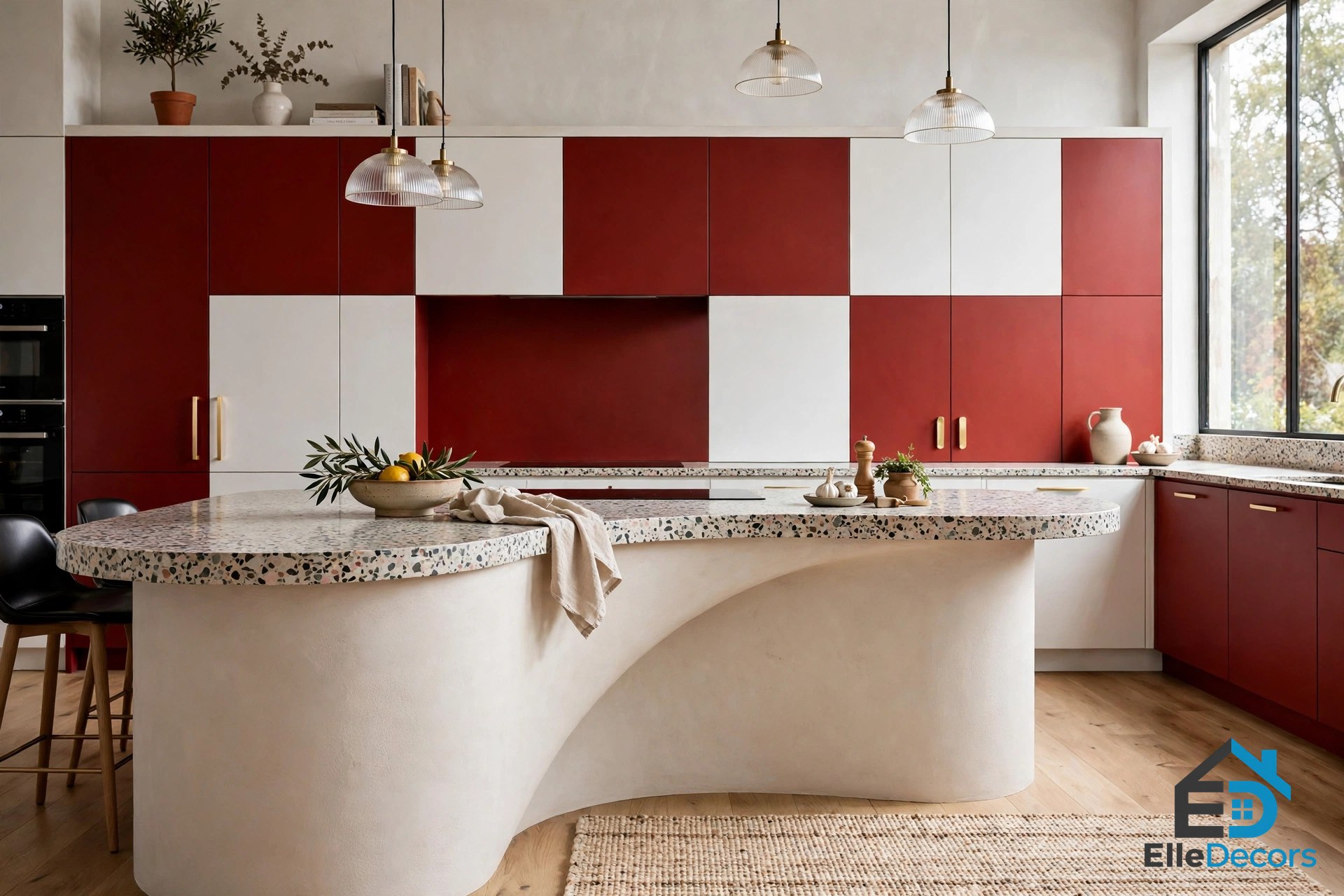
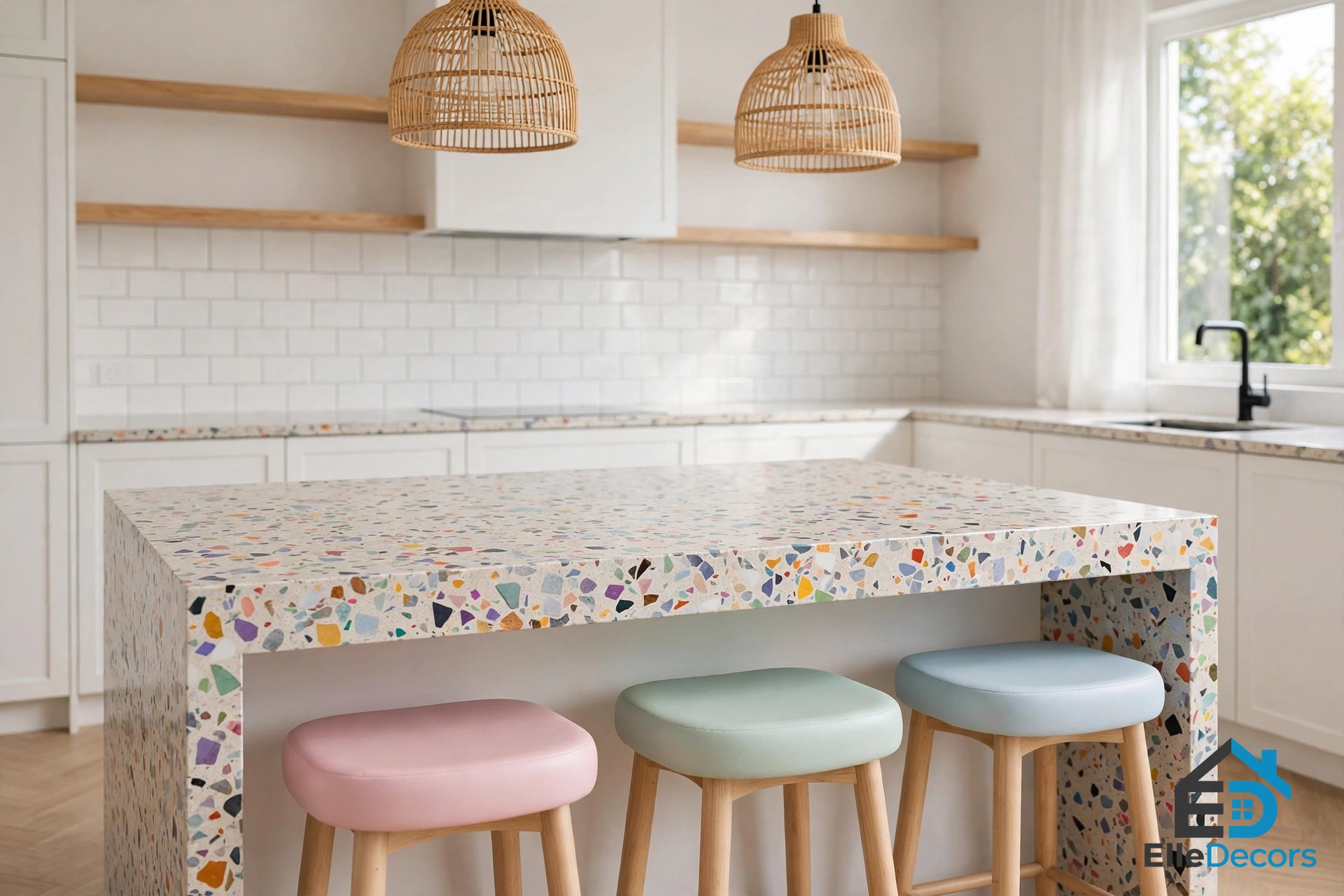
That speckled, playful laminate is the easiest Memphis gift to a kitchen. Use it on a splashback, a counter edge, or the front of an island, and the plain cabinets around it will look sharp by contrast. Terrazzo and terrazzo-look tops borrow the same trick, with chips of color scattered through the stone like confetti that learned some manners.
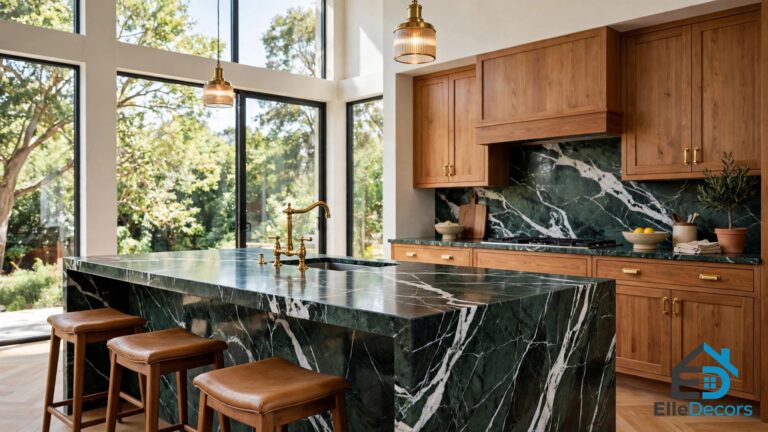
For many people, this is the face of kitchen decor avant garde: color and pattern with a grin. If you want the same bold surface in a richer, moodier key, our guide to rich colored marble kitchen trends shows how deep green, red, and violet stone can carry a whole kitchen on its own.
Lesson Four, From Surrealism: One Weird Piece Is Enough
Surrealist art put dream images into real rooms. The most famous proof is a sofa. In 1937 and 1938, artist Salvador Dalí and his patron Edward James had sofas made in the shape of Mae West’s lips, in red felted wool. The V&A keeps one today, and it remains one of the best known pieces of modern furniture in the world.
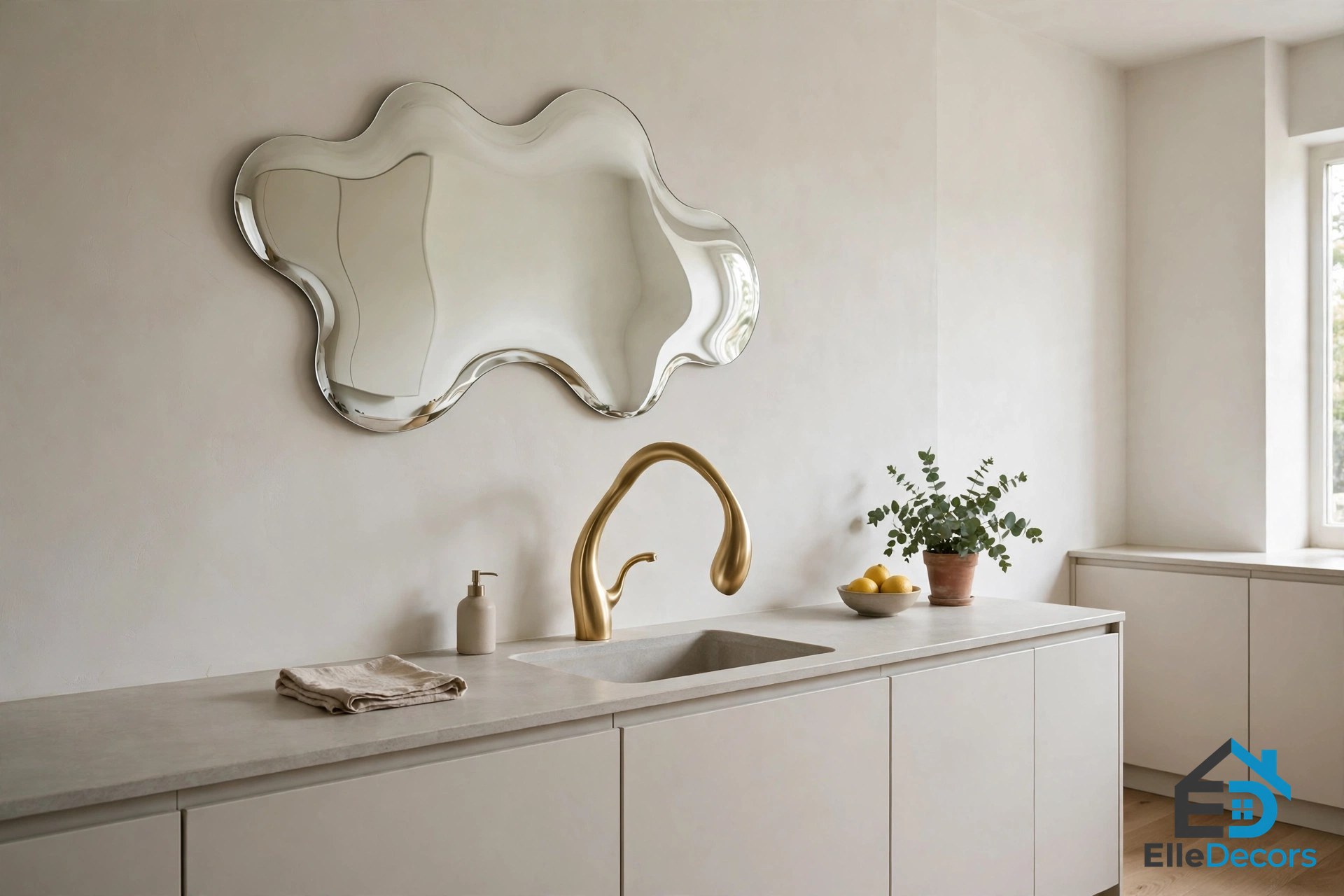
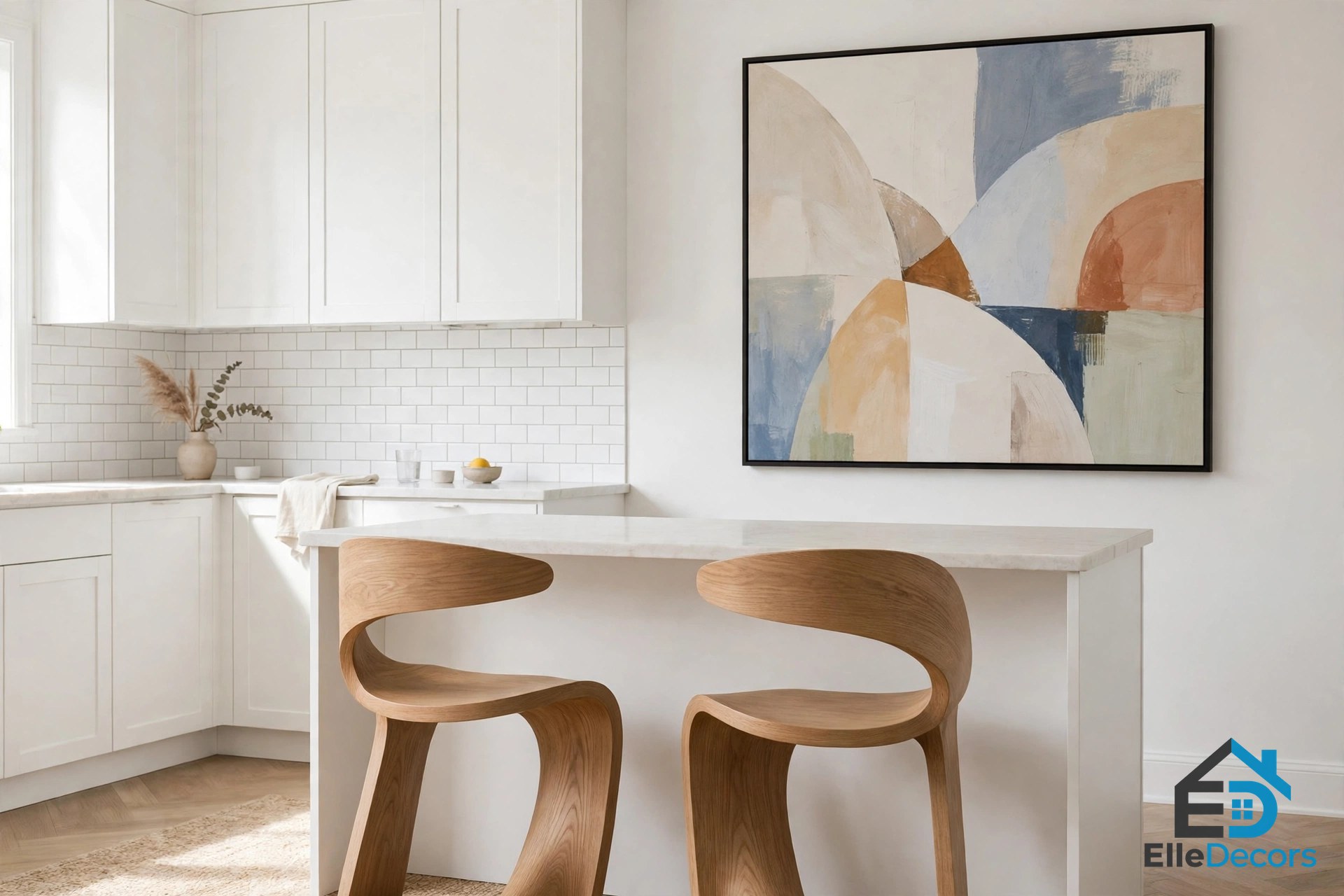
Your kitchen does not need a lips sofa. It needs the same move at kitchen scale: one piece that makes people smile when they notice it. That could be a faucet with a swan neck taken a little too far, a mirror cut in a wavy blob, or stools in a shape no stool strictly needs to be.
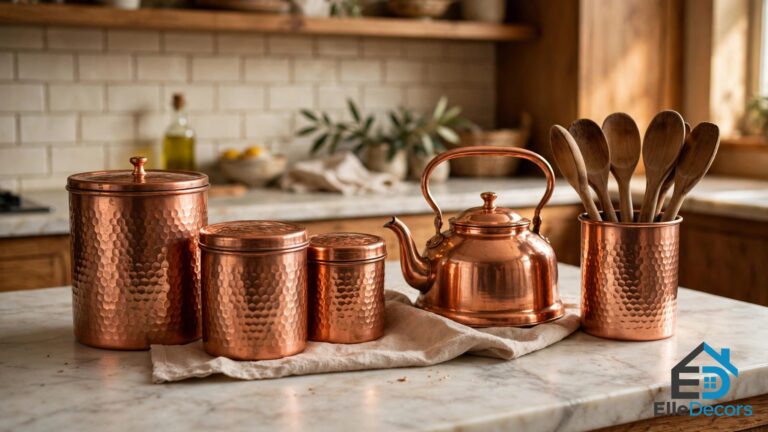
One is the key word. A single strange piece reads as art. Five strange pieces read as a joke shop. Warm metals make an easy start here, and our favorite copper kitchen accessories show how small, rich pieces can carry that odd charm without taking over the room.
Sculptural Form: Islands, Cabinets, and Light
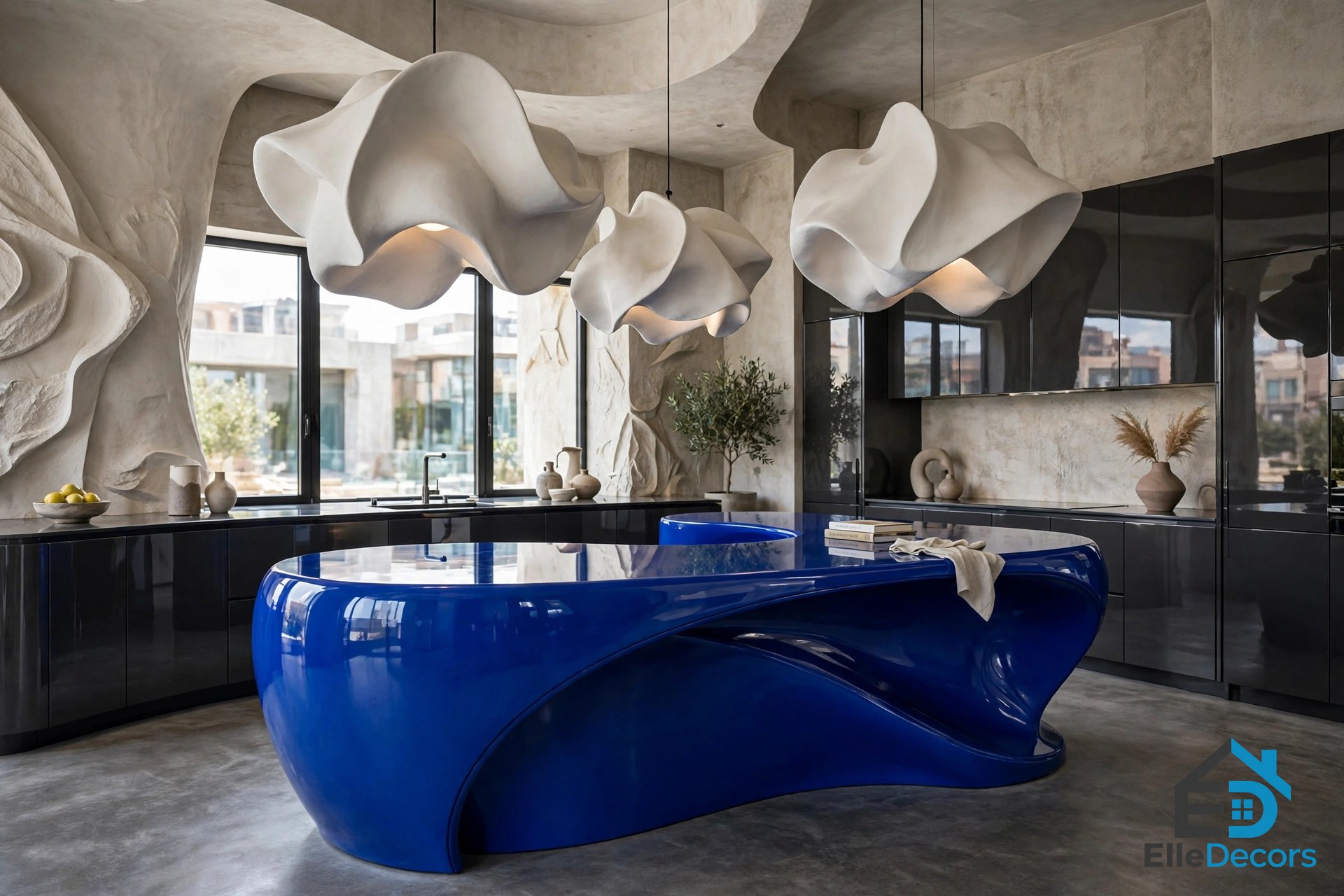
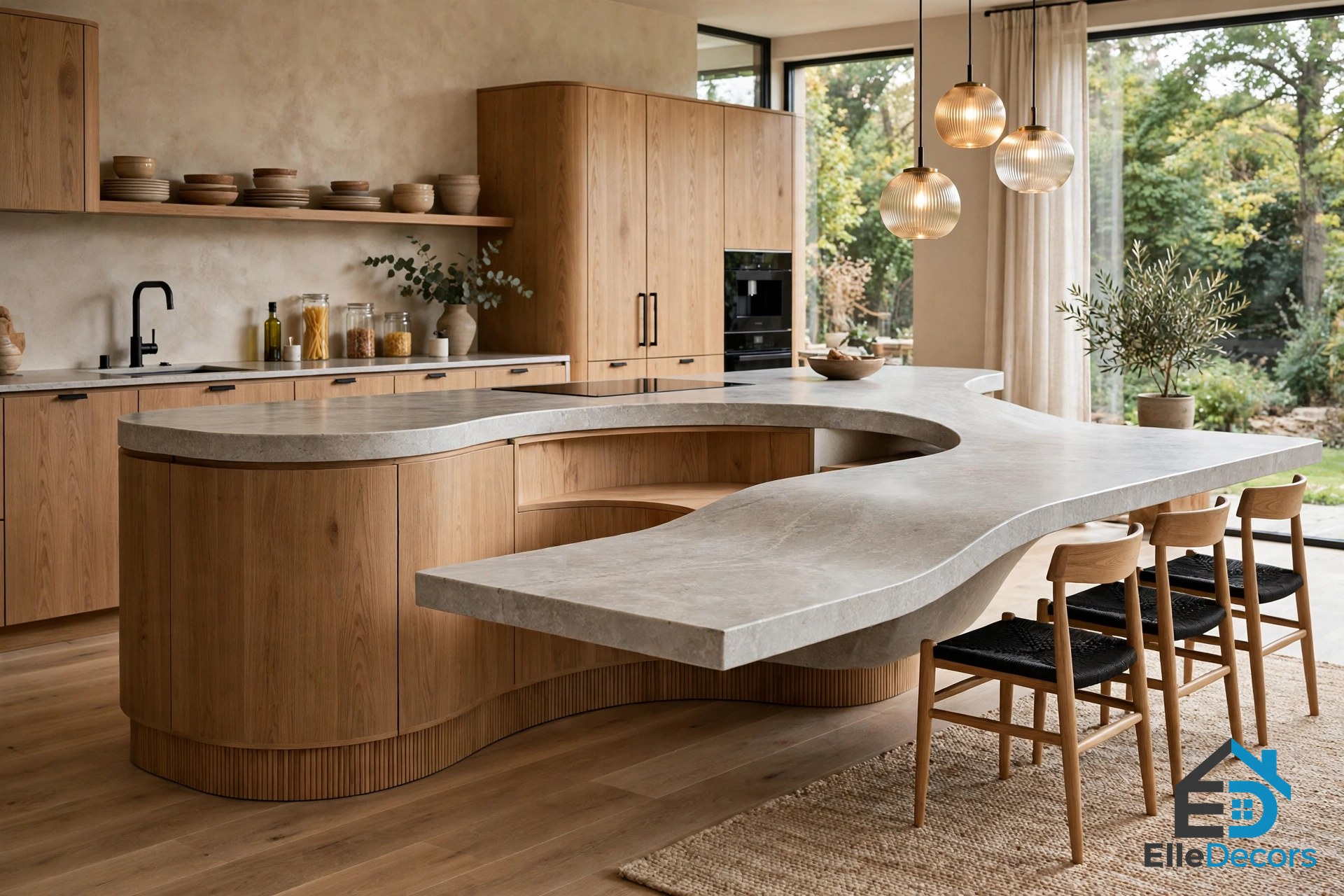
In most kitchens the island is a box with a top on it. In kitchen decor avant garde, the island is the sculpture. It can curve like a wave, step down in levels, or sit at a slight angle to the room. One end might drop to table height for seats, while the thick top stretches out with nothing under it at all.
Cabinets join in when their sizes stop matching. Tall units in mixed depths, one rounded corner, or a single door in a clashing color can break up the flat wall of boxes most kitchens settle for. Keep the shapes simple, though. A curve or an angle is a statement. Ten of them at once is just noise.
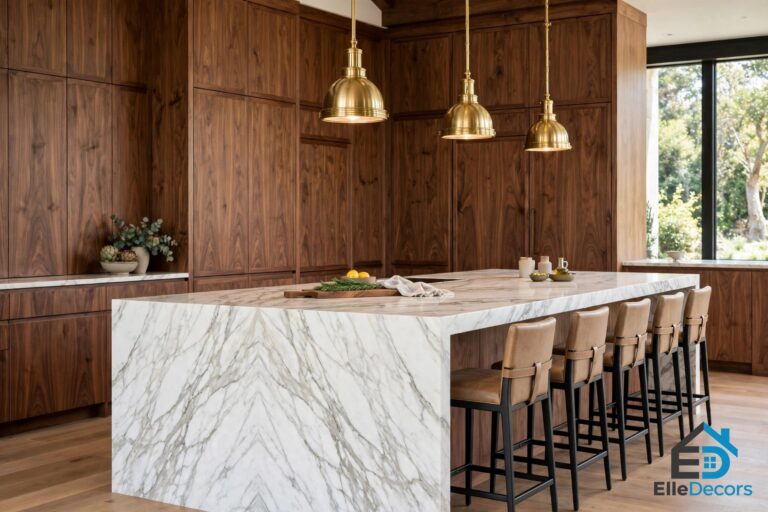
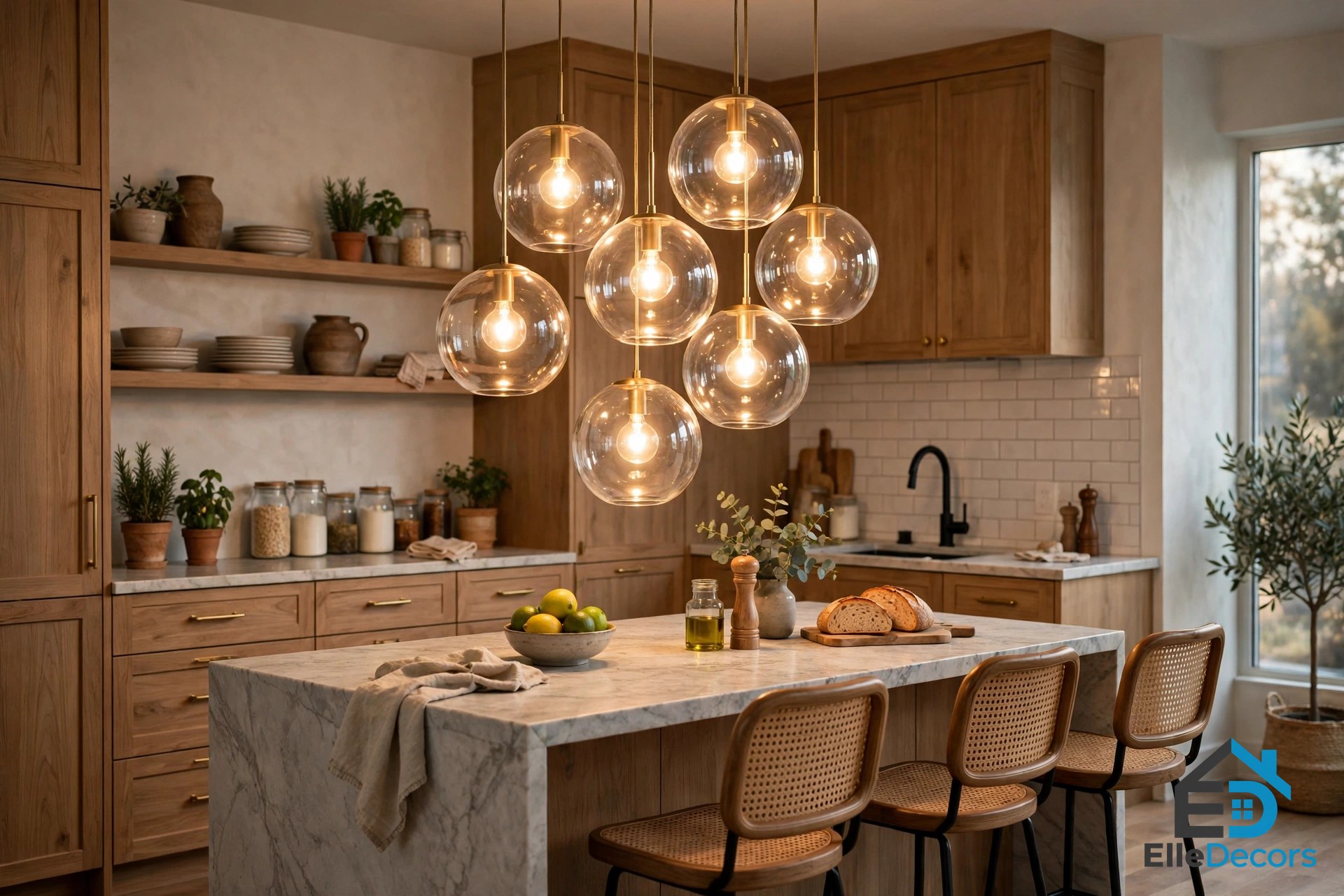
Light is the cheapest sculpture of all. A cluster of globe pendants hung at mixed heights, one huge dome over the island, or a bent tube of light over the counter gives the room art that also helps you see the onions. Hang the drama over the island or the table, where no one needs to reach past it with a hot pan.
Materials That Surprise, and Still Survive
Kitchens are hard on materials. Heat, water, knives, and grease do not care how bold your taste is. So pick surprise with a tough skin.
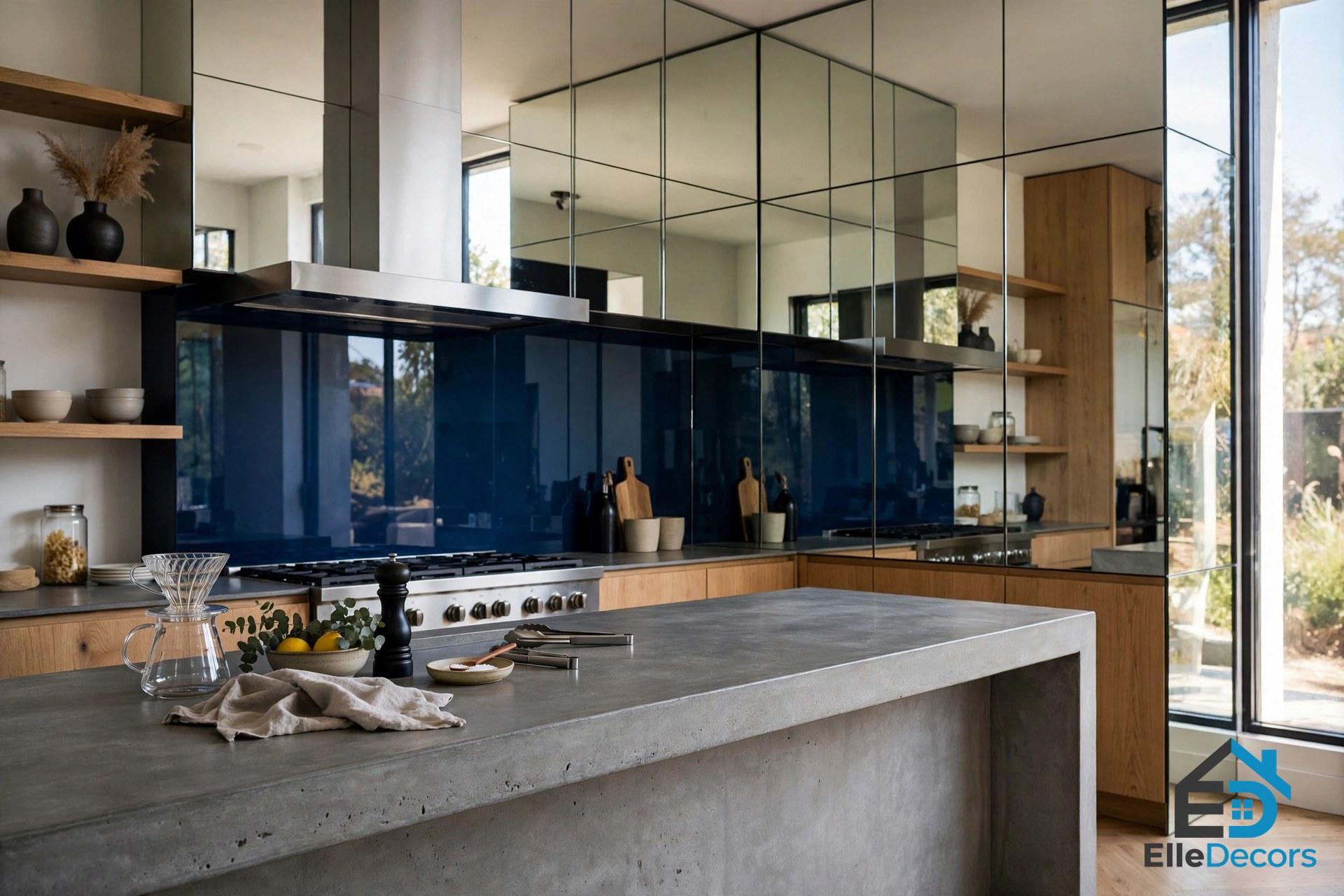
Sealed concrete takes heat well and suits counters and floors. Mirrored panels bounce light around and can make a small room feel twice as wide, but they show every splash, so keep them away from the stove wall. Colored glass makes a smooth, easy-wipe splashback with real depth of color. Brushed or blackened steel hides marks better than polished steel and pairs well with stone. A gold kitchen scheme is the warm end of this idea, treating brass-toned metal as the main event rather than a trim.
The order matters too. Put the wildest material where hands and pans do the least harm: the island front, the splashback, a light shade. Keep the main work top in something you can scrub, seal, and trust on the worst cooking night of the year.
The short video below shows this mix at work in a real kitchen built on bold color and texture, where the wild surfaces still have to earn their keep.
Keep the Kitchen Working: The Guardrails
Art that blocks the fridge door is just a problem with good PR. A few plain rules keep everything in line.
Keep the work triangle loose but real: sink, stove, and fridge within a few steps of each other, with no island corner forcing a long walk around. The idea was drawn up by researchers at the University of Illinois in the 1940s to cut wasted steps, and it still earns its keep today.
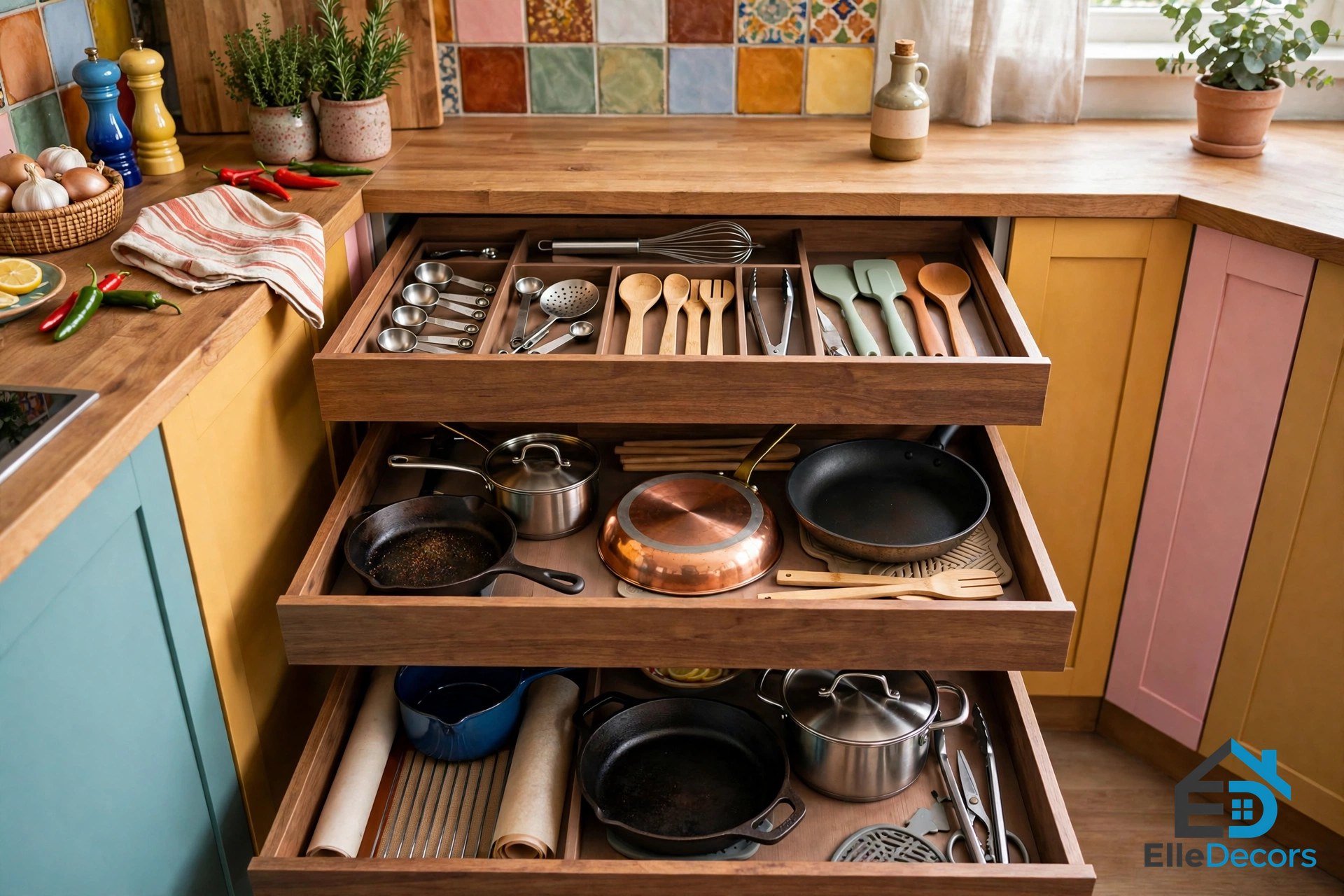
Give the stove and the fridge clear landing space on at least one side, so hot pans and full arms always have a safe place to land. Choose deep drawers over low cupboards where you can, so you see everything at once and nothing hides at the back. Put the boldest finishes where they are easy to repaint or swap, like doors, panels, and stools, and keep the fixed bones calmer if you plan to sell one day.
Follow those rules and kitchen decor avant garde never costs you a smooth dinner. It just makes dinner look better.
Start Small: A One-Weekend Refresh
You do not need a full rebuild to test this style. Try it in layers, cheapest first.
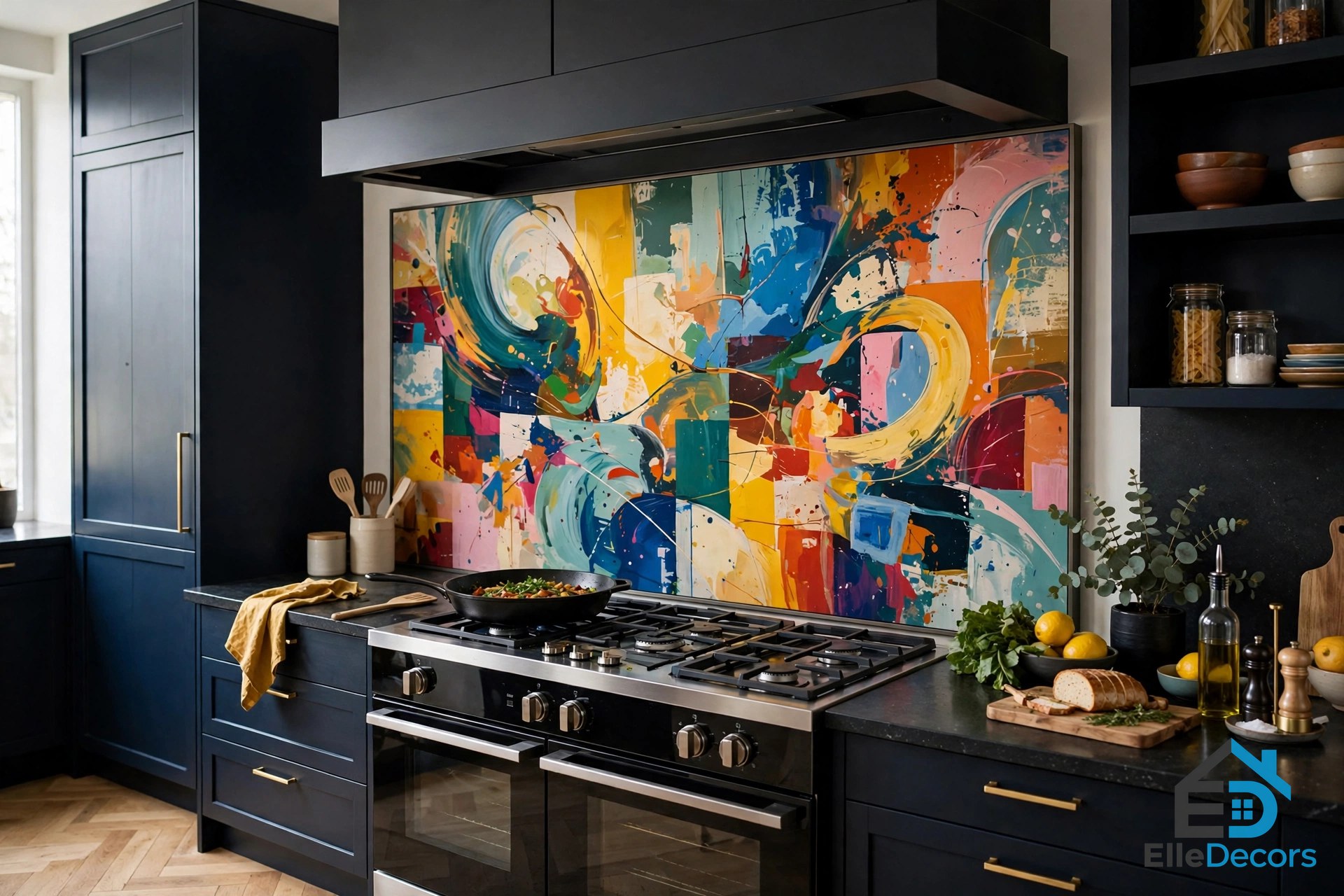
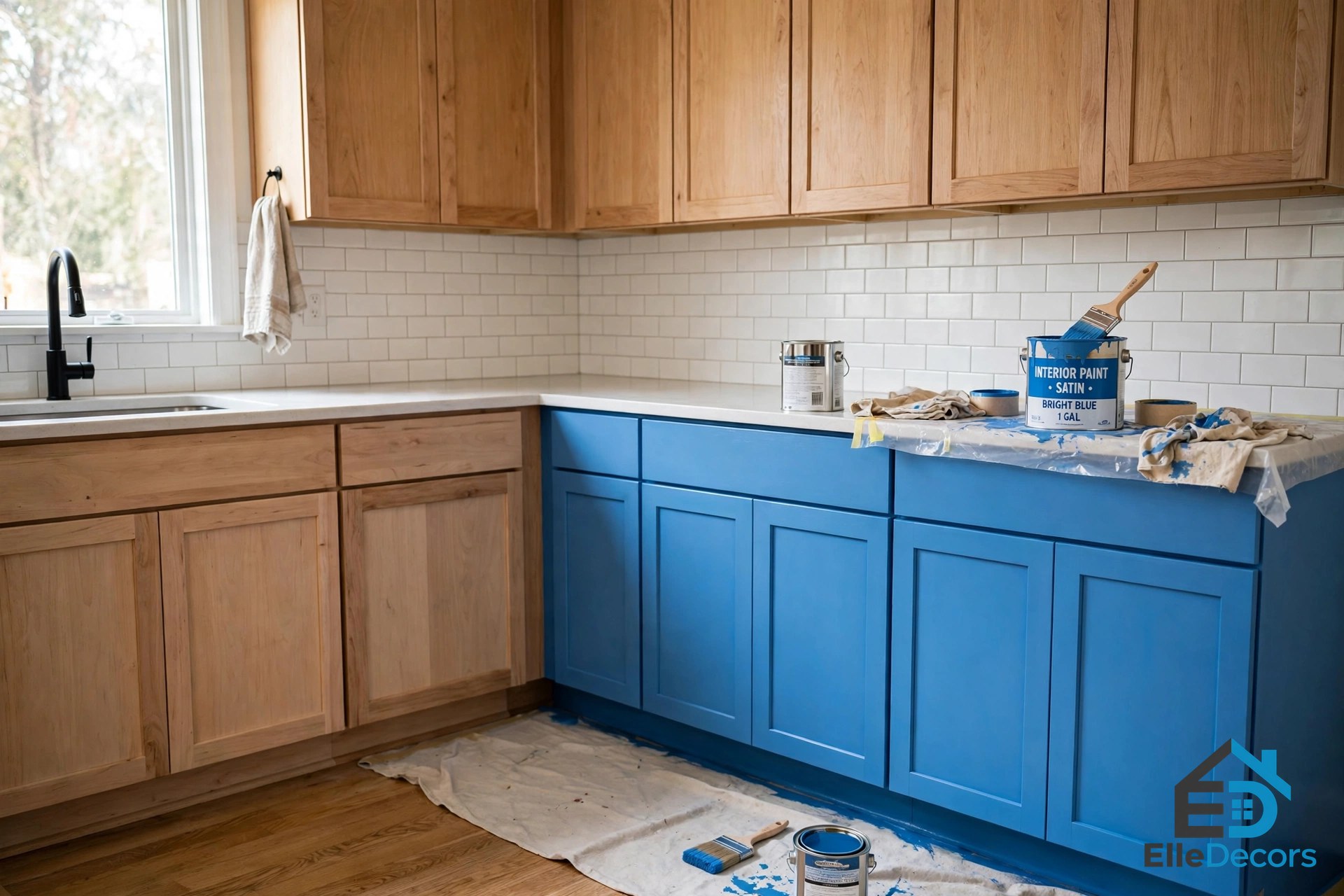
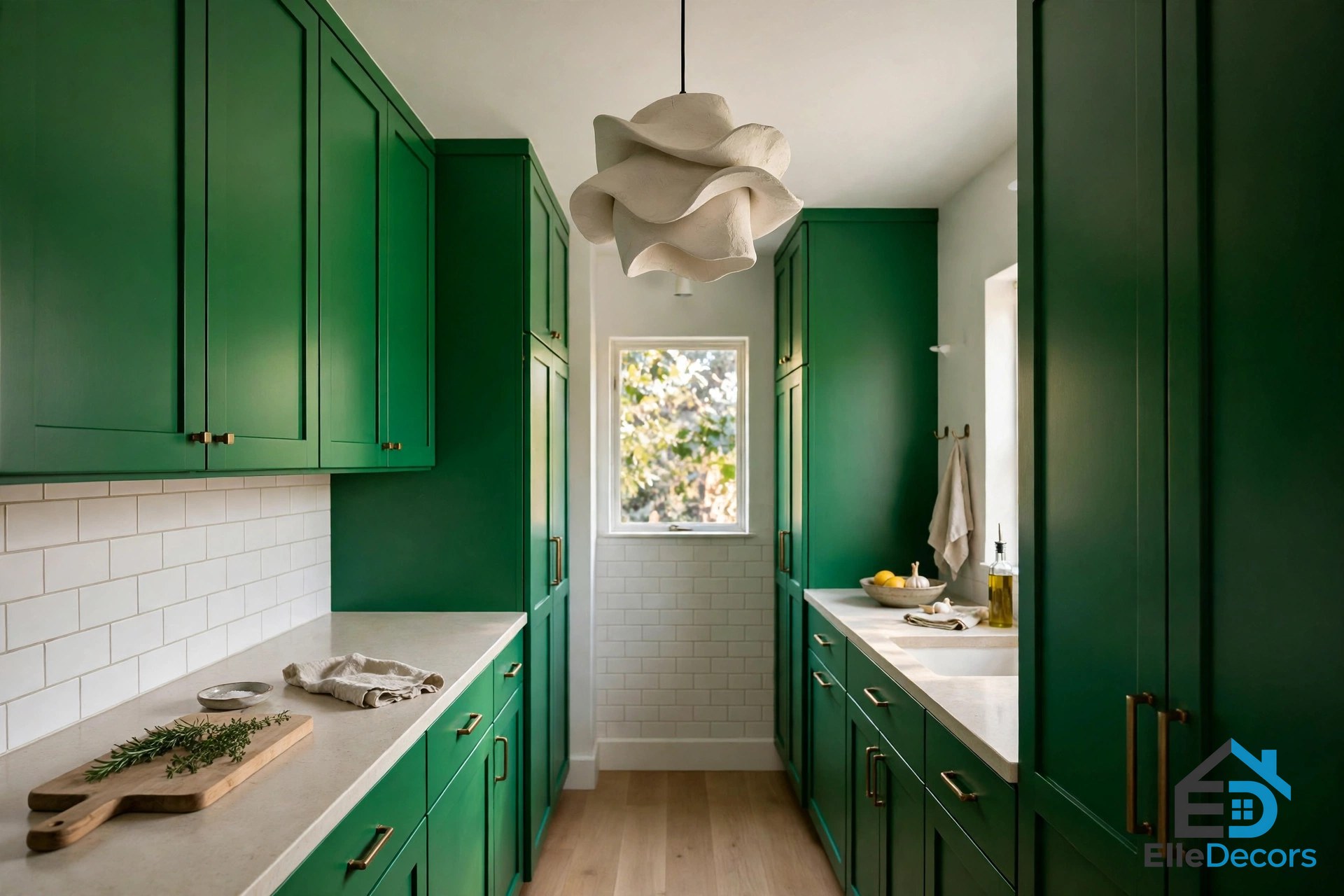
Paint is the fastest layer. One run of lower cabinets in a clear blue or green changes the whole room in a weekend, and paint can change again when you tire of it. Next, swap the stools or the handles for one sculptural shape. Then add one piece of art, big and abstract, on the clearest wall you have.
Live with each layer for a few weeks before you add the next. Avant-garde rooms grow by clear choices, not by shopping trips. Stop as soon as the room makes you grin when you walk in carrying the groceries.
Frequently Asked Questions
What is an avant-garde kitchen, in plain words?
It is a kitchen designed the way an artist would design it. Brave color, shapes that look carved or cast, and materials you do not expect, all held together by one clear idea. Under the drama it is still a normal kitchen, with the same sink, stove, and storage doing the same daily work.
Can kitchen decor avant garde work in a small kitchen?
Yes, and small rooms often wear it well. One bold cabinet color, one sculptural light, and one piece of art give a small kitchen more character than a large one with ten ideas fighting. Keep the walls and floor calm, choose glossy or mirrored finishes that bounce light, and let each bold piece have empty space around it.
Is a bold kitchen like this hard to clean?
No harder than a plain one, if you place the finishes with care. Glass, gloss laminate, and sealed stone wipe down fast. Mirror and polished metal show splashes, so keep them off the stove wall. Save the rough, matte, and patterned surfaces for spots that see hands more than grease.
Will an avant-garde kitchen date fast or hurt resale?
The fixed bones decide that, not the style. Bold color in paint, doors, art, and stools can be swapped in a weekend, so a buyer is never stuck with your bravest choice. If you plan to sell soon, keep counters, floors, and layouts classic, and let the wild layer sit on top where it can leave with you.
What is the cheapest way to start?
Paint, one sculptural piece, and one big print, in that order. Paint gives the largest change for the least money. A single odd stool, lamp, or faucet gives the room its art moment. A large abstract print finishes the thought. Test those three before you touch a single cabinet door with a saw.
Conclusion: Brave, but Still a Kitchen
A kitchen has two jobs. It has to feed people well, and it has to be a room you love standing in. Kitchen decor avant garde simply refuses to split those jobs apart. Borrow one lesson at a time — Bauhaus calm, De Stijl blocks, Memphis pattern, or one surreal smile — keep the triangle tight and the counters clear, and let the room grow braver as you do. The art is the seasoning here. Dinner is still the meal.