Bathroom White Grey Ideas: 25 Calm, Timeless Designs for Small and Large Bathrooms
Bathroom white grey is the combination people choose when they want a bathroom that feels calm, clean, and timeless without feeling cold or clinical. White fixtures and pale walls bounce the light around, grey tiles and floors ground the room, and a little wood or warm metal keeps the scheme from going flat. It works in a tiny shower room and a large family bathroom. This guide walks through 25 ideas drawn from real grey-and-white bathrooms, so you can find the balance that fits your room.
What Is a Bathroom White Grey Scheme?
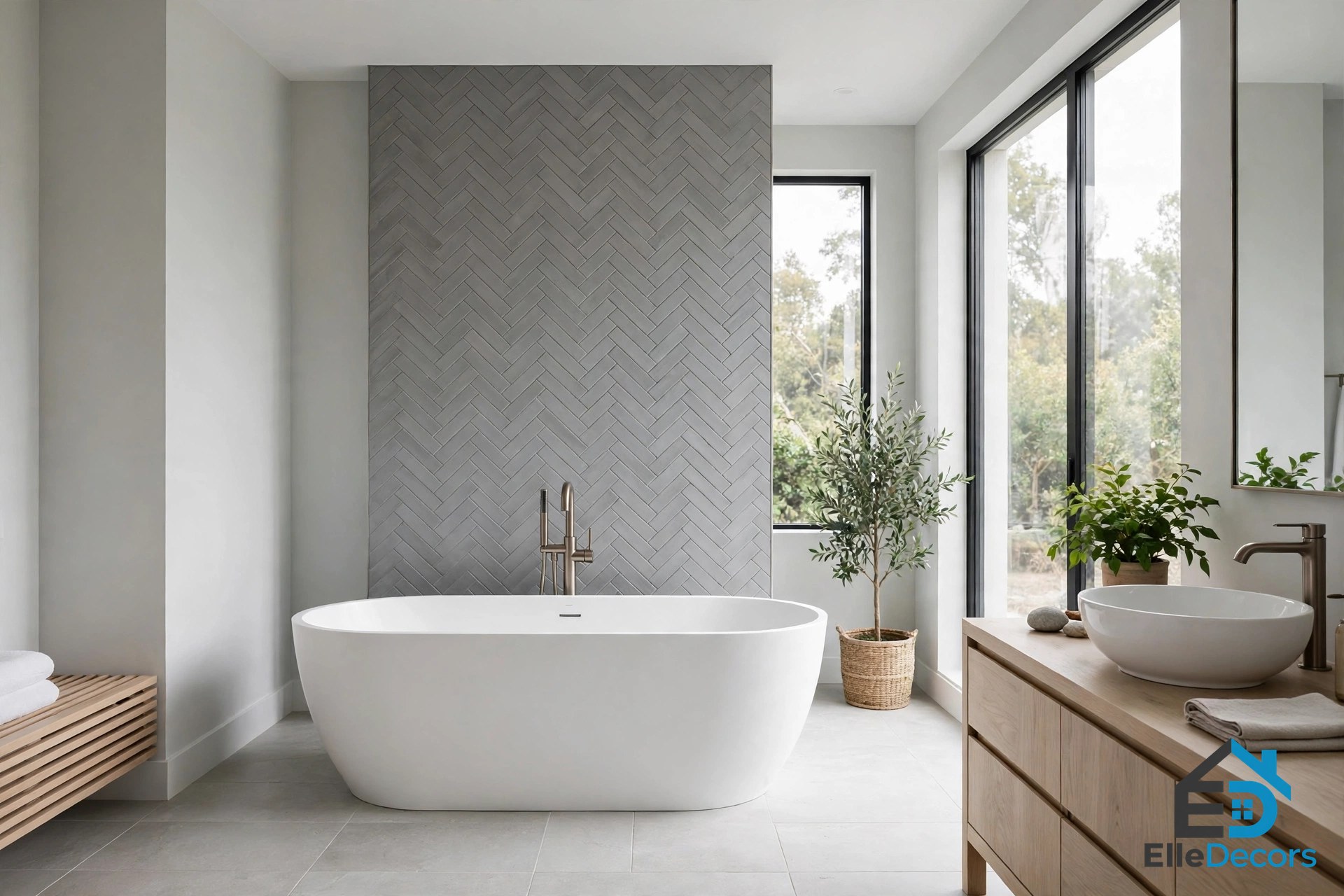
A bathroom white grey scheme is a two-tone design built on white sanitaryware and pale walls, balanced with grey in the tiles, the floor, the vanity, or a feature wall. The white does the brightening and the grey does the grounding: grey tiles hide splashes better than white, while white walls and fixtures keep the room feeling open. The scheme suits modern and traditional bathrooms, and the brightening effect of the two cool tones makes it useful in a small bathroom.
The balance is the whole decision. A white-dominant room feels bright but can tip into clinical if nothing warms it. A grey-dominant room feels calm but can feel dark in a small or windowless space. The safest starting point is the balanced version: white walls and fixtures, a grey floor, and one grey feature, such as a tiled shower wall or a grey vanity.
The Palette: How Much White, How Much Grey
Start with the light. A room with a good window can take more grey — grey walls, a grey floor, even a fully grey room with a white shower area glowing like a lightbox at the end of it. A small or windowless bathroom should stay white-dominant, with grey on the floor and one feature wall. Painting all the walls grey in a small, low-light bathroom can make it feel dark, so the practical move is white walls with a grey feature wall instead, whether that is a tiled wall behind the bath or shower, or a painted grey wall dressed with framed prints and shelving.
Grey also pairs well with a third note, used sparingly. Soft pastels such as cool greens and pale blues sit happily on pale grey walls, and bolder hues such as olive green and navy work as towel or accessory colours. The rule is proportion: white and grey should do at least nine-tenths of the work, and the accent should appear in things you can swap — towels, a bath mat, a plant pot — not in the tiles.
Tiles That Carry the Scheme
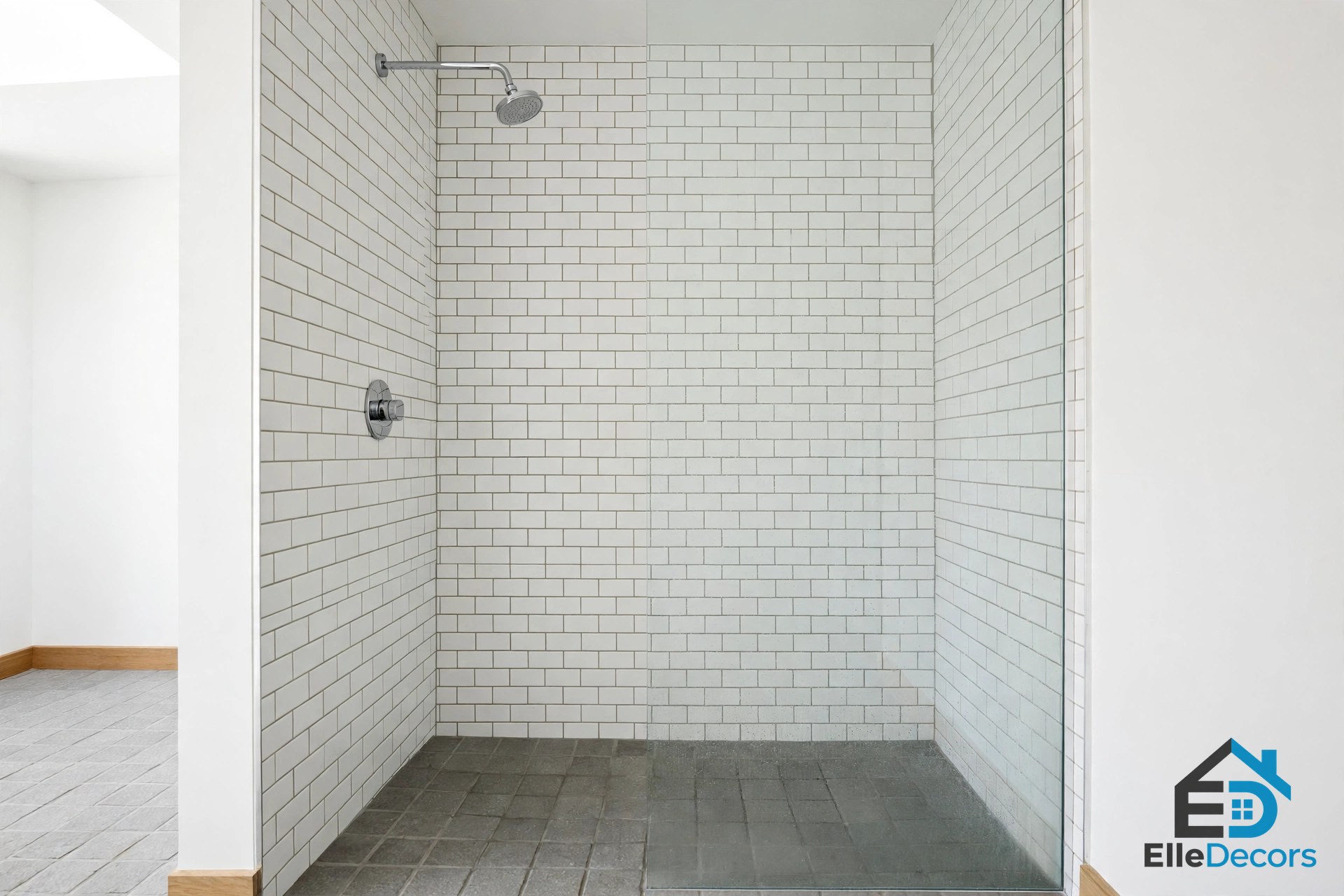
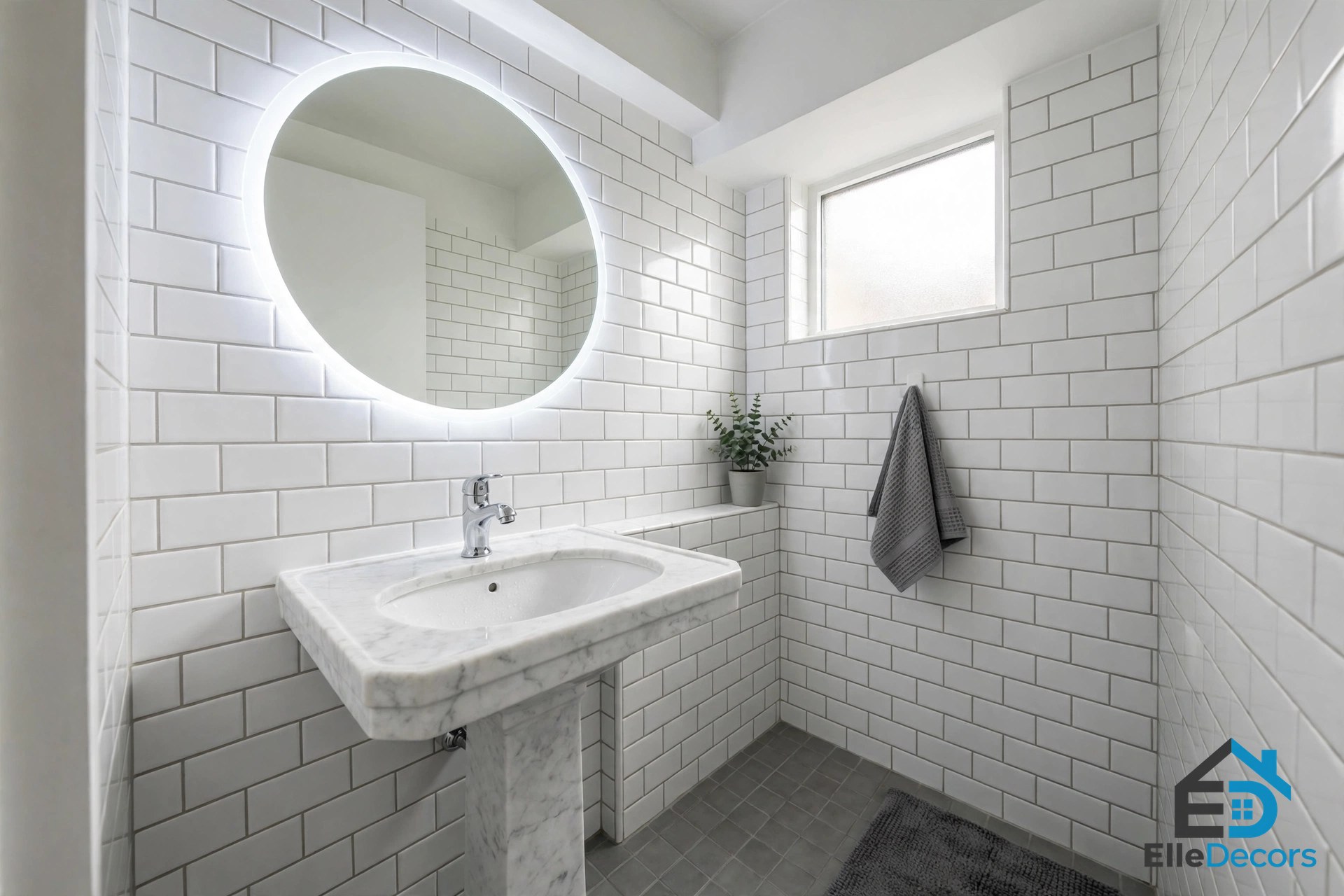
Tiles do most of the work in a bathroom white grey design, because they cover the largest surfaces and set the tone first. The most reliable combination is white wall tiles with grey floor tiles: the white lifts the light and the grey floor grounds the room. A grey feature wall of tiles with white surrounding tiles gives the same balance in a different proportion, and a white marble-effect wall with mid-grey porcelain floor tiles adds a high-end finish.
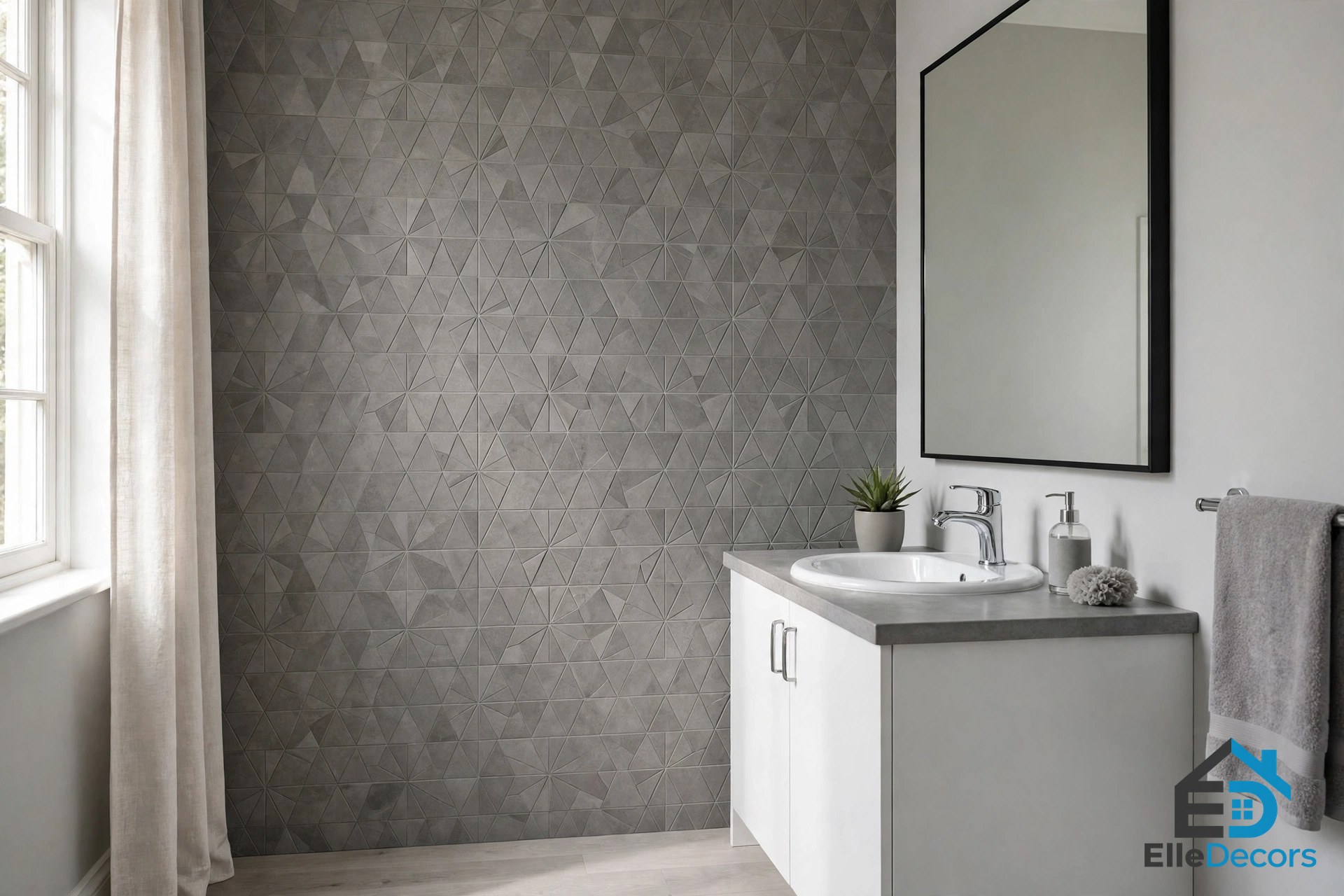
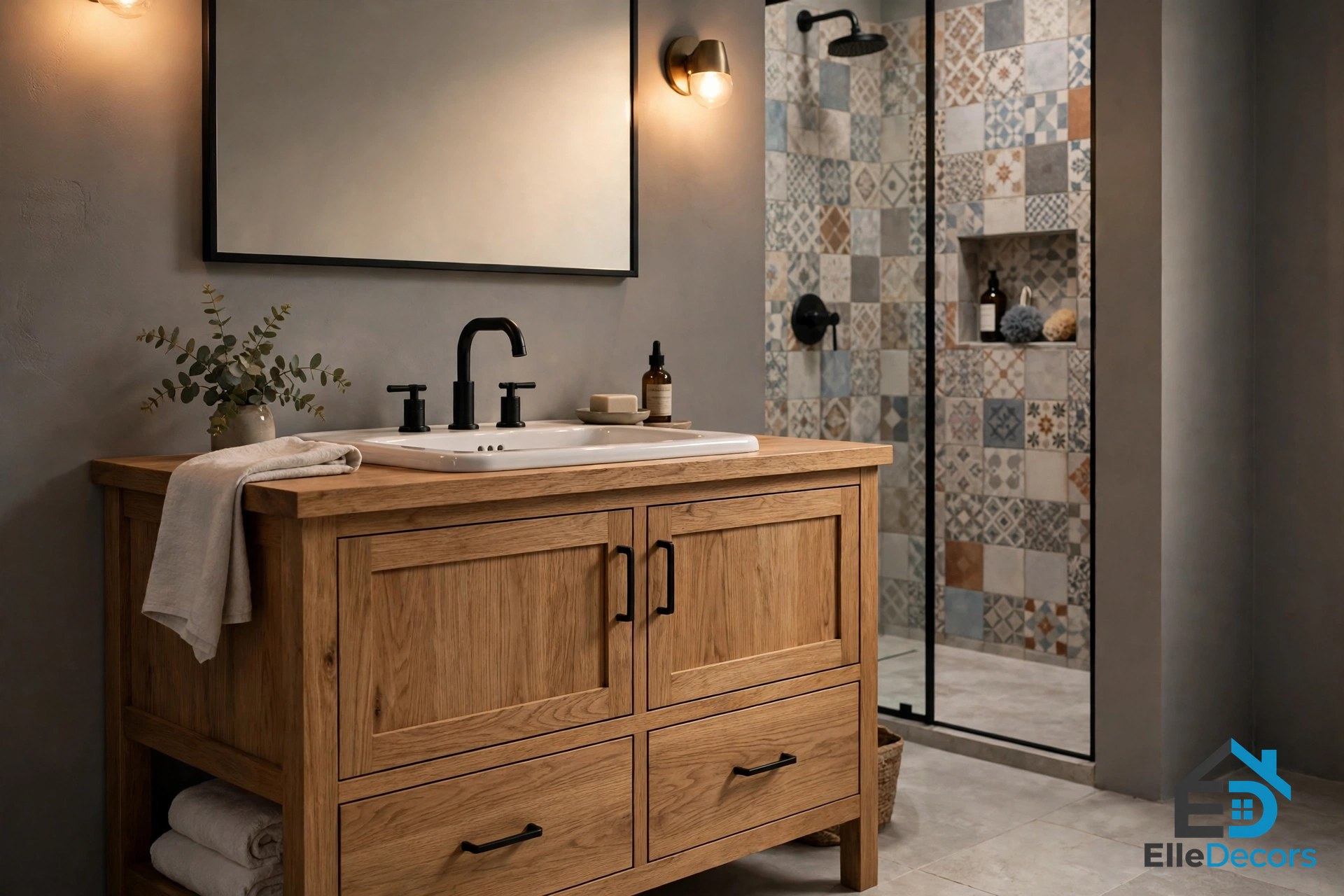
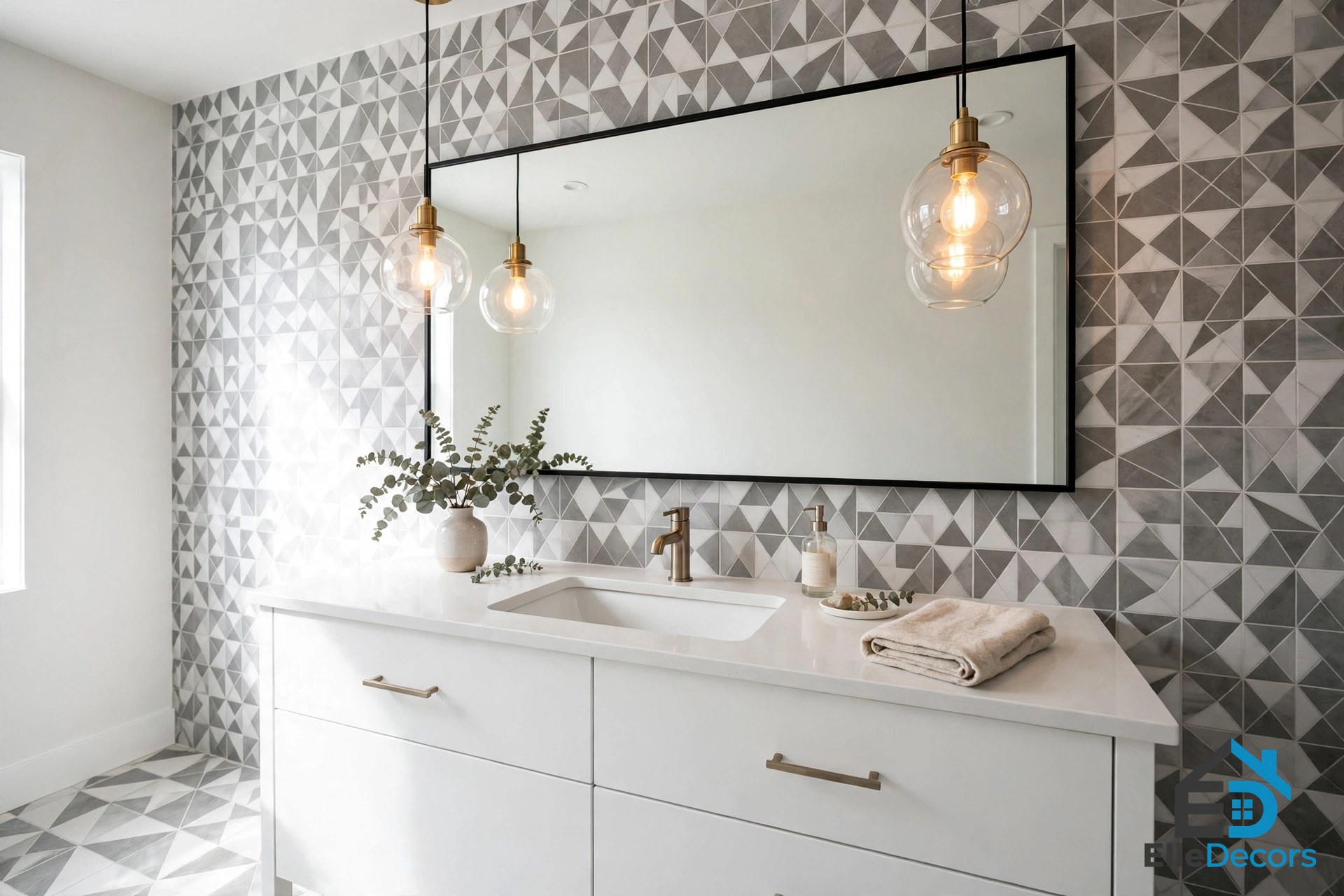
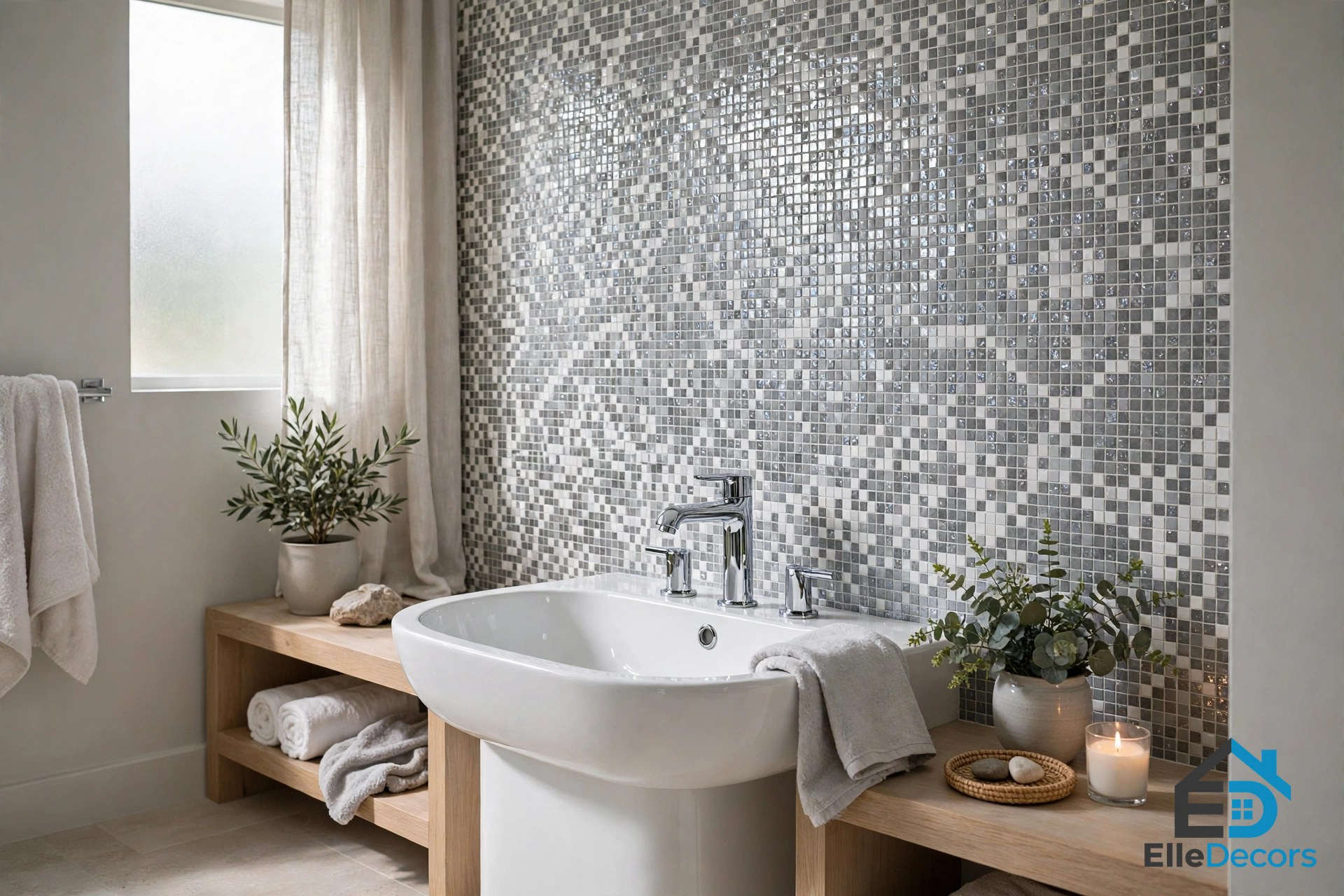
The pattern of the tile matters as much as its colour. White subway tiles with grey grout make the pattern stronger, while grey grout on white tiles is the lower-maintenance choice — white grout looks classic but needs more cleaning and discolours faster. Grey tiles take grey grout for a seamless look, white grout for a subtle contrast, or charcoal grout for dramatic depth. Patterned tiles work best as a single feature: a patchwork-style pattern inside a walk-in shower, or a single-shade grey geometric tile as a feature wall. Keep the pattern to one surface, because two competing patterns will fight each other in a small room.
Mosaic tiles are the sparkling option: a mosaic feature wall or floor catches the light and adds texture to a plain scheme. Large-format tiles are the space-maker — in a small bathroom they give an impression of space by cutting down the number of grout lines. Grey vinyl flooring or grey tiles are both popular and water-resistant, while grey polished concrete gives an ultra-minimalist, earthy-modern feel.
Vanities, Basins, and Storage
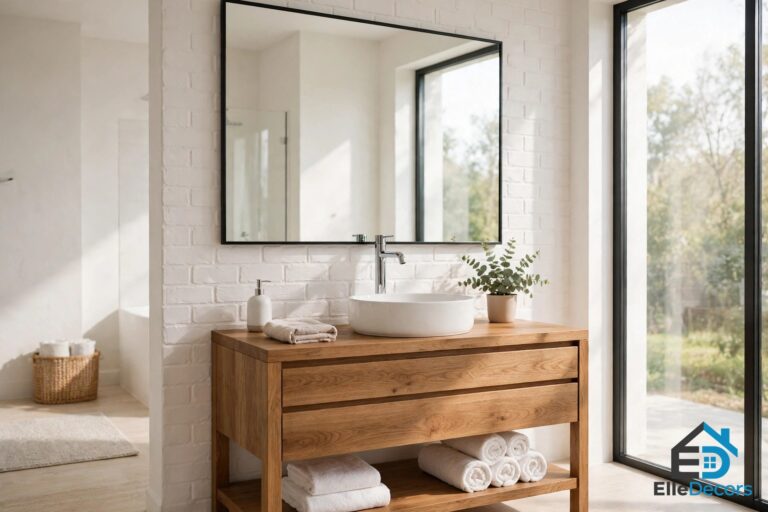
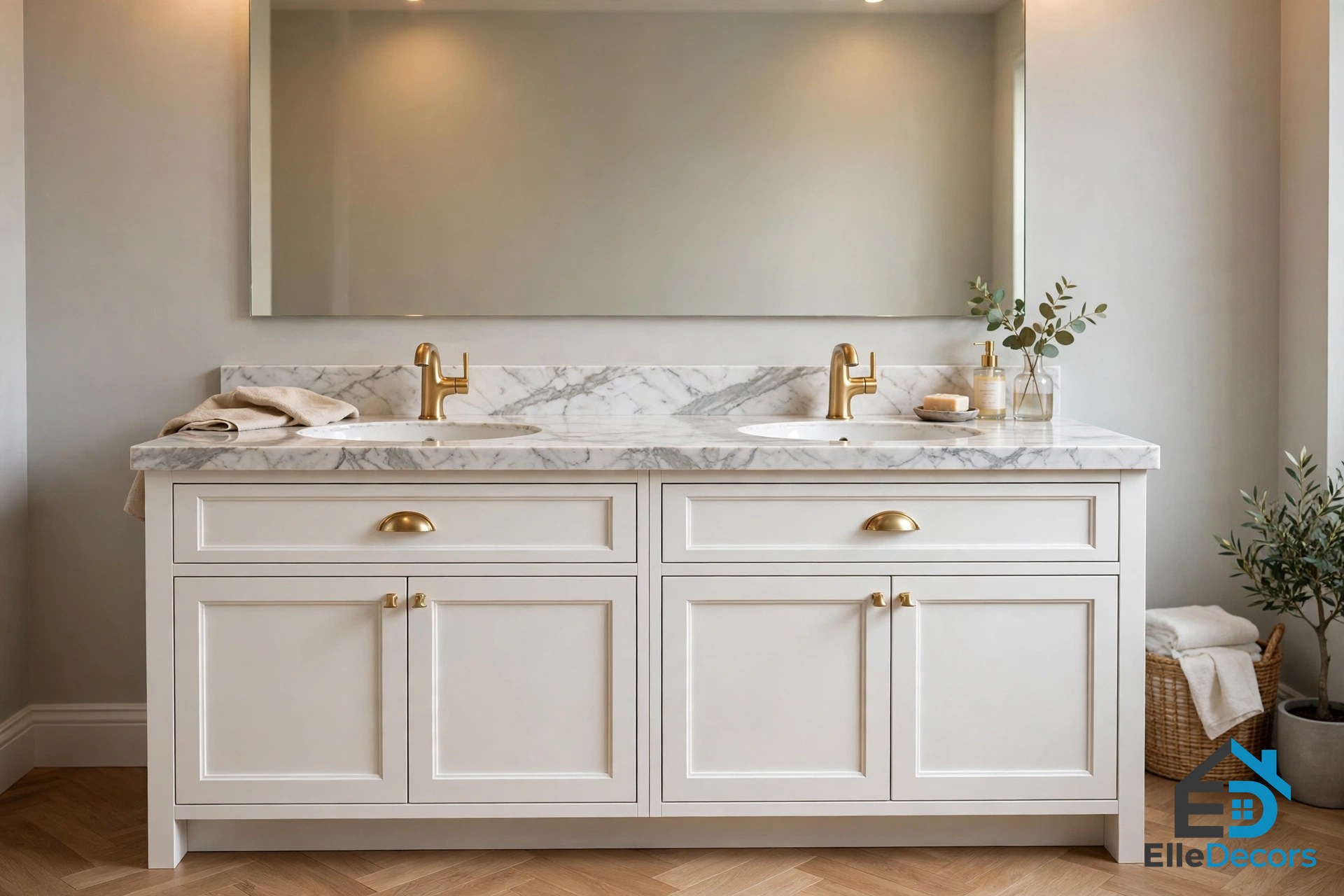
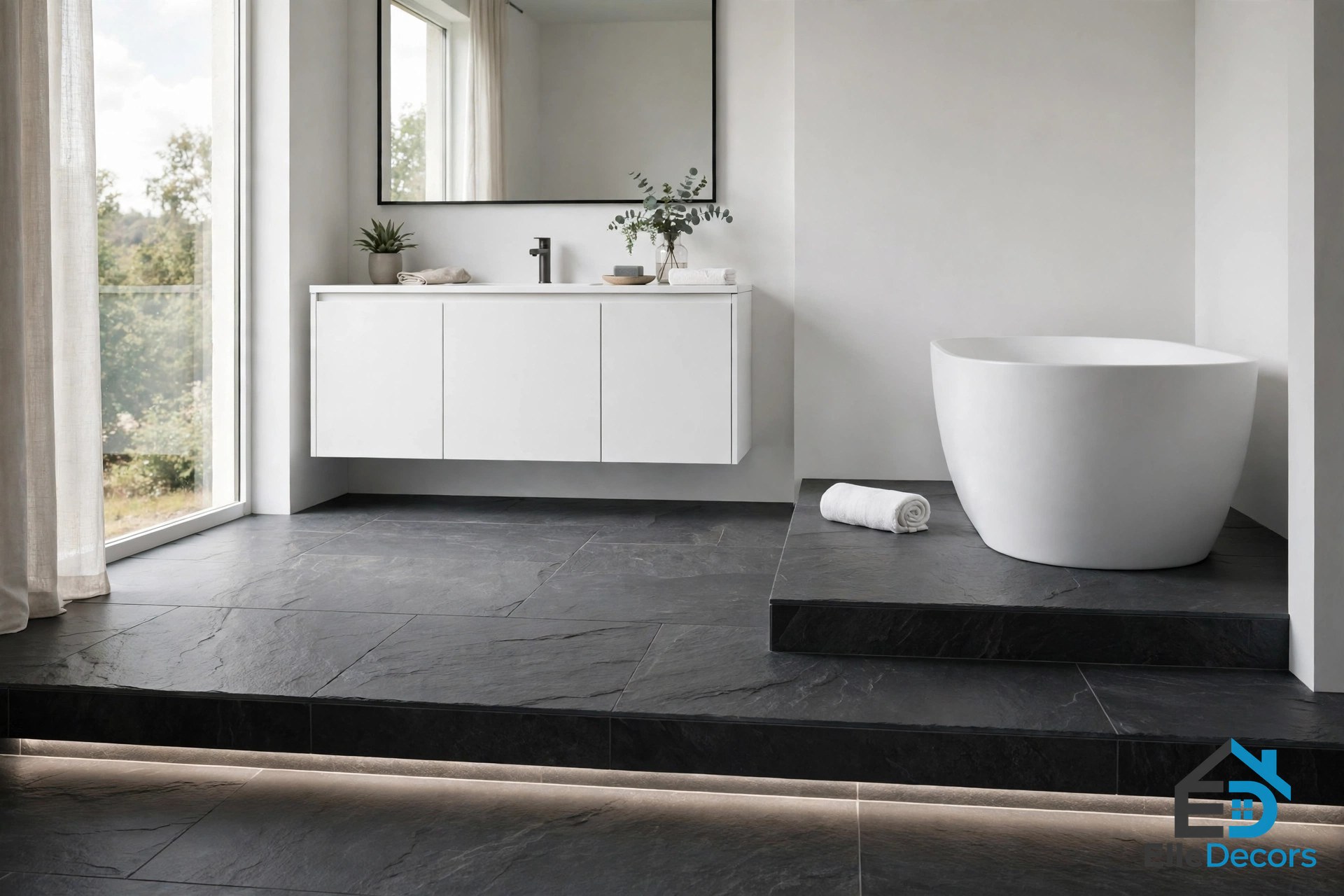
The vanity is where the scheme becomes furniture. A plain white vanity with a chunky marble top is the classic move, because the marble carries the grey veining that ties the vanity to the rest of the room. A full-width modern vanity with open shelving lets you colour-coordinate the accessories, so the storage itself becomes part of the scheme. A wooden vanity unit against fully grey walls is the warmer option.
Basins deserve the same thought. Sinks, toilets, and baths are usually white in this scheme, and the basin is the place to add character: Belfast-style chunky white basins set into a wooden top, gold basins in a grey-black-white scheme, or a marble pedestal sink seen through a slimline glass vanity shelf. Our guide to the types of bathroom sinks covers vessel, pedestal, and Belfast-style basins in detail, so you can match the basin shape to the vanity you already have.
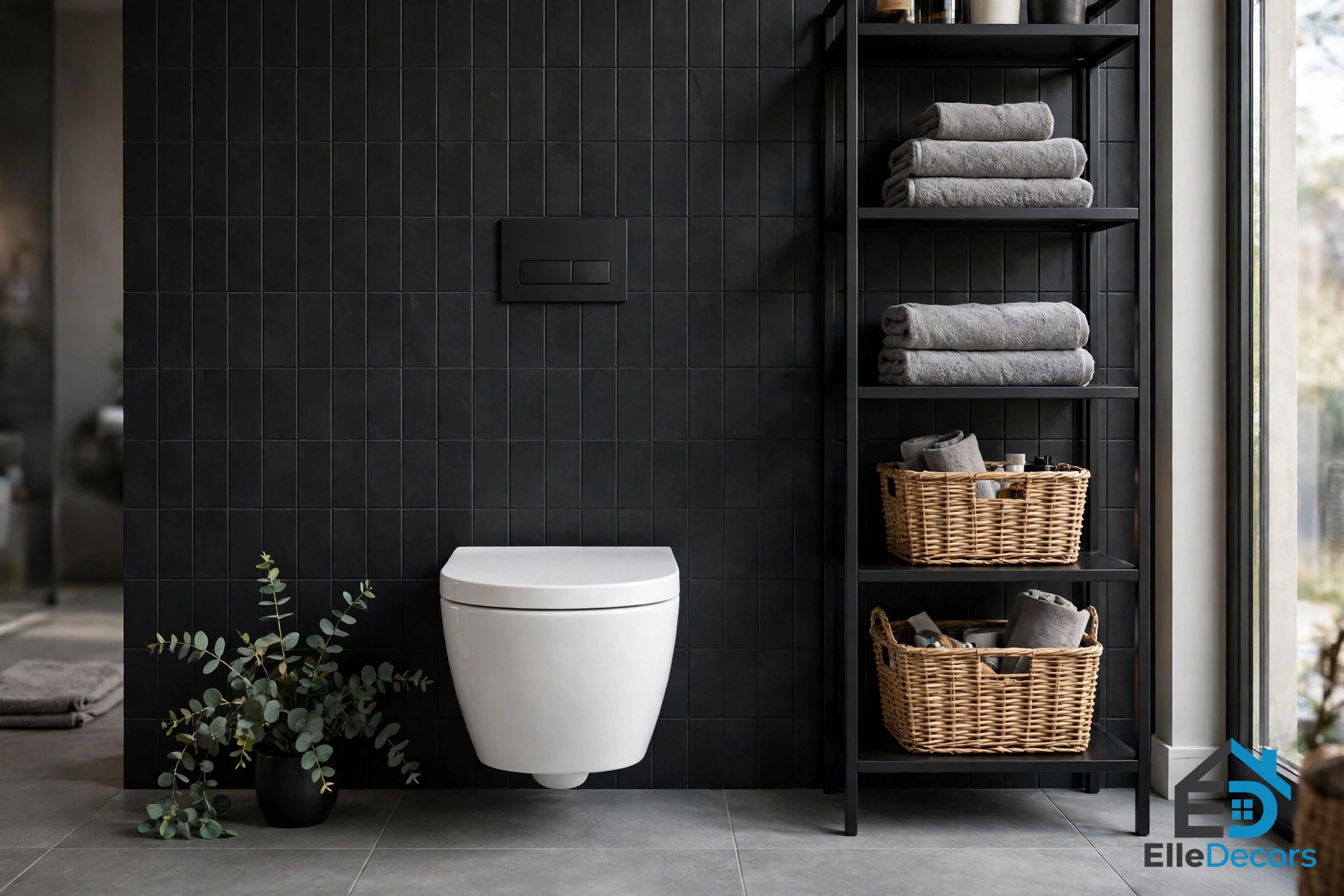
Storage should be wood, open, and minimal where it shows. A black shelving unit holding grey towels and woven baskets adds the dark note the scheme needs while keeping towels in reach. Wooden storage can be painted grey to carry the shade through the room, and a grey-and-white rug adds texture to a sleek floor. Keep the surfaces clear: the scheme depends on clean lines, and a crowded vanity top will undo the calm faster than any colour choice.
Small Bathrooms: Making Grey Work in a Tight Space
Small bathrooms are where the white-grey palette earns its keep, and also where it is easiest to get wrong. White walls and a grey floor make a small room feel larger, and grey floor tiles hide the marks that a small room shows up close. Keep the walls white, put the grey on the floor and on one feature wall, use large-format tiles to cut down grout lines, and let a backlit frameless mirror do the work of a window. A marble pedestal sink takes less visual space than a vanity cabinet.
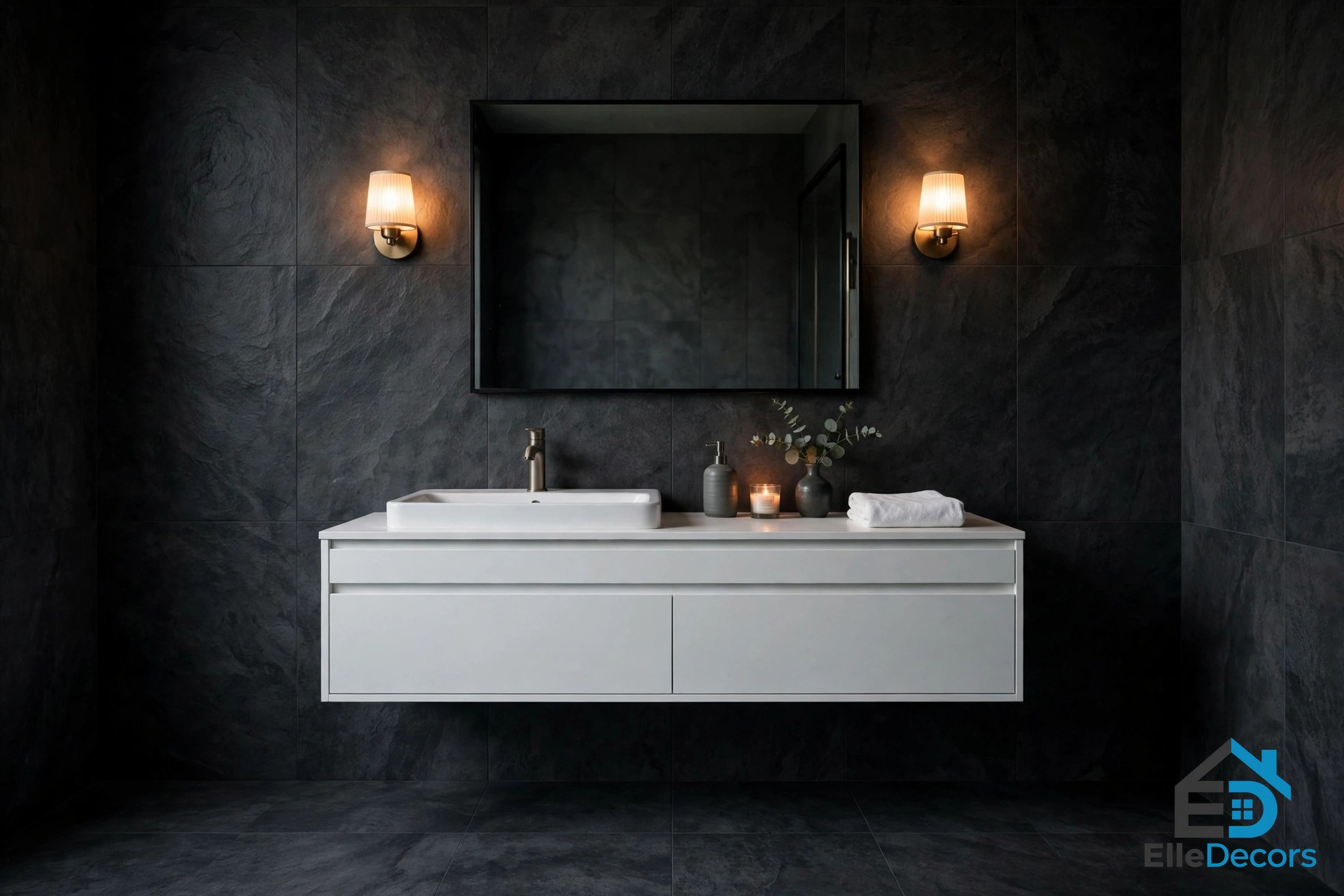
Dark grey can still work in a small bathroom, but only as an accent, not as the wall colour. A black cistern wall behind a modern white toilet or a dark slate floor will anchor the room, provided the walls stay pale. Tipping the whole balance to a darker scheme suits a large bathroom, where pale grey or white vanities give the light relief; in a small room the same move will make the walls close in.
Fixtures and Finishes: Chrome, Brass, Black, or Gold
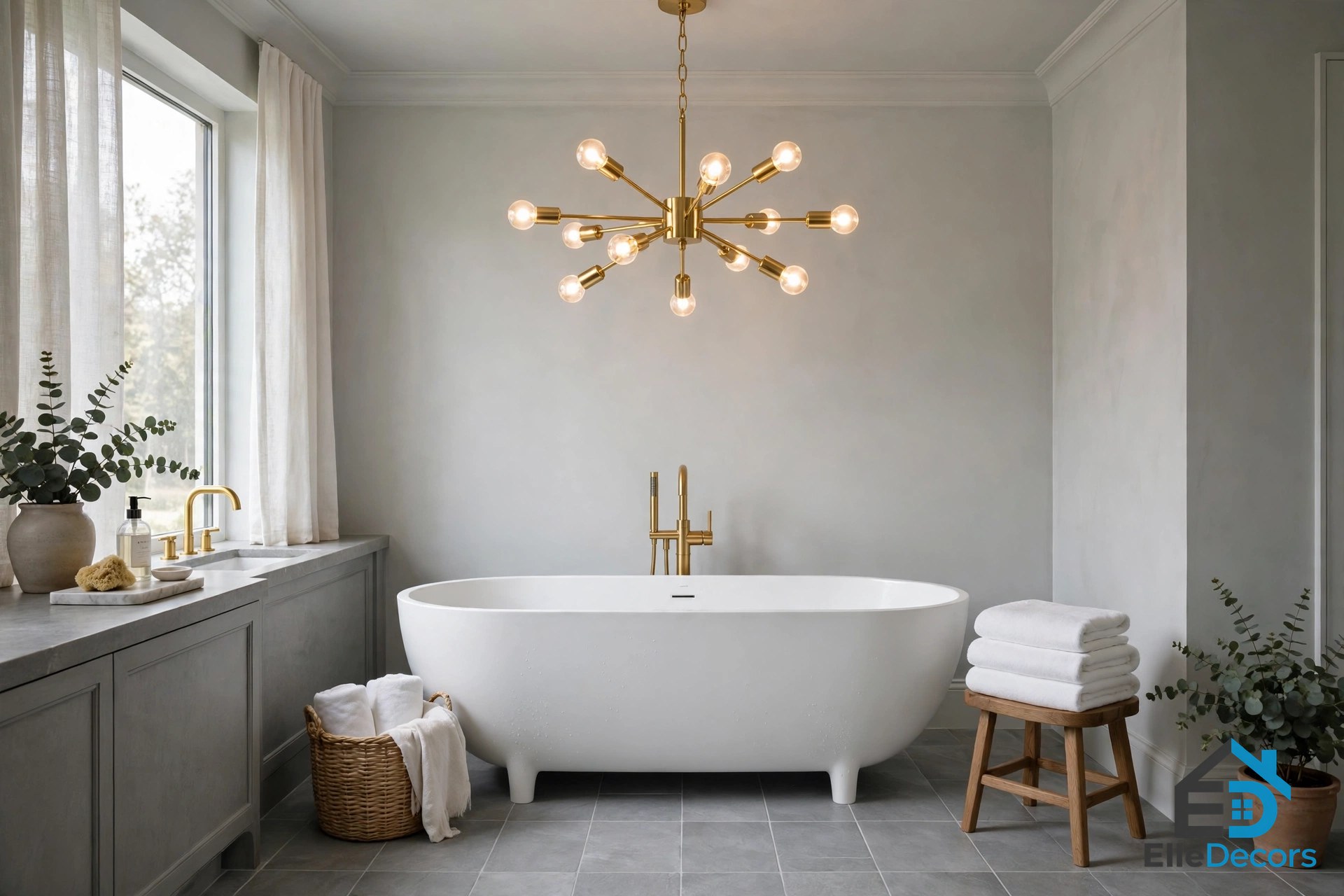
Fixtures are the jewellery of a bathroom white grey scheme, and the finish you choose decides whether the room reads cool or warm. Chrome is the safe default: it pairs well with cool tones and suits both grey and white tiles. Matte black fixtures give a sharper, more modern edge and work well with grey floor tiles and a solid wood vanity. Brushed brass and gold add the warmth the scheme often needs — gold faucets add luxury to minimalist double sinks, and a huge gold chandelier over a freestanding tub turns the bath into the centrepiece. Brushed nickel sits between chrome and brass: cool enough for grey, soft enough not to glare.
The practical rule is to pick one metal and repeat it. Chrome taps with brass light fittings and black handles will look like three decisions instead of one. Match the taps, showerhead, handles, and light fittings to the same finish, and let the wood and the textiles carry the warmth instead. Our guide to black and white interior ideas goes deeper into how much black a pale room can take before the contrast tips over, which is the same judgement call you are making with black fixtures here.
Lighting and Mirrors
Light is what makes the palette work, so treat it as part of the design rather than an afterthought. A picture window onto a private garden will do more for a grey-and-white bathroom than any fixture, and where the room has a window, keep it as clear as you can. Where it does not, layer the light: a simple modern wall sconce over a small nook vanity, two pendant lights over the vanity, or a wooden pendant-light cluster for a warmer feel. Floor-level LED lighting along a step edge marks the level change and doubles as a safety marker.
Mirrors should be frameless and lit. A frameless mirror lit from around its perimeter gives even, shadow-free light for the vanity and makes the wall feel larger. Leather-strap-mounted mirrors add a crafted detail that suits the wood in the scheme, and two globe pendant lights at either end of a grey vanity wall will light the run evenly. Whatever you choose, use warm light: cool white bulbs will push the grey towards blue and make the room feel cold, while warm light brings out the wood and the brass.
Warming It Up: Wood, Plants, and Textiles
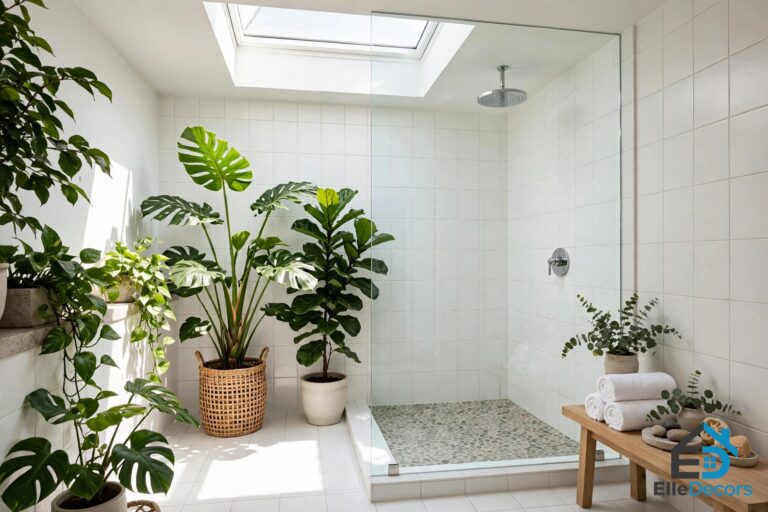
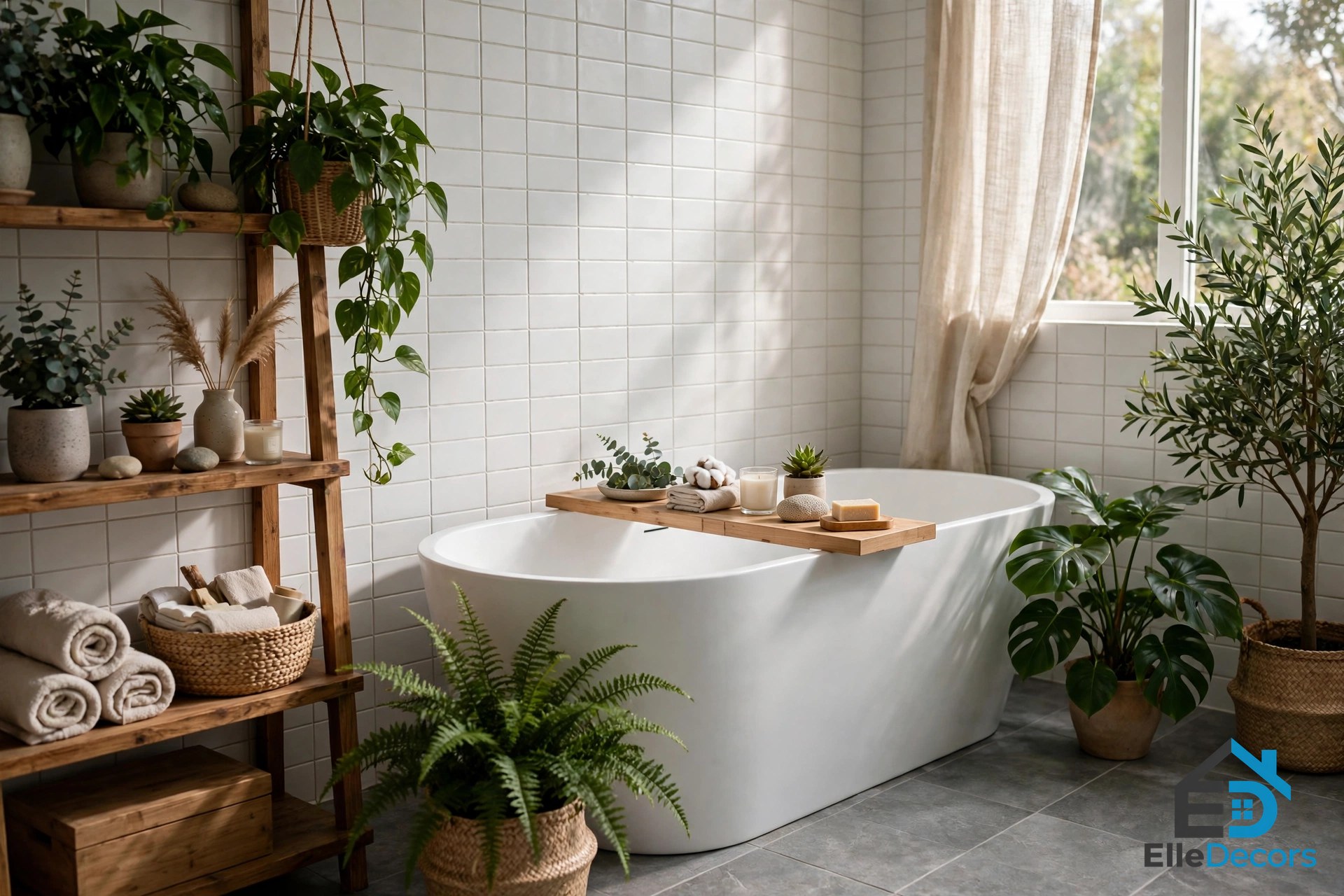
A bathroom white grey room without warmth is a waiting room, and the warmers are always the same three: wood, greenery, and textiles. Deep rustic wood tone — a wooden vanity, wood-grain panels, a wooden tray — is the structural warmer. A living wall or a courtyard garden with indoor plants against rustic natural stone and wood brings the outside in, and even a single orchid in a decorative vase will soften a tiled wall. Grey blinds, bath mats, and towels carry the shade through the soft furnishings, and grey vases, plant pots, and soap dispensers finish the room — but do not overdo the accessories, or the room will look messy instead of calm.
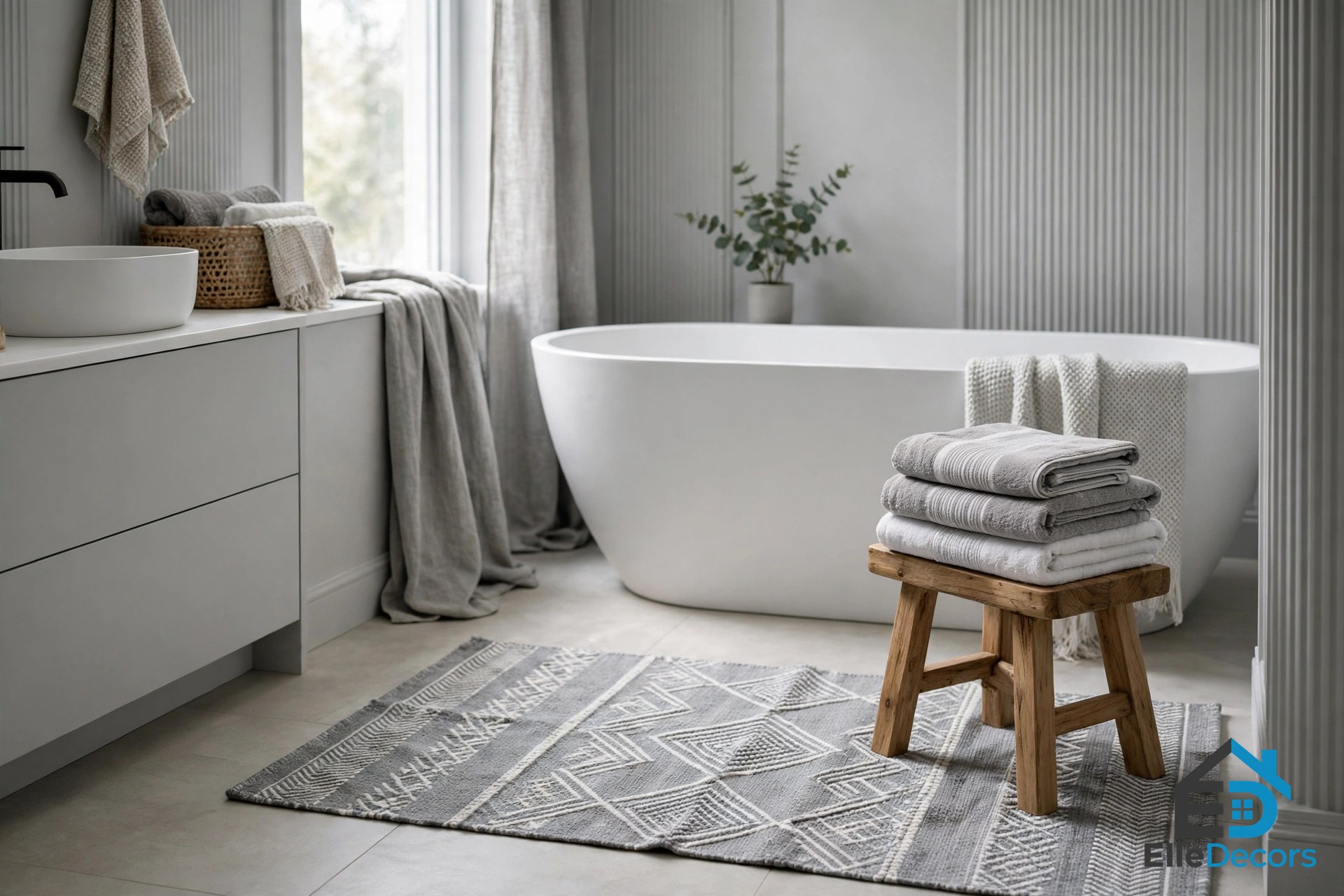
Textiles are the easiest warmer to change, which makes them the safest place to experiment. A grey-and-white rug adds texture to a sleek floor, and grey towels against white walls repeat the palette in soft form. Our guide to aesthetic bathroom ideas covers the styling, plants, and textiles that warm a pale palette in more detail. Keep the rule of one bold move: a checkered floor or a gold chandelier is enough on its own, and two of them in one small room will compete.
Mistakes That Make Grey and White Go Cold
The most common mistake is too much grey in a small, low-light room: grey walls, a grey floor, and grey fixtures will close the room in, and the fix is white walls with a grey feature wall instead. The second mistake is all-white everything: white tiles, white fixtures, and no wood or textile will feel clinical, and the fix is a wooden vanity, a grey floor, or a warm metal finish. The third mistake is two competing patterns — a geometric floor and a patchwork shower wall in the same sightline — which makes a small room feel busy instead of calm. Keep the pattern to one surface.
The fourth mistake is mixing metal finishes, which reads as indecision in a room that depends on restraint. Pick one finish and repeat it across taps, handles, and lights. The fifth is over-accessorising: grey vases, candles, and dispensers are finishing touches, and too many of them will make the room look messy. Finally, do not forget the grout: white grout looks classic but discolours faster, while light grey grout is the modern, lower-maintenance choice.
White-Dominant, Grey-Dominant, or Balanced?
The three versions of the scheme suit different rooms. This table sums up how a bathroom white grey design changes with the balance, so you can pick the version that matches your room’s size and light.
| Balance | Brightness | Best room size | Maintenance | Mood | Best grout | Best fixture finish |
|---|---|---|---|---|---|---|
| White-dominant | Highest | Small or windowless | Shows marks more | Bright, airy | Light grey on white tiles | Chrome |
| Grey-dominant | Lower | Medium to large, well lit | Hides marks best | Calm, cocooning | Grey or charcoal on grey tiles | Matte black or brass |
| Balanced 50/50 | Middle | Any size | Mixed — grey floor hides marks | Timeless, neutral | Light grey on walls, grey on floor | Chrome or brushed nickel |
Watch: A Grey and White Tile Bathroom Makeover
Watch a real makeover built around the palette in this guide: The Sorry Girls take on a dated bathroom and work with its existing grey and white tile, redesigning the shower, the vanity, the lighting, and the fixtures around it. The video is sponsored by Bath Fitter, which the creators disclose on the video page.
Video: The Sorry Girls make over a dated bathroom around its existing grey and white tile.
Frequently Asked Questions
What is a bathroom white grey scheme?
A bathroom white grey scheme is a two-tone bathroom design that pairs white fixtures and pale walls with grey tiles, flooring, or a vanity. White bounces the light and keeps the room feeling open, while grey grounds the scheme and hides splashes better than white. It suits modern and traditional bathrooms of all sizes, and the brightening effect of the two cool tones makes it a strong choice for small bathrooms. The balance is adjustable: white-dominant for small rooms, grey-dominant for large, well-lit rooms, and balanced for everything in between.
Does grey make a small bathroom look smaller?
Dark grey on all the walls can make a small bathroom feel darker, but grey used in the right places does the opposite. A grey floor with white walls, a grey feature wall behind the bath or shower, and large-format tiles will make a small bathroom feel larger, because the white keeps the light and the grey adds depth. Light greys affect a small room much less than dark greys, so keep the grey pale and the walls mostly white.
What colour grout should I use with white tiles?
Light grey grout is the practical choice with white tiles: it looks modern, it defines the tile pattern, and it needs less cleaning than white grout, which discolours faster. White grout gives the classic seamless look but needs more frequent cleaning. Charcoal grout on white tiles gives dramatic depth but is a strong look. On grey tiles, grey grout looks seamless, white grout gives a subtle contrast, and charcoal grout adds dramatic depth.
Which fixture finish works best with grey and white?
Chrome is the safe default because it pairs well with cool tones and suits both grey and white tiles. Matte black gives a sharper modern edge, brushed brass and gold add the warmth the scheme often needs, and brushed nickel sits between the two. The rule is to pick one finish and repeat it across taps, showerheads, handles, and light fittings. Pair grey tiles with matte black or brushed brass fixtures, a solid wood vanity, and soft white paint; pair white tiles with chrome fixtures, coloured towels, warm lighting, and natural wood tones.
The Bottom Line
A bathroom white grey scheme works because it is honest about what each colour does: white brings the light, grey brings the calm, and wood, plants, and one warm metal bring the warmth. Start with the balance your room’s light allows — white-dominant for small rooms, grey-dominant for large and well-lit ones — put the grey on the floor and one feature wall, pick one fixture finish and repeat it, and keep the pattern to a single surface. Do that, and the room will feel calm, timeless, and easy to live in.