Formal Dining Room Ideas: 12 Elegant Designs for Memorable Meals
AUDIO SUMMARY: A formal dining room still earns its place when it is designed for lingering, not just holidays. This guide covers twelve formal dining room ideas from a 51-room source collection, from black arched windows and sputnik chandeliers to marble tables and round rugs, plus the lighting, seating and styling rules that keep the room warm. Start with the table.
Formal Dining Room Ideas: 12 Elegant Designs for Memorable Meals
Formal dining room ideas start with a simple truth: this is the room where holidays, anniversaries and long Sunday lunches happen, so it deserves more attention than the everyday eating spots in the house. Snacks happen at the kitchen island and light lunches in the dining nook, but laying the table in a formal dining room sets a festive mood nothing else in the house can match. Either way it should feel magnetic, drawing family and friends in and making them want to linger. This guide gathers twelve designs from a source collection of 51 formal dining room designs, covering the table, the chairs, the lighting, the walls and the finishing touches.
What Is a Formal Dining Room?
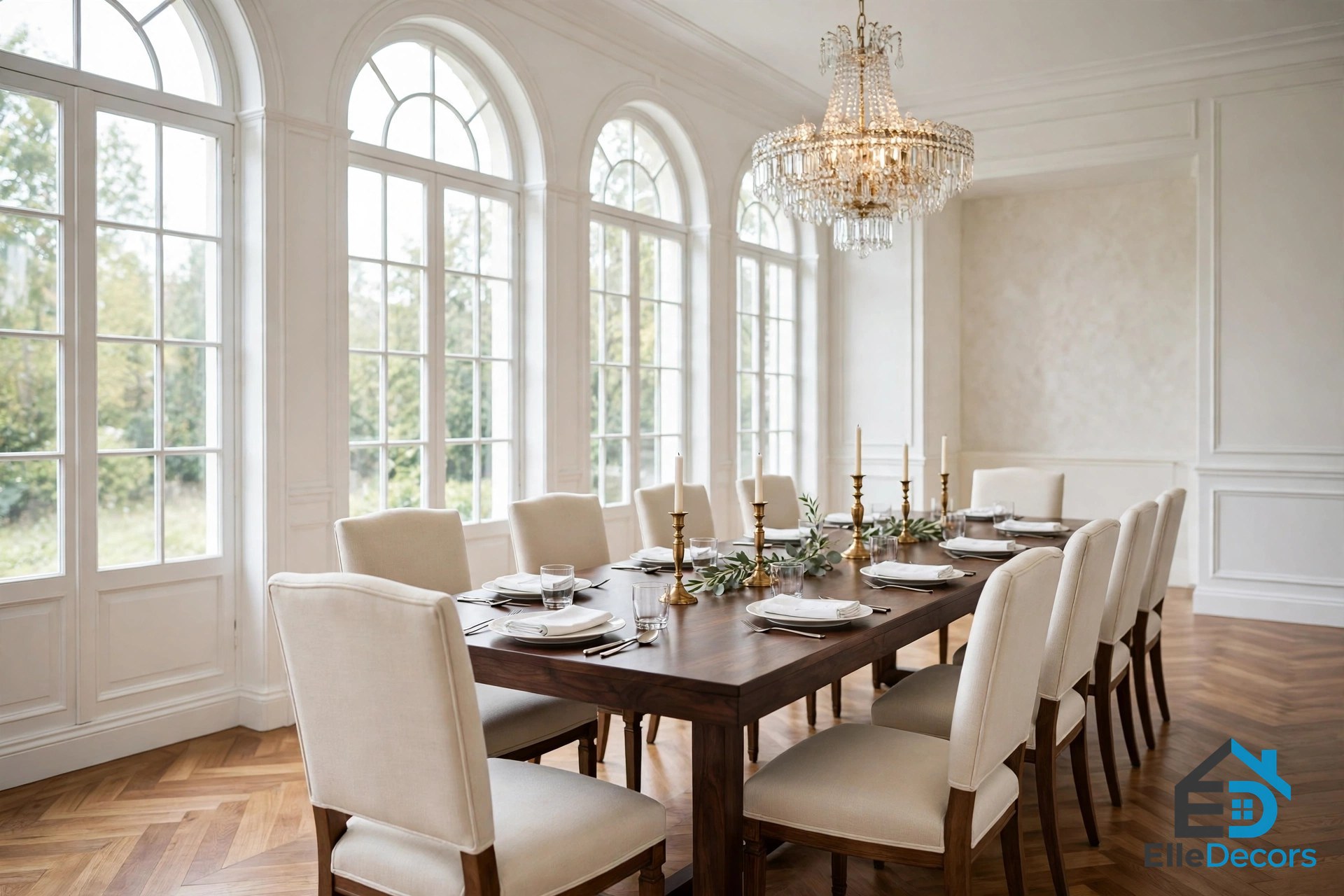
A formal dining room is a separate room set aside for eating well, rather than an open corner near the kitchen or living room. It is usually furnished with a crafted dining table and chairs in rich materials such as mahogany, oak or walnut, upholstered in velvet or leather, and finished with a statement light, ornate moulding, fine art or mirrors, and polished hardwood or marble underfoot. Linens, crystal and silverware complete the sense of occasion. The best formal dining room ideas keep that sense of occasion while making the room comfortable enough to use often, because a beautiful room nobody enters is just a museum.
1. Define Your Best Features with Black Arched Windows
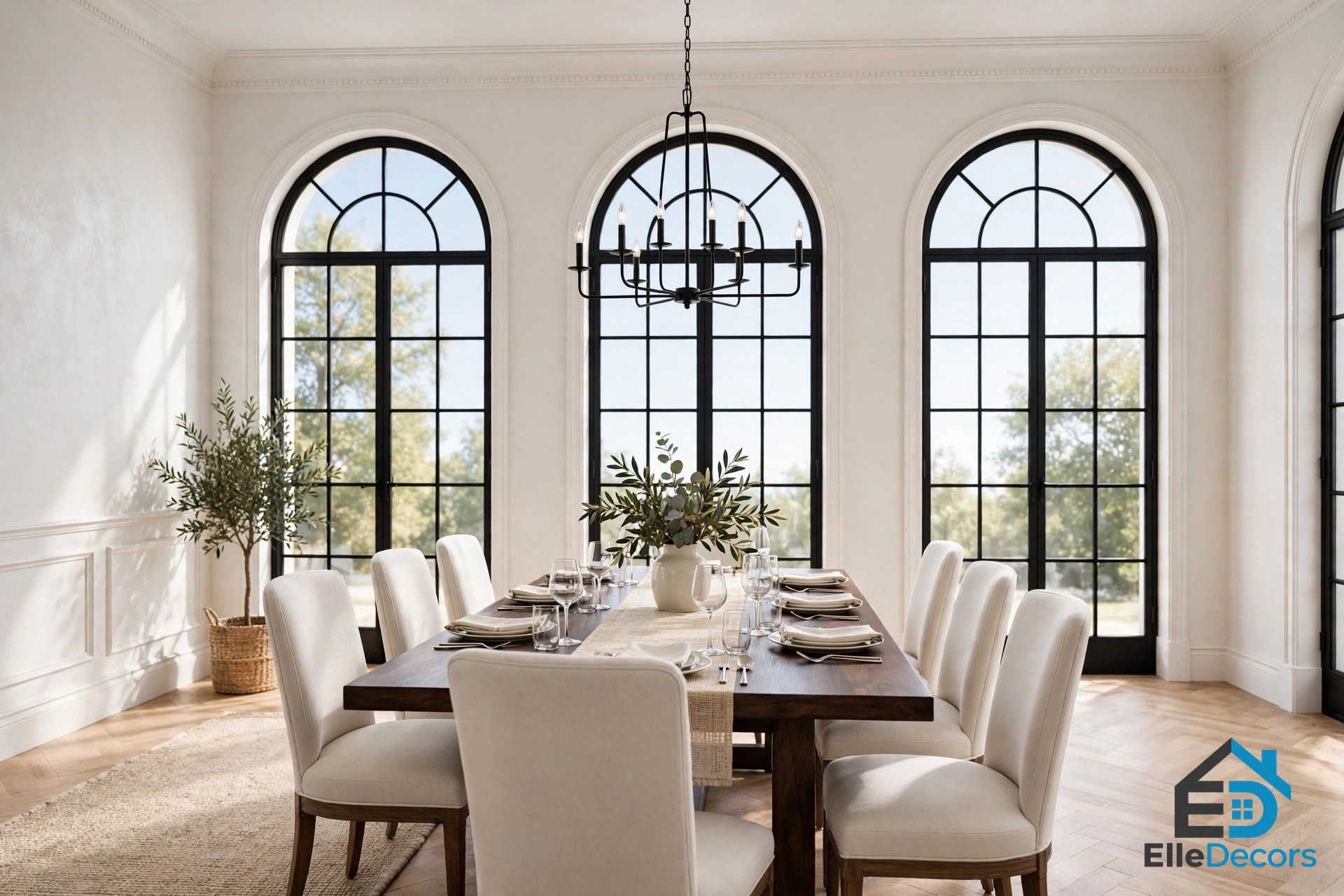
Every room has one feature worth showing off, and the smartest move is to build the design around it. In the source collection, a formal dining space draws attention to a set of elegant arched window frames by painting them in a defining black finish that contrasts dramatically against soft white surroundings. The dark frames act like a picture frame for the view, and they give the whole room a backbone that pale walls alone cannot provide. If your room has arched windows or a handsome fireplace, let that feature set the tone and keep everything else quieter.
2. Soften the Light with Lattice Screens
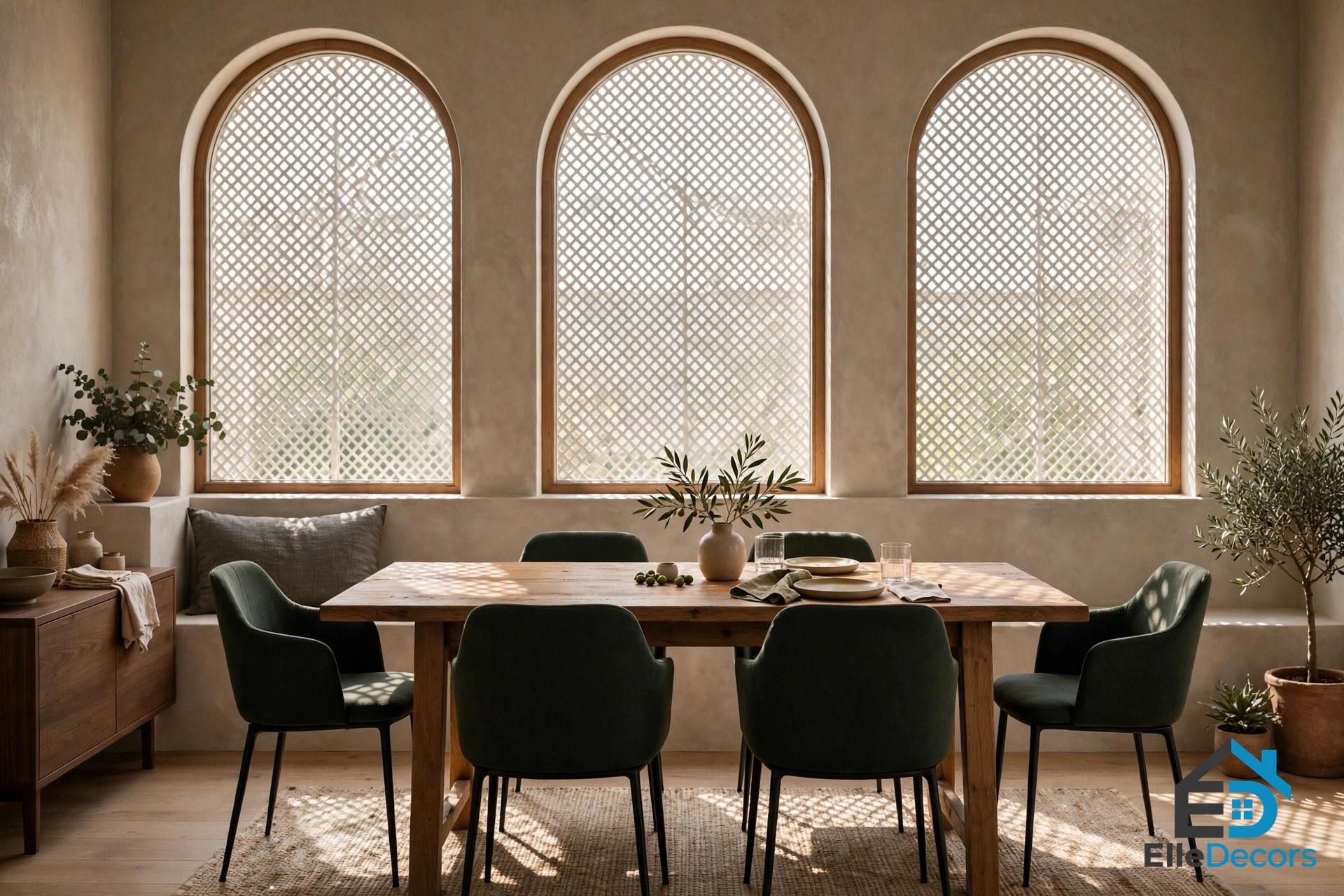
Strong daylight can be as much of a problem as too little of it, especially in a room with large windows. In the source collection, fine lattice screens soften arched window frames, shading the sunlight to make a mellow mood. A screen, a sheer curtain or a set of interior shutters does the same job: it filters the light so the room glows instead of glaring, and it adds a layer of pattern to plain glass. Choose a screen in a pale timber or a soft white so it reads as architecture rather than a curtain.
3. Go Eclectic with Gold Accents
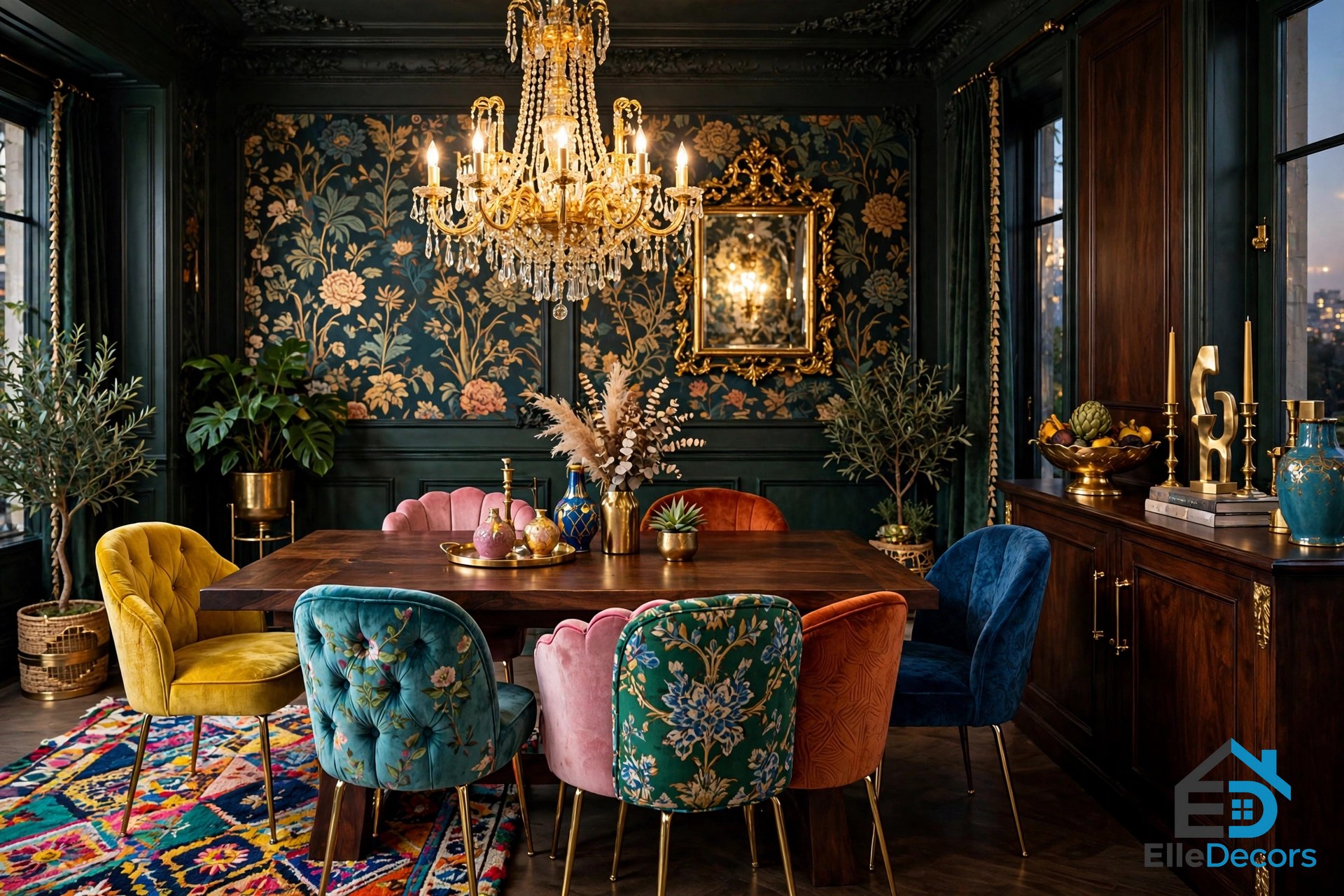
Formality does not have to mean matching sets and hushed tones. These formal dining room ideas include an eclectic route: assorted upholstery covers the dining chairs with creative flair, while gold coloured accent pieces introduce a luxe aesthetic that ties the mix together. The trick is to let one metallic finish do the unifying work: gold on the light fitting, the mirror frame and the cutlery, for example, while the chairs are free to differ in colour and pattern. Eclectic works best when the variety is in the seating and the discipline is in the metalwork.
4. Spread the Light with Sputnik Chandeliers
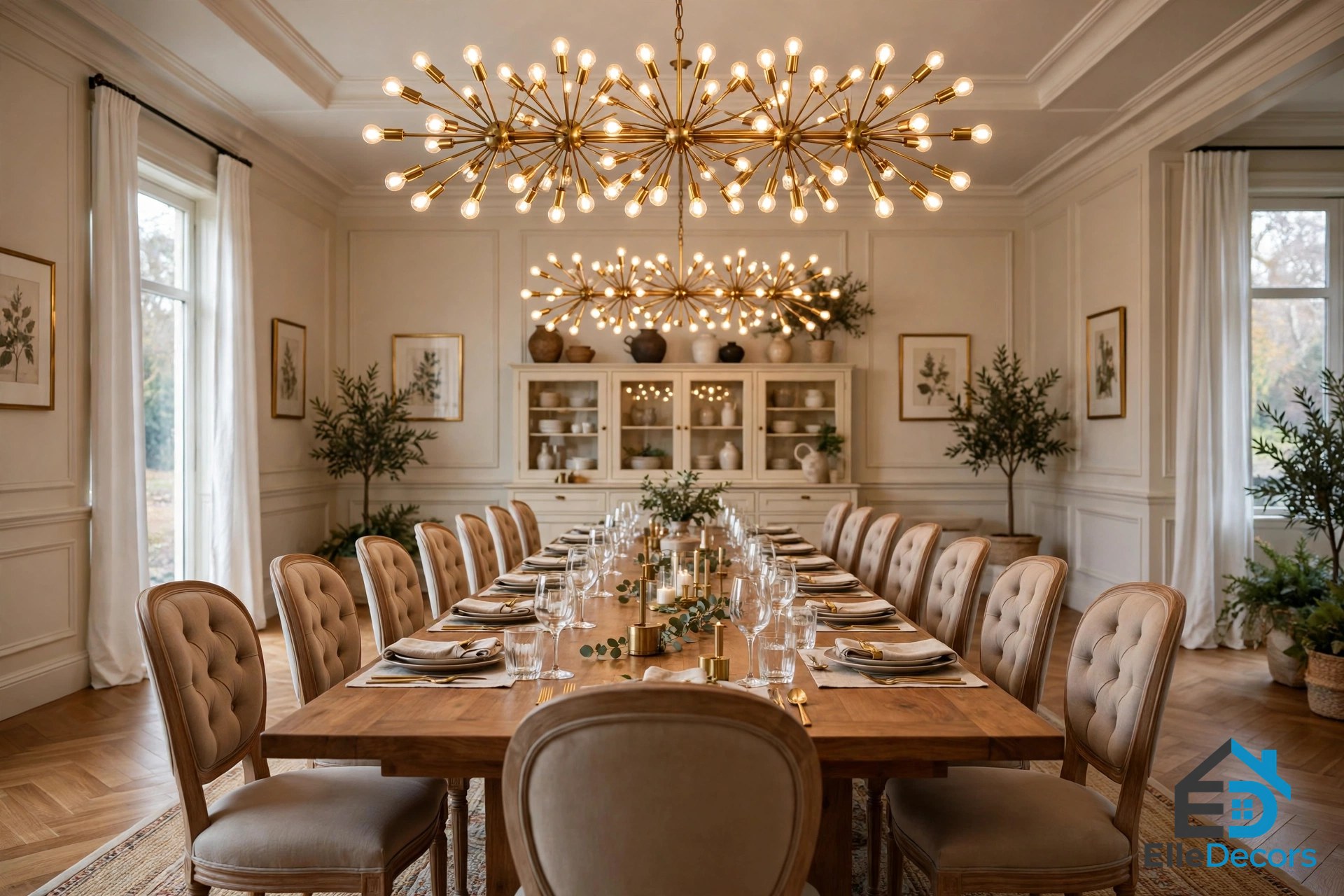
In a large room with a long dining table, the diners at each end are the ones who get forgotten by the lighting. The source collection solves it with two elongated sputnik chandeliers that spread illumination far and wide across the whole table, so nobody eats in shadow. One long fixture, or a pair of smaller ones hung in a line, beats a single central chandelier over a long table every time. Put them on a dimmer so the room can shift from bright lunch to candlelit dinner.
5. Bring in Earth Colours and a Garden View
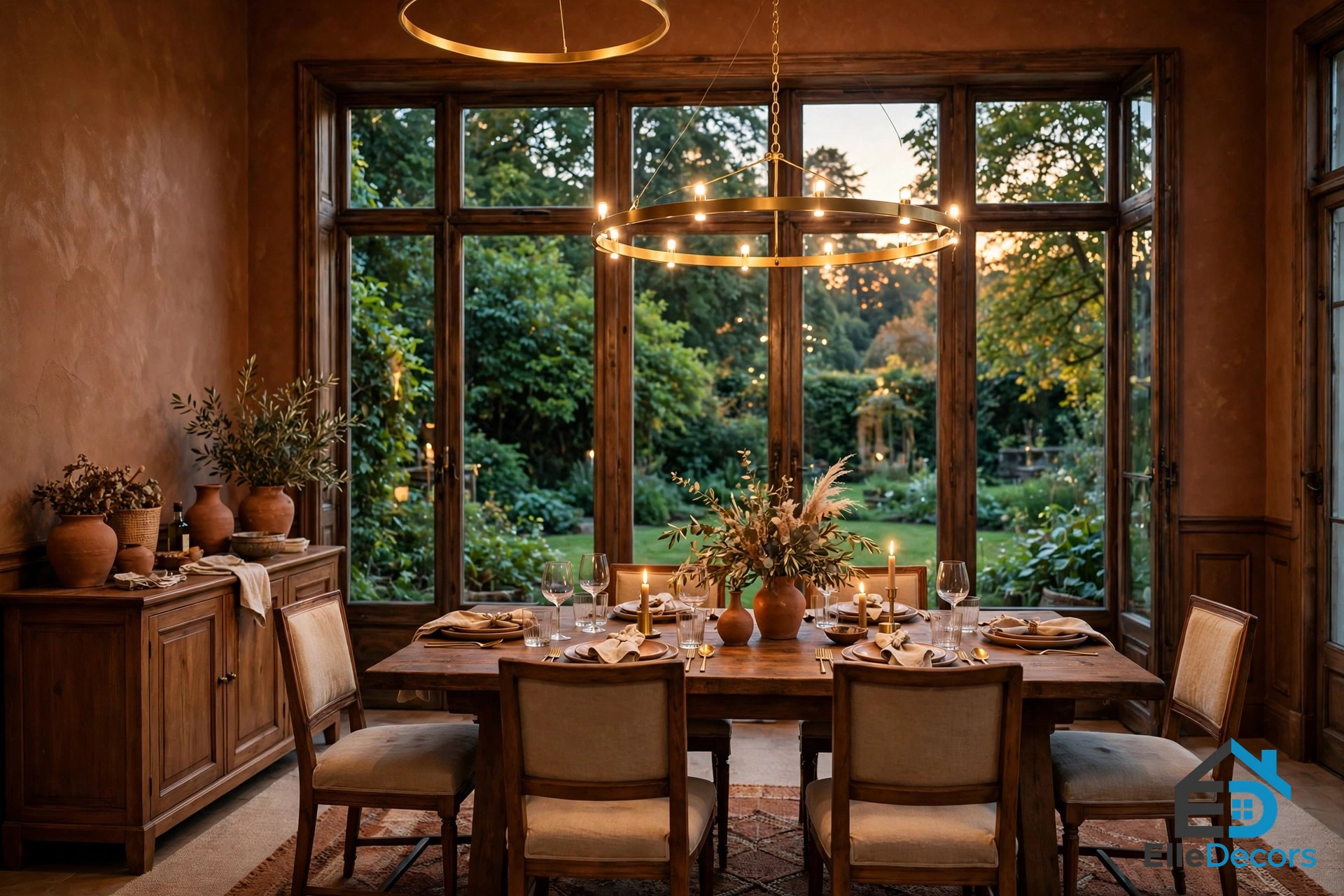
Earth colours are among the most welcoming formal dining room ideas for a room that opens onto a garden. The source collection shows rich earth colours chosen to complement a lush garden view, elevated with metallic accents such as an eye-catching golden circle chandelier. Terracotta, ochre, warm brown and deep green sit naturally against wood and stone. If your dining room opens onto a garden, a courtyard or even a single large tree, treat that view as part of the decoration: keep the window dressing light, pick wall colours that echo the planting outside, and let one metallic accent lift the earthy palette into something formal.
6. Anchor an Open Plan with a Pendant Cluster
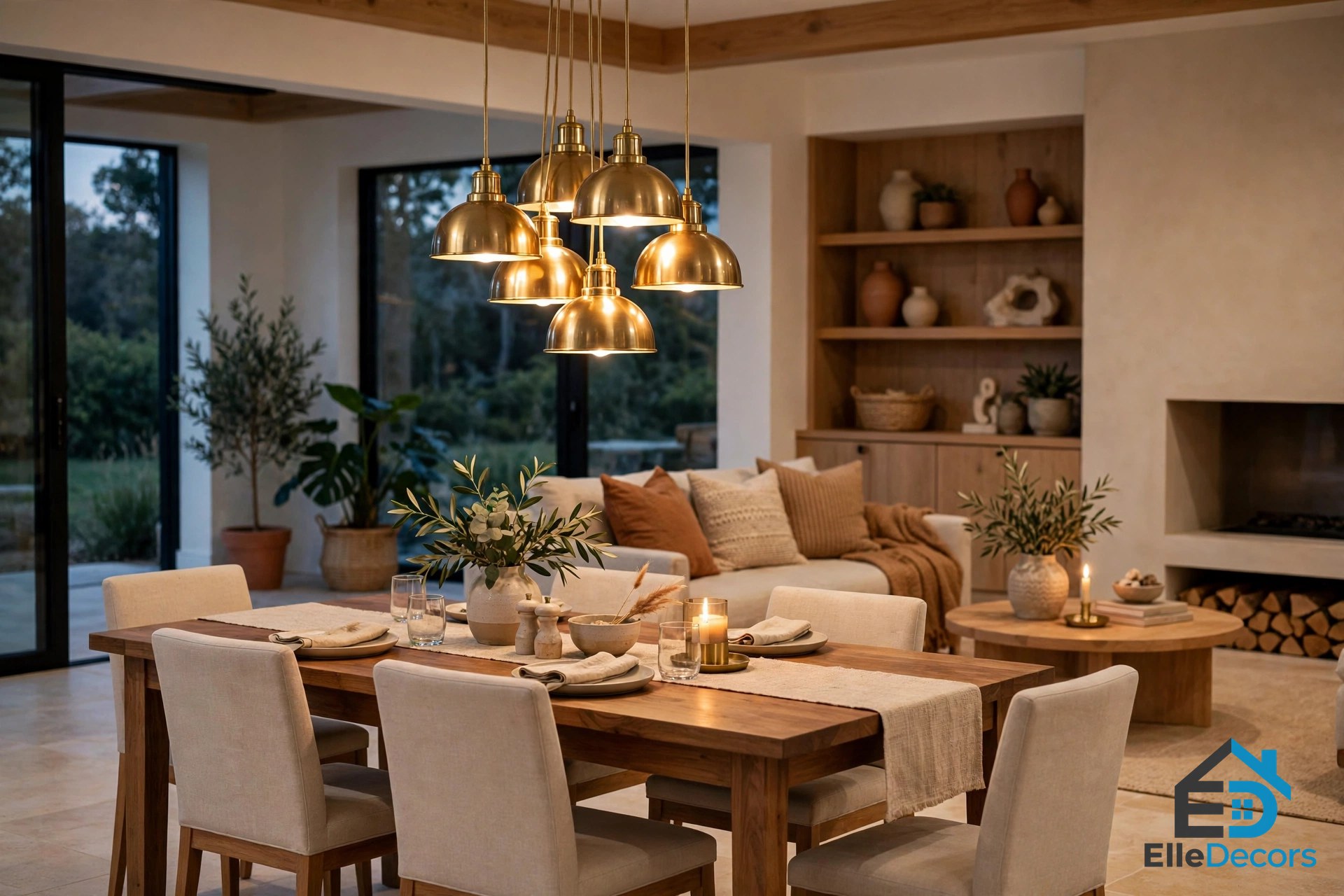
Not every formal dining room has four walls of its own. In an open plan living arrangement, the source collection anchors the formal eating area with a commanding light installation, a cluster of unique dining room pendants that marks the table as a destination rather than a piece of furniture that happens to be near the kitchen. These formal dining room ideas work in open plans because the light does the job the walls used to do: it draws a boundary in the air. Keep the table directly beneath them so the arrangement reads as one composition. Our guide to a pedestal dining table shows a base shape that suits this kind of anchored arrangement, since it leaves legroom clear all around the table.
7. Disrupt the Stuffy with Unexpected Colour
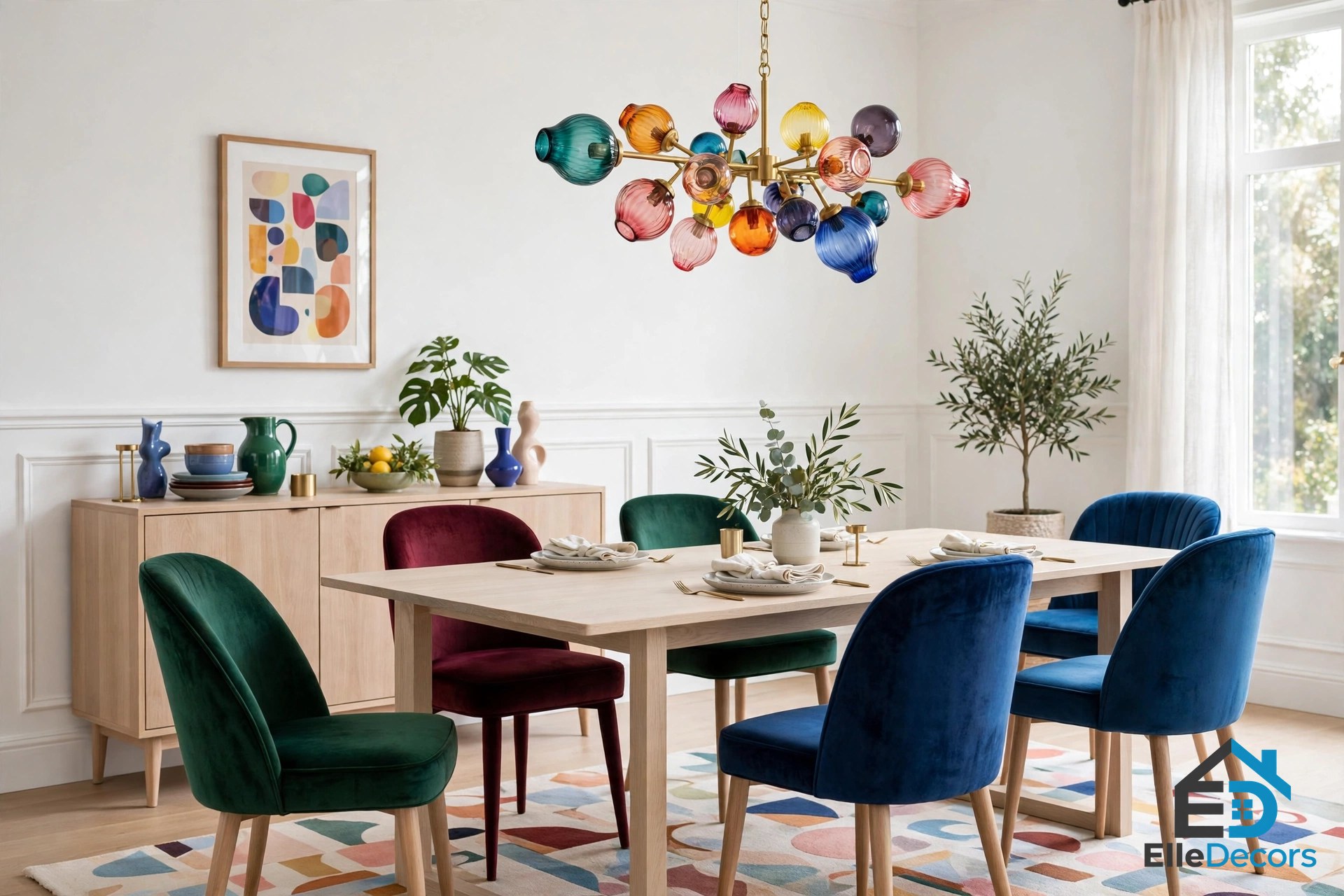
The fastest way to make a formal dining room feel modern is to break one rule on purpose. The source collection does it with randomly interspersed accent chairs, multicoloured chandeliers and colour-blocked paint effects, bringing formal schemes into the modern realm without losing their manners. Pick one surprise and commit to it: a set of chairs in mismatched jewel tones, a chandelier in an unexpected colour, or a single wall painted in a bold block while the rest stays pale. Keep the rest of the room calm, because the surprise only reads as confident when everything around it is composed.
8. Layer It Luxuriously
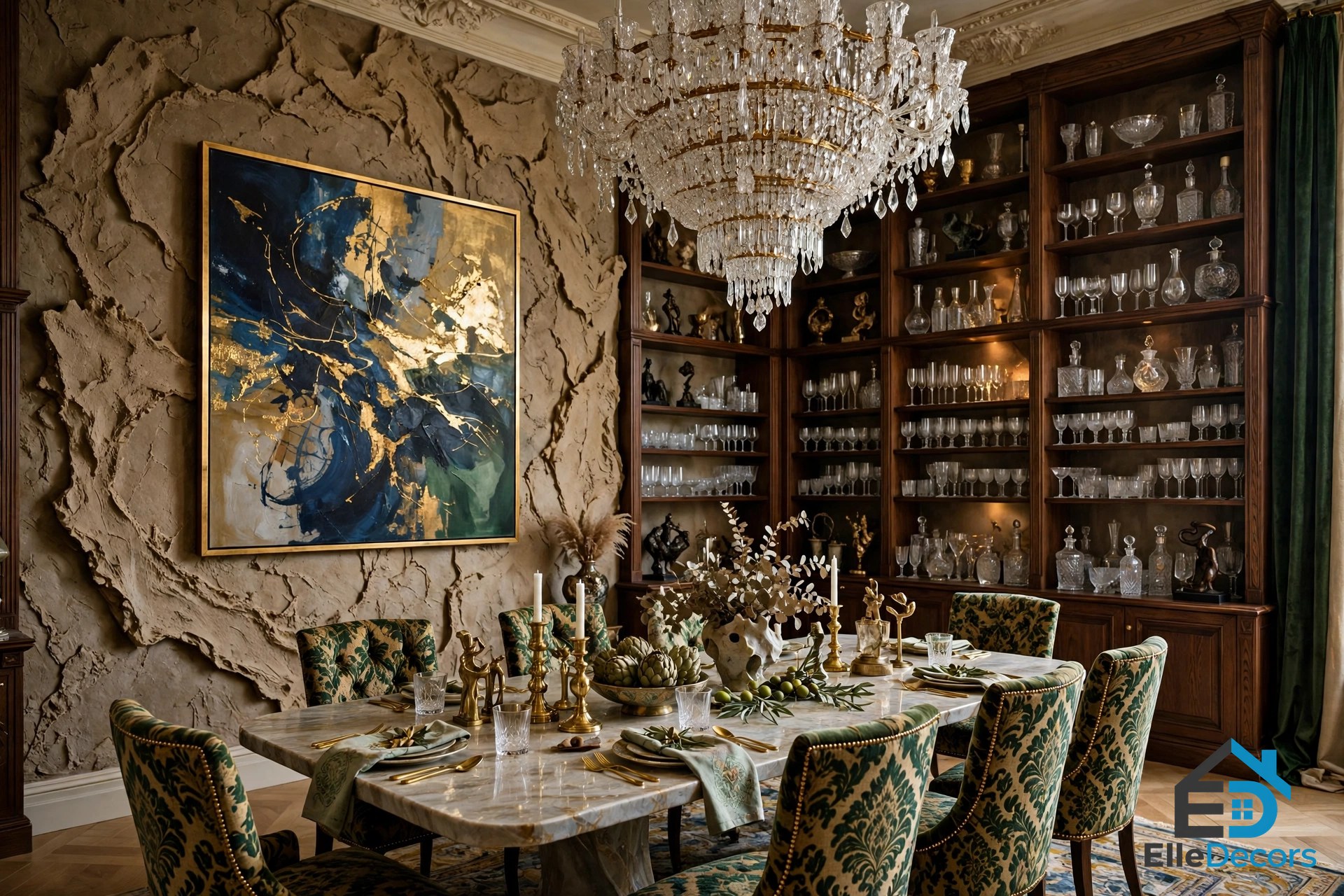
Some rooms earn their formality by abundance, and the source collection shows how to layer without tipping into clutter. Patterned dining chairs, floor-to-ceiling display shelves, an oversized chandelier, statement art and a deeply textured feature wall all come together to create a feast for the eyes. Repeat two or three motifs, a pattern, a metal and a texture, at different scales so the layers feel connected. Display shelves work best when they hold an edited collection, glassware or ceramics in a tight colour range, rather than everything you own.
9. Choose a Square Table for Better Conversation
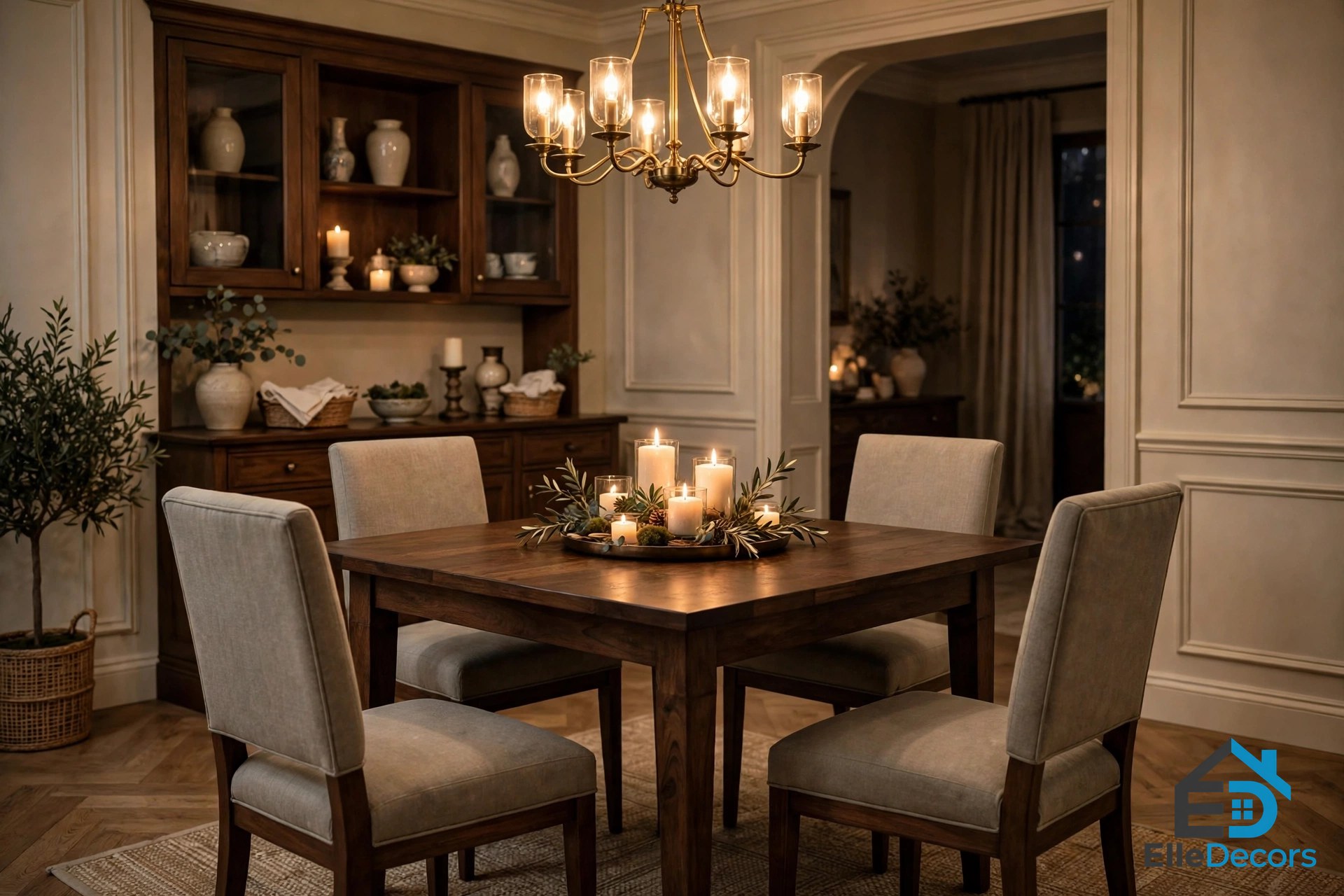
A square dining table is great for keeping conversation between the whole group, seating couples evenly side by side, and it suits a square room better than a long rectangle that leaves dead corners. These formal dining room ideas favour the square table for smaller gatherings, because nobody sits at the far end shouting down the table, and the shape makes the room feel sociable rather than ceremonial. Centre a low tray with candles on the table so sightlines stay open. A square table also takes a round rug beautifully, softening its corners and marking its territory on the floor.
10. Go Bold in Black and White
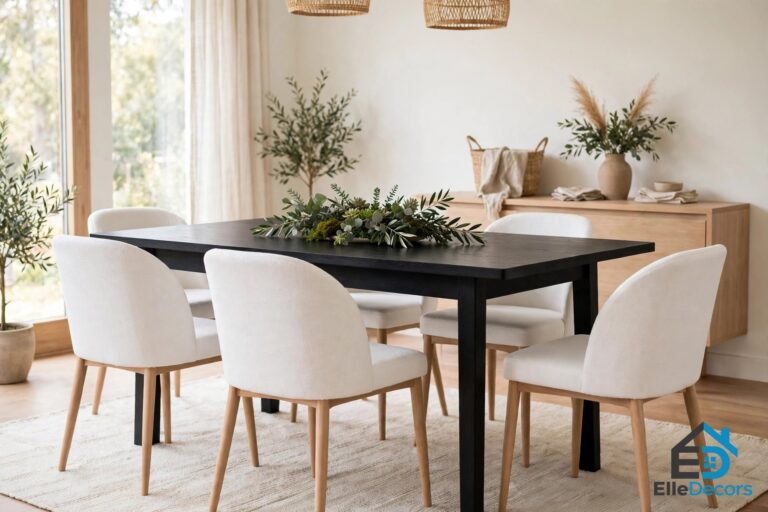
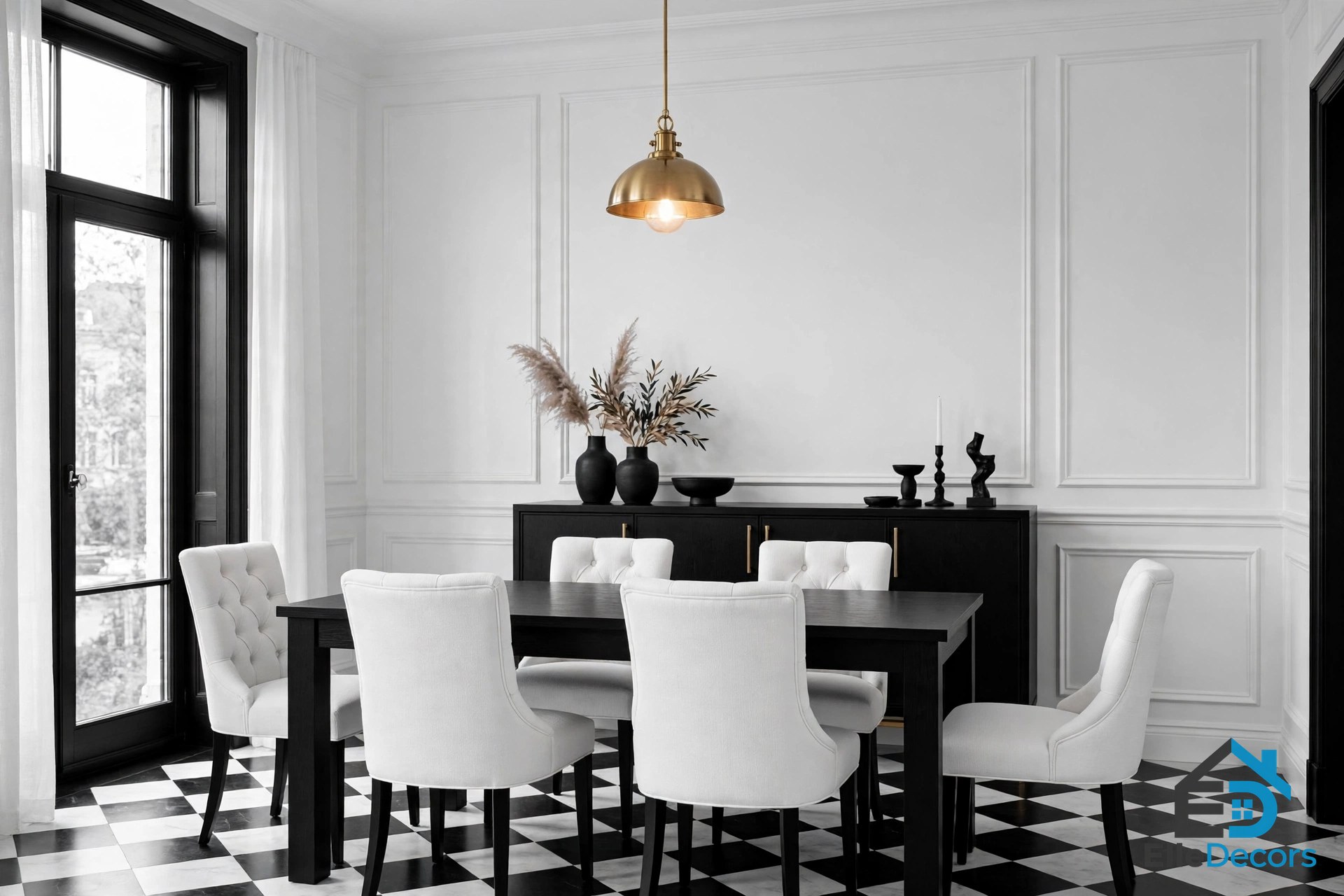
Among formal dining room ideas, black and white is the simplest and most effective, and the source collection proves it needs no apology in a formal room. A black table against white walls, white chairs against a black sideboard, or a monochrome rug under a pale table: the contrast does the decorating, so the shapes and materials have to be good. Keep the black in large, confident blocks rather than fussy details, and let one warm material, natural wood, brass or leather, soften the scheme so it reads as elegant rather than stark. Add greenery for life, and stop there.
11. Commit to Marble
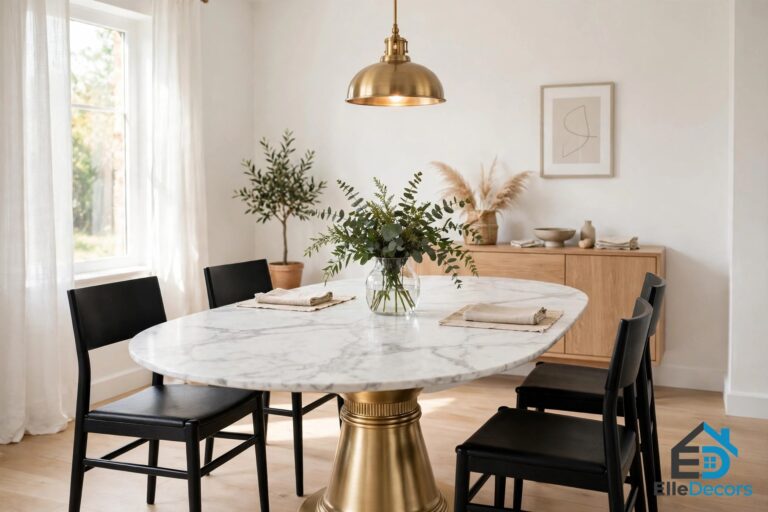
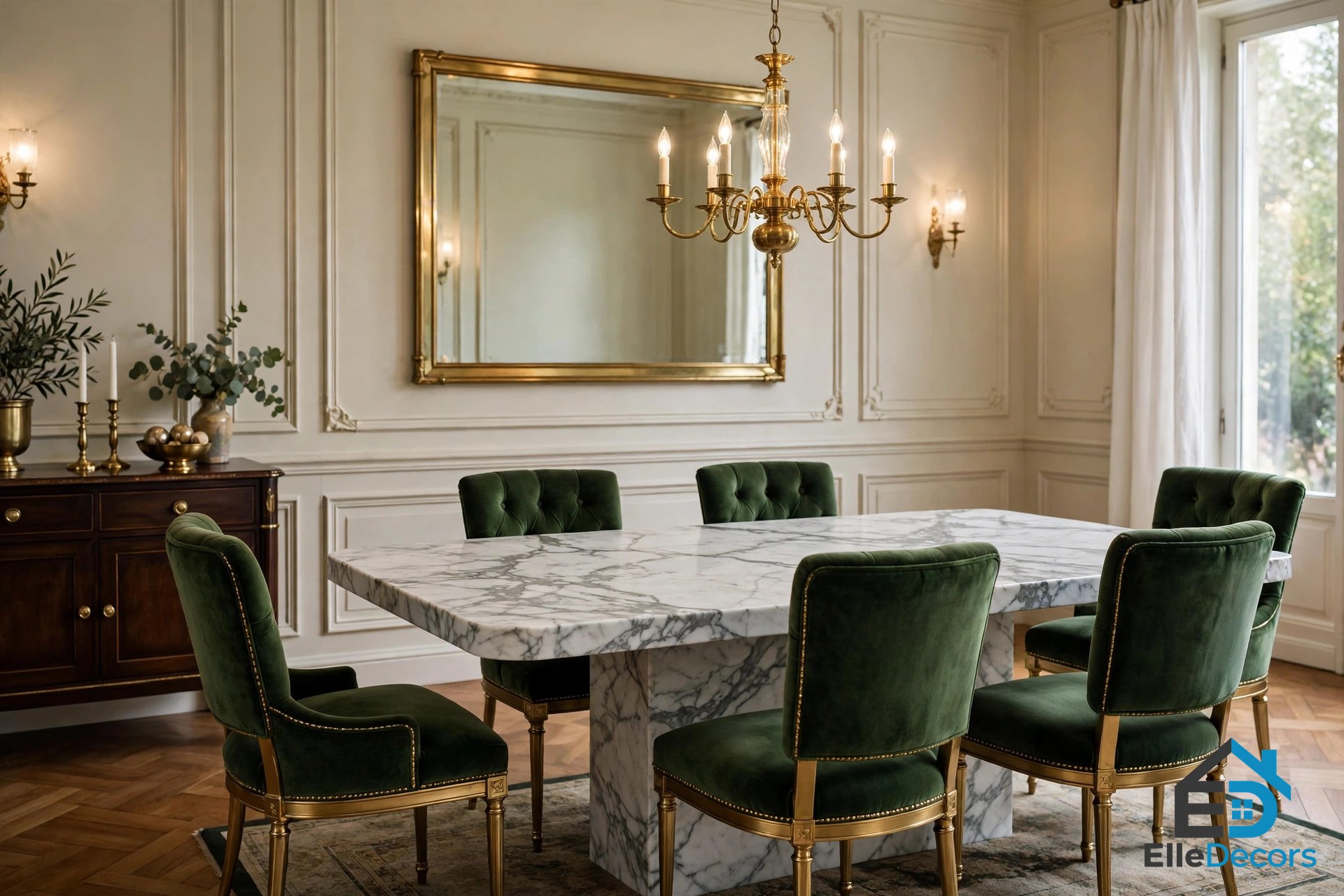
Marble is among the most enduring formal dining room ideas, and the source collection shows why: marble tables, artistic marble focal walls and marbled rugs all appear in it, because marble reads as formal the moment you walk in. A marble-topped dining table anchors the room with weight and cool polish, and it pairs well with velvet chairs, brass details and a large mirror. Marble is a working surface as well as a showpiece, so use placemats and coasters for acidic foods and drinks, and wipe spills promptly to protect the finish. If a full marble table is more than the room needs, a marble sideboard top or a marbled rug brings the same note at a smaller scale. The veining should be the pattern in the room, so keep the other textiles quiet.
12. Pull the Room Together with a Round Rug
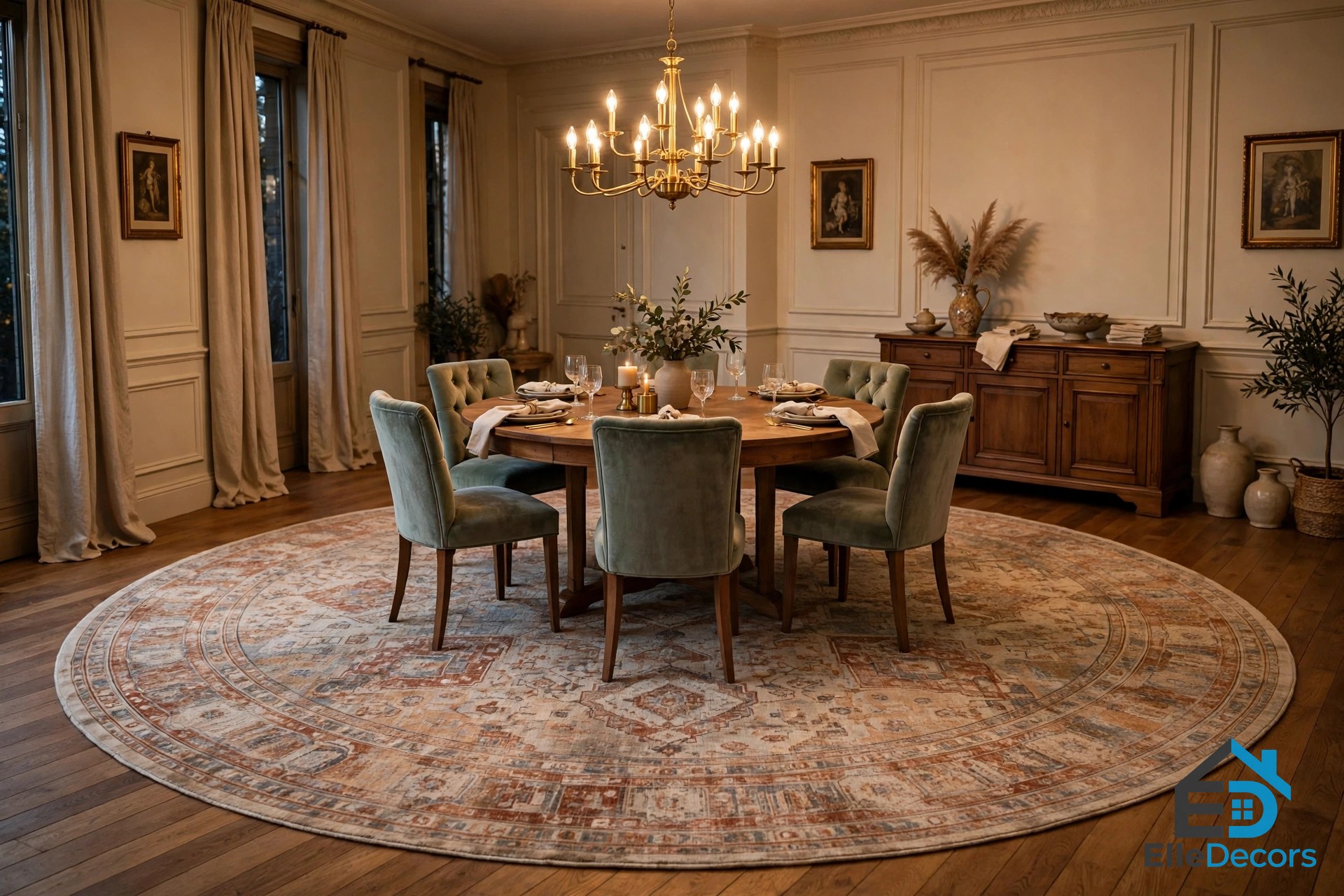
A round dining set deserves a rug that echoes its shape, and the source collection exaggerates a round dining set with a much larger round rug, the combination creating a visual pull toward the centre of the arrangement. The rug defines the dining zone, softens the acoustics of a hard-floored room, and gives the chairs a soft landing that protects the floor. Size it generously: the rug should extend well beyond the table so the chairs stay on it even when pulled out. Choose a low pile that chairs slide across easily.
The Source Collection at a Glance
The source behind this guide is a collection of 51 formal dining room designs with tips and accessories, and the twelve designs above are drawn from its strongest ideas. Its recurring lessons are consistent: define the room’s best feature first, light the whole table rather than just its centre, let the chairs carry colour and pattern, and keep one calm surface for the eye to rest on. Other ideas from the collection worth borrowing include wood panelling to draw attention to a high ceiling, boiserie balanced with a simple modern dining set, skylights washing woodtone panels in daylight, and rattan dining chairs matched with a high-end table and designer pendants. Our guide to mid-century dining table designs carries the same balance of old and new, with clean lines that sit comfortably beside classical wall details.
Sizing, Lighting and Mistakes to Avoid
Three mistakes make a formal dining room feel wrong. First, hanging the chandelier too high or too low: too high and the table loses its pool of light, too low and it blocks conversation, so size the fixture to the table and keep sightlines open. Second, choosing chairs for looks alone: upholstered dining chairs with padded seats and supportive backs keep guests comfortable through multiple courses, while a beautiful but punishing chair empties the room early. Third, forgetting the room between meals: when the table is not set for diners, it should be made presentable for the rest of the day, with decorative trays and bowls as simple centrepieces that are easily removed when mealtimes return.
Quick Comparison: All 12 Designs
This table sums up the twelve designs, the move each one makes and the room it suits best.
| Design | The move | Suits best |
|---|---|---|
| Black arched windows | Dark frames, pale walls | Rooms with tall windows |
| Lattice screens | Filtered daylight | Bright, sunny rooms |
| Eclectic gold | Mixed chairs, one metal | Confident, personal rooms |
| Sputnik chandeliers | Light across the table | Long tables, large rooms |
| Earth colours, garden view | Warm tones, one metallic lift | Garden-facing rooms |
| Pendant cluster anchor | Light marks the zone | Open plan spaces |
| Unexpected colour | One bold surprise | Rooms that feel stuffy |
| Luxurious layers | Repeated motifs, big chandelier | Large rooms, collectors |
| Square table | Even conversation | Square rooms, small parties |
| Black and white | Confident contrast | Any room, with one warm material |
| Marble | Cool polish, quiet textiles | Rooms that want instant formality |
| Round rug | Shape echoed, zone defined | Round tables, hard floors |
Watch: Revitalize Your Formal Dining Room
Watch HouseSmarts speak with a design expert about bringing a formal dining room back to life, with techniques for making the space functional and a true reflection of your personality. The video is a useful companion because it shows the same principle this guide follows: a formal dining room works when it reflects the people who eat there, not just the occasions they celebrate.
Video: HouseSmarts “Revitalize Your Formal Dining Room” Episode 119 — design techniques for a functional, personal formal dining room.
Frequently Asked Questions
What makes a dining room formal?
A separate room reserved for eating, furnished with a crafted table and chairs, a statement light, and finished details such as moulding, art or mirrors, is what makes a dining room formal. It is used for special occasions and lingering meals, and the linens, crystal and tableware signal that the meal matters. Our guide to dining room inspiration shows how the same formal bones can be dressed in many different styles, from classical to modern.
How do I make a formal dining room feel inviting?
Warmth comes from comfort and use, not from lowering the standard. Choose upholstered chairs with padded seats, add a rug under the table, put the lights on a dimmer, and keep a simple centrepiece on the table between meals so the room looks lived in. Formal dining room ideas work best when the room is used often: a room that hosts a weekly family dinner feels welcoming, while a room opened only twice a year feels like a showpiece.
What colour suits a formal dining room?
Deep, saturated colours flatter formal dining rooms because most of their use happens in the evening under warm light. Navy, forest green, deep burgundy and charcoal create a cocooning effect that feels luxurious, while warm whites and soft creams keep a small room bright. Earth colours suit garden-facing rooms, and black and white suits a room with strong shapes.
What size chandelier should I choose?
Size the fixture to the table rather than to the room: its width should sit well within the table’s length so it reads as part of the table setting, and it should hang high enough that seated diners can see each other across it. Over a long table, use two fixtures or one elongated one so the diners at each end are lit as well as those in the middle.
Can a small room be a formal dining room?
Yes. A small room can be formal if it has the right bones: a well-made table, comfortable chairs, one statement light and a clear sense of occasion. A square table suits a small square room, and a single mirror gives the room formality without crowding it. You may even see the phrase spelled “formal dinning room” in search results, a common misspelling, but the design principles are exactly the same whatever the spelling.
Conclusion
A formal dining room earns its place when it is designed for lingering, and the twelve designs here all serve that one purpose: a room that draws people in, seats them comfortably, lights them well and gives them something beautiful to look at while they talk. Start with the table, light the whole of it, choose chairs people can sit in for hours, and add one confident note that makes the room yours. Formal dining room ideas are not a list of rules to obey; they are a set of moves to combine, and the right combination turns a room used a few times a year into the room everyone asks to eat in.