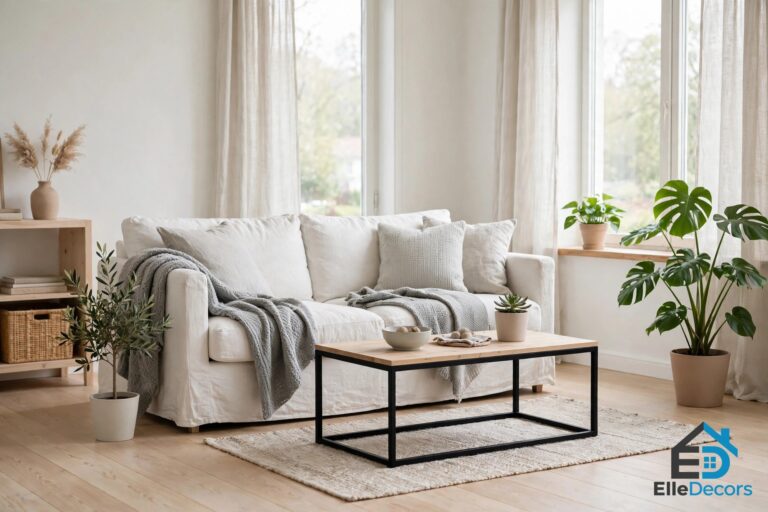
What Is Minimalist Interior Design? 12 Principles for a Calm, Clutter-Free Home
AUDIO SUMMARY: Minimalist interior design is not about empty rooms or white walls. It is a way of designing with fewer, better things, warm natural materials and plenty of breathing space. This guide explains the idea in plain terms and walks through twelve principles drawn from two real wood-finished minimalist homes, from warm neutral palettes and built-in storage to lighting, texture and one focal point per room. Start by removing one thing.
Ask what is minimalist interior design and most designers will answer with the same short phrase: less is more. The words belong to architect Ludwig Mies van der Rohe, and they sum up a style that values simplicity, function and calm over decoration and accumulation. A minimalist home is not an empty home. It is a home where every piece earns its place, where surfaces stay mostly clear, and where the room itself, its light, its proportions and its materials, does the work that clutter does elsewhere. This guide explains the idea in plain terms and shows twelve principles at work in two real homes finished in natural wood.
What Is Minimalist Interior Design?
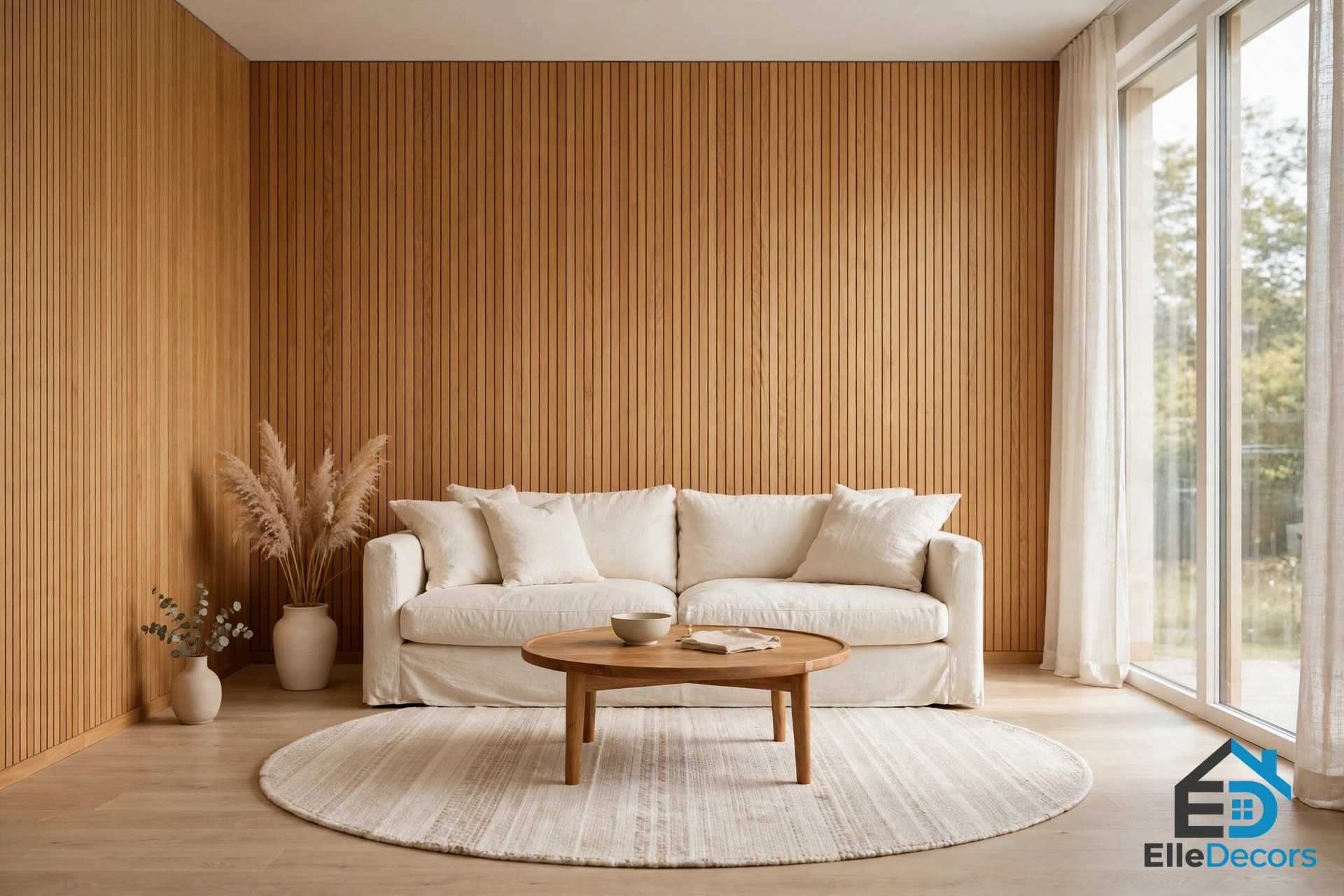
What is minimalist interior design at its simplest? It is an approach that reduces visual competition rather than simply removing possessions. Furniture has straightforward silhouettes, surfaces remain largely clear, colours repeat across the room, and the empty space around objects, known as negative space, helps a table, a chair or a single artwork stand out. The approach has roots in twentieth-century modernist design. The Bauhaus, a school active in Germany from 1919 to 1933, promoted connections between art, craft and industrial production, and minimalist art developed in the United States during the 1960s, with artists such as Donald Judd emphasising simple forms and spatial relationships. A minimalist home can contain everything its occupants need while still looking calm, provided storage and circulation are carefully planned.
1. Start With Less Is More
The first principle is a habit, not a purchase: remove before you add. List what the room must support, including everyday activities such as reading, working or storing toys, keep the furniture that serves those needs, and remove redundant pieces before buying anything new. Minimalism is a broader design approach than decluttering: decluttering means removing unwanted belongings, while minimalism covers layout, proportion, materials, colour and detailing. The test for keeping something is simple, and it comes from the source homes in this guide: if an object is not useful or beautiful, it does not earn floor space.
2. Keep the Palette Warm and Neutral
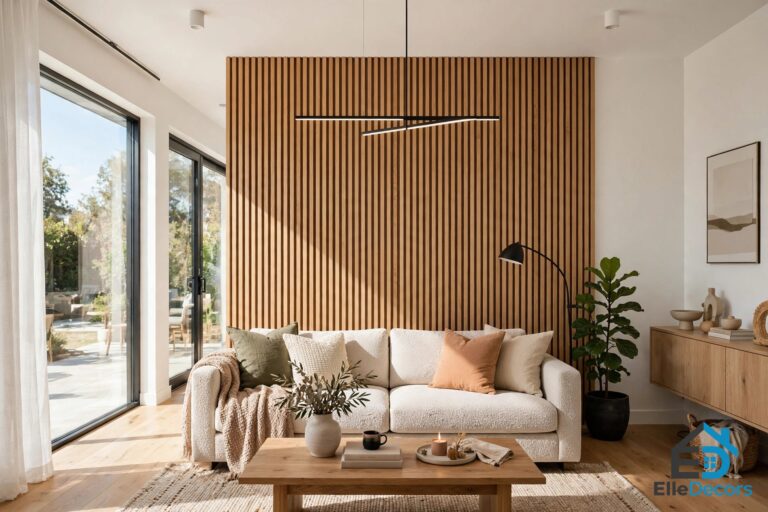
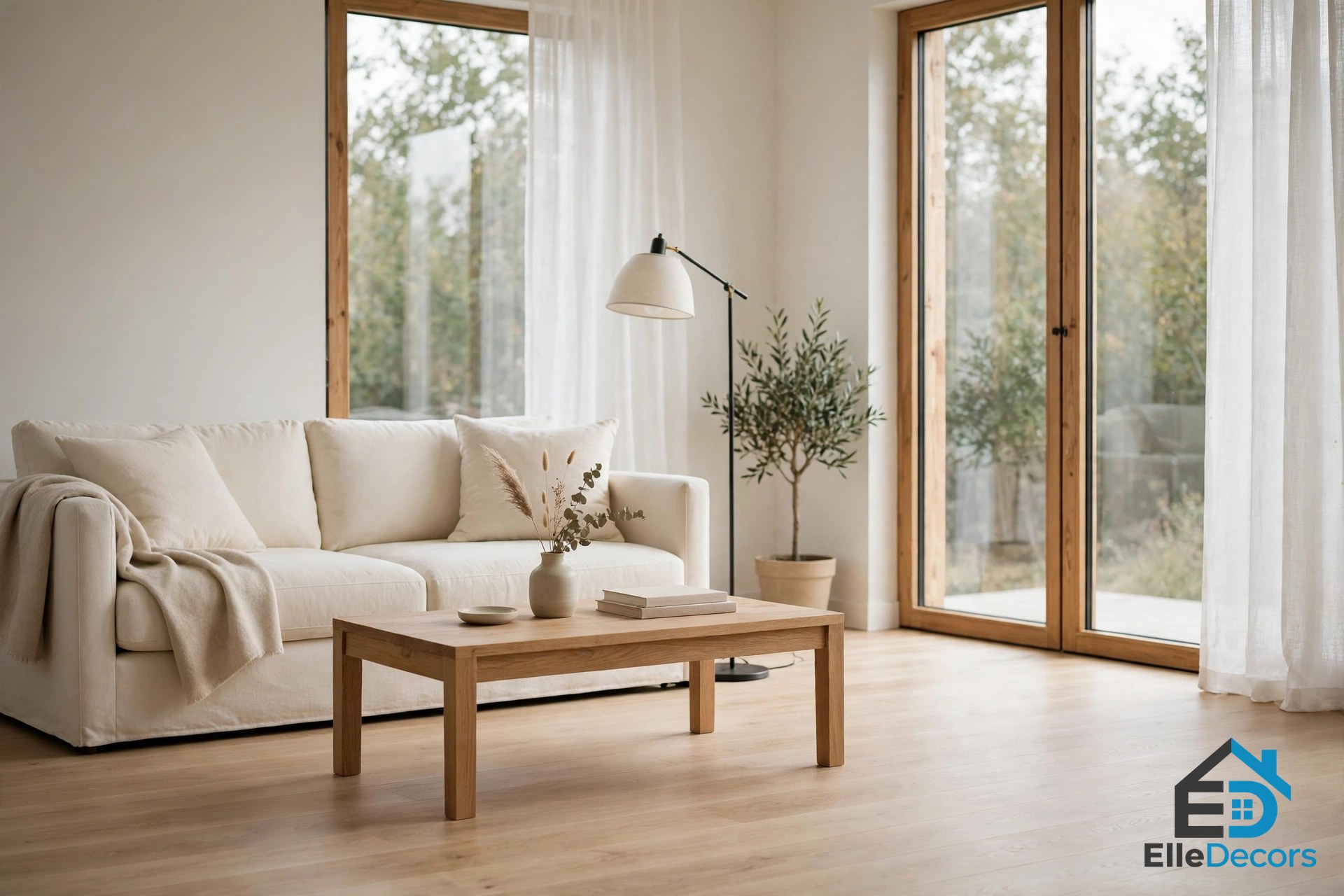
Minimalist rooms are usually built on whites, beiges, greys and blacks, but the two homes in the source gallery show why warm matters more than white. Minimalist white backdrops are warmed up with creamy undertones that complement the natural hue of honey-toned timber, so the rooms feel restful rather than stark. Pale oak, wool upholstery, linen curtains and honed limestone can make a restrained room feel warm, while black steel, glass and polished concrete produce a sharper effect. Pick two or three main materials and repeat them across larger surfaces, and let one soft accent, such as sage green or dusty blue, appear sparingly if the room needs it.
3. Repeat Natural Wood
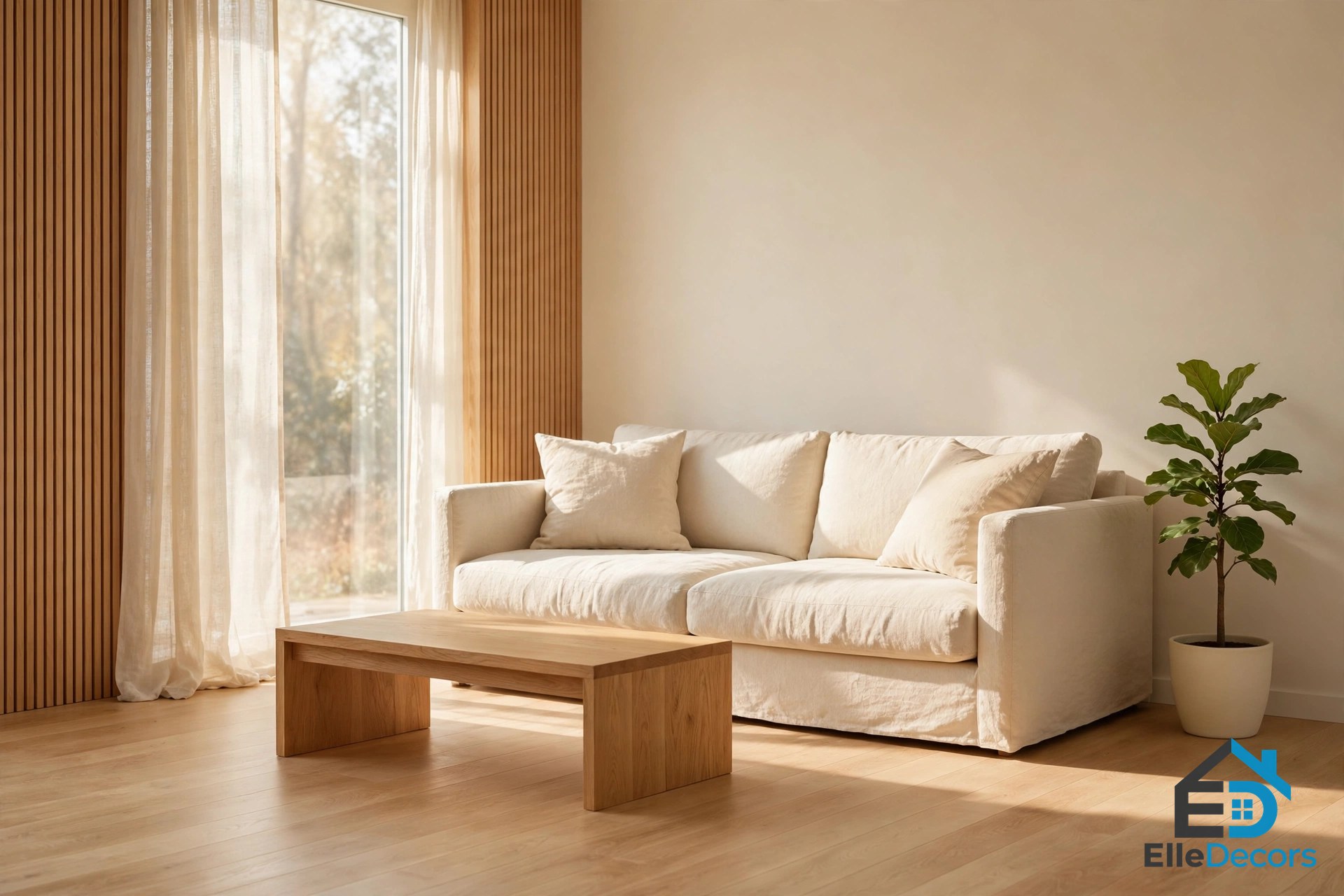
Wood is the material that carries both source homes. In the first, tactile curved edges and beautiful natural wood tone run through the living space, the tea room and the bedroom, with a wooden coffee table anchoring the lounge seating and a round rug softening the floor. In the second, a 90 square metre apartment, mellow wood grain envelops the bedroom, a deep wooden cornice offsets the plainer aspects of the interior, and the ensuite bathroom is clad in the same wooden wall treatment for a cohesive feel. Repeating one timber across rooms ties a home together without adding a single object, and it is the clearest answer to the question of what is minimalist interior design in practice: the same honest material, used again and again, instead of many different finishes competing for attention.
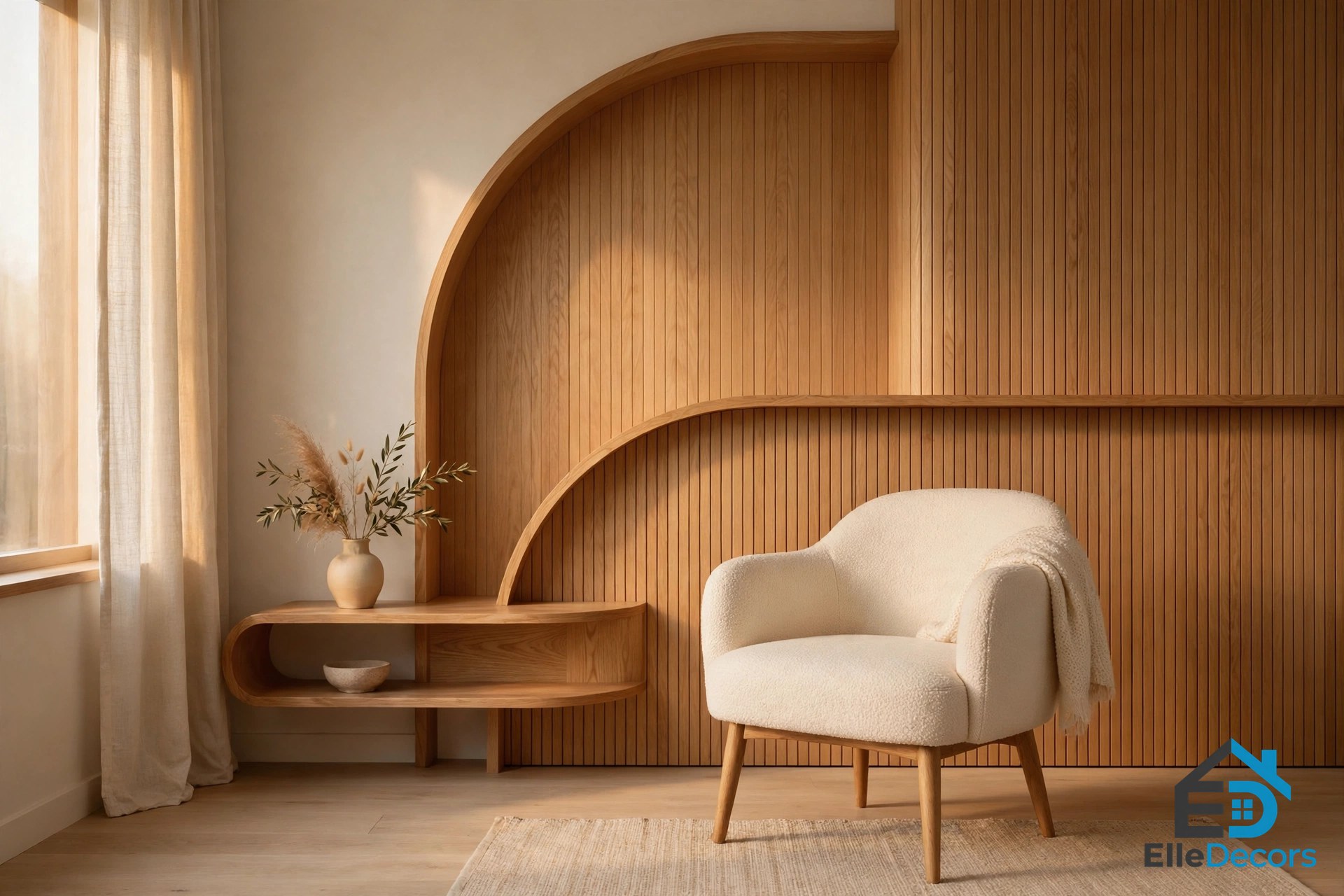
4. Let Negative Space Do the Work
Empty space is not wasted space in a minimalist home; it is the material that makes the furniture visible. In the source homes, wide clear floors, uncluttered walls and generous gaps between pieces let one object at a time hold the eye. The practical way to test this is to mark a 900 mm walking route with masking tape and check that it stays clear, then look at each wall and ask whether it needs anything at all. A large painting can belong as readily as a small ceramic bowl, provided it is the only thing competing for that wall. If every surface is full, the room reads as storage, however expensive the objects are.
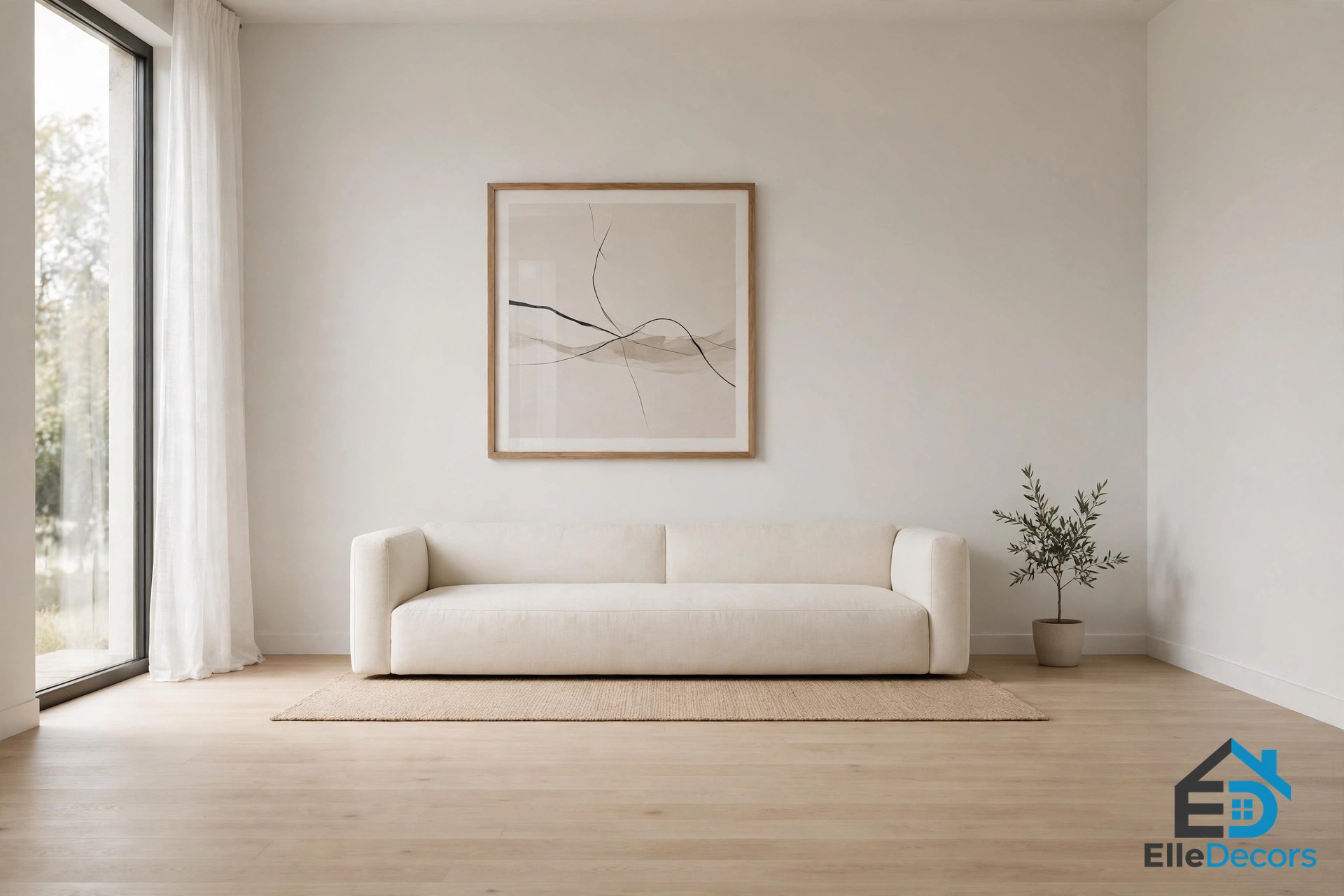
5. Choose Few, Distinctive Accessories
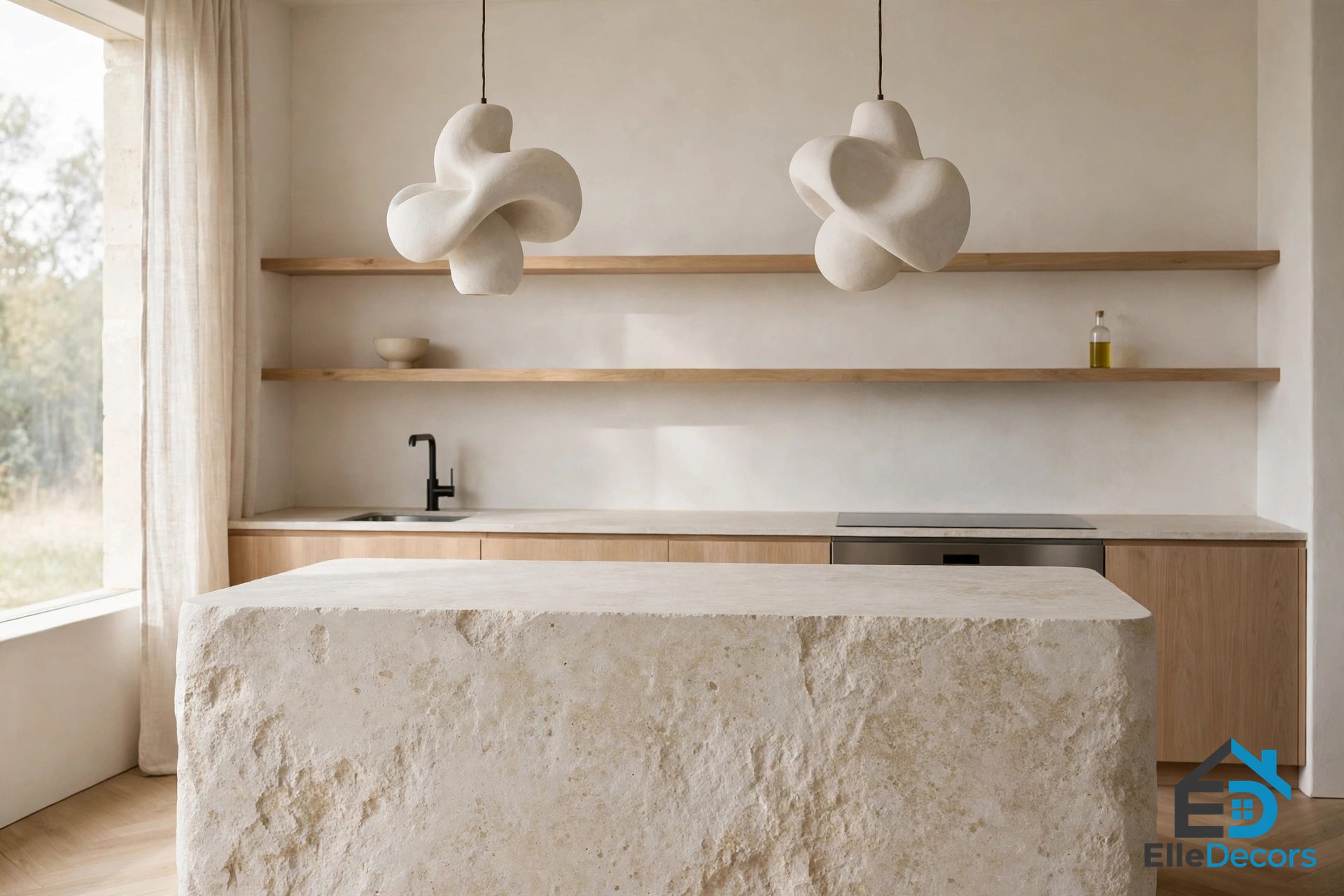
Minimalist rooms keep accessories few but distinctive. In the first source home, a vintage car model sits at one end of a floating shelf, a pleated floor lamp bows over a woven lounge chair, and a single decorative vase pulls attention with a chic silhouette beside the bed. In the second, two sculptural kitchen pendant lights draw the eye, and a copper bowl sits alone on open shelving that is kept primarily bare. The rule is one strong object per surface, not five small ones, and the object should be something you genuinely like looking at, not something bought to fill a gap.
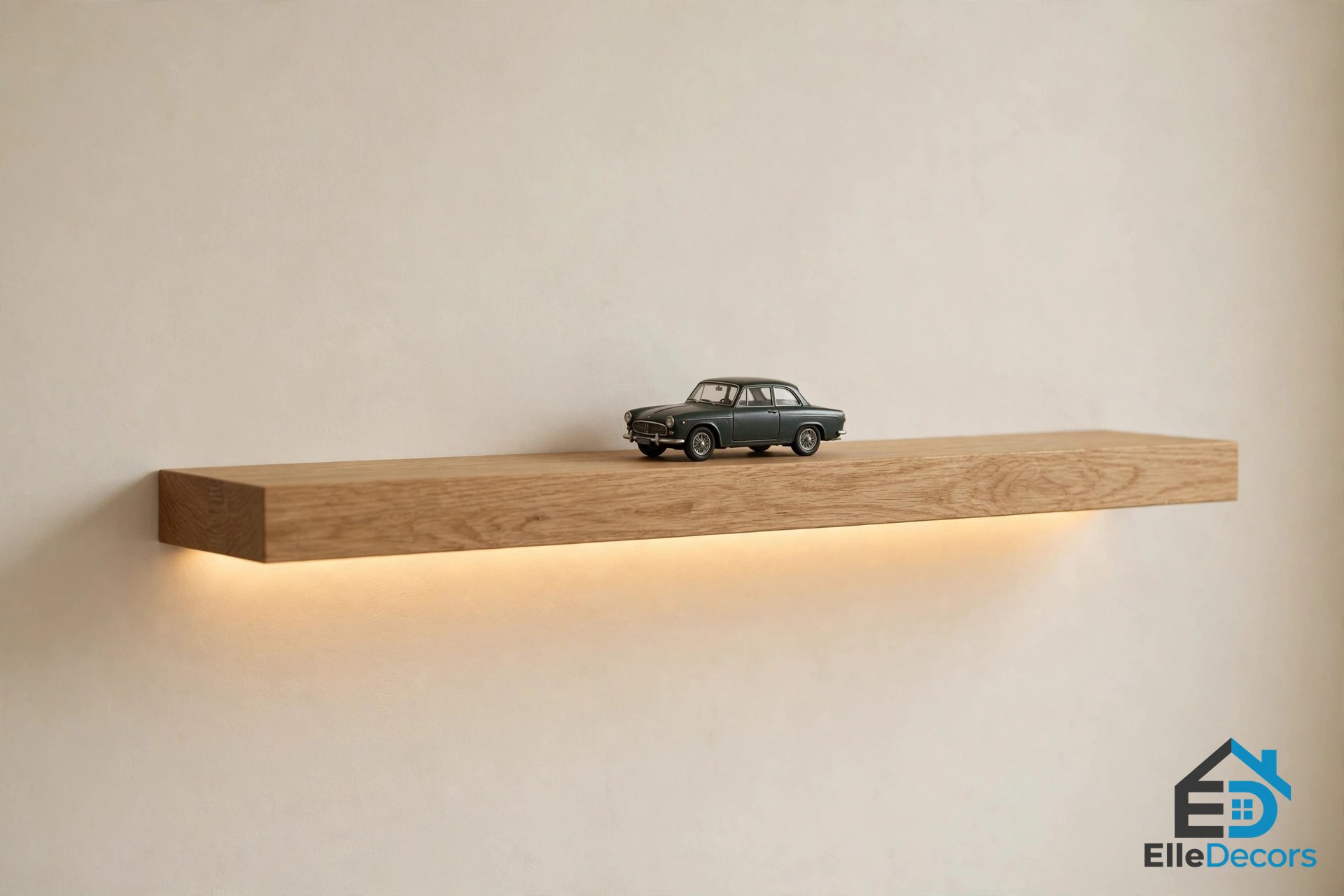
6. Layer Texture Instead of Objects
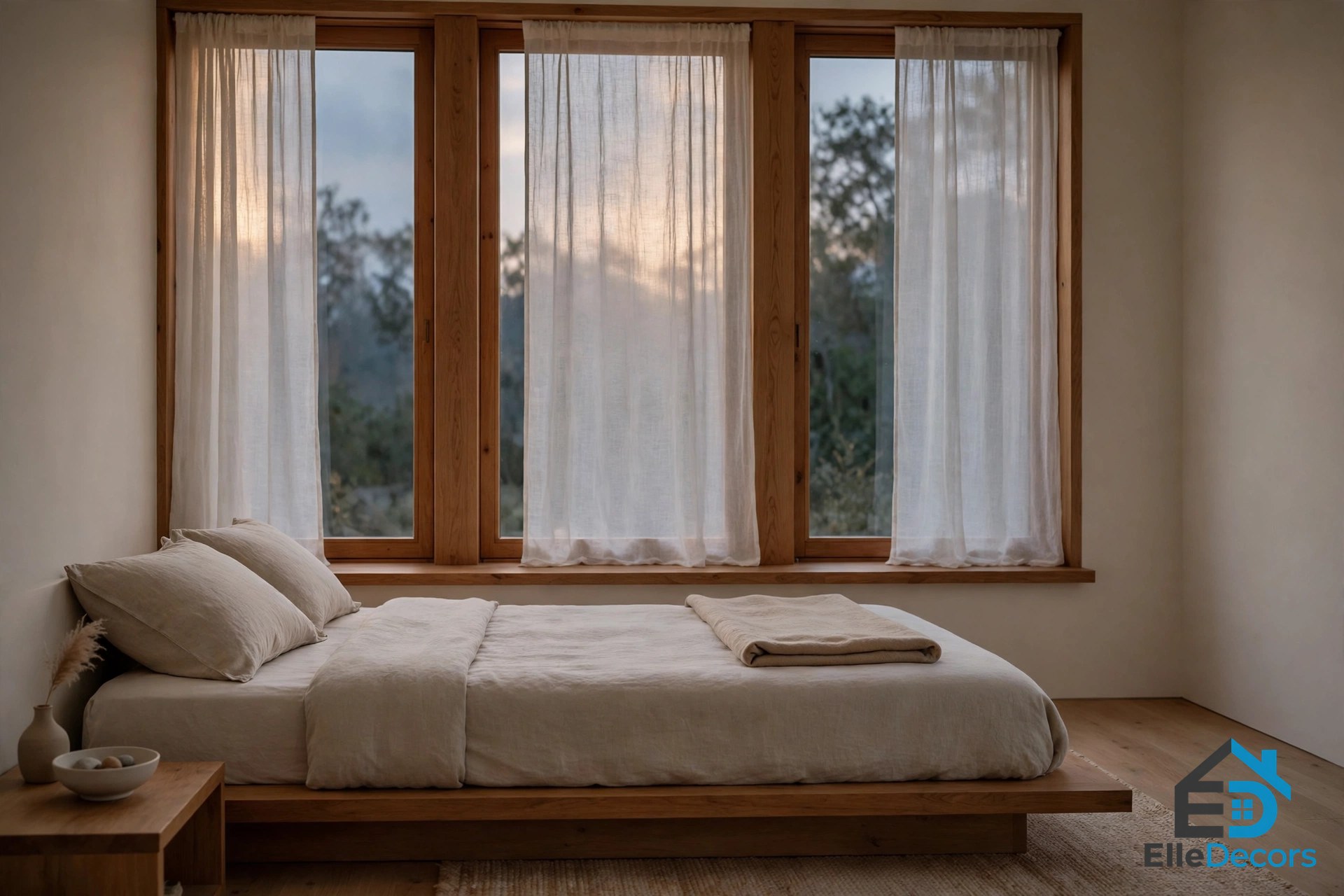
A room with few objects can still feel rich if its surfaces carry texture. Linen, wool, jute, woven rattan and rough plaster all soften a restrained room without adding visual clutter, and curtains and rugs soften both the appearance and the acoustics without requiring lots of decorative objects. In the source homes, a jute rug anchors the sitting area, a woven lounge chair pairs with a pleated lamp, and cushiony soft furnishings balance the hard lines of wood and stone. Combine tactile materials such as wool, linen and wood with comfortable seating and layered lighting, and the room feels warm rather than bare. This is also what is minimalist interior design at its most liveable: comfort comes from touch and light, not from more things.
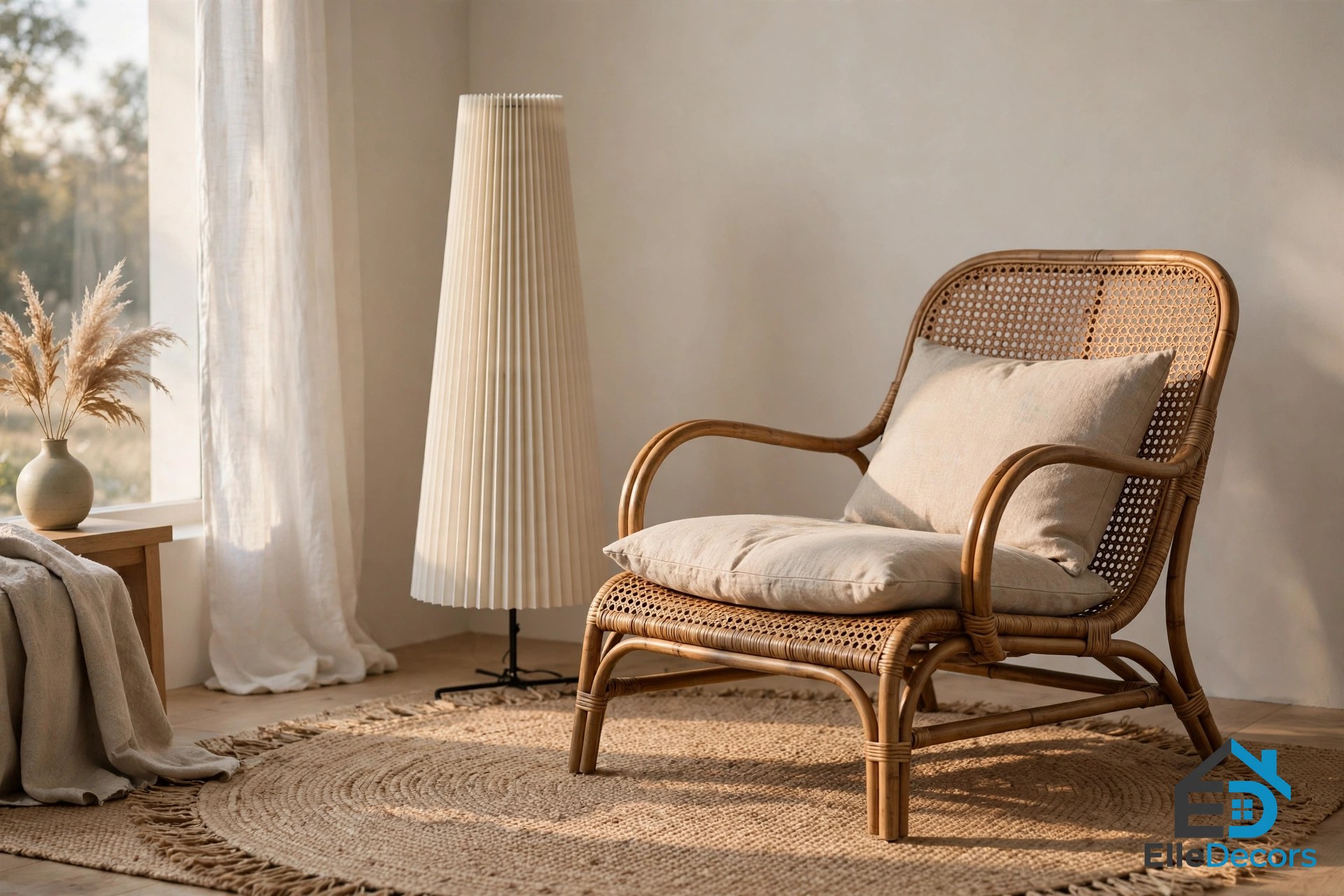
7. Use Light as a Material
Light does more work in a minimalist home than any single piece of furniture, because there is so little else to look at. The source homes use subtle lighting schemes threaded around room perimeters, LED strips under floating shelves, swing arm lamps over bedside storage, and small pendant lights dropping reading light over each side of the bed. In the second apartment, translucent cloth panels within wooden frames soften windows that face directly onto neighbouring windows, turning them into uniform light boxes around the bedroom perimeter. Keep window treatments sheer and simple, put lights on dimmers, and let one warm layer of light wash the walls at dusk rather than relying on a single bright ceiling fitting.
8. Build Storage Into the Architecture
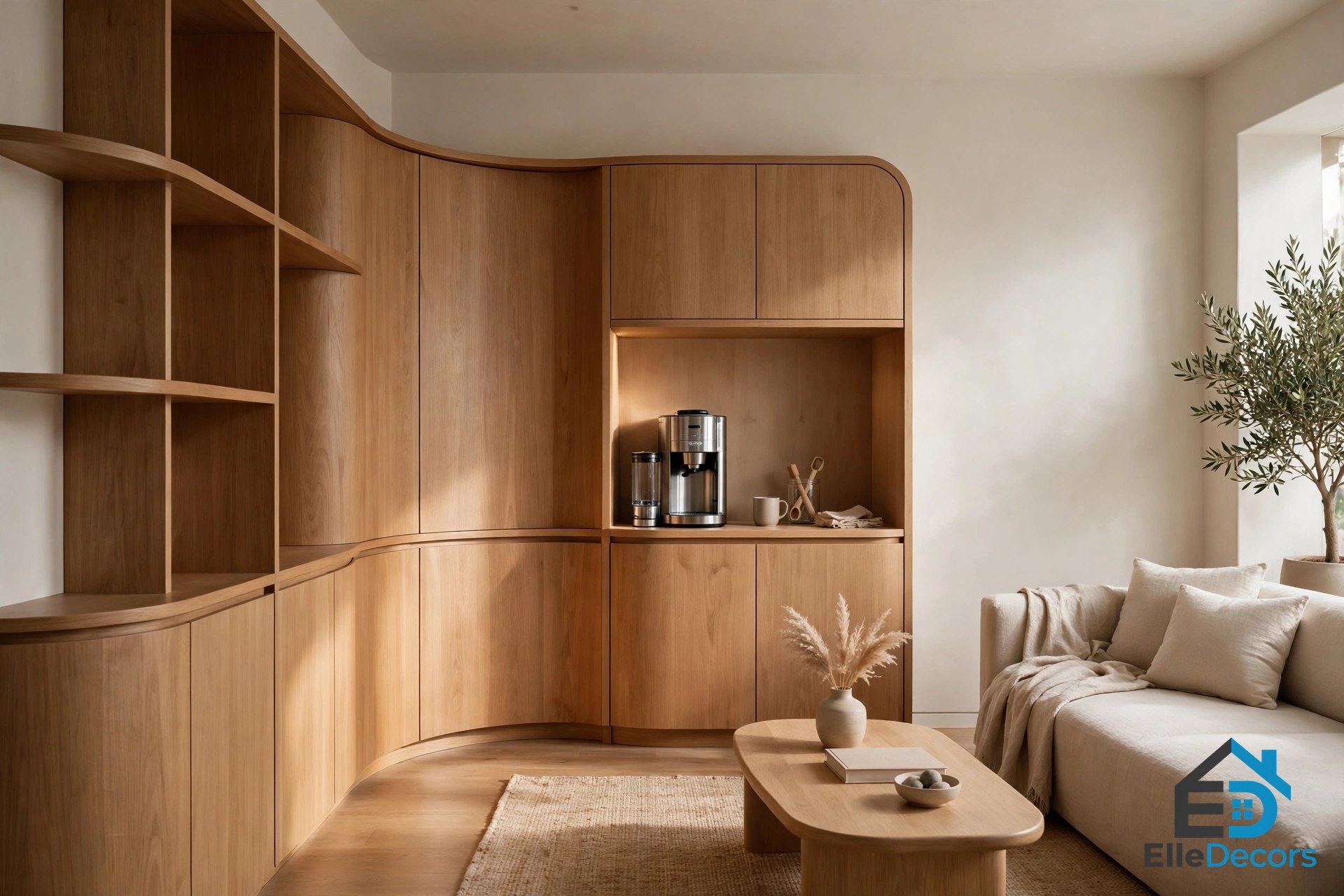
Minimalism fails without storage, and the source homes hide theirs inside the architecture. Curved wooden fascias wrap a corner to form a storage area with a recessed beverage station, a partition wall splits the walk-in wardrobe from the ensuite bathroom, and custom-designed wardrobes partially separate the sleep space from the bathroom while forming the back wall of the shower. In a small apartment, a wall of closed cupboards can store coats, paperwork and cleaning equipment, leaving the living area visually quiet, and a consistent modular framework such as Dieter Rams’s 606 Universal Shelving System, designed in 1960 for Vitsoe, shows the value of one system repeated rather than many mismatched pieces. Put storage close to where items are used, and prefer closed cupboards over open shelving for paperwork and visually distracting supplies.
9. Give Each Room One Focal Point
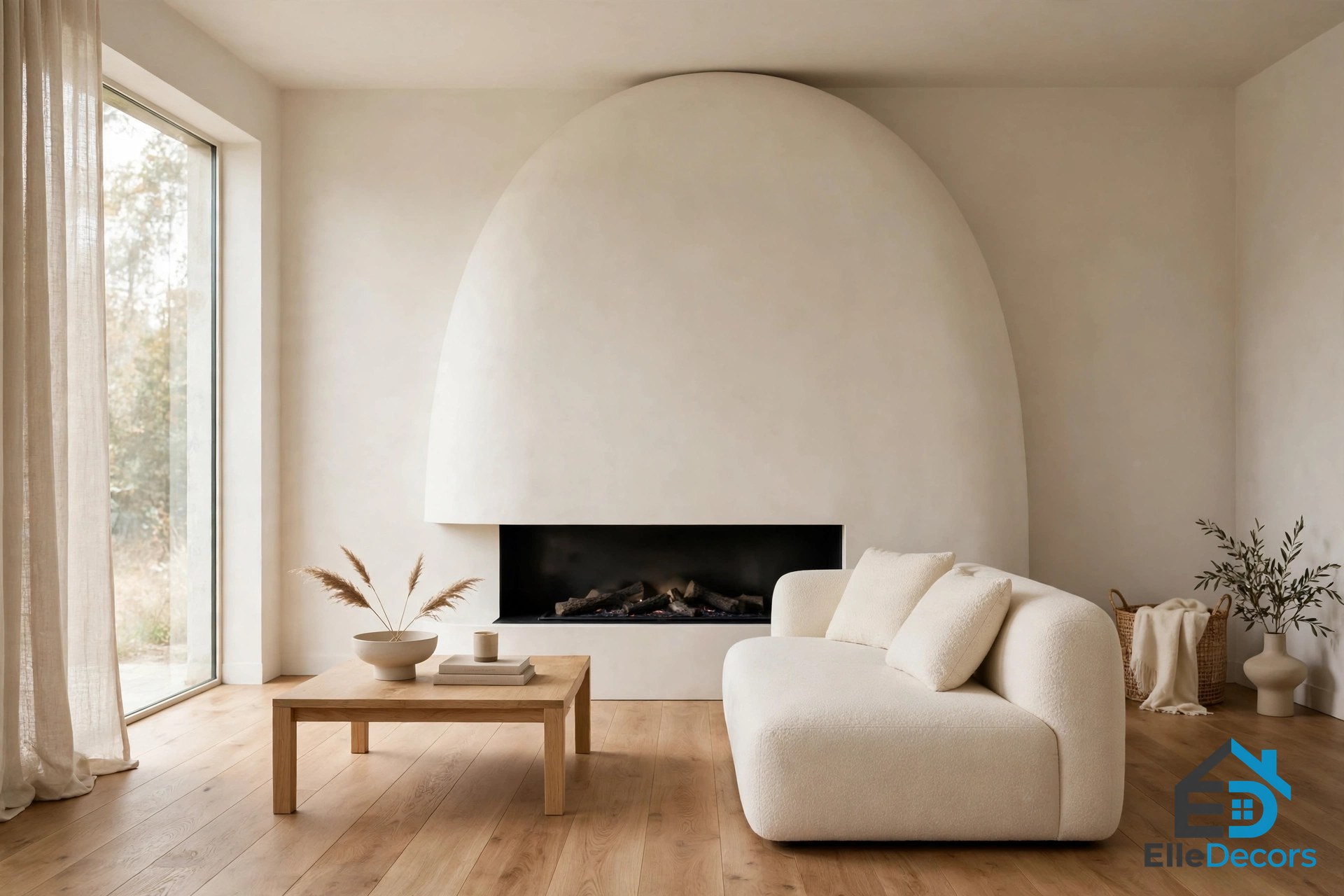
One focal point per room is enough, and the source homes choose theirs carefully: a modern fireplace warming the large living room from beneath a curvaceous chimney breast, a pedestal dining table that seems to defy gravity, a stunning bathtub as the hero piece of the ensuite, and a limestone kitchen island unfolding over two levels. A focal point gives the eye somewhere to land, which is what stops a sparse room feeling unfinished. What is minimalist interior design if not this discipline: one strong feature, chosen on purpose, with everything else quiet around it. If a room has two competing features, remove or soften one, and the whole room will feel calmer.
10. Zone Without Walls
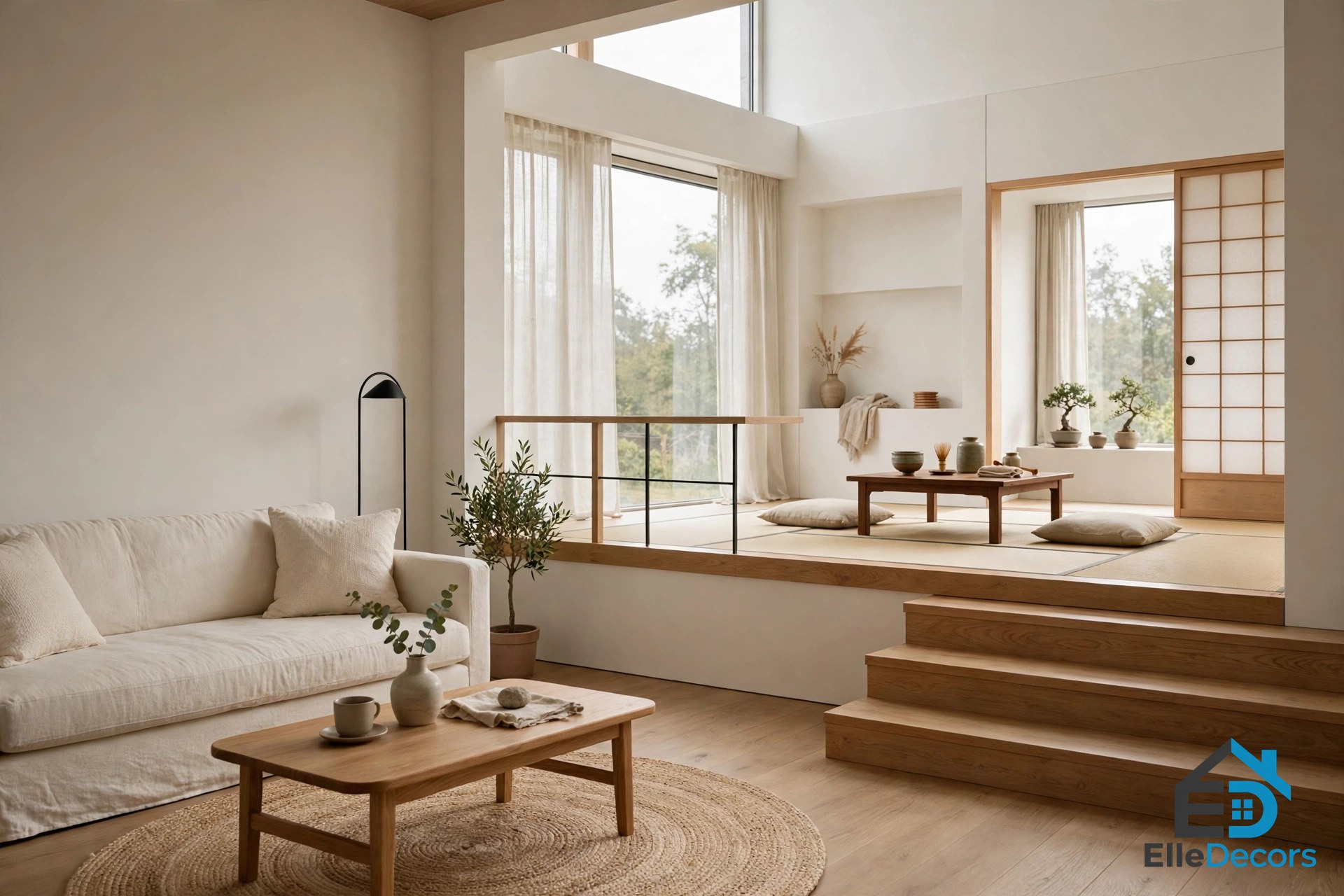
Minimalist homes often do without internal walls, and the source homes show how to divide space without building any. A split level floor divides the first living space into a cosy sitting room and an elevated tea room and study, with the sofa backing directly onto the raised desk to strengthen the border between the two zones. The raised platform floor doubles as seating at the tea table, and the back of the headboard is built out into a desk and dressing table, so the homeowner can look out upon the view while working. Use a change in floor level, a rug, a sofa back or a lighting change to mark zones, and keep sightlines open so the home still reads as one calm space.
11. Keep Surfaces Clear
Clear surfaces are the daily habit that keeps what is minimalist interior design alive after the decorating is done. Open kitchen shelving is kept primarily bare in the second source home, the limestone island holds almost nothing, and the floating wall shelves behind the bespoke table hold a small book collection and a few decorative items only. The habit is to give everything a closed home, clear each surface at the end of the day, and resist the one-in, one-out drift that fills shelves over months. A room can contain everything its occupants need while still looking calm if storage and circulation are carefully planned, and that planning is mostly about where things live when they are not being used.
12. Make It Warm Enough to Live In
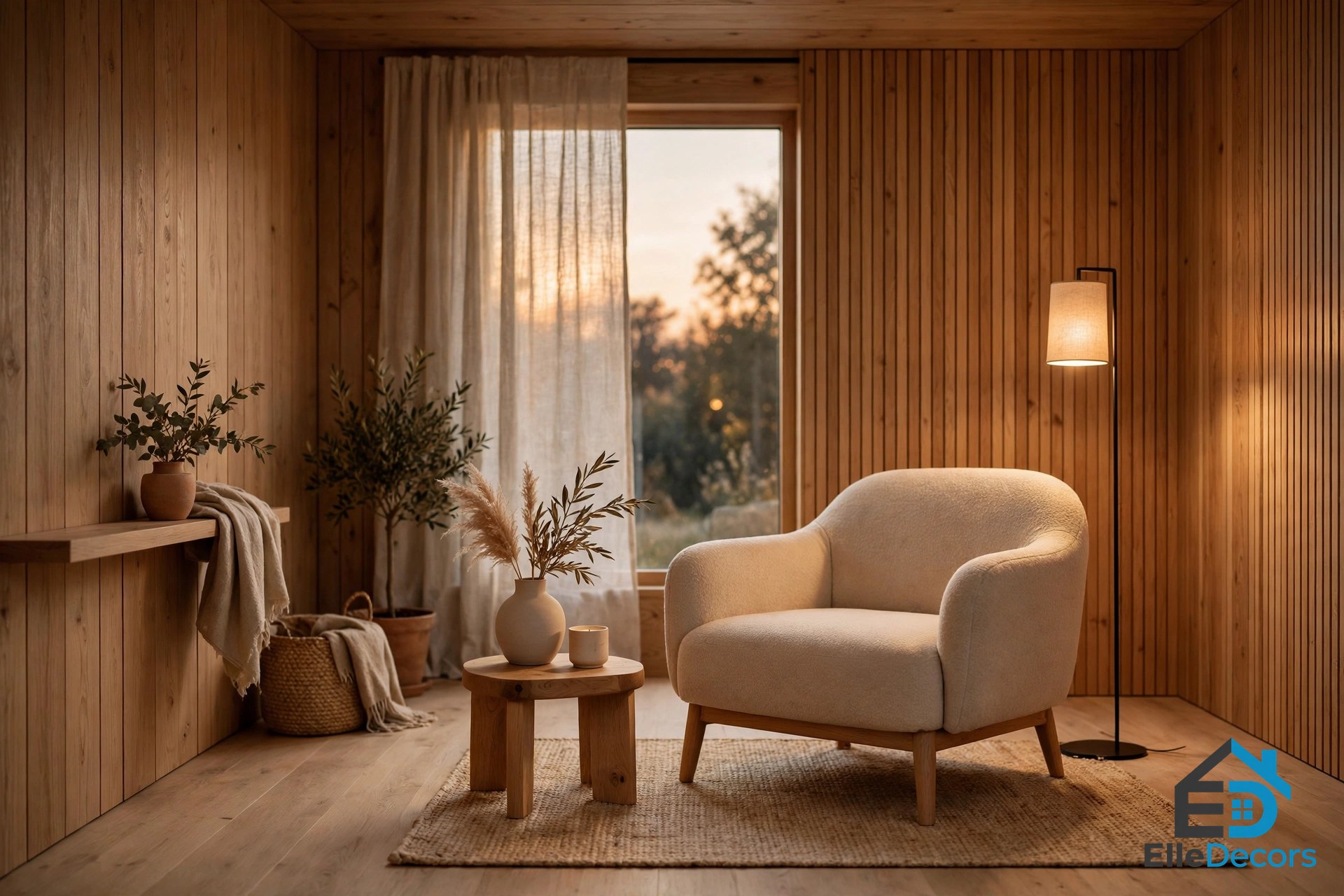
The most common failure of minimalism is a room that looks good in a photograph and feels cold to live in, and the source homes avoid it by choosing warmth at every step: creamy walls instead of stark white, honey wood instead of grey laminate, soft furnishings instead of hard surfaces, and light that glows rather than glares. The second apartment’s master bedroom is clad in natural wood for a cabin-like feel, with a large comfortable lounge chair, a slimline floor lamp and a small wooden side table forming an inviting reading corner. Minimalist design does not mean all-white, inexpensive or empty, and it does not have to be expensive either: rearranging existing furniture, clearing surfaces and simplifying textiles can cost little. Finish with comfortable lighting and a few meaningful objects rather than stripping away every sign of personality.
Minimalist, Modern and Japandi: What Is the Difference?
Minimalism is often confused with two neighbours, and the distinction matters when you plan a room. Modern design refers to traditions rooted in twentieth-century modernism, and a modern room can include abundant furniture, bold patterns and collections without being minimalist. Japandi, the blend of Japanese and Scandinavian design, shares minimalism’s restraint but adds warmer wood, softer textiles and a craft-led feel, and our guide to scandi style shows the Scandinavian half of that blend in detail. Our minimalist apartment guide applies the same principles to a compact home, and our minimalist bedroom design guide carries them into the room where calm matters most. Choose minimalism when you want editing and restraint as the whole approach, and borrow from Japandi when you want that restraint to feel softer.
Quick Comparison: All 12 Principles
This table sums up the twelve principles in this guide, with the room each suits best and how much effort it takes.
| Principle | Best room | Effort |
|---|---|---|
| Less is more | Whole home | Low |
| Warm neutral palette | Living room, bedroom | Low |
| Repeat natural wood | Living room, bedroom | Medium |
| Negative space | Living room | Low |
| Few distinctive accessories | Any room | Low |
| Layered texture | Living room, bedroom | Low |
| Light as a material | Living room, bedroom | Medium |
| Built-in storage | Kitchen, bedroom | High |
| One focal point | Living room, bathroom | Medium |
| Zoning without walls | Open plan | Medium |
| Clear surfaces | Kitchen, living room | Low |
| Warm enough to live in | Whole home | Low |
Watch: Beautiful Minimalist Interiors for Small Apartment Living
Watch ATS Studio walk through minimalist apartment ideas room by room, showing how simple furniture, neutral colour palettes, smart storage solutions and carefully chosen decorations make small spaces feel more organised, inviting and sophisticated. The video covers a welcoming living room, a peaceful bedroom with neutral colours and simple bedding, a functional kitchen and dining area, smart storage, and a reading nook, which makes it a useful companion to the principles above, especially if your home is compact. The ideas are practical rather than architectural, so they translate well to a rented flat as well as an owned home.
Video: ATS Studio explores minimalist interiors for small apartments, covering neutral palettes, simple furniture, smart storage and calm bedrooms.
Frequently Asked Questions
What is minimalist interior design?
What is minimalist interior design in one sentence? It is a design approach that uses purposeful furnishings, restrained colours and simple forms to create an uncluttered, functional space, with negative space, repeated materials and considered proportions doing the visual work. It is not about owning as little as possible; it is about every remaining item earning its place.
Is minimalist design the same as modern design?
Not quite. Modern design refers to a specific early to mid twentieth century movement with its own materials and forms, while minimalism is an approach based on editing and restraint that can be applied within any era. A minimalist room can contain modern, traditional or Japandi pieces, provided each one earns its place.
Does a minimalist home have to be all white?
No. Minimalist rooms can feature deep green walls, a rust-coloured sofa or colourful artwork, and pale oak, wool, linen and honed limestone can make a restrained room feel warm. Repeating selected colours and limiting competing patterns creates cohesion without relying on an all-white palette.
Can a minimalist room feel cosy?
Yes. Combine tactile materials such as wool, linen and wood with comfortable seating and layered lighting, and add curtains and rugs to soften the appearance and the acoustics. The source homes in this guide stay warm through honey wood, creamy walls and soft furnishings rather than through extra objects.
Is minimalist interior design expensive?
It does not have to be. Rearranging existing furniture, clearing surfaces and simplifying textiles can cost little. Custom cabinetry, concealed hardware and carefully aligned architectural details are the elements that can make some minimalist projects expensive, so spend on built-in storage first and on decoration last.
How do I start if my home is full of things?
Start with one room and one rule: list what the room must support, keep the furniture that serves those needs, and remove redundant pieces before buying anything new. Give everything a closed home, clear one surface completely, and live with the emptier room for a week before deciding what, if anything, needs to come back.
The Bottom Line
What is minimalist interior design, finally, is a question with a practical answer: fewer things, chosen well, in a room with warm materials, clear surfaces and light that flatters them. Start by removing one thing, repeat one natural material, and give each room a single focal point. Done that way, minimalism is not a bare white box. It is a calm, comfortable home that is easier to keep, easier to clean, and easier to live in.