Sage Green Interior Design Trends: 12 Stunning Ways to Bring Calm Colour Home
AUDIO SUMMARY: Sage green is the calm colour Pinterest keeps coming back to: soft, grey-green, and easy to live with. This guide covers twelve ways to use it — accent walls, green kitchens, sage bedrooms, bathrooms, and small touches like textiles and plants — plus the paint shades designers reach for, the colours that pair best, and the mistakes that make sage look dull. Start with one wall or one piece of furniture.
Sage green interior design trends keep coming back because the colour does something few shades manage: it feels fresh and restful at the same time. Sage is a muted green with grey undertones, and it works in every room of the house. This guide draws on a five-home gallery of sage green interiors to show twelve practical ways to use it — from one painted wall to a full green kitchen. Pinterest reported searches for sage green interiors rising 105 per cent year on year in the UK, but the ideas here are chosen because they last, not because they are new.
What Are Sage Green Interior Design Trends?
Sage green interior design trends are the current ways designers and homeowners use this soft grey-green: as wall colour, on cabinetry and furniture, in textiles, and as an accent that ties a room to nature. The shade suits traditional rooms and modern ones alike, because its grey undertone keeps it quiet while its green side keeps it alive. It pairs with white and wood tones more easily than most colours, which is why the source gallery builds whole homes around that palette. The rule behind every idea below is the same: let sage do the calming, and let white, wood and one dark accent do the structuring.
1. Paint One Accent Wall
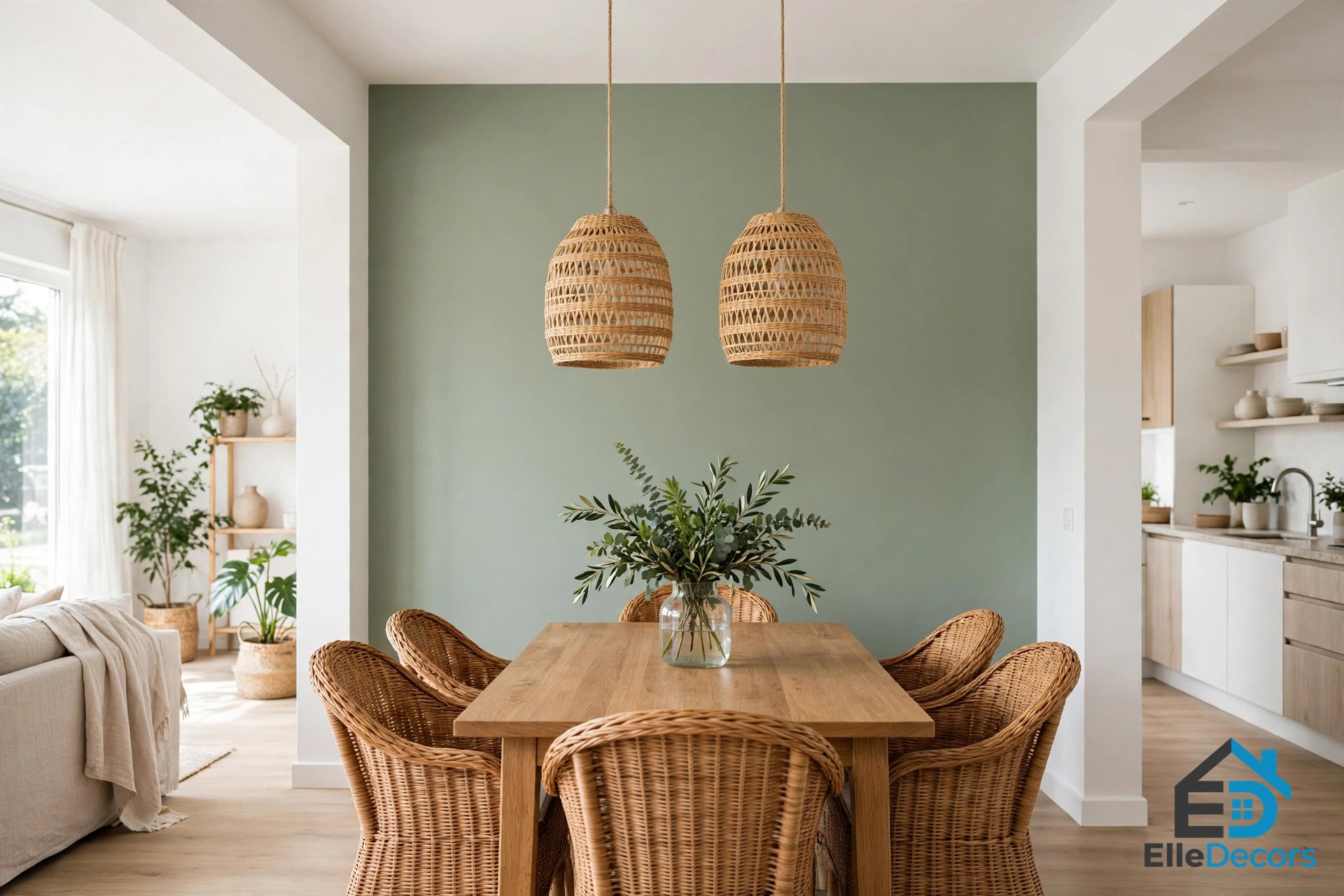
The easiest way into sage is a single painted wall. In one of the source homes, a sage green focal wall sits at the centre of the open-plan layout and colours the whole dining area, while the rest of the room stays white. Six wicker chairs and two wicker pendants above the wooden dining table keep the green from feeling flat, and a clear glass vase of greenery makes a fresh centrepiece. One wall is enough to change the mood of a room, and it is the cheapest commitment in this guide: if you tire of it, one wall is easy to repaint. Choose the wall the eye lands on first — behind the dining table, behind the sofa, or behind the bed — and leave the rest white.
2. Let Sage Lead the Living Room
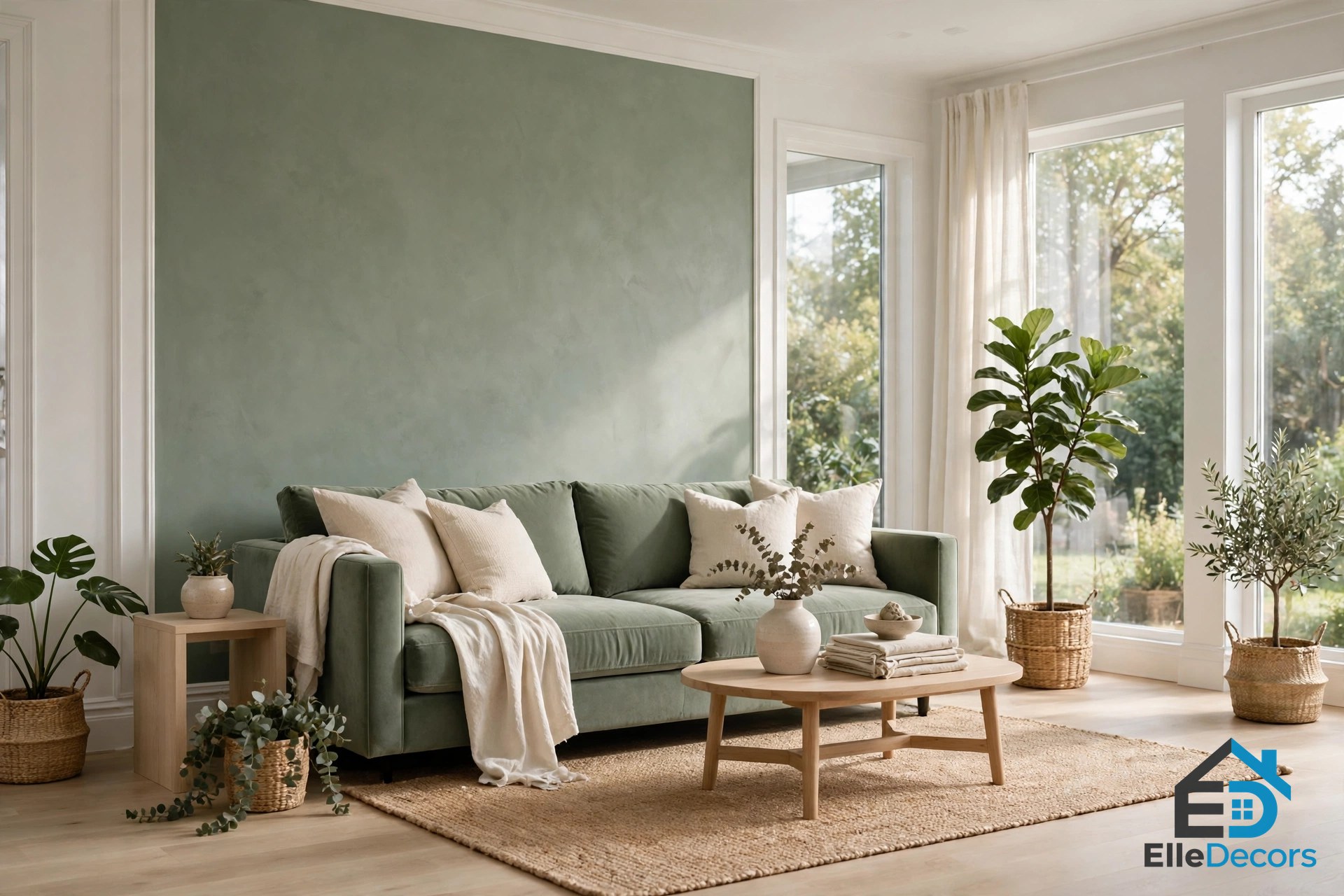
A living room can carry more sage than a single wall. Pair a sage green sofa with a sage wall behind it, keep the trim and ceiling white, and lay light wood flooring with a jute rug underfoot. Sage green interior design trends suit compact living spaces as well as large ones, because the colour is muted rather than loud. Add cream linen cushions, a wooden coffee table and plants in woven baskets, and the room reads calm rather than decorated. If a sage sofa feels like too much, start with the wall and add sage cushions first; the sofa can come later, once you know you love living with the colour.
3. Go Green in the Kitchen
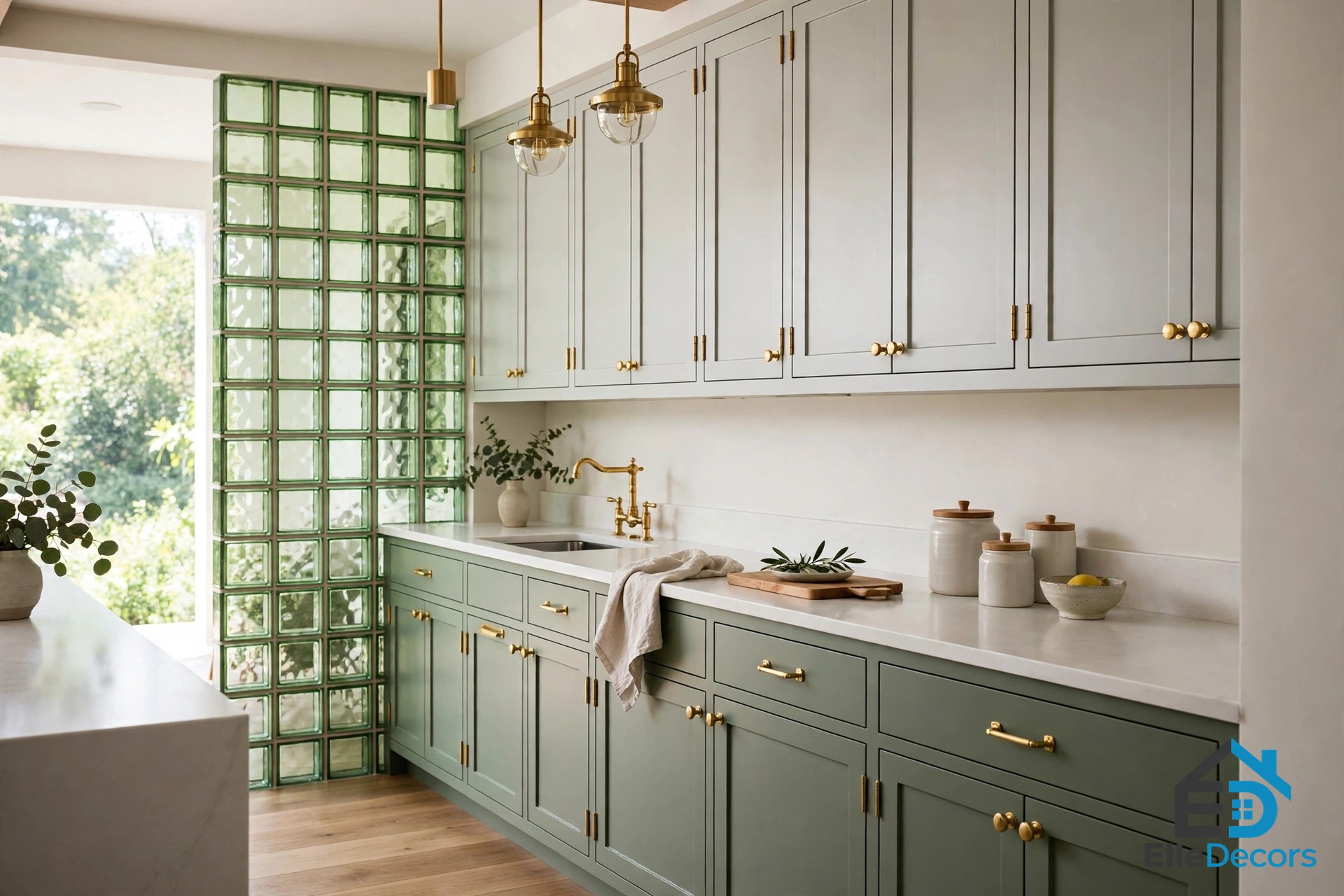
Kitchens are where sage green earns its reputation. In the source gallery, a bold green kitchen anchors an open-concept living room, with a tan sofa beside it for warm contrast. Paint the lower cabinets sage, keep the uppers pale grey or white, and add brass hardware. Beside the kitchen in the same home, green glass bricks build a matching feature wall, and a gunmetal grey sink and faucet drop dark notes into the design. If full cabinets feel bold, paint just the island sage and keep the rest of the kitchen white.
4. Make the Bedroom Sage
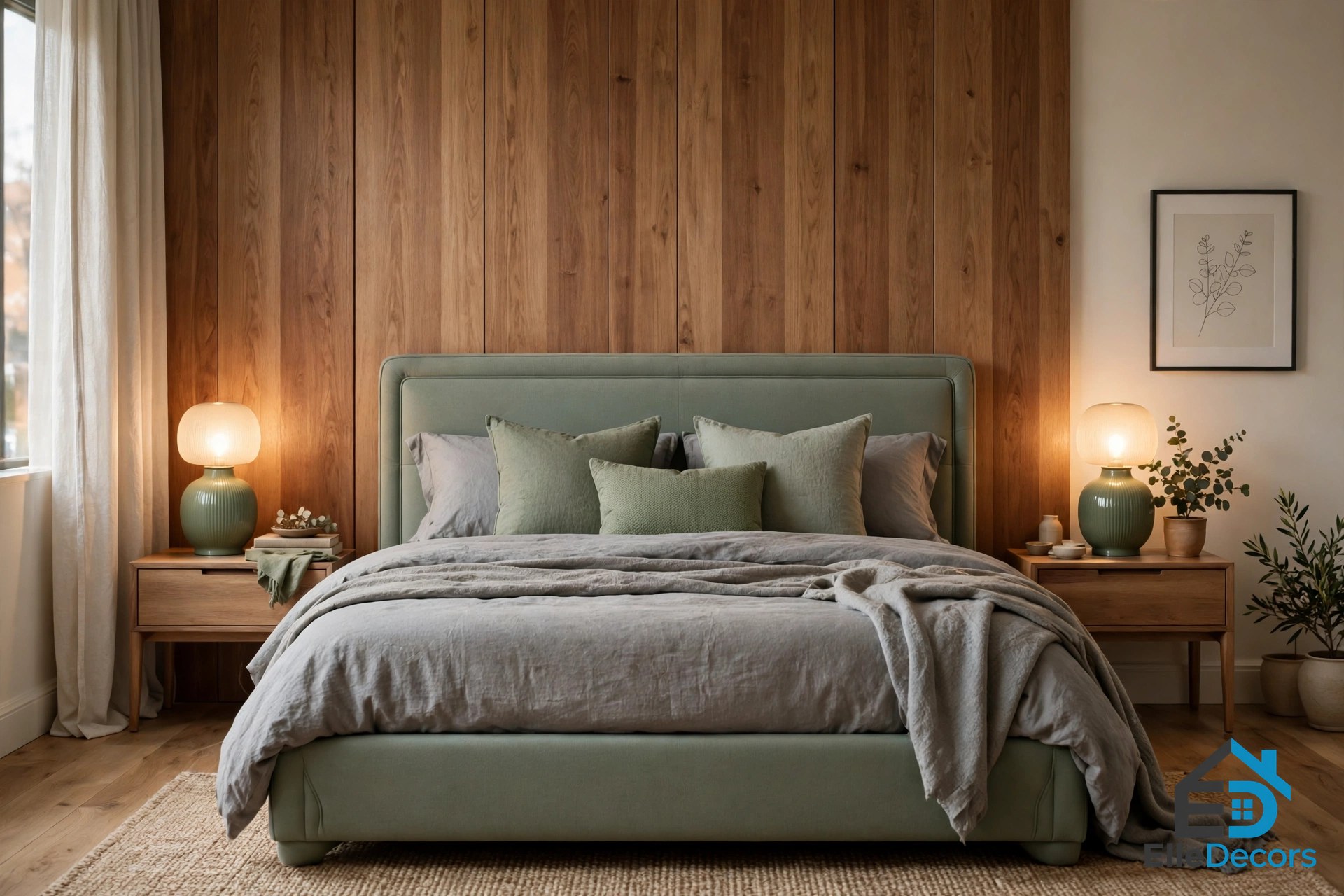
A sage bedroom is one of the most restful rooms you can build. The source gallery shows a green upholstered bed dominating a master bedroom, set against a colour-perforated feature wall, with a glass pendant light over a terrazzo bedside unit. In another home, green pillows brighten a grey bed set and green lamps match the bedside units. Keep the bedding grey or white so the green reads as an accent rather than a theme, and add a wood-panelled headboard wall for warmth. The result is a bedroom that feels like a deep exhale at the end of the day.
5. Choose One Sage Statement Piece
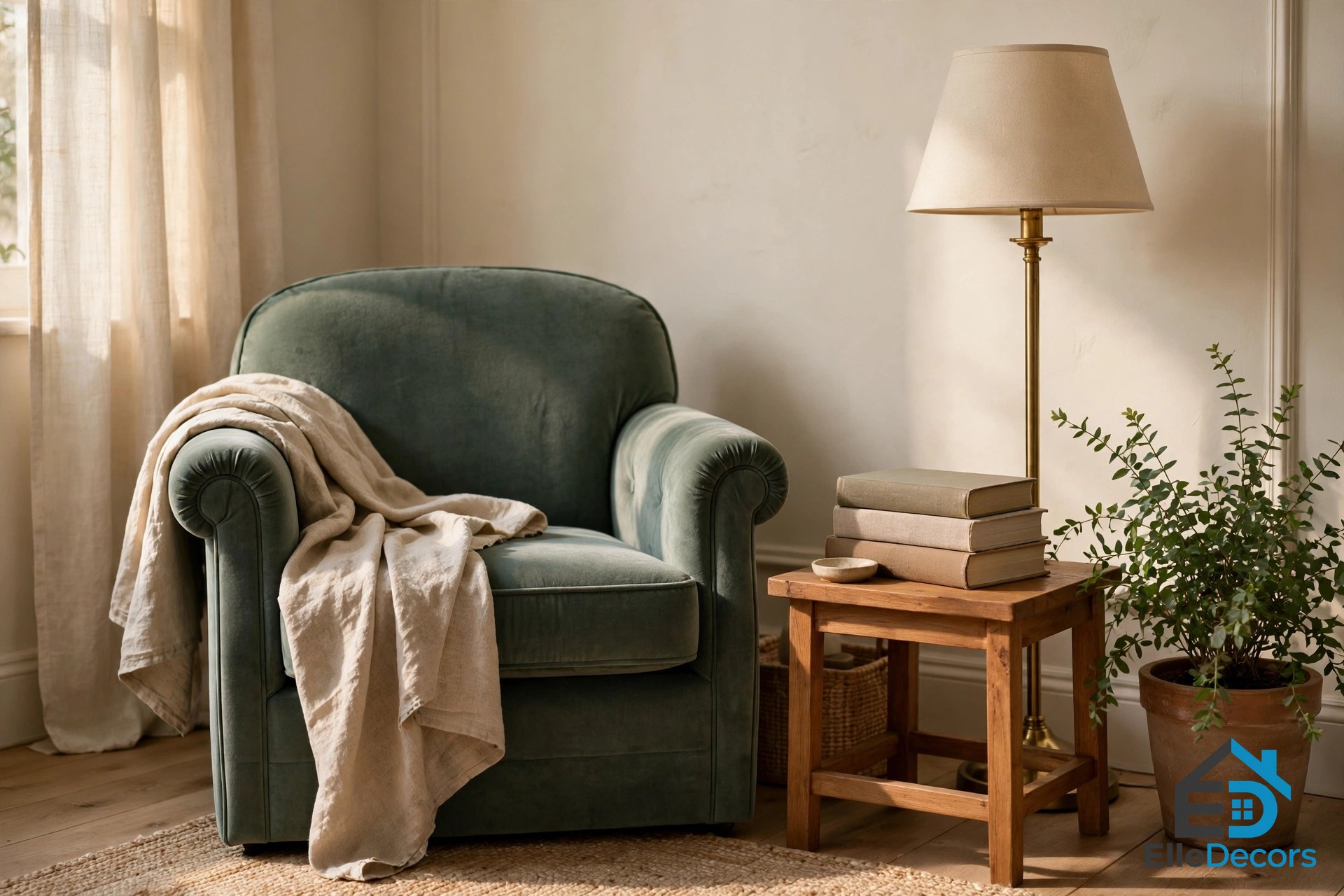
If paint feels like too much commitment, buy the colour instead. A single sage piece — a velvet armchair, a vintage-inspired chair, or a modern sofa — becomes the focal point of a room while the walls stay neutral. Our guide to sage green accent chair ideas shows how one chair can anchor a corner. Style it with a wooden side table, a brass floor lamp, books and a linen throw, and let the chair do the talking. One strong piece beats five small sage accessories scattered around a room, because the eye needs one place to land.
6. Take Sage Into the Bathroom
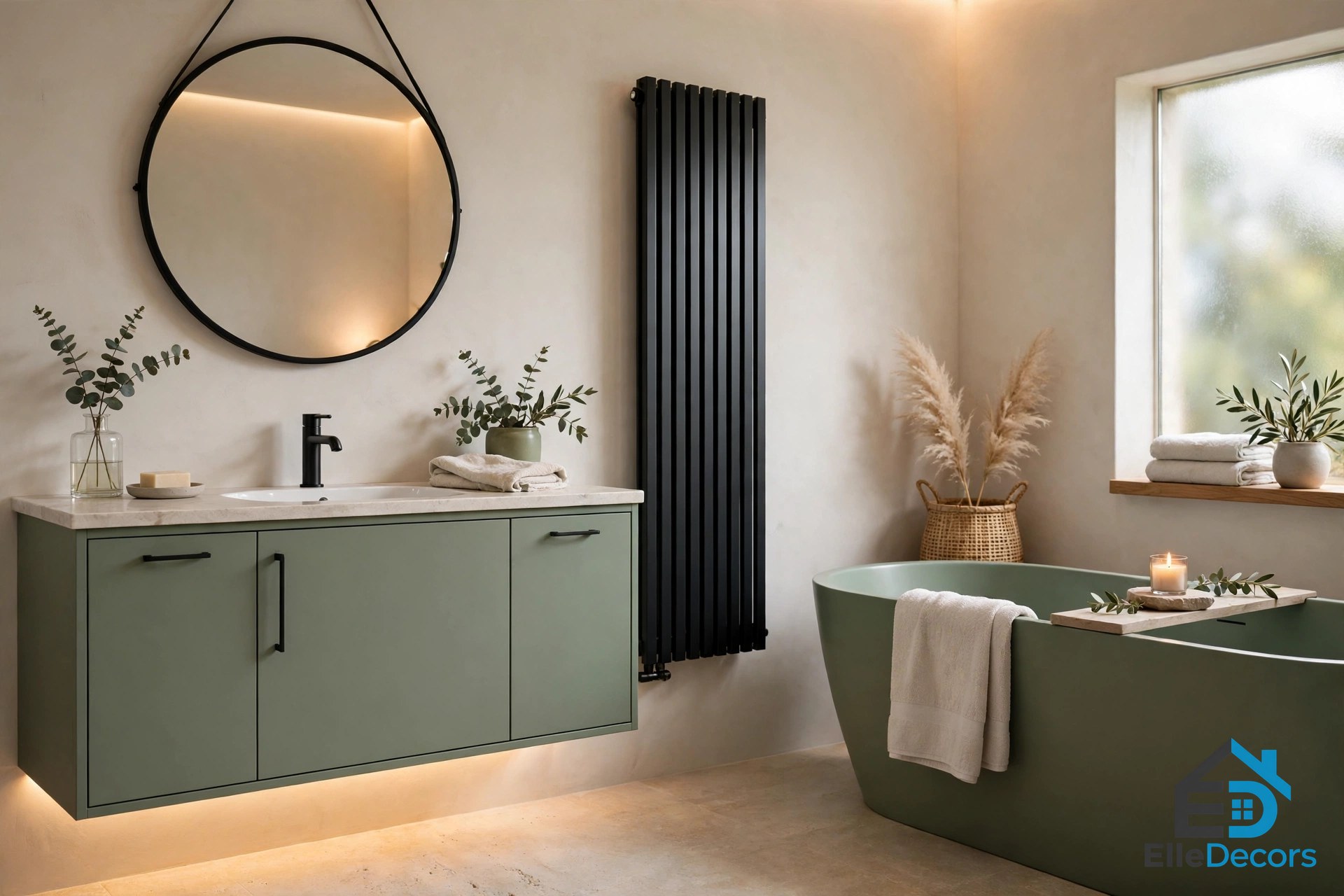
Sage green interior design trends reach the bathroom too, where the shade feels clean without feeling clinical. The source gallery shows a green bathtub and vanity unit giving a bathroom a unique look, with a round mirror, a basin and a vertical radiator providing bold black anchors, and warm LED mood lighting washing the room in a golden glow. A sage vanity with black handles, a round black-framed mirror above it, and a green freestanding tub is the full version; a sage-painted vanity alone is the small version. Keep the walls pale and the towels white so the green stays fresh, and add one plant — eucalyptus in a vase suits the palette perfectly.
7. Build Sage In With Shelving
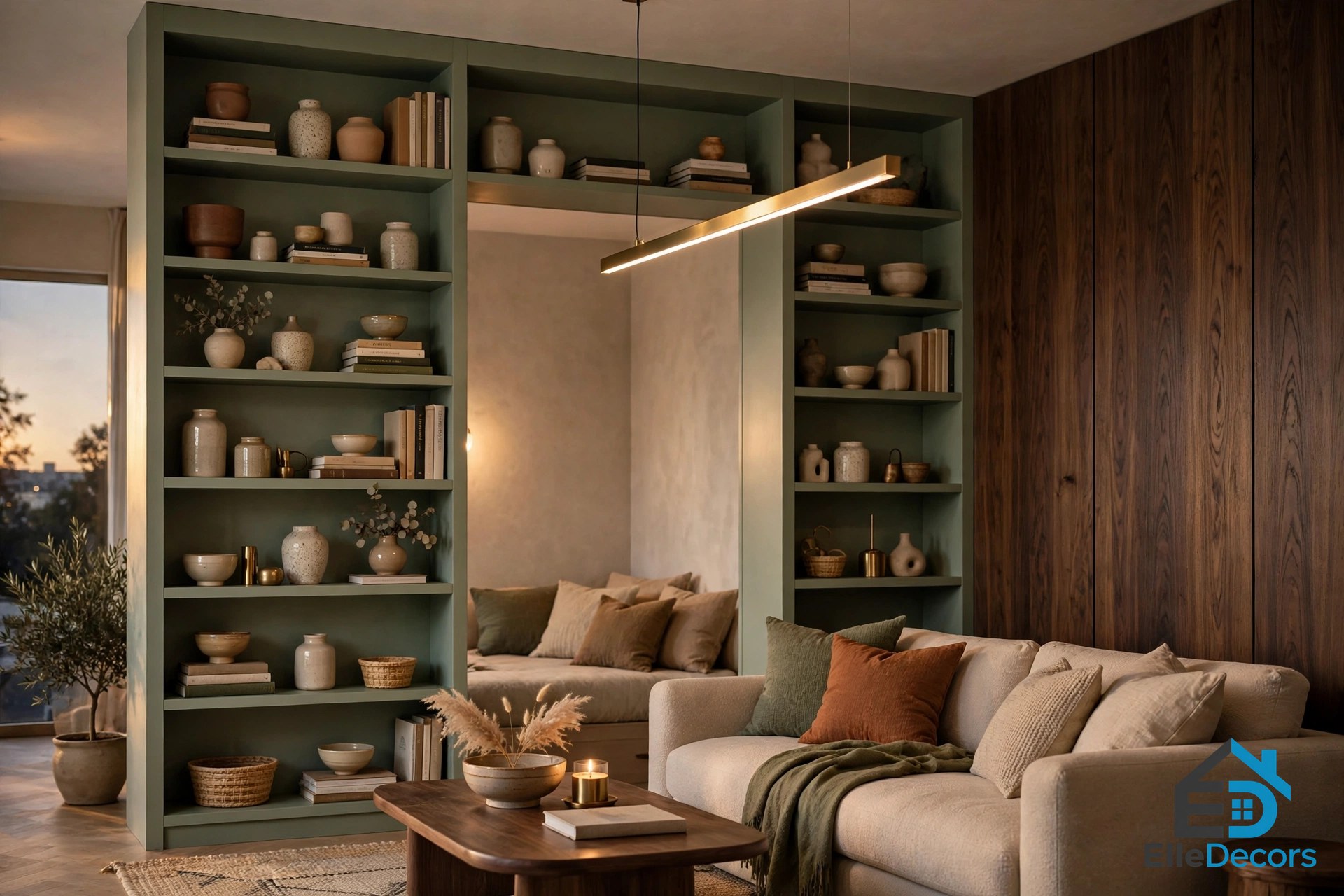
Built-in shelving is a quieter way to bring sage into a room than paint. In one source home, a custom-built green shelving unit frames the lounge area, while dark wood grain wall panelling defines the dining nook and a modern linear suspension light adds a glimmer of gold. Paint open shelves sage, style them with books, ceramics and a few plants, and leave breathing room so the colour reads as architecture rather than clutter. In a kitchen, a column of sage shelving can carry the green accent over to a breakfast bar.
8. Layer Sage Textiles
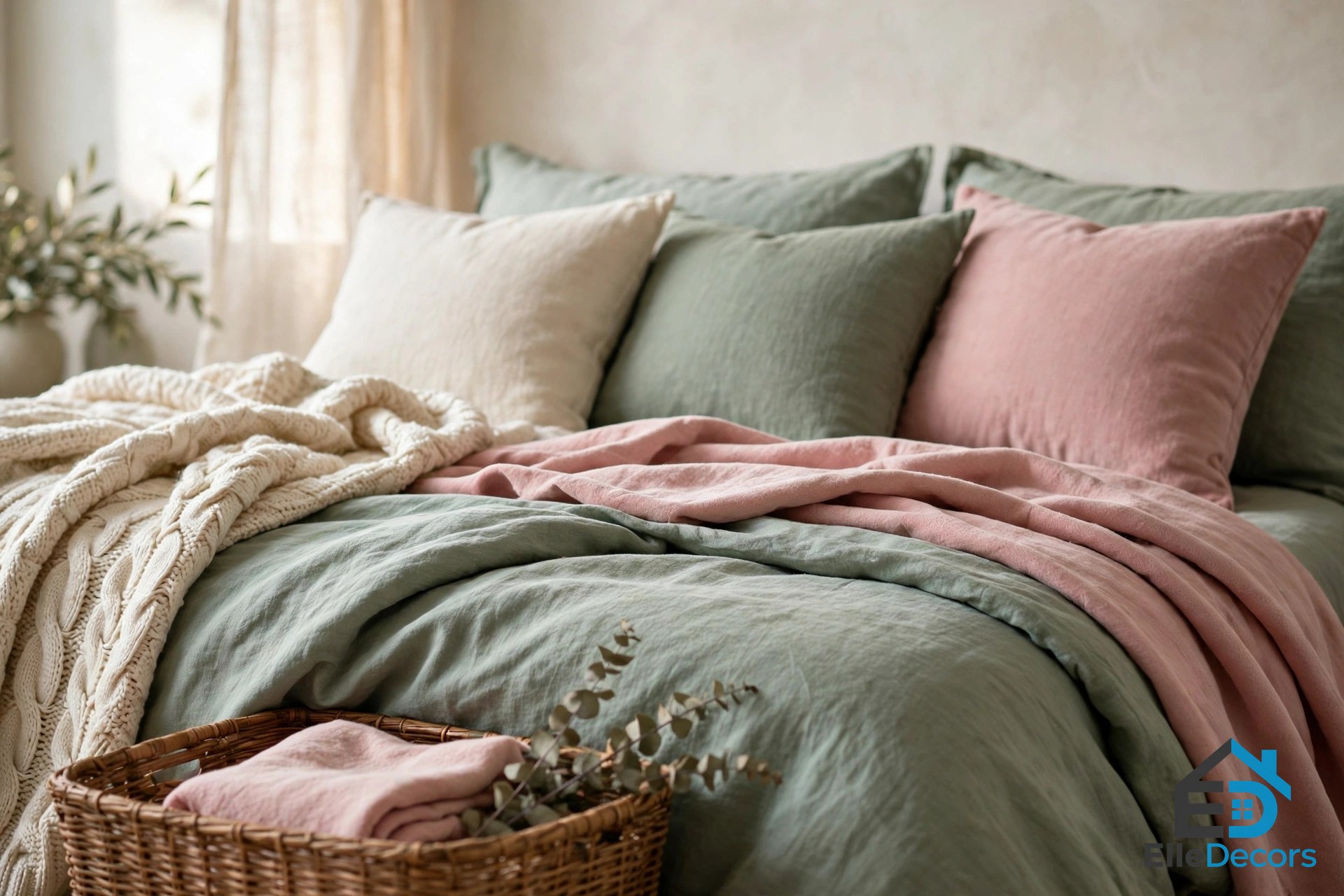
Textiles are the lowest-commitment way to try sage, and the easiest to change with the seasons. Layer sage linen bedding with throws and cushions in cream, sage and dusty pink, and add a woven basket at the foot of the bed. In the living room, sage cushions on a cream sofa and a sage throw over the arm do the same job. Natural fabrics suit the colour best — cotton, wool and linen — because sage is itself a natural, earthy shade. Try layering sage textiles with other muted tones, such as dusky pinks or slate greys, to add dimension without adding noise.
9. Go Moody With Black and Grey
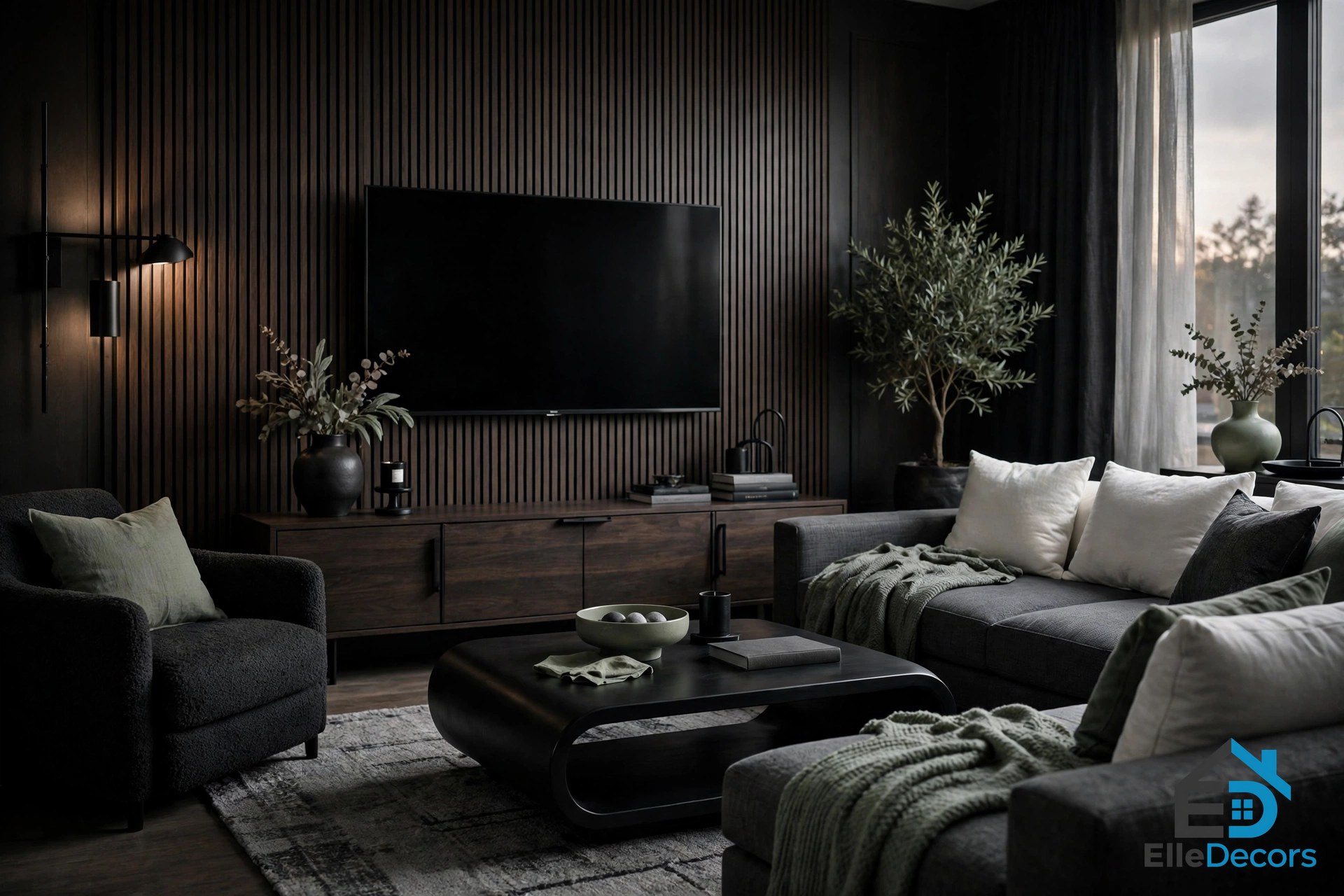
Sage does not have to be soft. In the third source home, heavy black and grey elements combine with sage green accents for a moody, sophisticated look: a weighty black racetrack coffee table drops a dark note into the centre of the sage and white lounge, balancing the black wall-mounted television. The dining table legs carry the same black finish through the open-plan space. Sage green interior design trends use a simple formula here: sage and white for the calm, black for the structure, grey for the depth. Keep the black to furniture and fixtures rather than whole walls, and the room stays sophisticated instead of dark.
10. Use Sage to Zone a Home Office
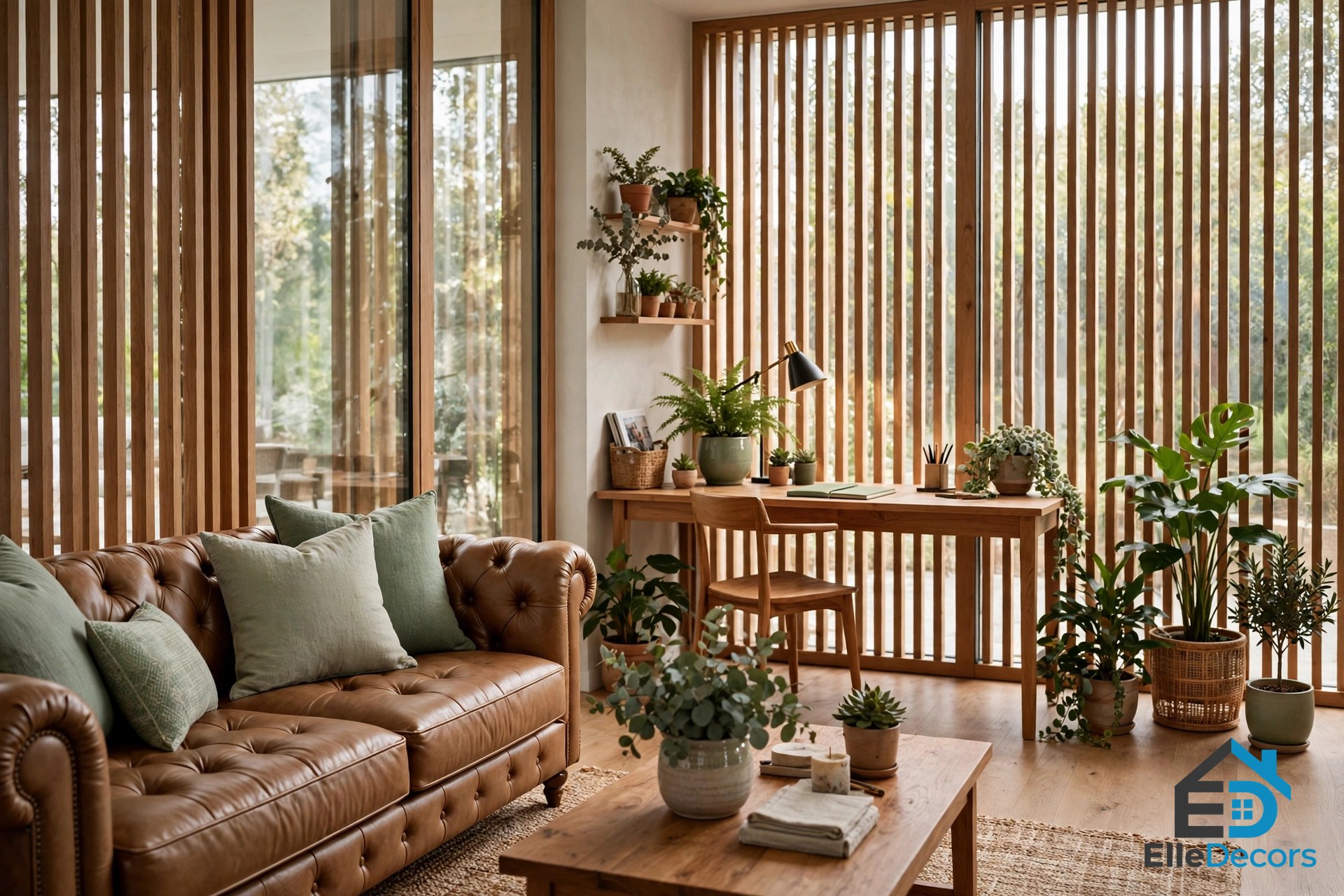
Open-plan homes need ways to mark one area from another, and colour does it better than furniture. In one source home, wood slat panels build room dividers and a ceiling runner that marks the hallway, and the same slats are applied to the glazed walls of the home office to increase privacy. Inside the workspace, a tufted leather sofa defines a comfortable lounge area while the desk sits tucked at the back, and a change in colour palette gives the workspace its own definition. A sage wall behind the desk, sage cushions and a plant are enough to mark this corner as for work, even in a shared room.
11. Start Small in the Entryway
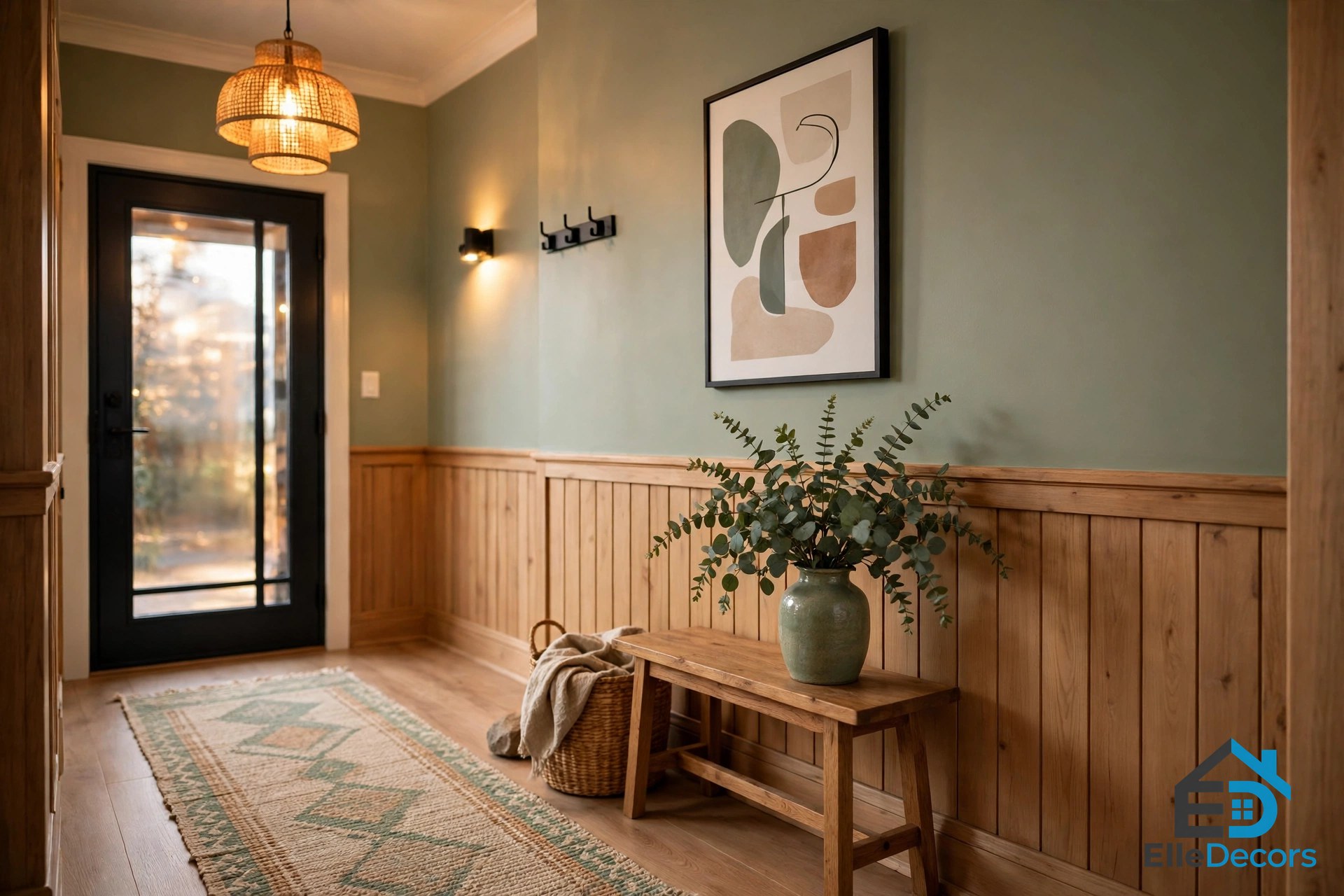
The entryway is the smallest room to test sage in, and the first thing guests see. Wood panelling brings texture to the entry, a runner rug lays down a natural touch, and a sage wall above the panelling sets the tone for the whole home. Add modern wall art, a small wooden bench, and a vase of eucalyptus, and the entry feels considered rather than leftover. Because the space is small, a slightly deeper sage works here — the colour wraps the space instead of overwhelming it.
12. Pair Sage With Terracotta
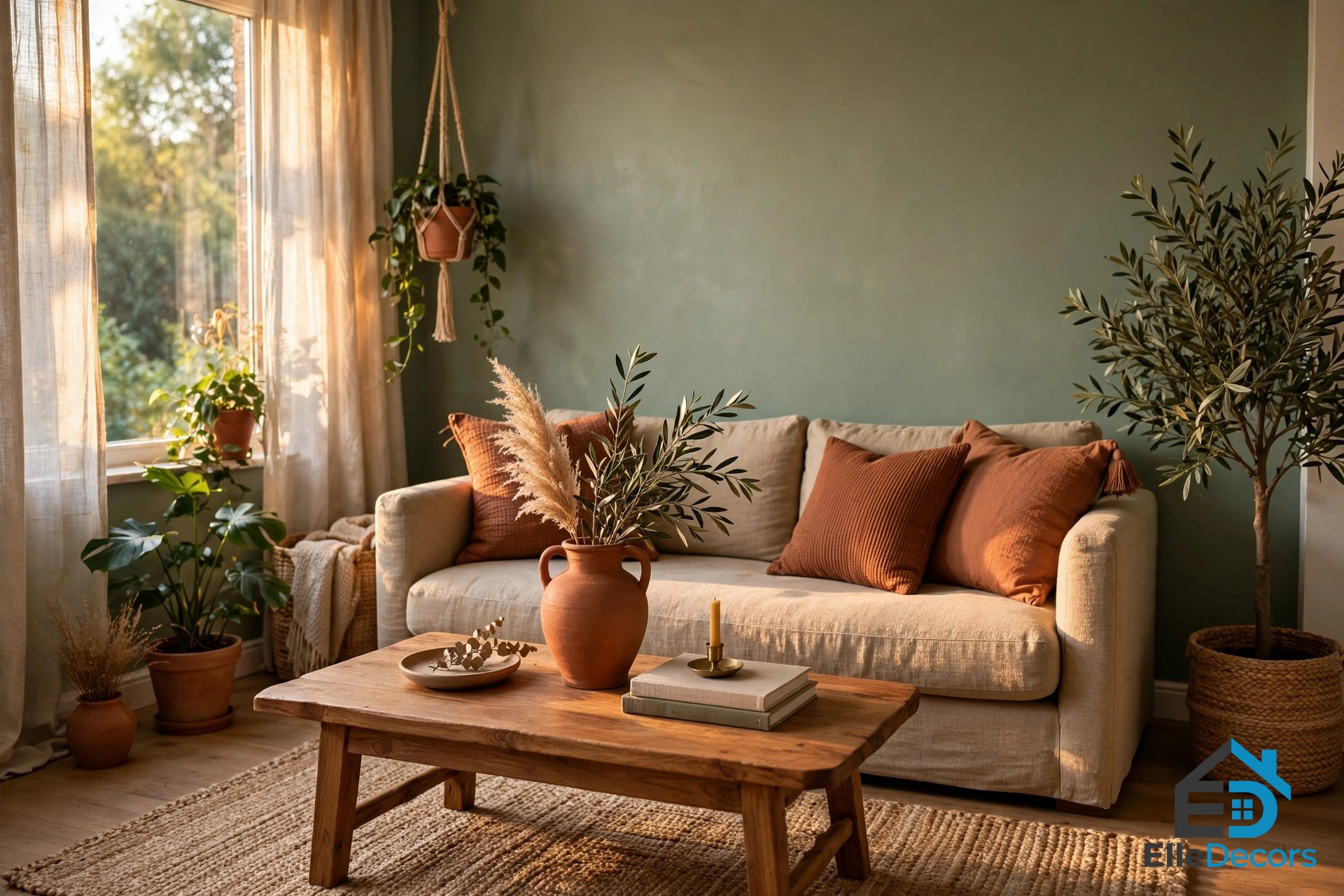
The warmest pairing in this guide is sage with terracotta. Sage is cool and grey; terracotta is warm and earthy, and together they feel like a garden in late afternoon. Try a sage wall with terracotta cushions on a sandy beige sofa, a terracotta vase on a wood coffee table, and a jute rug underfoot. The same pairing works in the bedroom — sage bedding with a terracotta throw — and in the kitchen, where terracotta pots soften sage cabinets. If terracotta feels too strong, sandy beige and warm wood give a gentler version of the same warmth.
The Paint Shades Designers Reach For
Naming the shade is half the job, because sage greens vary widely — some lean grey, some lean warm, some risk looking dull on the wall. The paint names below come from a designer guide to sage green, so treat them as starting points and always test a swatch in your own light before committing. These are the shades sage green interior design trends keep returning to. Farrow and Ball Lichen and Sherwin-Williams Evergreen Fog are the soft, muted options for calm walls. Benjamin Moore Saybrook Sage is the classic mid-tone sage, recommended for kitchen cabinets and as a whole-room colour; interior designer Evelyn Sloane includes it among her seven never-fail paint colours, with the sage segment at 7:57 in her video below. Behr Back to Nature suits outdoor-adjacent spaces and garden rooms. The video’s key advice applies to every shade here: screens show colour differently, so test in your own light.
What Pairs Best With Sage Green
Sage pairs easily because its grey undertone lets it sit beside almost any neutral. White is the first partner — white trim, white ceilings and white bedding keep sage fresh. Warm wood is the second: light oak floors, walnut panelling and wicker chairs all warm the green up. Black is the third, used sparingly in furniture, fixtures and frames to give the scheme structure. Terracotta, sandy beige and dusty pink add warmth; charcoal grey and navy add depth for a modern twist. Brass and gold hardware suit sage kitchens especially well. Our guide to warm color interior ideas shows how warm neutrals balance cool greens, and our green dining room guide carries the same palette into the dining space. Two pairings to avoid: stark cool white, which can make sage look grey and tired, and too many competing greens, which blur into one muddy note.
Mistakes That Make Sage Look Dull
Three mistakes turn sage from soothing to flat. First, painting it in a room with poor natural light and cool bulbs — sage needs warm light to show its green side, or it reads as grey. Second, using it everywhere at the same strength: walls, sofa, cushions and curtains all in the same sage flatten the room, so vary the depth and let white and wood break it up. Third, choosing a shade without testing it: sage greens shift with the light, and the same tin can look fresh in a south-facing room and dull in a north-facing one. Paint a large test patch and check it morning and evening for three days before you commit.
Quick Comparison: All 12 Ideas
This table sums up the twelve ideas in this guide, with the room each suits best and how big a commitment it is.
| Idea | Best room | Commitment |
|---|---|---|
| One accent wall | Dining area, bedroom | Low |
| Sage-led living room | Living room | Medium |
| Green kitchen | Kitchen, dining area | High |
| Sage bedroom | Bedroom | Medium |
| One statement piece | Any room | Low |
| Sage bathroom | Bathroom | Medium |
| Built-in shelving | Living room, kitchen | Medium |
| Layered textiles | Bedroom, living room | Low |
| Moody black and grey | Living room | Medium |
| Zoned home office | Home office, open plan | Low |
| Small entryway | Entryway, hallway | Low |
| Sage with terracotta | Living room, bedroom | Low |
Watch: The 7 Best Paint Colors for Your Home
Watch interior designer Evelyn Sloane share the seven paint colours she trusts in almost any home, including Benjamin Moore Saybrook Sage at 7:57. She explains light reflectance value and undertones, which finish to use where, and the three-day sample test that stops you painting a room twice. Sage green interior design trends move fast, but her advice is about choosing a shade that still looks right in five years, not five weeks.
Video: Evelyn Sloane presents seven never-fail paint colours, with Saybrook Sage covered at 7:57.
Frequently Asked Questions
Is sage green still trendy?
Yes. Pinterest reported searches for sage green interiors up 105 per cent year on year in the UK, and designers keep recommending it because it is a muted, natural shade rather than a bright fashion colour. Sage green interior design trends last because the colour is calm and easy to live with, not because it is loud.
What colours go best with sage green?
White, warm wood, black accents, terracotta, sandy beige, dusty pink and charcoal grey all pair well with sage. White and wood are the safest partners; terracotta adds warmth, black adds structure, and dusty pink softens the scheme. Avoid stark cool white and too many competing greens in one room.
Does sage green suit small rooms?
Yes — its muted tone does not overwhelm small spaces. Use sage on one wall or in textiles rather than on every surface, pair it with light colours, and keep the ceiling and trim white so the room feels open.
Can I use sage green in a rental?
Yes, and textiles are the renter-friendly route: sage bedding, cushions, throws, curtains and a sage armchair all move with you. Removable wallpaper in a sage pattern works for one wall, and a sage-painted piece of second-hand furniture is cheaper than repainting a room you do not own.
Which sage paint should I try first?
Start with a mid-tone sage such as Benjamin Moore Saybrook Sage for walls or cabinets, or a softer Farrow and Ball Lichen for a bedroom. Paint a large test patch and live with it for three days in different lights before committing.
The Bottom Line
The best sage green interior design trends start small and build up: one painted wall, one green cabinet run, one sage sofa or armchair, then textiles and plants to tie it together. Pair sage with white and warm wood, add black sparingly for structure, and test your shade in your own light before you commit. Done that way, sage is not a trend you will tire of — it is a calm, natural colour that makes a home feel restful for years.