Bedroom Art: How to Choose, Size, and Hang Art Above the Bed
The bedroom art you choose does more work than almost anything else in the room. The bed is the largest piece of furniture, the walls are mostly empty, and the first thing you see in the morning is whatever hangs opposite the bed. Get the art right and the room feels finished. Get it wrong and even good furniture looks lost. This guide shows how to choose art for a bedroom, how big it should be, and where to hang it, with ideas from a fifty-one-room gallery of art-filled bedrooms.
Bedroom art is the fastest way to give a bedroom a focal point, and this guide shows how to choose it and size it. It covers the two-thirds sizing rule, statement pieces, botanicals, murals, gallery walls, and lighting, with ideas drawn from fifty-one real art-filled bedrooms, so your wall feels deliberate instead of decorated by accident. Size it to the bed and hang it at eye level.
Choosing Bedroom Art That Fits the Bed
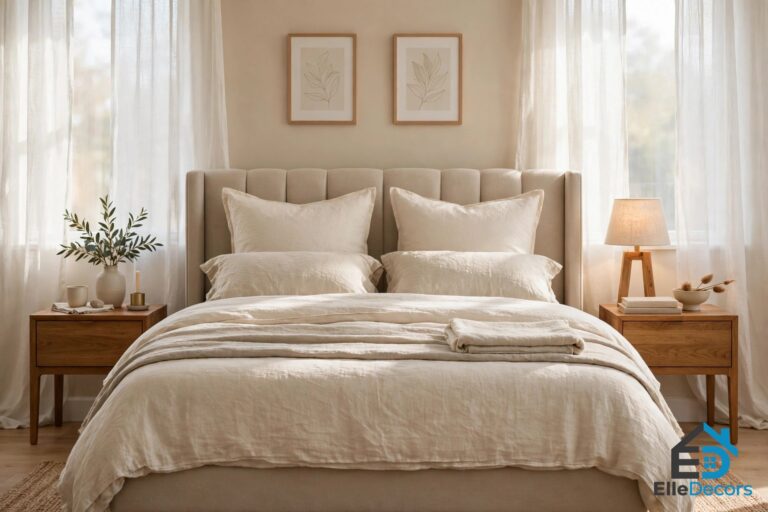
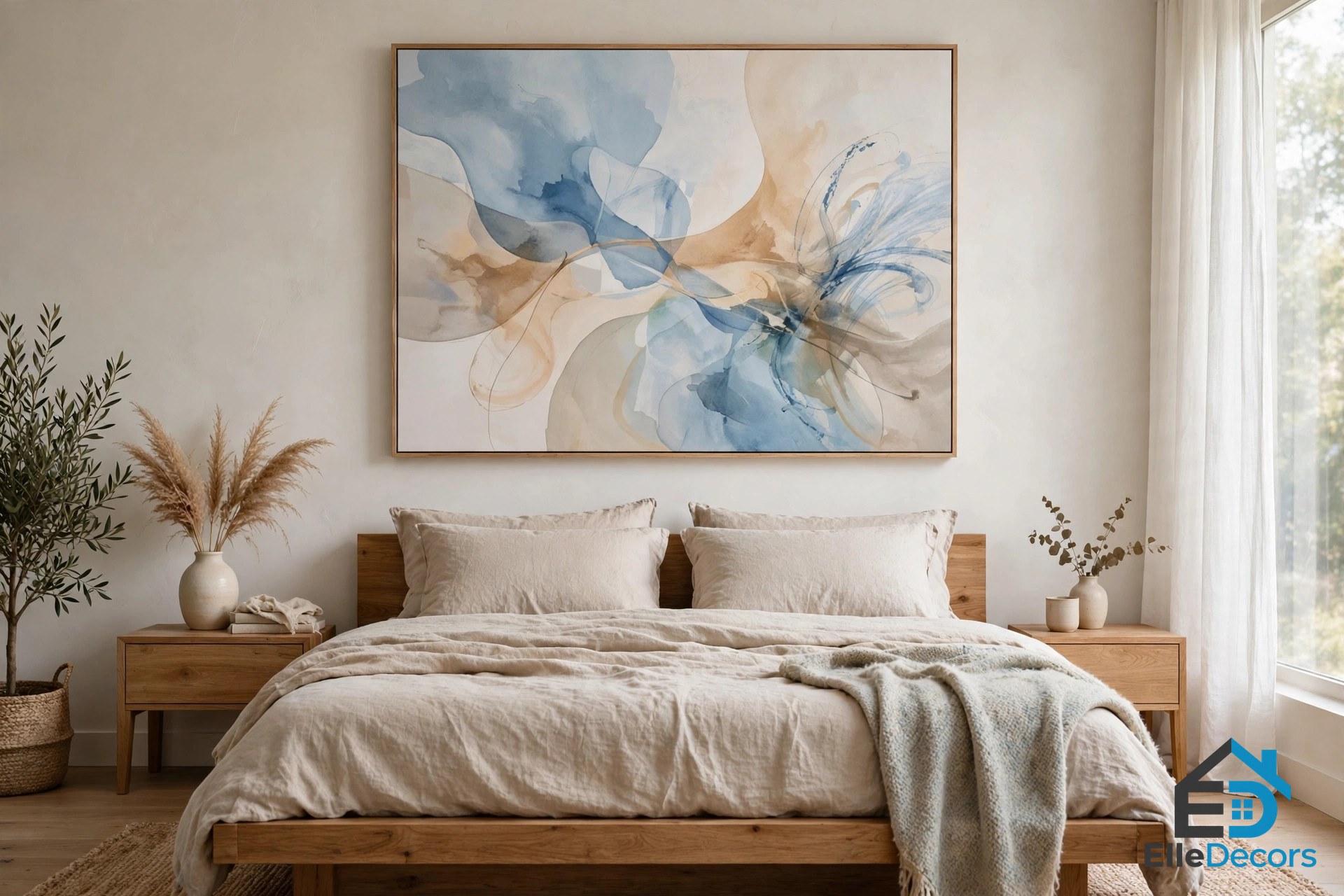
Start with the wall above the bed, because that is where bedroom art earns its keep. The bed is the anchor of the room, and the art above it should relate to the bed, not to the wall. The sizing rule that shows up across nearly every professional guide is the same: art above the bed should span about two-thirds of the width of the bed or the headboard. For a standard double bed that means a piece or a group about 90 to 100 centimetres wide, and for a king-size bed, aim for roughly 100 to 120 centimetres. A single small frame above a king-size bed looks lost, while a piece slightly too large almost always reads better.
Height matters as much as width. Leave a gap of about 15 to 25 centimetres between the top of the headboard and the bottom of the frame, so you will not knock it when you sit up to read, and so the art still looks connected to the bed. If there is no headboard, measure from the top of the mattress and allow around 30 centimetres. The centre of the piece should sit at roughly eye level, about 145 to 152 centimetres from the floor. When you hang a group, treat the whole arrangement as one piece: measure its total width, centre it on the bed, and keep the gaps between frames tight, about 5 to 8 centimetres.
Before you buy anything, decide on the mood. A bedroom exists purely for rest, so the art should settle the room rather than shout at it. Soft florals, hazy landscapes, quiet line work, and muted abstracts all suit a sleep space. A single bold piece in a calm room can still be the whole point, as long as one colour from it is picked up in the bedding, a cushion, or a lamp, so the piece feels anchored instead of random.
Start With One Statement Piece
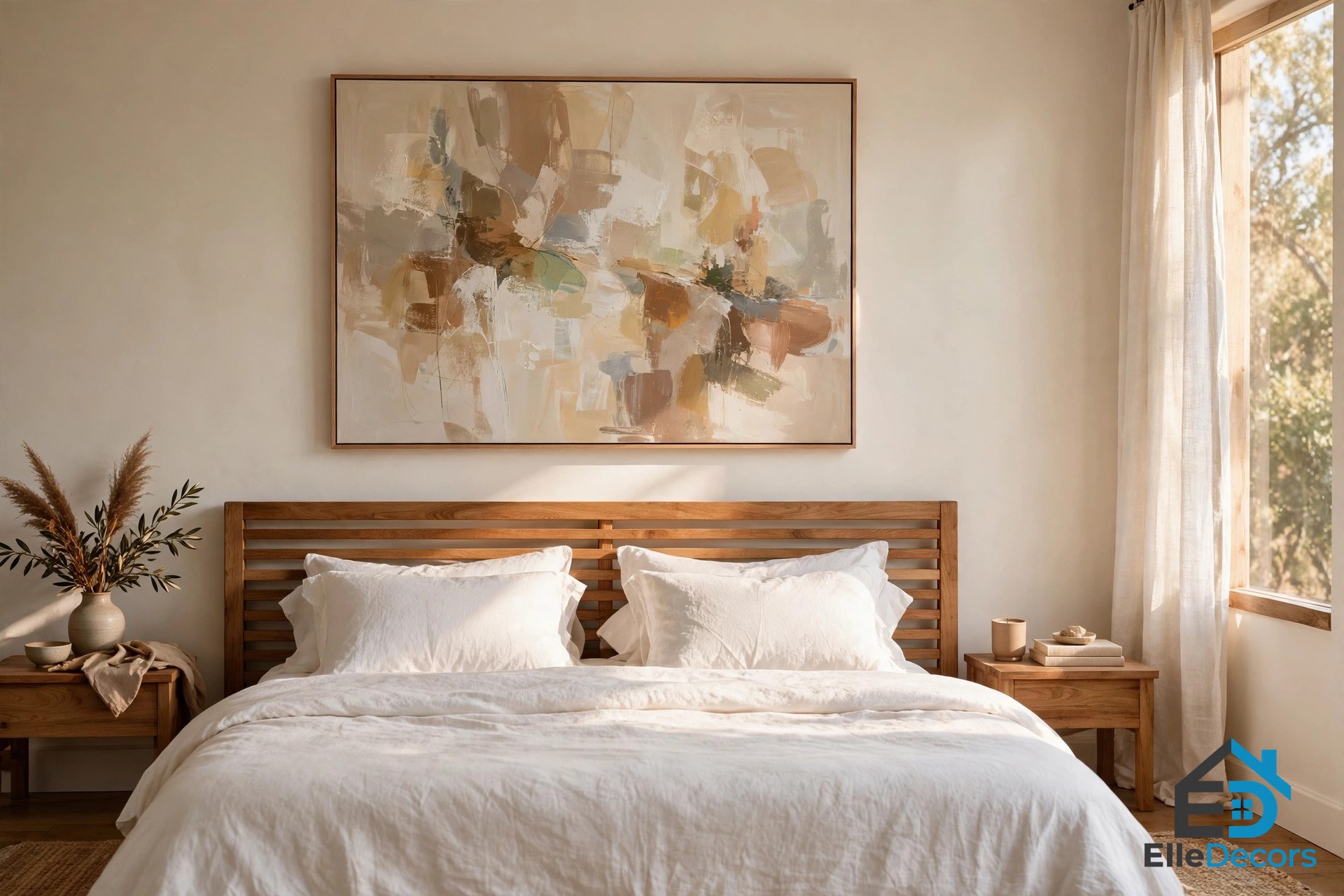
The simplest approach is also the most effective: one large piece, hung well. A single oversized canvas above the bed beats a dozen small frames scattered around the room, because it gives the eye one place to land. In one of the gallery bedrooms, a huge piece behind the bed declares its theme in jewel colours and a floral motif, with a glass dressing room beside it, and the scale of the art is what makes the room.
A statement piece also solves the problem of a low headboard, or no headboard at all. Where there is nothing to frame the bed, the art does the framing instead. Choose a horizontal piece for a wide bed and keep the frame simple so the image carries the room. A tall four-poster frame changes the geometry entirely, as our canopy bed ideas guide shows.
Botanical and Nature Art
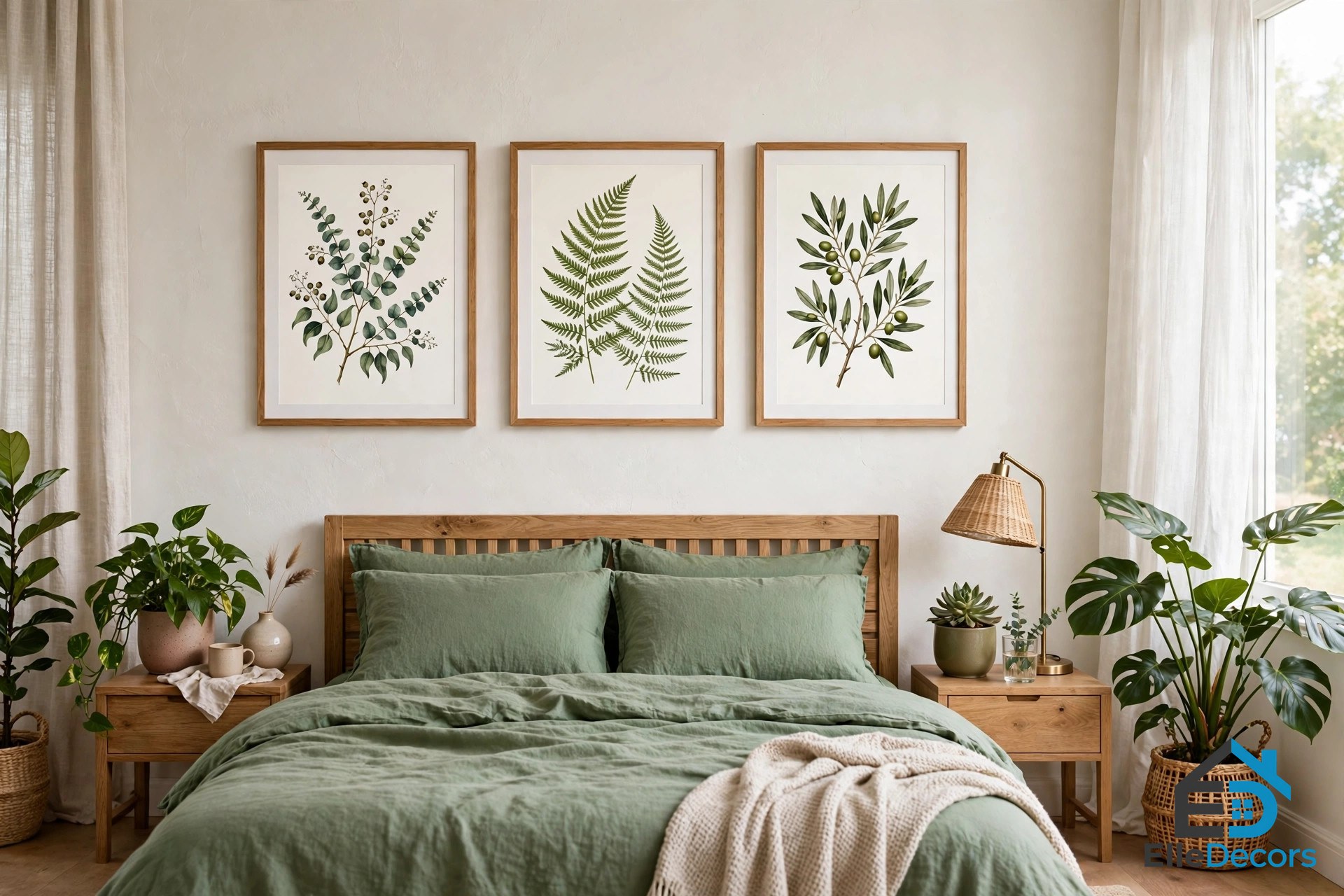
Botanical prints are among the most enduring choices for a bedroom, because organic forms in muted, natural palettes are inherently calming. Dusty sage, warm ochre, and soft terracotta settle a room, and a set of three botanical studies in a straight row above a tufted bed follows the rhythm of the wall panelling behind it. Plants strengthen the theme. In one dark gallery bedroom, neutral-toned artwork dominates the room while indoor plants are dotted around the space, and the botanical element is carried from the frame into the room itself. In another, a solid green accent wall and a framed vertical garden carry the same idea, with black wall panels setting off the green foliage.
Nature can also be the art without a frame at all. One design uses a picture window behind the headboard as the artwork, with a peaceful view of a lush garden and a lawn-green rug bringing the garden palette right underfoot. Another whitewashed rocky bedroom wall carries climbing plants all the way over the bed.
Murals and Feature Walls
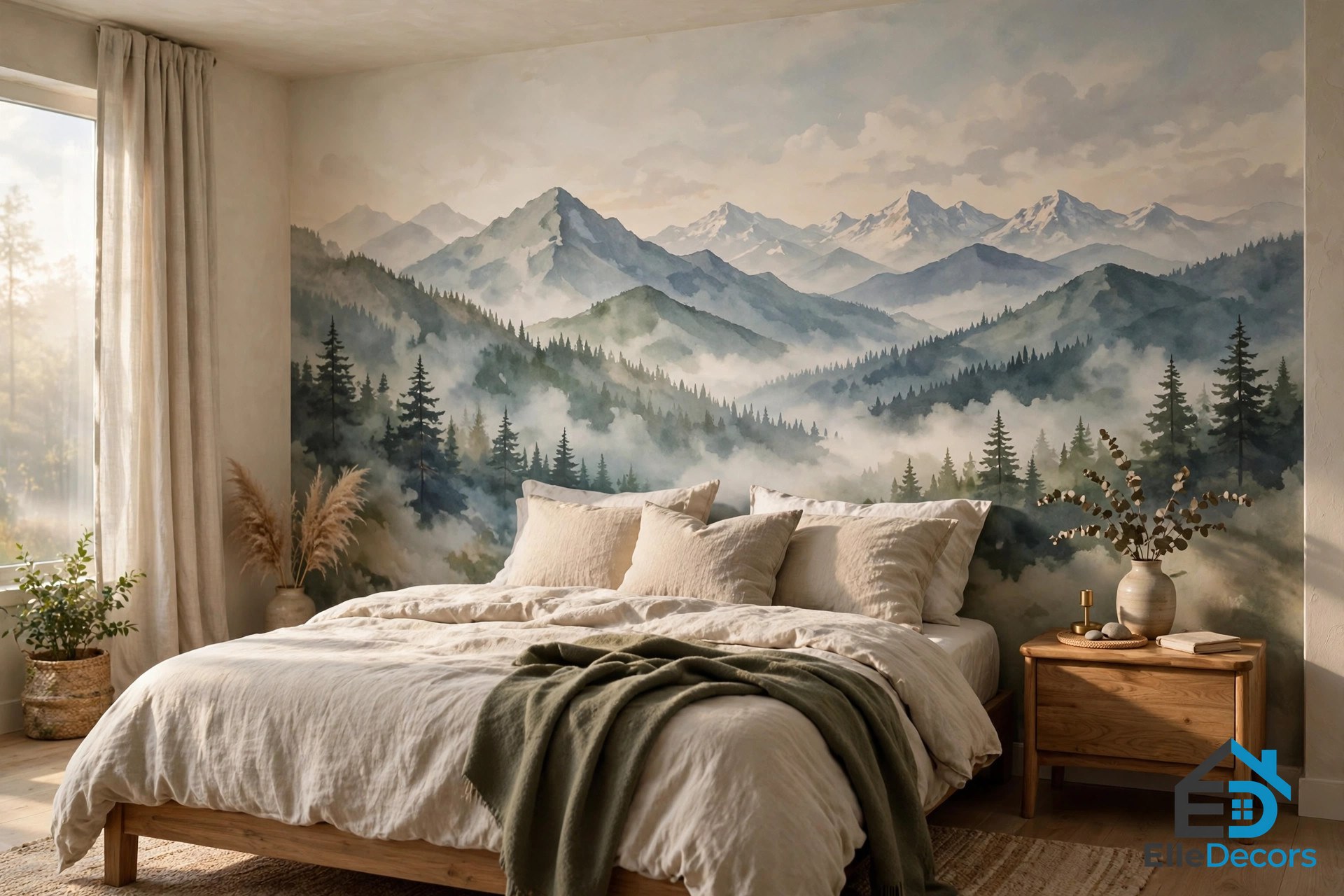
A mural turns bedroom art into architecture, and it can be the most peaceful choice of all. Mountains and mist make one of the most restful murals in the gallery: a wide landscape behind the bed, a pendant light that seems to cradle a setting sun, and a natural timber bedside table and rattan basket bringing warmth to the cool palette. A mural works best on the wall behind the bed, and it needs almost nothing else on the wall to compete with it.
Wallpaper can do the same job in panels. One design creates a polyptych by applying designer wallpaper to panels of varying widths, arranged in an L-shape around the bed, which stages the sleeping area almost like a room within a room. If a full mural feels like too much, paint the ceiling instead: one bedroom runs a gold paint effect across the ceiling, with soft moss green paintwork and accent furniture as the accompaniment.
Colour: Bold or Calm
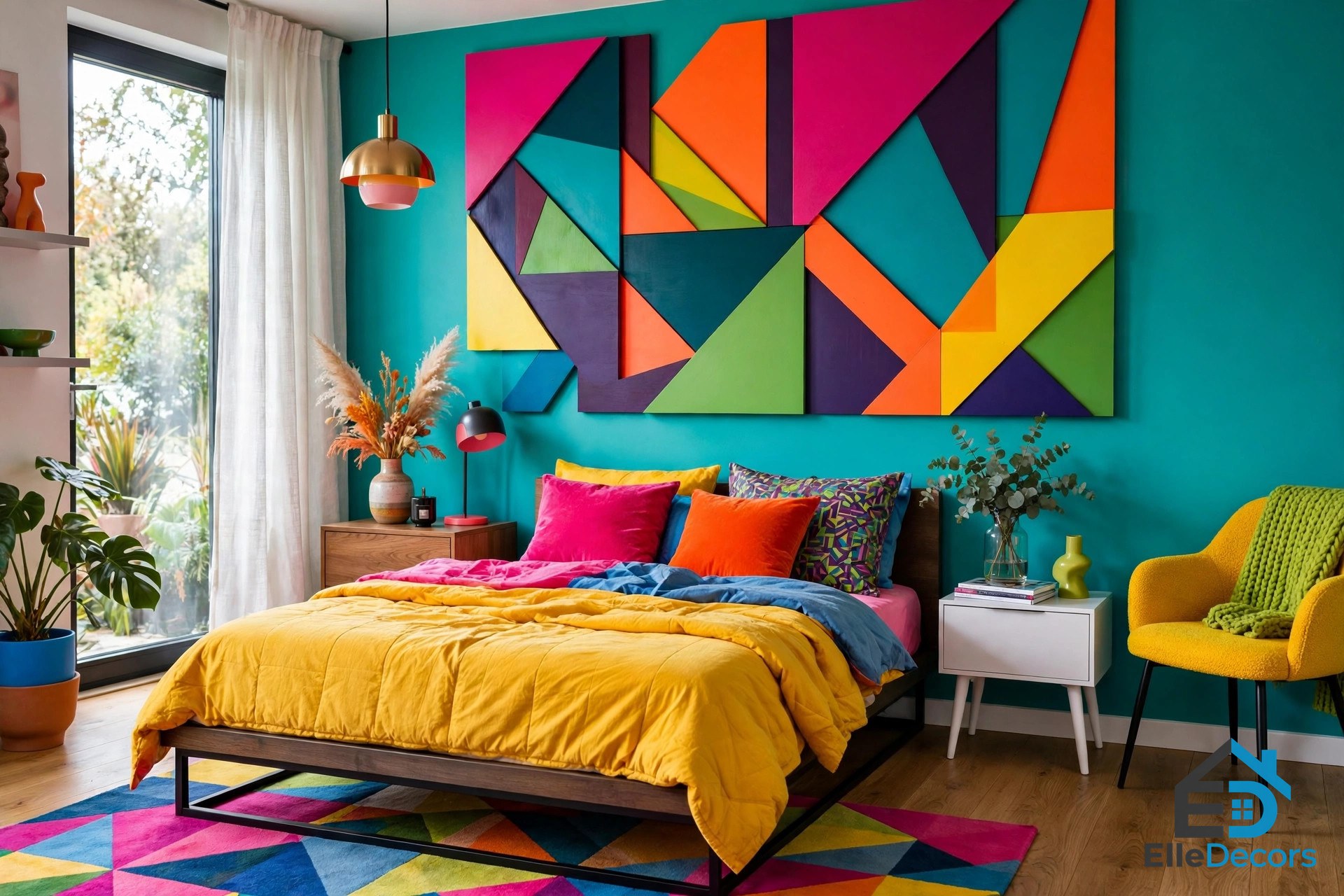
Colour is where bedroom art either lifts the room or overwhelms it, and the gallery shows both directions working. At the bold end, a surf-inspired bedroom clashes bright colours and geometric pattern, with surfboards mounted on the wall as art. A red bedroom scheme goes further still, with hand-painted art in a golden theme layered over an all-encompassing red palette. Teal and red make a dreamy dark combination, lifted by a drop of yellow, and in another room teal decor is coupled with violet accent pillows and a colour-coordinated lighting track.
At the calm end, a minimalist colour hit uses elongated wall lights to highlight a colour block mural, and a pink bedroom keeps its pastel decor quiet with blue borders and copper accents. The rule that connects both ends is repetition: pick one colour from the art and repeat it twice in the room, in bedding, cushions, or a lamp, and the boldest piece will look deliberate.
Gallery Walls That Tell a Story
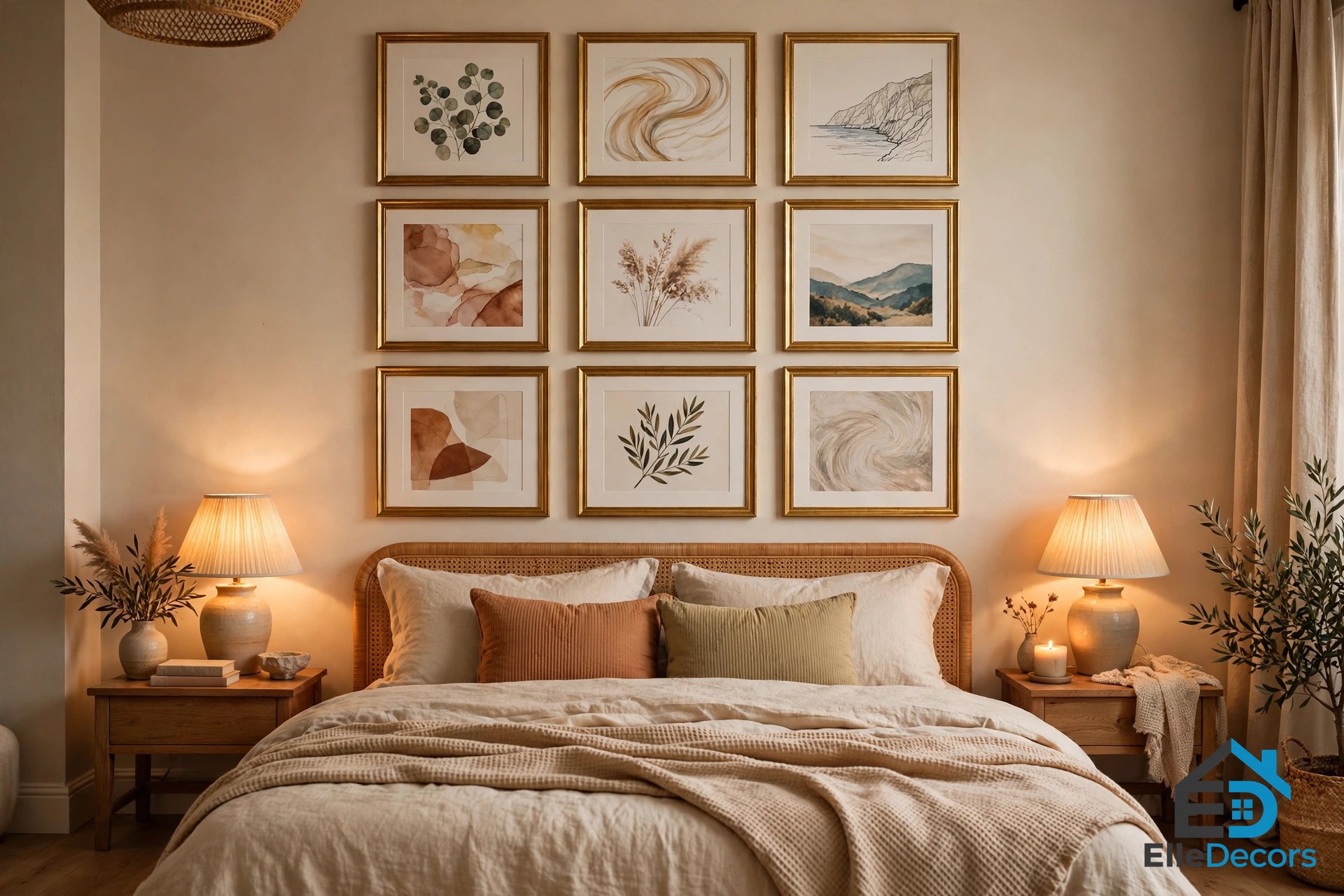
A gallery wall is bedroom art at its most personal, and it works best when the frames share something: the same frame colour, the same mount, or the same palette. Muted and suited to sophisticated surroundings, one gallery of works inspires a quiet colour scheme that translates into decorative vases in the bedroom workspace beside it.
Lay the arrangement out on the floor before you hang anything, photograph it, and check the balance. Odd numbers of frames, three or five, usually balance better than even ones. Keep the spacing tight and even, about 5 to 8 centimetres between frames, and centre the whole group on the bed, not on the wall. If the wall is tall, a grid of interchangeable prints on a hanging rail lets you swap pieces with the seasons.
Quiet Rooms: Minimal and Monochrome
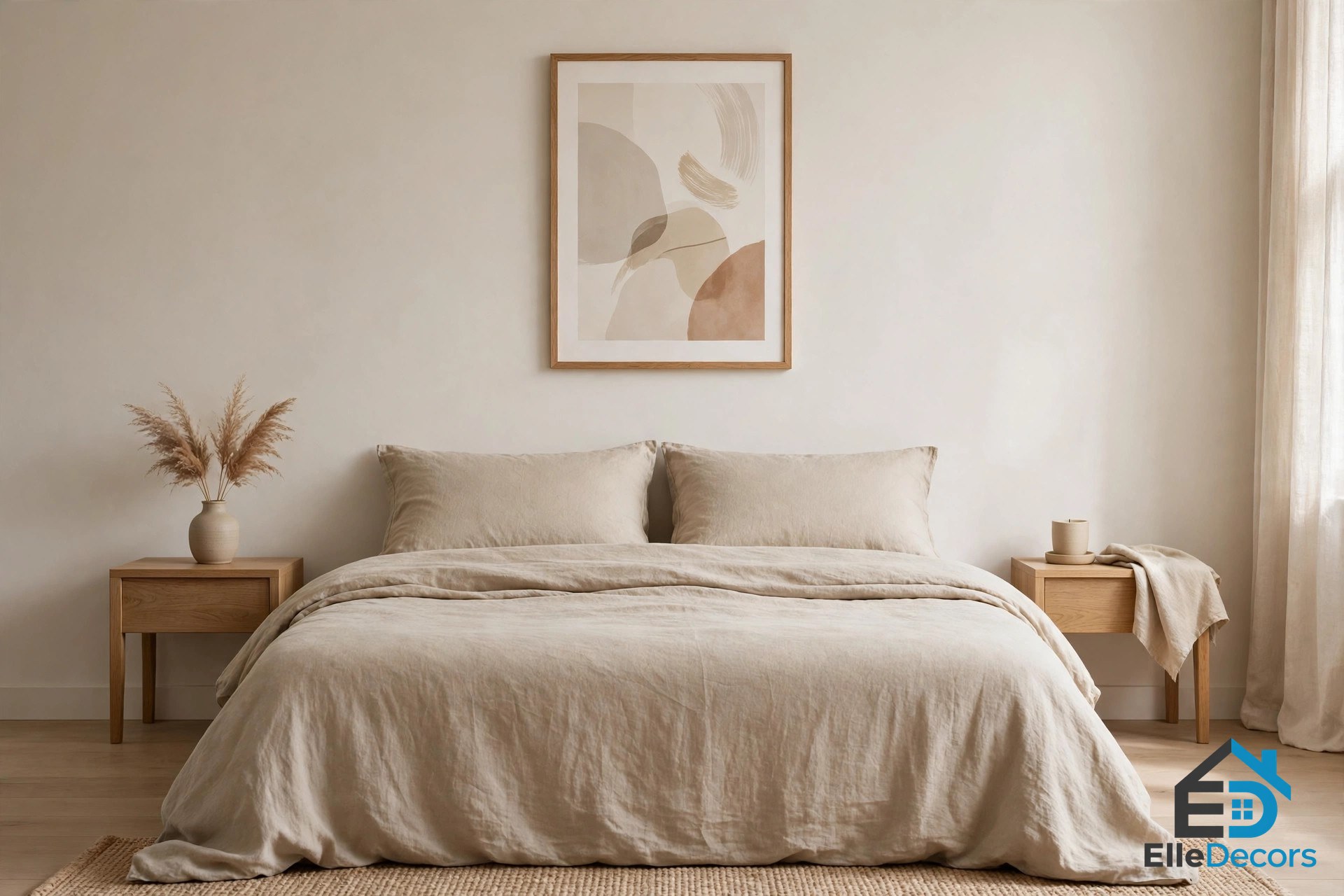
Not every bedroom needs colour. A restful and refined neutral scheme, polished up with a single framed abstract print, can feel more luxurious than a room full of pattern, especially when round pendant lights echo the shape of the composition. A warm neutral base helps too, and our beige bed guide shows how one soft colour can carry a whole bedroom. The lesson is that one strong piece plus one repeated accent colour is enough.
Monochrome art suits rooms where the architecture is already busy. A circular motif repeats across a colourful headboard wall in one design, and the pattern inspires the choice of orb pendant lights and round bedside tables, so the art sets the geometry for the whole room.
Dark and Moody Bedrooms
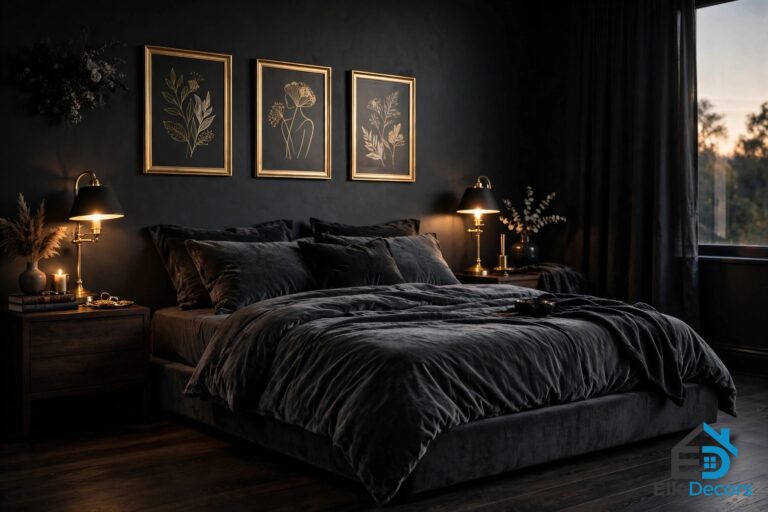
Dark bedrooms take art in a different direction, and they reward bravery. Gothic art takes a black bedroom to even darker depths, and the drama works because the art is large and the room is otherwise simple. A black bedroom with a black-framed headboard and a single treasured artwork shows the same idea at its most restrained: the darkness is the frame, and the art is the light inside it.
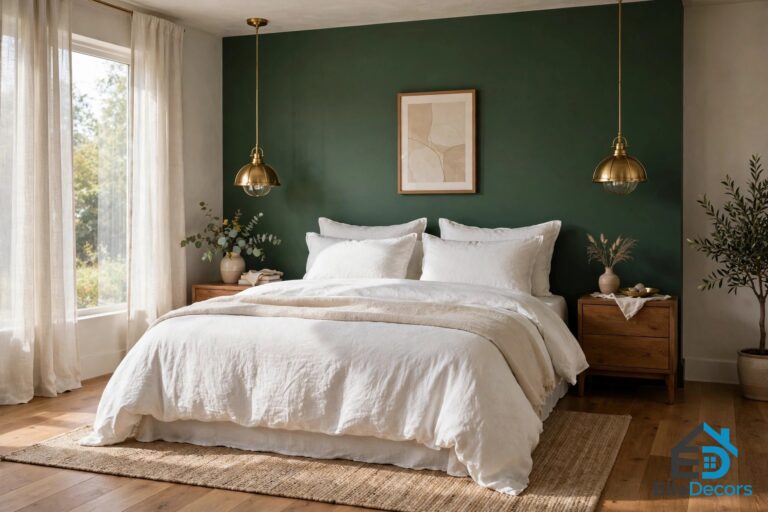
If you want a dark room without gloom, give the art its own light. A green bedroom accent wall features a shallow niche for the artwork that is just deep enough to conceal subtle illumination, so the piece glows from within the wall. Alternatively, make the light ribbon part of the art itself, and extend the lighting scheme with a modern chandelier. Recessed LED ribbons, picture lights, and low-hanging pendants all do the same job: they keep the art readable after dark, which is when a bedroom is used most.
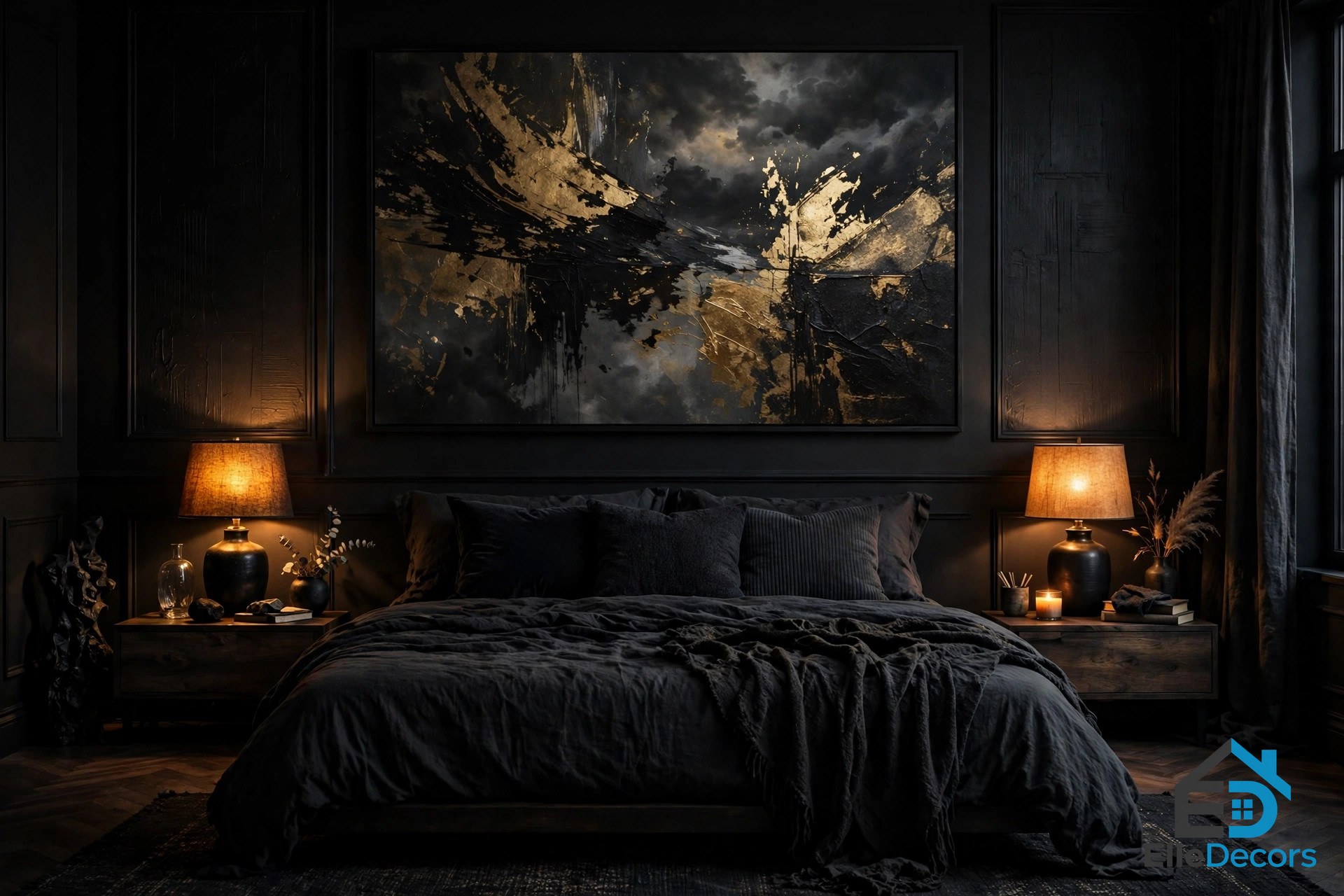
Light the Art Properly
Lighting is what makes art readable after dark, and it deserves the same planning as the art itself. A picture light mounted above the frame washes the image evenly and is the simplest upgrade for a single statement piece. For a gallery wall, a track lets you aim light at each frame.
Natural light matters too, and it can damage art. Direct sun fades prints and textiles, so keep valuable pieces off walls that face strong afternoon sun, or use glass that blocks ultraviolet light. A north-facing wall, or a wall that only gets morning light, is the safest home for anything you care about.
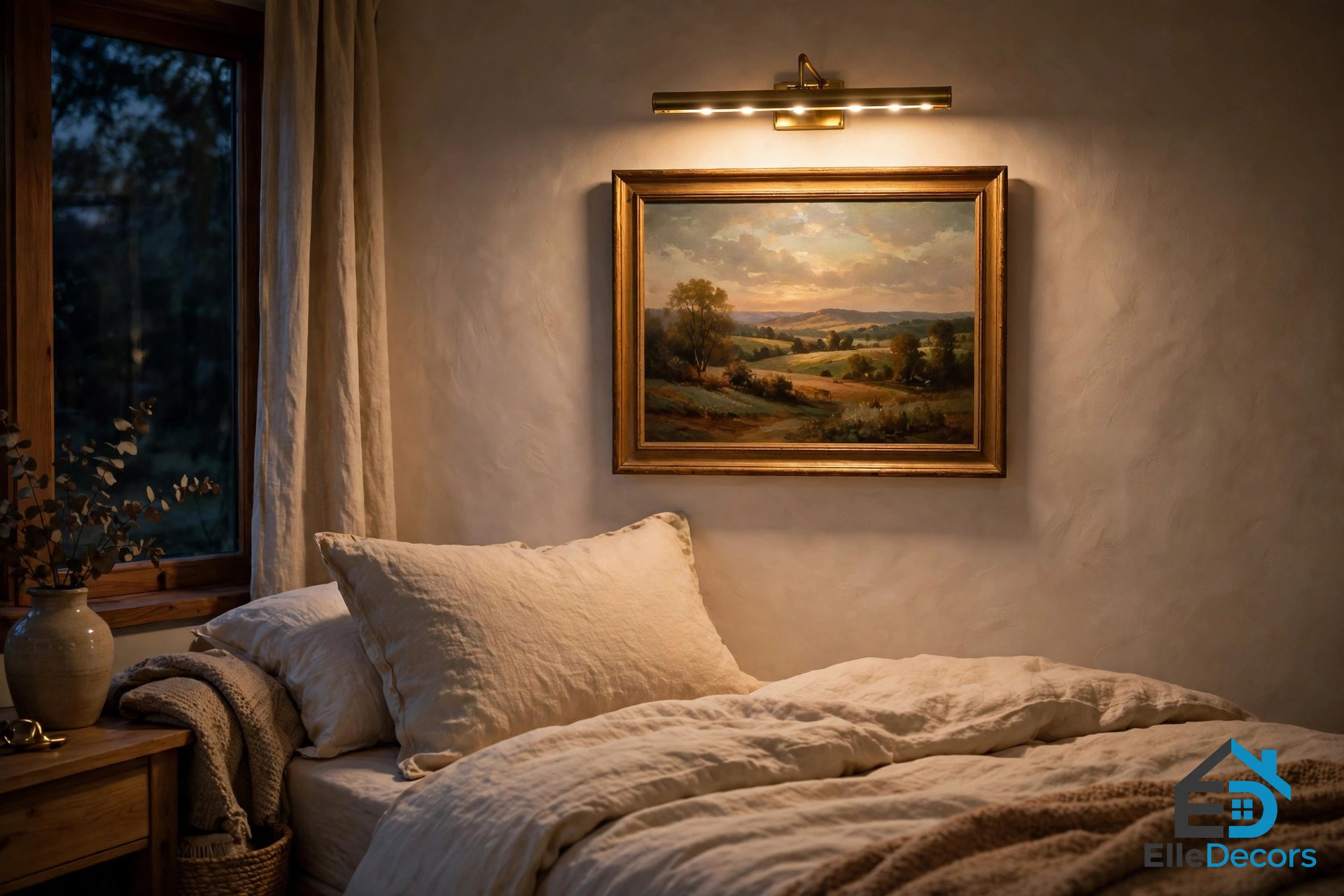
Texture Beyond the Frame
Art in a bedroom does not have to be a flat print in a frame. Woven pieces bring depth without overpowering layered bedding, and a single woven hanging above a neutral headboard adds texture that a print cannot. A nomadic-style bedroom features rugged rustic elements and a hand-carved art wall, and the carving itself is the artwork, with no frame at all.
Textiles are the easiest textured art to live with. A tapestry, a macrame hanging, or a woven wall piece softens sound as well as sight, which suits a bedroom, and it can be moved or swapped without tools. Whatever you hang above a bed must be fixed into a stud or with hardware rated for its weight, because art that falls is worse than no art at all.
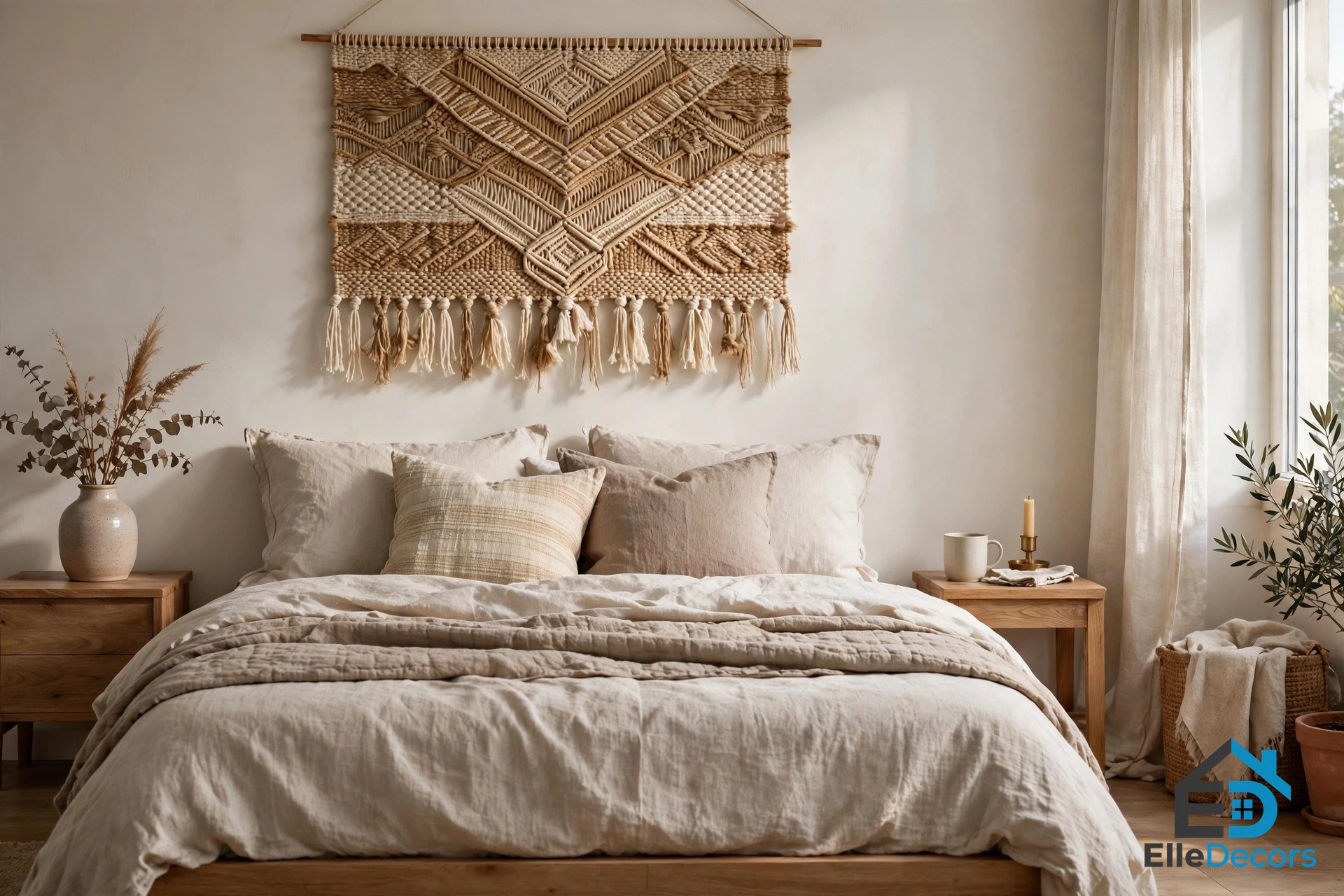
Themed Rooms That Still Feel Grown Up
A theme can carry a bedroom without turning it into a stage set, as long as one idea leads and the rest supports it. A Japanese koi fish themed bedroom, designed by Sergey Makhno Architects, uses the fish as a symbol of good fortune, and the room stays calm because the theme is carried by colour and a single motif rather than by clutter.
The trick is to let the art set the theme and keep the furniture quiet. Surfboards mounted as art need plain bedding beneath them. A cubist headboard design that spirals out of hand needs angular blue bedside tables and quirky planters at the foot of the bed, but nothing else competing for attention.

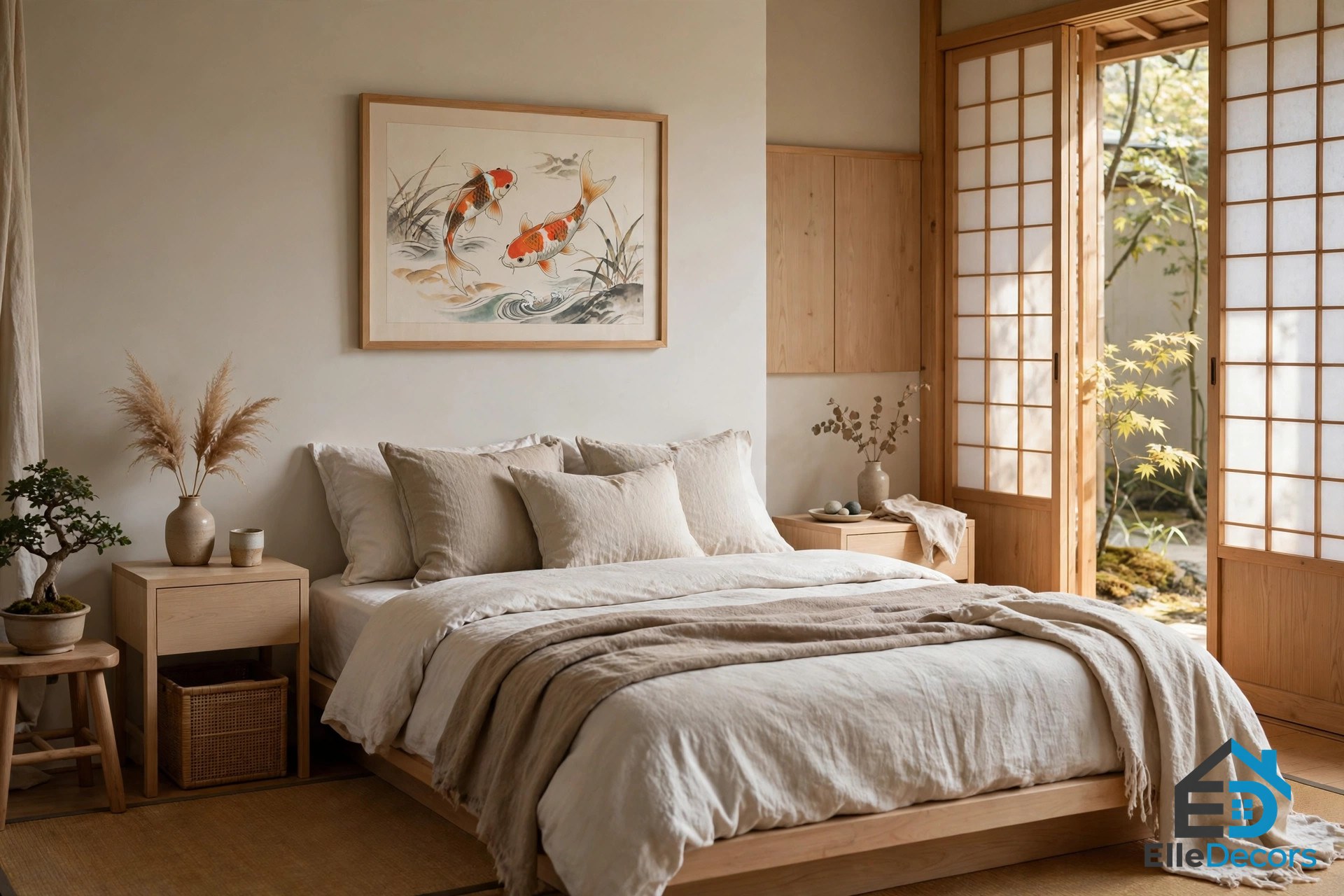
Let the Architecture Join In
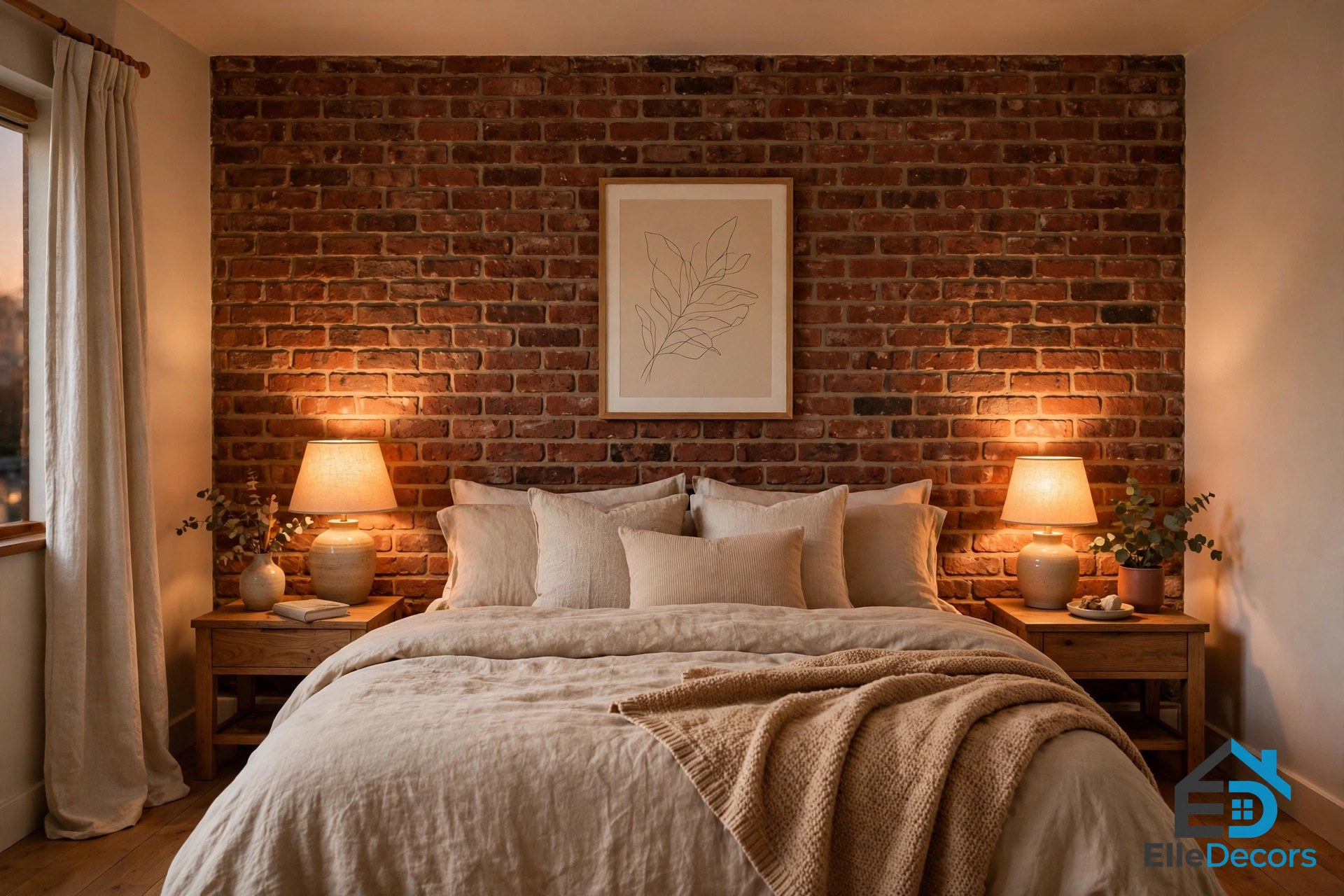
Sometimes the best art in a bedroom is the room itself. Exposed brick makes a fascinating feature wall with an extruded, almost three-dimensional mosaic effect, and art hung on it needs a simple frame so the brick can speak. Modern panelling can build geometric pattern across a headboard wall, and a single elliptical panel design, repeatedly turned ninety degrees along the wall, becomes a mesmerising piece of decor with no picture at all.
Look at the wall before you shop for art. A tall wall suits a vertical piece or a stacked pair. A wide, low wall suits a horizontal landscape or a row of three. A wall with a window in the middle suits a pair of small pieces, one on each side, rather than one large piece fighting the window.
Six Ways to Hang Art in a Bedroom
This table compares six ways to use bedroom art, so you can match the approach to your room, your budget, and how often you like to change things.
| Approach | Best for | Watch out for |
|---|---|---|
| Single statement piece | Large walls, low headboards, calm rooms | Must be big enough, about two-thirds of the bed width |
| Gallery wall | Personal collections, tall walls, renters with ledges | Keep spacing tight and frames related |
| Mural or feature wall | Plain rooms, rooms with a good view behind the bed | Hard to change, keep the rest of the room quiet |
| Triptych or polyptych | Wide beds, panelled walls, neutral schemes | Panels must align, measure before hanging |
| Woven or textile art | Softening sound, adding texture, rented rooms | Keep away from damp walls and direct sun |
| Leaned art on a ledge | Small rooms, changing tastes, no-drill walls | Ledge must be fixed securely, keep frames stable |
Watch: Hanging Art Without the Clutter
Watch a practical guide to displaying art in a small home without making it feel busy. It covers the same measurements this guide uses: art about two-thirds to three-quarters of the furniture width, the centre at about 57 to 60 inches from the floor, and a gap of about 6 to 10 inches between the furniture and the frame.
Video: How to display art in a small home without clutter, with scale, spacing, and curation rules.
Frequently Asked Questions
How big should bedroom art be above the bed?
Bedroom art above a bed should span about two-thirds of the width of the bed or headboard. For a double bed that means a piece or group about 90 to 100 centimetres wide, and for a king-size bed, roughly 100 to 120 centimetres. Leave a gap of 15 to 25 centimetres above the headboard, and centre the art on the bed rather than on the wall.
What kind of art is best for a bedroom?
Calm subjects suit a bedroom best: soft abstracts, hazy landscapes, botanicals, and quiet line work in muted palettes. Bold pieces work too, as long as one colour from the art is repeated in the bedding or furnishings. Avoid anything tense opposite the bed.
Can I hang art in a rented bedroom?
Yes. Use picture ledges, leaning frames, or adhesive strips rated for the weight. Keep pieces light, avoid glass in heavy frames above the bed, and choose textile or canvas art that will not damage the wall if it slips.
How do I light art in a bedroom?
Use a picture light above a single piece, a track for a gallery wall, or low-hanging pendants that wash the wall. Keep valuable prints out of direct sun, and use ultraviolet-filtering glass for anything you care about. Warm bulbs suit a bedroom better than cool white, which can make art look harsh at night.
The Bottom Line
The best bedroom art is the piece you actually like, hung at the right size and the right height. Start with the wall above the bed, size the art to about two-thirds of the bed, leave a gap above the headboard, and repeat one colour from the piece somewhere else in the room. Whether you choose one large abstract, a botanical trio, a mural, or a gallery wall, the rules are the same: scale first, placement second, and personality last. For the rest of the room, our ideas for interior decorating guide covers how the whole scheme comes together.